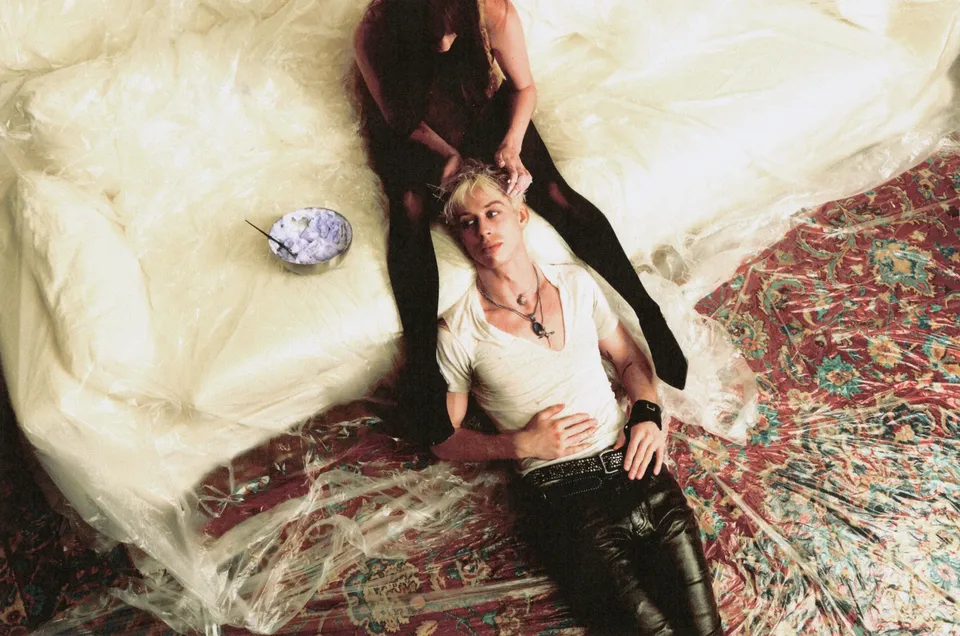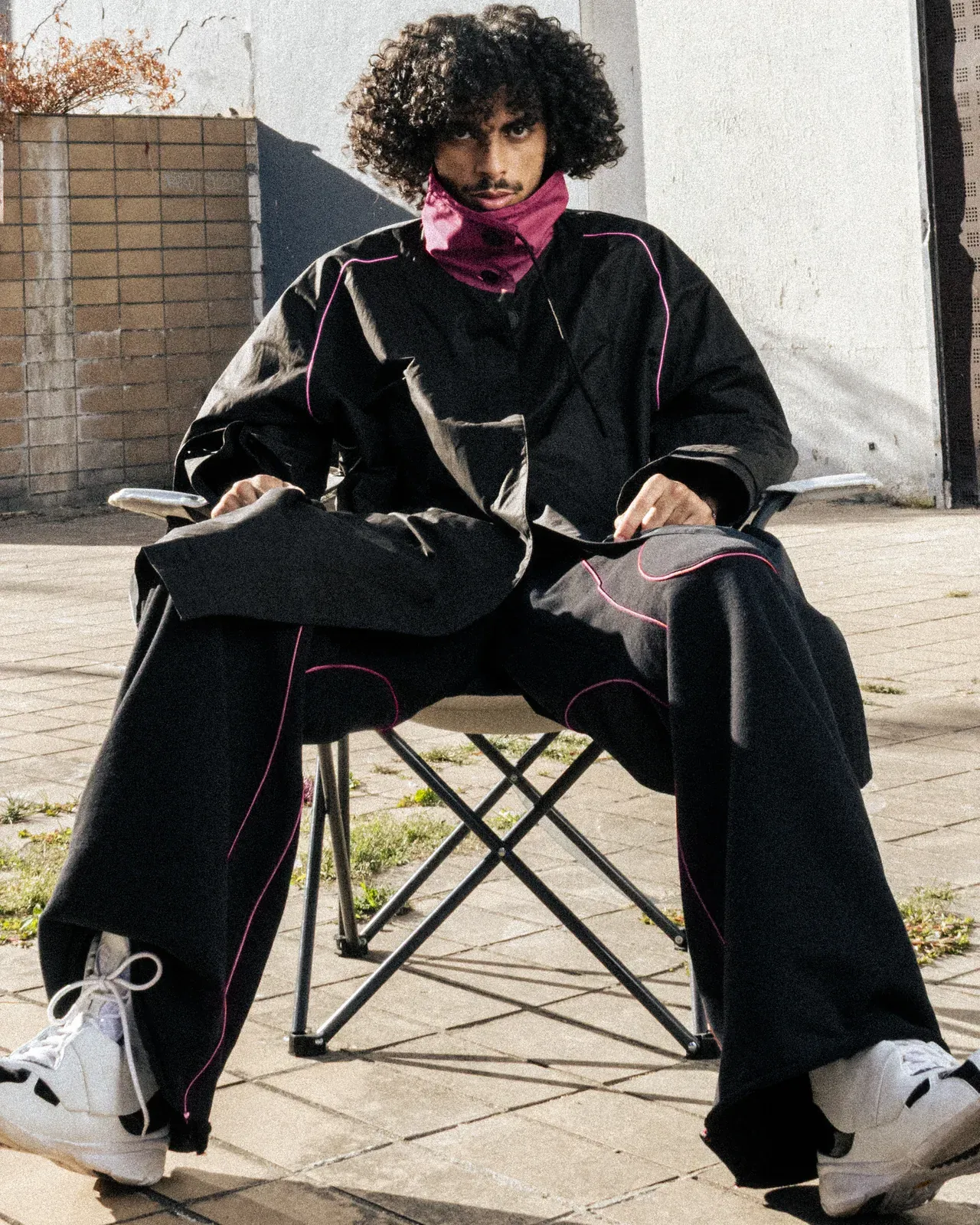
“Mais, Ino Casa, qui l’arrête?” Ino Casablanca asks his listeners in Dima Rave. The sound, much like all of Casablanca’s work, is a cacophony that feels too sonically rich to be statically labelled in only one genre. Perhaps his is an internet-inspired “new groove.” Amid addicting blends of jumpy dance, buzzy raï, and heavy Latin and Caribbean influences, his lyrics ring true: the artist is on an upward trajectory that seems unstoppable.
After two back-to-back album drops in 2025, Casablanca returns with ten more tracks, taking his Extasia album to Extasiaaaaa, a musical adventure that seeks to continue the artist’s vision of a musical world full of “vibrations to alleviate disillusionment.” And people are certainly taking notice, with two Zénith Paris shows sold out in minutes, and an upcoming sold-out French tour. After a summer of music festivals and the release of a new single, Casablanca talks about his visions, his sound, and the world he’s creating with his new record.
You’ve expressed frustration with the attempt to label or box in your art (and you as an artist). Why does it feel important to resist this, both musically and philosophically? How do you balance being influenced by your positionality while not being defined by it?
It’s important to me because I think it’s a shame to focus more on the genre than on the actual song. A genre doesn’t guarantee quality. I don’t really try to balance those things. It’s just a fact that my tracks are full of recognisable styles, each with their own history and everything, but at the same time, they also contain everything I bring to them personally, from what I talk about to the way I produce and perform.
You’ve rejected an individualistic approach to music, instead creating in a communal way, working with friends and performing in intimate venues. How does reciprocity drive your creativity and the sound of your music?
For now, I’m not really into collaborating on my productions, except with Osomexico and Nicolas Domingues on my tracks. With them, everything flows naturally. We have fun, learn from each other, and that leads to new ideas and happy accidents. The fact that we’re friends also brings a lot of spontaneity to the process.
What aspects of performance do you wish you could transfer into your recorded work?
I’m not really sure. I feel like the studio should stay the studio, where the goal is to get everything sounding perfect, whereas live shows are rarely perfect. But maybe the crowd’s energy. If we could just capture that and put it on a CD, that would be cool.
“In everyday life, you’ll hear me talking about the woman I’m in love with, and then ten minutes later, about current political affairs.”
Much of music culture is rooted in fan interpretation; once music is public, it no longer belongs to the artist. What do you want your music to be able to give listeners? Do you consider the audience as you craft your music or is it purely personal expression?
My ideal is for everyone to find something in it that resonates with them. Everyone has their own relationship with music. And no, I don’t think about the audience when I’m creating. I see it as my own space, my own selfish little moment.
You’ve said before that time “filters things,” and allows us to look back at the past in a way that’s too idealised. Interestingly, Tamara and Extasia were released within ten months of each other, leaving almost no time to reflect. How do the albums relate to each other?
I do feel like there’s a bit of a divide between the two projects. Looking back at them now, they’re pretty different. I can’t really find a connection between them content-wise, and the overall vibe is just not the same.
What relationship does your work have with time — whether it’s the time it reflects on, the time it was made in, etc.?
For now, there’s still never enough time. Everything moves so fast and there’s so much to do that it feels like there just aren’t enough hours in the day. It’s not the best environment for creating, so for my next projects, I’d really like to be able to take a lot more time with them.
“I hope to make projects that stand the test of time and define a generation.”
Despite the short time between them, the worlds of Tamara and Extasia are very visually different. What guides the visual worlds of your work, and why do you feel it’s important to create these visual accompaniments? What do you want each album’s look to evoke?
What inspires us visually is first and foremost what I’m trying to convey, so we think about elements that could best represent those ideas. We also like going against the grain. I think that’s important when it comes to getting your message across.
Your work mixes the personal and political, telling stories of family and love, but also critiquing the rich, the police, and right-wing politicians. Why blend the two? What makes your music a good site for political realisation or reckoning, both for yourself and for listeners?
It’s just part of who I am. In everyday life, you’ll hear me talking about the woman I’m in love with, and then ten minutes later, I’ll be talking about current political affairs. It’s real and natural, once again.
Your music employs a global approach to sound, samples, features, and references for a rich sound unique to you. You’ve also been known to clarify lines on Genius because you write from personal experience. What relationship do sound and lyricism have to each other in your creative process? How do you know which musical influences to consult for a song? When do you know a song is done?
For now, I’m prioritising the music, although maybe that’s a mistake on my part, even though I do put a lot of thought into the lyrics. The vibe of a track comes from whatever I’m feeling at the time. I go through little obsessions with certain things. And a track is finished when I can’t be bothered to keep working on it anymore. Otherwise, it’s never finished.
You also use multilingualism as a device in your music, with words in Arabic, English, and Spanish despite making ‘French music’. Is this a sonic or conceptual choice, perhaps with concepts that don’t have the same weight in French? What role do language and poetics play in your music-making and writing process?
Honestly, it’s the same as everyone else. In France, artists use English, Spanish, Arabic and other languages in their lyrics for certain words here and there. I do the same. It’s not something I do on purpose, it’s just how we talk over here.
Your music blends genre and style in a way you’ve described as an internet-inspired “new groove.” Who are your current inspirations? What are some songs or artists you’ve discovered recently?
Right now, I’ve been listening to SleepyPierre, Mairo, Cherry Pie, Varnish La Piscine and Judeline. I haven’t really discovered many new artists lately!
In your music, you claim you don’t want to be a niche artist, but a superstar. What does the future of Ino Casablanca look like? Are there any new projects in the works that you can tease?
I have big ambitions for my records. I hope to make projects that stand the test of time and define a generation.