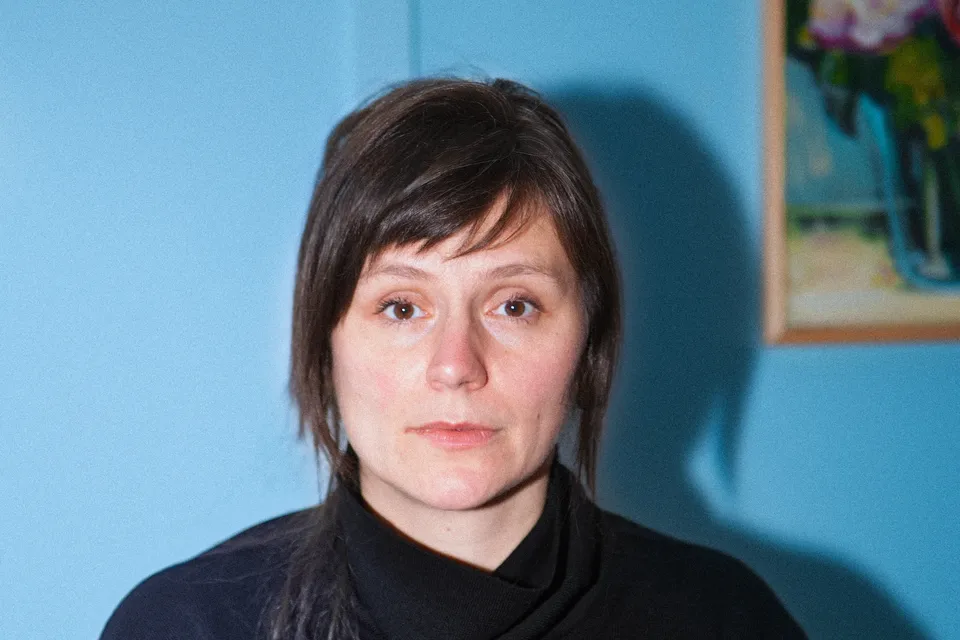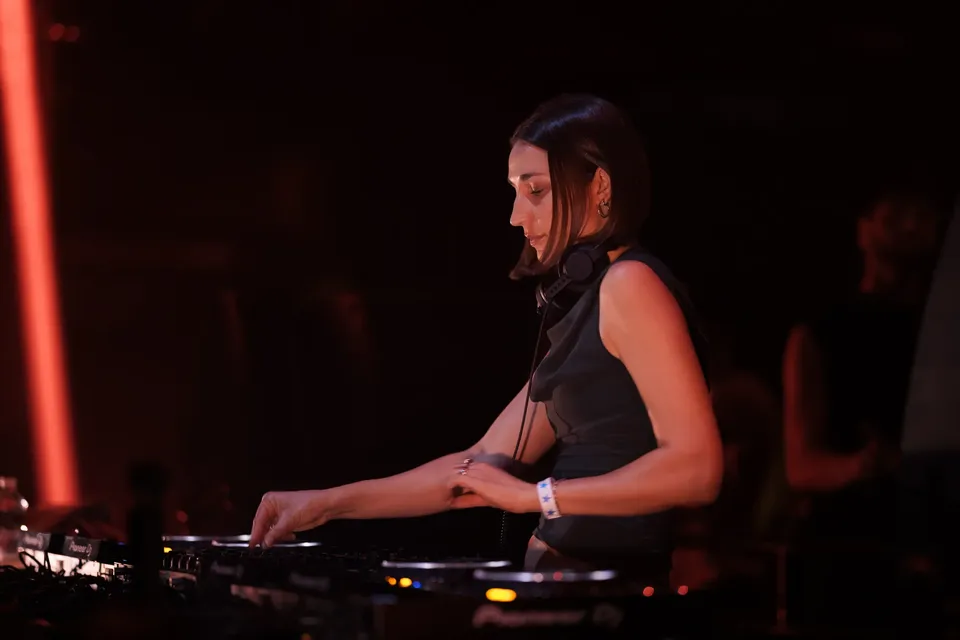
Kara-Lis Coverdale loves being impulsive. Underneath that appetite for spontaneity, though, her musical practice moves at a glacial pace. The contrast helps explain how, after years away from releasing records, she returned with three albums in 2025. The music had been accumulating for years; deciding to let it out happened much faster. As she tells us, finishing a record requires time, but also a sense of closure. Some works remain open to revision every time she takes them somewhere new.
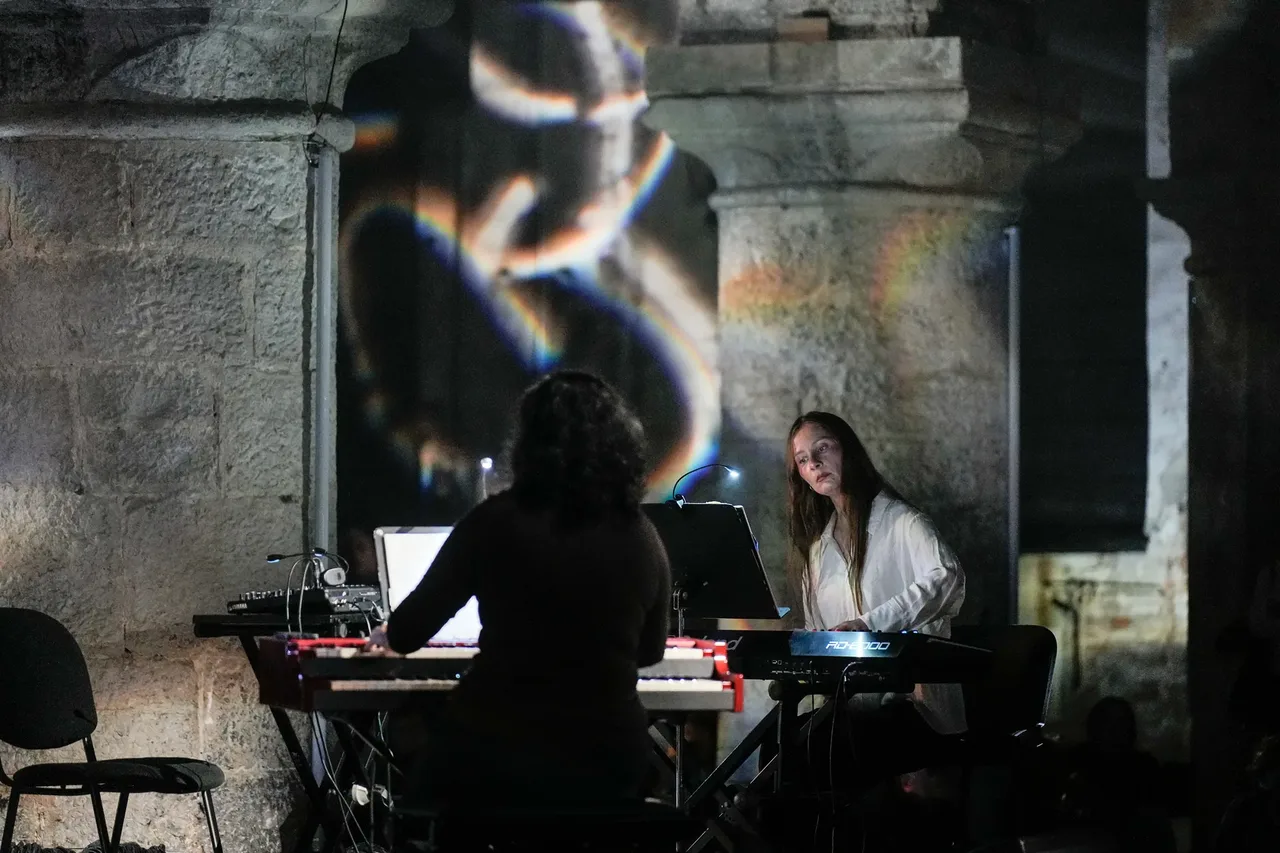
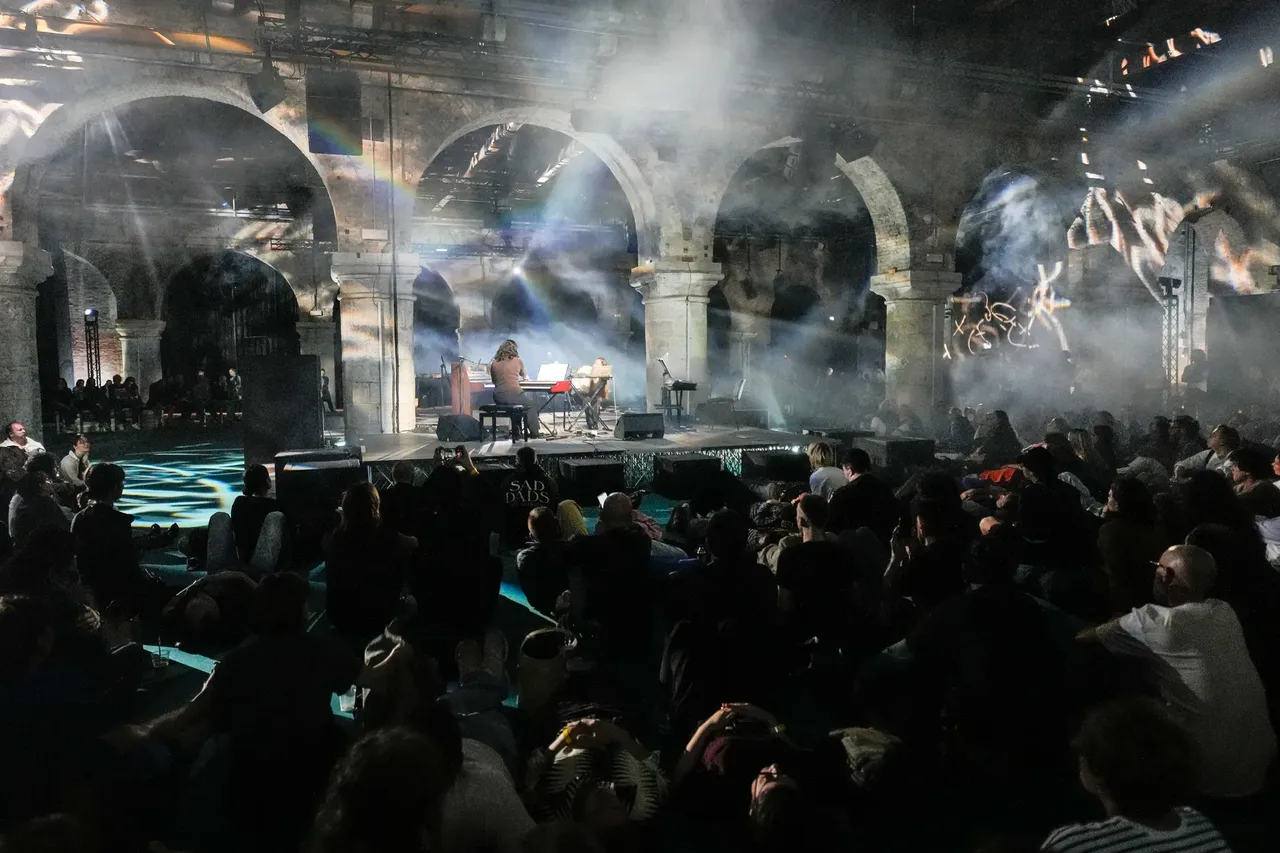
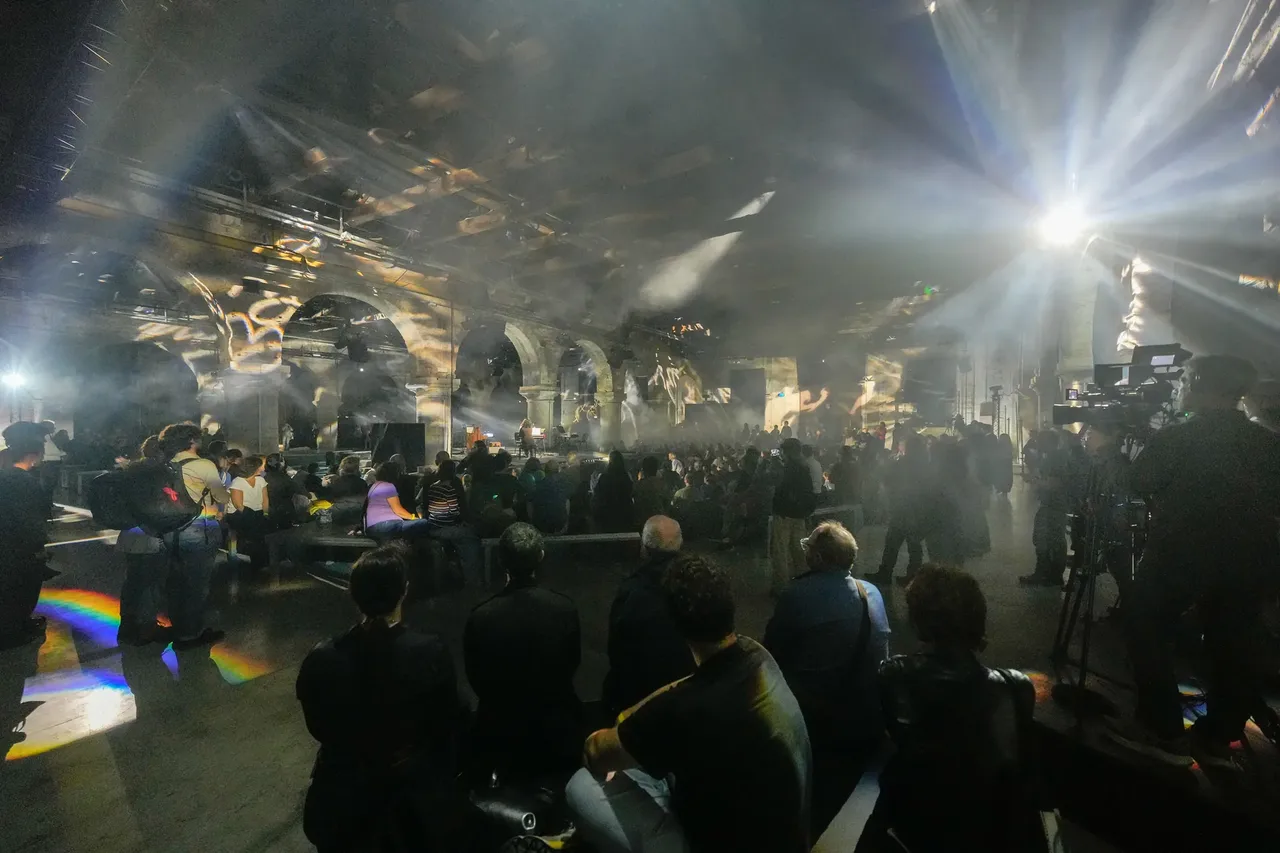
We sat down with Coverdale in Venice the day after her performance at Biennale Musica, where she presented Changes in Air in concert form for the first time. Originally conceived for Skarven, a floating sauna overlooking the Oslo fjord, the work grew into a five-part composition and a 2025 album. Its attention to temperature and the rhythms of physical materials carried into our conversation: Coverdale describes returning to the sauna to listen, following the way its metal ticked as the heat rose. Bringing it to Teatro alle Tese also meant adjusting her own movements at the keyboard.
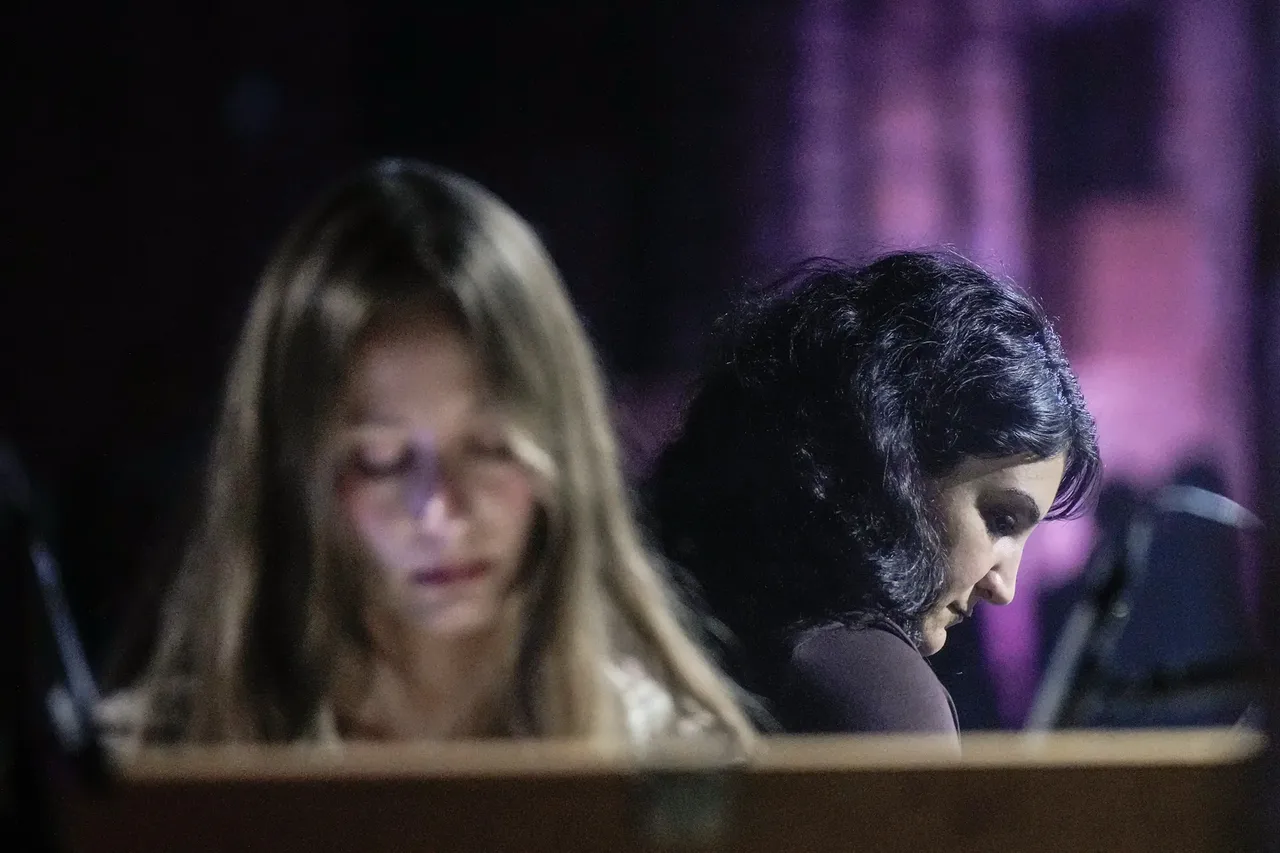
Joining her on organ was Sarah Davachi, an old friend whose approach to musical time has challenged Coverdale’s restless energy. Her account of learning to sit with Davachi’s slower unfolding sounds is funny and revealing. It opens onto a question that runs through the interview: how do you inhabit a piece of music, especially when performing it means returning to an emotional state you might rather leave behind? For Coverdale, that can involve tenderness, but it can also mean horror, dissonance and the feeling of pulling a body apart.
We talk about the freedom she found in digital sound and the toll of its immateriality, the difficulty of anticipating what a listener will hear, and her uneasy relationship with the word ambient. Spirituality brings us to another tension: the comfort of an enduring ritual and the challenge of making room for women’s voices within it. Throughout, she is frank about the work of changing while continuing to live with what you have made.
First of all, it's a pleasure to be here with you. After spending several years away from releasing records, you returned in 2025 with three very different works. What made that particular moment feel right for opening the archive and sharing so much music at once?
It was a really long time coming. I think once the first record came out, it happened quickly. It wasn't pre-planned at all; we thought, let's do all three. It happened in a few days. We locked it in and got a few dates for record pressing. I'm relieved because these works weren't created in 2025 either, so I've been waiting and things piled up. It felt like things got pushed underground with Covid, too — I hate to use that word. It felt like a good moment to have a tabula rasa, to start fresh again.
Would you say you're an impulsive person in your daily life?
I love being impulsive. But I try to exercise as much restraint as possible for reasons of, I don't know, fitting into the world. It's a discipline for me to restrain that impulsivity. I definitely love spontaneous living. I love making music spontaneously as well. But at the same time, underneath all of that, I have a very slow practice that moves glacially.
It’s cool how things work out: things you perhaps don’t realise have been moving slowly build up, and then you release three records in a year.
Yes. Sometimes you don't know how it will come out or when it will come out. It just does.
Do you have a lot more music piled up?
I do have a lot of music piled up. We’ve been talking about an archival system, or having an archive release series as well. That's in discussion. There are lots of commissioned works and other projects I've been doing quietly over the years. I feel like there’s often so much going on that as soon as I finish a work, I need to move on to the next one. Finishing a record takes so much time and a sense of closure. I'm also a perfectionist, so it's about navigating all these temporal projects.
“I love being impulsive. But I try to exercise as much restraint as possible for reasons of, I don't know, fitting into the world. It's a discipline for me to restrain that impulsivity.”
Is it very hard for you to know when a record, a song or a project in general is finished?
Generally, no, but From Where You Came lived with me when I was travelling often, and I adapted the works everywhere I went. I was rewriting them, especially for different live contexts. Every time I get somewhere, I need to retune the work and reorient it, even slightly, as an interpretive or contextual consideration. There’s a degree of change that occurs there. That has sometimes felt like, ‘Oh, there's no end to this.’
There are different types of work. There’s work where you really need to get this thing out, like you've been poisoned and you need to barf. It's like food poisoning: it's cathartic. It's a sick thing; you just need to purge. Those are the types of works you don't want to relive, ideally. But sometimes, in the cycle of being an artist, you do need to repeat it, and that's really a horrible thing. So it's better to know where to barf.
There are different types of work. There’s work where you really need to get this thing out, like you've been poisoned and you need to barf. It's like food poisoning: it's cathartic. It's a sick thing; you just need to purge. Those are the types of works you don't want to relive, ideally. But sometimes, in the cycle of being an artist, you do need to repeat it, and that's really a horrible thing. So it's better to know where to barf.
That's an interesting take. I love it.
Yeah, but otherwise, if you can keep repeating a piece, that is the ideal, I think. It's changing and evolving, and you're evolving and changing, but you can continue in a place that feels comfortable. But life is complicated, and sometimes we just need to barf.
Speaking of evolving, what's your relationship with past versions of yourself? The music you recently released was made years ago. What is it like to revisit yourself and the state of mind you were in then? How different are you now, and how does that music still make sense to you today?
So different. I was a lot younger when I wrote From Where You Came. Sometimes it feels like a different person, but it's still there. I was more unsettled and, I would say, even extreme in the things I felt I needed to do. It was a different time, too, in terms of the climate over the last ten years.
The beginning of the end, for me. 2016 marks the start of this very negative era we’re still in.
Yeah, extreme change. It was a rupture. The world cracked open. I think everyone feels that year was very unique. Things are complicated everywhere, but it’s better now, generally, in terms of having safe spaces for women or marginalised people. There's more discourse around that. I do feel like, in that sense, it’s a lot better, and I have less of a sense of despair every day. That was so heavy at the time, and I felt like I was pushing a rock up the mountain every day. It was nonstop work. I was constantly pushing and pushing and pushing and fighting everywhere I went just to get in a room. It’s better now.
You have described reaching the limits of the digital realm through From Where You Came. What did those limits reveal to you, both musically and personally? Do you remember saying that, or reaching those limits?
Less now. There was a time when I was quite ‘exclusionarily’ a digitalist; I was practising pure digitalism. I felt that I was becoming this explorer, and the work became increasingly abstracted and lost a sense of touch and materiality in really interesting ways that I liked to pontificate about and observe. But the immateriality of it all started to take a toll.
Spiritually, I would say that it’s a very hyper-potential space for transformation, change and creating. Especially if you don’t really feel comfortable in the real world, it’s a great place to build your own and go from there. Creating new sounds that never existed before is super important. We need to be doing that all the time. It’s also important for people to be designing their own sounds, because it’s a place to be a semiotic disruptor. It’s fresh.
Coming back to recognisable sound now, I really had to retrain myself, but I feel different. I had to do that work. I needed to do the digital work before I could be comfortable with more conventional sound again and reorient myself in that world. It's been a really long journey with digital sound.
Changes in Air, the performance we saw yesterday, began as an installation for a floating sauna facing the Oslo fjord before becoming a five-part composition and an album. How did the physical conditions of that original site shape the work's sense of duration, temperature and movement?
First, the sauna is entirely glass, so there's a transparency there with the environment. You really feel like you're on the edge of the water. You are unclothed, with just a small piece of glass in front of you. You can step out around the glass and jump into the fjord. It's this amazing, surreal space where you're just outside the city, but you feel like a seal.
As a really sonically sensitive person, I’ve always found the sonic environment of a sauna very interesting because there are so many unique sounds occurring with the extreme fluctuations in temperature. As the temperature rises, the ticking of the metal increases, and you can listen to the different rates of the materials. So I went there and I saunaed, and I listened. I did it over and over and over again. There is inherent duration and inherent rhythm to the materials of Skarven.
As a really sonically sensitive person, I’ve always found the sonic environment of a sauna very interesting because there are so many unique sounds occurring with the extreme fluctuations in temperature. As the temperature rises, the ticking of the metal increases, and you can listen to the different rates of the materials. So I went there and I saunaed, and I listened. I did it over and over and over again. There is inherent duration and inherent rhythm to the materials of Skarven.
You were talking about materials: the water, the sun, the glass. Did you think of them primarily through their acoustic properties, their symbolic associations or something else entirely?
There is a fair amount of emulation going on because I found that it's very easy to map transitional changes with automation in digital space. When I’m writing scores in digital workstations, it feels so scientific. A lot of the diagrams I saw when reading about thermoregulation or thermodynamics looked exactly the same, and I wanted to explore that visual similarity. I guess I was very inspired by mapping the waves of temperature changes in the music, timbrally and instrumentally as well. But I didn't really think too much about including literal wood. I had more of an intuitive approach, where it matched a feeling. I wanted to follow the feeling more than anything.
This Biennale performance marks the first time that Changes in Air has been presented live in concert form. What was your approach when conceiving it and finally bringing it to life?
It was a bit of a challenge because this was written some years ago now, and I've updated my system so many times. It felt almost archival, bringing it to life at this point. But my keyboard practice is also always changing, and I've been touring this piano record from 2025 as well, A Series of Actions, and it's very different stylistically from Changes in Air.
“There’s work where you really need to get this thing out, like you've been poisoned. It’s a sick thing; you just need to purge. Those are the types of works you don’t want to relive, ideally.”
How so?
Changes in Air is flowing and naturalistic, and there's fluidity to it, whereas A Series of Actions is much more geometric and holds these forms. So I took it in and thought, okay, I need to flow more. It's almost like a dance, preparing for these new movements. Incorporating Sarah [Davachi] into the work was great as well because she's such an old friend of mine from when we lived in Montreal.
I thought of her often when I wrote this piece, actually, because when Sarah and I started playing together on bills all over, we'd find each other in different cities and have a good time. But we're so different musically — I’m a really fast energy. I indulge in fast passages and quick changes and have a hypersense to things sometimes. Sarah’s almost monolithic. So when I first started attending her concerts, it was a real challenge for me. I had so much energy that needed to go somewhere, and I was frustrated with her sometimes when I was watching her. I was like, ‘Why aren't you doing more, Sarah? Why?’ (Laughs) I wanted to go up to her and shake her. Then I had to check myself: why am I feeling this way? Why don't I have peace with just being? Over the years, that’s something I learned from her: how to exercise that in a musical sense.
I thought of her often when I wrote this piece, actually, because when Sarah and I started playing together on bills all over, we'd find each other in different cities and have a good time. But we're so different musically — I’m a really fast energy. I indulge in fast passages and quick changes and have a hypersense to things sometimes. Sarah’s almost monolithic. So when I first started attending her concerts, it was a real challenge for me. I had so much energy that needed to go somewhere, and I was frustrated with her sometimes when I was watching her. I was like, ‘Why aren't you doing more, Sarah? Why?’ (Laughs) I wanted to go up to her and shake her. Then I had to check myself: why am I feeling this way? Why don't I have peace with just being? Over the years, that’s something I learned from her: how to exercise that in a musical sense.
It’s great to know you learned that and could work together with her!
Yeah. I really thought of her a lot when I was writing Changes in Air. When we were both going to be at the Biennale this year, it was this amazing moment where I was like, ‘Will you come and join me for this?’ It felt like it was meant to be, with some celestial coming together.
That's so beautiful. You have said that your music is too human to be truly ambient. What aspects of human experience do you feel are erased when a work is labelled ambient?
I think when I said that, I was talking about emotion, because I'm extremely emotional and dynamic in that sense — I like to articulate emotion musically. Changes in Air doesn’t do that so much. It’s a piece that avoids that, and it's unique for that, I think. But sometimes I've indulged emotions so much that I am driven to very extreme emotional states when I'm performing. There's no word in music for what is common in acting, like the method actor. You're really embodying such extreme emotions and ideas, and you have to go to these places to deliver it.
Again, Changes in Air is very much not in that world, but I think when I said that, I was talking about this idea of articulating emotion. Ambient music sometimes feels like a negation of that, so I feel that it's not a word I would use for the totality of my own work.
Again, Changes in Air is very much not in that world, but I think when I said that, I was talking about this idea of articulating emotion. Ambient music sometimes feels like a negation of that, so I feel that it's not a word I would use for the totality of my own work.
Your work for psychedelic therapy led you to consider whether a sound could be emotionally or psychologically unsafe. Has that experience changed the sense of responsibility you feel towards listeners when composing or performing?
Absolutely. But I also notice that people often aren't travelling with you musically, or they don't go with you to the same place. Sometimes I'll experience such depth in a performance, or I experience horror and terror, and it's interpreted as something nice. That really interests me. When I read reviews, especially of From Where You Came, there was one that felt like reading the upside-down world. Everything that I intended, they thought was the opposite.
I feel it's impossible to predict, unless you're in a really localised community where we understand each other completely, where we have a shared repertoire, a shared being. But sometimes you can't protect someone or provoke them. It's hard to do those things universally when you're speaking a language that is so uniquely your own.
I feel it's impossible to predict, unless you're in a really localised community where we understand each other completely, where we have a shared repertoire, a shared being. But sometimes you can't protect someone or provoke them. It's hard to do those things universally when you're speaking a language that is so uniquely your own.
When you say you feel horror when you're playing, do you think that comes across through your demeanour or the music itself?
The music itself, yeah. VoxU, for instance, is probably my most horrifying work. It's nothing like Changes in Air. We're talking really dissonant stacks of sneering timbres. It's horror, and it would be perfect for a horror film. It's objectively musical. It's an engagement with dissonance.
Do you put yourself there because you think the outcome is interesting, or because you want to explore more of those emotions yourself from a kind of safe place?
Sometimes I don't know if it comes from me or from the idea I'm exploring. But then, why am I exploring that idea? It comes from some deep evil thing within myself. VoxU is a work of transcendence, and it's like the idea of the transfigured body: moving from one state to another, and this spectral process of doing that. It's like spiritual deconstruction and then reconstruction through limbo. That's like pulling your body apart, stretching everything out. It's like body horror as well.
Spirituality has been present throughout your work. You've also spoken about the restrictions and contradictions of religious institutions. Can music preserve a sense of ritual or transcendence without reproducing the structures from which those experiences emerge?
The nature of our rituals is always changing, which is, I think, part of the challenge of more conservative religious spaces: it can feel like what's occurring there is not representative of your experience at all. That has been my experience from time to time, working in that space. At the same time, I found an immense sense of gratitude for this space that is unchanging, and for being able to return there as a safe, protected haven that is somehow impervious to everything else. It's like a stone. I certainly engage with both of these worlds, and I feel like I've always lived a double life like that.
But I do notice that there are exceptions to the rules of how far we are allowed to be in the moment in these spaces. It has to be done so carefully, and you can only push so far ahead, because the ritualistic space is inherently communal. You need to be in the same breath, to be able to breathe together in worship spaces. For instance, this work with the Tallis Scholars on Sunday was such a challenge, a heavy challenge for me, because I knew I wanted it to be a sacred work. But there's very little precedent in this space for women's voices in both text and musical capacities. It was really like having no footing at all, in a way. I feel like that's why I've always wanted to create new things as well. It's always been really important to me to stand on my own.
But the space at San Marco is the epicentre of… It's the patriarchy of Italy. Contextually, it was a very compelling project, and Caterina put me in exactly the right place. It was something I was ready to take on after many years. I think it's a beautiful thing to be able to be completely present in your creation, but to be able to access the peace of ages and the wisdom of ages at the same time. But it's a meditative act. You really need to be completely in all places at once. I'm excited.