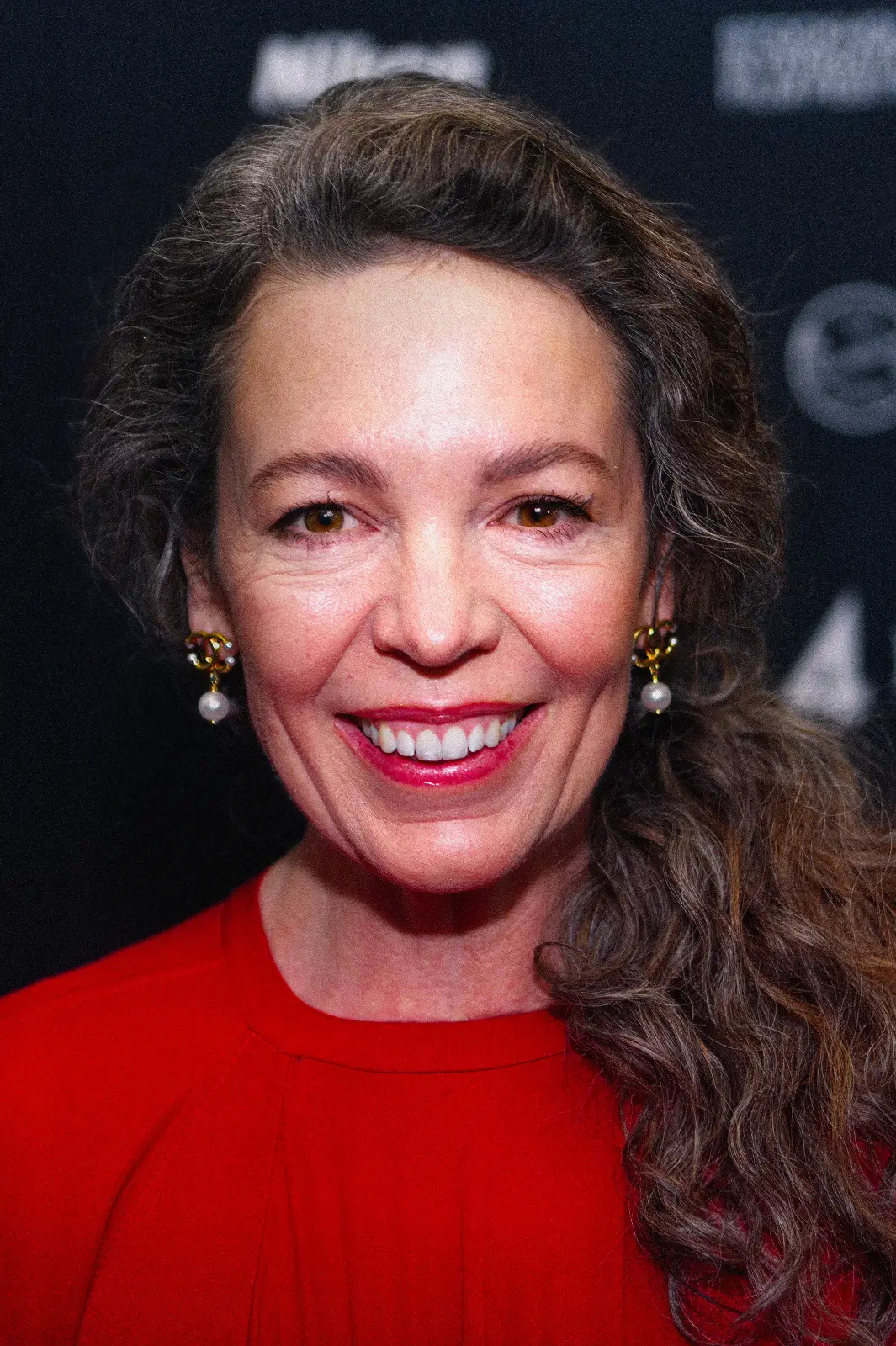
Britain’s national treasure Olivia Colman is having the kind of autumn only she could pull off. She’s just joined the murder-solvers of Only Murders in the Building for season six in London, and she voices a talking fox in Dario Russo’s darkly comic Australian folktale The Fox. Alexander Skarsgård, meanwhile, has been reading erotica out loud: on the audio app Quinn, he narrates Felled, a fan-written tale about a willow tree and a farmer’s daughter, inspired by his role as a man woven from branches in Wicker. The film brought them both to Stockholm Film Festival, where Colman collected the Stockholm Achievement Award 2026 with her living basket of a husband by her side.
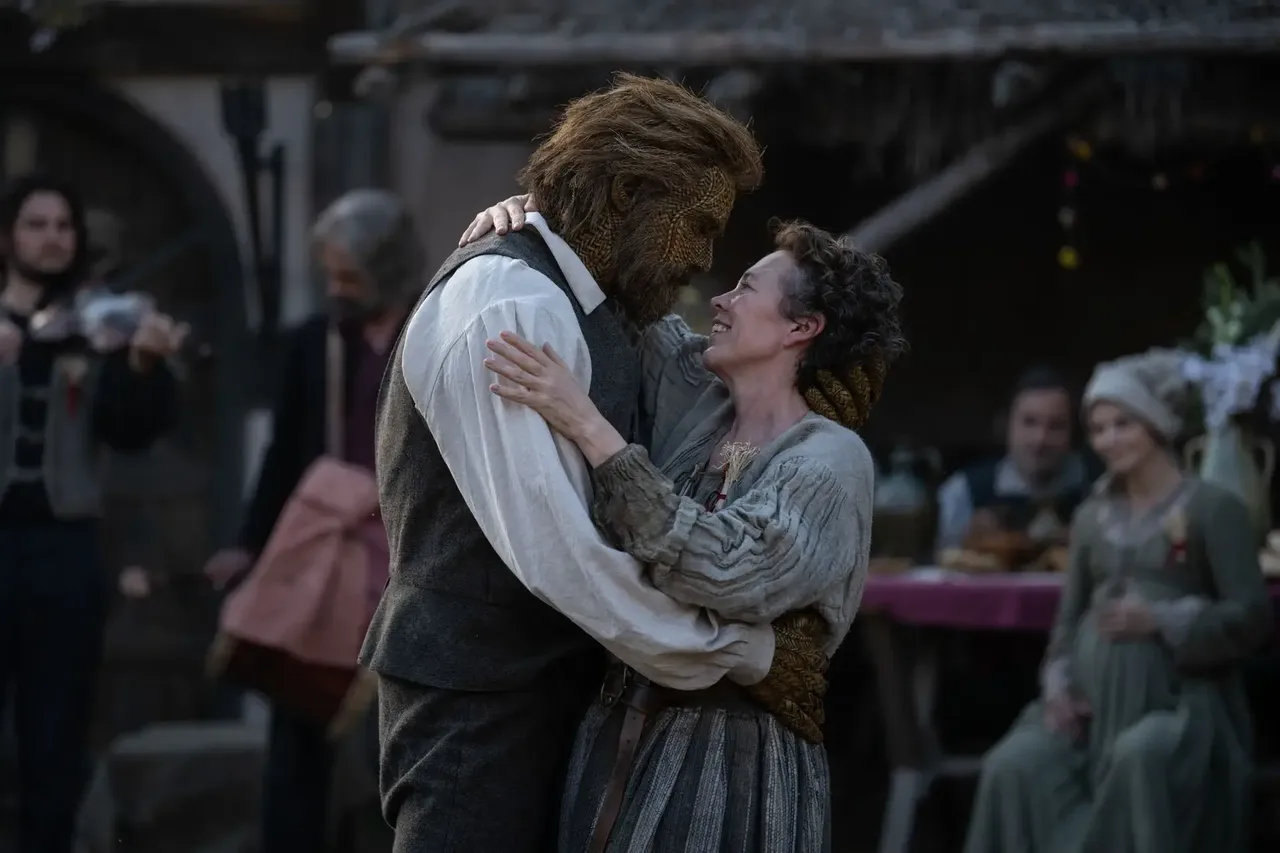
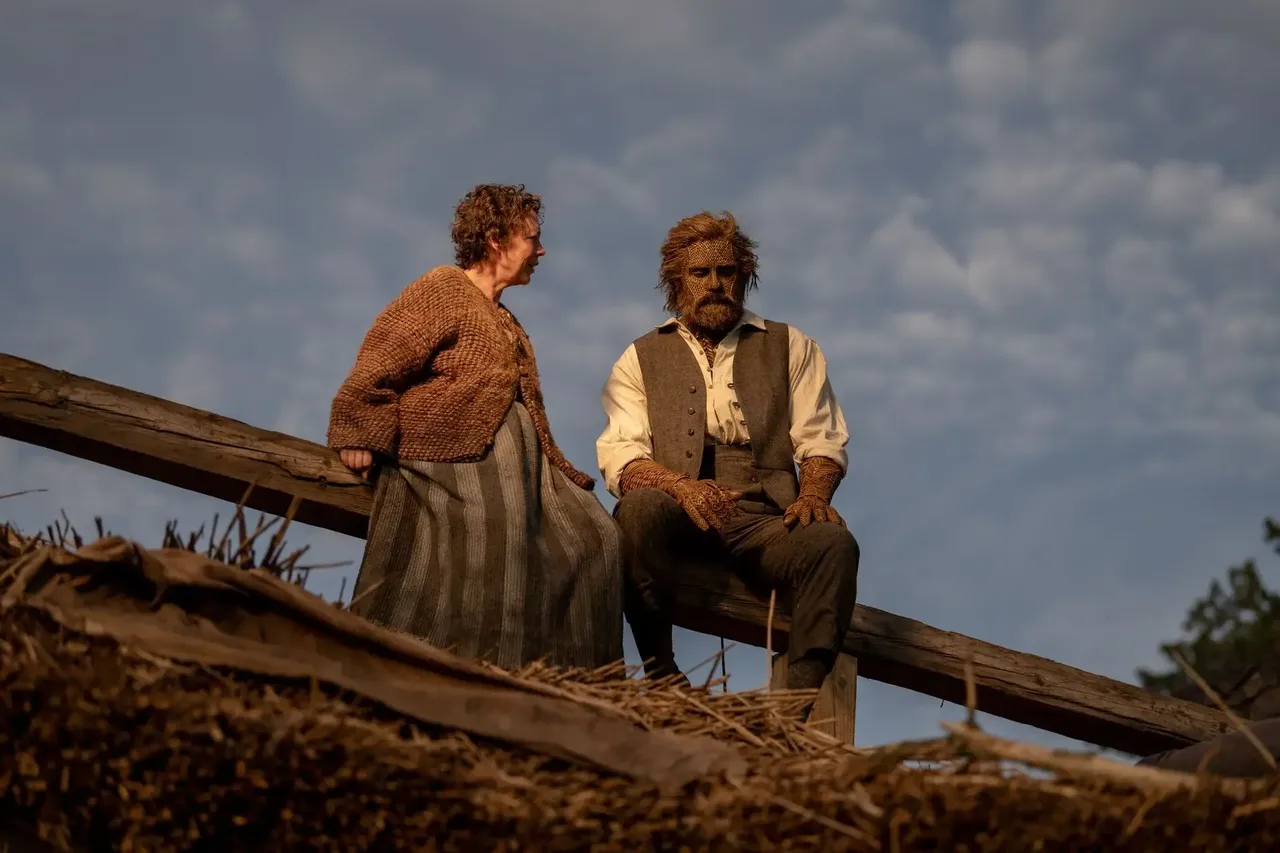
In Wicker, the comedic fable from co-directors Alex Huston Fischer and Eleanor Wilson, Colman plays an ostracized fisherwoman: poor, single and mocked by her village. Fed up, she commissions a husband from the local basketmaker, Peter Dinklage, and the woven groom who turns up is Skarsgård. Adapted from The Wicker Husband, a modern fable first published in 2008 by British writer Ursula Wills, the film is not to be confused with the folk-horror classic The Wicker Man (1973). Wētā Workshop, the studio behind The Lord of the Rings and Avatar, spent eighteen months building the fully practical suit and facial prosthetic. Most of the Wicker Husband’s shots use little to no CGI. The only digital touches are small details, such as points of light shining through the weave to show he’s hollow.
It’s a fairy tale that lands squarely in the current mood. Plenty of women are tired of dull, entitled men, and romance readers are falling for gargoyles, centaurs and other partners who are anything but ordinary. Wicker asks a simple question: why would the Fisherwoman want any of the men who mocked her, when she can have one who actually loves and respects her? At the festival, Colman and Skarsgård talked about scripts worth two years of your life, acting from inside a sculpture, Sunday roasts on set, and why you might cry at a film this funny.
Let’s start with the basics. What do you need from a script to want to work on it?
Alexander Skarsgård: I think about the fact that I’m going to spend two years with this character. Do I want that? We wrapped this movie almost exactly two years ago, on the 9th of November, and we’re still talking about it. And it’s really more than two years, because there was a year of pre-production before shooting: talking to the directors, talking to each other, developing the character. So one thing is the character and the world the script exists in. Do I want to spend two or three years in that world? The other is who’s involved: in this case, two directors and the fellow cast members. We premiered at Sundance in January, almost a year ago, and we’ve been traveling the world together since. Are these people I want to travel the world with?
Olivia, does that resonate?
Olivia Colman: I hadn’t considered the two-year thing before. It’s a really good point. I hadn’t seen the character I play before, and I don’t think I’ve played her before, so that’s exciting to me, doing something different. And I really love the script. I’ve said before, it’s maybe one of my top three or four scripts I’ve ever read. I started to liken it to an octopus. Octopuses (this is correct, I’ve checked) are sort of dull and grey when they’re not stimulated, and when something happens that they like, they change colour. I feel like that’s what happened when I read the script. I liked everyone involved, I loved the story, and then this all started to happen, which made me very happy.
These days it’s rare to be handed something truly original. How important is originality when you choose projects?
Alexander: A lot of projects I read are quite derivative. It’s an anxiety-driven industry. There’s a lot of money at stake, and people are understandably nervous about investing in something unknown or groundbreaking. So people look around and go, this worked, let’s do something similar. But creatively that’s not always fun, because you read a script and think, well, this is last year’s hit and they’re trying to milk it. So finding something like Wicker, or Pillion, the film I was here with last year, where you’re just transported, is incredibly exciting. It feels so fresh, and it takes a lot of confidence. Pillion was made by a thirty-year-old first-time filmmaker, and Wicker is our directors’ second feature. It takes a lot of confidence to push a project like that forward when it isn’t a sequel to something you’ve already seen.
What surprised you most about the reaction to the trailer?
Olivia: It took on a life of its own before we’d even really done any publicity. People took it and ran with it. It was so exciting. I keep saying: stop giving the viewing public the same thing. Give them something original. We want it. I think filmmakers, or maybe the money, often underestimate what audiences want. It was so gratifying to see that they love something different. But they also love the naughty parts of the trailer, don’t they? (Laughter)
When you watch the film, you can feel this is a gang that enjoyed being together. What was it like making it?
Olivia: Oh God, it was beautiful. There were a lot of British comedians and comic actors in it, and it was so exciting on the days when we were all together in the village. Alexander and I started our journey together in the Fisherwoman’s cottage, so that was quite intense, and we got our little relationship going. Then we joined the village, and every single person was lovely. We’d put our chairs together in a circle, chat and play games, and it was almost disappointing when we had to go and do our job. That’s not true, it wasn’t disappointing! But we had such a nice time. It was heaven. And Sunday lunch was at mine, with a lovely roast. That was Ed, my husband, who’s also one of the producers. He’s here somewhere.
Alexander, you spent the shoot inside a full practical suit. How did you find the character inside all that?
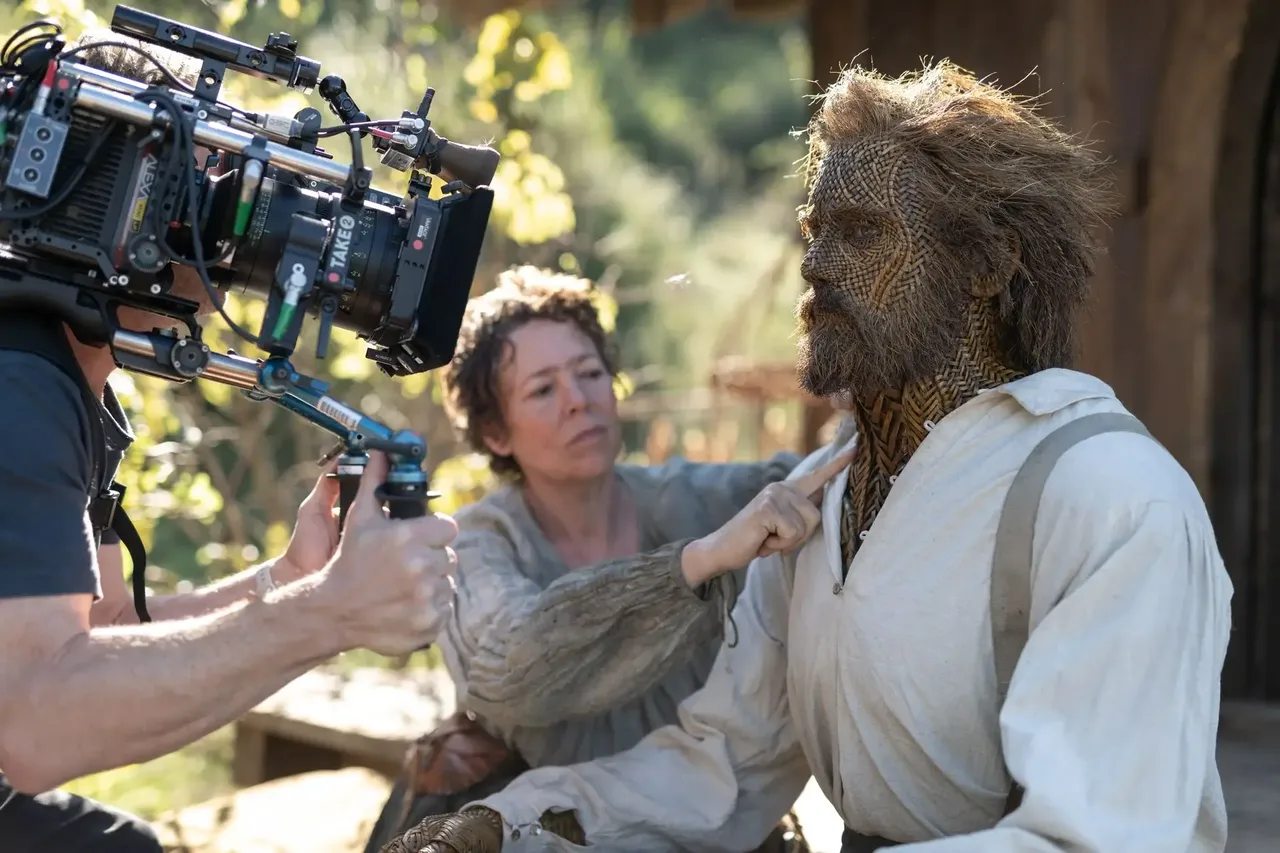
Alexander: There’s a purity to him. I wouldn’t say he’s naive, but there’s an innocence to him that’s obviously quite foreign to me (laughter). The biggest challenge was that I got to play opposite some very fine actors who are masters of subtlety, and I had this mask glued to my face, so I had to exaggerate everything for it to read at all. A subtle frown would get lost in the mask, a slight smile would get lost, so I’d really exaggerate it. That felt quite unorganic when you’re working with Olivia or Elizabeth [Debicki] or Peter [Dinklage]. Fortunately, we had a few days before shooting where I could play around with the mask, and our wonderful writer-directors would go, ‘We know it feels uncomfortable and like you’re exaggerating, but this is what it looks like. You’ve got to trust us. It looks like a subtle movement’. It took maybe a week to dial that in. Still, I felt a bit grotesque in those scenes, exaggerating everything.
Post is very important in filmmaking these days. What was it like working with something physical?
Alexander: In this day and age, when so much is done with dots on your face and ‘we’ll fix it in post’, it was really fun and inspiring to work with a practical suit. It was made by Wētā Workshop in New Zealand, who made the creatures for The Lord of the Rings and Avatar, much bigger movies than Wicker. They’re the best in the business, and they loved the script and Alex Huston Fischer and Eleanor Wilson’s vision. They wanted to do it for no money because they’re artists and they’re passionate about what they do. It was created over eighteen months by forty artists in New Zealand, and it was incredible to put it on every day. And yes, of course, I’m a vain actor, I’m uncomfortable, I’m spoiled, and I was complaining about how hot it was.
Olivia: You never complained.
Alexander: I complained a lot in my head, constantly.
Olivia: I never heard it (laughter).
Alexander: But every morning, meeting Joe and Sarah from Wētā, who applied everything, was extraordinary. It was a special experience.
Olivia: You never complained.
Alexander: I complained a lot in my head, constantly.
Olivia: I never heard it (laughter).
Alexander: But every morning, meeting Joe and Sarah from Wētā, who applied everything, was extraordinary. It was a special experience.
Olivia, when did you first get the script, and what did you picture?
Olivia: I think in 2023. I can’t really remember what I first pictured, but it was pretty much what you see. I don’t think my image of the Wicker Husband was quite as sophisticated as the final thing. A bit more basket-y. But I did sort of imagine the world pretty much as it is.
The Wicker Husband may be the only man in the village who truly respects her. It’s a comedy, but what do you hope audiences take away from it?
Olivia: It’s funny, but it’s also a beautifully told fable, and I think it might surprise you. It might hit you in places you’re not expecting. It’s a love story, and I haven’t managed to not cry every time I’ve watched it, and I know the story. I am quite a crier. But I think you might be quite pleasantly surprised.
Audiences are already reading it as a comment on modern dating and on men. Alexander, do you want people to walk out with a message?
Alexander: Of course I want people to love the movie, because I love it, and I loved the experience of making it. But I always try to avoid answering the question of what specifically I want people to walk out of the theatre thinking about: the moral, the message, how they’re supposed to feel. I usually feel the less you know going into it, the better the experience, because then you can interpret it your own way. As long as you love the movie and think it’s the greatest thing you’ve ever seen, I’m happy.
Olivia, did anyone teach you any Swedish?
Alexander: She can say ‘puss puss’ (kiss kiss).
Olivia: Did you teach someone else that as well?
Alexander: Maybe in a music video, some time ago… (Laughter) [A nod to Skarsgård’s role in Lady Gaga’s 2009 Paparazzi video.]
Olivia: Did you teach someone else that as well?
Alexander: Maybe in a music video, some time ago… (Laughter) [A nod to Skarsgård’s role in Lady Gaga’s 2009 Paparazzi video.]