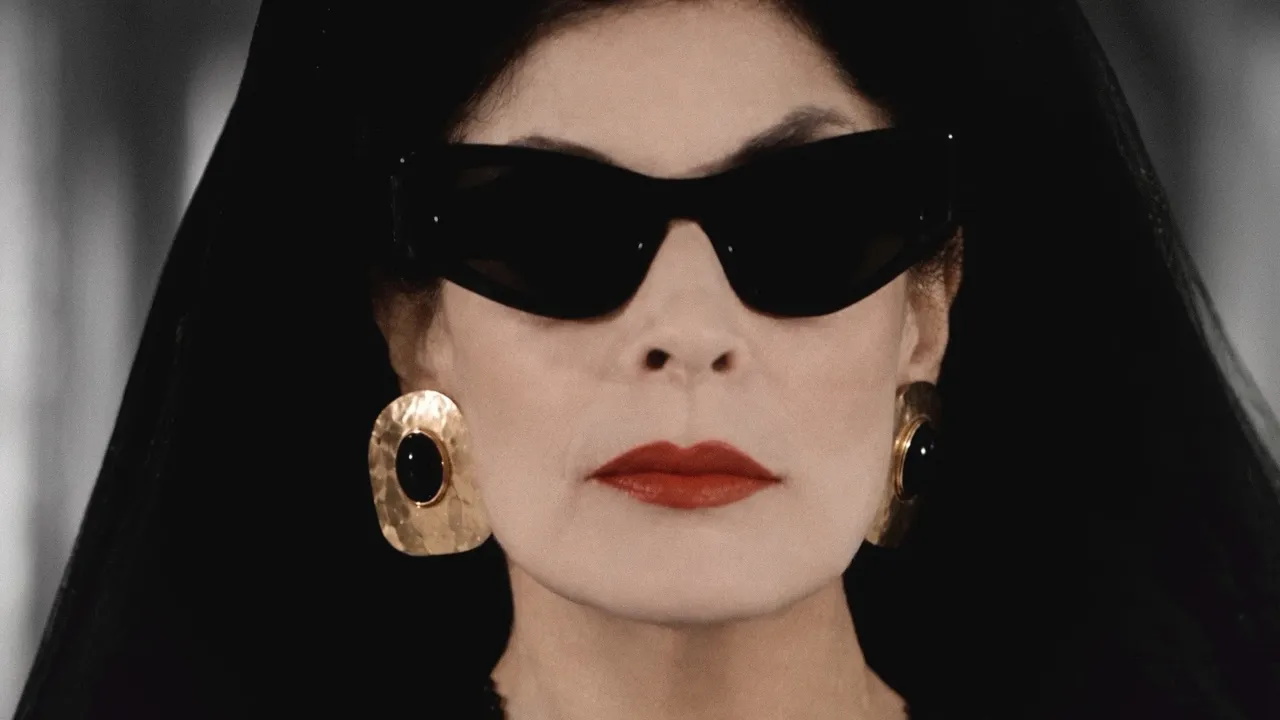
There’s something inherently cinematic about dreaming: the possibility of moving between realities, bending time and inhabiting worlds somewhere between memory and imagination. In Madame Noir, filmmaker Jhenyfy Müller turns this notion into a visual journey, bringing together fashion, cinema and artificial intelligence to celebrate individuality through the unmistakable presence of Diane Pernet.
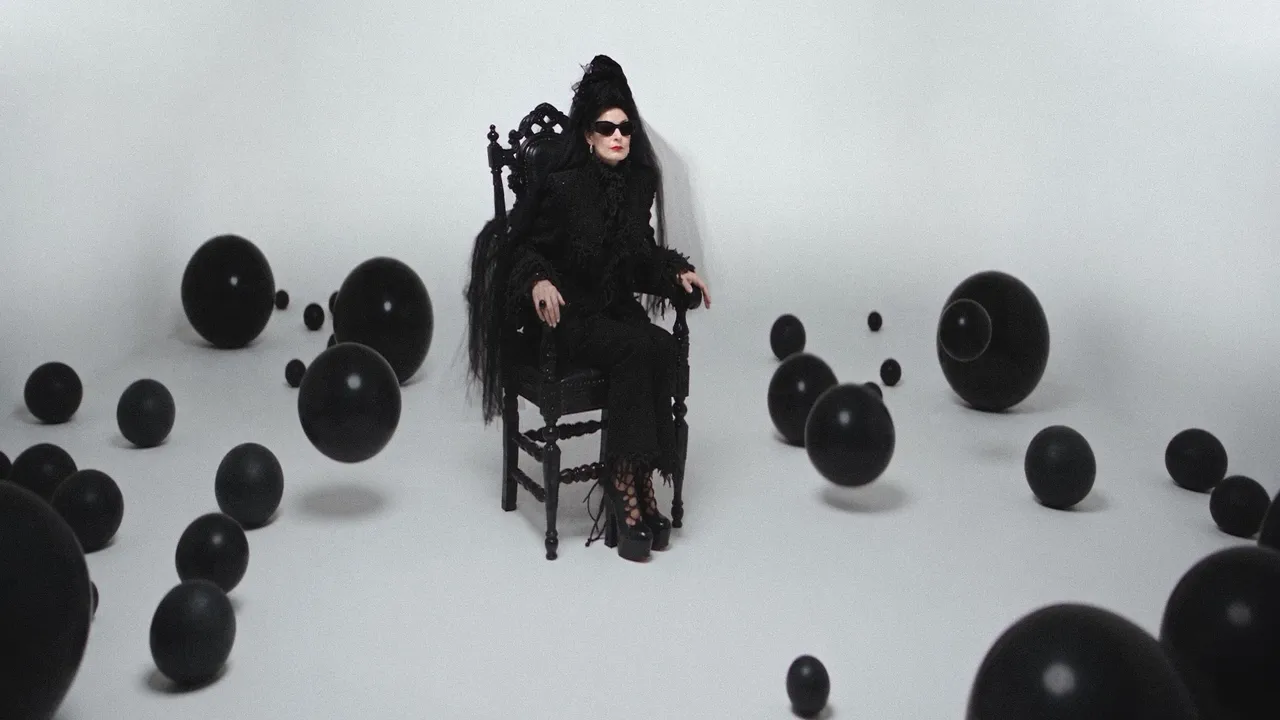
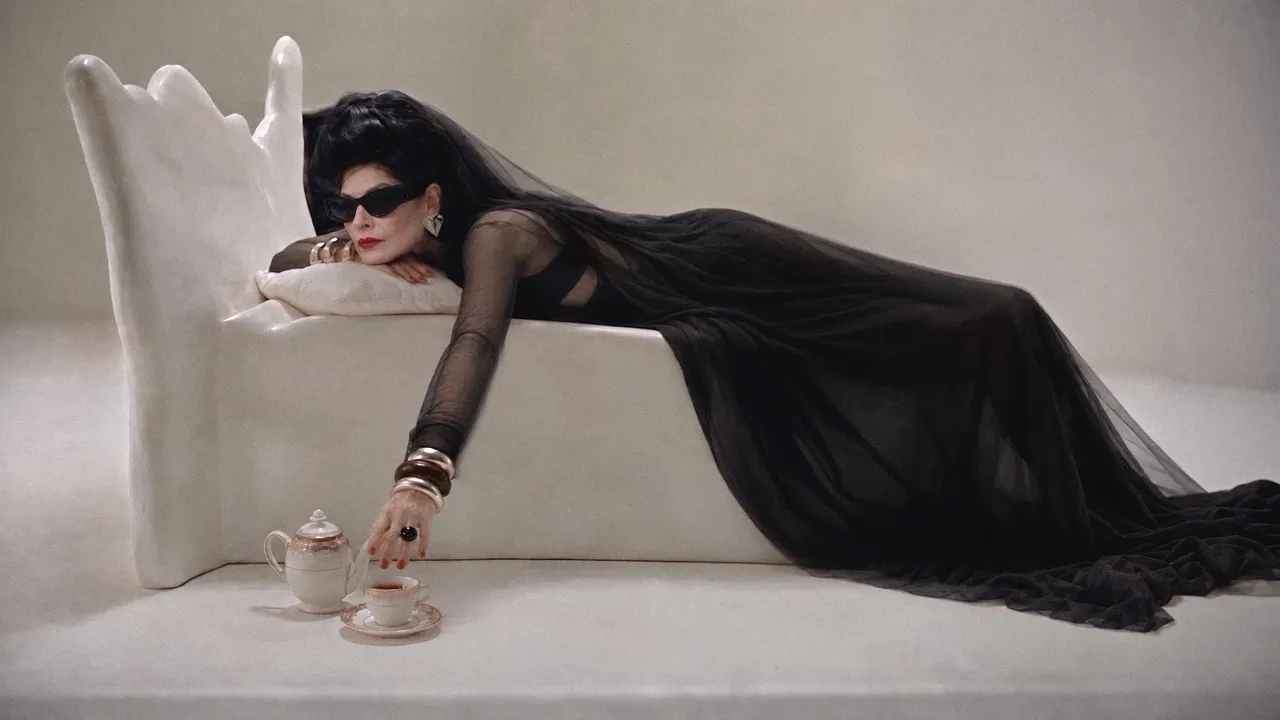
A tribute to one of fashion’s most singular figures, the film unfolds as a dream within a dream. After drinking her tea, Pernet falls asleep and embarks on a journey through surreal landscapes guided by a mysterious messenger. References to filmmakers such as Jean-Luc Godard, Sergei Parajanov, Michelangelo Antonioni, Marcel Carné and Walerian Borowczyk become fragments of an imaginary universe where cinema, memory and personal identity intertwine. Pernet moves through these worlds as both protagonist and muse, remaining unmistakably herself.
The choice of Pernet feels particularly fitting. Müller had admired her for years, initially discovering her through fashion shows and designers such as Rick Owens and Balenciaga before eventually meeting her at ASVOFF, the fashion film festival founded by Pernet. Their relationship developed over time. One memorable afternoon in Paris began with a quick cup of tea and turned into hours of conversation. Beyond Pernet’s iconic appearance, it was her authenticity, warmth and individuality that struck Müller. “I’d been dreaming of creating a fashion film with her for some time,” she explains. When Müller shared the initial imagery for Madame Noir, Pernet gave her approval to bring the project to life.
At its heart, the film celebrates the freedom of creating a world that belongs entirely to oneself. Pernet embodies this philosophy, having spent her life cultivating an identity and universe of her own. The film’s closing words, “Dream your own dream,” become both a tribute to her journey and an invitation to embrace individuality. This same freedom informed Müller’s approach to filmmaking. For Madame Noir, artificial intelligence became the primary creative medium, allowing her to explore images and surreal environments that would have been difficult to achieve through traditional production. Rather than approaching AI as a shortcut, she saw it as a creative exchange, almost like a brainstorming partner with whom she could visualise ideas and experiment with different possibilities. “The final look, mood, composition and artistic direction remained entirely my own,” she says.
Her process nevertheless followed the principles of traditional filmmaking: developing scenes through composition, lighting and camera movement, generating the imagery, bringing it into motion and editing the footage until the narrative gradually took shape. The result required weeks of experimentation and refinement. For Müller, the technology offered greater creative freedom, but the artistic vision and decisions remained human.
Her relationship with AI is not without reservations. “As a filmmaker, I have a love-hate relationship with AI,” she admits. The collaborative energy of a film set, the crew and the collective effort of bringing an idea to life remain irreplaceable to her. Yet she’s equally fascinated by the possibility of seeing an image that once existed only in her imagination suddenly become real through a different medium. Rather than choosing between traditional filmmaking and emerging technologies, she believes both can coexist and expand the possibilities of visual storytelling.
This openness is also reflected in her understanding of fashion film. For Müller, fashion is a form of expression that communicates identity through clothing, movement and presence, often without the need for words. Unlike traditional short films, which tend to rely on narrative and character, fashion films can build their stories through styling, atmosphere and emotion. “I don’t believe the boundary has to be strict,” she reflects. It’s precisely the freedom to combine these languages that makes the format so compelling, allowing fashion, cinema and visual art to become part of a shared creative expression.
With its upcoming screening at ASVOFF, Madame Noir also marks a meaningful return to the place where Müller first met Pernet. This time, she presents a film created in Pernet’s honour. “It really does feel like a full circle moment,” she celebrates. And that’s quite poetic: the filmmaker behind a story centred on dreaming your own dream realises, in the process, that she has fulfilled one of hers.
Madame Noir is a reminder that while the tools of filmmaking continue to evolve, imagination remains at its centre. Whether through traditional cinema or artificial intelligence, what matters is the ability to envision something that doesn’t yet exist and find the means to bring it to life. To create your own world and have the courage to dream your own dream.