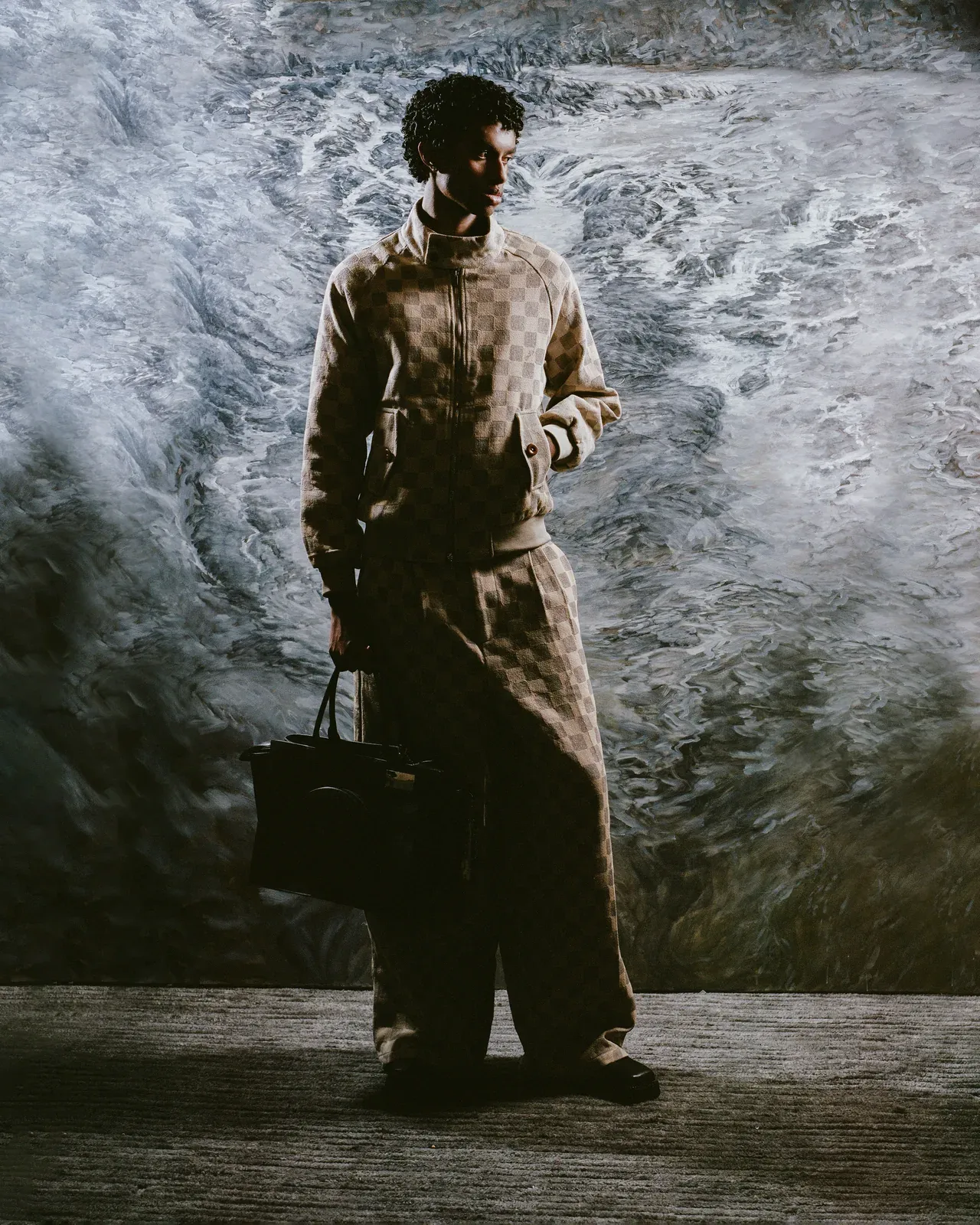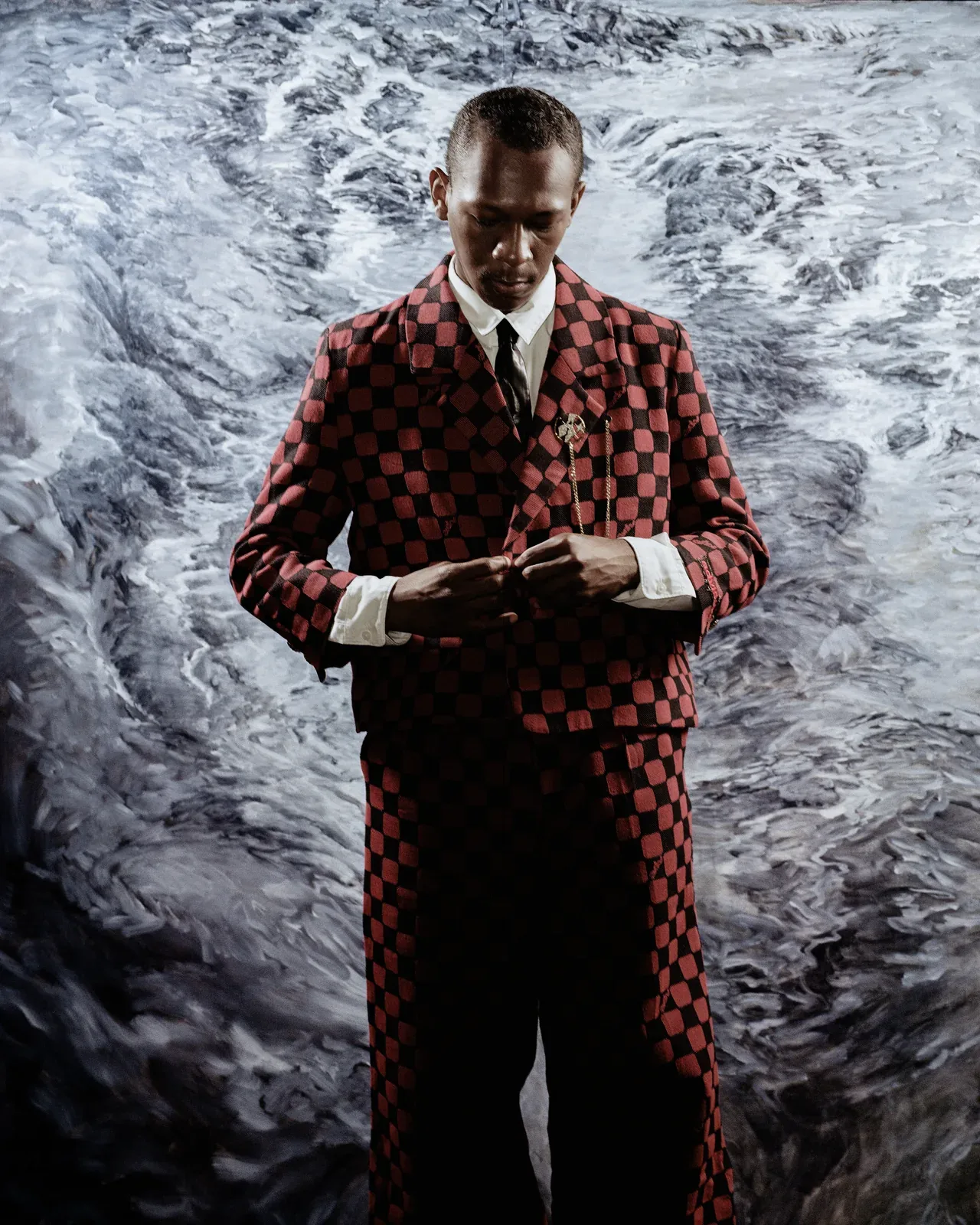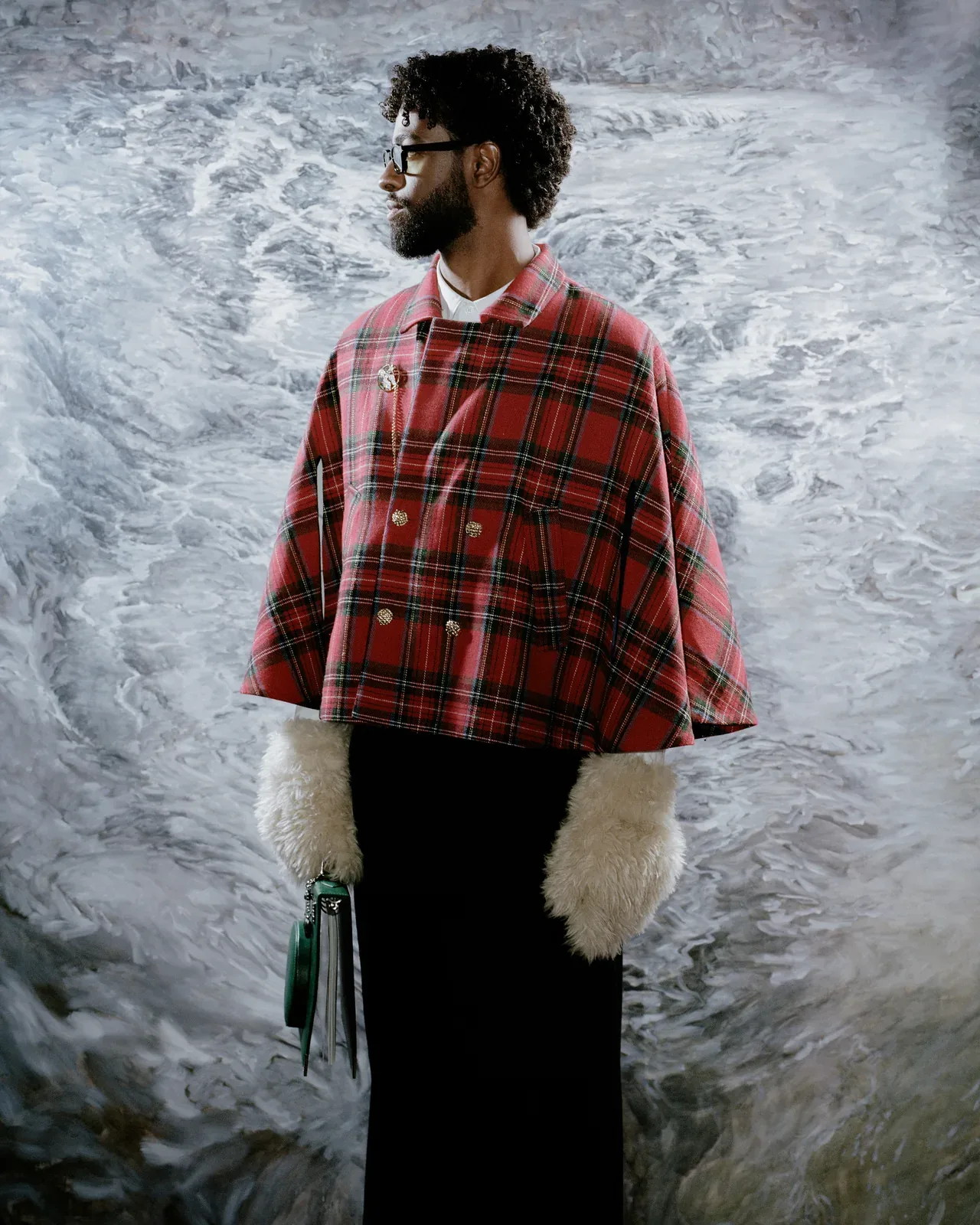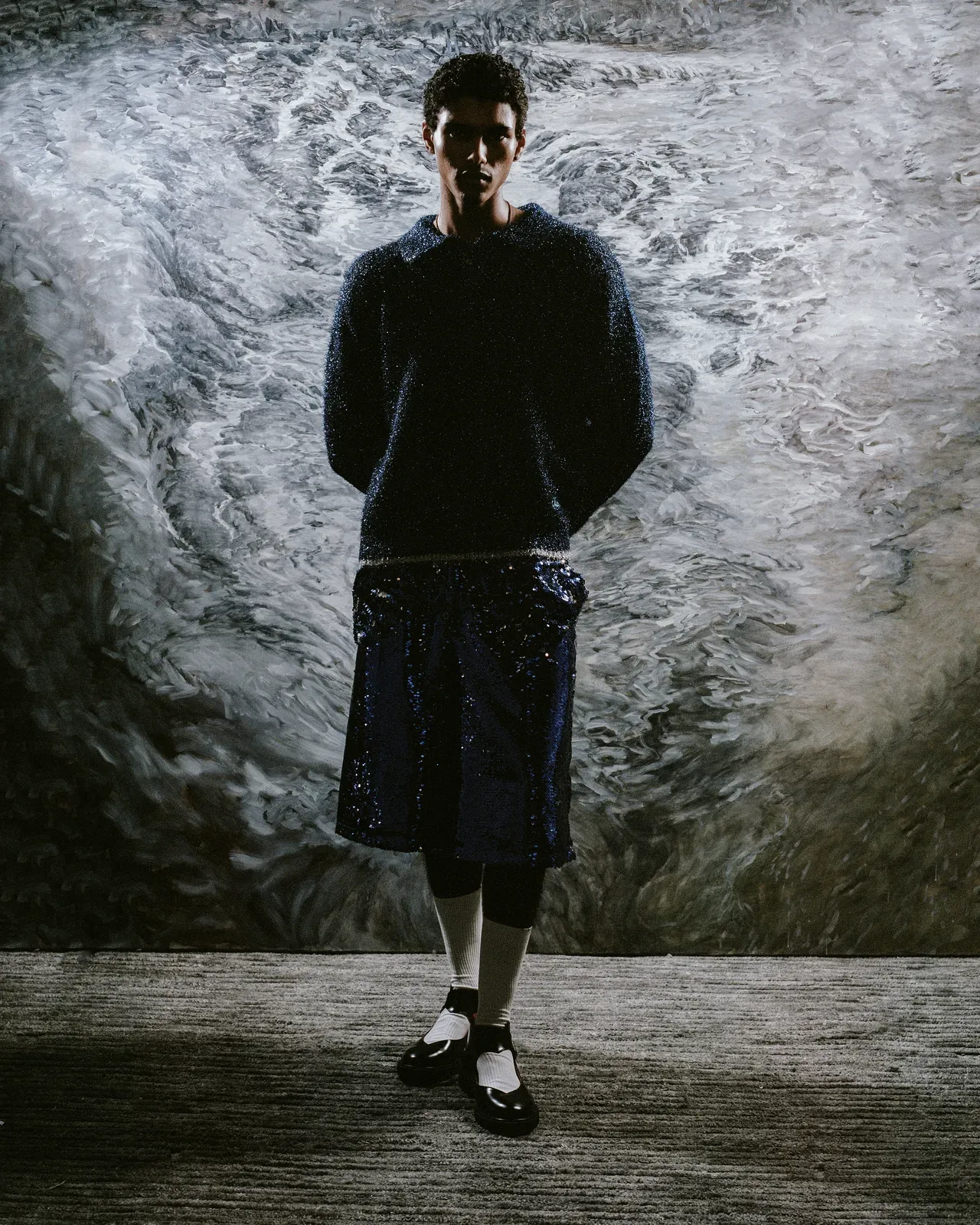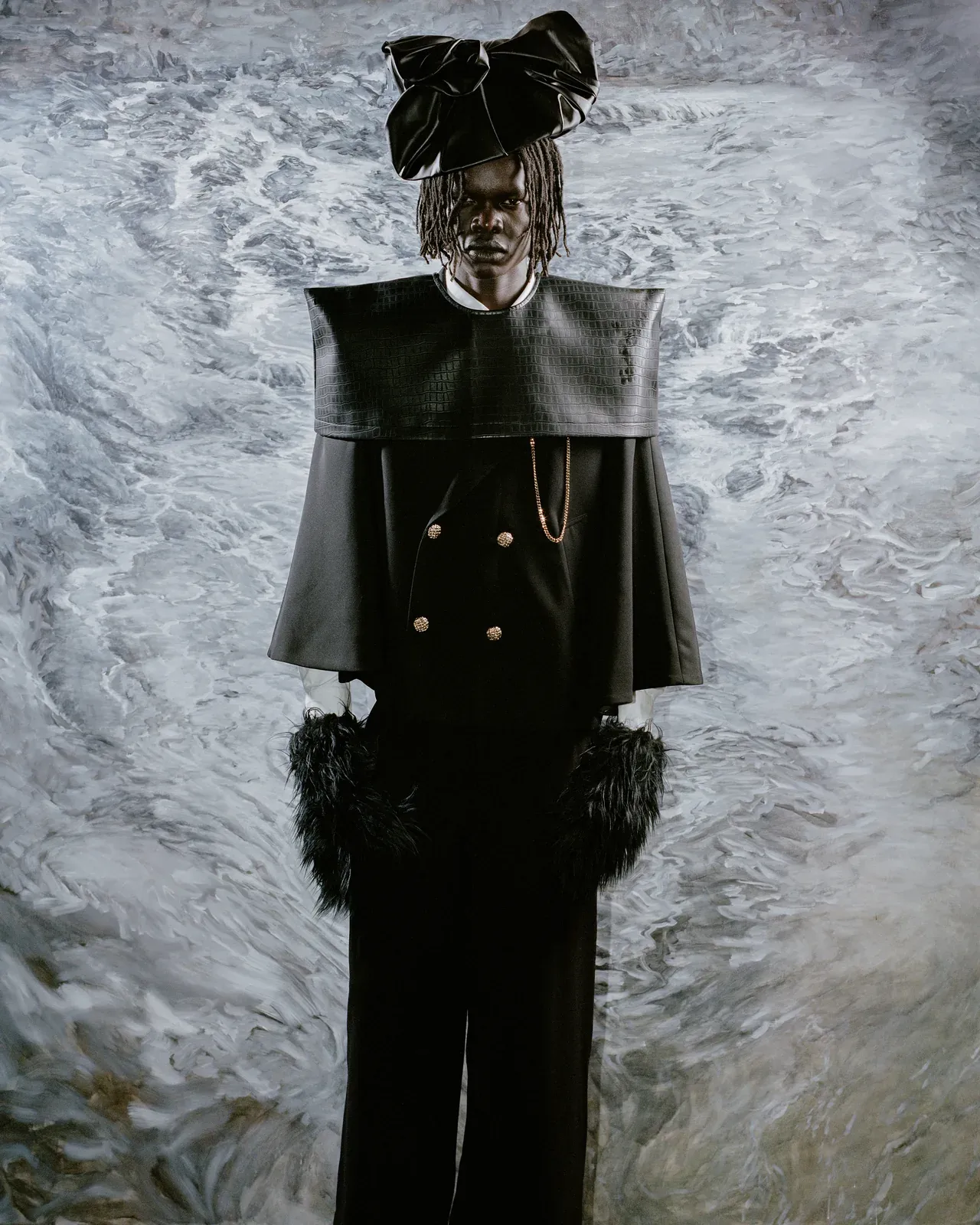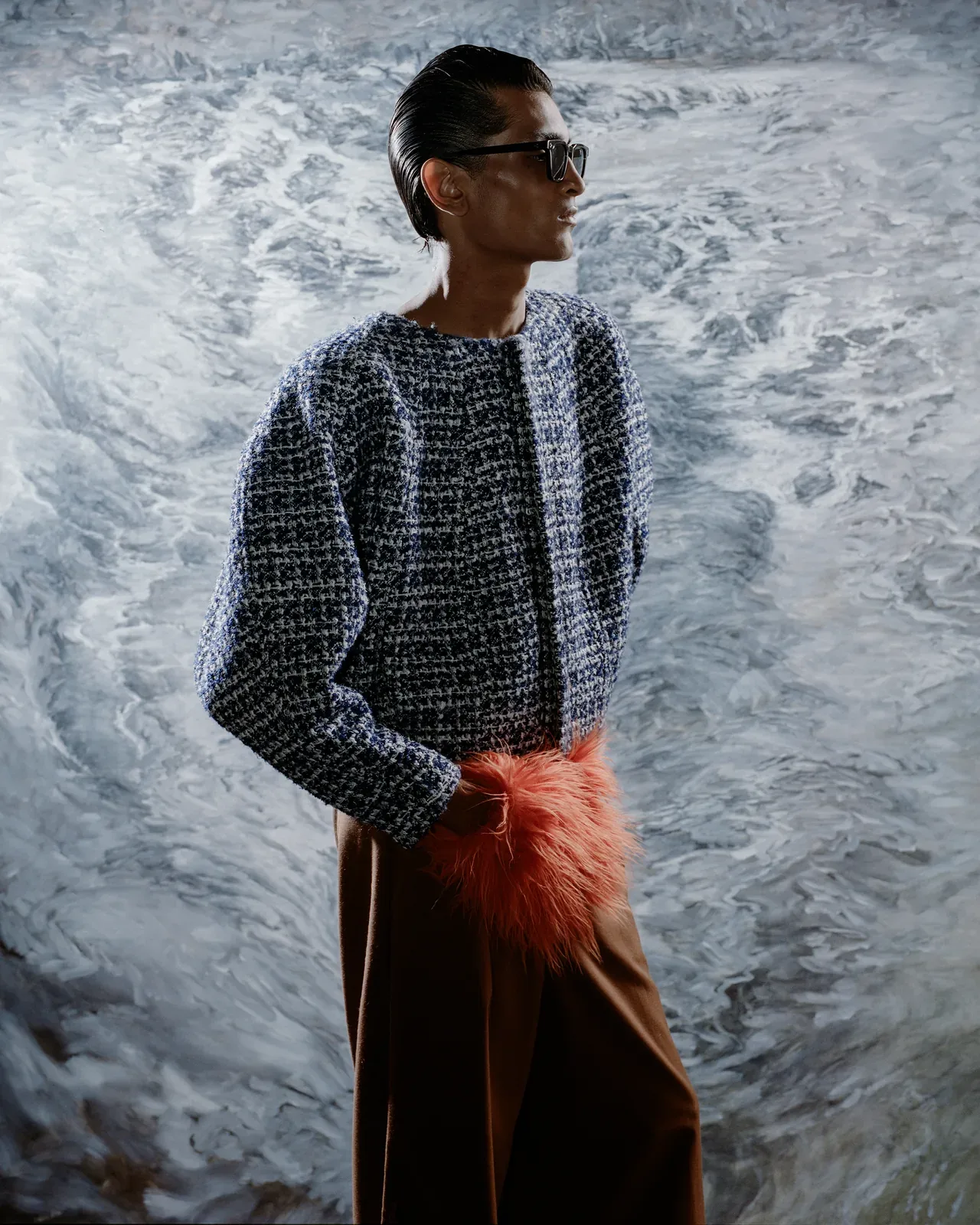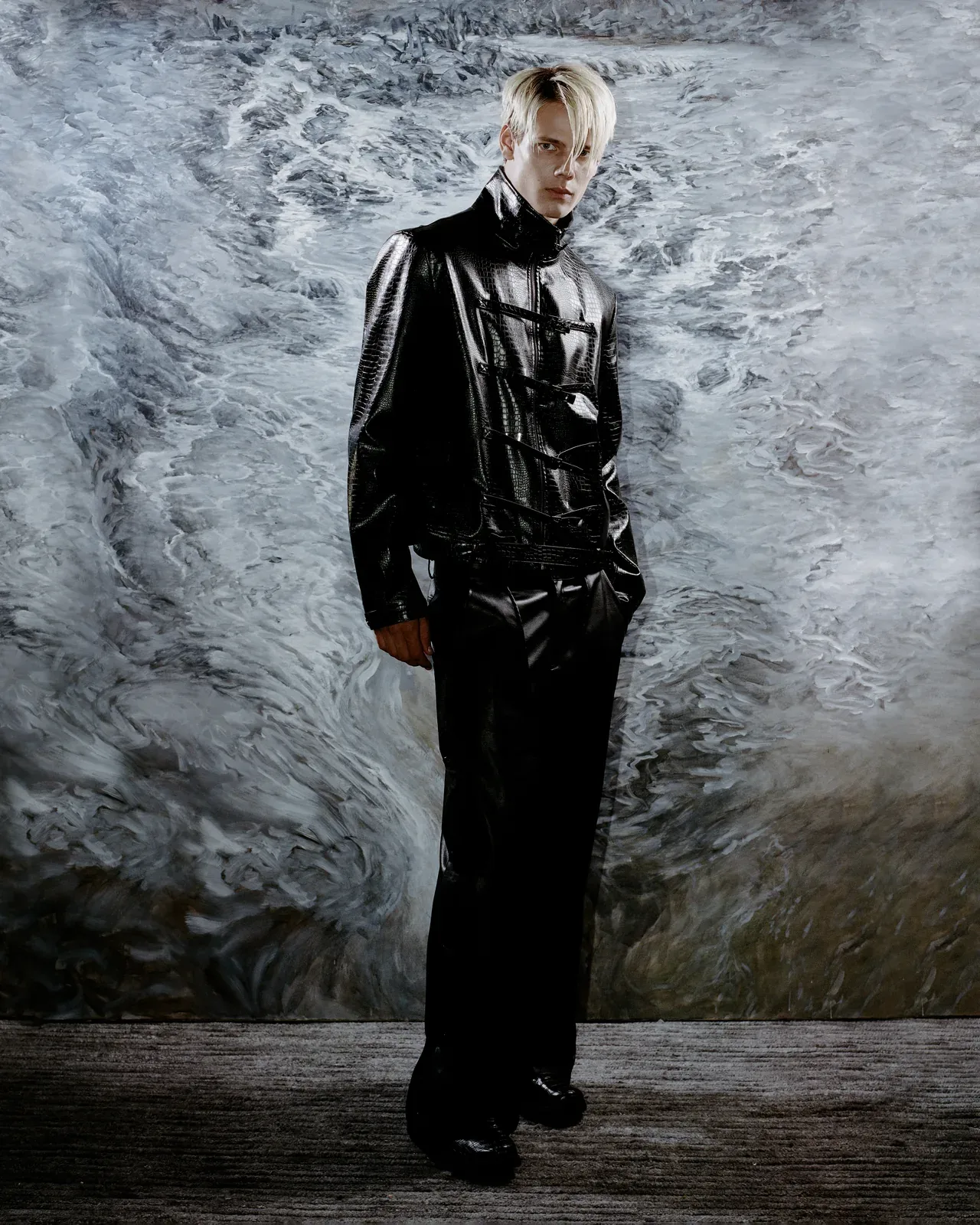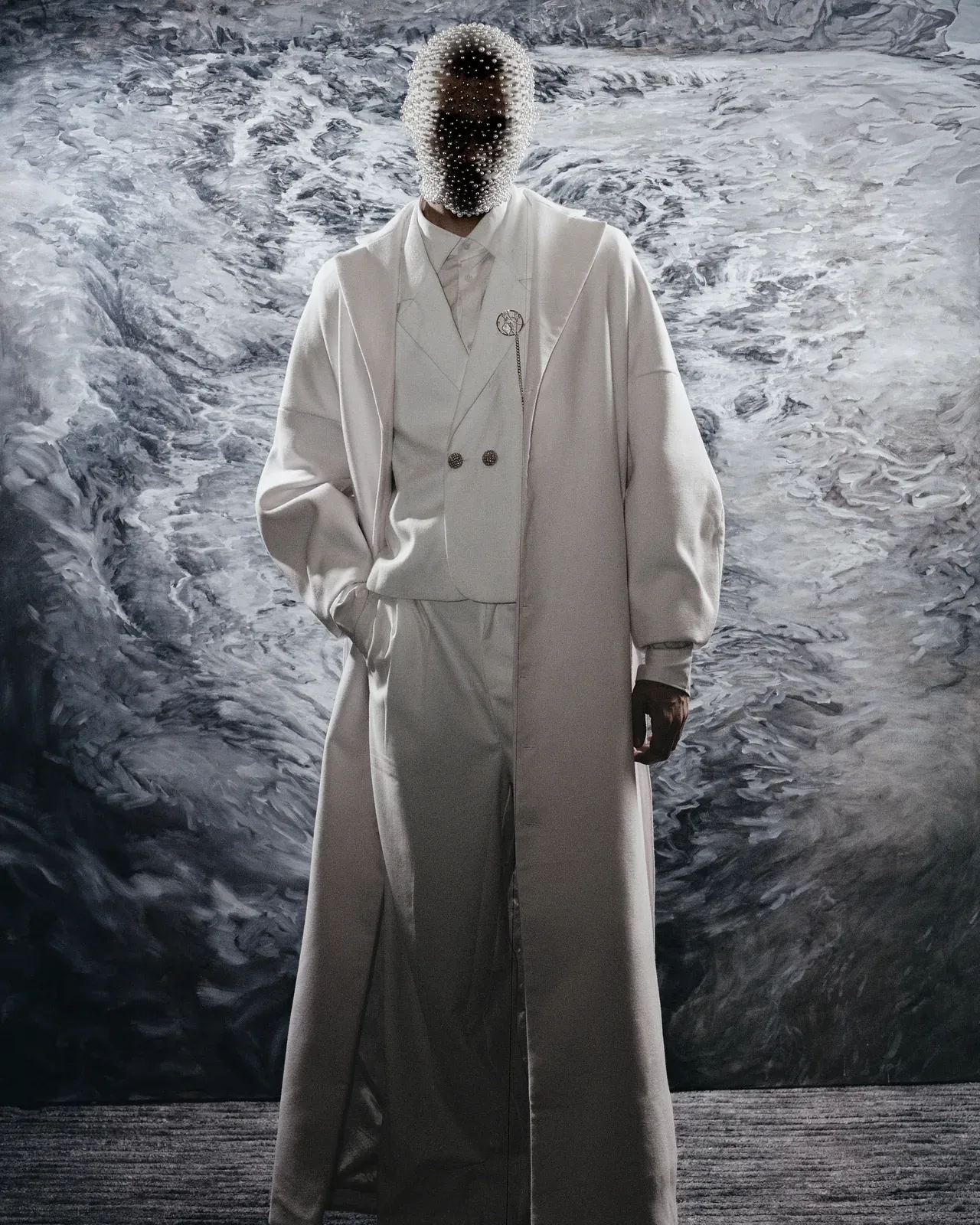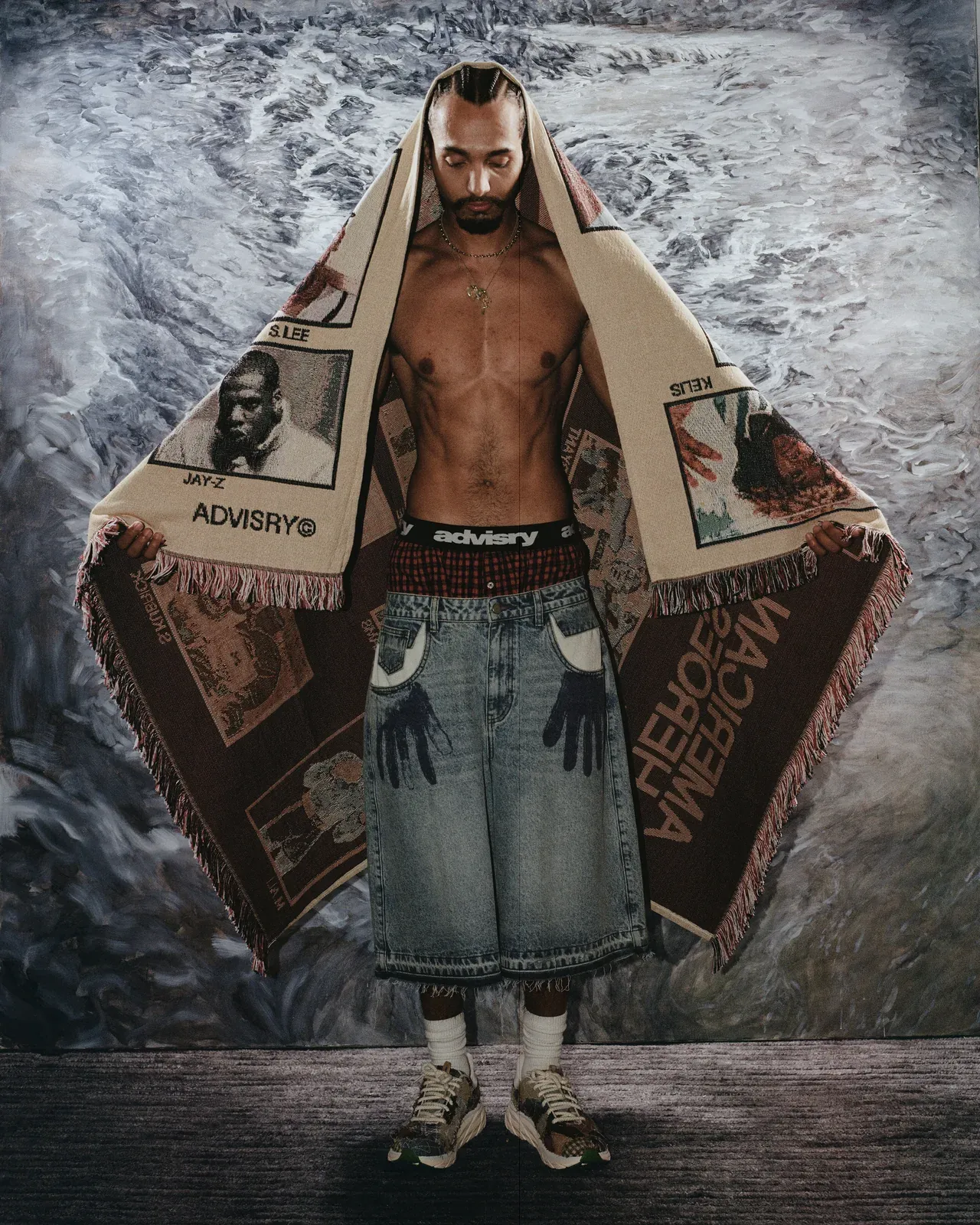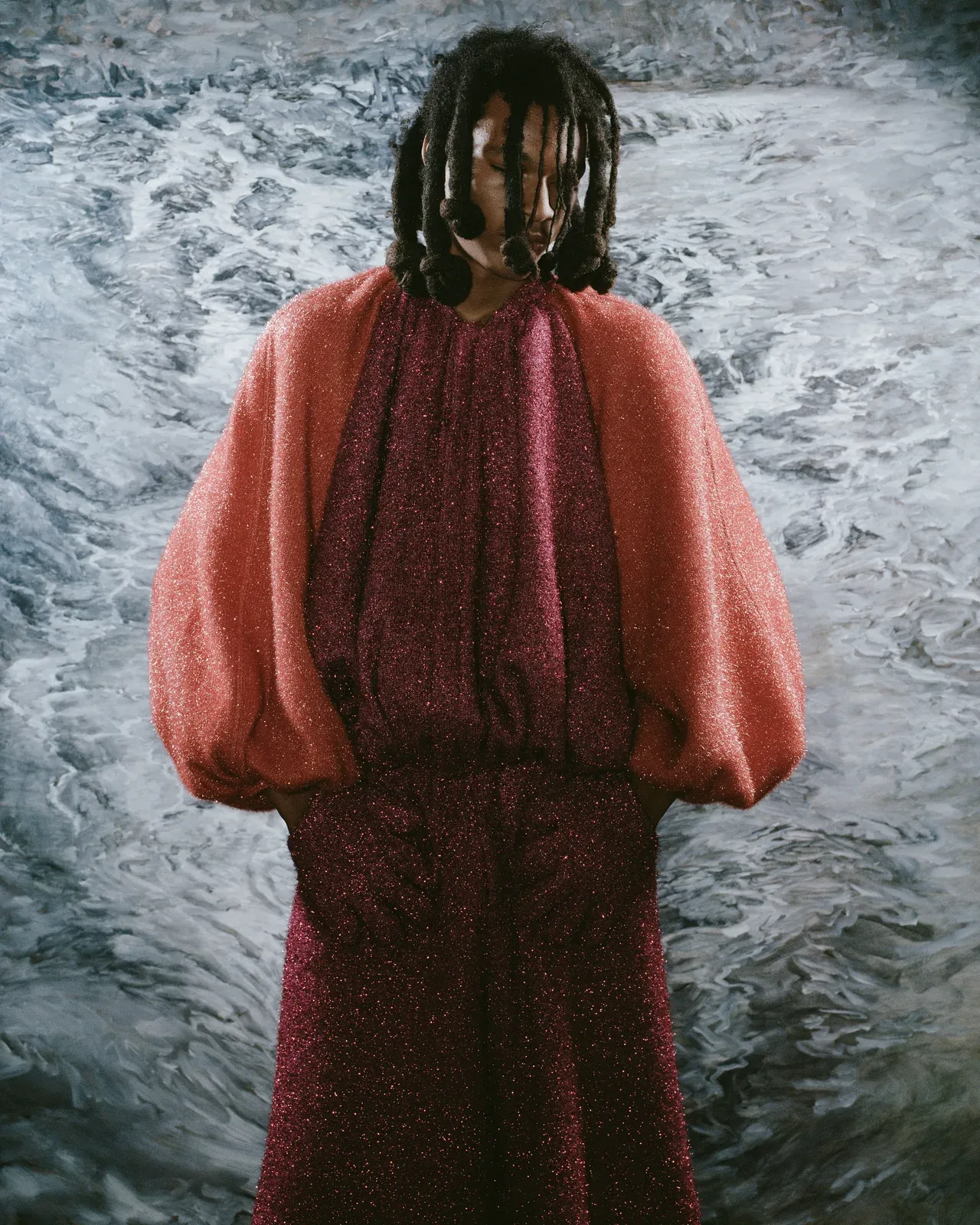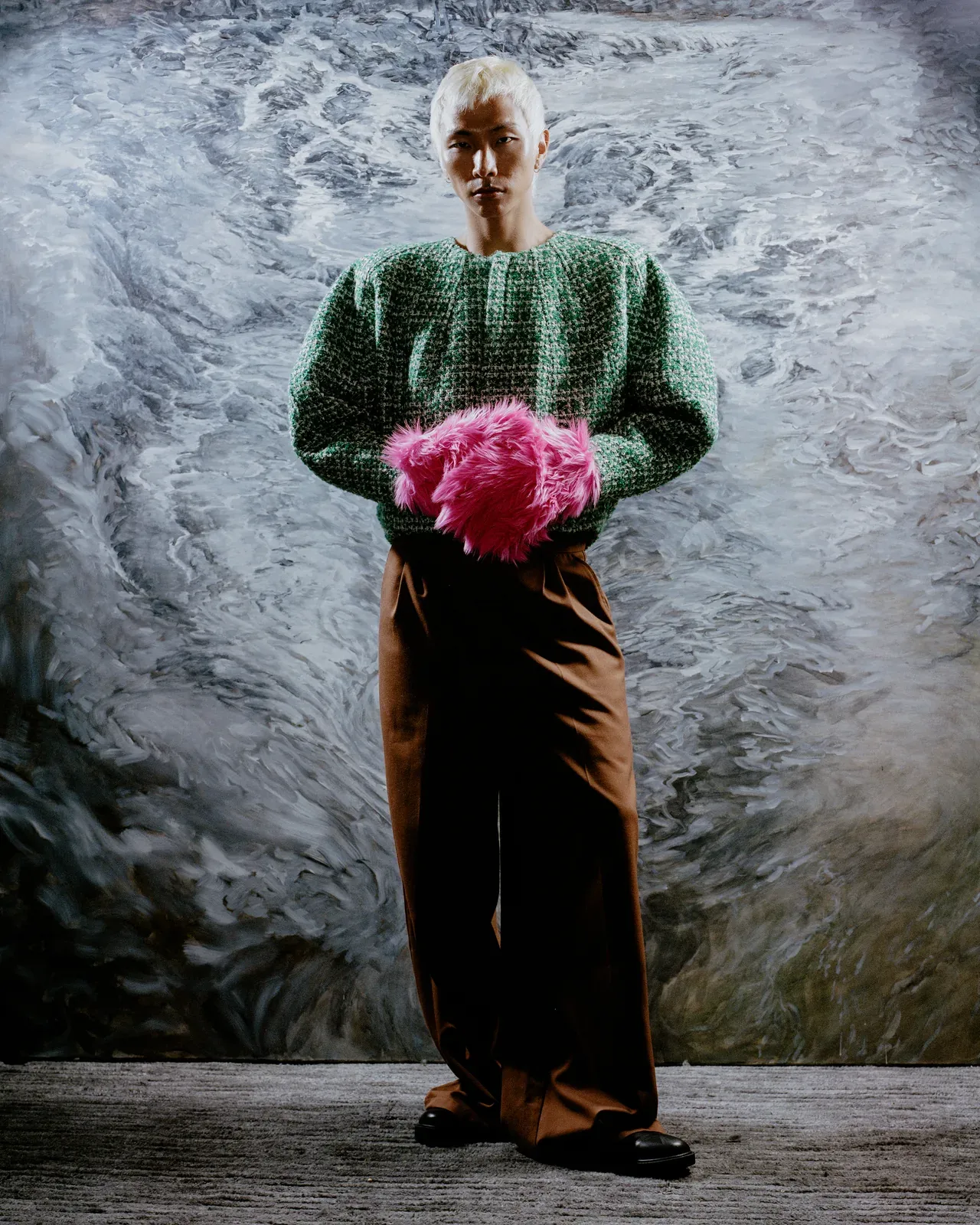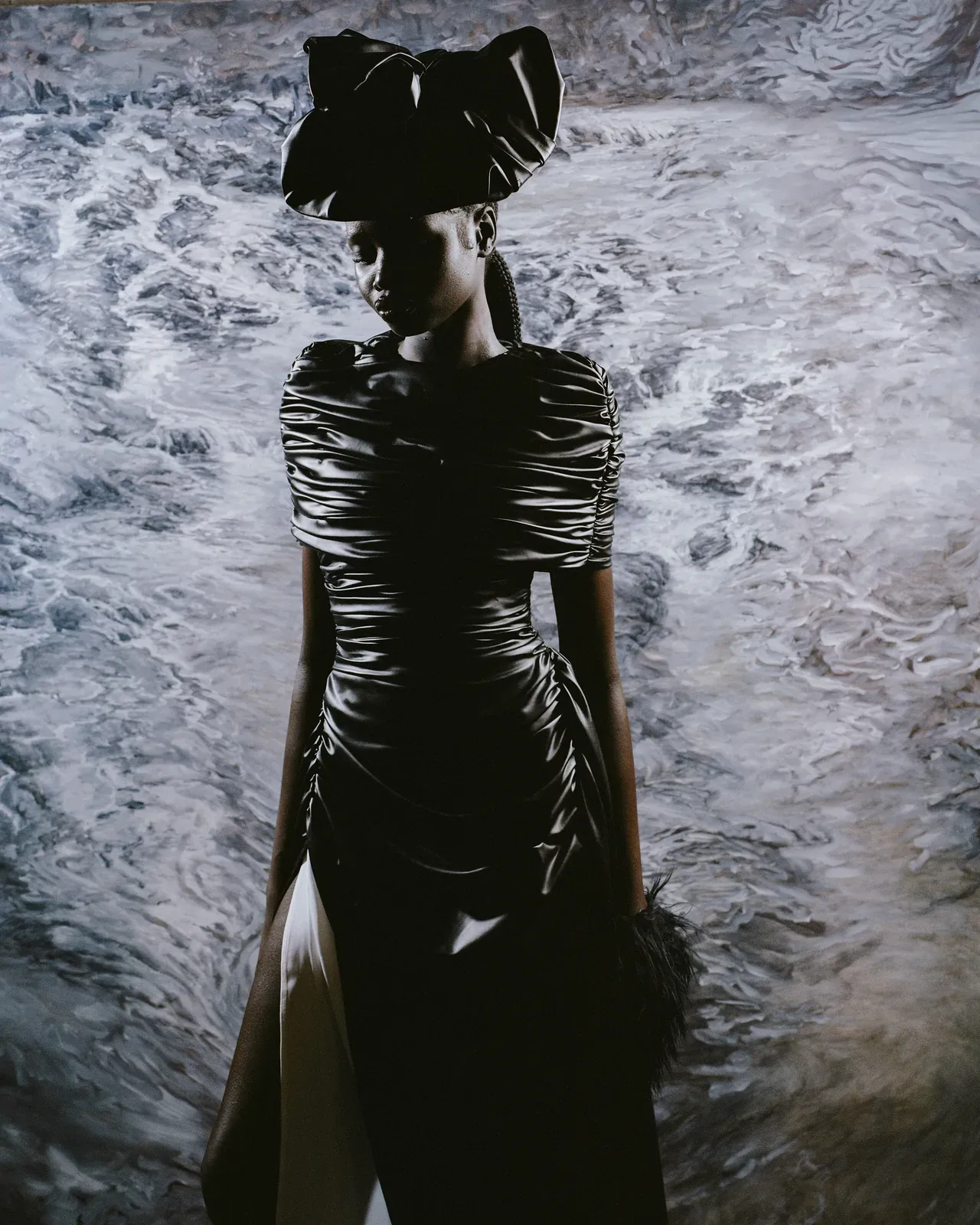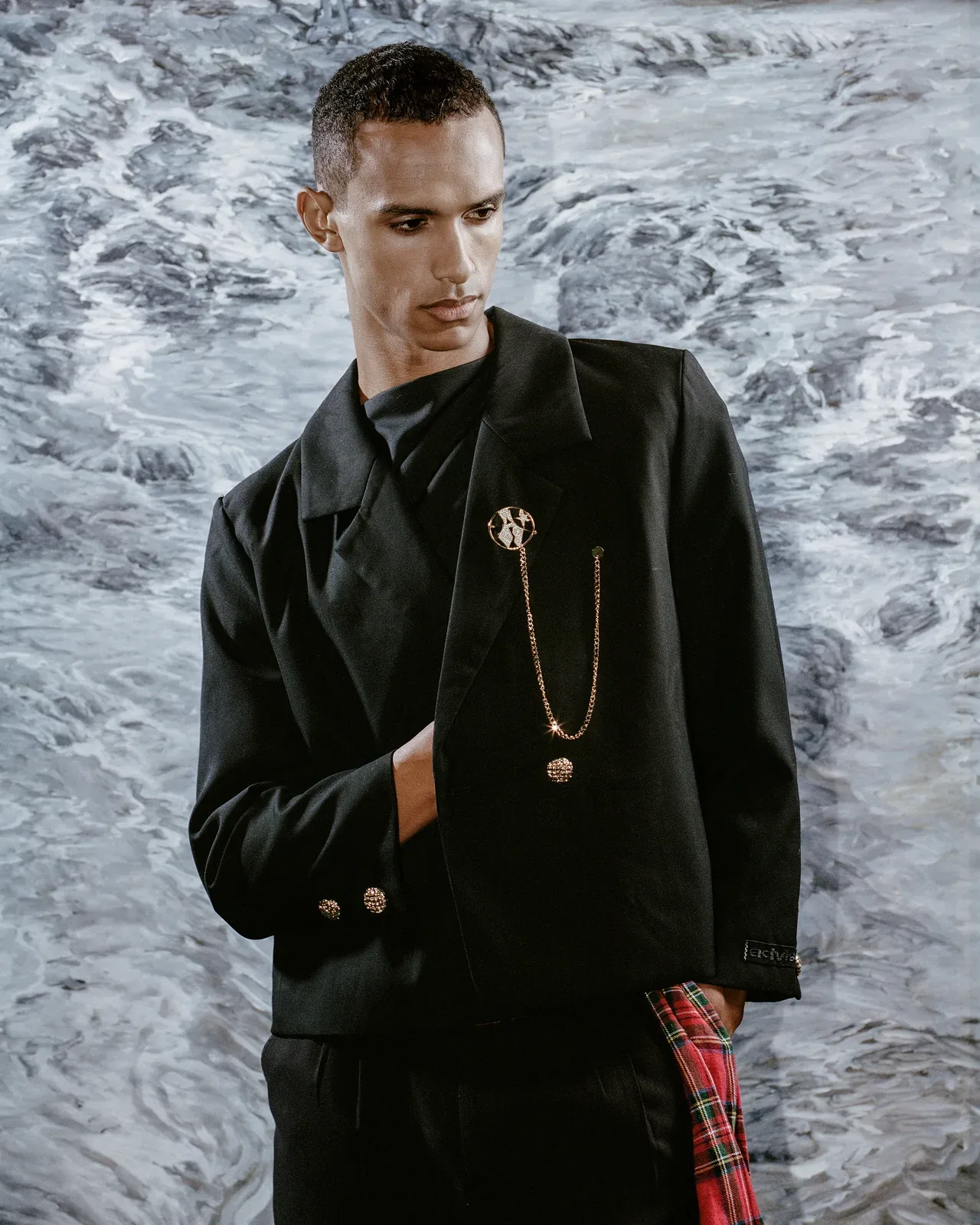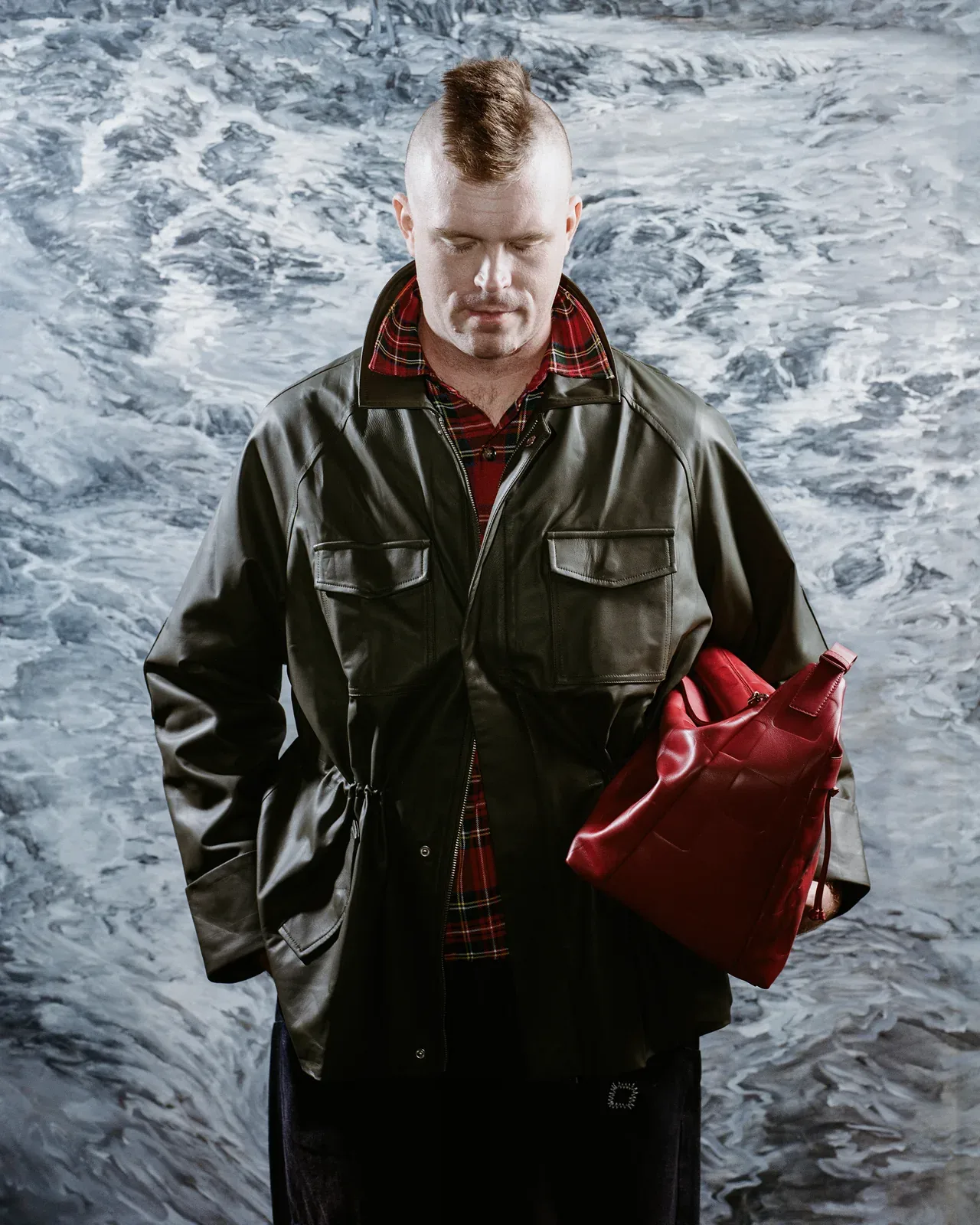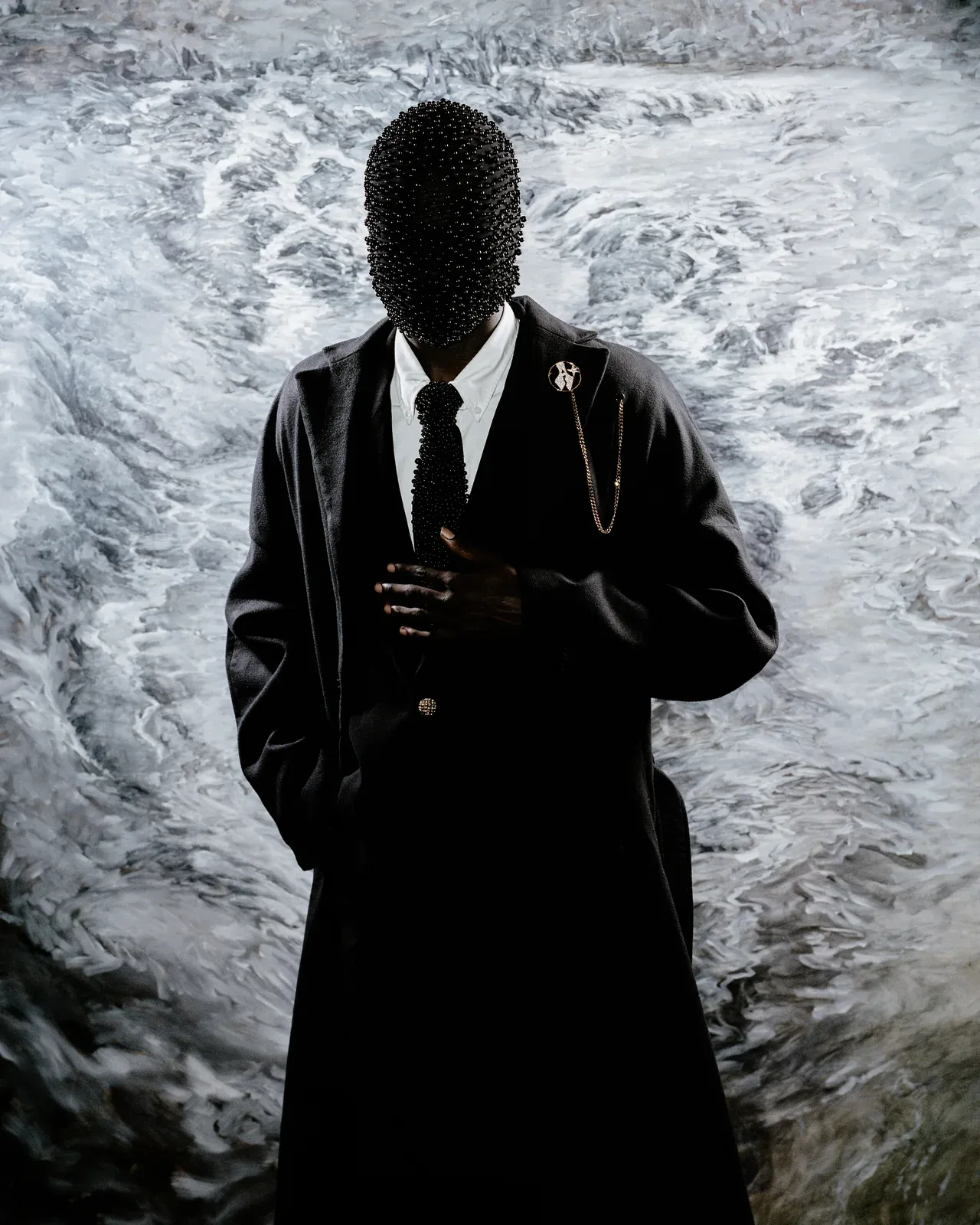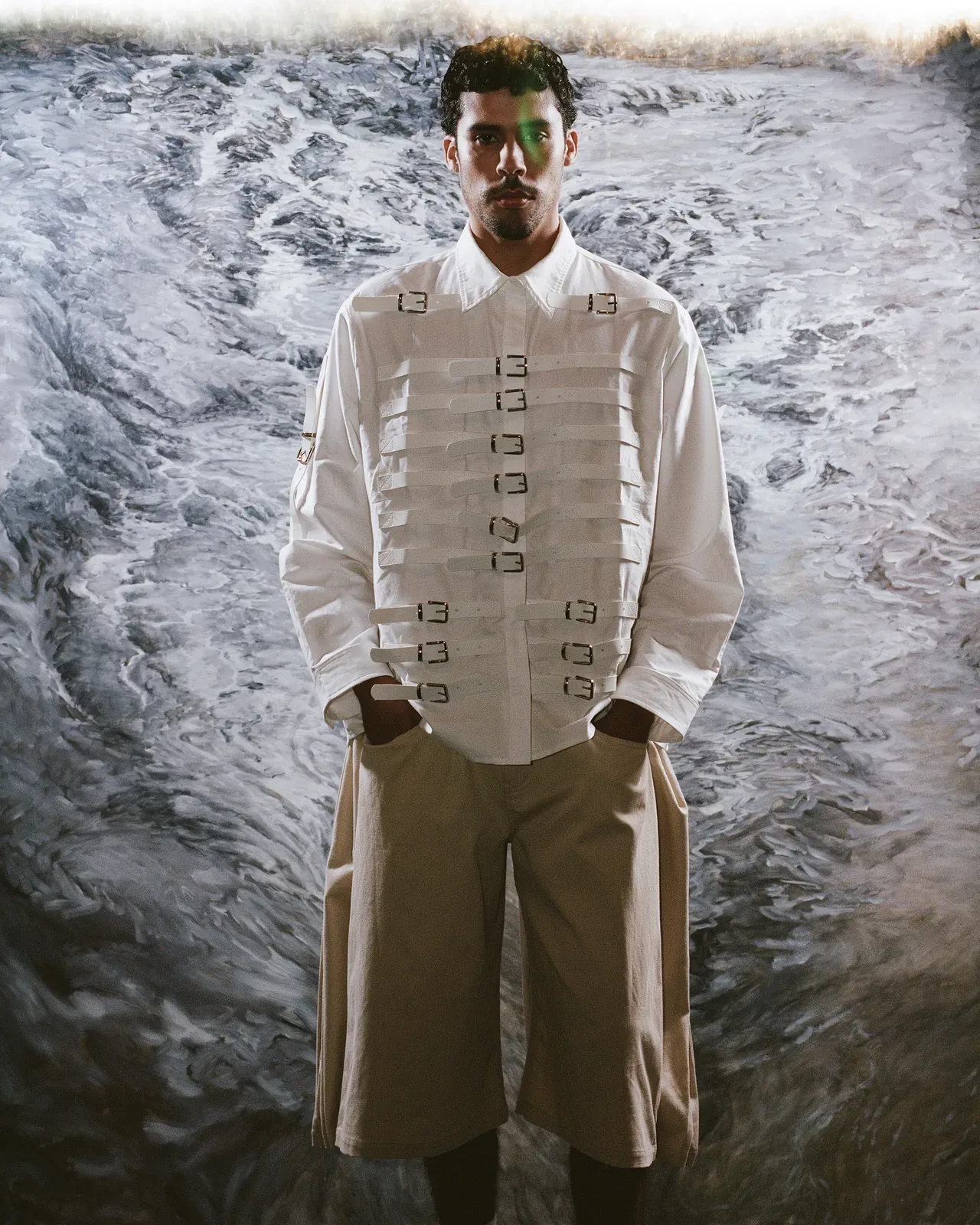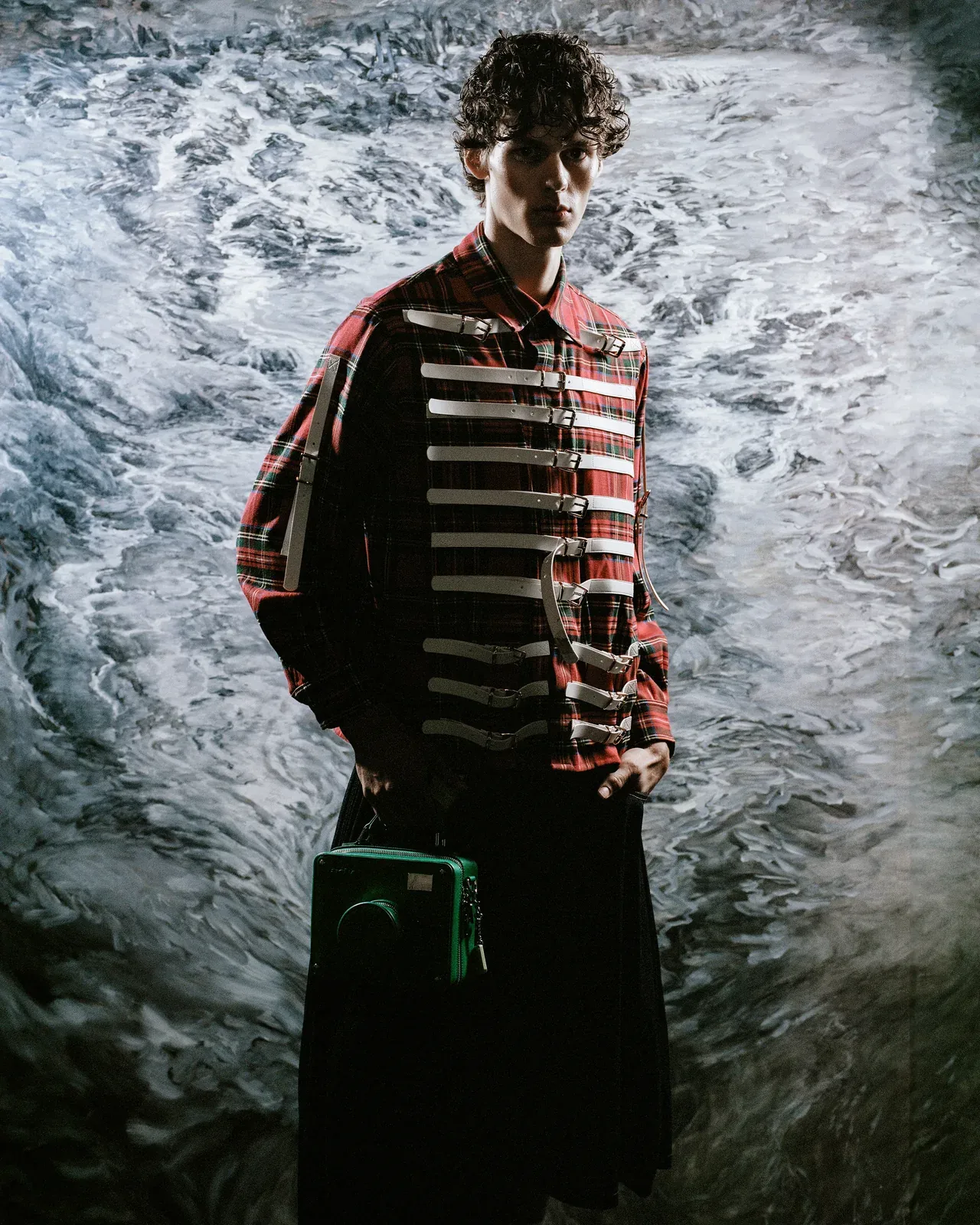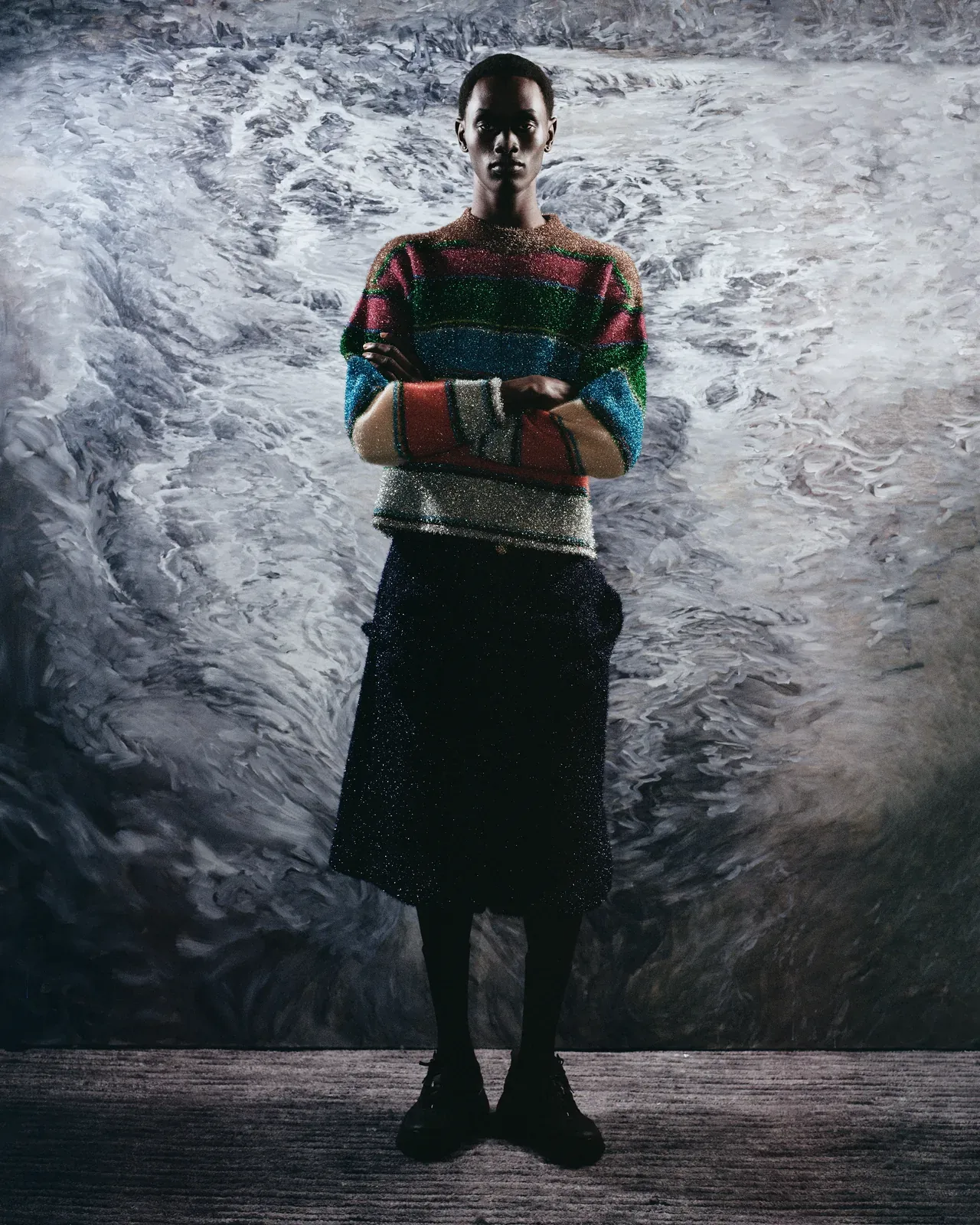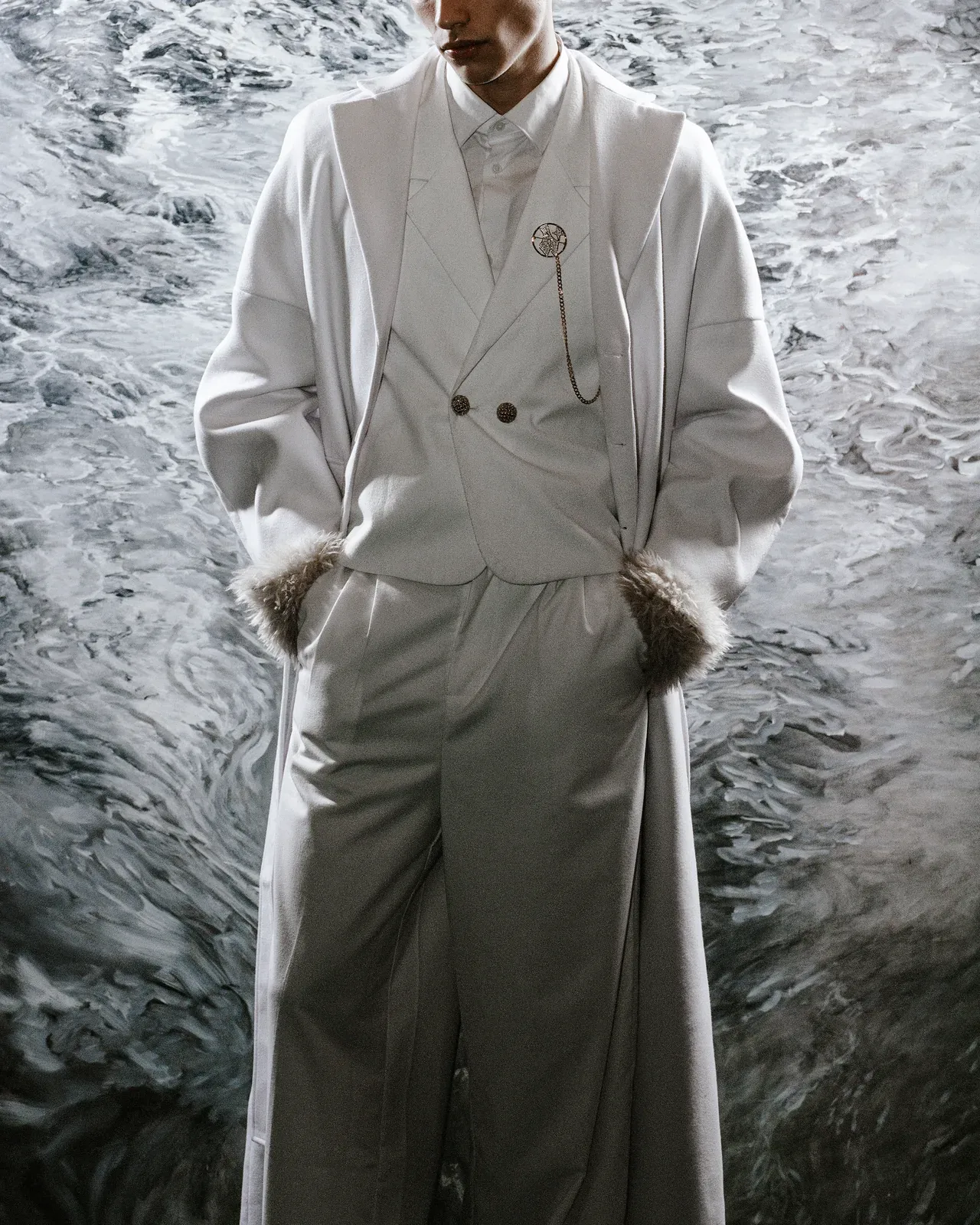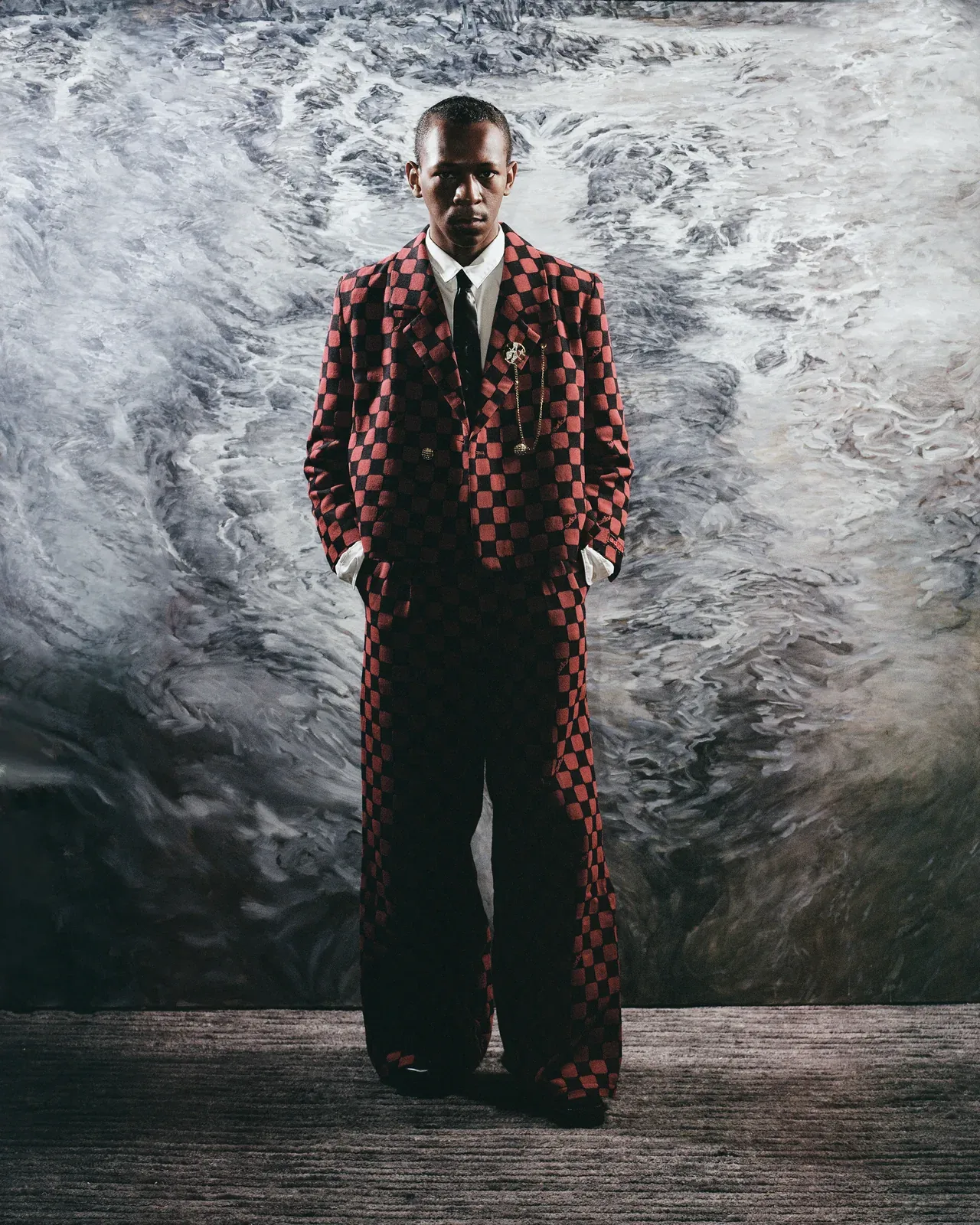
Keith Herron, founder of New York-based Advisry, blends runway tailoring with the comfort of a hoodie. In this conversation, spanning references from Travis Bickle to Rohmer, we discussed portraying America honestly, designing for character, and breaking the rules while knowing them.
There are no screens in Keith Herron’s studio. Hanging on the walls are the American Heroes tapestry and a work by Angela Anh Nguyen. On the table are sketchbooks, fabric swatches, and the garments he’s currently working on. Herron doesn’t see this as a place where he retreats to daydream. It’s a showroom where pieces are displayed and discussed, and where decisions are made. His dreams, however, take shape elsewhere: on the never-sleeping streets of New York, in the laid-back atmosphere of Los Angeles, and in Sacramento.
For readers meeting you for the first time: how would you introduce yourself and Advisry without mentioning your age, the Supreme story, or anyone famous who’s worn your clothes?
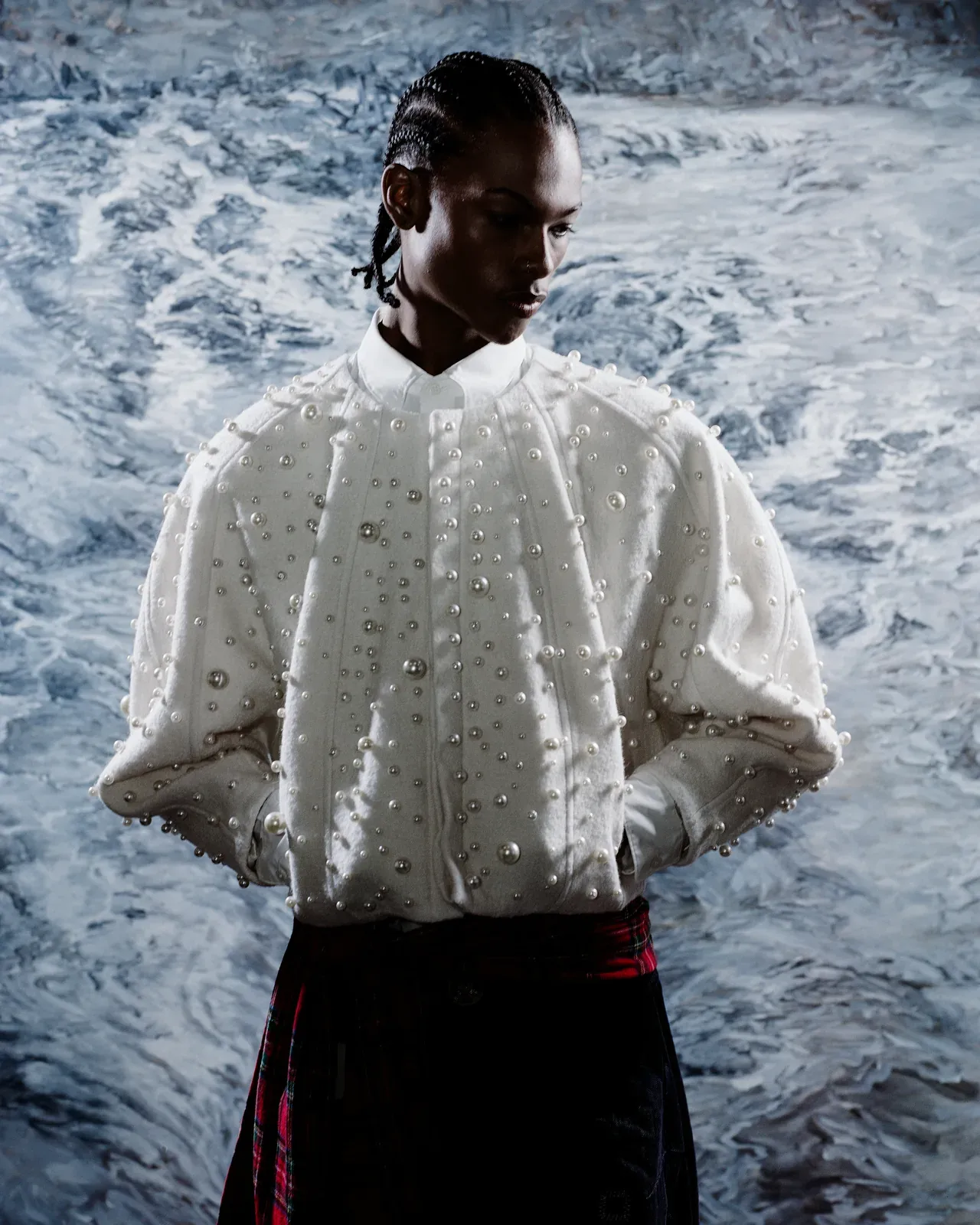
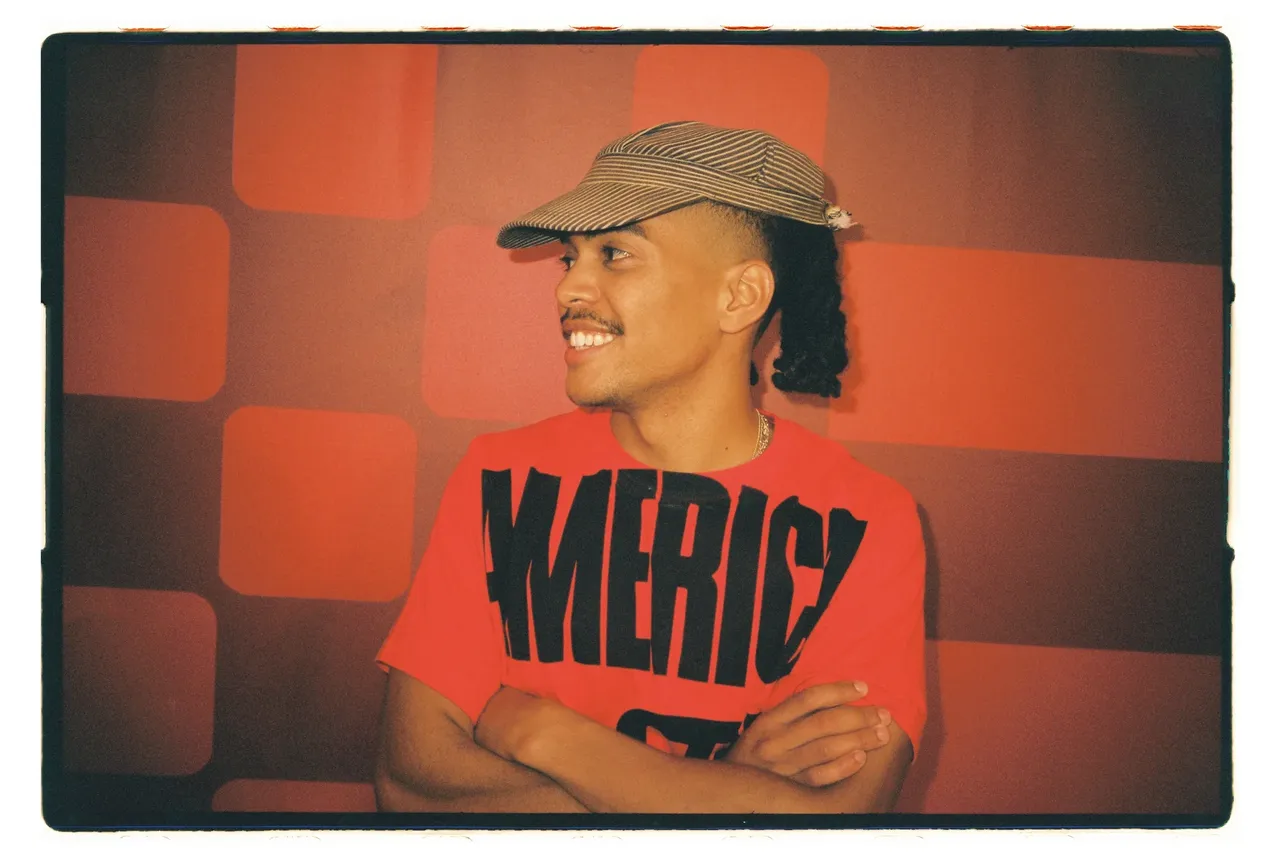
My name is Keith Herron. I’m from Sacramento, CA, and I am the founder and creative director of Advisry, an NYC-based ready-to-wear brand. We make narrative-driven collections with clothes that outfit the artistic lifestyle: runway-level tailoring and construction that is as easy to wear as a hoodie. I design around three modes of the creative lifestyle: craft, performance, and celebration, so a single piece can move between them.
If someone walked into the Advisry studio today, what would they find on the walls, playing on the screen or lying on the table, and what would that tell them about who you are right now?
We have our American Heroes tapestry piece on one wall, and a piece by Angela Anh Nguyen on another wall. We have foam boards up with new designs, colours, and references. On the table are my portfolio, sketchbooks, line sheets, swatchbooks, sewing tools, and whatever garments are of focus. We don’t have any screens in the studio, actually. It is less of a place where I disappear to dream and more of a showroom space currently. I mostly work remotely, and leave the office to meet with collaborators. Business operations and showroom activity are what mostly happen in the studio. Things get shown, discussed and decided there.
You started a collection (Spring/Summer 2027) about defending America with Travis Bickle, a lonely man who turns to violence. Why open the argument with its strongest counterexample?
It was important to me to be honest and not purely idealistic when tackling a subject that big. If you only tell the flattering side of America, you’re not really talking about America. Travis Bickle interested me because he isn’t exactly a villain. He was a product of the system: an isolated veteran overlooked by the people and city around him. It was a more complex choice than picking someone purely evil, and it let me bring nuance to the dark side of the American condition.
Baldwin spent much of his life outside America so he could see it clearly. Have you ever needed distance from New York, or from Sacramento, to see either one properly?
Thankfully, Lady Bird by Greta Gerwig exists to allow the entire world to understand what it’s like to leave Sacramento for New York, only to realise what you loved about Sacramento in the first place. I spend a lot of time in California still, in LA, and I often get asked which place I like more. To me, they’re special for the exact opposite reasons. If I spend too much time in New York, I feel that I am consistently out in the city, busy, and visible. If I spend too much time in LA, I feel like I have too much of my own time and miss how easy it is to see friends. A huge plus of being in LA is I can drive up to Sacramento and Northern California whenever I want. Being between California and New York really allows me to see each clearly.

On each seat was a fan with a photo of your father as a child, so your family became the audience’s prop for the evening. What did he say when he saw his younger self in a few hundred strangers’ hands?
I kept making jokes to him like, “You know that’s you on the fans, right?” And he would respond, “Yeah, I know!” He loved it. He got a bunch to bring back to his family in Cleveland. It was funny to me going to a friend’s home after the show, someone with a completely different background than mine, and seeing my father and his family on display on their bookshelf in their brownstone, next to their own family’s treasured memories and loved ones.
You’ve said you’re unsure whether the WSA building is exploiting brands like yours or giving them a chance. A year on, have you decided?
They seem to still be leasing studios to more of my friends, so at this point, I think it’s safe to say they’re committed to offering spaces for great cultural moments to happen.
Fall/Winter 2025 was the first runway collection you designed for people to actually wear. What did you have to give up, and do you miss the pieces that were never meant to exist?
That collection was specifically restricted to garments wearable in the real world so I could train my design brain a bit. I eased up on that rule after. I still make dreamier things, but I am currently working on that outlet where those things can peacefully exist. That will come very soon, hopefully.
“If you only tell the flattering side of America, you’re not really talking about America.”
Korea has embraced Advisry. What do Korean customers see in it that American customers might miss?
I have never been, so it is hard for me to say! Korean retailers found the brand early, before I had engaged the international market myself, and the pieces that seem to be connecting are the very expressive ones. My guess is that the Korean customer treats clothing as personal expression and play more readily, and isn’t as quick to ask if it is practical. I’d love to go and find out if I’m right.
You’ve called not knowing the rules a superpower. Now that you’ve been mentored by people who wrote them, which rule do you wish you’d never learned?
That is a tough one… The longer I have been in this industry, the more I come to understand the rules. A lot of them are cause and effect: this exists so this can happen. I believe not knowing the rules just made it a lot easier (or harder in a lot of cases) to get to this point. Now that we’re at this point, it’s about learning them well enough to break them intentionally. I’m still deciding which rules are worth keeping.
You’ve said nothing much happens in Rohmer’s films. What’s the fashion equivalent of a scene where nothing happens, and could you put it on a runway?
Those scenes are mundane on the surface, but because the characters aren’t performing for each other, you end up seeing something true about human nature. The fashion equivalent is a quieter look, restrained in colour or silhouette, with small details that still carry the wearer’s personality. I believe it is a worthwhile runway conversation because people want to see themselves in a collection, and quiet looks tend to be the ones they can. A run of them in a row begins to feel like a point of view.
On Ruby, you dressed a character, not a customer. Is it easier to design for someone who doesn’t exist?
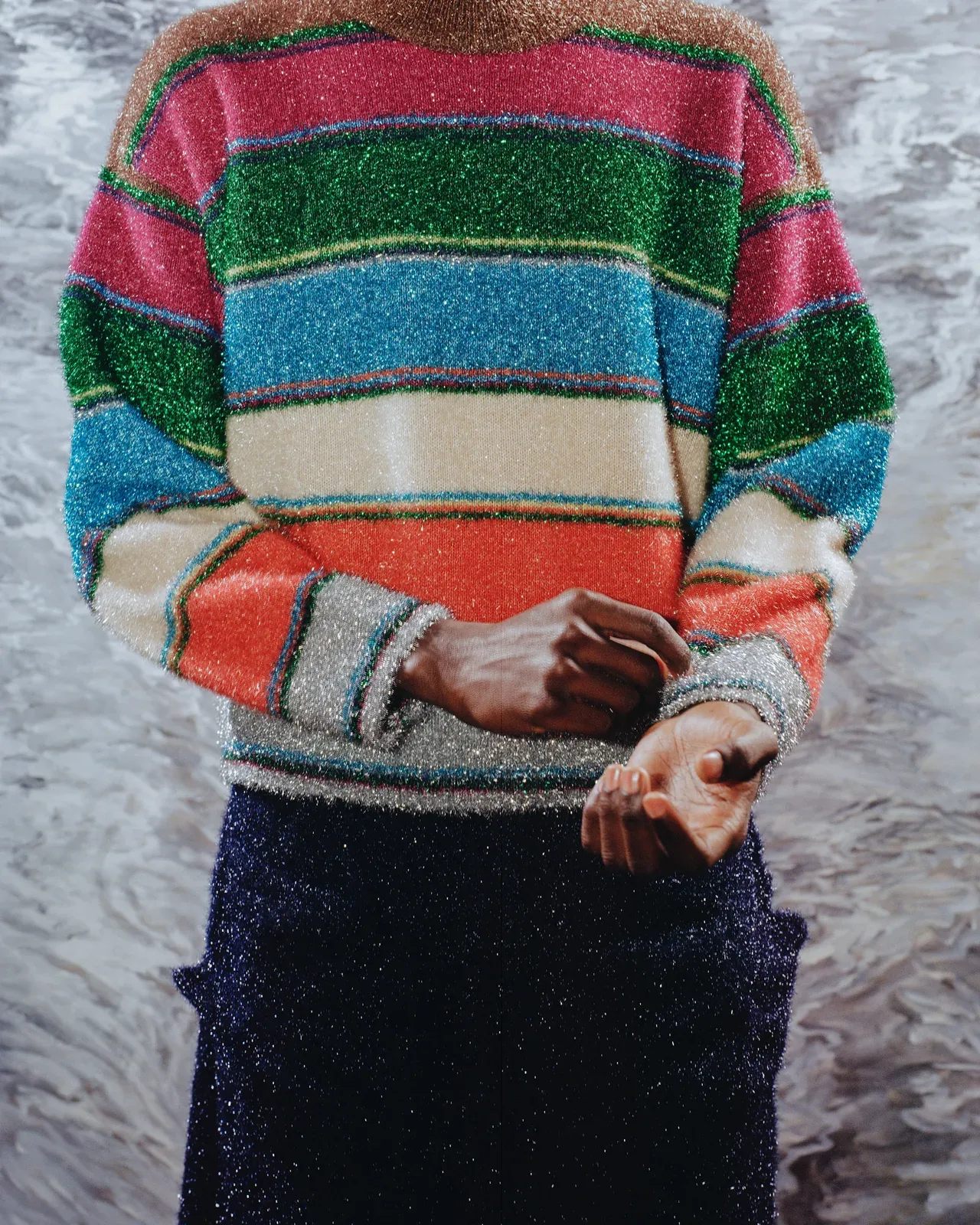
I believe fashion design is designing for someone who doesn’t exist, ironically. Costume design had me create so much more context for the characters than I ever would for fashion. What is their income level? Where do they get their clothes? Who owned their clothes before them? Are they afraid to get dirty? Are they dressing to impress their friends? Do their clothes signal community? I essentially had to create an entire closet of backstory to land on each individual look. It isn’t easier: a character comes with constraints, while a customer is a blank that I define. It is simply a completely different process.
As a kid, you overheard a close friend telling others not to buy your shirts. Are you still in touch, and did that moment shape how you take criticism now?
Yeah, we speak once or twice a year. I try to maintain most of my relationships throughout my life. That moment was when I realised I wasn’t doing this brand for the approval of the peers I had been assigned. I wanted to get involved in streetwear because of the communities within it, a peer group I chose, not to be cool at school. As far as how it shaped how I take criticism today, I no longer really aim to be a brand for everyone. That doesn’t really exist. I make things that like-minded people can hopefully recognise.
Your team is built on friendships that go back to preschool. What happens when a friend’s work isn’t good enough?
Honestly, it takes a lot of trust. I try to look at the people around me as the people they want to be. If you want to direct films, you are a filmmaker to me. But that is also why I can be straight with you when a film isn’t great. We talk about it, and we make sure you learn from the experience, and keep developing the skill until the rest of the world catches up to see you as a filmmaker too.
Headlines still lead with your age. At twenty-six, with twelve years of brand history behind you, when do you stop being a young designer, and do you want to?
Yes, definitely! I’m not going to pretend the label isn’t there. It follows you, and I understand why, but the last thing I want is for my age to define me. I think it stops when the headline leads with the work and not the age of the person who made it. I’d rather the clothes carry the experience, because that’s where the twelve years actually show up.