Skinny jeans are making a comeback, bras are no longer hidden, shoulders are getting so big they won’t fit through doorways, and apparently no one wants to wear a normal skirt this spring. At New York Fashion Week S/S 2027, we found ourselves at an elite wedding one moment, then stepped into a giant chrysalis, stopped by Christopher Street with the Tudors, met a seven-faced alien, and were unintentionally confronted with our 2007 Facebook profile picture. In essence, fashion is once again preparing to sell us back everything we thought we’d forgotten.
Ralph Lauren
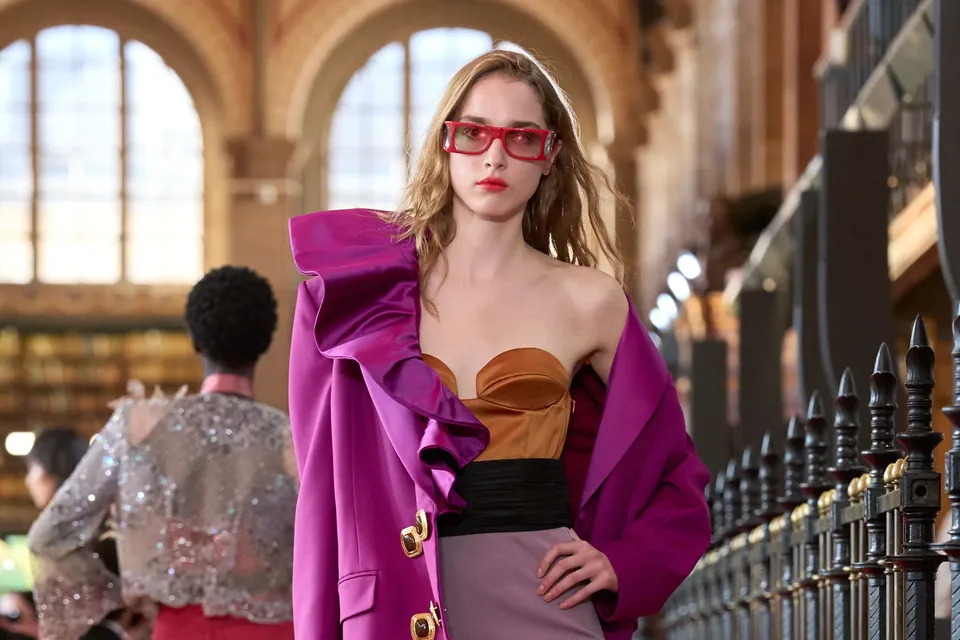
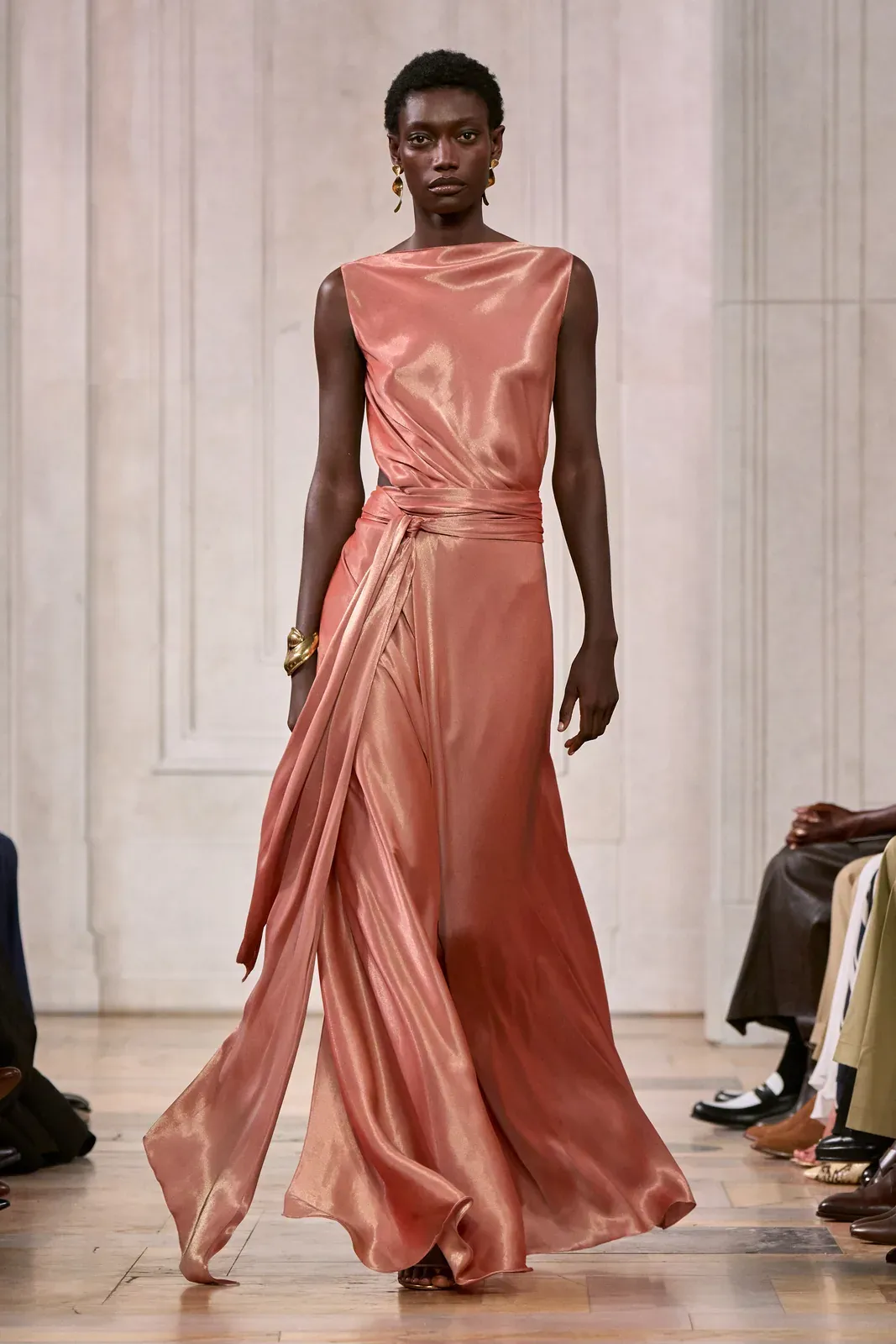
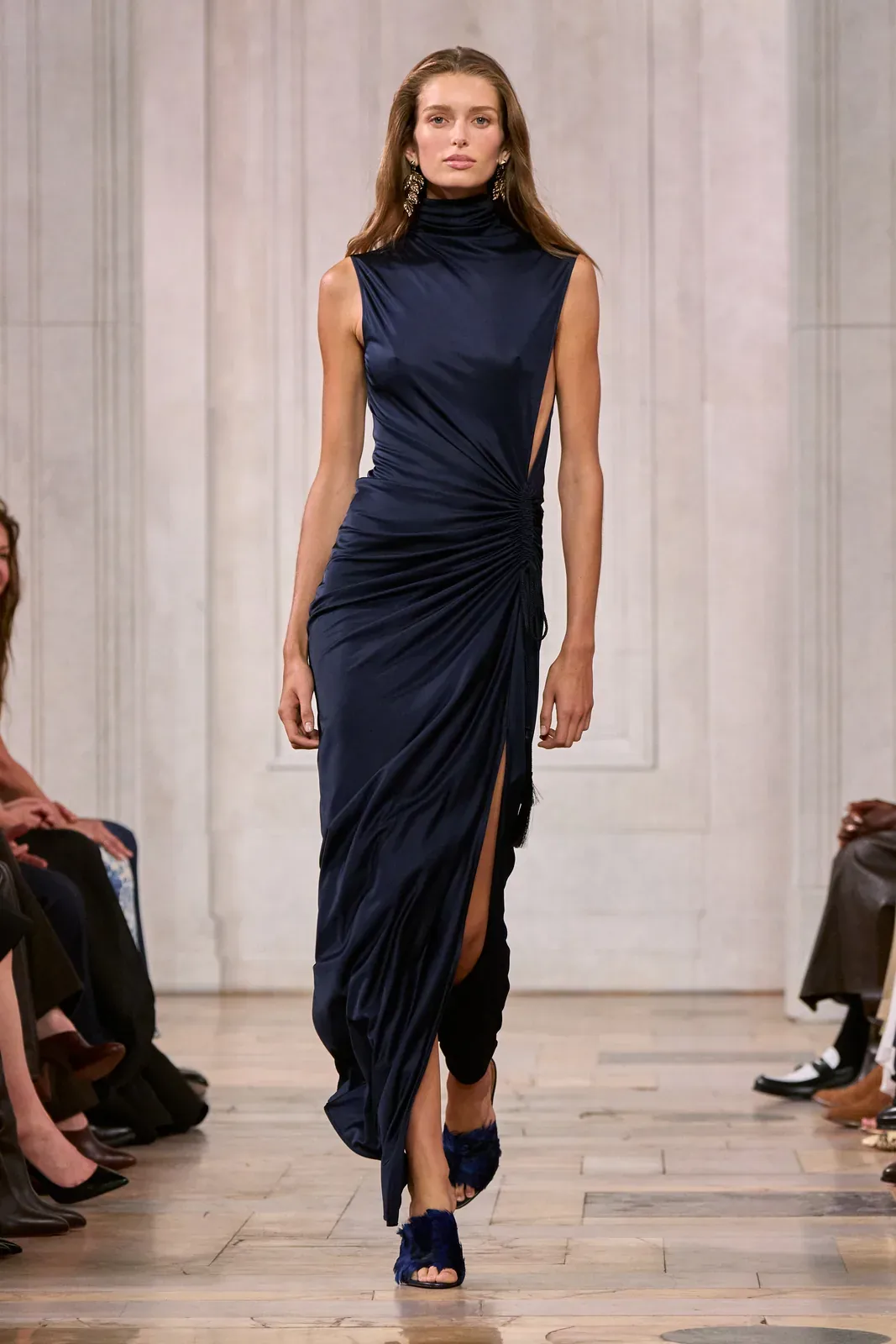
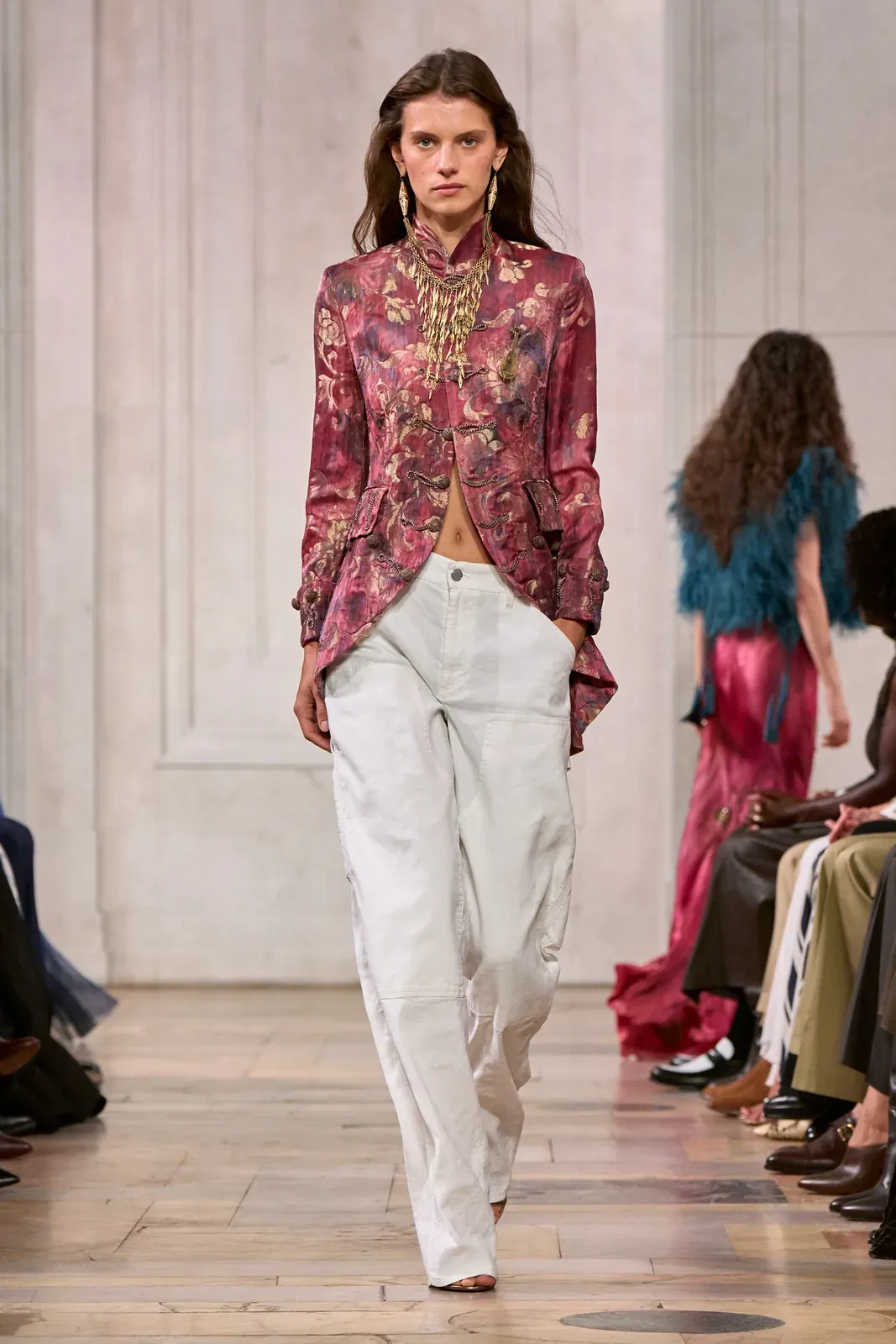
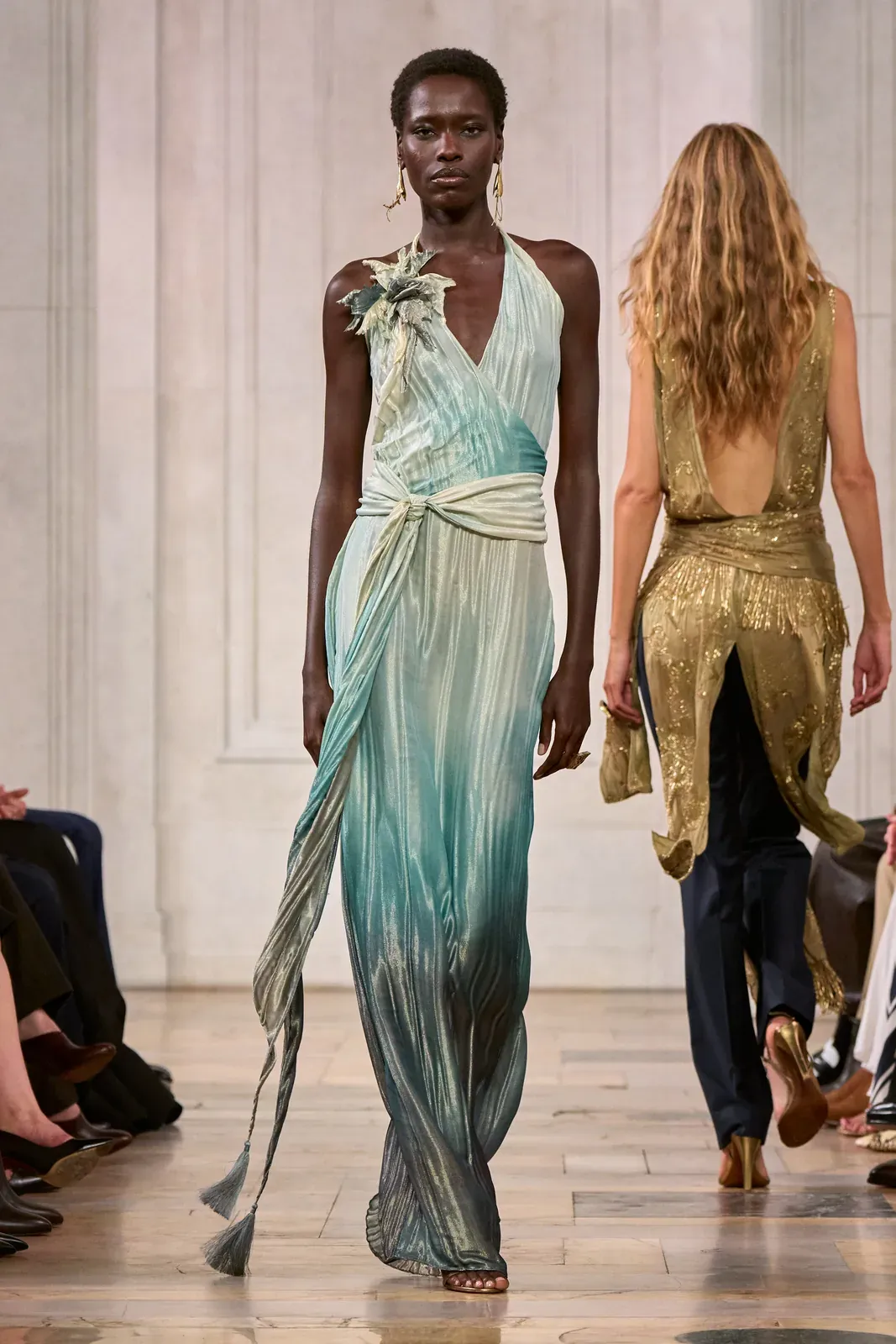
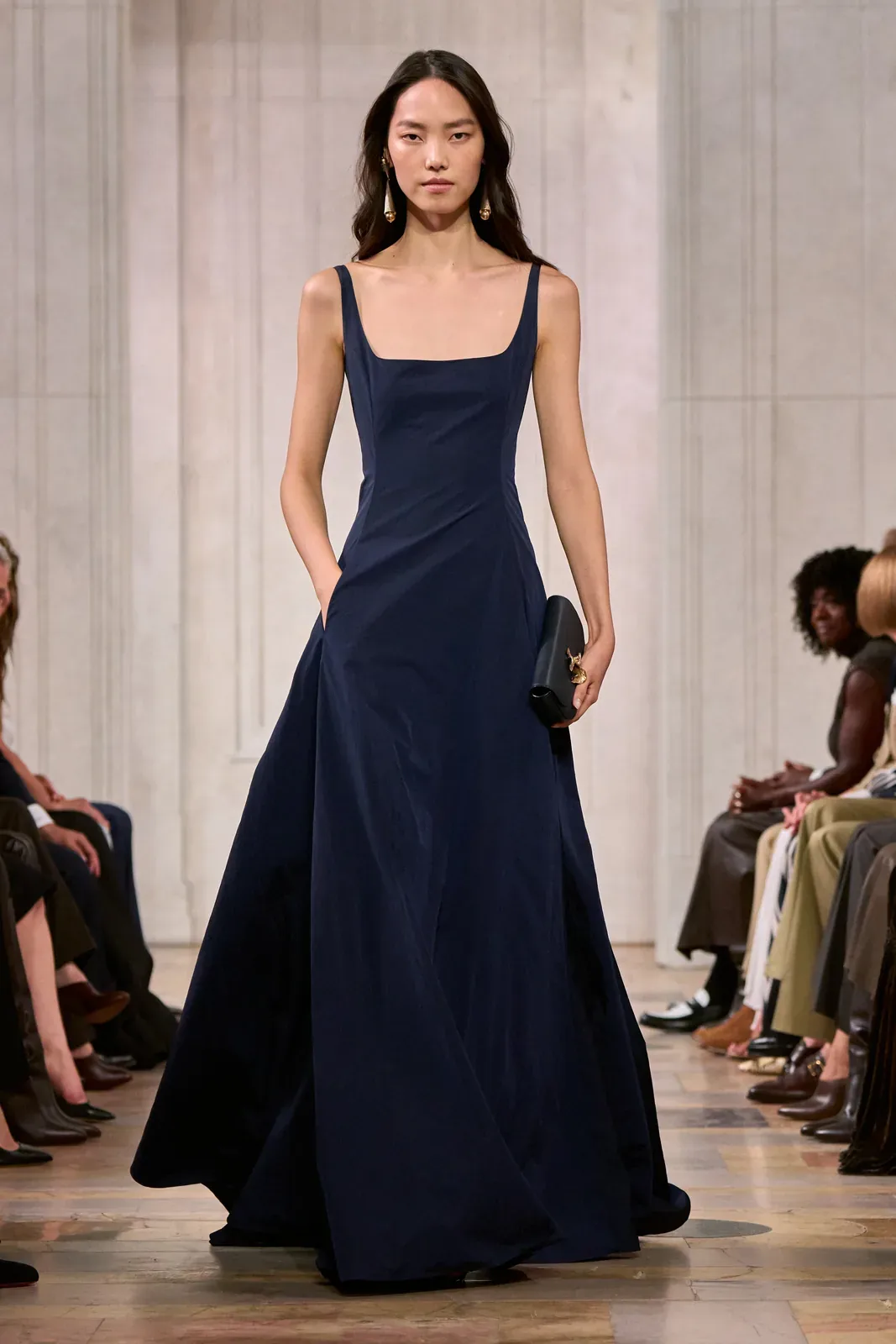
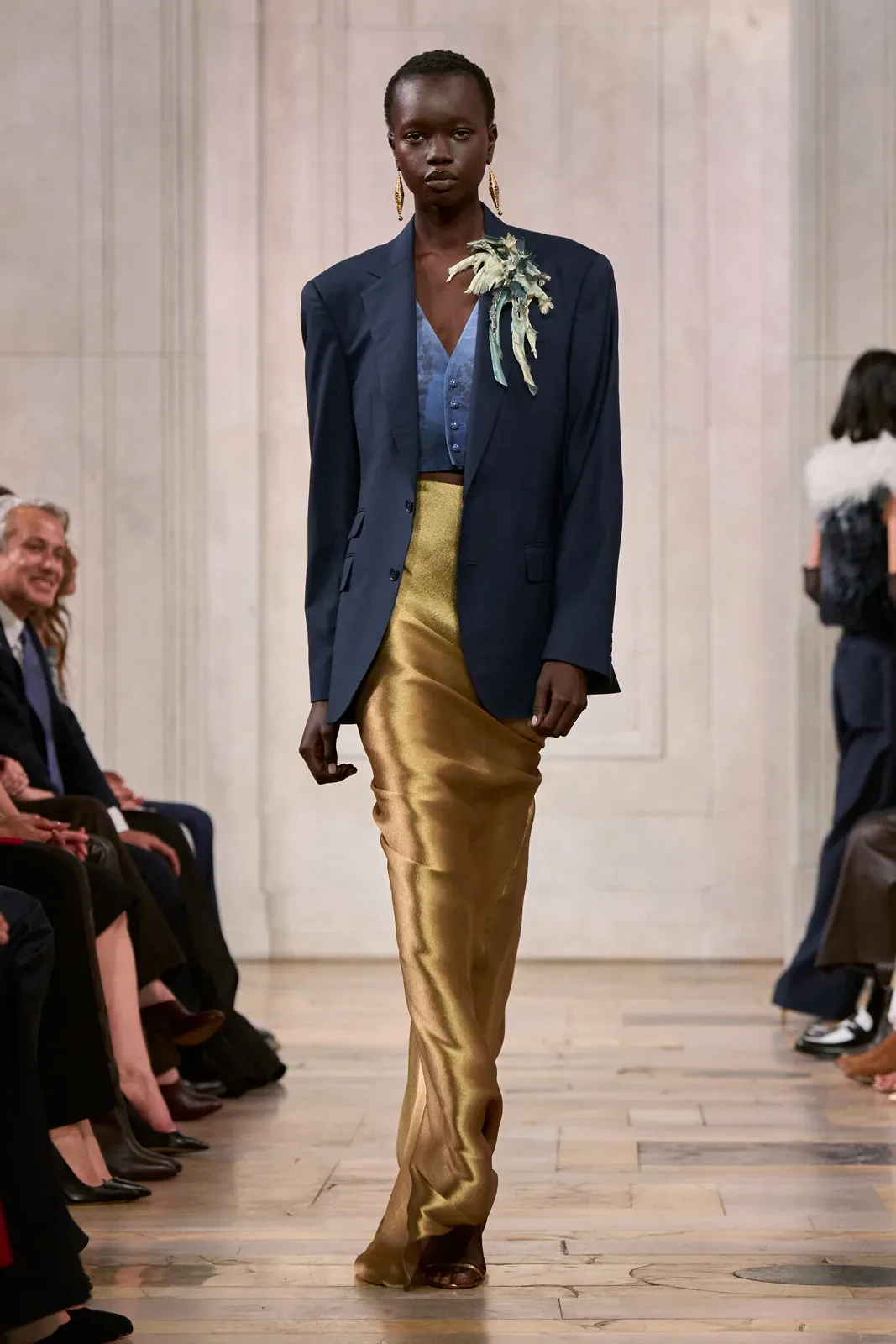
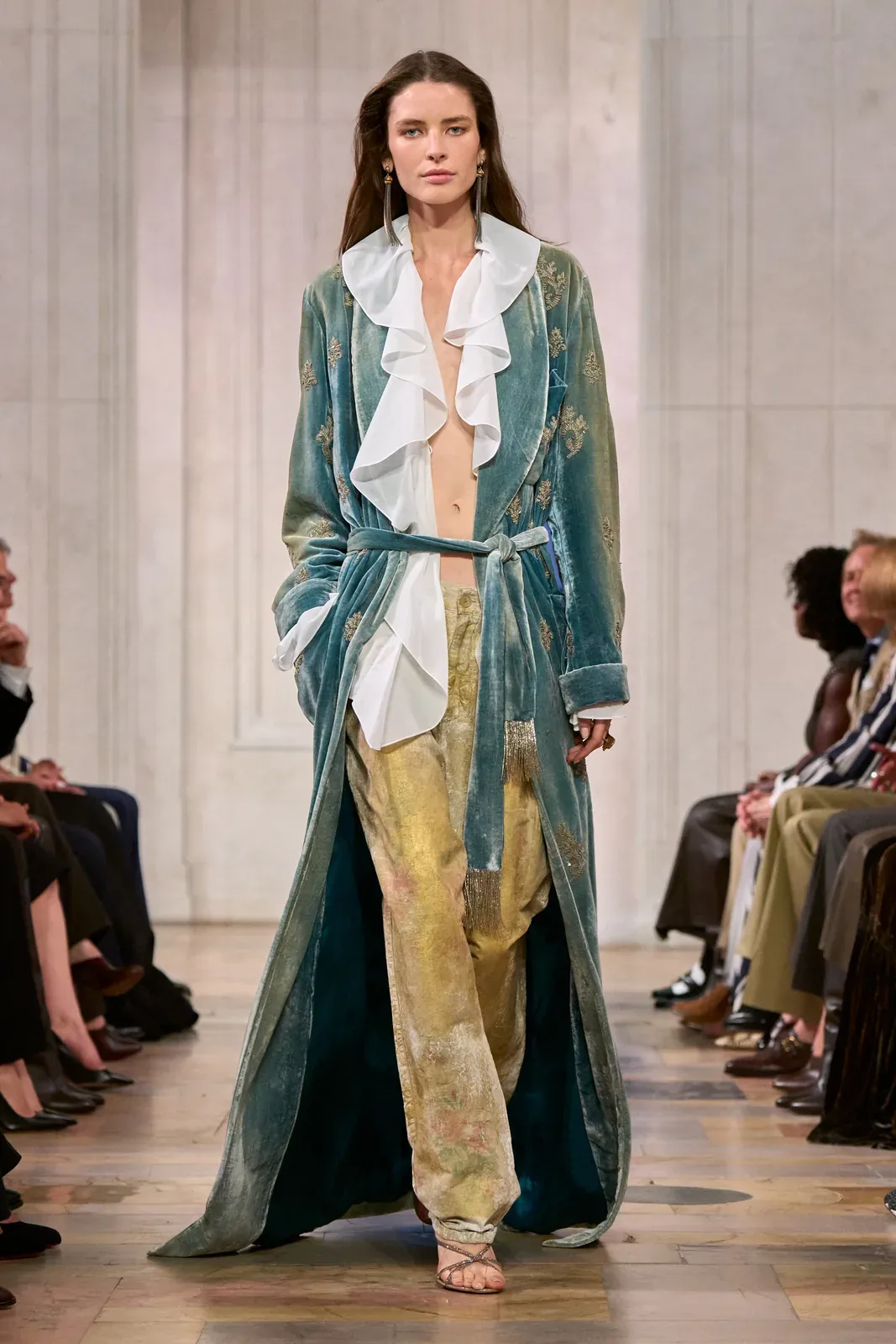
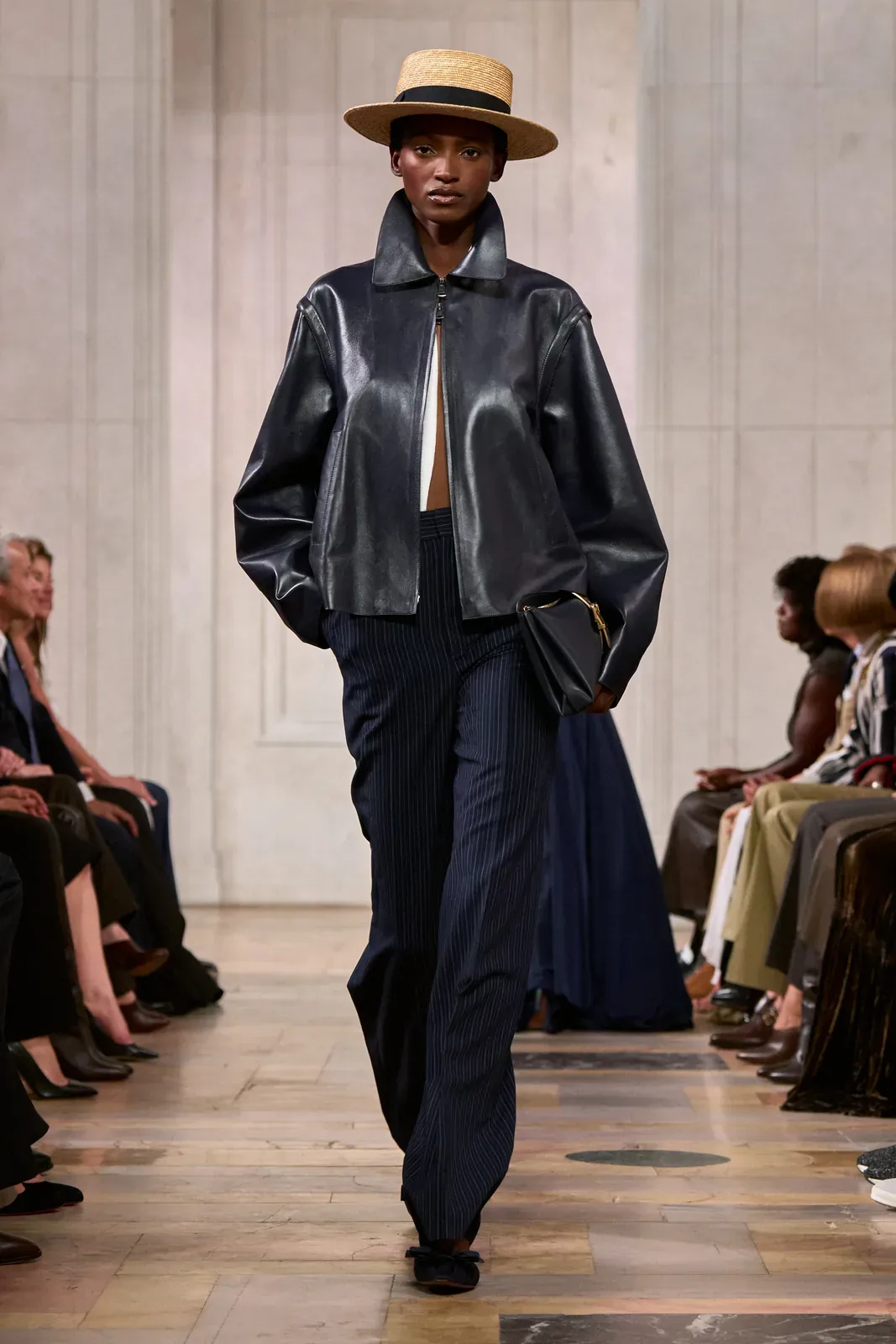
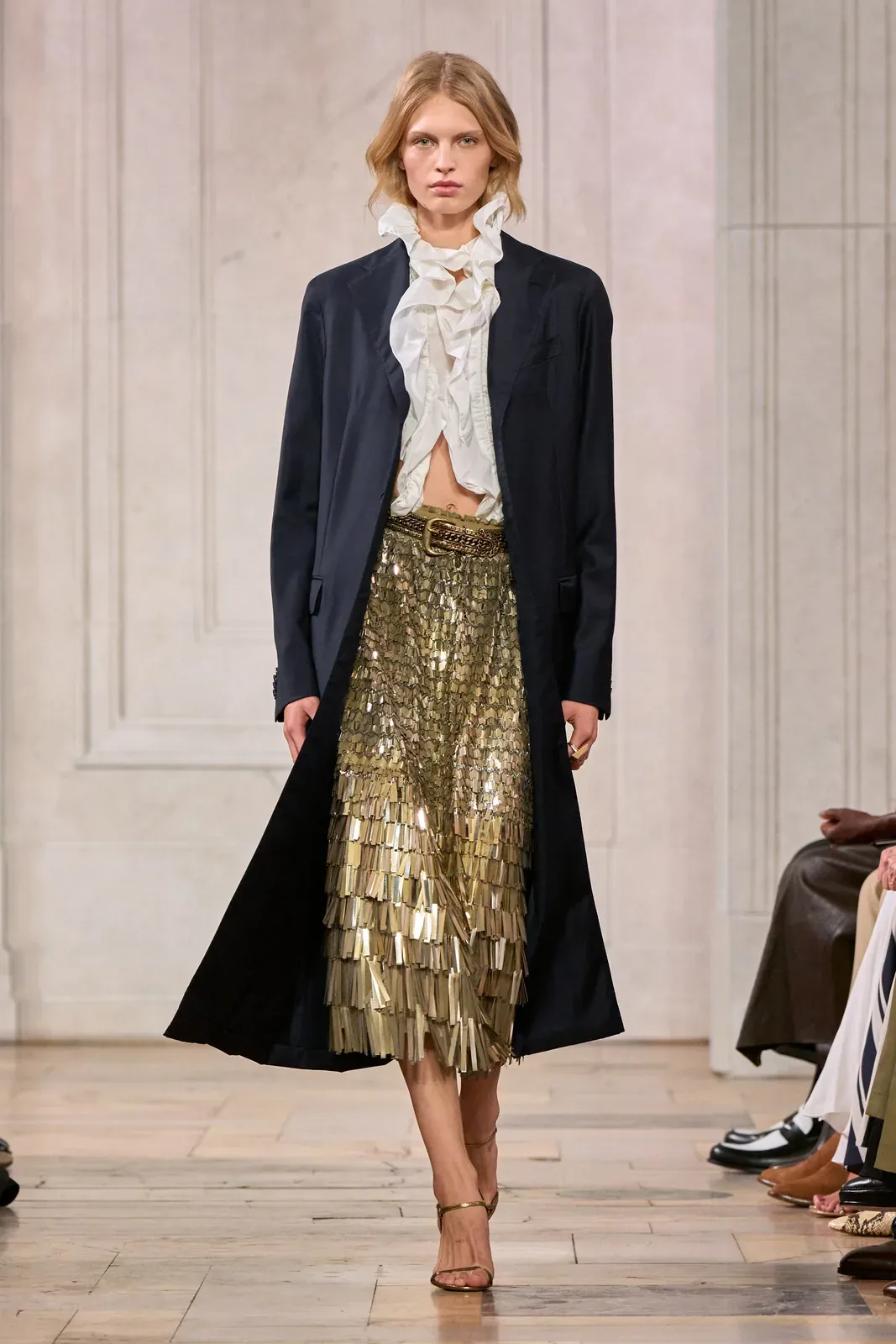
Ralph Lauren S/S 2027 evokes the wardrobe of an elite summer wedding from start to finish. Following the pure white looks at the beginning, the rich palette (dominated by navy and jewel tones) is enlivened by bold necklines, the metallic accents of clutches, and feathers peeking out from unexpected places. However, Lauren doesn’t let the romance become too flawless: denim and cargo pants, paired with opulent fabrics like brocade and velvet, lend the collection a slightly more down-to-earth feel.
Seeing the classic Ralph Lauren suit reimagined for the female form remains one of the collection’s strongest moments. Moreover, this season, two suits were crafted in an Italian men’s tailoring workshop, a nod to the brand’s very first suit designed for women. In contrast, crop tops and bolder necklines give the Ralph Lauren woman a youthful edge, while floral brocades and embroidery herald the arrival of spring. Large floral brooches, showy jewellery, and eye-catching accessories take centre stage over the outfits’ restrained colour palette. Large bows adorning the chest and long-tailed vests, meanwhile, lend the collection an almost operatic grandeur. In short, Ralph Lauren’s signature elegance remains intact, but this time it’s a bit more romantic, a bit more free-spirited, and much more playful.
Thom Browne
In Thom Browne’s collection, we shrink down to the size of an insect and find ourselves inside a garden. The buzzing of bees, enormous flowers, and a giant chrysalis placed in the centre of The Shed… The opening choreography, featuring caterpillars making their way towards their cocoons, signals from the very first minute that this is not just a fashion show, but a story of metamorphosis from start to finish. The fact that one of his sources of inspiration is A Bug’s Life explains why Browne has crafted this dark fairy tale with such playfulness.
Next comes the Thom Browne uniform we know so well: shirts, ties, pleated skirts, and impeccable tailoring; but this time, it all seems to have been overrun by nature. Bees and dragonflies alight on jackets, while ladybirds and insect shells transform into voluminous skirts. Strings dangling from the wrists, fringes, oversized jackets draped over the shoulders, and tulle hats make the collection (which already progresses layer upon layer) even more theatrical.
Browne’s “back to school” aesthetic undergoes a near-mutation here. The discipline of shirts, skirts, and ties is countered by corset-like forms, decoupage-effect surfaces, and trompe-l’œil illusions. The single flowers sprouting from or accompanying the bags bring nature’s own colour to a world dominated by grey, white, and navy. Dark lips emerging from light makeup also maintain this contrast on the face.
Towards the end, it’s as if a second fashion show is beginning. Light tones give way to black, bangs grow longer and darker, and the silhouettes become increasingly unsettling. Metamorphosis is no longer just the story of the set design; it is the collection itself. In the finale, as the chrysalis opens and the butterfly emerges, even Thom Browne’s classic suit completes its transformation: the same discipline, but this time with wings.
Conner Ives
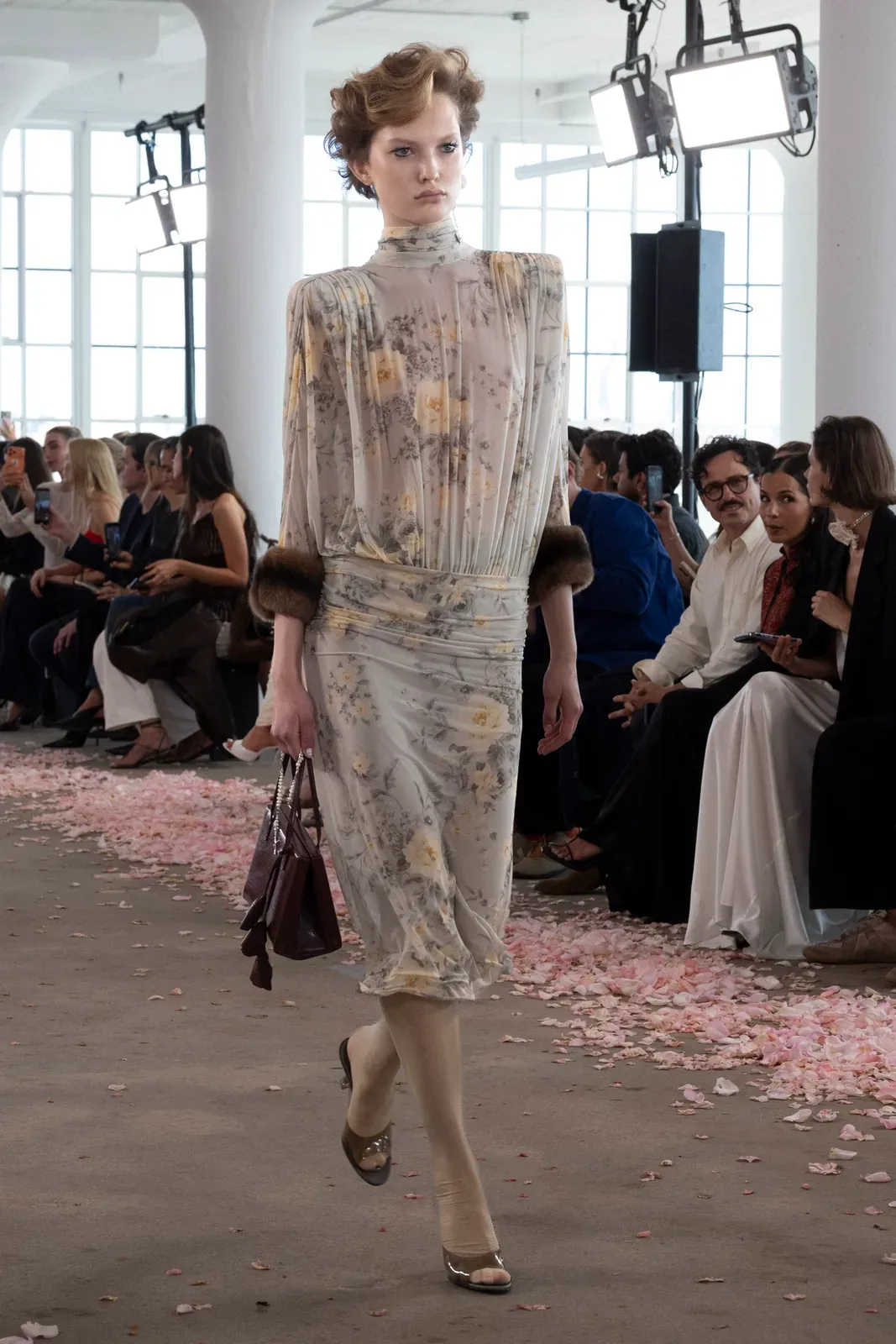
Conner Ives kicks off this season with plush trims spilling over collars and cuffs, and from the very first look, we’re transported into a soft, comfortable, yet distinctly characterful vintage world. Titled Across the Pond, the collection marks Ives’s first New York runway show and, in a way, a homecoming: the designer, who grew up in New York State and built his career in London, blends American nostalgia with British tailoring. Pastel tones, vintage florals, and patterns (as well as the hair and makeup) all reinforce this retro vibe.
Oversized cowboy hats, lace-up heels, ultra-high-waisted trousers, and pointed collars underscore the nostalgia, while shirts with buttons that open from the bottom shift the neckline to an unexpected place. Then, with sheer fabrics, pink-patterned and backless dresses, zebra and other animal prints, and cutout tops, Ives mixes the entire vintage wardrobe rather than sticking to a single era. Pairing Western details with Chinese embroidery, embellished denim, and evening gowns further reinforces the collection’s high-low character.
The interspersed menswear looks add just the right amount of spice. Short shorts, pointed-collar shirts, knee-high socks, and—in particular—the Savile Row suits created in collaboration with Gieves & Hawkes inject a different rhythm into the romance of the women’s looks. And is this really the season for dresses? Because Ives’s spring dresses are that good. From sheer fabrics to bias-cut silhouettes, and from florals to animal prints, the dresses are the collection’s most comfortable yet alluring element. In S/S 2027, Ives successfully incorporates the past without turning it into a costume: a touch of Manhattan high society, a hint of the cowboy, a dash of London, and plenty of that feeling of hunting for treasures in an old wardrobe.
7 For All Mankind
Kicking things off with skinny jeans: finally! 7 For All Mankind directly challenges the years-long dominance of baggy trousers. Nicola Brognano draws inspiration from the “It” girls of the early 2000s, particularly Kate Moss: the slightly dishevelled sexiness of paparazzi photos (featuring ultra-skinny, low-rise jeans, micro-shorts, oversized sunglasses, high heels, and large bags) is making a comeback on the runway.
Around the denim, there’s a play on outerwear that truly breathes life into the wardrobe. Sharp-shouldered jackets, long trench coats, and cropped trench coats with a cape-like feel pair with ultra-short shorts and jackets casually draped over the shoulder. Two-piece looks are mostly clean and sharp, but as layers come into play, things deliberately come apart. Shorts so short that the pockets stick out, long-sleeved tops layered one over the other, patterned silk scarves tied around the neck… Hello, 2007 Facebook profile picture. And that’s exactly why it’s so much fun.
Lingerie, however, is the sexiest aspect of this nostalgia. Bralettes and bras are deliberately left visible beneath tops; sometimes, while the arms, shoulders, and stomach are covered, all the cleavage is concentrated on the chest. Part office siren, part indie sleaze, and part hangover-day It-girl. As Brognano says, the real point here isn’t the individual pieces - it’s the attitude. The return of skinny jeans to the runway is now undisputed; whether the streets will surrender to the trend at the same pace is another matter. We’re facing a wardrobe that’s been accustomed to the comfort of baggy denim for years. But looking at 7 For All Mankind’s collection, it’s safe to say that skinny jeans aren’t just knocking on the door - they’ve already started coming in.
Khaite
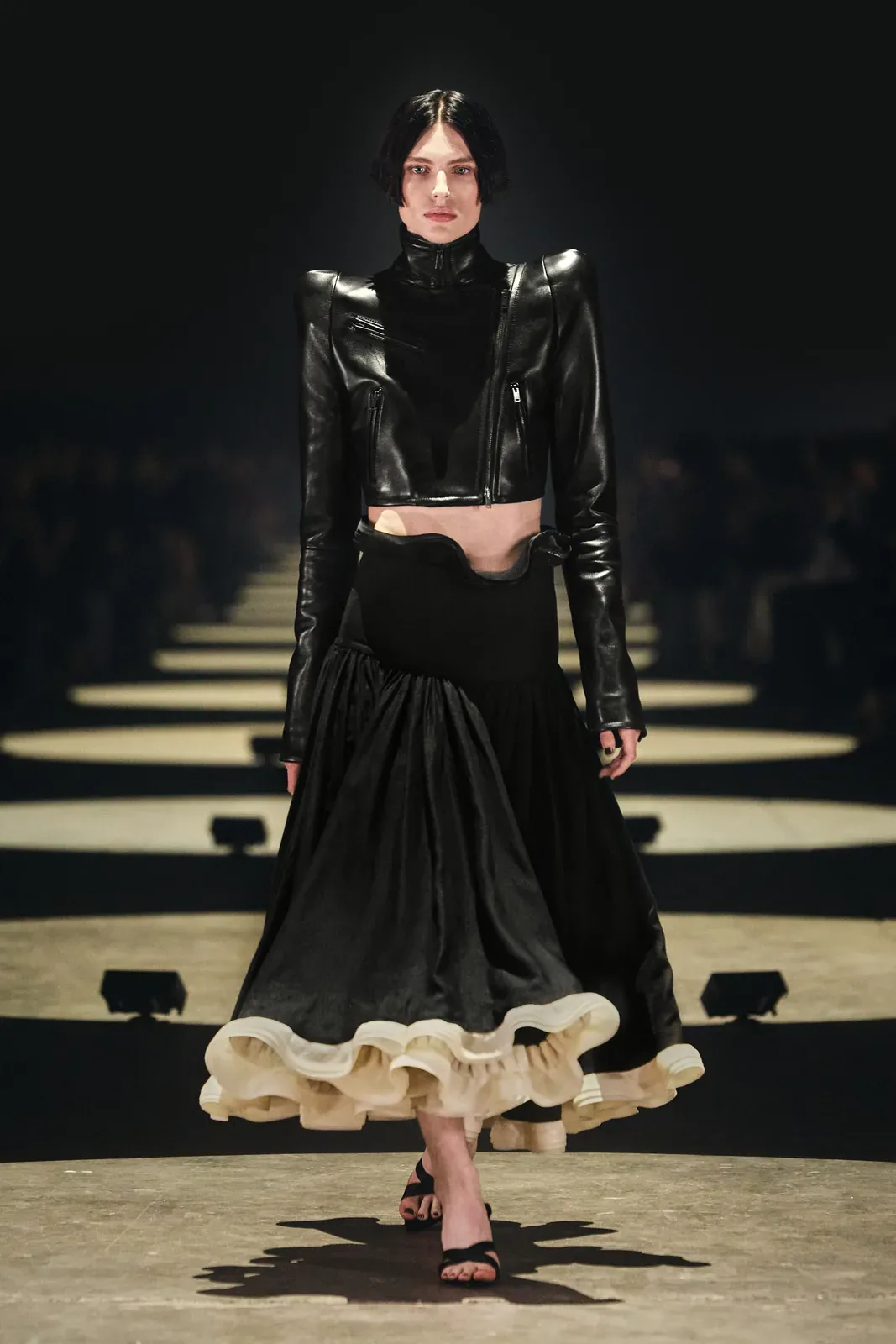
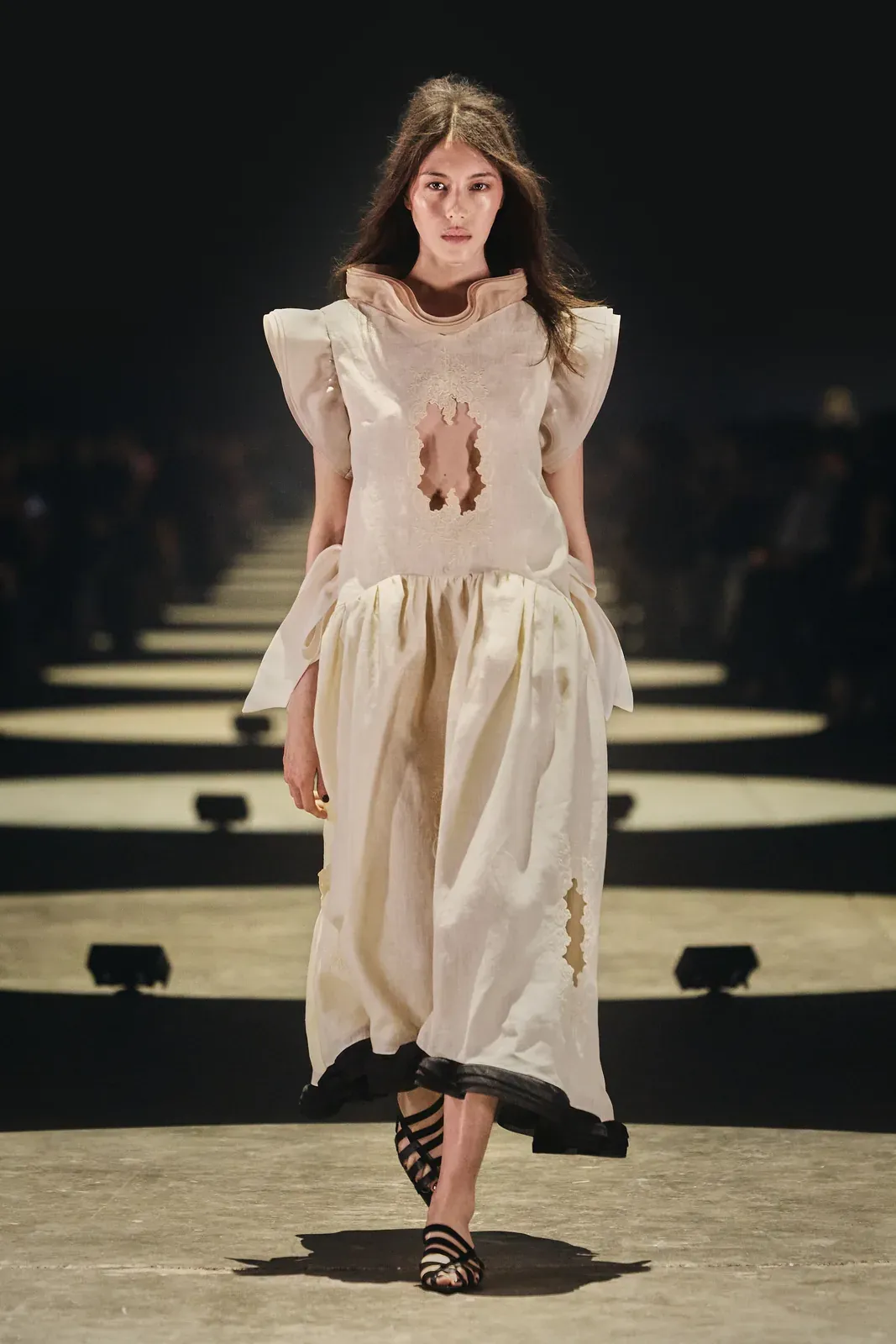
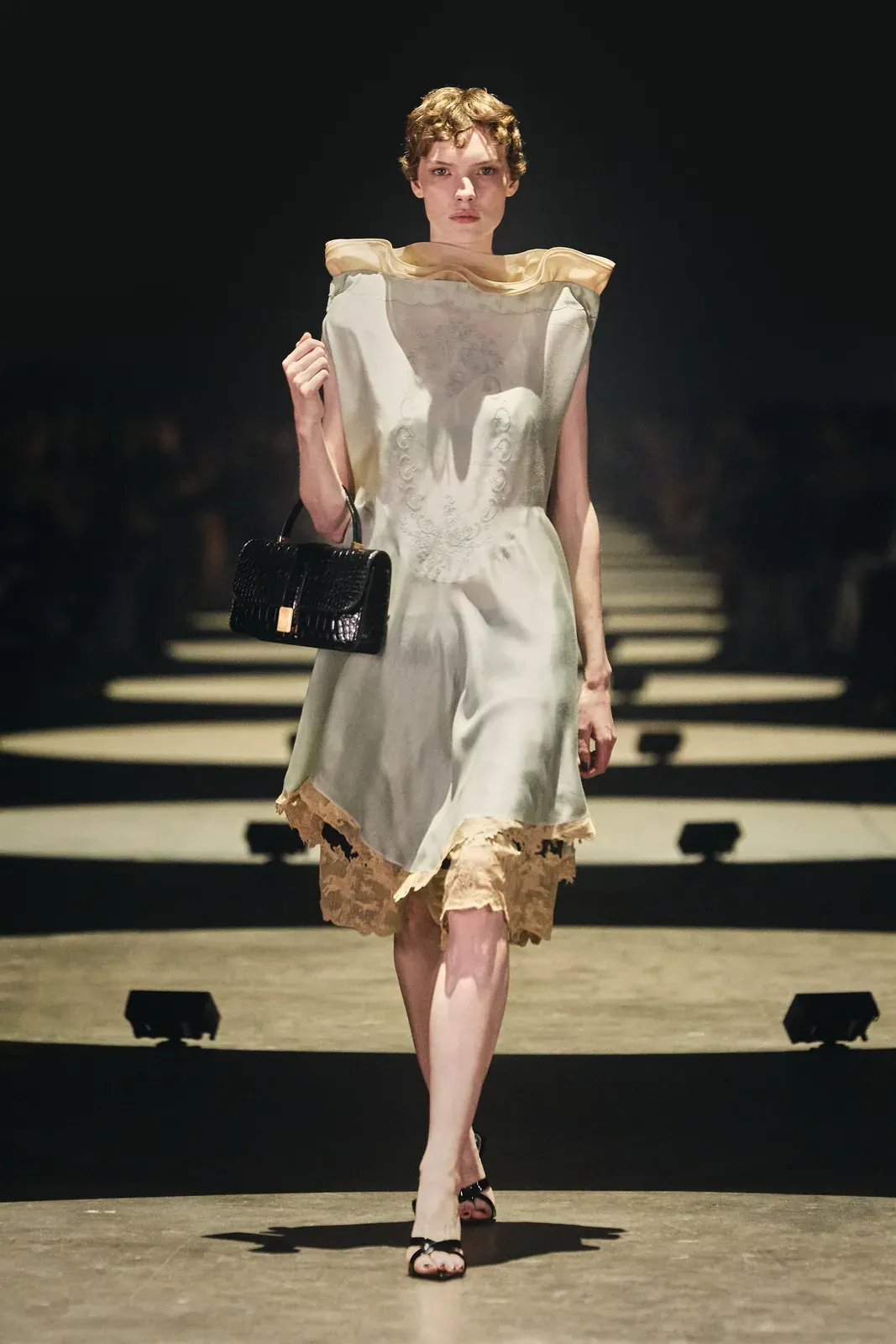
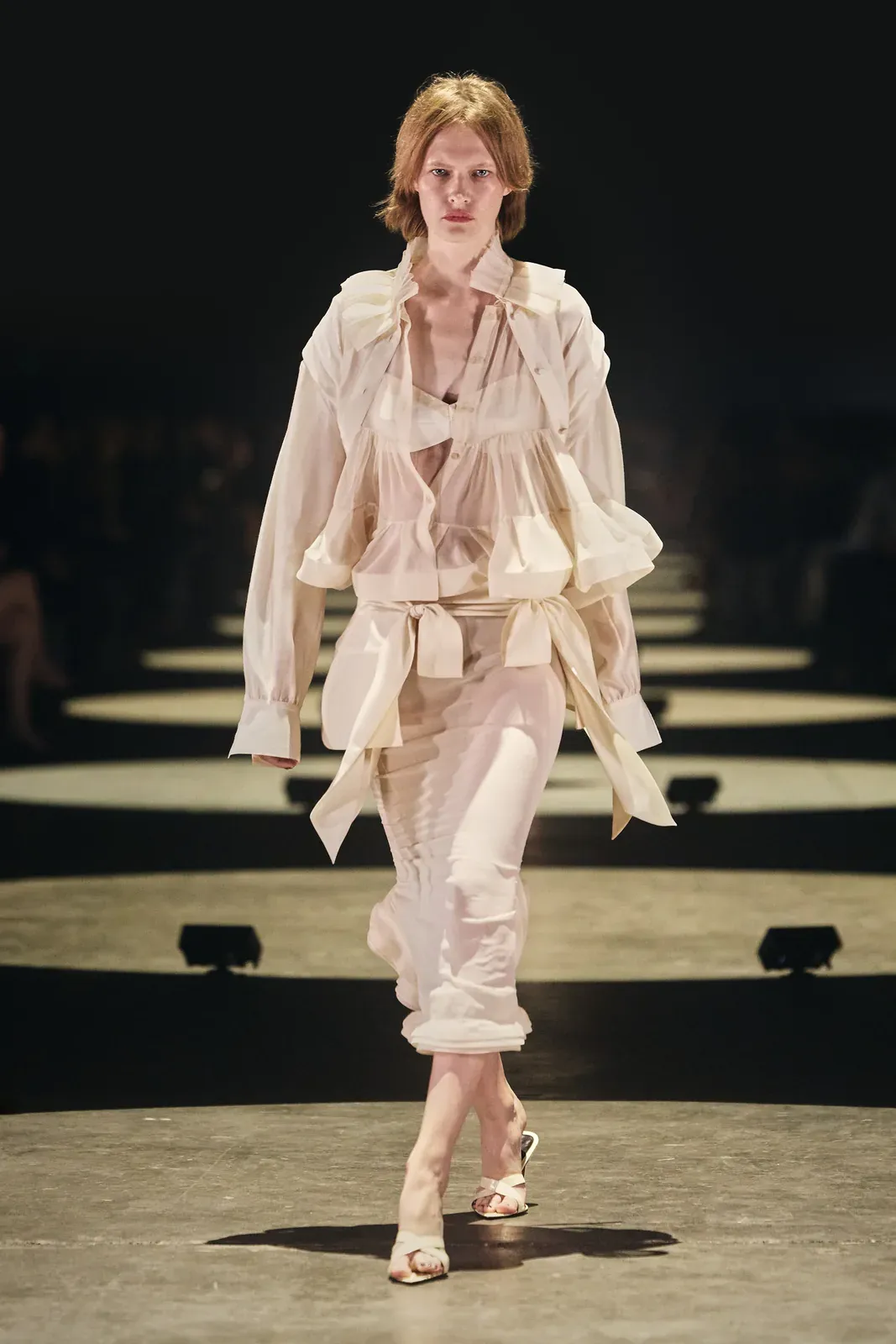
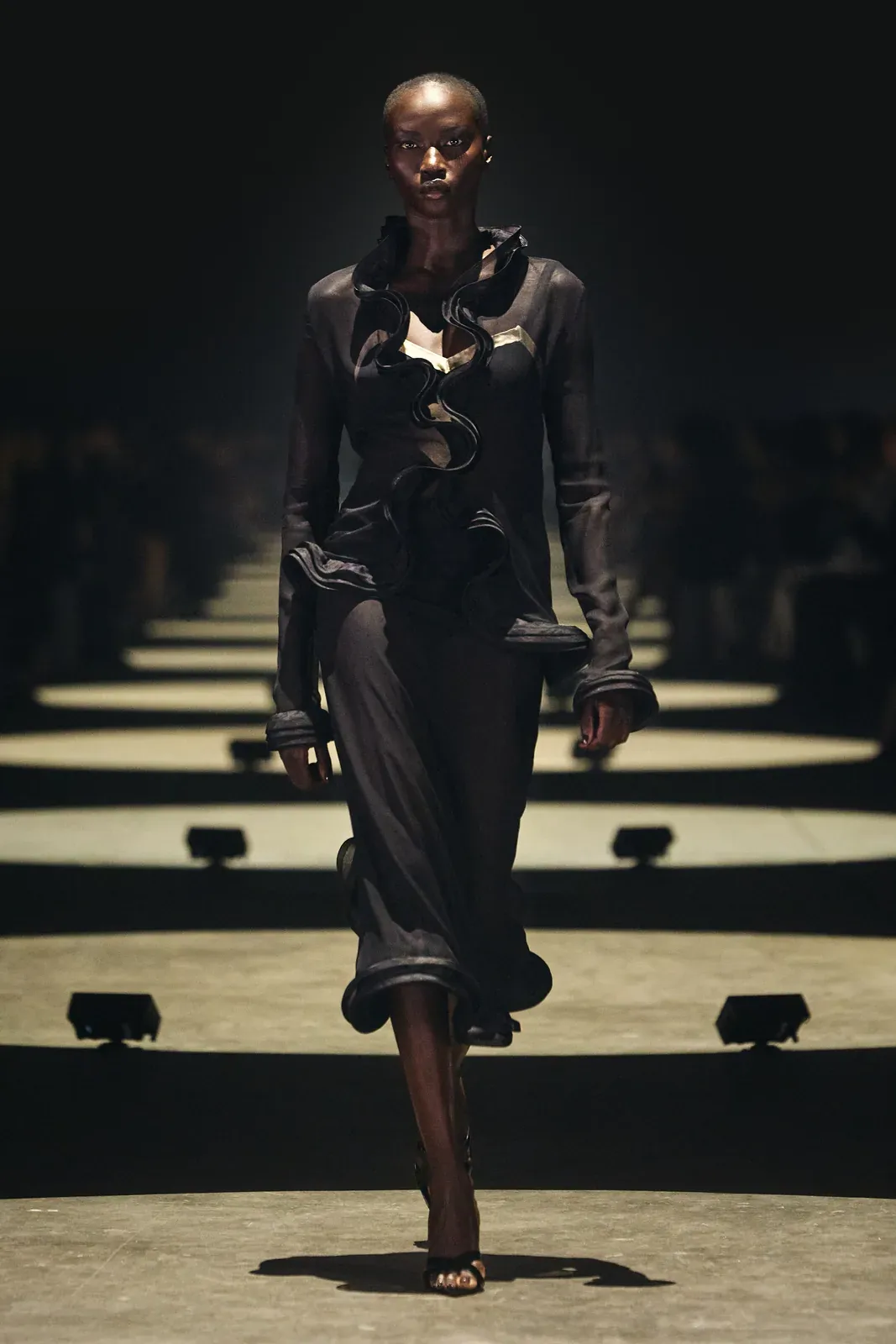
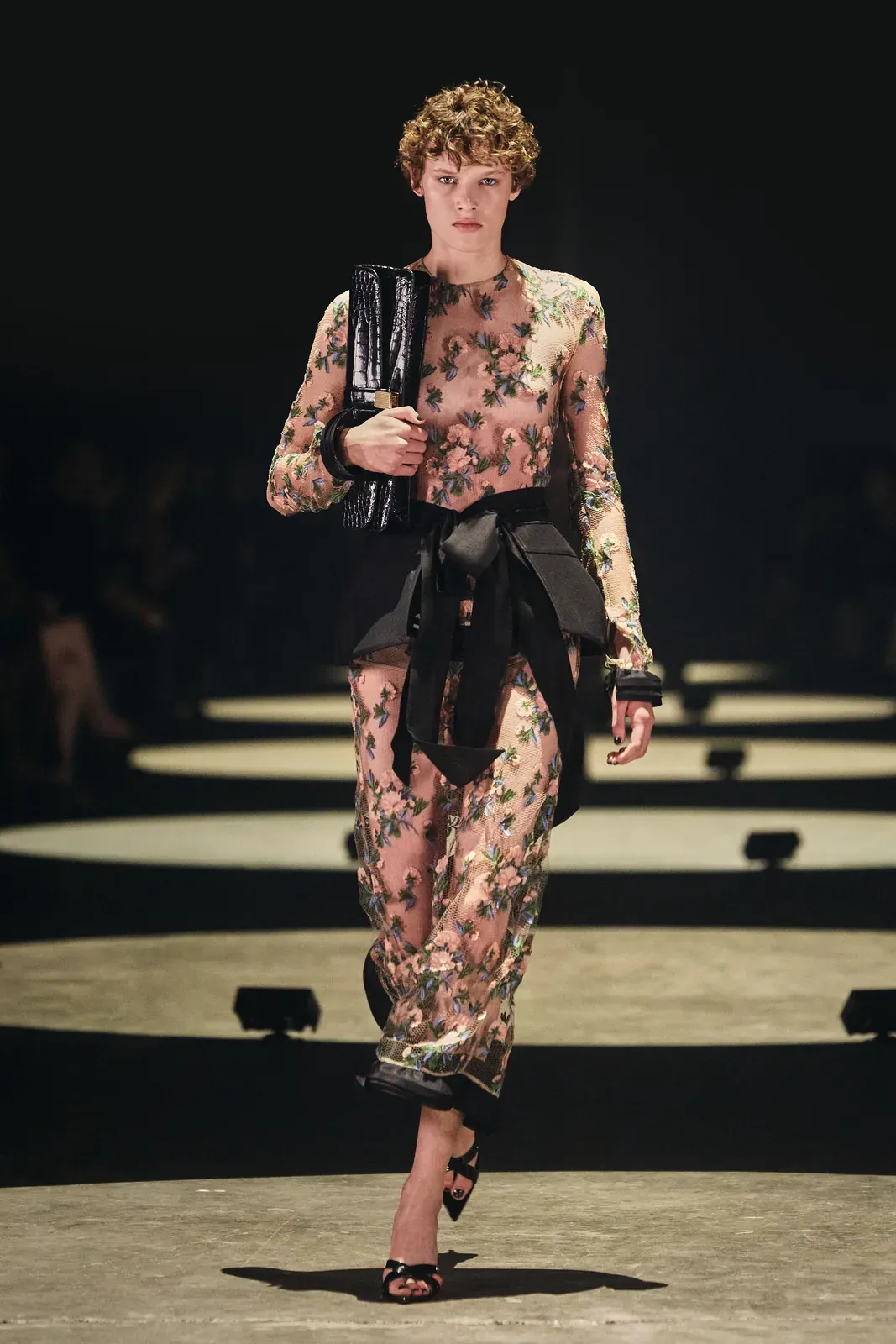
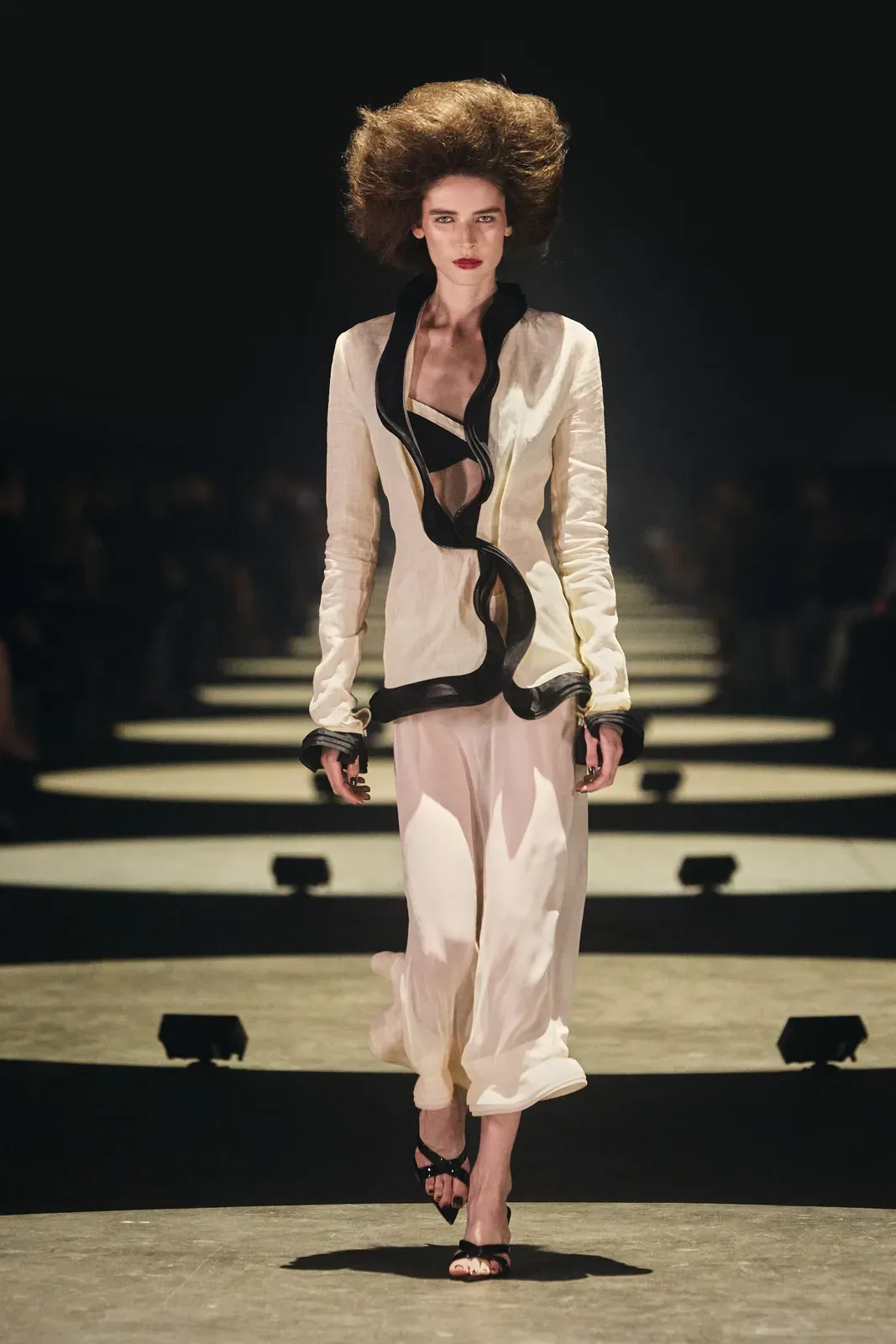
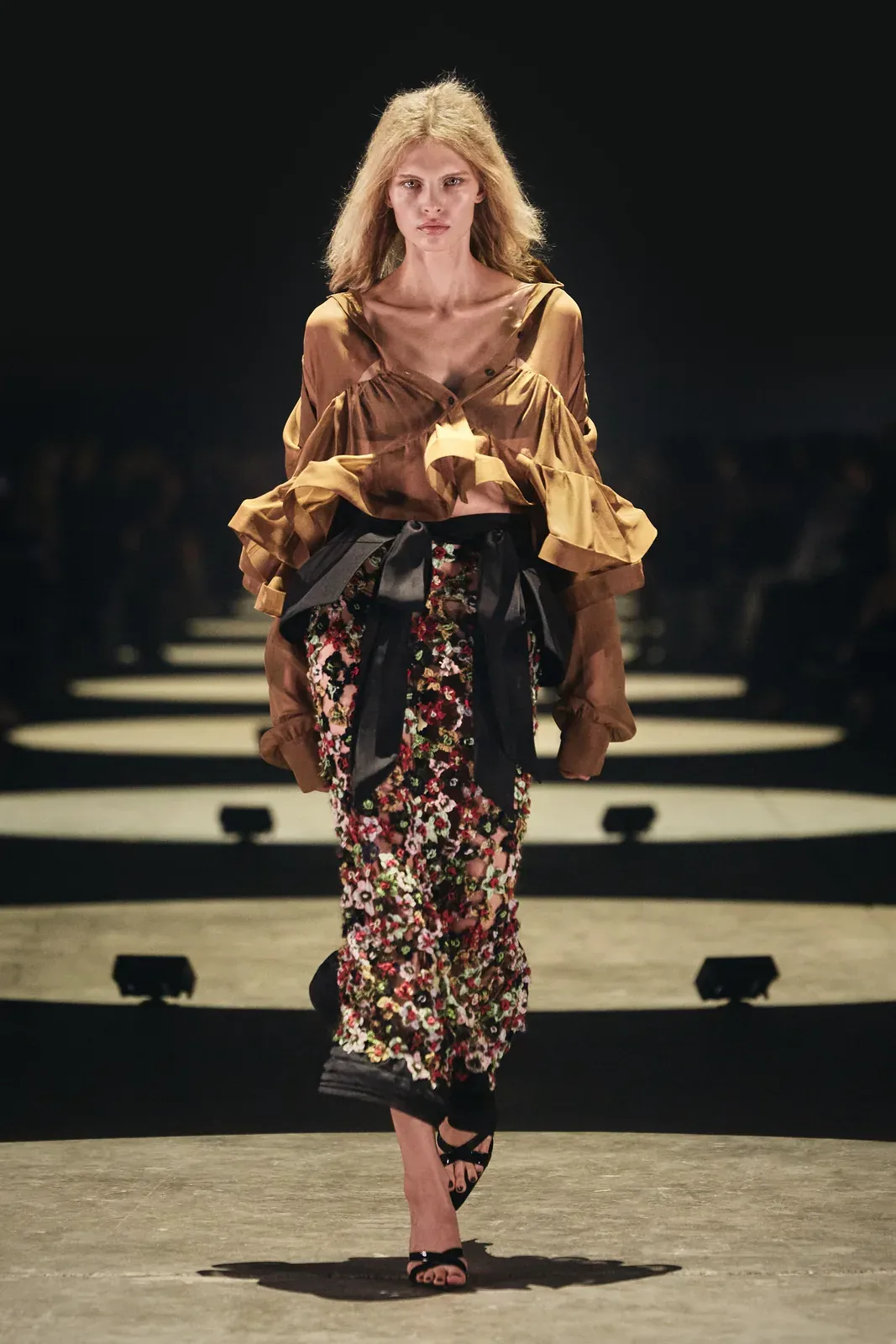
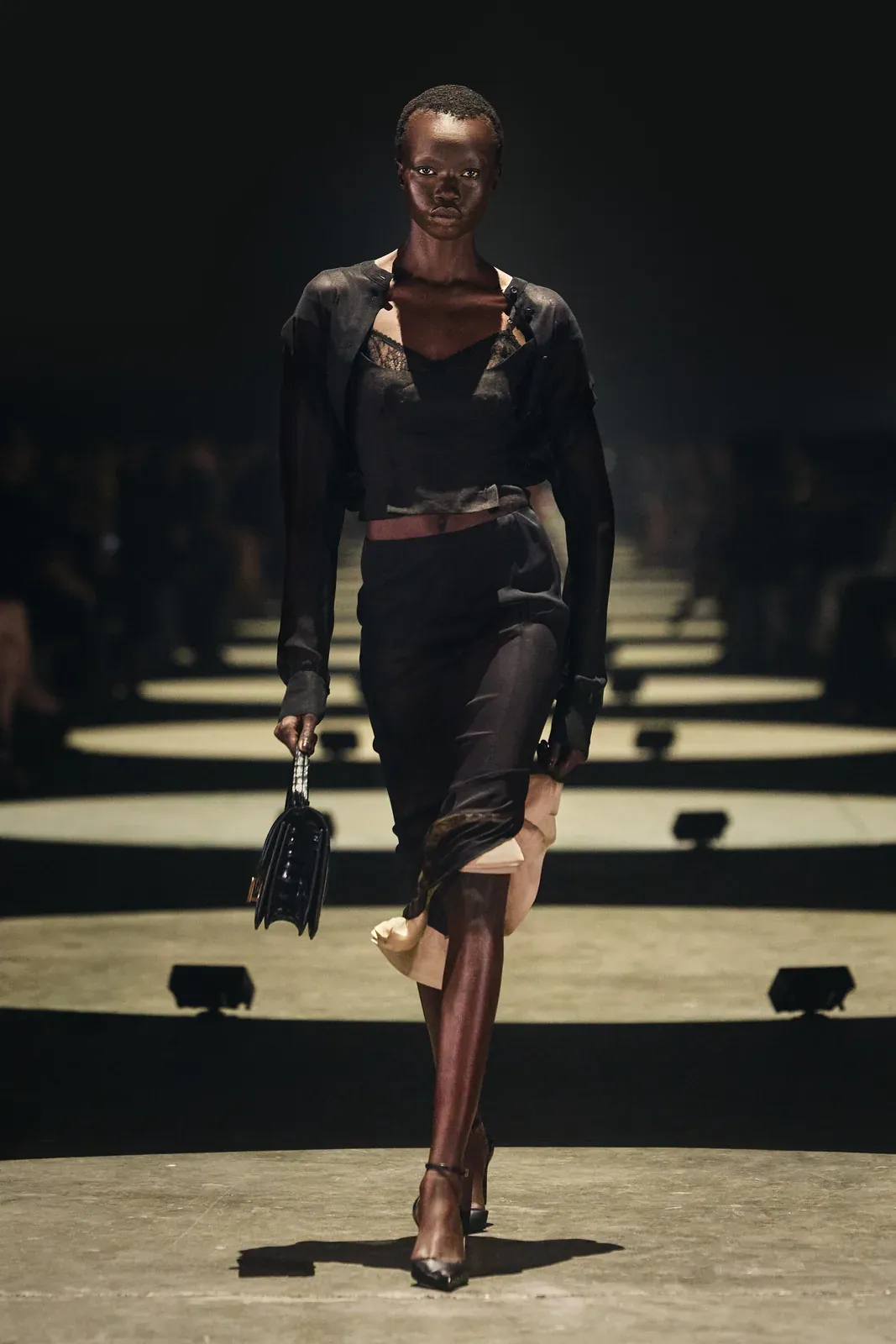
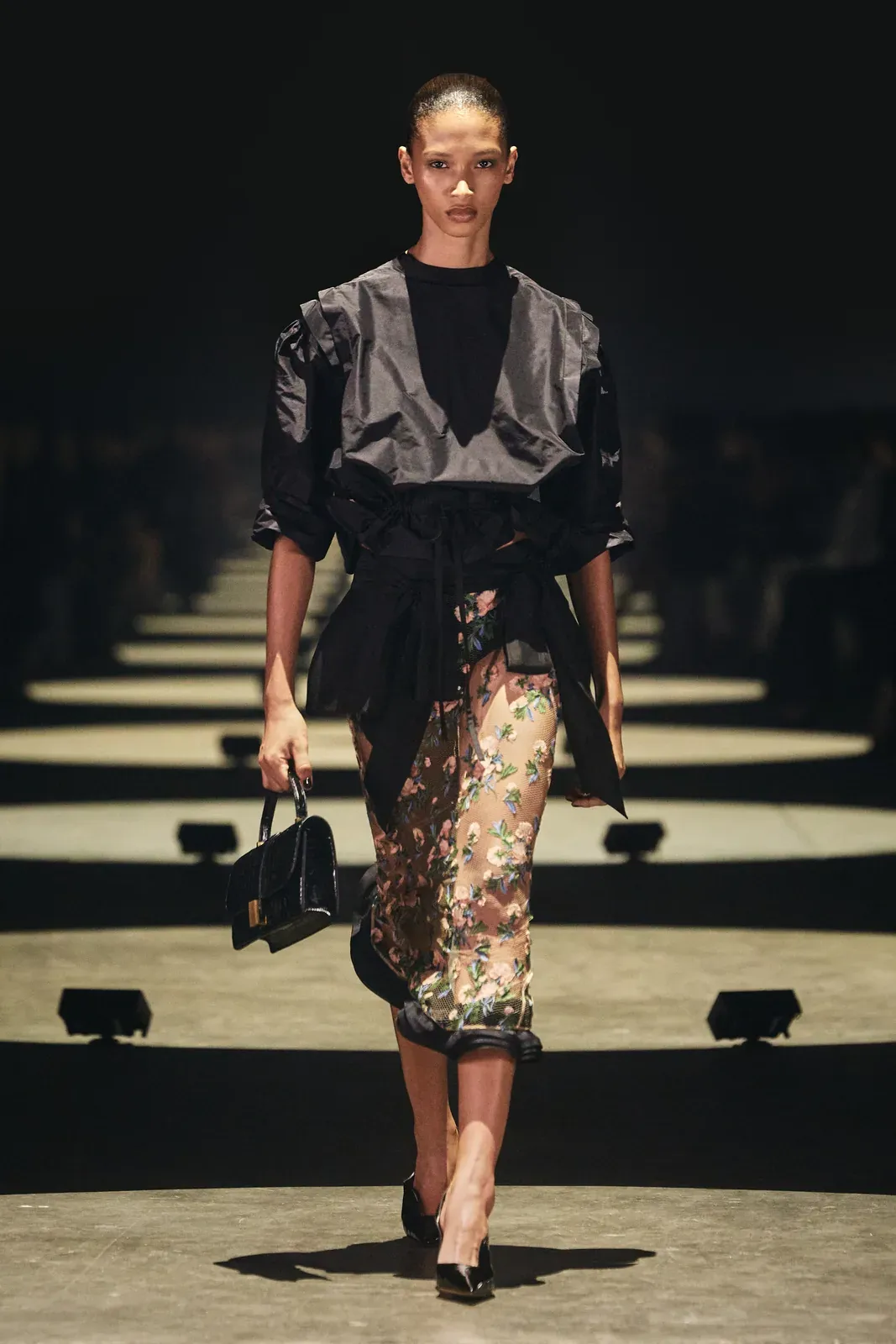
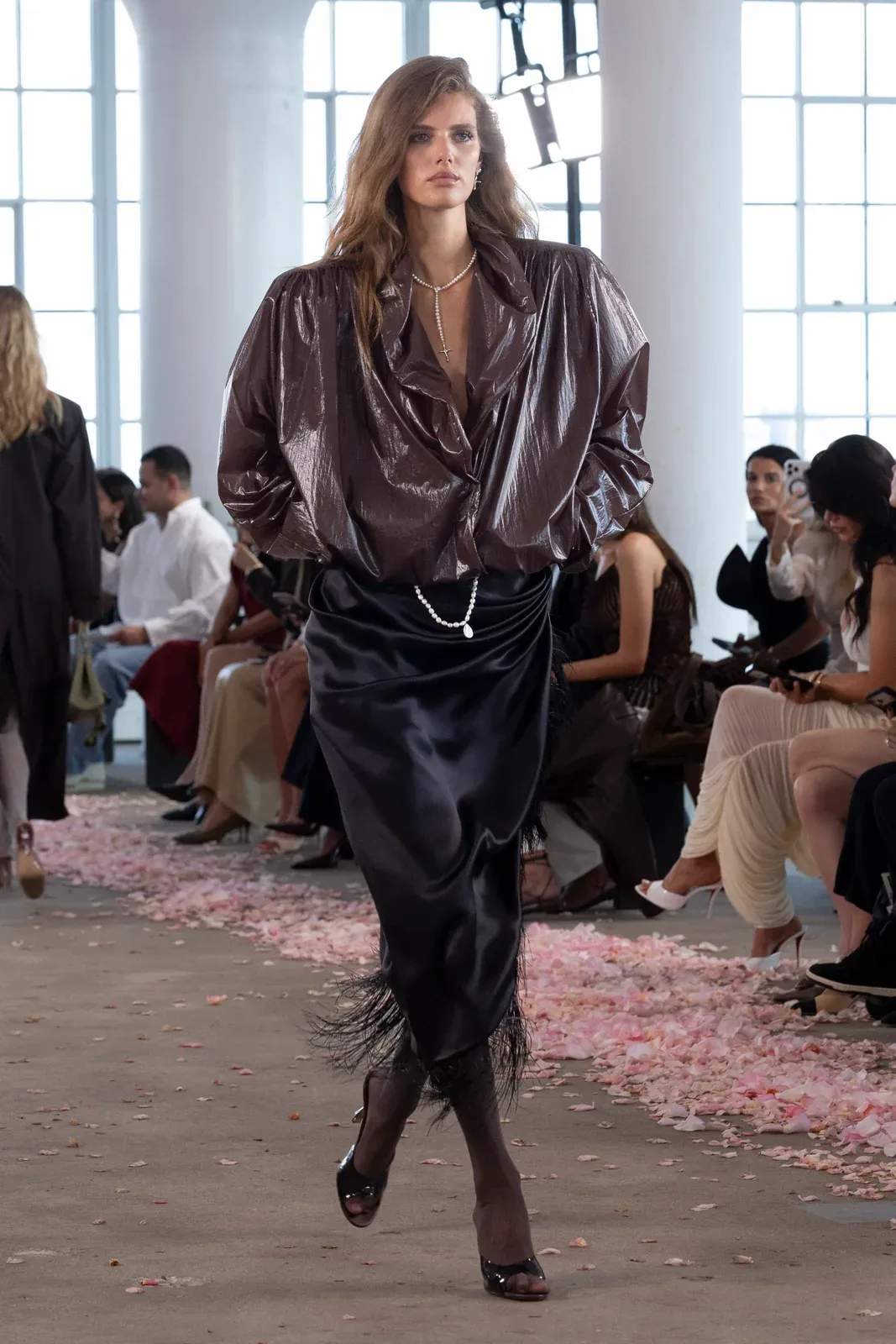
Khaite makes a bold opening: Kaia Gerber takes the runway in a snow-white, sculptural bra paired with a massive high-waisted black leather skirt. Crazy. But this edgy start soon gives way to an unexpectedly romantic Khaite, featuring tulle, lace, floral embroidery, fringe, and voluminous skirts. While sharp-shouldered leather jackets maintain the brand’s signature edginess, sheer layers and lingerie details pull the collection into a much more delicate realm this time around. The runway lighting is just as dramatic as the collection itself. In the pitch-black Brooklyn Storehouse, models step in and out of circular spotlights; one moment you see every detail, the next the silhouette vanishes into the darkness. While watching, you almost have to step into the screen to make sense of some of the looks. Inspired by Venice’s shifting light, this atmosphere makes the sharp contrast between black and white even more powerful.
Long skirts are definitely our favourite. But the real focus is on volume: Holstein questions what a modern crinoline would look like today; she hides crinolines inside dresses, transforms them into peplum belts, and creates unexpected shapes around the waist. Dresses cinched tightly at the waist (whether tied, gathered, or shaped by a corset) seem less to wrap the body and more to build a new form around it. Khaite’s edgy New York aesthetic, built around leather, is still present here, but this time it’s softened with lace, silk, sheer fabrics, and artisanal craftsmanship. This woman, emerging from the darkness only to vanish again, is still cool - just a bit more romantic this season.
Magda Butrym
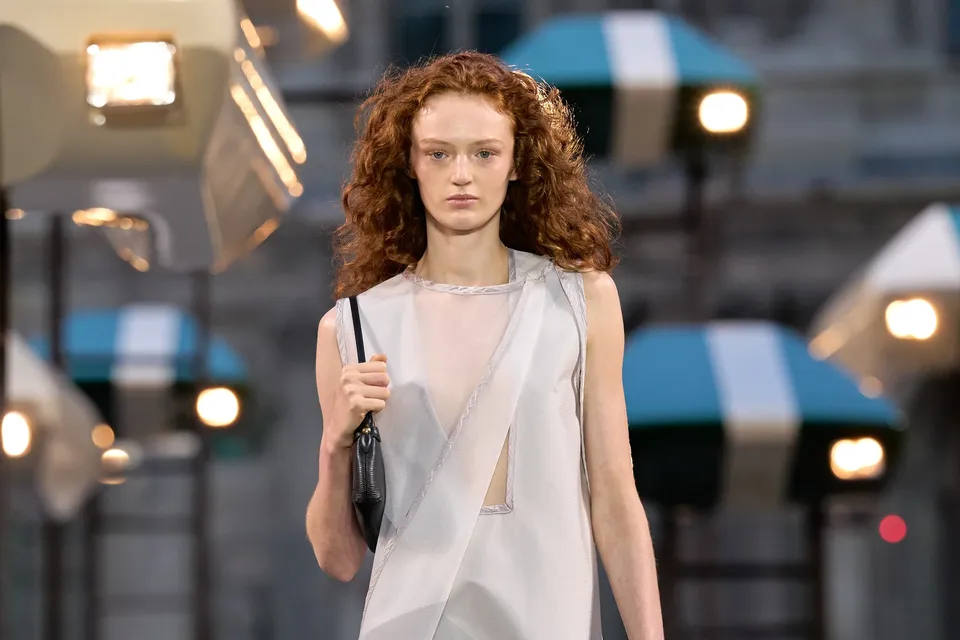
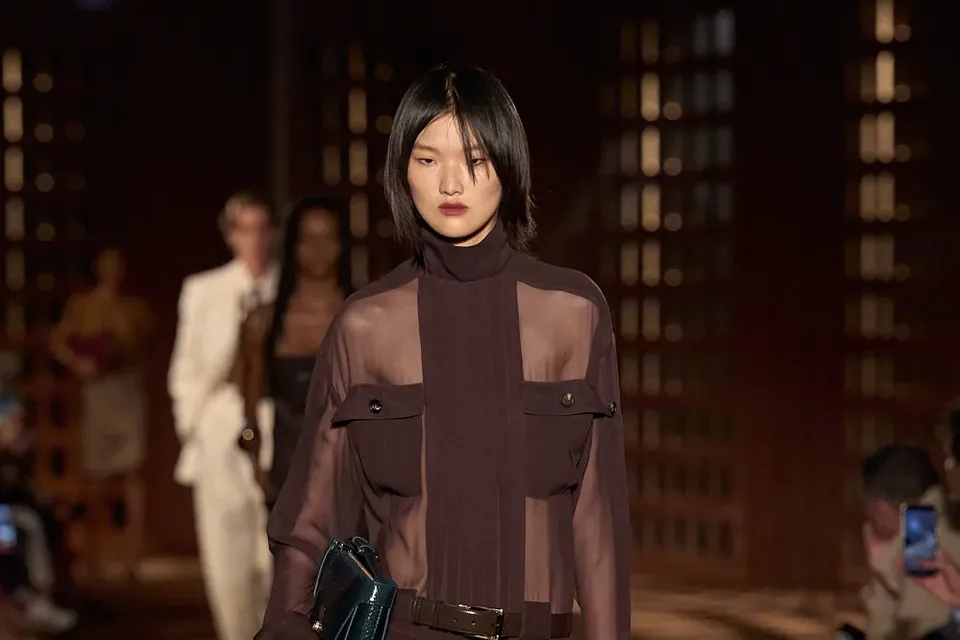
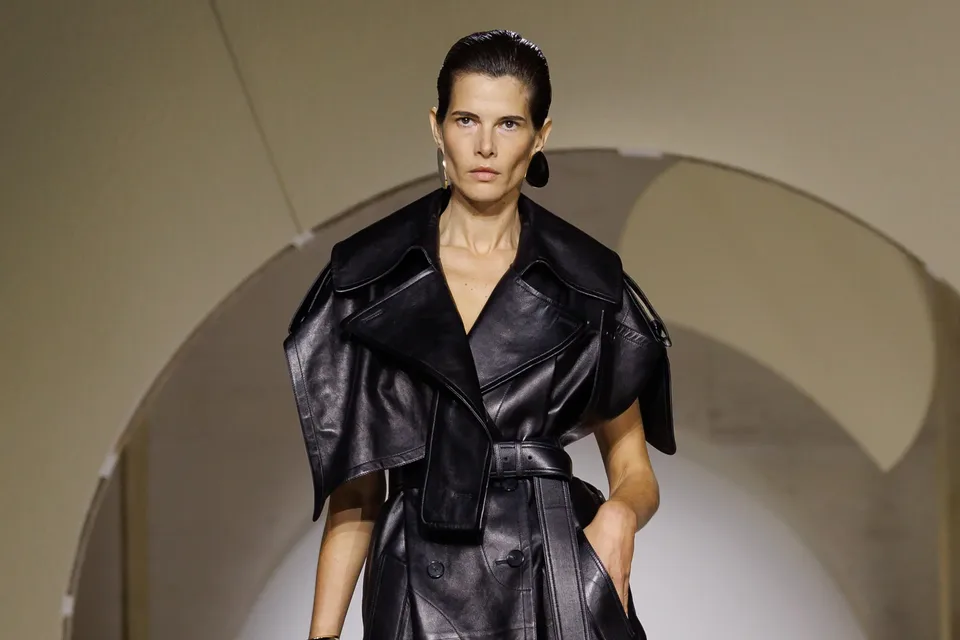
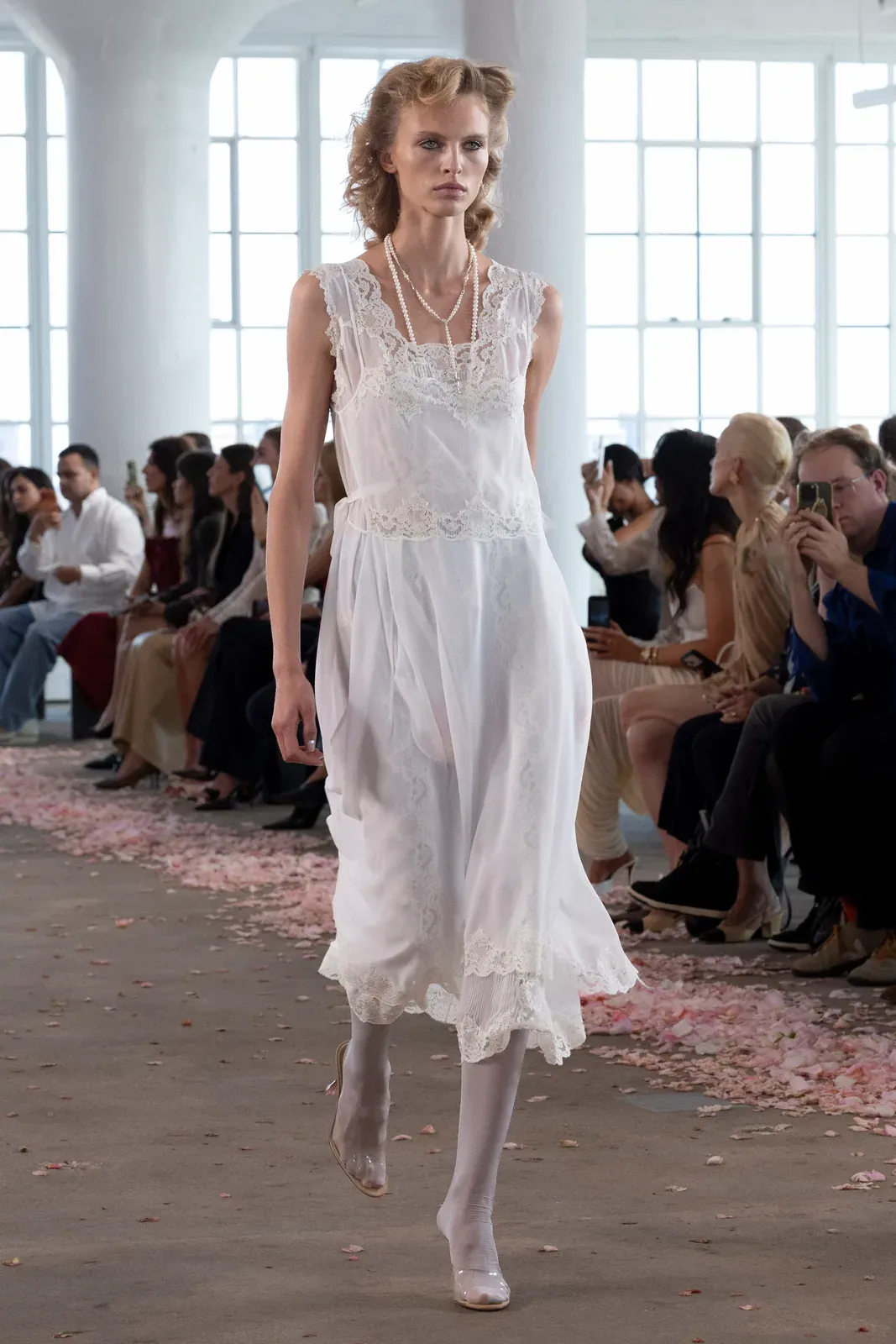
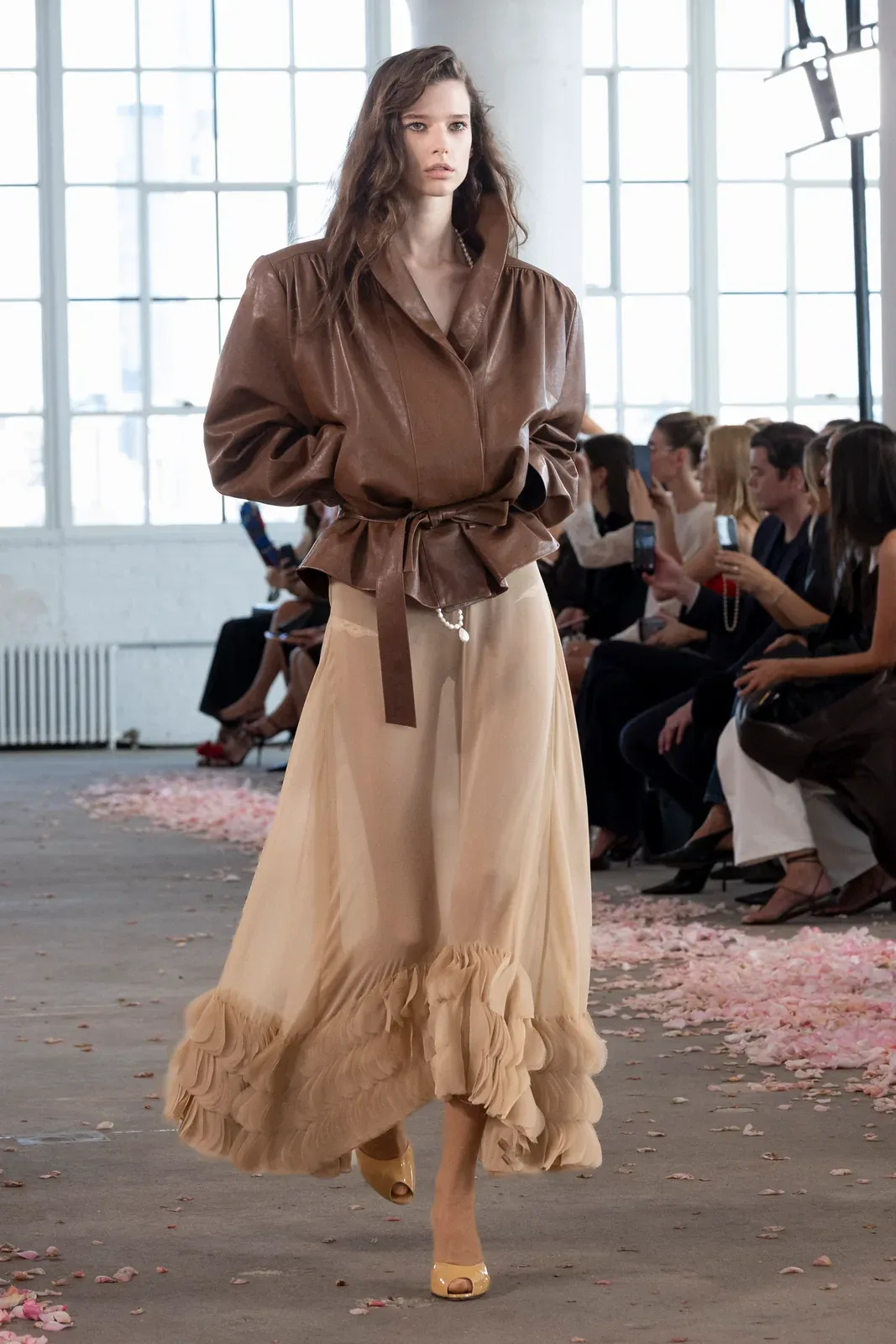
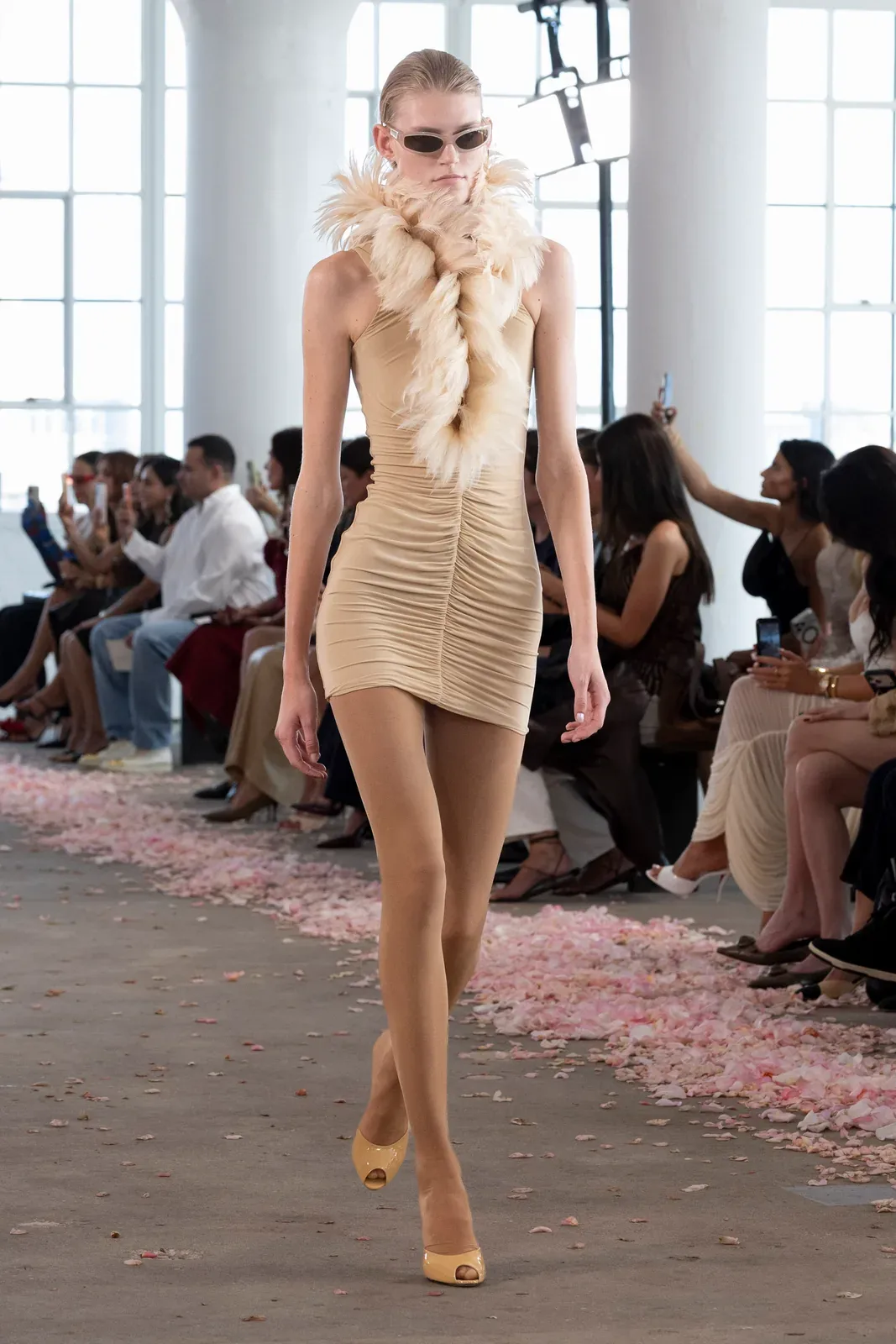
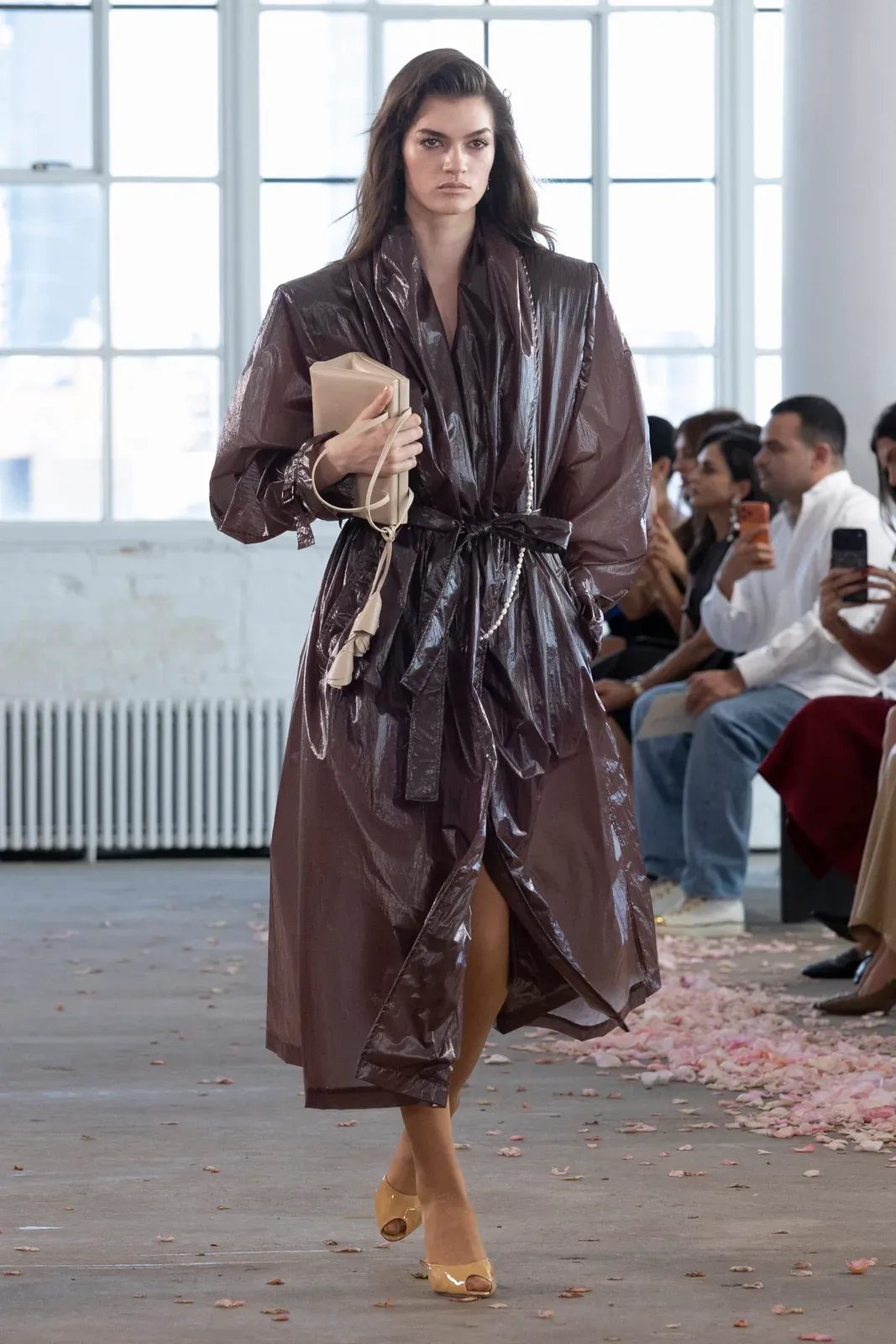
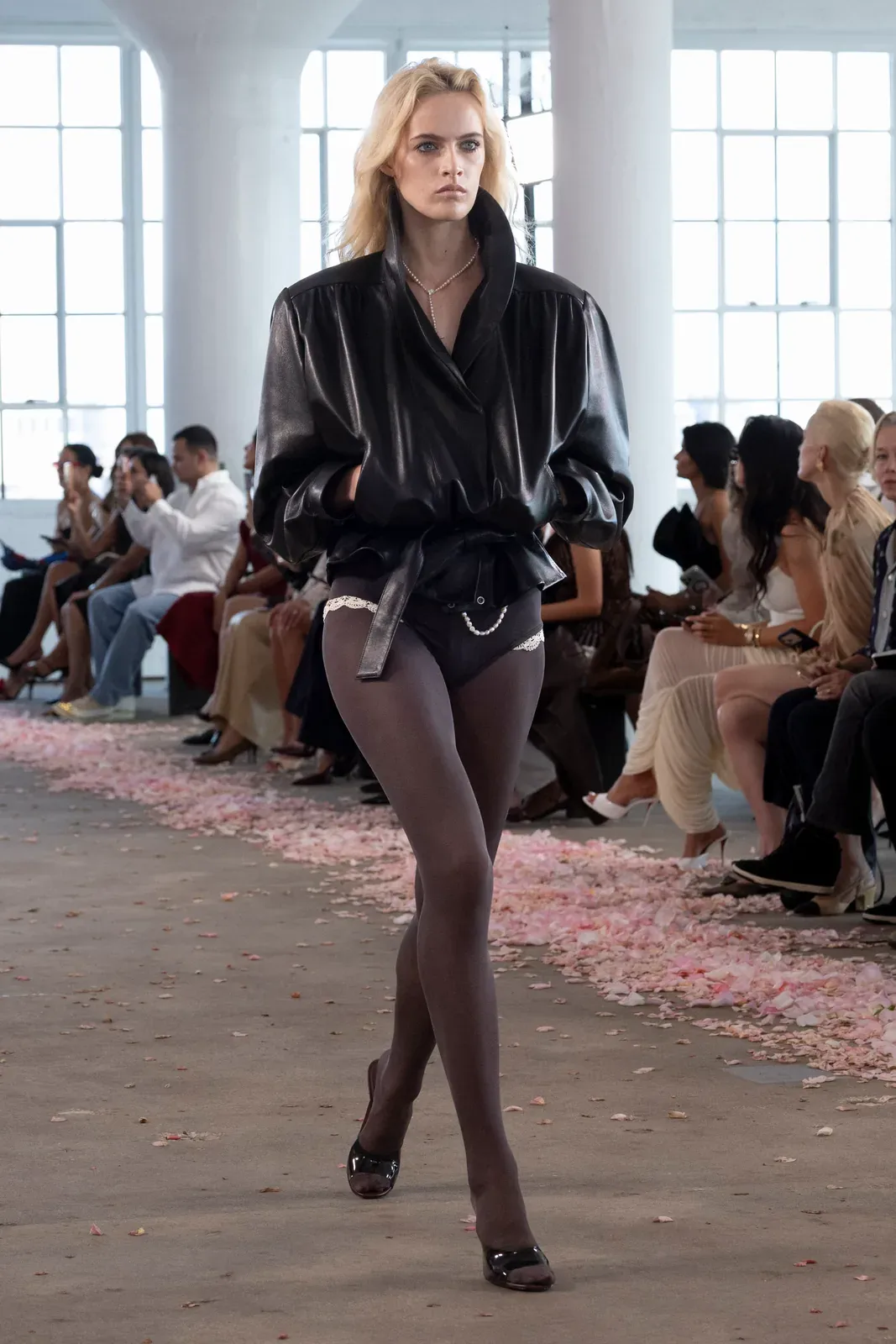
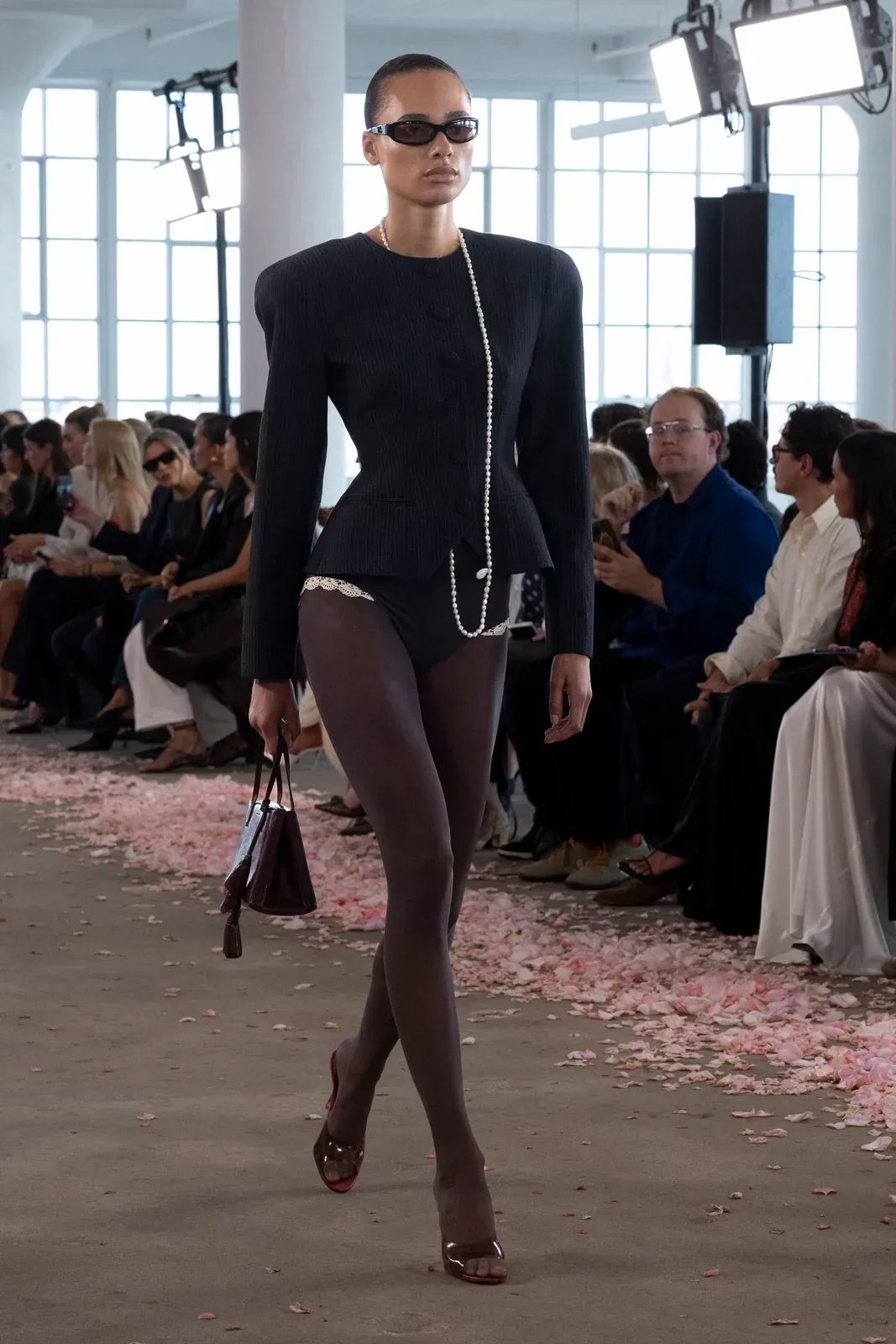
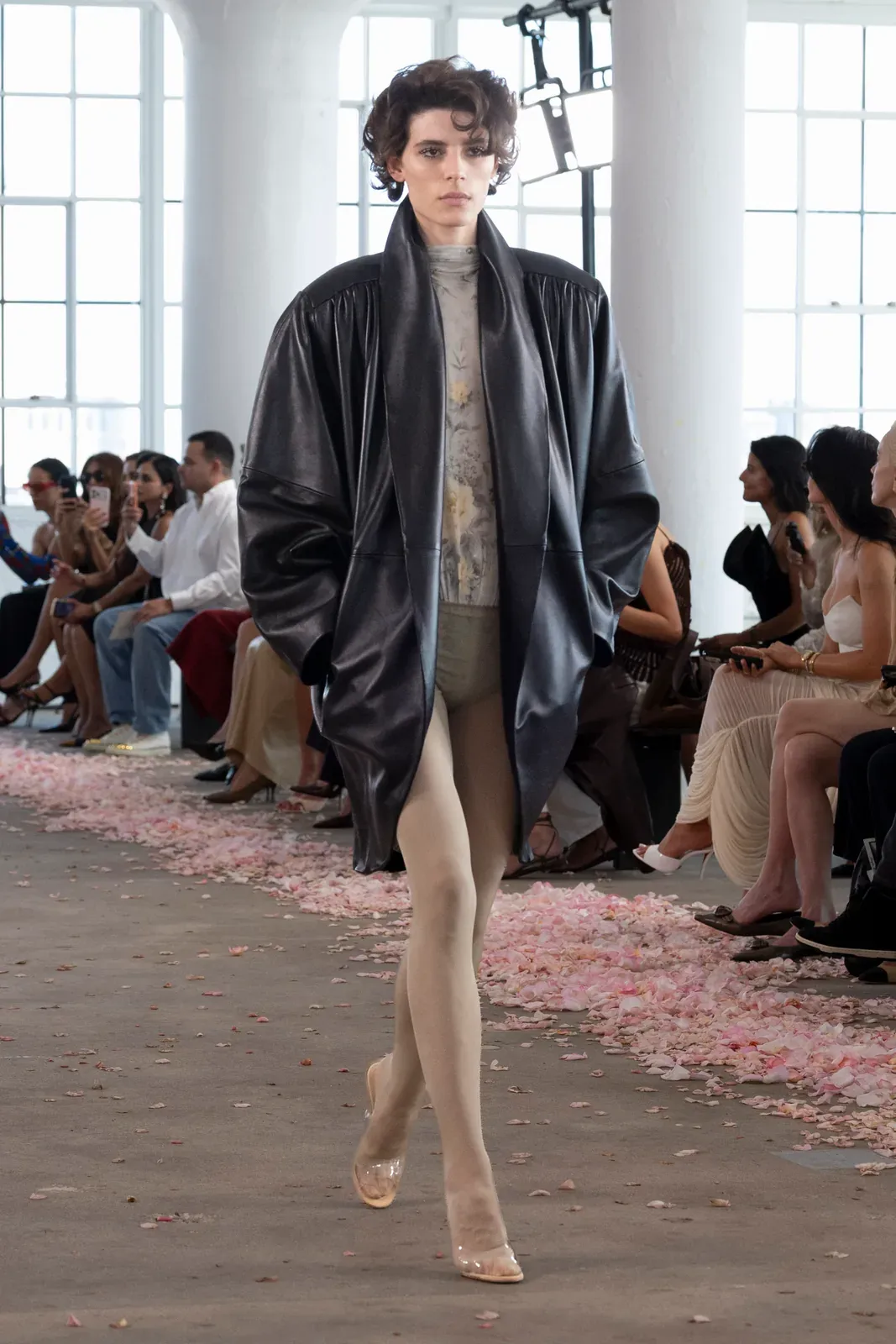
Magda Butrym is making her mark on this season with outerwear. Flowing yet voluminous jackets, puffed-up upper sleeves, and bold shoulders dominate the look at first glance; however, the lengths make the pieces much more wearable. Some end right at the waistline, others at knee length - thankfully, not every beautiful coat has to drag on the floor just to be dramatic. Shades of coffee, tobacco, and soft neutrals also bring this volume into the spring season.
But as Natalia unfolds, the hard shell cracks open. This season, Butrym has turned to the idea of lightness, drawing inspiration from Polish artist Natalia LL and her own family memories. The apron her grandmother wore in the kitchen transforms into dresses layered with sheer silks; delicate lace, flowers, and visible lingerie pieces create an almost angelic romanticism in contrast to the bold outerwear. Roses spilling from the pockets of a sheer trench coat may be the most beautiful summary of this contrast.
Accompanied by bow collars, oversized earrings, and sunglasses, two-piece sets offer the epitome of back-to-work chic. The play with materials is particularly delightful: traditional Polish patterns reappear on latex-coated cotton, while foil-coated outerwear takes on an almost plastic-like sheen. Sleeveless dresses with stiff, upright collars (as delicate as nightgowns yet structured with padding) carry the same idea forward: femininity here doesn’t have to be fragile. As lace and sheer fabrics increase, the collection feels lighter, yet the Butrym woman doesn’t lose her strength. On the contrary, this may be the most beautiful aspect of S/S 2027: the confidence of a massive leather jacket and the romance of a delicate nightgown can coexist beautifully in the same wardrobe.
Bad Binch TongTong
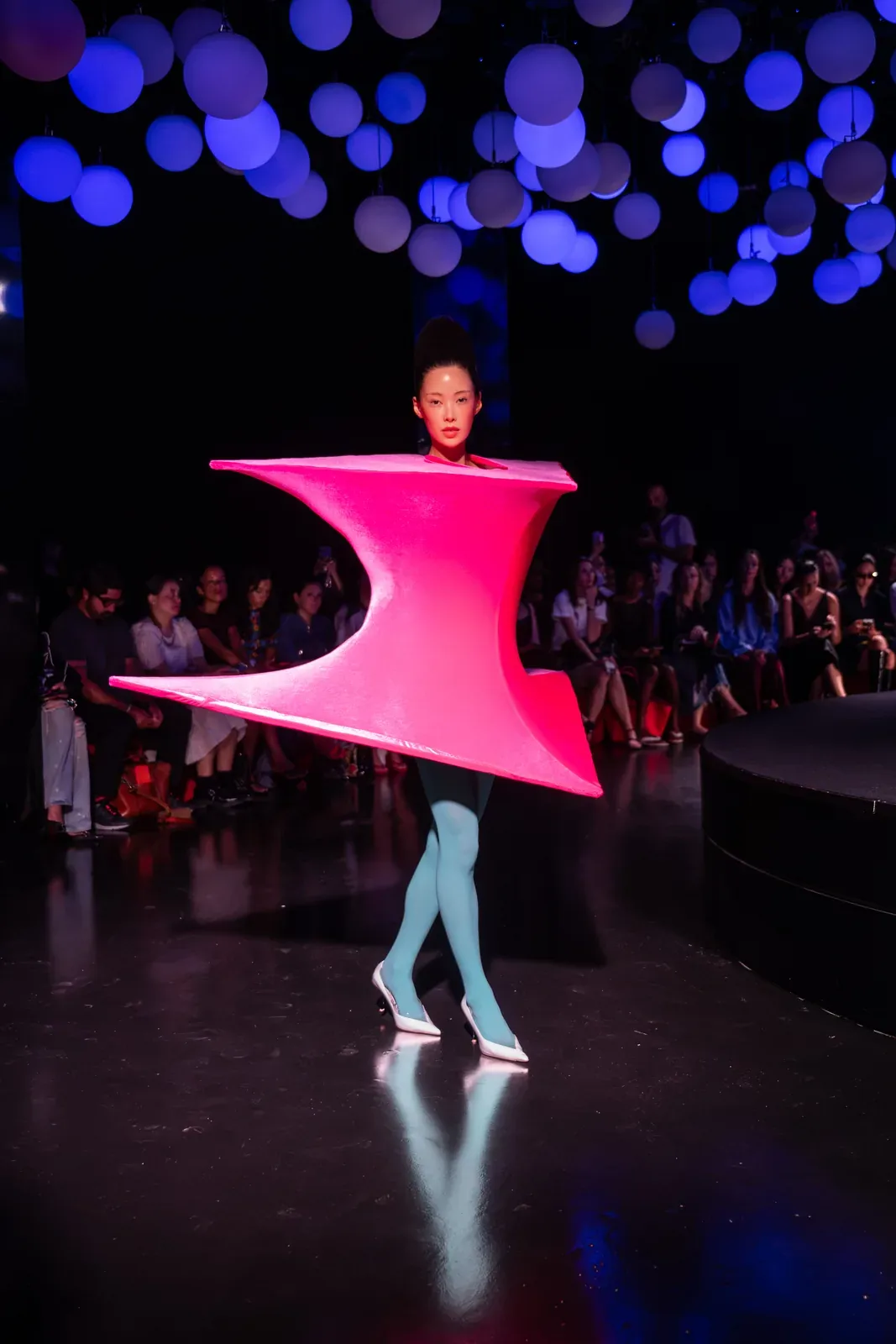
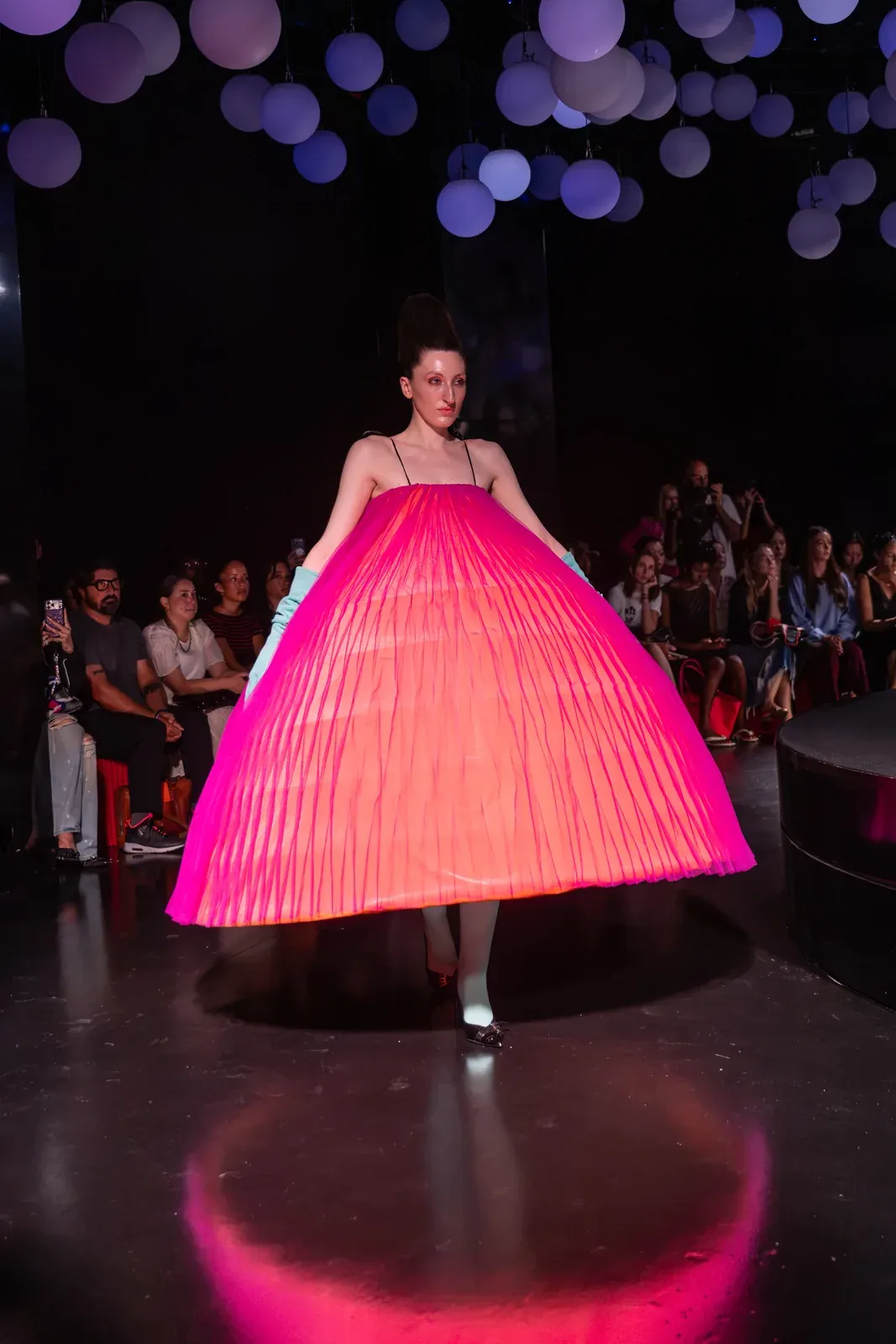
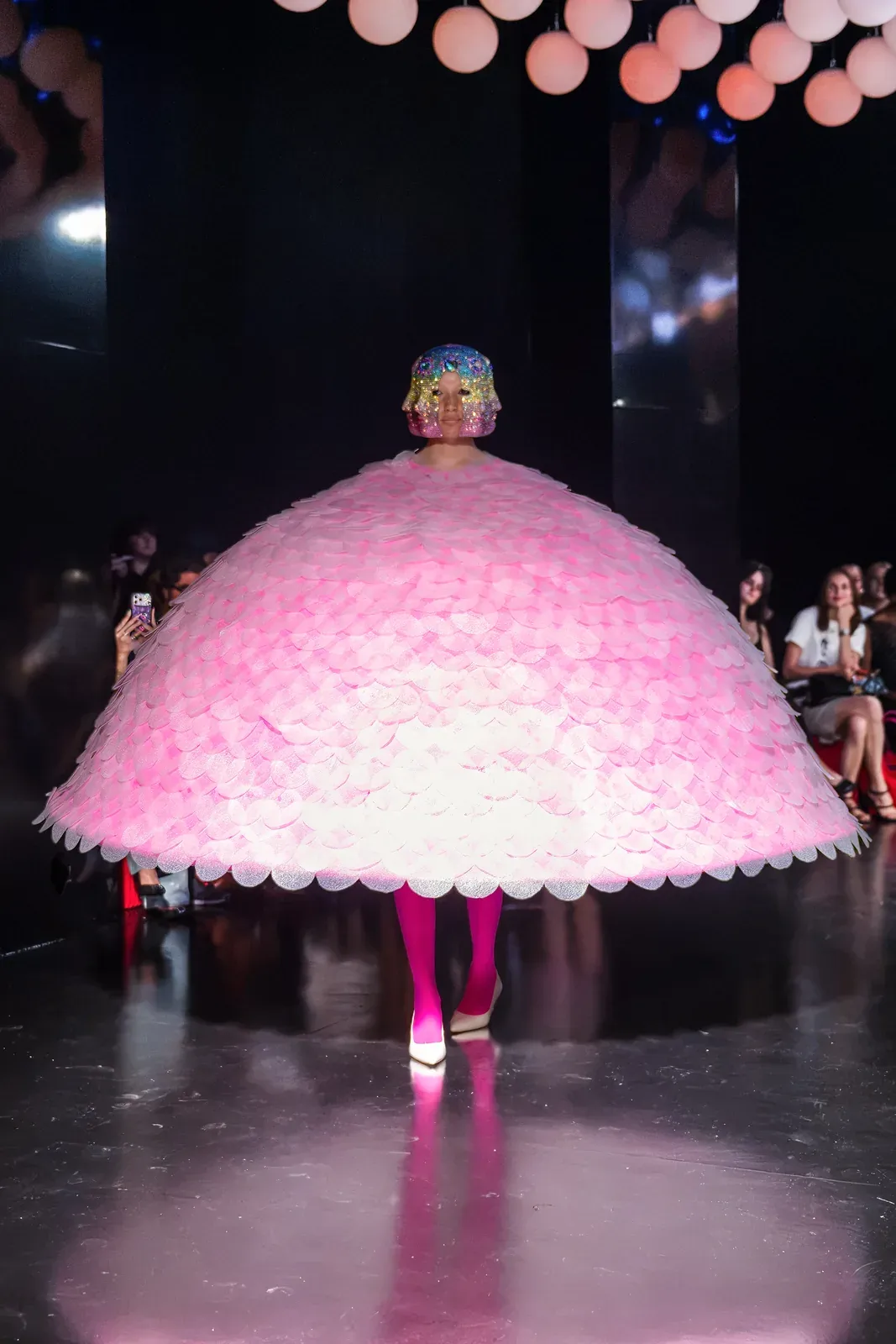
Masks, seven-faced heads, aliens… What’s going on at Bad Binch TongTong? Terrence Zhou’s return after a two-year hiatus from the runway creates a surreal universe at the Balloon Museum right from the very first look. The opening model, with her giant pink hemispherical skirt and a jewelled helmet encircling her head (featuring seven identical faces), transforms into a creature whose nature we can’t quite identify as human or alien. For Zhou, the starting point isn’t the garment itself but the “aura”: emotion, energy, and movement.
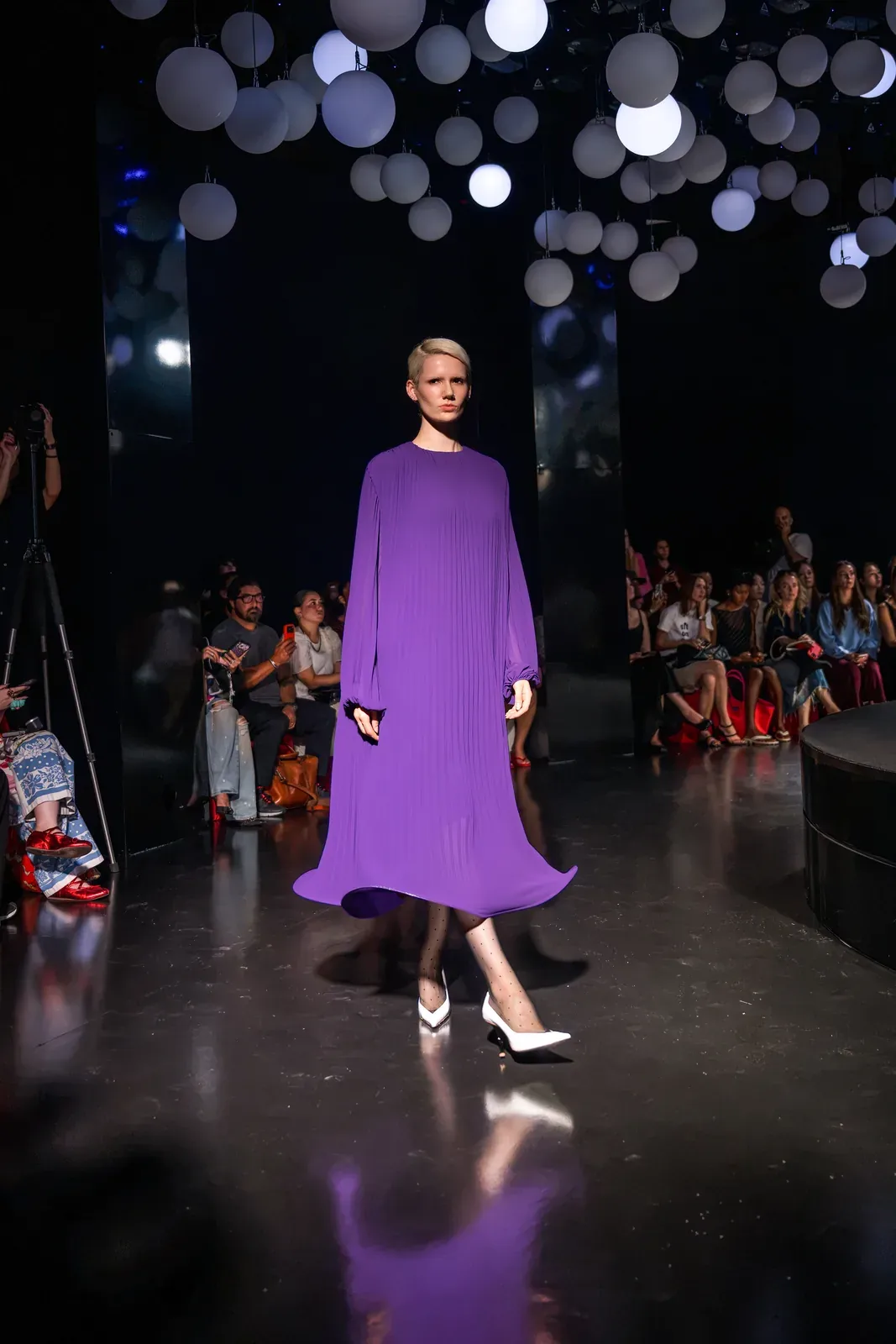
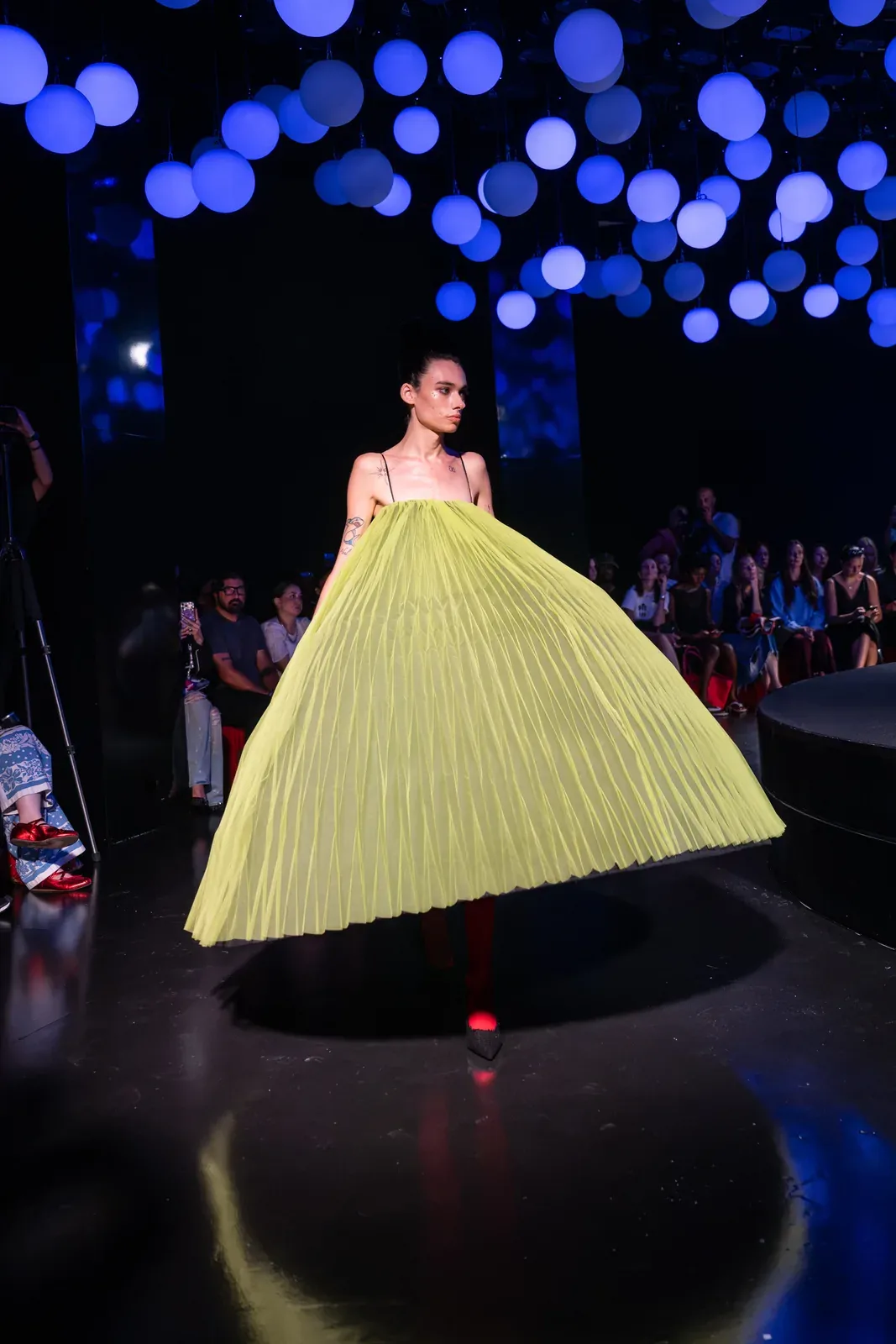
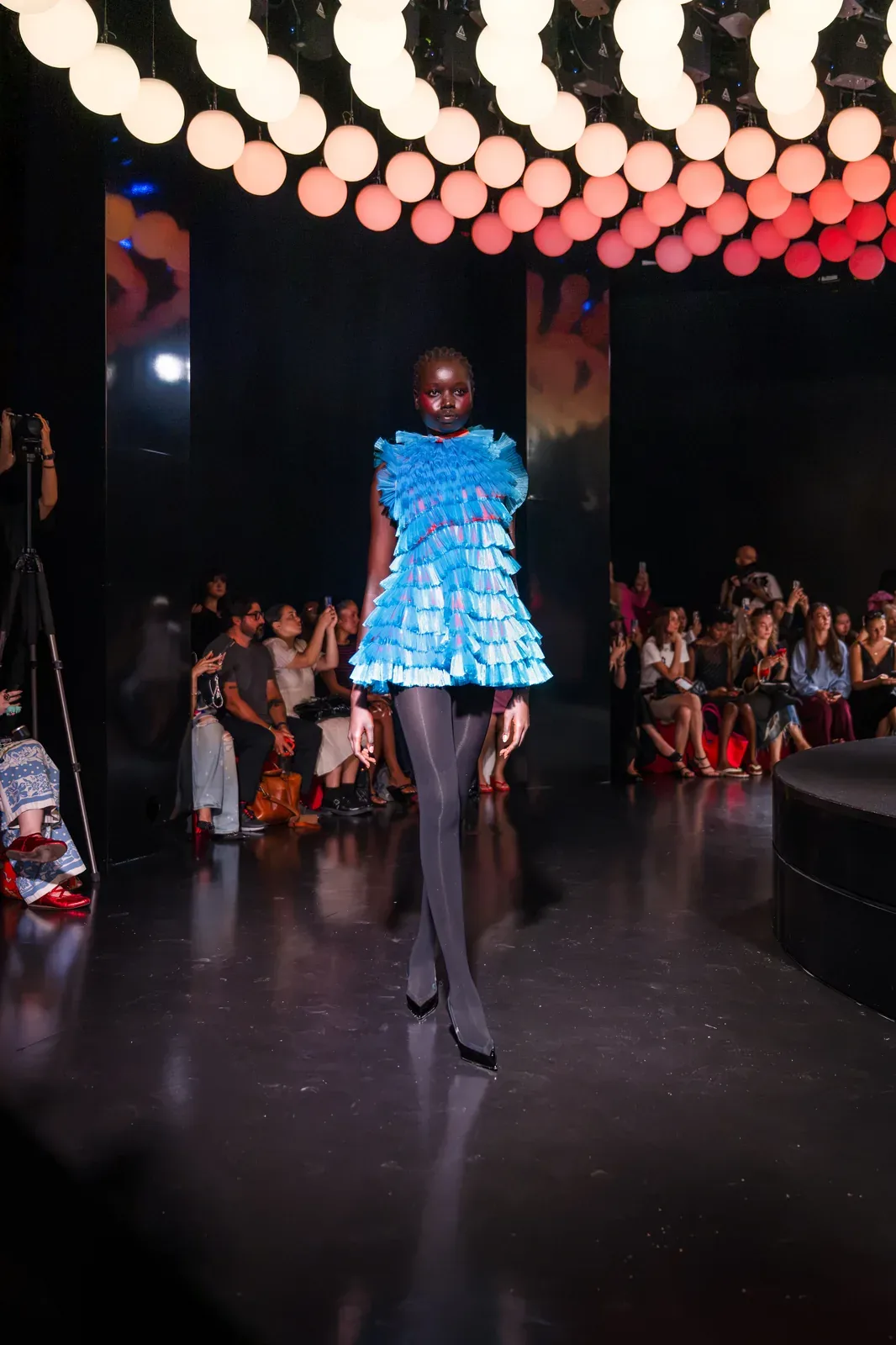
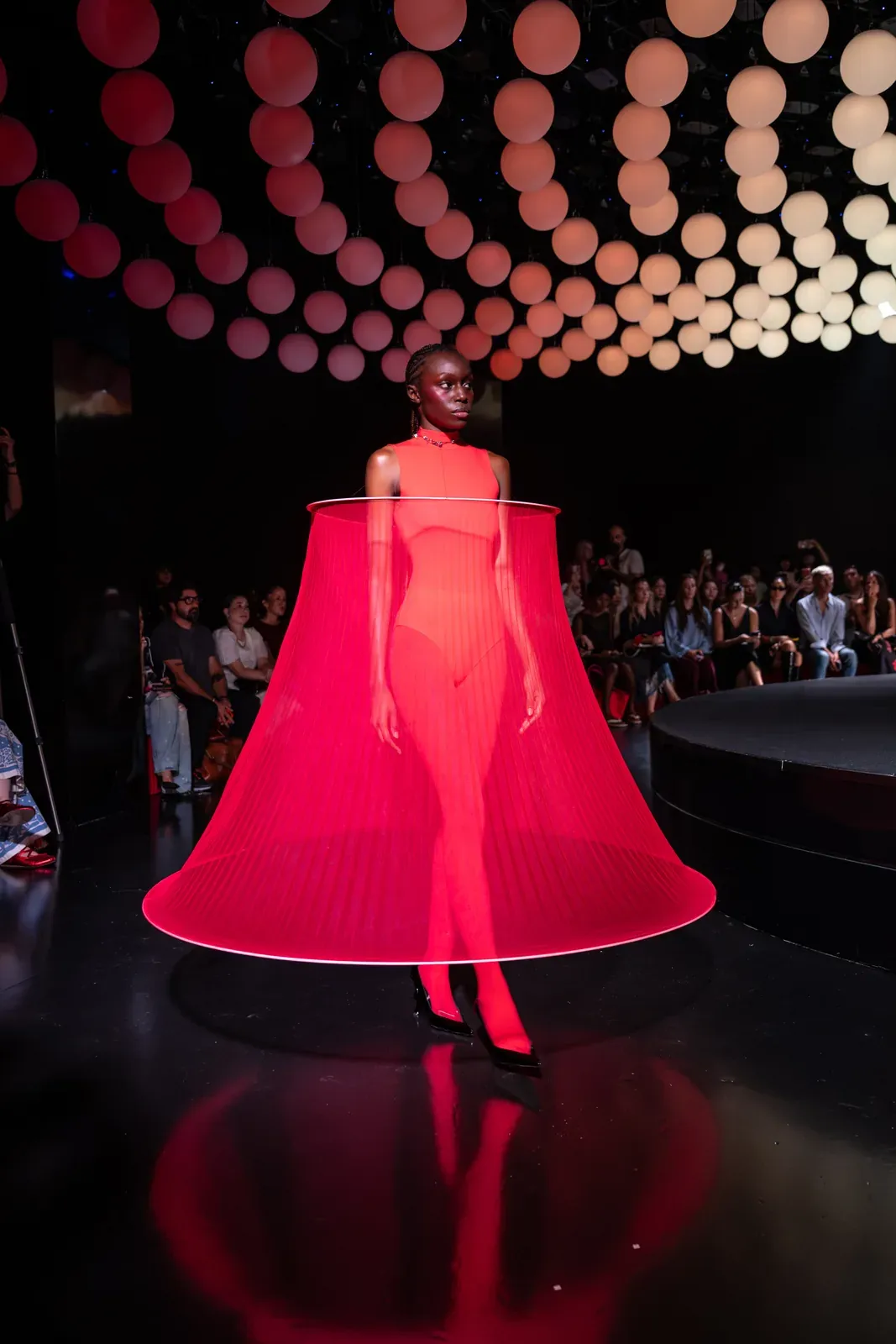
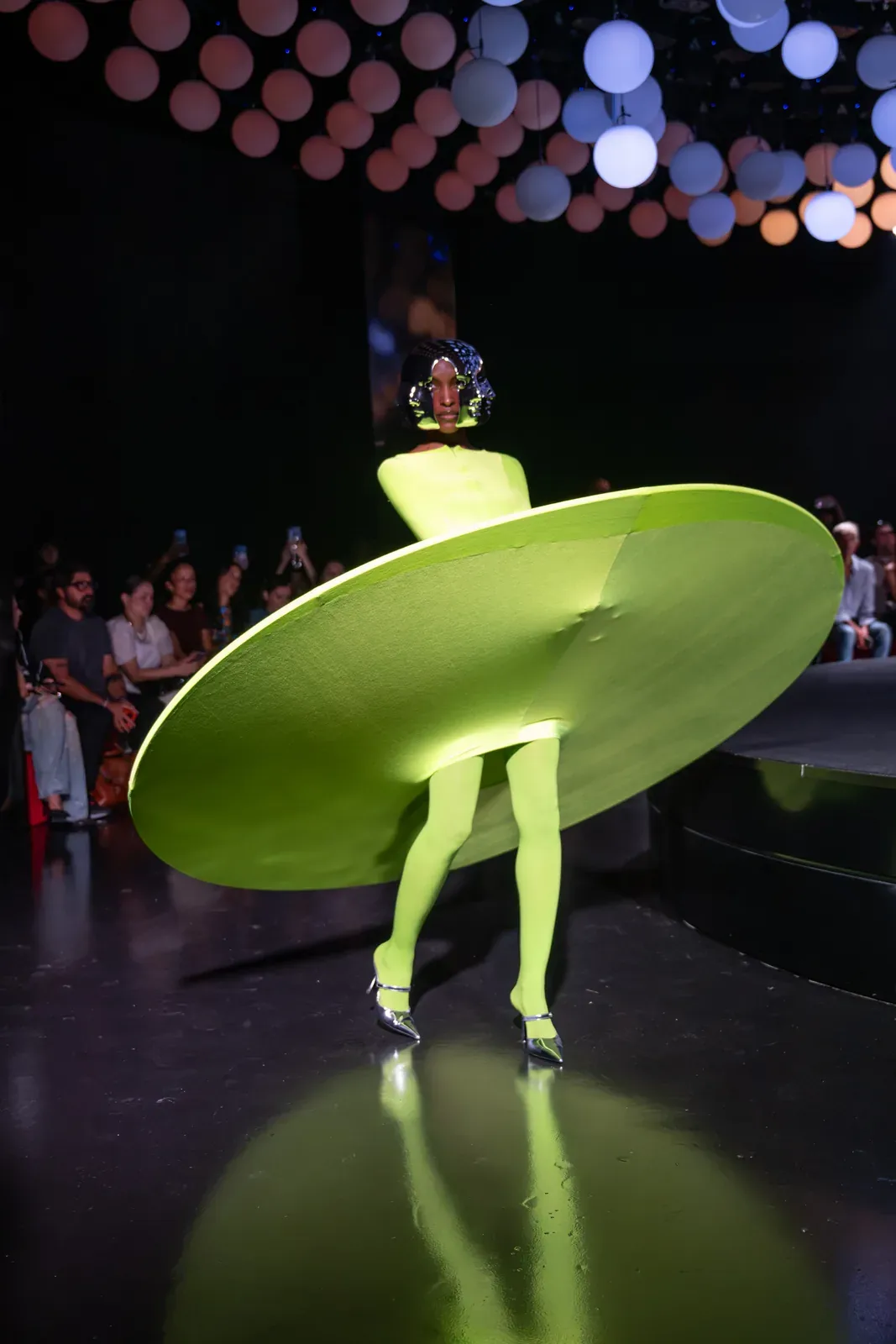
What follows is a true experiment in form that plays with the body’s boundaries. The hems of long, form-fitting dresses flare out into giant rings; in some looks, these rings encircle the body like Saturn. Then come giant feathered spheres, neon ruffles, bodies trapped inside cages, and lampshade-like dresses. Trompe-l’œil operates here more through form than through print: the eye is constantly struggling to discern where the body begins and the garment ends. In Zhou’s own words, the garments distort, exaggerate, protect, and reveal the body. The most enjoyable part is how bodycon dresses, ruched skirts, and more familiar silhouettes are sprinkled throughout all this madness. Just as our eyes have grown accustomed to the norm, another giant sphere appears. The finale, meanwhile, is like a Disney princess reborn on another planet: Saweetie makes her New York Fashion Week runway debut in a neon green, feather-covered dress that seems to float around her body as if suspended in mid-air.
To evaluate Bad Binch TongTong by asking, “Is this wearable?” would be to miss the point entirely. Here, clothing transforms into a living sculpture around the body rather than simply something slipped over it. It’s strange, funny, a bit unsettling, and absolutely impossible to look away from.
Lii
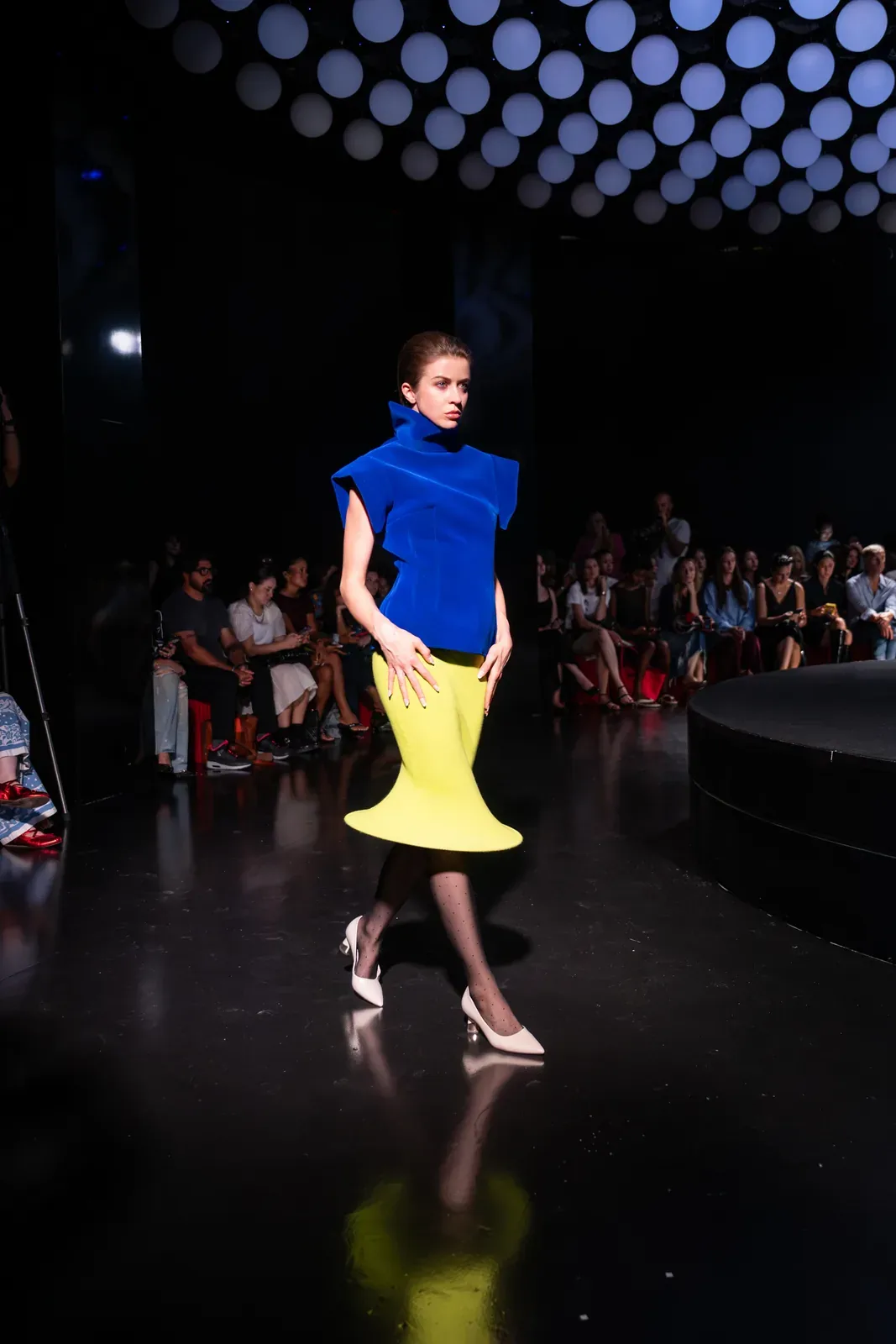
The first thing that catches the eye in Lii’s S/S 2027 collection is the layering. Short capes draping from the shoulders, overlapping skirts, and asymmetrical dresses that appear to be torn apart; yet even amidst all this abundance of fabric, the skin finds a way to shine through. Zane Li’s collection, titled Scaffold, is precisely about this: revealing the structure that holds the garment together rather than the finished garment itself. Linings, seams, and internal construction (which are normally hidden) become the design itself this time.
The use of colour is just as specific as the construction. Unexpected contrasts appear alongside tones so close they almost blend together; in particular, the way linings of different colours emerge as the dresses drape transforms a single piece into a constantly shifting play of colour in motion. Some dresses look as if they’ve been cut, folded, and then left slightly out of place, but the beauty lies precisely in this controlled “incompleteness.” Stockings worn on just one leg are a favourite detail. While the fabric on one side appears to be an extension of the leg, leaving the other side bare adds asymmetry and colour even to the simplest look. Pieces of fabric tied around the neck (sometimes resembling hoods) continue the same play with the bare skin of strapless dresses. From the mini capes on the shoulders to the linings peeking through, at Lii, layering isn’t there to cover something up; on the contrary, it’s there to reveal what lies beneath.
Advisry
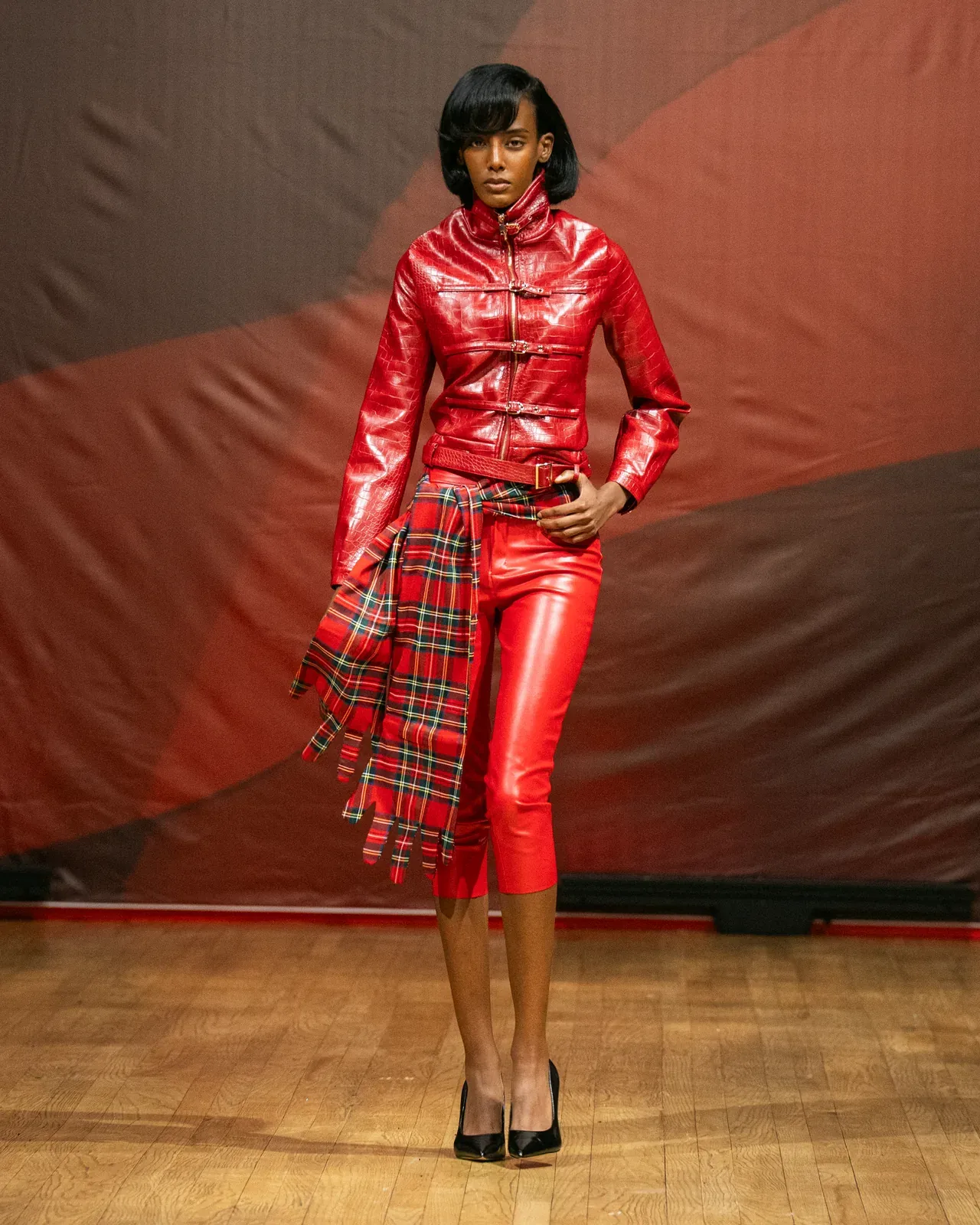
America, Still. What is America still? In S/S 2027, Keith Herron seeks the answer to this question not in the present, but 50 years in the past. Drawing on the belief that every generation experiences the end of the world, the designer turns to the political and cultural upheavals of the 1970s, examining the characters that emerged as America was under pressure through three acts: reaction, dignity, and transformation. With the voice of James Baldwin from 1969 in the background, the runway transforms into a three-part American story rather than a fashion show. Act I: Reaction. The dark New York of Taxi Driver and Travis Bickle. Monochrome looks, distressed denim, oversized off-the-shoulder trench coats, and body-restricting crocodile-skin straitjackets take centre stage. The monochromatic flow is occasionally broken by black-and-white dresses, while oversized bags, gloves, and headpieces elevate the look to a more theatrical level. Here, dressing is almost like protecting oneself from the outside world.
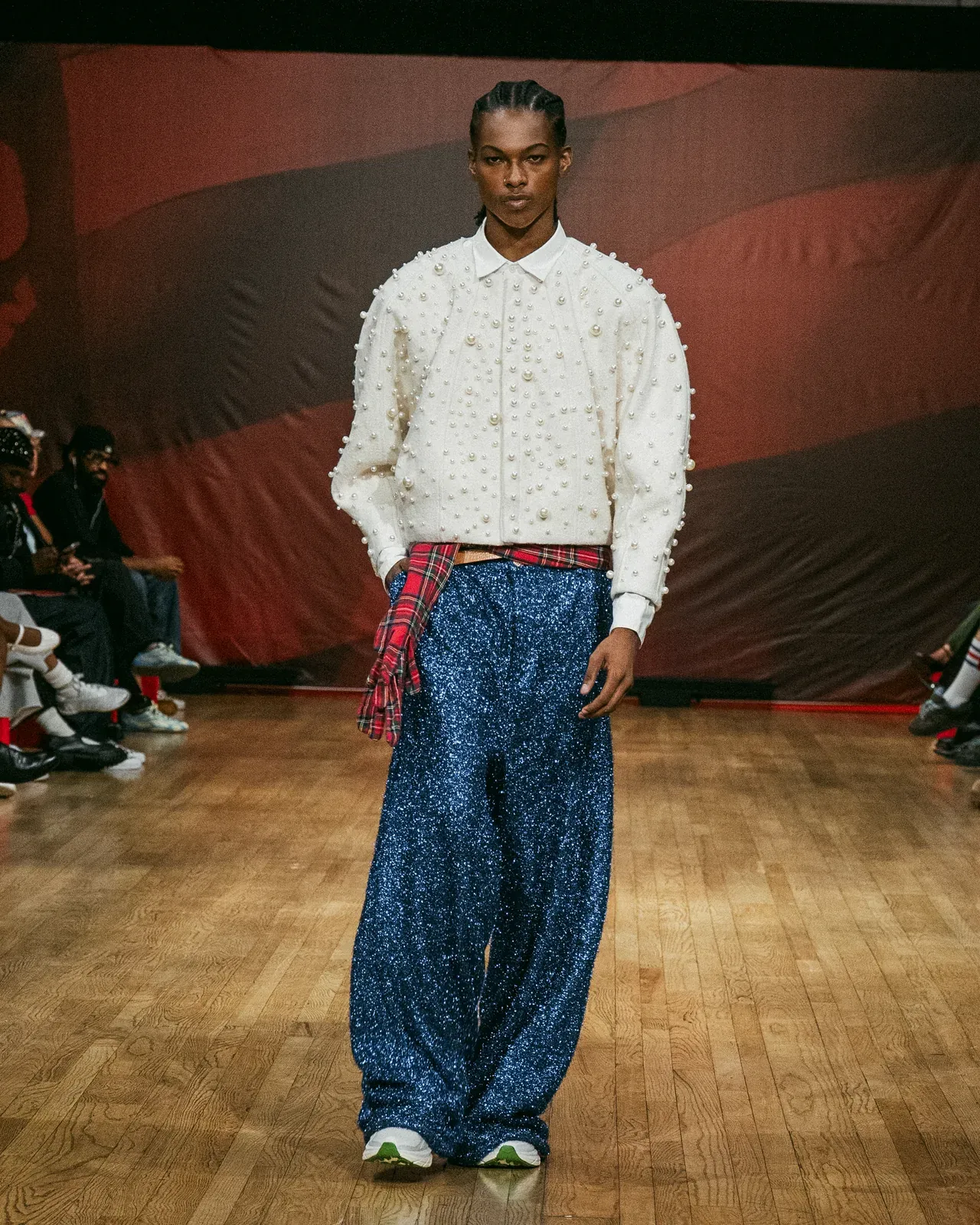
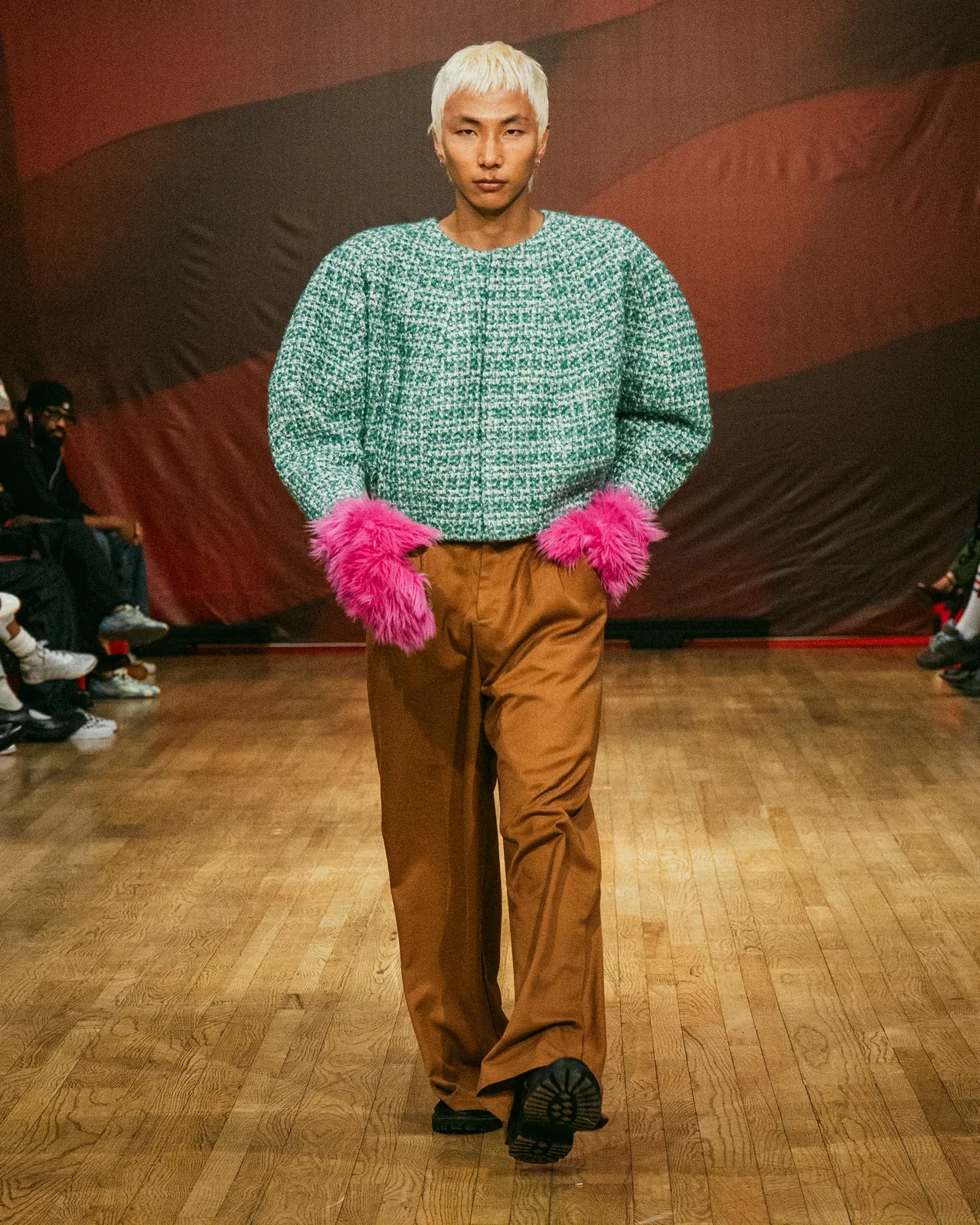
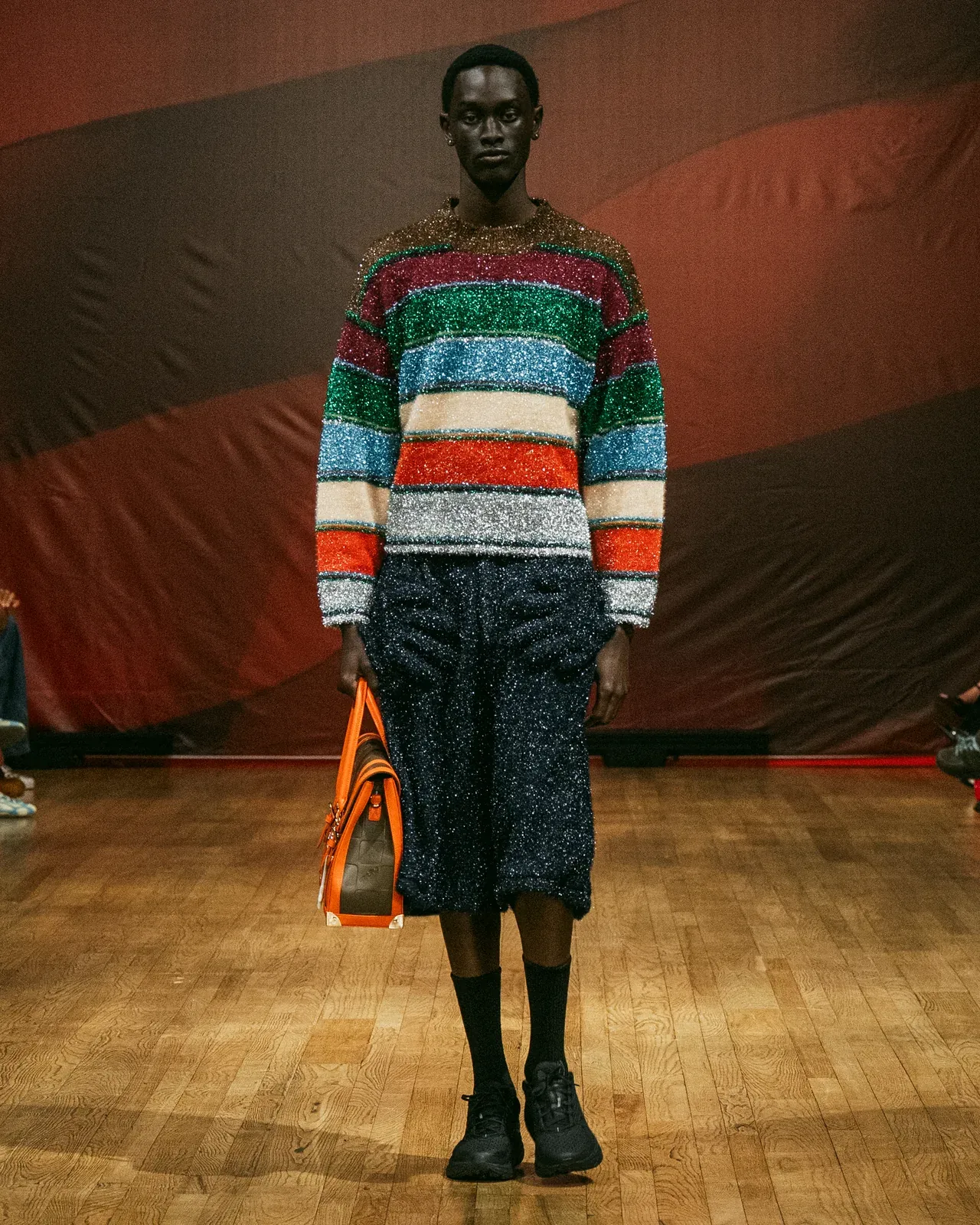
Act II: Dignity. Now we’re in the world of Muhammad Ali and Malcolm X. While sweaters over T-shirts may feel more intimate at first glance, the tailoring grows increasingly sharp: tartans, checkered suits, black tailoring, and angular shoulders. The square shoulder pieces (which look like a giant pad sewn onto the jacket) are particularly striking; Herron uses these sharp geometries to convey the “rigidity” of the era. When pearl masks and sculptural headpieces enter the mix, “dignity” begins to read less like classic, demure elegance and more like armour. And keep up, because Act III: Transformation is here. The weight of the previous two acts dissolves instantly: sequined basketball shorts, glittery knits, pearls, shiny surfaces, and oversized bags… While men’s shorts that fall below the knee and monochrome suits maintain the sporty aesthetic, glitter and paillettes transform everything into a celebration. Moreover, the transformation isn’t limited to embellishments; the straitjacket-like form that constricted the body in the first act returns here in a looser, freer state. Artists like Nina Simone, Sly Stone, and Gil Scott-Heron also shape the spirit of this final act: taking pressure and turning it into something new and beautiful.
Luar
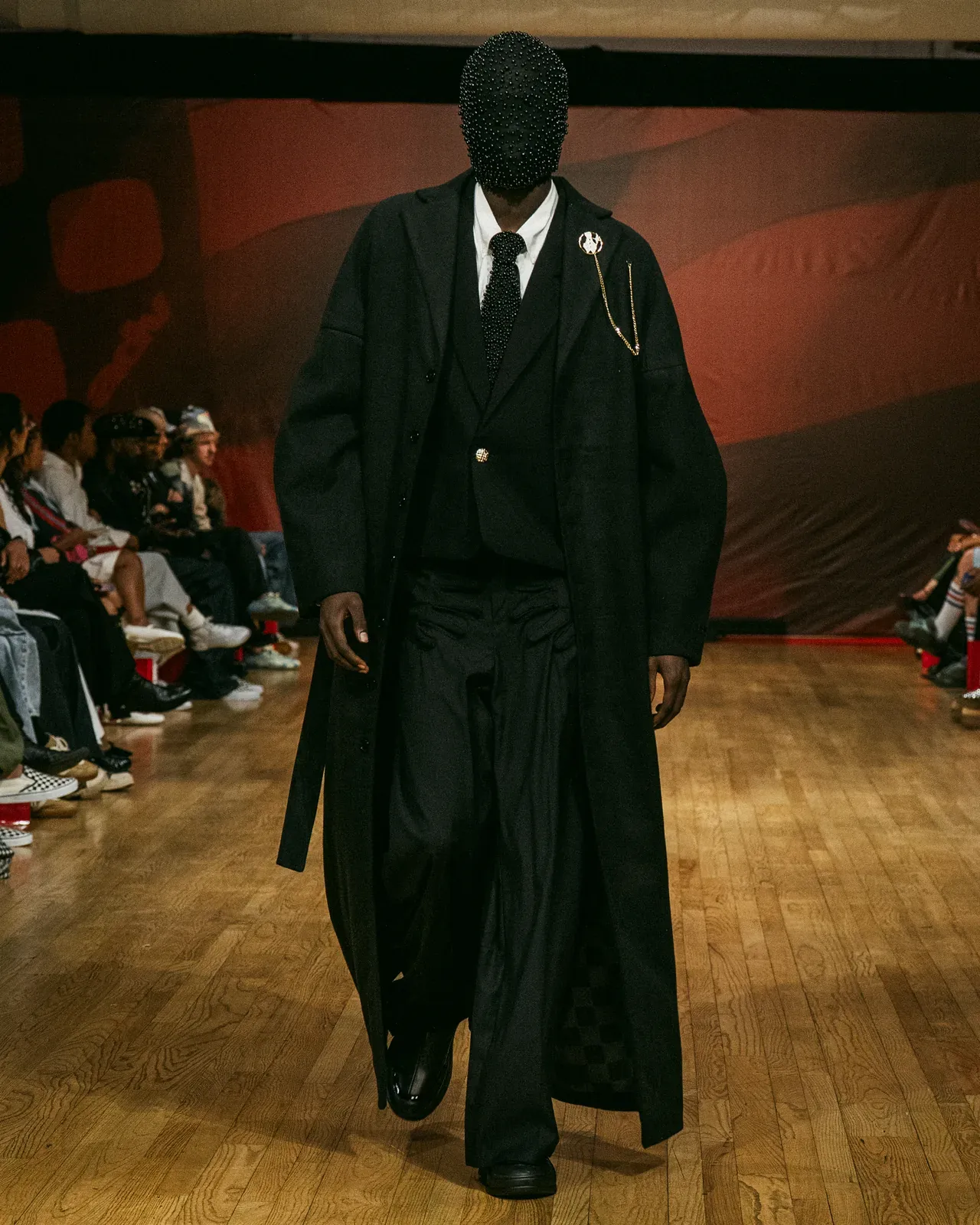
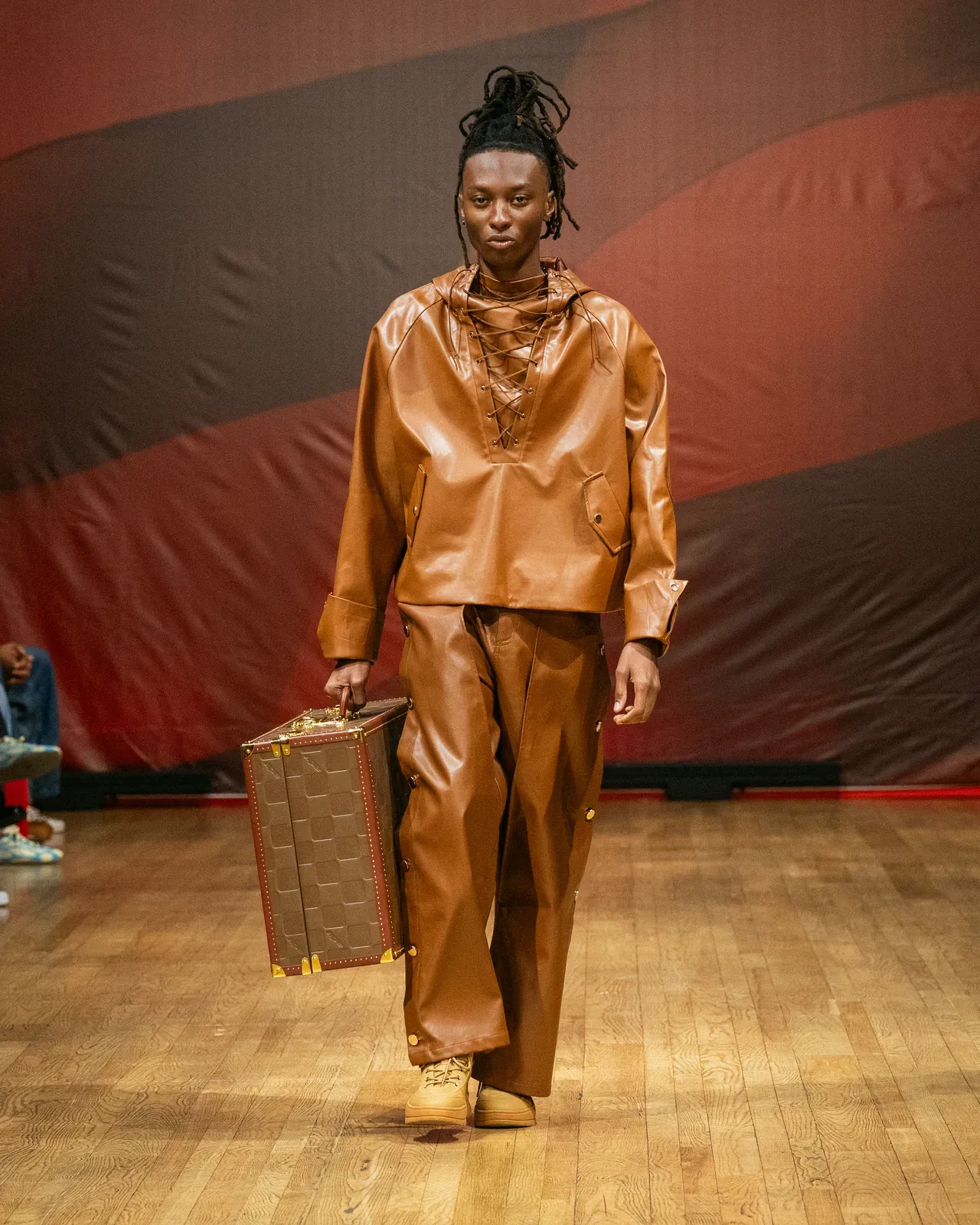
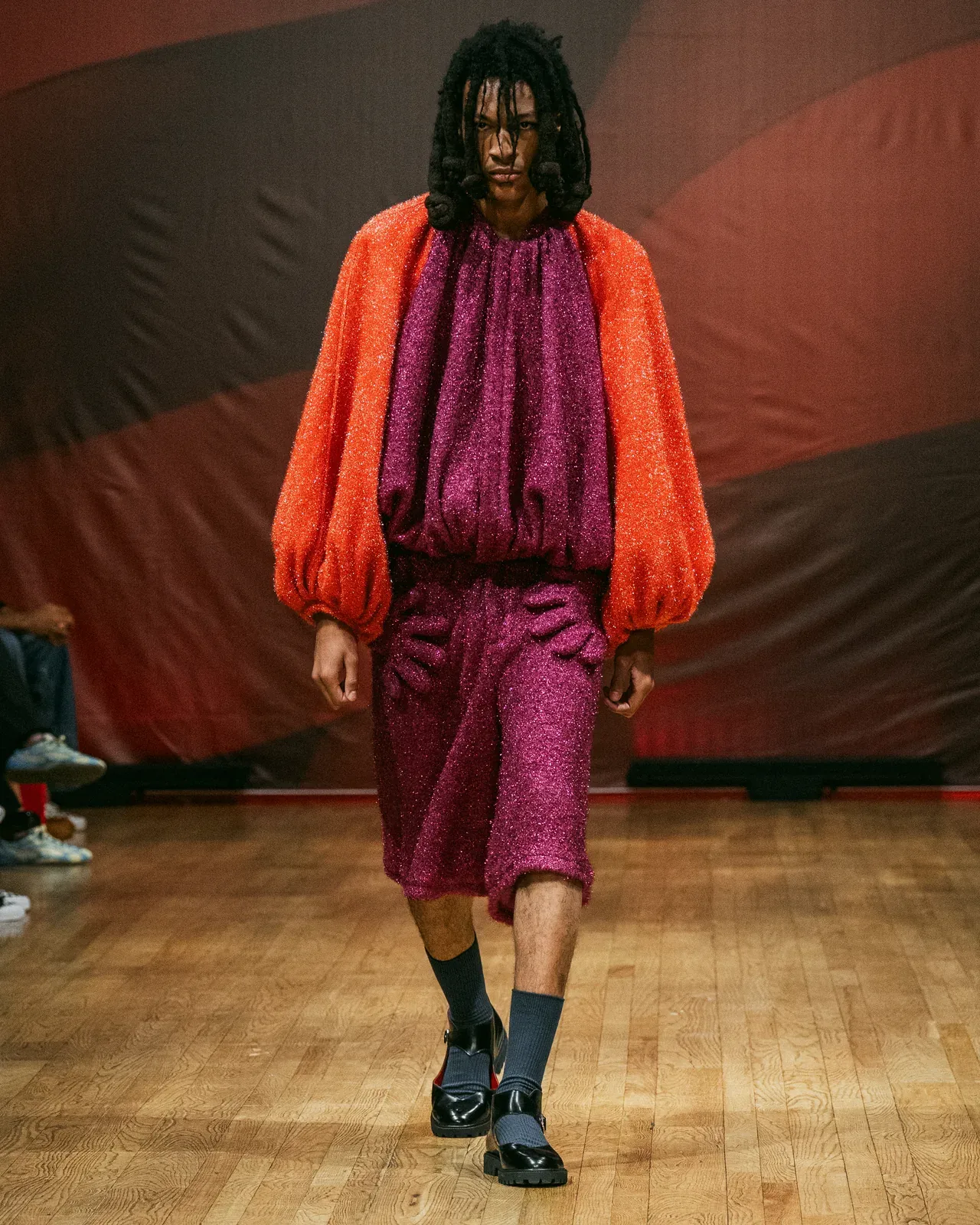
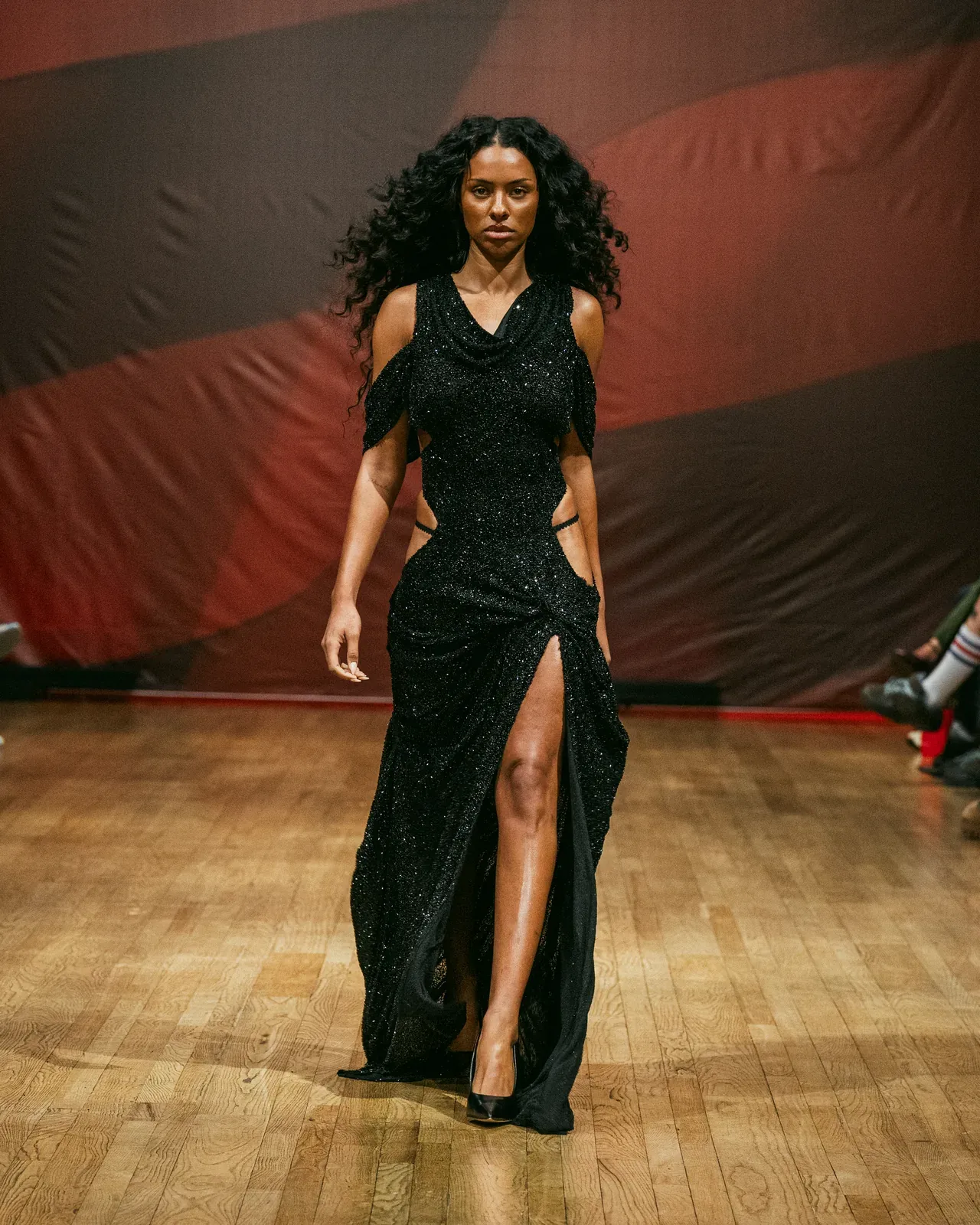
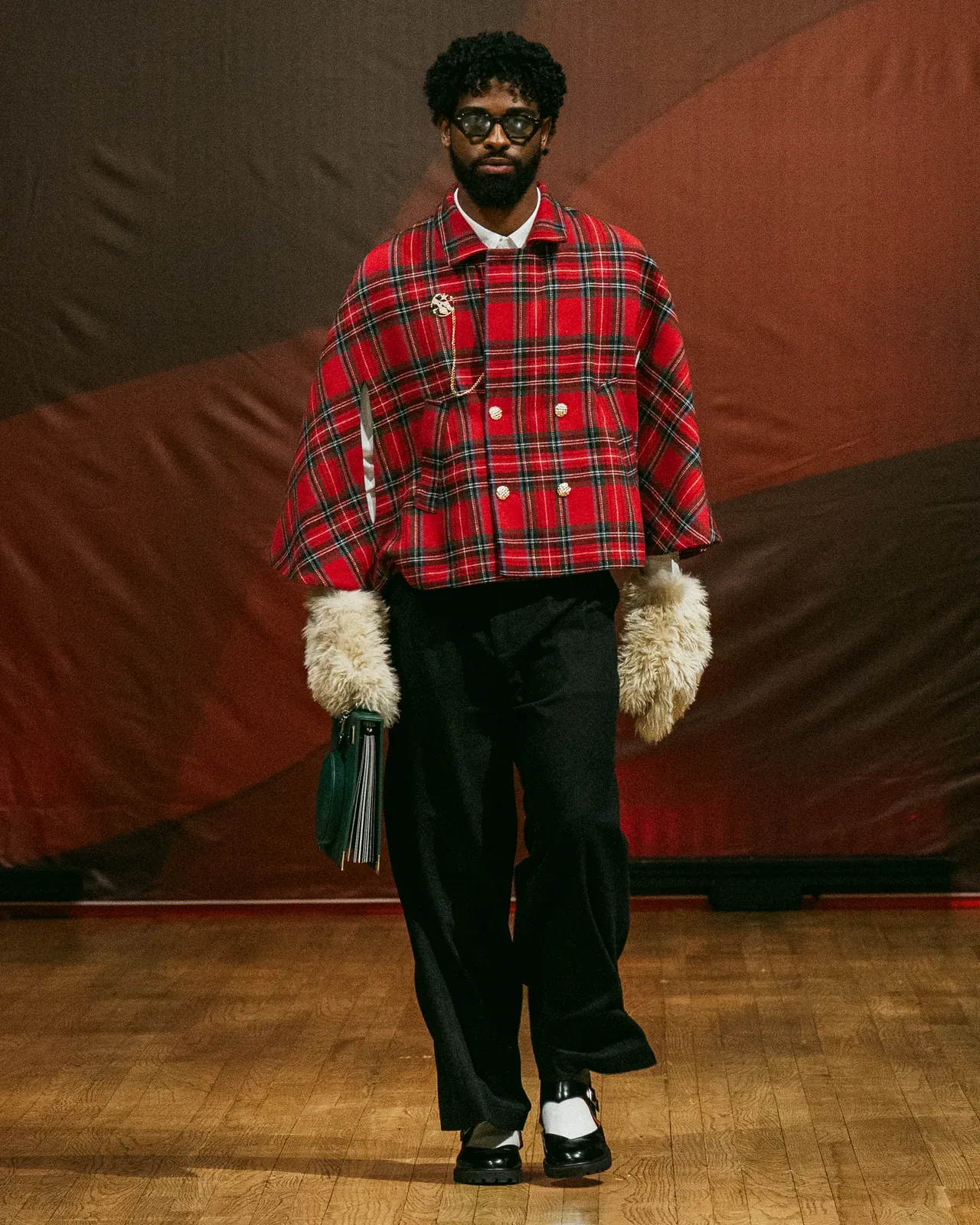
Luar opens with a much more serious, almost ceremonial atmosphere. Against a dark backdrop, with heavy music playing and under the massive shadow of the Unisphere, long coats, striped trousers, and jackets stretch the models’ silhouettes to the extreme, while puffy trousers reminiscent of the Tudor era suddenly appear. This is because Raul Lopez’s collection, titled Christopher Street Columbus, is built precisely around this clash: Tudor-era attire and the history of colonisation collide with the designer’s Dominican heritage and the queer nightlife of Christopher Street.
Brightly coloured stilettos emerging from all-black ensembles, face-hugging headpieces, and showy hoop earrings lighten the sombre mood. As the layers build, things get even more exciting: reptile-print fabrics, over-the-knee boots, sharp mules, and exaggerated volumes that lift the shoulders even higher. On some jackets, the shoulders seem to balloon out. Next come sheer fabrics that drape over the head and shoulders - a bit Tudor, a bit fetish, and a bit like an aristocracy from the future.
Tuxedo-style suits take this historical play even further. Brown-and-black striped velvet tailoring sits side by side with pieces that look shiny and technical; the pairing of fabrics like velvet (which evoke the past) with these futuristic silhouettes is particularly striking. The colours of the cocoa beans Lopez photographed in the Dominican Republic are printed on silks, while the earthy textures of rotting cocoa are transformed into jacquards. So the brown palette isn’t just there to look vintage. And the boots! Models with openings that dramatically flare around the leg strip the classic rain boot of all its dullness and transform it into something else - though who would dare wear these in the rain? In the finale, tailoring gives way to sequined, asymmetrical evening gowns and curled feather details. In Luar S/S 2027, history doesn’t simply become costume; Lopez queers it, exaggerates it, and pulls it into his own world. The convergence of Christopher Street and Columbus under the same heading is, in fact, the very essence of this.