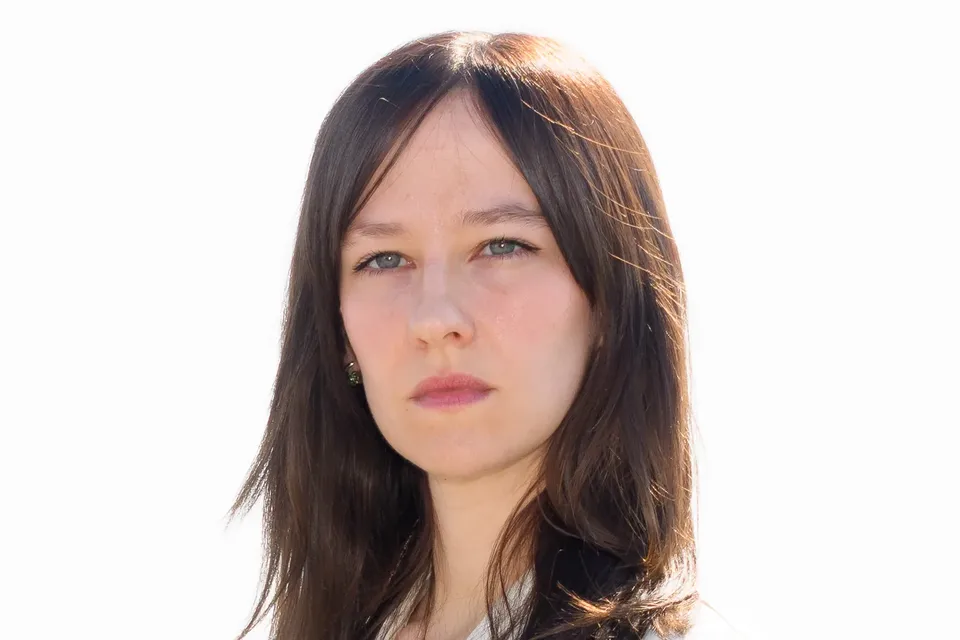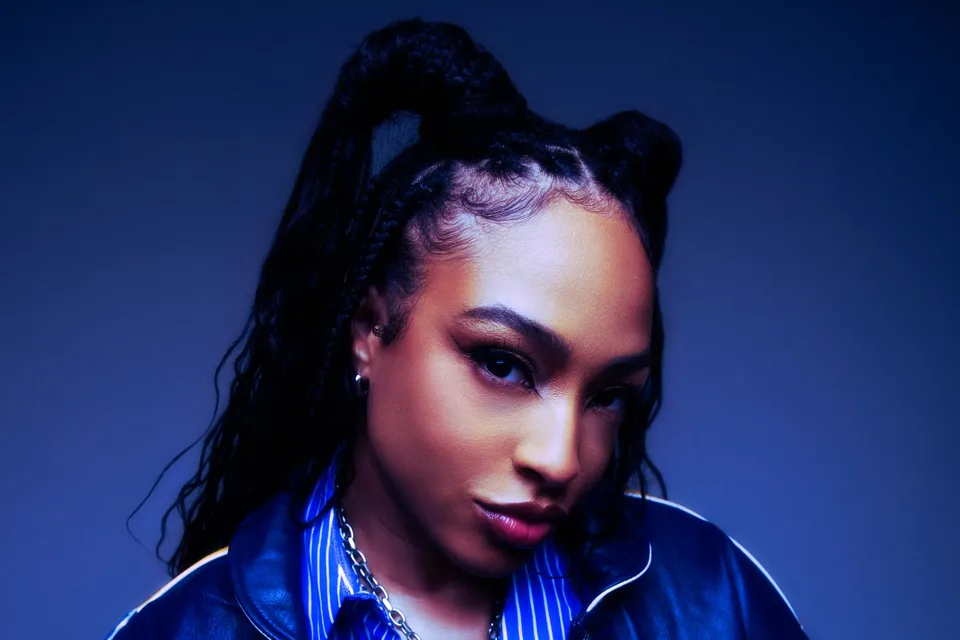
Lara is on her way to a grocery store in Los Angeles. “It’s strange, nobody walks here”, she laughs over the phone. There is a haunting poetry to the scene: a voice currently cutting through global stages, from a sold-out Movistar Arena to Coachella last year, navigating on foot a city never built for human pace. The image lingers. As she moves, the conversation drifts into more expansive waters. We talk about life, faith, and burnout. For a moment, the LA concrete dissolves: the sea emerges, along with other geographies, other tempos. Each of Judeline’s songs also has a way of inhabiting multiple places at once. This friction between the walking body and the accelerating velocity of life mirrors her music. Pop, folklore, and electronics are not just genres, but conceptual surfaces rubbing against one another.
This interview is taken from Issue 54 and adapted for our digital platform. Order your print copy here.
The Christ of her hometown and Lady Gaga collide. Andalusian duende and house music share the same climate. Judeline’s is a universe where faith has no fixed form, yet it remains omnipresent. At her shows, she says, a physical energy takes over — as if, for a brief window, everyone was plugged into the same ritualistic frequency. Perhaps that’s why so many girls say her music makes them feel a bit more like brujitas (little witches). “I like the idea of people tapping into that inner witch, that power, that femininity. That goes for men too, you know? Connecting with a more spiritual, feminine side.” In her music, intuition, the body, and emotion function like a potion: ancient symbols and hyper-modern sounds. But there is a thread piercing through it all: saudade. Not nostalgia as a memory, but as a present state. Inhabiting a moment while already mourning its inevitable end. As if time didn’t move in a straight line, but in a spiral.
There, another tension emerges: an industry demanding that everything happen right now, where success has a shelf life. Against this, her intuition points elsewhere. “Let me taste it all, let me grow old”, she says. In that sentence, something larger appears: Judeline is not here to stop time, but to move through it. That’s where her music begins.
So, Lara, how are you? Where do you find yourself right now?
Actually, I’m in Los Angeles. I’m walking, trying to grab a quick bite at a supermarket before I run out of time. People don’t really walk here, so it feels a bit surreal, but I’m doing great (laughs).
I can imagine. How’s the tour life treating you? You’ve been all over Latin America and we even saw you back at Coachella — though this time, after your set last year, you were just there as a fan.
Yes, I was at Coachella for a couple of days. But honestly, I just went to let loose and have a good time. And the Latin American tour, that was a bit of a fever dream.
Who did you catch at Coachella?
I saw Addison Rae, PinkPantheress, Sabrina [Carpenter], rusowsky too. Honestly, I didn’t have time for much else. Oh, I did catch a bit of Anyma and Nine Inch Nails.
And how was the tour?
It was cool, but intense. I was away from home for a solid month, jumping through so many different countries. Emotionally, it was a lot to take in. I loved every second of it, but things got messy. I lost my phone for four days, and it just turned into total chaos (laughs).
I saw that! That was wild.
Honestly, yeah. But above all, it was exhausting. I got back and immediately got sick. It’s like when you don’t stop for a single second and your body just goes into survival mode.
You gave it your all.
Exactly. Eventually, you just crash.
When you look at that constant motion — from one stage to another, from country to country — do you feel like your music is evolving along with you?
I think so. Especially because of everything I’m learning while travelling as I get older. Also, I’ve spent quite a bit of time away from the studio this year. So, when I actually get there now, I make the most of it. Before, I felt like I had all the time in the world to make music or just hang out in the studio, but now it’s different. I feel this intense urge to make every second count. And I’m becoming an adult, life is happening. I try to trust the process. When I’m not making music, I try to really live the experiences that will eventually become songs.
“I feel like there should be as many religions as there are people in the world.”
Do you notice a difference in the crowds when you travel? For instance, in Latin America, it feels like faith is much more present.
I don’t know. I mean, at the end of the day, you get to perform for such diverse audiences from very different cultures, so it changes a lot. In Latin America, I do feel there’s a more open connection to the spiritual. I’m not sure how to explain it, but people there are less self-conscious about those things. In Spain, we’re a bit more guarded or shy when it comes to talking about spirituality. Over there, it’s a more natural part of the culture: believing, connecting with something beyond yourself, even with nature, it’s just there. You really feel that in the crowd. There’s this incredibly powerful energy.
There are shows where the energy becomes almost ritualistic. Have you ever felt something like that from the stage?
Definitely. I’ve always reflected on that whenever I go back home for Easter week. There’s this striking parallel between the devotion people feel for a Virgin or a Christ and the fanaticism towards a singer. They are actually incredibly similar, and it’s always fascinated me. When you’re performing, there’s this heavy, raw energy in the air. Something very powerful is happening on an energetic level, and you can really feel it. You have all these people projecting their emotions, their thoughts, everything, directly at you. When you step off stage, you can feel the weight of it: you’re exhausted, as if you’ve just gone through something monumental. But I also think it’s about that need to belong. Beyond being an imposition, religion was about that — finding a community. Today, music functions in a very similar way. Being a fan, following an artist, defending them no matter what. It’s a way of belonging, of sharing those deep-seated feelings with others.
I imagine that becoming an icon must be a bit of an odd position to be in. Suddenly, people start projecting things onto you that perhaps don’t even belong. Has that happened to you?
It has, quite a lot, actually. But it’s not just the fans; it happens a lot within the industry itself. Sometimes the people you work with project their own insecurities onto others. Maybe someone is going through a rough patch in their career, or things aren’t going as they hoped, and they end up projecting those frustrations onto yours. It’s a complicated business, you know? I get why it happens. I’ve caught myself projecting my own insecurities onto others, too. It’s just part of the game in this industry. Things often move slower than you’d like, or they don’t turn out the way you imagined, and that creates a lot of friction.
It feels like we live in an era where the old gods have lost their grip. Who or what do you think we are praying to now?
I think everyone ends up carving out their own form of spirituality. For a long time, religion was tied to specific political ideas, to a very traditional way of thinking. I’ve always felt quite distant from that. But at the same time, I feel there’s more freedom now to reimagine the spiritual. Each person builds their own relationship with what we used to call God. I might not call it God in the traditional sense, but I do believe more people are trying to connect with something larger, something they feel is spiritual, even if it doesn’t have a clear name.
And you, beyond Judeline, what does Lara believe in?
I feel like there should be as many religions as there are people in the world. Everyone should be able to feel their own connection to something greater, to God or whatever they choose to call it, without having to experience it the same way as everyone else. That “God” we often imagine as an old bearded man in the sky. I feel it more as something within us. Something you can access in many different ways. I’m not even sure if I’d call it God, exactly. I’ve always felt it more as a feminine energy, or as different presences that have been with me since I was a little girl. Whatever it is, it’s something I talk to, something I give thanks to. And honestly, it has worked for me.
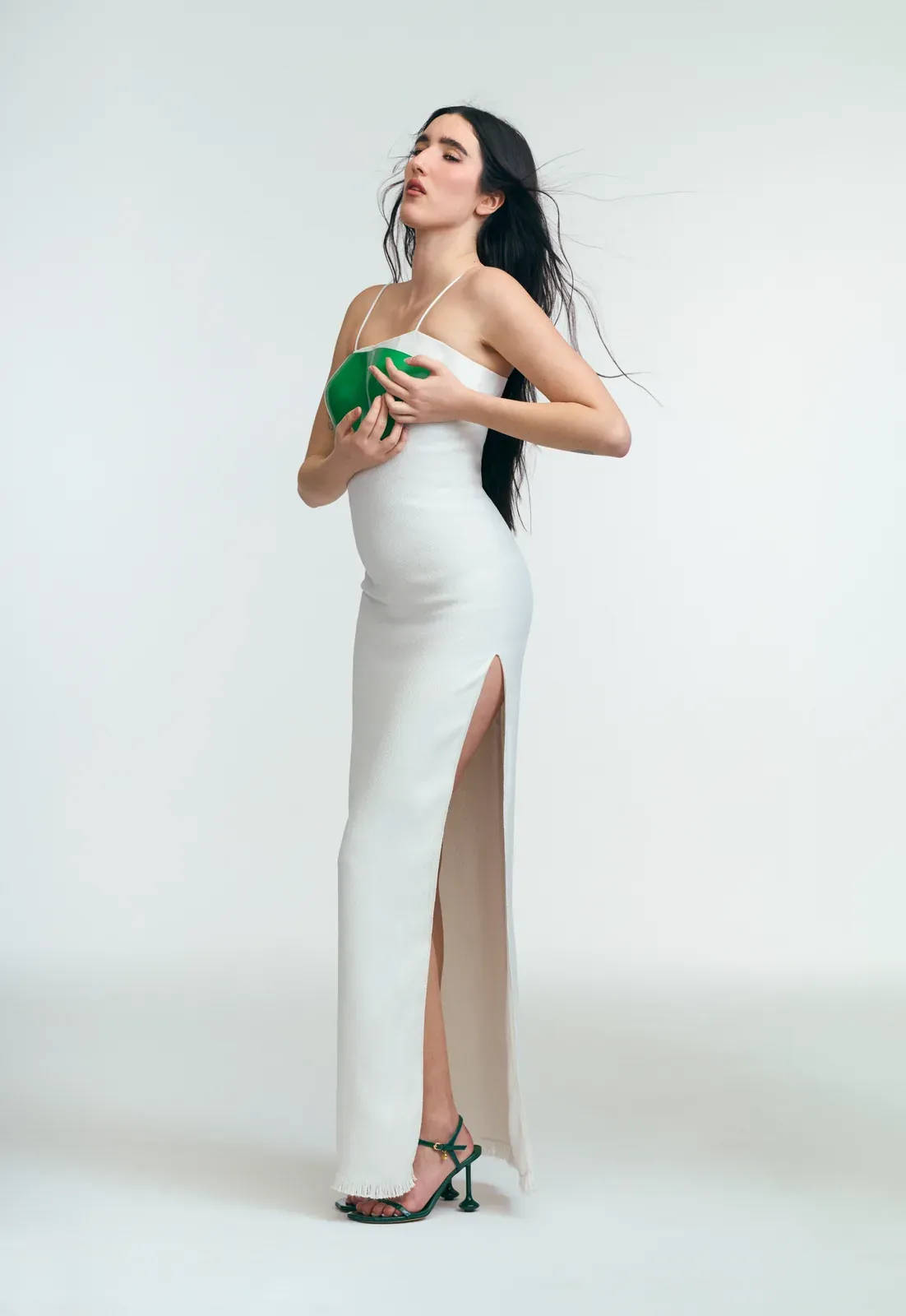
Dress in viscose blend and nappa lambskin, Toy Sandal 90 in croc-embossed calfskin, all LOEWE.
You said that crying in front of a Virgin or a pop star can be quite similar. Who have you cried for?
I’ve cried so much for El Prendi, he’s a Christ from the Holy Week in Jerez. So much. But I’ve also cried for Lady Gaga. Honestly, the feeling was pretty much the same. I saw her live last year and I almost collapsed. It was that pure, total fan breakdown, just raw emotion. But in the end, I think it comes from the same place: from admiration and a deep connection to your own culture. To me, my culture is just as much the Holy Week of Jerez as it is Lady Gaga.
In “Verano Saudade”, your latest EP, your music seems to drift toward Brazil: Gal Costa, bossa nova, and that luminous melancholy so typical of their songs. What did you find in this tradition that led you down that path?
I’m not really sure, to be honest. That music has always been playing in my house. It’s just part of my family’s DNA. In the end, listening has been my only school. I never went to a conservatory or anything like that, so I learned simply by listening to other artists, letting myself be shaped by all of it. Eventually, it just settles inside you. So, Gal Costa and all that Brazilian music my father used to play at home. It’s just there. No matter what I’m working on, it always surfaces in such an organic way.
Saudade is a very specific kind of nostalgia; it carries a certain sense of longing. When did you feel that emotion starting to seep into your music?
I’d always heard the word saudade. My makeup artist, Sendra [Igon], is Portuguese and she’s always telling me about these beautiful Portuguese words that we just don’t have in Spanish. And honestly, saudade is a feeling I carry with me a lot. I’m a hopeless nostalgic, like, all the time. It’s almost my passion, this constant state of nostalgia for everything. That word perfectly describes missing something in such a beautiful way. It aligned perfectly with what I wanted to convey with the title of the EP, “Verano Saudade”. It’s that nostalgia of living through a beautiful moment, enjoying it to the fullest, while simultaneously already wanting to remember it.
In “Tiempo Pasa”, your track with Dellafuente, there’s something that hits hard: that intense awareness of time slipping away. Our society seems obsessed with never aging, a constant pressure to stay forever young. Does that pressure scare you?
Part of my fear comes from exactly that, this feeling that you have to do everything right now. The industry and society make you feel that your only successful years are going to be these ones. Like, if you don’t make it in your twenties or thirties, you never will. As if the shelf life of a career is limited to just those few years. I want to believe that life is incredibly long. It feels like at forty or fifty everything is supposedly over and it’s time to just settle in and get old, but damn that’s a lot of years of living left. Think of all the things you can still do. So, I try to convince myself it’s not like that. But subconsciously, I do feel that pressure to do everything in my twenties so I don’t have to regret anything later. As for the aesthetic side, I’m pretty chill about it. When I start getting wrinkles or growing older, I’ll let you know. But right now, it’s not really on my mind.
In fifteen or twenty years, do you still see yourself making music?
I think I’ll evolve into something else. I’ll always be a singer, but I hope that in fifteen years I’ll have done what I set out to do and fulfilled that dream. Though maybe that never truly happens, who knows? But I do see myself moving into different spaces: songwriting, working on films, composing soundtracks. Maybe writing books or even directing. I’d like to be less exposed in fifteen or twenty years. I want to explore different paths, but always staying deeply connected to culture and talent. To be honest, I don’t feel that pressure to be a superstar singer forever. There’s a part of me that thinks once I’m satisfied, once I’ve eaten up as much of the world as I wanted to, which is a lot, I’ll simply transition into a different professional plane.
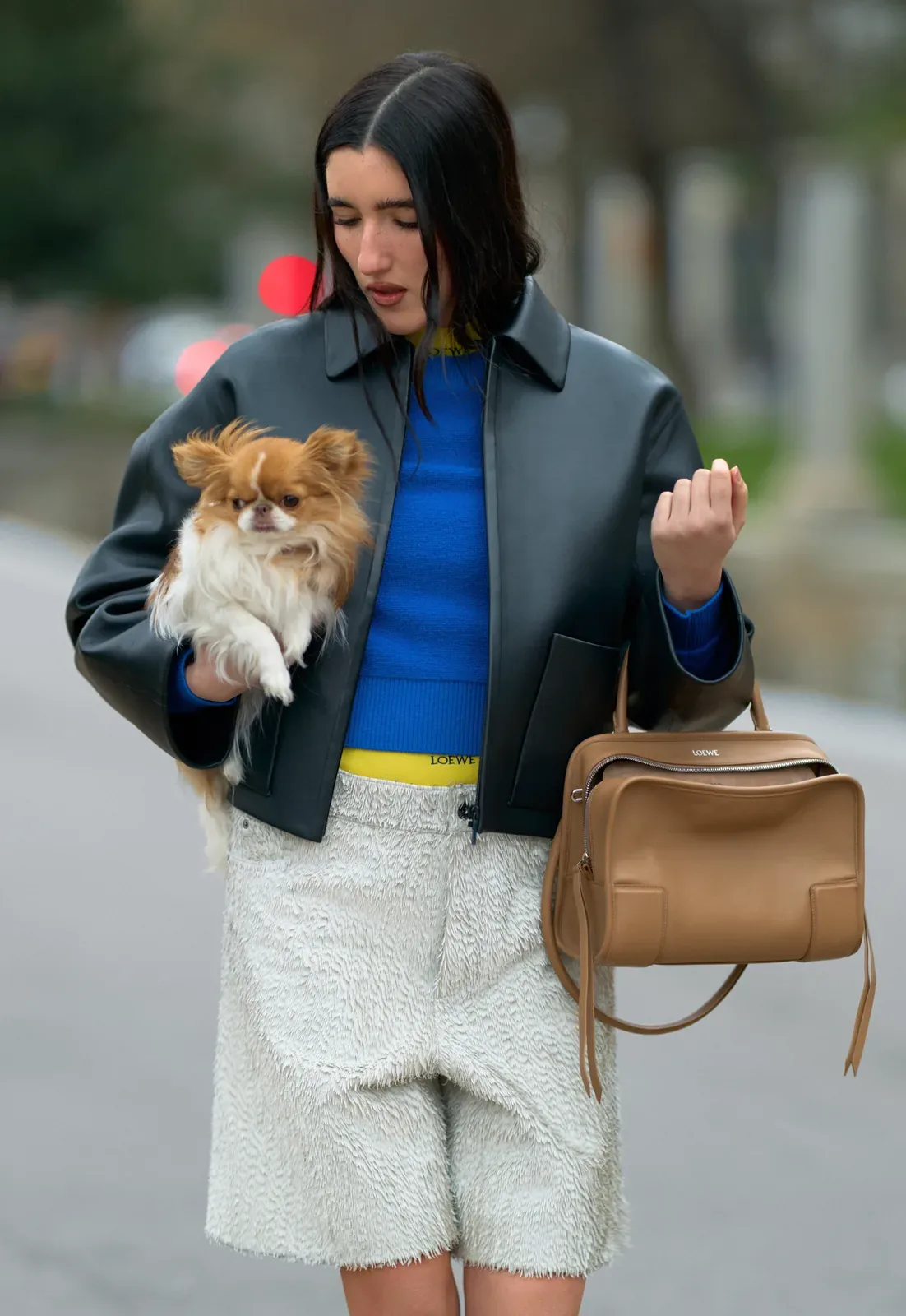
Jacket in nappa lambskin, sweater in wool, top in viscose blend, shorts in nappa lambskin, and Small Amazona 180 bag in soft calfskin, all LOEWE.
There’s something that always reminds me of your music: the sea. Sometimes it feels like your voice is coming from underwater, as if everything is just floating.
One hundred percent. I’m always telling people in sessions that I want it to sound like it’s underwater. After all, I grew up by the sea — it’s the sound I’ve heard most in my life. Even more than music, almost. I guess that’s why everything eventually leads me back there.
And that fluidity, how you jump from one genre to another, from bossa nova to house. Do you feel like that mix is your natural habitat?
I’m super open-minded when it comes to genres. But I always try to make sure it sounds like it belongs to my planet, you know? So, I guess I’m not really capable of sticking to just one. Sometimes I wish I could, just a little, but for now, I’m comfortable this way, just exploring.
Your music seems to be in a warmer phase right now. But “Bodhiria” opened up a universe of its own, one caught between dreams and faith. If someone were to enter that world for the first time, do you think they’d find a sanctuary or a place to face their deepest fears?
“Bodhi” actually has this dark, intimate energy, but at the same time, there’s so much power in there. It’s almost witchy. A lot of girls felt that witchy vibe with the album; it helped them tap into that side of themselves. Honestly, I really dig that. But everyone takes it to a very personal place, just like I said about religion, the same applies to music. I do like the idea of people tapping into that inner witch, that power, that femininity. And that goes for men too, you know? It’s about connecting with a more spiritual, feminine side.
Speaking of witchcraft and mysticism, ecstasy is that moment where the self sort of dissolves. Does that ever happen to you on stage?
To be honest, on stage, I do disconnect from myself a bit. I mean, at least on this last tour, a lot of things are quite automatic. But there are definitely moments where I feel this incredibly strong, elevated energy. At the Movistar Arena, for instance, I felt it so intensely. It was like there was a magnet pulling me toward the people in the front, and this sense of elevation within myself. It’s like connecting with my Higher Self, in a way. Honestly, it was beautiful. I’m always trying to tap into that, even though it’s complicated.
“AngelA” appears on the album almost like a presence. Is she a character, a part of you, or a way of naming something more spiritual?
To me, she’s a bit of all that. A version of myself I wanted to become. Above all, she made so much sense for the narrative of the record. I just love the name. Honestly, if I could, I’d change my name to angelA, but that’s a bit tricky now.
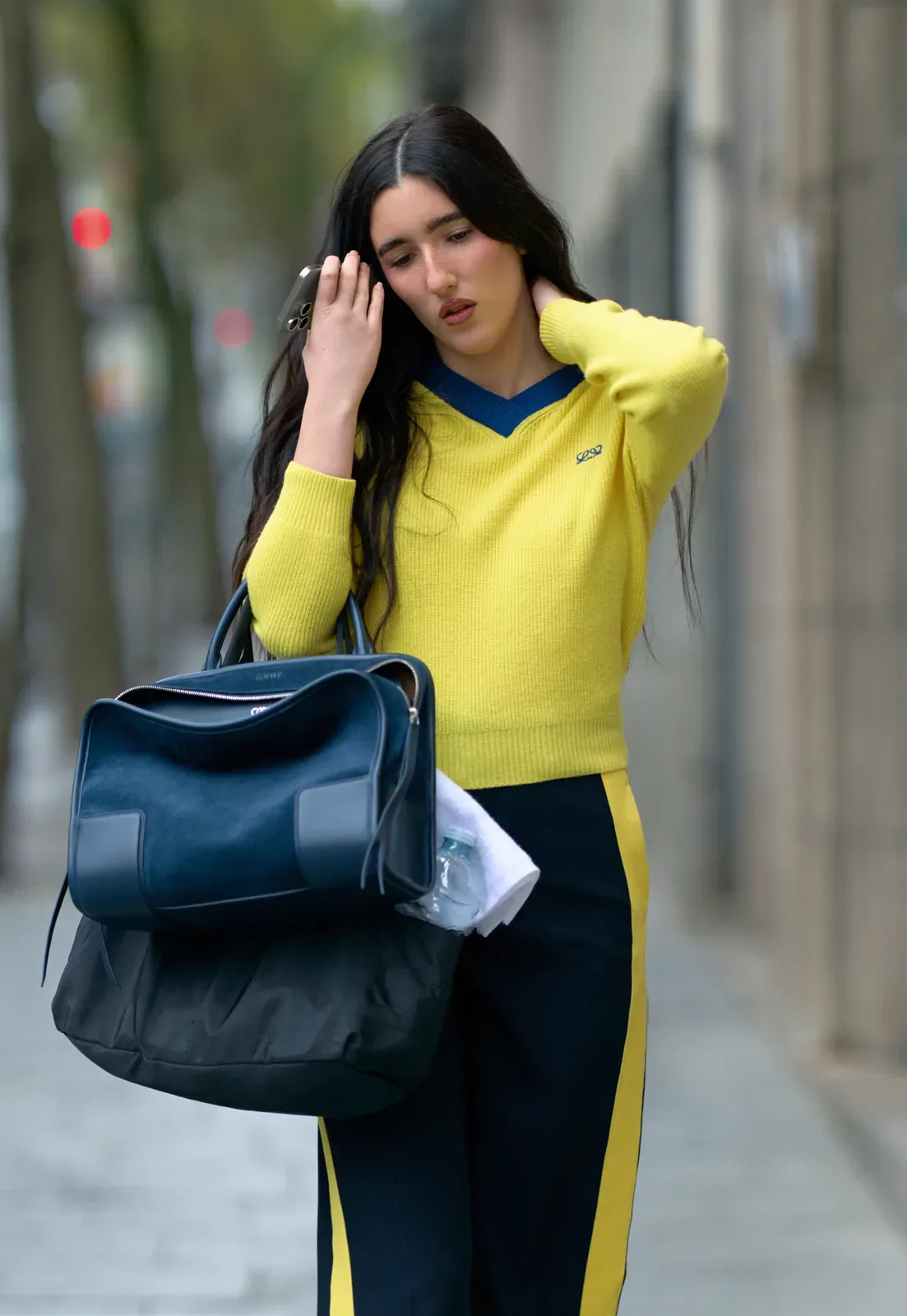
Sweater in cotton and wool, trousers in wool blend, and Large Amazona 180 bag in suede and calf, all LOEWE.
Coming from the South, it was impossible not to mention el duende. It’s something so difficult to explain, more of a feeling than something you can actually name. Does it ever happen to you while you’re singing?
Maybe. But I feel like el duende is something that someone else has to see in you, right? I do connect with something when I sing. Often, I’m incredibly nervous before a show, but the moment I step out, I feel there’s something in my voice that calms me down. But of course, I don’t know if anyone else feels that. What I do know is that being born in the South is largely responsible for my music. My way of singing, of interpreting the feeling of it all, perhaps. I truly believe being born in the South gives you an edge.
Absolutely. And speaking of el duende, Lorca used to say that it only appears when there is a risk of “emotional death.”
Oh, wow.
In Andalusia, death is always lurking near art and music. Do you feel like that shadow also runs through your songs?
It’s always been a thought that sparked a lot of curiosity in me. Especially during my teens, I used to think about death a lot, like, all the time. But now that I’m an adult, I’ve come to appreciate life so much that I’ve somehow swung to the opposite side. I don’t really like to dwell on it too much anymore. In fact, last year I went through a phase where death actually scared me. I’d think: I love my life so much and this world is so cool that it would be such a drag to die right now. Like, I really don’t want to die. Then something kind of silly happened: I started watching “Game of Thrones”. So many people were dying all the time, so many heads being chopped off, that I just thought, well, in the end dying is no big deal. There’s probably something afterwards, and it’s just a moment and that’s it. So now, I guess I see death in a much simpler way.
Duende also has something to do with the error, with that crack in the veneer of perfection. In a time when everything sounds so polished, are you interested in leaving room in your music for that bit of chaos?
I’d say so, yeah. For example, the other day I saw an artist at Coachella and everything was perfect. It felt like watching a movie. And I kept thinking: damn, I need them to mess up a little. To me, a live show or a piece of music has to have that. I was even listening to some AI-generated music yesterday and I was like: fuck, this is actually great, but something is missing. That human element is missing. You need to hear a breath, or a note that’s a bit off. Something that isn’t completely under control. Because in the end, perfection strips the humanity out of things. A lot of people can end up disconnecting from a project because it’s too perfect. People need to feel an artist’s vulnerability. Otherwise, they just tune out.
Absolutely. Often, it’s exactly those cracks that move us the most. There’s a question you ask in “Bodhiria” that stayed with me for a long time: “Is God good, or is He just powerful?” I wanted to ask you the same.
When I wrote that question, it actually had a different meaning for me. It was more about success. The lyrics talk about wanting to reach a certain place, only to realise that maybe it’s not as incredible or as good as you imagined. So, I was asking myself if we are drawn to things because they are genuinely good, or simply because they are big, powerful, and impressive. Are you attracted to goodness, or are you attracted to greatness? I feel the same way about God. I feel connected to God, but also because I grew up surrounded by that culture: the church, the gold, the grandeur, the Almighty... all that magnitude. Yet, there’s the other side: the goodness, the message of Christ, something more spiritual and internal. It depends on how each person imagines God. For some, He’ll be more about goodness; for others, He’s just power.
The spiral is the visual key to your latest EP. Where in that spiral do you feel you are right now?
I feel like I’m in a recurring loop of that spiral right now. This month, things are happening to me that are very similar to last year: I’m back at Coachella, I’m in Los Angeles again. Even emotionally, I’m in a similar place. At the same time, though, it’s different. The beauty of the spiral is that each turn is coloured differently. Similar things happen to you, but you’re no longer the same person.
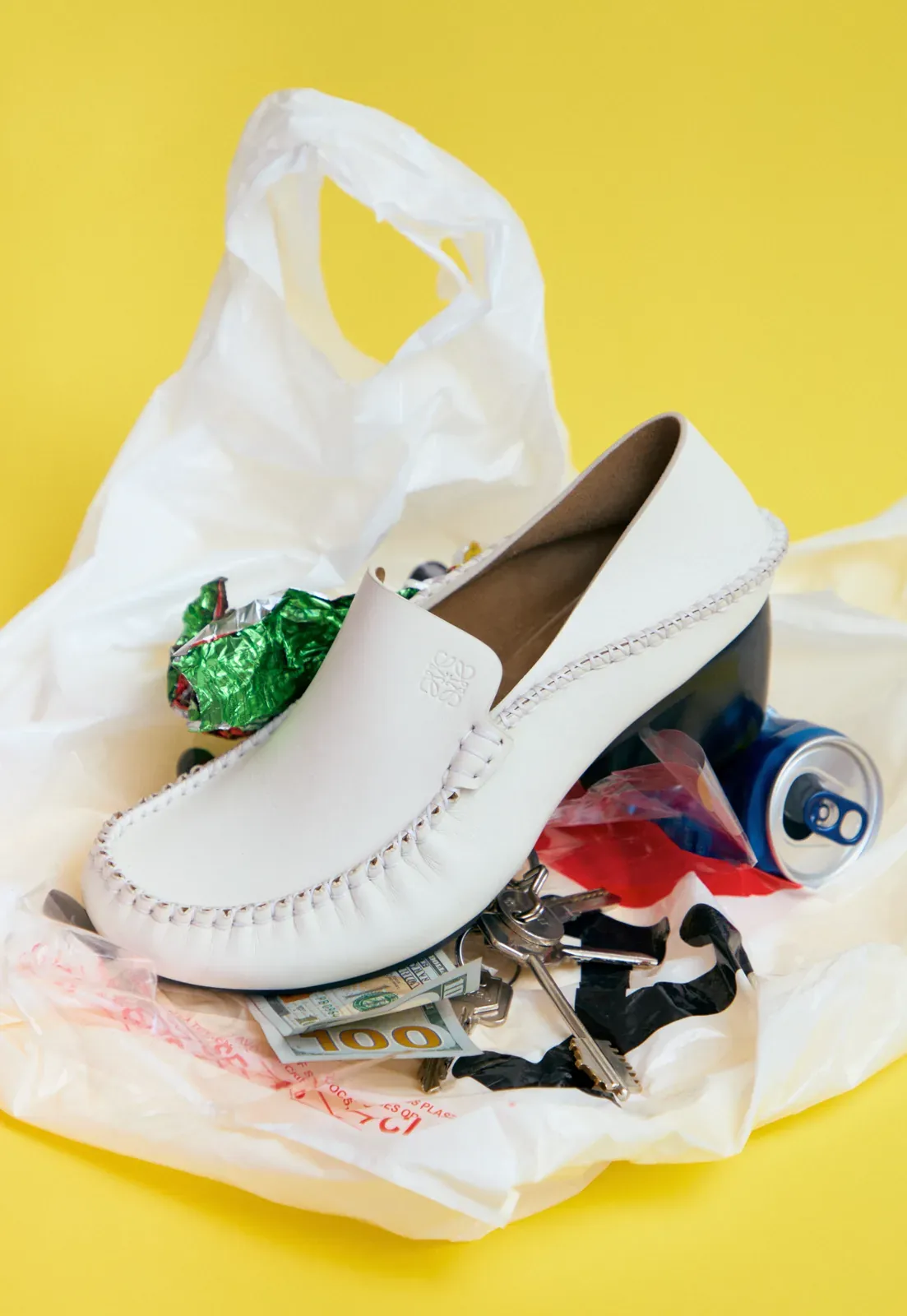
Oval Driver 45 shoe in soft calf LOEWE.
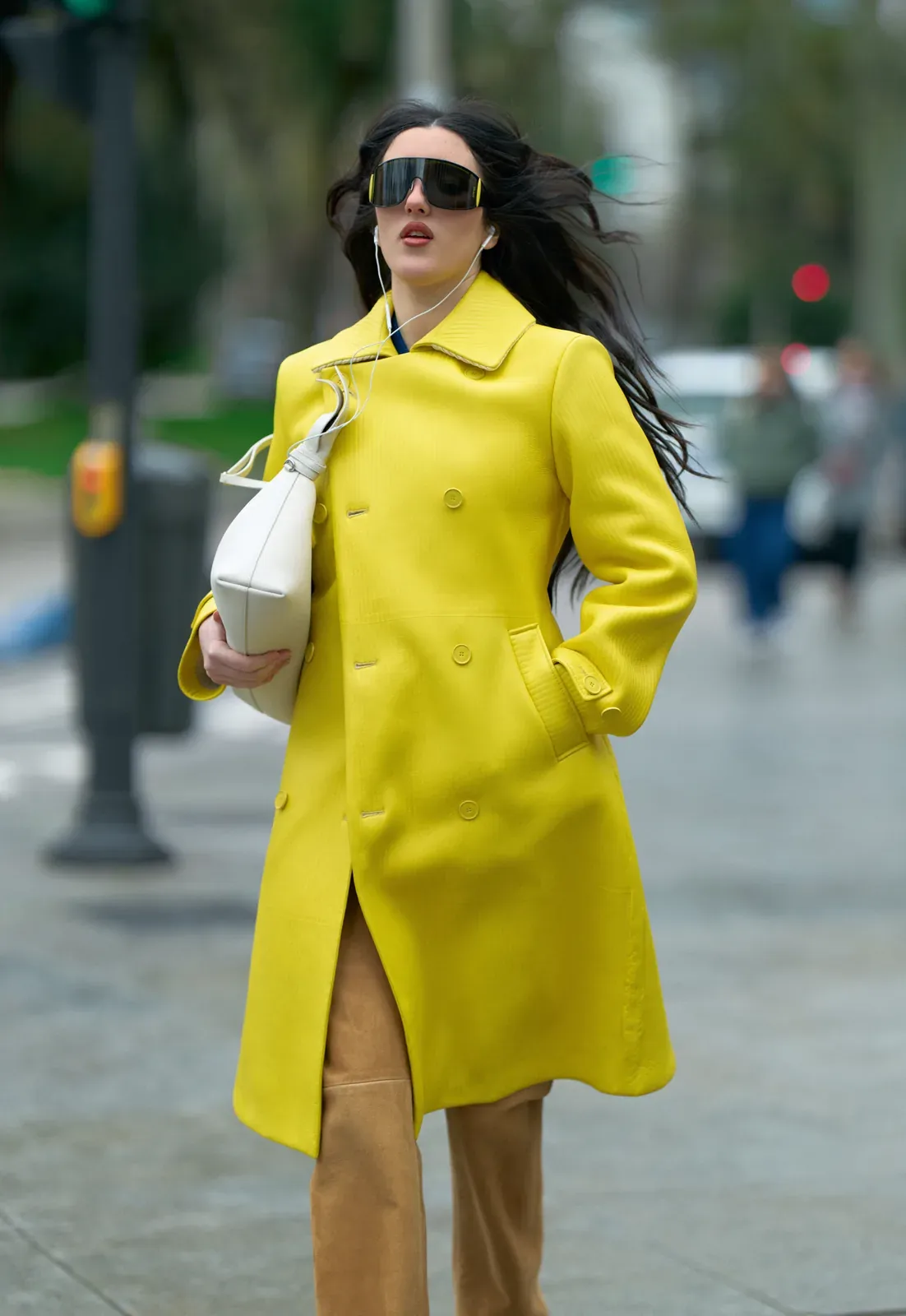
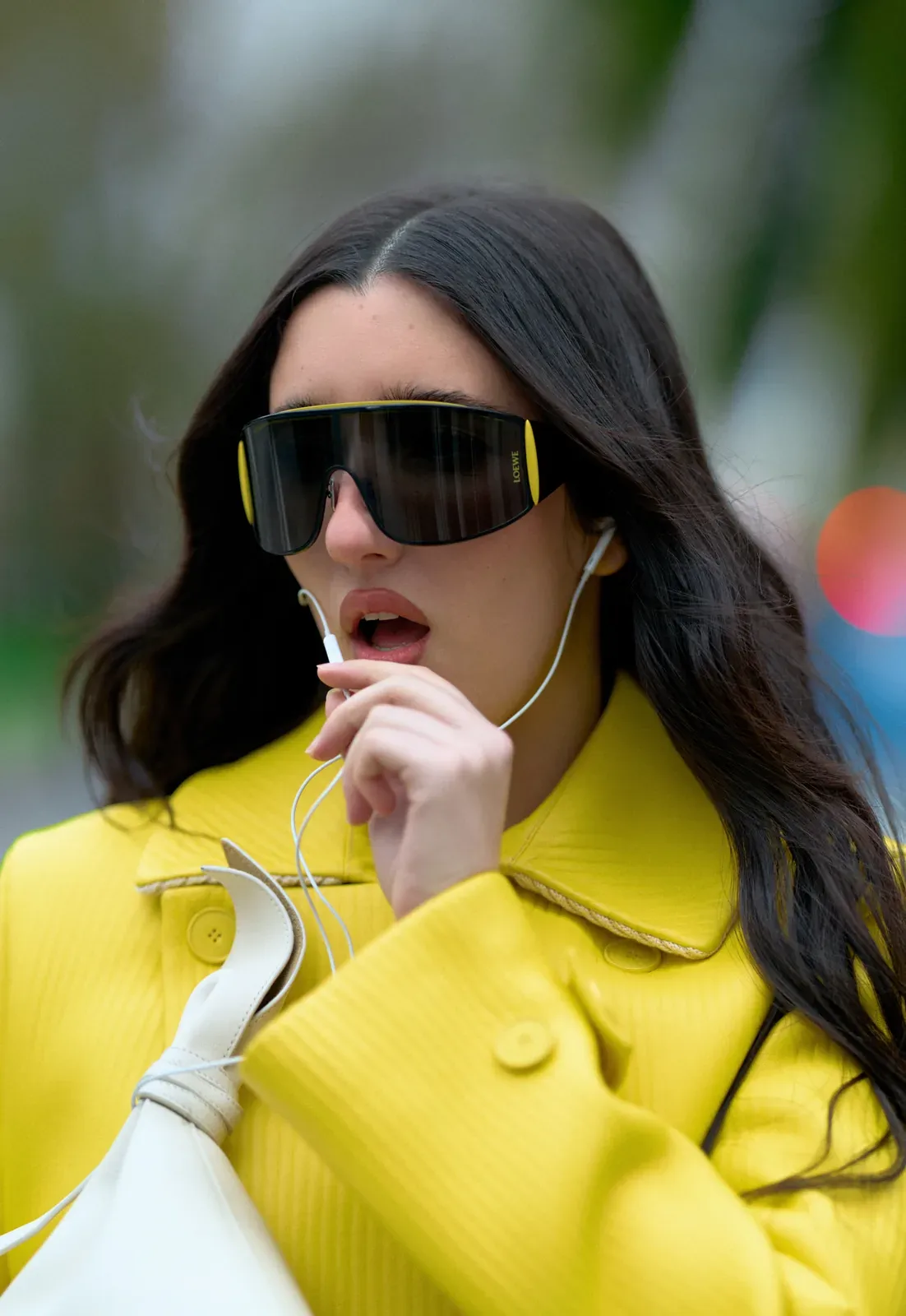
Trench coat in nappa lambskin, trousers in suede goatskin, Speed Shield sunglasses, and Mini Scarf bag in smooth calf, all LOEWE.

Large Amazona 180 bag in suede and calf, and Origami Cubic Slingback 45 shoe in lambskin, all LOEWE.
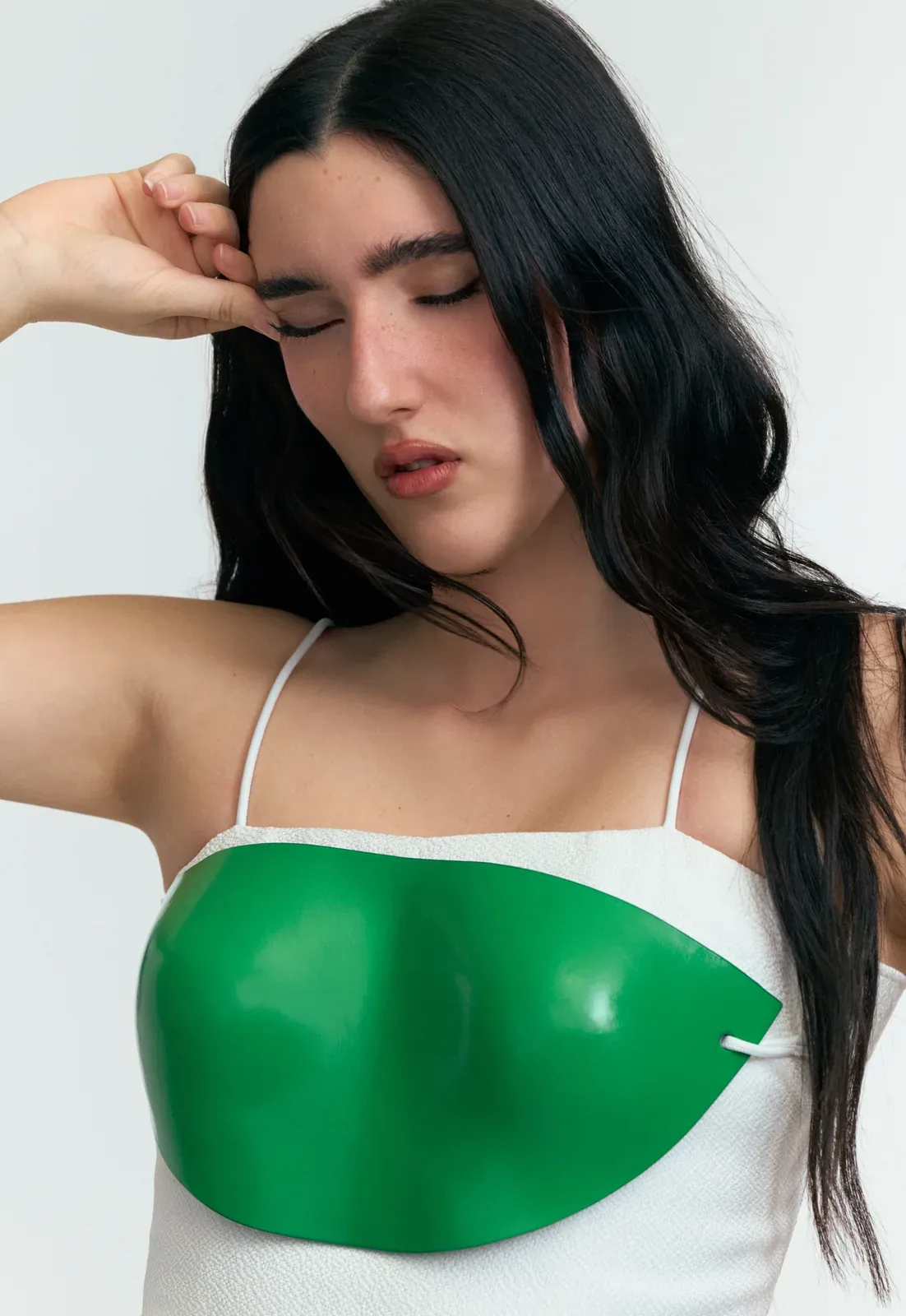
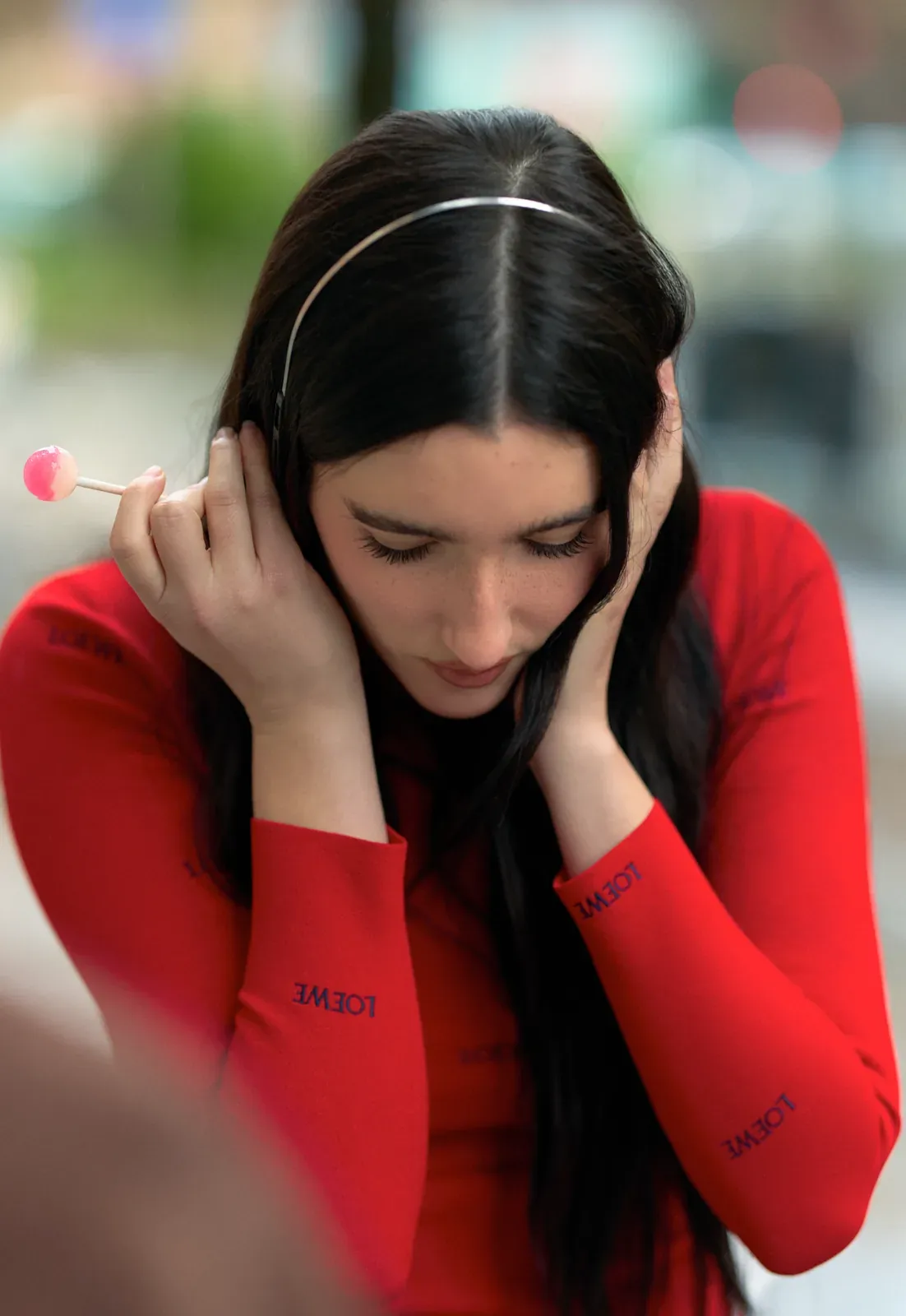
Top in viscose blend LOEWE.
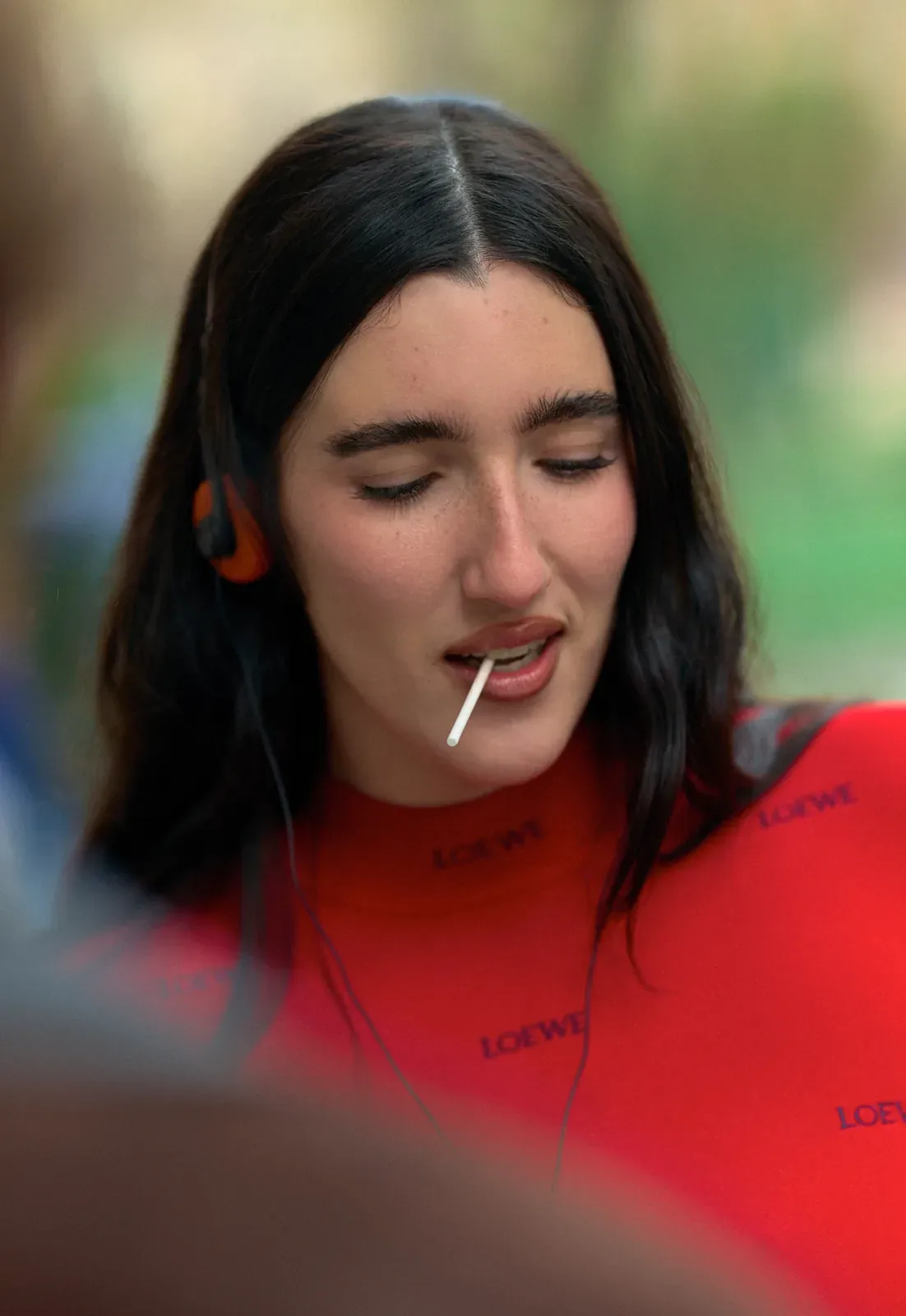
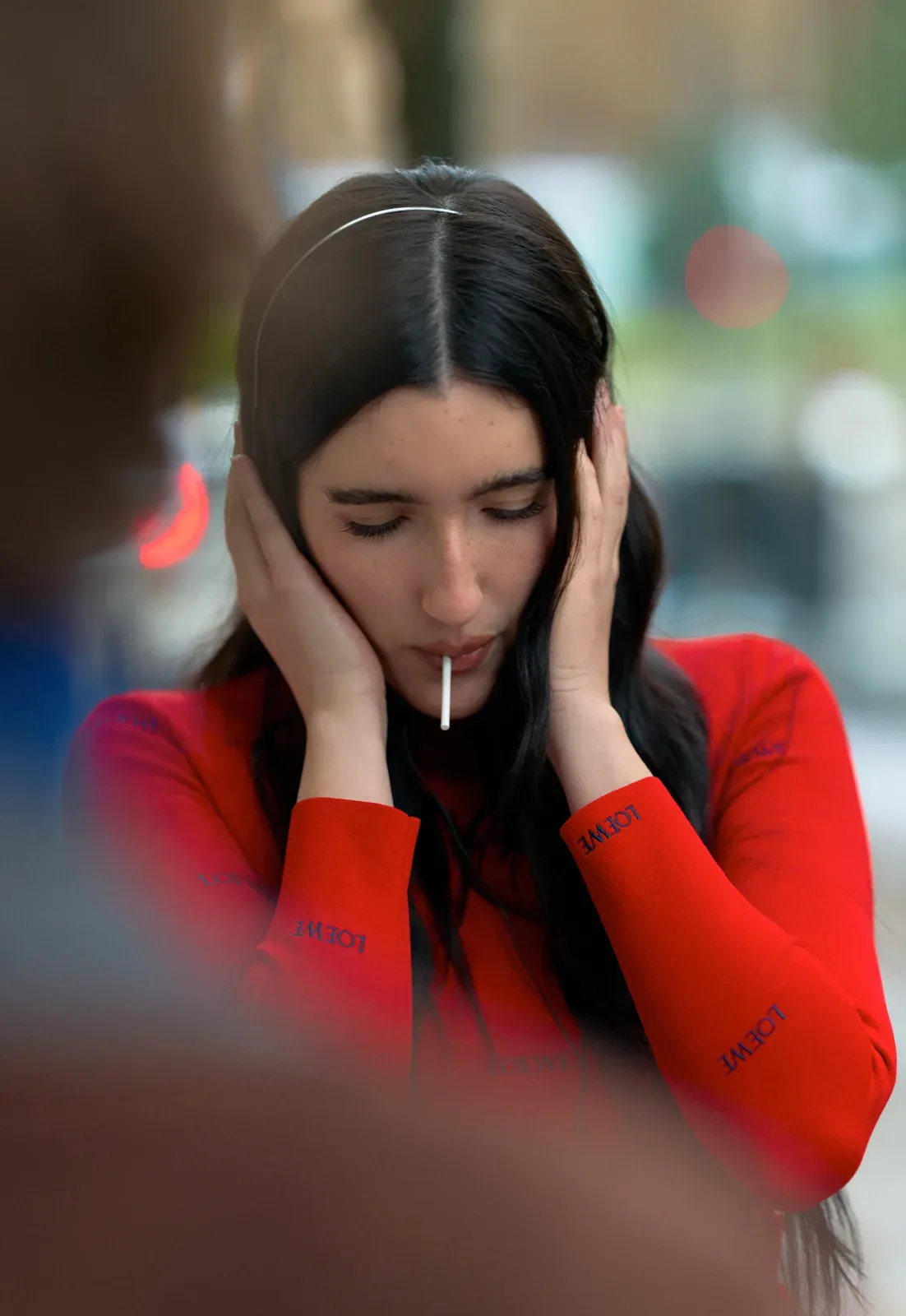
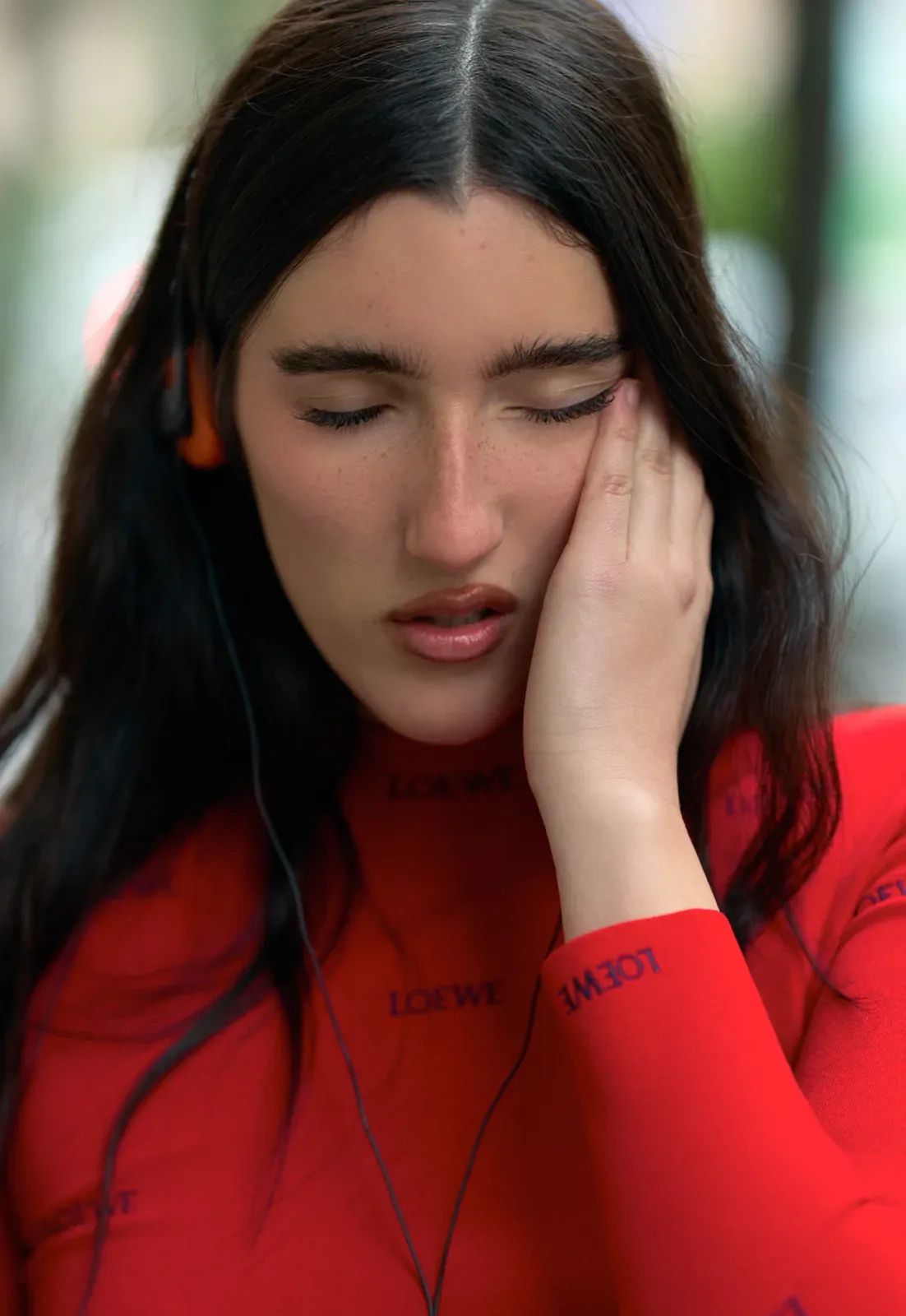
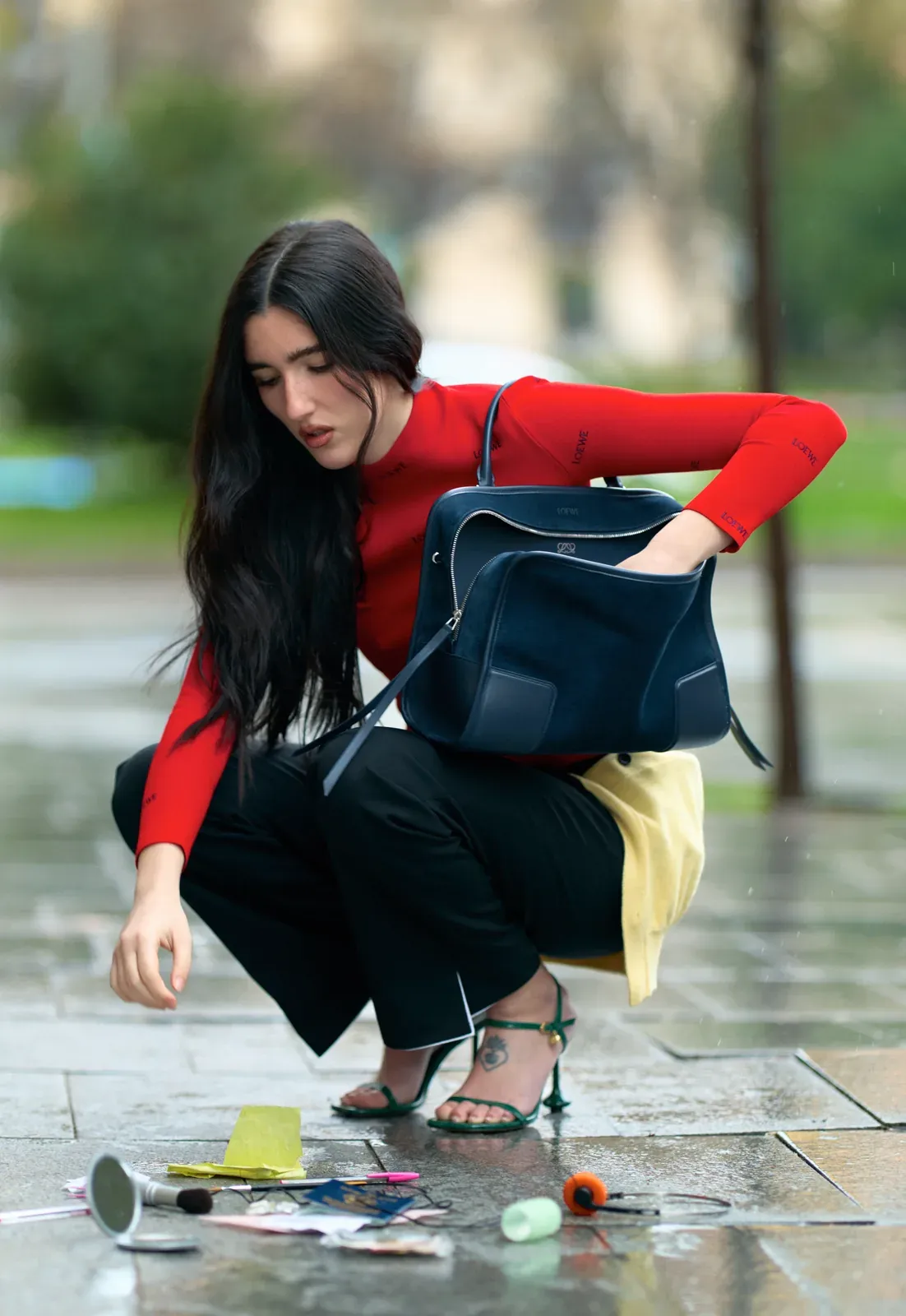
Top in viscose blend, sweater in cotton and wool tied at the waist, trousers in wool, Large Amazona 180 bag in suede and calf, and Toy Sandal 90 in croc-embossed calfskin, all LOEWE.
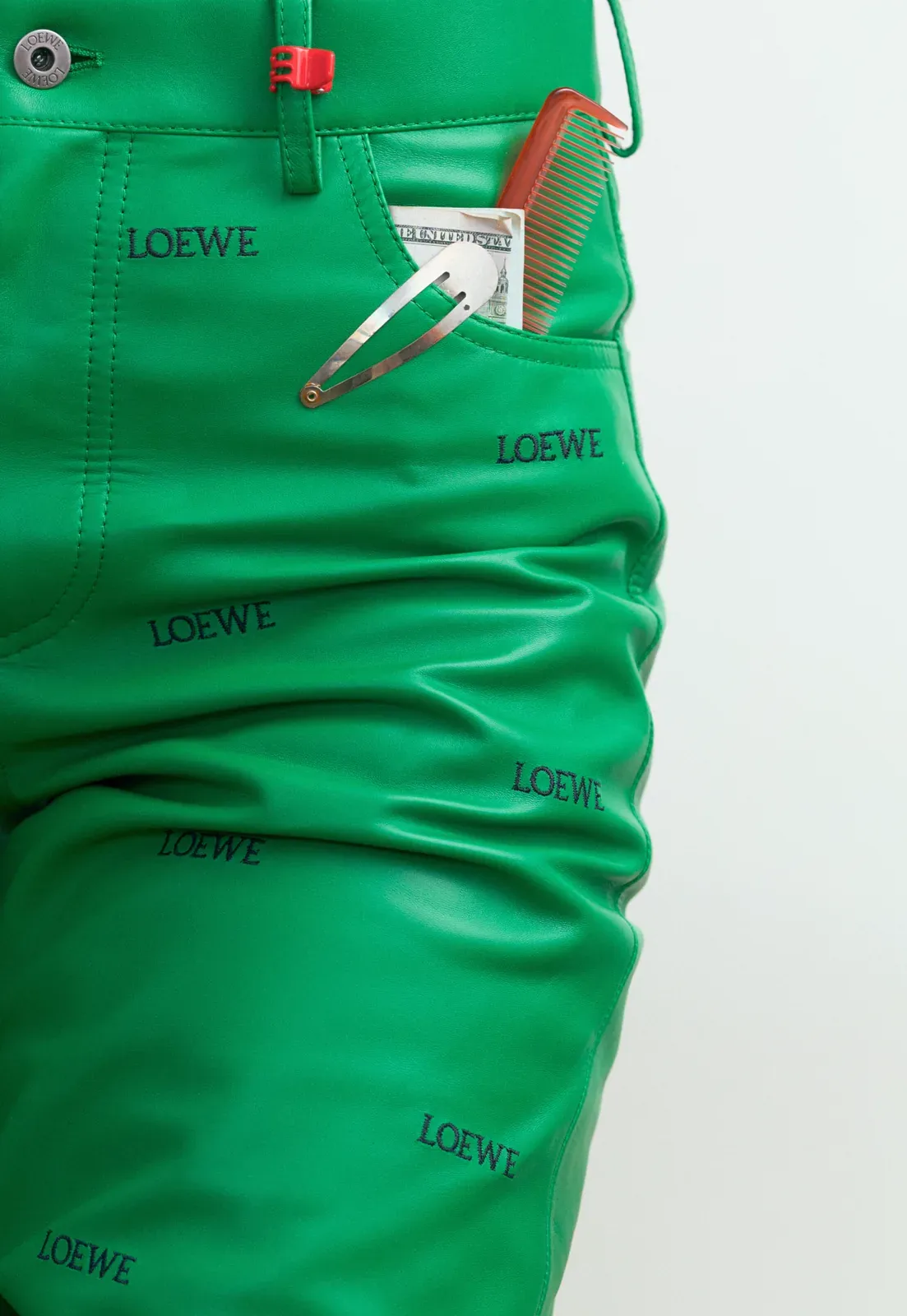
Trousers in nappa lambskin LOEWE.
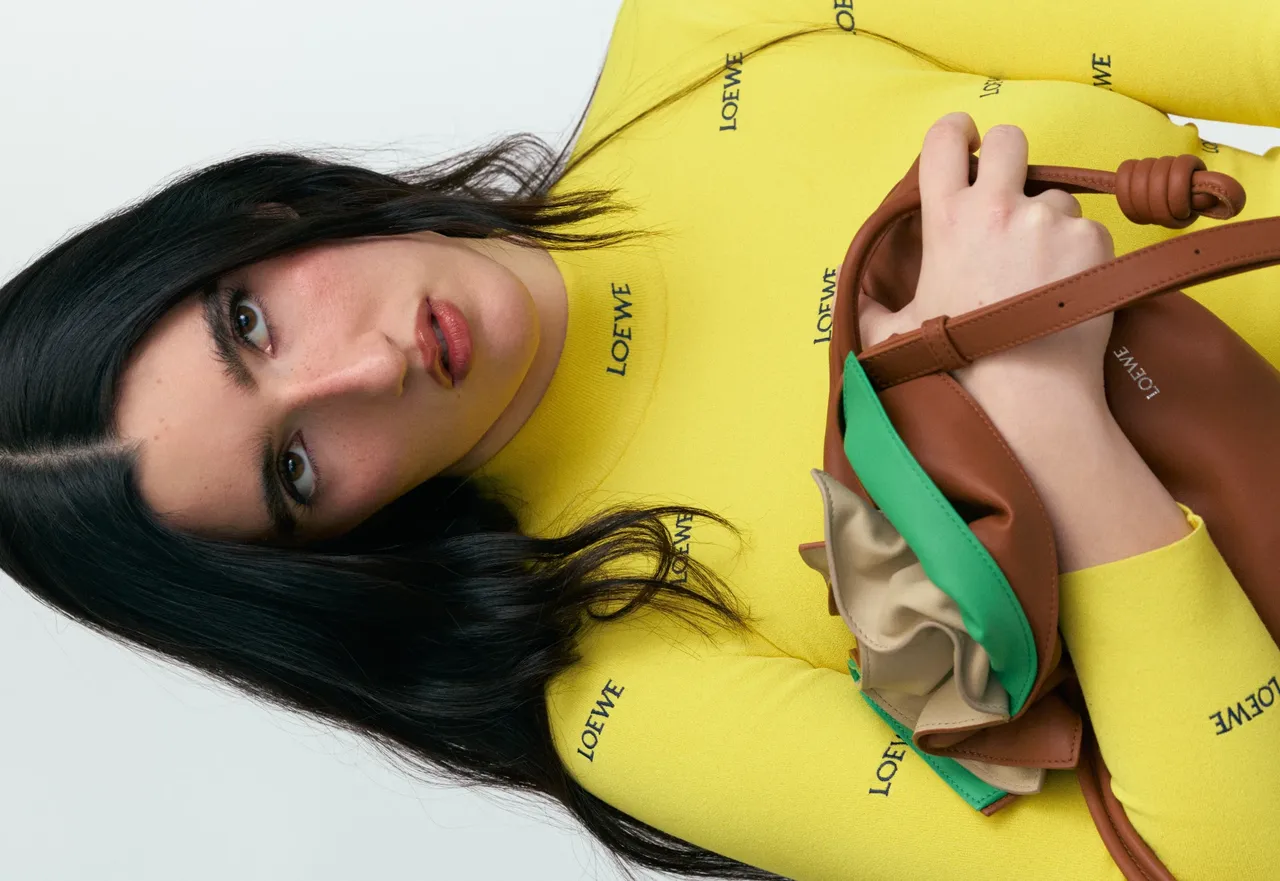
Top in viscose blend, Layers Medium Flamenco Clutch in nappa calf, all LOEWE.
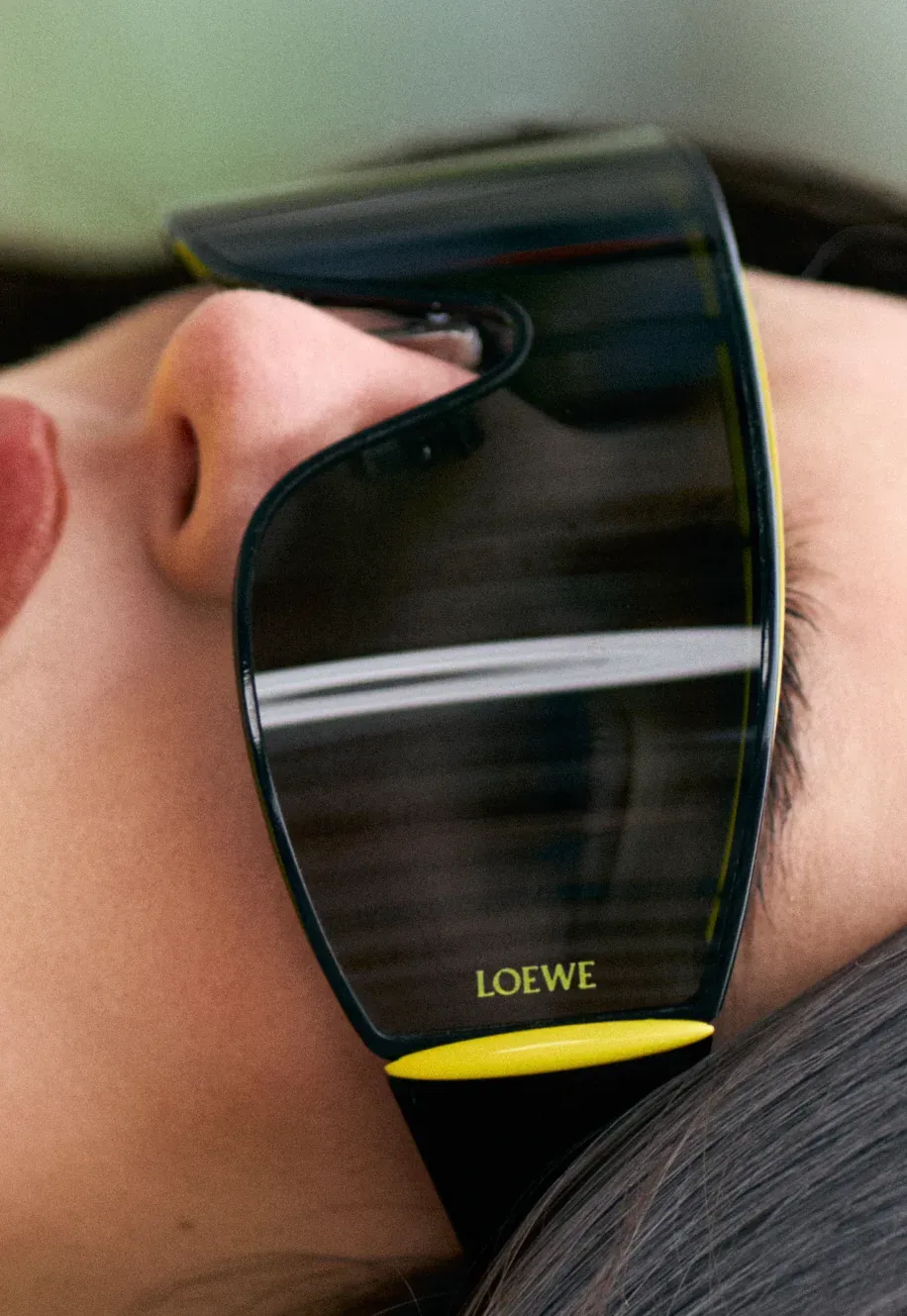
Speed Shield sunglasses.
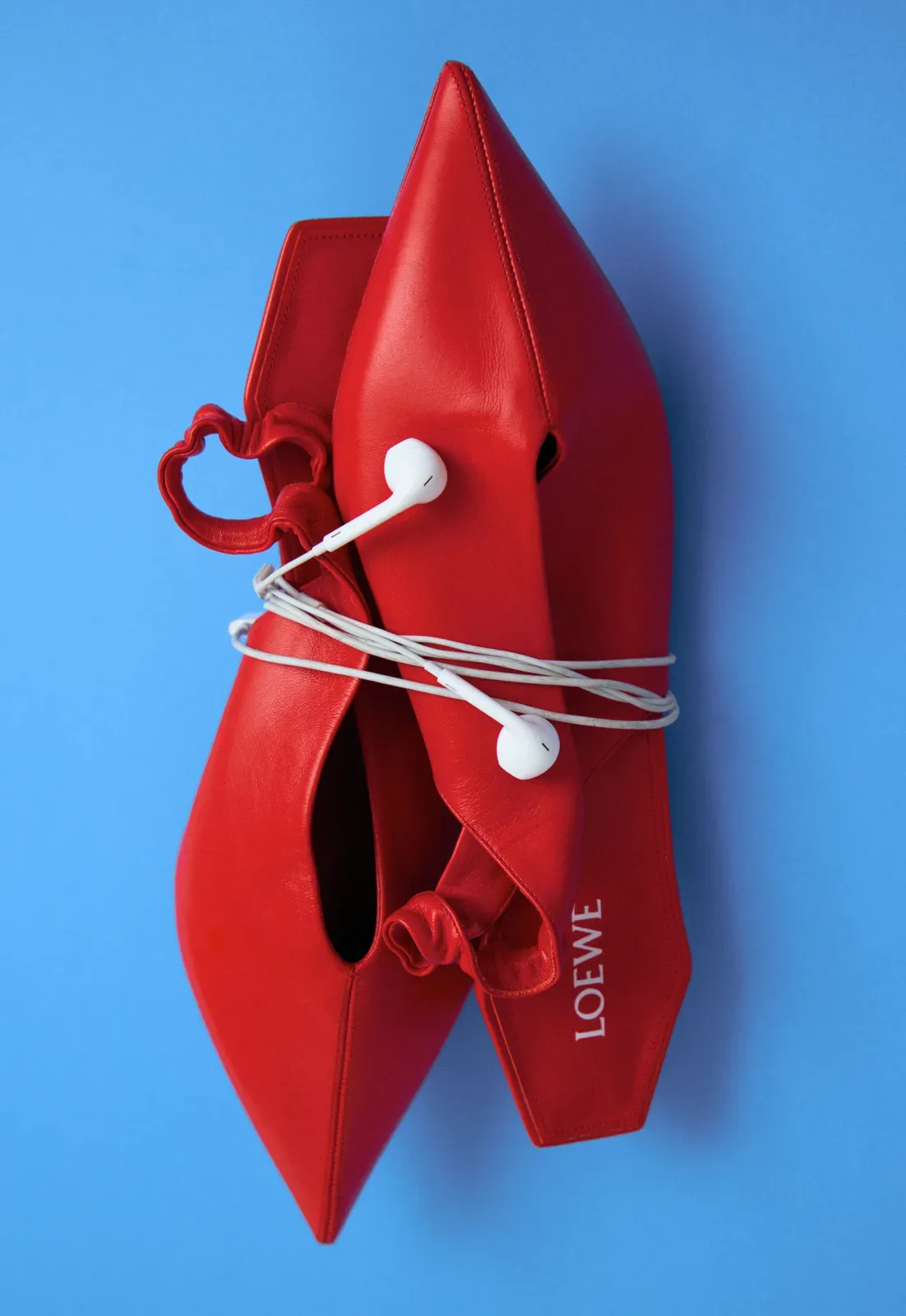
Origami Cubic Slingback 45 shoes in lambskin.
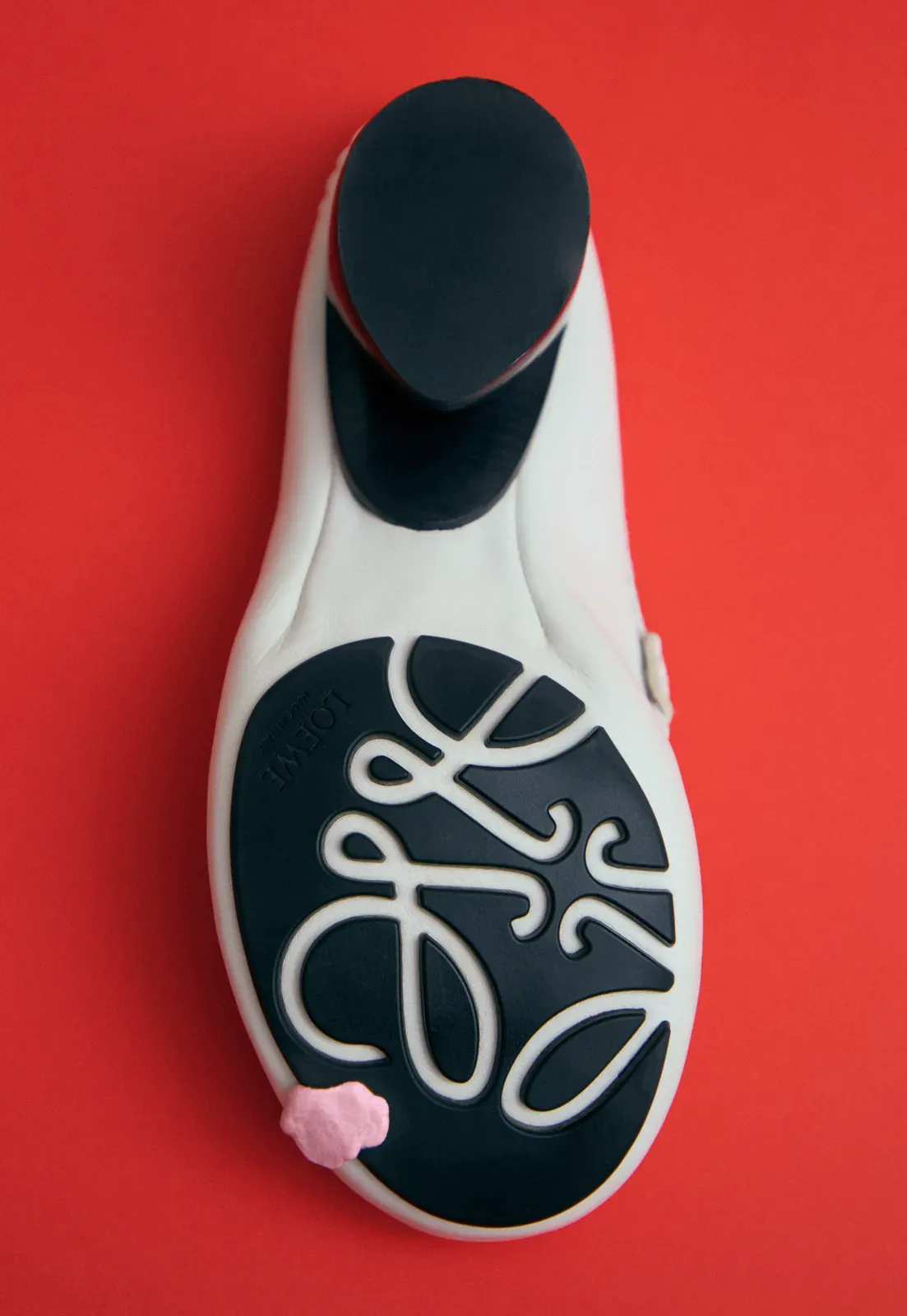
Oval Driver 45 shoe in soft calf.
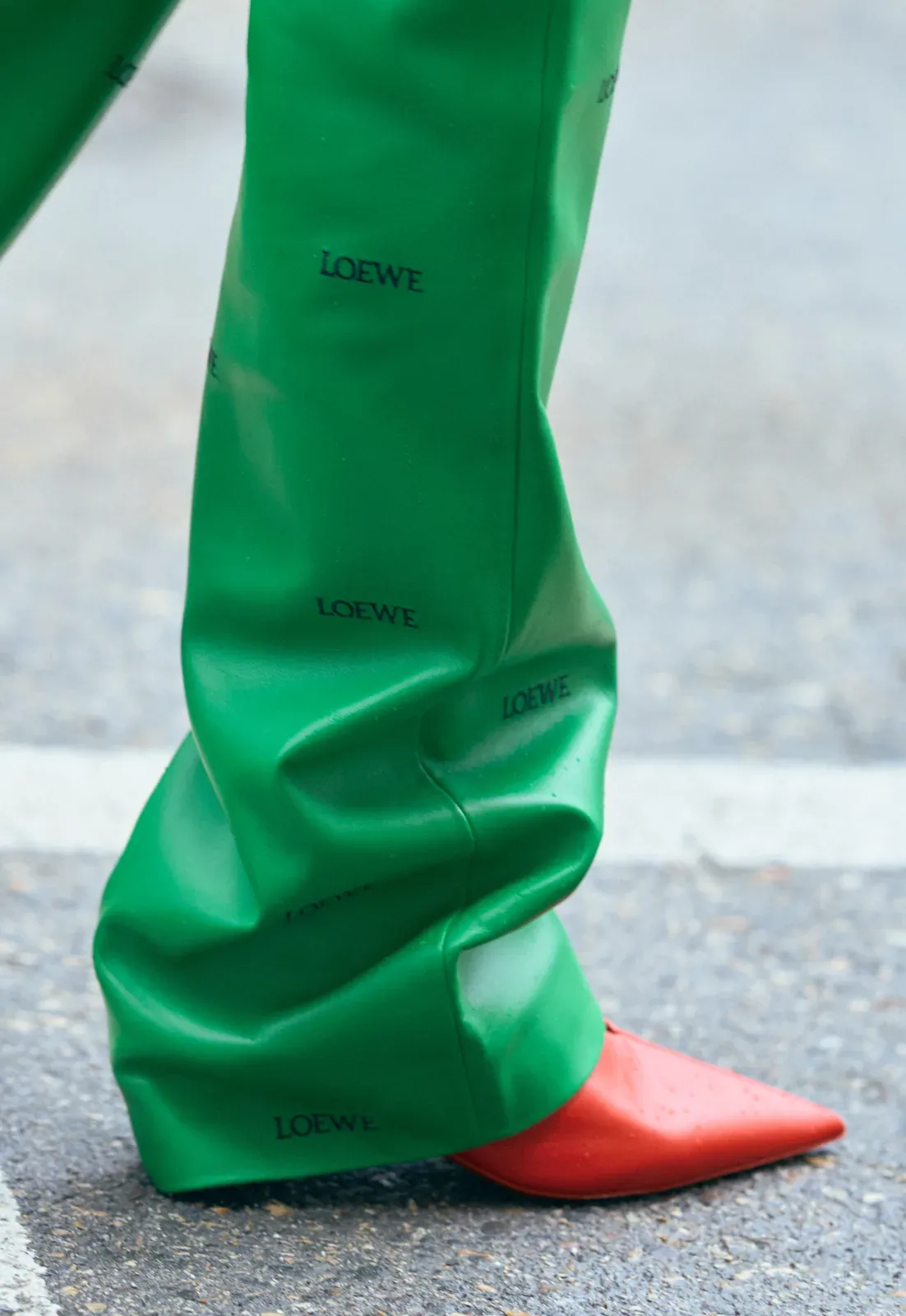
Trousers in nappa lambskin and Origami Cubic Slingback 45 shoe in lambskin.