A few hours ago, Miss Monique was behind the decks at Ultra México. Next week, she’ll be in New York and Montreal, with Paris and Dubai following later this month. Finding a moment to talk between flights and sold-out shows is no easy task. Yet there’s something particularly refreshing about the Ukrainian DJ: her warmth and approachability. In an industry still surrounded by stereotypes about excess and nightlife, she reminds us that being an artist doesn’t have to mean living up to them.
Life has a funny way of putting things into perspective. Suddenly, that delayed flight or the rain ruining your weekend plans doesn’t seem so terrible when you think about what others are going through. Russia’s full-scale invasion of Ukraine in 2022 changed everything for her. “I couldn’t imagine that in the 21st century, people would still be killing each other to conquer more land or satisfy someone’s ego,” she tells us. And there’s another lesson she’s learnt: the body knows when something isn’t right, even when we refuse to listen.
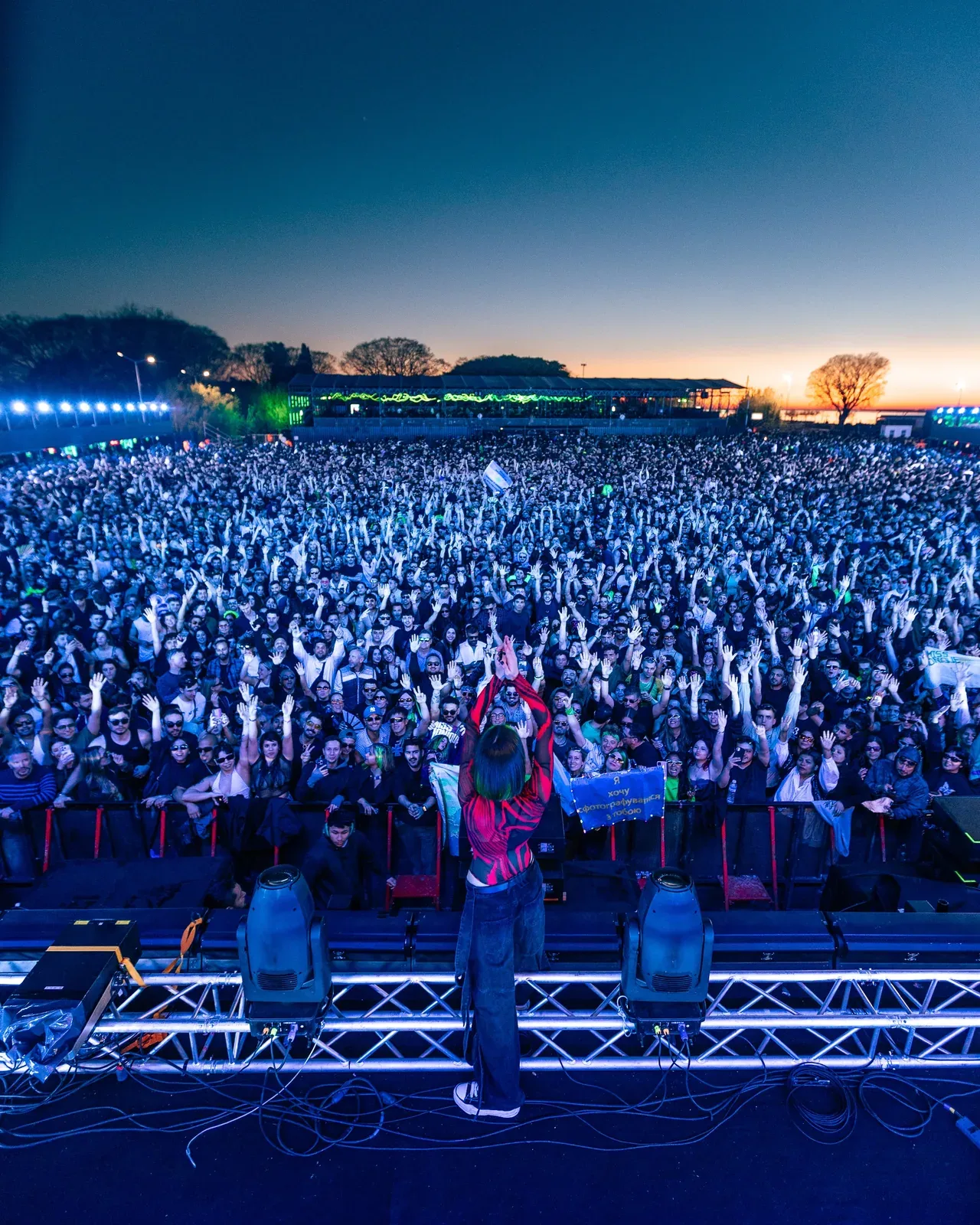
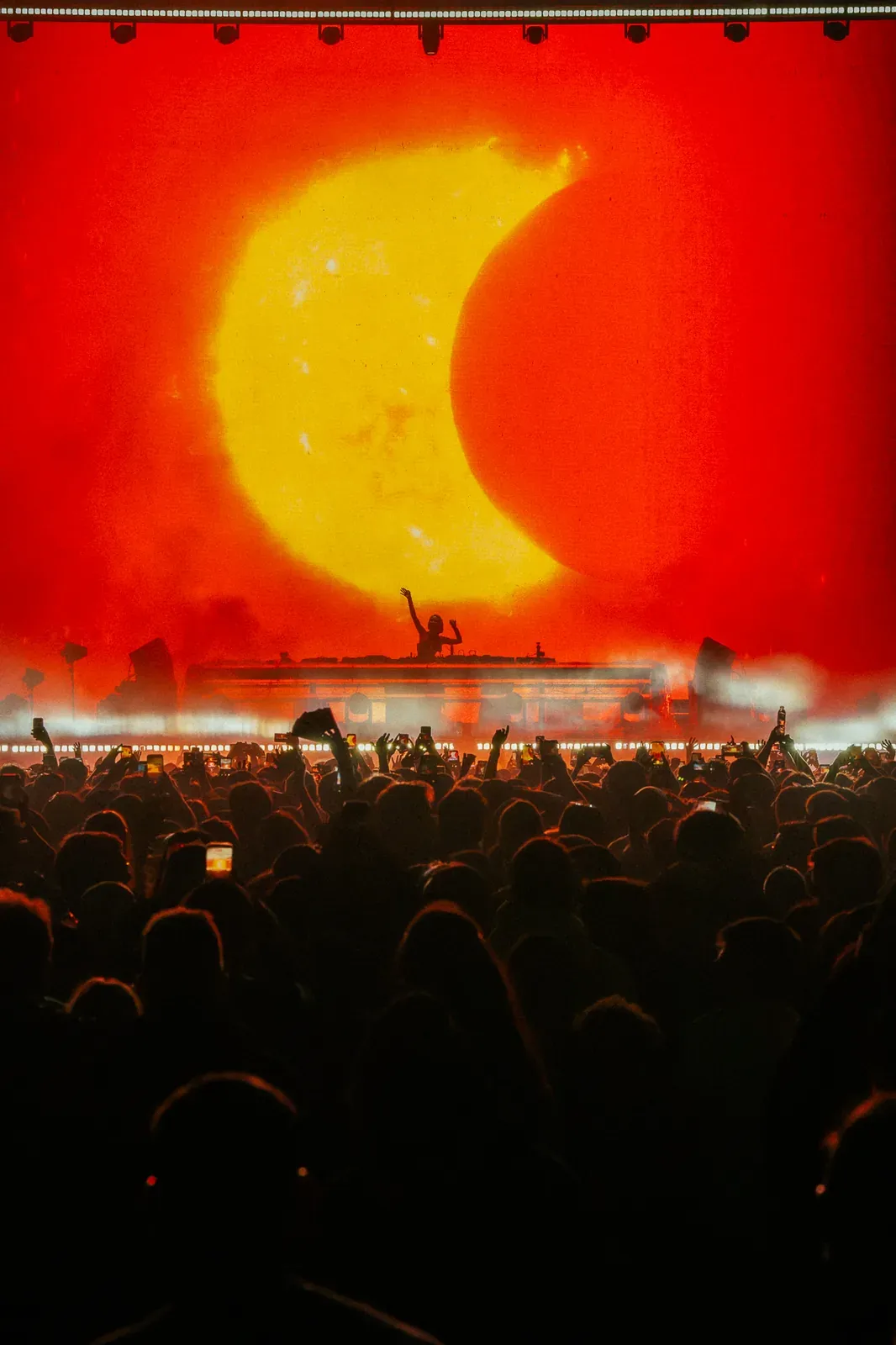
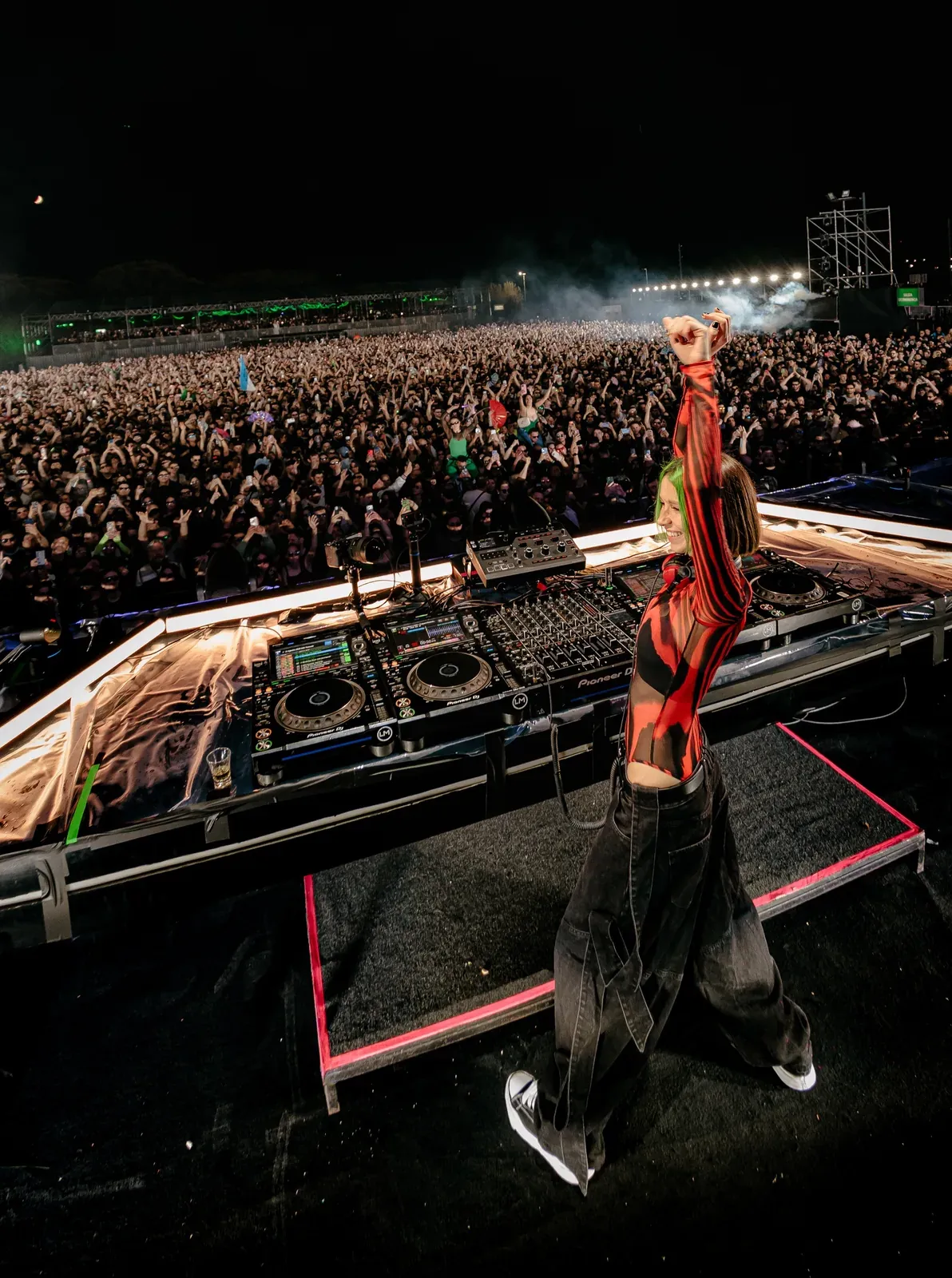
Meanwhile, her career is reaching new heights. Last month, she played her biggest solo show yet for 15,000 people in Buenos Aires, and every 2026 date of BIORHYTHM, her ambitious audiovisual project exploring the balance between nature and technology, is sold out. Her collaboration with Robbie Williams, Beauty In Us, has also received a Carl Cox rework, while her MiMo Podcast is returning. But what happens when the music stops?
Thank you so much for making time for us! We know you’re constantly travelling, and you’re actually playing Ultra México today. Do you ever feel like your life moves faster than you can fully take it in?
Thank you so much for having me! You’re absolutely right. When you’re moving between different cities and countries almost every day, it’s really hard to enjoy each place fully. I’ve always loved travelling, and when I first started DJing, I thought it was the perfect way to combine something I love doing with the opportunity to see the world. Back when my schedule wasn’t so crazy, I would always try to leave an extra day before or after a show to explore the city I was visiting. But as the number of shows grew, those opportunities became fewer and fewer. These days, I’m lucky if I get to see anything beyond the airport, hotel and venue!
When you look back at the last ten years, do you feel like the same person?
I’m sure there are parts of my personality that haven’t changed at all over the past ten years. But there have also been some defining moments in my life, especially COVID and the war in my country, that completely changed the way I see the world and think about certain things. Those experiences made me stronger, but they also changed my perspective on what really matters in life.
What’s something about your day-to-day life now that your younger self would find completely surreal?
I think if someone had described even a single day of my life now to my younger self, I would never have believed them. There was a time when even getting on a plane or travelling to another country felt like something completely out of reach. Now it’s just part of my everyday routine. And don’t even get me started on playing festivals like Tomorrowland, Coachella, Ultra or EDC. Or having my own shows selling out long before the actual date. I honestly don’t think the younger me could have imagined any of this.
Ukraine is a huge part of your story. You had to leave Kyiv in 2022 without knowing when you would be able to return. How much did that experience change you?
As I mentioned earlier, it changed so much about me and the way I see the world. I think the biggest thing I realised is just how precious every single human life is. Before the war, I honestly believed that wars like this belonged in history books. I couldn’t imagine that in the 21st century, people would still be killing each other to conquer more land or satisfy someone’s ego. When I saw conflicts happening in other countries on the news, I used to think of them as political games happening somewhere far away, things that would never affect me or my country. Now I understand that it can happen to anyone. Nobody is really protected from the possibility that some old man in a neighbouring country might completely lose his mind.
“Is it even morally acceptable for me to go on stage and entertain people while missiles are hitting my home country every day?”
Last year, when you finally returned, you wrote that for three years you hadn’t been able to say, “I’m home.” What did it mean to be back in Kyiv?
After leaving Ukraine and moving to beautiful Portugal, I spent those three years feeling like I was just on a really, really long tour. Like any day now, the tour would finally end, and I would go back home to Kyiv. The city where I grew up, not just as a person, but as an artist too. And when I finally returned, I realised just how much I’d missed that simple feeling of being home. I guess you don’t truly understand how much something means to you until you lose it.
You once said that you want your music to give people a small pause from reality. Do you think music has done the same for you over the last few years?
Terrible things have been happening in my country every single day for almost five years now. But for me personally, the hardest period of my music career was definitely the first few months after the full-scale invasion began. Nobody ever teaches you how to deal with something like that. I had so many questions going through my head. What is the right thing to do? Is it even morally acceptable for me to go on stage and entertain people while missiles are hitting my home country every day? Eventually, I decided to keep doing what I do best and use whatever opportunities I had to help my country. And yes, music helped me too. During that time, I learned how to disconnect from reality for a few hours and just live in that moment together with the people on the dancefloor.
What happens when the set ends and the crowd is gone? Who are you when the cameras are off, and you’re back in your hotel room?
It’s always a strange mix of emotions. On the one hand, you feel this incredible satisfaction because you’ve just shared something special with thousands of people. You’ve given them the emotions they came for, and you’ve experienced something unforgettable together. But at the same time, there’s always a little sadness because you know that moment is already gone. It’s become a memory, and no matter how amazing it was, you’ll never experience that exact moment again.
You’ve spoken quite openly about taking care of your physical and mental health. Was there a point when you realised you had to create some distance from the more hedonistic side of this industry?
A few years ago, my summer schedule started getting really intense. I was playing four or five shows a week, almost always in different countries, and this would go on for months. At some point, my body started sending me some pretty clear warning signs. It was basically telling me that if I didn’t slow down, something bad was going to happen. That was when I realised that no matter how much you love what you do, none of it makes sense if you’re sacrificing your physical and mental health. So I started looking for a better balance. I made more time for sports, recovery and taking care of myself between shows. And honestly, it changed everything. Now I can enjoy touring so much more.
What’s the one thing you do when you genuinely want to switch your brain off?
I put on my helmet and cycling shoes, grab my bike and disappear for a few hours. No work, no social media, no constant messages. Just me, my bike and nature.
A lot of people first connected with you through your livestreams. Now you’re playing to huge crowds around the world. Has it become harder to keep that same sense of intimacy with the audience?
I don’t think so, actually. I still love doing livestreams and chatting with my listeners, just like I always did. And I think playing live shows has actually added something new to that connection. Now we get to share real emotions on the dancefloor, which makes the relationship even more special.
You’ve said BIORHYTHM started with the feeling you had after playing Tomorrowland’s Freedom Stage the year before. What was the hardest part about turning that feeling into a full show?
Tomorrowland’s Freedom Stage is such a special place. It’s this enormous structure with massive industrial elements, built for around 15,000 people, right in the middle of a beautiful green park in a small town. And then, once the festival is over, it all disappears without a trace. For me, that’s actually the perfect example of what BIORHYTHM is about: nature and technology existing together in harmony. Pretty amazing when you think about it, isn’t it?
The project brings together electronic music, generative visuals and ideas taken from nature. Why was that connection between technology and the organic world so important to you?
The idea for BIORHYTHM came from this feeling that, with all the crazy progress in technology, AI and industrialisation, we’re slowly starting to forget about something incredibly important that’s been around us all along: nature. Sometimes it feels like we’re being forced to choose between the two, as if technology and nature can’t exist together. And that’s exactly what I wanted to explore with this show. I believe we need both, but the important thing is finding a way for them to coexist in harmony and balance.
“That was when I realised that no matter how much you love what you do, none of it makes sense if you’re sacrificing your physical and mental health.”
You spent a year building BIORHYTHM and then premiered it on the same stage where the idea first came to you. What did you feel when you walked off that stage this time?
Honestly? I cried. I cried for a long time. Partly because I was so happy that after all that work, it had finally happened. But also because I knew that this exact moment would never happen again. It was this strange combination of pure happiness and a little heartbreak at the same time.
A few weeks ago, Tomorrowland released We Are Tomorrow, which shows a much more personal side of your story. Was it difficult to let people into that part of your life?
It was a completely new experience for me, and I was really happy to be part of it. During the filming, I found myself thinking about things I’d never really stopped to reflect on before. I also ended up sharing some very personal stories that I’d never spoken about publicly. It was definitely different from what I’m used to, but I’m really glad I did it.
You once described your first Hï Ibiza show, opening for David Guetta, as the beginning of your journey on the island. After your second season as a resident, does Ibiza feel different to you now?
It’s honestly hard to find the right words to describe what it feels like when David Guetta walks up to you in Miami and invites you to play at his Ibiza party in the best club in the world. And then, just a few years later, you get invited to have your own residency there. It’s still pretty surreal to me. When I was only coming to Ibiza for a few shows each summer with David, I never really had enough time to explore the island or understand what makes it so special. But when I moved there for the whole summer during my residency, that’s when I truly fell in love with Ibiza.
You’ve met so many people through music over the years. Is there someone who has genuinely surprised you, or a relationship you never expected to become so important to you?
I think my answer to the previous question says a lot about this. Meeting David Guetta was definitely one of those moments. What really inspired me wasn’t just his success, but how much he believes in new artists and how incredibly hard he works, even after everything he’s achieved. Seeing that up close really showed me what it means to be a true professional, and it’s something I’ve carried with me ever since.
Do you still get nervous before a show, or has that feeling changed with experience?
I get nervous before every single show, and honestly, it doesn’t seem to get any better with time or experience! Every show is different. New people, a different atmosphere, a different energy. No two performances are ever exactly the same, so you can never really know what to expect. I’m sure all that nervousness isn’t doing much for my health or helping me live longer. But I think if one day I stop feeling it completely, that might actually be a sign that I’m heading in the wrong direction.
Siona has grown a lot since you started it in 2019. With the label returning to ADE last October, what makes you hear an artist and immediately feel that they belong on Siona?
Oh, our annual Siona party is honestly something really special. We only do it once a year, and it’s such a different experience from a regular show. So many friends, colleagues and artists from the label come together, including younger artists who we’ve worked with for a while but often haven’t even met in person yet. And what makes me especially happy is seeing people on the dancefloor who genuinely follow our releases, support our artists and feel like they’re part of this big family we’ve built together.
You released Beauty In Us with Robbie Williams in September. How did that collaboration come together?
Another one of those stories that I still can’t quite believe is real! Robbie is an absolute legend. An entire generation grew up listening to his music, including me. So when the offer to work together first came through, I honestly thought someone was playing a joke on me. I don’t think I fully believed it was actually happening until we met in person for the cover photoshoot. That was the moment I thought, “Okay, wow. This is really happening!”
“Unfortunately, none of the incredible things that have happened in my life over the past few years can bring me any closer to my biggest dream. And that’s peace in my home country.”
Do numbers still motivate you, or do they sometimes become noise?
I think numbers and statistics are useful tools. They can help you understand where you’re going and whether you’re moving in the right direction. But personally, I’m trying to pay less and less attention to them. I’d rather focus on what I feel, what inspires me and what I genuinely want to create. Luckily, I have a great team who can take care of the analytics and strategy!
You recently brought back the MiMo Podcast, which started in a very small home studio and now travels with you around the world. Why was it important for you to return to it?
MiMo Podcast is such an important part of my story. It’s actually one of the main reasons so many people discovered my music in the first place. Over the years, we built this amazing community. Once a month, we’d all come together for a livestream, listen to new music, chat about different things and just spend time together. And honestly, it really hurt when my touring schedule got so busy that I could do it less and less often. Funnily enough, I actually just finished a meeting today about building a new studio! So hopefully very soon I’ll be able to get back to doing something I genuinely love.
With so much happening at once, what still feels like a dream you haven’t reached yet?
Unfortunately, none of the incredible things that have happened in my life over the past few years can bring me any closer to my biggest dream. And that’s peace in my home country.