There’s nothing scarier than being a woman. Let’s face it once and for all: harassment, sexualisation, periods, pain (everything is painful, from shaving your legs to getting a perm), blood, birth, pregnancy… Everything’s messy, bloody, alien. A woman is a horror movie in a perfect disguise; it’s walking science fiction. Why do you think Frankenstein was written by a teenager? Regardless of how obnoxious this might seem, especially to women themselves, it has taken years, decades, for this to become an inspiration for horror cinema. I mean, it has been in front of us all this time. Now, another topic that has been right under our noses all these years gets its time to shine: working conditions nowadays. Job insecurity, bosses who are straight-up psychopaths. We have all been through it, but it’s not a common topic for films. Thank God we have Marion Le Corroller.
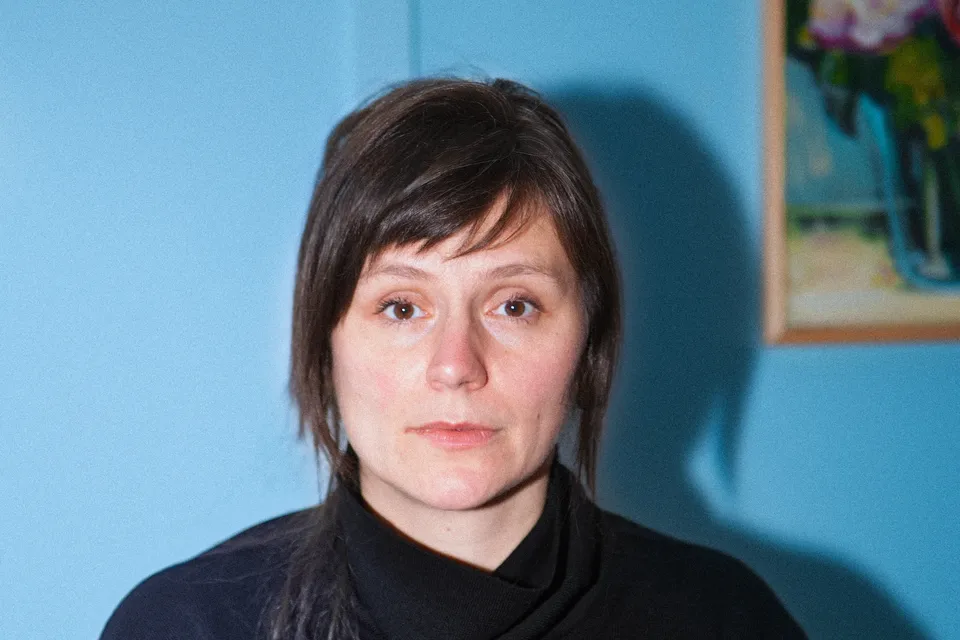
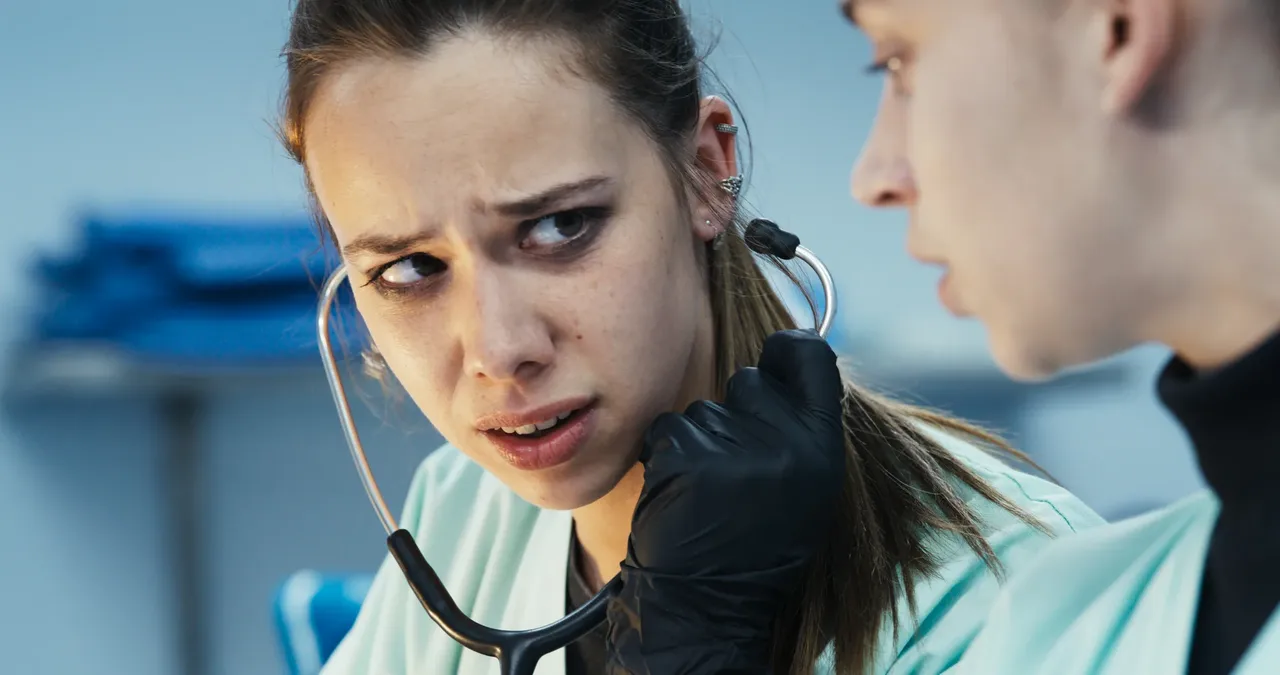
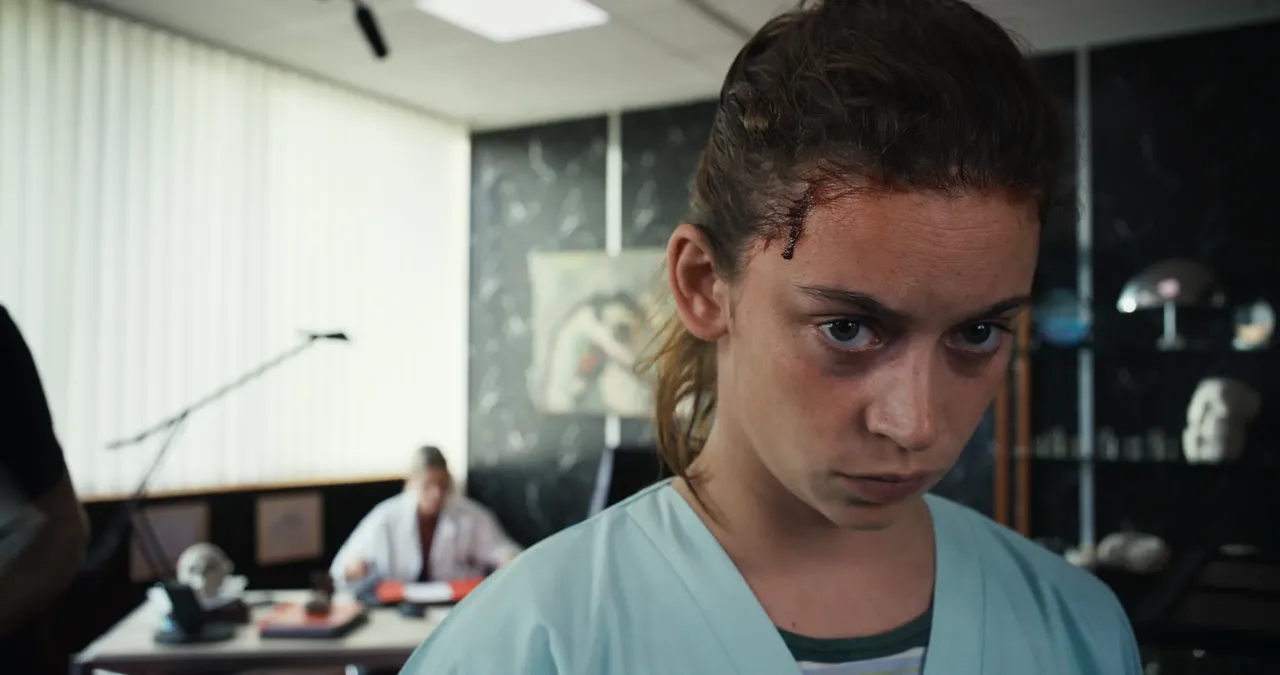
In her first feature film, Sanguine, which premieres 27 November in Spain, Margot, a young intern at the most competitive ER in the country, goes through hell (physically and figuratively) trying to keep up. Marion herself has previously spoken about how her own experience shaped the idea behind this movie. After winning Best Film at Sitges Film Festival, and ahead of the premiere in Spain, we sit down with the French filmmaker to discuss her work (obviously), feminism, body horror, and the working conditions of healthcare workers (and of workers in general).
First of all, Marion, I’d like to tell you that I personally loved your film, so it’s a pleasure to interview you. You’ve said in other interviews that what you lived through in the world of finance was terrifying. At what point did you understand that this experience had to be a horror film and not a drama?
I spent five years in the world of finance but I never managed to find my place. In the end I resigned, and for a long time I experienced it as a failure. I thought I was the girl who hadn’t been able to adapt to the world of work. But, little by little, talking to a lot of people, I realised that it wasn't just me, that I wasn't the only one who had gone through that; I wasn't the only one who felt miserable at work.
When I went back to studying and started screenwriting, I found it very interesting to approach the relationship between young people and work through film because it seemed to me that it was a subject that wasn’t being dealt with in cinema. It’s a subject that is obviously current and political, and I thought it was important to give a voice and a face, precisely, to this generation of young people who ask themselves a lot of questions about their place in the workforce nowadays.
I find a lot of parallels, obviously, between your story and the film itself. When it came to telling this story, if this problem young people face wasn’t being represented in cinema, why choose horror and, more specifically, a body horror film to represent it?
Horror is the genre I like most as a viewer. I wanted to do something I was familiar with, and it's a genre whose codes I know very well. It's also a genre I find really fun, one where, I think, you can make something entertaining. It's also a genre that speaks a lot to young people. I wanted to make a film that was aesthetically interesting but that would also entertain you, that had humour. I didn't want to make a social drama that was too serious, too intellectual, but rather something fun that would hook people.
“I think body horror has been reclaimed by women, and I consider that an act of political resistance”
Delphine de Vigan collaborated on the screenplay. Her literary work, especially Les heures souterraines (Underground Time), had already portrayed harassment and exhaustion at work. How did you come to work with her, and what did her perspective as a novelist bring to the film?
Yes, the truth is that I got a grant from the CNC, the National Cinema Centre, which meant that a personality could accompany me for a year while I developed this film. And that personality was Delphine de Vigan, who helped me a lot, above all with the technical side of the film, in terms of dramaturgy. That is, she led me to ask myself questions about how I built my characters, about the depth I gave them, about how I built the narrator. She was a great help from a very technical, very dramaturgical point of view: how to build a film, how to build a narrator. She helped me a lot in that sense.
Would you like the film to be shown in hospitals or medical schools too? What do you hope healthcare professionals will feel when they see it?
Yes, of course. I hope it gets screened at medical schools and that lots of young doctors see it. I don't know what it’s like in Spain, but in France doctors are a population that suffers enormously. They work a lot and don’t always have good working conditions. It’s also a population with an enormously high suicide rate. Suffering in public hospitals is a real issue in France, and I hope the film touches on it from a political point of view. That is, I hope the government reacts, or at any rate the people who are active in political life, so that things can change.
Lots of young junior doctors wrote to me on Instagram to tell me they were living through the same situation, that my film had touched them enormously and made them question the position they had at work, that it gave them a lot of comfort and that they felt understood. So what I’d like, above all, is for it to be a film that opens up the debate on this issue.
You’re the sixth woman to win Best Film at Sitges, and three of those wins have come in the last three years. Do you feel something is happening with women directors in horror? And in body horror specifically?
Yes, I think body horror has been reclaimed by women, and I consider that an act of political resistance, because through these new films made by women we see new representations of the female body, we see heroines who are less passive, less victims, and more active. At the same time, I've also seen that the horror audience, which used to be predominantly male, has started to change too, and more and more women are going to see horror films. I think the changes that have taken place in horror cinema run parallel to those taking place in society in general. I think it’s a very young cinema, very committed, feminist, and it also touches on lots of very current, burning issues. It has meant an enrichment from a narrative point of view, because more and more new stories are being told from new points of view.
Every Friday, METAL Weekly gathers the week's stories. Subscribe.