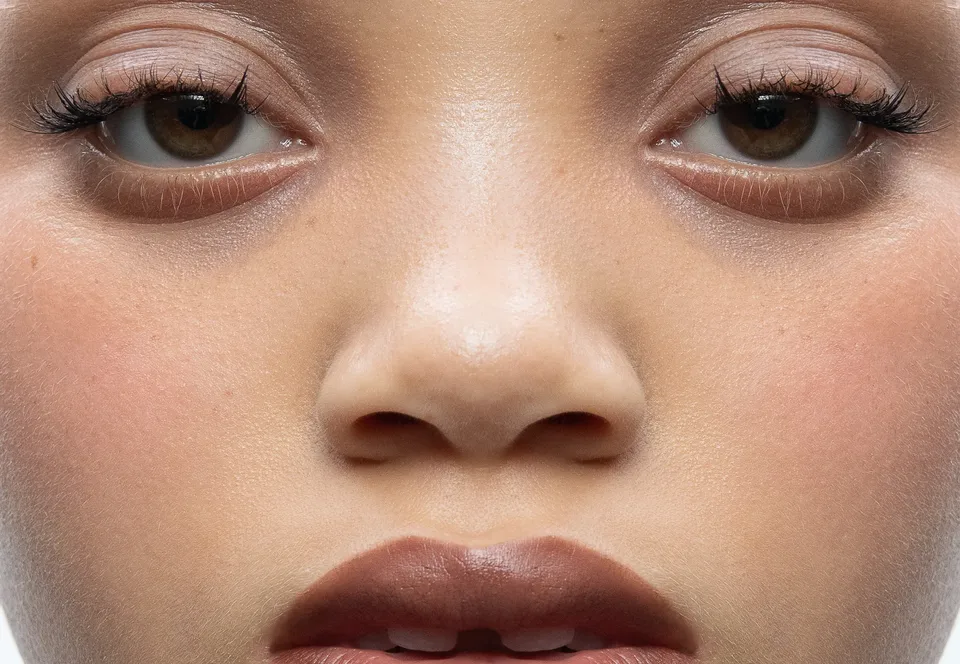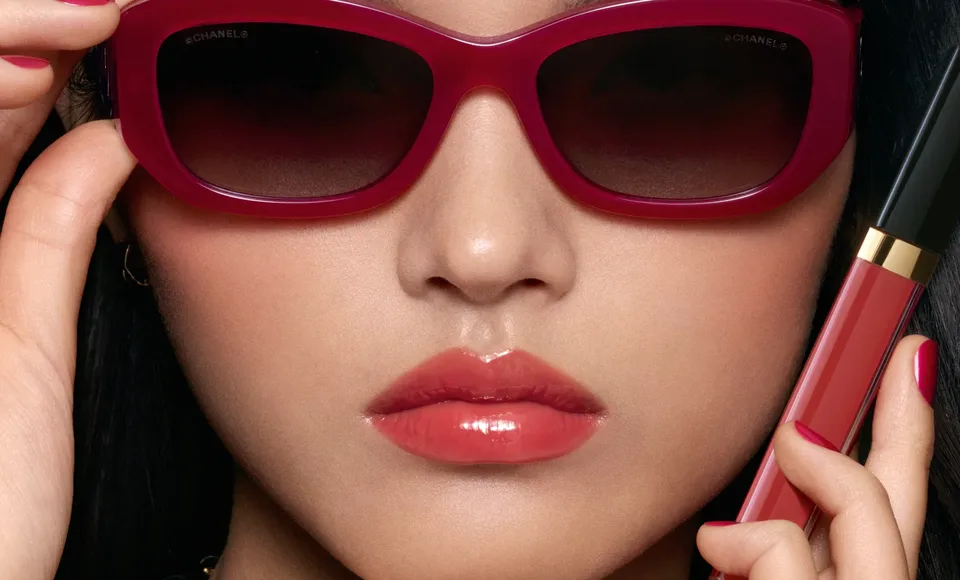
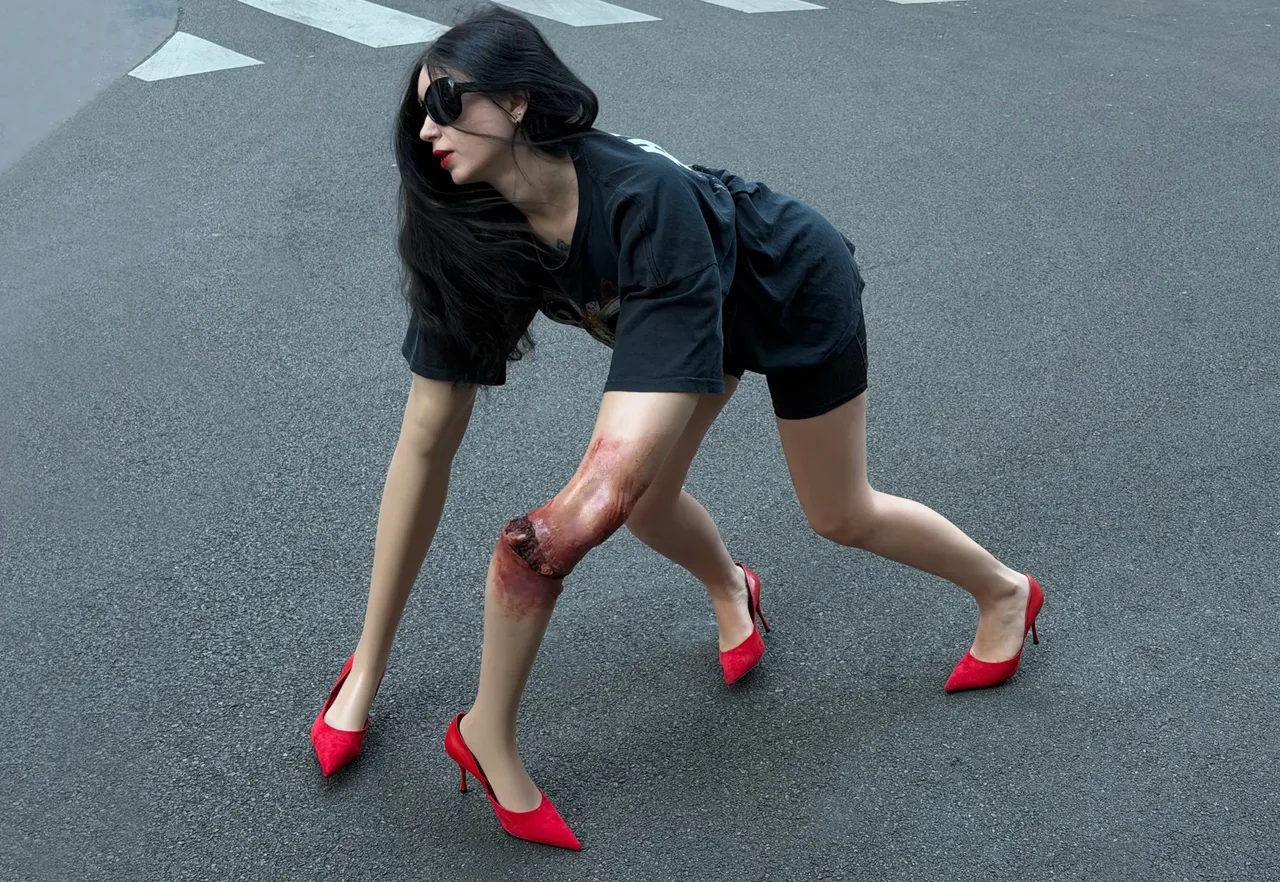
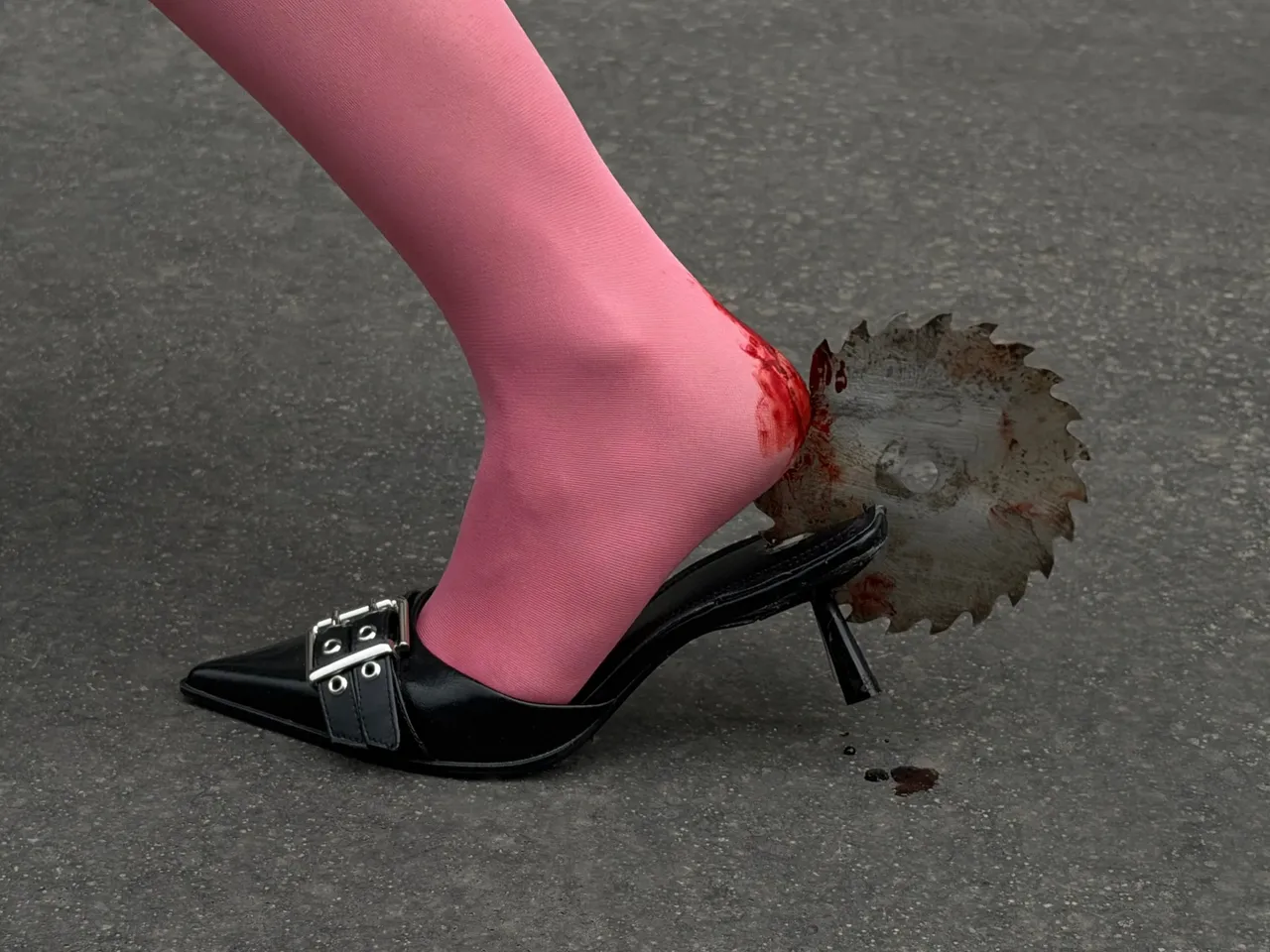
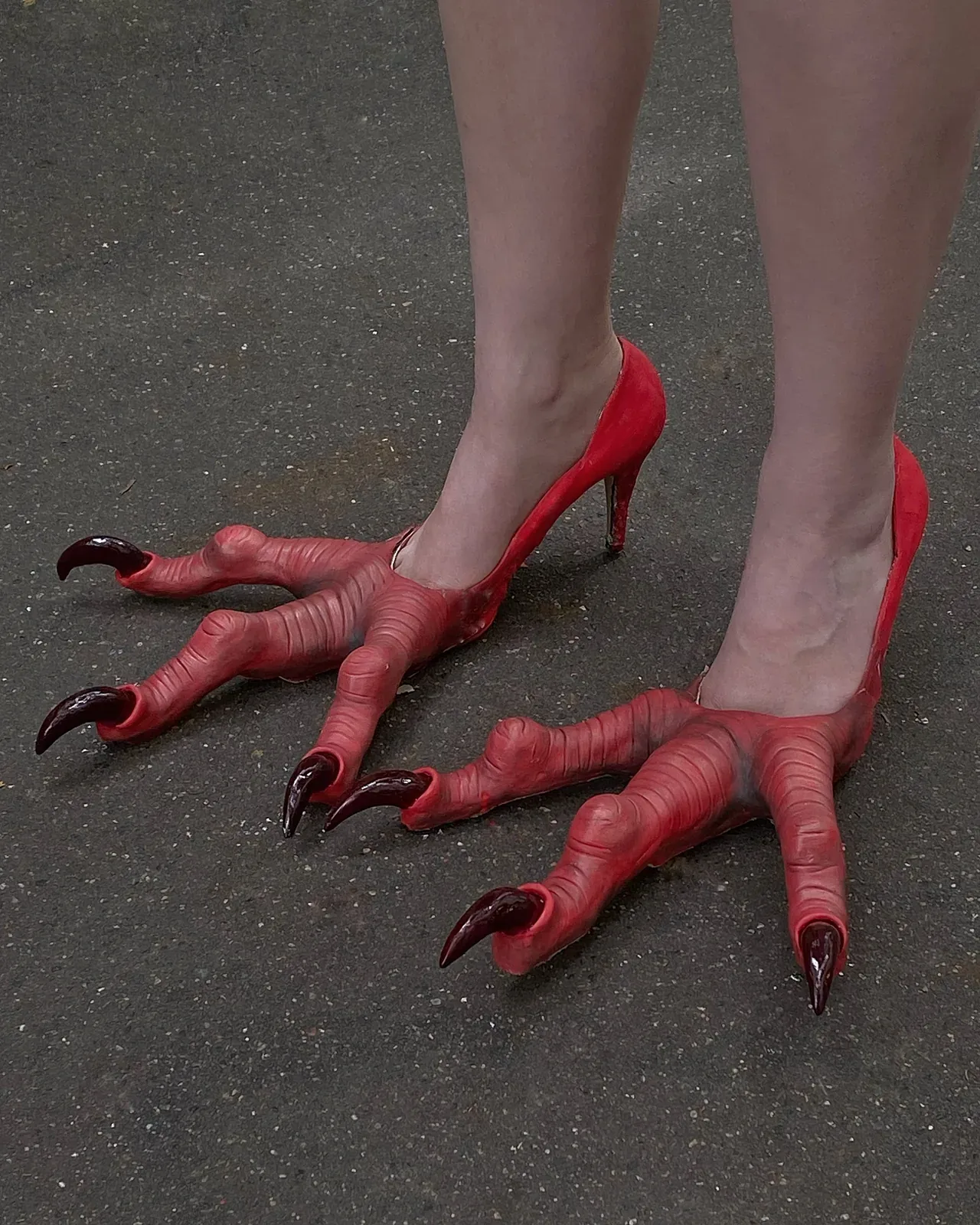
A girl stands before a mirror as she pokes her teeth with long red nails. Her face contorts in pain when they snap. She looks at them and wrenches the top off as a drop of blood falls into the white washbasin. Just another Tuesday night. Before going back to her dinner date in a pale Jeffrey Campbell dress, she takes a long look at her own hazy reflection in the gold-framed mirror. As she leaves, a wine-swollen claw creeps up from the basin and swipes at the cherry bloodstain, leaving more blood behind as it retreats with a taste of blood. Two years ago, the same Baba Yaga claws stalked the streets of Paris, growing out of red stilettos designed by Alona Sobolevska. Now they appear in her film Sexident (2026).
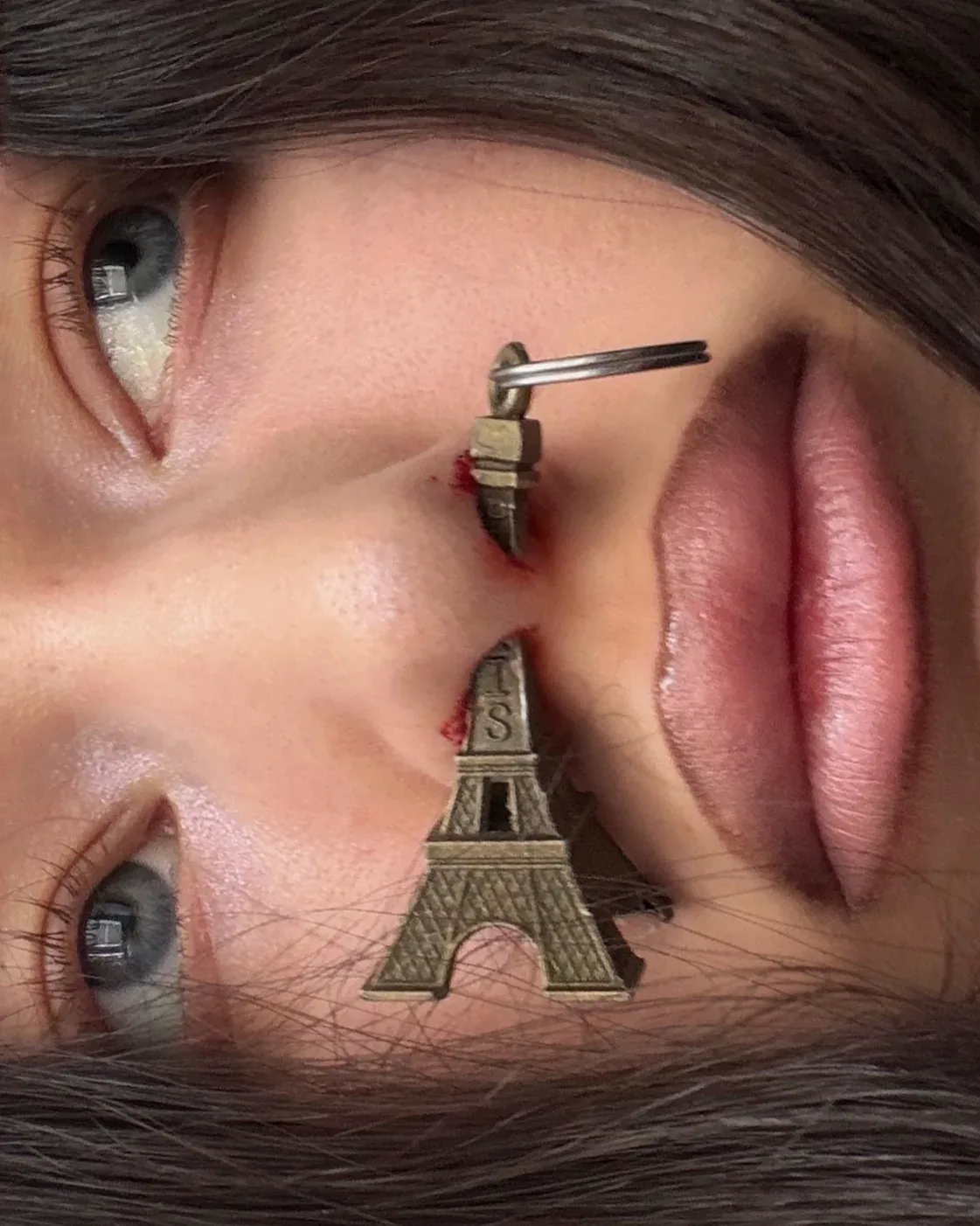
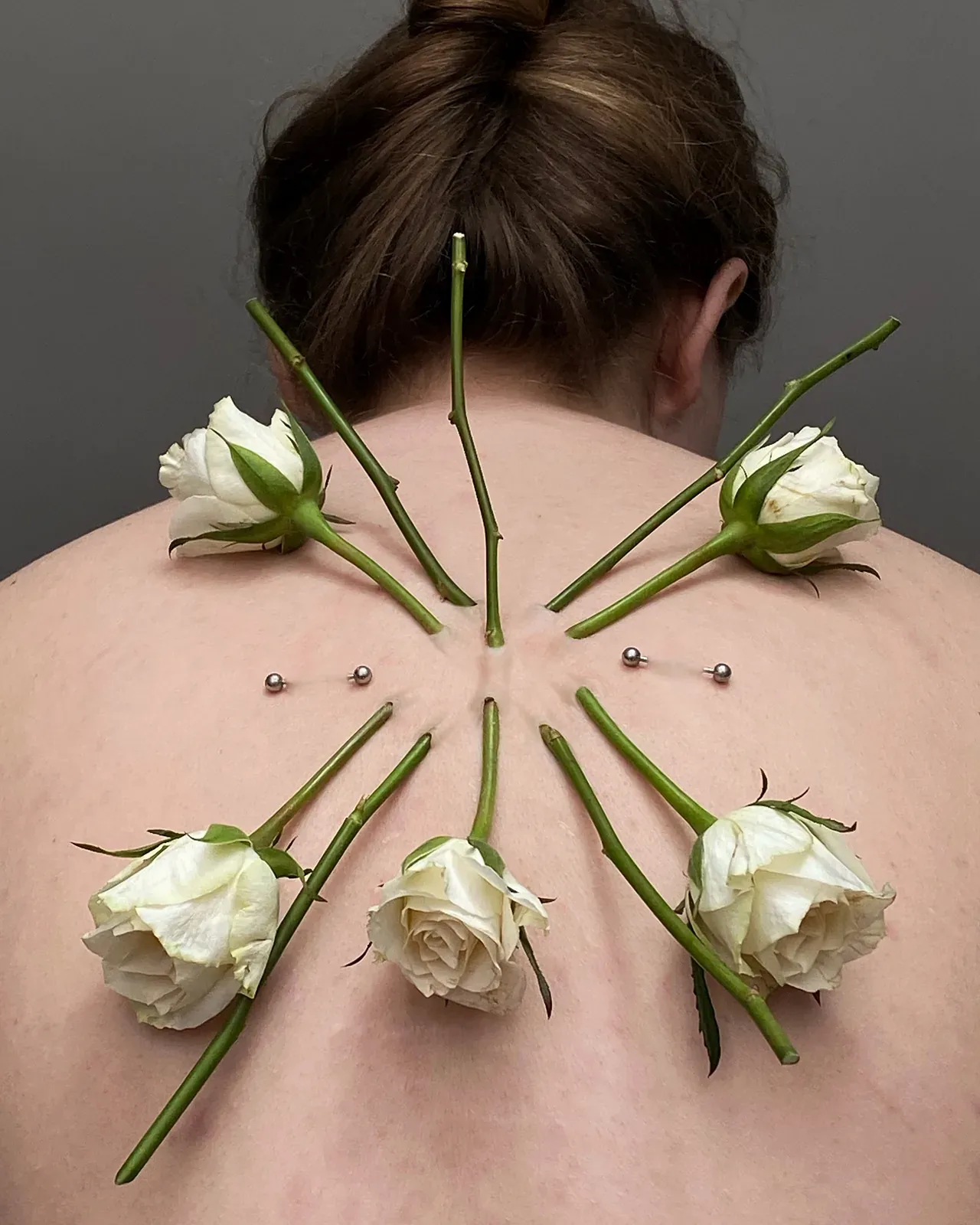
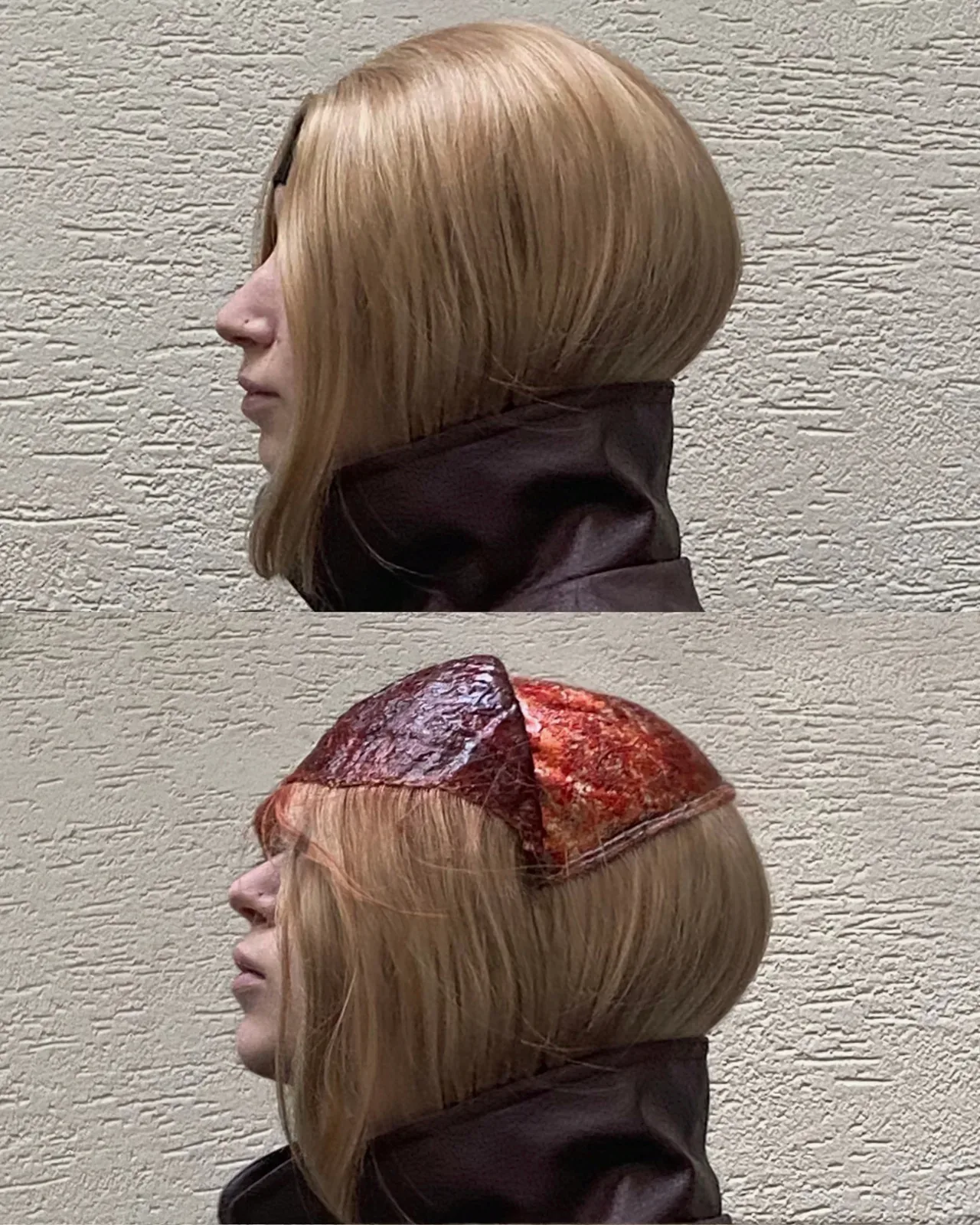
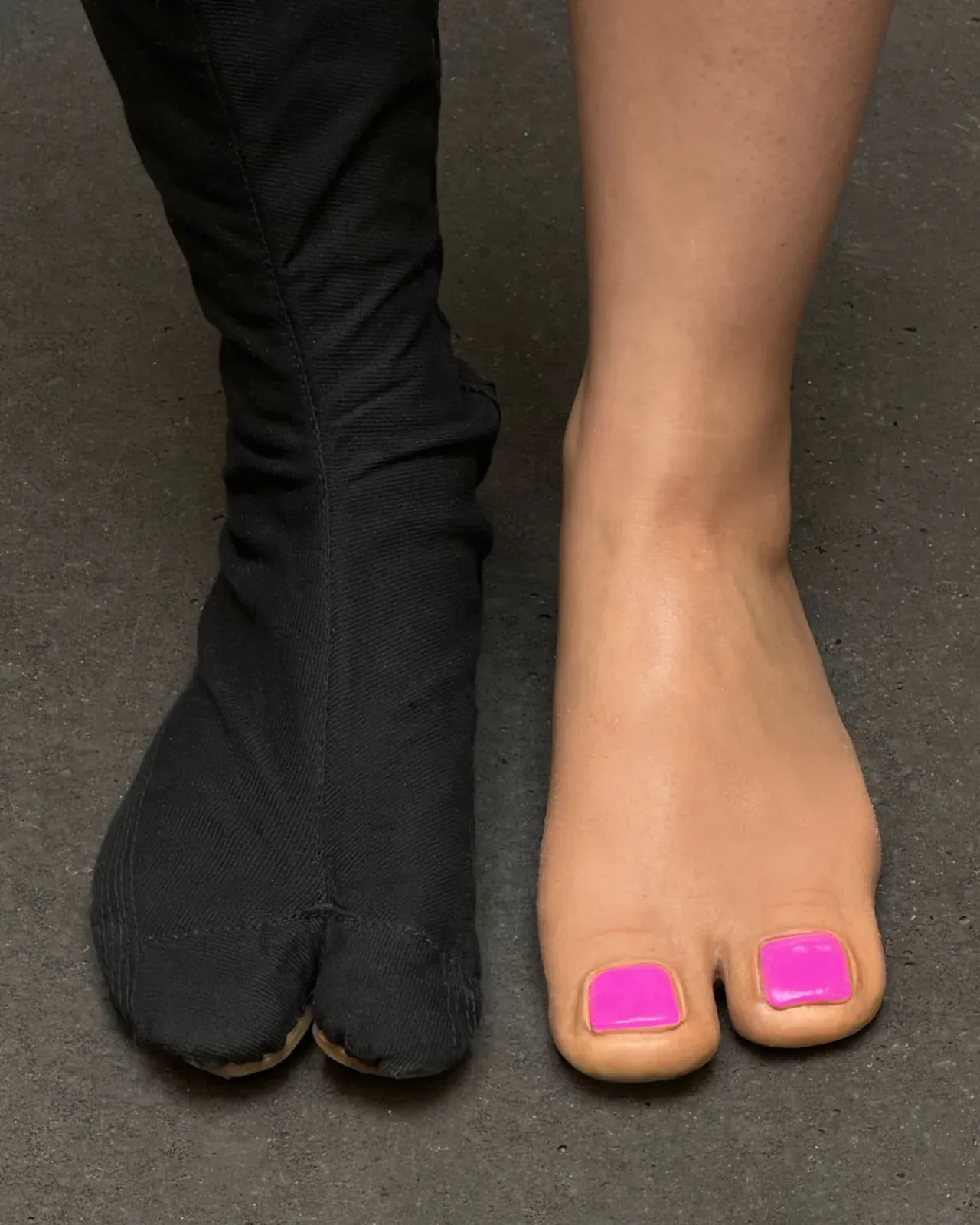
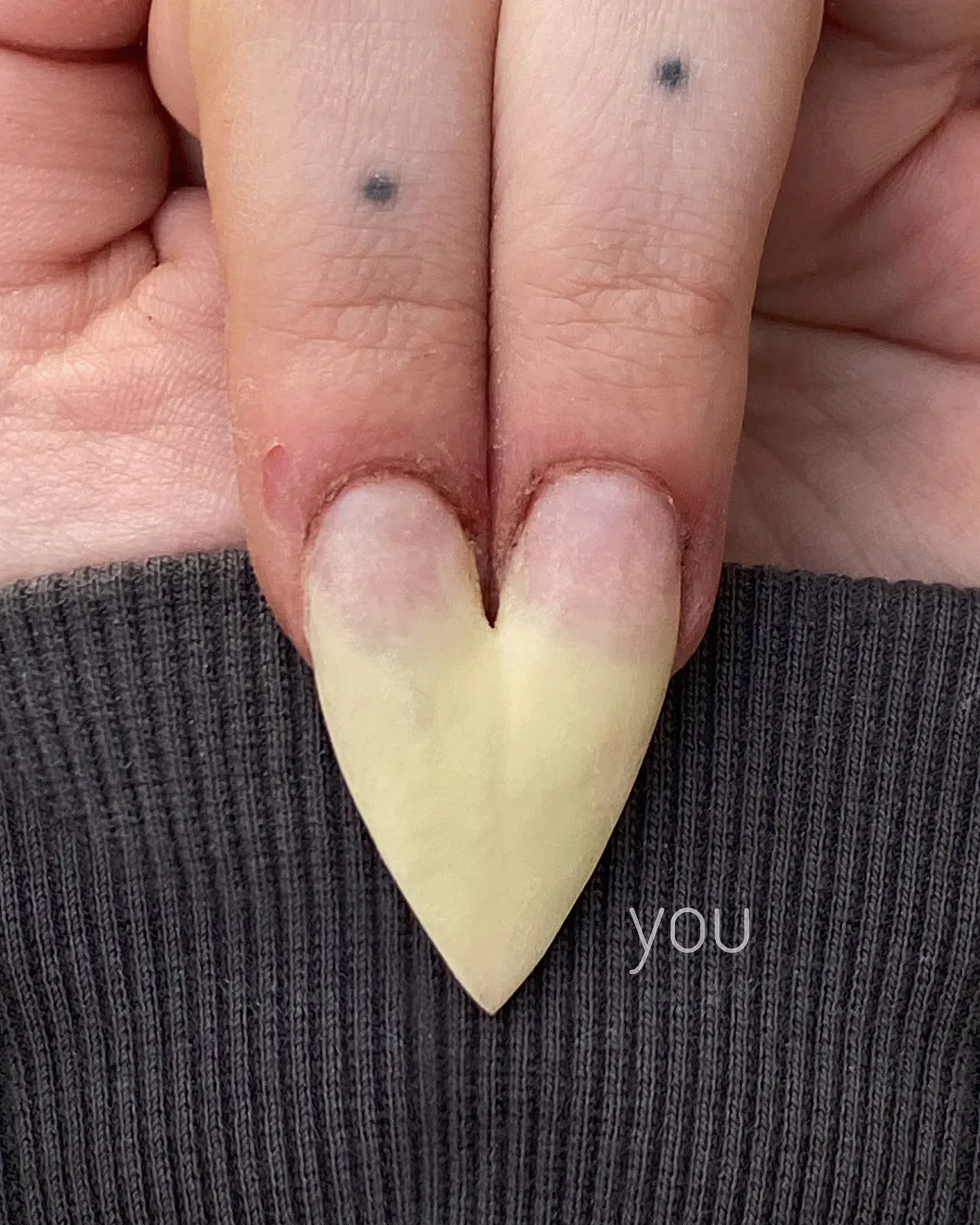
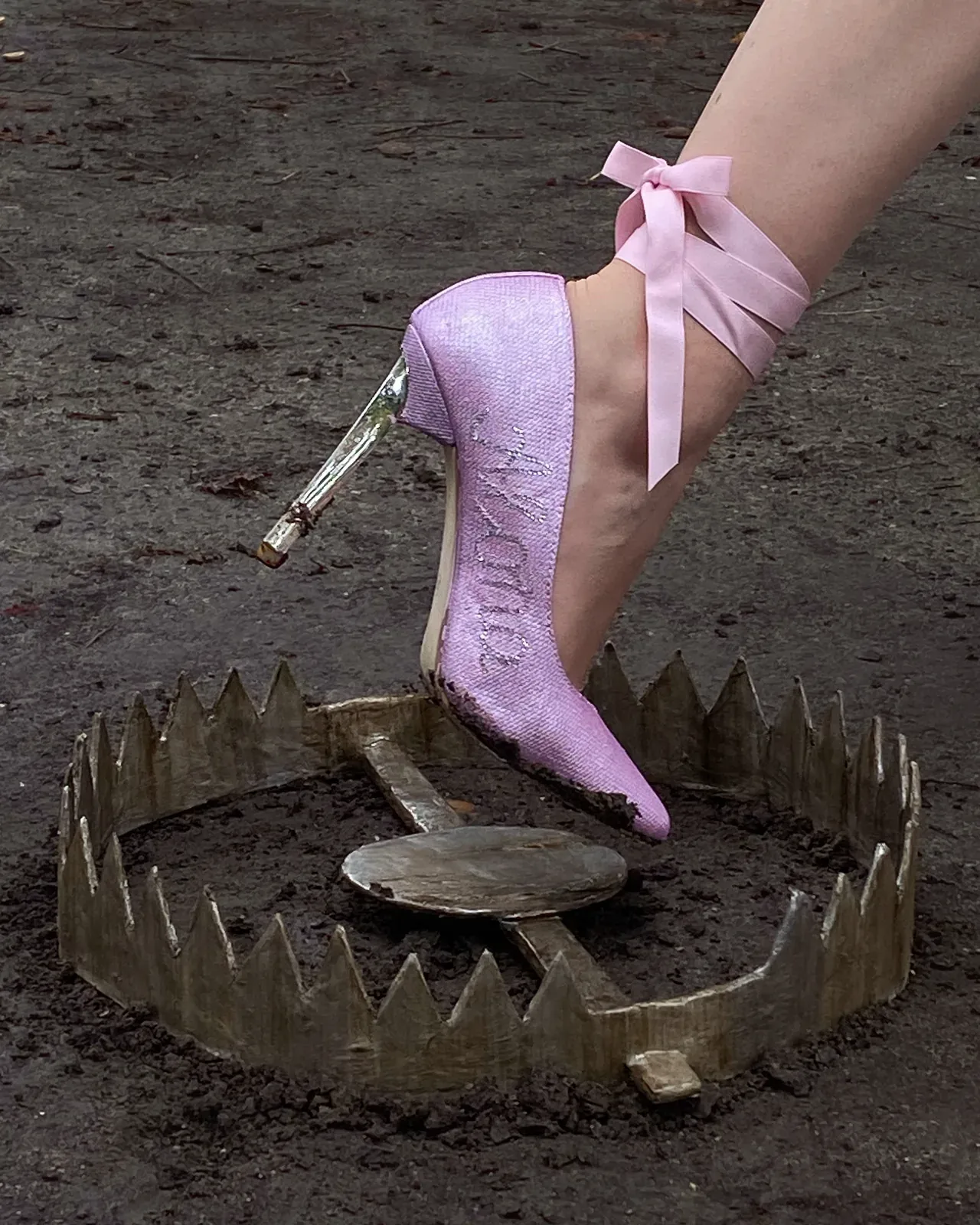
There’s a visceral feeling that shoots through you when looking at Sobolevska’s work or Gab Bois’. With Bois, it’s the sight of barbed wire braces fitted for an everlasting smile. With Sobolevska, it’s the split second before soft ballet shoes step into a hard metal trap. It’s a cinematic and predictable story of pain and injury. Sometimes it’s the long minutes afterwards, as with two nails joined by gel polish to make a heart. Never to be apart. There’s an irony to that eerie beauty that feels at home online.
Her work consistently makes something familiar, quotidian, look strange. As Sobolevska brings her familiar imagery of fashion and beauty into unsettling horror, the artist talks to METAL about the anxieties of being a creative, working with her girlfriend and never wanting to post on OnlyFans.
What’s the first object of beauty you remember?
I was around three years old when I had a little pink limousine. It was a miniature collectible made of metal, with a pink body. I was fascinated by it, and I couldn’t understand why I liked this toy, which is usually seen as being for boys. Your question has made me realise this was the first contrast in my life — a rather useless, rough object rendered in shiny pink with wonderful, delicate details. If I still remember this toy so vividly, it must have had some influence on me and my work.
What was the first social media account you logged into?
I joined Instagram when I was fourteen. My first post was a selfie in my pyjamas.
When did you start shooting videos?
The first thing that comes to mind is my childhood YouTube channel. I used to do vlogs, Q&As, challenges and outfit transformation videos. One day, a challenge video of mine got over a hundred thousand views, but most of those views came from men. After receiving hundreds of disgusting comments with eggplant emojis and hearts directed at thirteen-year-old me, I deleted the channel.
When you first moved to Paris, you started getting attention for your nail work online.
The nail content I was posting online started getting an audience around the same time I moved to Paris. I have never been particularly interested in nails. I simply used them as a tool to build my presence in the creative industry, gradually adapting them to the kind of art that felt closest to me. It gave me the solid start I’d been dreaming of for years. I’ve only had a manicure twice in my entire life: once when I was eight, when I went with my mum to a local salon, and again for my high school prom. Life really is a strange and wonderful thing.
“Conventional beauty standards don’t really catch my eye anymore.”
When did you move from Ukraine to Paris?
I arrived in Paris in 2022, completely by chance. We were stuck in a long line of cars at the Romanian border when a group of people heading to Paris offered to take us with them. We just got in the car. Those people were real angels. They simply told us, “You’ll make it in Paris. You need to go there.” It was our third day on the road when we arrived in a suburb of Paris. We boarded a random train and ended up at a station where a wonderful stranger was waiting to help us. He had offered his help on Instagram. At the time, people were actively using community pages and stories to help Ukrainians. I don’t remember much after that. Just a couple of years of living on autopilot, with the constant background noise of another language. We survived thanks to people and their kind hearts. I can’t even count everyone who helped us, but I’ll be forever grateful to every single one of them.
How did growing up in Ukraine affect you as a creative?
I would divide my experience of growing up in Ukraine into three stages. First, a wonderful childhood full of plans and ambitions, until 2014. Then seven years of living under occupation, surrounded by constant negativity, aggression, anxiety, and a sense of hopelessness. And finally, those wonderful six months in a peaceful Ukraine, when I was finally able to leave the occupied territory after turning eighteen. Then the war broke out again, and I had to leave once more. During each of these periods, I was a different person, forced to adapt to different circumstances. You learn to adapt and grow through a constant struggle, both internal and external. You stop living in the present and start living in the hope of tomorrow. It’s as if you’re in a state of suspended animation. You’re simply waiting for things to become normal again.
What makes you create?
Anxiety and passion for what I do. I hate making videos! I much prefer photography. In another life, I would be a forensic pathologist, an archaeologist or an actress.
What’s your own relationship with pain?
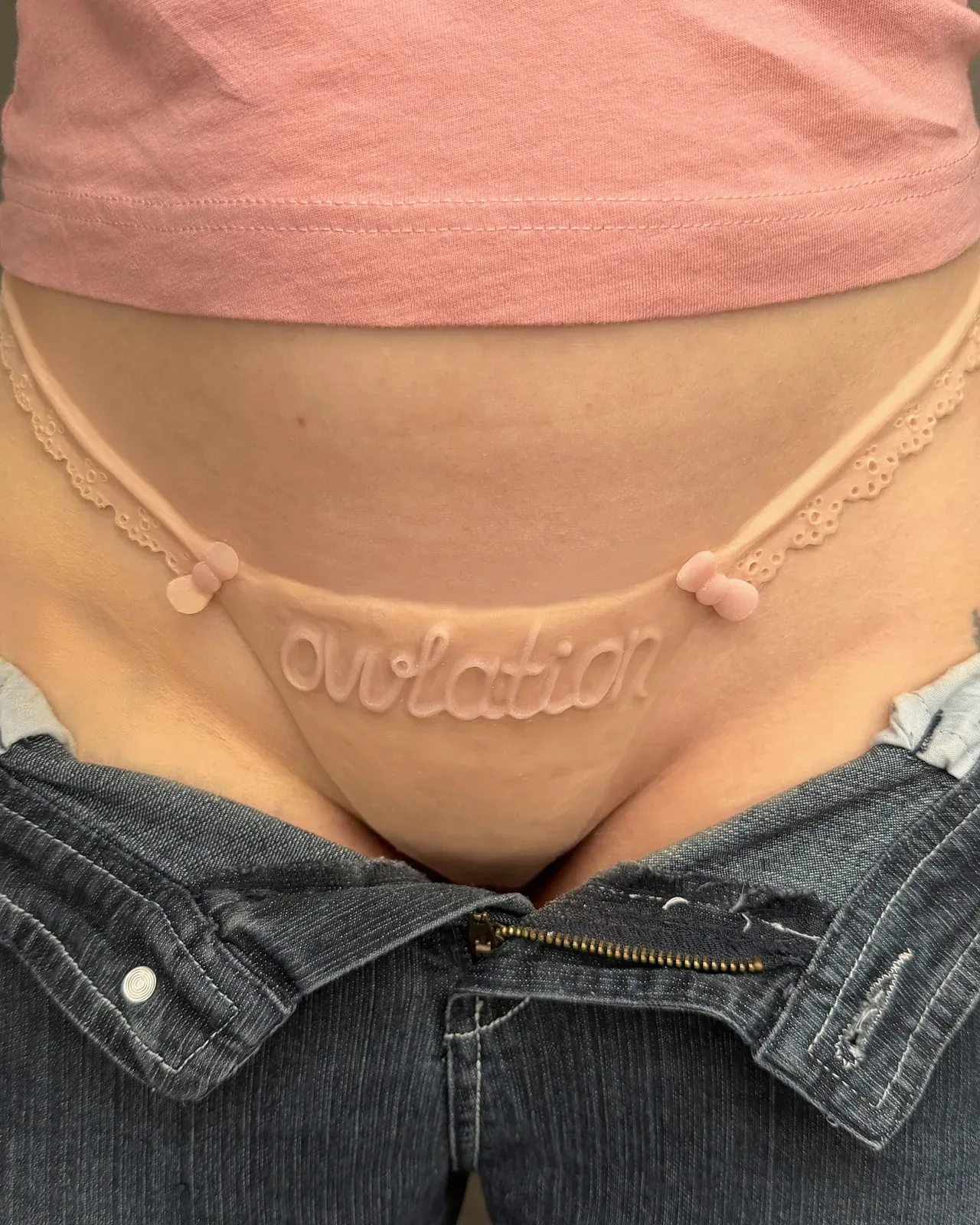
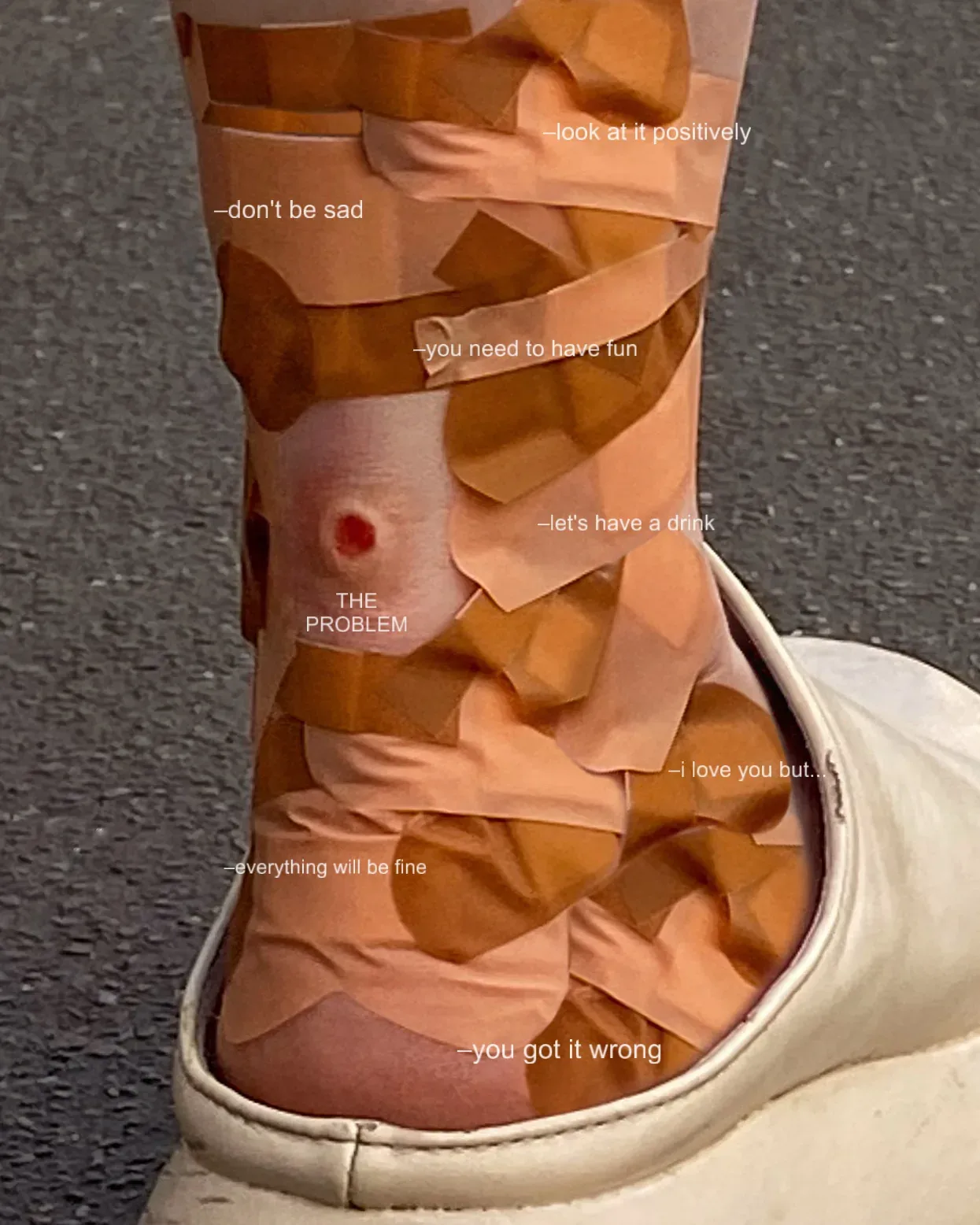
Every single person on this planet has experienced pain. It’s probably one of the most universal things there is. It’s something everyone can relate to, which means everyone has their own relationship with it. No one can be completely indifferent to it. My photographs are often ironic. It’s pain with a smirk, as if to say, yeah, been there. I know. They’re also often deliberately over-aestheticised, creating this strange sense of everyday normality, as if something feels slightly off. That’s exactly how it is in real life, too.
What made you start bringing pain and beauty together and mythologising everyday life?
I’m not trying to invent something new. I observe myself and the people around me, and then I visualise what I see. My goal isn’t to make the imagery darker but to evoke feelings and memories and make room for mockery. First and foremost, my work is about myself. But truly individual experiences are probably quite rare in this world.
Has your relationship with beauty changed?
I think it’s important to distinguish my personal relationship with my own beauty from beauty as a social construct. When it comes to my work, though, I use absolutely any form of beauty. I imagine most people wouldn’t consider a lot of it beautiful. But my perception of beauty in other people has changed. Conventional beauty standards don’t really catch my eye anymore. I find myself drawn to big noses, unusual eyes, interesting head shapes. I need something that makes a face memorable.
Do you watch horror differently now that you’ve made a horror film?
I love horror, both watching it and working behind the scenes. It is a form of controlled fear, much like going on amusement park rides, except I don’t actually enjoy those. Since making our own horror film, I feel like it’s become a little harder for me to watch horror films the same way. Now I can see how all the wounds were created, and I think about the technical aspects of making the film.
“No creative practice can exist without proper administration.”
OnlyFans for horror?
I wouldn’t post anything on OnlyFans as I’m against the sexualisation of my feet. They’re just the easiest body part for me to work with, and I can photograph the results myself. I love Instagram and wish they would improve their moderation system to better distinguish between real violence and creative work. It would reduce my anxiety about posting.
Do you usually work alone?
I do everything myself, and I’m usually my own model, too. However, my girlfriend often helps me photograph the finished work. She also takes care of a lot of the administrative side of things, even handling negotiations. She’s basically my second manager! No creative practice can exist without proper administration.
What are you reading, and what’s on your playlist?
I’m rereading Count Karlstein by Philip Pullman for the umpteenth time. I don’t listen to music. I prefer to watch and listen to YouTube endlessly.
What does your room look like now?
My room looks as if a builder, a stripper and a depressed teenager got into a fight in it.
Every Friday, METAL Weekly gathers the week's stories. Subscribe.