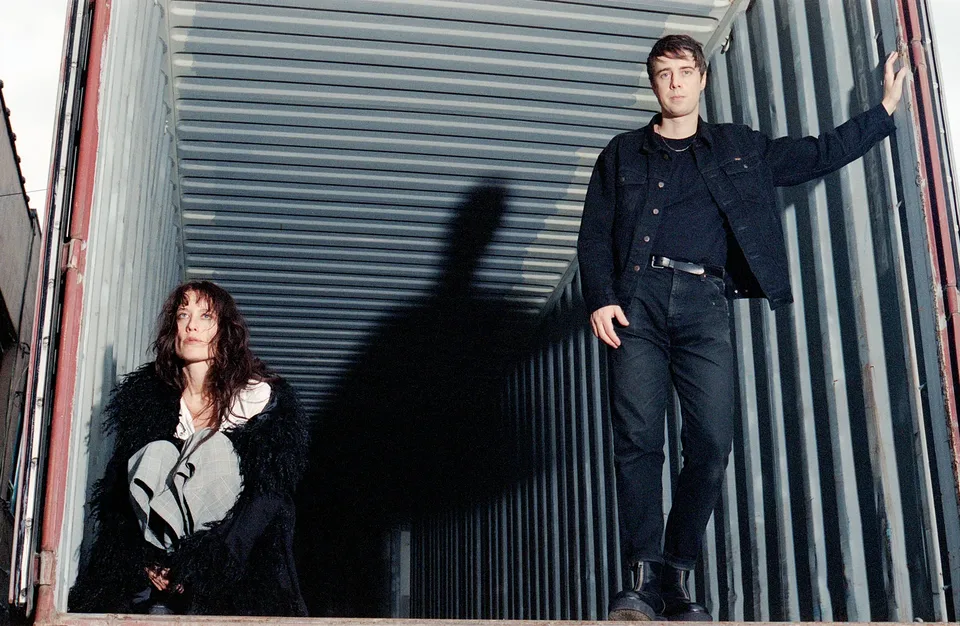
Who is Vadakin? The producer behind Grimes’s Accelerando is still something of an unknown quantity, but his sound speaks for itself. Blending intricate layers, restless rhythms and the maximalism of hyper-pop, he’s a name worth getting to know. His approach sits at the intersection of experimental electronic music and pop, where dense production meets an instinct for melody and immediacy.
As the boundaries between underground sounds and mainstream pop continue to shift, producers like Vadakin are helping shape what comes next, often from behind the scenes. We spoke to him about the making of Accelerando, the intricacies of collaboration and the challenge of developing a sound of his own.
Where did your music journey start?
In rural New Mexico, making GarageBand beats on my dad's computer.
Your song with Grimes for Accelerando came out 9th October, at the time of writing, and I think it'd be interesting for METAL’s readers to get to know you better. What led up to that and what's next for you?
We pretty much just met at a garage sale and thought it would be cool to make some music together! Not too sure what’s next for me, maybe I’ll go to more garage sales.
And, when you begin working with an artist, how do you approach the task of capturing their own musical and creative identity?
I think something that’s served me well is going into sessions with as little context about the artist as possible. That way, I can meet them where they are at musically, without the baggage of what other people are expecting from them.
In a similar light, do you feel any kind of tension when trying to develop your own artistic voice with the creative demands of other artists?
I think there’s tension in everything we do in life, but that's not necessarily a bad thing.
Given the accessibility of modern production techniques, it seems like there are now endless possibilities. Do you find this new era of technological accessibility liberating or more difficult?
When I first started making music, it was difficult to find information on how to do anything. Whenever I made something that sounded even remotely good, I was really excited about it.
Now, there’s so much information available. When I’m trying to figure out what to do it’s so tempting to go online and see how someone else would do it. But I’m not sure this leads to the art being better.
Now, there’s so much information available. When I’m trying to figure out what to do it’s so tempting to go online and see how someone else would do it. But I’m not sure this leads to the art being better.
“I think there's tension in everything we do in life, but that's not necessarily a bad thing.”
What do you think contemporary pop music is borrowing from underground electronic music that it wasn't five or ten years ago?
I think with how quickly information spreads and how accessible technology has become, trend cycles are getting faster and faster. By the time there’s a cool new sound in the underground, it’s not long before everyone has figured out how to emulate it, or at least come close to something that feels like it. People have always done this, but the speed at which we’re able to reproduce these aesthetics is accelerating.
Your music is sonically intricate — the production, especially on Accelerando, is vertically dense and prismatic. How do you build this density without losing clarity or that desirable earworm quality?
I think I actually lose clarity quite often. Building up layers is probably the quickest part of my process. It's the refinement afterward that takes the longest. Sometimes it takes years to turn all of those layers into something you can actually listen to. The demo of Accelerando had some crazy phase issues, when we first played it in mono half the track disappeared, it took us a long time to figure out how to fix that without losing the vibe.
When you work with someone like Grimes, who has such a distinctive and unconventional artistic identity, how do you approach finding a creative language that belongs to both of you? Does the chemistry emerge organically between you two?
I had never really listened to Grimes before we first met… so I didn’t really know anything about her artistic identity. But the chemistry was there from the first day we met. It was really refreshing to work with an artist who I felt was pulling from so many of the same influences as me. I think we both feel art in a similar way.
Can you speak a little on the happy accidents that inevitably occur when producing music? Do you remember a particularly beautiful mistake you've made in the studio?
I think your best ideas typically come from mistakes. I know my brain is only capable of conceiving so much, so whenever there's a mistake or an accident, it's an opportunity for something to happen outside of my own limitations. The entire final drop and chorus of Accelerando came from something like this. We were dragging around tempo automation in Ableton, and it started stretching all the synths into this really interesting, distorted sound. Technically, it was incorrect because the bassline wasn't changing with everything else, but somehow it sounded cool, so we thought, why not just go with it?
“Art helps us understand that our physical spaces are alive.”
How much of the magic of a finished recording is rooted in the physical act of making it — the tactility of instruments, the unpredictability of hardware, the atmosphere of a room?
I think the magic comes from something much bigger than us. It is everywhere and in everything. You never know when or where you're going to feel it. All you can do is be open to experiencing it.
Which records have changed the way you make and listen to music?
In 2011 the Packers’ record was 15-1, but they lost in their first playoff game to the Giants. It was the first time I felt truly devastated. If it wasn't for the expectations I had with their record being so good I probably would not have felt as sad as I did that day. I started listening to sad music thereafter.
What physical spaces make art feel alive to you?
I don't want to put any limitations on what can be art. But as far as audio art, which is probably what I'm most experienced in, I think physical space is just as important as the audio itself. You can't perceive sound without physical space. Art helps us understand that our physical spaces are alive.
There’s a shot of you making a music video with Grimes for Artificial Angels. What's exciting you most about the project?
The In-N-Out Burger we ate after set.
Accelerando’s video thematically shows war, end times, religion. Is this a reflection of now, a warning, or something else?
I didn't make the video for Accelerando, so I can’t speak to the intentions or meaning behind it. But I think the purpose of art is to ask questions and start conversations.
If Accelerando represents movement towards something, do you know what that something is?
I’m not sure it's about what exactly we're moving toward. I think it's about the speed at which we’re moving.