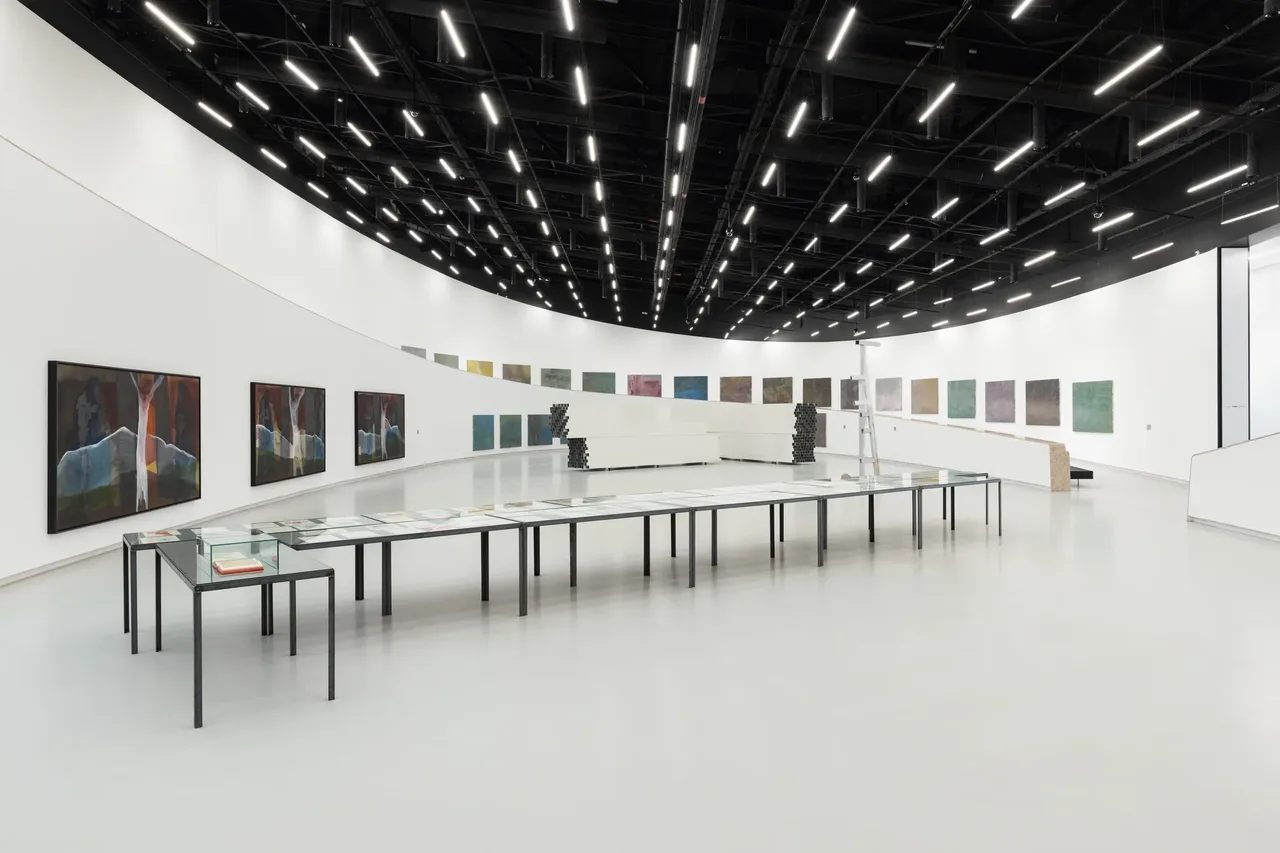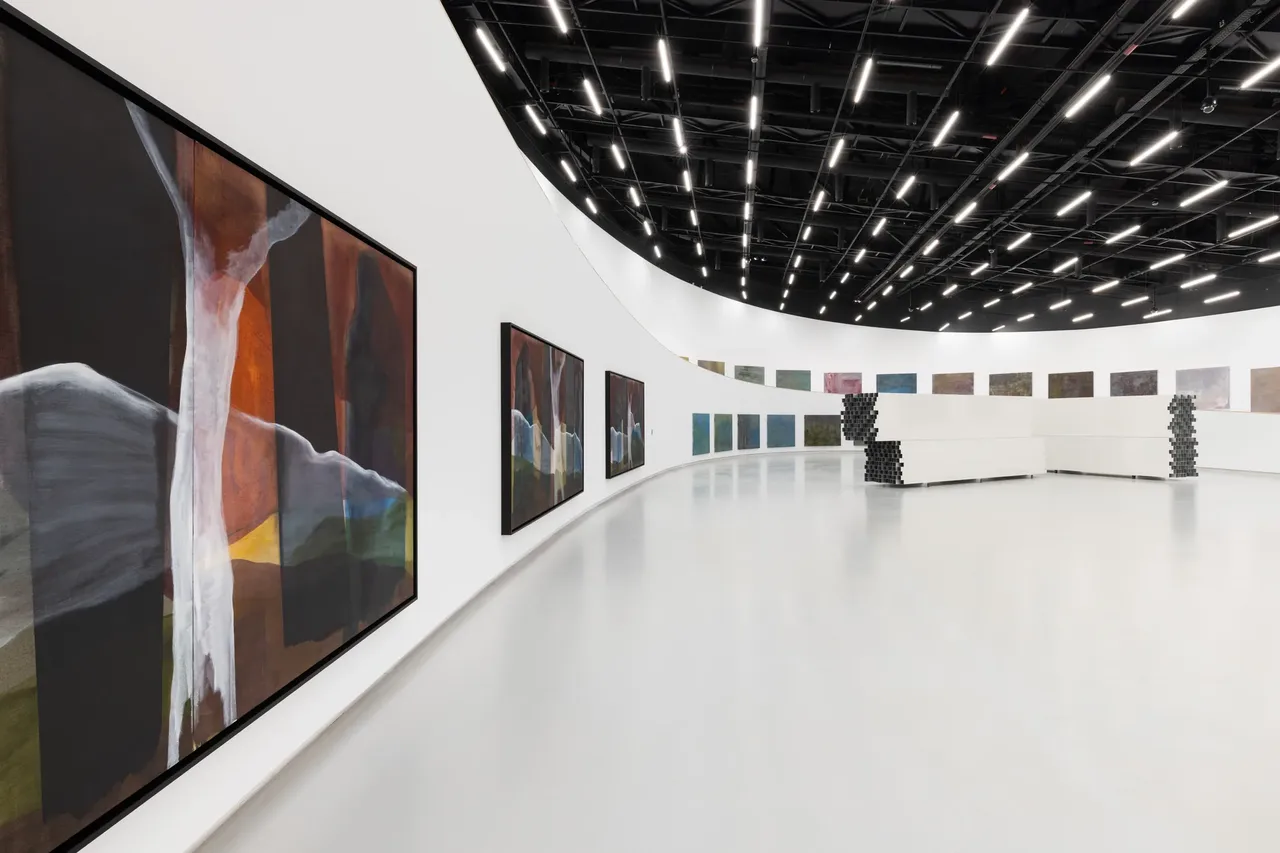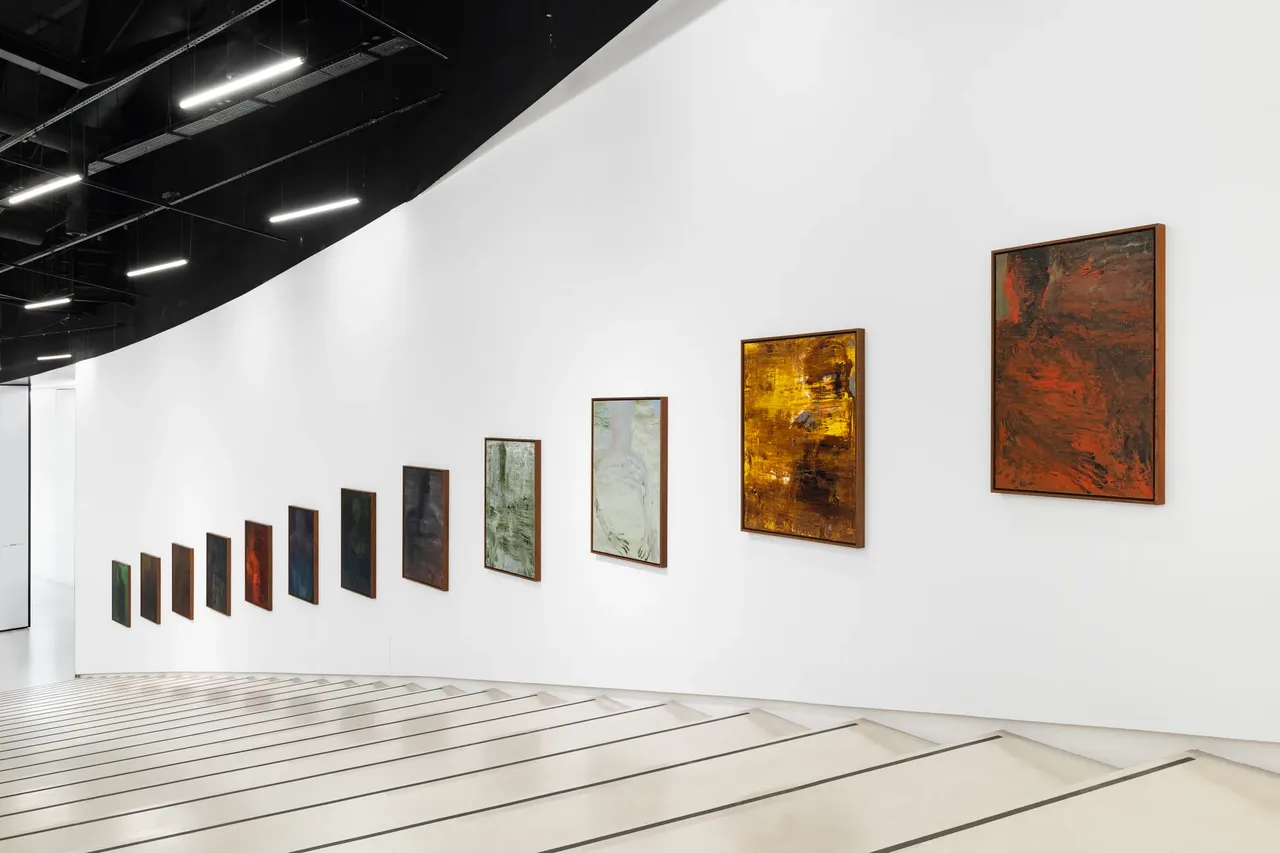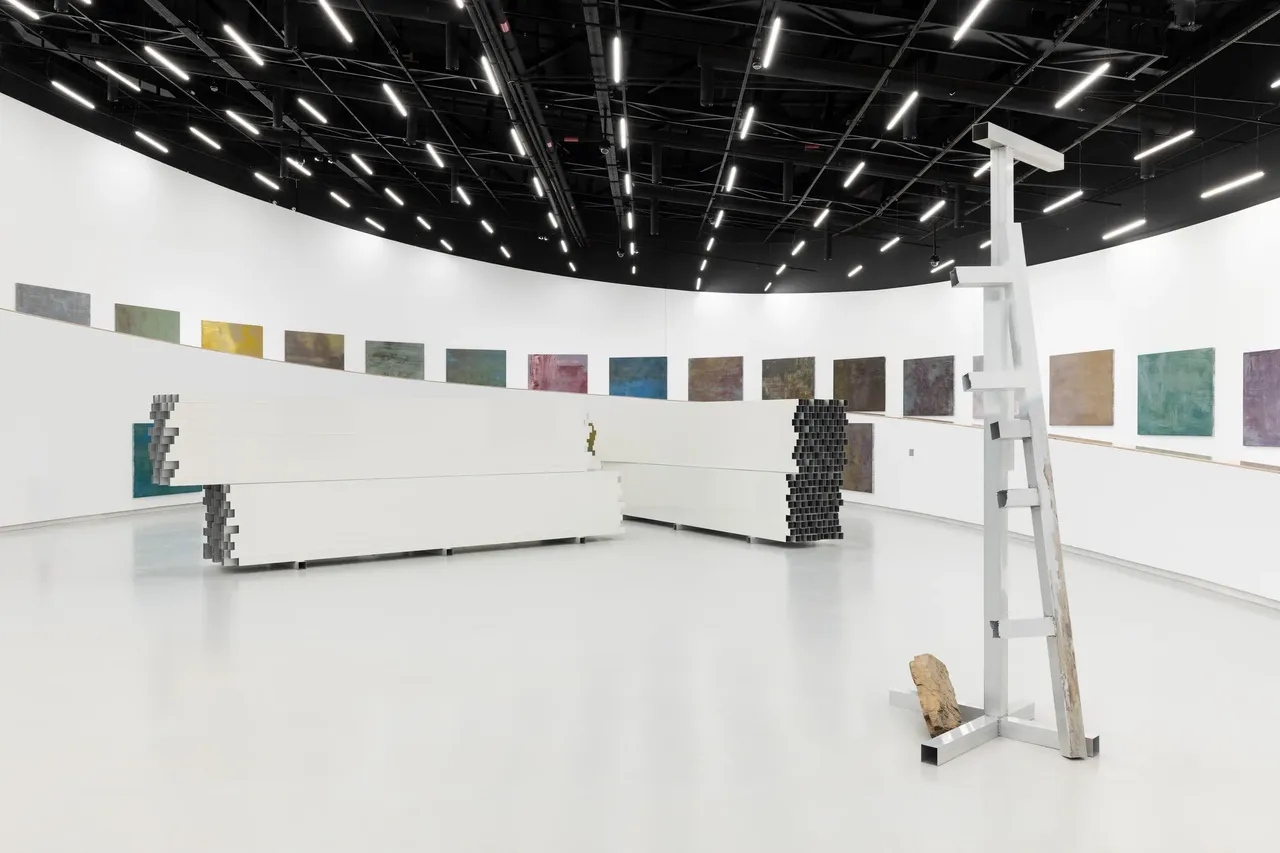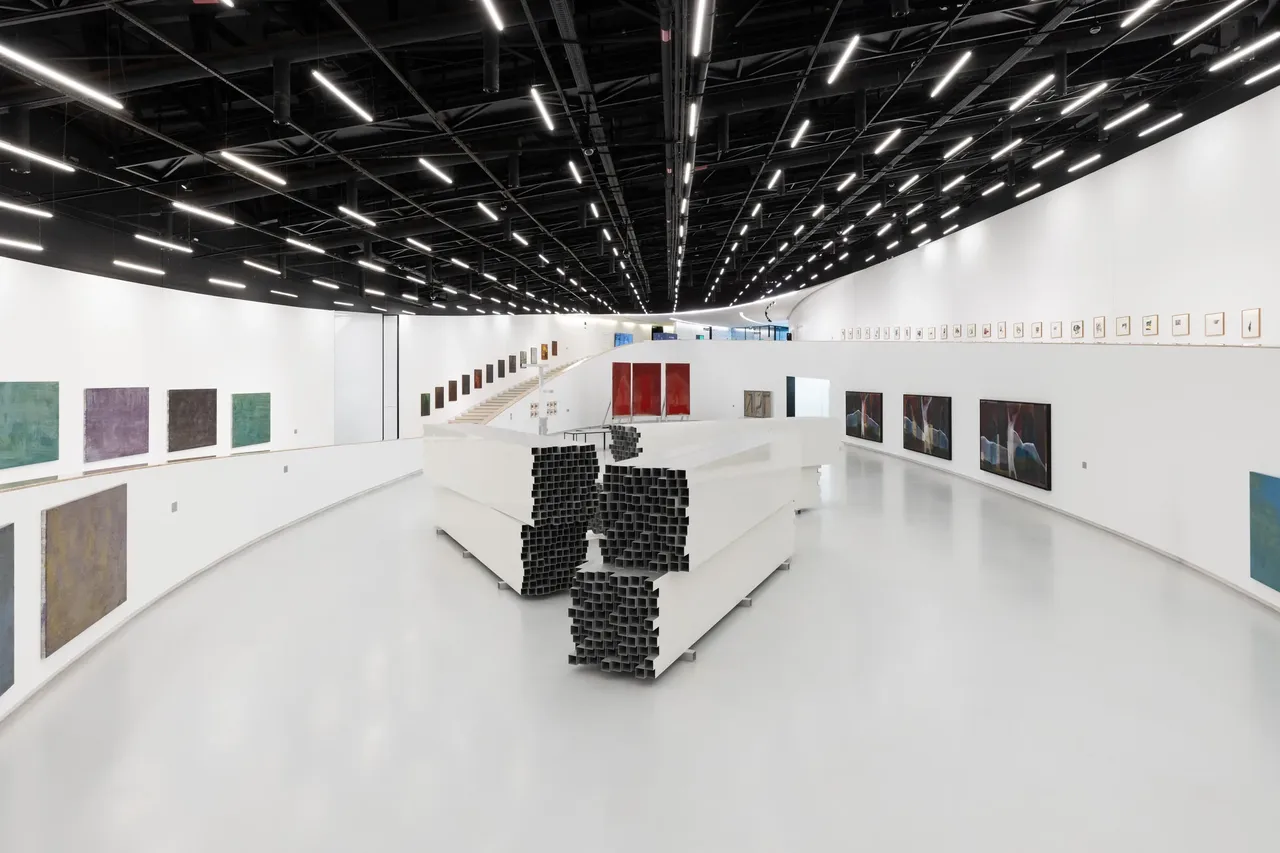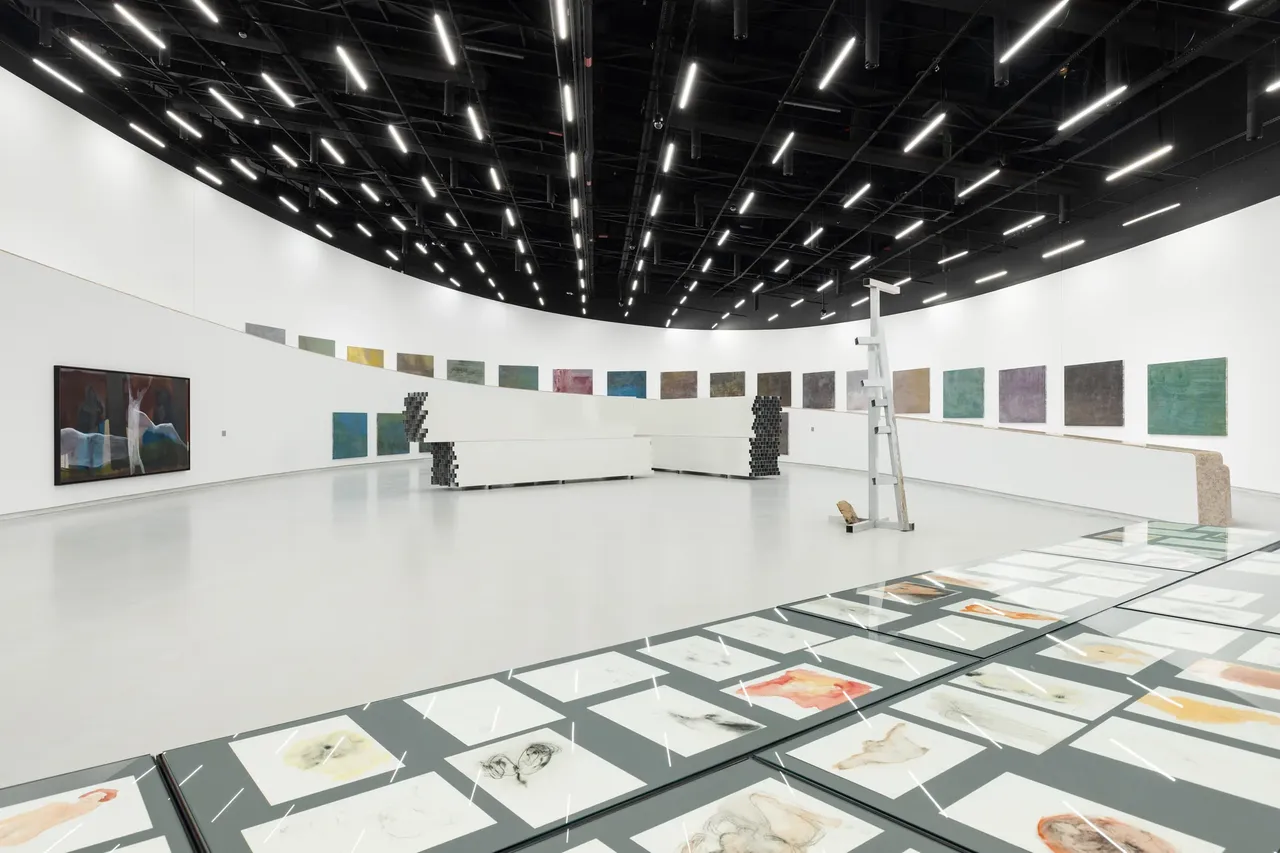
Pedro Cabrita Reis doesn’t really do modest gestures. For MAAT’s tenth anniversary, the Portuguese artist has filled its Oval Gallery with almost two hundred works, most made between 2025 and 2026. Painting, drawing, collage and sculpture coexist in a space so expansive that even the Holy Trinity gets room to breathe. without sorrow of heart is less a retrospective than a statement in the present tense. “Yes, I am a painter,” Cabrita Reis says, before widening the job description: “An artist, not a painter, not a sculptor, an artist.” Both claims stand. Contradiction is simply another material.
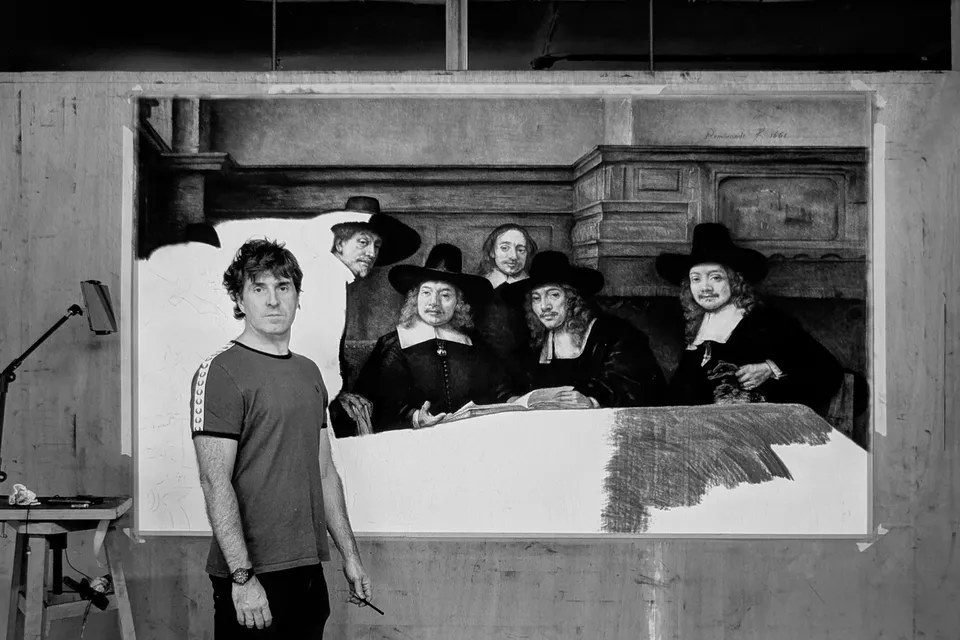
His solo exhibition at the Lisbon museum, curated by its director João Pinharanda, arrives shortly after the artist turned seventy. That might encourage a career summary, but Cabrita Reis prefers production to nostalgia. “I work a lot, that’s true. I don’t do anything else,” he says. The new pieces make the point without requiring a productivity app. He compares painting to planting trees — actions whose results will outlive their maker — and concludes: “I will not stop planting trees. I will not stop making paintings.” Retirement is evidently not among the exhibition’s themes.
Cabrita Reis works in series, moving between canvases while the paint dries, but repetition has a limit. “You don’t want to be academic of yourself,” he warns. He could, he says, have made another hundred paintings for Nymphaea Redux, but “there is a moment when you have to understand where something stops being creative and inventive and starts to be a reference to yourself once again.” It’s a useful distinction in an exhibition so abundant that restraint might initially seem to have missed the invitation.
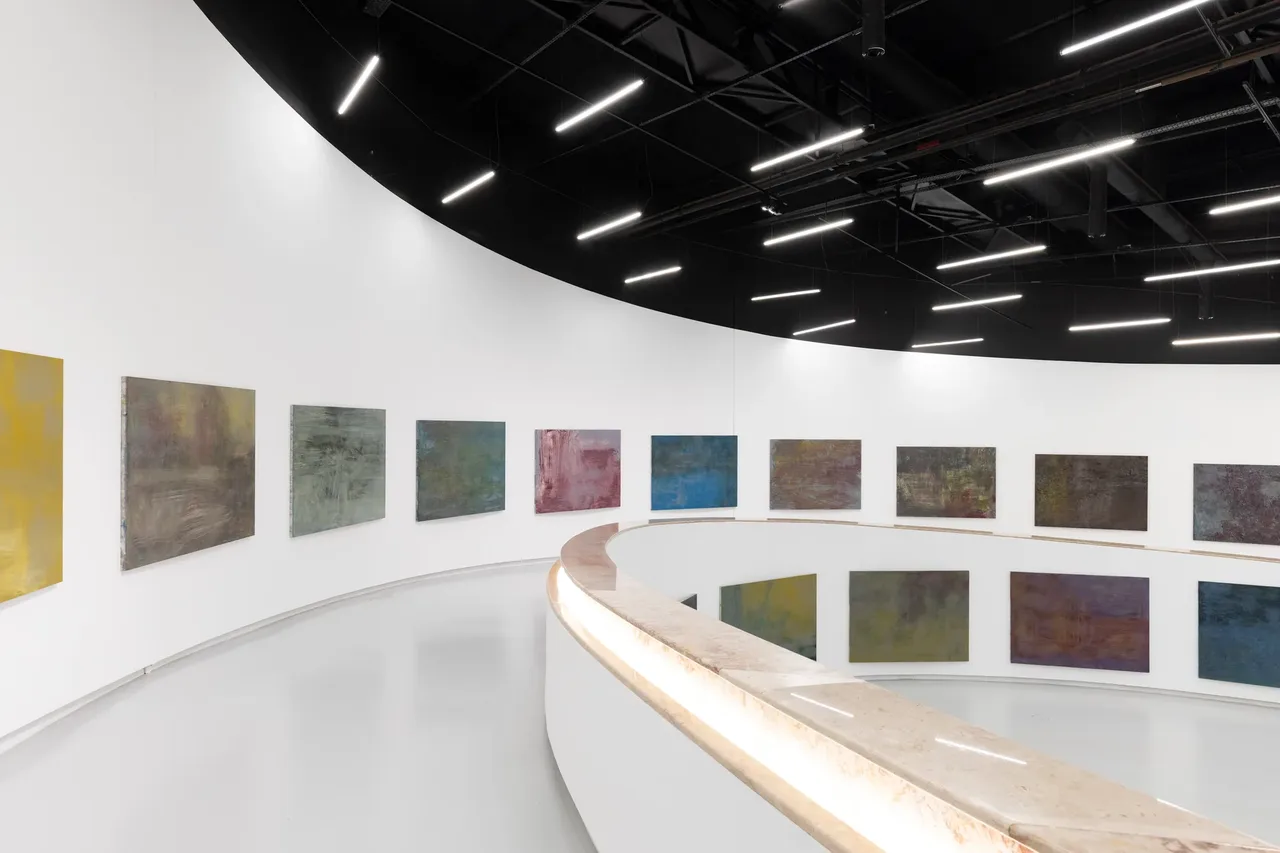
The show is at its best when that energy meets MAAT’s architecture. Nymphaea Redux, twenty-eight oils on wood, revisits Monet’s water lilies without attempting an impressionist tribute act. Perspective softens into muted colour, light and sediment, while the curved installation unsettles the originals’ contemplative calm. Individually the paintings are seductive; together they become almost architectural. The gallery’s scale gives them rhythm, and their beauty is difficult to resist — which is not the same as saying it should go unquestioned.
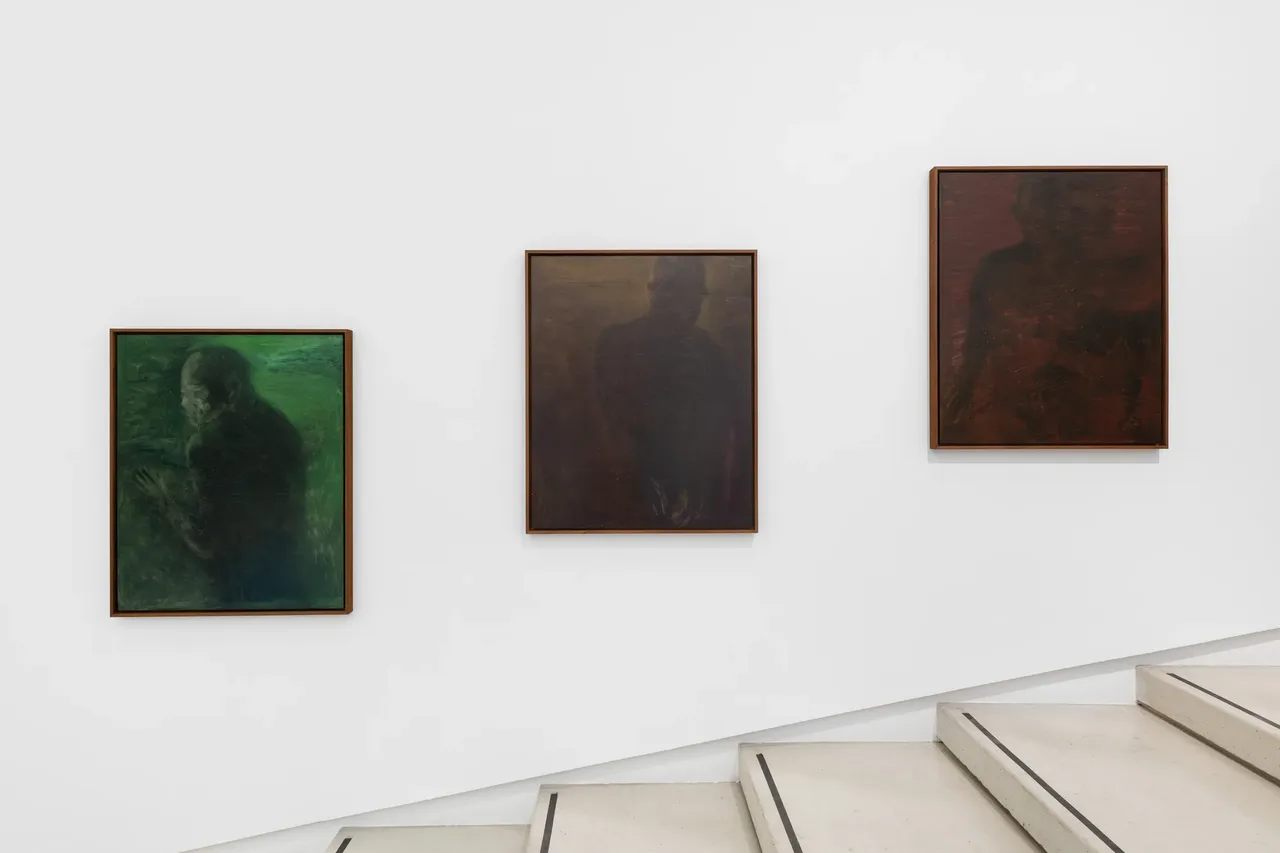
Elsewhere, Capricci compresses imaginary ruins into small landscapes; Le Musée secret looks to Rodin’s erotic drawings; and 3=1 turns the Trinity into three misaligned aluminium bodies. Christianity then takes over. Doppia Pietà doubles mother and son, Adam and Eve (revised) reverses its protagonists, and in Ecce Homo the artist takes Christ’s place. “I’m not even religious and much less Catholic,” Cabrita Reis says. These images belong to him through art history, not faith: “No subject or topic is forbidden to an artist.”
That distinction is convincing, but raises the exhibition’s central problem. In 2026, why build such a large body of work almost entirely from Western art history, Christian iconography and male masters: Monet, Rodin, Dürer, Duchamp, Michelangelo, Bernini, Le Corbusier? The roll call has roughly the gender balance of an old academy dinner. Repositioning Eve or placing the artist in Christ’s role disrupts individual images but leaves the pantheon intact. Freedom of subject doesn’t exempt those subjects from scrutiny.
Art need not illustrate the news to belong to its time. Still, amid war, climate breakdown and brittle ideas of identity, it can open languages for anxieties inherited symbols no longer contain. Cabrita Reis proposes continuity: “I’m much more interested in picking up, reconfiguring, reconstructing what has been broken and continuing the story of art.” Fair enough. Yet continuation is most alive when it lets unexpected voices into the room, not only when it rearranges the canon’s furniture. A story can continue and still change narrator.
His answer to the mythology of inspiration is practical. “I don’t think artists are inspired,” he says. “Artists, they are live, active witnesses, volunteer witnesses of what is happening around them.” Witnessing doesn’t require journalism, but it implies attention. For Cabrita Reis, that begins with appetite rather than revelation: “Curiosity is the word. An enormous, endless curiosity.” It’s the clearest route through an exhibition where Monet leads to aluminium, Hesiod to autobiography and Christian doctrine to three coloured volumes.
None of this cancels the exhibition’s material intelligence. Cabrita Reis understands scale, repetition and the authority of objects, from aluminium tubes to raw canvas and found wood. “The body is the source of all dimensions,” he says, and MAAT’s Oval Gallery makes that principle physical: visitors measure themselves against paintings, structures and the room’s long curve. He also insists that “art is above all, and will be also and always a matter of form.” The sentence is unruly; the exhibition makes its meaning precise.
The title comes from Hesiod’s Works and Days, describing a Golden Age free from toil and anxiety. Cabrita Reis wears it as a motto, perhaps a future epitaph. His closing instruction is less solemn: “This exhibition, like any other exhibition, is a celebration through art. So, drink as much as you can.” without sorrow of heart offers a visually commanding portrait of an artist who believes form matters, while leaving visitors to decide whether revising the old world is enough.
The exhibition without sorrow of heart by Pedro Cabrita Reis is on view through 15 February 2027, at MAAT in Lisboa, Portugal.