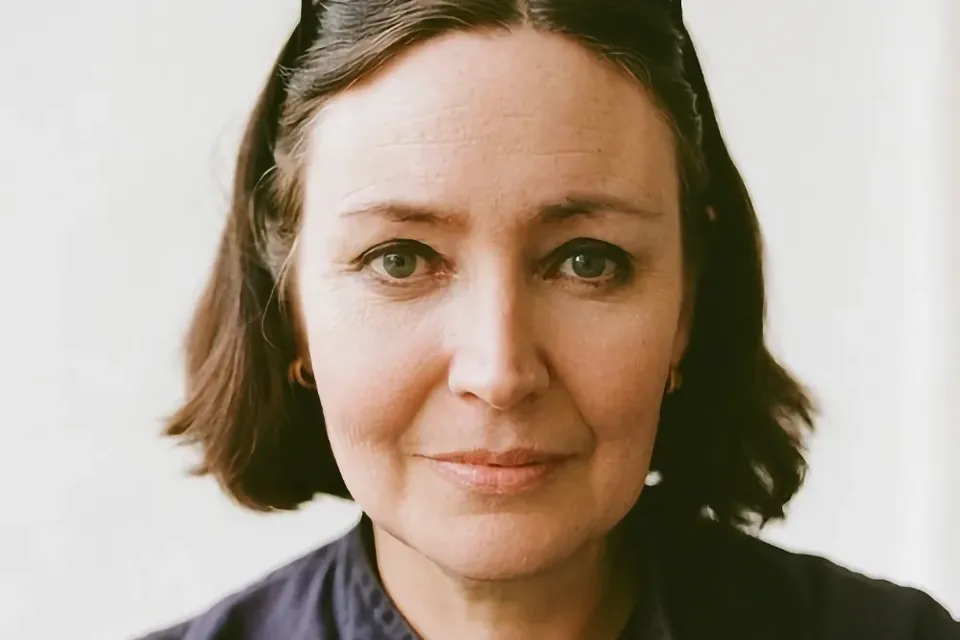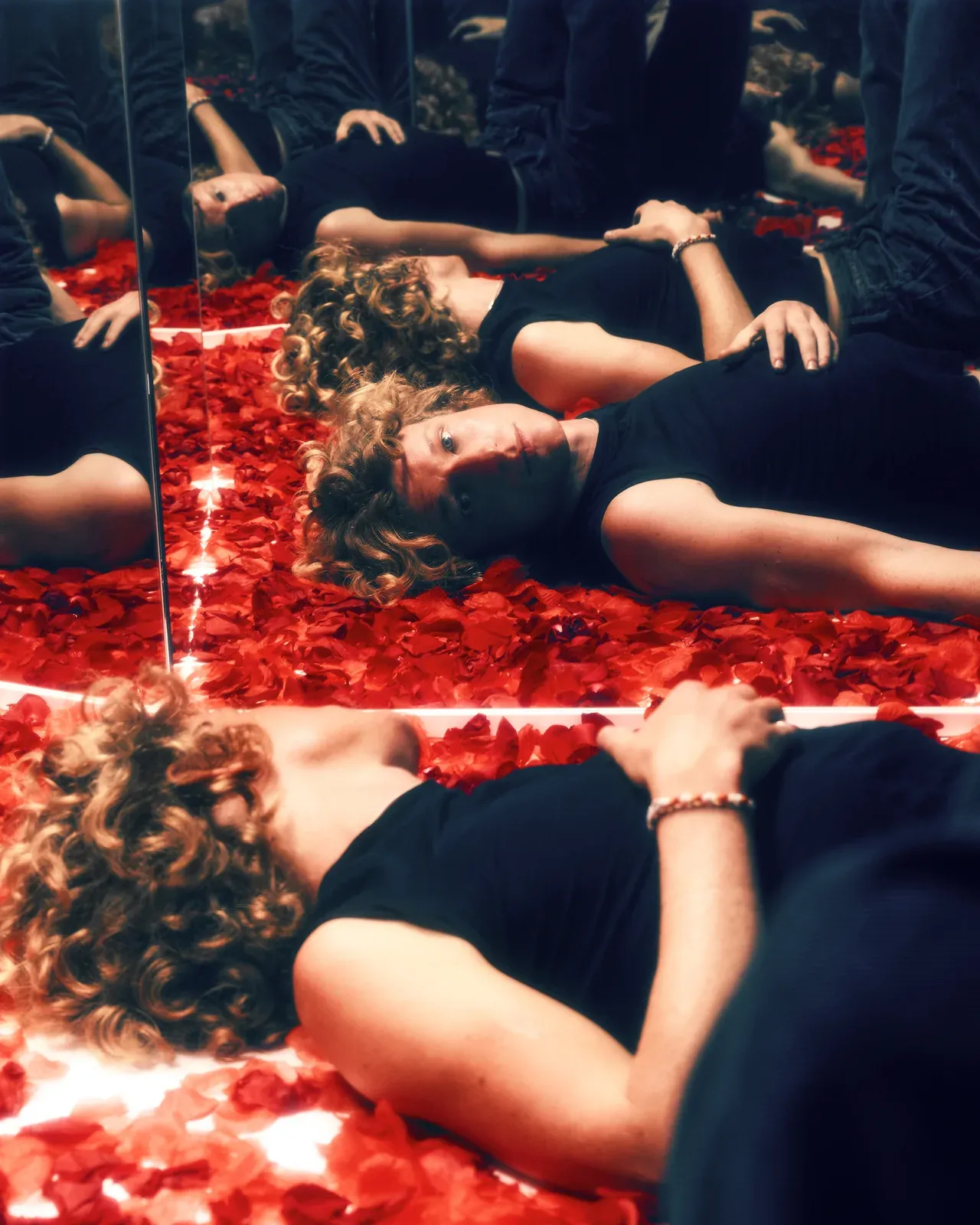
Going solo can mean freedom, but it also means having nowhere to hide. After years as one-fifth of Parcels, Noah Hill steps forward under his own name with Ok ok now, an album shaped by heartbreak, memory and the strange clarity that arrives when a relationship ends.
Some of its songs had been waiting for almost a decade; others emerged when the break-up finally gave the record its emotional centre. Hill played nearly every instrument and mixed it himself, stripping the arrangements back until only what felt essential remained. The result moves towards the folk and acoustic pop he grew up with, while voice notes and unfinished fragments make the whole thing feel almost too intimate to hear.
Now that the album is out, Hill is taking these songs on tour, from Amsterdam and Paris to London, New York and Los Angeles. Before he headed back on stage, we sat down with him to talk about creative freedom, total responsibility, writing without metaphor and what happens when private memories begin to belong to everyone.
Hey Noah, it’s a pleasure to speak with you. Congratulations on Ok ok now! After carrying some of these songs with you for nearly a decade, how does it feel to finally let other people into this very personal part of your life?
Thank you. It’s surreal. I’m both so happy and a little cautious, and perhaps a little disoriented. When you work on something like this, you’re so in it and clearly focused on what you’re going through and what it should be. It gives you so much direction and energy to finish. You couldn’t care about anything more. And when it’s done and out, you’re sort of left at the train station on your own a bit. Like, ‘Whoa, what did I just do?’ Out of the trance. But I’m seeing that as a beautiful thing. Now it’s other people’s turn to enjoy and ride the experience.
After years of being one-fifth of Parcels, what did making music under your own name allow you to express that perhaps could not exist within the band?
Lots. A big heartbreak concept album solely about my ex-girlfriend probably wouldn’t have flown in the band, for starters (laughs). And fair play. More than that, though, it allows me to be authentically myself. With no filters or other opinions. To express what is truly going on for me without second-guessing myself. That was something I had been craving for many years, and it took an almighty push and emotional upheaval like heartbreak to get me moving on it.
Parcels’ music is built through collaboration and negotiation, whereas this record followed your instincts much more directly. Did that freedom feel liberating, intimidating or a mixture of both?
At first, it was just totally liberating. I was on a high for months and months making this. It made me realise how much energy a person has inside of them when they truly feel deeply about something. It’s sort of boundless. That was one of the best feelings in the world. Later, some feelings of intimidation and also the pressure of total responsibility started to get to me. Needing to make every single decision at every step was not something I was used to, and it began to weigh quite heavily on me. It made me realise the great support you get in a collaborative group like the band, and how valuable that can be as well.
“Going solo allows me to be authentically myself. With no filters or other opinions. To express what is truly going on for me without second-guessing myself.”
You played almost every instrument and mixed the album yourself. How did you know when a song was genuinely finished without four bandmates in the room to challenge your decisions?
I had to keep coming back to the intention I had from the start: to make a stripped-back, super-direct and emotionally driven project that was uncluttered by embellishments. I often find that so much music since the start of DAWs and electronic recording is so dense and full, just because there’s an unlimited number of tracks and people just go absolutely ham. I tried many things, but kept telling myself that if it wasn’t a hundred per cent necessary, or if it pushed the essence of the song back in any way, then it shouldn’t be there. Less was more. But that took a long time to figure out.
The album returns to the folk and acoustic pop you grew up with. What did reconnecting with those early influences reveal about the musician you were before Parcels?
I think it reminded me of what feels most intrinsic to my connection to music. The sound of the band was something I found later with the help of the guys, and it was always a big learning experience; I was constantly growing and pushing. Coming back to this sound felt like getting into a nice warm bath. It was familiar and instinctual, a place where I could trust my intuition more. It reminded me that I always had an ability to write these kinds of songs, and that it was still there and a part of me.
You realised midway through the writing process that every song kept returning to the same relationship. Was there a particular song or moment when the album’s emotional subject suddenly became clear to you?
It was Love You Now and Bye Baby that were really the nail in the coffin for the album conceptually. Most of the others were vaguely about the same person and were already building the narrative of our time together. But when we split and those songs came through, it gave me the clarity that the album was about the break-up and that I might as well be totally transparent about where I was at and go all in.
The record tells its story non-linearly: it opens with the doubt of Once In A Lifetime and closes with the excitement of new love on Like You Do. Why did you choose to end at the beginning rather than give the relationship a conventional conclusion?
Like You Do is an interesting mash-up of times and meanings in one song. It was first written about meeting my partner and how she had really taught me to love myself, coaxing me out of a total inability to accept love from others. But after our split, around the time of the album, I went back and tried to finish it. I ended up changing the first verse, and it became an encouragement to myself to move on. To stop dwelling on the break-up and try to get out there again. It felt fitting to finish on a positive note: a glimpse at what could be a positive future in what was otherwise a fairly bleak outlook.
On It’s All In My Head, the phrase ‘it’s been a rough year’ is delivered with striking directness. Was writing without metaphor a conscious decision, or did this story simply resist being disguised?
Yeah, it was a conscious decision on this to be super-direct and earnest. I think we as songwriters feel the pressure to dress our words up as poetically as possible, using big metaphors and turns of phrase that give legitimacy to the work. I get and love that too, but there was something thrilling about disregarding it and just saying it straight. No embellishment, just direct, unfiltered everyday truths. There was a powerful stupidity in that. A naivety that aligned with the relationship as a whole.
Read Your Mind feels euphoric and bittersweet at the same time, with melodies continually building over one another. Were you trying to recreate the rush of being inside a memory that you already know ends badly?
That song is a reflection of how stop-start it was. In those kinds of relationships, when it ends, you’re always questioning whether it’s for real or not. Always anticipating it coming back, and allowing the sweet and rose-tinted memories of it to entice you back in. There’s so much love, and you have the ability to be in each other’s heads, but a fair bit of self-sabotage is also going on.
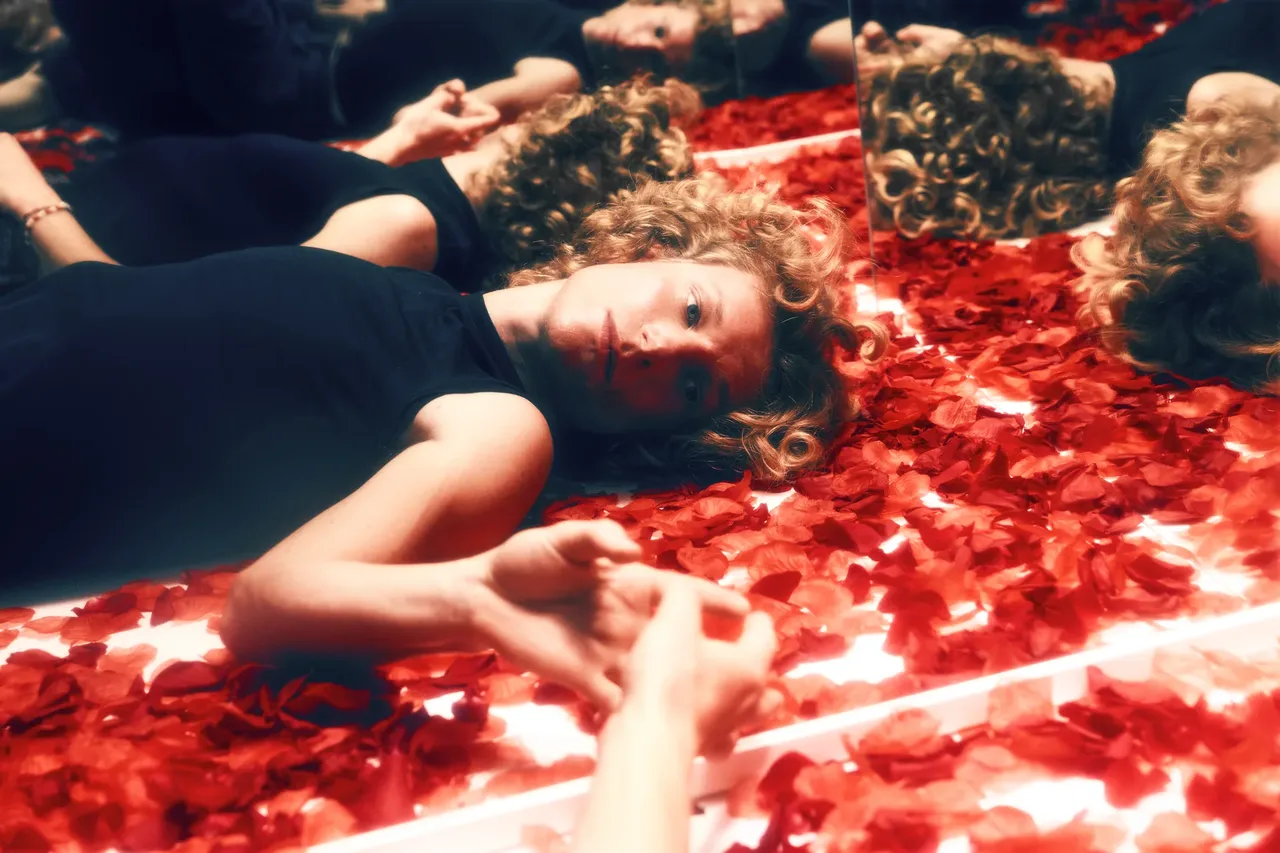
Sympathise includes the line, “The grief hurts more when you’re to blame”. What did writing that song force you to admit about your own role in the relationship?
That song is the only one that’s actually not about the relationship. I wrote it when I was very young and blaming myself for my parents’ break-up. As kids often do, I took it on and thought it had something to do with me. In reality, it’s just two people falling out of love, and it’s got nothing to do with you. Those wounds run pretty deep for a kid, and it’s hard to build new pathways when the grooves are etched in so early.
Short pieces such as Lighting, Oranges and Love’s Die interrupt the record like fragments of memory. What can those brief, almost unfinished moments communicate that a fully developed song cannot?
The album was made as a sort of voice note to one person. It felt like a direct message to her, really, something super-intimate that would only be between us. So using voice notes from her that she had sent me over the years leant into that and made the album feel even more like something private you shouldn’t be listening to. And maybe it is (laughs). Maybe I shouldn’t be showing people this stuff. But at the time, I threw caution to the wind and decided to make it as intimate as possible. And the voice notes were the things that really made it feel special. Like, totally ours, but also totally everyone’s.
Which song changed the most between the day you first wrote it and the version that appears on the album? And which one remained almost completely untouched?
Heaven started as a full dance, house-inspired track. I wrote it in a hotel room in Hong Kong, looking over the cityscapes, and assumed what I was making was for the band. But later, coming back to it, I realised there was a much softer song in there that I enjoyed much more.
Sympathise has stayed the same for almost ten years. Don’t change a winning team; you can’t polish a turd.
Sympathise has stayed the same for almost ten years. Don’t change a winning team; you can’t polish a turd.
“That tangible and human element of shows will never be defeated.”
You have said that the people who know you best felt this record ‘couldn’t be more you’. Which detail on the album — an instrument, a lyric, a sound or even a tiny mistake — feels most unmistakably Noah Hill?
Stylistically, it is something very akin to the music I love and grew up on. So people around me knew I had found my way back to something that was important to me but that I had deserted for a long while. I think it’s also the album’s directness. I’m pretty direct, I would say, and quite emotional. Perhaps a bit of an oversharer too.
You’re about to embark on a short tour across major cities — Amsterdam, Paris, Berlin, London, New York and Los Angeles. What are you most excited about when it comes to being on stage again and connecting with the audience, especially with such an intimate, personal record?
I’m honestly pretty scared. Playing on your own is tough and vulnerable. You go deep during a set like this, and sometimes coming out can be difficult. But now the album is out and people know the songs, I’m looking forward to it feeling lighter and fun. Maybe there’ll be some singalongs, and I’ll feel and connect with people through their experience of the songs. I’m looking forward to the chats afterwards, where you get to hear from people what they got from the music, rather than the odd abyss of the online world. That tangible and human element of shows will never be defeated.