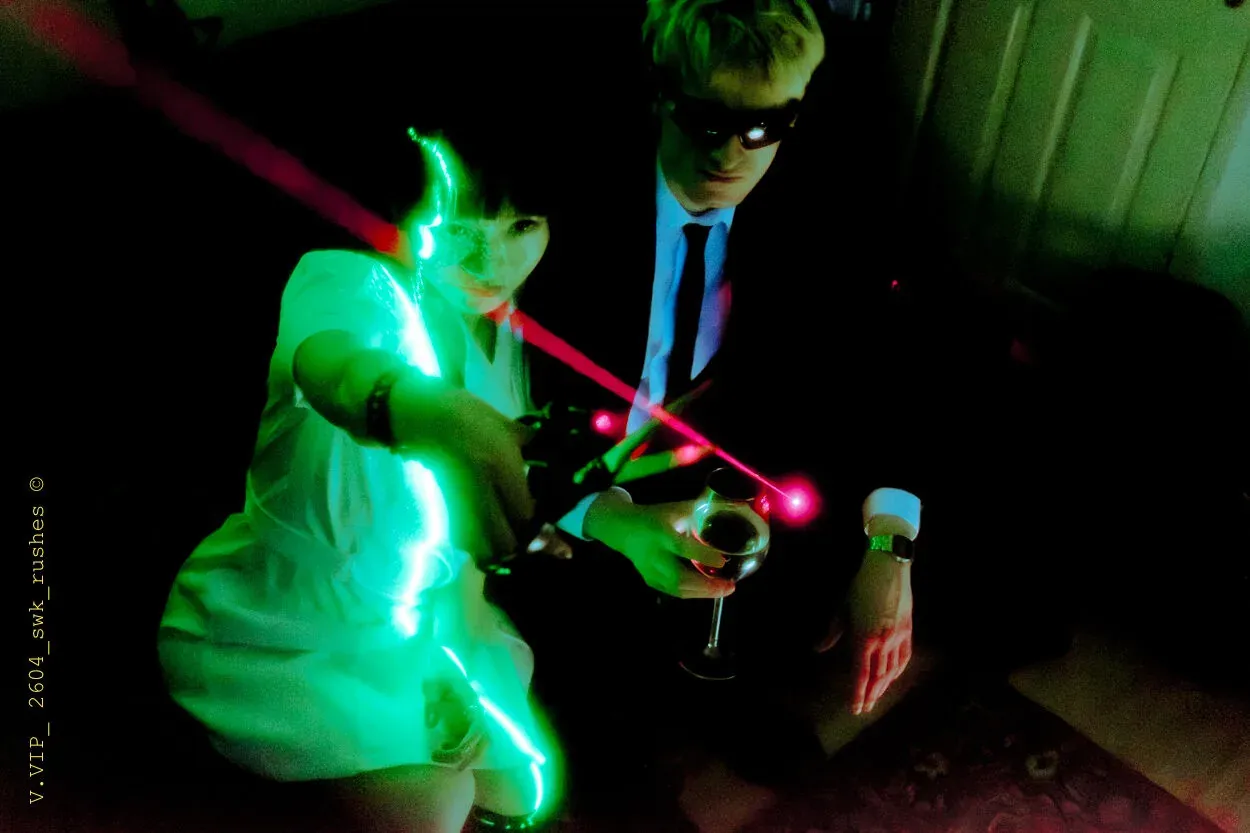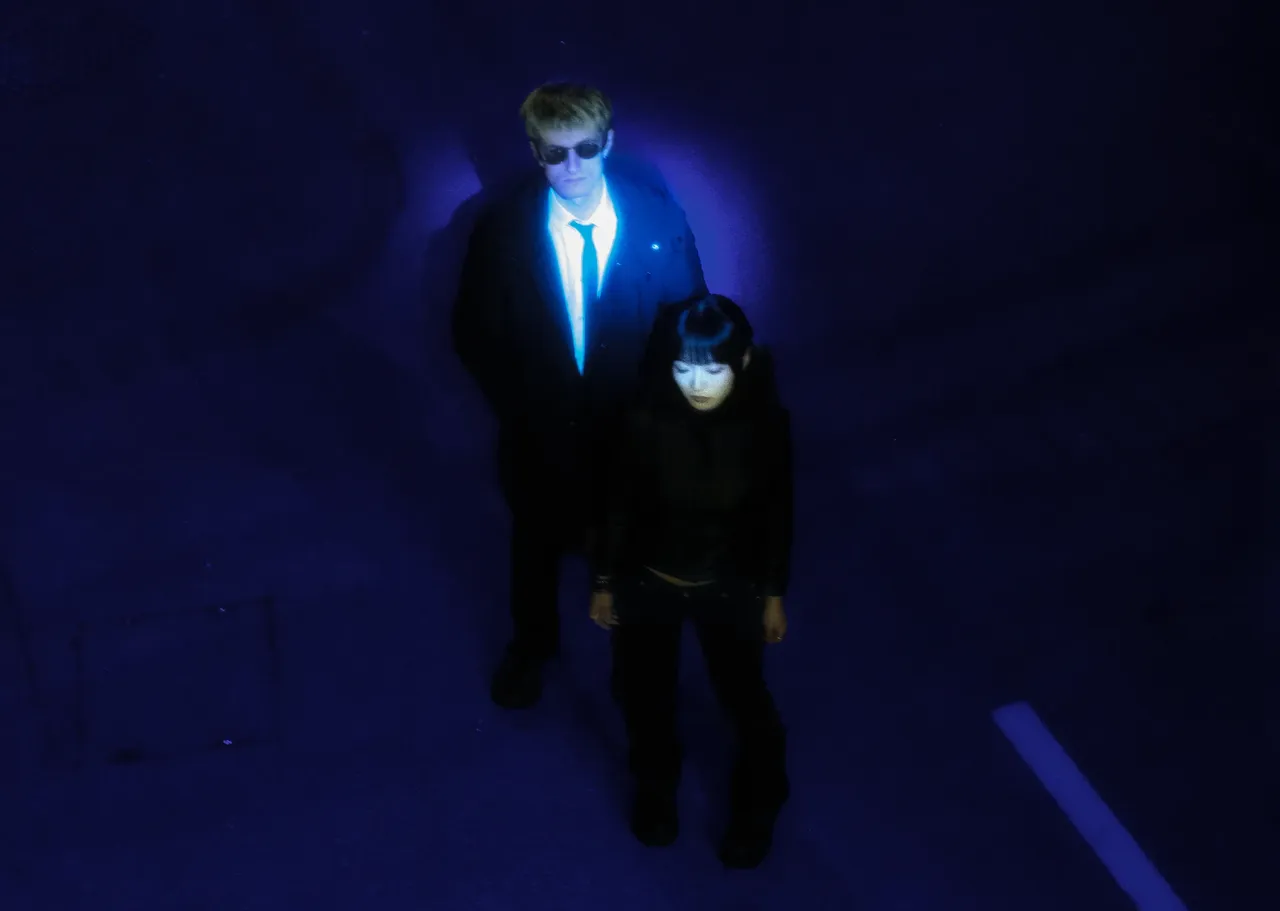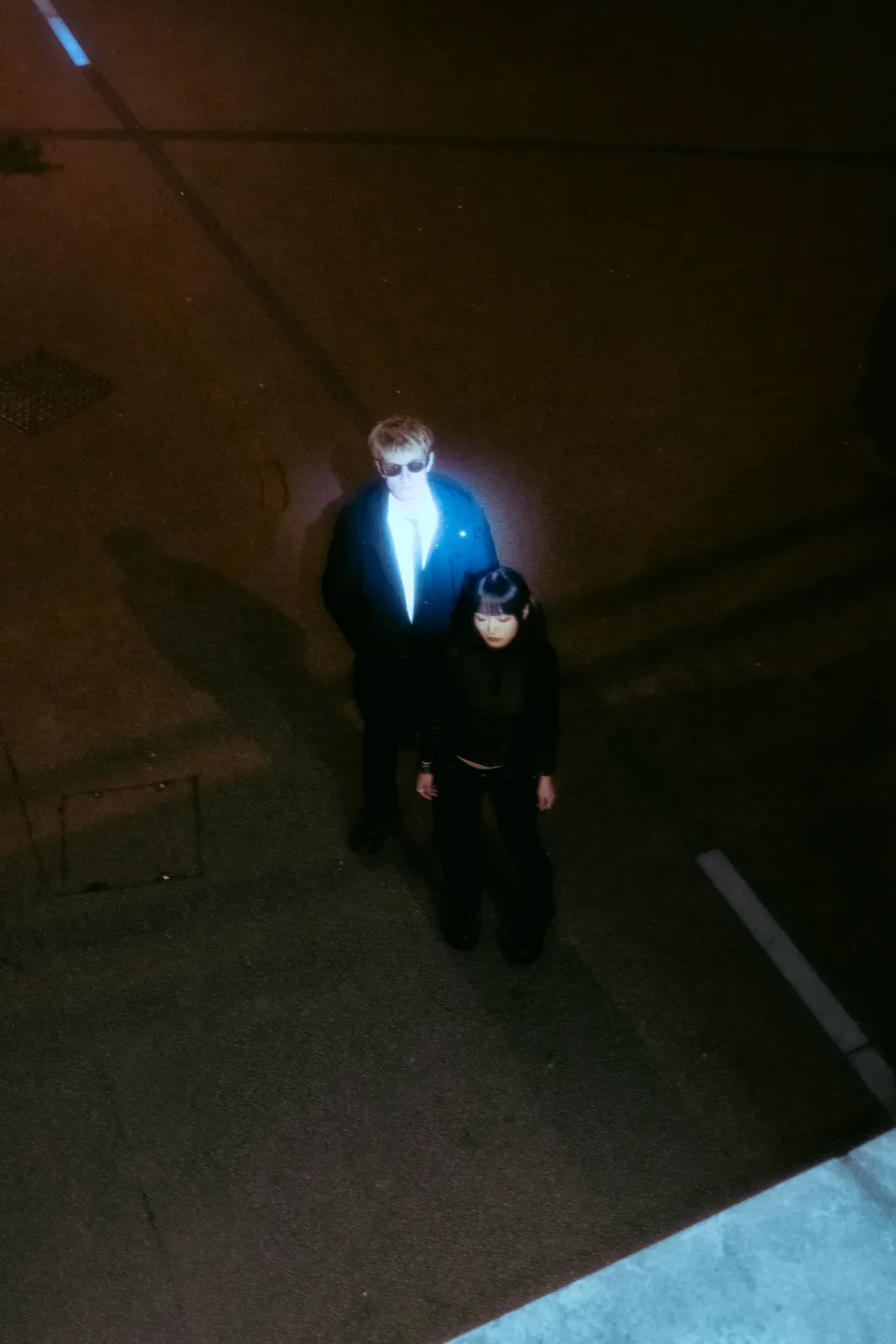
Drawing on old-world mythology, niche cultural references, and the fractured landscapes of modern technology, Silverwingkiller occupy a musical world where the organic and artificial become increasingly difficult to separate. With their new EP, Desperate Struggle, the duo explores conflict, survival and the strange intersections between history and futurism.
Silverwingkiller operate in their own universe. The Manchester-based duo combines distorted synths, industrial percussion and unconventional sampling with themes of world mythology and cinema. Their explosive sound is both abrasive and meticulously constructed, balancing electronic precision with a restless approach to genre and form.
With their new EP, Desperate Struggle, released on 30 October, the pair explore themes of conflict, survival and technological collision through a volatile mix of industrial electronics, fragmented cultural references and unconventional song structures. Moving between organic textures and digital distortion, Silverwingkiller once again construct a world in which ancient mythologies and contemporary technologies coexist, blurring the boundaries between the natural and the artificial. They play Bristol’s Simple Things festival this weekend on 7 November.
Silverwingkiller seems to operate in its own universe, with each release built around a distinct concept and set of influences. Where did this approach originate, and at what point did you realise you wanted to build the project around these different worlds rather than simply releasing music track by track?
We’ve always wanted Silverwingkiller to reflect whatever interests us at the time, whether that’s films, video games or anime. These influences create a kind of micro-universe that shapes the music we’re writing during that period. Naturally, certain tracks end up sharing the same feeling and identity, which brings them together as a release with its own distinct concept.
Listening to Desperate Struggle, I hear hints of The Prodigy in the abrasive electronics and confrontational energy, alongside the fractured rhythms of Death Grips. What other influences are finding their way into your sound at the moment, and are there any that might surprise people?
We’re heavily inspired by video game soundtracks and how they capture a particular feeling. We love The Prodigy and Death Grips, but we’re often chasing a similar energy rather than a specific sound. We’ve always thought Silverwingkiller wouldn’t sound out of place on the Street Fighter III: 3rd Strike soundtrack, with its breakbeats and attitude.
Yushang, how did growing up in Shanghai shape your personal connection to Guan Yu?
Guan Yu represents loyalty and honour in Chinese culture, values that also carry significance within Triad culture, where he’s often revered as a symbol of brotherhood and loyalty. These overlapping meanings made him a natural figure to explore on Triad Funded. Mythology plays a big part in building the Silverwingkiller universe, blurring the lines between history, folklore and our own experiences. We also genuinely believe Guan Yu once cursed us after we accidentally disrespected him at a temple in Shanghai. A string of bad luck followed, but we worked hard to earn his forgiveness. Thankfully, the curse has since been lifted.
“Silverwingkiller wouldn’t sound out of place on the Street Fighter III: 3rd Strike soundtrack”
The track titled E-Silt roughly translates to electronic rice paddy, evoking an unusual collision between the agricultural and the technological. What interests you about placing electronic music within an environment that feels distant from the urban, industrial settings often associated with the genre?
We loved the friction between the rural and the ultra-modern. Electronic music is so often boxed into this sterile, futuristic urban cliché, but for us, putting it into an agricultural environment felt completely natural. On the surface, what you see on the streets is just dust. But underneath all of that, the real soil is still there.
There's also a deep sense of unease that comes with today's world. You look at where technology is heading, you start wondering if algorithms and machines are eventually going to replace human hands entirely, even down to basic farming and working the land. E-Silt captures that tension: the collision between ancient earth and cold, encroaching machinery.
There's also a deep sense of unease that comes with today's world. You look at where technology is heading, you start wondering if algorithms and machines are eventually going to replace human hands entirely, even down to basic farming and working the land. E-Silt captures that tension: the collision between ancient earth and cold, encroaching machinery.
How important is it for you to maintain a sense of mystery around the project? Is there a limit to how much you want to explain about the worlds you create?
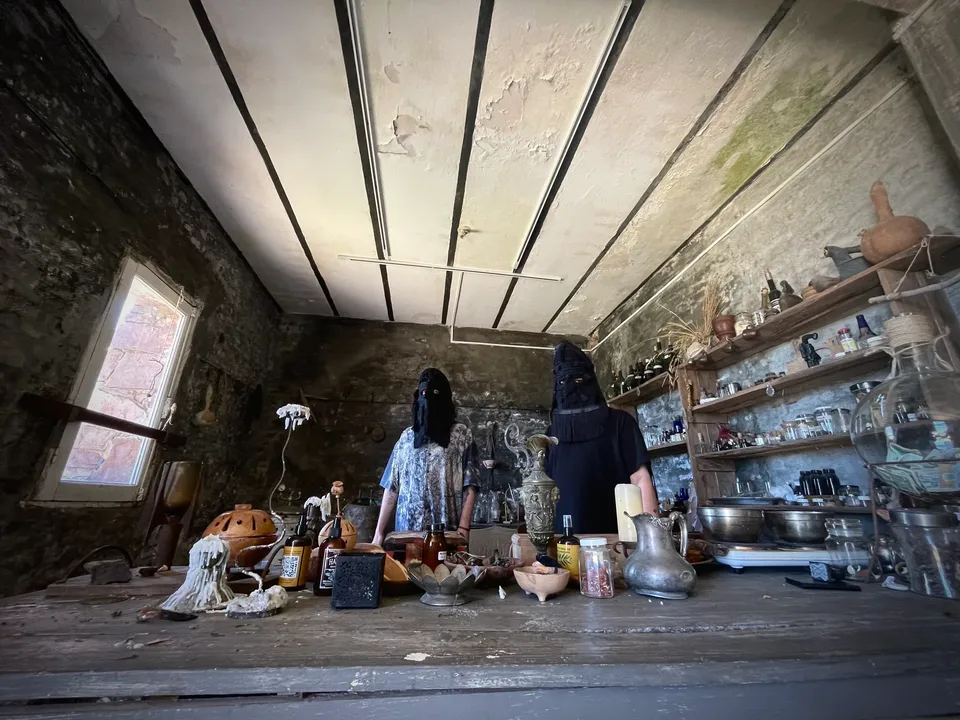
A lot of Silverwingkiller is about suggesting something without explicitly spelling it out. We have particular views on the world, but sometimes it’s better to let the music speak for itself. If anything, we wish we’d kept more mystery around ourselves. Sometimes we feel we should’ve worn masks and never revealed our real names. We’re actually quite private people.
What can we expect from your performance at Simple Things 2026?
It’ll be our first UK show after touring Europe with Fat Dog, and we haven't played Bristol in a while. We'll be playing mostly familiar tracks, but Bristol crowds have always been great to us. After travelling around Europe, it'll feel good to be back on UK soil. We're expecting it to go off.
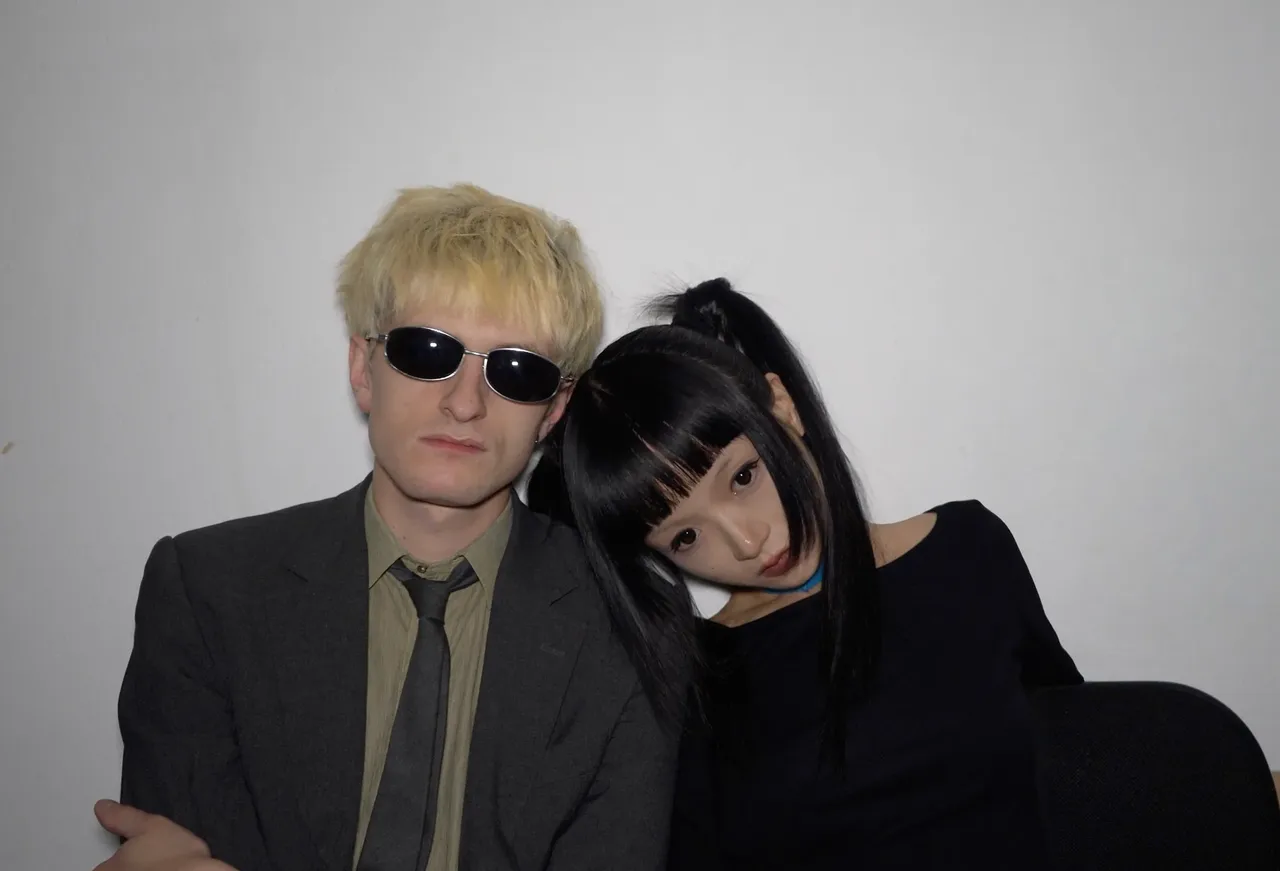
Even before listening to Desperate Struggle, the waveforms on SoundCloud lend a visual sense of how unconventional your song structures can be. How much consideration goes into the arrangement of a track, and do you consciously resist conventional structures when writing?
We always say, if it sounds good, play it. There aren’t really any rules when we’re writing. Traditional verse-chorus structures can get boring, and sometimes a part only needs to happen once. It’s similar to hardcore or metal in that sense; a track doesn’t need to be long if it gets the point across. Sometimes you’re struggling to finish something before realising it’s already finished.
Yushang, does singing in Mandarin or Shanghainese feel more intimate than singing in English? When performing in the UK, where many people may not understand the literal meaning of your lyrics, would you say the voice can communicate something through rhythm, tone and aggression that transcends language?
Shang: Yes, absolutely. Singing in Mandarin and Shanghainese feels far more intimate because it’s simply my mother tongue, it’s where my core and my instincts live.
I know that performing in the UK using Chinese lyrics might seem a bit stubborn or uncompromising, but it’s a vital way for me to reclaim and hold onto my own cultural discourse and power. I want to keep that root forever. The amazing surprise is that during our live sets, language stops being a barrier at all. The voice becomes a pure vehicle, communicating something raw through rhythm, tone, and aggression that completely transcends language.
I know that performing in the UK using Chinese lyrics might seem a bit stubborn or uncompromising, but it’s a vital way for me to reclaim and hold onto my own cultural discourse and power. I want to keep that root forever. The amazing surprise is that during our live sets, language stops being a barrier at all. The voice becomes a pure vehicle, communicating something raw through rhythm, tone, and aggression that completely transcends language.
You’ve spoken before about the creative freedom and accessibility that Manchester, and the North more broadly, can offer when compared to the unaffordability of London. How much has being based there shaped the way Silverwingkiller operates, both musically and as a project?
The bleakness of the North definitely plays a part. Grey skies, derelict industrial buildings and heavy electronic music go hand in hand. Manchester is also more affordable, which is important when we both still have to work full-time jobs alongside the band.
James: I used to live in London but left before it became ridiculously expensive. It's a shame really, as that affordability makes a huge difference to creative freedom.
Northern cities also have tighter music communities, where smaller bands can get opportunities to support artists they admire. Geographically, Manchester is pretty much in the middle of the UK, with London and Glasgow either side and cities like Liverpool, Leeds and Sheffield on our doorstep. It's a great place to operate from.
“Grey skies, derelict industrial buildings and heavy electronic music go hand in hand.”
There’s a strong thread of Chinese mythology and symbolism running through your work, particularly the references (mentioned earlier) to the military general Guan Yu in Triad Funded. Yushang, as someone from Shanghai, how much does your cultural background shape your interest in these figures and their mythology, and how do you translate those stories and symbols into the world of Silverwingkiller?
Shang: When I was little, my dad used to take me along to his underground card and gambling dens. It was chaotic, loud, and full of smoke. But sitting right there in the middle of all that tension, tucked into a corner, would always be a tiny, glowing statue of Guan Yu. I spent hours watching the young street guys, the punks, and the local hustlers drift in and out of that room. Growing up, that image of Guan Yu never left my head. It felt like he was always watching me and watching over the chaos, this unblinking witness to desperation, loyalty, and survival.
Your releases seem to balance a very specific set of references with a sound that’s difficult to place in any one scene. Do you think of yourselves as belonging to a particular musical community, or do you prefer to exist outside those boundaries?
We like to think Silverwingkiller exists in its own universe. We’re friends with plenty of musicians and bands, but we’ve never felt tied to a particular scene or sound. That’s the beauty of electronic music; there are fewer rules. Drawing inspiration from things outside of music helps too. We’re into some weird shit, and naturally that comes through in what we make. We definitely prefer living in a world that’s unique to us.
With Desperate Struggle having been released on 30 October, where do you see Silverwingkiller going next? Are there particular ideas or directions you’re interested in exploring that would take the project somewhere new?
We’re currently writing our debut album and really excited about how it’s sounding. The songwriting feels more mature and considered. The first two EPs laid a solid foundation and taught us a lot, but now we want to build on that and develop something more substantial. We’re also looking to do more in Asia, with plans to play shows there next year.