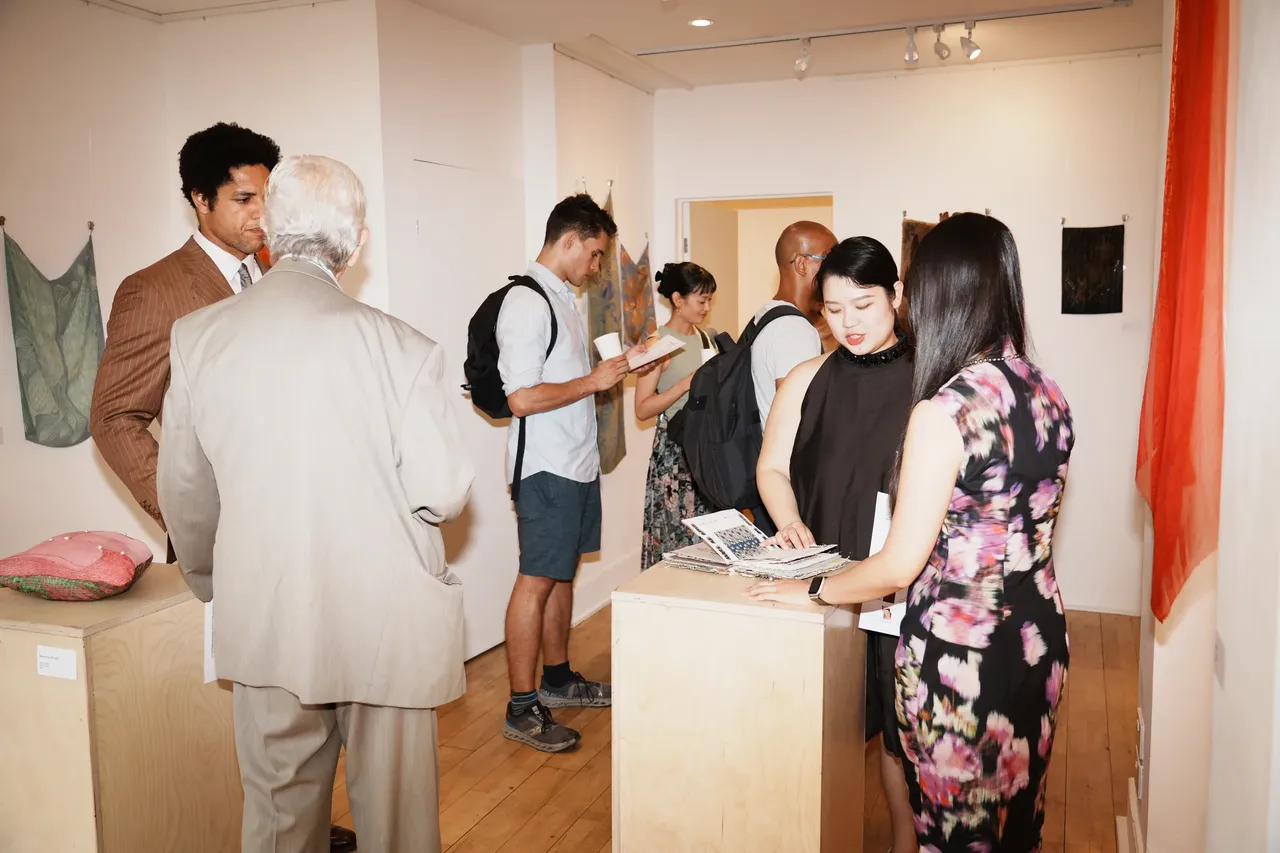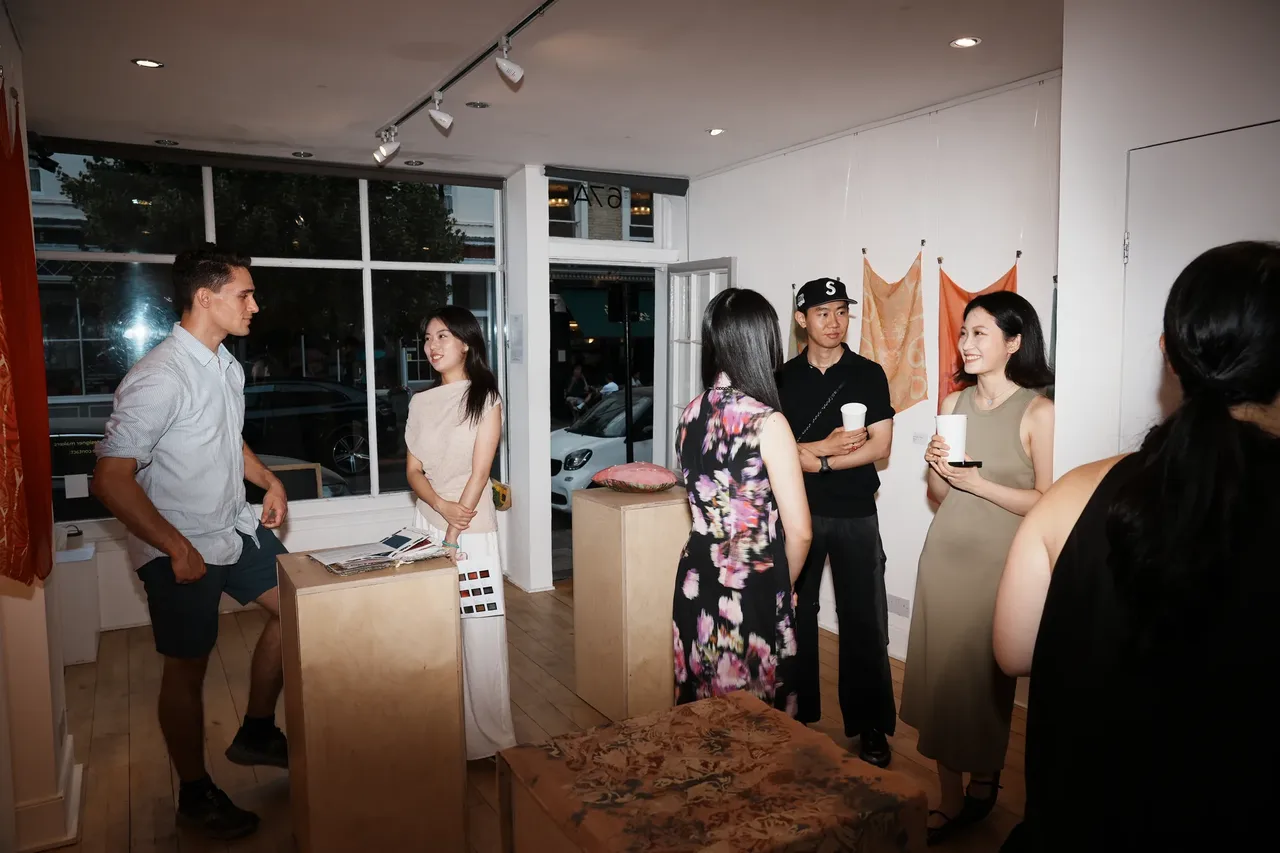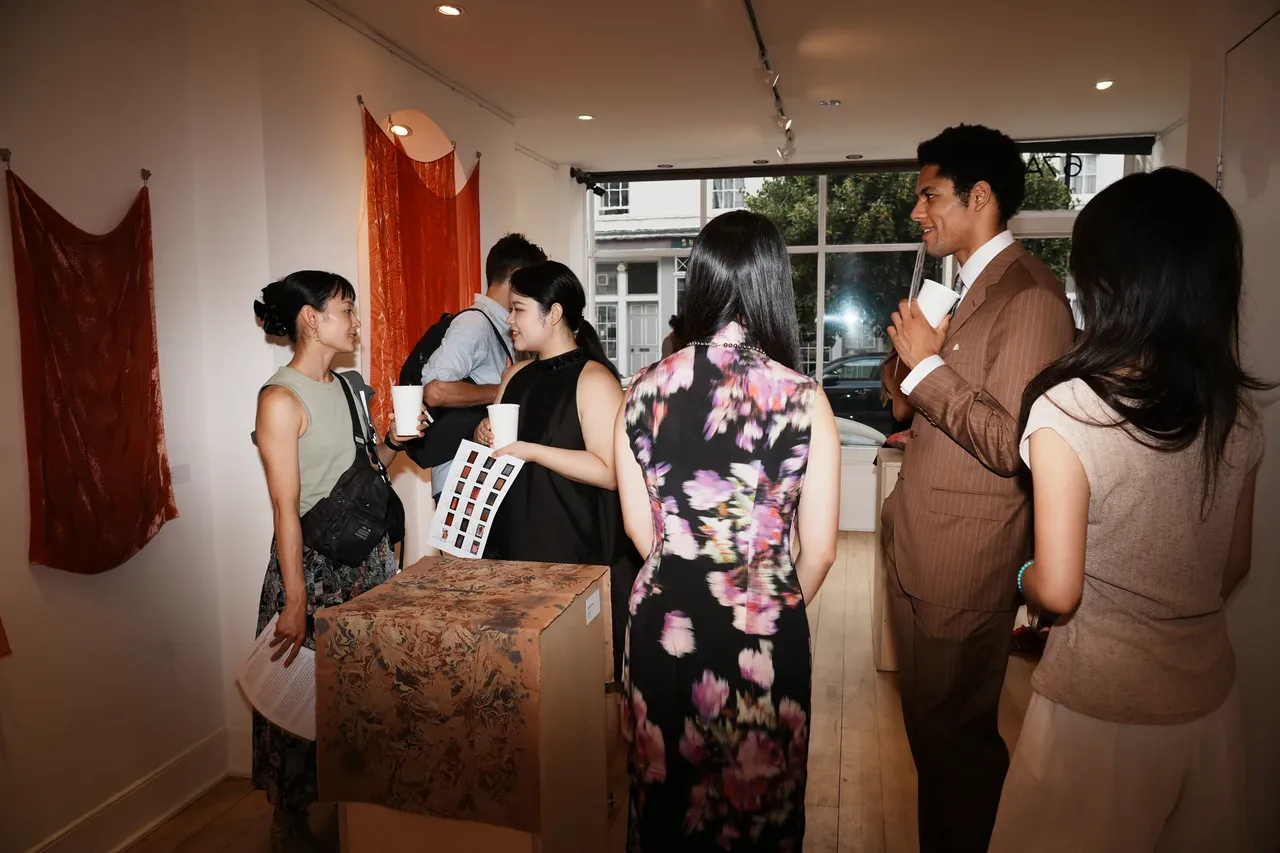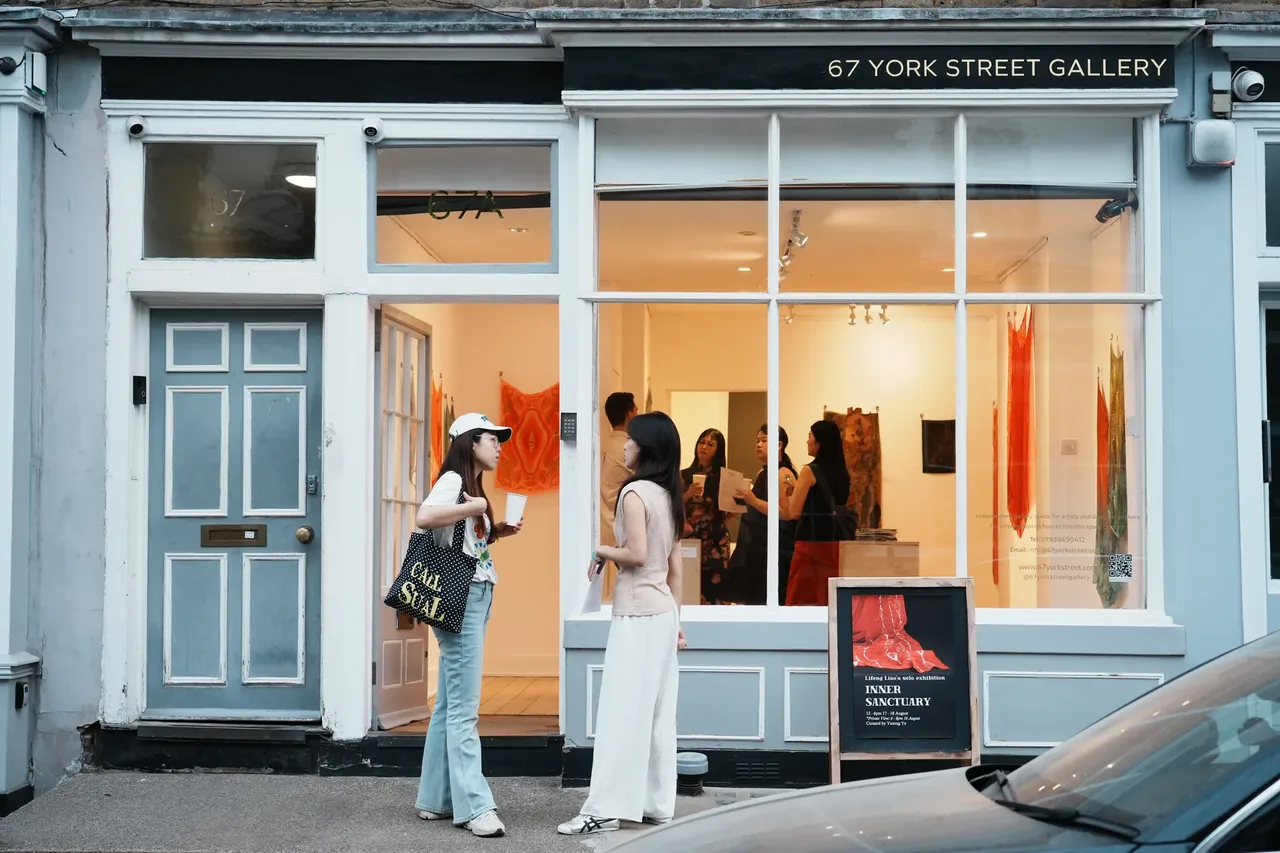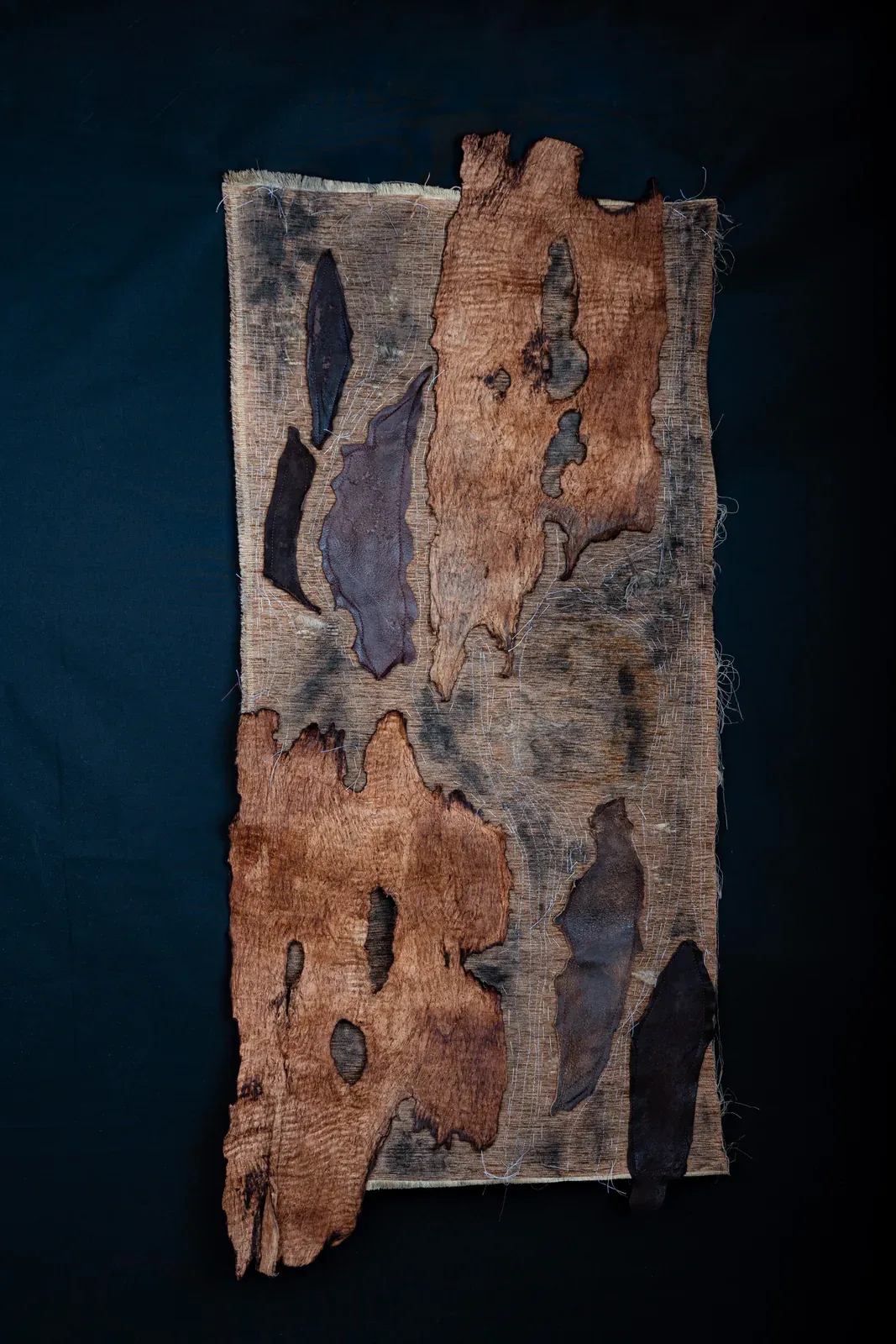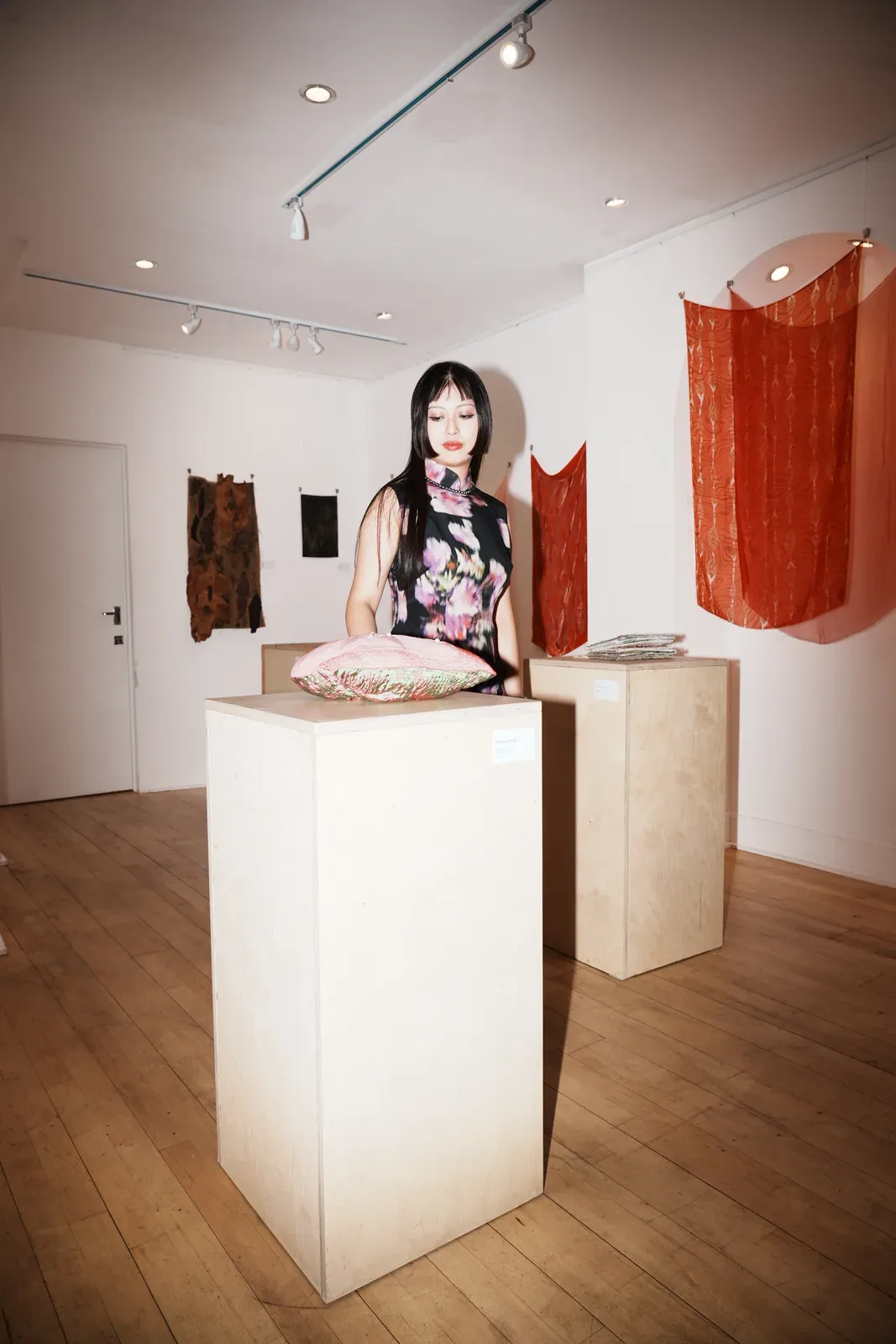
The artist Lifeng Liao interrogates a culture of exclusion at Inner Sanctuary, her exhibition in West London curated by Yutong Ye. Primarily a textile artist, the Chinese maker is also a costume professional whose material works take up space on gallery walls as well as shrouding bodies. We share a peek at what went down from 16 to 18 August.
Corporeal language is a key element of Lifeng Liao’s show, as well as a sense of undoing or unfurling. The exhibit centres the body, which is to be expected given Liao’s work in costume at London’s Royal Ballet and Opera, which informs her fine art practice. She showcased a mixture of new and existing art pieces that have an exploratory tone.
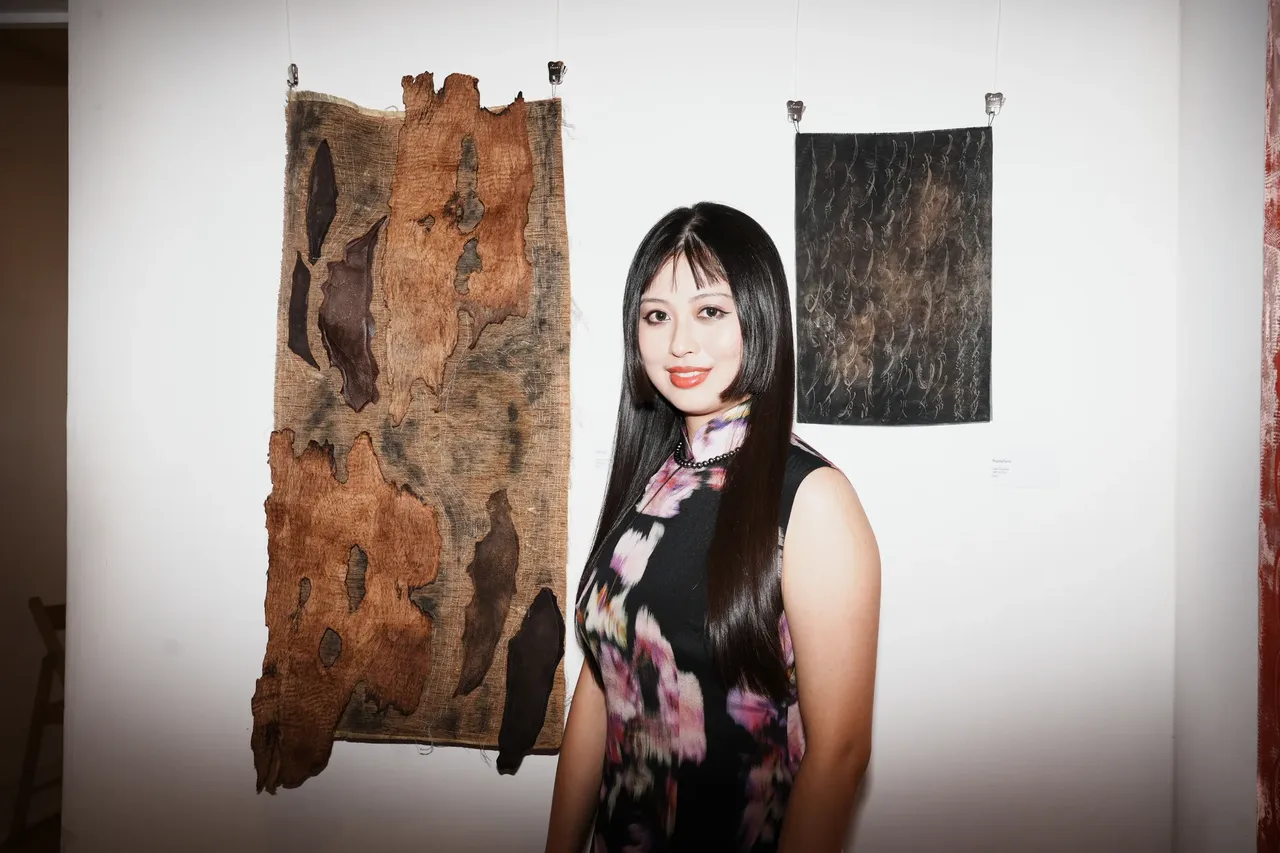
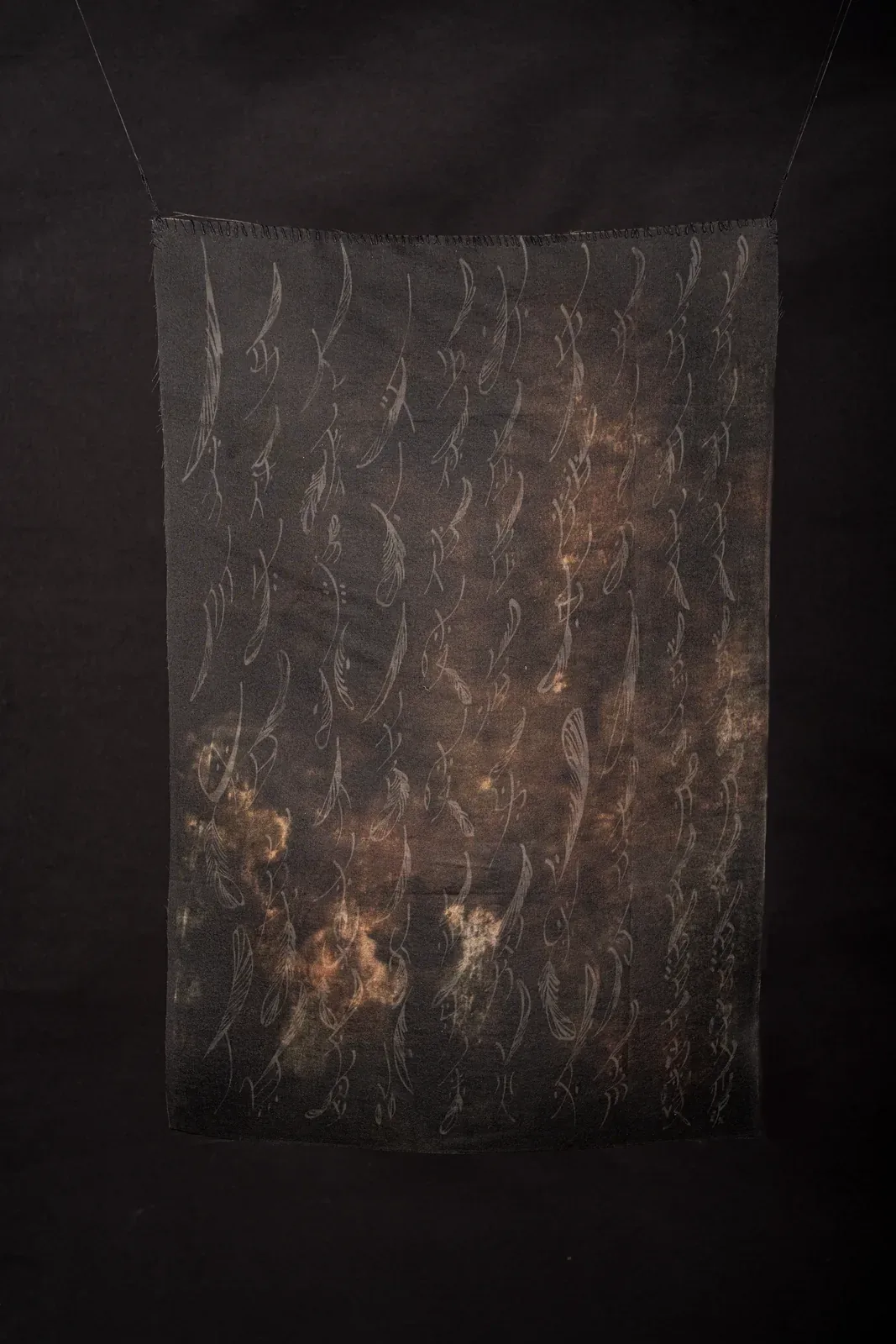
The blossoming artist’s latest project, Nameless, hones in on a feminist issue in the exhibit: women’s agency. Nü Shu, the historic language developed for and by women in rural Jiangyong, Hunan Province, is a captivating point of departure for understanding the show. Women, traditionally excluded from learning the Chinese writing system, developed a secret language. Ethnic Han, Yao and Miao people pass the language from mother to daughter. So convinced by the significance of these characters, originally only learnt by women, the artist marked her own skin with a tattoo.
Lifeng Liao chose the Nü Shu words for “women, life and freedom”, to remind her of her roots and good fortune. The surface of the resulting Nameless artwork carries Nü Shu writing and is aged, like an image of an unearthed scroll. It holds a weighty sense of history and tactile strokes that differ from the digital perfectionism of her other printed works. Since I can’t read Nü Shu, the words become a physical image.
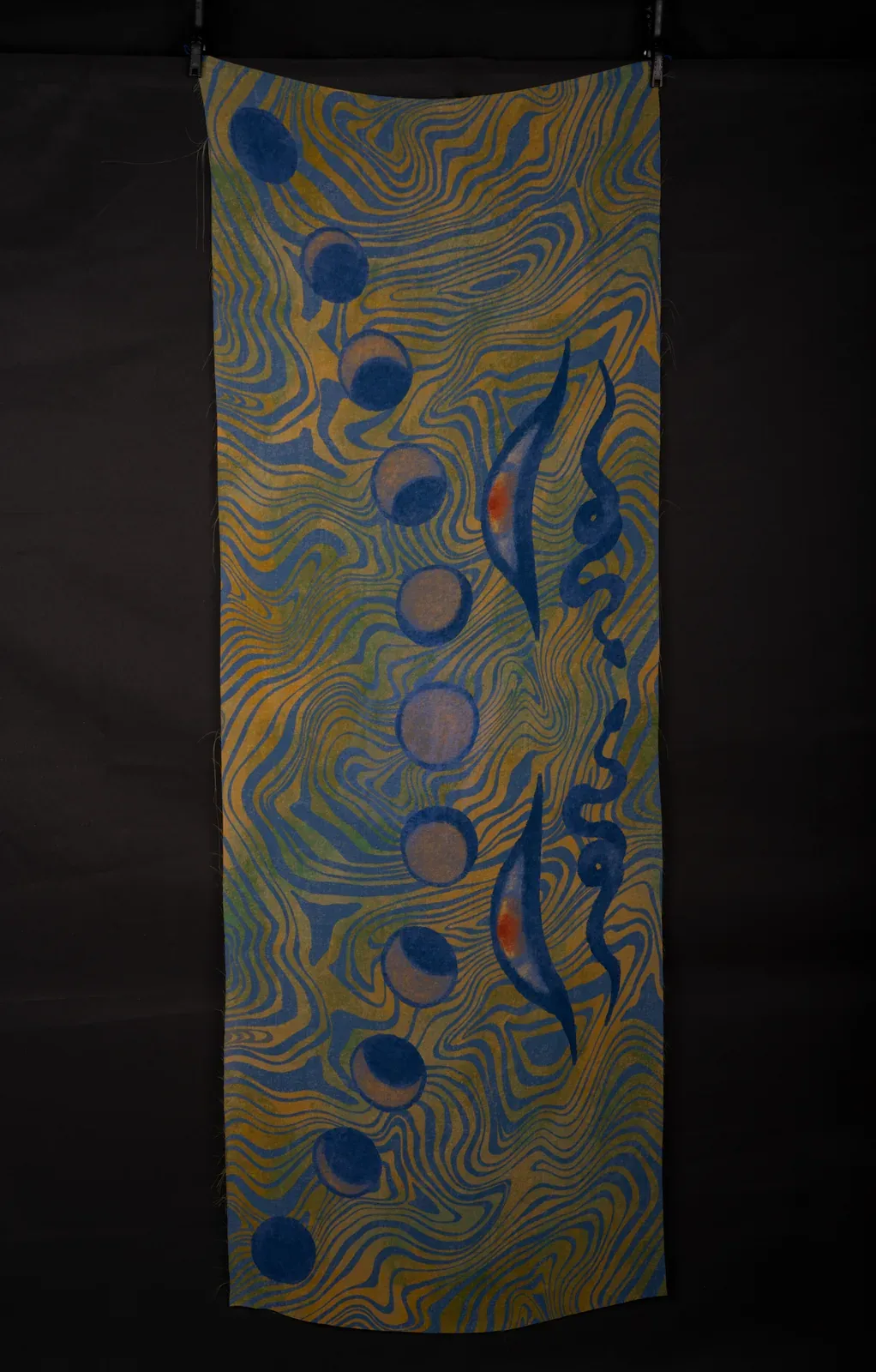
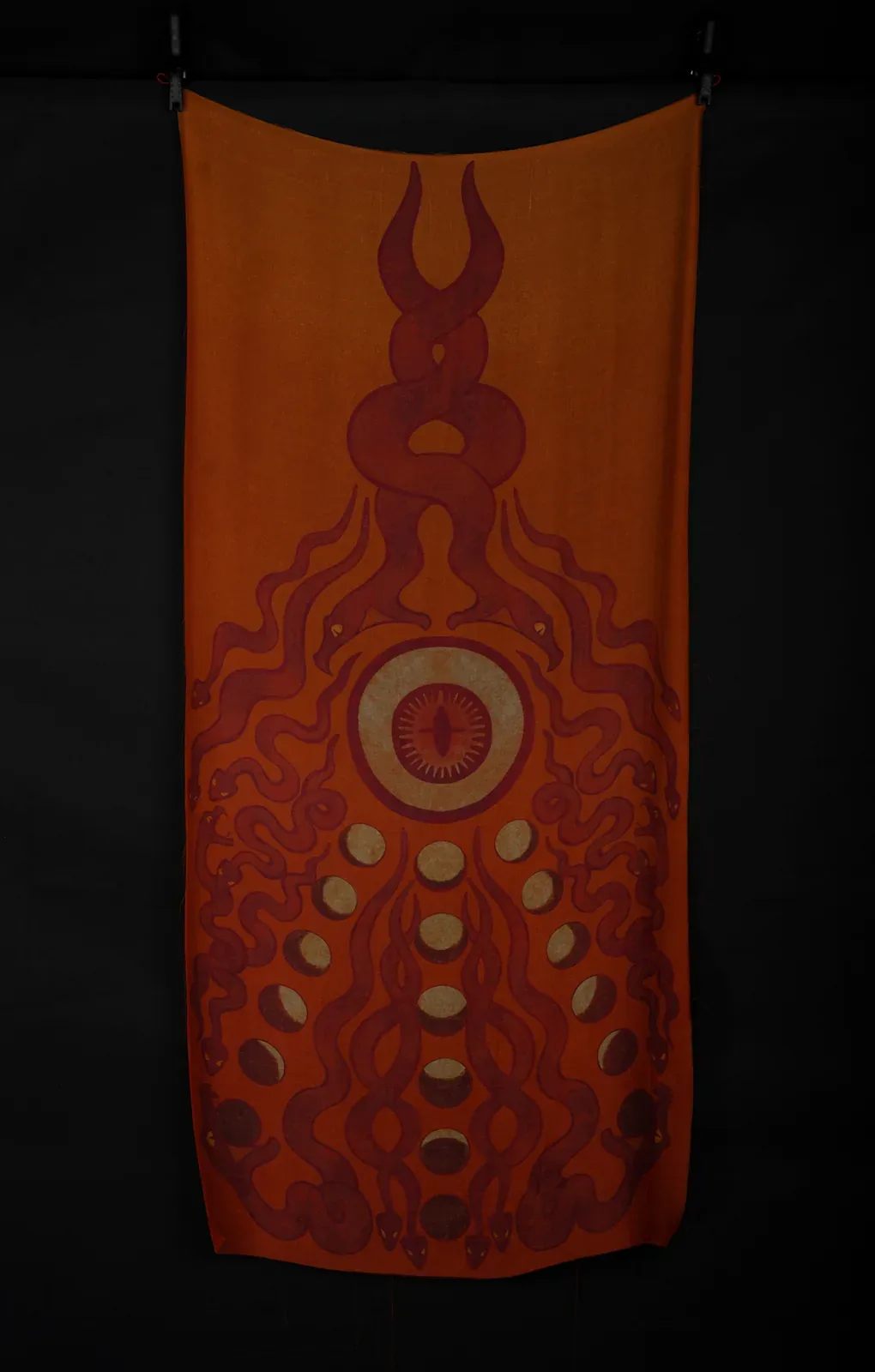
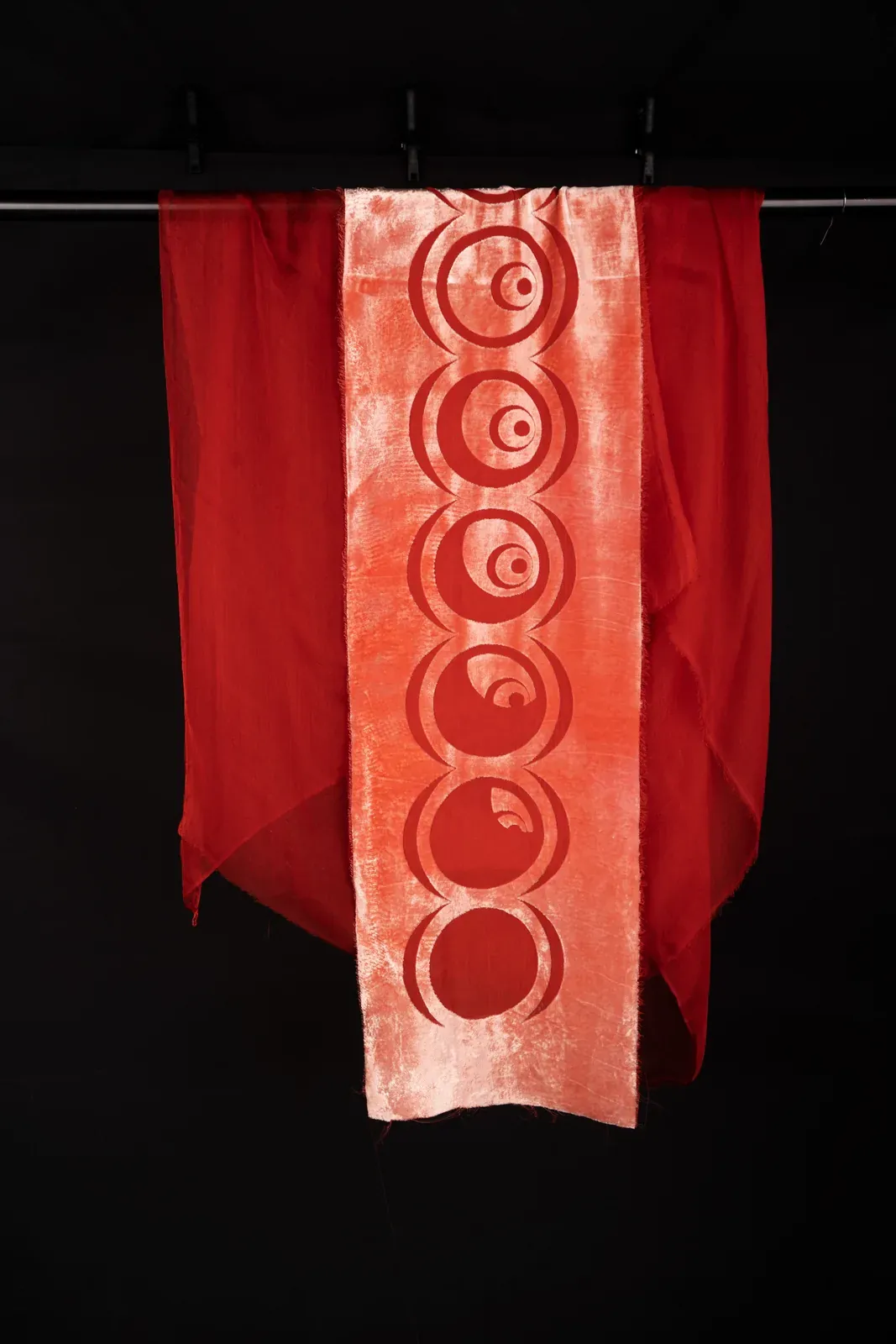
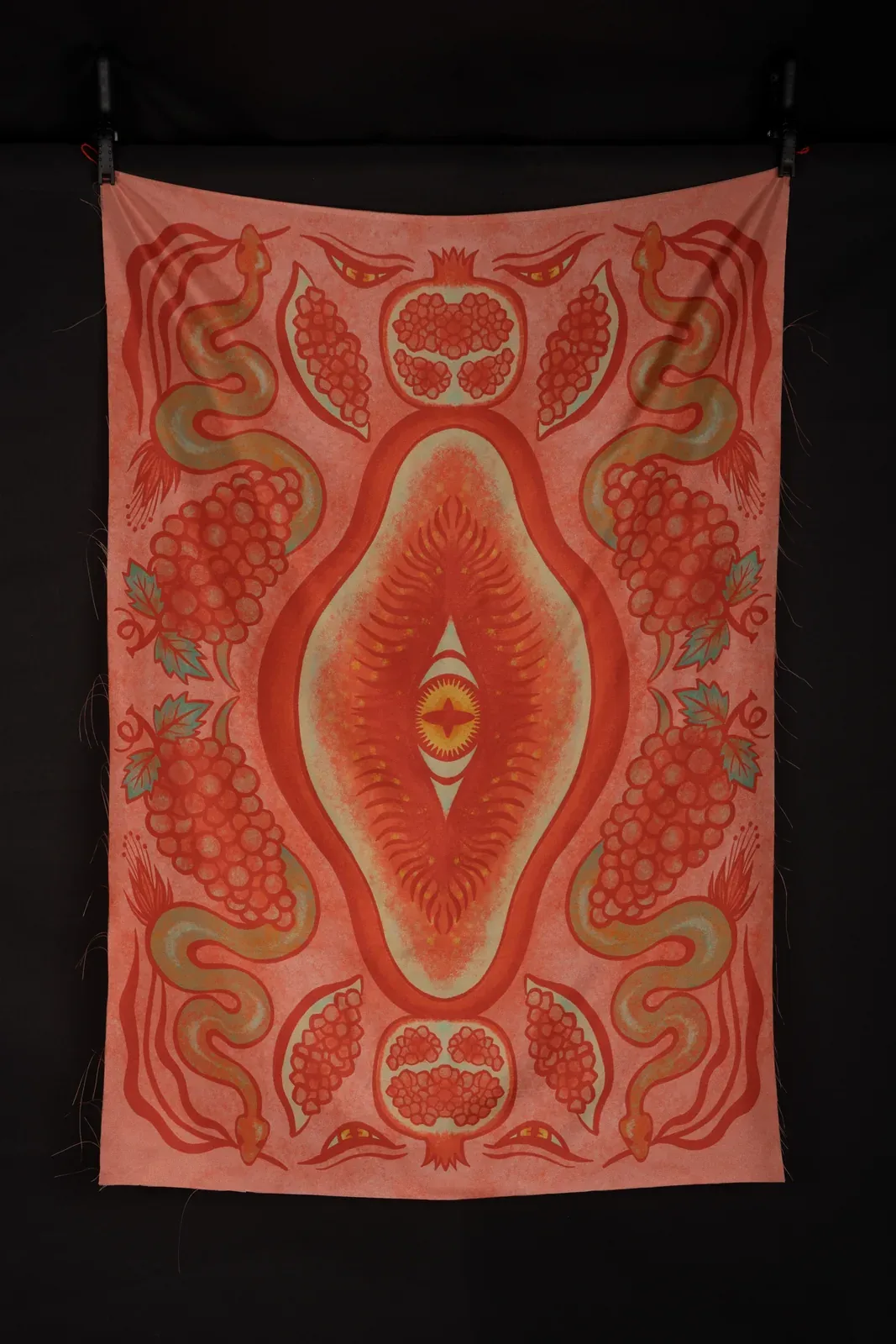
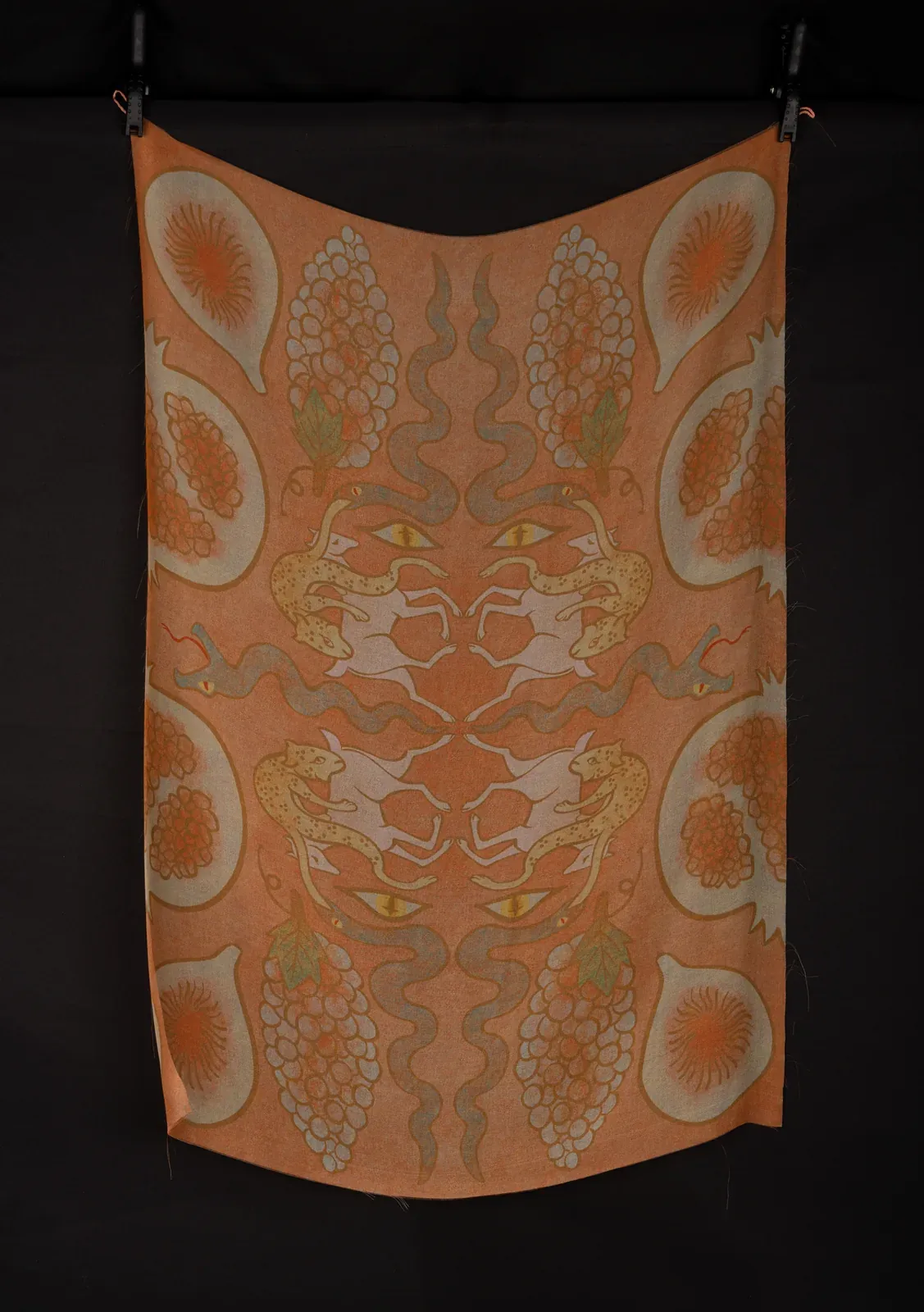
Femininity, empowerment through expression, and resilience in the face of being positioned as an outsider, less-than or even evil are present in Liao’s existing artwork. Included in the exhibition are the Seven Veils and Salomé series. Her soft hangings depict interpretations of the seven deadly sins, each with wet or feathered eye symbols: peacock feathers, pomegranates and figs. Sins, of course, often come from physical enactment. The almond shape takes on a particularly fleshy eroticism in Lust that reaches towards O’Keeffe’s mesmerising botanicals in a more minimalist iteration.
It would be easy to relate this Lust image to the need for bodily exploration, outlined in feminist theory of women’s writing, to achieve creative inspiration. Yet, in Liao’s work, particularly the named relation to sin, lust might be off-limits, represented with the intent to show restraint and moral judgement even if certain rules are flouted around what can and can’t be seen. There’s a misty area for interpretation, given Oscar Wilde wrote Salomé as a femme fatale, and there are wider mentions of romantic love in the exhibition. Likely, it’s intentionally opaque.
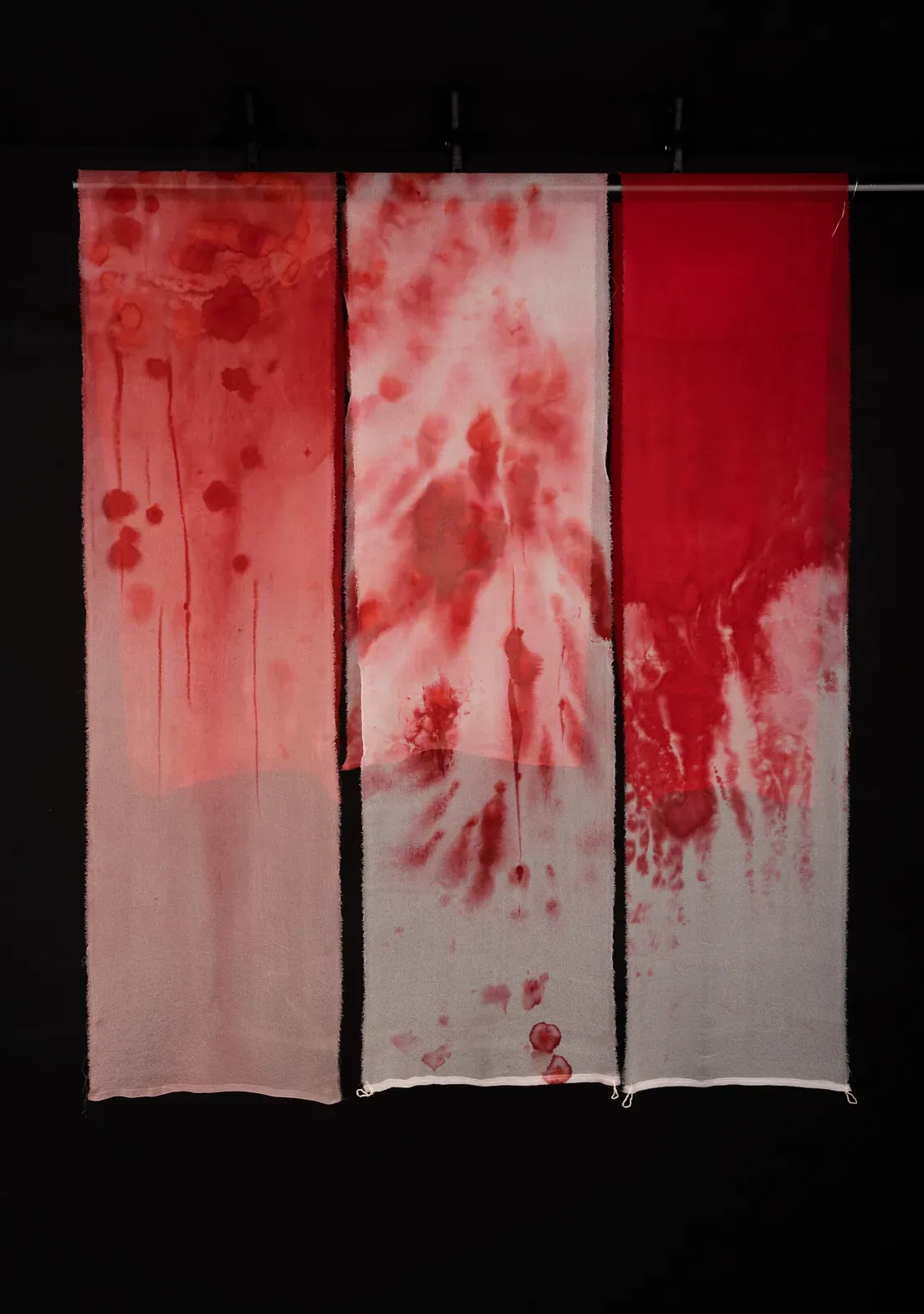
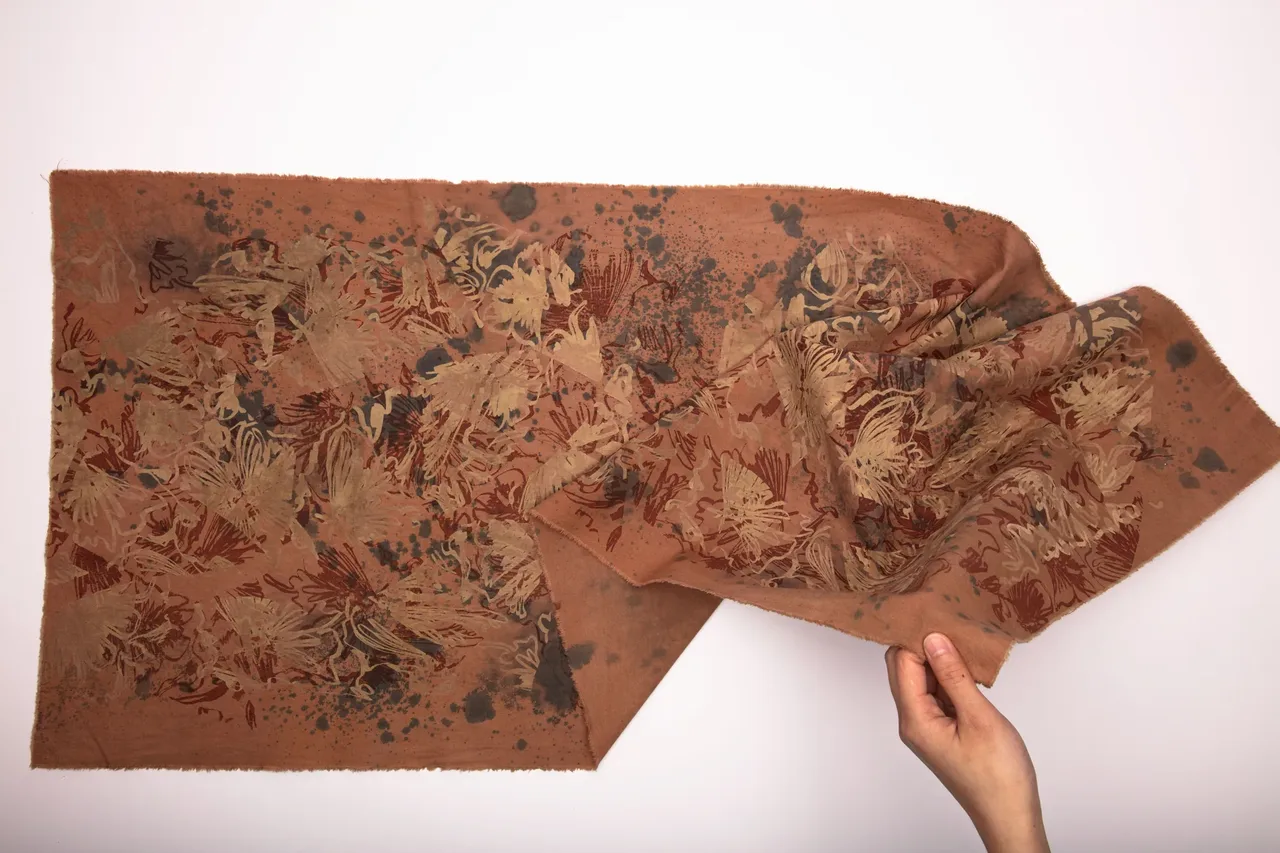
The Salomé pieces have a distinctly textile quality. The splattered red hangings seem better suited to a wall than to being worn. Peacock feathers wiggle and dance across the fabrics, but the figure of Salomé as a dancer is only ever implied. Perhaps she’s there in the fleshy and earthy tones.
Like written language, Lifeng Liao’s show has its own set of symbols or signs to interpret — she moves beyond direct representation to make room for the delicious unknown, the gap between the word and what’s meant.
Inner Sanctuary ran from 16 to 18 August 2026 at 67 York Street Gallery, London, UK