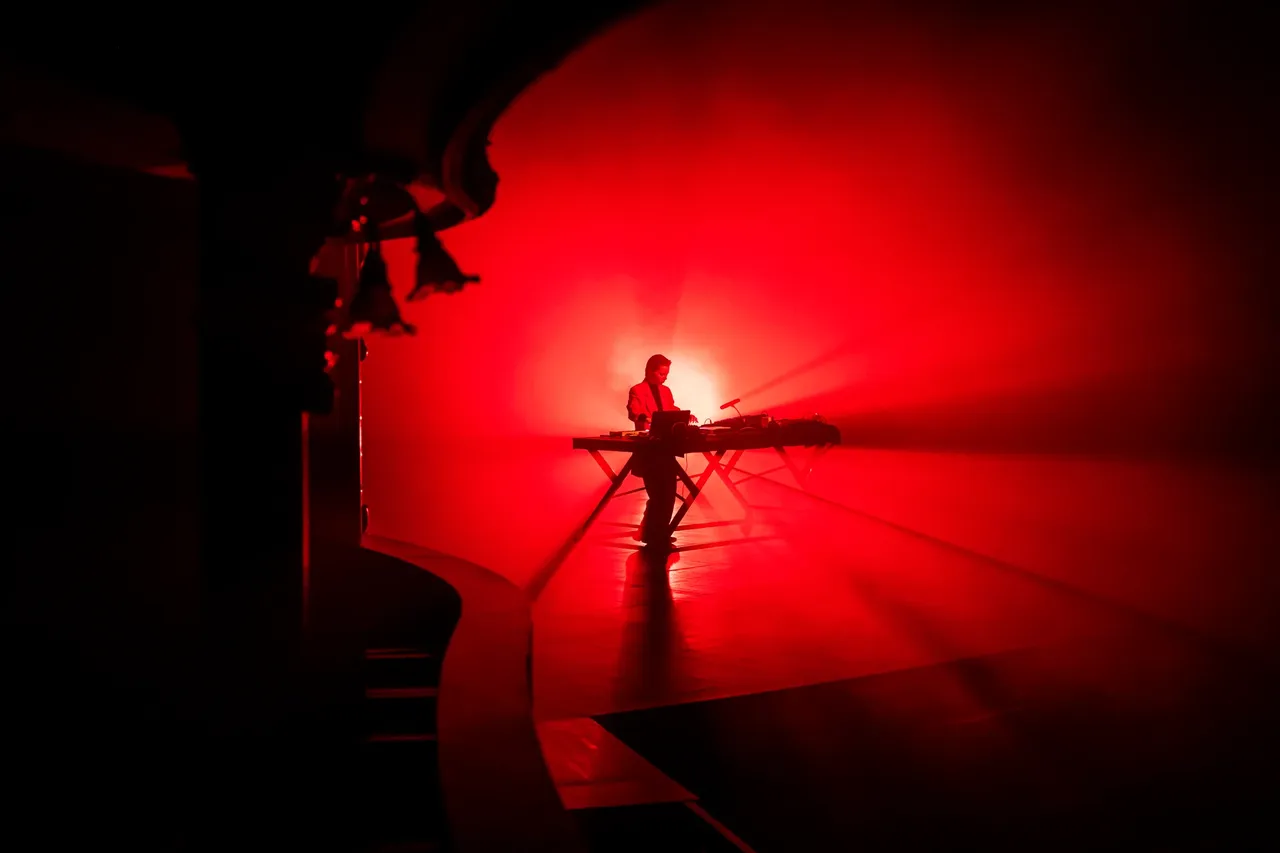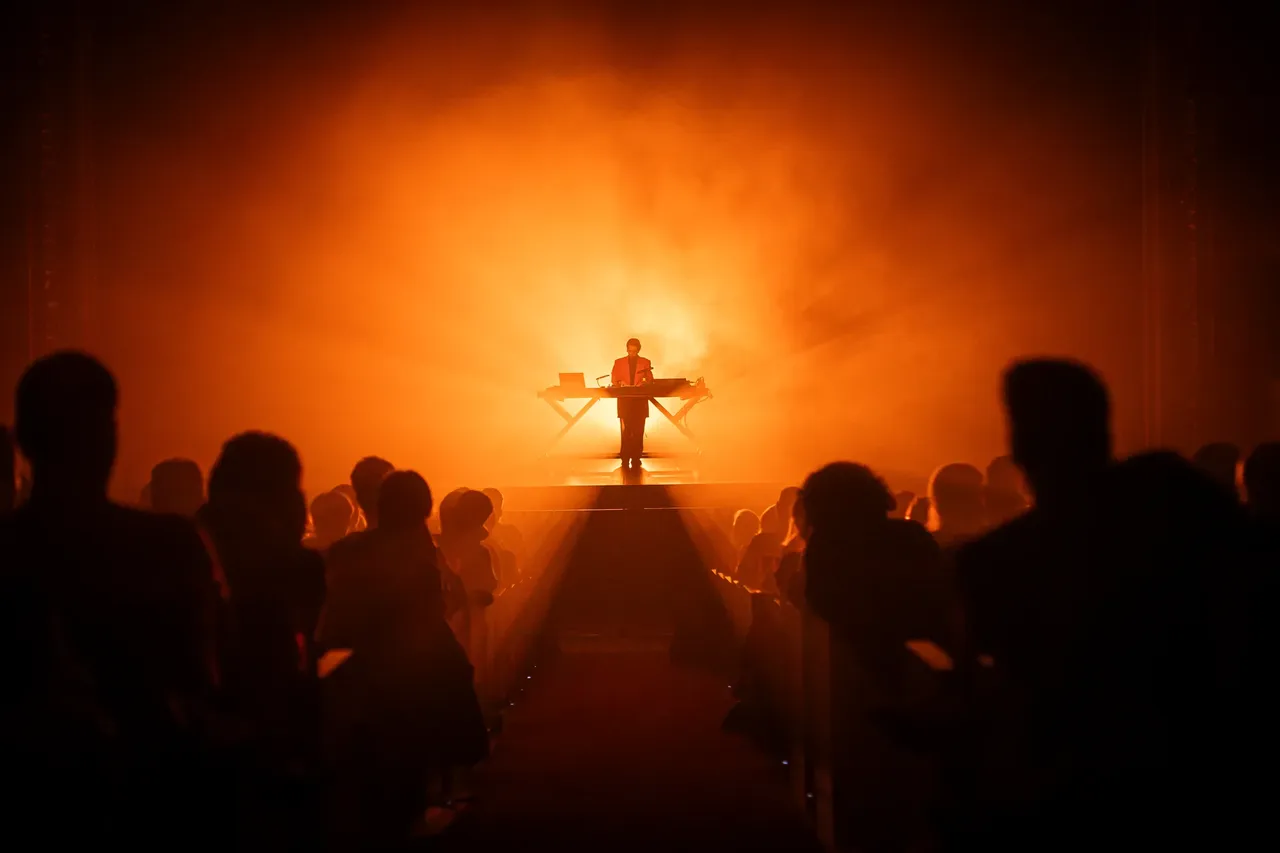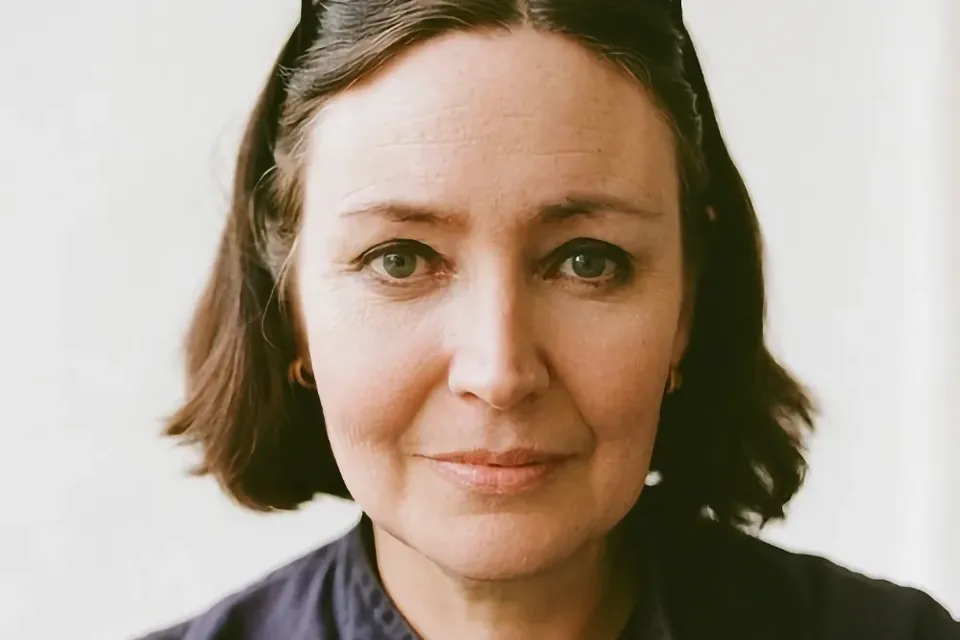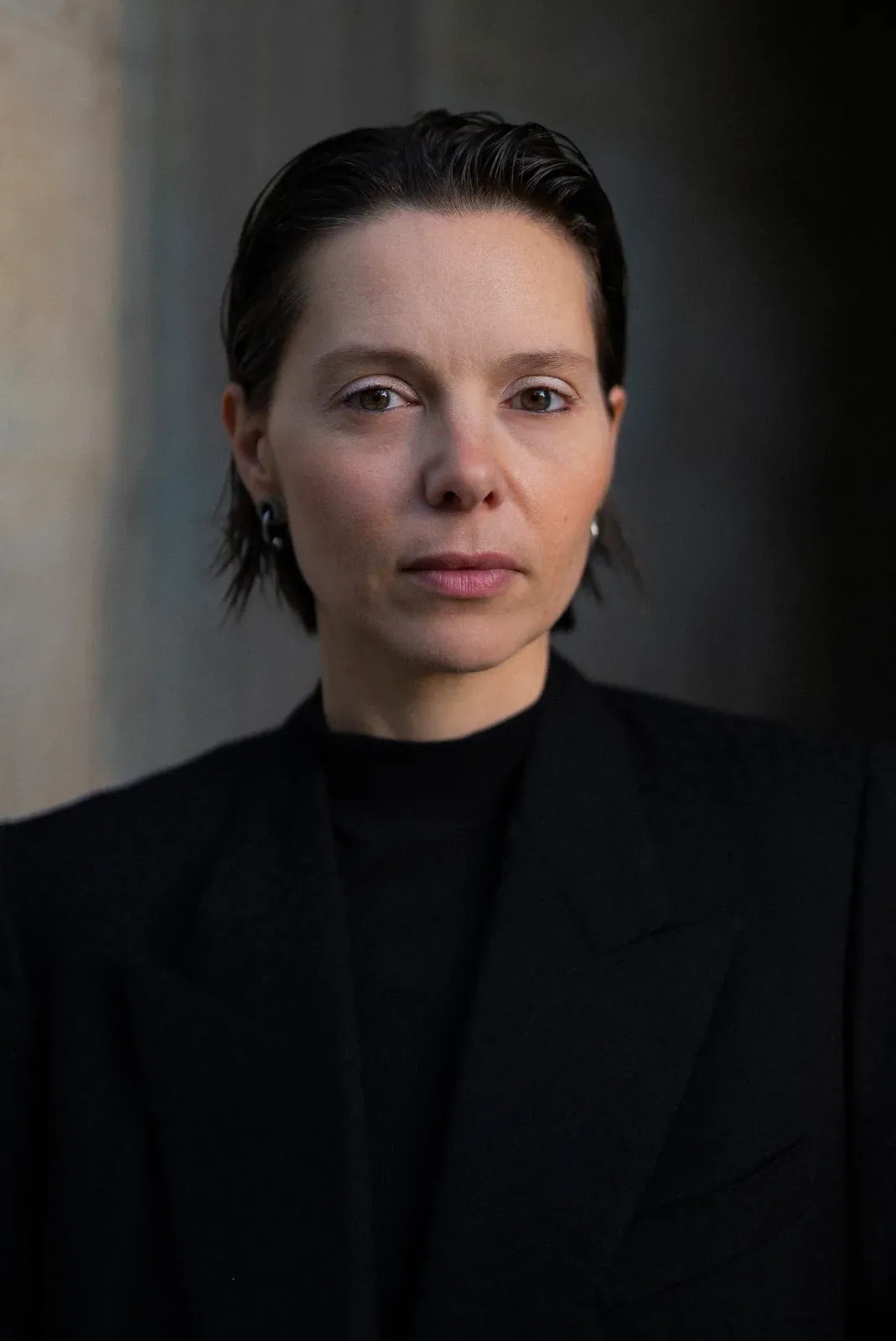
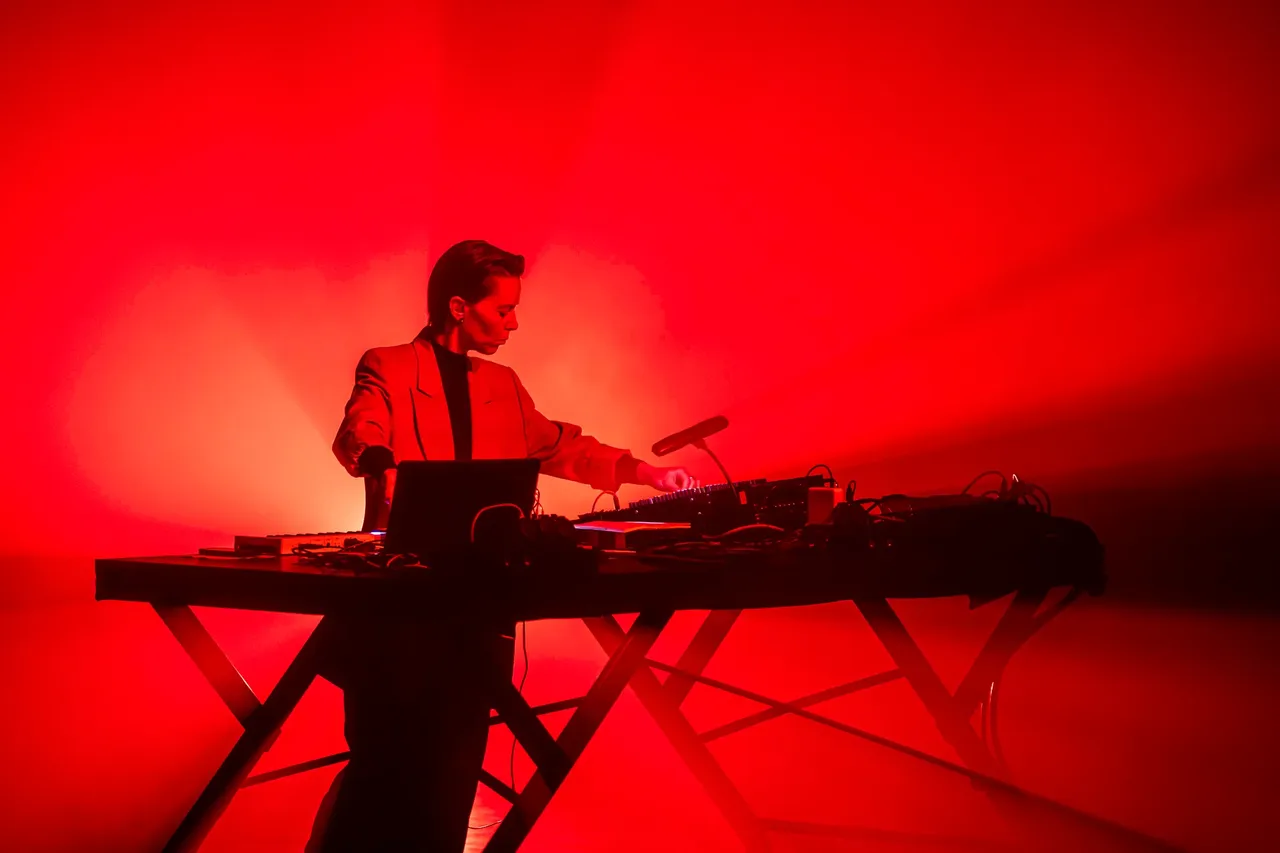
This week, Grand River takes the stage at Stone Techno, returning to Zeche Zollverein with a live set shaped by the kind of listening her work has always invited: attentive, emotional and open to the space around it. Behind the project, Dutch-Italian composer and sound artist Aimée Portioli has spent more than a decade moving between electronic music, sound installation and contemporary composition, building a language where atmosphere often says more than explanation.
That sense of impermanence runs through her new music too. “Nothing can truly be repeated in exactly the same way; it's all temporary,” she tells us, reflecting on the fleeting nature of experience. Ahead of her performance at one of the most anticipated stages at Stone Techno, we caught up with Grand River to talk about transience, creative freedom, nature and why music can often express what words cannot.
This weekend you’ll be playing Stone Techno, a festival we've followed closely over the past few editions. What made you want to be part of it?
I liked their idea of having an ambient stage within the festival, as it creates space for a different kind of listening, so when I was invited to play, I decided to accept. I was also in Essen last year for my sound installation Symphony for Endangered Birds at Museum Folkwang, but I didn’t have the chance to visit Zeche Zollverein back then. So I’m really looking forward to finally experiencing the site and performing there.
It’s one of those rare festivals where the location feels just as important as the lineup. Does performing in a former industrial complex influence the way you approach a live set? What can people expect from yours?
Yes, very much. The location is always important to me when I perform. Every space has its own atmosphere and energy, and that inevitably influences the performance. The place becomes an active part of the concert, and it can shape the kind of experience the audience has. Performance and space influence one another. For a festival like this, I like to leave room for the feeling of the moment, so I prefer not to define it too much in advance.
We recently read you describe your upcoming album as a meditation on transience, on becoming aware that no moment can ever happen in exactly the same way again. When did you realise that was the conversation you wanted this record to have?
My new album, and my third with the Editions Mego label, will be announced at the end of summer. For this record I wanted to explore the idea of transience you mentioned because, over the past few years, I have experienced a number of personal losses. The experiences I have lived through, and the grief that came with them, changed the way I relate to time. Each one made me realise just how precious and unique the present moment is. It made me understand that nothing can truly be repeated in exactly the same way; it's all temporary. That understanding became the thread running through the whole record.
You’ve said this record is about recognising that every moment is unique because it can never be repeated. Has spending so much time with that idea changed the way you experience your own everyday life?
Yes, absolutely. These significant changes I have experienced in my life have made me aware of the value of time. I feel more grateful for everyday moments and I really try to live them more consciously. We often think time is endless, but it really isn’t. Being aware of the impermanence and the uniqueness of each moment has changed the way I experience daily life.
You once wrote about music’s ability to communicate on an emotional level in ways facts or language simply can’t. Do you ever find it frustrating to explain your work in interviews, knowing that the music can probably say it much better than words ever could?
When it comes to music, there are things that words simply cannot describe, and emotion is certainly one of them. Music communicates directly on an emotional level, which is why I often find it difficult to explain it verbally. Earlier you asked what people can expect from my performance, and that’s exactly the kind of question I’d rather answer through the concert itself than through an interview. Music has the power to communicate things far beyond language.
Nature seems to have become much more than a source of inspiration for you. What is it about being outdoors that you simply can't find anywhere else?
Being in nature changes my perspective on everything, from the smallest concerns to much bigger questions. The more remote the surroundings are, the more distance I can create from everyday life, and that distance allows me to see things more clearly. Nature reminds me that I’m only a small part of something much bigger than myself. I find that both humbling and comforting. Spending time in nature is essential for me because it is how I rebalance, reflect and reconnect with myself.
One of the things that stayed with us about Symphony for Endangered Birds is your decision to give space to voices that most of us will probably never hear. Was making people listen differently just as important to you as composing the piece itself?
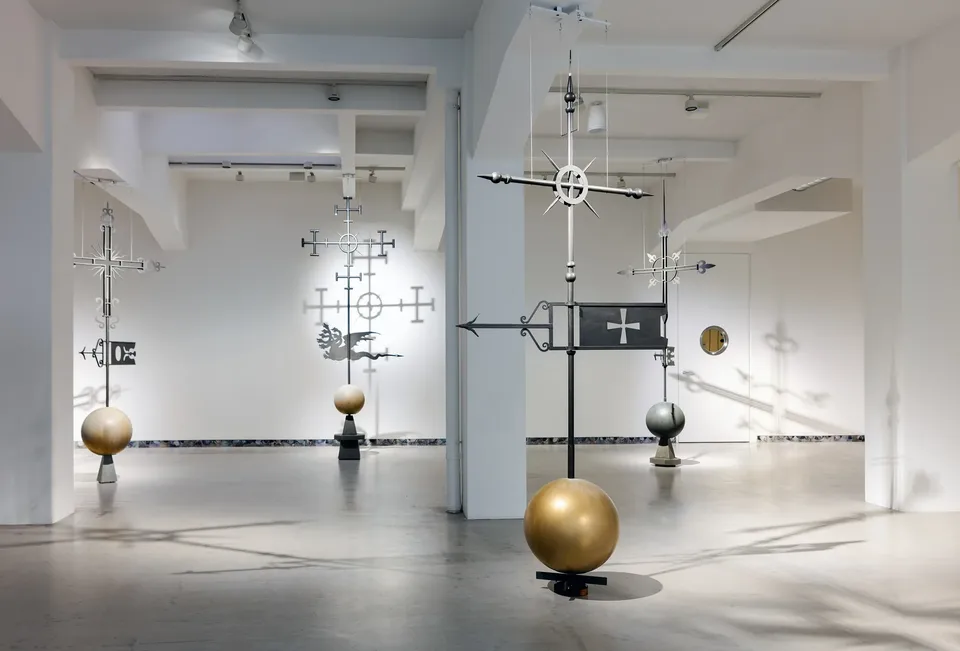
My decision to work only with voices of endangered bird species was very intentional, and it’s a form of sonic ecology. The project began with a long period of research, listening and cataloguing, which was both enlightening and eye-opening. I felt a responsibility to share the story of these birds, to help preserve their voices and highlight the negative impact of humans on their future. I also produced a booklet to accompany the installation and give more details on each bird species. It felt natural to me to hold that space for them and allow people to have a deep listening experience and really hear the expressions of life and complexities of their voices. Conceiving that installation was a beautiful journey from beginning to end, and I learned so much throughout the entire process.
Beyond creating awareness, what conversation did you hope Symphony for Endangered Birds would start? Has anyone shared a reaction that genuinely surprised you?
At the opening of the installation at Museum Folkwang, members of NABU Deutschland were present and became very interested in the work. NABU is a German NGO dedicated to the conservation and protection of nature and individual species of animals. We talked about organising a public conversation about birdsong, which eventually took place at the museum. It was beautiful to see that my installation could become a starting point for bringing people together and opening up conversations about these endangered birds that otherwise might never have happened. This made me aware of the power that art and music have to gather people and bring important issues to their attention. Beyond that, I received many thoughtful responses from visitors, and some of those conversations have stayed with me ever since.
Earlier this year you brought In uno spazio immenso to Teatros del Canal in Madrid, and the project has continued travelling the world, including MUTEK Montréal. How has performing it so many times changed your relationship with the work?
A live project naturally evolves over time. Every performance is shaped by the audience, the venue and the particular moment in which it happens, so each concert subtly changes the work itself. After performing the same project over the course of a couple of years, it becomes something slightly different and richer than it was at the beginning because it has absorbed all of those experiences along the way.
Whose work has inspired you recently?
Beyond being inspired by artists, I’m more inspired these days by the way concerts, festivals, programmes and exhibitions are curated. I’m interested in how a theme, an aesthetic and a subject can be examined or approached through the presentation of an artist's work: the building, the information given, the setup of the physical space and all the cues that prime a curiosity and an openness in the audience to receive the work and engage with it. I find this inspiring as I think about how I want to present my live work, and my sound installation work too.
The truth is that I’ve hardly listened to any music over the past few months, entirely by choice. I was completely immersed in finishing my own album and reached a point where I simply couldn’t absorb any more sound. Outside of live concerts by friends and colleagues that I attended, I found myself seeking silence more than sound. More generally, I have always believed that inspiration comes from far beyond music. Films, architecture, literature, conversations, nature, visual art and even chance encounters all leave traces. I often think of myself as a sponge. I absorb things consciously and unconsciously all the time, and I think that continuous process of observing and learning is one of the most important parts of being an artist.
The truth is that I’ve hardly listened to any music over the past few months, entirely by choice. I was completely immersed in finishing my own album and reached a point where I simply couldn’t absorb any more sound. Outside of live concerts by friends and colleagues that I attended, I found myself seeking silence more than sound. More generally, I have always believed that inspiration comes from far beyond music. Films, architecture, literature, conversations, nature, visual art and even chance encounters all leave traces. I often think of myself as a sponge. I absorb things consciously and unconsciously all the time, and I think that continuous process of observing and learning is one of the most important parts of being an artist.
“Nature reminds me that I’m only a small part of something much bigger than myself. Spending time in nature is essential for me because it is how I rebalance, reflect and reconnect with myself.”
Is there an artist you'd love to collaborate with one day, even if it feels completely unrealistic?
There are definitely a few, although I honestly don’t spend much time thinking about specific people for collaborations in those terms. I probably think more about broader ideas, like collaborating with a choir or an orchestra, playing in special places, or doing things that logistically and financially seem out of reach for now. The collaborations that have happened throughout my career have all come about very naturally, through conversations, friendships or a shared curiosity. I like leaving space for those encounters to happen organically.
What do you enjoy most about what you do today? Has the answer changed over the years?
I genuinely love my work, and I always have. It’s incredibly demanding and often pushes you outside your comfort zone, but that’s also one of the things I enjoy most. I like being challenged creatively, and I love travelling, discovering new places and meeting people from different cultures.
What has changed over the years is that I have become much better at managing the many different aspects of this profession at once. Earlier in my career I found that much more difficult. Now I can enjoy the whole process much more because I feel better equipped to handle the ups and downs and the difficult moments.
What has changed over the years is that I have become much better at managing the many different aspects of this profession at once. Earlier in my career I found that much more difficult. Now I can enjoy the whole process much more because I feel better equipped to handle the ups and downs and the difficult moments.
When you feel creatively lost, or simply need to reconnect with yourself, where do you instinctively go?
Usually I either spend time in nature or immerse myself in the creative work of others. That could be an exhibition, a concert, an installation, a film or a documentary. Experiencing someone else's perspective often helps me reconnect with my own.
Looking further ahead, where do you hope your artistic practice will be in ten years' time?
That’s a very good question, and one I ask myself from time to time because I think it’s important to have a sense of direction, even if it remains quite open. I hope my practice will simply be an expansion of what it is today, with more albums, more tours and more installations behind me. I also hope to spend much more time surrounded by nature, perhaps with a studio in the countryside as well as one in the city. I would love to work from a quieter, more isolated place and experience a different rhythm of life.
By the time this year comes to an end, after the new album has found its way into the world, what do you hope you'll be able to look back on and say, "I'm glad I did that"?
I hope I will be able to look back and feel glad that I gave everything I could to the record. Right now it still feels incredibly personal. It belongs to my studio and to the small group of people who helped bring it into existence. Once it is released, it will no longer be only mine. It will begin a life of its own through the people who listen to it and interpret it in ways I could never anticipate. I think what I am looking forward to most is seeing the work begin a life that is no longer entirely my own.