As the boundaries between artistic fulfilment and public validation continue to blur, Late Fame — and Edmund Donovan’s performance in it — feels remarkably prescient, asking the question of whether being seen has ever been the same as being understood. In an era where visibility is often mistaken for value, Kent Jones’ adaptation of Arthur Schnitzler’s novella delicately dismantles the mythology of success, charting the emotional terrain of belated artistic recognition and portraying it not as a reward, but as something far more elusive.
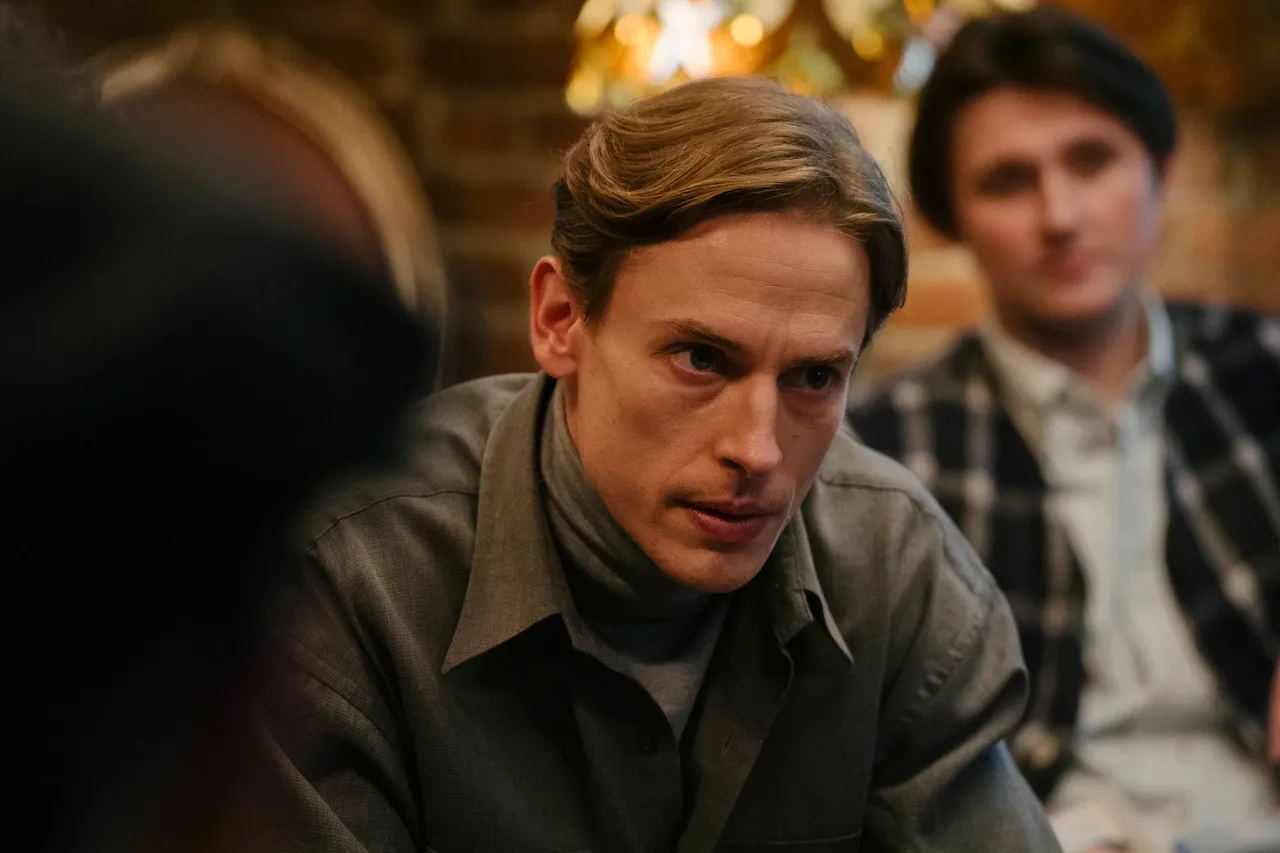
Wilson Meyers, played by Edmund Donovan and known simply as Meyers at his own insistence, leads the literary group The Enthusiasm Society, who rediscover and attempt to reinvigorate the forgotten poet Ed Saxberger, played by Willem Dafoe. Their collective serves as a lens for exploring the contradictions of artistic devotion — embodying the conflict between admiration, sincerity and the performance of authenticity. At times, they are a little difficult to watch on account of their cartoonish pretension, but the group play an important role: exemplifying the artistic insecurity of a generation desperately seeking authenticity.
Donovan’s portrayal of Meyers captures these contradictions with commendable subtlety. He is both a devoted admirer and an unwitting architect of projection, embodying the desire to preserve artistic authenticity while participating in its reinvention. It is this ambiguity that gives Late Fame its reticent power, refusing to position its characters as simply sincere or self-serving, but instead revealing the fragile motivations that exist between the two. Meyers, in particular, personifies a particular kind of contemporary cultural gatekeeper: privileged, hyper-literate and obsessed with preserving artistic purity while inevitably shaping, and perhaps exploiting, the very narratives he claims to celebrate.
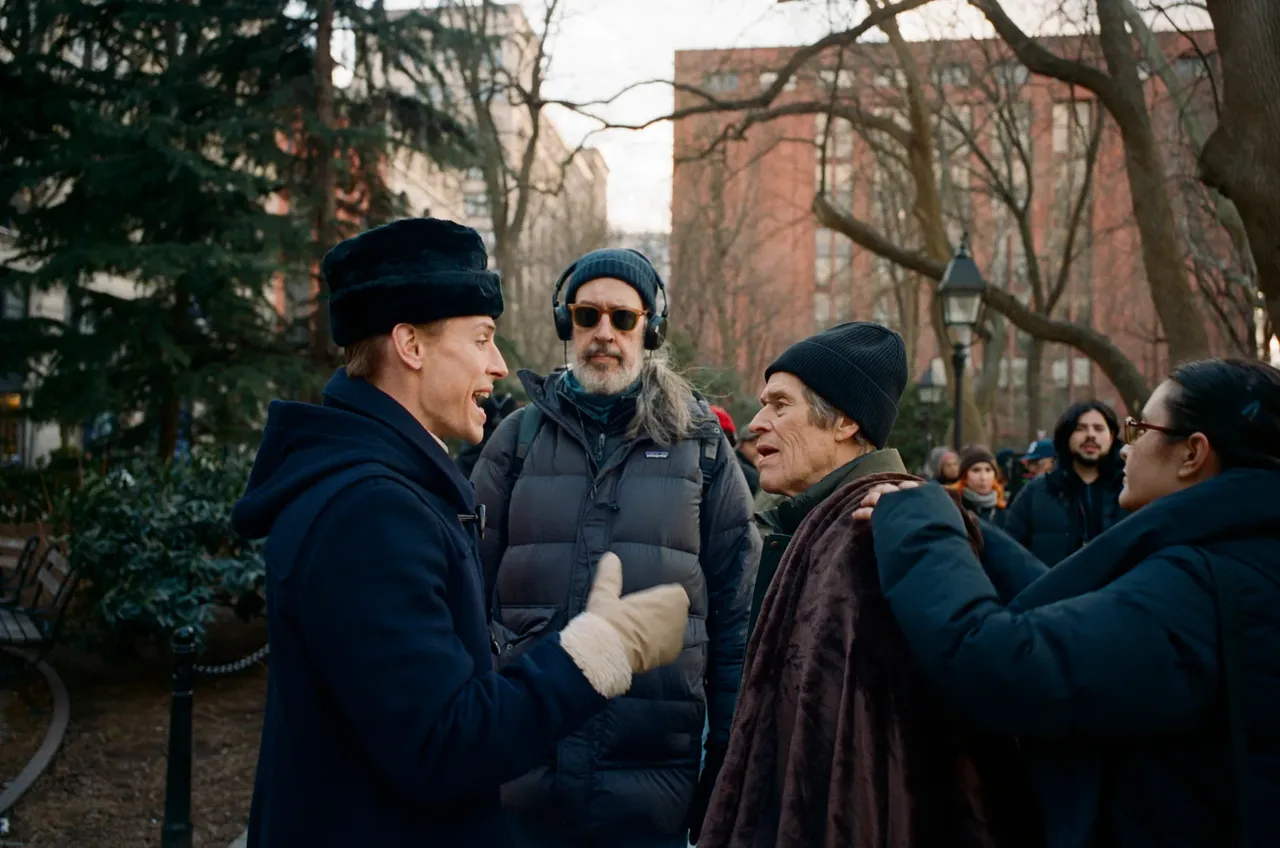
Late Fame treats artistic recognition as something that can often be arbitrary or even burdensome, and not something that necessarily correlates with fulfilment. Did the role change the way you think about critical acclaim, especially as someone navigating an industry that’s increasingly tied to visibility?
Making movies is a contradiction. On one hand we want people to engage with our work. We want it to be meaningful to people. On the other hand, overemphasizing the importance of people’s response to something either in the making of it or after it’s made can be very painful or warp a person’s process of making things. The themes of this movie have served, for me, as a reminder of how I want to work. Make it. Let it go. Do it again. Easier said than done.
Playing a character in such depth inevitably reveals something about yourself you hadn’t recognised before. Was there anything your work on Late Fame uncovered that stayed with you?
Enthusiasm. This movie reignited that in me. This guy I played has such a sort of schoolboy’s eagerness. I went back in time ten years or so making the movie. I was in graduate school for acting ten years ago and I was very enthusiastic and energised about what I was doing, just like the character in the movie. That’s been a nice place to return to.
The film explores the invisible structures that shape creative careers — who gets access, who gets overlooked, and whose work is considered culturally significant. Did it make you think about gatekeeping in creative industries today?
Yeah, sure. What the group of young people in the movie are attempting to do, in theory, is noble and important. Meyers isn’t interested in Ed because he is a famous writer, he just thinks his work is good. You know, there are different types of gatekeeping in artistic circles, but yes, a lack of cultural significance or recognition can be a huge hurdle for a lot of artists. There seems to be a correlation between an artist’s renown and an artist’s value. Not a direct correlation, but still. And that correlation is not always justified. There’s value in seeking out work from writers, filmmakers, actors, visual artists who are relatively obscure. The trouble with that though is it can become performative pretty quickly. The “I listened to that band before you” kind of thing. All that to say, supporting more obscure work, and being open to sharing it, is a healthy resistance against that gatekeeping.
Is there a piece of art, whether it be a film, book or a philosophical concept that unexpectedly found its way into your performance, perhaps one you kept to yourself while working on the project?
There is a poem by Peter Gizzi called Plain Song that was very important to me in the months leading up to the shoot and during the shoot itself. Peter is an old friend of Kent’s and a brilliant poet and a really cool guy. The poem, which is in Peter’s book Some Values of Landscape and Weather, was in an early draft of the script, but ultimately felt too contemporary to stand in for Ed’s work. If I read it, I would be moved to tears. I mean I would try to read it out loud to people and I’d have to pause to get through it. That’s where we meet Meyers, that’s the experience he had with Ed’s work. He was blown away. Shout out Peter Gizzi.
You’ve described your experience working with Willem Dafoe as strangely reflective of the film itself: an encounter with an artist whose presence inspires both admiration and curiosity. Did that dynamic help you connect with the obsession at the core of your character’s arc?
There are a lot of meta aspects to this movie, and this is one of them. I’m playing this guy who admires this other guy’s work who is further along and has experienced more. Willem’s work was a part of my upbringing. I watched his movies as a kid, as an adolescent, in my twenties. I mean I studied his work with the Wooster Group when I was in drama school. He’s always been there. There’s a lot of admiration and respect. I got a lot for free with that.
What was the most valuable thing you learnt from working with Dafoe?
Keep it live.
We live in a time where visibility is often treated as a measure of success. Do you think that has changed the way artists think about their own careers?
I do. For some artists for sure, and probably for most. Maybe it’s always been like that but I’m old enough to remember a time when it felt like you could be relatively unknown and still work a lot. So many great New York theatre actors for example were completely obscure, but very prolific. There was a lot more mystery behind most actors, even very famous ones. No one was online. The internet and social media have really changed that.
When first reading the script, did the film’s exploration of artistic ambition, anonymity, and the desire to be seen feel immediately relevant to you?
Absolutely. I mean here I am discussing this movie with you, which I worked on and that I care about, and that I want people to engage with and respond to, which is a facet of that desire to be seen. It calls into question how we want to make things and share them with people without somehow feeling dirty about it.
“There are a lot of meta aspects to this movie. Willem Dafoe’s work was a part of my upbringing.”
Looking back to the early days of your career, was there an encounter with a performance, on stage or screen, that changed the way you understood acting and inspired you to step into that world?
There were several. I saw Mark Rylance in Jez Butterworth’s play Jerusalem on Broadway when I was twenty. I was still in college studying acting and it had a tremendous impact. My very immediate reaction was: I want to do that.
Did you spend any time in literary circles or poetry groups to prepare for the role? If so, how was that experience?
I didn’t. Maybe I should have. I hope we did justice to that world.
The film revolves around the idea of rediscovering a lost artist. Is there anyone you idolise who you feel deserves more recognition?
That’s a cool question. There are a lot of people I appreciate and look up to. John Douglas Thompson. I mean he is recognised, but he is just such a special actor and someone who I’ve admired since I was young. Tom Burke. Again, someone who is very established, but his performance in Joanna Hogg’s The Souvenir was something that I found on my own and after seeing it I kind of thought, why haven’t there been more people who have insisted I watch this? I mean there are a lot of actors in New York I feel that way about.
Were there any books, films or poems which Kent Jones recommended in order to get into the world of Late Fame?
Kent and I spoke a lot before we made the movie and that was helpful in terms of ensuring that I understood the world he was creating. Beyond that, the making of this movie was, for me, in direct conversation with the book it was adapted from.
New York City feels central to Late Fame. Could you speak a little to its importance in regard to both your experience and the film itself?
When I moved here from Boston in 2012, there was a robust off-Broadway scene. It really felt like a community. There was this incredible group of actors who were making new plays for like four-hundred dollars a week. All I wanted was to be in that group. To have that be my life. That’s Meyers in a way, though he is looking back in time at bygone New York artistic circles, whereas I was looking around me at the present. The yearning is the same, the feeling that if I can just tap into the right people and make the right work, I can be who I want to be. New York represents that for a lot of people who come here from somewhere else. That’s what it was for Ed Saxberger.
Kent Jones became a director after spending his early career analysing and writing about film. Did that depth of knowledge translate into a new experience for you on set, for instance in the way he discussed character or the emotional rhythm of scenes?
It provided a lot of trust in Kent. He has seen every movie that’s ever been made, so I knew there was integrity in the way that he chose to tell this story. Kent understands character, he understands the camera, he understands filmmaking and he’s able to see the movie as a whole.
When people leave the cinema after watching the film, what is one conversation you hope they’re having?
I hope it evokes conversations. How do we value our own artistic contributions? How much can we let other people determine that value? What is real artistic practice? Rigor, integrity, all that good stuff. The questions of the movie are pretty clear and they’re challenging to come to a clear answer on. Why do we make stuff?
Late Fame is out now in the US, as of 7 August