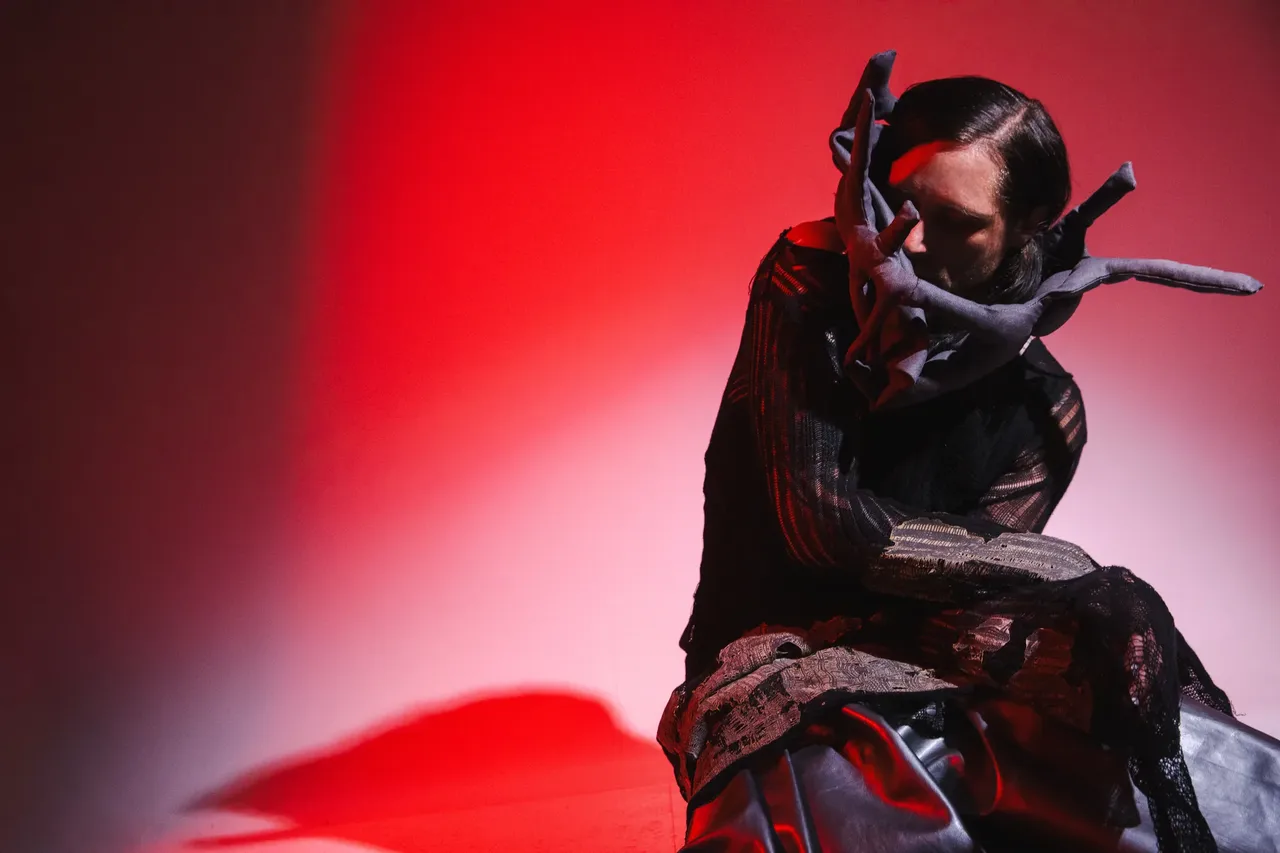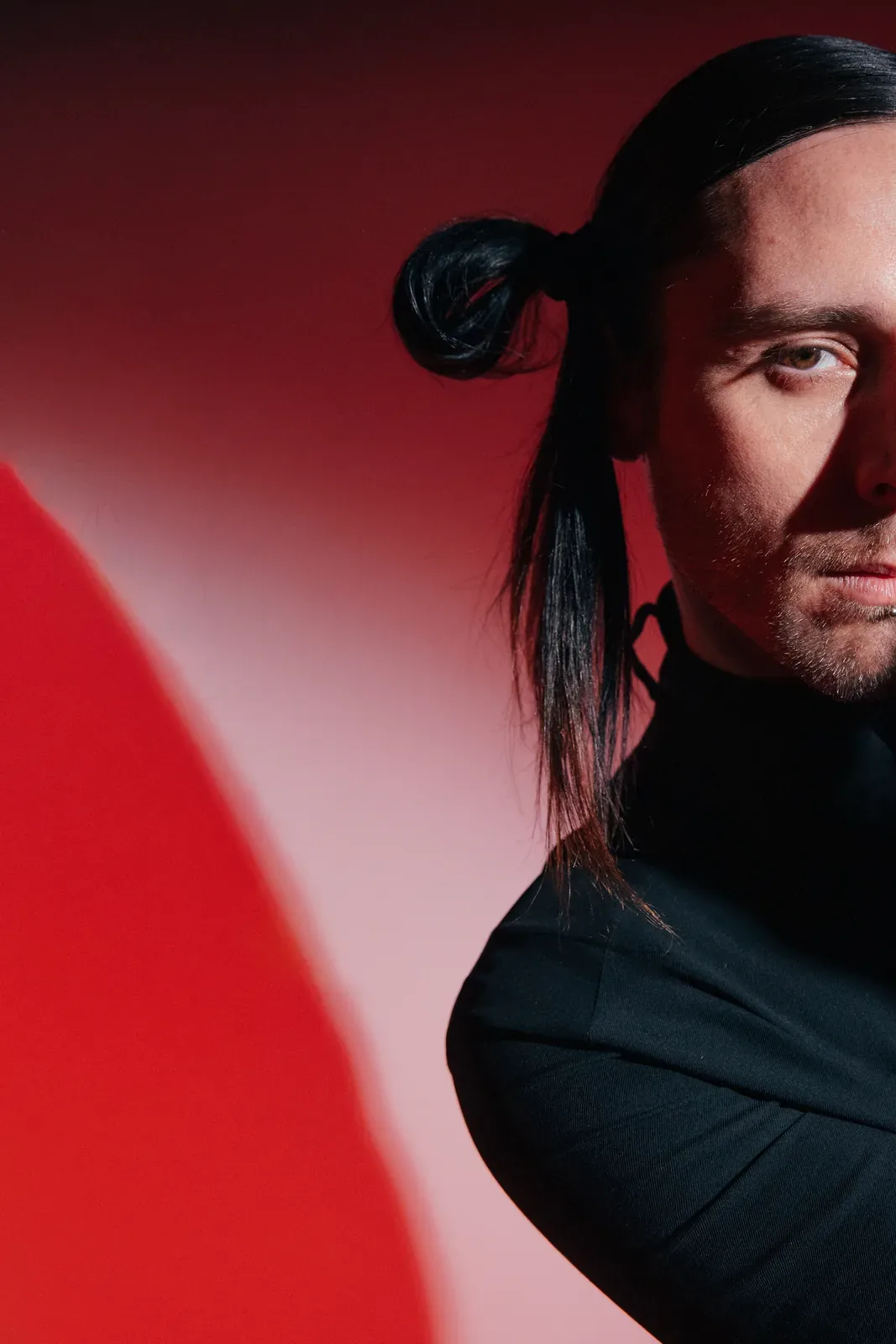
Somewhere between relocation, creative reset, and months spent rebuilding his life in Lisbon, David Castellani found the foundation for “Bodies Tunneling.”
After a year without original releases, David Castellani returns with Bodies Tunneling, a two-track EP arriving after a period of major change. The release follows Noetic showcases across North America with artists like Sterac, Lady Starlight and MAEDON, while also marking his first project since relocating his life and studio from Los Angeles to Lisbon. Across Bodies and Tunneling, restraint and pressure collide in tracks that feel both functional and unsettled.
For Castellani, though, this release goes beyond a simple comeback. Bodies Tunneling arrives tied to a new way of understanding the creative process itself, one where the music feels less controlled and more alive. “I often find myself feeling that the art is being nurtured through me more than it is being created by me,” he tells METAL. That tension between control and surrender gives the EP its pulse, pushing the tracks into stranger, more immersive territory.
How did you wake up the morning of the release? What is the first thing on your mind during these moments?
I’m really excited about this new release. The past year has been a huge transition — moving from Los Angeles to Lisbon, acclimating to a new city, and essentially relocating my whole life across the world. It’s taken a lot of work to feel grounded again, so to finally be creating new music and releasing it into the world feels incredibly energising. On the day of the release, I think the main feeling is gratitude. I’m excited that the music is finally out there, and I’m happy to be sharing more work with the universe.
Do you tend to experience these moments with excitement, pressure, or something quieter, more internal?
There’s always pressure leading up to a release. These days, I think it’s important to stay present — to keep putting music into the world and show that you’re still active, still evolving, and still part of the conversation. It’s a difficult moment in the industry because there’s so much music coming out every day, and a lot of it is genuinely great. So when you’re quiet for a long period of time, it can slow the momentum of a project and make people forget that you’re still participating. For me, the pressure mainly comes from wanting to make sure that both I and the label continue to move forward and keep pushing new art into the world.
Bodies Tunneling arrives after a year without original releases. Did you feel the need to step back before getting here?
Yes, there was definitely some time I needed to reset. I had to take a step back and reconnect with myself, my sound, and the direction I wanted to move in. For me, it’s important to always feel like I’m growing — refining my sound, sharpening my goals, and making sure the work is evolving in an honest way. But beyond that, a lot of the time away also came down to life itself. Moving across the world is a massive transition, and there were so many things that had to be considered and taken care of outside of music. It wasn’t just a creative pause — it was a full life shift.
You’ve described the EP as an exploration of the creative process itself, something fluid, where ideas are uncovered rather than constructed. When did that way of thinking begin to take shape for you?
Honestly, this is something that goes far beyond this release. It’s a way of thinking that has been developing over the years and something I’ve been reflecting on more and more. I often find myself feeling that the art is being nurtured through me more than it is being created by me. I know that might sound a little abstract, but I genuinely believe music comes from the same mysterious place that life comes from. In that sense, I see myself more as a vessel — someone who helps cultivate the growth of the work rather than someone who fully controls or owns it. It’s almost like growing a tree. You plant the seed, water the soil, make sure it has nutrients, sunlight, and the right conditions to grow. But you don’t force it to become exactly what you imagined. You allow it to take its own shape. I think music is similar. It belongs to nature in that way — something magical, deep, and expressive that often becomes more powerful when we stop trying to control every part of it.
There’s a line in your statement about the work eventually becoming separate from you, almost self-sustaining. Is that a liberating idea, or does it also create a certain distance from what you make?
For me, this idea is both liberating and empowering. It doesn’t make me feel disconnected from the music or less involved in the process. If anything, it deepens my connection to it. I still feel completely present in the work, but there’s also a sense of freedom in allowing the music to become what it wants to become. It’s a positive way of experiencing the creative process — one that feels open, honest, and expansive, without any real downside for me.
The EP feels very physical in different ways — Bodies more restrained, Tunneling more driving and immersive. Did they come from the same place, or did they emerge differently over time?
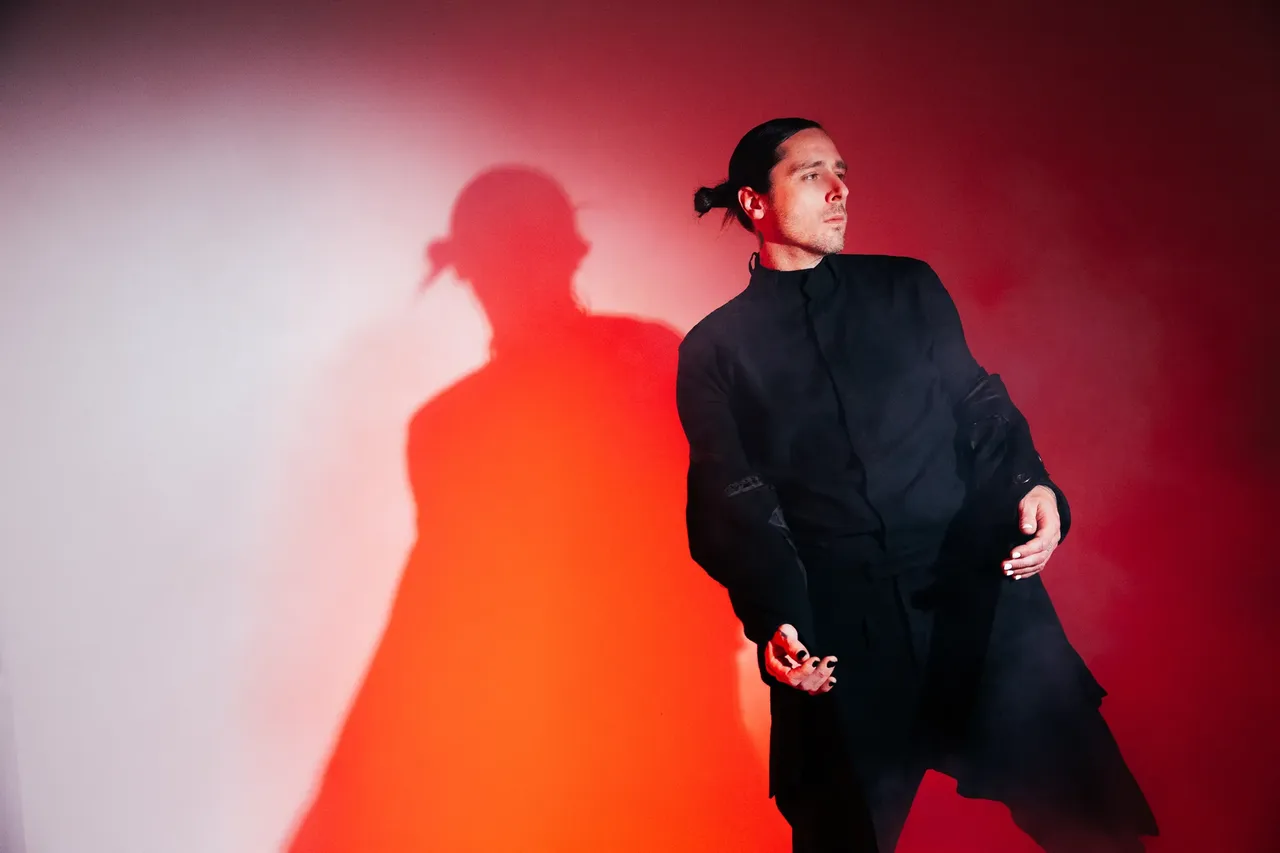
Both tracks actually come from ideas I’ve been playing with over the last few years. Sometimes I start a track completely from scratch, but other times I revisit older projects and begin stripping them down, reshaping them, and finding what still feels alive inside them. That’s what happened here. You’re right in noticing that the two tracks have very different energies, and that was intentional. I wanted one track to feel more dancefloor-focused — something direct, functional, and straightforward for DJs to play. Then I wanted the second track to open up a more artistic, expressive, and slightly more unpredictable space. Together, they show two sides of the project: one that is built for the floor and one that reaches into something more abstract and out of the box.
The project was developed over a long period. Were there moments where everything suddenly clicked, or was it more of a slow unfolding?
Generally, it’s a slow unfolding. A lot of the work develops gradually over time, sometimes in the background while I’m focused on other things. I’ll sit with ideas, revisit them, pull them apart, and let them reveal what they want to become. But when it gets down to the wire, and deadlines start approaching, that’s when I really buckle down and lean into the production side. There’s something about that pressure that forces clarity. It pushes me to stop overthinking and start making decisive choices — what needs to stay, what needs to be removed, where the energy needs to open up, and where it needs to become more controlled. In those final moments, there are usually a few decisions that completely turn the corner. It might be a change in arrangement, a shift in the low end, a modulation detail, or even removing something that was taking up too much space. Those choices help the track snap into focus and find its final place. So while the process can be very intuitive and slow at first, the final stage becomes much more focused and intentional. That’s where the music really starts to take its final shape.
You’ve just come off a run of Noetic showcases across North America, centred on live modular performances. What stayed with you most from that experience?
The last Noetic showcase tour was an incredible period of growth both for me personally and for the label. It was a huge amount of work, and honestly, there were moments where it felt like I may have bitten off more than I could chew. But in the moment, we found the strength, focus, and motivation to get everything done the way it needed to be done. One of the most exhilarating parts of the experience was connecting with the amazing artists who joined us on the tour, including Sterac, Lady Starlight and MAEDON, and building real relationships with people I’ve looked up to for years. That part was incredibly special — not just sharing lineups, but creating moments together and feeling a real sense of community around the music. It was a truly unforgettable time for Noetic, and we’re excited to keep building on it and bring more of these showcases to life in the future.
There was a particularly strong show at Cermak Hall in Chicago. Do certain spaces or nights shift the way you experience your own sound?
That is absolutely true. Every experience with music is a collaboration between so many different forces and moving parts, and that doesn’t change when it comes to performances or events. The space, the promotion, the sound, the atmosphere, the crowd, the people involved — all of it participates in shaping the experience. Nothing exists in isolation. It all feeds into the energy of the night, and that energy directly affects my performance and the way I play. When the vibe is right and the experience feels strong, it gives me something to respond to. It encourages me, empowers me, and helps bring me into the best version of myself as a performer.
In a previous conversation, you mentioned feeling constantly “on the brink of discovery,” pulled in different directions creatively and that modular synthesis reflects that open-ended, unresolved state. Does this EP come from that same place of restlessness, or did it bring a different kind of clarity?
This EP, and honestly, almost every part of my creative process these days, exists in that same space of discovery and exploration. It’s about moving through the creative channels of the work and allowing myself to explore the different directions it might take. The more I work this way, the more grateful I am to have found this process, because the expressions that can be uncovered through it are unbelievable. There’s a depth and honesty that reveals itself when I allow the music to lead as much as I lead it. When I try to control everything too tightly or force the work into the direction I think is “right”, I usually end up limiting both the result and my own experience of making it. So with this EP, I tried to stay open, to follow the energy, to respond to what was happening, and to let the music find its own shape.
“I often find myself feeling that the art is being nurtured through me more than it is being created by me.”
A few years ago, you described discovering analogue hardware as a kind of turning point — that moment when the sound suddenly felt bigger, more physical, almost shocking. Looking back now, how did that shift actually change your relationship with music?
Honestly, I can’t really imagine what my life would be like without hardware or without the tools that help move my creativity forward. It didn’t just change my relationship with music; it completely redefined the way I participate in the art form. It gave music a physical body for me. With hardware, there’s a different kind of relationship that happens. You’re not only thinking about sound — you’re touching it, reacting to it, shaping it in real time. The process becomes tactile and immediate. There are knobs, circuits, cables, voltages, accidents, limitations, and unexpected moments that all become part of the language. That physical interaction creates a deeper sense of presence, and I think that presence comes through in the music. It has given me access to so many nuanced perspectives, textures, and experiences that I don’t think I would have found in the same way otherwise. Hardware forces me to listen differently. It asks me to respond instead of simply control. Often, the machine gives back something I didn’t expect, and that unexpectedness becomes the most exciting part of the process. In a way, it all connects back to the same idea of interacting with the universe through the tools around me. The machines become part of the environment, part of the energy, and part of the musical aura surrounding the work. They’re not just instruments or technical devices — they become collaborators in the process, helping me access ideas, emotions, and expressions that might not have arrived any other way.
When you speak about your connection to music, you often go back to those early memories of being in the car with your parents, listening to Led Zeppelin, The Doors, Bob Marley. What did those moments feel like at the time?
Those moments were the fundamental building blocks of my relationship with music. They were the entryway into my first real experience of connecting sound, air, pressure, and emotion — and understanding how all of that could be released through music. Without those early moments, I’m not even sure I would be involved in music today. It’s hard to fully remember how they felt because I was so young, but I do remember that they opened the door to the depth of what music could mean for me. They were an initiation into something much bigger than sound alone. They showed me that music could hold emotion, movement, memory, intensity, and connection all at once. I’m unbelievably grateful for those experiences, and I’m very humbled by them. I’ll always thank my parents for allowing me to be introduced to music in that way.
Thinking about your journey, what’s the first image that comes to mind when you remember releasing Alpha Gamma back in 2021? Do you feel like a different person now?
It’s funny you ask this, because I recently went back through my catalogue and listened to everything from Alpha Gamma onwards. I have to say, it was surprising to hear how much music has been released on my label since then and also how connected it all still feels. I found a much stronger link between where I am now and where I was then than I expected. Of course, I feel like a different person in many ways — someone who has moved through a lot of growth over the years — but my connection to music still feels rooted in the same place. At the core, I still feel grateful and humbled that I get to participate in this art form and that I get to continue living my life through music.
As you’ve said, you’ve recently relocated your life and studio from LA to Lisbon. Has that shift changed your rhythm, your focus, or even how you listen to your own work?
Moving here was a decision I made for the growth of music in my life. In that sense, yes, it has definitely changed my ability to grow and deepened my understanding of what music can be. But it’s not only about Lisbon; it’s also about the intention I carry with me every day and the choices I make around the life I want to build. I’m very happy to have moved here. Lisbon has a vibrant community of incredibly talented artists, and I feel grateful to be able to participate in that energy while continuing this new chapter of my own journey.
Looking ahead, with an upcoming show at Anthology Detroit on May 25th alongside Fadi Mohem, what are you most excited about right now? What feels like the main goal or focus for you this year?
I’m extremely excited to participate in Anthology in Detroit this year. It feels like one of the most exciting events I’ve played so far, and it’s a humbling opportunity to share the stage with such talented, forward-thinking artists. I’m looking forward to growing, learning, and expressing myself through the experience. This year, the goal is to keep pushing my releases, my label, and my performances forward. I’m also excited to be making my debut at Tresor in Berlin on June 17 for MAEDON’s New Faces party. At this point, music has become an ever-growing loop of excitement for me — almost like a monster that keeps getting hungrier and continues to search for deeper, more enriching experiences. All I can really do is hold on, stay open, and continue moving down this wonderful path.