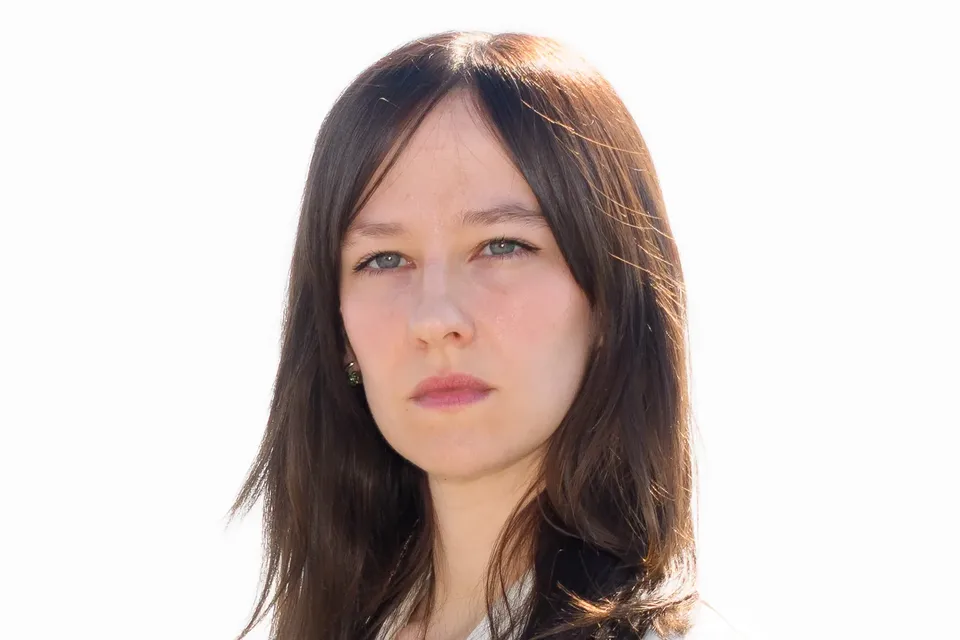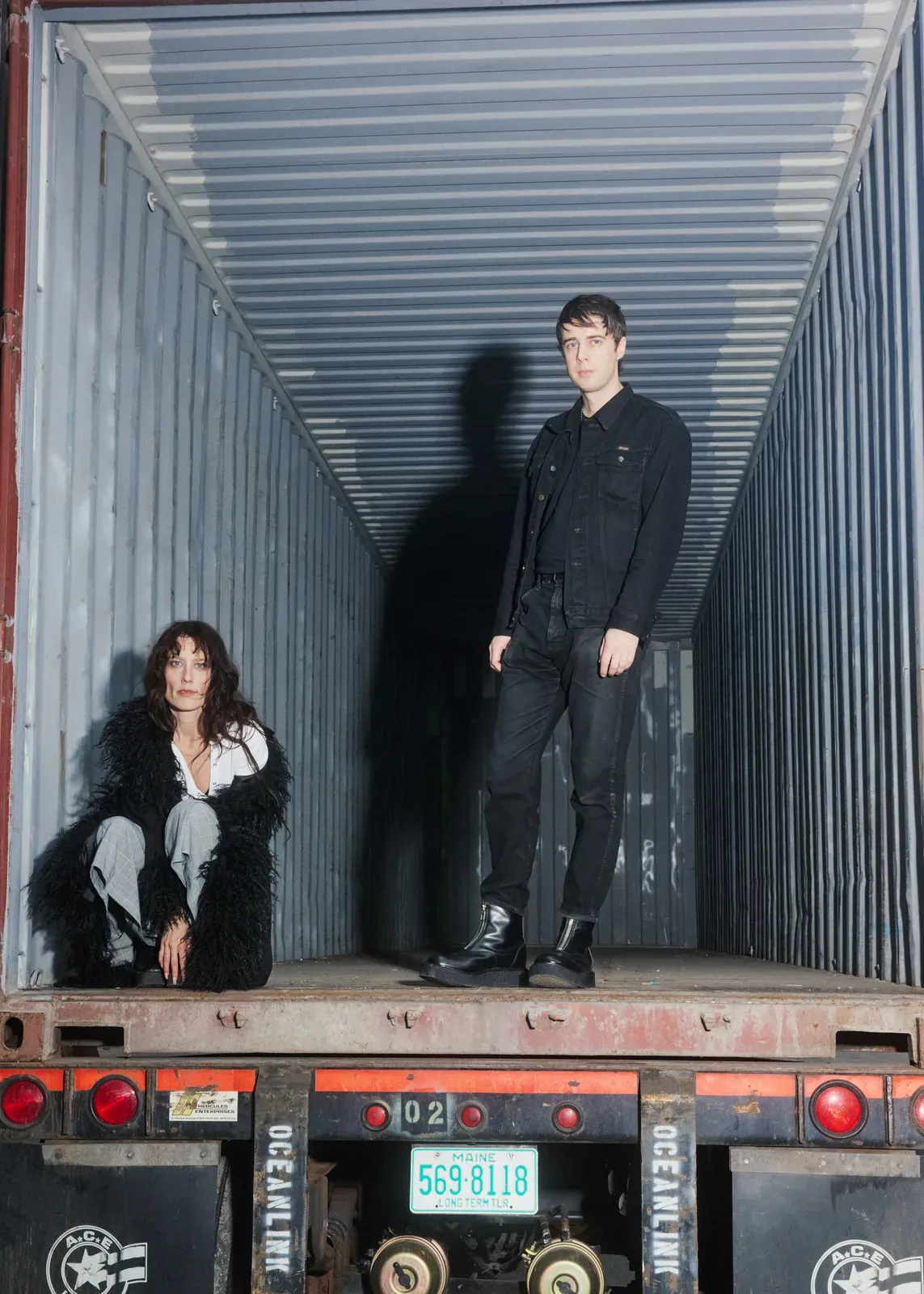
There is something particularly unique and extremely vulnerable about continuing to make music with someone after the relationship that brought you together has come to an end. For Boy Harsher, Get Mean is a record shaped by that very tension: grief, loss, heartbreak, and, eventually, the possibility of healing. There is brightness here, too, even if it comes from having to find your way through the dark first.
Augustus Muller and Jae Matthews formed Boy Harsher in 2013, building a sound that feels as visceral as the circumstances in which it was born. Looking back on those early years, they recall being “in a cargo van, playing basements, so broke, so destructive.” That sense of rawness still runs through their music: dark, sensual synths, an undercurrent of violence and desire, and the unmistakable atmosphere that has defined the duo over the years. From “Pain,” off their Lesser Man EP, to their third LP, Get Mean, Boy Harsher have continued to explore the spaces where intimacy and darkness meet.
But this album carries a different kind of weight. Written in the aftermath of the romantic relationship between Augustus and Jae coming to an end, Get Mean documents a particularly difficult chapter in the duo’s story. As Jae reveals later in our conversation, the two spent a year not speaking after the breakup. On the way to Coachella in 2024, Jae recalls “crying the whole time” in the van. The project had a life of its own, of course, so they decided not to quit.
Boy Harsher had taken on a life of its own, beyond the relationship that had helped shape it. Get Mean is the result of fighting for a shared dream even when you can no longer share a life in quite the same way. A journey, for sure.
The album kicks off with Ronny and Jeans, two tracks that feel decidedly brighter and more pop-oriented than Boy Harsher’s usual sound. Some critics have argued that a new direction doesn’t necessarily mean a more interesting one. Well, I disagree. I think it’s exciting to hear the duo exploring a different register, trying new things, and seeing what works. Isn’t music supposed to be organic and ever-changing? And isn’t that part of what makes music exciting in the first place?
But don’t worry, darkwave fans: tracks like Break Me and Tough Luck (When You Don’t Call) bring us back to the dark basement, ready to dance. Get Mean moves between darkness and light, much like love itself. We sat down with the duo to discuss what it meant to keep creating in the aftermath of their breakup, the album’s sonic evolution, and the journey of healing through music.
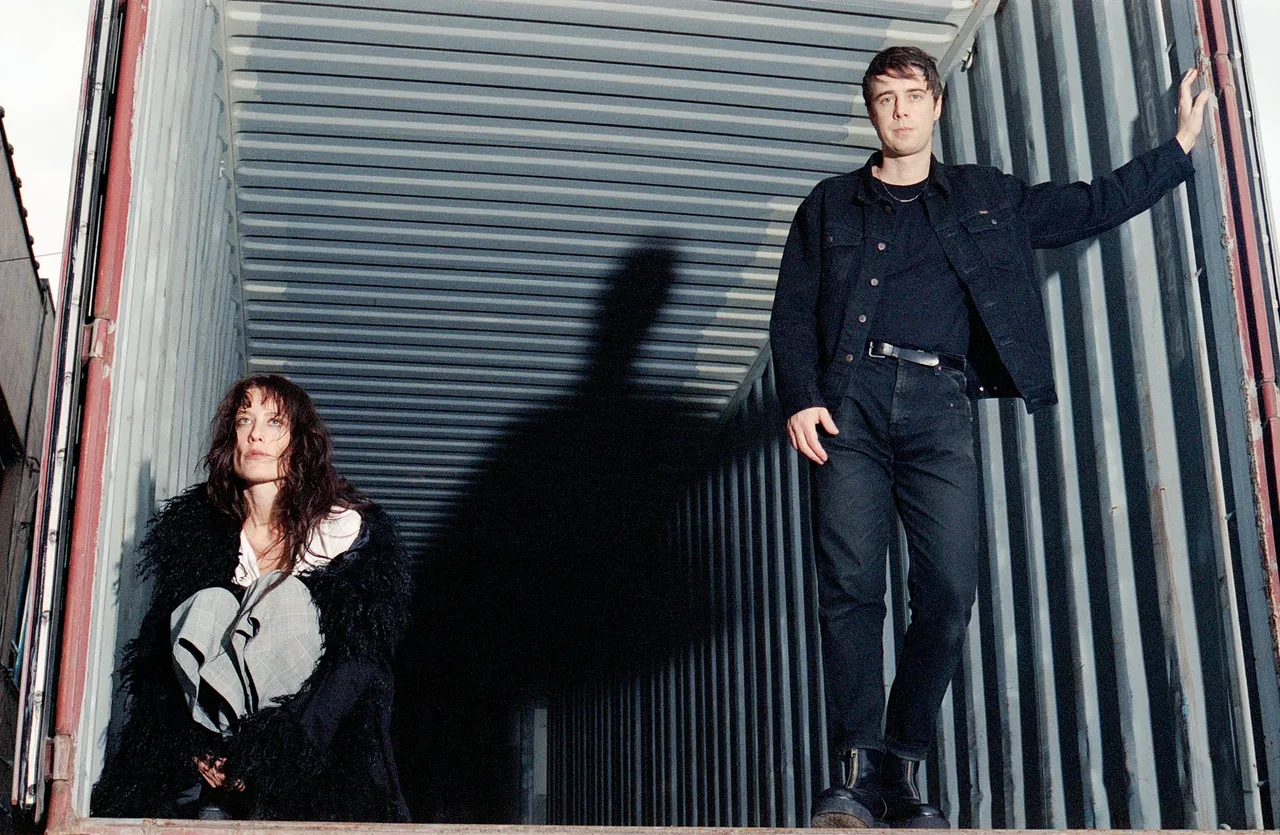
On Get Mean, you seem to be expanding Boy Harsher’s sound. There’s more space, melody, and brightness alongside the darker electronic textures you’re known for. What were you most interested in exploring sonically this time?
Augustus: We were experimenting. I think ultimately we were trying to make something cathartic, something that felt good, maybe even healing.
Jae: There’s a brightness to Get Mean, I feel it. But also resilience. While we were writing, I couldn’t confront the inescapable darkness of loss, the breakup, my mum’s death. I needed music that made me happy, held me.
Jae: There’s a brightness to Get Mean, I feel it. But also resilience. While we were writing, I couldn’t confront the inescapable darkness of loss, the breakup, my mum’s death. I needed music that made me happy, held me.
When you were making the record, was there anything you found yourselves doing differently from the way you’d made a Boy Harsher record before?
Augustus: We collaborated a lot more on this record. There are a few co-writers on the record who really took the album to the next level.
Jae: I allowed myself to use my voice differently. Previously, I was stuck in a certain type of singing, but with Get Mean, I wanted to try out Chrissie Hynde, Chan Marshall … I wanted to be ’Til Tuesday. I wanted to explore what I could do. Whether or not it’s successful, who knows!
Jae: I allowed myself to use my voice differently. Previously, I was stuck in a certain type of singing, but with Get Mean, I wanted to try out Chrissie Hynde, Chan Marshall … I wanted to be ’Til Tuesday. I wanted to explore what I could do. Whether or not it’s successful, who knows!
What feels most different about making Boy Harsher now compared with when you first started?
Jae: There’s a lot of noise. Don’t get me wrong: we are so lucky, we are blessed, but it can be overwhelming. There’s pressure to be so much. When we began in 2013, the stakes were so low. Gus and I in a cargo van, playing basements, so broke, so destructive, our toxic love kept us going. Now it’s a full-on business. It requires a lot of discipline and thick skin.
Augustus: We have more resources now. When we started out, I had an MC-505 and a borrowed Juno-106 with a broken voice chip. We made all our music with that. On this last record, I had access to essentially every synth on the planet.
Augustus: We have more resources now. When we started out, I had an MC-505 and a borrowed Juno-106 with a broken voice chip. We made all our music with that. On this last record, I had access to essentially every synth on the planet.
You decided to continue Boy Harsher as creative partners after the end of your romantic relationship. What have been the challenges and unexpected benefits of continuing to make music together, and has it brought any sense of closure?
Jae: Well, we didn’t really “speak” for a year, 2024. The same year we played Coachella. I cried in the van the whole time. I was so lonely, I was so broken. But I was unwilling to give up Boy Harsher. I worked so hard, and then worked so hard just to function when everything else fell apart. And, weirdly, it’s been rewarding. I made an album that I am so proud of. I grew a lot, and when I play the songs live, I feel like I am talking directly to the crowd, and they are sending it right back.
Augustus: We wrote much of the album apart, speaking only through the music I sent and the vocals Jae returned. It was a conversation; we were listening to each other.
Augustus: We wrote much of the album apart, speaking only through the music I sent and the vocals Jae returned. It was a conversation; we were listening to each other.
Tough Luck (When You Don’t Call) feels like the ultimate breakup song, very much in your own language and style. There’s that sequence: “Is there nothing left to say? / And I feel possessed / When I think about your face / Do you feel regret? / Do you even know my name.” What is it like to write something personal about someone and then sit in the studio and work on the song with the actual person it’s about?
Jae: I am curious how Gus feels. He’s technical, and I’ve said that when it comes down to it, he treats my voice like another tool in the studio. Somehow, when we enter the room, the rawness dissipates … but, you know, I can still be a prickly bitch, so we can fight. So tracking a line like the above can have some actual motivation behind it in the booth!
Augustus: By the time we were working together in the studio, the album had taken its own form. Music is fiction. It’s a novel or a film drawn from personal experiences.
Augustus: By the time we were working together in the studio, the album had taken its own form. Music is fiction. It’s a novel or a film drawn from personal experiences.
“Music is fiction. It’s a novel or a film drawn from personal experiences.”
There’s a strong sense of absence and longing running through Get Mean. If you had to put the lyrical heart of the record into one sentence, what would it be?
Jae: The narrative is a bit of a journey. I want to say Get Mean is about encounters, interactions. Some songs are clearly me as witness (Jeans), while others are totally first-person syndrome: I am in the car, I am getting rejected, I am in the smoky room next to the junkie cowboy, I am lust, lust, lust, those Boy Harsher standbys. But at a certain point, it feels like I am confronting the losses, the longing, this trauma, and attempting perseverance. I think about Ice Pick, which describes that ache, the polarisation of lost love, or rather, loving something that you’re losing. I hope it means I’m growing, to “walk away” and all that.
Augustus: My analogy is that it's the soundtrack to the ride home the day after a funeral. You’re emotionally drained, but the sun is cresting on the horizon.
Augustus: My analogy is that it's the soundtrack to the ride home the day after a funeral. You’re emotionally drained, but the sun is cresting on the horizon.
The title Get Mean feels confrontational, while so much of the record is concerned with intimacy, grief, and vulnerability. What does that phrase mean to you in the context of the album?
Jae: Get Mean is a direct pull from our first single, Jeans. Outside of this context, it means grow up or toughen up, for me at least. Women are conditioned to be so copacetic, and I, after the breakup, after Mum’s death, just grew so tired of, again, the way everyone perceived me and how I was expected to behave. I was so concerned with proving that I was kind and okay and not at all a disaster. I couldn’t maintain the bit. With the growing fanbase, people come after me no matter what, so ultimately I need to get mean (laughs), and close my mind to random, critical strangers. Trust your own conditions.
Augustus: It was meant to be tongue-in-cheek. We were playing around with some American Western tropes on this record, and Get Mean is a reference to that. I had originally pitched something much more sombre and melodramatic for a title, but I think a little levity was needed.
Augustus: It was meant to be tongue-in-cheek. We were playing around with some American Western tropes on this record, and Get Mean is a reference to that. I had originally pitched something much more sombre and melodramatic for a title, but I think a little levity was needed.
Are there any stages or places you’re particularly looking forward to bringing Get Mean to? Perhaps anything you can reveal about what’s coming up?
Jae: I mean, crowds have been so amazing so far. I cannot wait for CDMX. Our fanbase there is rabid, so much love to them. I also love that city so much. I love to eat, so Mexico City really serves my personal love language.
Augustus: Anywhere, really. We have a lot to explore with these new songs, and it’s been exciting working on them night after night. It feels like we’re opening a new world.
Augustus: Anywhere, really. We have a lot to explore with these new songs, and it’s been exciting working on them night after night. It feels like we’re opening a new world.
Now that the album is out and touring, what do you hear in Get Mean that you perhaps couldn’t hear while you were making it?
Jae: We make music for ourselves, for that liberation and catharsis, but once you release it, it’s for everyone else. I hope they feel the wildness, the Boy Harsher lust, pain, desire, rage, but also feel a transference. We make dance music, after all.
Augustus: To be honest, it still feels the same for me.
Augustus: To be honest, it still feels the same for me.