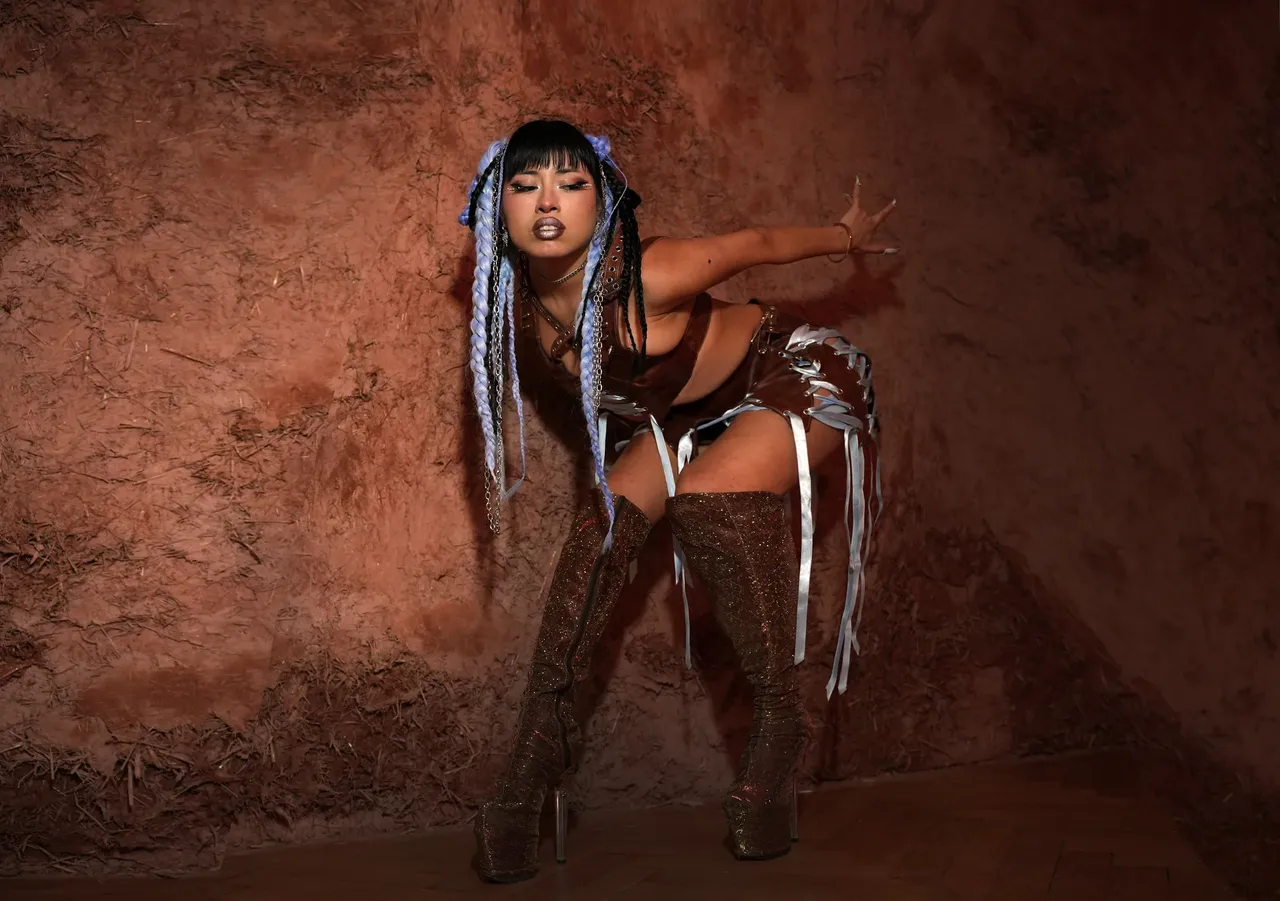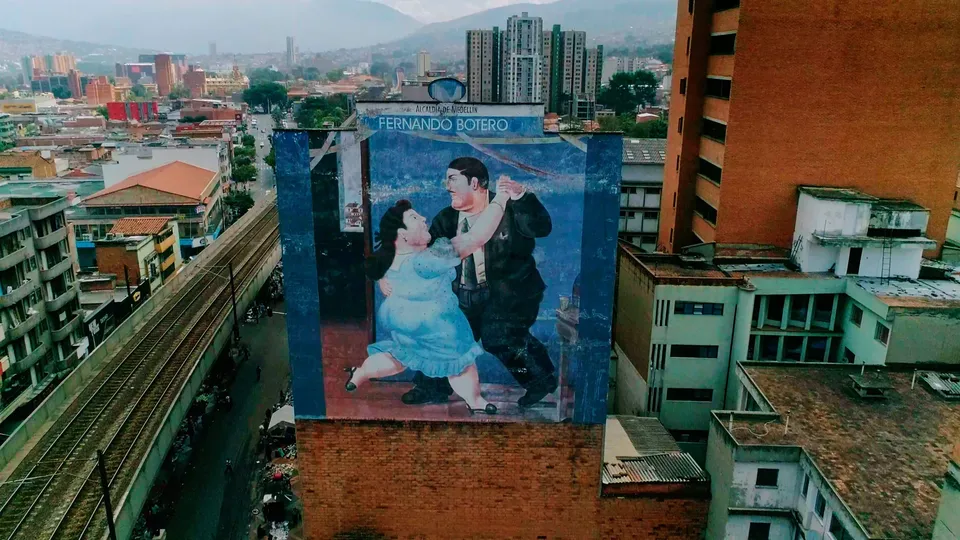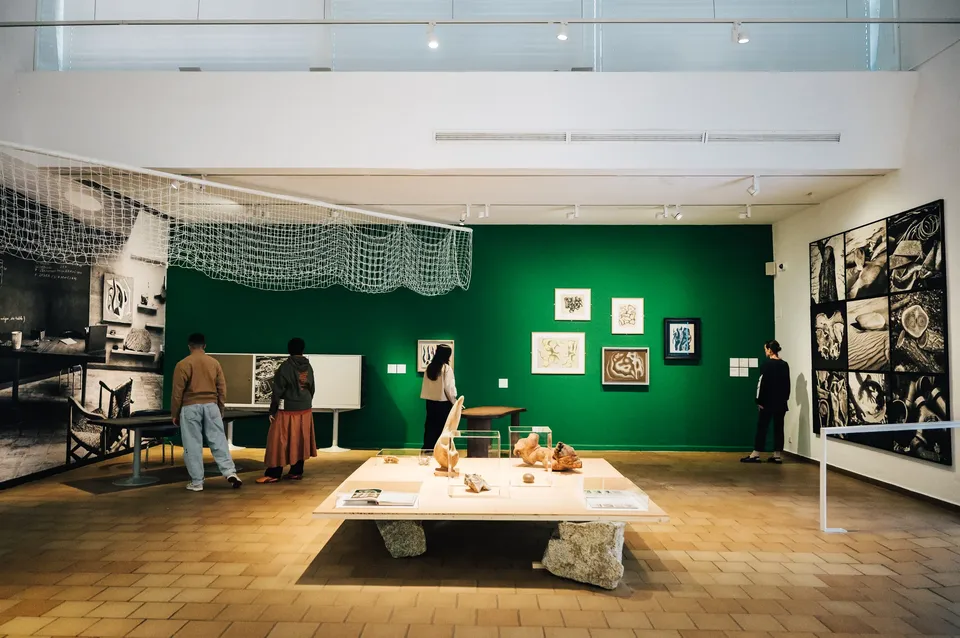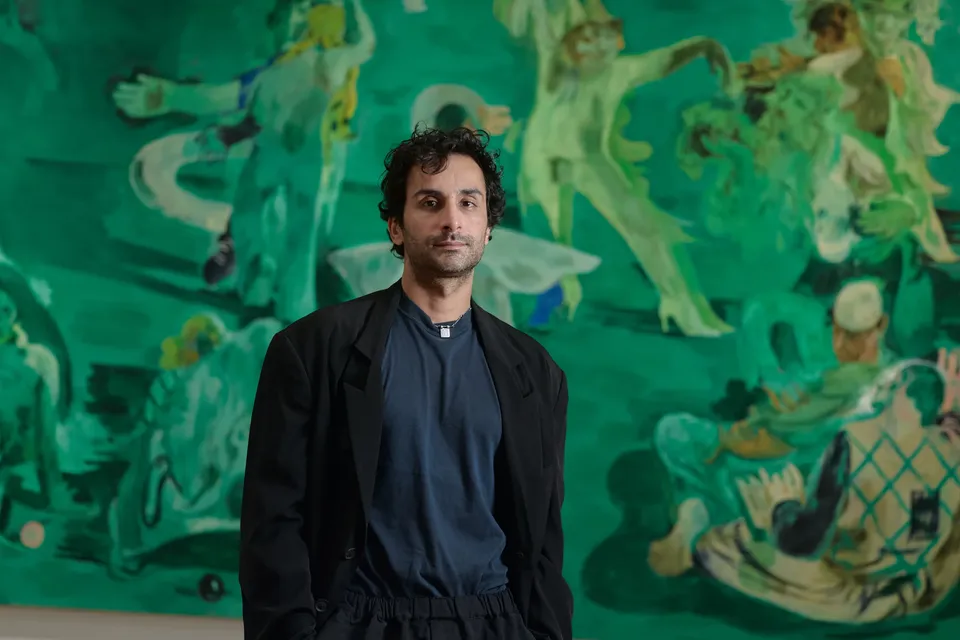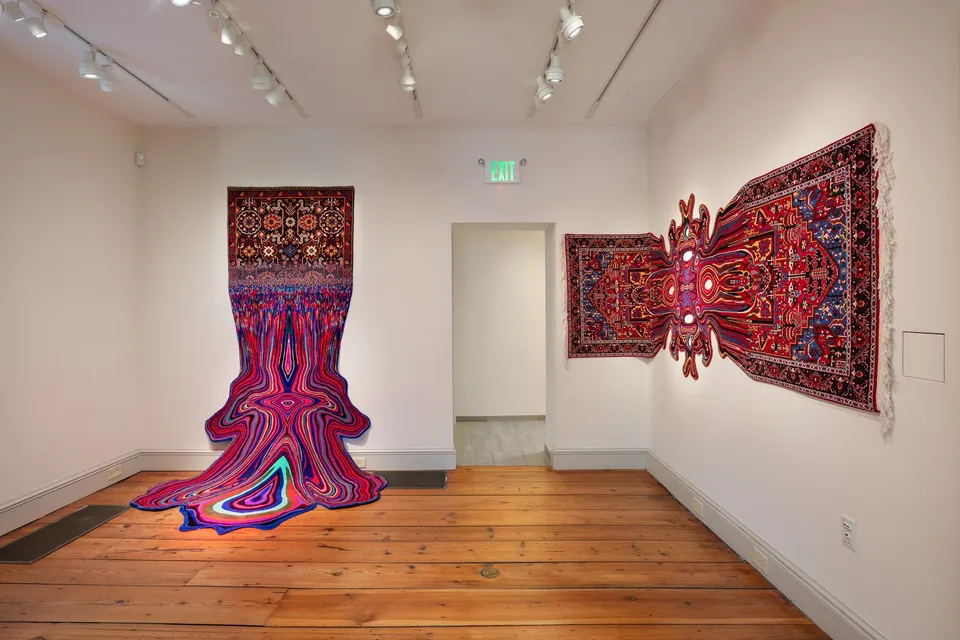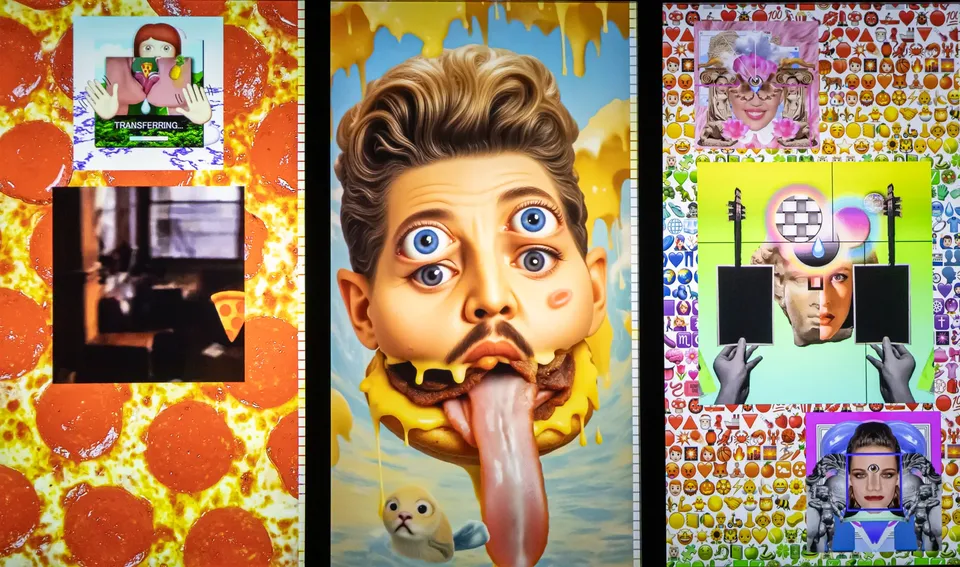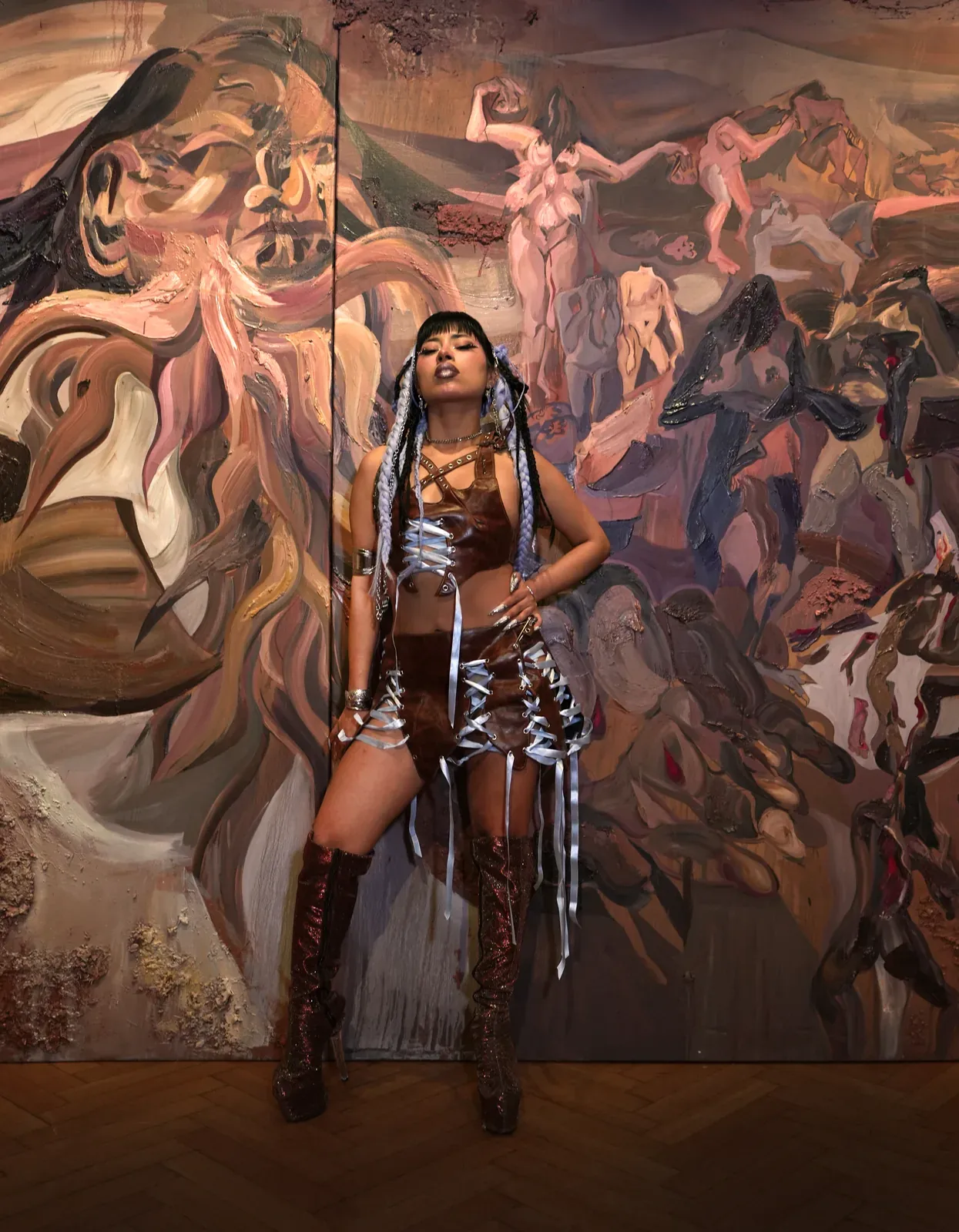
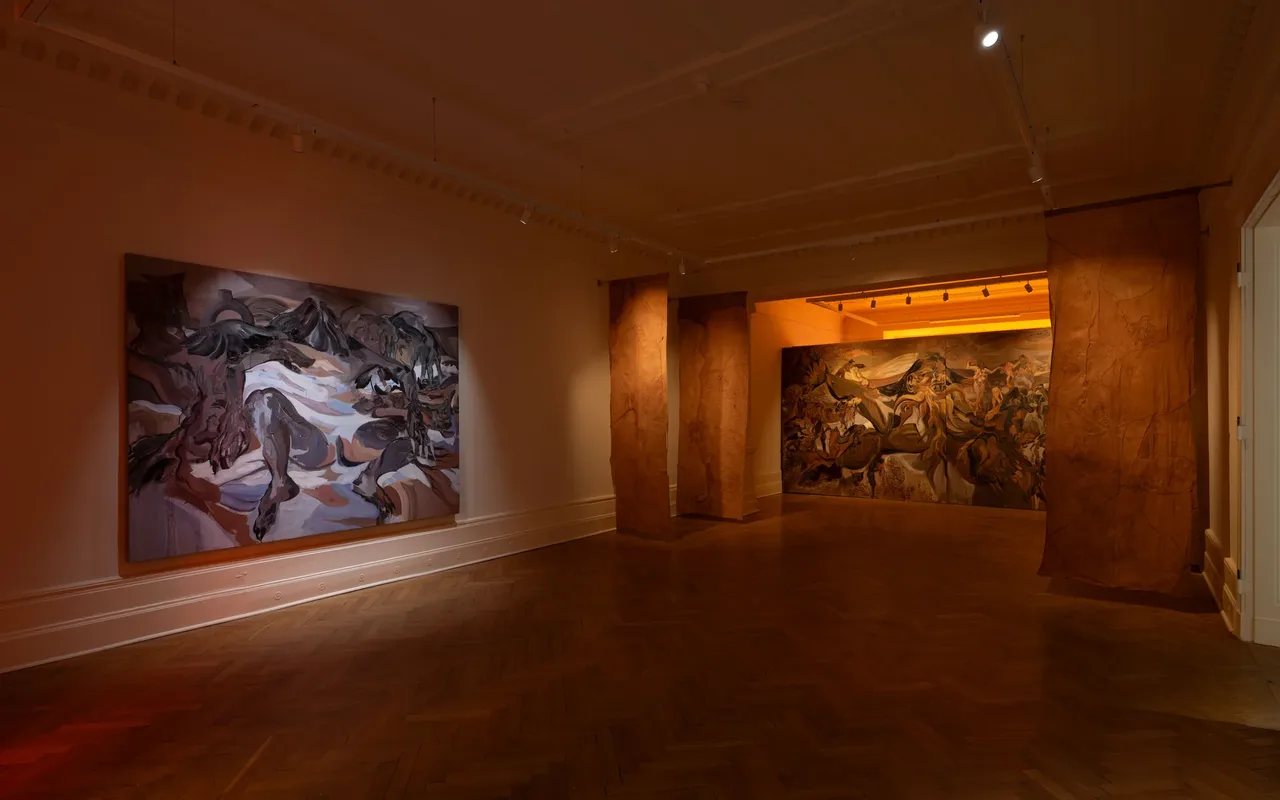
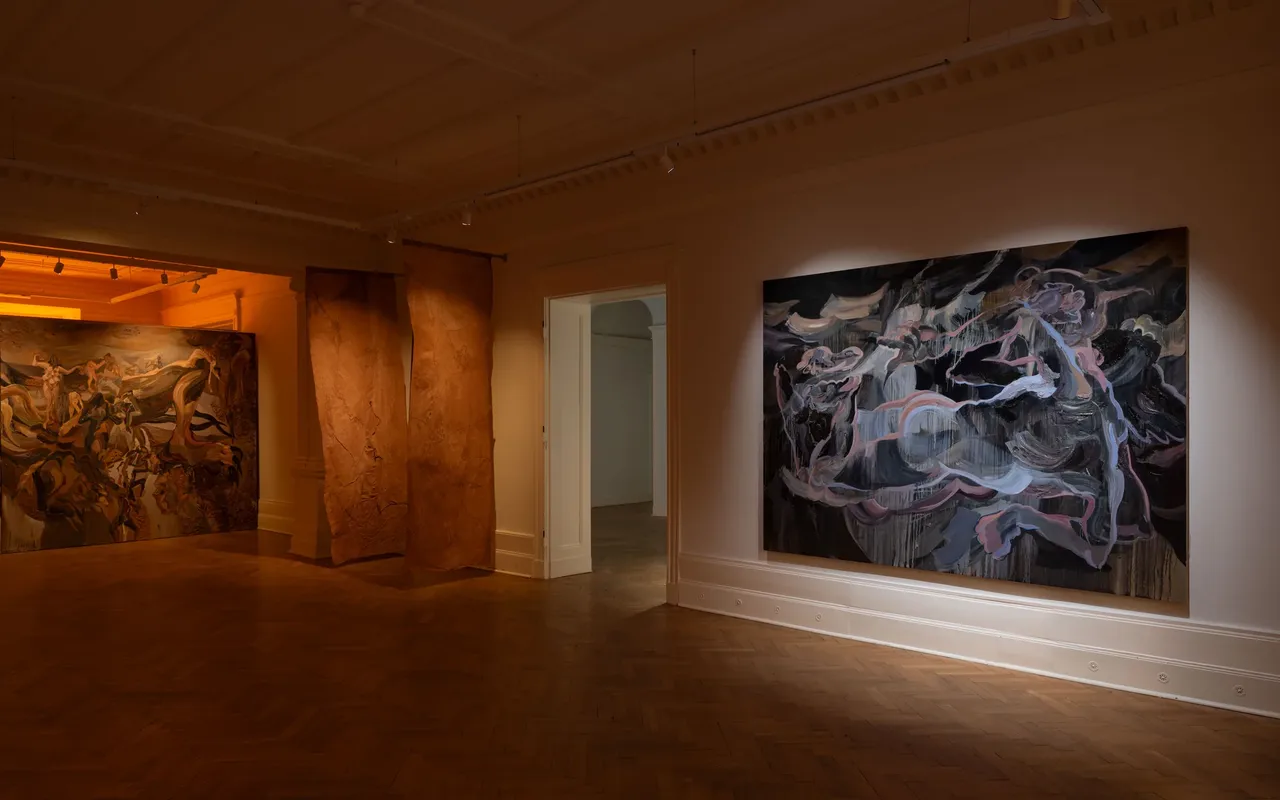
Love has long been imagined as one of the most private of human experiences: romantic, intimate, and fundamentally individual. But what if love were instead understood as a collective force — one that sustains communities, preserves memory, and resists systems built on separation? It is from this shift away from the autonomous self that Wynnie Mynerva constructs Volveré y seré millones, on view at Société Berlin until 27 June.
Drawing from Andean philosophies of relationality, the Peruvian artist moves beyond the body as an isolated site of desire or violence, proposing instead forms of existence rooted in care, interdependence, and the persistence of collective life.
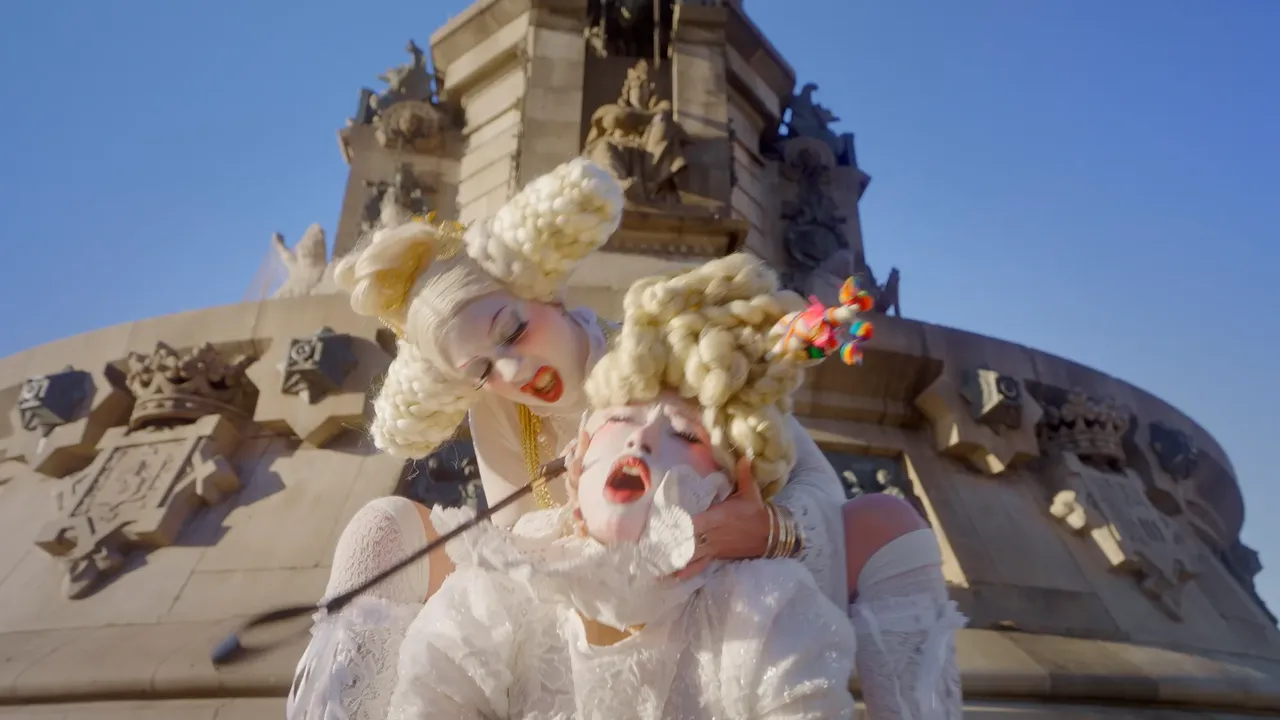
The title of the show references the final words attributed to Túpac Katari: “I will return and I will be millions.” What does this idea of return mean to you today? Do you understand it as something political, spiritual, emotional, or even bodily?
This is an Andean Indigenous phrase of resistance from the eighteenth century, in what are now the territories of South America. It symbolises the idea that the death of one person cannot bring a collective struggle to an end. It was said by Túpac Katari, an Aymara leader executed by the Spanish colonial regime. To this day, the phrase continues to be invoked within the collective struggles of Indigenous and social movements throughout our region.
I chose it because, since living in Berlin and Europe more broadly, it has acquired a particular political significance for me in the context of the global situation we are currently living through. The brutal devastation of Gaza and the convenient silence of much of Europe in defending life have dismantled many of the narratives with which we grew up in the Global South.
It has become evident which lives are considered worthy of protection and which can be sacrificed in the name of geopolitical interests. This reflection goes beyond Palestine. We are witnessing a public display of impunity. What for many generations appeared to be an international order based on human rights and democratic values now reveals itself as a set of convenient fictions of power, power that today manifests itself as the power of death.
In the face of this unveiling, I think it is important to turn our attention toward other territories and other traditions of thought. We must revisit ancient forms of knowledge that have also shaped the world, but that have been systematically marginalised by the West. I am interested in these forms of knowledge from the territories where I come from, which also survived processes of genocide, dispossession, and exploitation.
It is from that place that the phrase I will return and I will be millions acquires meaning. As the persistence of memories, knowledge, and collective ways of life that, despite centuries of violence, continue to reappear and reclaim their place in the world.
I chose it because, since living in Berlin and Europe more broadly, it has acquired a particular political significance for me in the context of the global situation we are currently living through. The brutal devastation of Gaza and the convenient silence of much of Europe in defending life have dismantled many of the narratives with which we grew up in the Global South.
It has become evident which lives are considered worthy of protection and which can be sacrificed in the name of geopolitical interests. This reflection goes beyond Palestine. We are witnessing a public display of impunity. What for many generations appeared to be an international order based on human rights and democratic values now reveals itself as a set of convenient fictions of power, power that today manifests itself as the power of death.
In the face of this unveiling, I think it is important to turn our attention toward other territories and other traditions of thought. We must revisit ancient forms of knowledge that have also shaped the world, but that have been systematically marginalised by the West. I am interested in these forms of knowledge from the territories where I come from, which also survived processes of genocide, dispossession, and exploitation.
It is from that place that the phrase I will return and I will be millions acquires meaning. As the persistence of memories, knowledge, and collective ways of life that, despite centuries of violence, continue to reappear and reclaim their place in the world.
In your recent work, there seems to be a shift from the individual body toward more collective forms of existence. Do you feel your practice has moved away from focusing solely on the “self” toward questions of community, territory, and belonging?
I am not sure that my practice has completely moved beyond the “self.” I almost always begin with issues that affect me personally. I feel a certain anxiety about speaking on behalf of others, so I try to work from a situated position and speak about what I know through lived experience. These projects usually emerge from intense emotions such as anger, melancholy, or certain knots of feeling that move me.
What has changed are the questions that run through my own experience. In Lima, my earliest artistic investigations focused on sexuality, gender, desire, and pleasure. I was interested in understanding how power operates, particularly through patriarchy, and how femininity could become a point of departure for reading the social dynamics of my own community. Many of those works emerged from observing the neighbourhoods of South Lima where I grew up and from thinking about how violence, precarity, and death become inscribed upon bodies.
Living in Europe shifted some of my questions. I still begin from personal experience, but that experience is now traversed by other ideas: borders, migration, legality, and rights as a fiction. I came to understand that these categories are also historical products of the same structures of power that I had previously been examining through gender. So, I do not think I abandoned one line of inquiry in order to begin another; rather, the field of analysis expanded.
Perhaps that is why a collective dimension appears more strongly now. Not because I decided to stop taking the body as a point of investigation, but because I have begun to question the very idea of the individual as an autonomous and self-sufficient entity.
What has changed are the questions that run through my own experience. In Lima, my earliest artistic investigations focused on sexuality, gender, desire, and pleasure. I was interested in understanding how power operates, particularly through patriarchy, and how femininity could become a point of departure for reading the social dynamics of my own community. Many of those works emerged from observing the neighbourhoods of South Lima where I grew up and from thinking about how violence, precarity, and death become inscribed upon bodies.
Living in Europe shifted some of my questions. I still begin from personal experience, but that experience is now traversed by other ideas: borders, migration, legality, and rights as a fiction. I came to understand that these categories are also historical products of the same structures of power that I had previously been examining through gender. So, I do not think I abandoned one line of inquiry in order to begin another; rather, the field of analysis expanded.
Perhaps that is why a collective dimension appears more strongly now. Not because I decided to stop taking the body as a point of investigation, but because I have begun to question the very idea of the individual as an autonomous and self-sufficient entity.
“I have begun to question the very idea of the individual as an autonomous and self-sufficient entity.”
The show proposes a return to forms of Andean thought in which existence is always tied to the collective. Tell me more about living between Latin America and Europe, has that transformed your relationship to those ideas or to that cultural memory?
Yes, profoundly. In recent years I have spent a great deal of time thinking about what it means to be a South American artist working and exhibiting in Europe. I am interested in questioning what my responsibility is toward the subjects I represent and the stories I tell, as well as who the subjects observing those representations are.
In some ways, I have begun to feel uncomfortable with the possibility of transferring issues related to gender violence, machismo, or precarity in South America and presenting them in Europe as objects of scrutiny. I worry that certain experiences from the Global South can be consumed as evidence of a supposed moral distance, where Europe appears as the place that observes and South America as the problematic territory being observed.
Through recent contexts of violence, we have seen how the dehumanisation of certain peoples operates precisely through the construction of cultural, political, and religious differences that ultimately justify the disappearance of entire cultures. This has led me to question many of the categories I previously worked with and to ask myself what it means to produce images from a critical position within Europe.
I am more interested in developing projects that establish conversations between the contexts I come from and the territories where the works are exhibited. I am not interested in bringing problems from Peru to Europe as though they were isolated phenomena. In that sense, my relationship to Andean thought has also changed. I no longer understand it solely as a cultural inheritance, but as a critical tool for thinking about the present.
In some ways, I have begun to feel uncomfortable with the possibility of transferring issues related to gender violence, machismo, or precarity in South America and presenting them in Europe as objects of scrutiny. I worry that certain experiences from the Global South can be consumed as evidence of a supposed moral distance, where Europe appears as the place that observes and South America as the problematic territory being observed.
Through recent contexts of violence, we have seen how the dehumanisation of certain peoples operates precisely through the construction of cultural, political, and religious differences that ultimately justify the disappearance of entire cultures. This has led me to question many of the categories I previously worked with and to ask myself what it means to produce images from a critical position within Europe.
I am more interested in developing projects that establish conversations between the contexts I come from and the territories where the works are exhibited. I am not interested in bringing problems from Peru to Europe as though they were isolated phenomena. In that sense, my relationship to Andean thought has also changed. I no longer understand it solely as a cultural inheritance, but as a critical tool for thinking about the present.
survival, and shared responsibility. How has your understanding of love changed through your experience of living in Europe?
My understanding of love has always been more closely connected to care than to romance. I come from spaces where mutual support networks were precisely what made survival possible. I think of my parents, for example. They were the ones who supported me, pushed me forward, and gave me the strength necessary to imagine a different future. My life would have been completely different without that love.
Perhaps that is why I find it difficult to think of love solely as a private experience. I understand it instead as a force that allows us to exist alongside others. Coming from a community like Villa El Salvador, I grew up seeing how people moved forward through collective forms of organisation, mutual aid, and shared responsibility. There was a very clear understanding that nobody saves themselves alone.
Perhaps that is why I find it difficult to think of love solely as a private experience. I understand it instead as a force that allows us to exist alongside others. Coming from a community like Villa El Salvador, I grew up seeing how people moved forward through collective forms of organisation, mutual aid, and shared responsibility. There was a very clear understanding that nobody saves themselves alone.
There’s a strong critique of Berlin’s global image as a capital of sexual liberation running through the show. What aspects of that narrative are you interested in questioning or dismantling? Does fantasy collide with your actual experience of living there?
When I arrived in Berlin, one of the most prevalent narratives was that of the city as a space of freedom, especially sexual freedom. And while there are elements of truth in that story, over time I became less interested in that image and more interested in the contradictions it contains.
Today it is more urgent to ask what it means to speak about freedom in a city and on a continent where cultural institutions, museums, universities, and artistic spaces have reacted so restrictively toward voices denouncing the devastation of Gaza. In recent years, artists and cultural workers have faced cancellations and censorship for expressing critical positions on the matter. That made me question how far this idea of freedom that Berlin projects to the world actually extends.
The question is no longer only who can desire freely, but also who can speak, who can be mourned, and who deserves solidarity.
Today it is more urgent to ask what it means to speak about freedom in a city and on a continent where cultural institutions, museums, universities, and artistic spaces have reacted so restrictively toward voices denouncing the devastation of Gaza. In recent years, artists and cultural workers have faced cancellations and censorship for expressing critical positions on the matter. That made me question how far this idea of freedom that Berlin projects to the world actually extends.
The question is no longer only who can desire freely, but also who can speak, who can be mourned, and who deserves solidarity.
“The question is no longer only who can desire freely, but also who can speak, who can be mourned, and who deserves solidarity.”
The myth of Inkarri appears throughout the show: a dismembered body that continues regenerating beneath the earth. What did you find in that figure that resonated with your current practice?
It relates to what I was discussing earlier. What interests me about the myth of Inkarri is that it speaks of a body subjected to one of the most extreme forms of violence: the loss of life itself. It is a body dismembered by colonial power, yet even after that violence it continues to exist and regenerate.
That story also takes us back to a moment when racialisation became a technology of power. During the colonial period, the caste system organised society according to racial hierarchies that determined who had access to rights and resources, and who was exposed to different forms of exploitation and death. Violence was not an exception to the system; it was one of its foundations.
What I find powerful about the myth of Inkarri is that it allows us to establish a bridge between those histories of colonial violence and many of the forms of violence we continue to witness in the present. Not because they are identical, but because it offers hope regarding the capacity of peoples to survive horror, preserve memory, and rebuild forms of life after violence.
That story also takes us back to a moment when racialisation became a technology of power. During the colonial period, the caste system organised society according to racial hierarchies that determined who had access to rights and resources, and who was exposed to different forms of exploitation and death. Violence was not an exception to the system; it was one of its foundations.
What I find powerful about the myth of Inkarri is that it allows us to establish a bridge between those histories of colonial violence and many of the forms of violence we continue to witness in the present. Not because they are identical, but because it offers hope regarding the capacity of peoples to survive horror, preserve memory, and rebuild forms of life after violence.
In your earlier works, the body often functioned as a battlefield. Here, it also appears as an archive, a territory, and even a seed of resistance. How do you think about the relationship between body and history today?
As Rita Segato points out, power cannot be looked directly in the face; what we can observe are its effects and the traces it leaves behind. That is why I am interested in thinking about the body as a place where collective experiences accumulate, where grand historical narratives acquire an everyday dimension.
After so many years of exposing such an intense and public image of your body and identity, what parts of yourself still remain private?
There are parts of me that remain private simply because no artwork could ever contain the full complexity of a person.
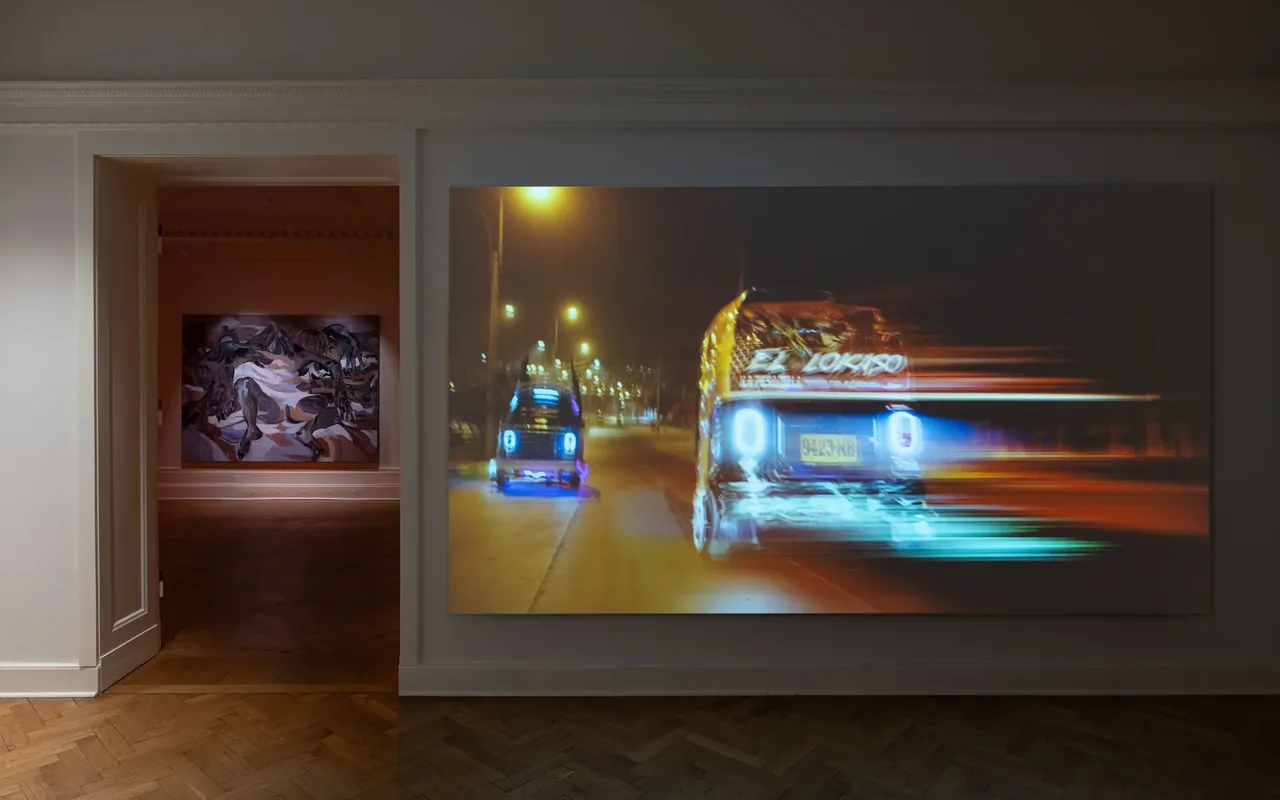
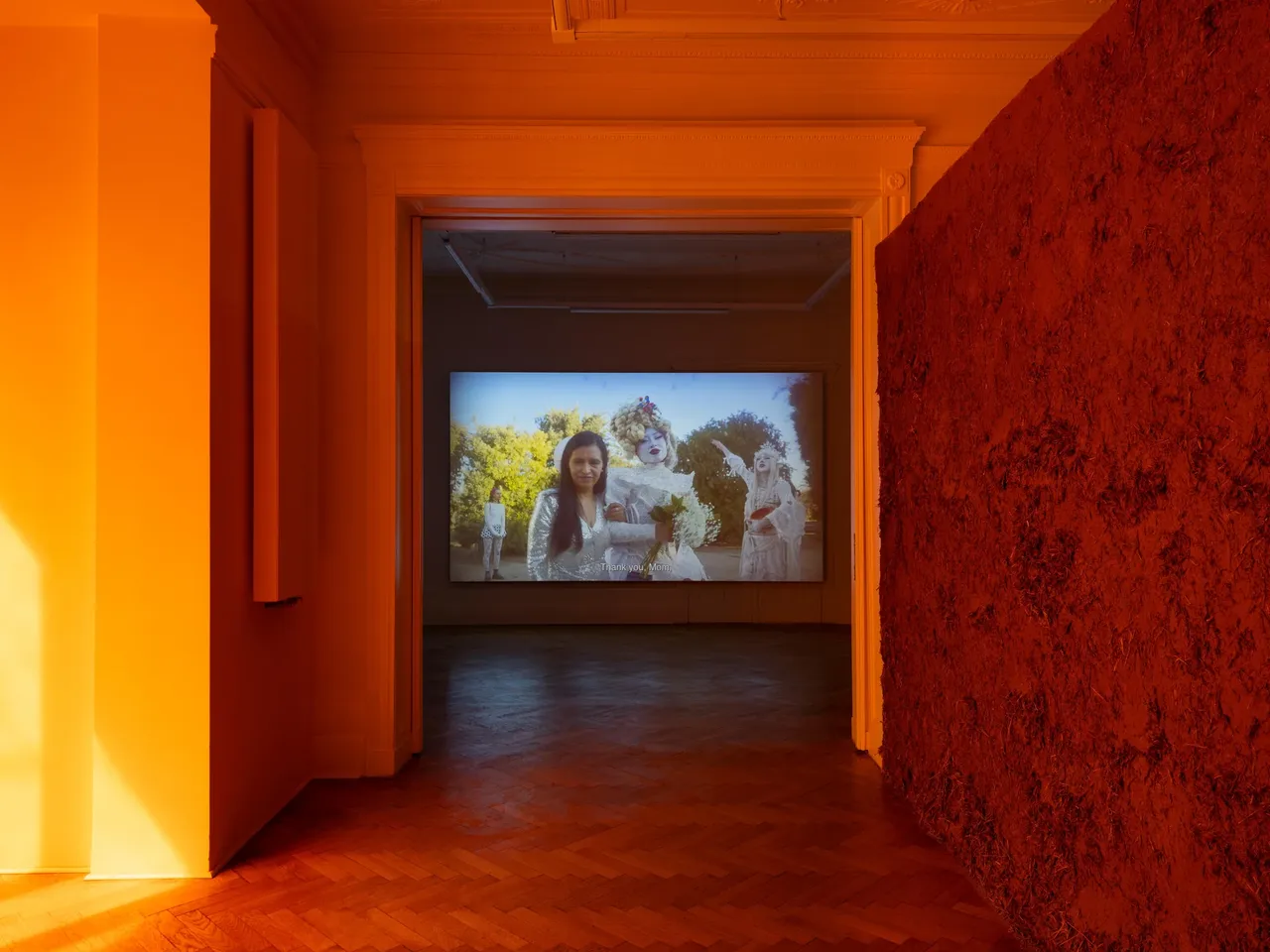
El Amor en los tiempos de colonialismo, 2026
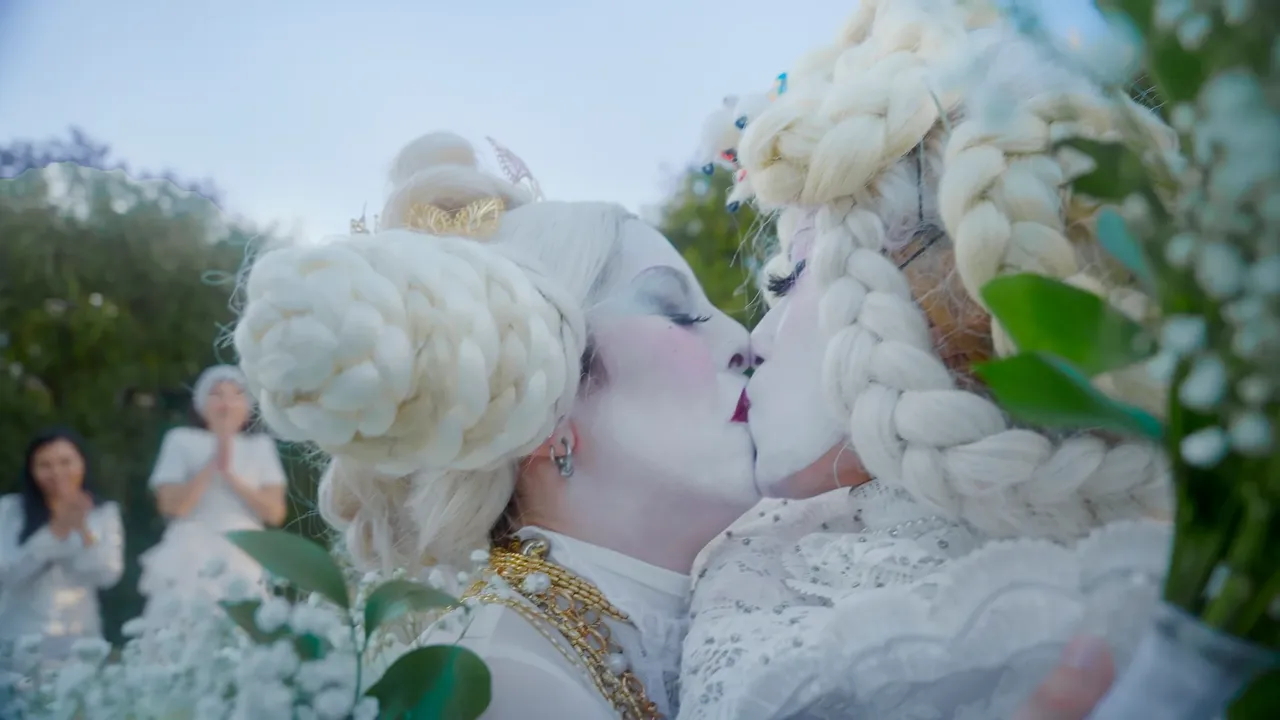
El Amor en los tiempos de colonialismo, 2026 © Wynnie Mynerva - Courtesy the artist, Société, Berlin and Gathering London / Ibiza Ph: Trevor Good
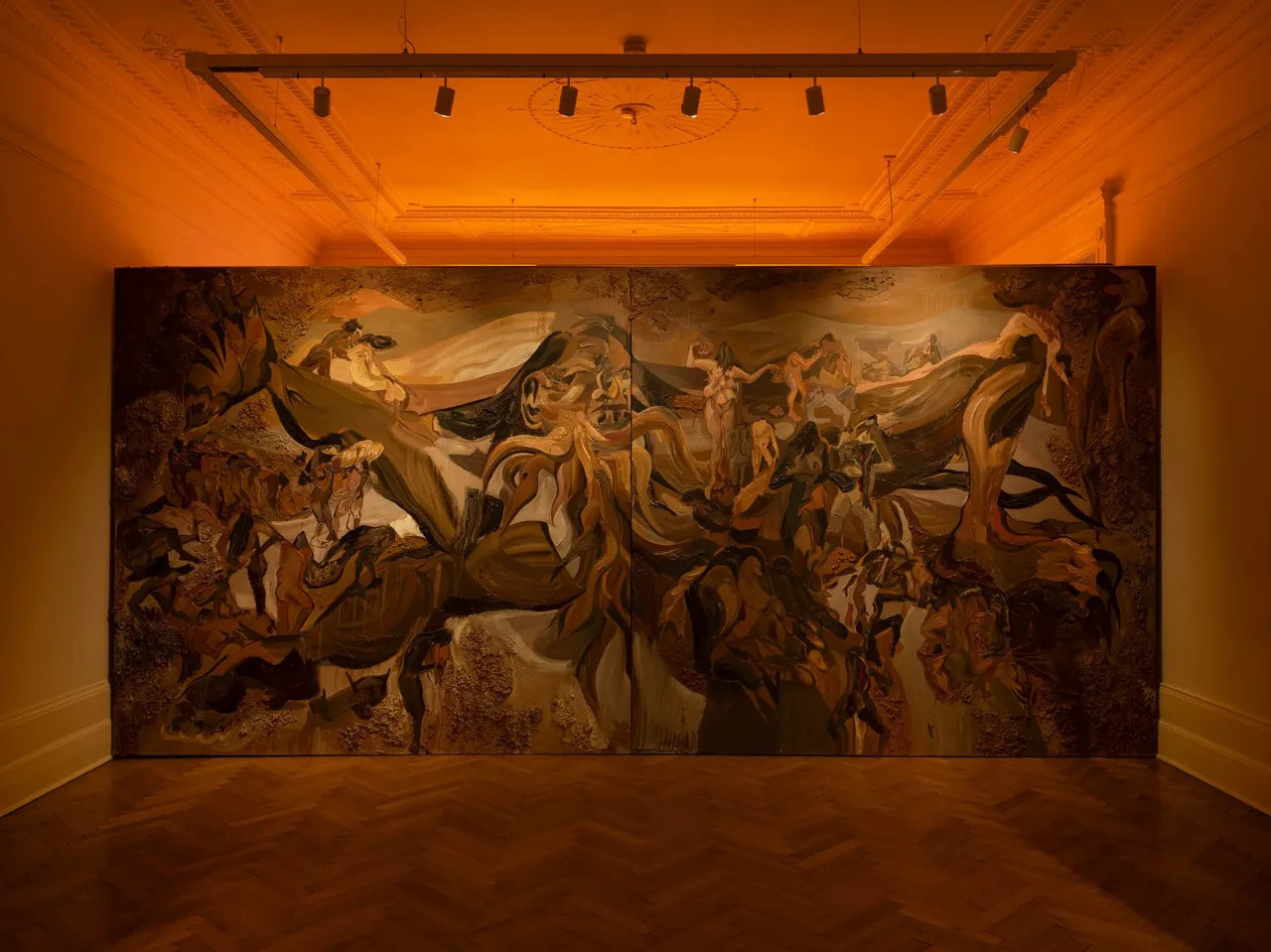

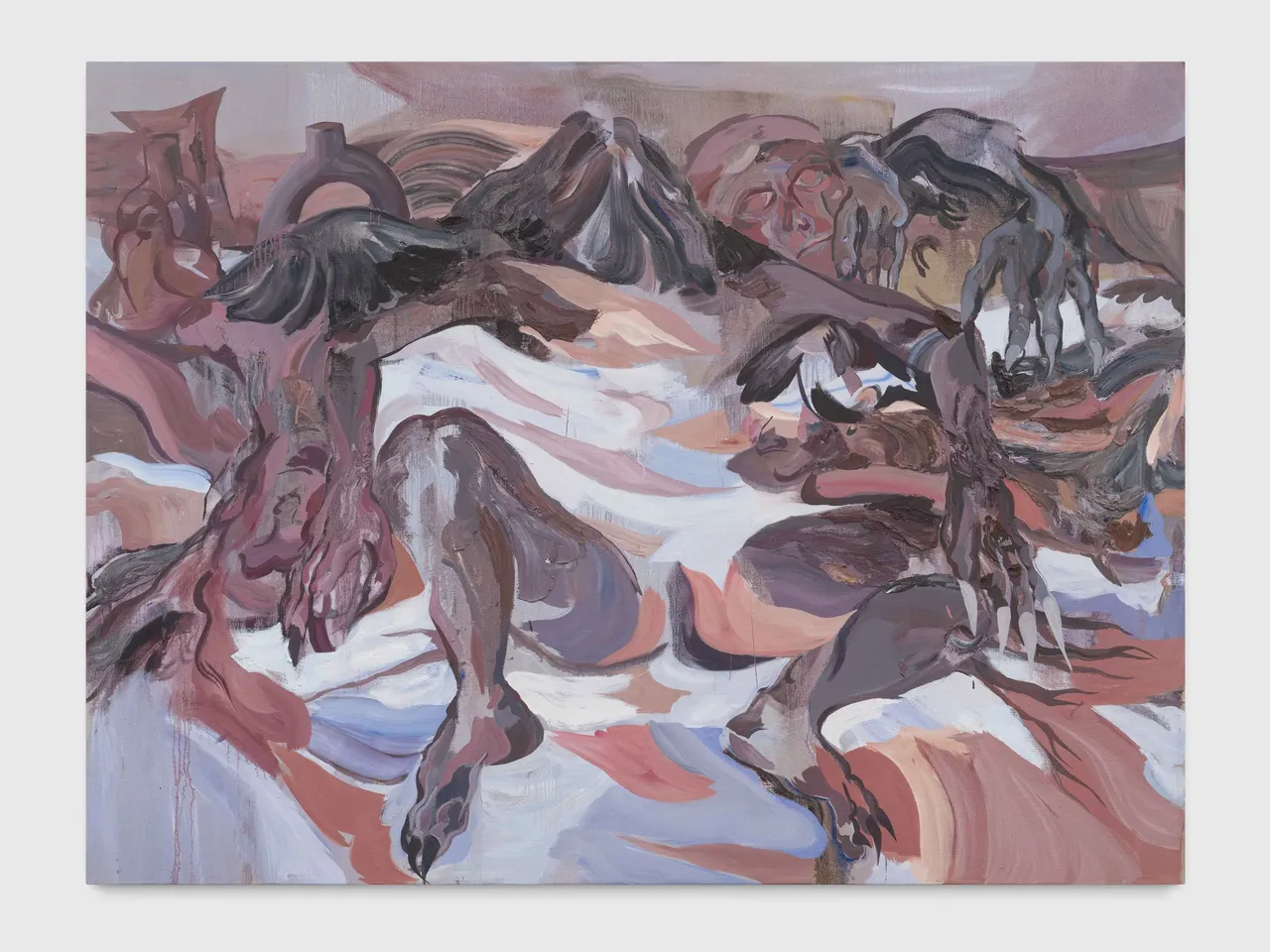
La persistencia, 2026 © Wynnie Mynerva - Courtesy the artist, Société, Berlin and Gathering London / Ibiza Ph: Trevor Good