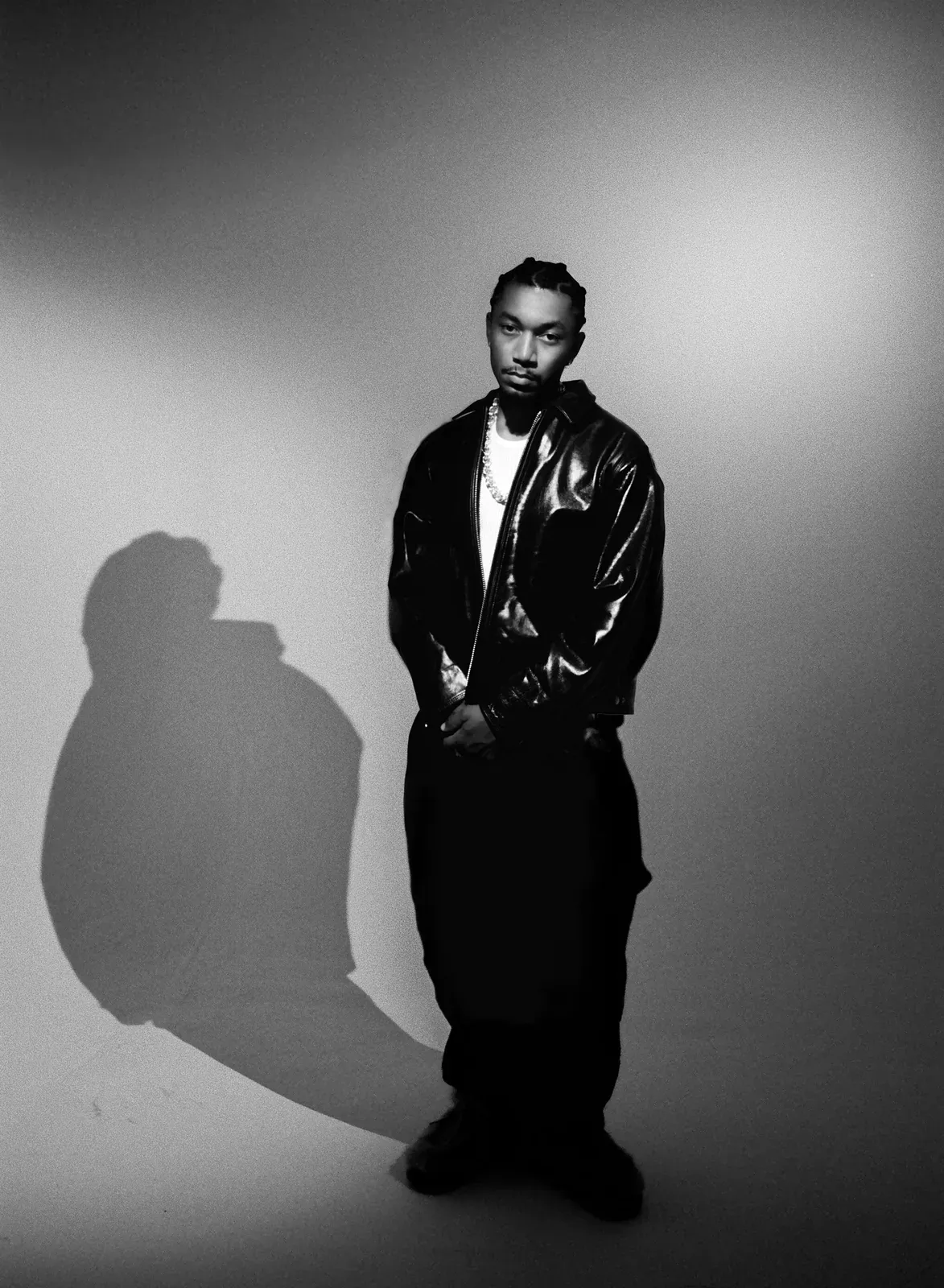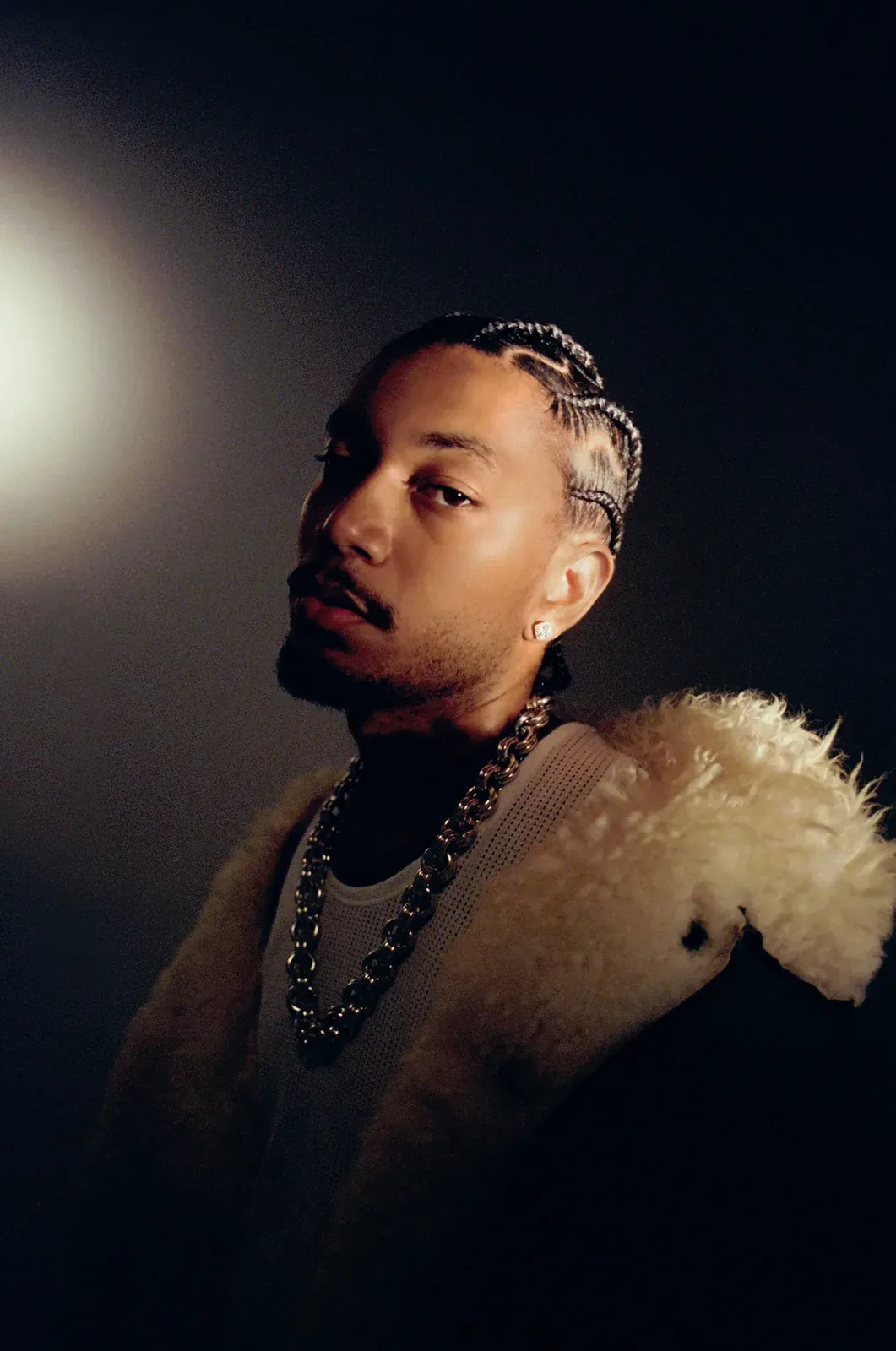
Forever Ends Someday feels less like a debut album and more like stepping into Wesley Joseph’s inner world. The record is a journey through the most meaningful points of the artist's life, taking us with him through the whole ride. And keep your seatbelt fastened: the experience is not passive listening, but an emotional ride that connects with past, present and future selves you might have forgotten ever existed.
Across thirteen tracks, Wesley moves through memory, love, loss, growth and, especially, nostalgia with poetic accuracy, turning personal fragments into something universally felt. As he wraps up his European tour, which has taken him to cities like Amsterdam, London, Paris, and Berlin, before embarking on a North American tour in October, we’re fortunate enough to speak with him about the album.
Hey Wesley, it's a pleasure to speak with you. To get to know you better, what's the first thing you do when you wake up and the last thing you do before getting into bed?
The first thing I do is, it’s really bad, but probably go on my phone and see what happened overnight. I check what notifications I have. After that, I’ll probably play music, then shower, of course, drink some water, get ready for the day and figure out what I'll be wearing. That's pretty boring, but that’s it. Before bed, I probably fall asleep watching a film or listening to something. I tend to suffer from insomnia, so I have all these little tricks to get to sleep. One of them is finding something that’s boring enough for me to fall asleep to, but interesting enough for my brain not to think of its own stuff and get distracted. I listen to a mid-level podcast, a mid-level documentary or a mid-level film. It can’t be really interesting or too emotional because then I’ll stay awake, and it can’t be too boring because then my brain will think of something else.
Do you have a comfort podcast or movie genre to fall asleep to?
I don’t have one particular thing, it depends on my mood. I might watch or listen to a breakdown of what it would be like to live in Tudor times, or what it would be like if you were alive when dinosaurs existed, or what would happen if you put all of the rubbish on Earth in space, or what Hitler would have done if he’d won the war. That’s what I mean. It can't be really good or really bad. That's the art of falling asleep when you have an active mind.
If I got it right, you’ve just finished touring. How did the tour go in general? Do you have any particular memory that really speaks to you? Or maybe a specific lesson that you've learnt through these months on the road?
There was obviously the London Fabric show. It was probably the best performance I've ever done musically, because I finally reached a flow state. It was one of the last stops on the tour, and I learnt how to do the songs better every day, so by the time it was London I just owned them. The crowd was really present, so it elevated everything. The sound was amazing and everything was crazy. That was my best show. But actually, my favourite moments of the tour were when everything went wrong. Because I haven't toured a lot, the biggest fear for me was things going wrong. I’m a perfectionist and I like controlling things. The most liberating thing was things going wrong and completely harnessing the chaos when it was going badly. Afterwards, I understood that there's nothing to be afraid of at all, because my worst night had happened and I still killed it.
Do you have any specific memory where everything went wrong and you still managed to keep the show going?
We were in Berlin and, in the middle of the show, the crowd was moving so much and the venue was so hot that all of the equipment burnt out. All of the sound failed, and then there was a spotlight on me with a mic for twenty minutes. That specific example was my worst nightmare, because I can get really awkward. I’m not good at crowd work. I’m not a comedian. And it’s hard to do crowd work in another language as well, when people are not an English crowd. But I did the crowd work for the whole time, and it worked amazingly. I was making people laugh, it was a vibe. It was fun, warm and super nice. Then it happened again, like three times. The second time was even more magical because I was singing a song called White Tee, which wasn’t a single, and the whole sound system cut again. It cut at the bridge of the song, and the whole crowd finished the song a cappella. I sat there thinking, oh my God, that's crazy. It was beautiful. After those experiences where everything went wrong, I’m more comfortable with chaos.
Forever Ends Someday is your first album, and also one of the most personal works you've done to date. Was there any hesitation in sharing something so intimate with the rest of the world?
No. I think I was ready. If I'd made it earlier on, I probably would have hesitated, but I was really ready to put it out because it took so long to make. I was eager to let people know where I was at as a person.
What led you to release it at this particular moment?
I think I’d established a world and a sound previous to this record, but I feel I hadn’t had the chance to tell more of the story and let people in closer for a longer period of time, because I hadn’t put out an album before. I thought the first record, for me, had to do that. It's like a base level of what I am as an artist. Then I can harness all of my powers and help people by revealing the most uncomfortable and intimate parts of myself, while also trying to push boundaries creatively. As a base level, the first album had to do that, so then I could go anywhere after putting out the first record and people would have a base of knowing who I really am.
It consists of thirteen tracks. Although each of them carries emotional and personal weight, which one do you feel holds the most sentimental value for you?
They all have their own sentiment. It’s not a question of which one has the most, because they all have a rich level of sentiment, but they’re all quite different. Some songs are more about relationships, heartbreak and love, or maybe about growth, and others are about loss. The subject matters are so different and they represent different parts of my life and different colours. It’s hard to compare because they’re so different, but I'd say the ones that were the most emotional to write would probably be July, Quicksand, maybe Seasick and Distant Man. They all required intense writing.
“I’m a perfectionist, and the most liberating thing was things going wrong and completely harnessing the chaos. I understood that there’s nothing to be afraid of.”
In Forever Ends Someday, you mirror a personal timeline that shifts between the real and the surreal. I find it fascinating how the album explores nostalgia, but also how difficult that feeling can be to communicate. What tools or approaches did you use to convey that message?
I think there’s a touch of nostalgia in most of my music because I love looking forward creatively when it comes to sound. I don’t want to get lost in making music that sounds like something we’ve heard before. However, a lot of what inspires me is knowing what I'm impacted by. For example, I love Stevie Wonder. If I'm making a song that feels like my summer childhood, the chords might be inspired by Stevie Wonder, but the sound will be a sound that's 2026, a synth that I've designed. I'm really big on taking and revamping great things from the past that have inspired me. I've recorded a lot of my vocals on tape because I love how Queen sounds, and I love how a lot of old harmonies, like Michael Jackson's and Prince's, sound on tape saturation. I also love 808s and modern dance music; I love how rap vocals now are way sharper and sit at the front. For me, using them all together creates that nostalgic feeling. A lot of my lyrics are quite reflective of the past, and they can romanticise experiences I've had. Sometimes, when I'm making a song, I try to capture the essence of a feeling in a bottle. The feeling of a first kiss, or the feeling of a loss, or the feeling of sunshine. What does that feel like? Can I try and catch it?
Keeping up with this nostalgic feeling, the passing of time is a really complicated emotion. Some reject it, others embrace it. After listening to your album, I would dare to say there's a certain poetry in how you approach the idea. Naturally, it also depends on the listener's context. But when you were creating the record, what emotion around time and its endless flow were you trying to convey?
It doesn't exist in just the present tense. In some songs, I had to channel how I thought about things in different periods of my life, like White Tee, Quicksand or Distant Man. I would have written those verses from different places, like a younger version of myself looking forward and reflecting on how I felt in the past about things, even if it's not how I feel now. It's about being true to how it feels to be a teenager, going through different parts of my life then, but also reflecting on it in the present tense and speaking about where I want to be, projecting into the future as well. I think I was doing that a lot because I was growing a lot while making the record, and the record became a documentation of my perspective over the period that I made it. Because it was my first record, my whole life kind of went into that perspective. I was reflecting a lot, and a lot happened in my personal life while I was making it. I went through loss and lots of high emotions. A lot of dreams were coming to fruition, but there was also a lot of raw reality going on. It allowed for this perspective to feel the past, present and future, and rationalise what they all meant.
For me, your album was a whole journey to the past. As I said, I was really taken by that feeling of retrospection. If you had to categorise Forever Ends Someday in just one of the three temporal states: past, present or future, which would it be?
I never have a structure in terms of, this one's going to be like this, or this one's going to be like that. It kind of just happens on each song. The way you find your voice within each song is different every time, and you can't think about it before it starts. You follow your feelings on it. Some songs are definitely more reminiscent than others. Manuka, for example, is me describing one night I had when I was intoxicated. I was in what felt like paradise or heaven for a night because I was out of my mind a bit, and that was me making a song that felt like that feeling for those twelve hours. Then Quicksand is me in the present tense, talking about this weight, feeling like I'm sinking and feeling hopeful, looking into the light, knowing it could get better. But also the weight of everything. It's a song about how bad and overwhelming everything could feel: losing my friend, the pressure of where I was at in my career, everything I was going through, all the things that I don't have that I want, all of the things that burden me as a person. The whole song is very present, but also looking into the past and looking at how it affects you. Every single song is so complicated, but it's always different. When you're making them and following your feelings, there's no structure at all.
Before we wrap up, I don't want to ask you what comes next, since you've just released Forever Ends Someday and I imagine this is a moment to sit with it and enjoy what you've created. So instead, how does it feel to finally have the album out in the world?
The feeling of putting it out into the world has changed quite a lot. It changes week to week. If you'd asked me how it felt on the day of release, it just felt like a huge weight off my shoulders. I had that feeling of true accomplishment once it was finished, and I was sure I'd made something I dreamt of making someday.
“When I'm making a song, I try to capture the essence of a feeling in a bottle. The feeling of a first kiss, or the feeling of a loss, or the feeling of sunshine. What does that feel like?”
You're describing those emotions in the past tense. Has that initial euphoria faded with time?
It's just that I'd worked so hard up until the release, so intensely. There was no chance to properly reflect and congratulate myself. I think the main point is that I had that feeling during the whole process, once the music was made and it was finally done. Before it was out in the world, that was the moment when I was the most excited about it, before giving it to the rest of the world. It wasn't mine any more. For me, I was happy with the thing itself. Then I felt a lot less pressure once it came out because of how much work I was doing before. But now I feel really good off the back of the tour because people really loved the album and it translates perfectly live. I feel really happy about that, especially since everyone I know who has listened to the record has had an emotional response to it. As an artist, you always have aspirations, which is like a curse, because I'm always looking for the next thing. On the first EP, I remember there was my biggest song, the biggest song I've ever released. For a long time, it felt like no one really heard it, and now it's my biggest song. You can't really control this stuff. You cannot force it.
Before we finish the interview, I just want to tell you that the album is not something you can listen to passively. It's impossible not to feel anything. It's really an emotional rush. Wesley, thank you for your time and for sharing Forever Ends Someday.
When things have their time and you make things with care, the beautiful thing about music is that it will always have an impact. That's the trick, despite our reality, the algorithm, the numbers, AI, music and all this shit. If you actually make really sincere, emotional, honest things, people will hear it and they will be impacted by it.