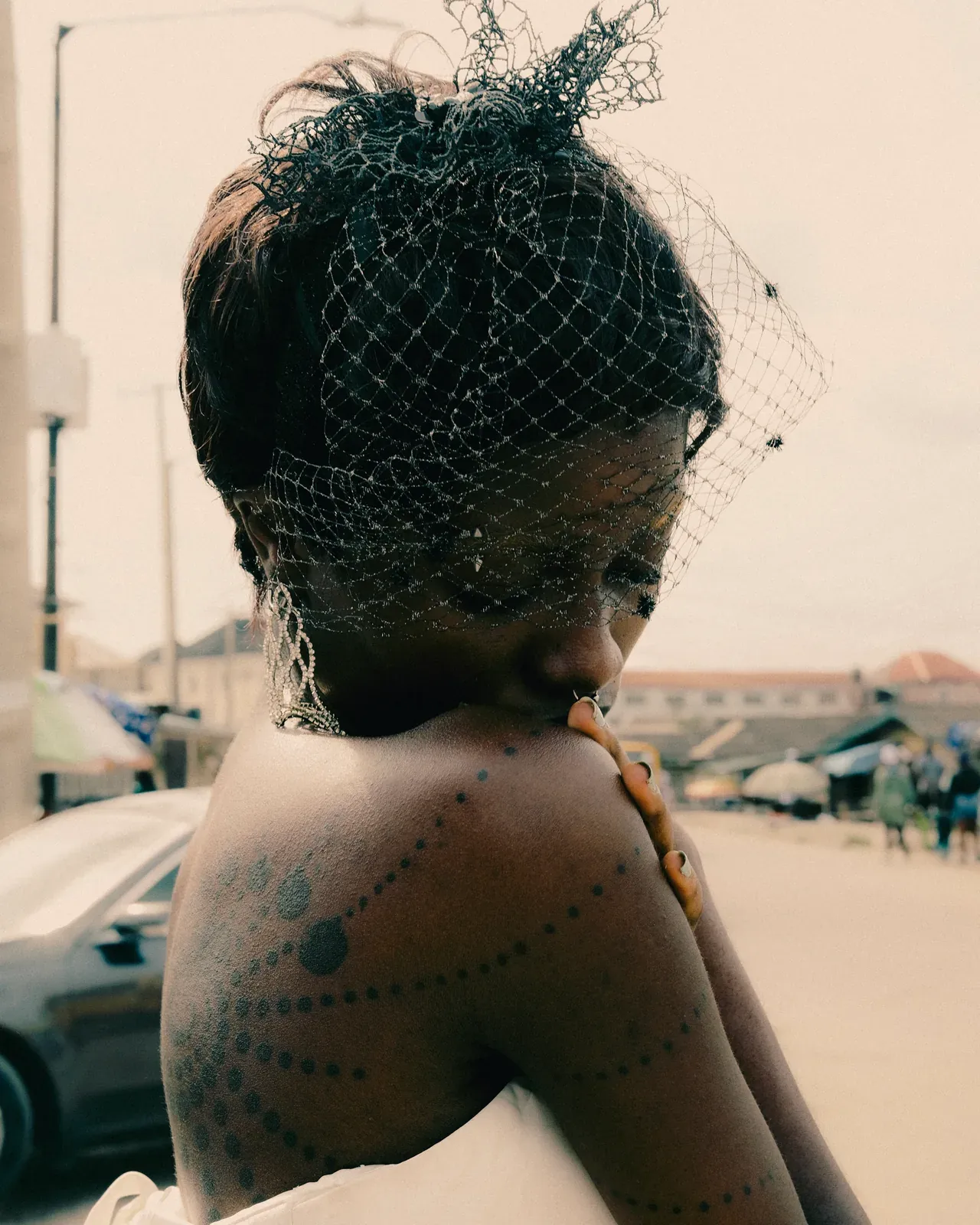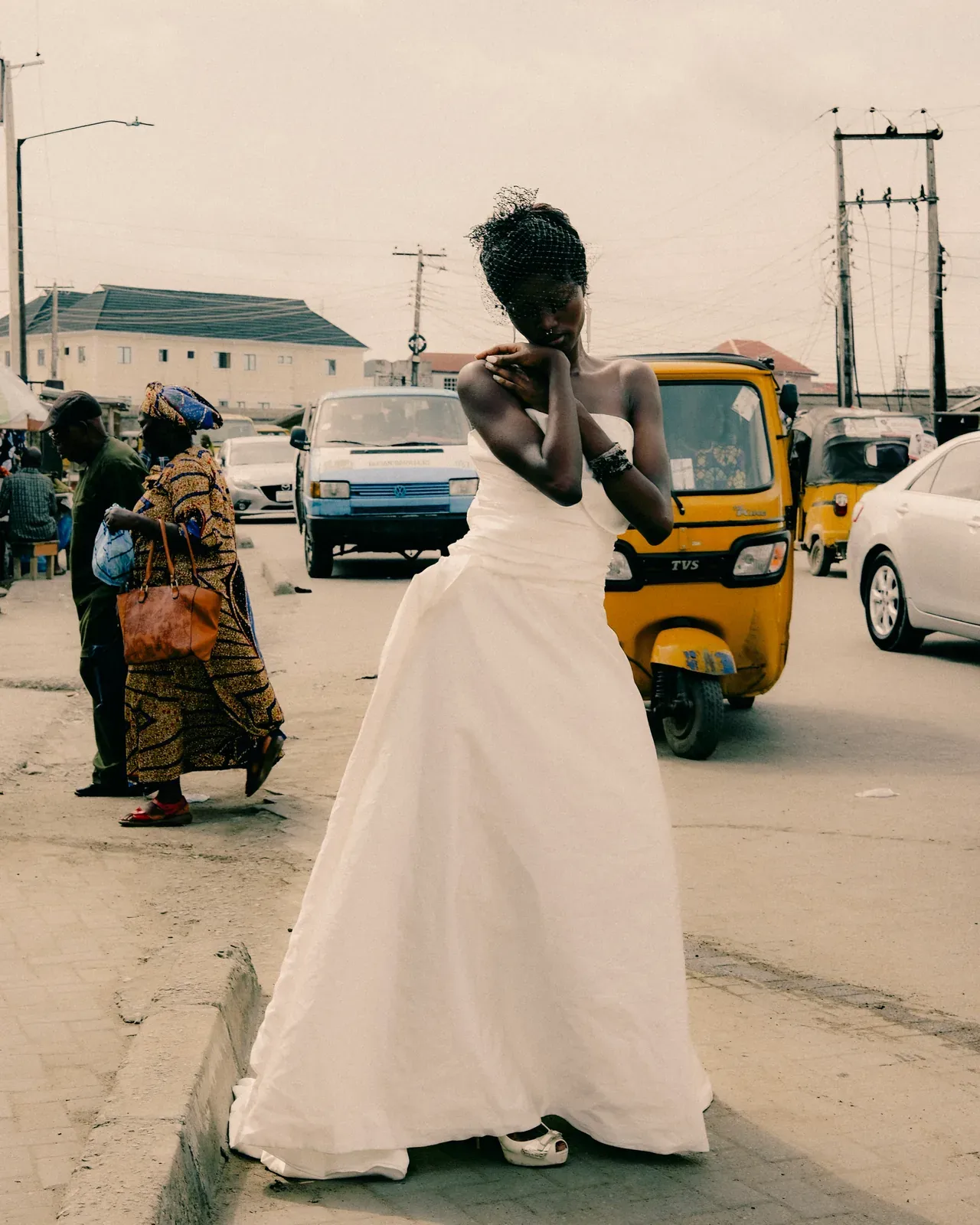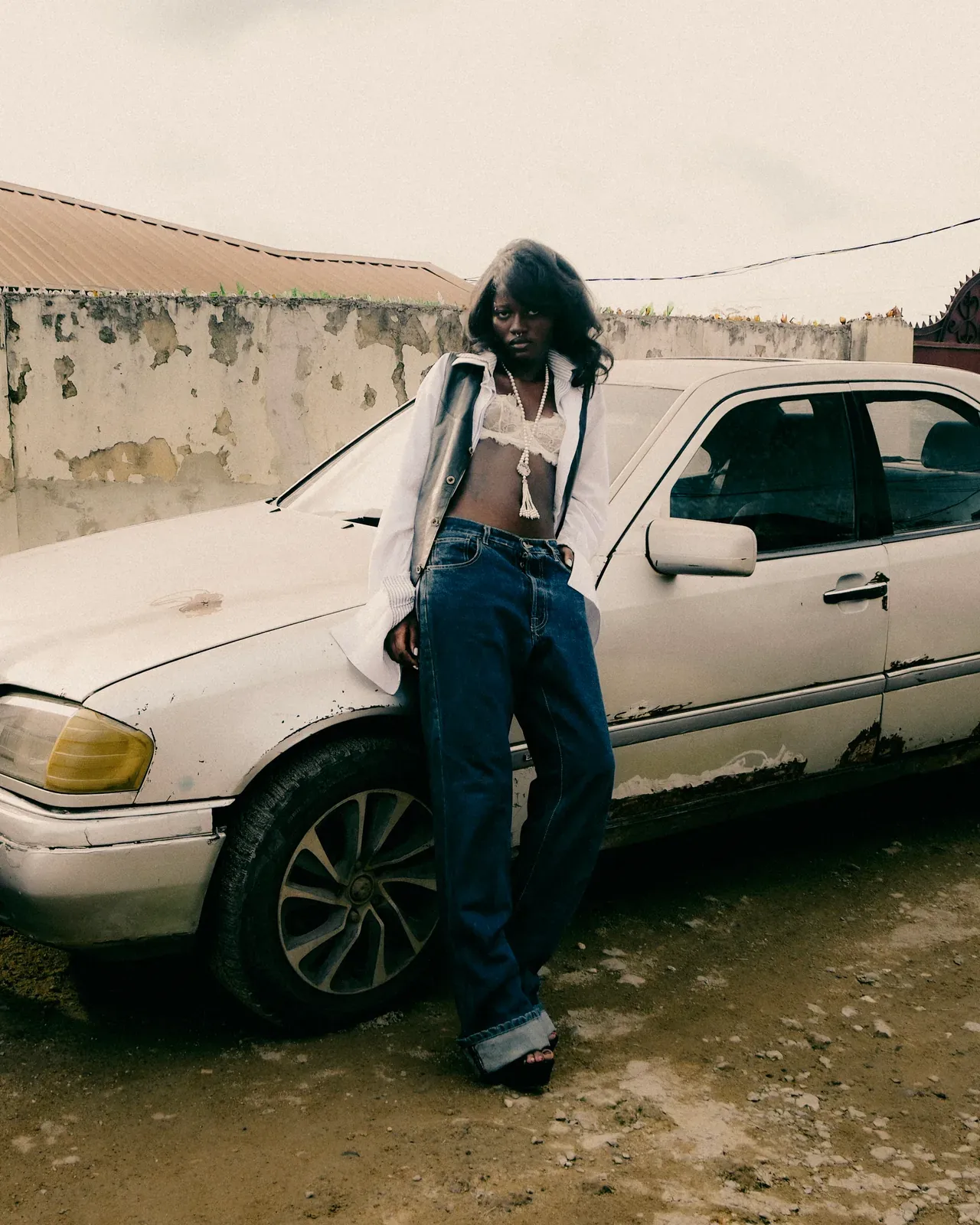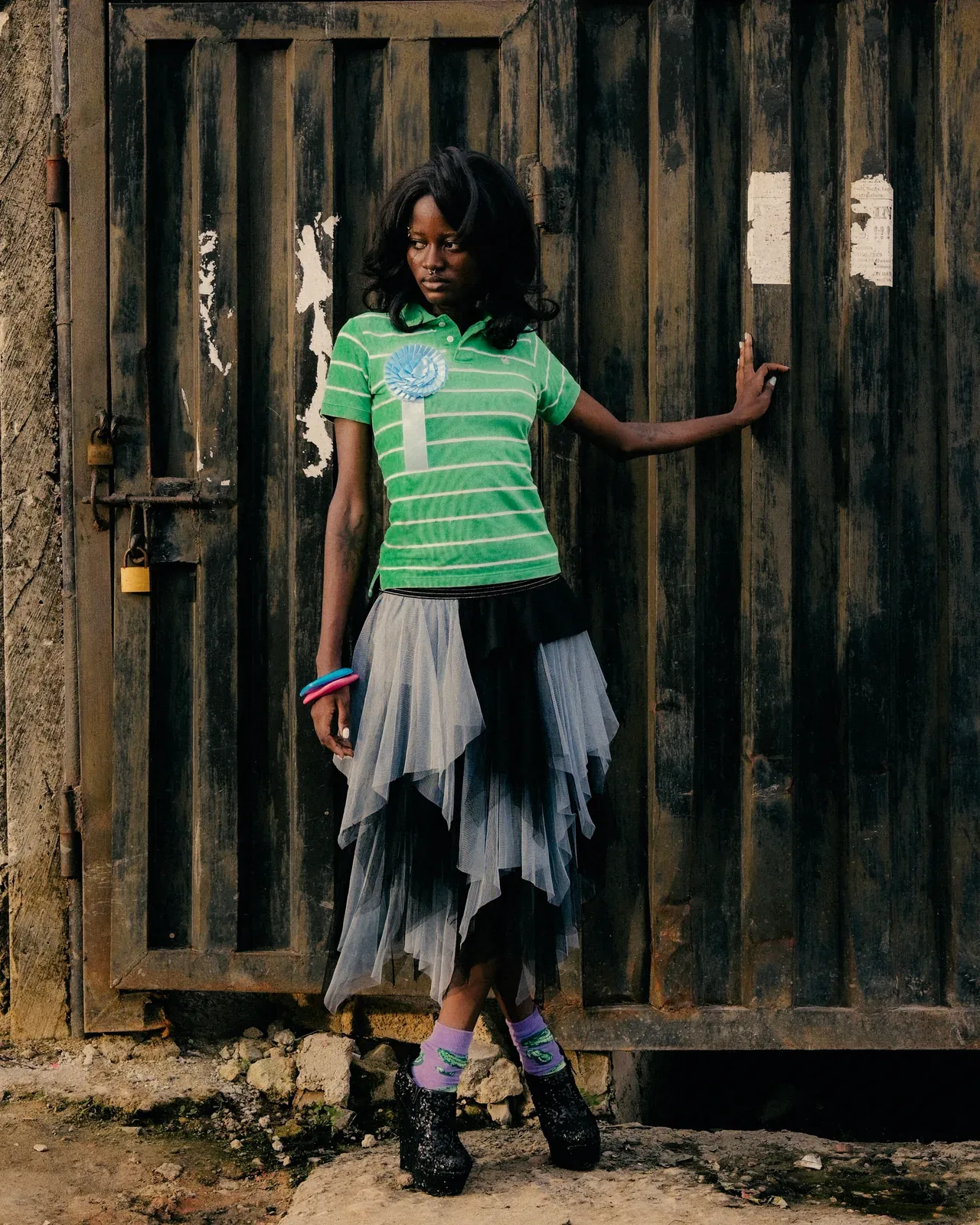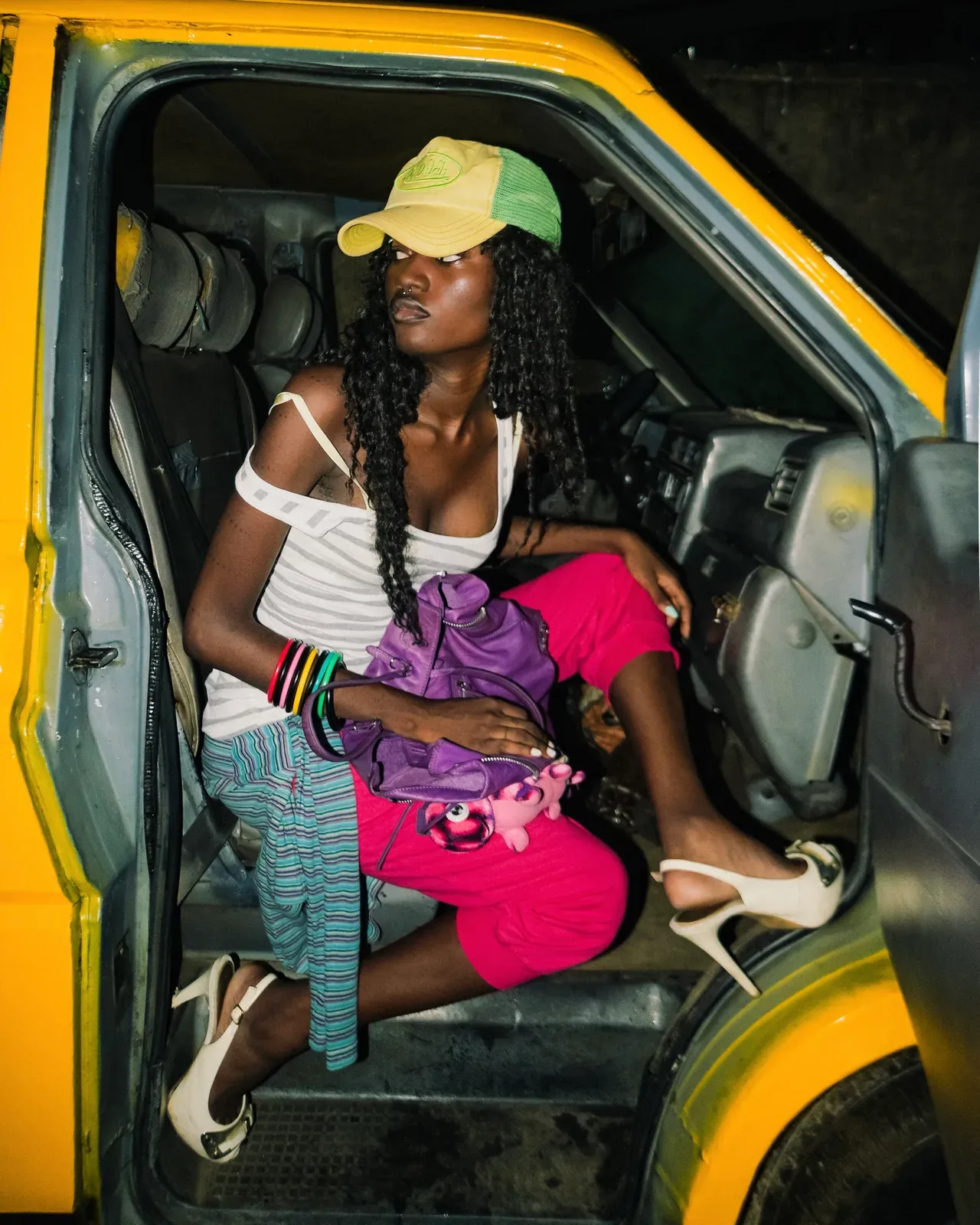
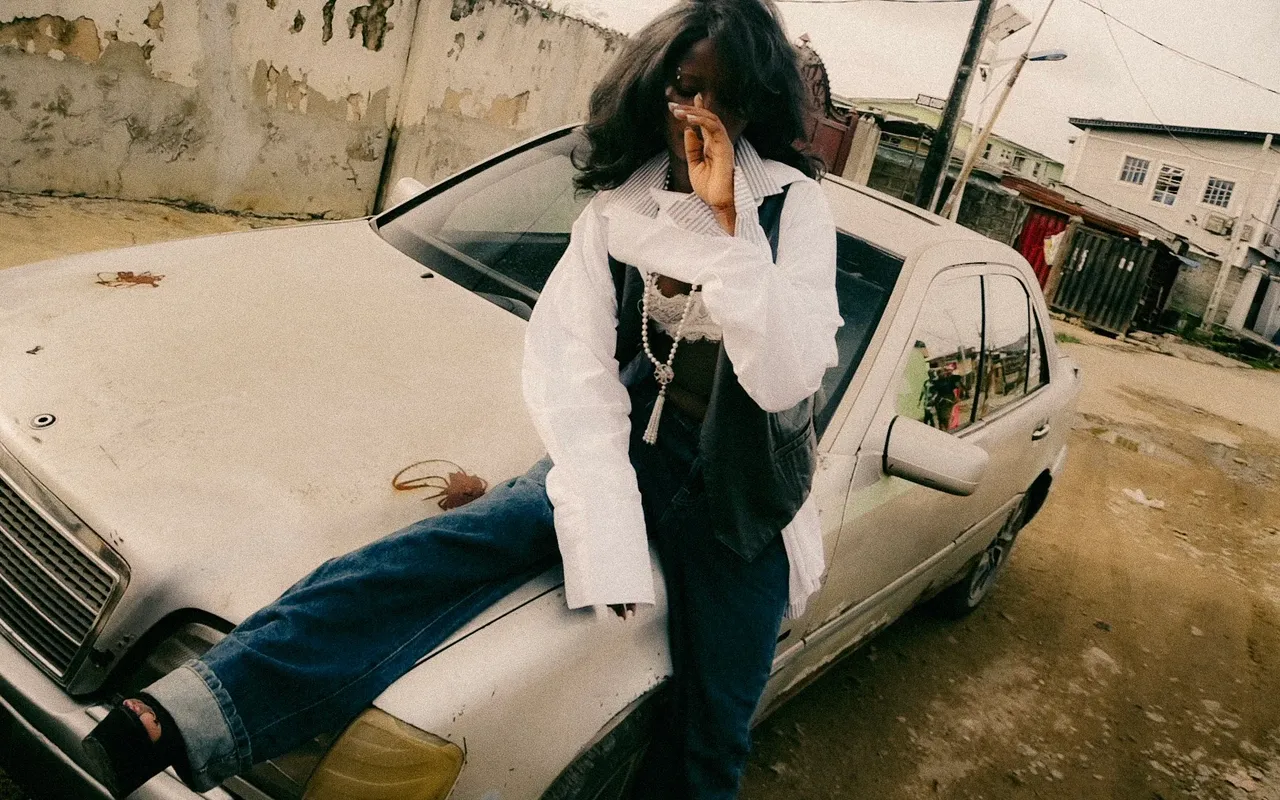
Rachel Ojuromi is no ordinary fashion influencer: she’s raising the bar for fit checks, using the streets of Lagos as her own runway. Having only started creating collaborative content with her best friend and designer Debby Fasingha in March, the pair have swiftly become one of fashion’s most exciting new dynamic duos.
Their take on style is playful and free-spirited, championing experimentation with colour, texture and layering. There’s nothing quite like strutting in pink fringe hot pants to Tame Impala to turn heads and stop traffic. While their looks are consistently eclectic, their approach to fashion stays grounded and accessible, often repurposing pieces already in their wardrobes. Rachel proves you don’t need to be able to afford the latest collection to have great taste — individual style starts from within.
But Rachel’s content reaches far beyond fashion; for her, building a sense of community matters just as much as the clothes she wears. Her platform, The Process Africa, shines a light on young African creatives, spotlighting the journey behind their work rather than just the finished product. Rachel is a pioneering voice for African creatives, proving that limited resources never stand in the way of a true fashionista. With a walk made for the runway, it’s hard to look away from Lagos’ latest It girl, and we sat down with her to discuss finding your personal style, her current favourite designers, and the importance of having fun with fashion.
How would you describe your personal style in three words?
Comfortable but fab. I don’t think there’s ever a need to wear something you don’t feel completely yourself in.
When did you first begin to develop a sense of your own individual style?
Immediately after high school. I spent most of my life before then wearing what my mum wanted and I didn’t enjoy it. While it looked good, I had a lot of texture preferences and certain things overstimulated me. So, after high school, I sort of stopped wearing a lot of things and started pulling from my dad’s closet because everything was bigger on me so I couldn’t feel it on my skin. My style began to evolve from there.
Your style feels very experimental and draws from a range of references — what advice would you give to someone who wants to have more fun with fashion but isn't sure where to begin?
There’s no beginning when it comes to fashion. Your sense of style doesn’t have to rely on references to be good. Start from where you are and allow your journey to dictate the path you end up on. You just have to give yourself permission to play. There’s no roadmap.
A lot of the pieces you wear are thrifted. How important is sustainability to the way you approach fashion?
Thinking about it now, what we call sustainability has always just been my reality. Most of my clothes growing up were thrifted and when I was done with them, if they were still in good condition, they’d be passed on to someone else. It’s just always been how it works.
Is there a favourite piece you've thrifted recently?
My vintage Christian Dior dice heels. They’ve been worn to the ground, but God, they’re fab.
What advice would you give to someone looking to re-wear the pieces they already own, but style them in a way that feels fresh and new?
Play. I’ve spent hours in front of my mirror styling one piece in multiple ways. The more you get to know an item, the more you understand what it requires. But honestly, all these styling questions should be directed at Debby, she’s the goat at this stuff.
You've spoken about how you study runway shows for inspiration — is there one brand on the runway right now that you think everyone should be paying attention to?
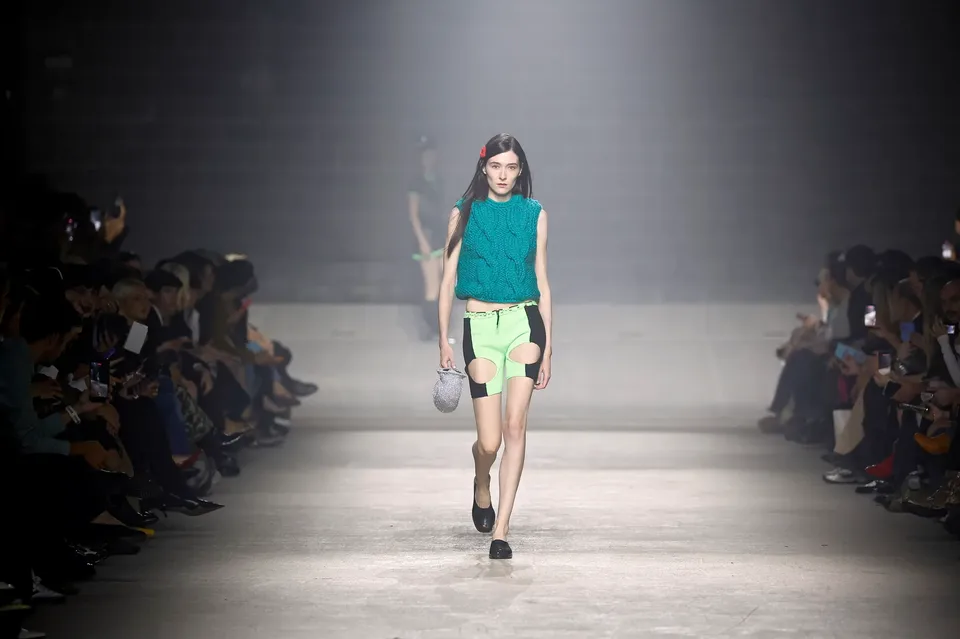
Matthieu Blazy’s Chanel. I connect with what he does so much because of the cunning simplicity in the presentation of his ideas, such grand stories presented in completely digestible ways. The new show is the peak of it. Even kids can watch it and love it because he’s talking about stories they already know, but the collection isn’t built entirely on that. There are much more complicated conversations and ideologies underneath and while those who know, know, those who don’t can still enjoy it. I think that’s the world our videos exist in too. Each one is loaded with references and ideas but presented in a way anyone can understand. It reminds me of that Einstein quote, if you can’t explain it to a six-year-old, you don’t understand it yourself.
“What we call sustainability has always just been my reality.”
Your videos draw inspiration from film, music and runway. What is your process for combining all of those references to create your final look?
I see something that resonates, and the question becomes: how do I retain the core of it, the reason it moves me, but within the format I work in and with the resources we have. That tension is where the work happens.
Your content includes you strutting through the streets of Lagos in bold, daring outfits — where do you think that confidence comes from?
I'm African. We're born with it.
You only began creating content with Debby Fasingha in March, and you've already made your mark on social media and in magazines. What do you think has contributed to your quick success?
Honestly, I don't know. Maybe one day we’ll be able to fully say. For now, we’re just wowed.
You've created your own platform, The Process Africa, to spotlight young African creatives; can you tell me more about its purpose and why building that kind of space matters to you?
The Process Africa exists to make sure every young African creative knows they are valued. Not just when they make it, not just the finished product or the viral moment, but the process itself. The how. The journey of becoming who you are. I built it because so many young creatives here are doing incredible things and nobody is telling them their story matters. It does.
The Process Africa aims to celebrate the journey of becoming who you are as a creative person. What’s the most important lesson you’ve learnt on your own journey so far?
That you’re allowed to not have it figured out. We put so much pressure on ourselves to have a plan, to know exactly where we're going. But some of the best things that have happened to me came from just doing the work and seeing what happens. The process is the point.
You’ve spoken about opening up your home in Lagos as a place for people to stay and work. Why is creating that sense of community important to you?
I’ve been in situations where people created that space for me and I know how much it meant. Now that I have the opportunity to do the same, it only makes sense to.
Between taking on the roles of model, producer and creative director, is there one path you feel particularly drawn to, or are you enjoying exploring different creative avenues right now?
I don’t want to limit myself. These are my main interests right now but I’m open to whatever the world brings. The list I made when I was younger of things I wanted to be was pretty long so I’m hoping to work my way through it.
You’ve mentioned being really into manifestation, so what would a dream brand collaboration look like for you?
So many, but my top picks right now are Chanel and Jonathan Anderson’s Dior.