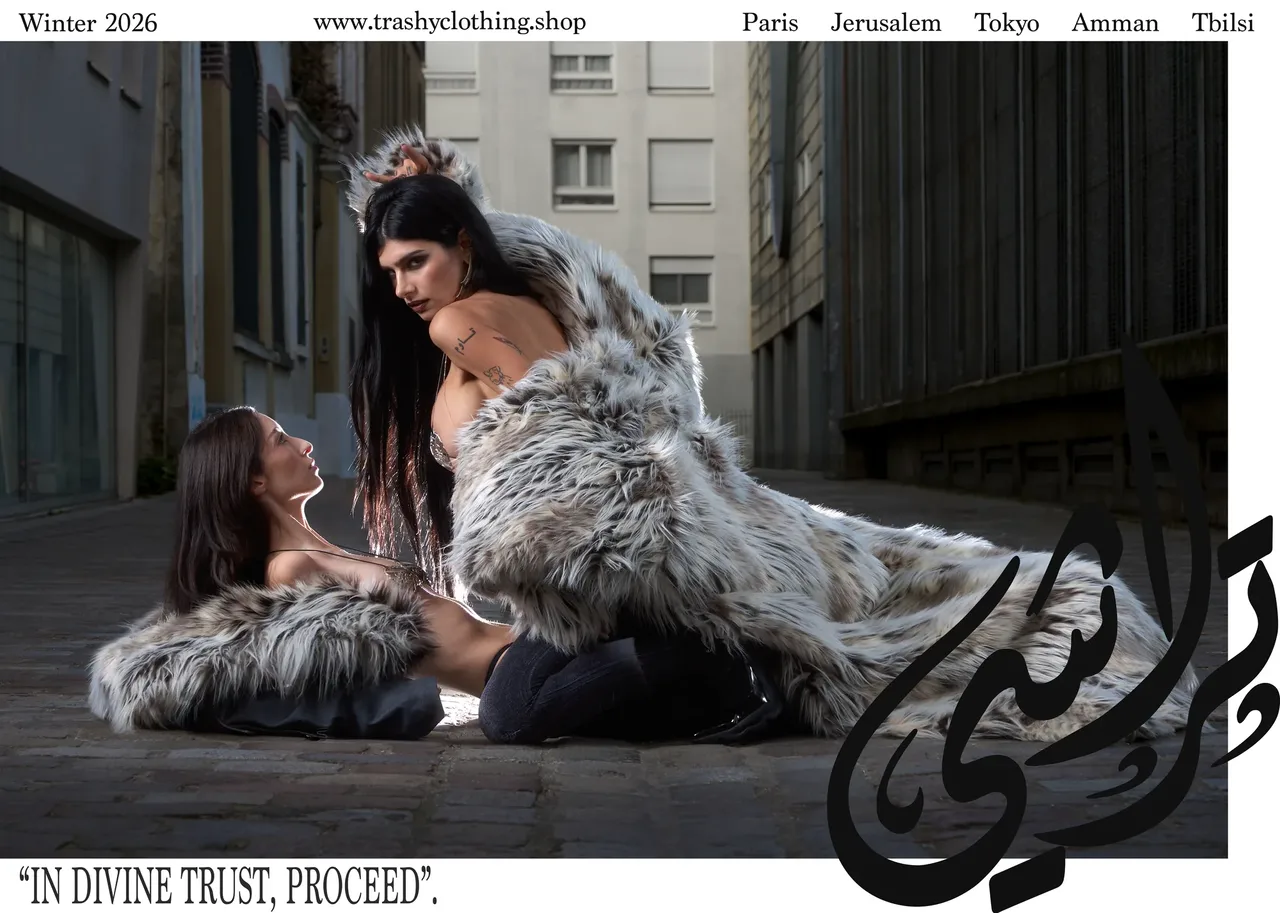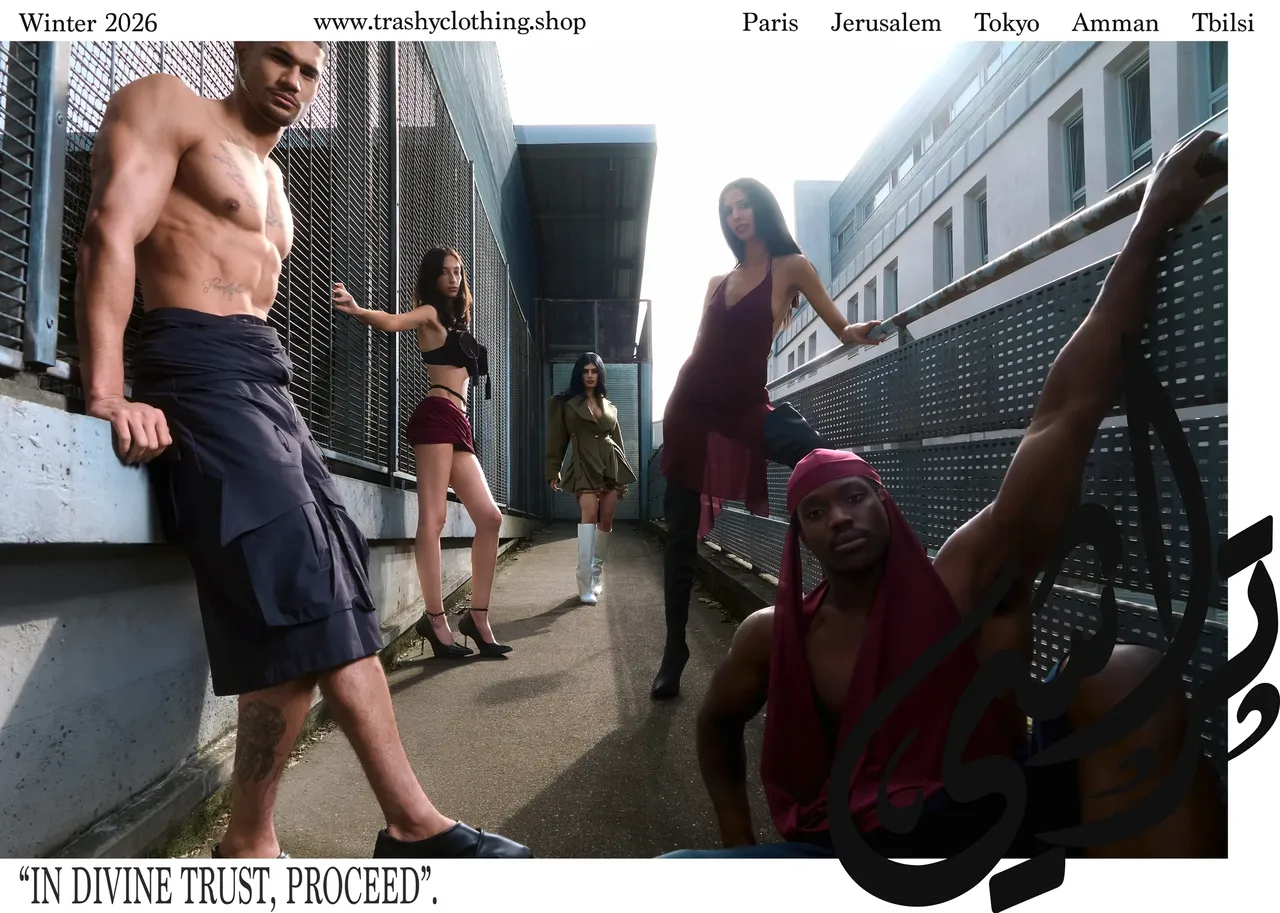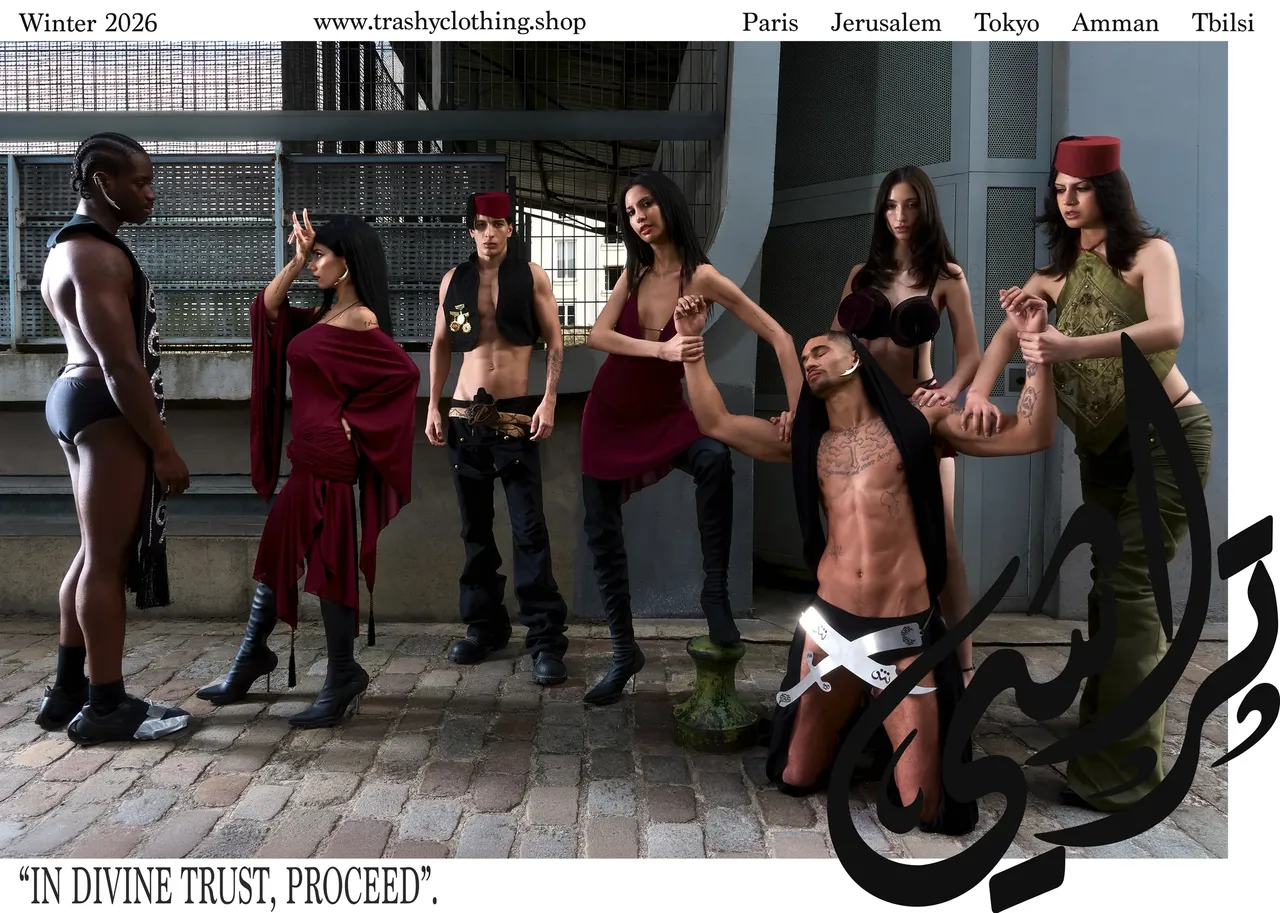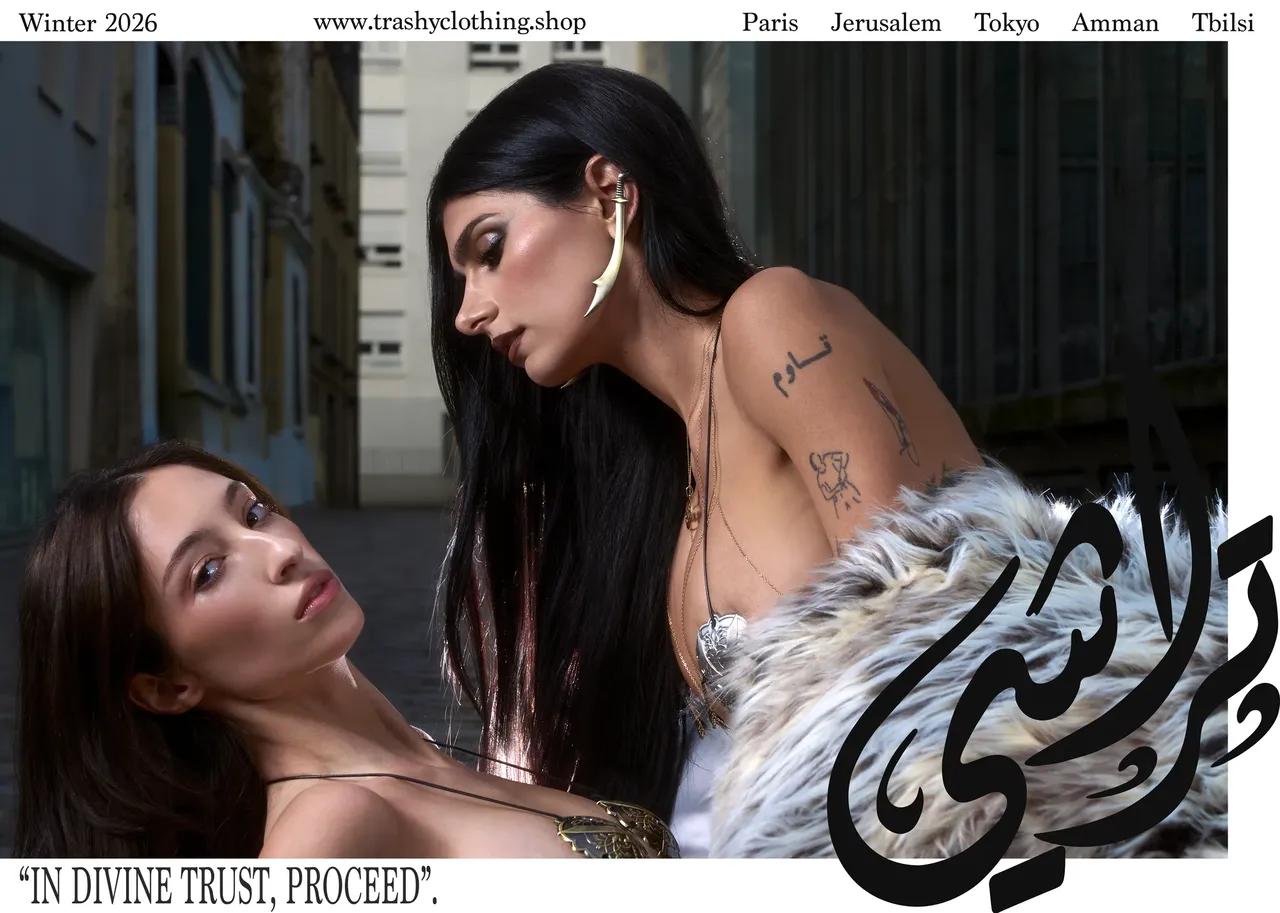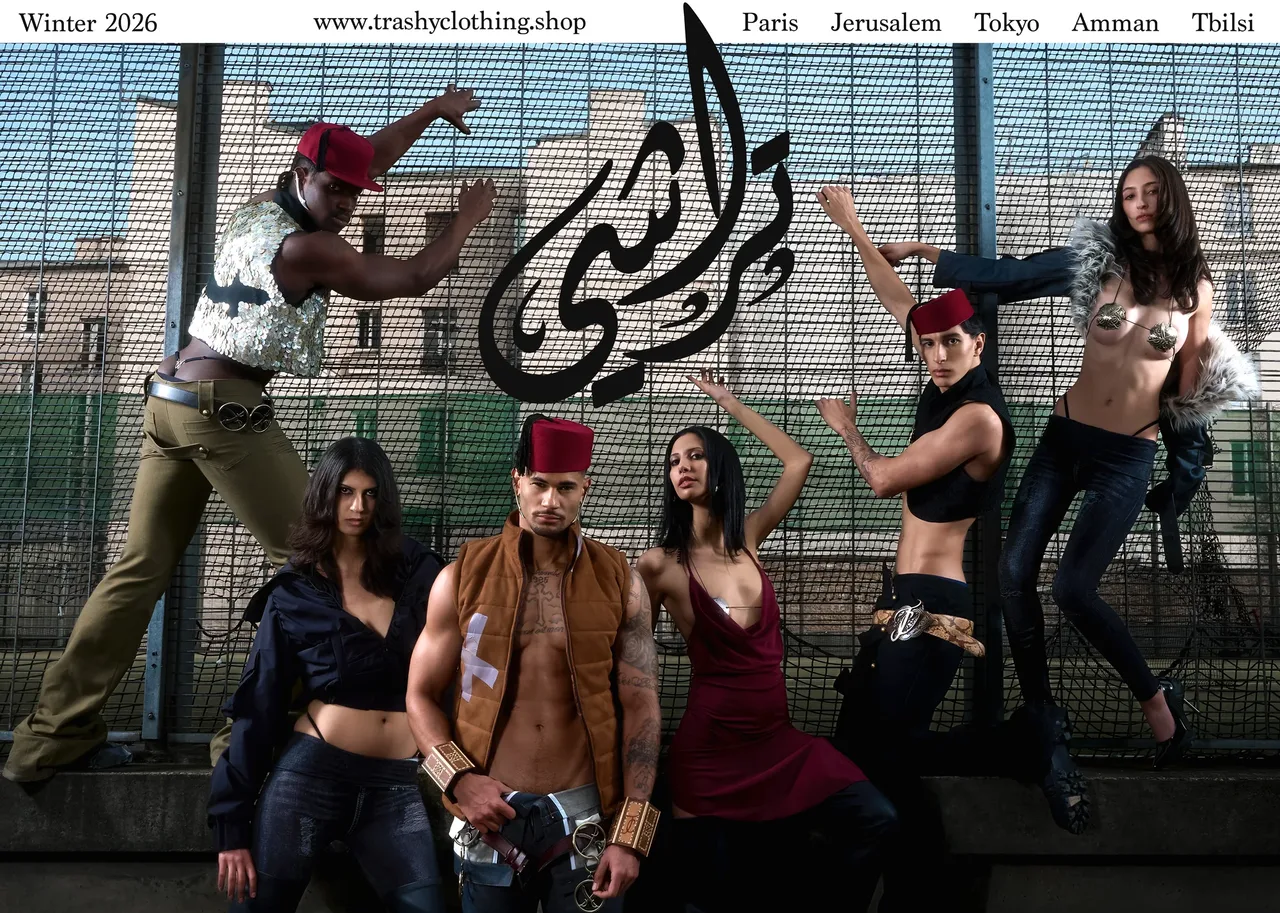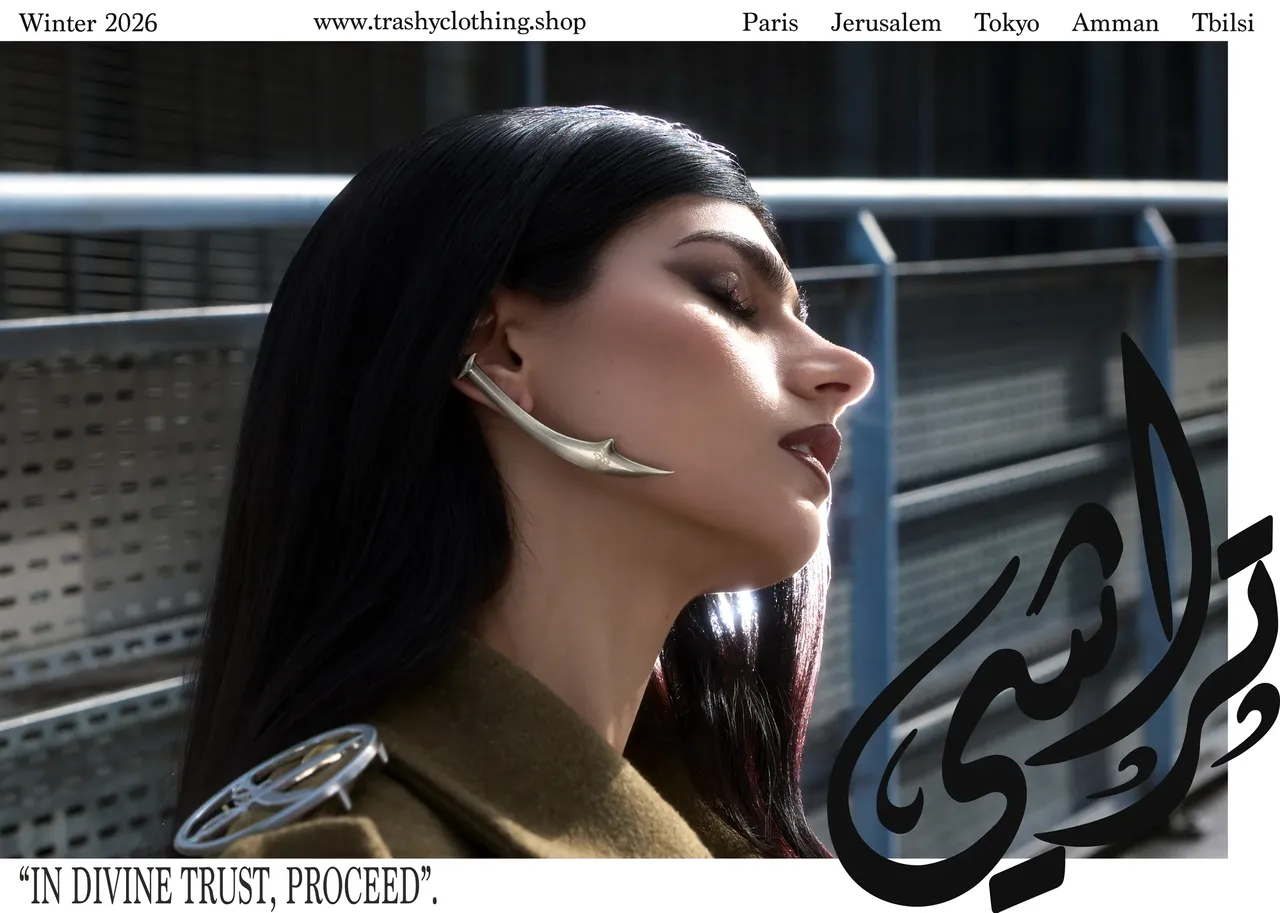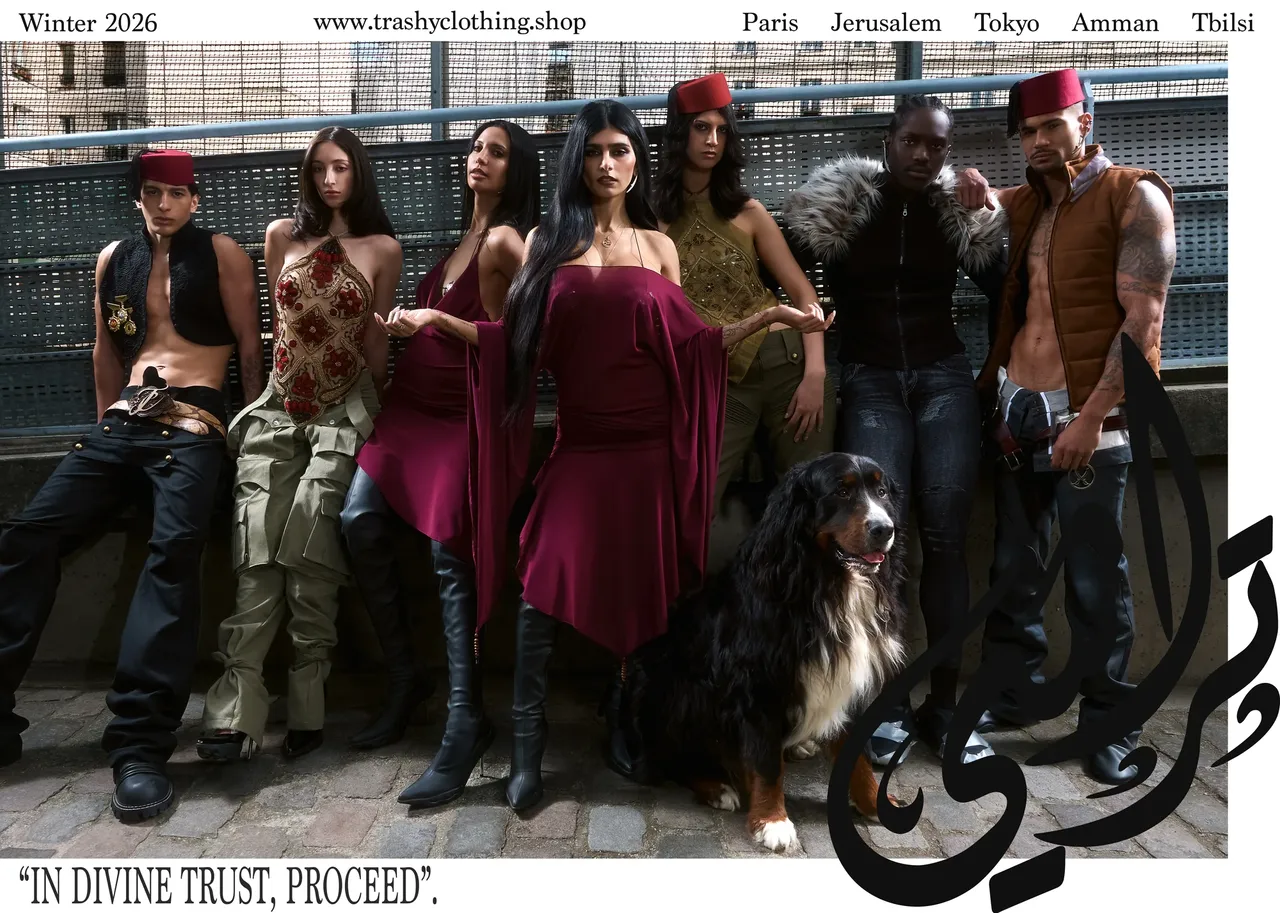
There’s something undeniably hypnotic about Trashy Clothing’s Fall/Winter 2026 campaign. Dark, feline glamour meets unapologetic sensuality in In Divine Trust, starring METAL 50 cover star Mia Khalifa and lensed by Pablo Mas. A visual statement infused with attitude, irony and symbolism, it captures the provocative spirit of a brand that has never considered fashion to be merely about aesthetics.
The campaign builds on the universe introduced during Trashy Clothing’s show in Paris, where Khalifa also walked. The collection takes inspiration from Divine Intervention, the film by Palestinian filmmaker Elia Suleiman, translating some of its central themes — absurdity, stillness and understated confrontation — into a distinctive fashion narrative. The result is an exploration of how fragile power and authority can be in the face of indifference.
Through a deliberately detached attitude, Trashy Clothing examines how power is constructed, displayed and ultimately sustained. Even the most imposing symbols of authority can become strangely insignificant when nobody acknowledges them. Beneath this provocative imagery lies a more contemplative idea: in a world where certainty is often elusive, sometimes all we have left is faith — a belief in something greater that helps us keep moving forward. The campaign’s narrative is further developed through a jewellery collaboration with Sheytan, Khalifa’s own brand. The pieces become an extension of the collection’s visual language, playing with the contrast between the appearance of power and its actual significance. The collaboration adds a personal dimension to the project while reinforcing its provocative character.
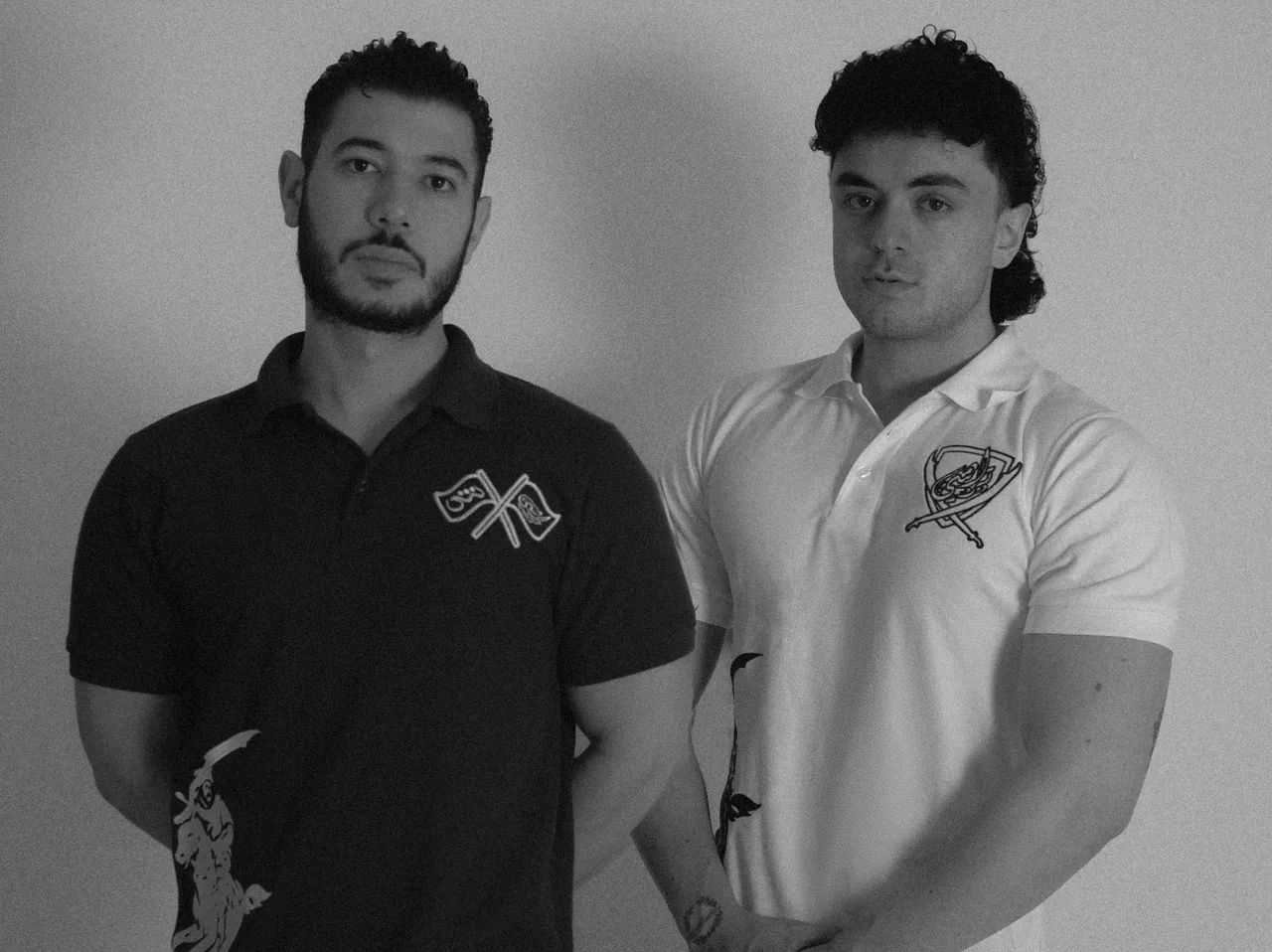
Behind this visual universe is Trashy Clothing, the Palestinian ready-to-wear label founded and led by Omar Braika and Shukri Lawrence. Known for its distinctive blend of satire, kitsch aesthetics and subversive storytelling, the brand approaches fashion as a tool for challenging dominant narratives around culture, identity and resistance. Describing itself as an “anti-luxury luxury” label, Trashy combines references to Arab pop culture, workwear, clubwear and eveningwear with an ironic take on traditional luxury codes.
The campaign’s visual identity also features five cities — Paris, Jerusalem, Tokyo, Amman and Tbilisi — creating a geographical map that reflects Trashy Clothing’s international outlook and cultural perspective. While Jerusalem speaks to the brand’s Palestinian roots and cultural identity, Amman represents its creative base in Jordan. Paris connects the label to the international fashion scene, while Tokyo and Tbilisi extend its visual narrative towards other cultural capitals. Together, these locations suggest a dialogue between local identity and global influence, reinforcing Trashy’s position as a brand rooted in the Arab world but shaped by a much wider cultural landscape.