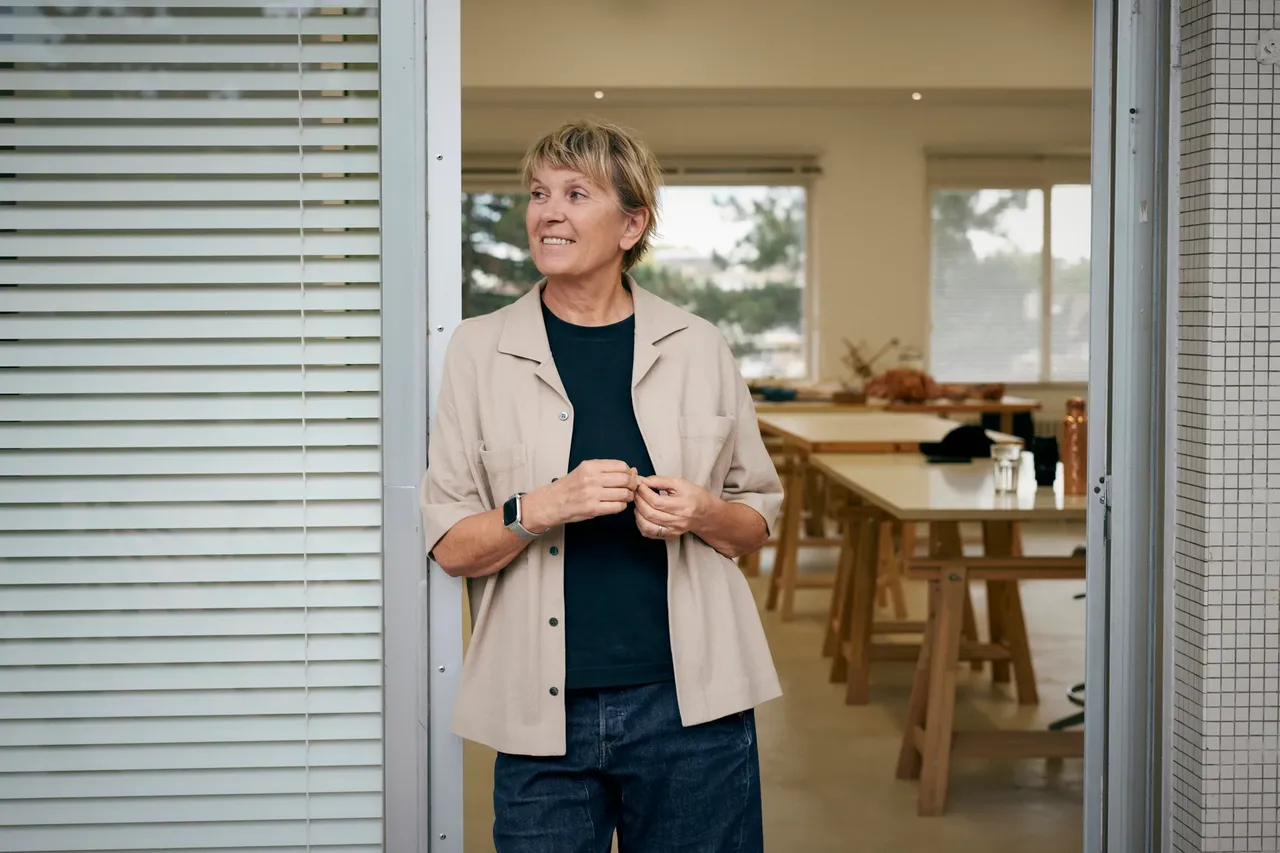
When we come across a piece of clothing we like, what is it that catches our eye? Perhaps it’s the silhouette, the colour or simply how beautiful the fabric looks. Some of us might be a little more particular, wanting to touch it, feel its texture and understand its qualities before deciding what makes it so special. Is it soft, stiff, light, heavy or somewhere in between? This fascination with the qualities of fabric lies at the heart of The Fabric Decides, an exhibition at Bozar in Brussels that brings Belgian artist Edith Dekyndt into dialogue with the archives of Cristóbal Balenciaga for the first time.
But what if fabric had a mind of its own? What if, rather than simply following the hand that shapes it, it held the power to determine what it becomes? Running through 31 January 2027, the exhibition brings together around fifty works by Dekyndt (b. 1960), including thirty previously unseen pieces, and more than thirty objects from the Maison Balenciaga archives. Despite belonging to different generations and creative worlds, the Belgian artist and the Spanish couturier share a fascination with materials, their transformations and the traces they carry over time. For both, fabric is more than a passive medium: it’s an active force in the making of a form, with its own possibilities, limitations and character. Rather than imposing a predetermined shape, creation becomes a dialogue with the material itself. As the exhibition’s title suggests, sometimes the fabric gets the final say.
Since the mid-1980s, Dekyndt has developed an artistic language rooted in observation and experimentation. Her work often begins with seemingly insignificant phenomena such as a change in colour, a deposit on a surface, a subtle alteration caused by humidity, light or time. She pays attention to things that usually escape our notice, allowing materials and their natural processes to play an active role in the final outcome. Her installations and sculptures can feel almost elusive, caught somewhere between the visible and the invisible, the tangible and the intangible. Not everything needs to be controlled.
This sensibility finds a fascinating counterpart in Balenciaga’s approach to couture. During his Paris years, from the 1930s to the 1960s, the Spanish couturier developed an extraordinary understanding of textiles and their structural possibilities. His mastery of cut, volume and construction transformed the relationship between fabric and body. Silk, wool, lace and other materials were never passive ingredients in his designs; their individual qualities helped shape the silhouette itself. He understood that a garment should respond to its material rather than simply force it into submission. In this sense, Balenciaga was as much a sculptor as he was a couturier.
The exhibition takes this shared philosophy as its starting point. Rather than offering a conventional retrospective or a straightforward historical comparison, The Fabric Decides creates a space for unexpected connections. Sketchbooks, notebooks, textile samples, garments and accessories become part of an ongoing conversation across time. A key element of the exhibition is Dekyndt’s exploration of the Maison’s archives, which she visited on several occasions. What caught her attention wasn’t only the craftsmanship or the technical precision behind the garments, but the traces of the people who once wore them. As she explains, she was moved by the silent presence of bodies within the clothes. Even in their absence, they remained perceptible in the folds, tensions and distortions of the fabric.
It’s an idea that shifts the way we look at fashion. A garment is never quite finished when it leaves the atelier. Once worn, it begins another life, shaped by movement, contact, gestures and time. It absorbs something of the person inhabiting it. What was once a personal object eventually enters the archive, where it acquires a new identity: preserved, studied and removed from everyday use, yet still carrying the memory of a body.
This sense of transformation runs throughout the exhibition, which unfolds across three distinct spaces. At the entrance, a monumental veil by Dekyndt, inspired by a textile sample from the Balenciaga archives, stretches through the Rotonde Royale, creating an almost immersive encounter with the material. Elsewhere, the artist’s working processes sit alongside Balenciaga’s experiments with textiles and construction, inviting us to look closely at the relationship between observation, technique and chance. In another space, the garments themselves take centre stage, revealing the passage of time through their textures, shapes and traces of use.
Seen through Dekyndt’s eyes, the Balenciaga archive becomes more than a collection of historical garments. Its pieces reveal stories that go beyond their original designs, from the bodies that once inhabited them to the gestures and transformations that have shaped them over time. Details that might otherwise go unnoticed become worthy of attention. The archive is no longer simply a place where objects are preserved, but a living source of inspiration, open to new interpretations and unexpected encounters.
Ultimately, The Fabric Decides goes beyond drawing parallels between art and fashion, questioning the boundaries between the two and revealing how both Dekyndt and Balenciaga approach creation as a dialogue with the material itself. The final form is never entirely the result of the maker’s intention.
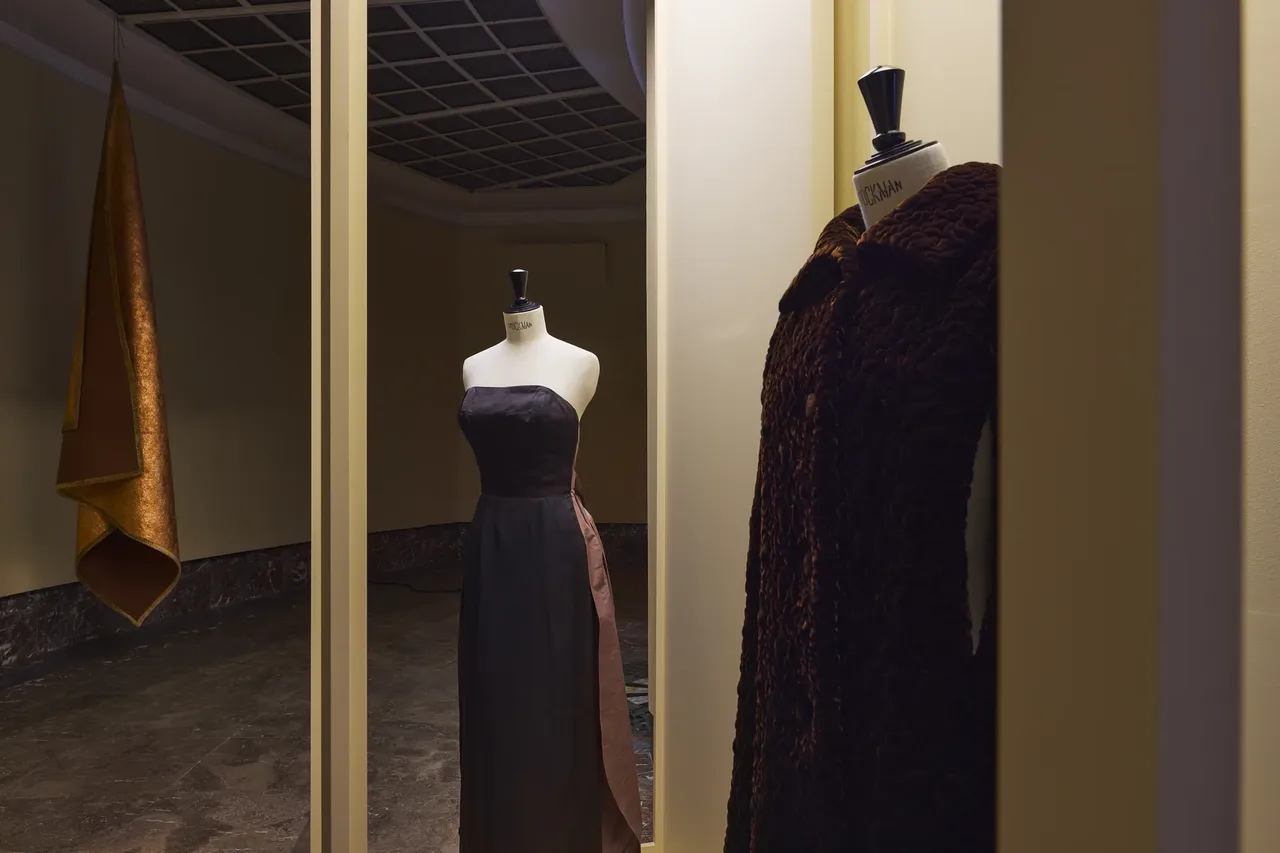
Dark garments displayed on dress forms at Bozar, Brussels. Installation view of “The Fabric Decides”. Photo © Barth Decobecq.
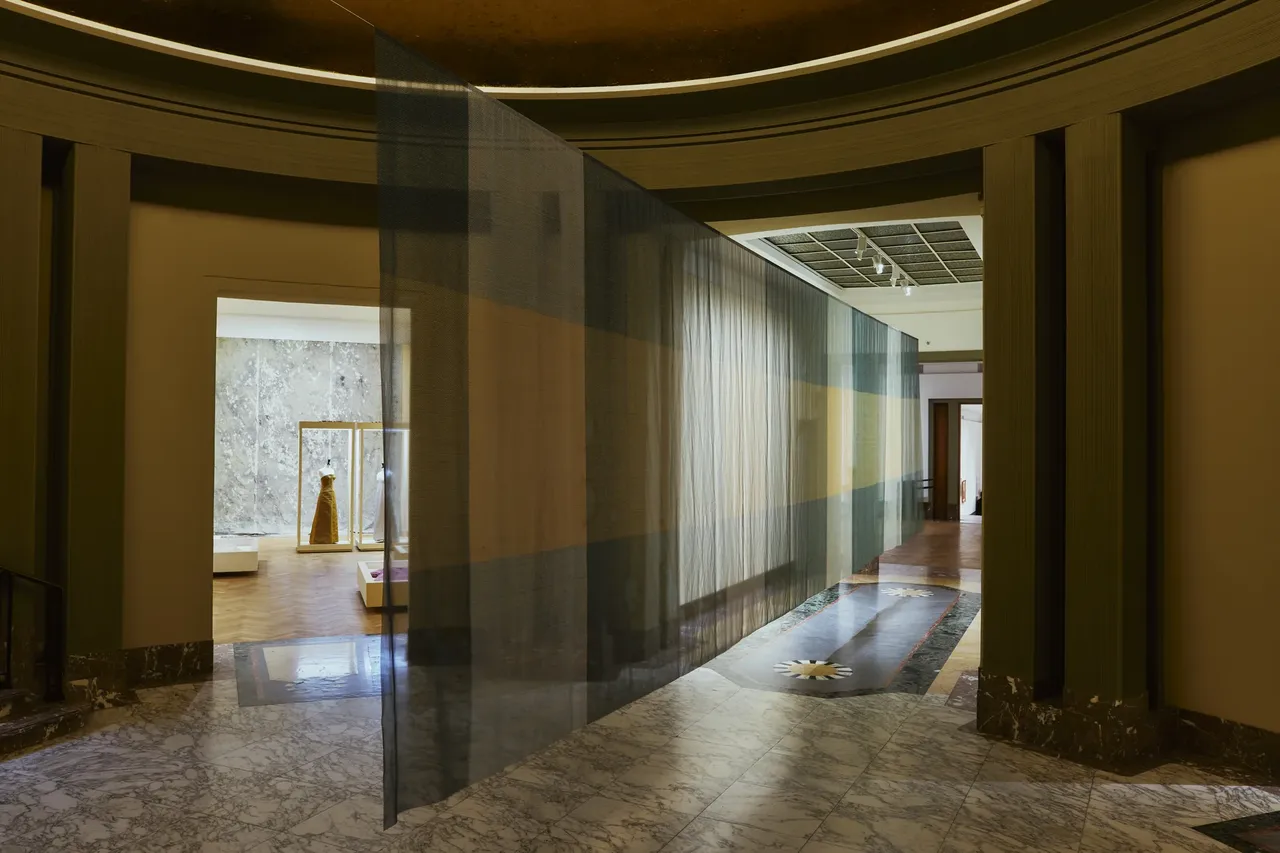
The entrance veil by Edith Dekyndt stretches across the Rotonde Royale at Bozar, Brussels. Installation view of “The Fabric Decides”. Photo © Barth Decobecq.
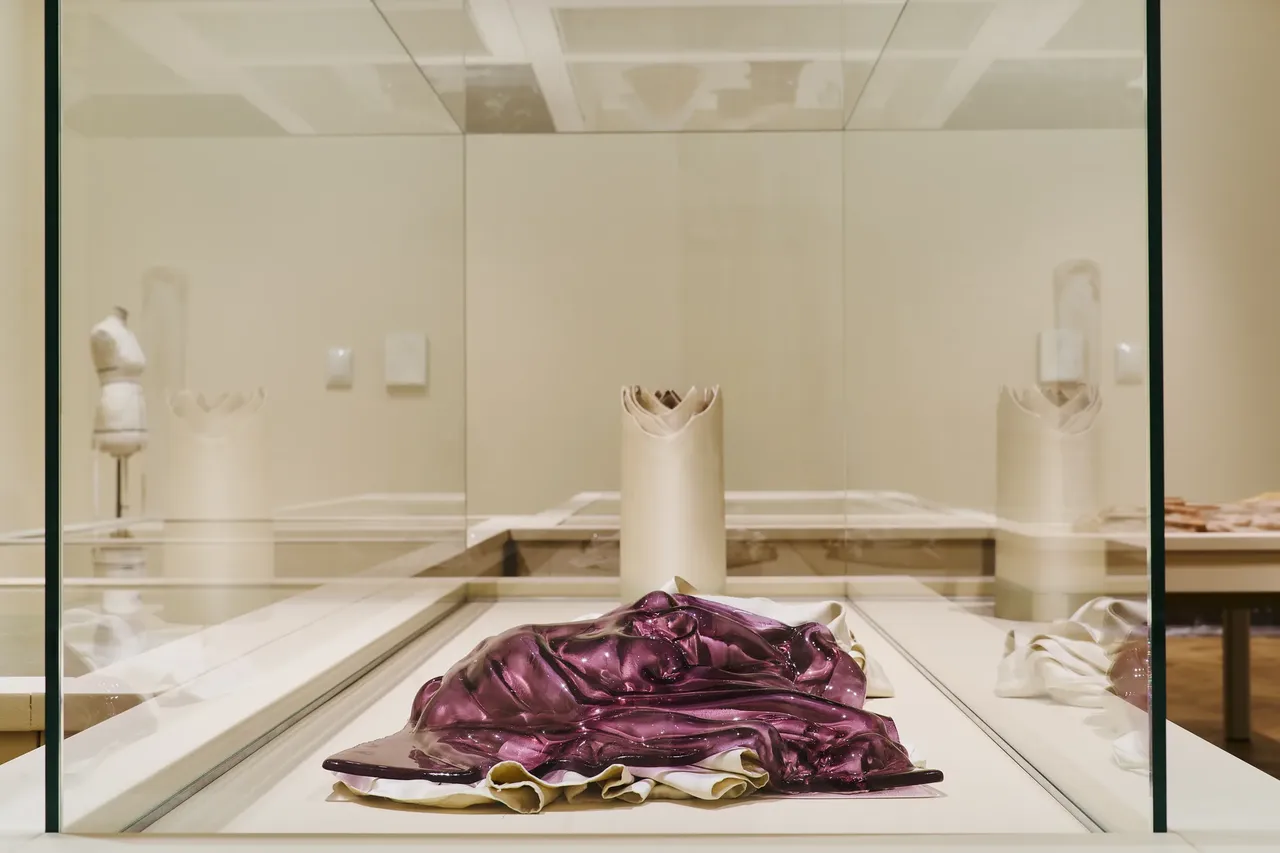
A purple textile on display in a glass case at Bozar, Brussels. Installation view of “The Fabric Decides”. Photo © Barth Decobecq.
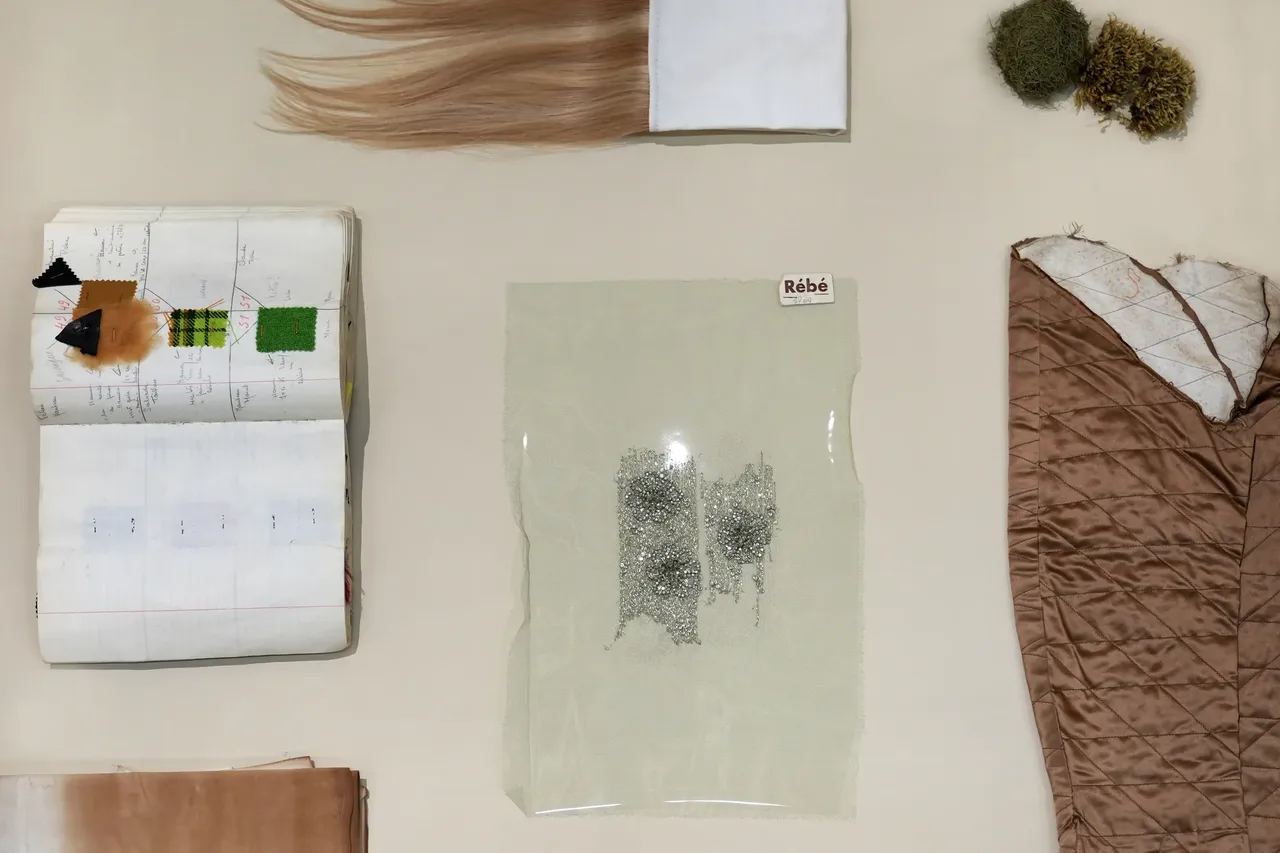
Textile samples and an open notebook on display at Bozar, Brussels. Installation view of “The Fabric Decides”. Photo © Pierre Daras & Pierre Henri Leman.
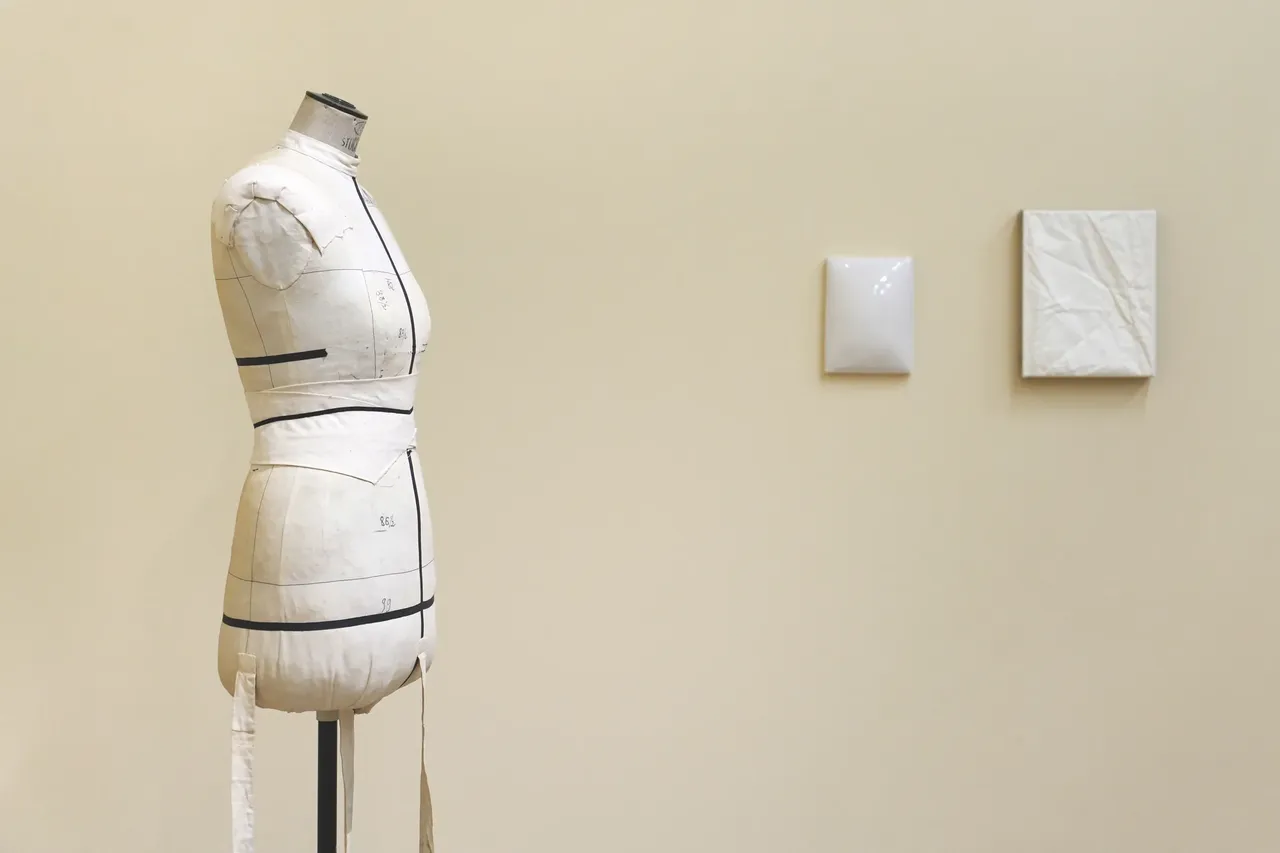
A dress form and small wall-mounted works at Bozar, Brussels. Installation view of “The Fabric Decides”. Photo © Pierre Daras & Pierre Henri Leman.
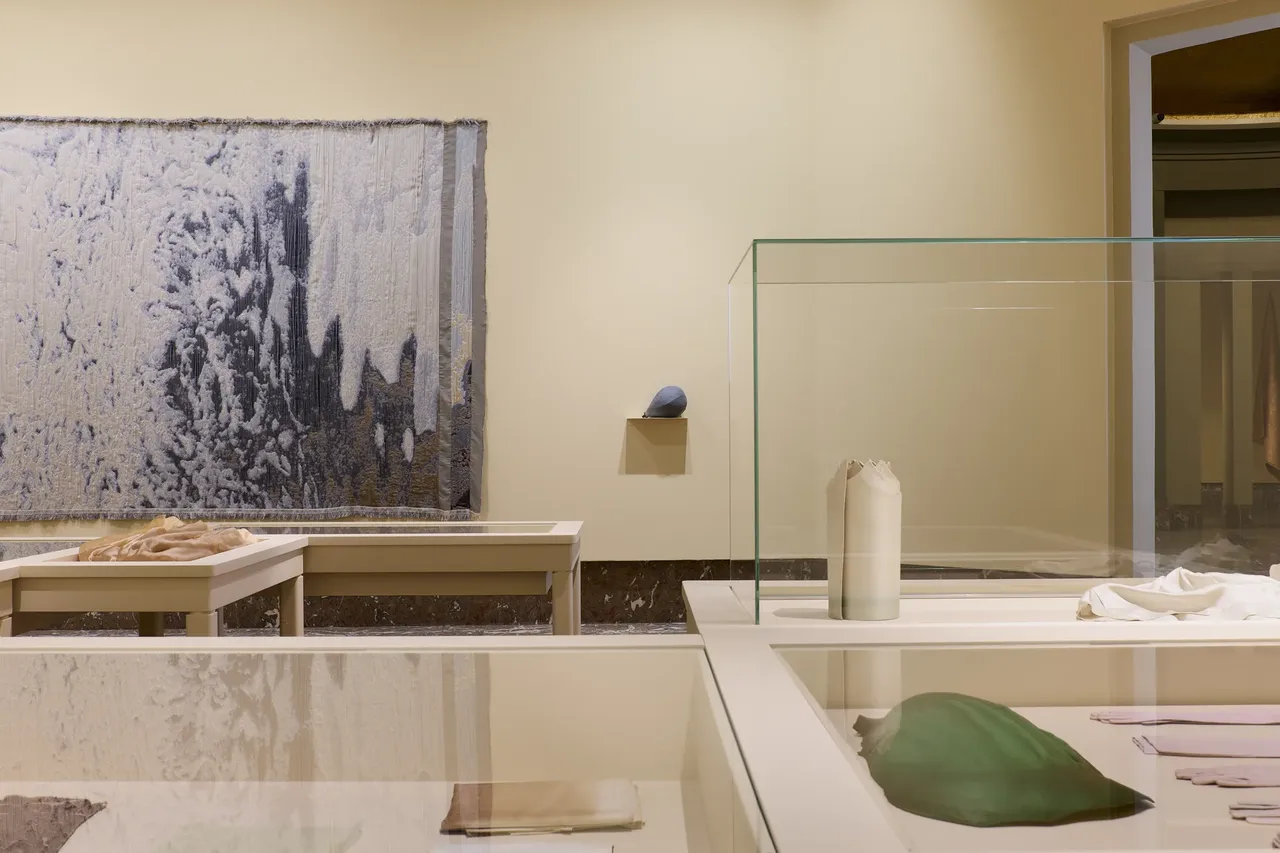
Works on display in glass cases and on the gallery wall at Bozar, Brussels. Installation view of “The Fabric Decides”. Photo © Barth Decobecq.
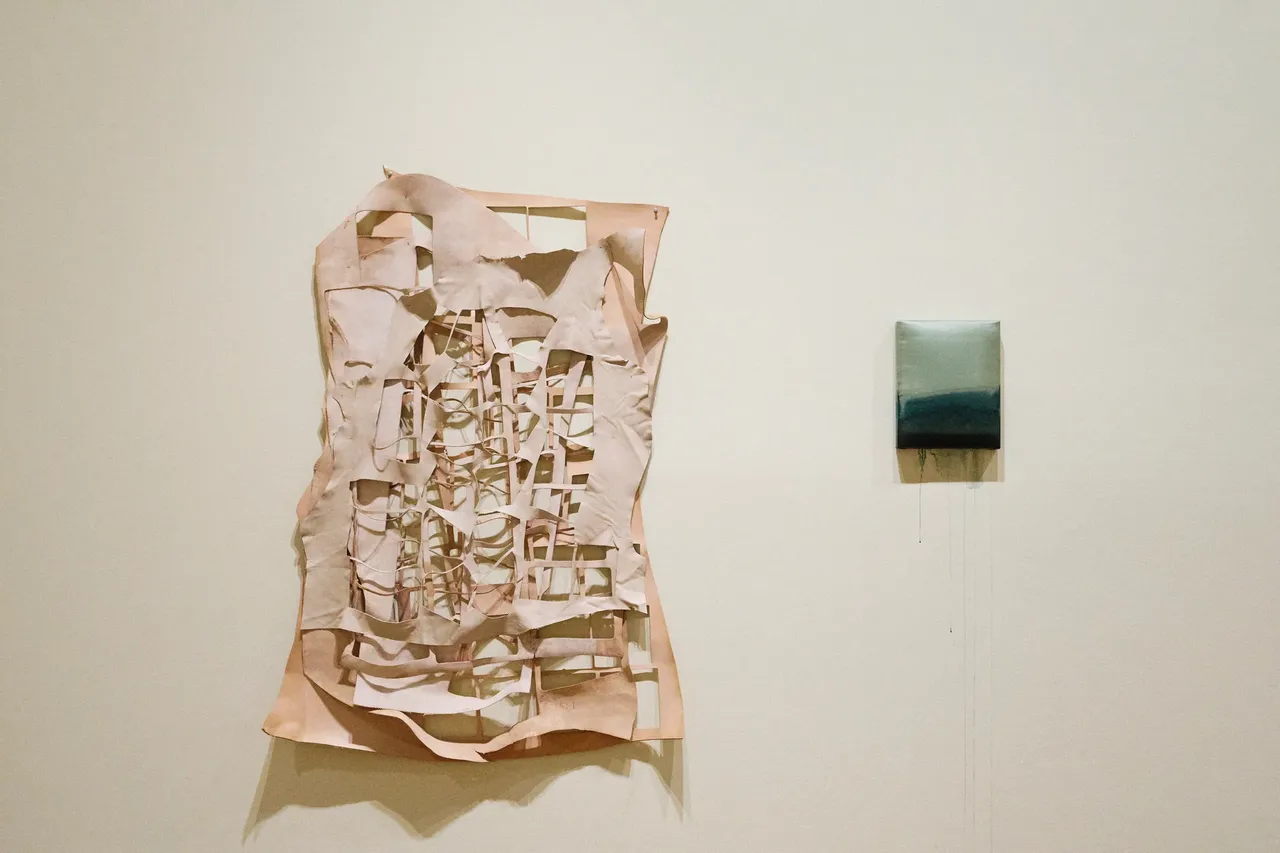
A detail of two wall-mounted works at Bozar, Brussels. Installation view of “The Fabric Decides”. Photo © Yannick Sas.
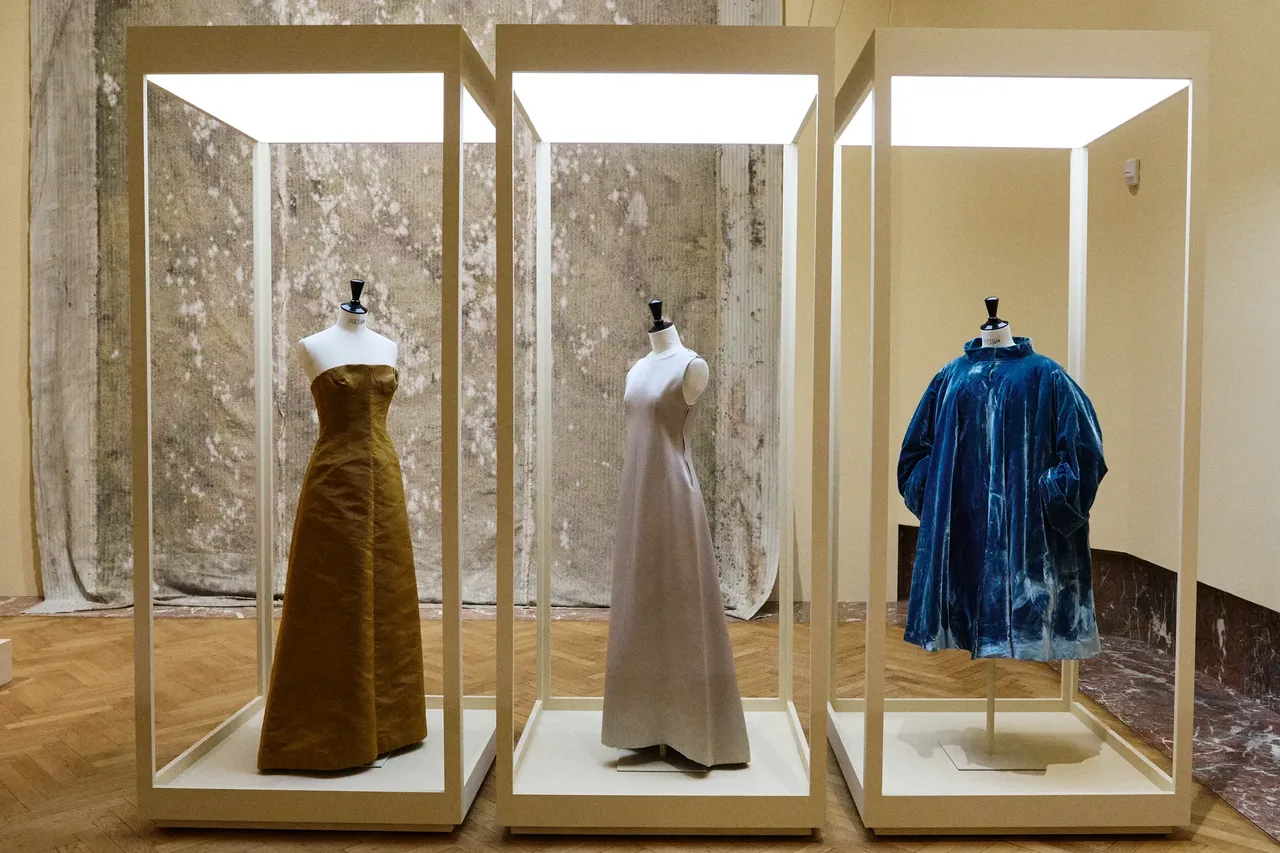
Three garments from the Balenciaga archives in individual display cases at Bozar, Brussels. Installation view of “The Fabric Decides”. Photo © Yannick Sas.
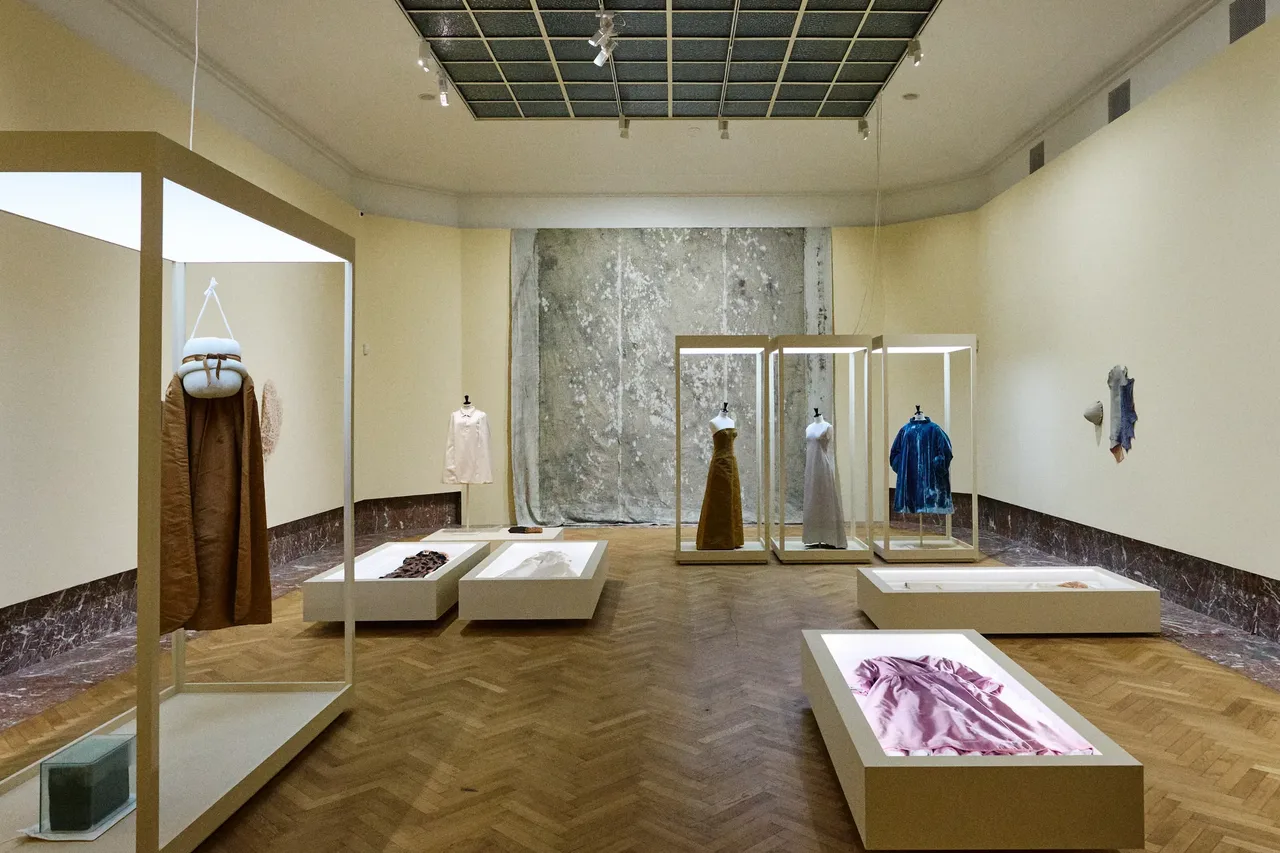
A gallery with archival garments and low display cases at Bozar, Brussels. Installation view of “The Fabric Decides”. Photo © Yannick Sas.
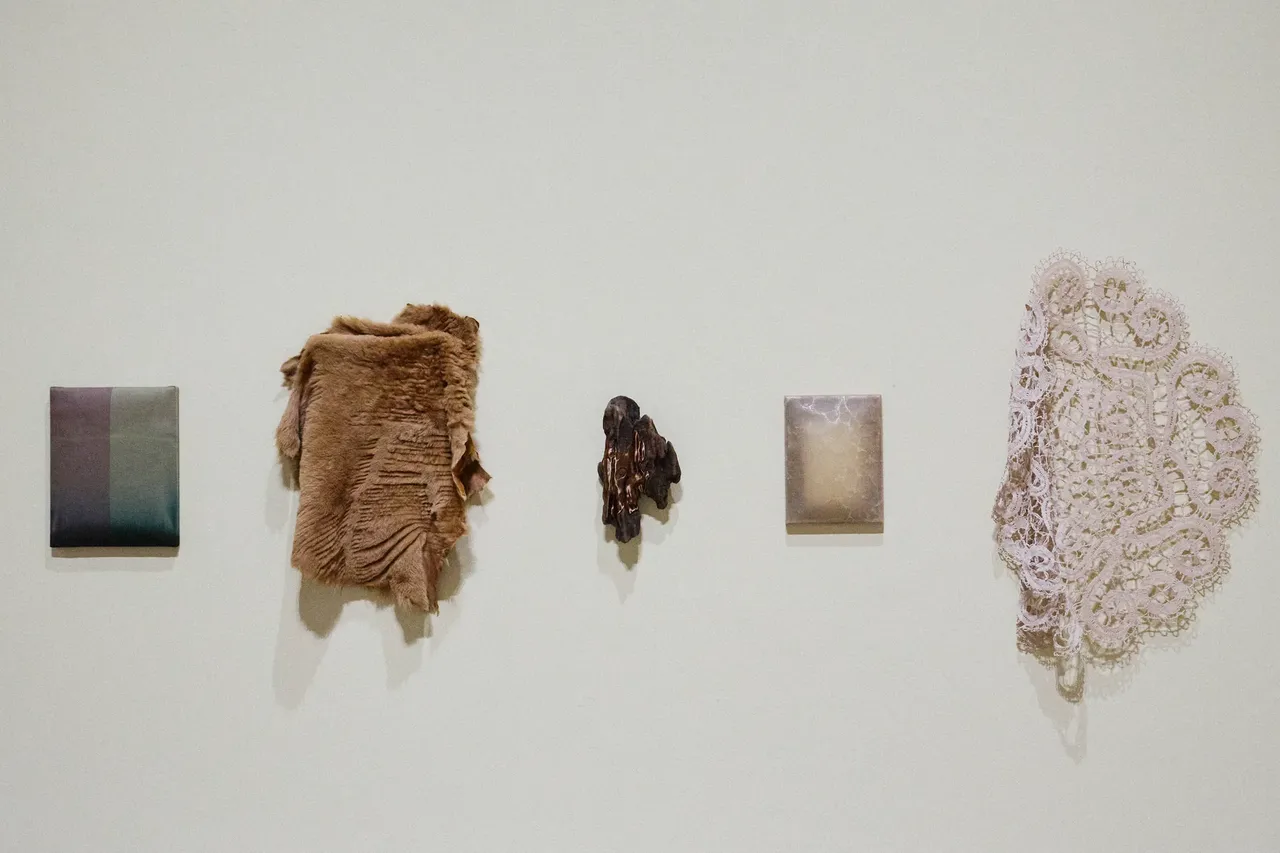
A row of textile and mixed-media works on a gallery wall at Bozar, Brussels. Installation view of “The Fabric Decides”. Photo © Yannick Sas.
Every Friday, METAL Weekly gathers the week's stories. Subscribe.