Last year, METAL travelled to Geneva to discover HEAD – Genève and the emerging designers presenting their graduate collections at the school’s annual fashion show. The impression was clear: Switzerland had a new generation of designers worth keeping an eye on. One year later, there was little doubt about where to be. On November 6, the HEAD Genève Fashion Show returned to Le Cube, bringing together twenty collections by graduating Bachelor’s students and thirteen by Master’s students. Thirty-three approaches to fashion, thirty-three attempts to find a place in the fashion industry and, for us, thirty-three reasons to reaffirm our previous impression.
During our visit to the school, one topic kept coming up among the journalists in attendance: just how impressive HEAD – Genève was. A public institution and part of HES-SO Genève, HEAD is an outstanding example of what publicly supported education in art and design can achieve. Its multidisciplinary structure brings together fashion, jewellery and accessories, visual arts, film, visual communication and spatial design. Here, disciplines are not expected to exist in isolation. Instead, collaboration is embedded in the school’s ethos, shaping the way both teachers and students approach their work.
Another recurring topic was the difficulty of entering the professional world straight after graduation, and the role an institution like HEAD can play in that transition. It is a challenging step in any field, but perhaps particularly so in fashion, where young designers must find their place in an industry that is hardly the easiest to navigate. Having a strong collection is one thing; finding the means, contacts and opportunities to make a living from it is quite another. These conversations brought us back to the impression that the school is doing something particularly valuable. Beyond nurturing talent and developing technical and creative abilities, it gives students the opportunity to put their work in front of people who are already part of the industry, to have their names on someone’s radar and their collections featured in magazines like this one.
This year, HEAD brought together an impressive international jury of eighteen leading figures from fashion, media and luxury. Tim Blanks, editor at The Business of Fashion; Marco Russo, Design Director at Louis Vuitton; and Alice Bouleau, founder of The Arrow, were among those invited to assess the thirty-three collections and select the six winners.
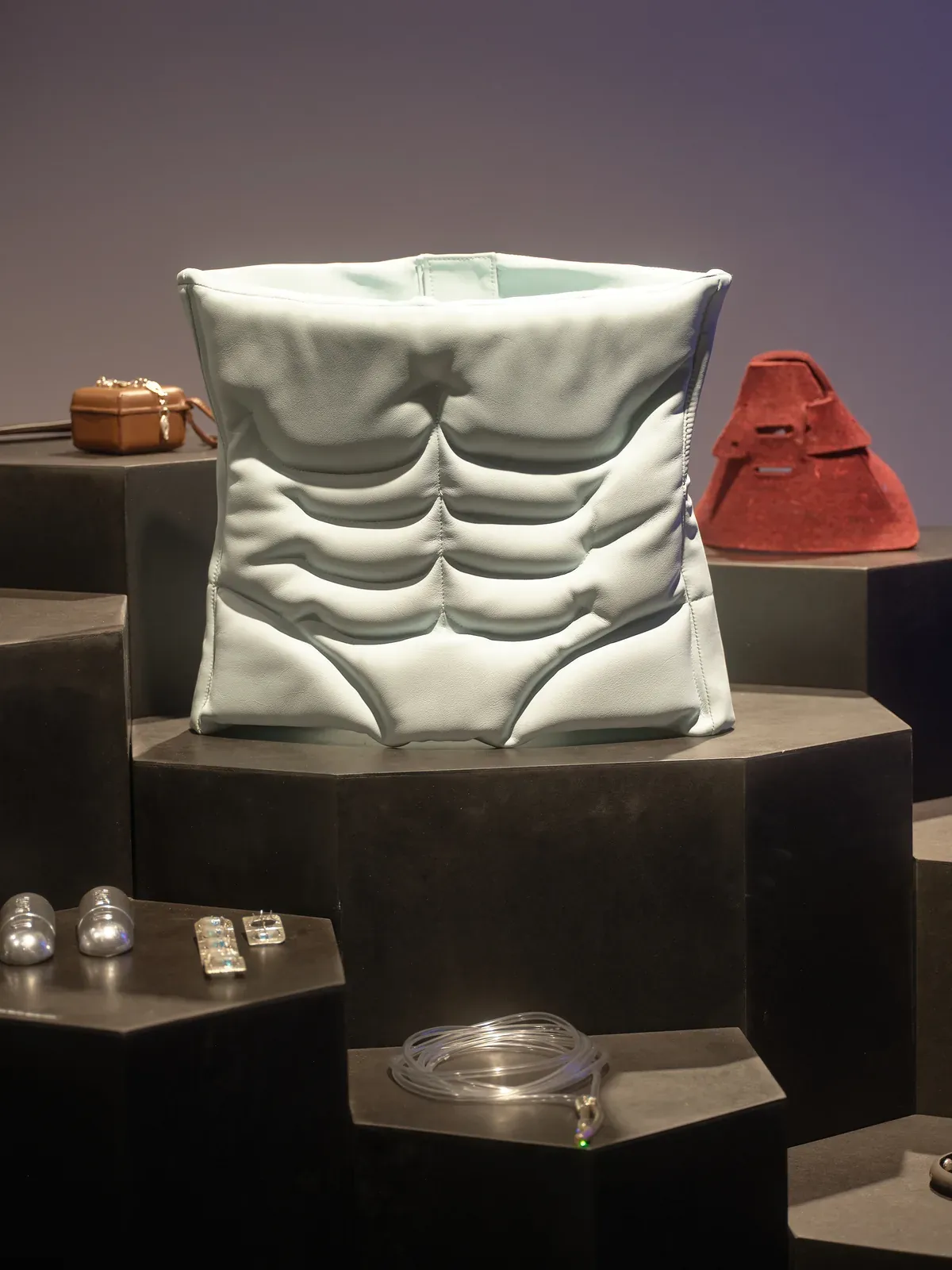
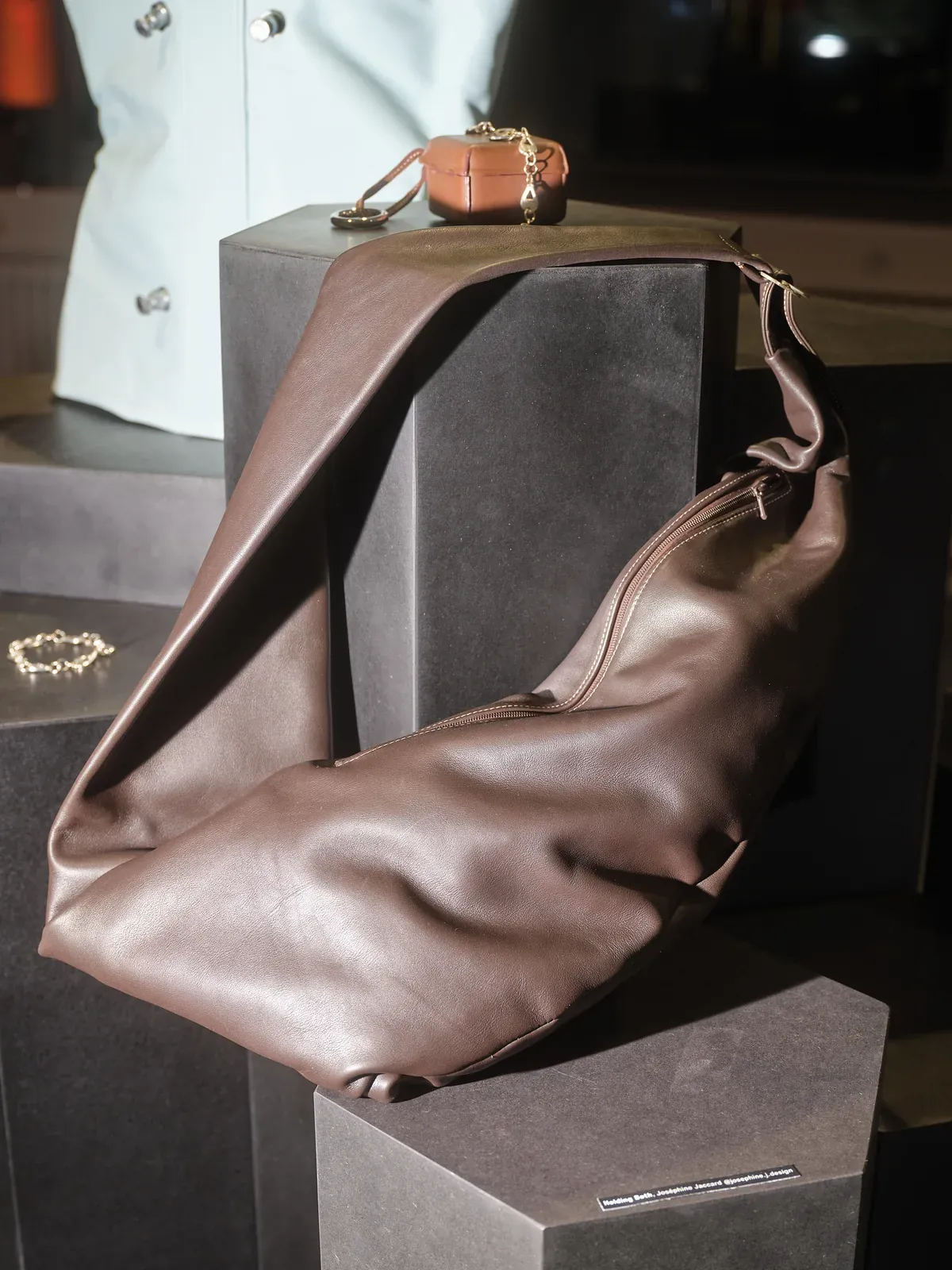
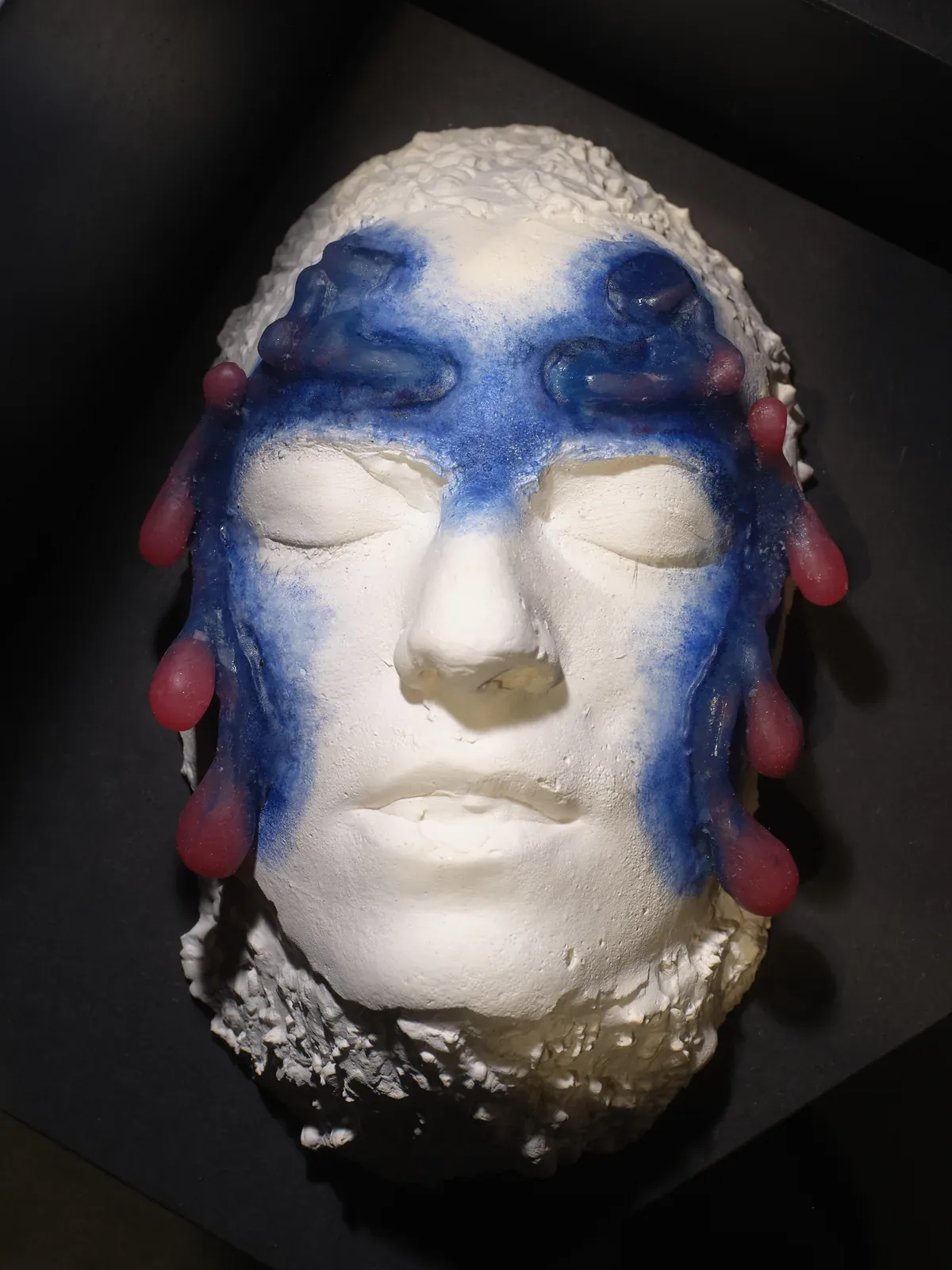
But before the show could begin, there was the matter of getting to know the school and its designers. Building D, the historic building housing the Bachelor’s programmes in Fashion Design and Jewellery and Accessory Design, as well as the Master’s programme in the latter field – the first programmes of their kind in Switzerland – also hosted the opening event of this year’s graduate show. Around the beautifully arranged table, several graduate projects were on display. Pauline Martin explored contemporary discourses around biohacking through a jewellery collection born from experimentation with real bones. Survis! is the name of the project, which includes pill-like earrings and a six-pack leather bag. Across the room, we had the opportunity to speak with Maëlle Lezebot and Flora Lingenhel, alumni and designers of Tender Objects: an assortment of diamond-like pieces transformed into earrings, rings and a necklace, all made from a thin, muslin-like fabric manipulated to feel fragile yet firm at the same time.
Guests were also presented with a new take on school merchandise, by Lola Rust – or, rather, the moon, the star and the heart. A graduate of HEAD – Genève’s BA in Jewellery and Accessories Design, Rust drew inspiration from her own experience at the school to create four symbolic pieces that portray HEAD as a second home, a place that welcomes, supports and allows students to grow and forge their own paths.
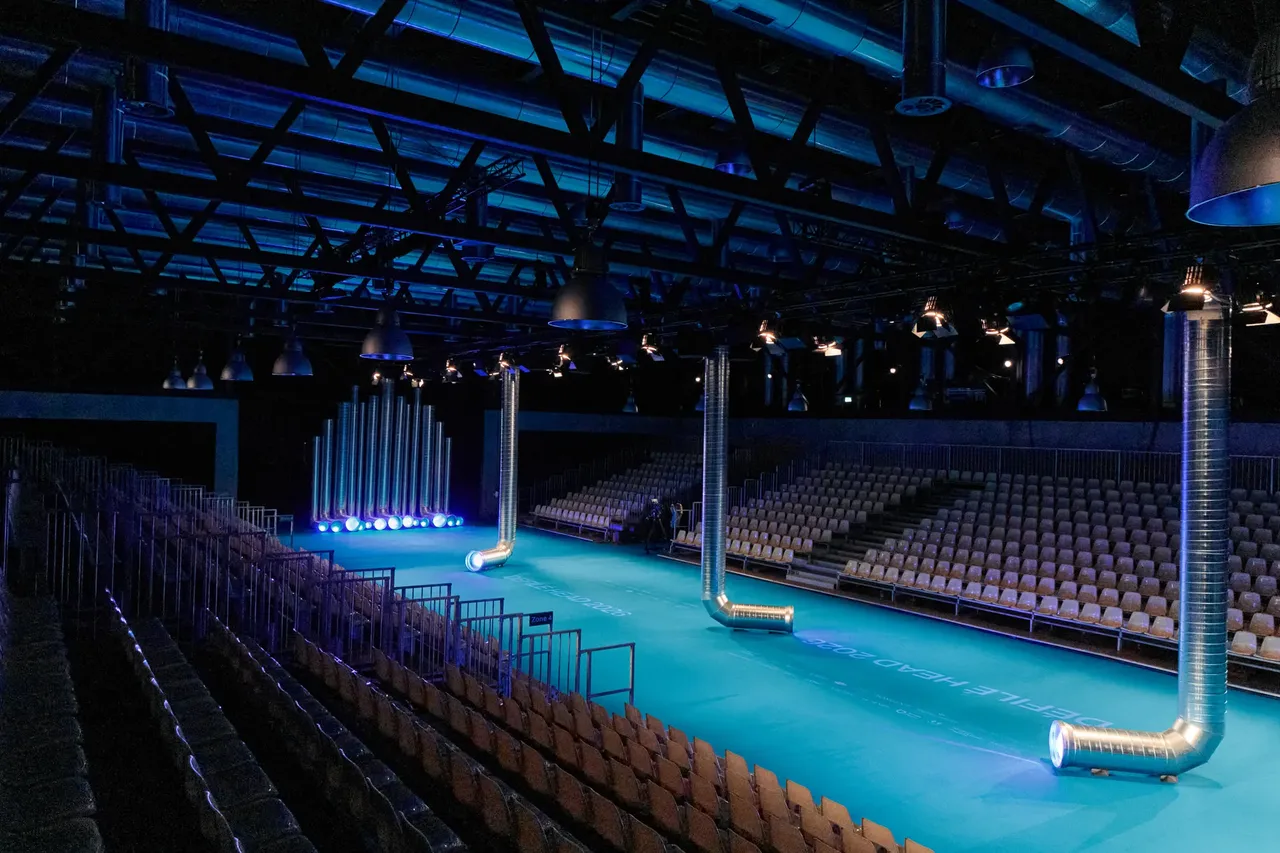
Building H, known as “The Cube”, is home to the Bachelor’s and Master’s programmes in Interior Architecture, Visual Communication and Installation Design, and was also the setting for this year’s fashion show. This edition placed particular emphasis on scenography and musical creation, and rightly so: the space itself became an essential part of the experience. The monumental installation developed by Maïlys Lochowicz, Lucie Terranova, Théo Chalendar and Rumet Contay, students from the MA in Design Installation working under the guidance of designer Matali Crasset, took the building’s ventilation system as its starting point. ORGAN extends its metal ducts into a structure reminiscent of the organ at Geneva’s Saint-Pierre Cathedral. Usually concealed as part of the building’s infrastructure, the ventilation system became a metaphor for the network of interconnections and cross-pollination that defines the school. Every degree, every discipline and every student is connected.
November 6 began backstage, where the real energy of a fashion show can always be found. There was time to meet the designers, discover their collections and hear about their inspirations and processes. I could barely write fast enough in my notebook to keep up with all the insights the graduates had to offer. There was simply too much talent, ambition and energy to take in.
The final show, during which the jury would evaluate the collections and announce the winners, opened with an original composition by Romano Bianchi x Village Pipo, created in collaboration with the Geneva Chamber Orchestra (OCG). In a fashion show, music and styling are just as important as the set and the collections themselves. Alongside developing their own visual identities, each student had the opportunity to personalise the musical atmosphere accompanying their collection, giving each presentation its own distinct character. Agreeing with Marco Russo, Design Director at Louis Vuitton and a member of the jury, “the thing I appreciate most is seeing very different identities in each project”.
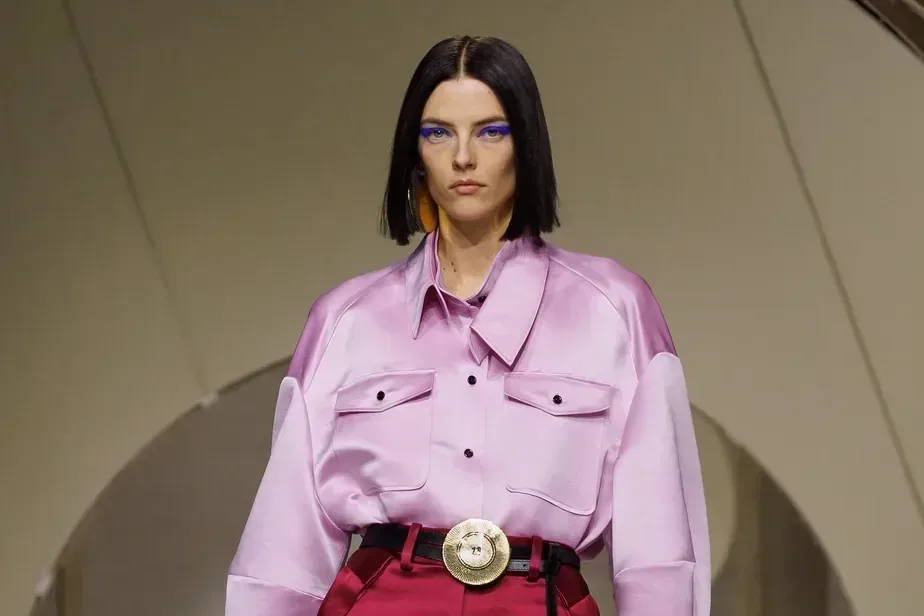
The Bachelor’s collections were particularly diverse, ranging from more commercially minded proposals to experimental approaches. Some of our favourites took home prizes; others did not. But every collection offered something unexpected, something that made you look twice and made me want to write about it. Here are some of the BA graduates’ collections that caught our attention.
Chiara Bonelli - Out of the Blue
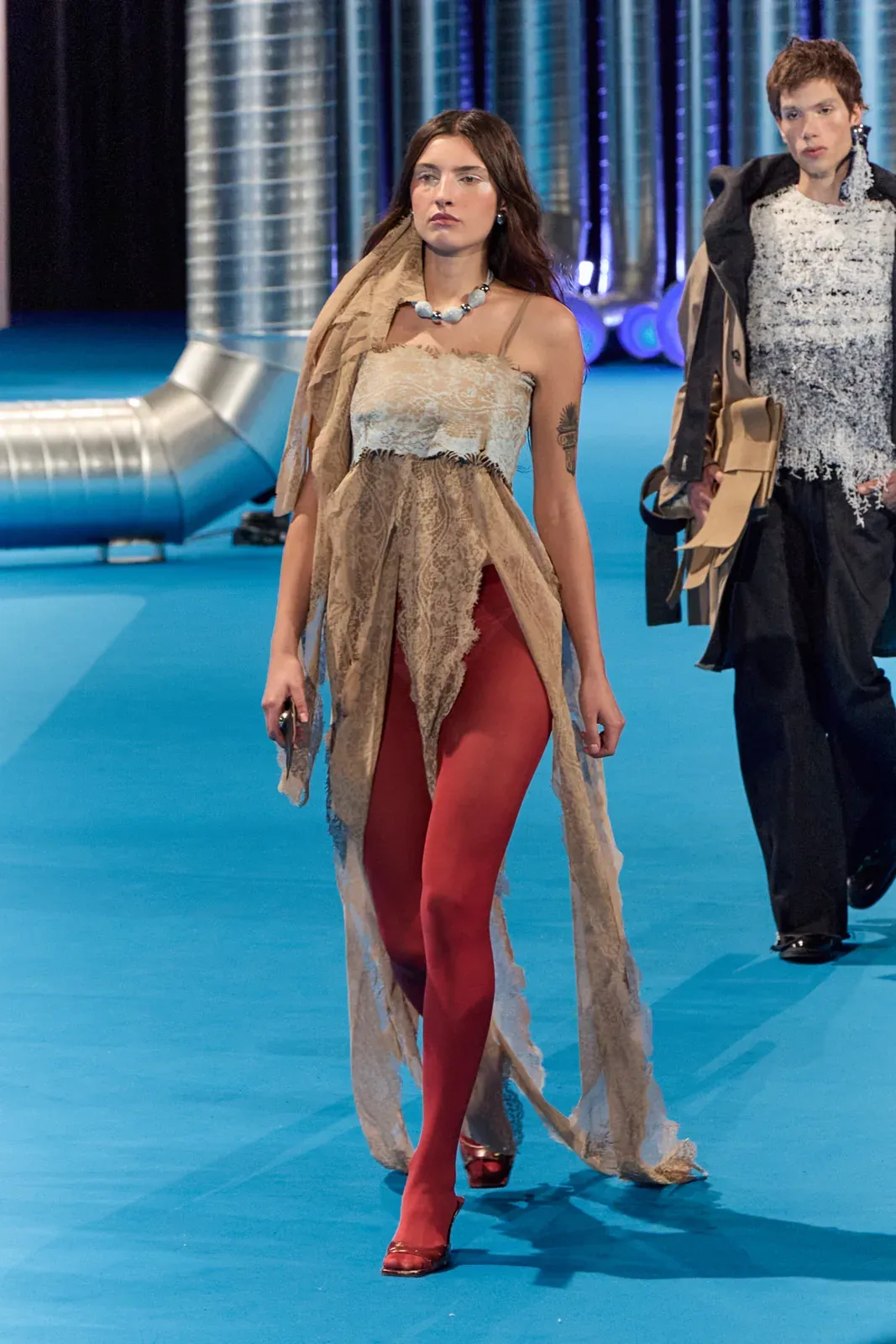
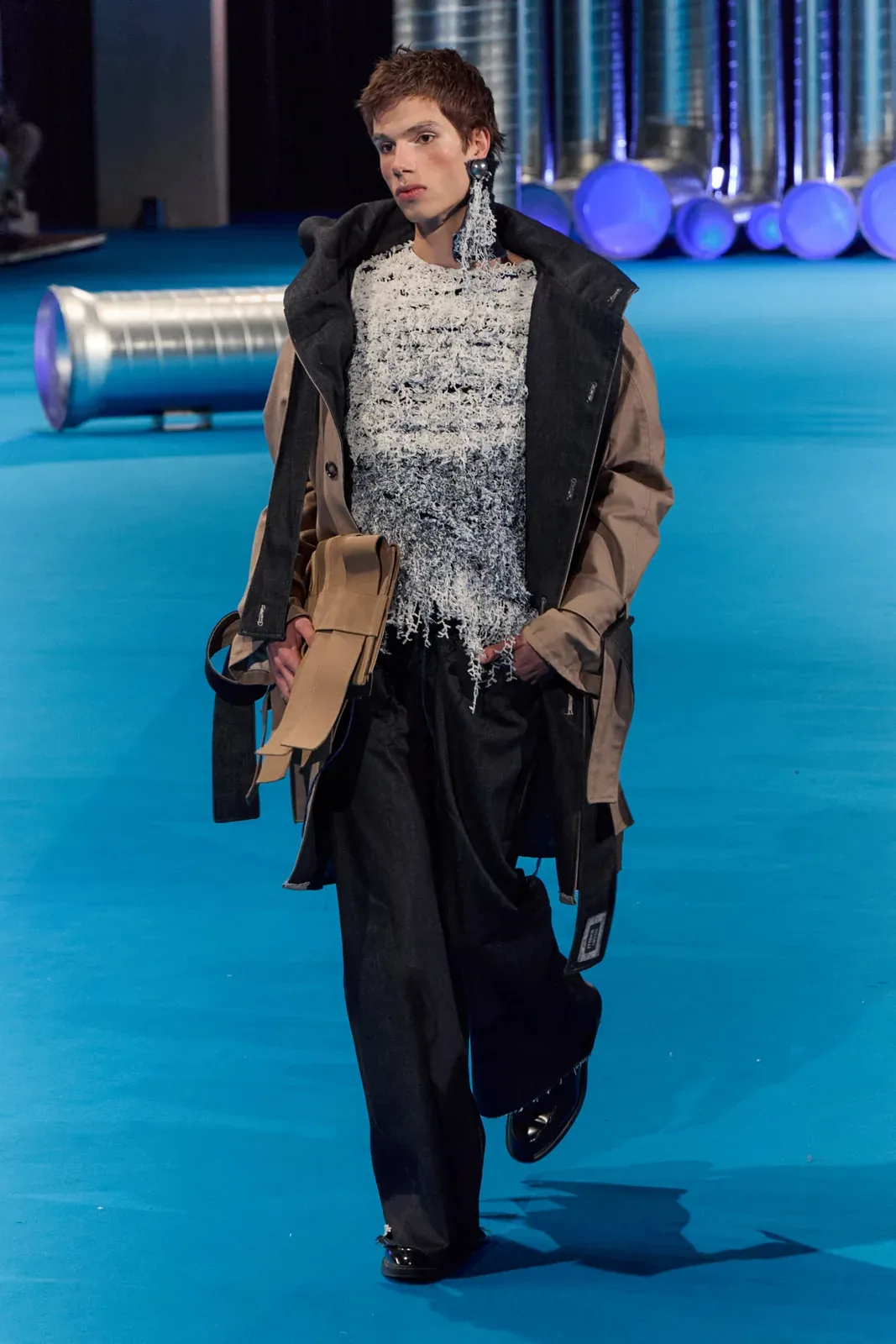
Chiara Bonelli’s Out of the Blue begins with blue, an emotionally charged colour and the starting point for a collection inspired by her own drawings and sketches made in blue ink. Every garment was made using the same fabric, but the result didn’t feel repetitive. Instead, Bonelli explored its possibilities through a variety of treatments and techniques. Manipulating the fabric to create raised textures, or sewing oversized threads that work as fringes, are just two examples of the ingenuity behind the collection. Bonelli was also one of the clearest examples of what HEAD seems to take particularly seriously: preparing students for the professional world. Her presentation was very well developed, and the collection felt ready to walk straight into a buyer’s office. She was awarded the Baume & Mercier Prize.
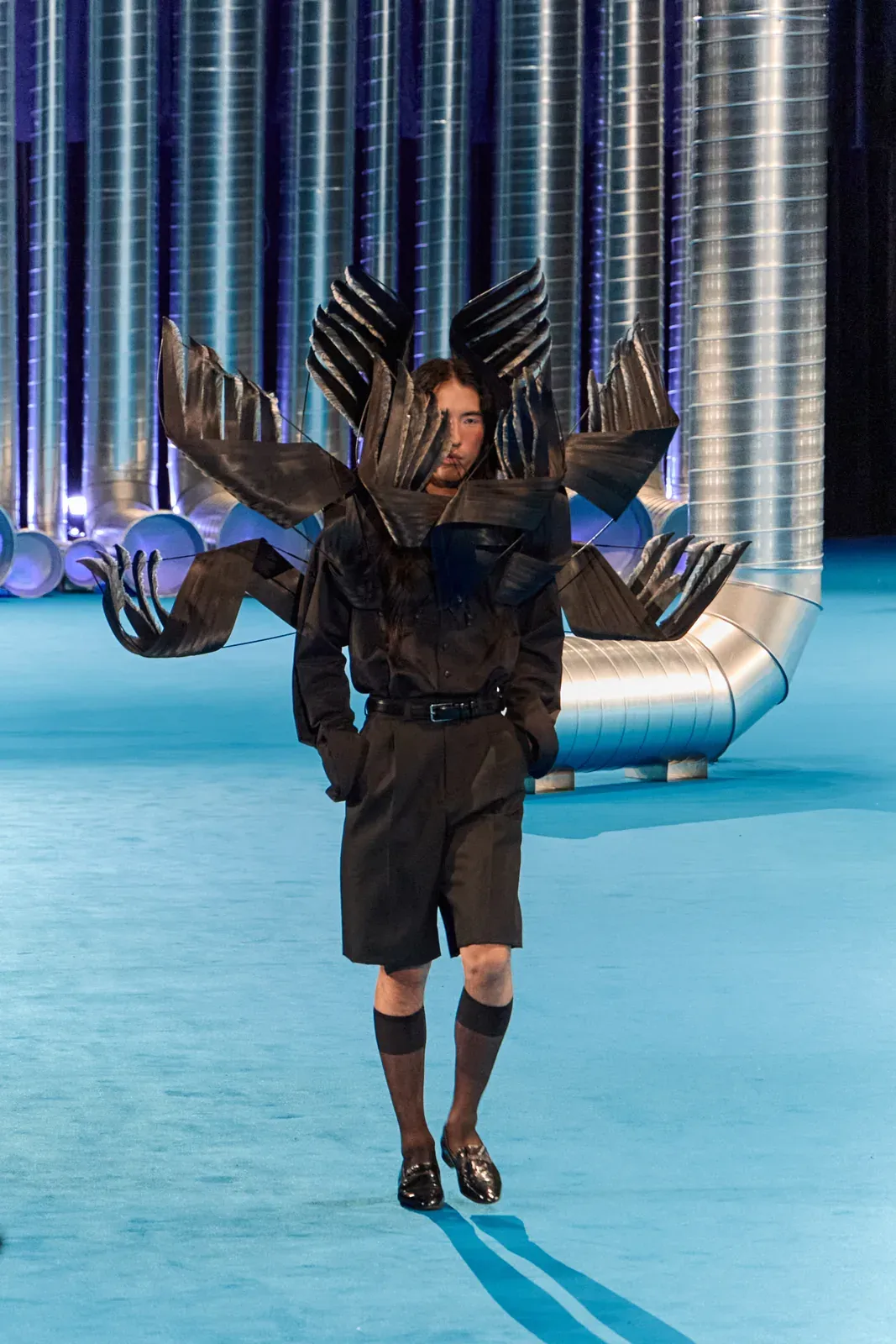
Loris Cedolin – Fais-moi cygne
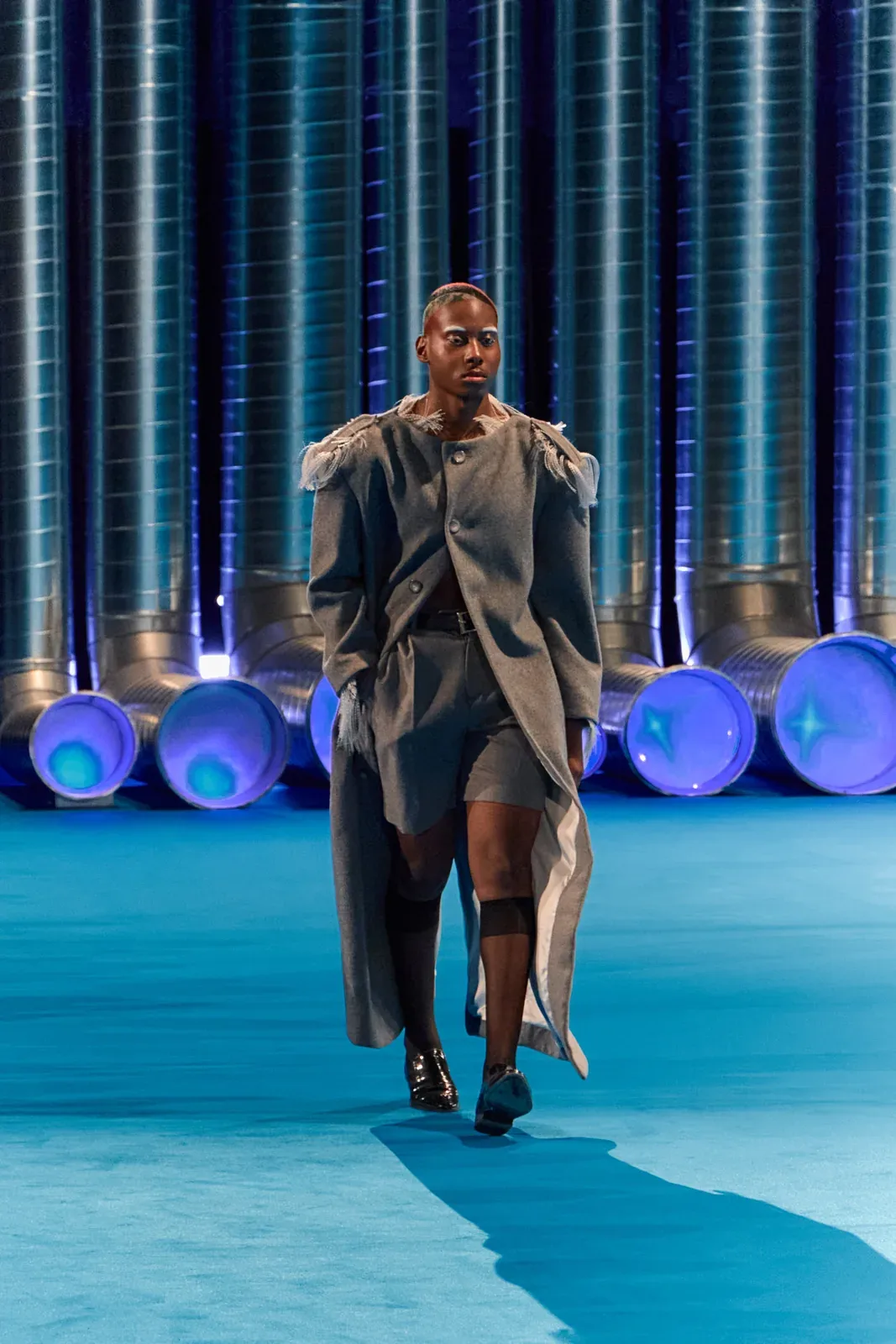
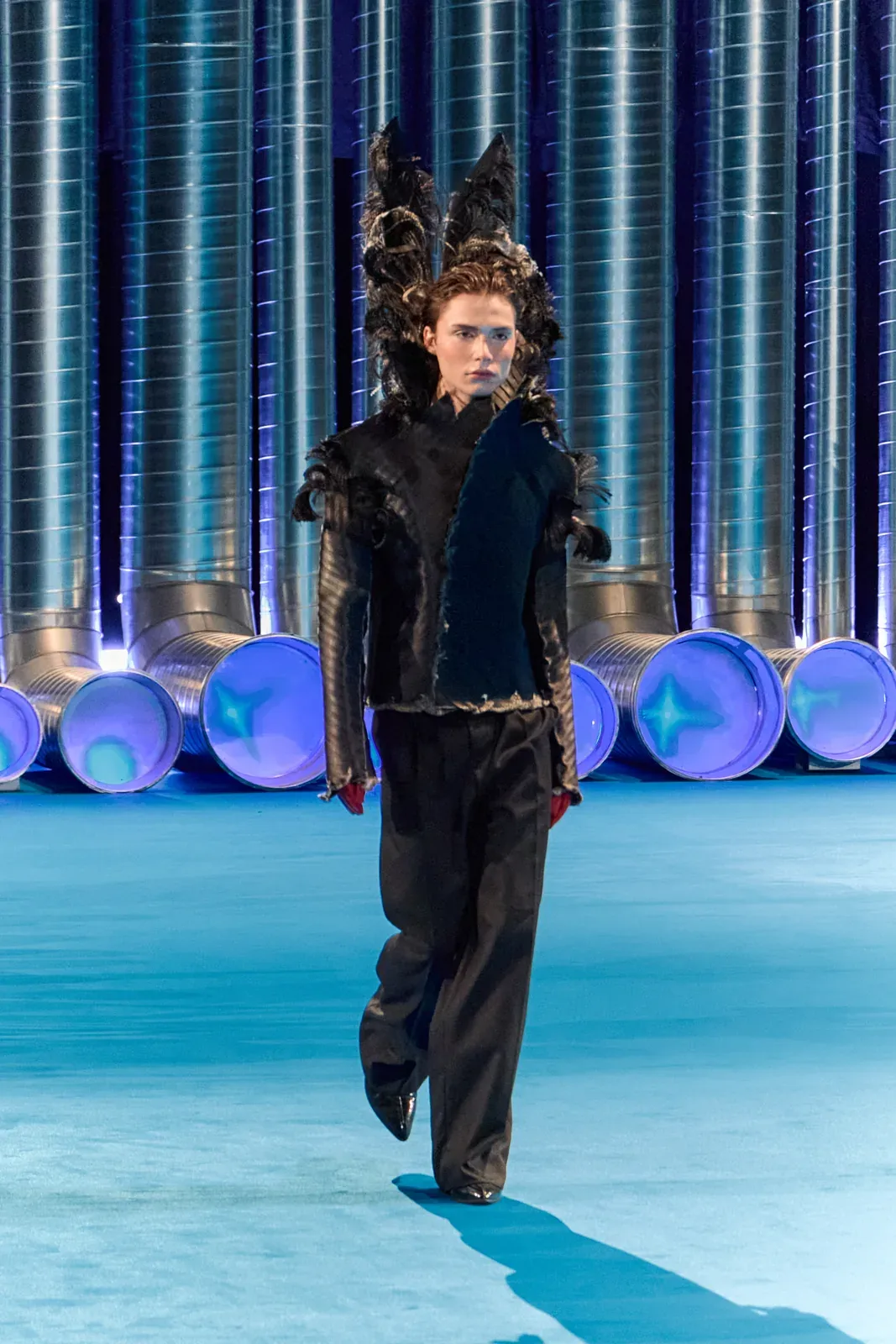
This was one of the collections that seemed to resonate most strongly with both the journalists and the jury. Cedolin received the Image/Artistic Direction of the Collection Prize, jointly with Zakarie Boubekeur.
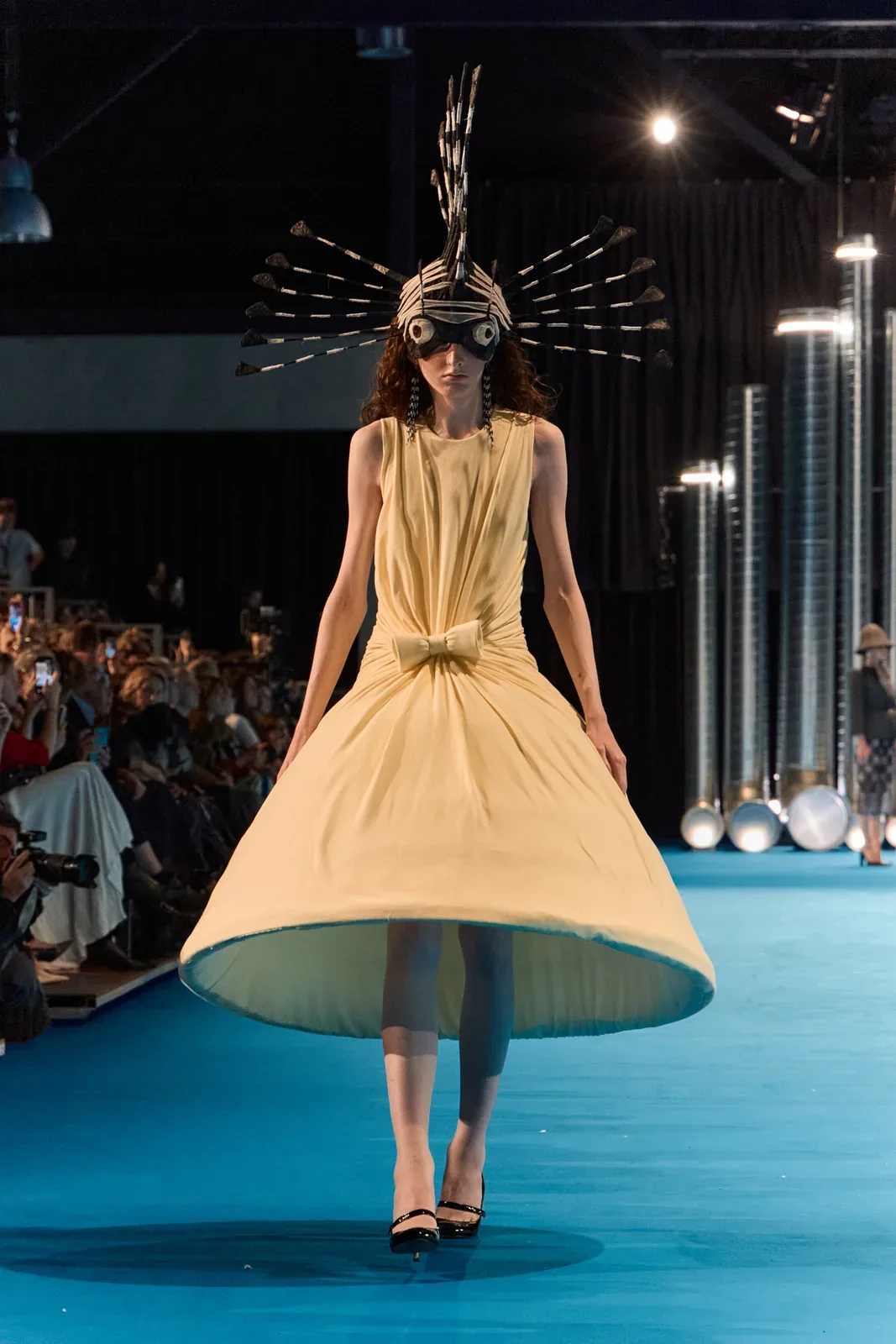
Drawing on a childhood fascination with swans, Cedolin develops an extravagant interpretation of the biblical angel, creating a universe where freedom and excess come together. Feathers work like a leitmotif throughout the collection, but they are made from upcycled seat belts. As he explained during his presentation, there is something poetic about taking a material that was never designed to be beautiful, and that belongs to one of the few components of a car that cannot easily be recycled, and transforming it into something so expressive. He told us he was trying to reach for the best thing he could do. Judging by the collection, that ambition was certainly communicated to everyone in the audience.
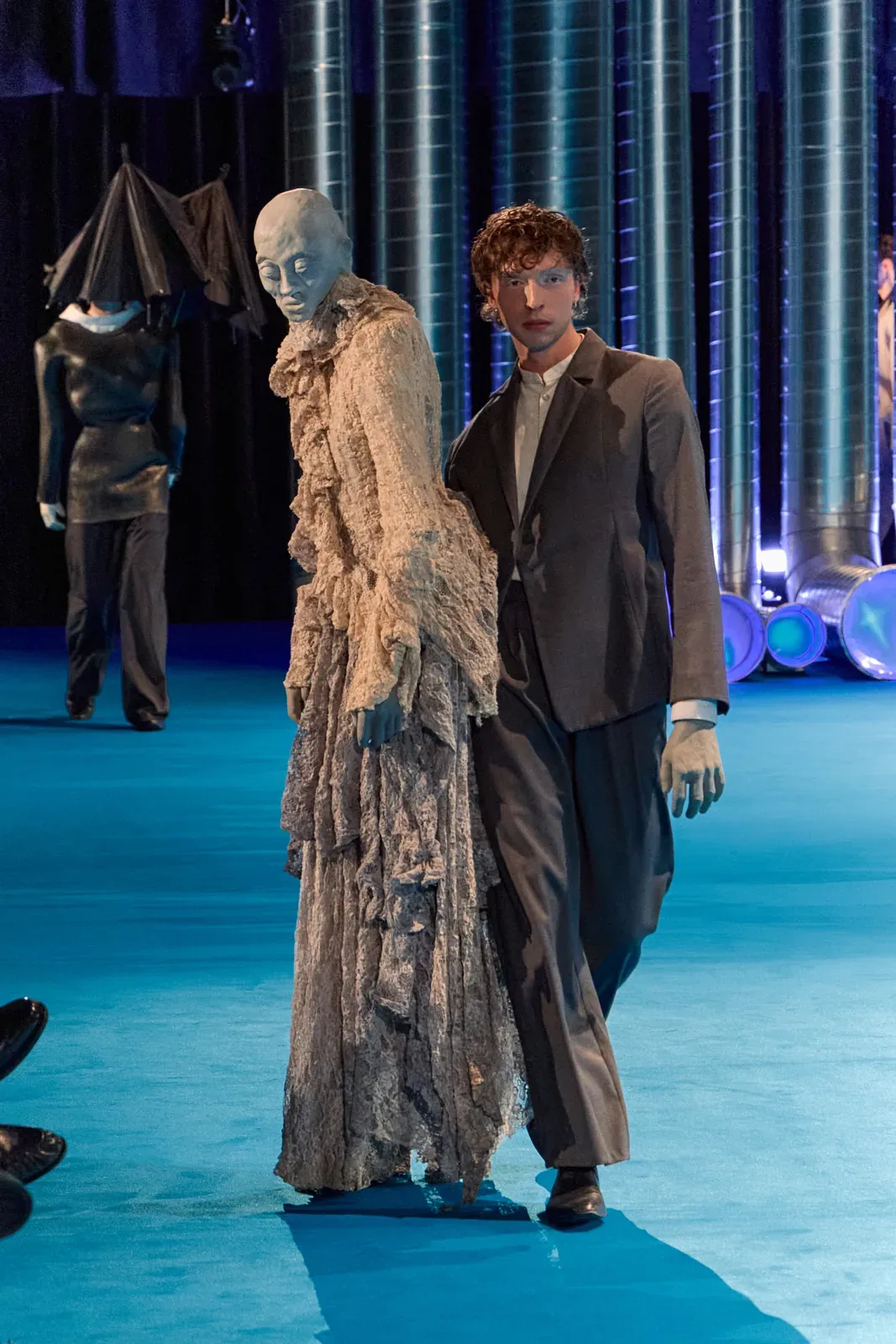
Antoine Panabière – L’autre main
L’autre main brings two bodies into coexistence: one living and walking, the other inert, constructed in latex. In between, beautifully constructed garments. Panabière plays with the reversal between the performing body and the performed body. On the runway, it was accompanied by slow music that created a cinematic atmosphere, at once uncanny and eerie. The figures seemed almost capable of moving on their own. The audience was vocal in its appreciation, and the jury clearly agreed, awarding him the Prix du Jury, supported by The Arrow.
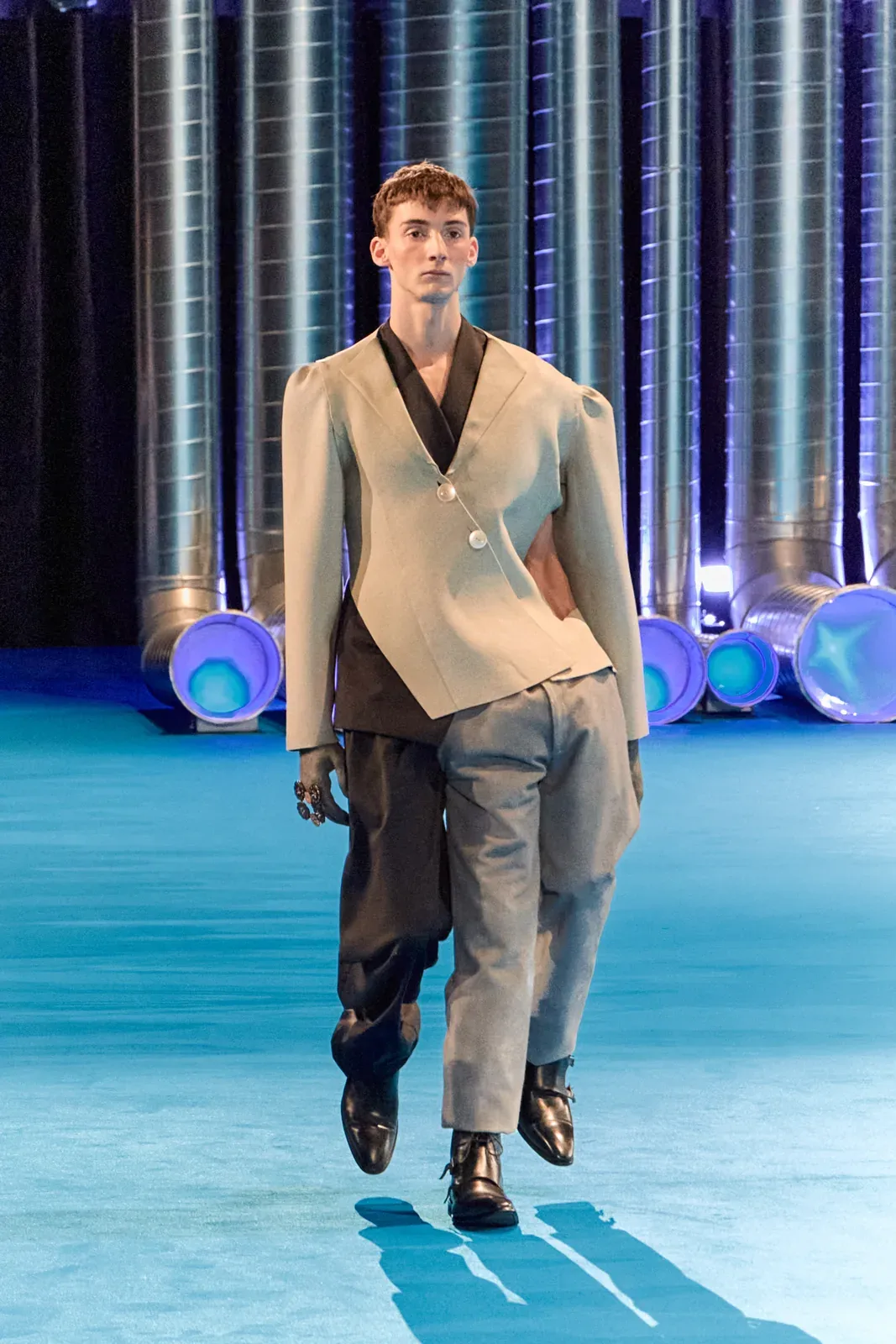
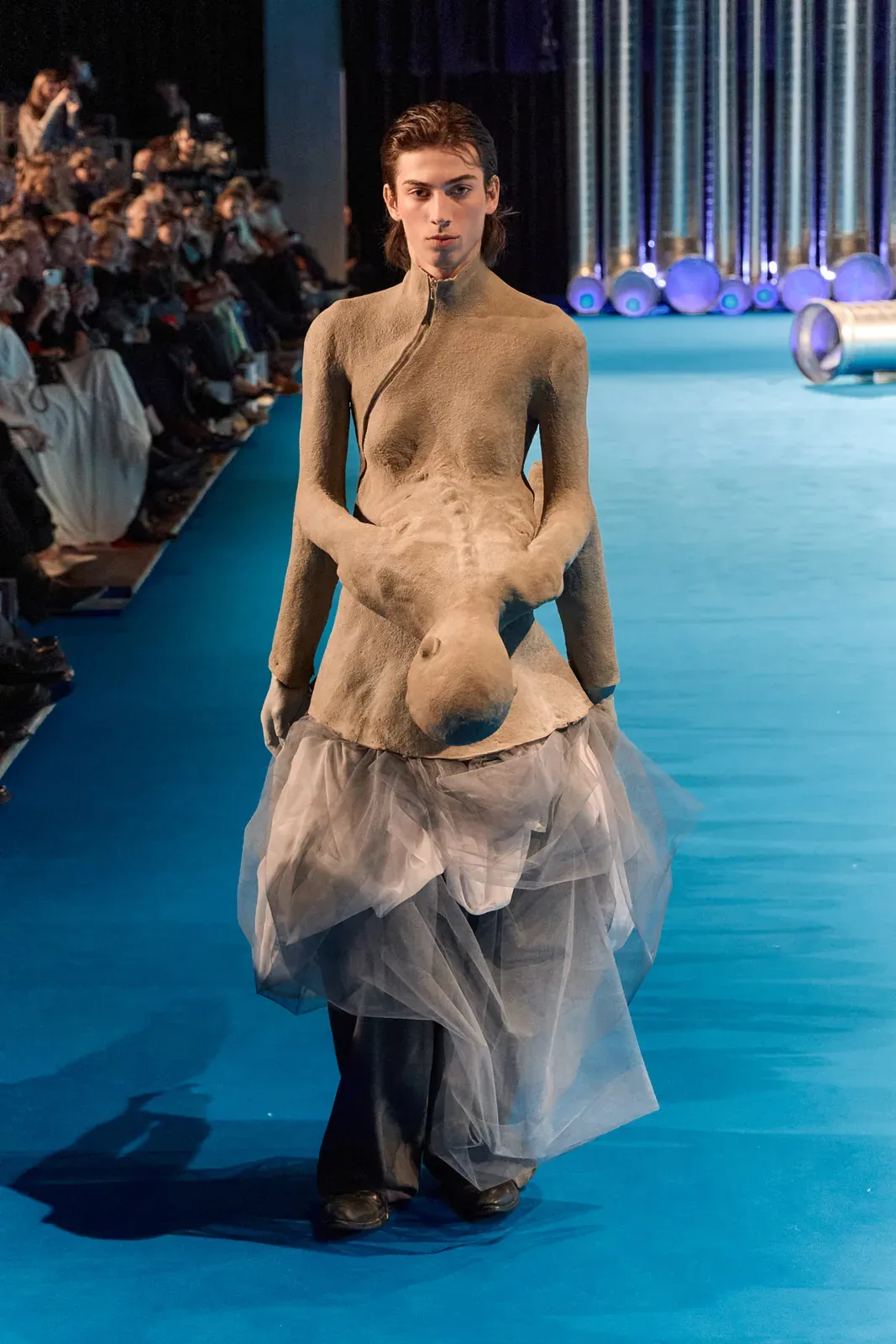
Kelig Trésallet – Paris-Brest
“I went crazy”, Kelig told us when describing her collection, and that might be a fair assessment. She was referring, among other things, to a caramel skirt, quite literally coated in caramel. With Paris-Brest, Trésallet creates an entire pastryland inspired by the goûter, the afternoon and the pastries that filled those moments with the women in her family. Her exploration of materials and construction was impressive, as was her work with leather cutting.
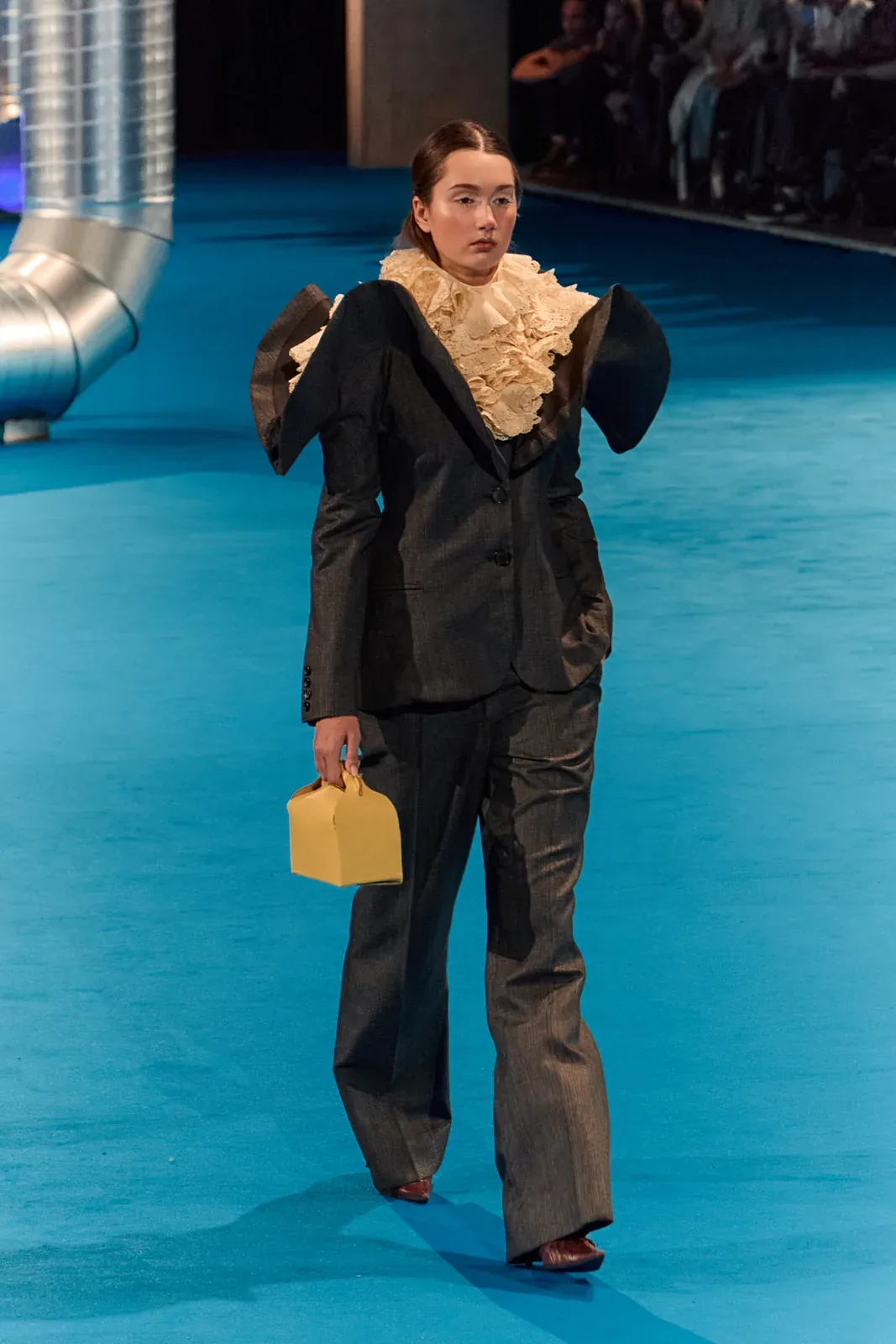
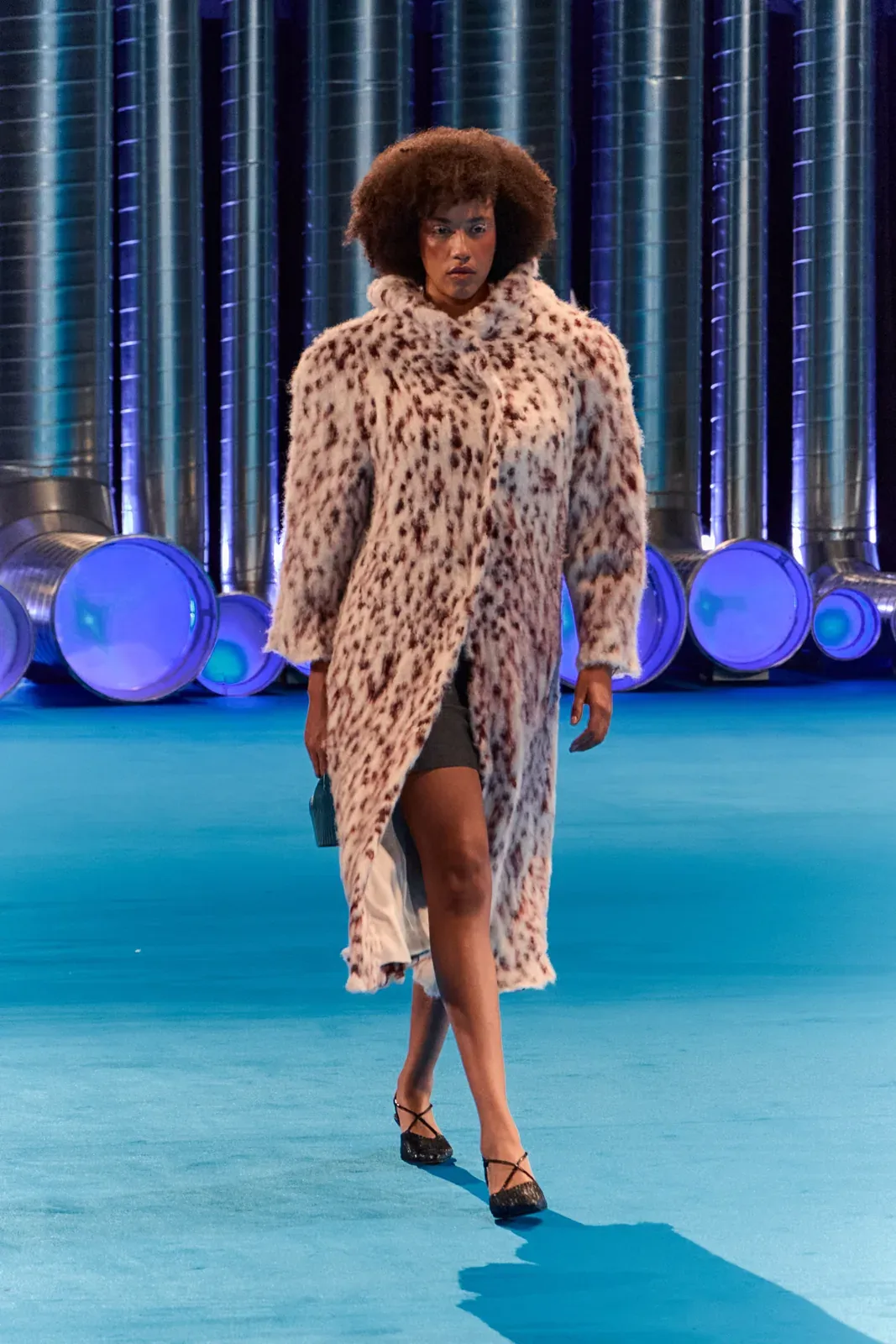
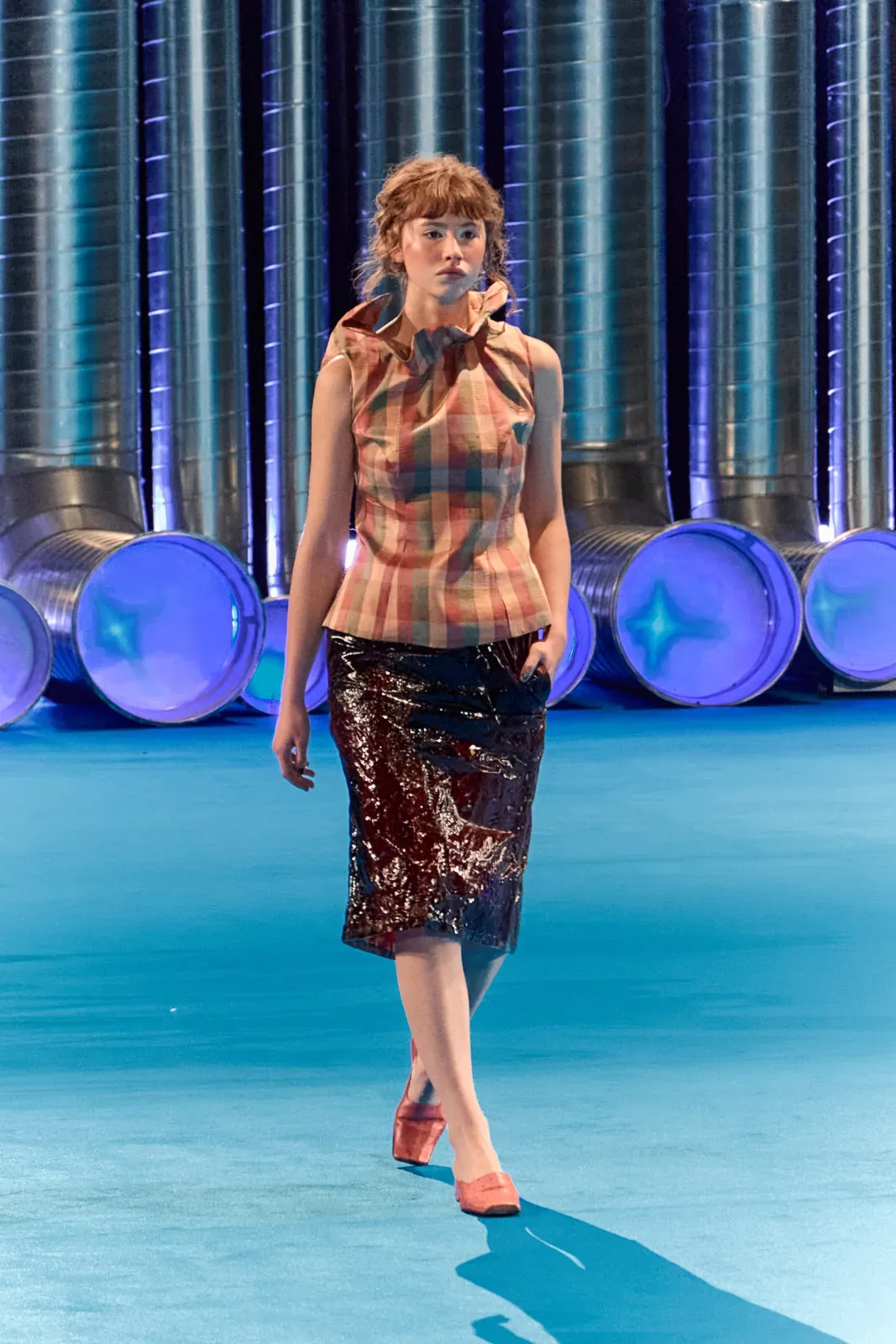
During the trip, another conversation kept resurfacing: the value of pursuing a Master’s degree in creative fields, as opposed to entering the workforce and gaining professional experience straight away. After seeing the collections, however, there seemed to be a collective agreement that the pursuit of one’s passion, and the obsession with one’s craft, can be reason enough. The Bachelor’s collections were strong, but the Master’s projects were exceptionally good.
Hippolyte Laporte – Anamorphoses
This was one of those collections you expect to win, hope will win, and genuinely want to see recognised. And it did, receiving the Chloé Prize.
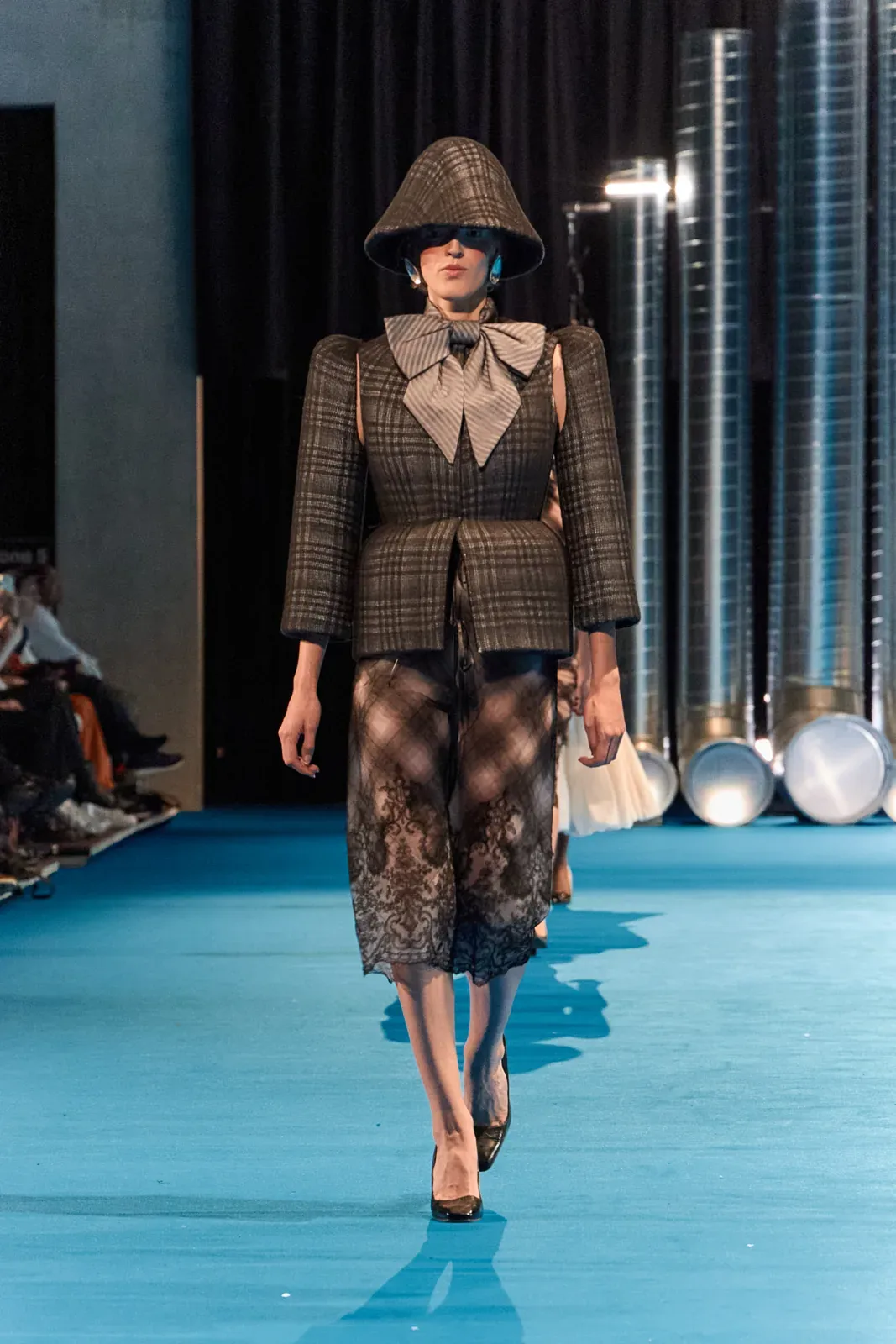
Inspired by the French bourgeoisie, the collection begins with a dinner party. Gradually, its protagonists move away from the identities they are expected to inhabit, until the entire scene turns into a surreal, almost Kafkaesque ball. During his presentation, Laporte explained that the idea of fitting in was one of the collection’s starting points, while also wanting to celebrate the pleasure of trying on and experimenting with clothes. His impressive pattern-making, handcrafted fabrics and beautifully constructed garments made it one of the most complete proposals.
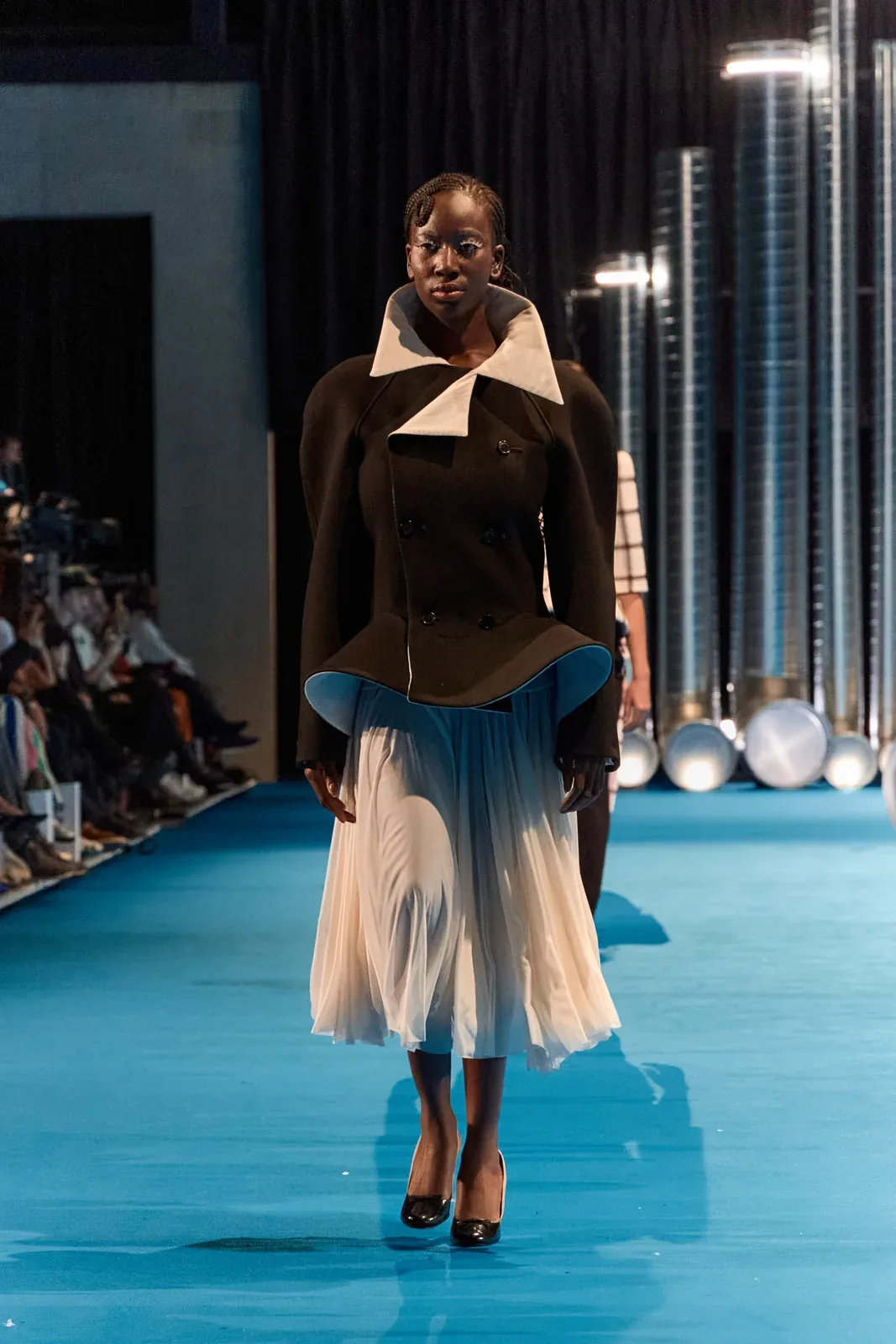
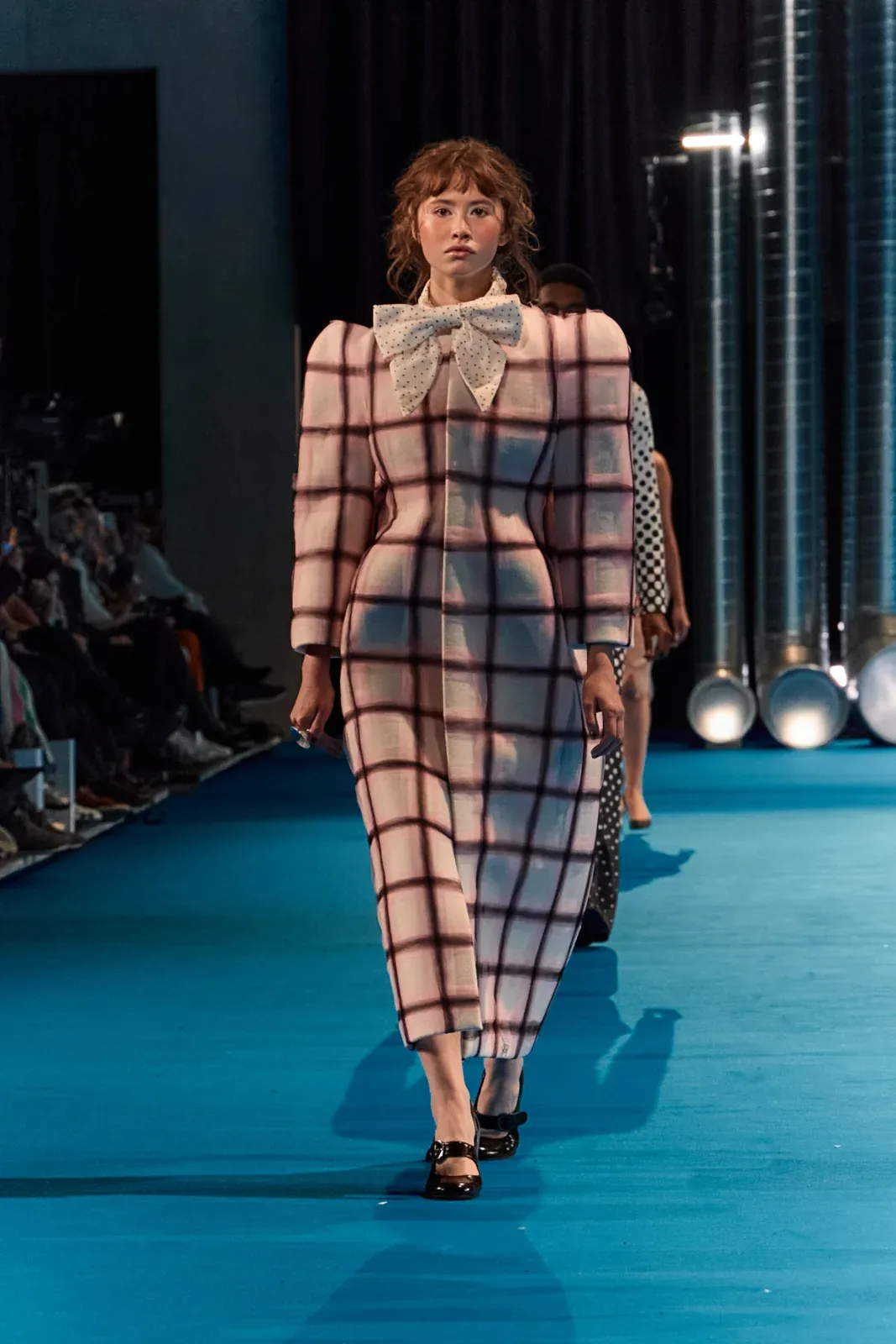
Omar Amorim Esenli – Numéro Vendeur 4
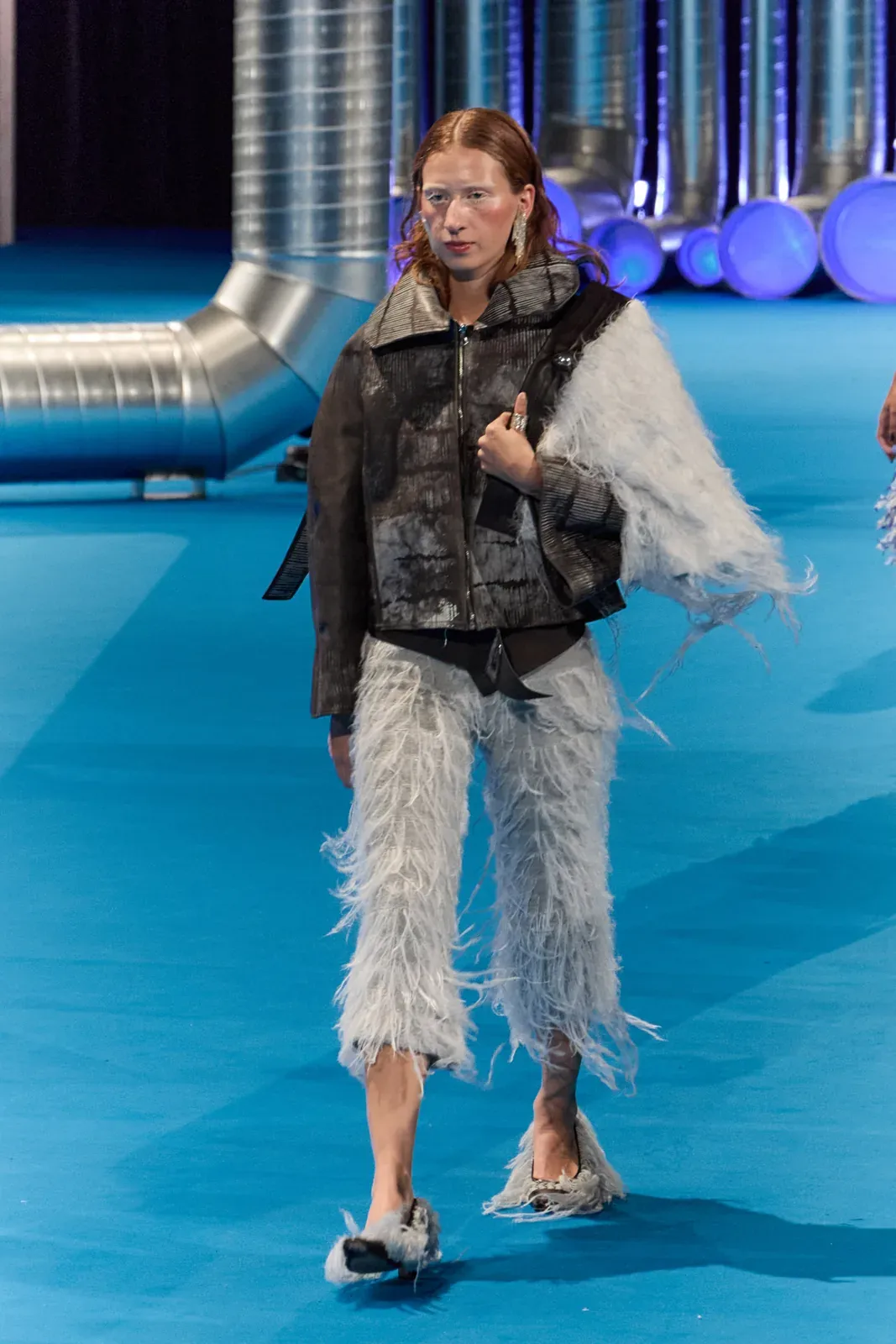
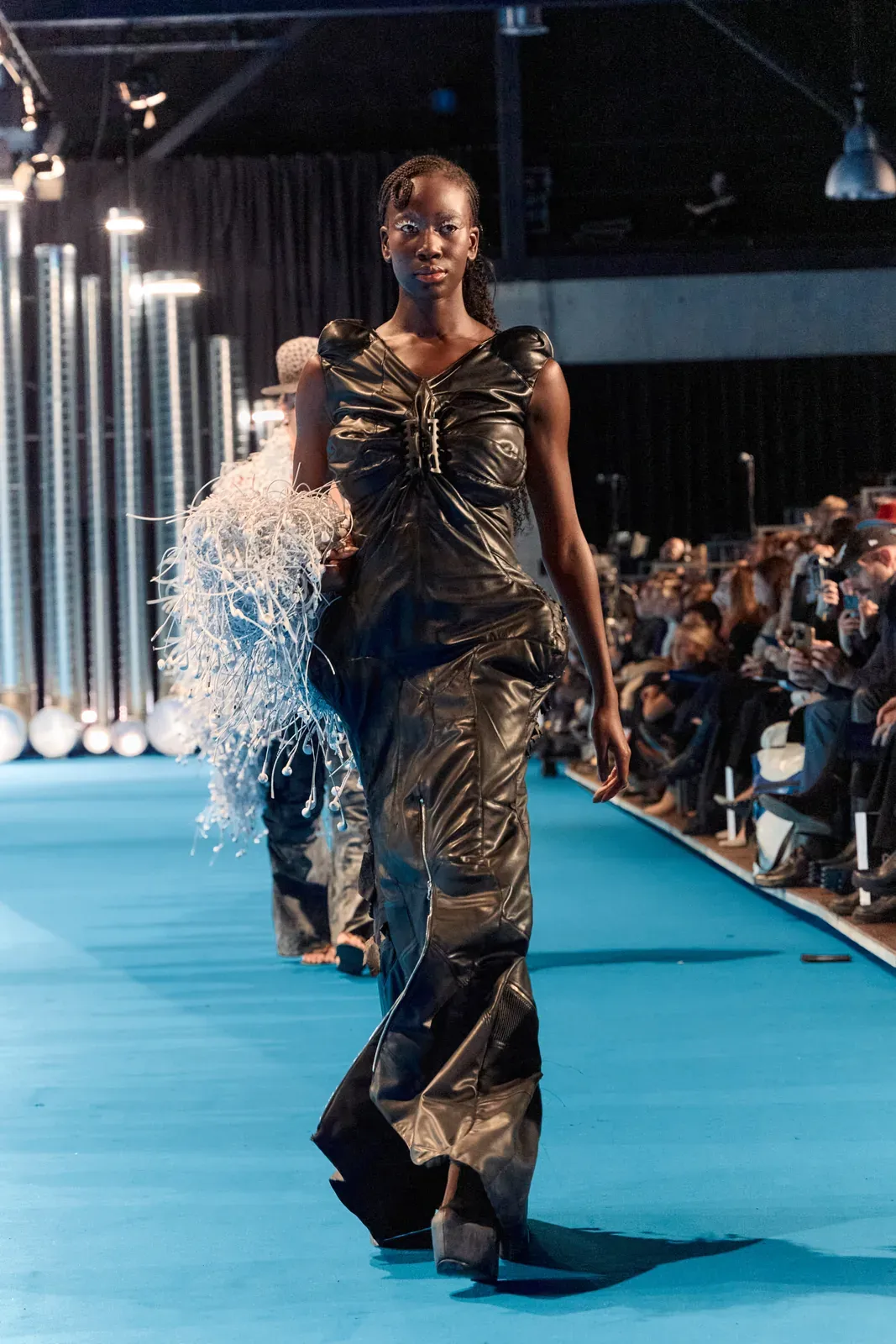
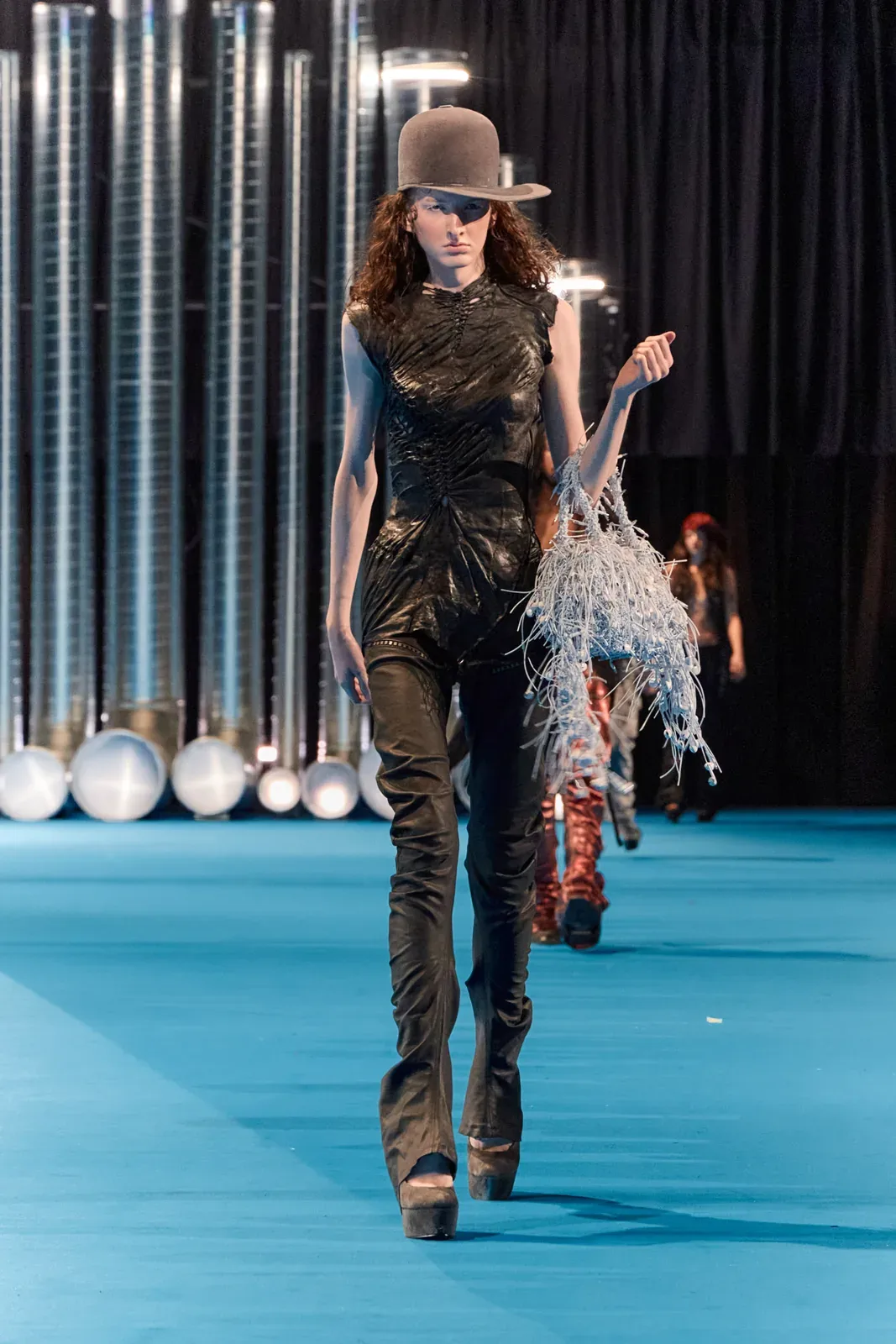
Numéro Vendeur 4 grew out of Amorim Esenli’s eleven months of civil service at Emmaüs Genève, a place he came to perceive as a “purgatory of capitalism”. There were palpable impressions of abandonment, waiting, and tension in his garments, alongside feelings of repulsion and alienation. Labour becomes both a physical experience and a social condition. The project questions the contradictions of labour and the forms of alienation they produce, which is where his pieces fabricated from earphones come into play. It is also a particularly good example of the collaborative spirit that HEAD instils in its students. Amorim Esenli’s collection incorporates upcycled earphone fur developed by surface and textile artist Leonardo Martines.
Tanguy Melinand – Muddy Sea
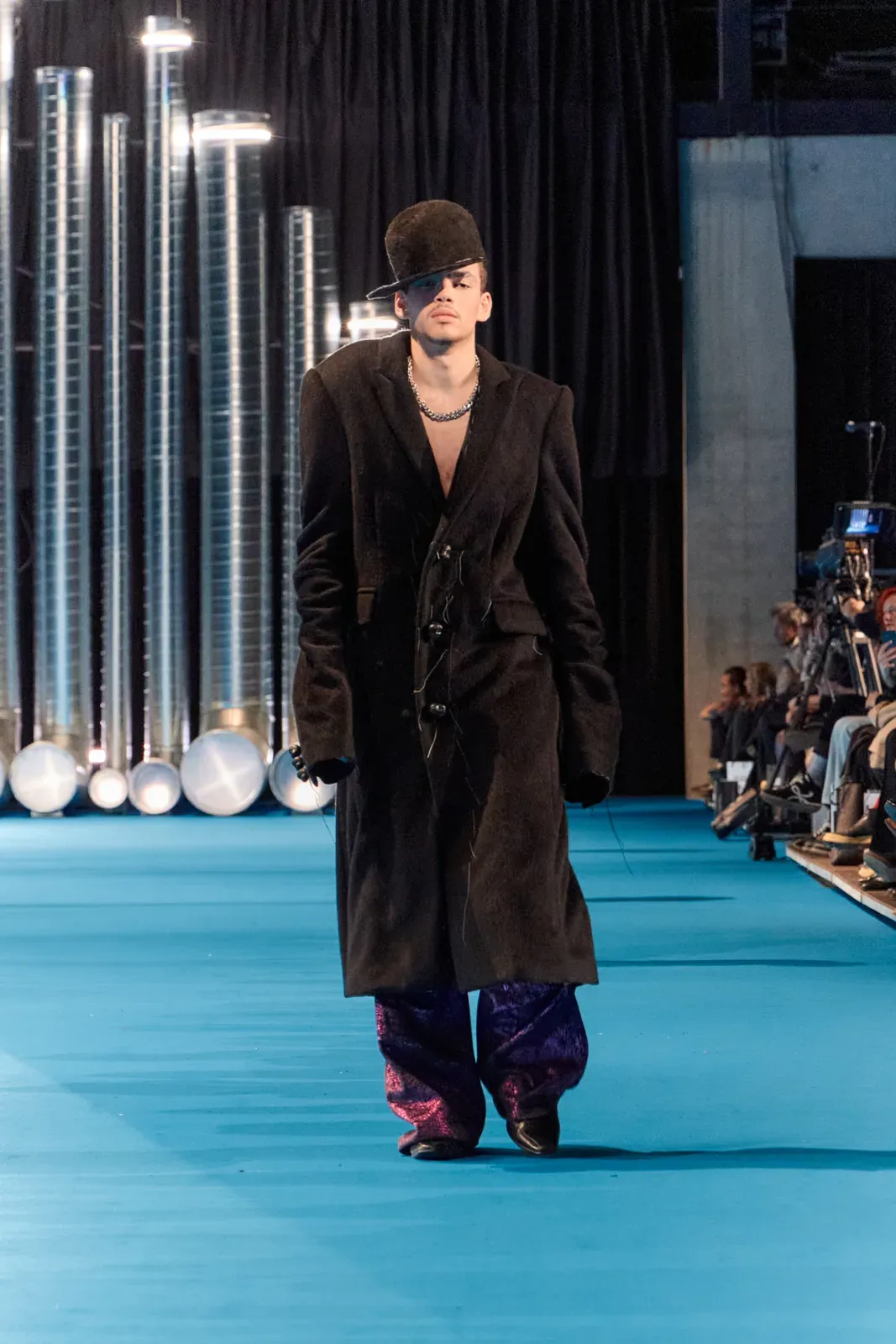
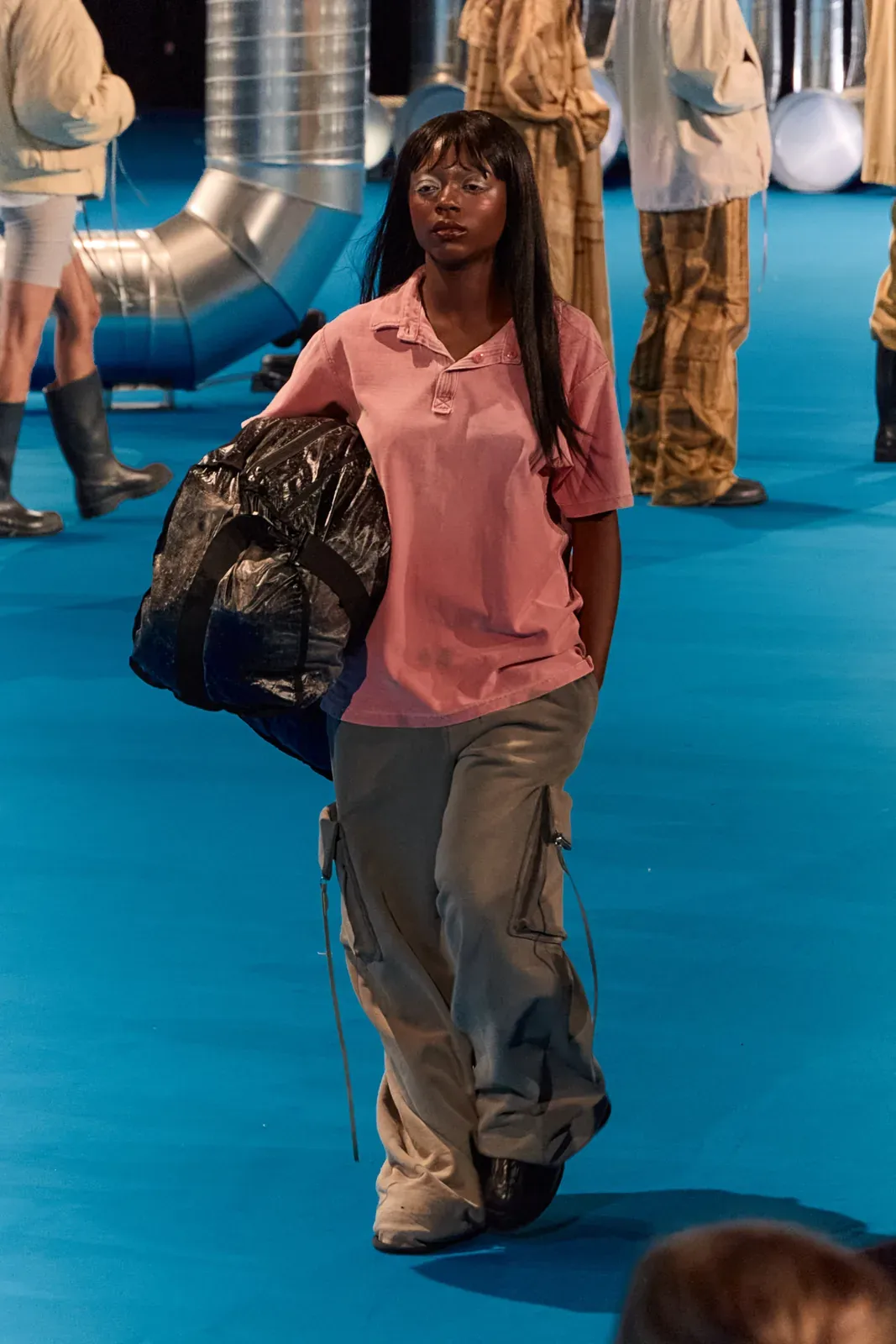
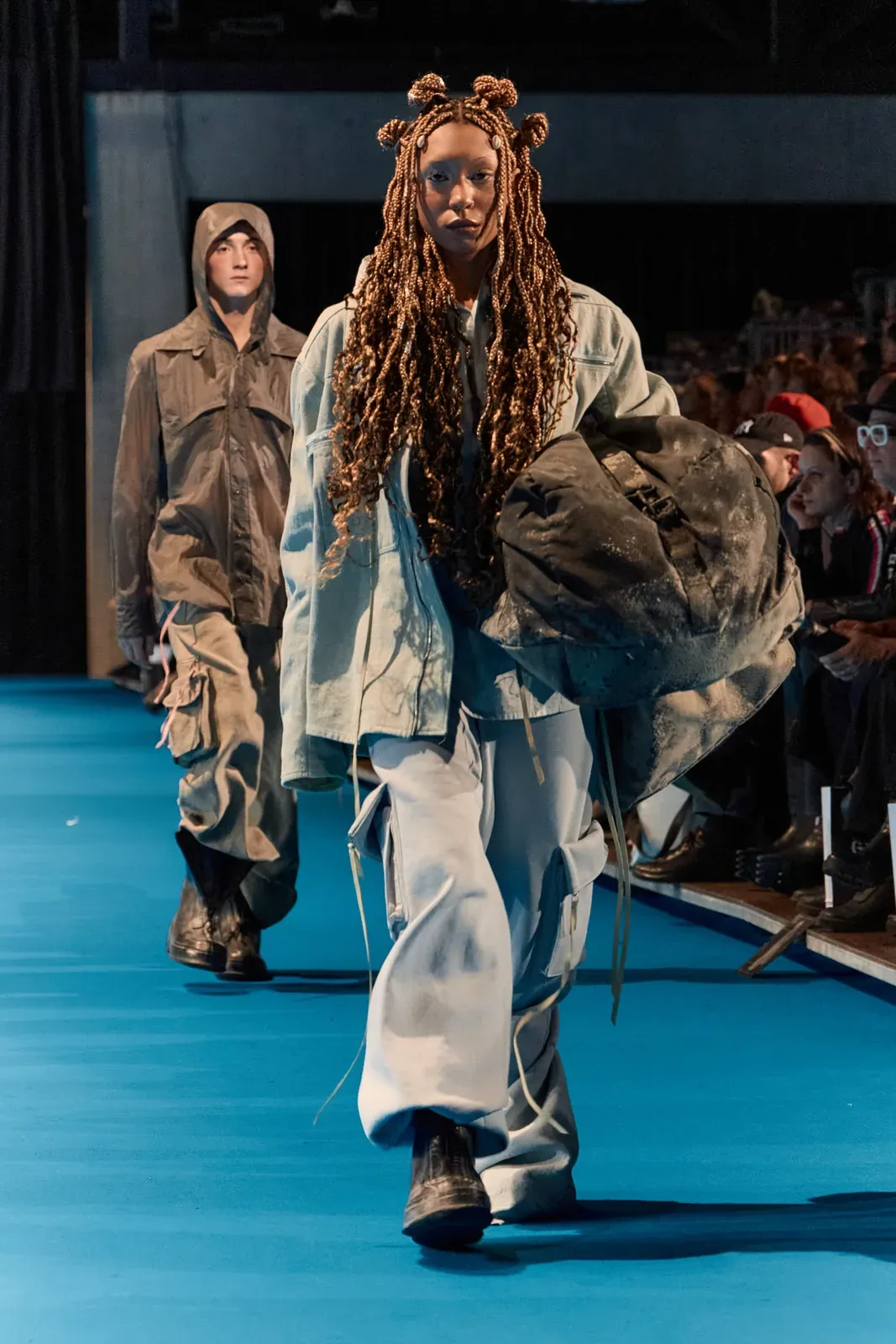
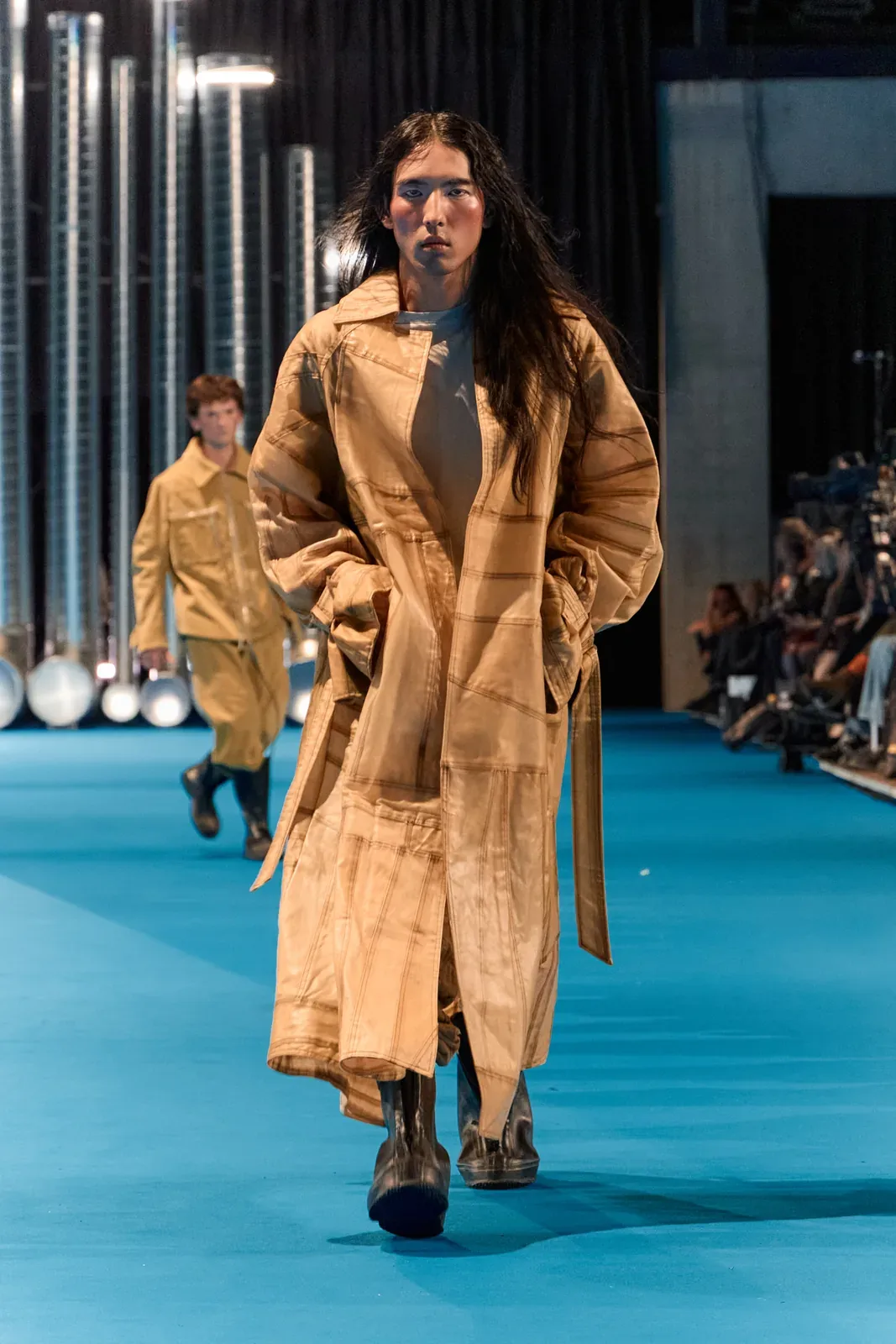
Awarded the Vahabzadeh Foundation Prize, Muddy Sea draws on Melinand’s childhood memories of Brittany. Its pastel palette initially clashes with the workwear-inspired silhouettes, only to find common ground through clever design, intricate pattern-making and textile development. The puffers are constructed with handles that allow them to be worn as backpacks, while the trousers and the oversized coat are made from a new textile derived from the seaweed found in his hometown. Listening to him present the collection, we couldn’t help shouting: “Patent it!”
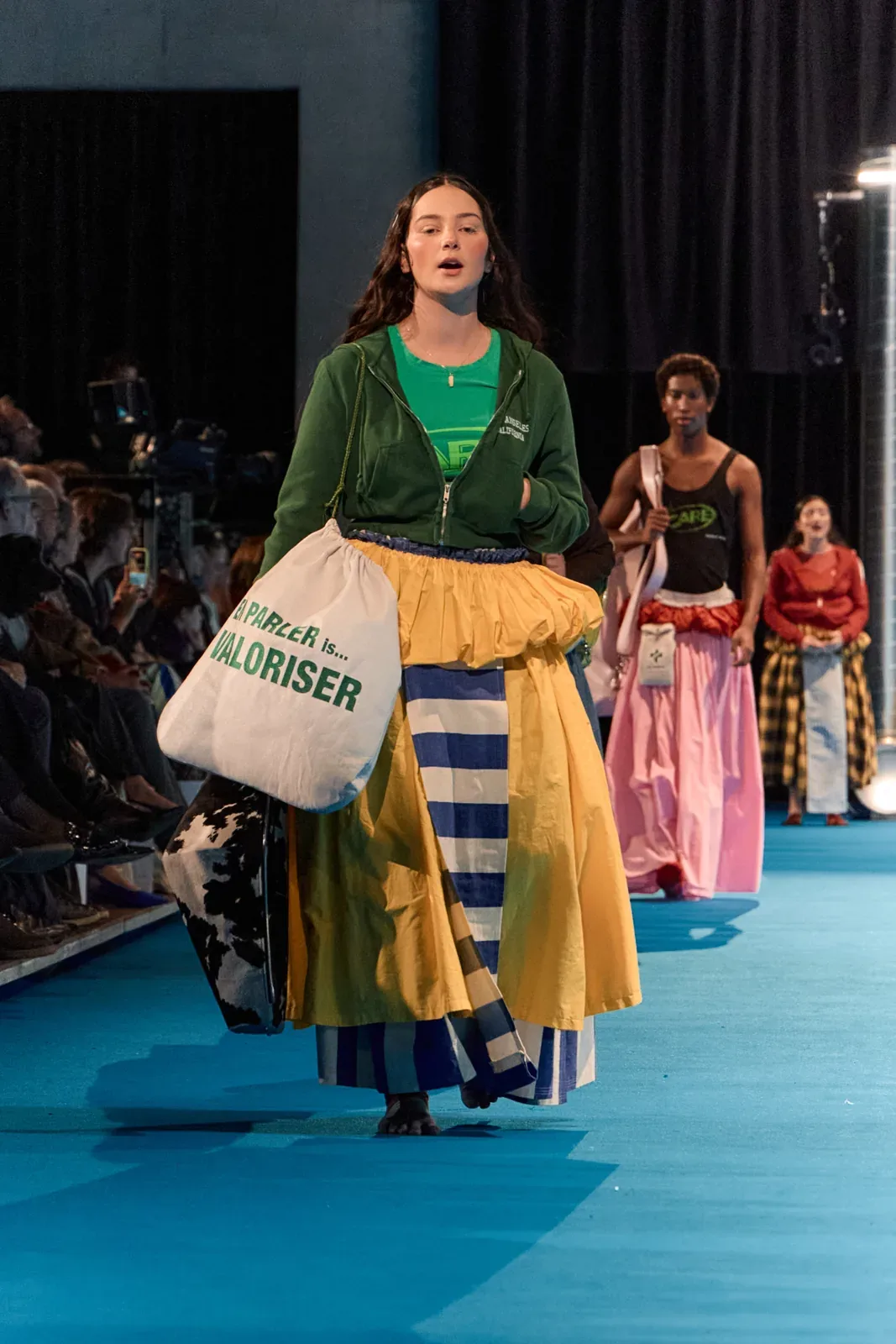
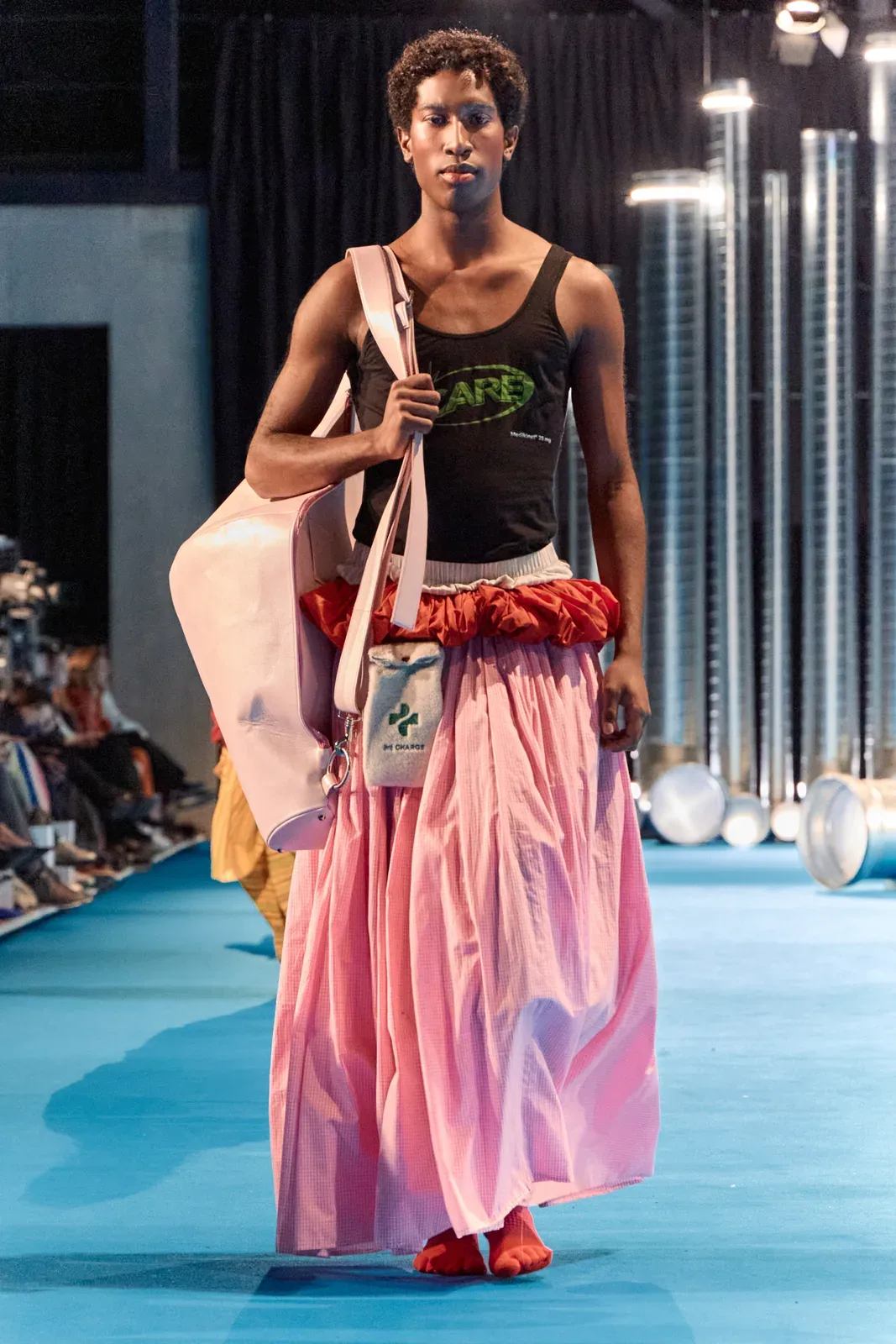
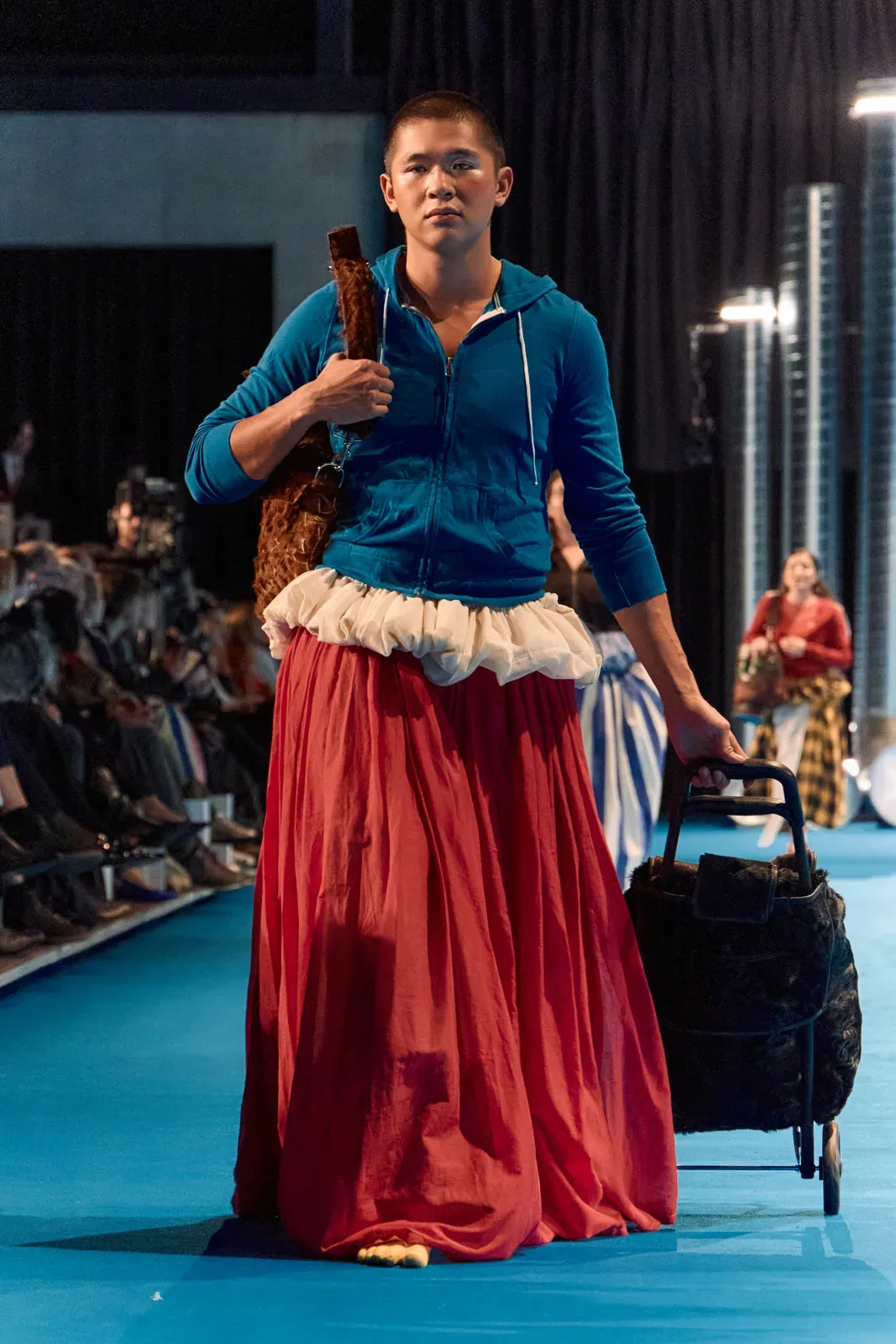
Catarina Santos Moreira – OVERWORKED: Bags to Share the Load
It was the last collection presented, but certainly not the least. In fact, for this writer, it was the favourite. Catarina Santos Moreira addresses forms of labour that are precarious, underpaid and often made invisible, largely carried out by women, particularly those from immigrant or minority communities.
Inspired by her experience as part of a Portuguese folk dance group, Santos Moreira brings the traditional garments associated with the dance together with her own hoodies and T-shirts. The collection unfolds to the song “Sou Portuguesa Imigrante”, sung a cappella by Nadine Mendoça and her cast of models. Traditional Portuguese skirts and bags inspired by the cântaros – traditional vessels used to carry water – become the star of the proposal. The designer asks: “Who carries the weight of society, whose work is considered valuable and whose contribution remains invisible?”
Right before the show, Lada Umstätter, Director of HEAD, addressed the audience with the invitation: “Let the show begin and take us beyond everything we could have imagined”. Let’s hope this article has taken you at least a fraction of the way to that place. For the rest, you had to be there.