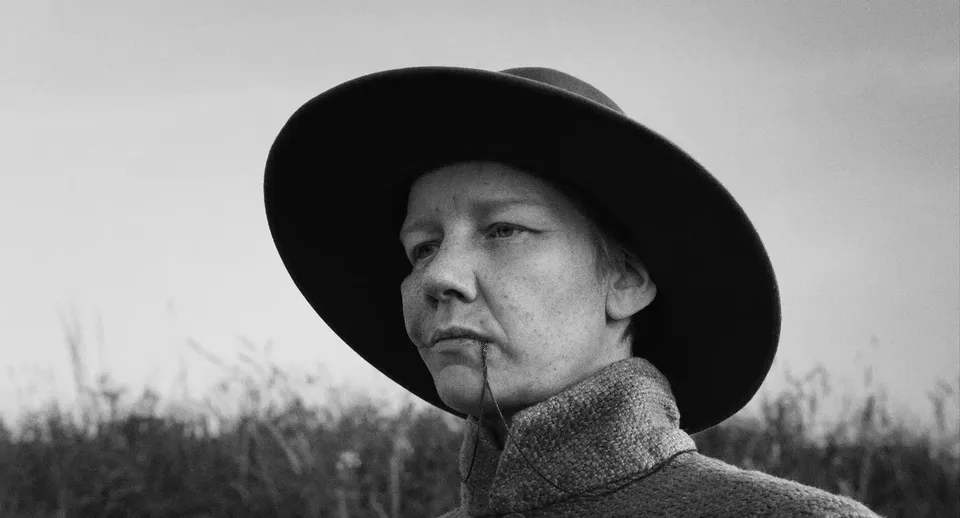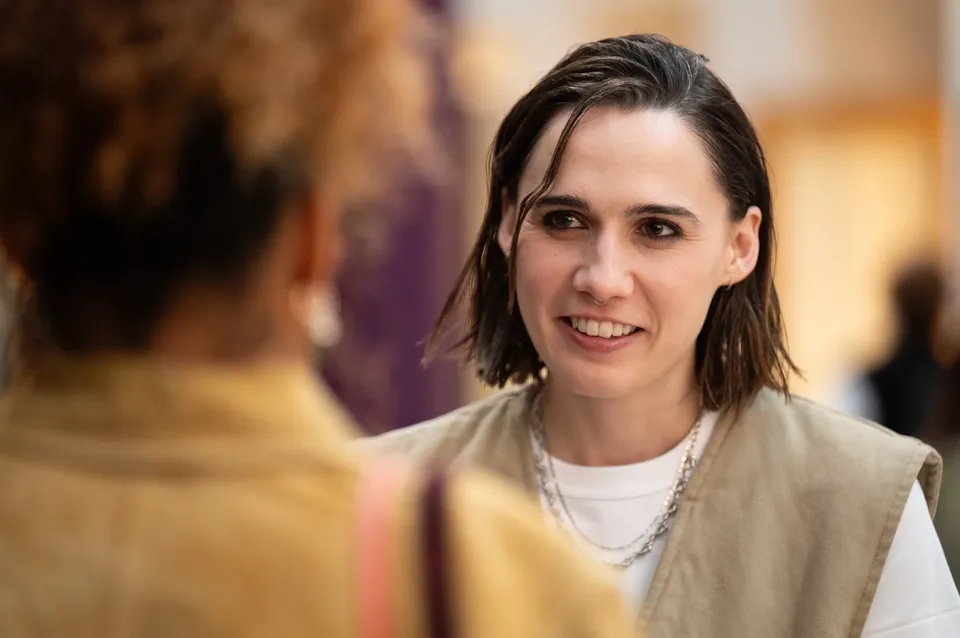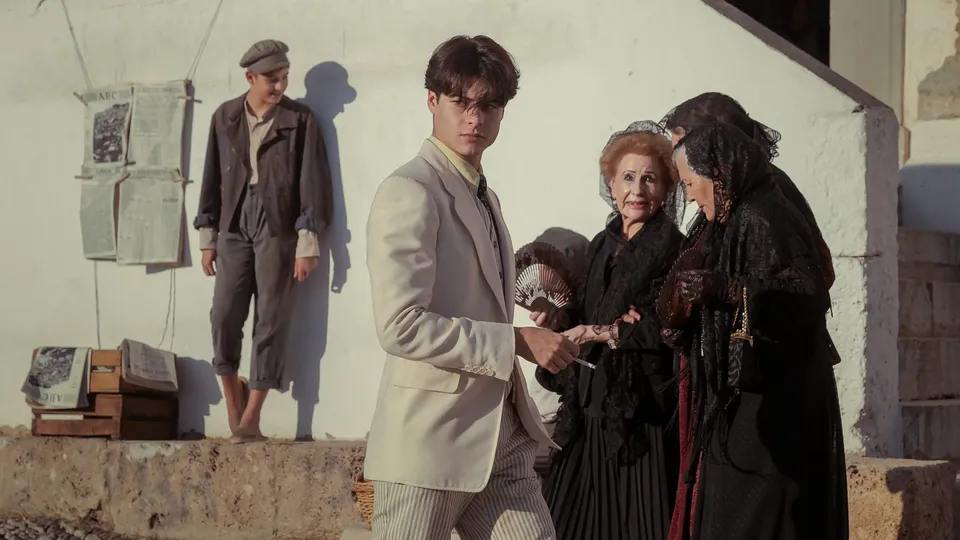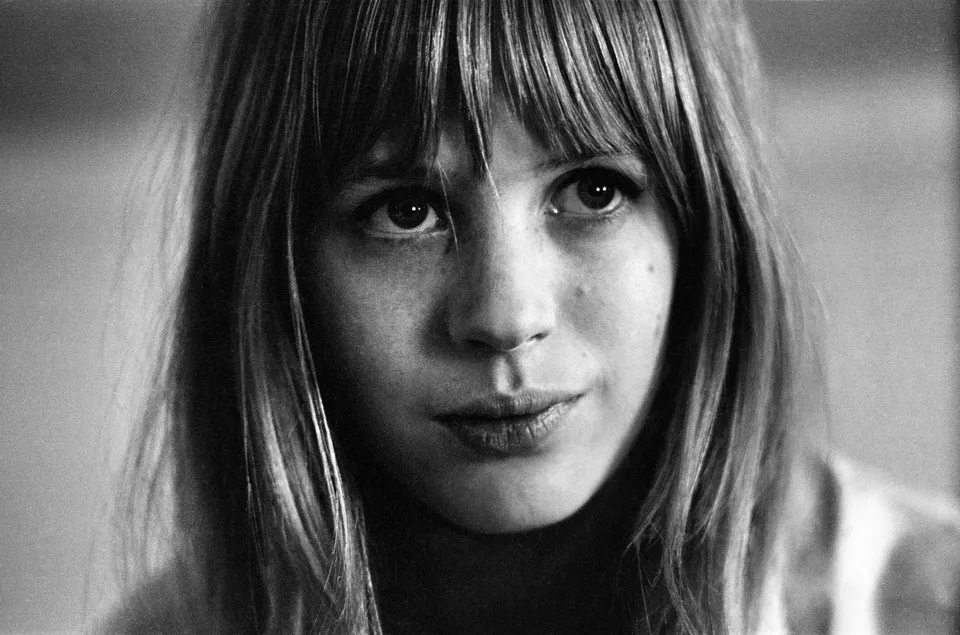
In her art and in her life, Mona Fastvold is trying to create something that is truly new. The Norwegian filmmaker, who was born in 1981, has witnessed a world in which our security is slowly being eroded. She has seen the structures designed to support us be stripped away. But rather than succumb to fatalism, Fastvold is using her art to divine new meaning, to traverse a world which has the potential to change, to imagine an alternative.
This interview is taken from Issue 54 and adapted for our digital platform. Order your print copy here.
It’s in this way that Mona Fastvold is a modern-day radical. Be it in politics or religion, community or interpersonal connection, Fastvold’s goal is to disrupt what we think we know. Sometimes loudly and sometimes quietly, but always intently, she asks: Are we happy with the way that we are living our lives? How can we transcend what we thought was possible for ourselves? How can we rebuild what’s around us anew, in our own image?
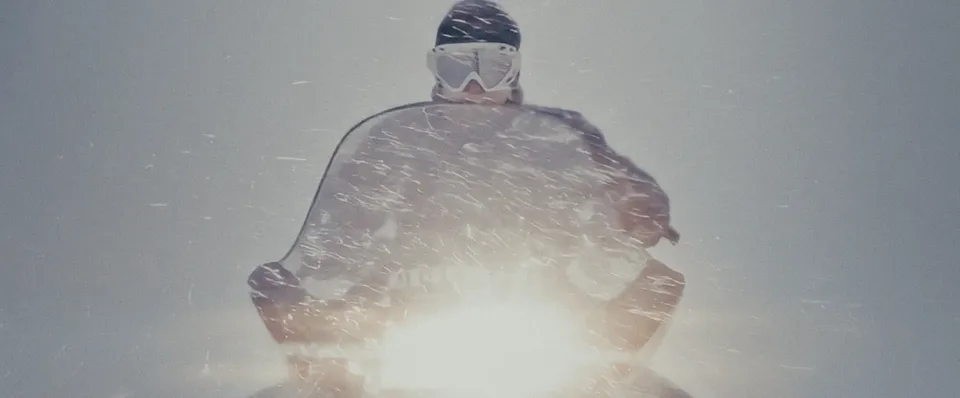
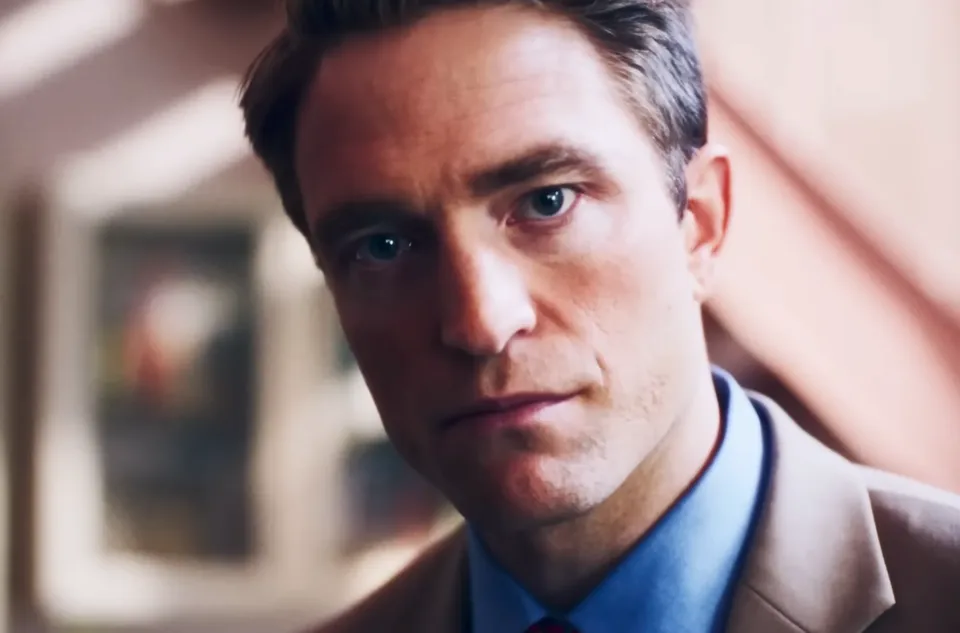
In her filmography, Fastvold has expanded the expectation of what cinema can do. Her projects are ambitious, refusing to conform to the structures of modern filmmaking. “The Brutalist” is three and a half hours with an interval, and “The Testament of Ann Lee” is a choral musical; both were shot on budgets that others thought impossible. Through their singularity, Fastvold has created something which already feels as though it will stand the test of time — art that is for the ages, not just the present moment.
But it’s not only in her output that Fastvold is innovative, but also in her approach to her work with spaces she designs to marry life and labour. Her sets are filled with families and actively embrace the mess of creating art amidst the responsibilities of life. She creates a community in service of creation, one no different to what would have been found in the pews of a church.
For Fastvold, the very act of creation is a first step towards an answer, one that doesn’t require a question.
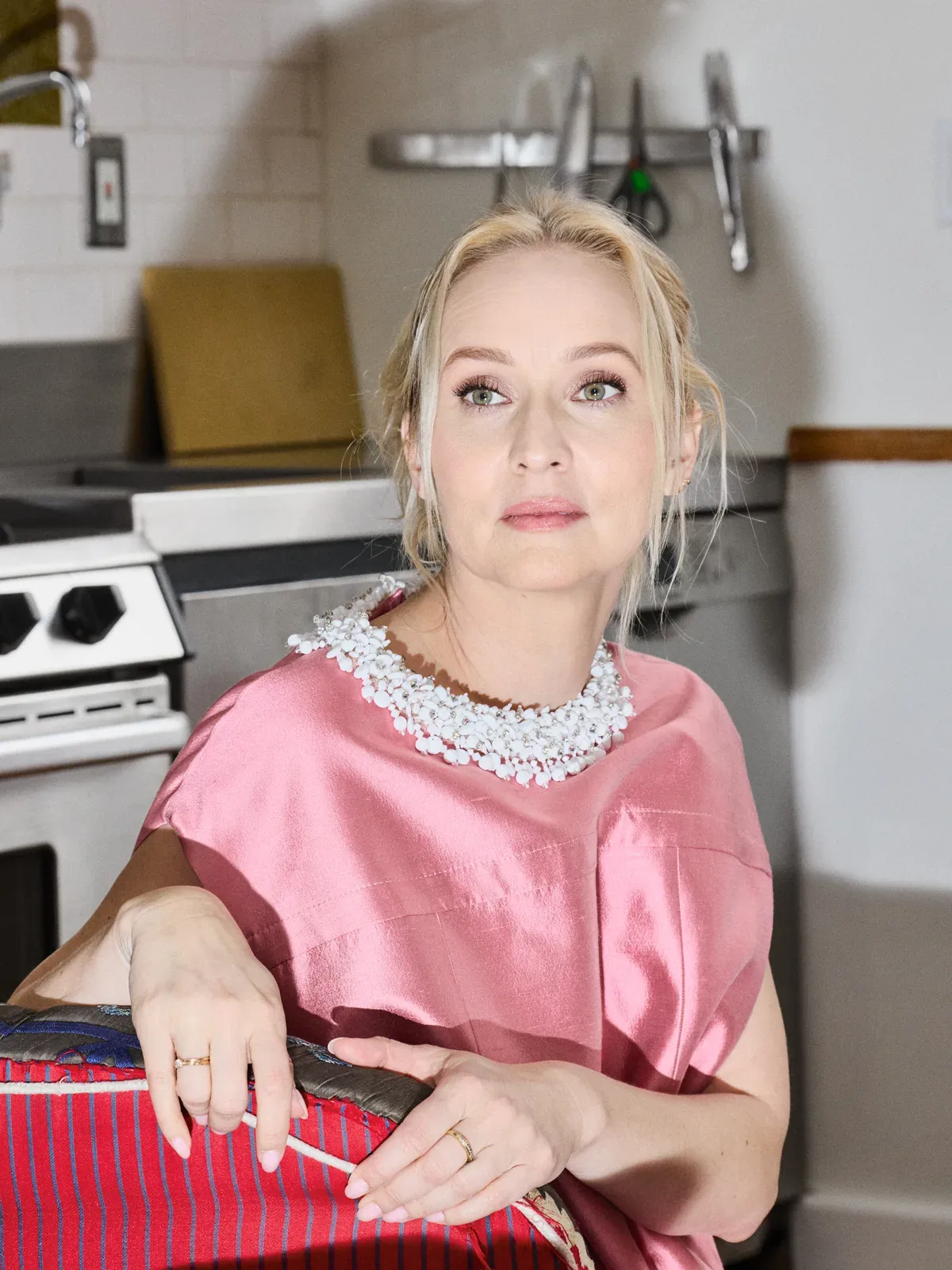
Shantung double dress PRADA.
Hi Mona, thank you for speaking with us. The first thing I’d like to do is ask how you would introduce yourself to the METAL community.
I guess I would say that I’m Norwegian, and that I’m a filmmaker. That my background was in dance and movement, that’s how I started out. Then I moved on to work as a child actress back in Norway for many years. And then I started making movies that I write with my partner [Brady Corbet].
I’m a huge fan of you both, this is really cool. The theme of this issue is Follow the Leader. It’s about what gives us meaning, and one of these things is religion. With your “The Testament of Ann Lee” that’s a really nice way to jump into this, so before we dive into filmmaking, I’m going to start by asking about your personal relationship to religion. Did you grow up in a house of believers?
I did not. I did not grow up with really any specific religion in my household. I grew up with a lot of thoughts around empathy and humanity. My stepfather was a human rights lawyer, working with asylum seekers. His office was in our house growing up, so we’d meet asylum seekers from all over the world and hear their stories, and some people would sometimes stay with us for a short period of time and a lot of families became close friends of my parents. He’s also a musician, so they would play a lot of music together, that was part of my upbringing, but no religion. My grandmother would take me to church for Christmas sometimes, but that was really about it.
I was always curious about religion. I would go to Catholic Mass with my best friend, because I was curious about it. There was a beautiful choir there that I enjoyed, the incense. I was fascinated by it and I would seek out some other religious communities in Norway when I was quite young, just out of fascination, the Jewish community, the synagogue, the Hare Krishna, visiting a Jehovah’s Witness — but I think it’s hard to join, if you haven’t been raised within it, perhaps.
I was always curious about religion. I would go to Catholic Mass with my best friend, because I was curious about it. There was a beautiful choir there that I enjoyed, the incense. I was fascinated by it and I would seek out some other religious communities in Norway when I was quite young, just out of fascination, the Jewish community, the synagogue, the Hare Krishna, visiting a Jehovah’s Witness — but I think it’s hard to join, if you haven’t been raised within it, perhaps.
I agree. My family are Italian Catholics so it was always a part of my life, but I’m not sure if I would have been able to come to religion with as much understanding later in life. It’s interesting that you mentioned community there a couple of times, because one of the things that really stands out to me in both your work and your filmmaking practice is your relationship with community, which is something I most strongly associate with religion. Hearing about your home life, you were one of seven kids, is that right?
Yes.
Where did your sense of community form?
Well, it’s very much from my parents. My stepfather who raised me, really being such an important part of the community of immigrants in Norway and learning about the importance of that community service. You’re hired by the government to do this job, but it requires hundreds more hours than what you’re being compensated for.
We had a very open house full of people, there was always room for people to stay and sleep over, always more chairs to pull up for dinner. We did not have a lot of money at all, but there was always room for more people. When you have this open house, it’s a really beautiful thing, and to try and be an active participant in your community feels very special. Especially now, especially in America, too, where there’s less infrastructure.
We had a very open house full of people, there was always room for people to stay and sleep over, always more chairs to pull up for dinner. We did not have a lot of money at all, but there was always room for more people. When you have this open house, it’s a really beautiful thing, and to try and be an active participant in your community feels very special. Especially now, especially in America, too, where there’s less infrastructure.
Ideas of community infrastructure really come up in “The Testament of Ann Lee” too, if we start to think about your films now, when I look at the last two films you’ve made — “The Brutalist” and “The Testament of Ann Lee”, one of my first thoughts is that religion is the narrative catalyst in both. How did those stories come to you?
With “The Brutalist”, the core of the story was about the journey of an artist, of trying to create something truly impossible. And the fight, and the journey, and the ego, and the pain, and the love that goes into that journey. It began with the relationship between an architect and the investor. That was really the beginning of that story.
We were both interested in brutalism and how furious those buildings made a lot of people; how provoked people were by these buildings being erected. And the history that they carried as well. These things led us to this being a story about a survivor.
And then with “Ann Lee”, we thought that we were approaching something quite different, but at the same time, it was also a story about an immigrant who comes to America to try and create something truly impossible. And it’s also, in many ways, about architecture and design as well; the history of Shakerism and their story, their architecture and design elements are so important in American history, kind of the cornerstone of American design. It’s this funny thing where you think you’re telling a new story, but you’re kind of just bringing the same one over and over again.
We were both interested in brutalism and how furious those buildings made a lot of people; how provoked people were by these buildings being erected. And the history that they carried as well. These things led us to this being a story about a survivor.
And then with “Ann Lee”, we thought that we were approaching something quite different, but at the same time, it was also a story about an immigrant who comes to America to try and create something truly impossible. And it’s also, in many ways, about architecture and design as well; the history of Shakerism and their story, their architecture and design elements are so important in American history, kind of the cornerstone of American design. It’s this funny thing where you think you’re telling a new story, but you’re kind of just bringing the same one over and over again.
When you realised you were making two films about religion, what was your reflection?
The religious aspect is something I grapple with. When I was doing research on Ann Lee, I was constantly questioning her character, because she’s a real person. With “The Brutalist”, we brought in all the conflict and the duality of his relationship to religion and ego and all of these things — and love, that’s in there. It’s just embedded into the story. But with Mother Ann, I was kind of waiting for the other shoe to drop; there’s a familiarity to these stories often; at one point you’ll be led by your ego and you wish for more power, which will drive the religious leader or the political leader to do amoral or manipulative things. It just never came to that with her. It never happened.
I did so much research on her and I never discovered her to be led by any of those feelings. She lived a very modest life until the very end and even though they imposed celibacy, you didn’t have to stay as part of the community if you didn’t want to. Even with the children they adopted, they were asked at eighteen if they wanted to leave or not. Most of the adoptees that I’ve heard stories from said they were incredibly kind and generous people. It was a really positive childhood for a lot of them.
I did so much research on her and I never discovered her to be led by any of those feelings. She lived a very modest life until the very end and even though they imposed celibacy, you didn’t have to stay as part of the community if you didn’t want to. Even with the children they adopted, they were asked at eighteen if they wanted to leave or not. Most of the adoptees that I’ve heard stories from said they were incredibly kind and generous people. It was a really positive childhood for a lot of them.
It’s interesting that you said that, because the first time I saw “The Testament of Ann Lee” was at the London Film Festival a couple of months ago. I remember coming out of the screening, and the first thing I said to my friend was that I was taken aback by how earnest a portrayal of belief the film shows. I think there can be a tendency for filmmakers to cast judgement sometimes, and that didn’t happen. I found it touching, actually.
For this story, I thought it was more radical to not dismantle it, because all that happened throughout her entire life was that she was being dismantled and pulled apart and attacked, brutally. So, I thought, I’m not interested in adding to that. I’m going to give a loving, earnest portrayal of her.
If I jump back to something that you said earlier about community, or the lack thereof, in America, I want to think about the rise of conservatism and fascism. On one hand, religion can be seen as a tool that can dismantle these ideas, a force for good, but then it also can reinforce a lot of regressive views that exist in society. What do you think religion’s power is?
For the religion within this story, particularly, you have to look at that as a portrait of the time that she was living in. It was creating this opportunity for her to offer a whole new idea and a whole new philosophy around gender and relationships and community all together. And religion was used as a tool to create that. Obviously, she was extremely devout, and that was part of her engine, and that’s how she made sense of the horrible things that she survived. You can’t expect that of people, that they will find reason in horrible tragedies. A lot of people will say there is no reason, and they would reject religion.
With this story, it’s so much about empathy and this is the cornerstone of what Christianity is supposed to be — empathy. Turn the other cheek, love thy neighbour, all these things. Even now, there’s room to be radical within religion as well. Radical in your empathy and in your acceptance of others. Also, in America religious communities have always been very important because of the lack of social services that are provided. The Shakers were the very first to provide those social services.
With this story, it’s so much about empathy and this is the cornerstone of what Christianity is supposed to be — empathy. Turn the other cheek, love thy neighbour, all these things. Even now, there’s room to be radical within religion as well. Radical in your empathy and in your acceptance of others. Also, in America religious communities have always been very important because of the lack of social services that are provided. The Shakers were the very first to provide those social services.
The story of the Shakers is interesting because often we look at religion in two different ways. On a personal level it can be beautiful and joyous; and then organised religion and the creation of structures around it can be bad. But with the Shakers, it doesn’t seem like it turned out that way.
It seemed like because of the lack of ego, it was more successful. Obviously, it was flawed in so many ways, but I think because of the socioeconomic equality and the lack of money, lack of possession, lack of sex, it sort of created a community that was quite egoless. No power, no sex, no money, no possession, it’s just spending your days really dedicated to singing and dancing or creating a beautiful box or inventing a nice tool. All that work is valued. That’s interesting, too, because any kind of labour — taking care of children, making food, clearing the land, sowing seeds, all these things, all this work was considered a form of worship. There was a tremendous amount of respect and value to these kinds of jobs.
On the topic of labour, I’m going to pull a quote from your director’s statement. You said: “What I personally connected with in Ann’s journey was the idea of creating a society not for personal gain or money, but with the intention of living inside this space where she could devote herself to work.” Why did that resonate with you?
I think that’s all I ever kind of wanted to do. To find a way of doing work that’s satisfying and exciting. It’s very hard to make films. It’s even harder to raise money and to make films to be able to do this job.
When you said that the genesis of “The Brutalist” was the relationship between the architect and the investor, I did imagine that relationship might also be relevant to filmmakers.
There are also a lot of ideas around how this job should be done that’s very much shaped by male stereotypes, so I think actively, to forget about all those ideas. Trying to rethink how my culture is on my set.
“It would be scarier to be making something that I didn’t believe in.”
As a filmmaker, your work is the creation of art, but it is also your labour. At the time that Ann Lee was living, capitalism was just becoming structured. But now, capitalism is much more deeply entrenched in our society, and our labour is one of the things that is supposed to give us meaning. How do you feel about loving your work?
Well, you know, I was raised in a socialist country, by very socialist parents, but then I live in America which is capitalism run amok. Making films is expensive, it’s not something I can do in my bedroom. You can’t separate the thoughts around the economy of the film, at least not for me. I’ve always produced the films together with my producing partners and Brady. I create the economy of the film, there’s so much creativity in building the budget and the schedule, and the practical aspects. You have to be part of it, because that’s where your creative freedom lies, in all those bits and pieces. I do feel, also, a certain responsibility for the film to function financially to a certain extent. You can’t control that, you never know, and ultimately, it’s important just to make something. You make whatever you feel that you can’t sleep until you complete, because that’s what you have to do. And I’ve chosen to tell stories that are not necessarily the easiest to pitch. There’re so many beautiful things that have been made for crazy amounts of money, famously “The Lovers on the Bridge”. One of the most expensive films in French cinema history.
I love that film.
I think it did poorly when it came out, and then it became this incredible classic that we would all turn to again and again. It’s just a cinematic marvel and a masterpiece, and so it’s always important to think that you’re not making something for the Autumn of 2026 you know? Something that will work just right now. Hopefully you’re making something that will stand the test of time and be around for a long time.
That’s the most important thing, which is also why it’s so important to pay so much attention to all the details of the craft. For me, if something is really crafted with a lot of care and attention, it becomes more singular and specific, and then it’s something that you would easily turn to again and again, because it’s the specificity of a world that you would like to revisit, if that makes sense?
That’s the most important thing, which is also why it’s so important to pay so much attention to all the details of the craft. For me, if something is really crafted with a lot of care and attention, it becomes more singular and specific, and then it’s something that you would easily turn to again and again, because it’s the specificity of a world that you would like to revisit, if that makes sense?
That makes perfect sense.
The films that I really love or the filmmakers I really love, I would like to go and visit their worlds again and again. You want to spend time there regardless of how perfect or imperfect the films are. It’s just so specific, that world and that universe, so you want to spend time there.
100%. When I hear you speak now, I hear you talk about the creativity and the economics. Does it feel like an injustice that you have to think about those economics, because your passion is in the creativity?
No, that part of it is also creative. There’re many, many filmmakers throughout history who really worked on their budgets, famously Kubrick. It doesn’t feel like an injustice, I like understanding every aspect. The more you understand, the more specific and singular the piece is.
One of the things you’ve talked about in the past is the relationship between László and Erzsébet in “The Brutalist”, and how she understands that László’s pursuit of art is something that could relegate the remainder of his life to second place. How does that reflect on your own artistic practice?
Well, it’s that never-ending question. The sacrifices you make personally, to what degree are they worth it? And what’s more important? The art that you’re creating or the life that you’re living? I’m trying constantly to just combine it. On “The Testament of Ann Lee”, we had eleven children of the cast and crew on set with us, because we were shooting during summer break and so we had a lot of family there. They had their little summer camp together.
I try to sort of see how I can make life and the films intertwine more, because through the complete separation you lose too much of life and I don’t want that. We’ve always kind of embraced the mess a little bit, you know? Our daughter has truly grown up on set. When she was three months old, she was on the set of “The Childhood of a Leader”. We just breastfed in between takes.
You need your set to be really focused and quiet and full of intent, but I also think the art becomes a bit better when it’s a bit messier and there’s spontaneity and flexibility in it.
I try to sort of see how I can make life and the films intertwine more, because through the complete separation you lose too much of life and I don’t want that. We’ve always kind of embraced the mess a little bit, you know? Our daughter has truly grown up on set. When she was three months old, she was on the set of “The Childhood of a Leader”. We just breastfed in between takes.
You need your set to be really focused and quiet and full of intent, but I also think the art becomes a bit better when it’s a bit messier and there’s spontaneity and flexibility in it.
Embracing mess, difficulty, relates somewhat to telling stories that are hard to fund. When you said that “The Brutalist” was going to be three and a half hours long and it would have an interval, or that “Ann Lee” was going to be a choral musical, what were people’s reactions?
I mean, it’s just almost impossible to finance. I think every single partner, distributor, studio was passing on it. We raised the budget person by person through a bunch of wonderful patrons. “The Testament of Ann Lee” is 100% independently financed. It’s pure equity. In post-production, Annapurna came on, and then we sold the movie to Searchlight at Toronto.
There was interest, everyone wanted to take a meeting and talk about it, but no one wanted to take the leap of faith and make it with us, even though the budget was modest for what it was. But then we just set out and found one person after another to come on board and we had partners who trusted us, which was lucky and wonderful. I have an incredible producing partner in Andrew Morrison, who just is not scared of risk, and I have a wonderful producing partner in Hungary, Viktória Petrányi, who’s the same. They’re brave and clever and we all just decided to make the film, so we started shooting it way before we had any money. We started shooting little bits and pieces and calling them workshops and experimenting, but shooting on 35 with costumes, so we just started making the film. I was very often scared that we were going to have to turn the lights off, but somehow, we kept it going. It’s a scary way of working, but it would be scarier to be making something that I didn’t believe in. That would be painful. That would be truly terrifying.
There was interest, everyone wanted to take a meeting and talk about it, but no one wanted to take the leap of faith and make it with us, even though the budget was modest for what it was. But then we just set out and found one person after another to come on board and we had partners who trusted us, which was lucky and wonderful. I have an incredible producing partner in Andrew Morrison, who just is not scared of risk, and I have a wonderful producing partner in Hungary, Viktória Petrányi, who’s the same. They’re brave and clever and we all just decided to make the film, so we started shooting it way before we had any money. We started shooting little bits and pieces and calling them workshops and experimenting, but shooting on 35 with costumes, so we just started making the film. I was very often scared that we were going to have to turn the lights off, but somehow, we kept it going. It’s a scary way of working, but it would be scarier to be making something that I didn’t believe in. That would be painful. That would be truly terrifying.
It’s that vision that makes your films really singular, and I know that something you and Brady both care about is making films that kind of push the art of cinema forward. How much appetite is there for the creation of truly innovative cinema?
It’s great. People are yearning for this; you just see it. People are going to the cinema and if it’s any kind of singular piece of art, they’re gravitating towards it. Because it’s a highly specific singular vision and I think people are excited by that. That and craftsmanship. People go to the cinema to watch a print, I go into packed rooms for Q&As. People are really excited to watch something tangible. They want a cinematic experience. I don’t feel discouraged by that at all. As long as you can find a distributional partner who is excited to help make an event then people will really, truly show up. We’ve been lucky enough, especially with “The Brutalist” and “The Testament of Ann Lee” to have partners who believe in a cinematic experience.
Who are the filmmakers at the moment that you believe are doing the most innovative work?
There are a lot of filmmakers who are doing really exciting work right now. I just watched “Pillion”, I thought that was a fantastic first feature film, it’s so well directed and has two of my favourite performances of the year from those boys. They just did such a beautiful job. I always turn to Claire Denis; she was my hero growing up. Lucrecia Martel as well, I always am so excited for whatever she makes, her specific and distinct style of filmmaking is always really inspiring to me. Hailey Gates’s “Atropia” was a really fun and strange first film as well; and Kristen Stewart also made a bold, wild swing with “The Chronology of Water”. For me the most exciting is when someone’s just doing something highly specific to them, even if it isn’t perfect. If you’ve got something very distinct in mind, it’s exciting.
We talk mainly of innovation in the end product, but I want to touch on how you create a community on set. You’ve talked about your time filming “The World to Come” and how you didn’t have the best experience making it, can you tell me about that?
Every film that you work on you learn something new, about yourself, as a director as well, and you just try to get better and better at creating the correct environment to tell the story in the best possible way. I think on “The World to Come” I was just really pushed for time. I had very specific ideas, visually, that had to be executed in a certain way, and to do so I had to be quite rigid in my camera movement within this incredibly tight schedule and the challenges of being on top of a Romanian mountain.
On “The Testament of Ann Lee”, I still rehearsed a lot, but I did try to create a lot more room for myself to also always take a moment and see if I could improve on how I was doing it. To create pockets within those very specific moments where I could improvise a bit more. You don’t want people to feel like they’re stuck in your ideas or your blocking. You want the blocking to feel collaborative and that it comes from the joint choices that characters are making, between you and the performer. But I guess in the future, I hope I get a tiny bit more time and a bit more money. I hope so.
On “The Testament of Ann Lee”, I still rehearsed a lot, but I did try to create a lot more room for myself to also always take a moment and see if I could improve on how I was doing it. To create pockets within those very specific moments where I could improvise a bit more. You don’t want people to feel like they’re stuck in your ideas or your blocking. You want the blocking to feel collaborative and that it comes from the joint choices that characters are making, between you and the performer. But I guess in the future, I hope I get a tiny bit more time and a bit more money. I hope so.
The act of filmmaking is the act of creation, and many people equate creation to godliness. Is creating a spiritual process for you? Do you think it gives you meaning personally?
Yes, it does. The most I can connect to spirituality is through telling a story. With the work that I do, you ask yourself: Why? Often. What am I doing standing here in the freezing rain and my feet are wet and it’s 2am and you’re trying to create this image or reconstruct this dream that you had. You wonder, why in the world am I here? I’m so uncomfortable, I’m so exhausted. And who knows how this is going to go in terms of being a success or anything like that, and it doesn’t really matter.
The only thing that truly matters is to create the film, to make the film. Once you’ve made it, it is this incredible, wonderful moment of peace and you feel so satisfied. While you’re chasing it, because that’s really what it feels like, the whole process. You’re just chasing it and you’re trying to create it, it’s truly obsessive, and you can’t really do much — anything — else but that.
It’s madness, right? Or is it spiritual?
The only thing that truly matters is to create the film, to make the film. Once you’ve made it, it is this incredible, wonderful moment of peace and you feel so satisfied. While you’re chasing it, because that’s really what it feels like, the whole process. You’re just chasing it and you’re trying to create it, it’s truly obsessive, and you can’t really do much — anything — else but that.
It’s madness, right? Or is it spiritual?
I guess what I’m hearing is many people consider the filmmaker to be God, in reality you’re chasing it, almost as the disciple. Is that right? Where do you think you land on that spectrum?
[Laughs] No, I subscribe to the Martha Graham method, you know. The empty vessel. You’re just a vessel, you’re just waiting, come work through me. Please. Nothing godly about it. You have to hold the answers, and it feels a bit magical sometimes, because you know them, and what the answers are to everything and the right decision, it’s very clear. And that feels kind of spiritual because you’re the creator of the story, but there’s nothing godly about it. It’s just this pure, pure disciple.
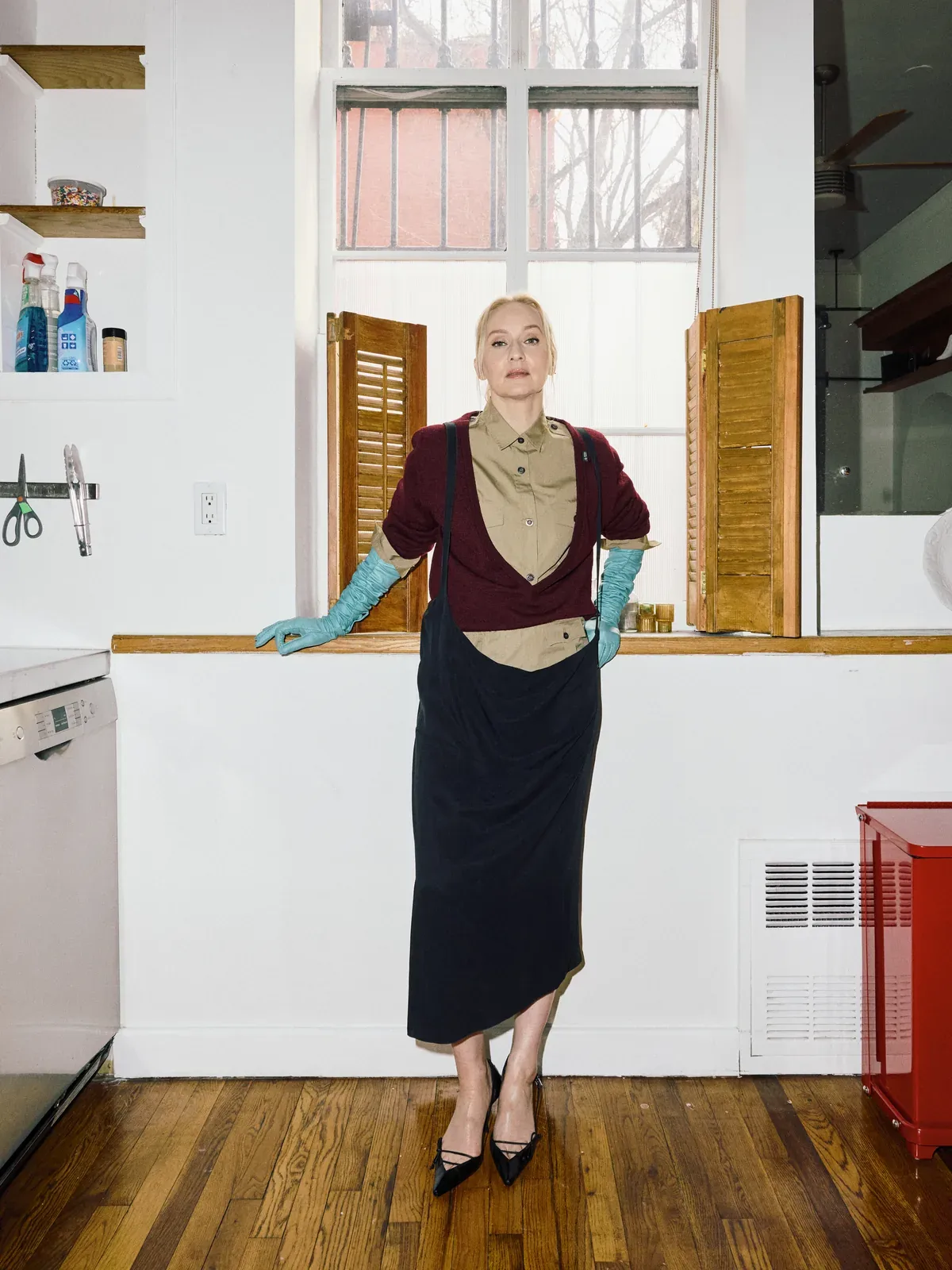
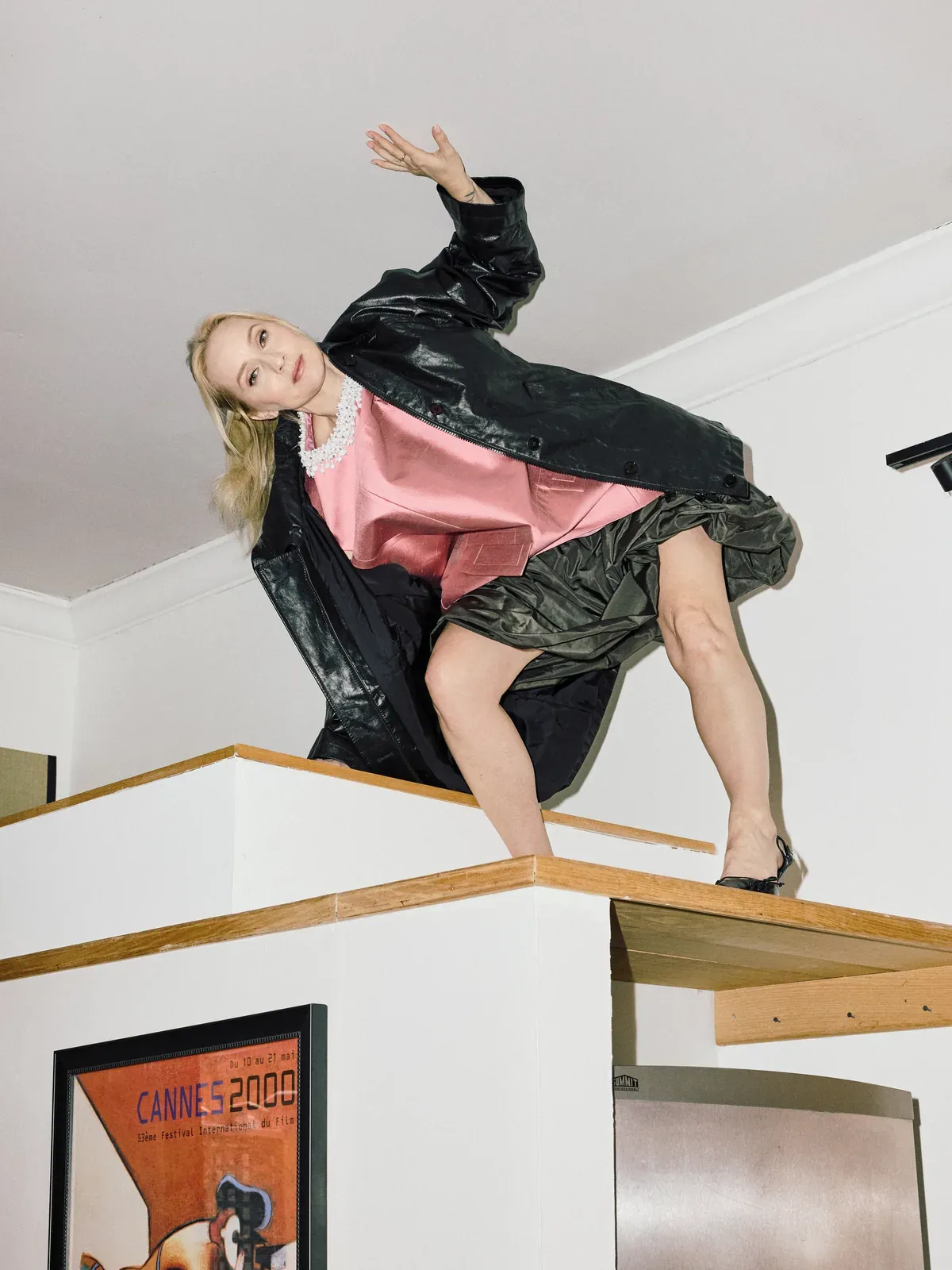
ool knitwear jacket, poplin shirt and shorts, crepe skirt, leather gloves and leather pumps, all PRADA.