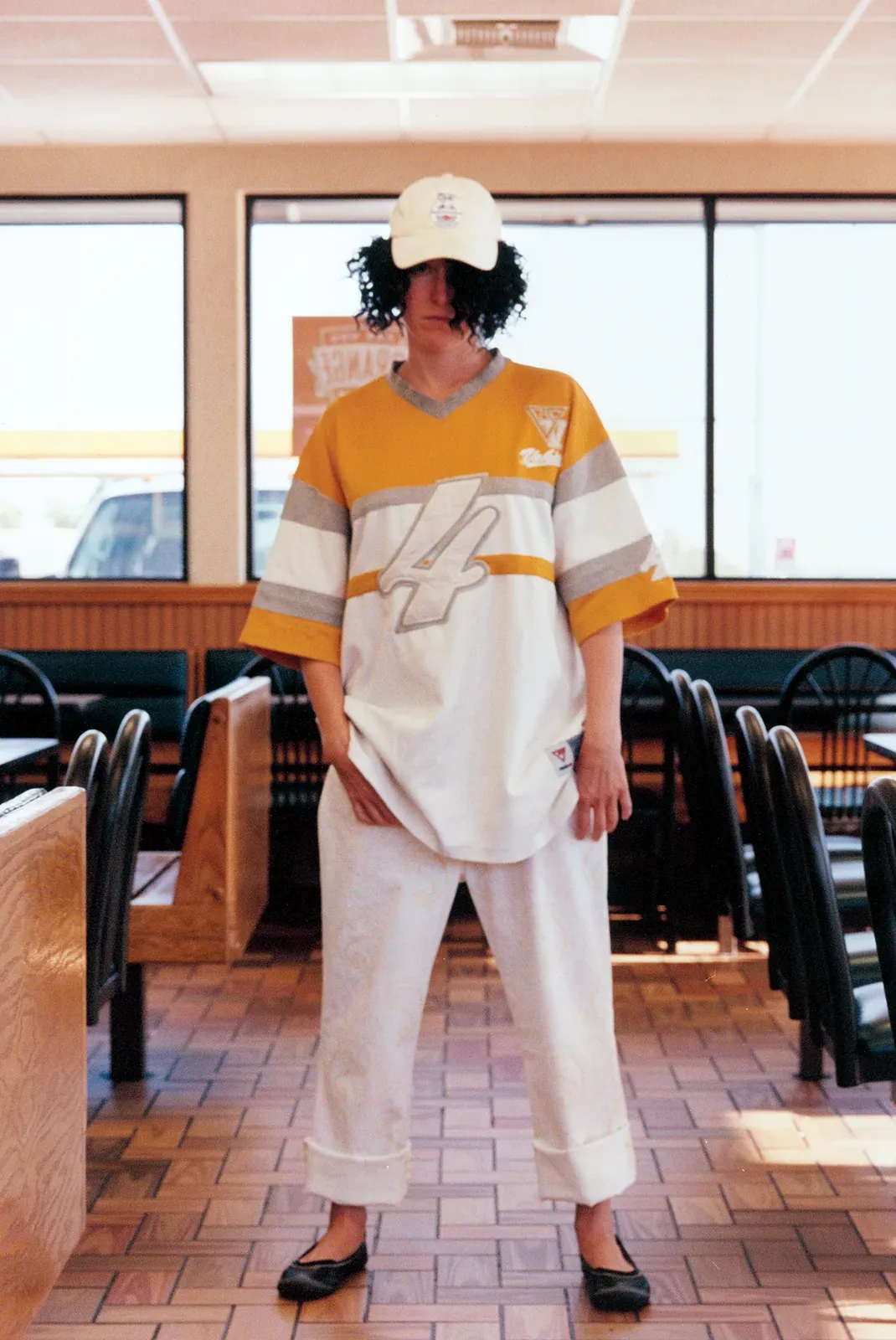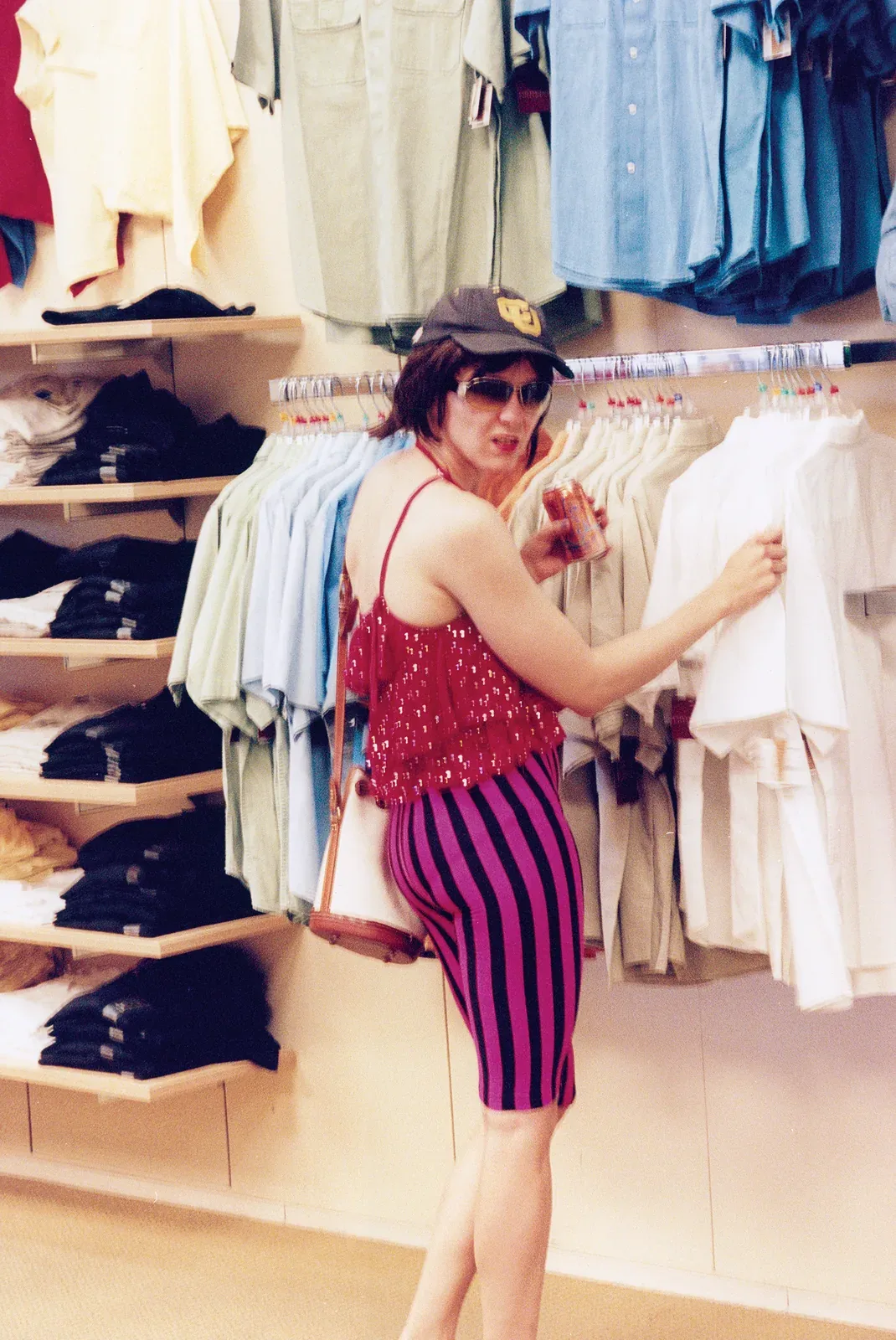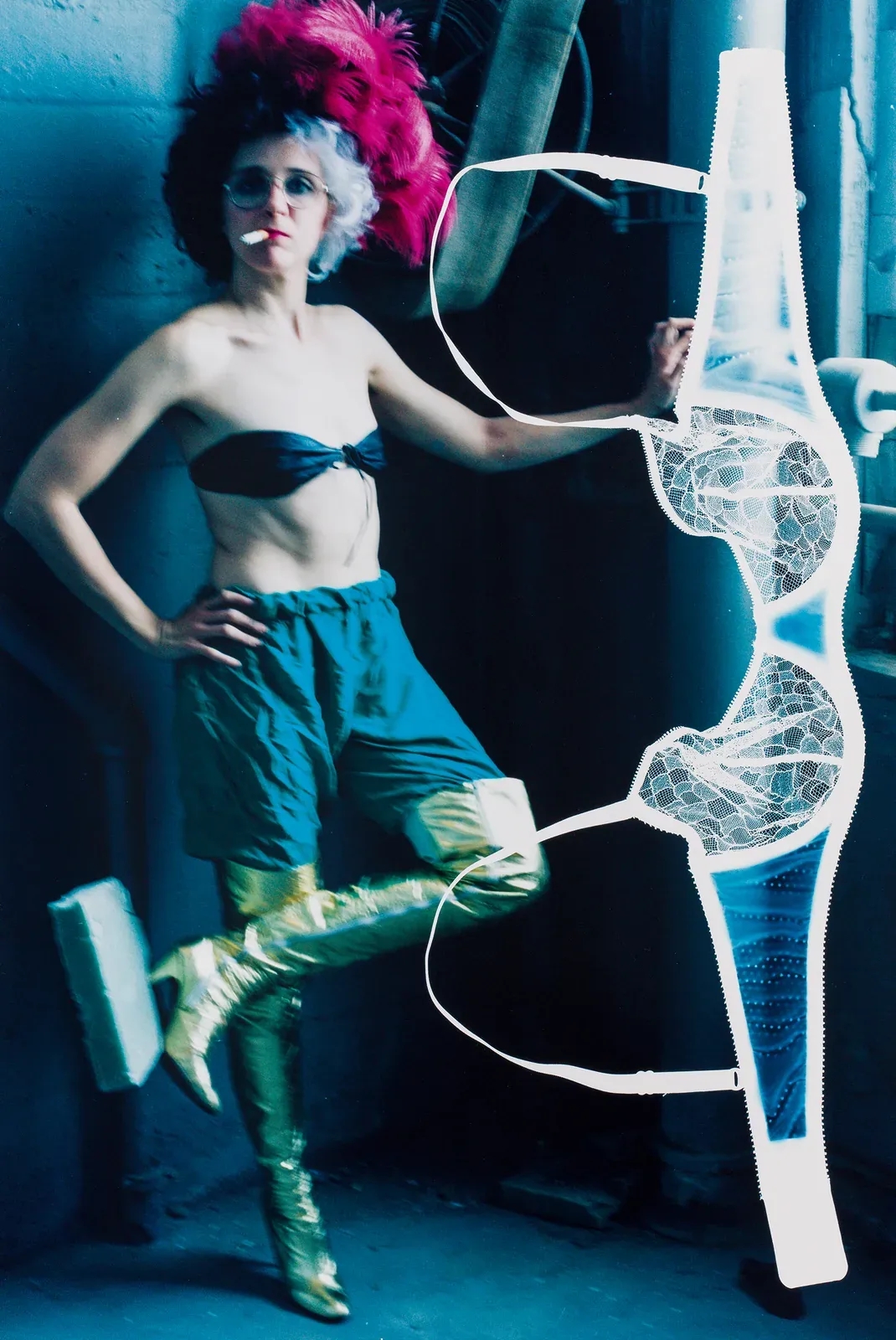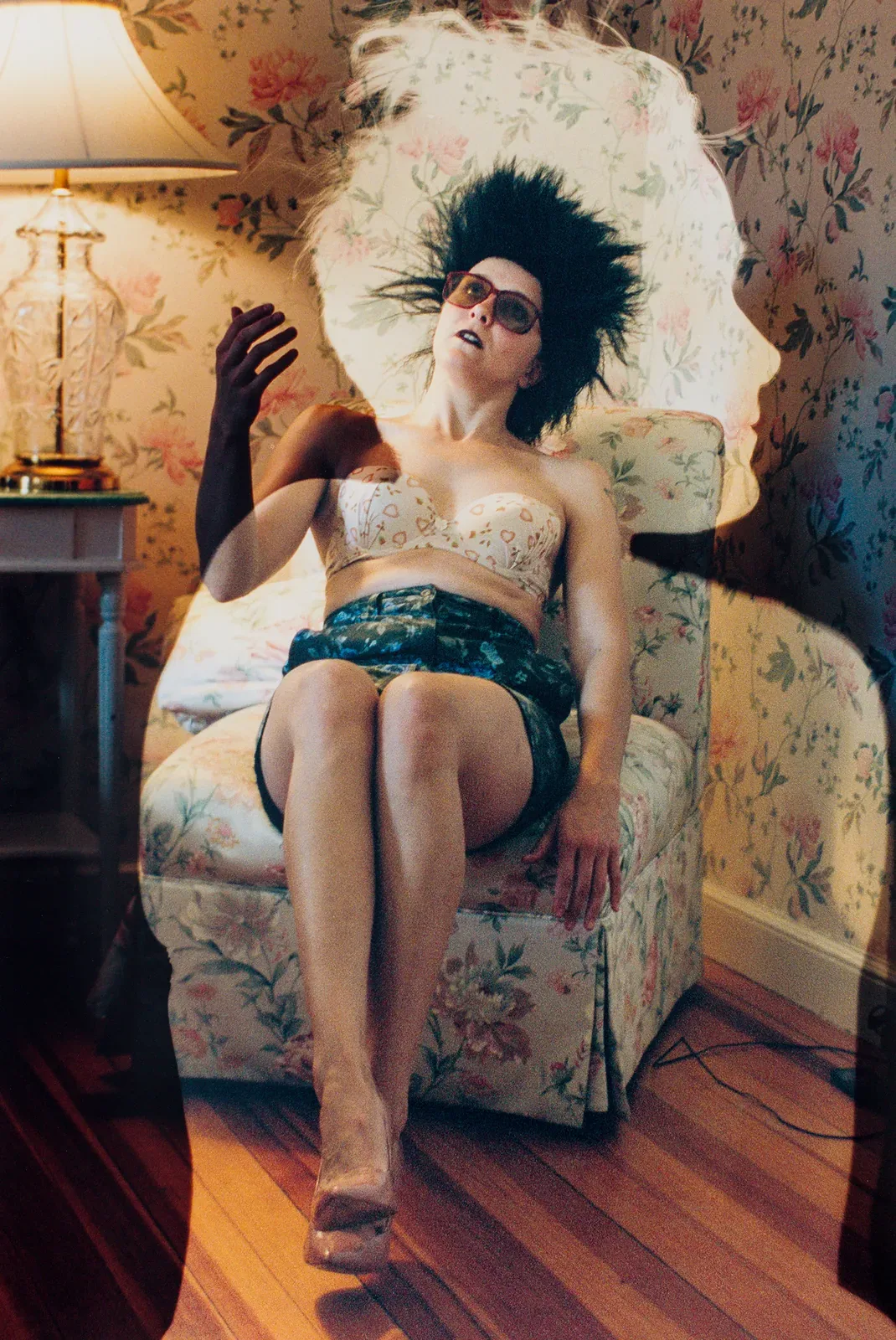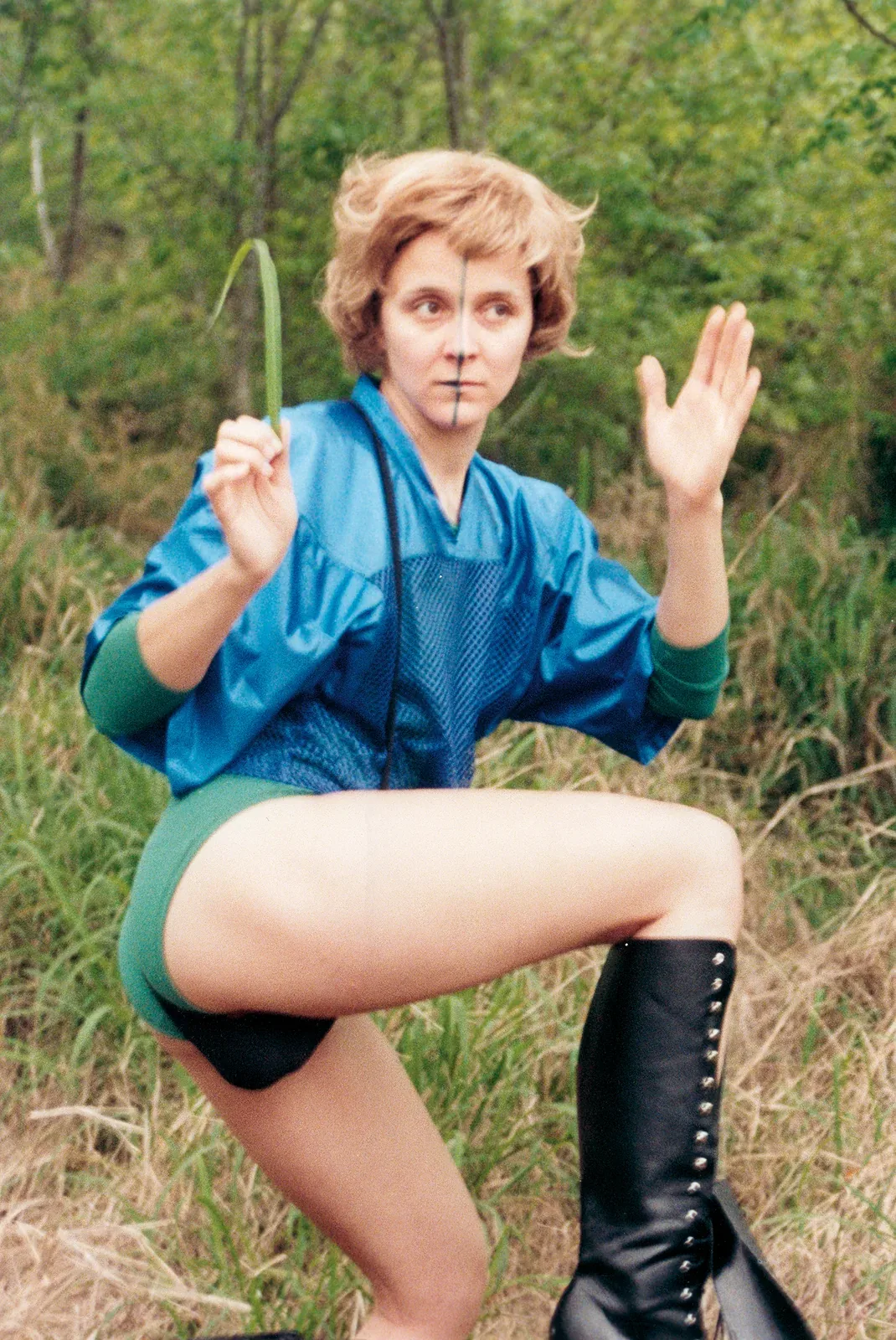
For K8 Hardy, clothes have never been simply clothes. In Positions, her series of photographs documenting outfits, personas and everyday encounters, clothing becomes a language for constructing identities, signalling histories and performing possibilities. Bedrooms, streets, fast-food restaurants and industrial spaces become stages, while the distinction between the authentic and the performed is deliberately left unstable.
Hardy’s practice has always existed somewhere between art, fashion, performance and DIY culture. Coming of age through punk, riot grrrl and zines before co-founding the feminist art collective LTTR, she developed a way of working that treats making things yourself as both necessity and freedom. More than two decades on, her work has entered major institutions including MoMA, where she’s currently showing in a group exhibition, the Whitney and Tate, but that institutional recognition has done little to flatten her irreverence.
Looking back at Positions today, now that she’s published a volume about it via MACK, Hardy remains interested in what clothing can communicate, what performance can reveal and what happens when identities refuse to settle into coherence. She speaks about feminism, ageing, fashion’s commercial machinery and the strange relationship between personal style and online performance, always with the same playful refusal to take the expected route. Here, the artist talks about constructed selves, thrifted histories, DIY culture, art institutions and why, despite everything, she still considers herself new.
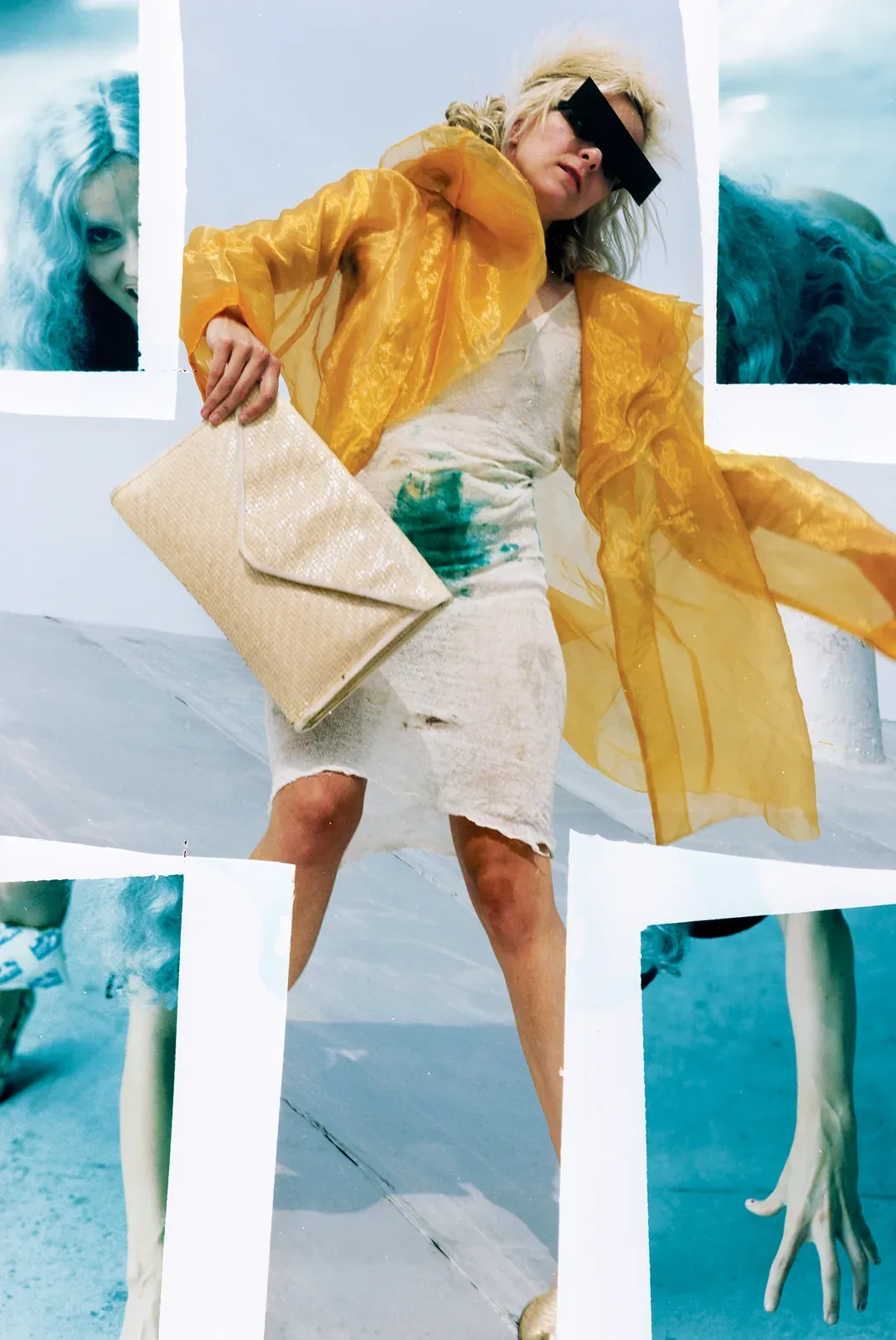
Positions documents a period in your life when clothing, styling and photography became ways of constructing different versions of yourself. Looking back at the series now, what do you see in those images that you perhaps couldn’t see when you were making them?
I don’t see this work as portraits of myself. I see it as an acting out of representations. But then again, maybe I should reconsider, which I’m constantly doing. When I look back, I get bored or lose touch with my original ideas. I like rethinking things. I see some problematic things because that’s what I’m wired to do as a feminist, but I also have space for that because part of being an artist is making yourself vulnerable, and I don’t expect perfection. I still feel weirdly insecure and exposed.
You have said, “Persona is a reaction to patriarchy,” and that authenticity is slippery. What interests you about the idea of the constructed or fake self being potentially more truthful than a supposedly authentic one?
I think we still have to construct an authentic self, but obviously there’s a gap of performativity. Perhaps that’s where it gets contentious. But there is storytelling in the construction, so the more it is, the more information we get.
The photographs often place highly constructed personas in very ordinary spaces: bedrooms, fast-food restaurants, streets and industrial sites. What does that contrast between the theatrical and the everyday do for you?
The contrast moves the stage. The multiplicity of locations generates a failure to cohere. I want to take the viewer out of the moment.
So much of Positions is about clothing, but the clothes aren’t simply fashion objects. They become characters, histories and sometimes even disguises. What do you think clothing allows us to say about ourselves that language can’t?
We reference so much through clothing. You can signal so many things, like class, region and gender. If you are aware of it, you can be playful and create a conversation or subversion. You can allude to time and place, or vocation. You can send messages.
“I want to take the viewer out of the moment.”
You’ve described thrifting as almost an education in itself: looking at tags and textiles and imagining the people who wore things before you. What have clothes taught you about people?
I guess I kind of think about who they want to be. What they are discarding and why, the phases of life and taste.
You came of age through punk, riot grrrl, zines and DIY culture, and later co-founded LTTR. What did DIY give you that the established art and fashion worlds couldn’t?
Everything! That I could make things happen without waiting on the gatekeepers. That it’s better to do things with no budget or a low budget than not at all. That being an amateur is valid.
DIY culture has become increasingly absorbed by the mainstream, from zines and handmade fashion to the aesthetics of punk appearing in major campaigns. Do you think something is lost when a subculture’s visual language becomes an aesthetic that anyone can buy?
No, because I think by the time a subculture’s visual language becomes mainstream, the kids should have already come up with a new one. And even if they try to do it on the runway or whatever, it’s never done right. It’s always a bit funny. Everything is fair game, but it does suck when people get ripped off.
Your work has always had a playful and sometimes deliberately irreverent relationship with femininity. Do you think humour can be a feminist weapon?
Absolutely. I never intend to be humorous, but I think I’m just so playful that it happens.
You started documenting your outfits long before Instagram, TikTok and the contemporary outfit of the day culture. What do you make of the way fashion and self-presentation have changed now that everyone can constantly perform themselves online?
I think people are more open and appreciative of personal style. I don’t think everyone has bridged the gap between performing online and reality, but that might be an old person thing to say. I want to see it in the street!
“I don’t think everyone has bridged the gap between performing online and reality. I want to see it in the street!”
Today, fashion is increasingly caught between self-expression, commercialisation and algorithms. If you could change one thing about the current fashion landscape, what would it be?
I’d take the celebrities out and the boring actors who can’t even pull off the looks that the designers put them in. Let someone model the clothes who knows how to model. And widen the scope of models too. And make bigger sizes. I could go on and on, but I don’t really care enough about the fashion industry to want to help them.
There is also a very contemporary conversation around bodies, beauty and control, from Ozempic and the return of extreme thinness to the constant pressure to optimise ourselves. How do you think fashion participates in our relationship with our bodies today?
It still makes people feel bad about their bodies, but it’s better than it used to be.
Your work has reached major institutions including MoMA, the Whitney and Tate, while retaining a distinctly DIY spirit. Do you think there is a point at which an artist becomes too institutionalised to remain truly disruptive, or can you infiltrate those spaces without compromising what you stand for?
Both can happen. I think mostly artists get too old to be truly disruptive. Most institutions are crypts anyways. Where art goes to die. And it’s a favour to these institutions to turn things upside down for them. They should be so lucky.
You’ve been making work for more than two decades. How has your relationship with ageing changed your understanding of visibility, relevance and the pressure placed on women and queer artists to remain new?
I definitely have more perspective. When I was younger, I really thought my career would be different from the older generation, that I’d get more shows and opportunities at an earlier age. That didn’t happen. Frankly, I’m still shocked. So there’s no pressure for me to be new; I’m still new.
If you could make something completely outside the expectations people now have of K8 Hardy, what would you want to make?
I would make paintings of flowers — if I could even paint.