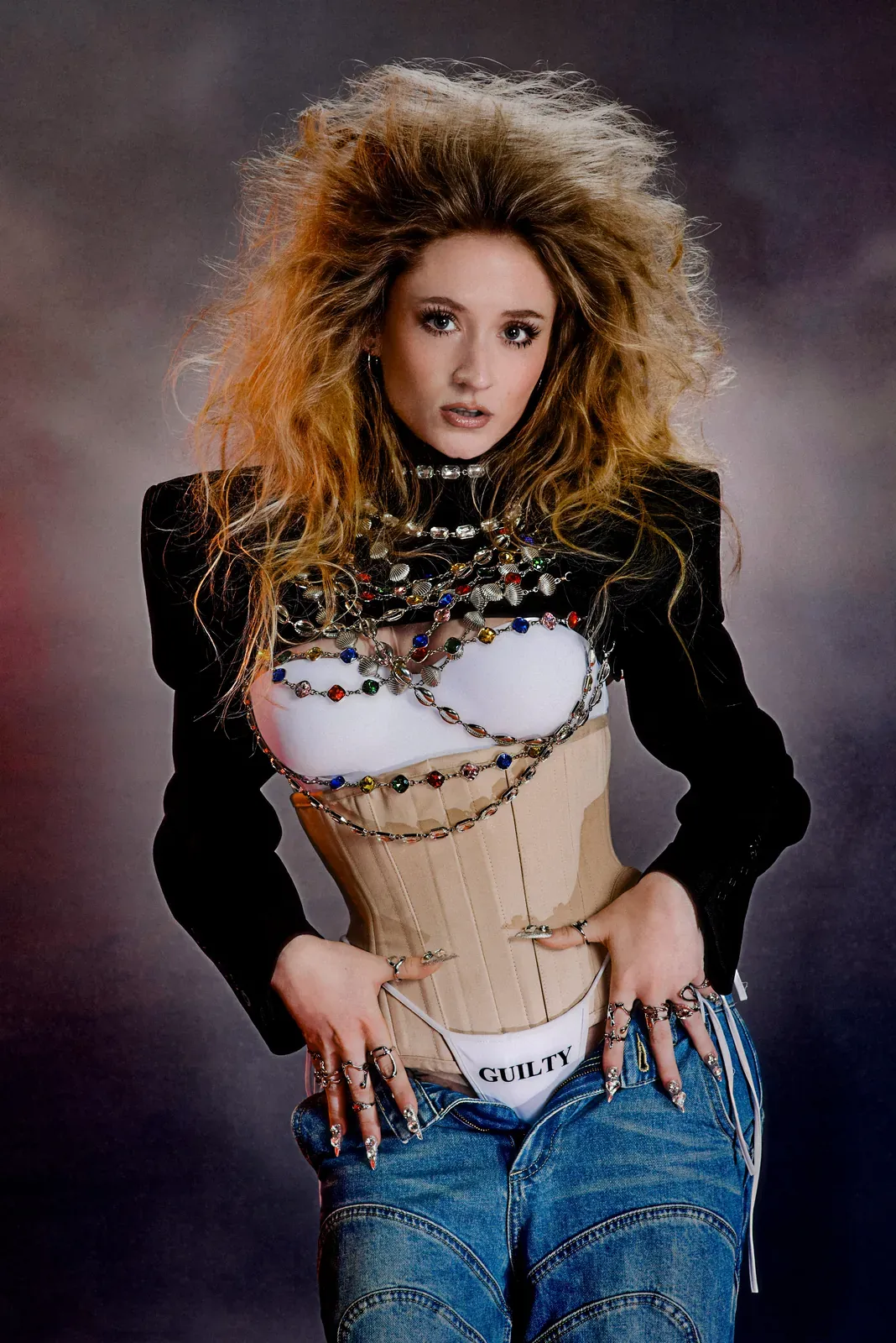
Janet Devlin seems to be exactly where she wants to be. Last month, the Northern Irish artist released Move a Muscle, the latest step towards a new album that has taken her back to Nashville and even closer to the country music she grew up listening to. But what feels particularly interesting about this new chapter is how naturally her music and personal history are beginning to meet, without Devlin feeling the need to separate one part of herself from another.
When we last spoke with her more than two years ago, Emotional Rodeo was opening the door to this world. A lot has happened since, and our new conversation moves from songwriting and the peculiar legacy of teenage television fame to Irish identity, Nashville, and the experiences that continue to shape her work. “Musically and visually, it’s bringing together the child I was back home with the woman I am today,” she tells us.
Janet, you were on The X Factor UK at its cultural peak as a child. Does this affect how you’re received as a musician today?
Honestly, it depends on the person. I find there’s a lot of love for my history from the queer community; they see The X Factor as a moment in time and television history: the days before Netflix, when people would actually watch TV before a night out or as family entertainment. I love that view of it because that’s how I see it in my own head. Obviously, there are some people who use it to discredit my work as an artist; that I’m just someone who sang cover songs on TV. I find this approach much more common in the music industry. I used to fight against it. But at this point—three albums, six EPs and a bunch of singles later—if they still deny my identity as an artist, that’s none of my business.
Every artist approaches songwriting differently. What does your process look like?
I’ve a pretty odd way of writing and creating: I come up with a song title or a theme and make a note on my phone. Usually, words come to me as I’m out and about living life. Luckily, we have phones with notes apps, so I don’t have to carry a journal with me anymore. In the note, I’ll add a bunch of idioms, jokes, poetry and a glossary of words to do with the topic. Next, I’ll write a bunch of example lyrics with different rhyme schemes. I’ll also record a few example melodies into my voice notes. Then, when I arrive at the sessions, I’ll invite the producer into my notes.
Honestly, I love research, so it’s fun for me! Also, it saves time on googling in a session. If I don’t co-write, it’s the same process, but with just myself (laughs). When it comes to ballads, though, I mostly just create in the room. I’ll still have a song concept or lyric idea, just nothing too fleshed out. I like to just let the song write itself. The mood of the chords brings to the surface emotions and memories that I’ve often forgotten about.
Honestly, I love research, so it’s fun for me! Also, it saves time on googling in a session. If I don’t co-write, it’s the same process, but with just myself (laughs). When it comes to ballads, though, I mostly just create in the room. I’ll still have a song concept or lyric idea, just nothing too fleshed out. I like to just let the song write itself. The mood of the chords brings to the surface emotions and memories that I’ve often forgotten about.
What was on the sonic mood board for the new album?
There actually wasn’t one! I purposely took demos that were only piano or guitar and vocals. I wanted the songs to be able to find their own voice in the studio with the Nashville band, which I’m glad I did, because it feels like every track has its own identity.
Tell us about your connection to Nashville. How did that come about?
I mean, it’s every country fan’s dream to go to Nashville! I never expected to be there and be making music. It’s a real-life ‘pinch me’ moment every time I’m there. The label I’ve worked with for around twelve years has done a lot of recording out there for other artists. So, when they offered me a chance at a trial run to record a few songs, I jumped at the opportunity. They do things very differently from the UK and Ireland. In Nashville, there’s a live band in a room, all playing and recording at once. I’m in the vocal booth singing along live as well. I didn’t know how I’d like it, as I’m used to recording musicians separately, but I loved the ability to hear everything all at once and build it right there and then. It’s also way more efficient, as well as more fun. So, on the first trip—the test drive—I did three songs and fell in love with the process.
For Emotional Rodeo, we did three days in the studio, and I walked away with twenty-four songs. So, I’m forever grateful to the label for letting me go out there and record this way and for letting me experience it.
For Emotional Rodeo, we did three days in the studio, and I walked away with twenty-four songs. So, I’m forever grateful to the label for letting me go out there and record this way and for letting me experience it.
Regarding Emotional Rodeo, are you critical of your own work, and how have you developed as an artist since its release?
I’d love to say that I am, but I’m not. I made exactly what I wanted to make in the moment I wanted to make it. It’s a snapshot in time, and I’m very proud of it. Obviously, things could have been done differently or better, but I was doing the best I could with the resources I had. I learnt a lot, though, and I fully intend to implement what I learned on this next record.
Talk to us about reinvention. How do you conceptualise visuals for the music?
Because most of the music is gritty, raw and real, I wanted to show that visually. I always think of the track Fur Coat when it comes to visuals. The phrase “fur coat, no knickers” normally has such a negative connotation, but it doesn’t for me. I grew up poor, wearing my cousin’s beautiful hand-me-downs that my family would never have been able to afford. So, in a way, it sums up who I am even today. I sure as hell don’t make a lot of money, but visually, you wouldn’t know it.
How do the new visuals you’ve been releasing recently tie into the upcoming album?
They not only tie into the album; they tie into my life story. We’ve been upcycling old clothes, some of which I’ve had since I was fifteen. When I’ve been writing, I’ve been drawing inspiration from the country music I listened to way back then, too. Musically and visually, it’s bringing together the child I was back home with the woman I am today.
You’re a staunch advocate for mental health. How have your own mental health and neurodivergence affected your response and approach to your very public-facing work?
After essentially writing a Janet Devlin exposé in the form of a book, I don’t feel like I’ve anything left to hide, nor am I in any way ashamed of my past. Shame kept me in my addiction cycle for years. Breaking the bonds of shame was the game changer. My mindset is, and has always been, that if I’m going through this, I’m not a special snowflake. That means other people are too. They’re just not talking about it. My recovery was influenced by stories of people getting sober. I admired the honesty and how they were addressing their past openly. It made me feel less alone and less isolated, and it inspired me. If they could overcome it, so could I. I’ve carried that notion with me far beyond my addiction. I’ve done it with my mental health diagnoses and my diagnosis of neurodivergence. Any time I share, people share back. In droves.
Honesty breeds honesty, and it’s a beautiful thing. I’ve learned so much along my life journey; I want to share that information with people. Something as simple as knowing you can hire your own psychiatrist—you don’t have to wait eight years for an NHS one—changed my life. And apparently, it’s changed others’ lives too. So, until the day I’ve no more lessons to share, I’ll just keep on sharing.
Honesty breeds honesty, and it’s a beautiful thing. I’ve learned so much along my life journey; I want to share that information with people. Something as simple as knowing you can hire your own psychiatrist—you don’t have to wait eight years for an NHS one—changed my life. And apparently, it’s changed others’ lives too. So, until the day I’ve no more lessons to share, I’ll just keep on sharing.
Tell us about your experiences as an Irish person in the USA and England. Were you surprised by the lack of knowledge around the Troubles when you first left Ireland?
To this day, I’m still shocked. Not even necessarily about the Troubles, more so about the potato blight. People so casually make potato jokes about the Irish, not knowing the history. I don’t necessarily expect everyone to know what happened, but when I tell them, their response to the information tells me everything I need to know. This “haha, the Irish are stupid, relying on one crop to survive” mentality is so jarring. The fact that people casually laugh in my face, and in the face of a genocide, baffles me.
Luckily, we’re living in an era where Irish culture, history and heritage are almost ‘cool’ to know about, and that does excite me. I’ve been equally as disarmed by people who do know the history, in the most beautiful way. We’re only a little island, but our impact on the world, especially in the arts, is being felt worldwide right now, and I love it.
Luckily, we’re living in an era where Irish culture, history and heritage are almost ‘cool’ to know about, and that does excite me. I’ve been equally as disarmed by people who do know the history, in the most beautiful way. We’re only a little island, but our impact on the world, especially in the arts, is being felt worldwide right now, and I love it.
Is your Irish heritage important to you, and how do you integrate it into your artistry?
It’s important to me. Being from the North, people try to eradicate or invalidate my nationality as a proud Irish woman. Which sucks for them because I’m a very loud and expressive person. I’m very lucky to be working with a creative director who knows the history and gets excited by the challenge of incorporating it into every visual aspect of the project. Not only doing so, but doing it in a way only they could, from knowing everything about me, my culture and my own personal past.
I wear my heritage proudly and without hesitation. I don’t soften my accent anymore. I don’t shy away from weaving my culture into my music, my clothing or my personality. There will always be people trying to rob me of my identity, but all they’re doing is pushing my work further. Leaving hateful comments only pushes me into my algorithms. So even hate benefits me (laughs).
I wear my heritage proudly and without hesitation. I don’t soften my accent anymore. I don’t shy away from weaving my culture into my music, my clothing or my personality. There will always be people trying to rob me of my identity, but all they’re doing is pushing my work further. Leaving hateful comments only pushes me into my algorithms. So even hate benefits me (laughs).
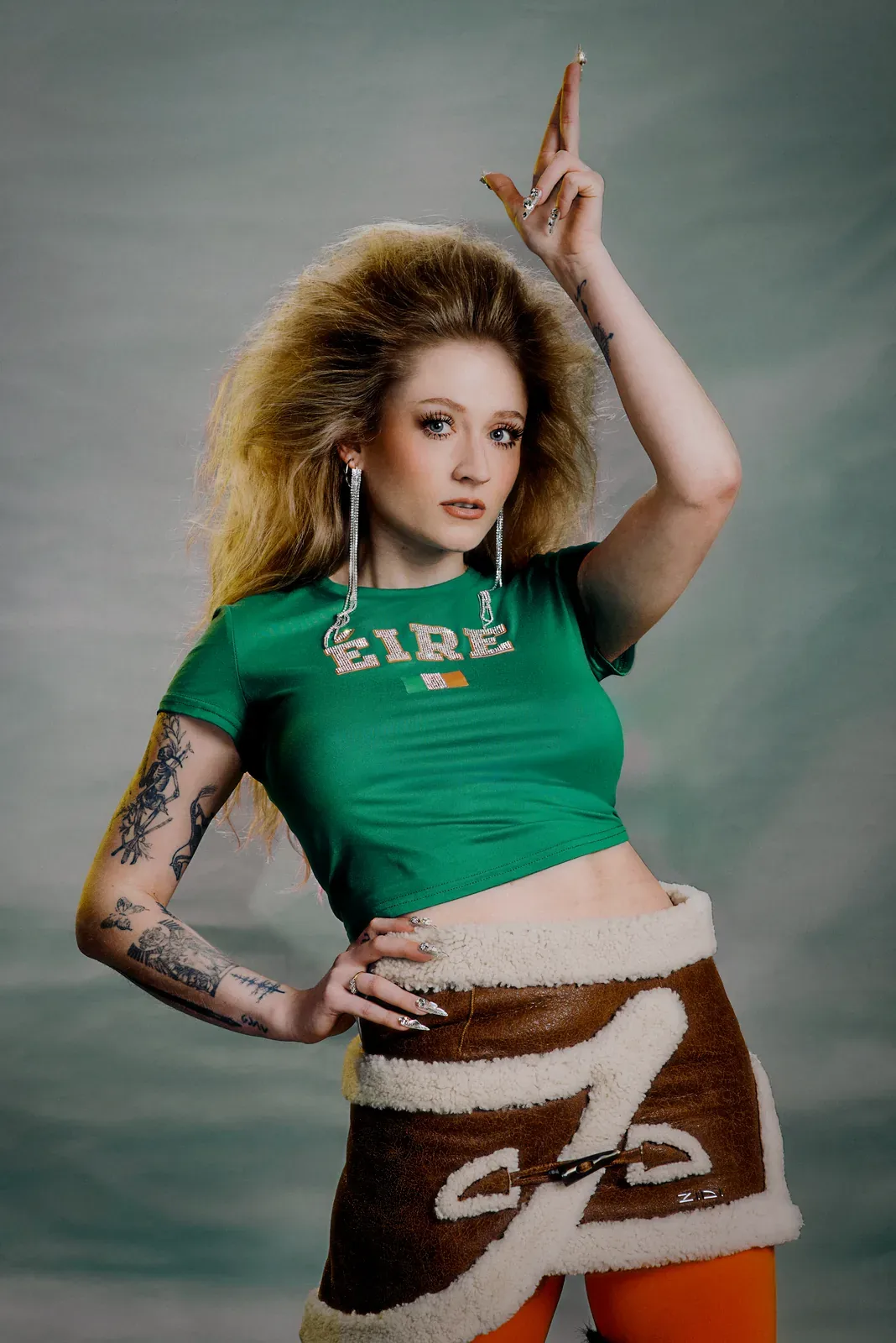
Trench AEMONA, skirt ZIDI, boots AZALEA WANG, rhinestone Éire tee AIRY, tights FOGAL.
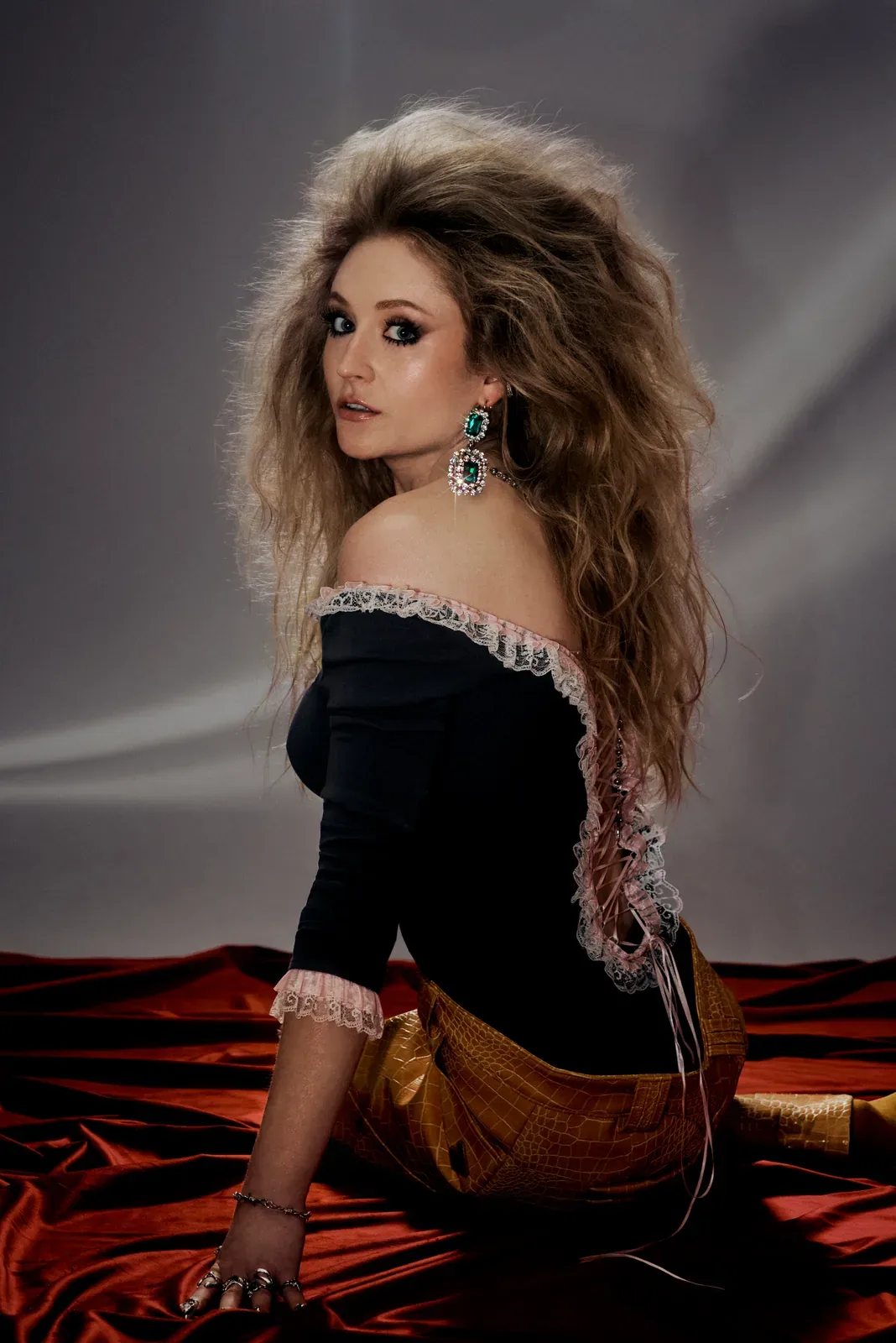
Dress worn as top HU DIE GONG ZHU, trousers ZIDI, all other accessories stylist’s own.
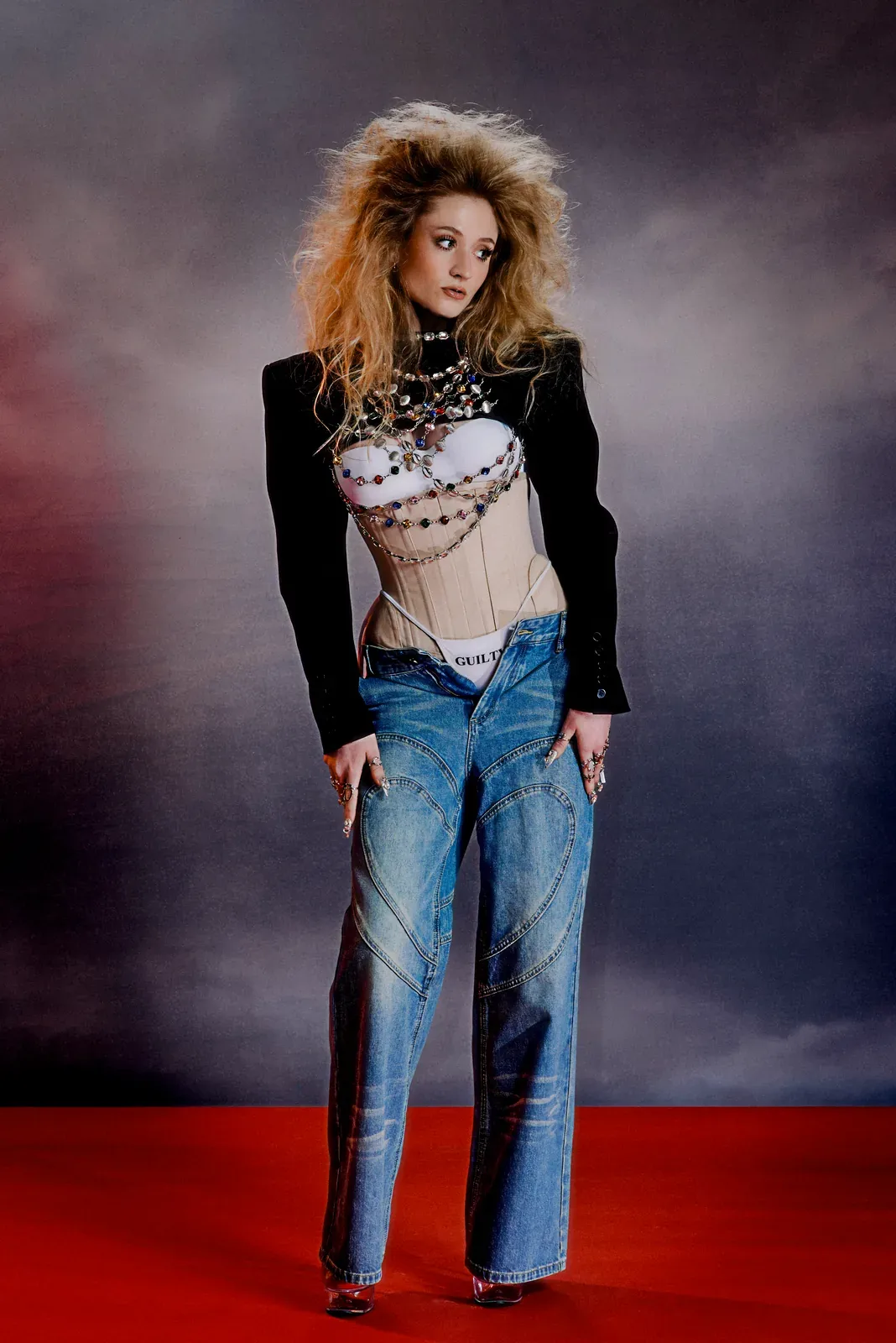
Blazer RAY CHU, jeans and bikini HU DIE GONG ZHU, shoes PLEASER, all other accessories stylist’s own.
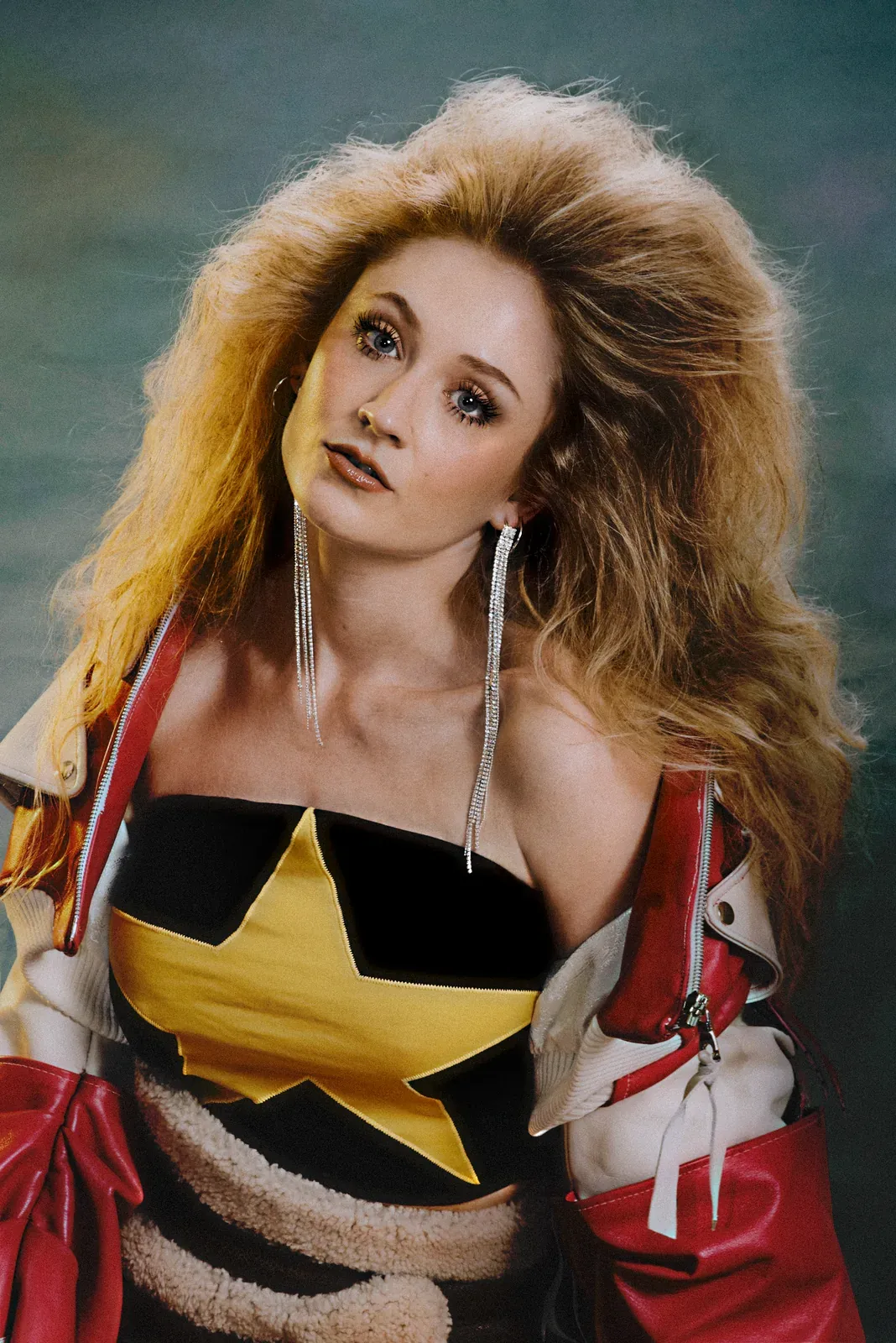
Top HU DIE GONG ZHU, jacket AYDEN LAMB, skirt ZIDI.
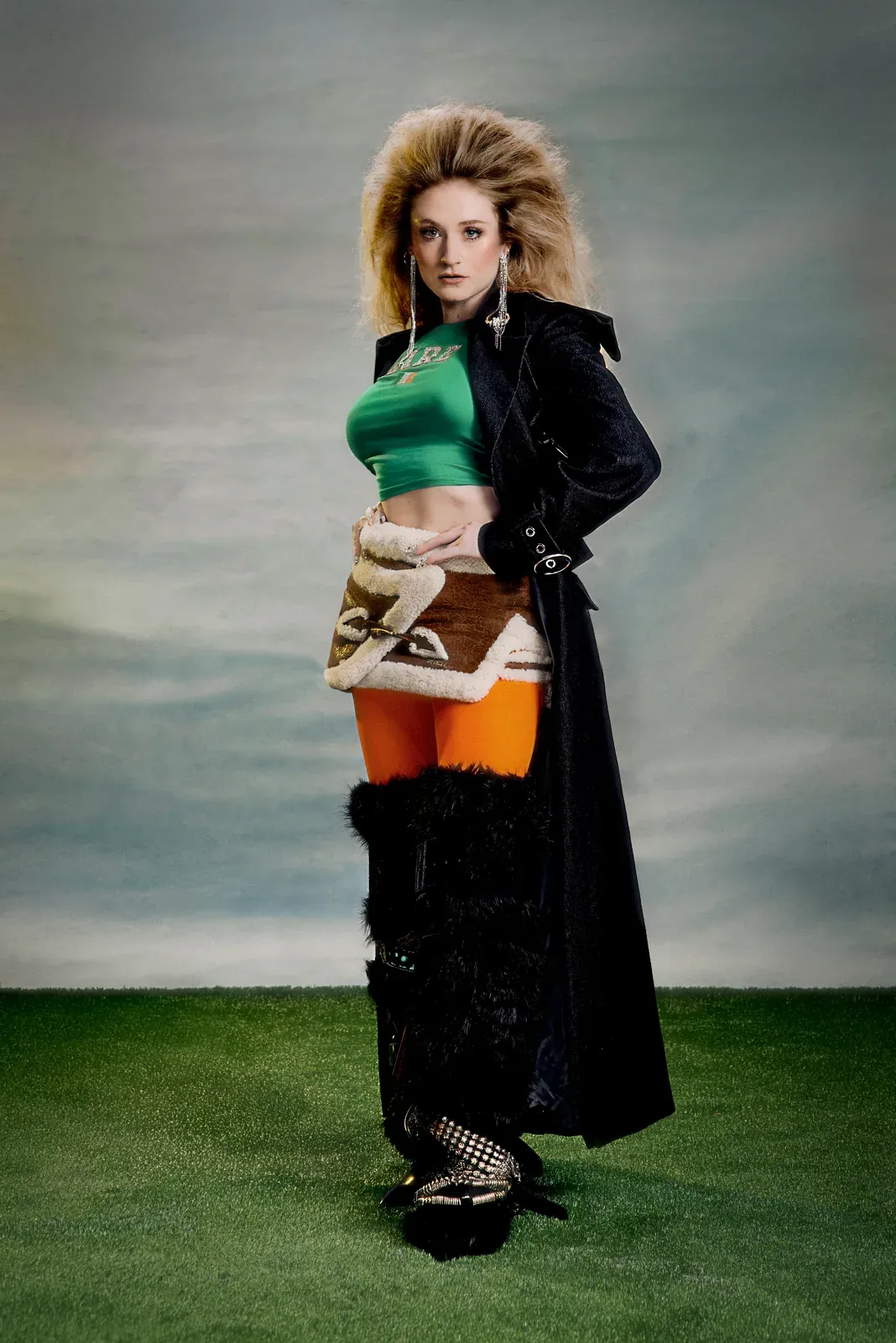
Trench AEMONA, skirt ZIDI, boots AZALEA WANG, rhinestone Éire tee AIRY, tights FOGAL.
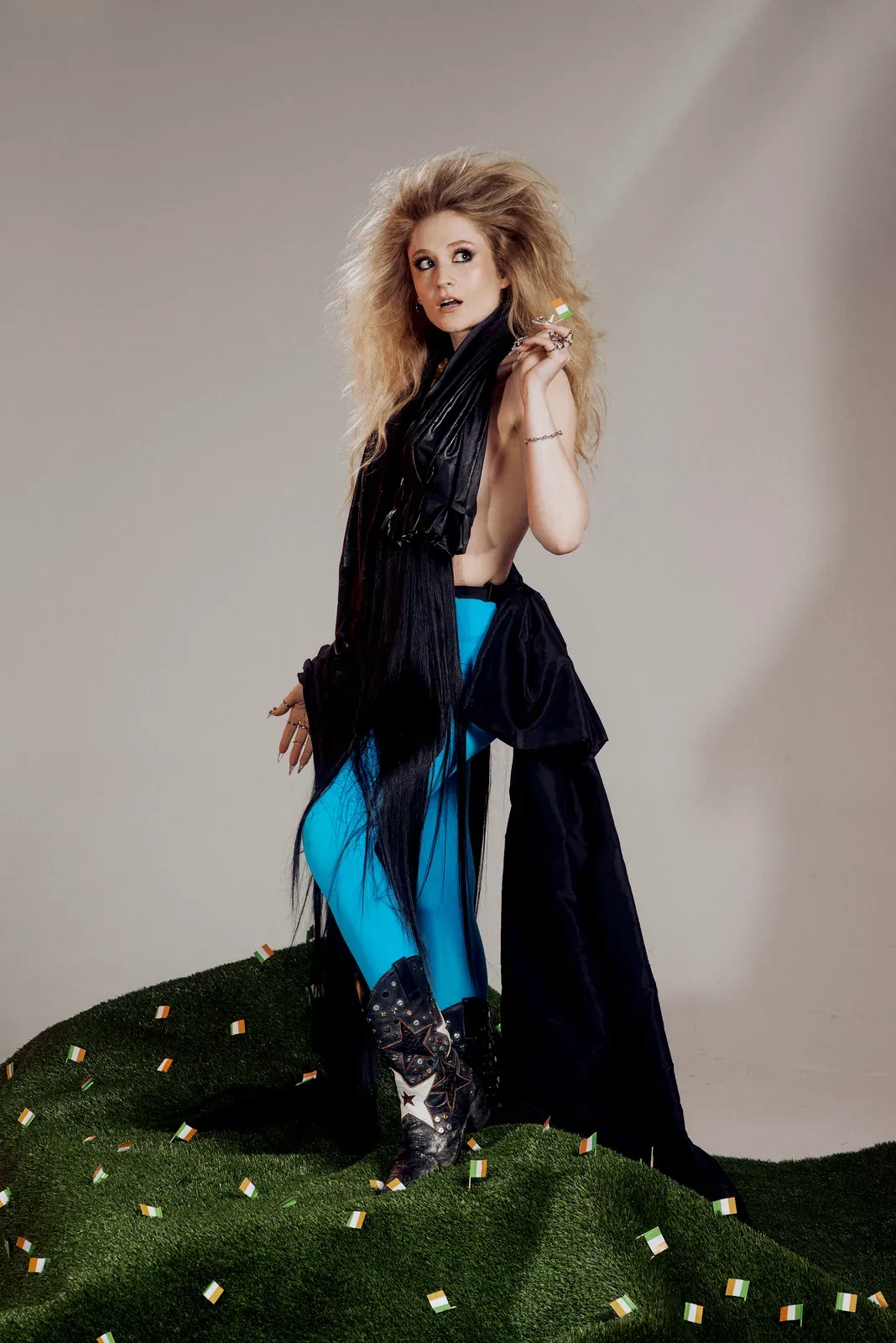
Dress POET LAB, tights FOGAL, boots Janet’s own.
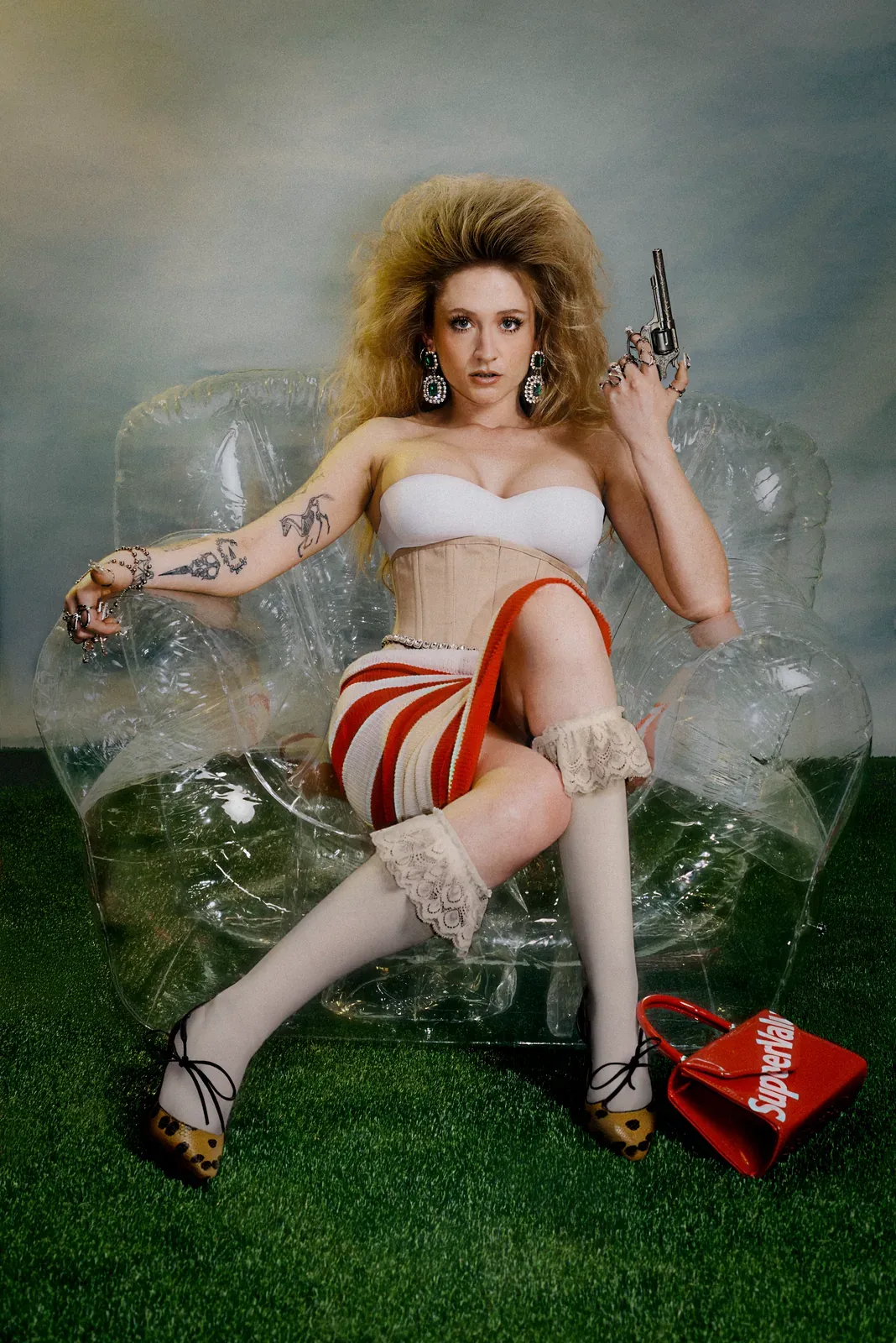
Skirt and flowers CATALINA NEGARA, shoes JIMMY CHOO, custom bag SARAH GAGE, all other accessories stylist’s own.
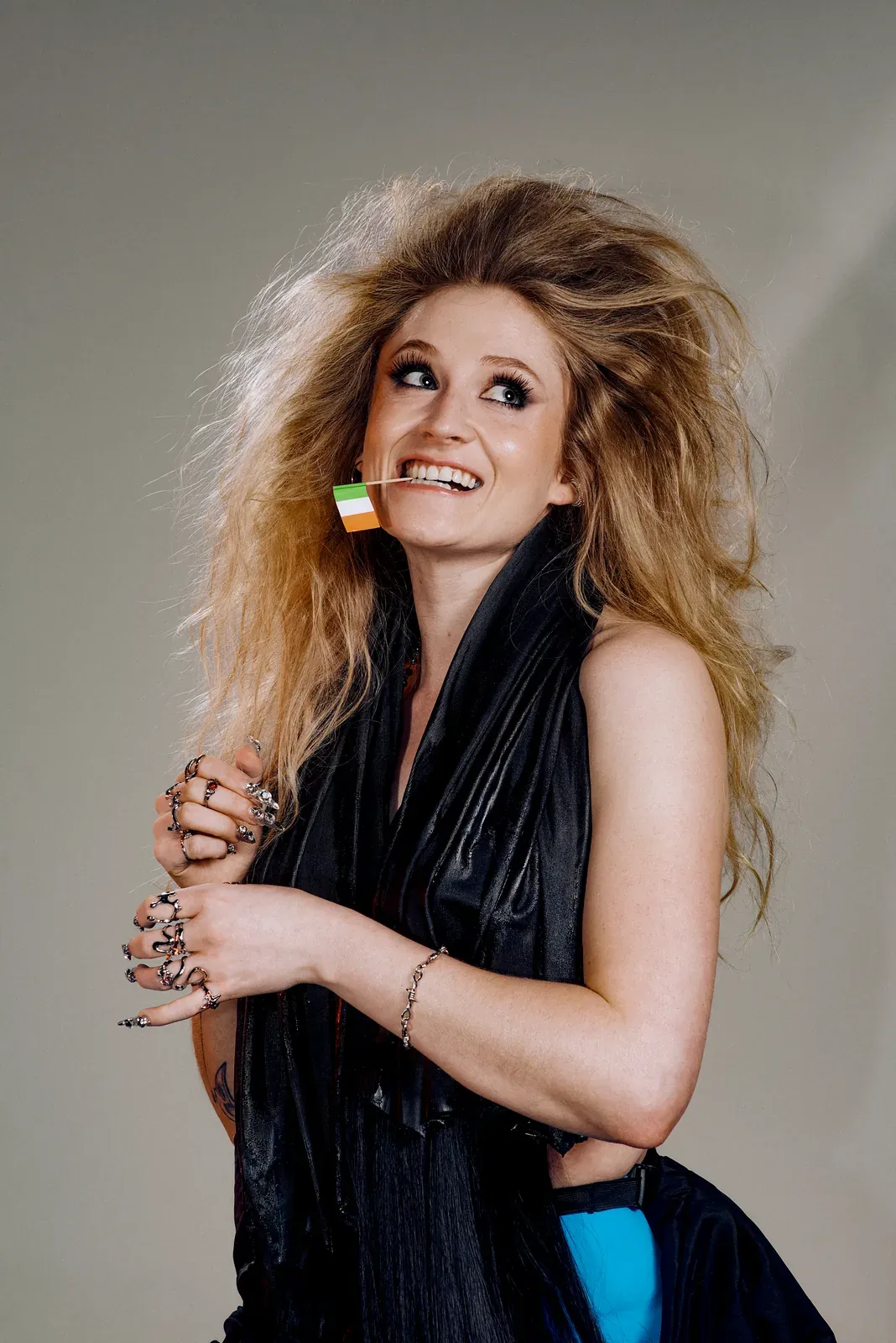
Dress POET LAB, tights FOGAL, boots Janet’s own.
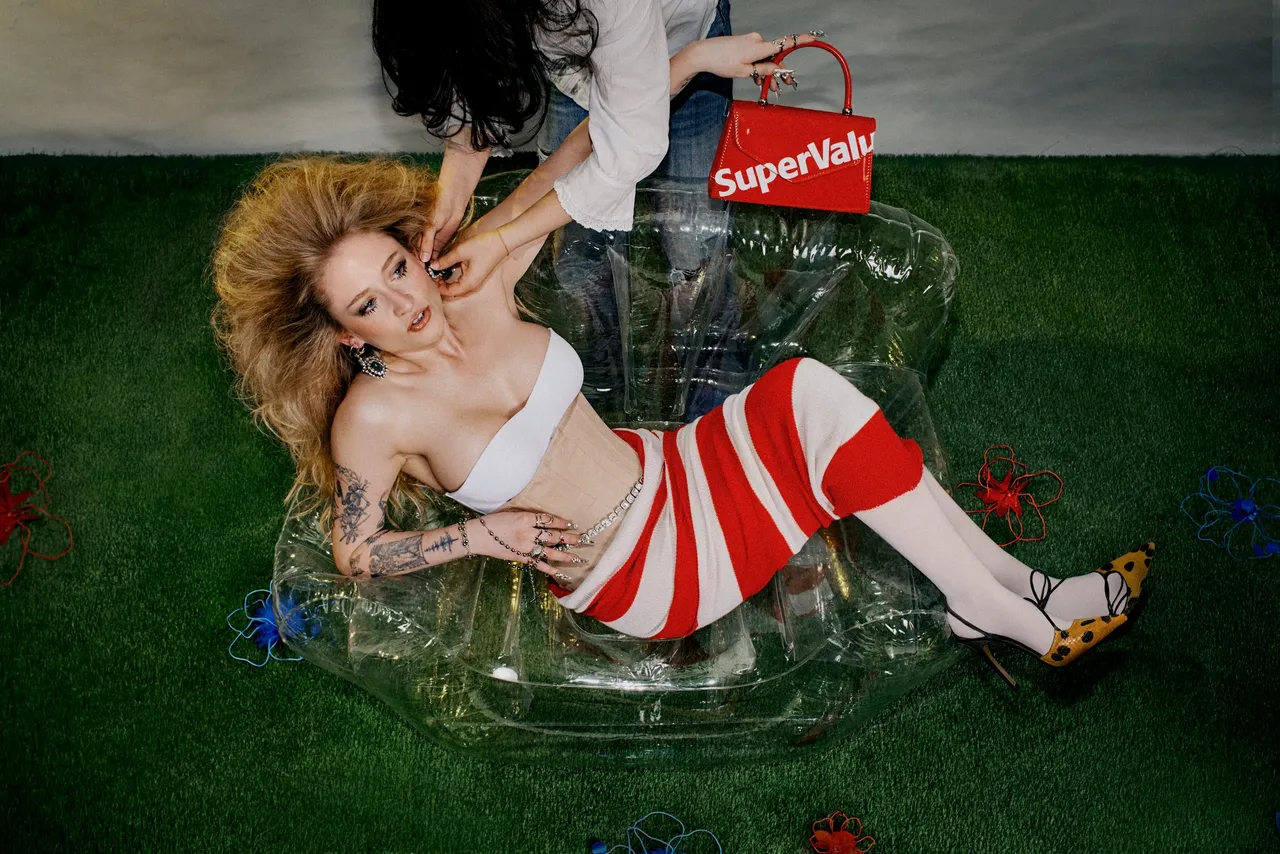
Skirt and flowers CATALINA NEGARA, shoes JIMMY CHOO, custom bag SARAH GAGE, all other accessories stylist’s own.