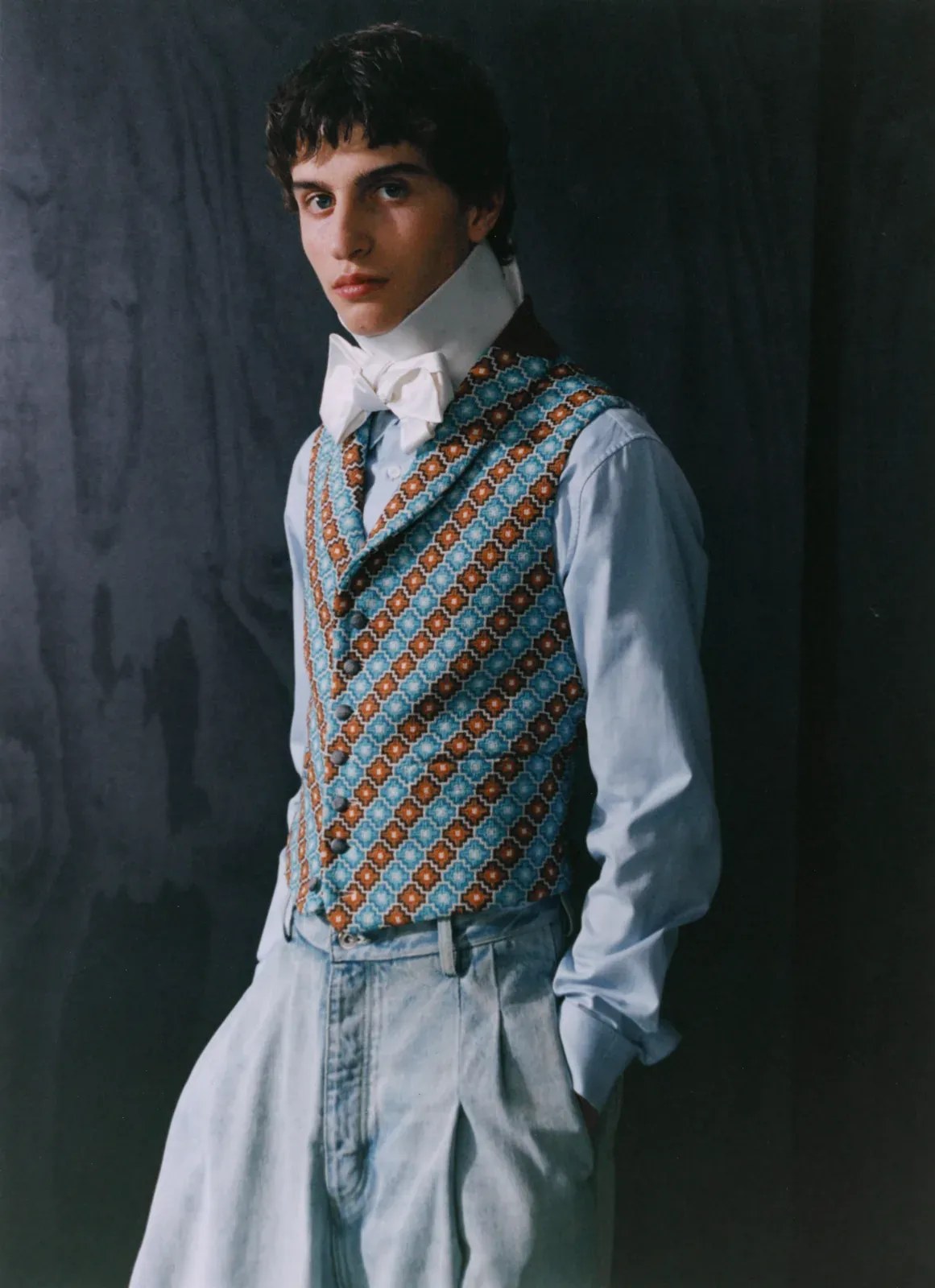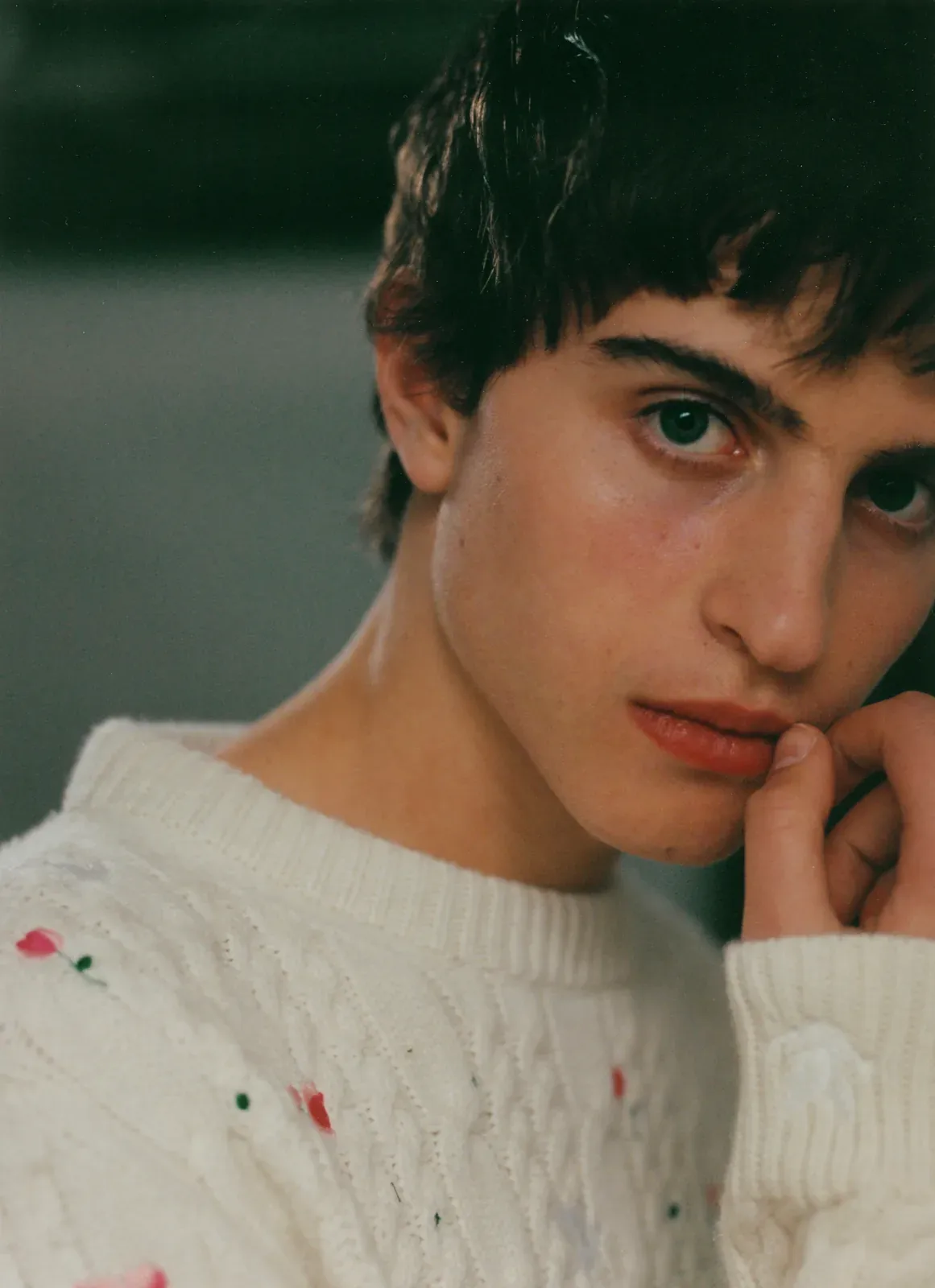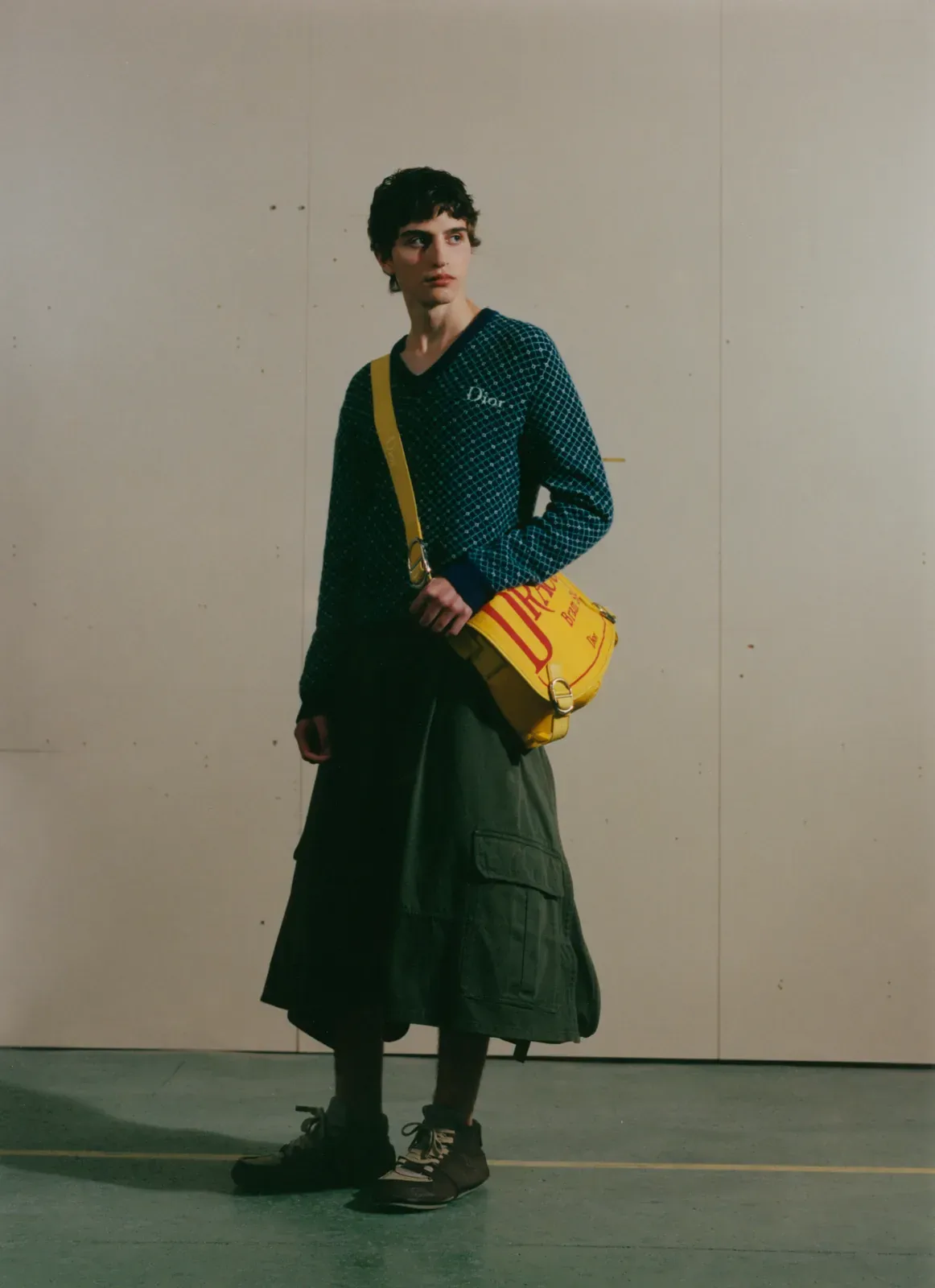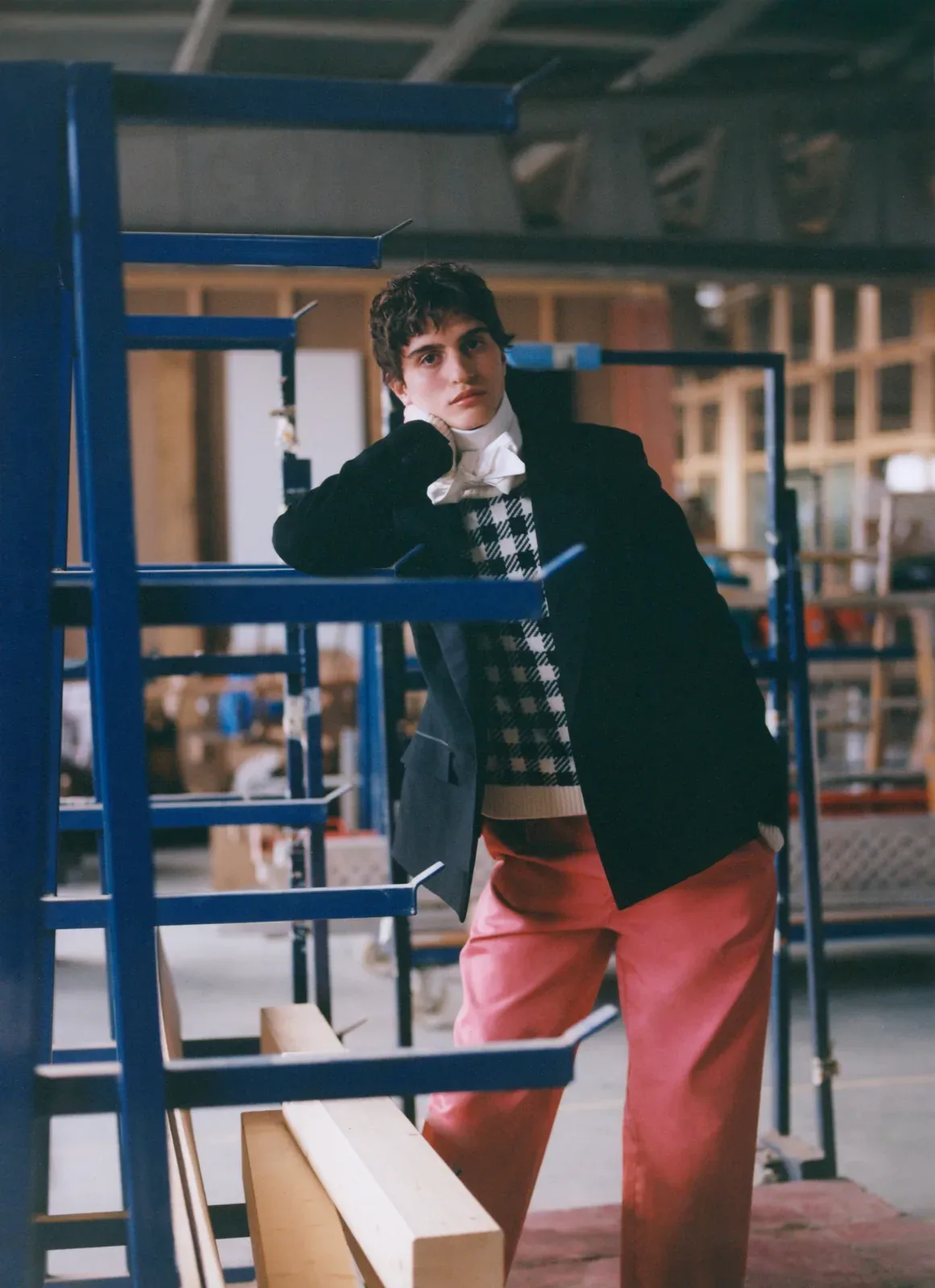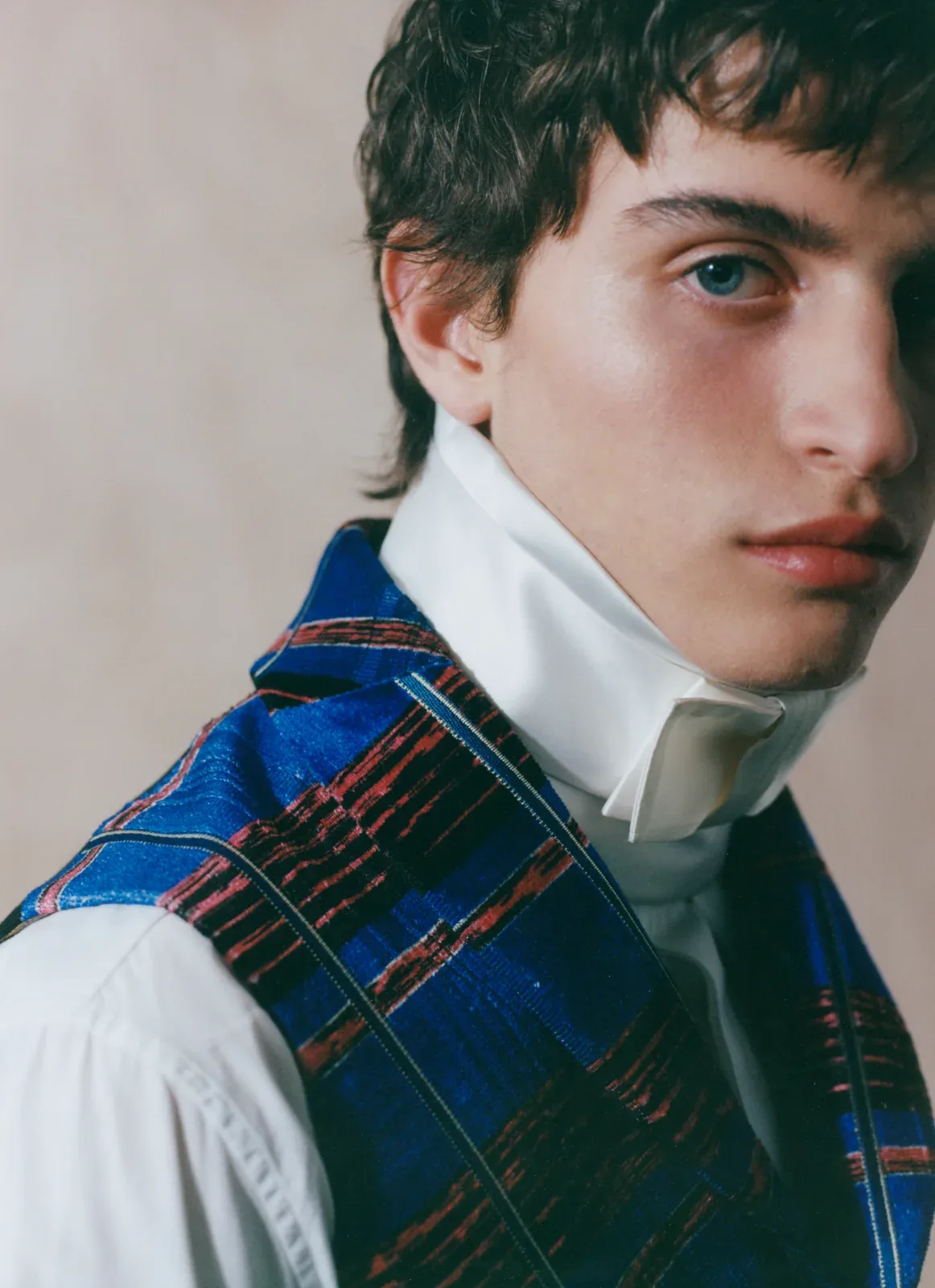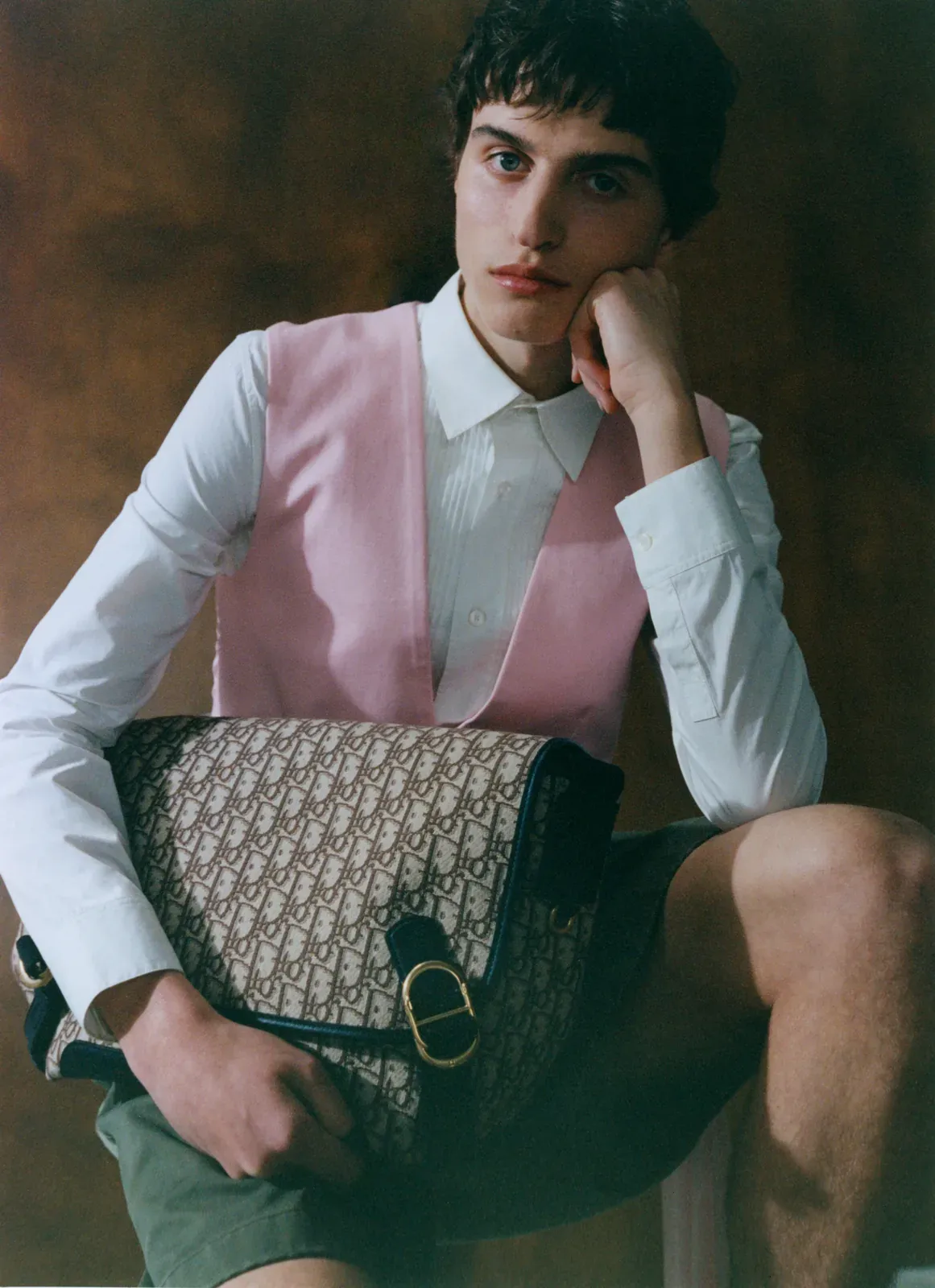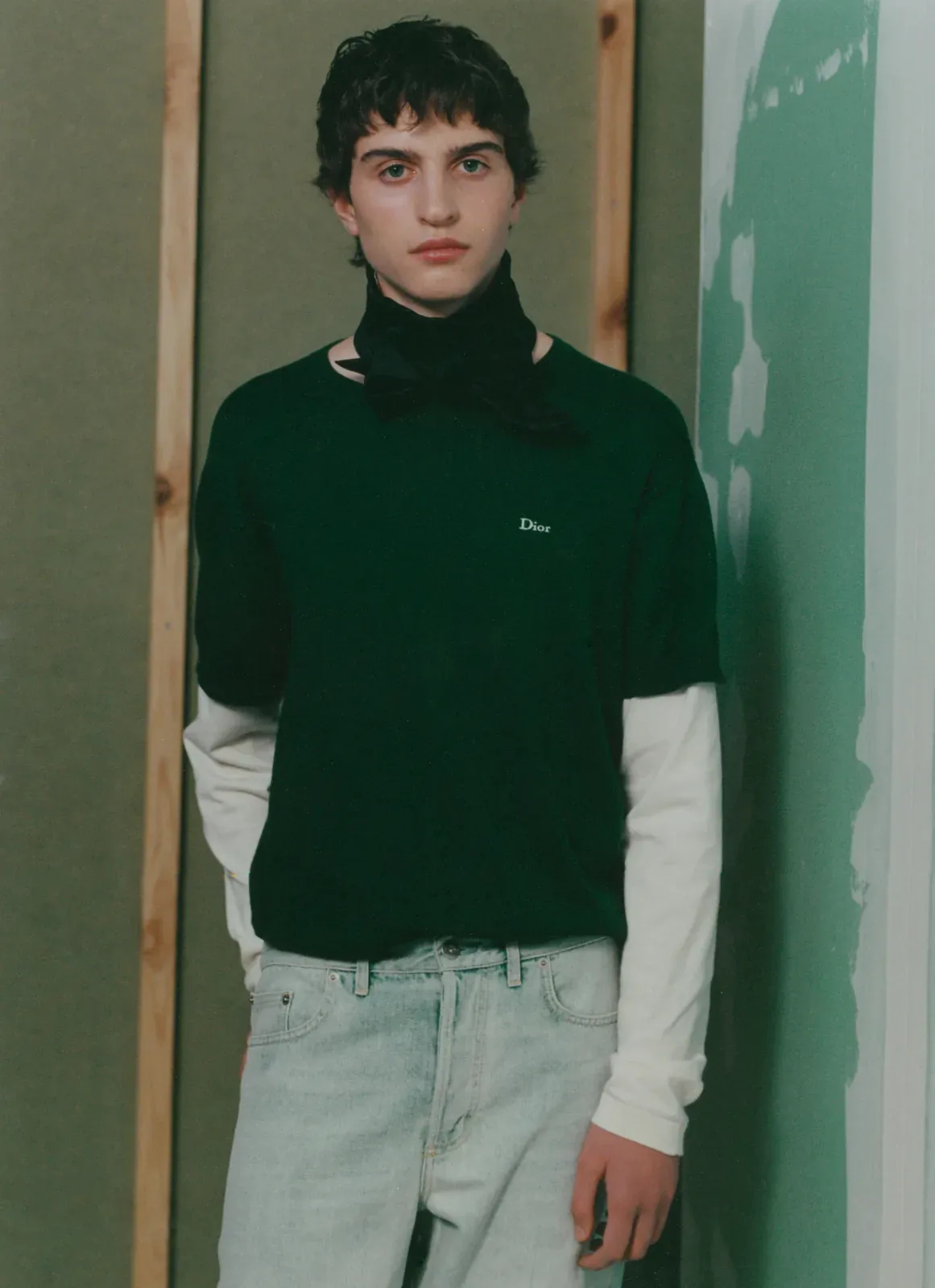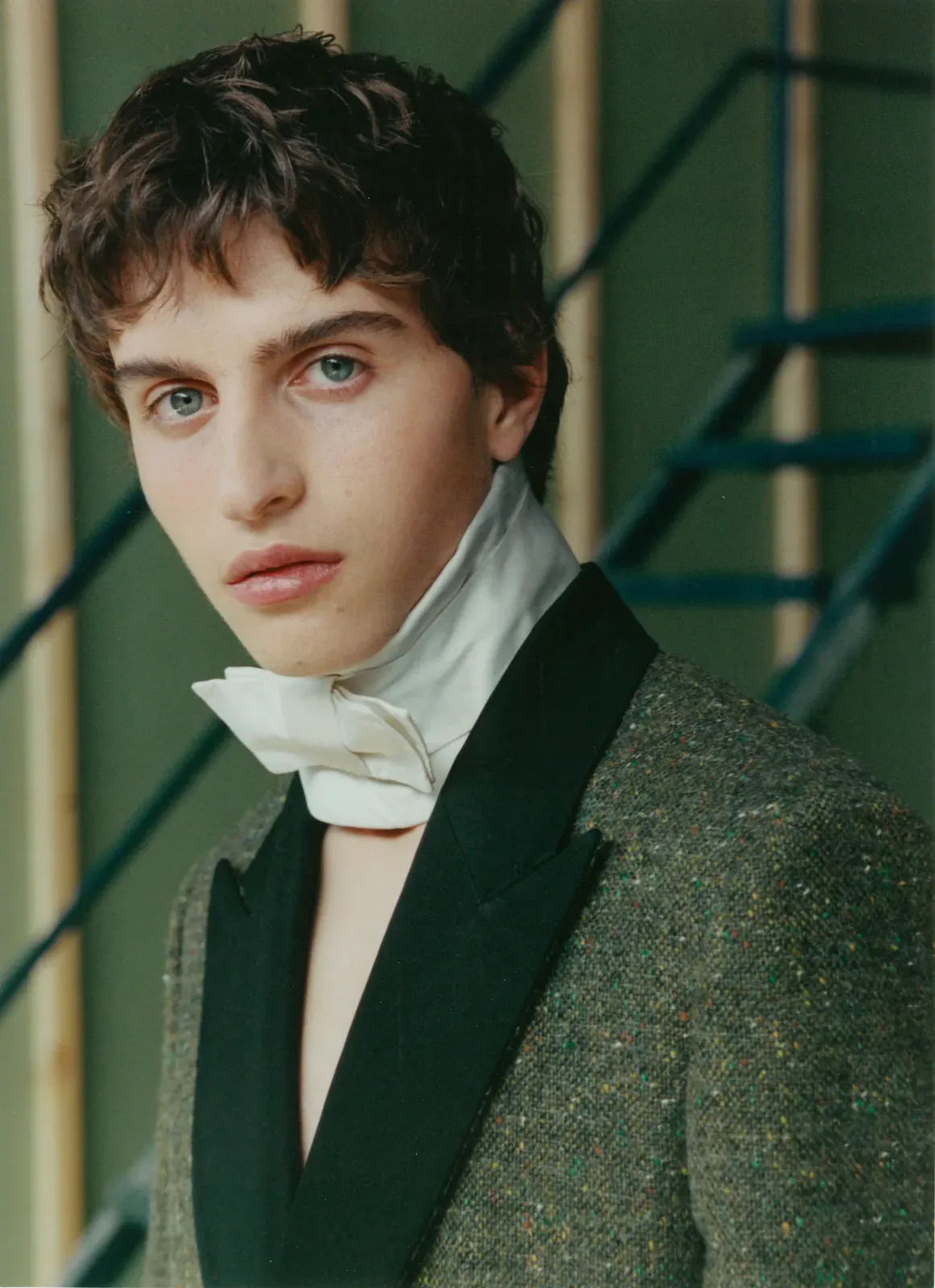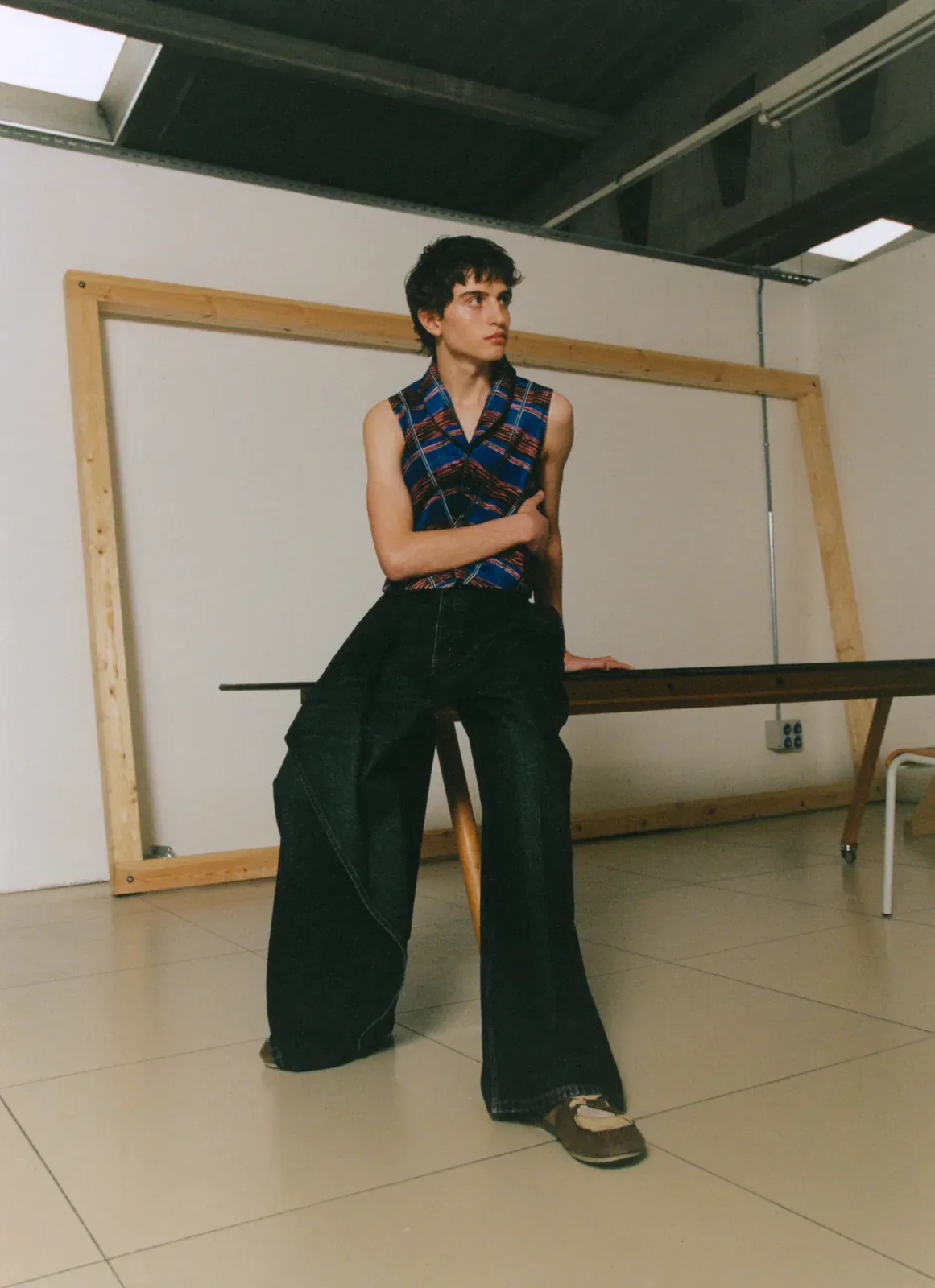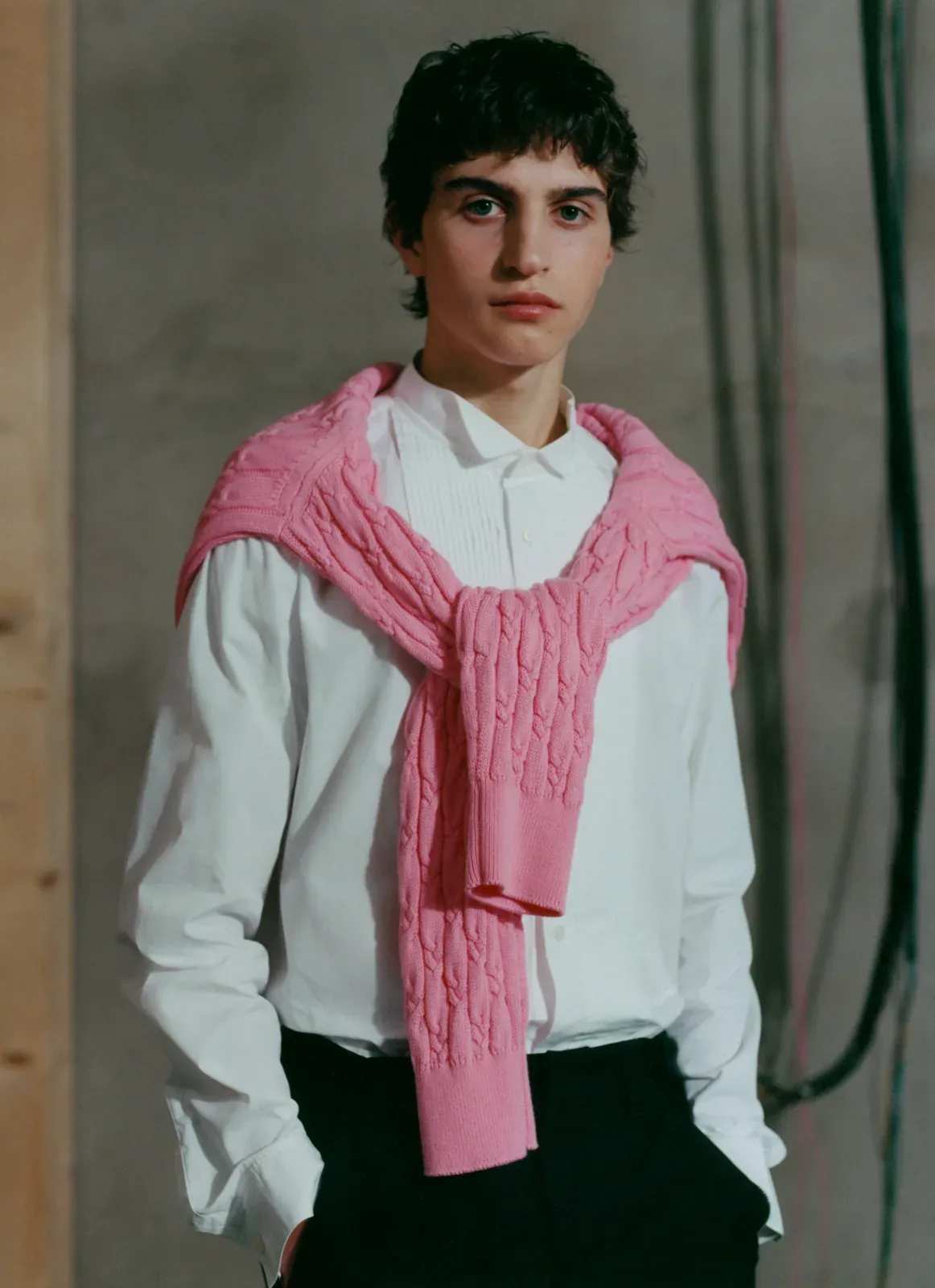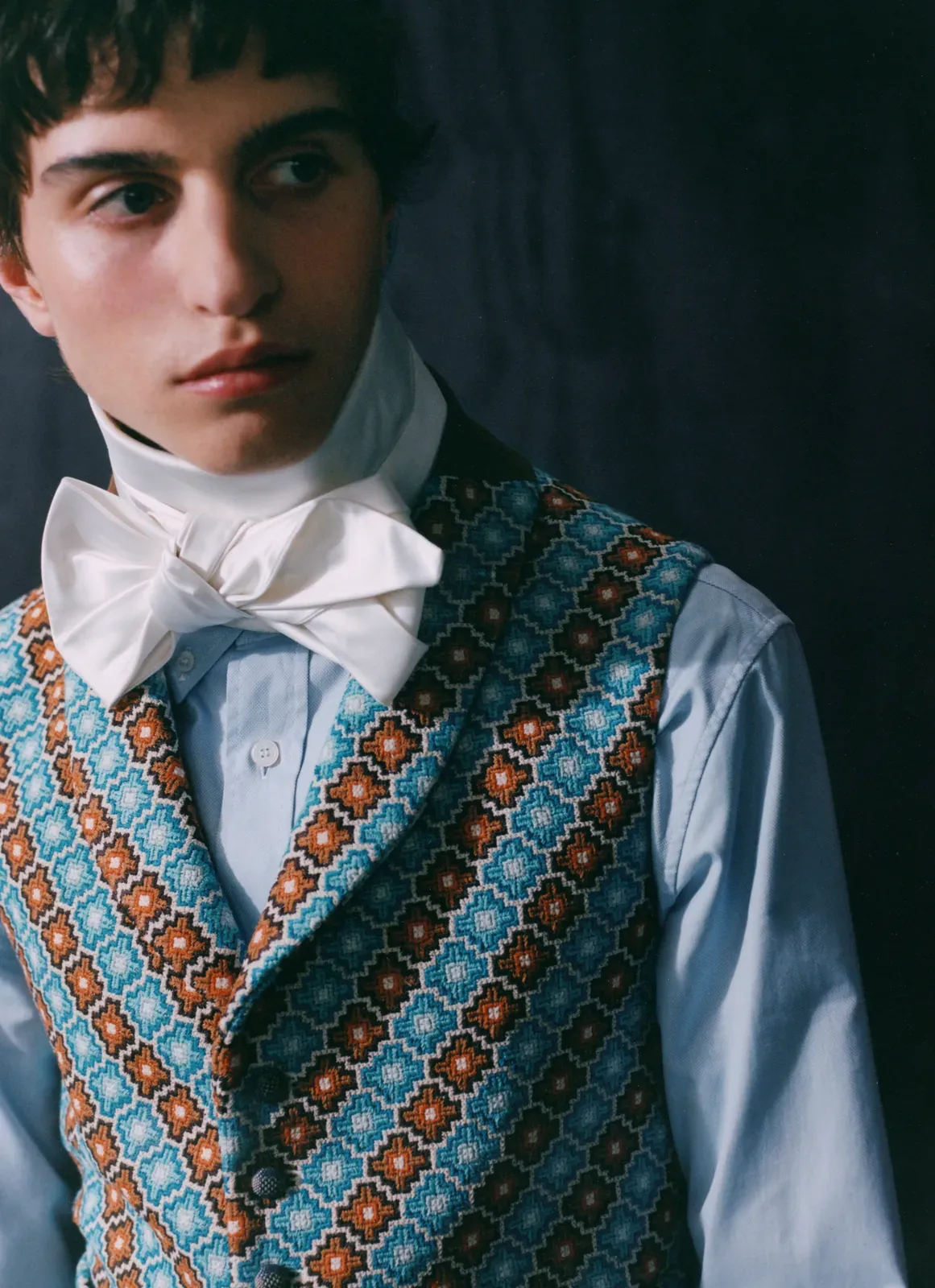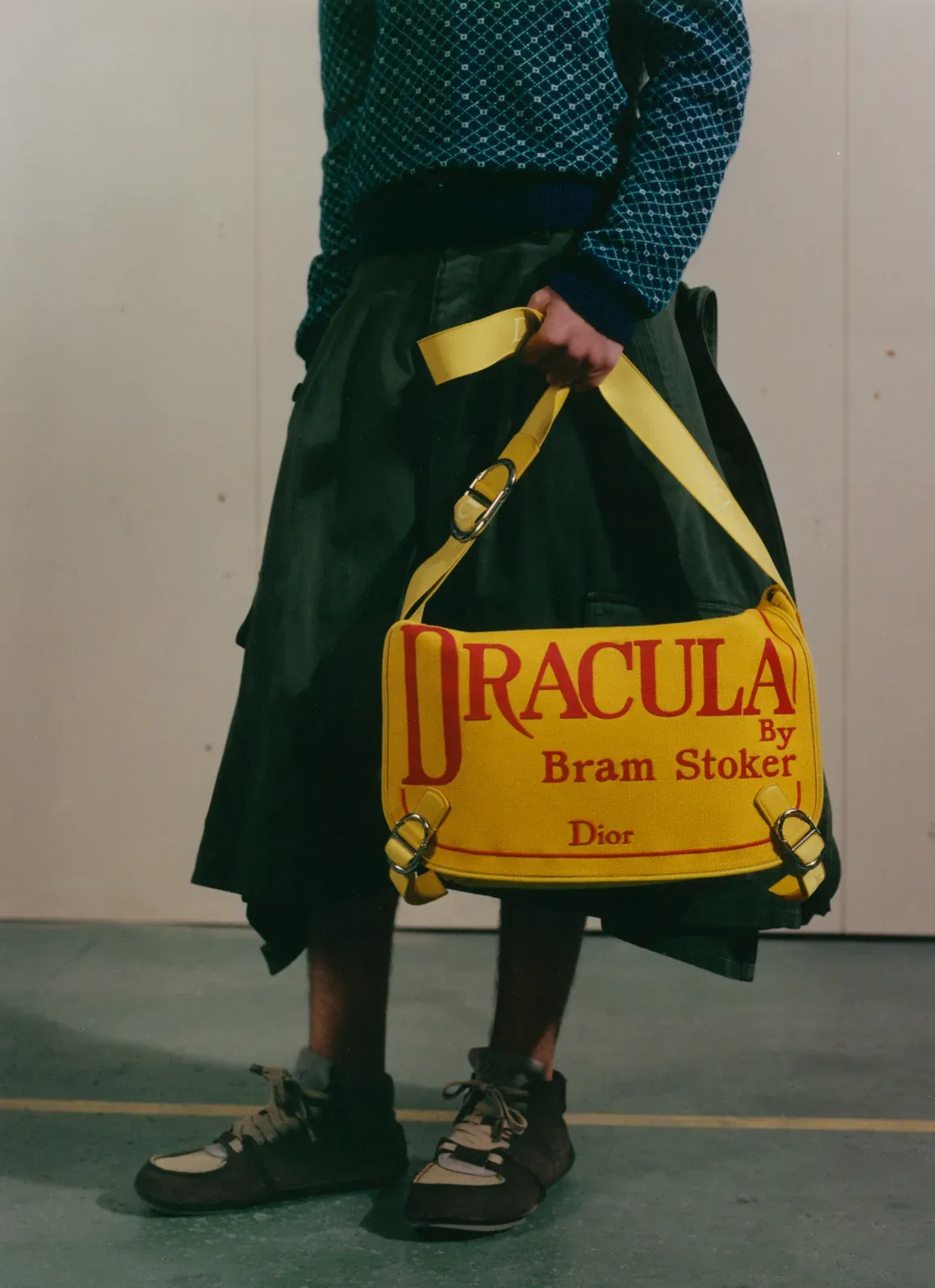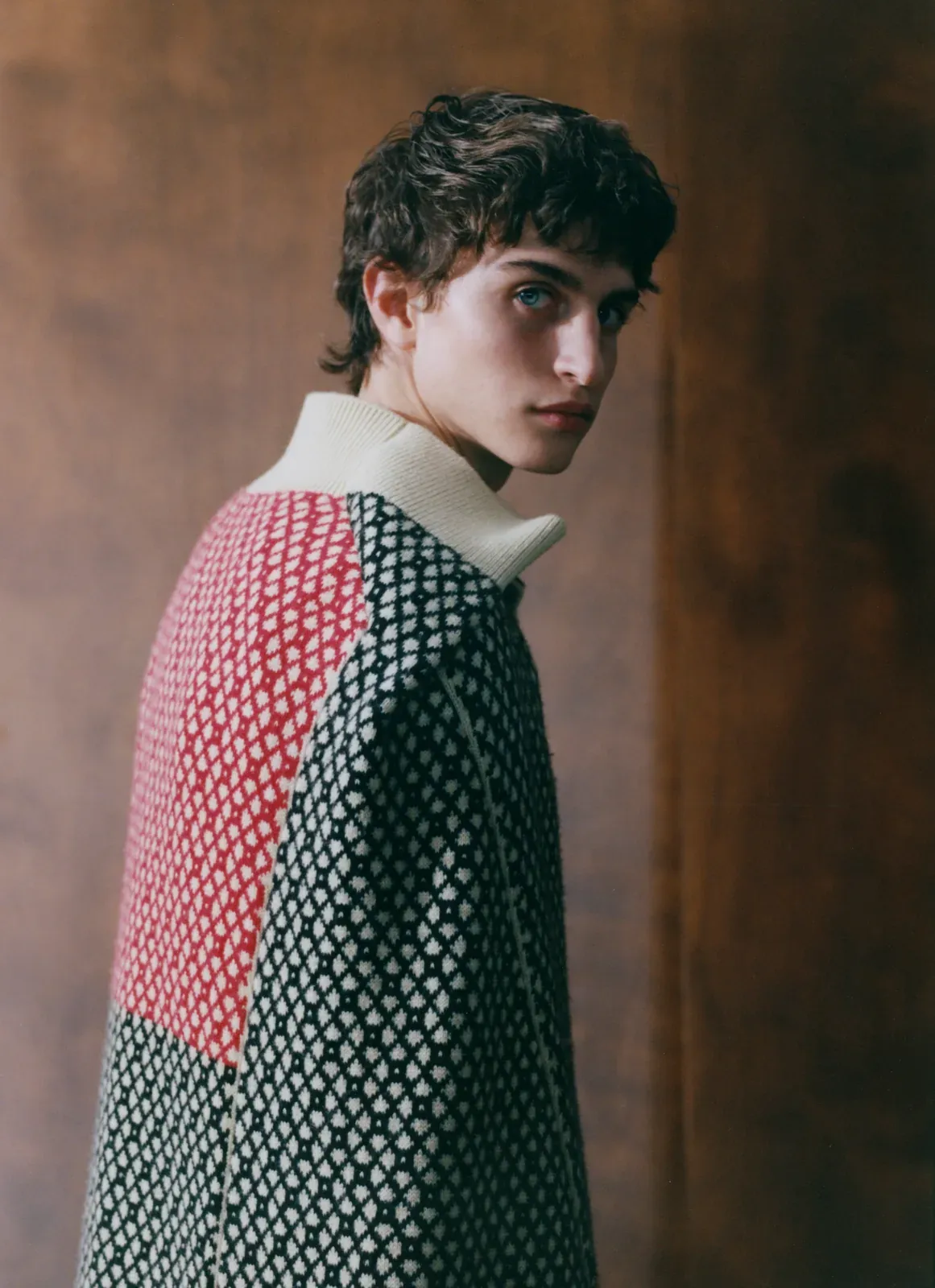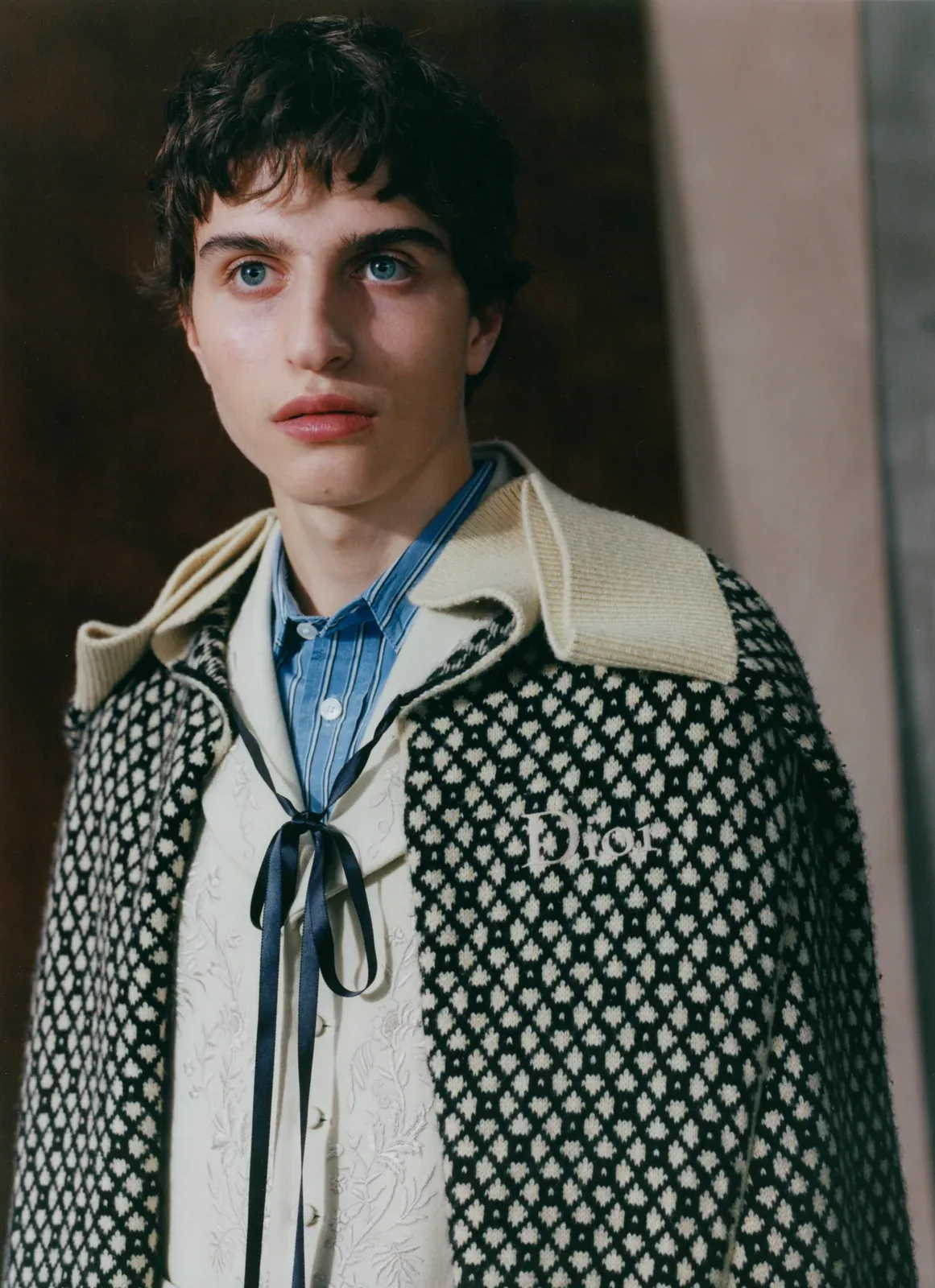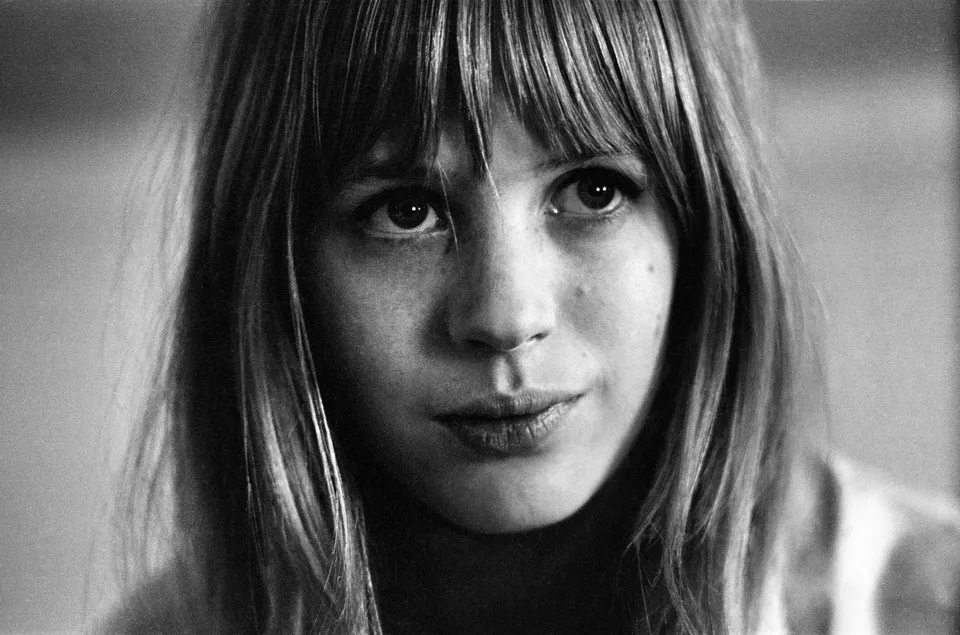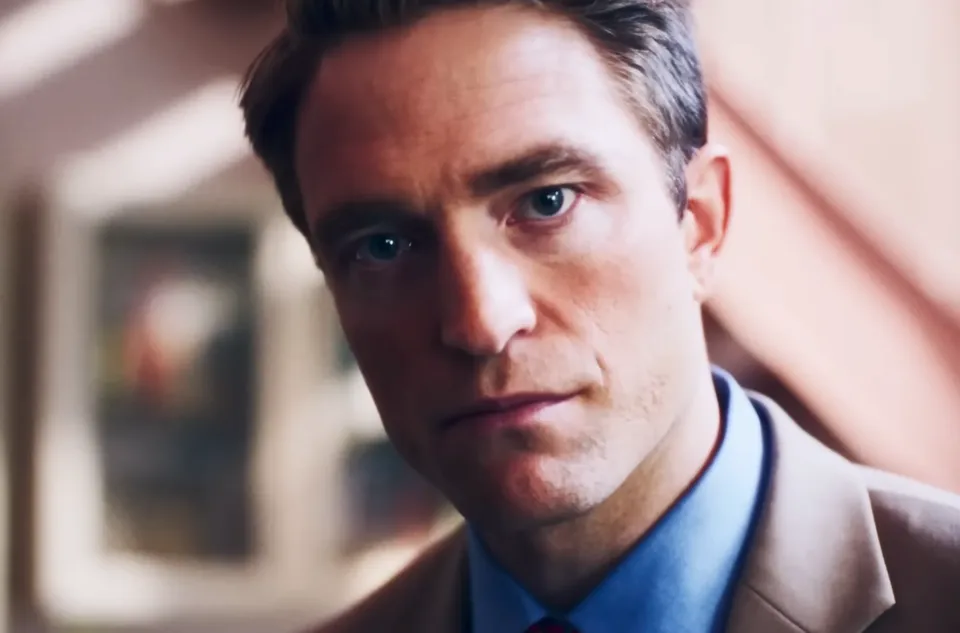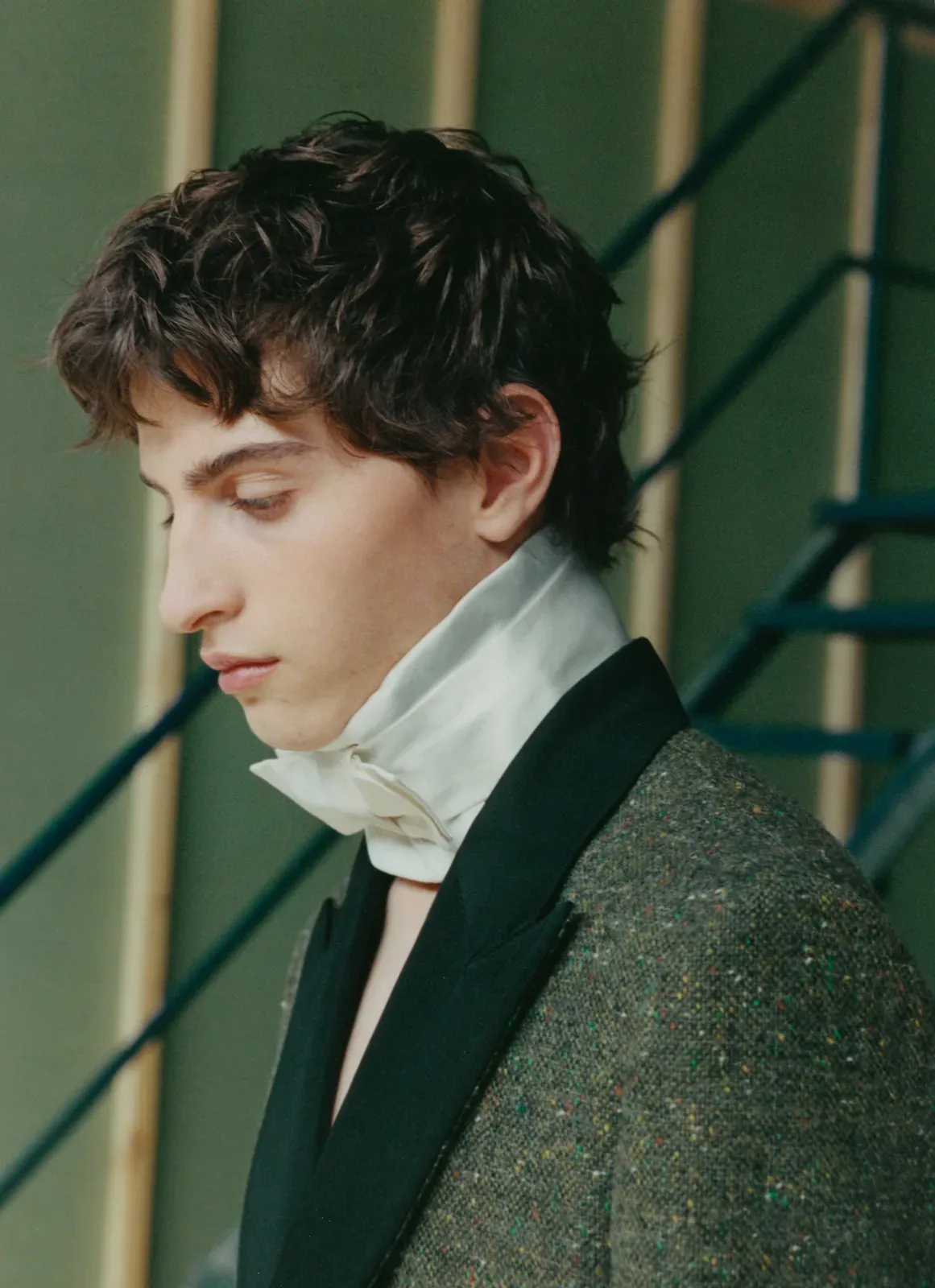
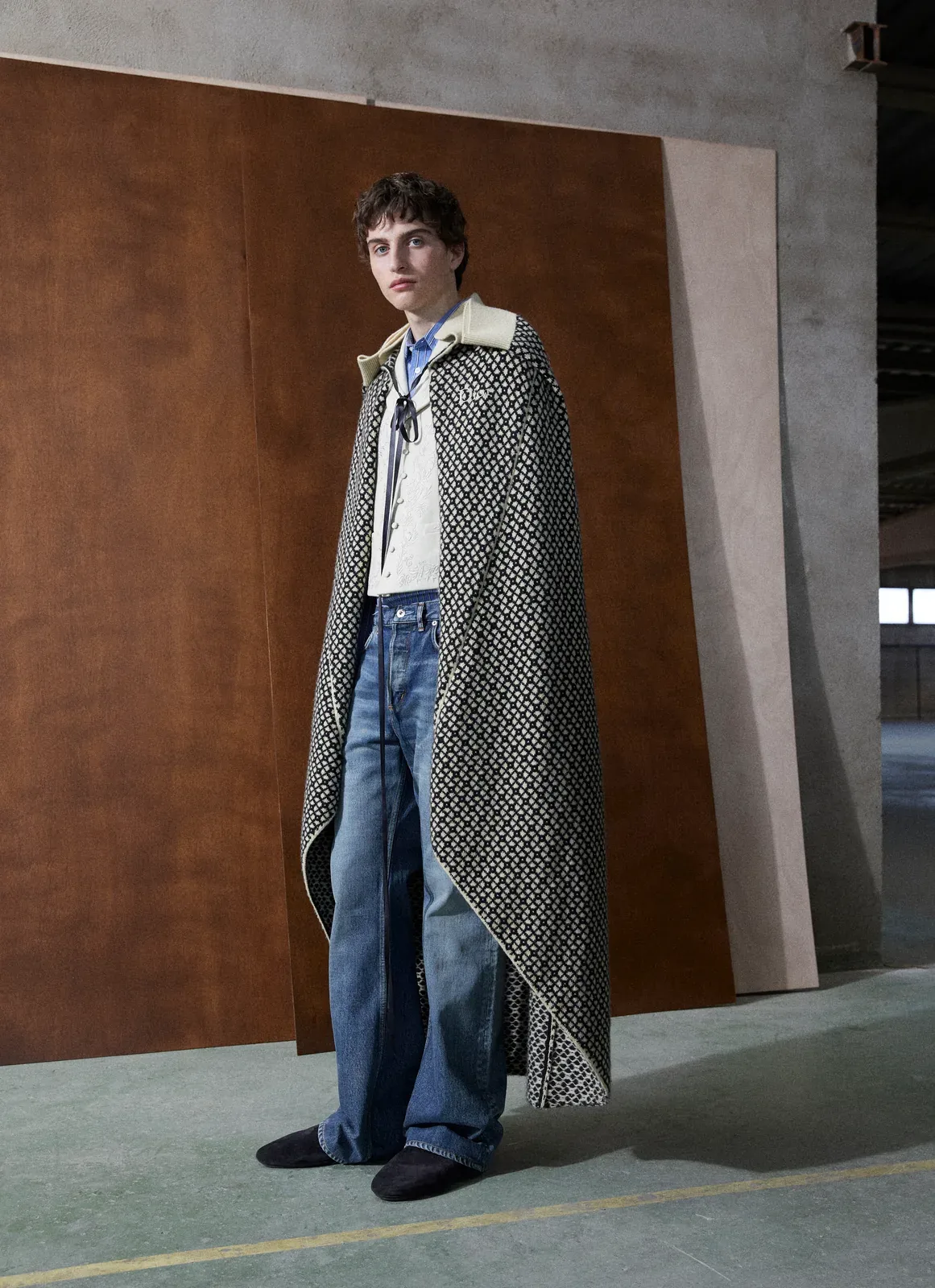
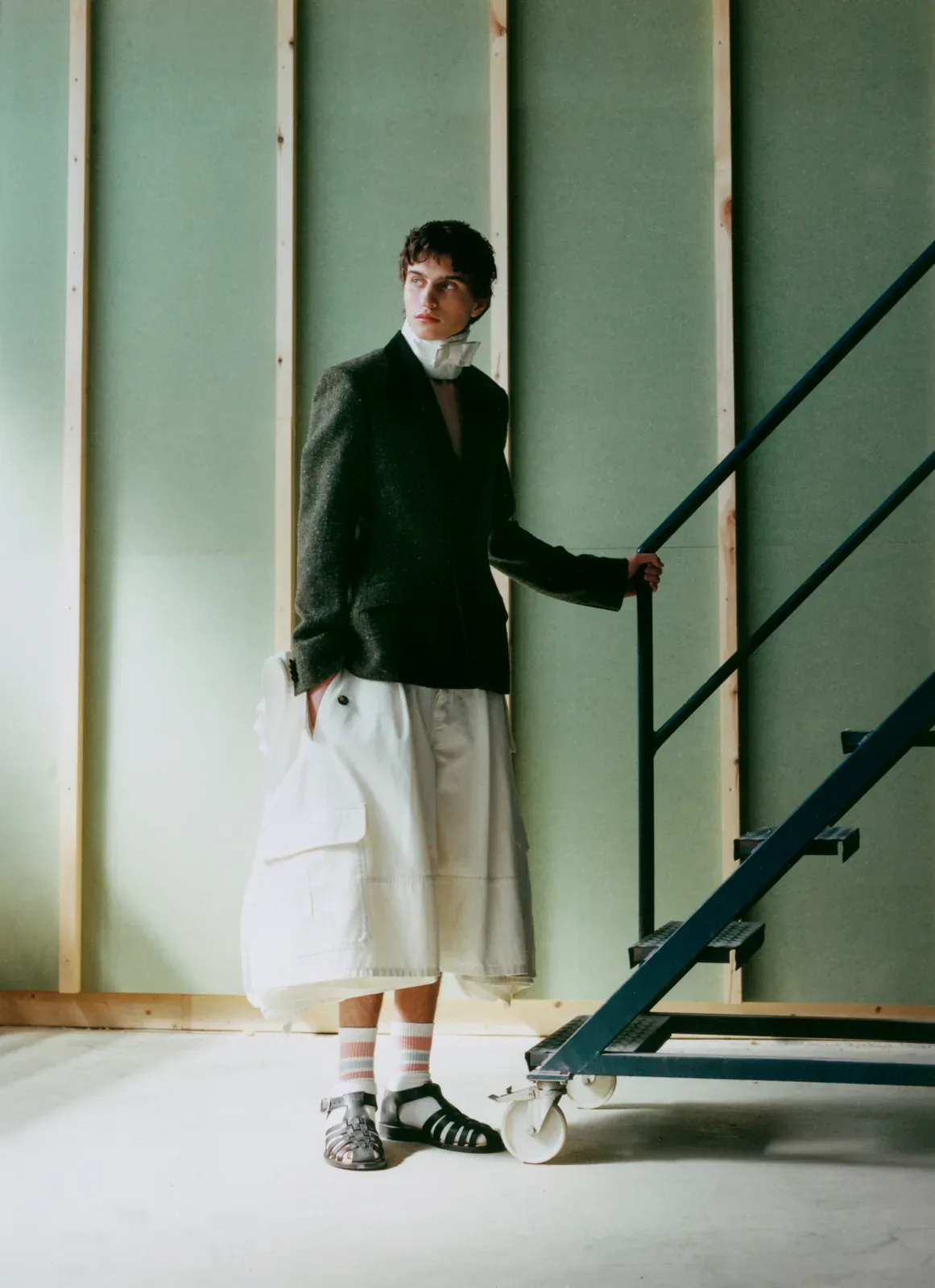
Director Jaume Claret Muxart chose him from six hundred candidates to star in his debut feature, “Estrany riu” (Strange River). An overtly expressionist film that received the Best Artistic Contribution Award from the independent critics at the 2025 Venice Film Festival. The breakout actor of the moment brings Dídac to life, a teenager with a hypnotic gaze who seeks answers to his first existential anxieties. Our interviewee leads a film of small gestures elevated to the category of art with apparent effortlessness. His character undergoes an abrupt leap into maturity and questions himself about the indelible effect of first love. About this, and much more, we spoke with Jan Monter, who appears in these photographs wearing the Dior Summer 2026 collection.
This interview is taken from Issue 54 and adapted for our digital platform. Order your print copy here.
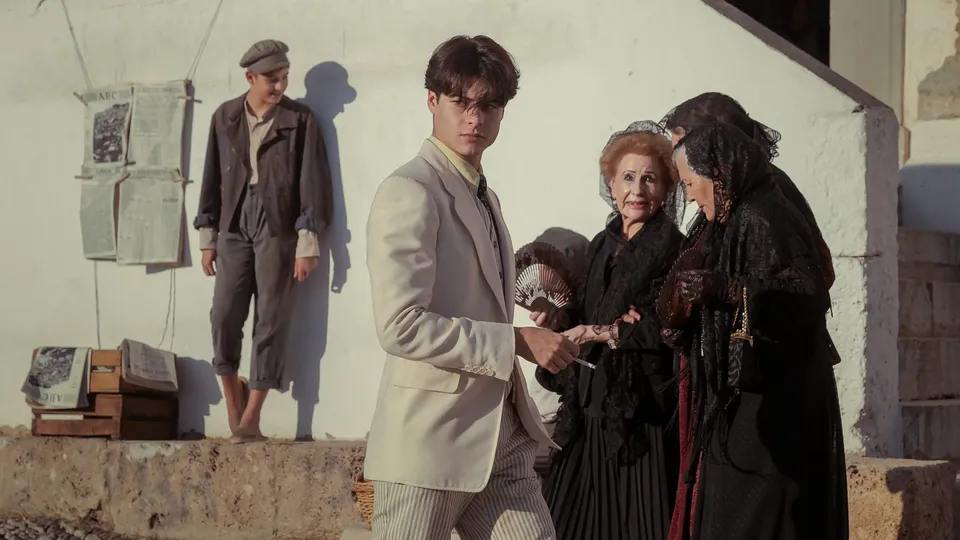
“Estrany riu” immerses us in a dreamlike and at the same time hyperrealist journey (at times almost documentary in feel) that blurs and intertwines with the shifting atmospheres along the banks of the Danube, following the coming-of-age voyage of a teenager whose world is upended when he meets Alexander, a mysterious boy who appears and disappears amid the river’s waters. His presence awakens unknown feelings that Jan conveys to the audience with an innate gift for expressiveness.
Adolescence is, in itself, a cinematic genre. A stage of profound and defining changes that the film captures masterfully. Should he choose to pursue it, Jan Monter could follow in the footsteps of Timothée Chalamet, having subtly captured the curiosities of a teenager’s sexual awakening, much as the Franco-American actor did in the unforgettable “Call Me by Your Name”. It is no coincidence that Jan has won over thousands of viewers with a performance that is both candid and convincing. The future is his, and we shall be hearing more from him.
Your acting vocation began at the age of six when you joined an amateur theatre group. What did that first contact with the stage mean to you?
I joined almost by default, because my brother wanted to do theatre. I don’t know where he got the idea from, but he enjoyed it, and I told my parents I wanted to try it too. We were all children of different ages and I was one of the youngest. At first, we did improvisations, and every year at the end of term we put on a play and an audience would come and watch us. I enjoyed it from the beginning. In the early years, we did musical theatre, even though singing doesn’t really come naturally to me. After a while you had to choose whether you wanted to do theatre or musicals. When I was younger we did shows like “Shrek”. Now we choose the plays ourselves. This year, for example, we’re preparing “Shear Madness” by Paul Pörtner. I play a police officer investigating a murder. Do you know it?
Yes, very entertaining. Let’s talk about your vocation. You haven’t stopped doing theatre since the age of six. What does acting mean to you?
I’ve always had a great time doing theatre from the rehearsals, putting the show together, right through to opening night, which is also very special. Every year we say we’ll come back to it the following year. There are always nerves on opening night. Some years you handle them better than others.
What do you feel when you are on stage?
Hmm, I wouldn’t know how to explain it. But I try to do it as well as I can.
How would you explain to the reader the process of building a character? Do you read about the period, research, discuss with the director?
I love building a character. Once we’ve chosen the play, everyone picks which part they want, and from there you start constructing it. I always choose the character that suits me best. I always try to feel comfortable. The first step is to read the text to understand what the character is like, and then together with the other cast members we work out how he behaves, and especially how he speaks and moves.
For you, I guess theatre is like a second family in terms of community…
When I started aged six, we rehearsed at another school. But years later I moved to the Teatre Kursaal in Manresa, when I was about ten. And yes, it is like a second home, because you spend a great deal of time there.
You have become known through your role in “Estrany riu”, for which you have been nominated for the Gaudí and Goya Awards for best breakthrough actor. It is a leading role in a debut feature. What has this challenge meant for you?
After my second audition, they implied to me that I might be chosen, because we talked at length about the project and the shoot. I thought it was a fairly significant responsibility, given that the director had spent nine years developing this script, even though he had previously made a short film.
The shoot lasted around five weeks in Germany, outdoors in natural settings, with bicycles and a degree of physical activity. What was that like for you? Did the idea of starring in a film weigh on you, or did you feel very comfortable in this role?
At first, I did feel some of that weight but then I felt very supported and very comfortable. Besides, I had no idea of the impact the film would have at the festivals in Venice and San Sebastián.
“If you let yourself be guided by people who know more than you, you end up absorbing something of what they know.”
How did you build the character of Dídac?
From the audition in January through to the shoot, when we left for Germany in mid-July, we did a considerable amount of rehearsing with the director and the rest of the cast. There, with Jaume, we gradually built up the character and especially the family unit. We even spent a weekend at a rural house in Solsona. We went to the river and rehearsed some scenes whilst putting up tents. Essentially through those rehearsals, we built the family and Dídac, and we sketched out his life trajectory and how he felt at that point in time.
Does the family in the film resemble yours in some ways?
A little, yes, in the sense that we are also three siblings. Jaume always told me he wanted to make a case for the kind of upbringing he had had, and I think it’s a bit like the one I’ve had. I’m the middle child, one year younger than the eldest and two years older than the youngest. We’ve always played more or less the same games and done almost everything together. There is a great deal of camaraderie. My parents have always been very present for me and my brothers, and I’m very grateful to them. They’ve made me who I am.
The shoot coincided with a period during which you have said you grew not only physically, but also intellectually and emotionally. Tell me about that.
They cast me just as I had finished my fourth year of secondary school. I was still a boy. By the time the film wrapped, I think I had grown as a person and matured quite a lot.
This is a first role, but there will be others. What would be your dream role? Would you like to play a historical figure?
Well, I’d never thought about it, but yes. History interests me quite a lot, so I suppose it would. I’m currently reading “Victus”, a very interesting book based on the War of the Spanish Succession. I’m studying the Humanities Baccalaureate and history is compulsory, though in the first year it was optional and I found it very engaging. I also do Latin and Greek, which include sections on the history of the Greeks and Romans. It interests me because the different periods are contrasting yet at the same time interrelated; you can’t understand one without the previous.
What interests you most about ancient Greece?
Above all, the way they built a civilisation when there was practically nothing to begin with, and how they constructed the first democracy. All of this coming, essentially, from nothing; there had been civilisations before, but in other parts of the world, and they created a civilisation from which we descend today.
In “Estrany riu”, your character, like you, leaves childhood behind. Do you feel nostalgic for your own childhood?
In some ways, yes, because I consider my childhood to have been very happy. I enjoy remembering everything I used to do as a child.
Let’s think about the figure of the leader, now. I’m interested in knowing how you experience being part of a group. What role do you think you occupy within one?
I think I’m one of those who adapts. I have a great time with everything we do. I try to adjust a little to the people around me.
That’s a positive quality, especially if you’re thinking of continuing in acting. Do you feel comfortable taking your own initiative, or do you prefer to follow the director’s lead?
I feel more comfortable following the director’s lead, especially when there is trust, as was the case with “Estrany riu”. If you let yourself be guided, you sometimes end up learning more than if you want to call all the shots. When I made “Estrany riu”, which was the first professional thing I had done, I put my complete trust in Jaume and in the whole technical crew, who had an impressive track record. I thought: these people know more than I do, so I should listen to them, and that is clearly a good way to learn, because when you let yourself be guided by people who know more than you, you end up absorbing something of what they know.
Do you identify with any particular leader?
Not at all. I believe that, deep down, human beings never learn and we always end up making the same mistakes.
It seems to me that a sector of young people is moving closer to Catholicism. At a time when there seem to be no certain answers, there is a certain fascination with religious symbolism. Does it resonate with you in the same way? Does it surprise you?
No, I haven’t really noticed it in my immediate circle. Religion isn’t something that particularly resonates with me. I don’t know. My family is not religious, though I’m familiar with more or less the basics of religion, but from a general cultural perspective.
And does this phenomenon surprise you?
Well, yes, because… there is scientific research that explains how the world works, and it’s hard to believe that an omnipotent God created everything. I find it curious to believe that. For me, it’s not easy to understand how someone can base their entire life on the word of God.
Then there are those who turn their idols into gods. This idea of following someone you admire deeply, be it an actor, a singer, or a sportsperson. Who are you a fan of?
Perhaps not a die-hard fan, but there are actors whose work I follow more closely and whose performances I admire, as well as basketball players. If an actor I like releases a new series or a new film, I’ll go and see it, but not to the extent of tracking their every holiday, no. Their private lives don’t interest me.
But do you understand it as a phenomenon?
Not really. When I was in San Sebastián with the film, I remember a moment when we were outside the hotel where the interviews were being held, and a man who had been waiting there came up to me and asked if I’d made a film, then asked me to sign an autograph. I thought: this guy has no idea who I am. He showed me a notebook full of autographs and said he wanted to collect more signatures than the previous year. I thought: this guy is here asking for signatures from people he doesn’t even know. If you come across an actor you genuinely follow, whose work you admire and whose films you’ve seen, going up to them for a chat and asking for a photo or a signature, that I do understand. But going up to someone you don’t even know and asking whether they’ve made a film just to get an autograph, I find that excessive.
You have an Instagram profile but it’s not very active.
Well, I had a personal profile on which I never posted anything. It was just for occasionally scrolling to see what other people were sharing. But my cousin told me that nowadays these things can function practically like a CV. Now I share what I’m doing. Agents and casting directors have contacted me through Instagram. I’m now aware that it’s very important, even if it still feels impersonal to me.
Do you follow the dictates of fashion?
I have to admit that I don’t.
But at the world premiere at the Venice Film Festival you wore espardenyes, the traditional Catalan rope-soled sandals. Nobody had done that before. Was it your idea?
It started as a joke. If we’re going to a festival, we’ll go in espardenyes. When they told us we were premiering in Venice, I had to follow through. I also wore them in San Sebastián. The thing is, I have a Catalan identity. I’m — well, proud perhaps isn’t quite the right word because ultimately, I haven’t done anything to be Catalan — but I do feel Catalan, and I feel that Catalan culture is the one that represents me.
At the Goya ceremony, you wore Dior. Was it the first time you had worn Dior?
Shortly after learning about the Goya nomination, the stylist Freddy Alonso got in touch to dress me. From the options available from Dior’s collection this season, I went with the one I eventually wore and it seems it went down very well.
You say you don’t know much about fashion, but you’d know Dior…
Yes, of course, because it is one of the most important houses. I mean, I knew it was one of the historic ones, but I didn’t really have a clear sense of what it means to wear Dior.
And here you are now in these photographs, wearing some of the looks from the Dior Summer 2026 collection. Back to the Goya ceremony, how do you remember the evening of the awards?
I have to admit that photoshoots feel a bit strange to me, but I imagine this will happen more and more and I’ll get used to it. At the Goyas we didn’t go with high expectations of winning, but beyond the award itself, the nomination is very important, it means you are among the five best of that year. It was a recognition that made me very happy. Whether I won or not, just getting there was already enormously significant. So, I simply went to enjoy the evening. Experiencing a gala as a nominee is a really special thing.
You chose a piece with Napoleonic resonances. In that sense it’s interesting, because you stood out considerably from the other nominees.
I have to say it was a very comfortable look. It’s not really how I dress, because I’m very understated. You can see how I am today, tracksuit bottoms and a t-shirt, nothing more.
Do you think about the future?
Yes, particularly in the sense of whether I want to dedicate myself to this — and yes, I do — and what the life of an actor must be like, and what my career will look like and how I want it to be. But in general, I try not to dwell too much on the future. If you spend all day thinking about what you’ll do tomorrow, or in ten years’ time, you’re not living in today, which is also very important.
“If you spend all day thinking about what you’ll do tomorrow, or in ten years’ time, you’re not living in today.”
What kind of cinema interests you as a viewer?
The truth is that at home we usually watch a film together at the weekends, or sometimes a series. After dinner, my father usually chooses, as he’s the film expert, though sometimes he lets us pick, or gives us a few options. And the truth is that the films he puts on are very good, very varied, from old black-and-white Charlie Chaplin films to ones that were released last year. I honestly couldn’t say which style I prefer most, because in general I watch everything. Above all, when a film is well made, you can tell.
What are your hobbies?
I particularly enjoy walking in the mountains. I also like reading, especially novels and history. Some books I’ve been reading lately that I’ve really enjoyed are by Joël Dicker. And I’ve just finished “L’alegria que passa” by Santiago Rusiñol and “Pedra de tartera” by Maria Barbal.
That’s a challenging one.
Yes, but I found it a very enjoyable read, because it’s set in the Pallars region. I live near Manresa, but my grandfather was born in a village between Alt Urgell and Cerdanya. We go there whenever we can. It’s a very small village, about nine houses or so. It doesn’t even have its own municipality. When he was young, the family moved down to Bages, because the village was practically abandoned. His family had been farmers, and we’ve kept the house, it’s a bit crumbling, but it’s still standing, and we go up whenever we can. That’s why I enjoyed the book so much. What the protagonist does reminds me a little of how my ancestors used to live.
Your character in “Estrany riu” has some doubts about growing up. Have you felt that? Do you recognise yourself in it? Or have you moved from one stage to the next in a very calm way?
I haven’t really felt that, I don’t dwell on things that are yet to come, because they’ll come regardless. If I have to grow up, I’ll grow up when the time comes. Deep down, I still feel like a child in many ways. If I need to be serious, I’ll be serious when that moment arrives.
In recent years Europe has received a high number of immigrants from many different cultures. Have you observed this change?
Yes, I have noticed it. I think migration is something natural, animals do it too, and humans have always done it. For example, many Spaniards emigrated to South America, to Cuba and other places years ago in search of a better life. I don’t think this phenomenon should be hidden or suppressed. It is indeed something happening on a significant scale right now, with a great many people arriving from elsewhere, but it is a natural thing. Coming here is not easy at all, and people wouldn’t do it if they didn’t truly need to. In many cases people come from countries where there is war or poverty. Those who arrive from elsewhere have a responsibility to make an effort to integrate, but those of us who are already here also have a responsibility to make it possible for them to do so.
The central theme of “Estrany riu” is love. Familial love, love understood as a space where one feels safe, where one feels cherished. The first summer love. What do you know about love? How would you define it?
That’s a difficult one. I don’t know.
Does feeling loved mean feeling safe?
Yes, I think so. To be loved and to love is to want another person to be well, to be happy, and for things to go well for them.
Do you consider yourself a happy person?
Yes, very. I think it has mainly to do with the fact that I’m a calm person. I let things be, and I pay more attention to the good moments than the bad. I don’t know, if something goes wrong, it’ll sort itself out. If you feel sad at a certain moment, it doesn’t mean you have to feel sad for the rest of your life. There are good moments, bad moments, but when the day is over and you go to bed, you should hold on to what went well that day and reflect on what you can do to make the next one just as good or better.