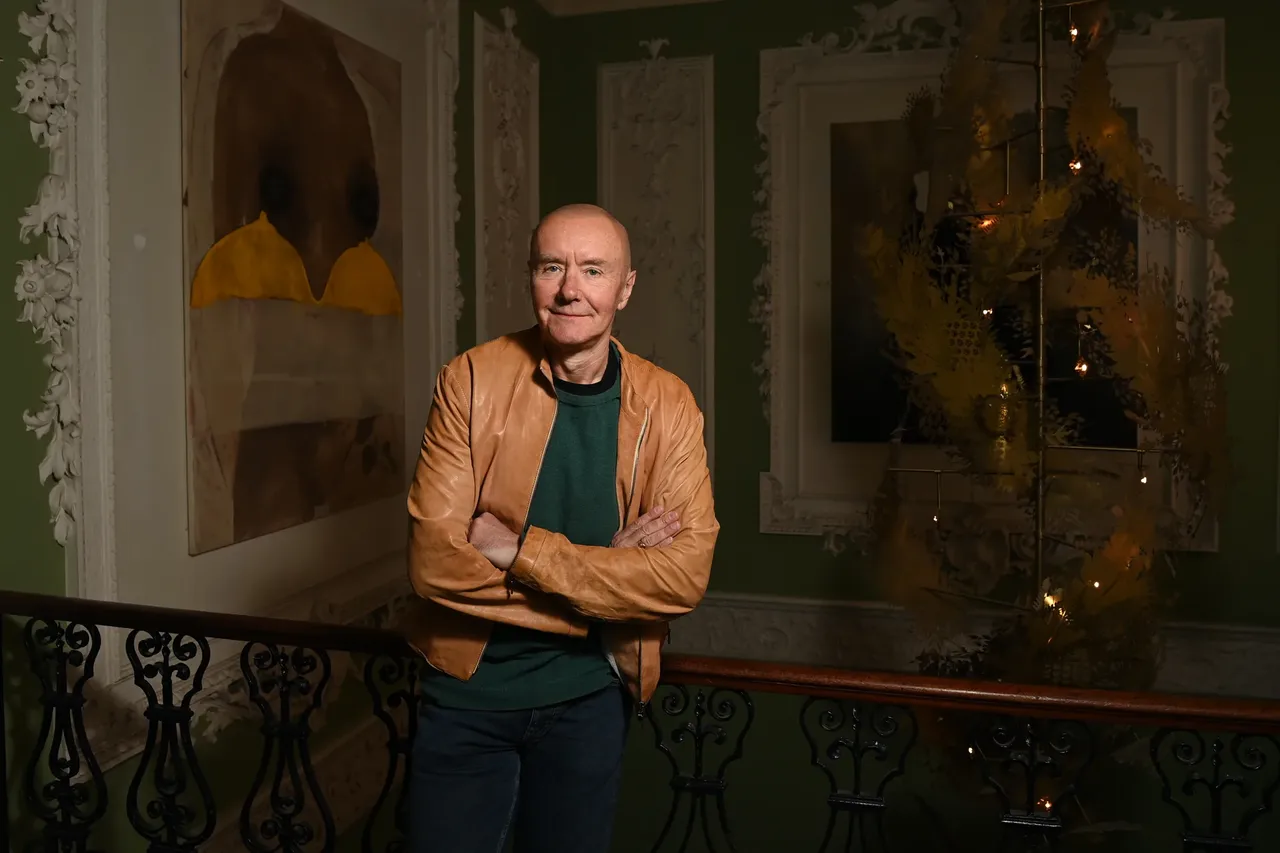
In 1993, Irvine Welsh published a novel no publisher wanted, written in the dialect of Leith, the Edinburgh dockside neighbourhood where he grew up. Trainspotting sold ten million copies, Danny Boyle turned it into one of the most influential films of the nineties, and its characters came to belong to everyone — even, according to Welsh himself, to the speculators who ended up gentrifying the very neighbourhood he was writing about. Thirty-three years later, Welsh arrives in Barcelona thanks to Brit Under Fest with Men in Love, the novel that, by his own account, took the longest to come into being: years of loose fragments, discarded drafts, a version that nearly became a television series before turning back into a book.
The story picks up right where Trainspotting left off: Renton robs his friends and flees to Amsterdam. It’s the late eighties, Thatcherism is dying, and acid house arrives to offer something politics had promised and failed to deliver. Sick Boy falls in love in London with Amanda, a rich girl, everything he isn’t. Spud returns to Leith and falls into an impossible love. Begbie moves between prison and the street. Four men, four different ways of searching for love — or running from it. And unlike his earlier books, this time the tone isn’t rage or self-destruction, but something slower, more interior: Welsh has said in Málaga that the novel is about “tenderness and the fear of not being loved” — what he’d never said before is that all of his work was always about that.
What follows is a conversation about Barcelona and Leith and what happens to cities when money empties them out, about betraying your friends by making them famous, and about writing characters who do terrible things with an inner life so complex it’s impossible not to feel something for them — something that, read by a woman, can at times feel deeply uncomfortable. After thirty years of writing about the fear of not being loved, has Welsh arrived at any conclusions?
You wrote that Barcelona has been destroyed by money — taken over by “cosmopolitan shaggers with loads of cash and no personality.” But also that if you don’t love this city, you’re a complete arsehole. That was a few years ago. What’s left of the city you loved?
I think it’s something that’s happening everywhere. Where I come from, Leith, it’s happening there. Where I live now in Miami — part of the year — it happens there too. My neighbourhood in London has changed in the same way. Cities compete with each other for tourists and students and international business. Art is used to gentrify a place, to make it ripe for property development. That seems to be the sole purpose of it. Things have to change. People have to feel more enfranchised, more belonging in their communities. They are the community. They own it. There shouldn’t be impersonal forces determining what happens in their communities. So I really hope that Barcelona can be more like Barcelona again. And Leith can be more like Leith again.
Leith and the Raval have something in common: the people who made them interesting can’t afford to live there anymore. At what point does a city stop belonging to the people who built it? And what happens to those people?
People can’t live there for too long. They can’t afford it. They get priced out. That’s a mess. What I hate is, everybody asks me about the gentrification of Leith. Nobody ever talks about the complete destruction of Edinburgh. The way it’s become, a big shopping mall with global brands that have sucked all the life out of Princes Street, which was one of the best shopping streets in the world. That’s a mess.
You’ve said you wanted to give a voice to your friends from Muirhouse, to the place where you grew up. But turning them into characters (translated into forty languages, seen by millions) is also a way of taking something from them. Did any of them ever say you betrayed them?
I have betrayed them. It’s as simple as that. But it’s not so much me; it’s the world I’ve created that’s betrayed them. If you write a book and it sells ten thousand copies, you’re a hero locally. A hundred thousand, you’ve made some money. A million, you’re a traitor. Ten million, and it’s the same book you’ve written. I get people in Leith saying, Trainspotting gentrified Leith. And I say: I went to Barcelona. Did I do that as well? Did I sprinkle this neoliberal stardust on everything?
You left school at sixteen. Then you built your own education: books, music, streets, punk, love, loss. What did you learn in those years that the system could never have given you?
Probably a lot of it. I should have worked harder at school, honestly. But being out, travelling, meeting different people, getting into music and different scenes — I think that was very beneficial for me. I needed to do that. And when I did go back to university later, I thought: this is actually great. But I think the life outside gave me things you can’t really teach.
“There doesn’t seem to be a lot of love around. But people seem to value it more than ever. Universally valued. So I thought it would be a good idea to write specifically about love.”
In Men in Love there’s a merchant sailor from Leith who reads in secret in his cabin, afraid that his own class will see him as a traitor, and afraid that the bourgeoisie will see him as an intruder. Trapped between two kinds of shame. Was writing a way out of that trap for you or a way of living inside it more consciously?
I think anybody that does any artistic endeavour… why do you do it? You do it to express yourself, to connect with other people. That becomes the overwhelming drive. All the sanctions, all the disapprovals, all the encouragements — they don’t really mean a lot once you go into that mindset. Once you acknowledge: this is what I have to do. I have to express myself. I have to try to connect. Once you acknowledge that, there’s nothing that can really stop you. You find a way past anything.
In Málaga you said this novel is about tenderness and the fear of not being loved. You’ve been writing exactly that for over thirty years, and nobody had said it out loud until now, not even you. Why is it so hard to say?
There’s more of that in this book because the characters are at a specific moment in life — their mid-twenties. When you’re a kid, your family is everything. Then you get fed up with them and your mates become everything. Then you get fed up with them, and your partner becomes the centre of your world. Trainspotting and Skagboys were about them being with their mates. This is about them aspiring to love. For the first time. It’s just that cycle in a life.
Your novel had been building inside you for years, in fragments. What had to happen (in the world, or in your own life) for it to finally exist?
Everything is to do with falling in love, really. But also, I think it’s about the landscape we live in. It seems quite loveless, if you look at the big political picture. There doesn’t seem to be a lot of love around. But people seem to value it more than ever. Universally valued. So I thought it would be a good idea to write specifically about love. About the romantic.
You once said that for men like you — men who always had to seem tough — dancing was ‘the only way to show that other side.’ Was the dancefloor the first place where men of your generation learned to be in their bodies without having to prove anything?
Yeah. It’s just a big arena for expressing yourself and connecting with other people. The dancefloor is the ultimate space for that. The music, the rave — it’s just about expressing yourself and connecting. That’s what it’s always been.
“Everything we do now is public. We don’t have a private life anymore. And real love thrives in a private environment.”
You set this novel in the eighties partly because writing about love today would be harder. But you’re still here, in 2026. What does love look like to you now?
The big problem is the internet. Not the phone specifically, but in general terms. It’s very distracting and disruptive to human emotion. Destructive to love, too. Everything we do now is public. We don’t have a private life anymore. And real love thrives in a private environment. It’s very hard for people — particularly younger people who’ve grown up with this — to carve out a private space where love can incubate. That’s the real problem.
Reading you as a woman, there are moments where the way your characters love (or try to love) makes me deeply uncomfortable. Sick Boy uses people. Begbie destroys them. And yet you write them with so much inner life that it’s impossible not to feel something for them. Is that a trap for the reader, or is that exactly the point?
It’s a very difficult time for men coming from an industrial culture of what you would call toxic masculinity. The end of the division of labour, the collapse of economic status, the idea of the head of household — all that. Those attitudes are breaking down, but there’s a reaction against it too. You see it in young guys being very toxic towards young women. I don’t think you can socially engineer characters. Going back to the eighties, you have to represent them as they were. But you have to show the consequences of that behaviour — on them, and on the people around them. You have to be honest about it. You can’t write people as you’d like them to be.
You’ve said corporations only produce bad content. But you’ve spent thirty years inside the system — big publishers, Hollywood, now a musical in the West End. Where does a writer from where you come from draw the line, once the system embraces you?
I think people have to do it for themselves. What’s really interesting is that there are all these writers’ groups starting up, people writing about the world as they see it, sharing it, working with each other, connecting. Doing it locally, in a place that makes sense to them. That’s the way forward. It’s about putting on raves in your own neighbourhood, getting bands together, making sense of it, bringing culture back. Writing about things in your own place. People are so blinded by Instagram culture — I want to be an influencer. I think that’s going to be done now. I think people want to go out and do it themselves.
Thirty years after Trainspotting, you publish a novel that is really about the same thing as all the others: the fear of not being loved. Have you found any answer? Or is the question still open?
I’ve been very lucky in love just because I always dived in. Every time I’ve been in love, I’ve jumped right into it. A lot of people hold back, but I’ve always just jumped in.