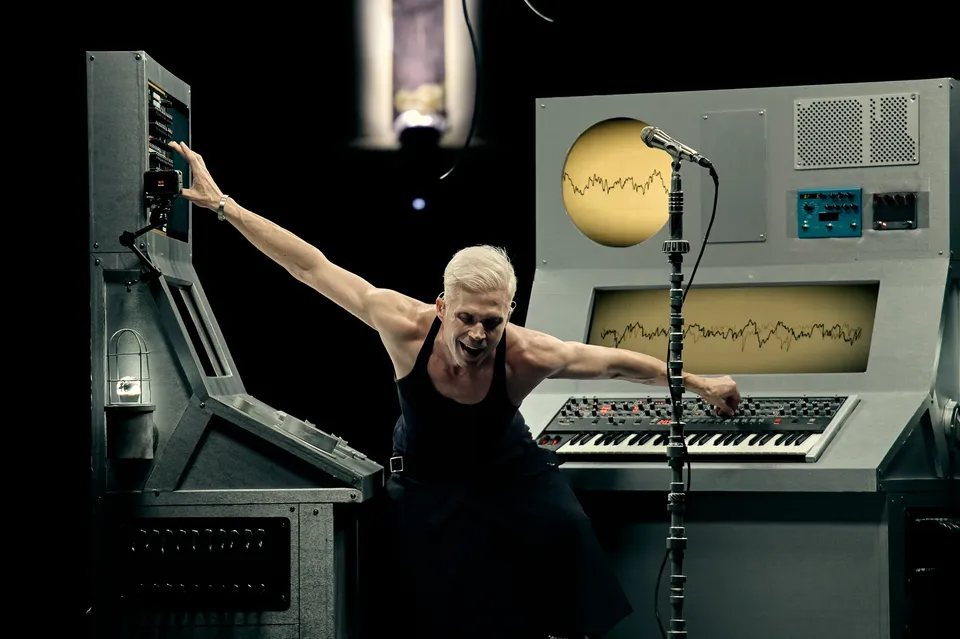
Haiden Henderson wants pop to be a little less perfect. With bleach, his new album, the rising artist draws on the fearless sexuality and infectious energy of Britney Spears, navigating the contradictions of wanting to be desired while struggling with self-doubt. Across the record, cockiness gives way to vulnerability, traditional masculinity begins to unravel, and the internet becomes both a playground for youthful anarchy and a space where intimacy can feel increasingly complicated.
From questioning gender roles in i wanna be your girl to exploring the quiet distance between loving someone and truly knowing them in domino, Henderson approaches pop as a space for embracing the messier parts of being human. We catch up with the singer-songwriter to talk about sex, self-worth, fan fiction, the strange experience of growing up online, and why imperfection might be the most valuable thing an artist can hold on to.
You’ve described bleach as the “boy version” of Britney. What does that mean to you? Is it about the music, the attitude, the sexuality, or the freedom to be a little ridiculous?
To me, it’s a lack of fear. She always made confident music, no matter what it was about. Also, I love that every song felt sexy in a small way. There was an intimacy to the vocal delivery, and the drums were always so energetic. I think this album feels like that.
There’s a funny tension in your music between cockiness and shyness. You can sound incredibly confident one moment and almost awkward the next. Do you recognise that contradiction in yourself?
Yep, that sounds like me. Blinding confidence mixed with low self-esteem. I guess it comes out naturally in the lyrics.
There’s a recognisable idea of the modern male pop star: confident, desirable and slightly unattainable. How much of that image have you deliberately constructed, and at what point did the character start becoming you?
I think the idea of a male pop star is so foreign now. There used to be a handful of them, but they’ve gone extinct outside of K-pop boy bands. I don’t think the male artist-to-female fan relationship is as clear-cut as it used to be. They need to be realer than they’ve ever been. Being attractive and having catchy songs isn’t enough. You need to have a certain level of showmanship and a deep connection with your community. What is the conversation you’re having with them? Is it worth having? I’m just being myself and trying to keep my fans close to me.
You’ve talked about being raised by a single mother and feeling more comfortable around women than other guys. How has that shaped the way you understand masculinity, both personally and creatively?
It’s constantly changing. I don’t really know where I fit into things. I don’t tend to think about it. This album is the first time that I’ve had music that reflects that. Songs like NSFW and i wanna be your girl dance between gender roles, as I tend to do in my life. Traditional manliness is so constricting and suffocating. I think too deeply about too many things to be content with tradition.
“I think the idea of a male pop star is so foreign now. They need to be realer than they’ve ever been. Being attractive and having catchy songs isn’t enough.”
On some of the new songs, desire seems to be about being desirable, while on others it’s about giving someone else control. How do you think about power and vulnerability when you’re writing about sex?
I think about sex a lot. I think most of us do. Sex has always felt like an act of service to me. Not that I don’t enjoy it myself; I just attach a lot of my self-worth to any type of performance. Whether it’s onstage or in bed, I want to make sure you got what you came for (pun intended). My songs just document that point of view, I guess.
A lot of your songs revolve around attraction and the chase, but domino explores a loneliness that exists within a relationship. What interests you about the difference between wanting someone and actually being with them?
I noticed that, at my worst, I was around people that I loved and didn’t feel like they knew me at all. It was my mission to figure them out as soon as possible, but I never let them do the same. domino is about my relationship with my brother and feeling like, even after an entire lifetime together, we still aren’t very close. The idea of someone versus the work that goes into having an intimate relationship with them is light-years apart. I didn’t realise that until I wrote this song.
There’s a certain fantasy of being young that runs through pop music: being reckless, desirable, untouchable, like nothing can really happen to you. When you write about being young, are you trying to capture what it actually feels like, or the fantasy of what being young is supposed to look like?
I can only ever write from my experience. I’ve largely stayed away from attempting to represent anyone but myself in my songs for that reason. There’s a song on this album called What a Time to Be Young that I love because it feels like it describes the anarchy of growing up on the internet. It’s not whimsical or light-hearted. It’s as visceral and intense as the real thing.
In i wanna be your girl, you explore wanting the kind of closeness a girl might share with her closest friends. What drew you to that idea?
I started dating a girl who is also attracted to girls, and it raised a lot of questions about my masculinity. It’s about the insecurities I’ve felt as a boyfriend who often questions if I’m really what my partner wants. Would my girlfriend like me better if I were a girl? Would she be more honest with me? Would I be a better lover? The song is saying that I will be one of the girls if that’s what would make her happy.
“Traditional manliness is so constricting and suffocating. I think too deeply about too many things to be content with tradition.”
You’ve described your fans as “cool, well-dressed, sad and horny weirdos,” which also sounds suspiciously like a description of yourself. Do you think there’s a kind of mirroring between an artist and the people who find themselves in their music?
Guiltyyyyyyyy.
You’ve spoken about the Wattpad and fan fiction world around pop artists, and now you’ve commissioned a Wattpad story to accompany your music. You’ve called the project quite “BookToky”; what does turning fandom, fantasy and internet romance into an official part of your artistic world give you that a traditional music video or album campaign doesn’t?
Music videos are increasingly difficult to get made nowadays, with labels questioning their monetary purpose, so I looked at this as an opportunity to do some of that world-building in a new way. I’m also allowed to say a lot more in five chapters of a novella than I am in a few minutes of video content.
You’re supporting 5 Seconds of Summer, and you’ve now spent quite a lot of time around a band that’s been doing this for over a decade. Is there anything about the way they work, perform or move through the industry that you’ve found yourself wanting to apply to your own career?
I felt like I had a front-row seat in a cult-building masterclass. They really listen to their community and know what they do and don’t like. It’s incredible to see how connected you can be to your audience, and as someone who makes that a priority, I was eating it up.
Do you think you’ll always want to be a singer-songwriter, or can you imagine yourself eventually wanting to make something that has nothing to do with performing?
I went to see Buena Vista Social Club recently on Broadway, and it was the first time that I considered something else. I think that would be the challenge of a lifetime, and I may be interested in trying it someday.
What is something you were completely convinced you wanted when you started making music that you now couldn’t care less about?
Perfection. I live for the mistakes now. I even try to manufacture them when something feels too polished. From vocals to video shoots to a performance—that’s the human element.