There is something deliberately unstable about Diego Marcon’s films. His images are meticulously constructed, his sounds precisely composed, and his narratives often begin with deceptively simple ideas: a family of moles counting numbers, a child being urged to eat a krapfen, a boy swinging from a barn while voices emerge from somewhere unseen. From these precise constructions, Marcon creates worlds where humor and discomfort, playfulness and melancholy can exist at once.
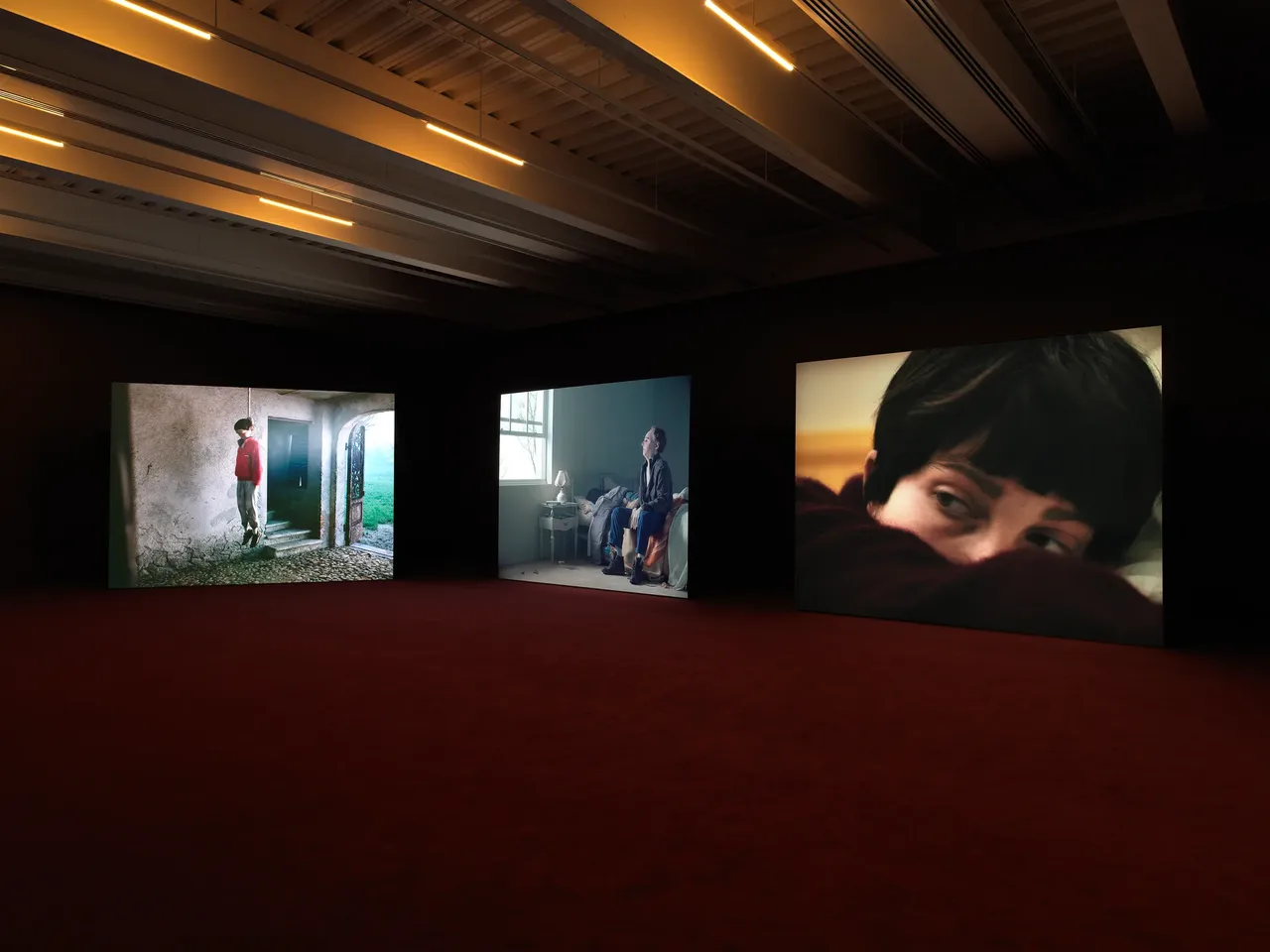
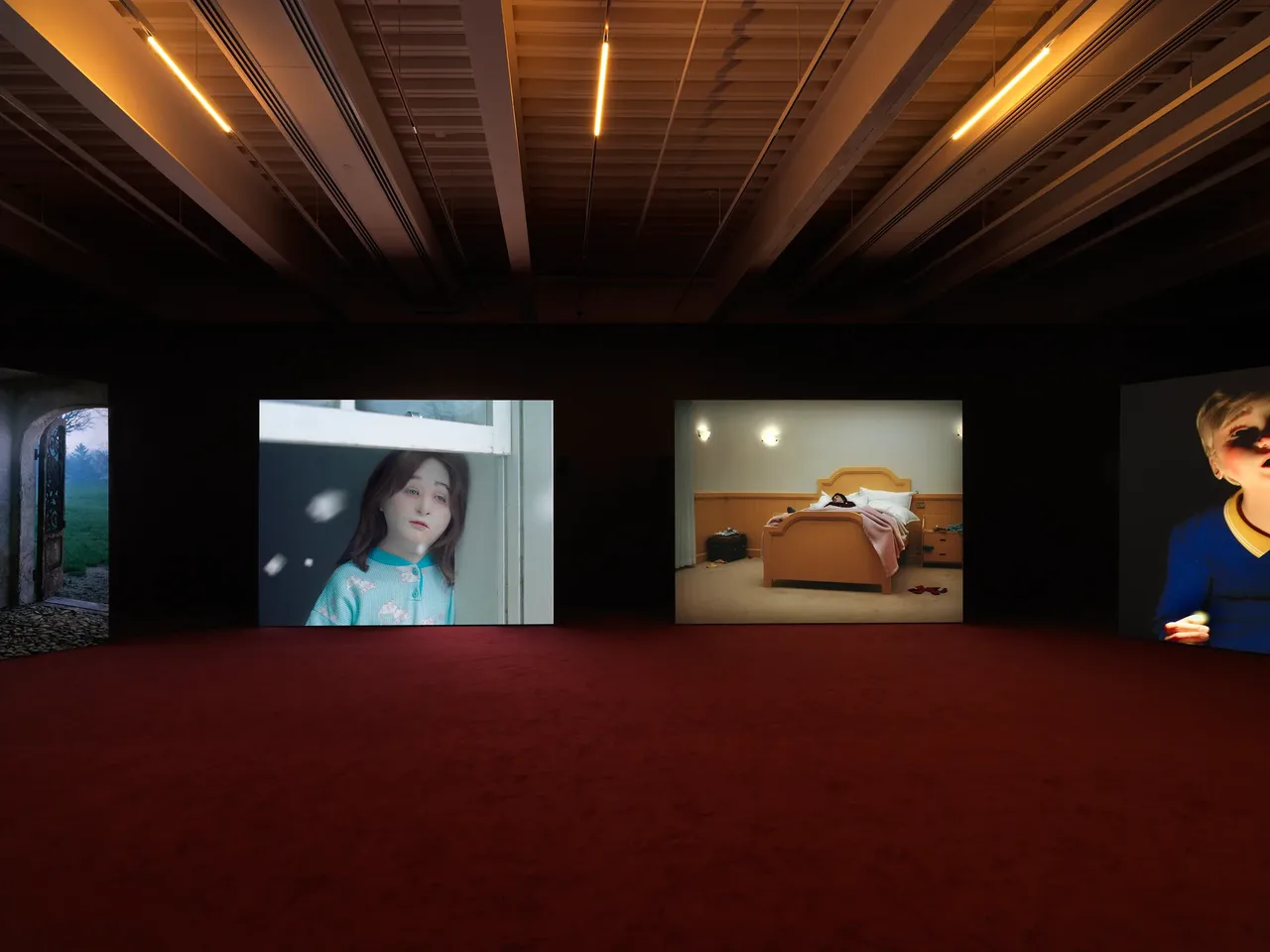
Working across film, animation, sound and installation, he draws on cinema, music, fables and childhood without ever fully explaining what they might mean. “I find control something that is at once tragic and comical,” he says. This September, that particular tension arrived at New York’s New Museum with Arrivederci, Piggies!, his first solo museum exhibition in the city, curated by Massimiliano Gioni and Madeline Weisburg and on view through January 31, 2027. The exhibition brings together three recent films alongside Krapfen (2025), a newly commissioned work produced by the New Museum with Fondazione Sandretto Re Rebaudengo, Lafayette Anticipations, The Renaissance Society and the Vega Foundation.
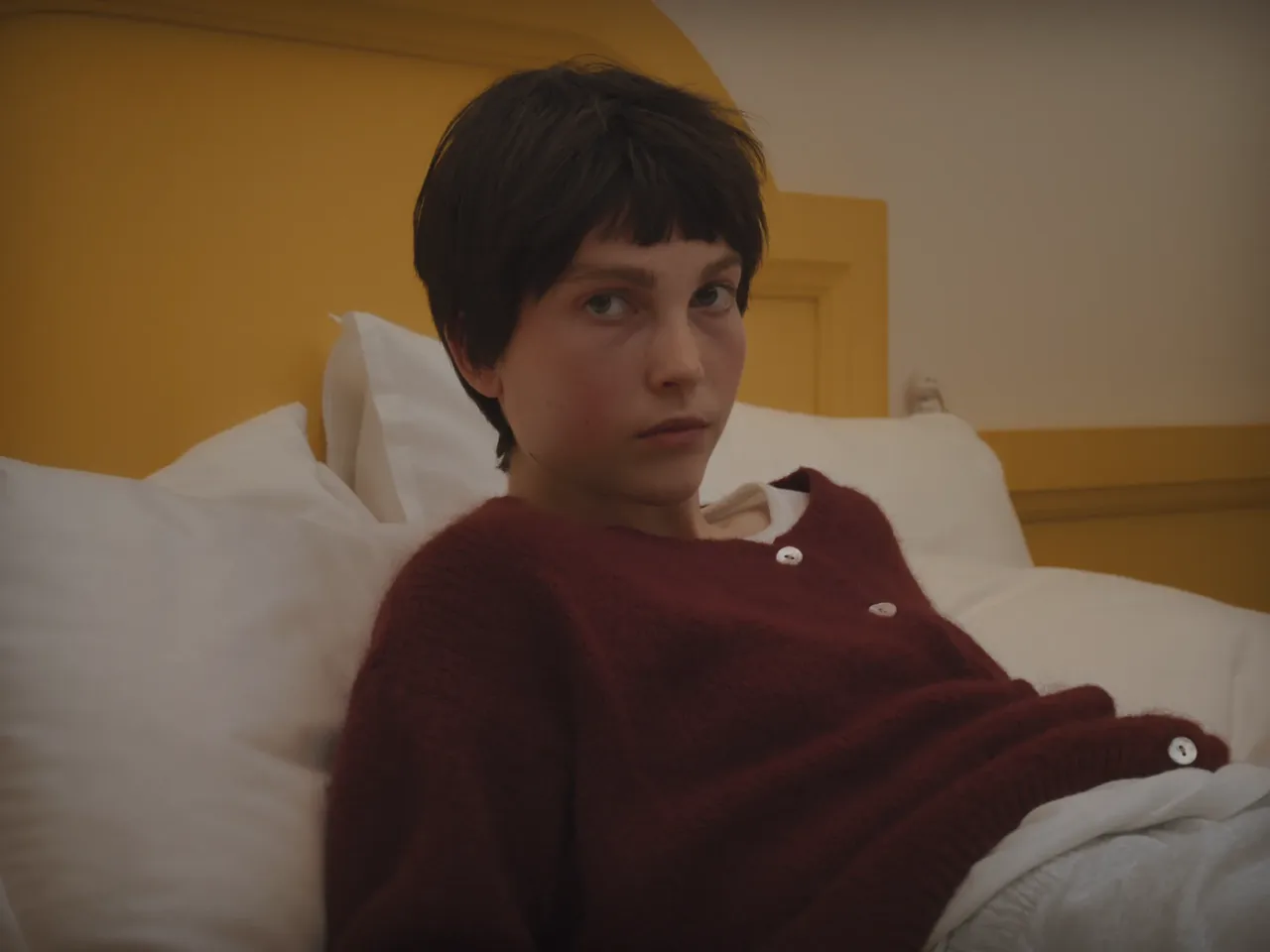
Diego Marcon, Krapfen, 2025 (still). Digital video, CGI video, color, sound; 4:44 min (loop). © Diego Marcon. Courtesy the artist, Sadie Coles HQ, London, and Galerie Buchholz, Berlin/Cologne/New York. Produced by Fondazione Sandretto Re Rebaudengo, Lafayette Anticipations, New Museum, The Renaissance Society, and The Vega Foundation.
Your films often begin from a very precise construction: the choreography, the rhythm, the image, the sound. At the same time, they leave space for ambiguity and uncertainty. When you begin developing a new work, what usually comes first: an image, a structure, a sound, a gesture, or something else?
Normally, it is a very simple thought: a family of moles that live in a burrow and endlessly count a series of numbers, whose results are always wrong; a kid being harassed by several figures who insist that the child should eat an apricot jam krapfen; a young boy hanging and swinging in a barn while singing a tune, as other voices join in, unseen and from afar. Then I start becoming passionate about it, and I begin to define and refine the idea. Someone invites me to do a show, likes the idea, decides to produce it, and we go on.
Although your work is presented within the context of contemporary art, your films are deeply connected to cinema, to narrative, editing, performance, and the construction of fictional worlds. Do you think of yourself primarily as an artist working with moving images, or as someone making films within an expanded cinematic space?
I don’t spend much time thinking about what I am, at least professionally. I know I like movies, and I also like making works to be exhibited in shows and thinking about how they should be displayed.
Sound has always played a central role in your practice. In your films, music and voices do not simply accompany the images; they transform how we perceive them. How do you approach sound when building the emotional and narrative structure of a work?
I like it as a material, and that’s one of the reasons why we often work with and on very codified musical genres. For The Parents’ Room, Federico Chiari (the composer) and I wanted something reminiscent of Sinatra-inspired pop jazz, but we started to become passionate about working only with woodwind and brass instruments, for the specific quality and texture of their sound. For Fritz, I wanted a yodel inspired by that of the Appenzell region in the Swiss Alps for the very same reason: the texture of that specific way of singing, the overlapping of its specific tones. For Krapfen, instead, it was a question of structure and the rhythm of its phases. Of course, music brings in a strong emotional dimension. But this is less interesting to me than working with tropes of the specific genres we decide to explore and stress.
Many of your works return to childhood, family, and the world of fables, but not through nostalgia. Instead, these spaces become places where innocence, fear, desire, and uncertainty coexist. What continues to fascinate you about childhood as a territory for storytelling?
Perhaps these dimensions — childhood, fairy tales, fables, and, more generally, genres somehow connected to children and young audiences — allow me to play with irony and humor in a playful way. There is something uncertain, bizarre, maybe even weird about playfulness, because it has to do with pushing boundaries and limits, moving along the edges.
There is a very particular tension in your films between beauty and discomfort: images can feel extremely controlled, elegant, and almost familiar, while something underneath remains unsettling. What draws you to that tension when something beautiful begins to feel strange?
I think this is a very interesting question, but I believe I am not able to answer it: there are too many slippery concepts that are tied to subjectivity, like beauty, familiarity, or unease. But I find control something that is at once tragic and comical. Maybe this very fundamental conflict is where the tension begins to arise.
“I didn’t want to create a heavy architecture with rooms, walls, and so on, and confine the works to these individual spaces, like animals in a zoo.”
Repetition is a powerful element in your work; a word, a song, a gesture, or an image can return until it changes its meaning. What role does repetition play in the way you create emotion or tension?
I think my passion for it dates back to when I was a teenager and was into techno hardcore music, and its very punk, roguish attitude. In repetition, I find the very same tragic yet comical aspect.
Your use of CGI, animation, and digital technologies allows you to create impossible situations, but technology itself never seems to be the subject of the work. How do you think about the relationship between new tools of production and very human experiences such as memory, desire, and fear?
I use some of the many techniques and possibilities I have, as an artist who makes films, to produce moving images. I am not interested in how these tools relate to human experiences such as memory, desire, or fear, but in how they can create images, and what kind of images they can create. These images then might have something to do with such human experiences.
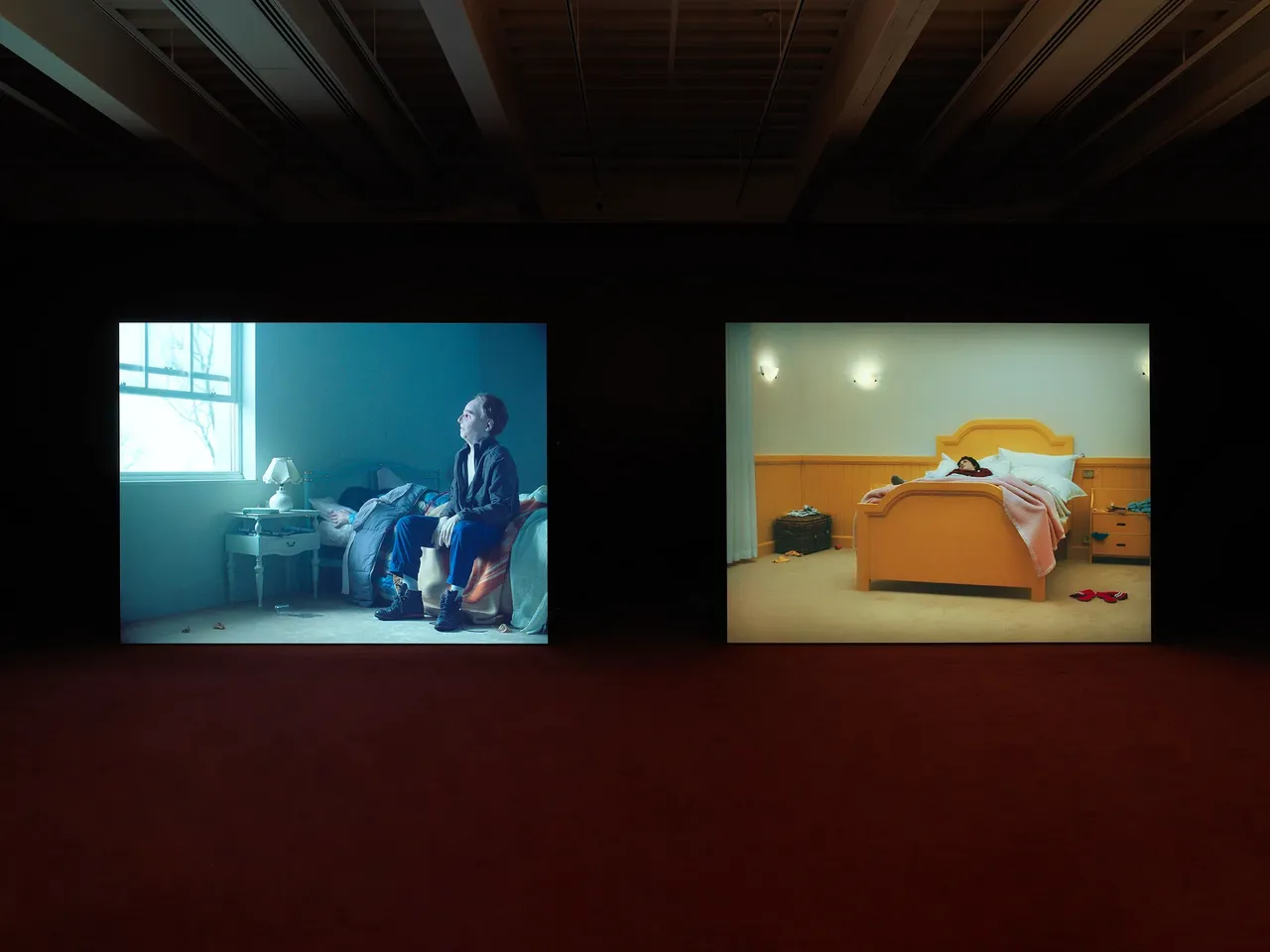
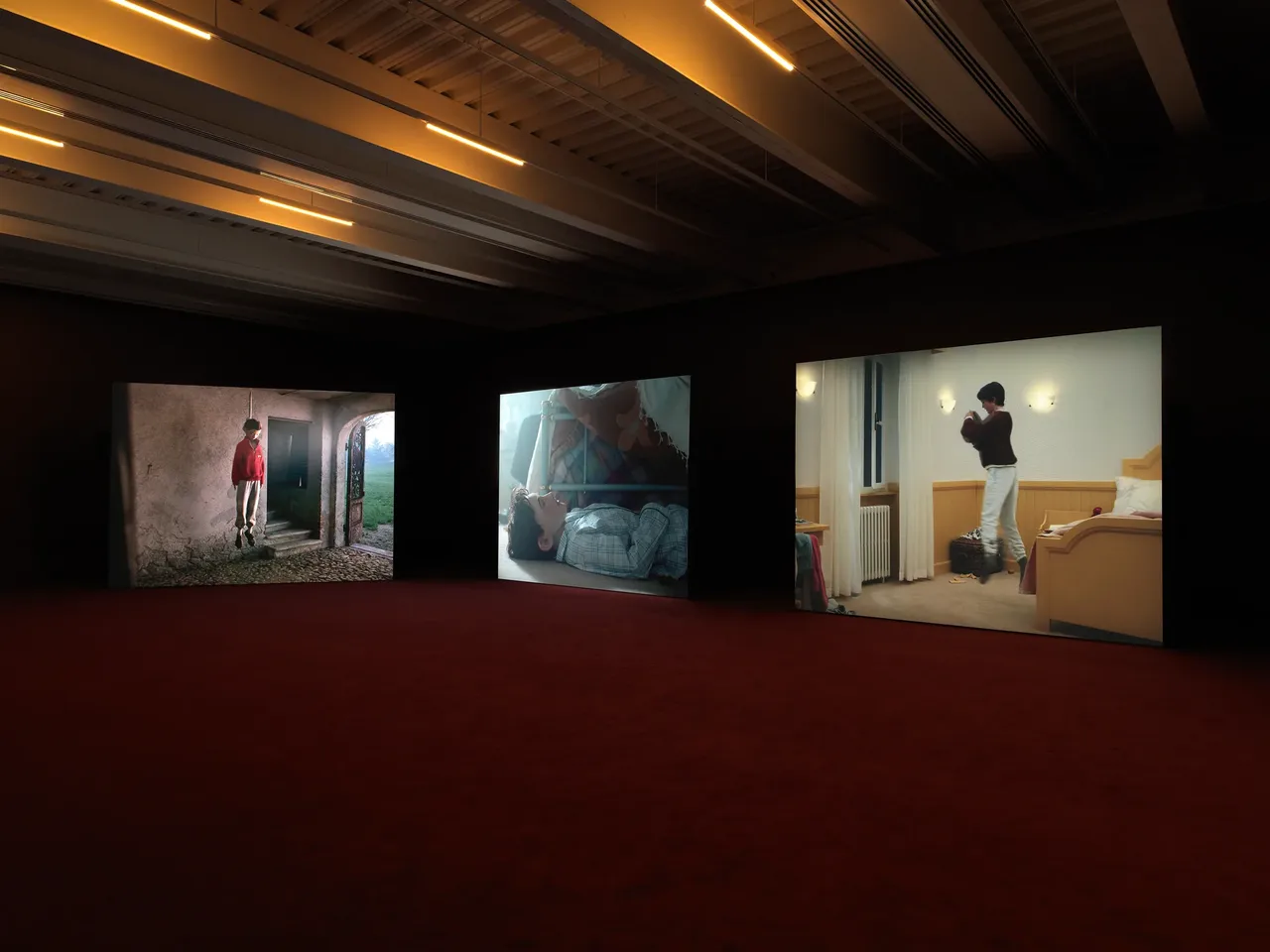
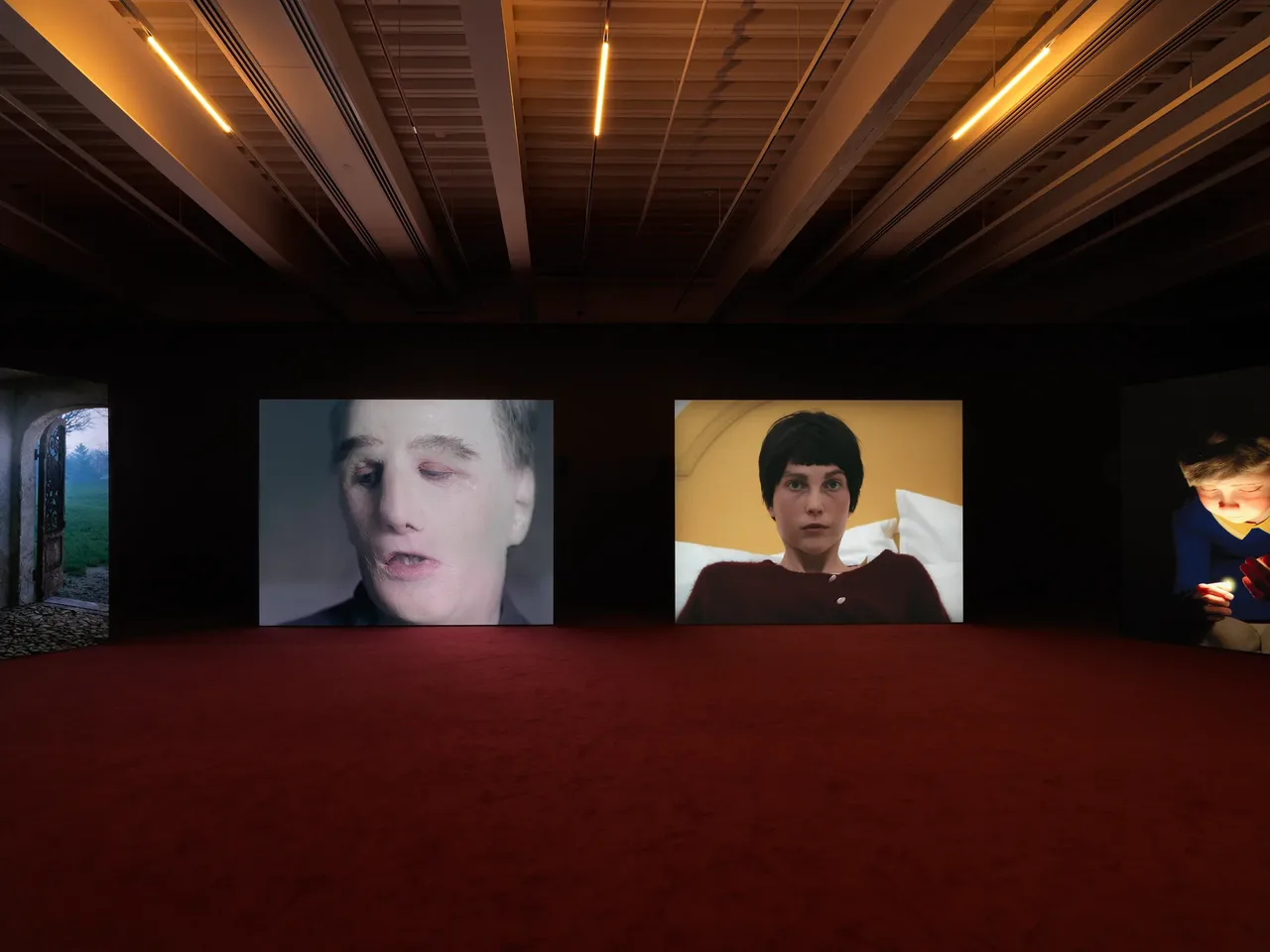
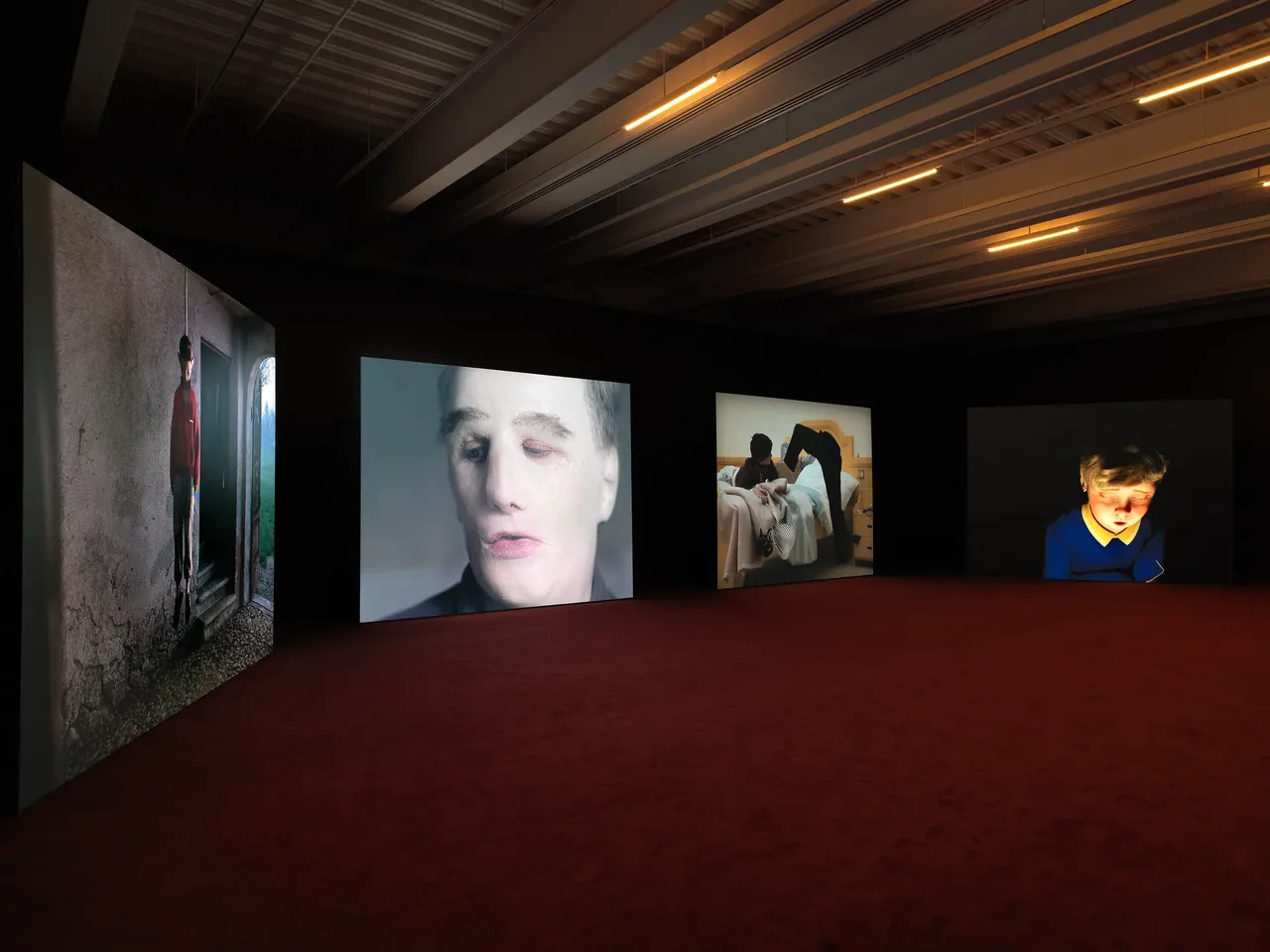
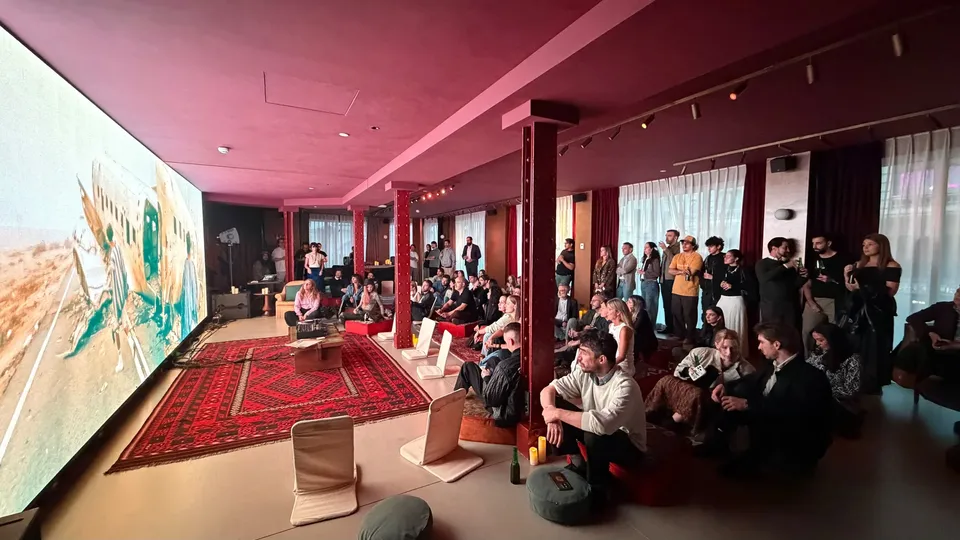
For Arrivederci, Piggies! at the New Museum, several of your films are presented together as a total installation, creating an environment where different works coexist within the same space. How does thinking about the viewer’s physical experience change the way you approach your films?
It’s not really about the audience, but about the works themselves. For the show, I had a big, single space. I didn’t want to create a heavy architecture with rooms, walls, and so on, and confine the works to these individual spaces, like animals in a zoo. So, the idea came to re-edit the works in order to create a unique composition, where each piece waits to sing its own phrase and together they form a kind of choir.
Krapfen, the newly commissioned work presented in the exhibition, takes something familiar and everyday, the name of a traditional pastry, and transforms it through repetition, sound, and context into something ambiguous and almost unsettling. What interested you in this transformation from the familiar to the uncanny?
The familiar to me is uncanny in itself: familiarity is an illusion. The closer you get to analysing the so-called familiar, the more it reveals itself as something alien, a stranger that inhabits a private and intimate dimension. If not yourself as a stranger, suddenly living in a house you thought was yours, but that is not. So, if I were to be interested in something, it would only be in trying to make this revelation more manifest.
Your films often exist somewhere between dreams, memories, and nightmares, spaces where logic is not always clear but emotions feel very precise. When someone leaves one of your works, what kind of experience or feeling would you hope stays with them?
I never think about the audience, or about what the audience should get from my works. I think of the audience as a very broad space, where so many different subjectivities coexist. It would be very pretentious, arrogant, and even silly to expect something from the audience. I feel that not thinking about it is a fairer and more respectful choice.