Theorists and psychologists have long explored the relationships that exist between parent and child. The mother-daughter bond is, in particular, a complex and debated topic. From Adrienne Rich to Jacqueline Rose, mothers provide a gendered example daughters look to and model themselves after — or against. Naturally for Cecilia Pignocchi, raised by a stay-at-home mother whose mantra for her daughters was “Be independent,” the idea of womanhood was clouded with contradiction.
Pignocchi is not shy with colour nor subject matter. After nearly a decade working as an art director, she began a summer road trip across Europe. Under the sun and sky, she produced Tempo Bello, a photographic ode to the vibrancy, joy, and lightheartedness of summer. Now, the multimedia artist only photographs in the sunshine.
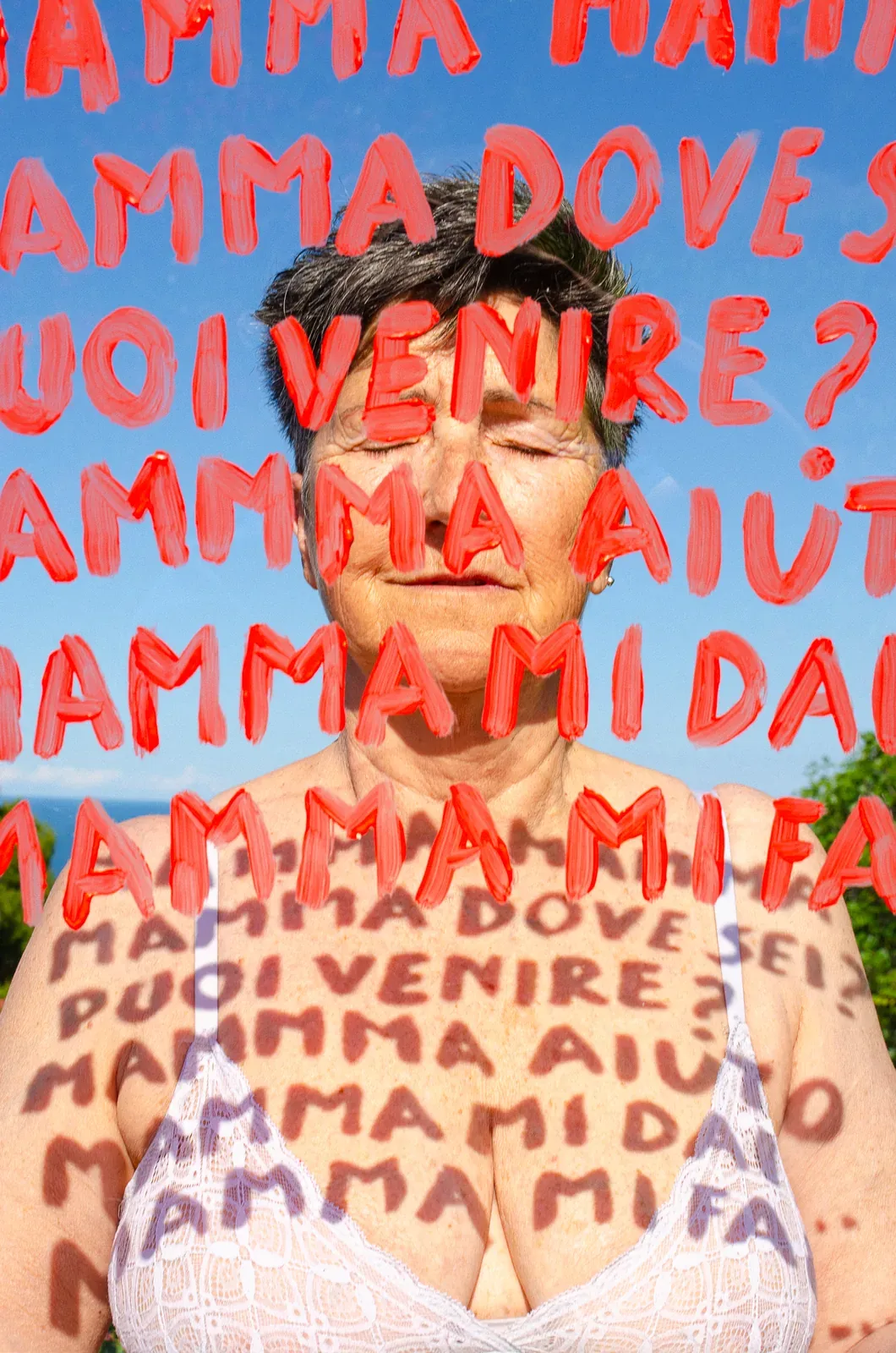
Fittingly, then, she returns to the camera for Living Frame, an exploration of the artist’s identity as a woman, and her mother’s identity outside of motherhood. Punctuated by news of the artist’s pregnancy just after finishing the project, Living Frame takes on a subconsciously premonitory notion. Now mother to a three-month-old, Pignocchi discusses womanhood, freedom, dreams of flying, and the future of her art.
You’re a documented lover of summer. What are your favourite summer memories with your mother? Has your relationship to the season changed as a new parent?
I was born on June 30th, every year we celebrated outside with a picnic and my mum’s incredible cakes. Once she made a 3D house cake. With roof tiles made of wafers, the house was placed on another cake, a garden with a cookie fence all around it, covered with a green sugar grass and flowers made of M&Ms. I always thought that my mum was a cake artist.
Before becoming pregnant, I have manifested to the universe that my son would be born in spring or summer. Dante in fact arrived on the 7th of May. We are now enjoying the season, being outside every day, by the sea or in the mountains.
Before becoming pregnant, I have manifested to the universe that my son would be born in spring or summer. Dante in fact arrived on the 7th of May. We are now enjoying the season, being outside every day, by the sea or in the mountains.
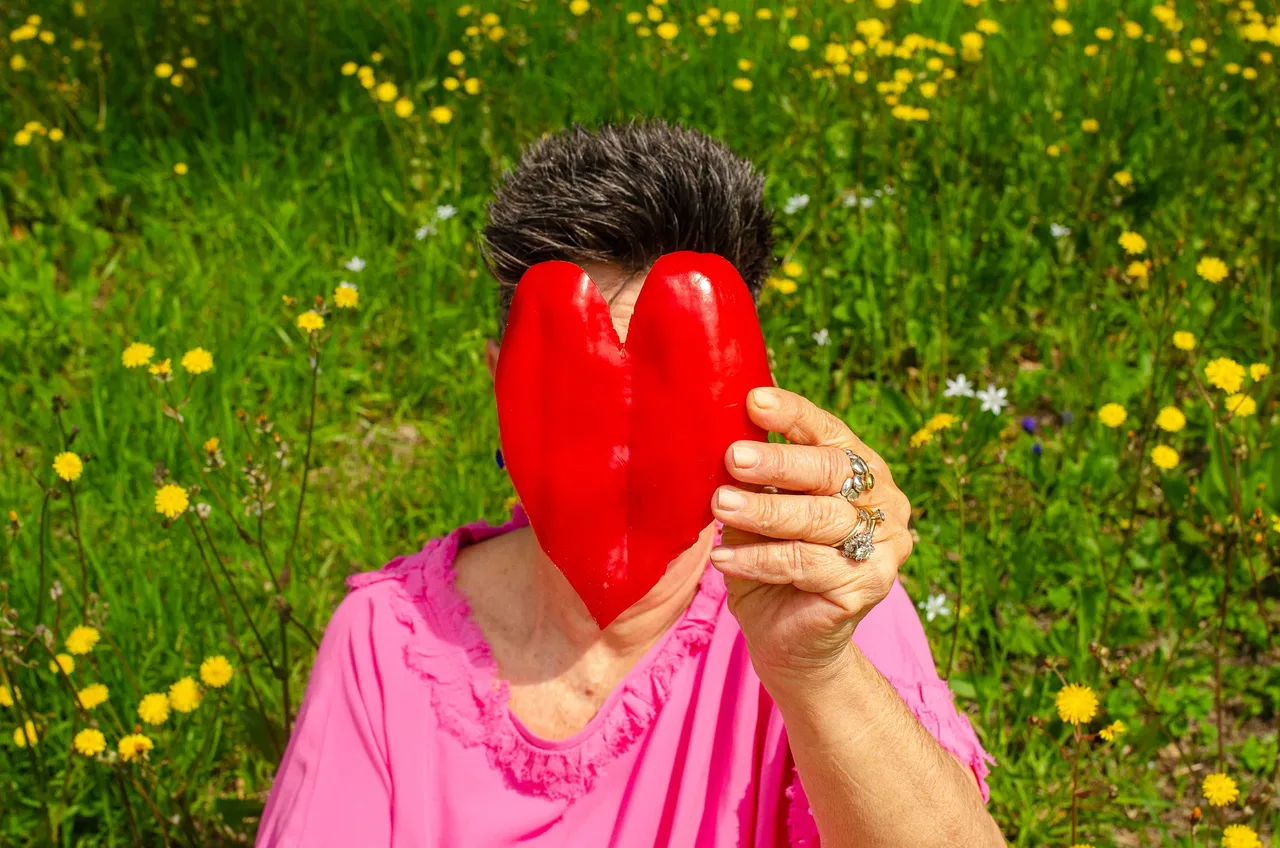
You have a knack for colour and tend to use bright, saturated often primary colours in your work. If you had a visible aura, what colour would it be?
It would be red if I were in nature. There is nothing more poetic than this colour in the wild.
Living Frame reminds me of one of my favourite episodes of television from the kids’ show Clarence. For the first time, Clarence realises his mother is a person outside of her role as mum. What’s your favourite thing about your mother as a person, outside of her role as a caregiver?
I love this episode! Very funny. What I like about my mum is her free spirit. I only know Raffaella as my mother, but I often tried to visualise how she must have been when she didn’t have me and my sister. I love to party, and I always thought that I must have inherited this from my mum. I believe that even if she became a caregiver, she maintained her young free essence. Growing up, she always allowed me to have fun. Among my group of girlfriends she was the mum on our side, always driving us to the dancefloor and picking us up late at night. She pushed me to leave and do my experiences. I want to be like her with my son.
Your art has a very strong sense of colour cohesion. What shaped the palette for Living Frame? What contribution did your mother, Raffaella, make in shaping the vision or aesthetic of the project?
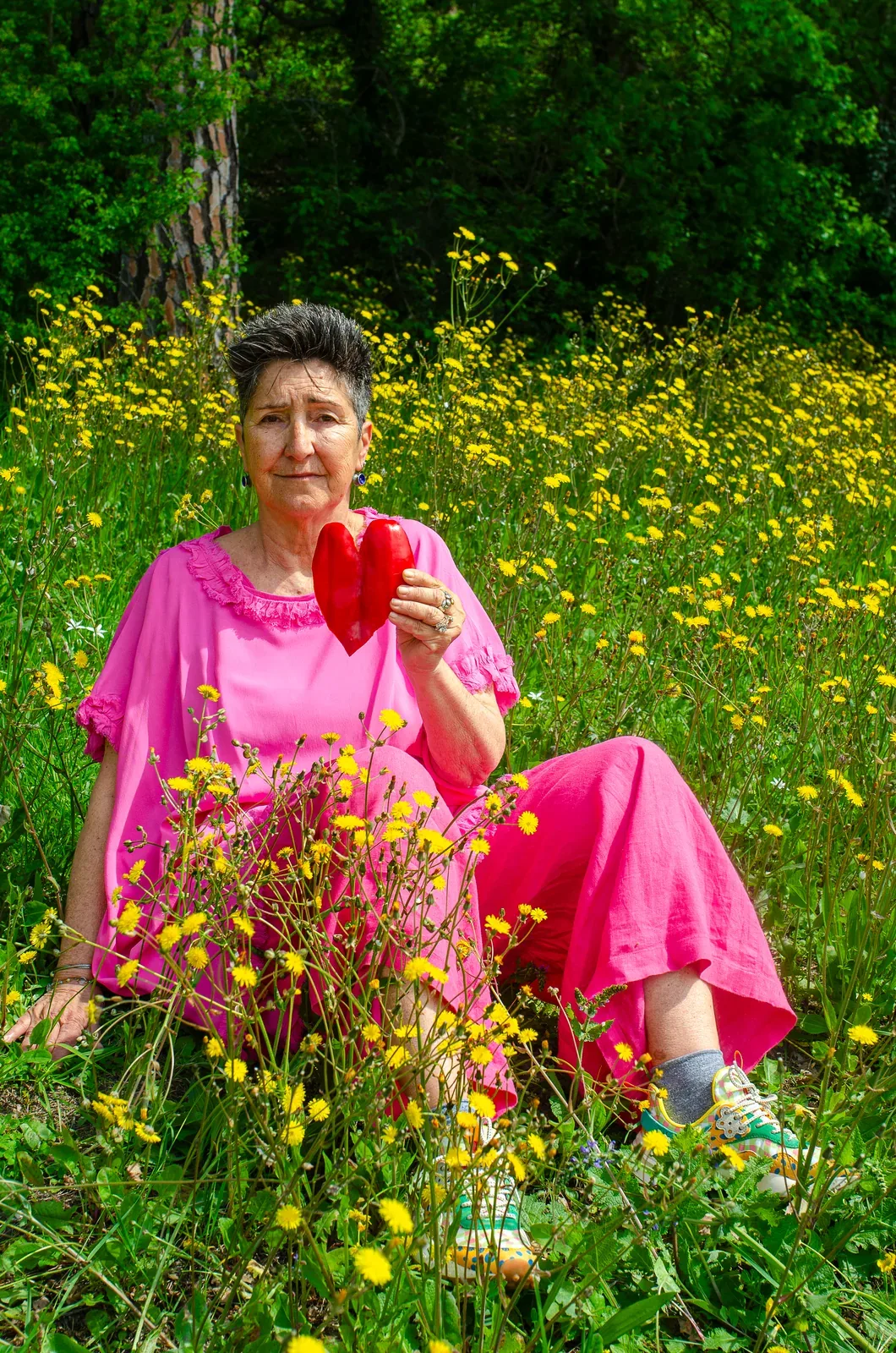
For two months on sunny days my mum and I travelled around the region with my van full of her clothes and props. She’s very stylish and has a passion for dressing up with eccentric colours. So, we brought with us a selection of options and based on the location, we would choose together the outfit. As the project progressed, she became more involved in the decisions. From the concepts, to the fitting and the locations.
Three months after finishing Living Frame, I found out I was pregnant and I began a new project called I wish I were a penguin, documenting my personal journey to matrescence. This time my mum became my assistant. I could see how ready she was for this role, she was confident and she knew exactly what she was doing. It was an unforgettable experience to share the creative process with her, witnessing her getting better at it, one project after the other.
Three months after finishing Living Frame, I found out I was pregnant and I began a new project called I wish I were a penguin, documenting my personal journey to matrescence. This time my mum became my assistant. I could see how ready she was for this role, she was confident and she knew exactly what she was doing. It was an unforgettable experience to share the creative process with her, witnessing her getting better at it, one project after the other.
“Only someone who loves her body would dare pose half naked next to her daughter.”
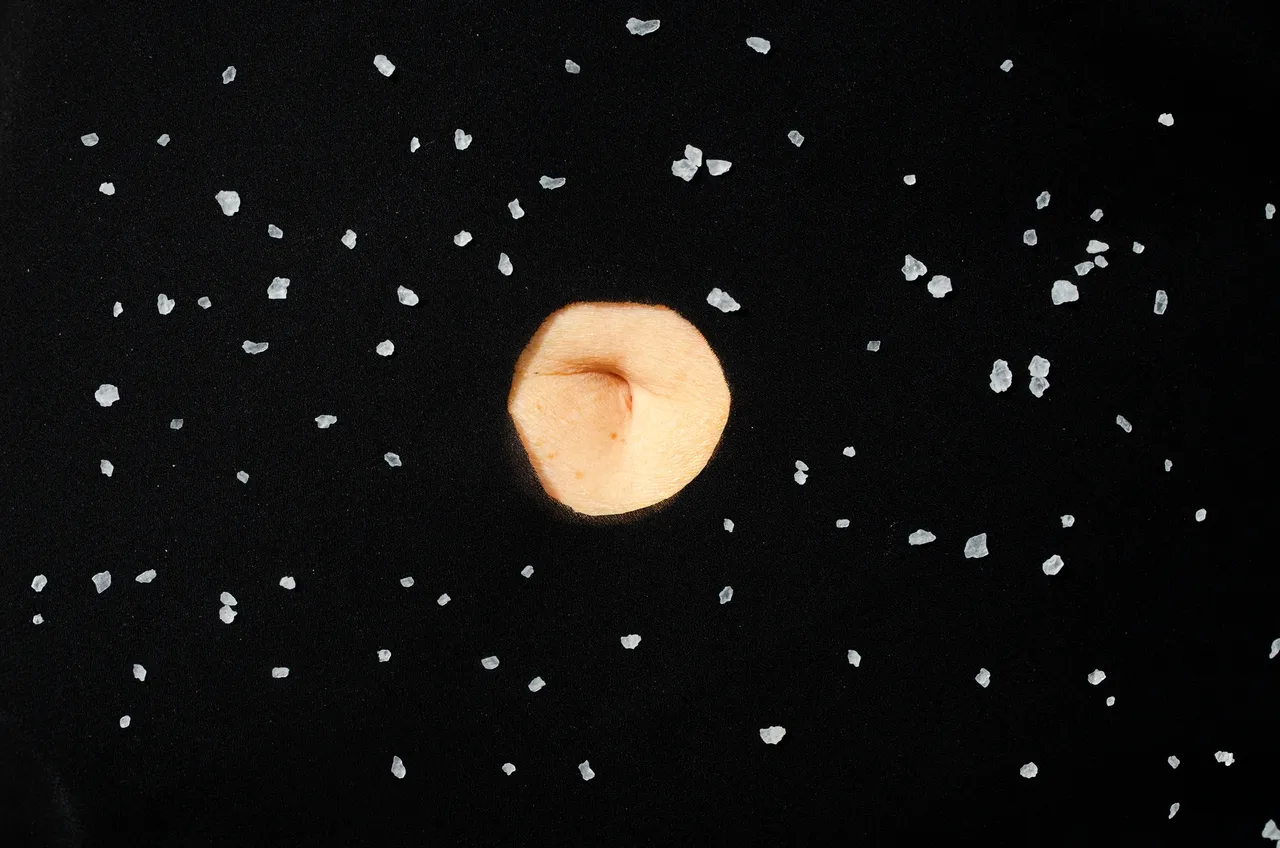
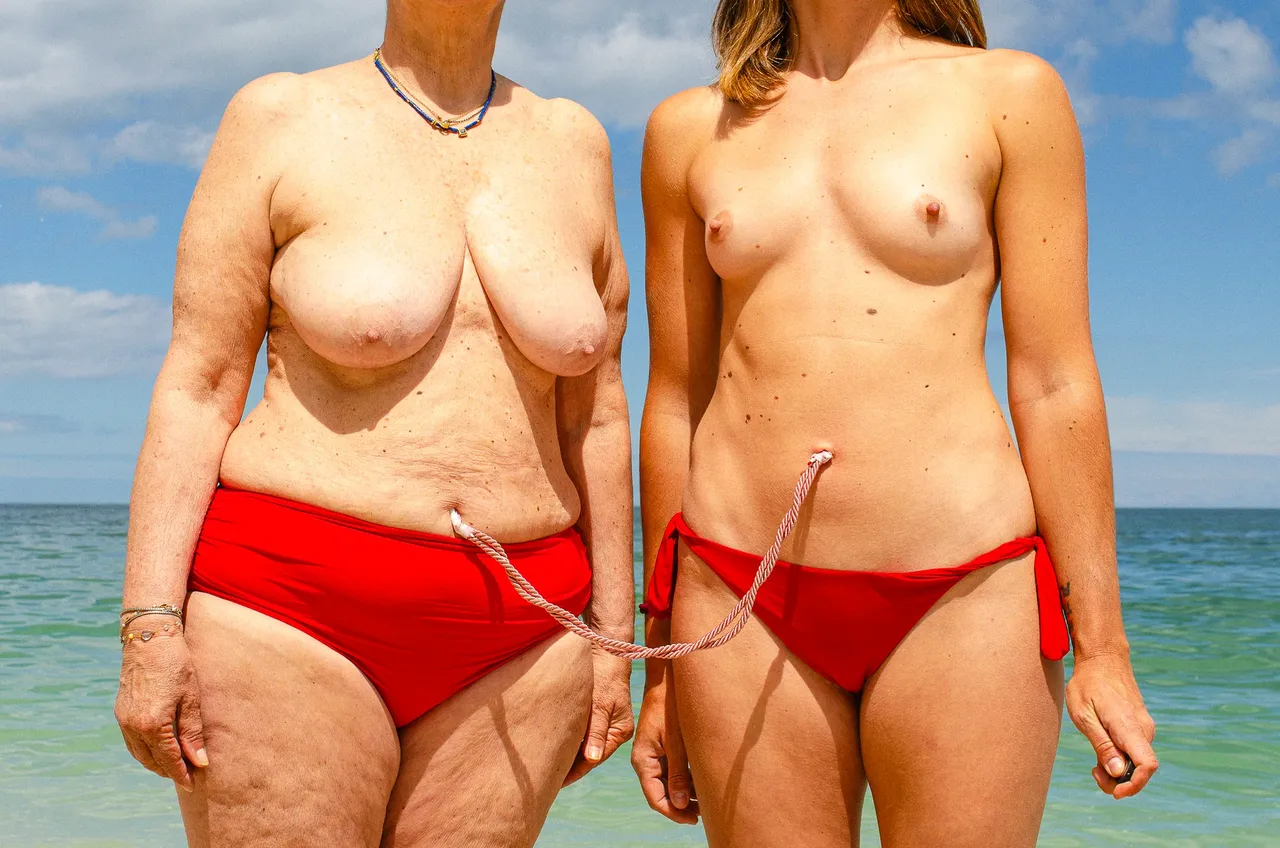
Living Frame has a recurring motif of vessels (bottles, glasses, plates) which symbolise the bodies involved in pregnancy (child and parent). The project also depicts the aging female body, which is under-represented. How did the physical body shape the way you explored womanhood in the project?
The subconscious reason I did this project was to overcome my fear of becoming a mother. Among my anxieties, I didn’t like the idea of sacrificing my body, thinking it would change forever and would no longer meet the beauty standards. I hate the idea of aging, and the thought of becoming a mother made me think that I would inevitably accelerate that process. My mum showed me the most positive attitude around her body. I truly appreciate the respect that she has for it, and I should really learn from her. Only someone who loves her body would dare pose half naked next to her daughter.
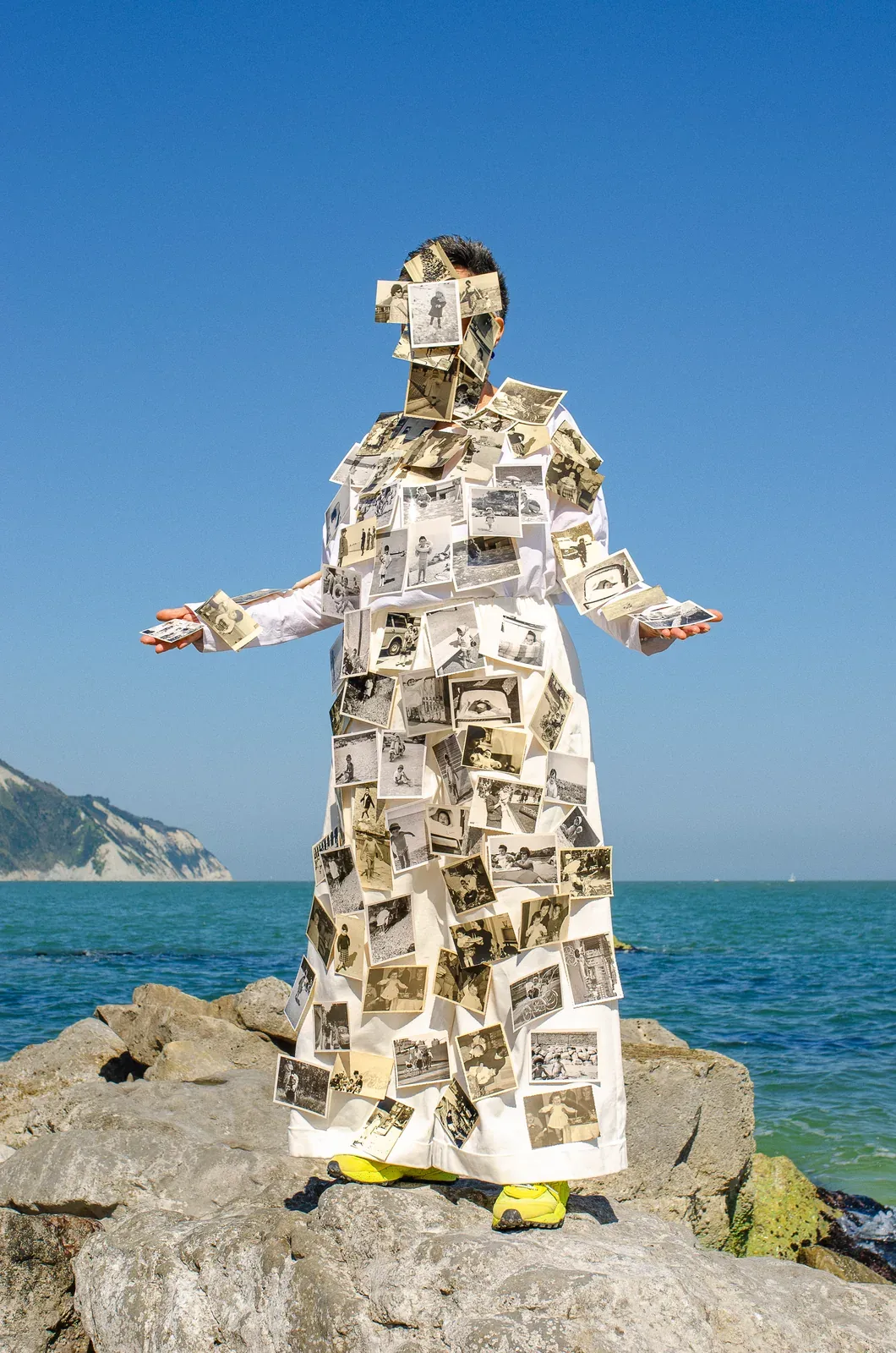
I’m struck by the picture of Raffaella pasted with photos from her own childhood. From a child’s perspective, a mother’s life outside of parenting seems obscure and out of reach. How did you decide your own physical space in the project — when to be present or absent? How did you use composition and staging to create the emotional impact you wanted Living Frame to evoke?
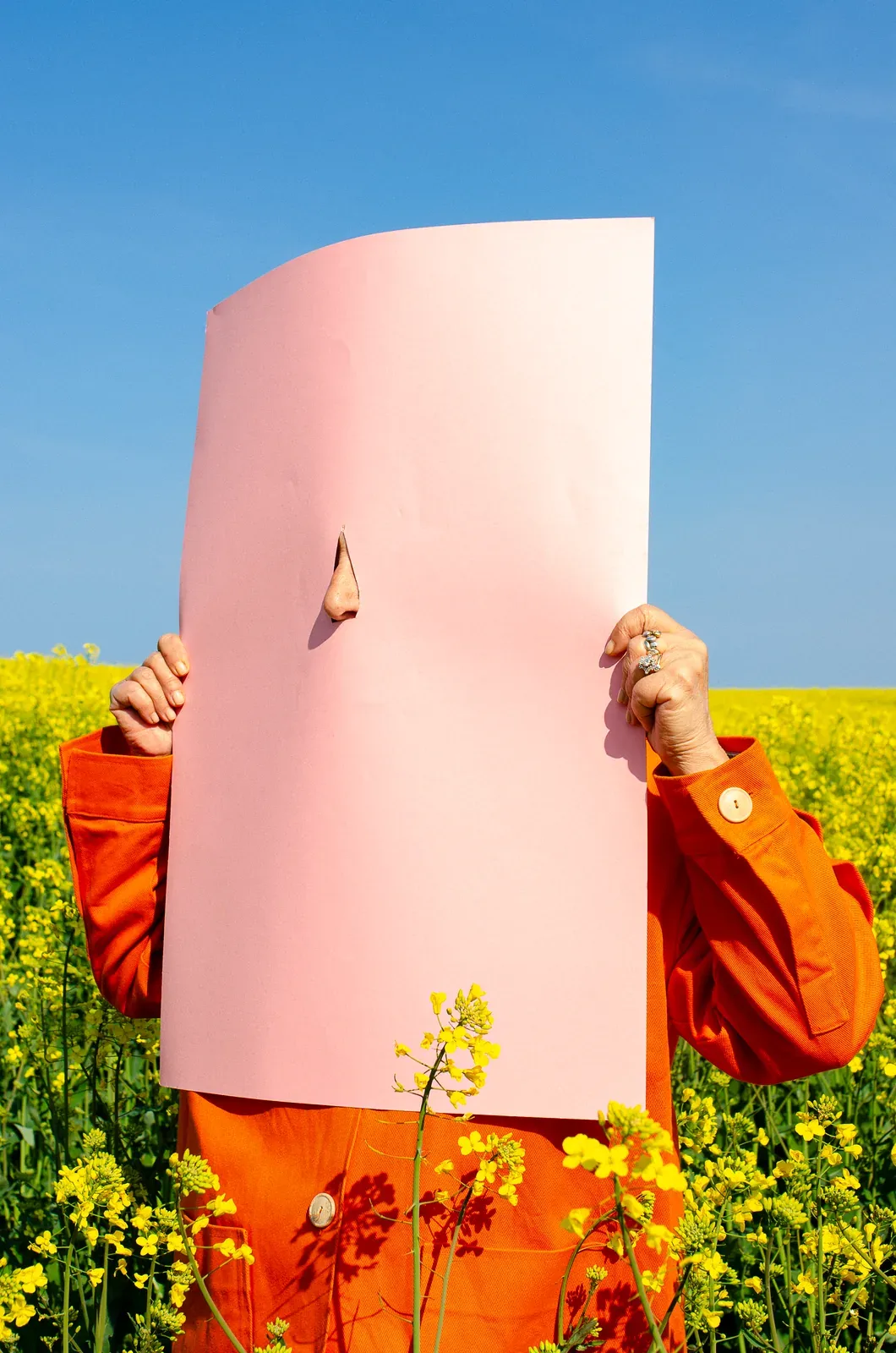
A lot of these ideas came from visual apparitions I had before talking to my mum. While some other ideas emerged after interviewing her. Through the use of metaphors, I love to turn serious concepts, like this difficult conversation, into surreal colourful images. This contrast helps me digest such themes.
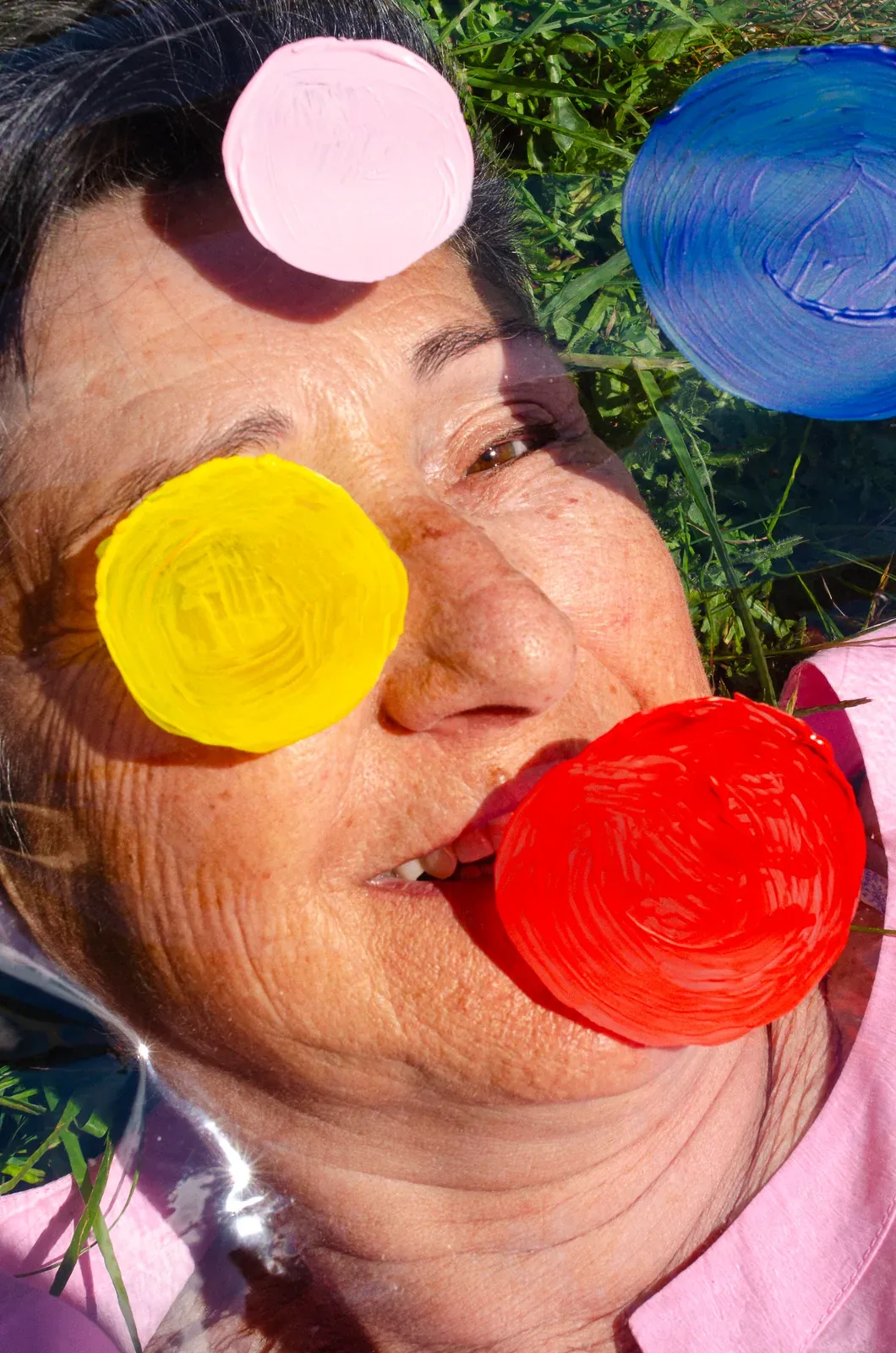
This style is also a tribute to my mum’s bold style and love for colour, which I inherited from her. Since my youth I've been stealing her clothes, this in a way demonstrates the admiration I have for her style.
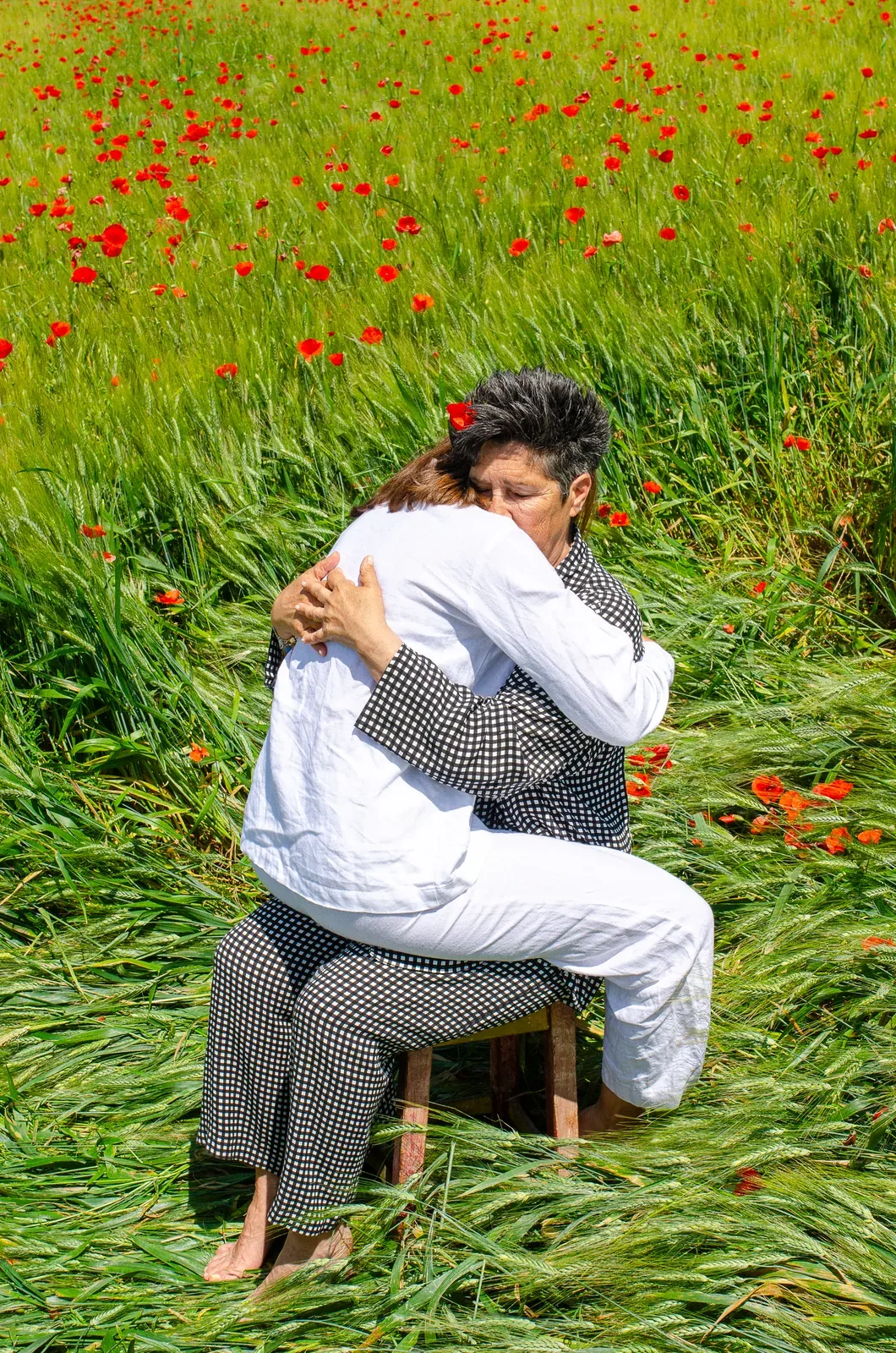
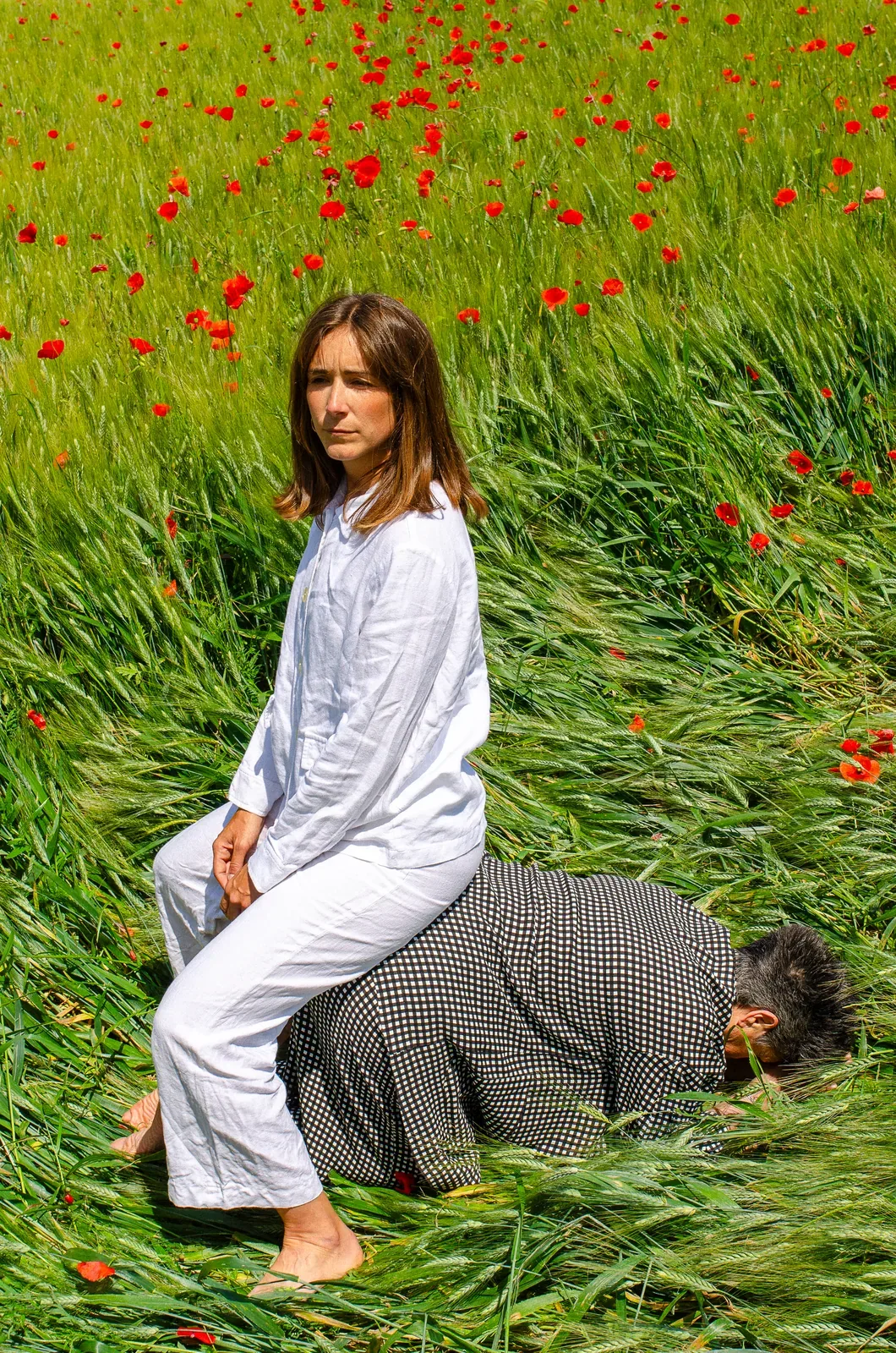
I only added myself in the images where I played a role. For instance, in the unconditional support images, I’m showing up as the heavy weight of a daughter. She is supporting me in many ways, she’s even carrying me on a silver plate.
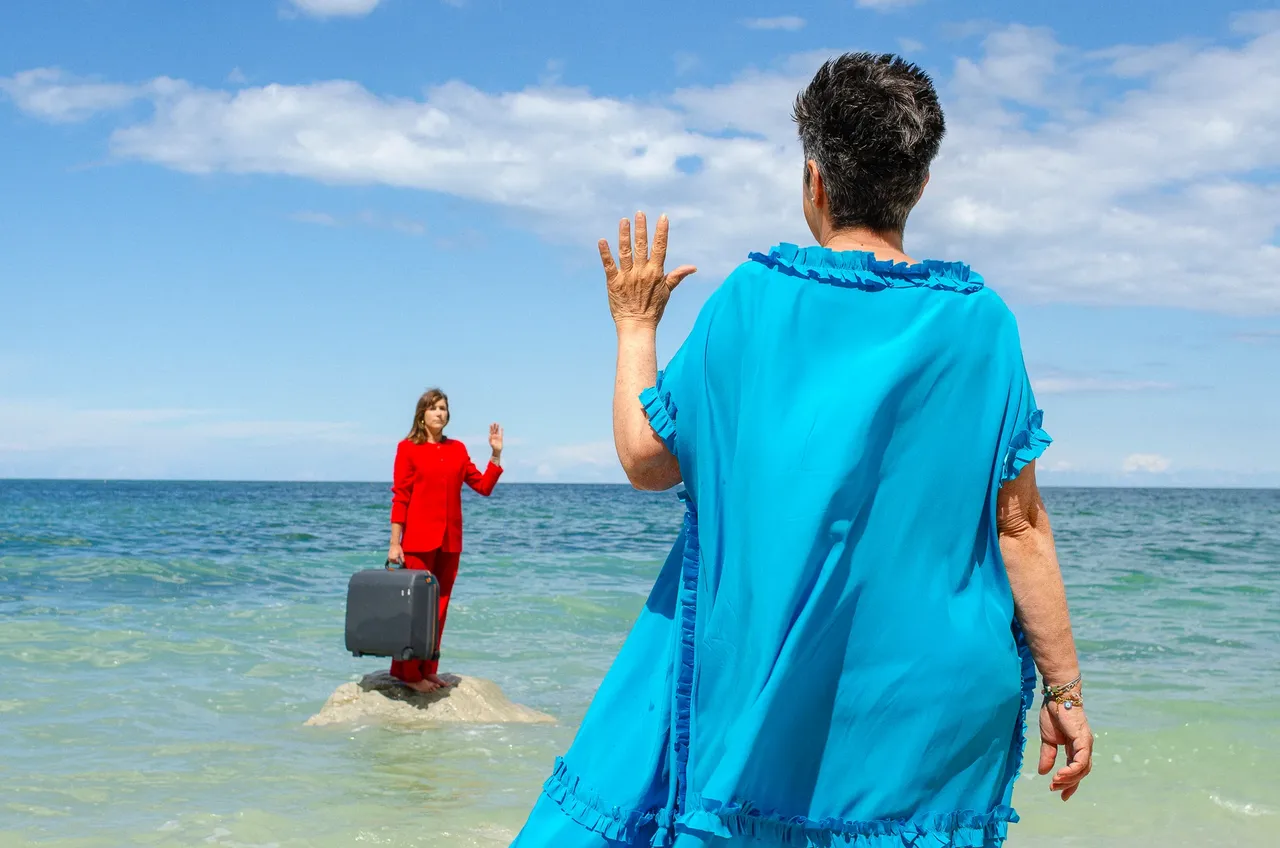
In the image where I’m waving at her with my suitcase, I’m finally leaving to be independent. I thought it was important to show myself in it because it’s thanks to these words that I became the woman I am today. But at the same time, it must have been so hard to see me leave after dedicating so many years of her life to mothering and caring for me.
This style is also a tribute to my mum’s bold style and love for colour, which I inherited from her. Since my youth I've been stealing her clothes, this in a way demonstrates the admiration I have for her style.
I only added myself in the images where I played a role. For instance, in the unconditional support images, I’m showing up as the heavy weight of a daughter. She is supporting me in many ways, she’s even carrying me on a silver plate.
In the image where I’m waving at her with my suitcase, I’m finally leaving to be independent. I thought it was important to show myself in it because it’s thanks to these words that I became the woman I am today. But at the same time, it must have been so hard to see me leave after dedicating so many years of her life to mothering and caring for me.
Though this project is centred around Raffaella, it was punctuated by news of your own pregnancy. Living Frame was also inspired by your question of how the mantras we are told shape our values and who we eventually become. Has becoming a parent changed your art, artistic process, or your feelings about the philosophy the project was realised from?
I actually found out I was pregnant three months after finishing the project. Living Frame was a sort of subconscious preparation to become a mother myself. A confrontation with Raffaella to grasp what it meant for her to become a mother and to finally see her as a person.
Having such an open conversation with her allowed me to understand not only her story but also my own. Becoming a mother myself is only adding more layers to this project and deepening my awareness.
Using images to analyse myself and the world I live in is the strongest tool I have, and I will continue to use it, even now as a mother.
Having such an open conversation with her allowed me to understand not only her story but also my own. Becoming a mother myself is only adding more layers to this project and deepening my awareness.
Using images to analyse myself and the world I live in is the strongest tool I have, and I will continue to use it, even now as a mother.
There is a strong theme of personal freedom throughout all of your work. Though womanhood is so often tied to a sense of entrapment, you maintained this ethos in Living Frame. Why did you feel this artistic choice was important?
I think this theme keeps coming up in my work because ultimately it is a burden inside me. Now it comes back with my pregnancy and with me becoming a mother, having to stop my career, something most men will never have to do, unless they are from Sweden, or a few other countries. What a woman is expected to do for her child is nothing close to what a man experiences. The sense of guilt is embedded in our DNA. The image of the Virgin Mary caring for baby Jesus is printed in our brains. Women have to be there for their children and if they are not, they are not going to be good mothers, aren’t they?
Freeing myself from these ideas isn’t an easy task. But exploring this topic, talking about it and shooting humorous, free and joyful images to celebrate my mum and womanhood at large is a first step of liberation.
Freeing myself from these ideas isn’t an easy task. But exploring this topic, talking about it and shooting humorous, free and joyful images to celebrate my mum and womanhood at large is a first step of liberation.
In fact, the trailer for Living Frame has an almost-eerie musical backing paired with Raffaella talking about her dreams, but in the actual project Raffaella is often depicted as smiling. Was this dissonance intentional? What did you want it to tell viewers?
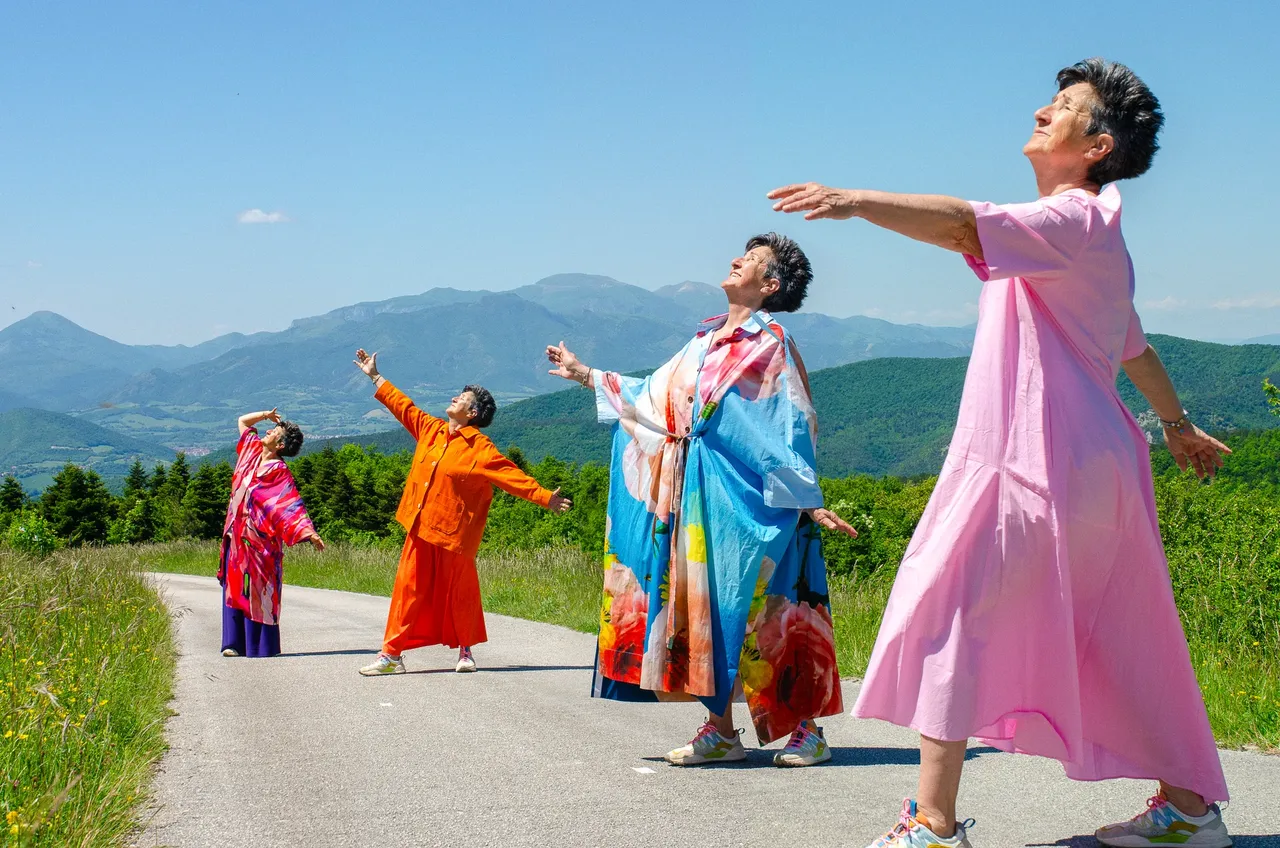
When my mum told me that she didn’t remember if she had dreams, I immediately thought that she must have had dreams when she was younger, but that she must have forgotten because motherhood is such an all-encompassing experience that I can see how dreams can disappear when caring full time for other humans.
She then talked about her recurrent flying dream. For me that’s a clear metaphor of freedom and independence. I see her free in many ways, but at the same time she’s also part of a different generation of women, who lived in a still very patriarchal society. The music was meant to express that tension. Even though she grew up in such times, she still pursued her freedom.
She then talked about her recurrent flying dream. For me that’s a clear metaphor of freedom and independence. I see her free in many ways, but at the same time she’s also part of a different generation of women, who lived in a still very patriarchal society. The music was meant to express that tension. Even though she grew up in such times, she still pursued her freedom.
I love the photo where you and Raffaella stand on different ‘islands’ waving at each other. Final separation between mother and child is a common trope, but Living Frame emphasises eventual return. Why was this cyclicality important in shaping your representation of motherhood and more generally, the way that women relate to one another?
I spent a lot of time with my mum when I was a kid. Then as I grew older, we grew further and further apart. This project brought me back to my childhood, spending a lot of time again playing together, while subconsciously preparing myself for motherhood. Now that I’m only a three-month-old mother a new chapter has begun with my mum. She’s been so helpful and supportive after the birth, I will never forget what she has done for me. Our relationship just got even stronger, because now I can understand her even more deeply with my new eyes and identity. Becoming a mother has also changed my view of women. We are a force of nature. But before this experience, I seriously struggled to see this, and this is one of the themes I’m exploring in my next project.
Living Frame exposes the contradictory gendered expectations placed on women, a common thread that sometimes literally connects you to Raffaella. How did you balance portraying your personal experience with trying to create universal commentary, both artistically and conceptually?
I showed this project to some other women and interestingly enough it always resonated. A friend from Romania said her mother raised her with the same mantra: Be independent, she’s now a successful creative director in one of the world’s leading advertising agencies. Even if this is a personal story it comes from the same patriarchal society that has shaped our way of thinking, what a woman is expected to do or not do.
Living Frame feels aptly timed in a moment of growing conservatism and its repackaged gender norms. What is the project saying about femininity and gender itself? How did you create a nuanced portrayal of gender roles while maintaining an ambience of humanity?
Each generation experiences the way genders are perceived differently, but we all inherit something from the gender norms that came before us. This project is a portrayal of my mum's story, and it shows how it’s strictly connected to her mother’s story, as well as my own understanding of womanhood has been shaped by hers. If I had a daughter, she would still carry the weight of the gender norms my mum lived through.
This story relates to a bigger societal narrative about gender and the ways in which expectations are carried from one generation to another. But it is ultimately my mother’s story through an intimate narration.
This story relates to a bigger societal narrative about gender and the ways in which expectations are carried from one generation to another. But it is ultimately my mother’s story through an intimate narration.