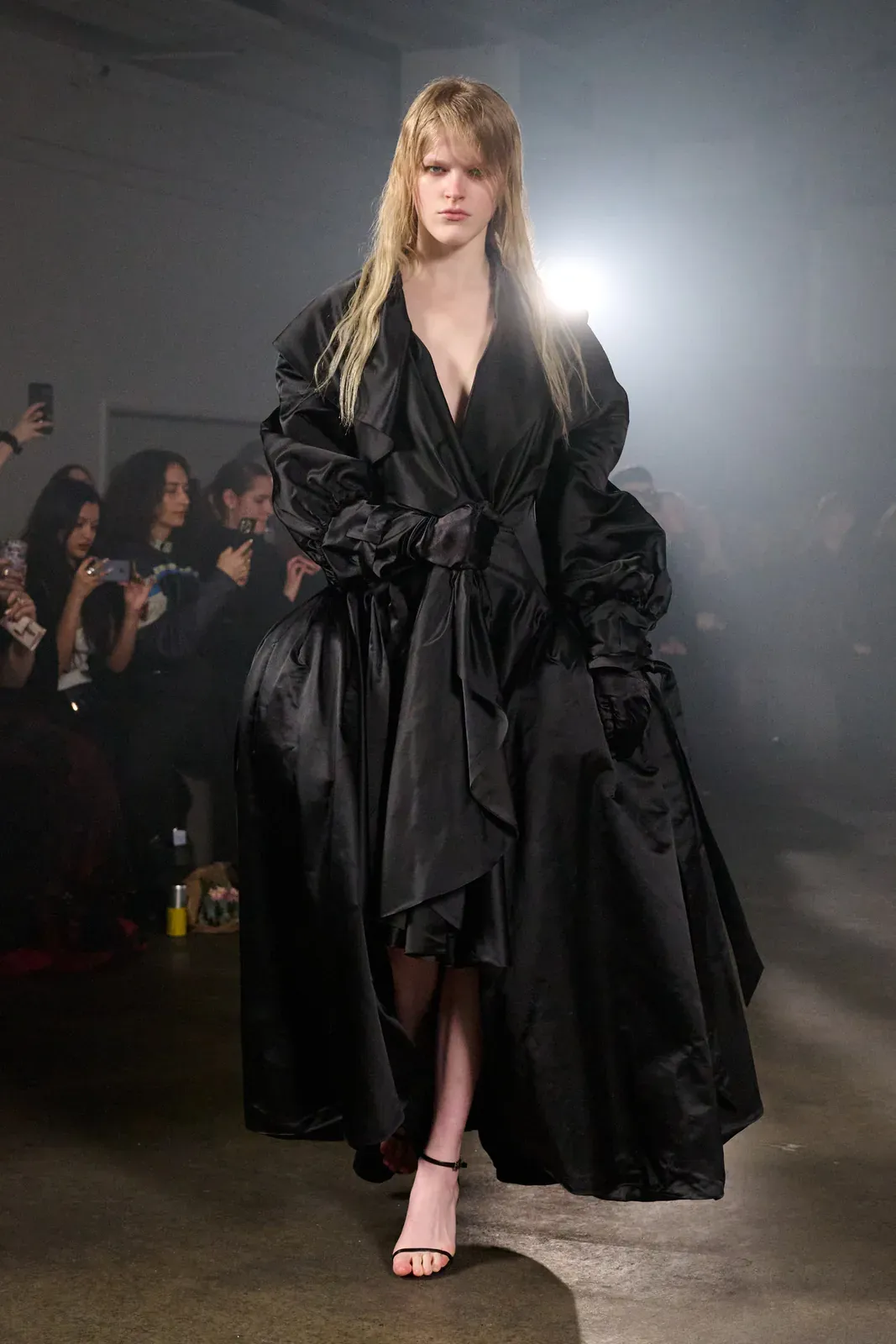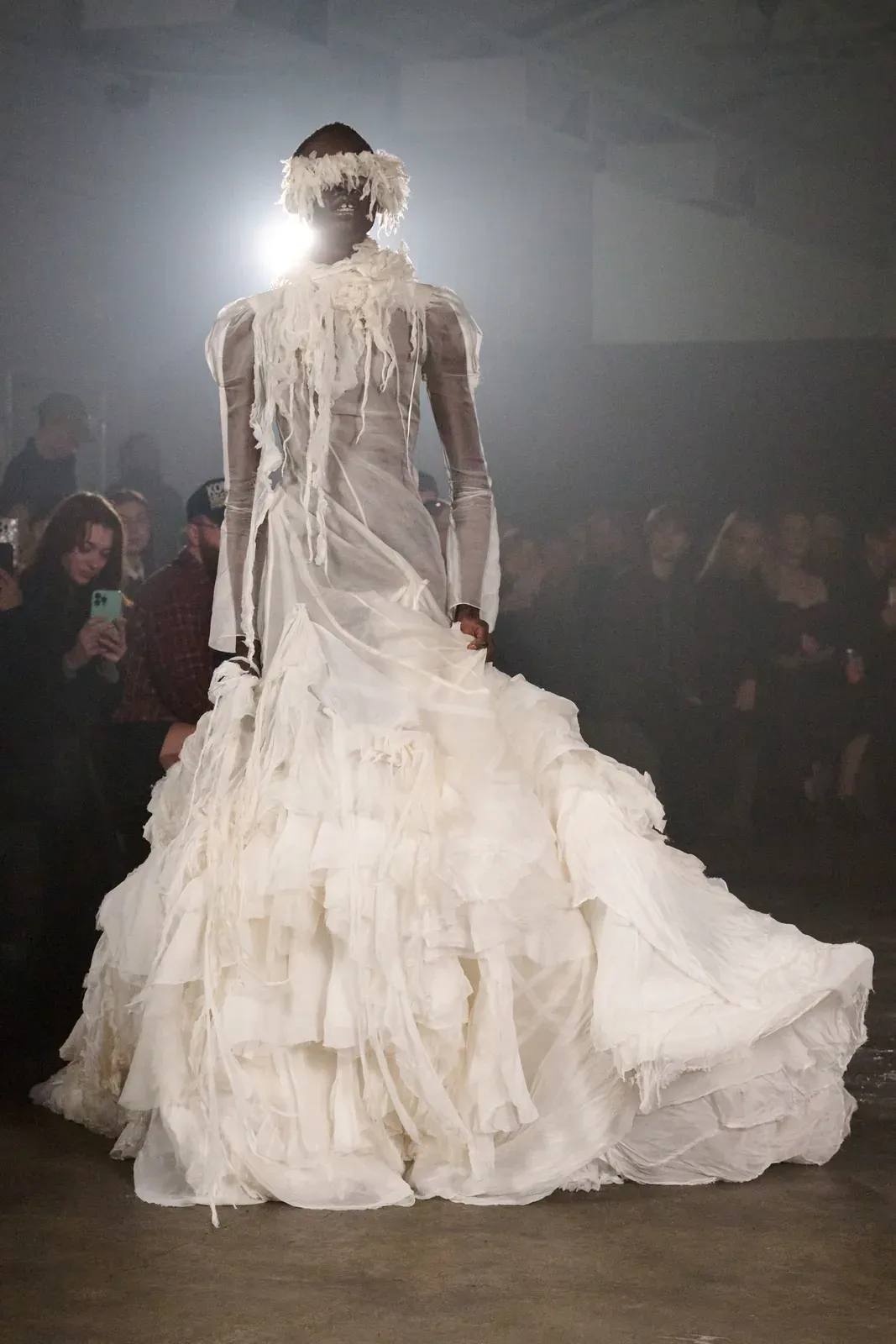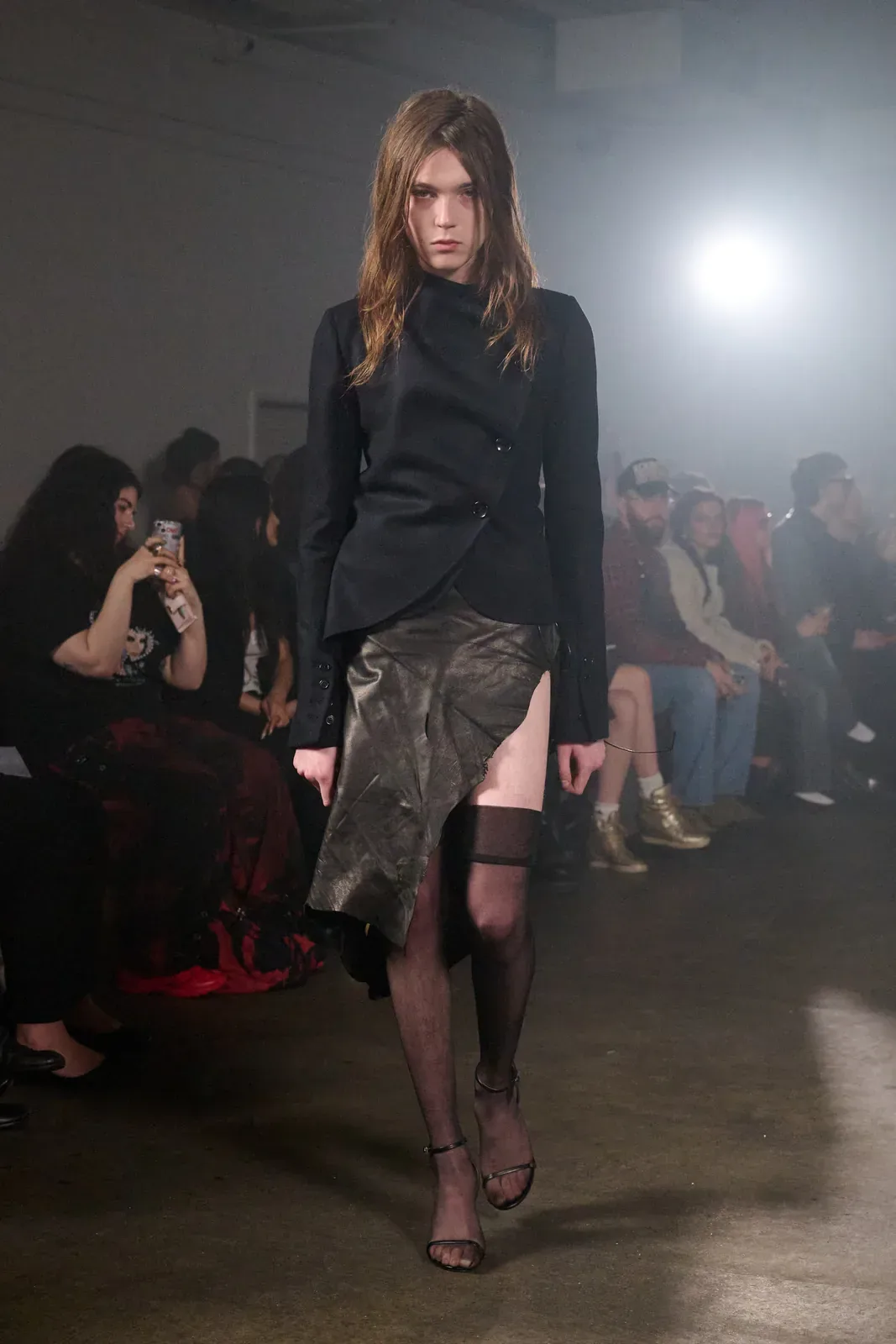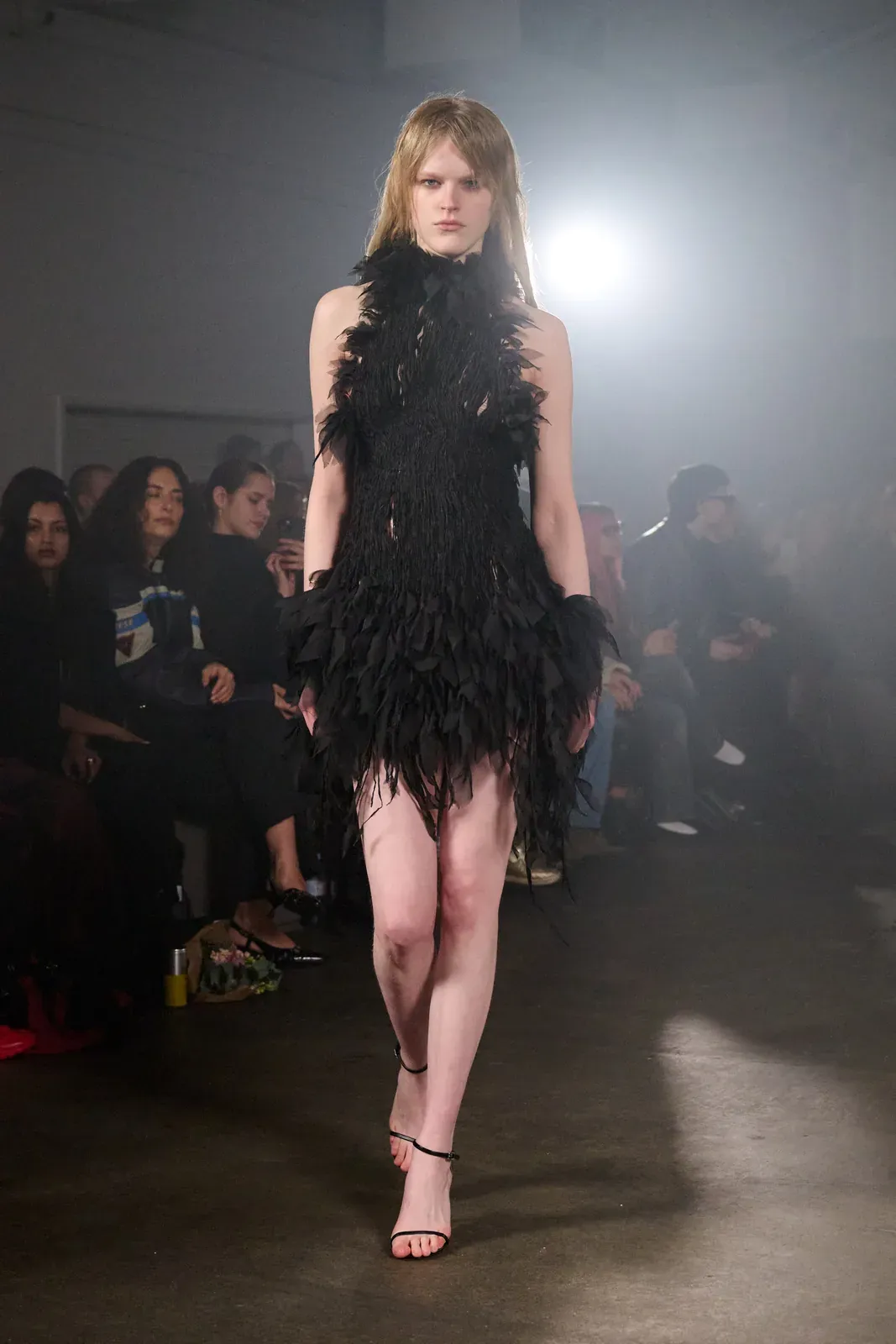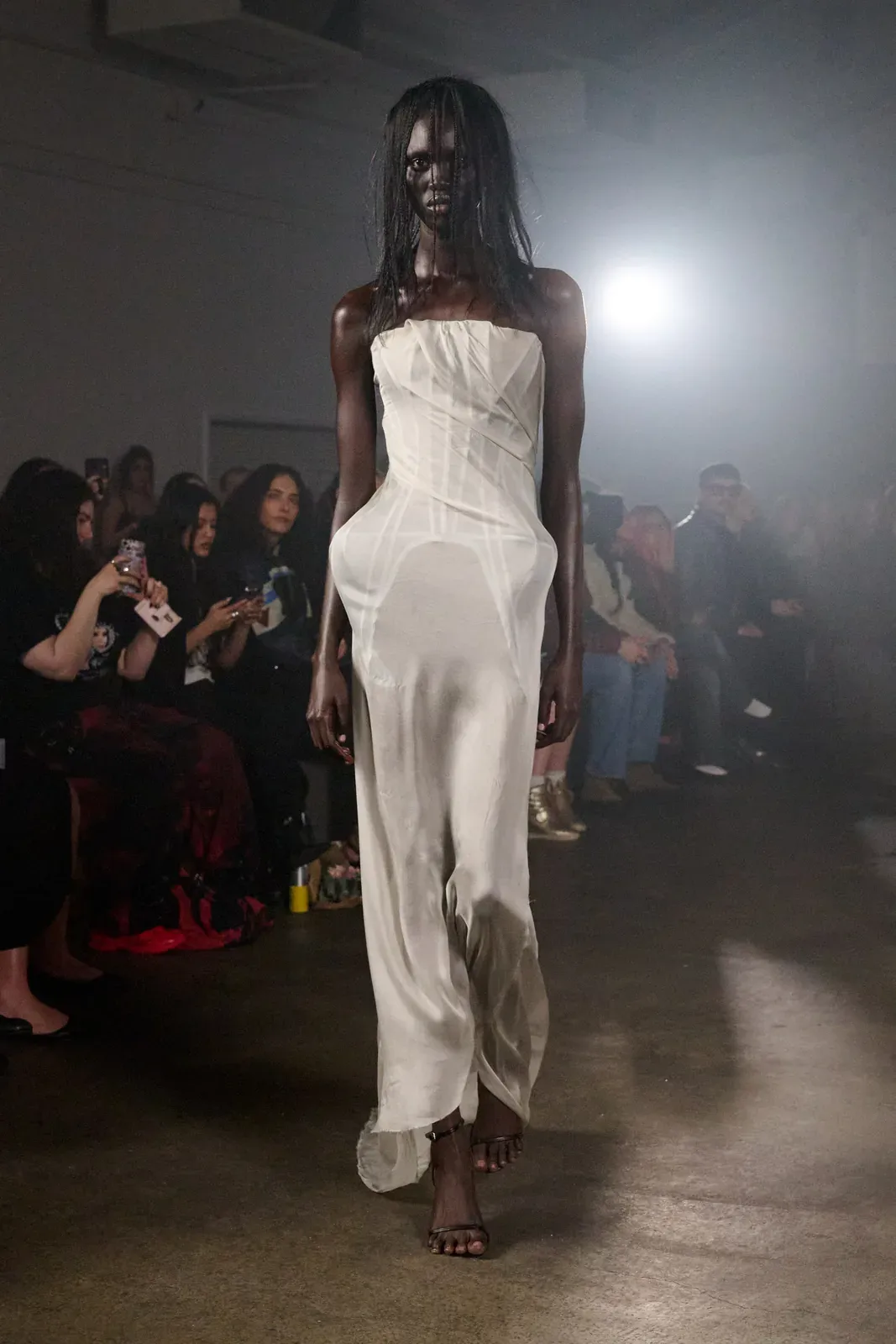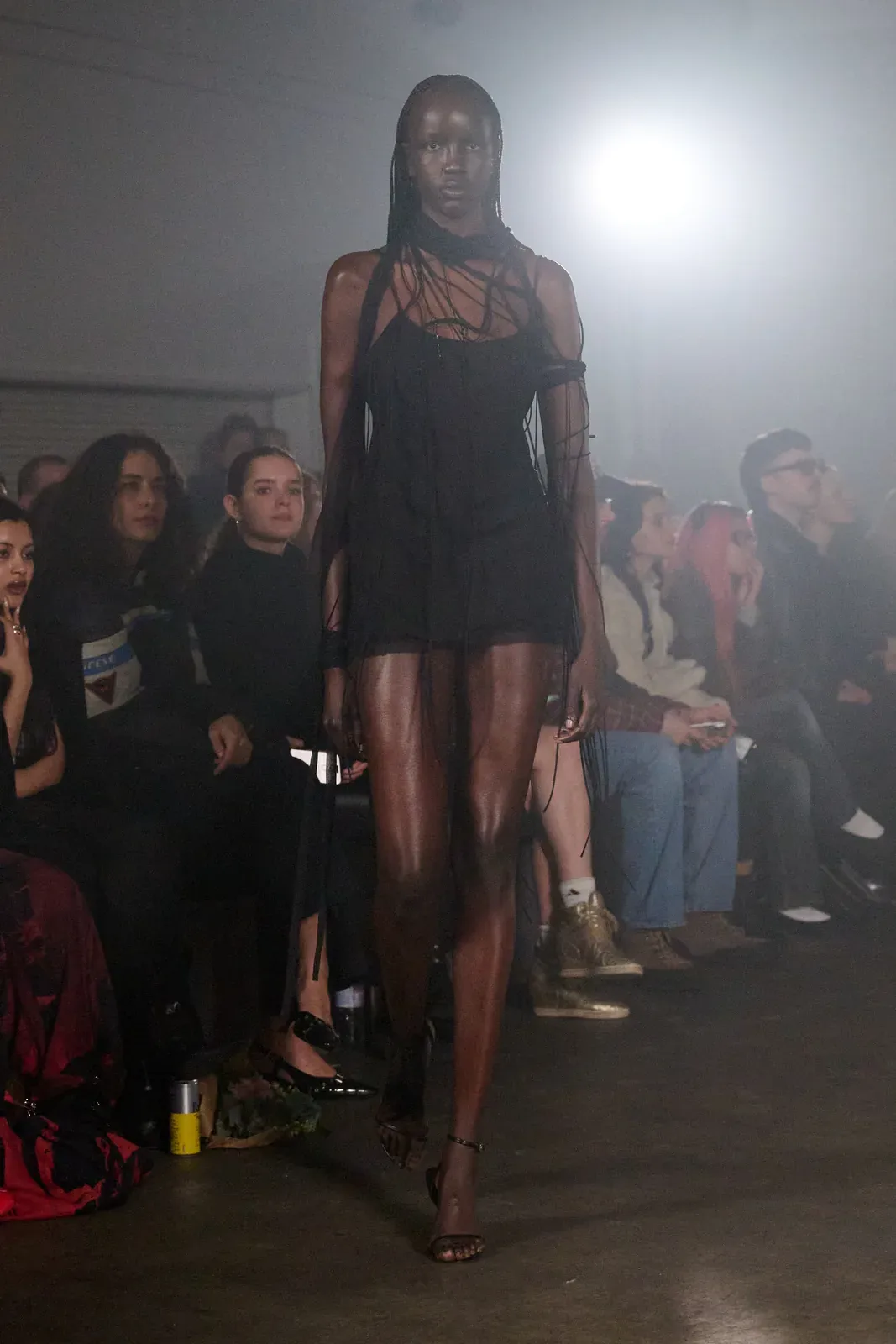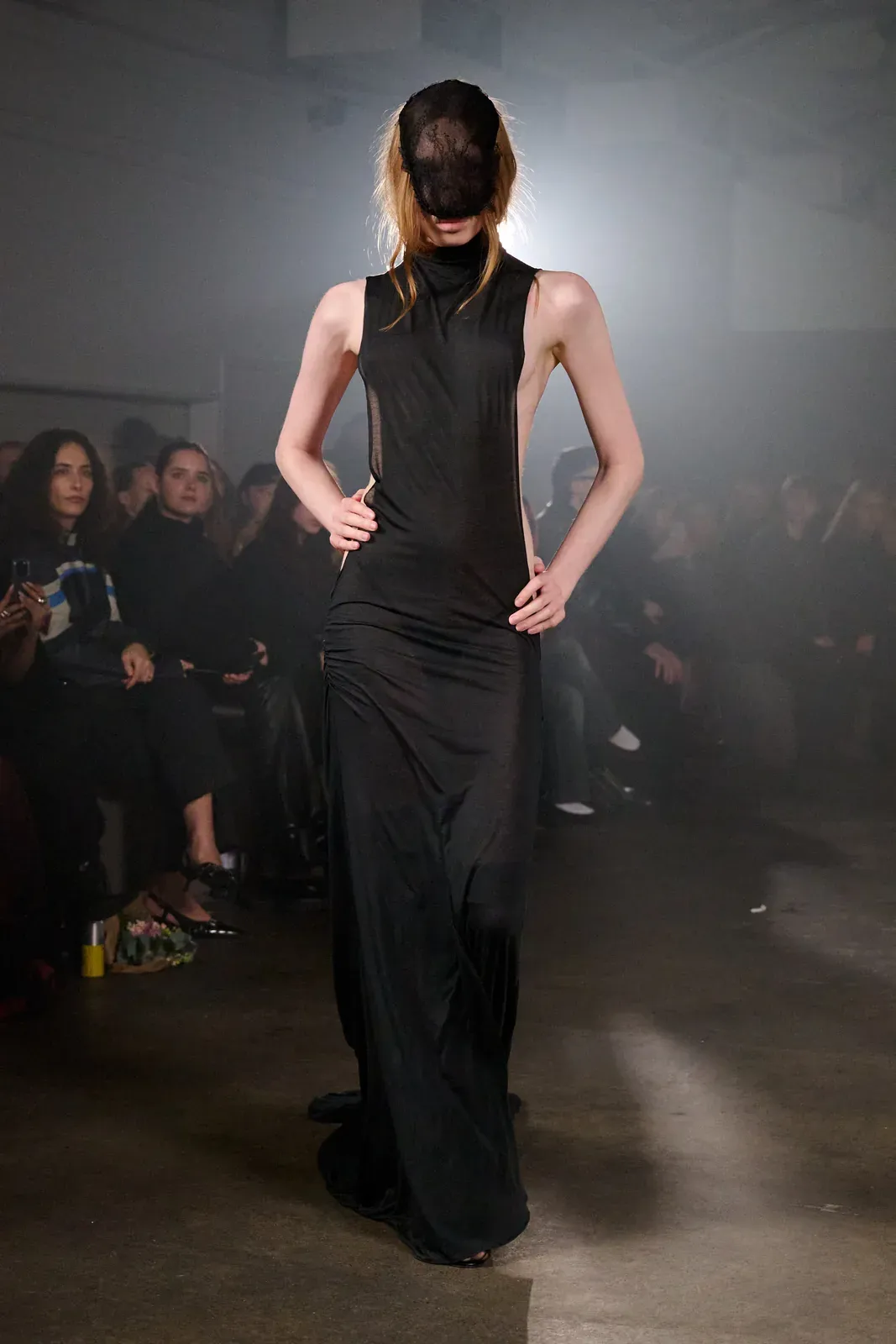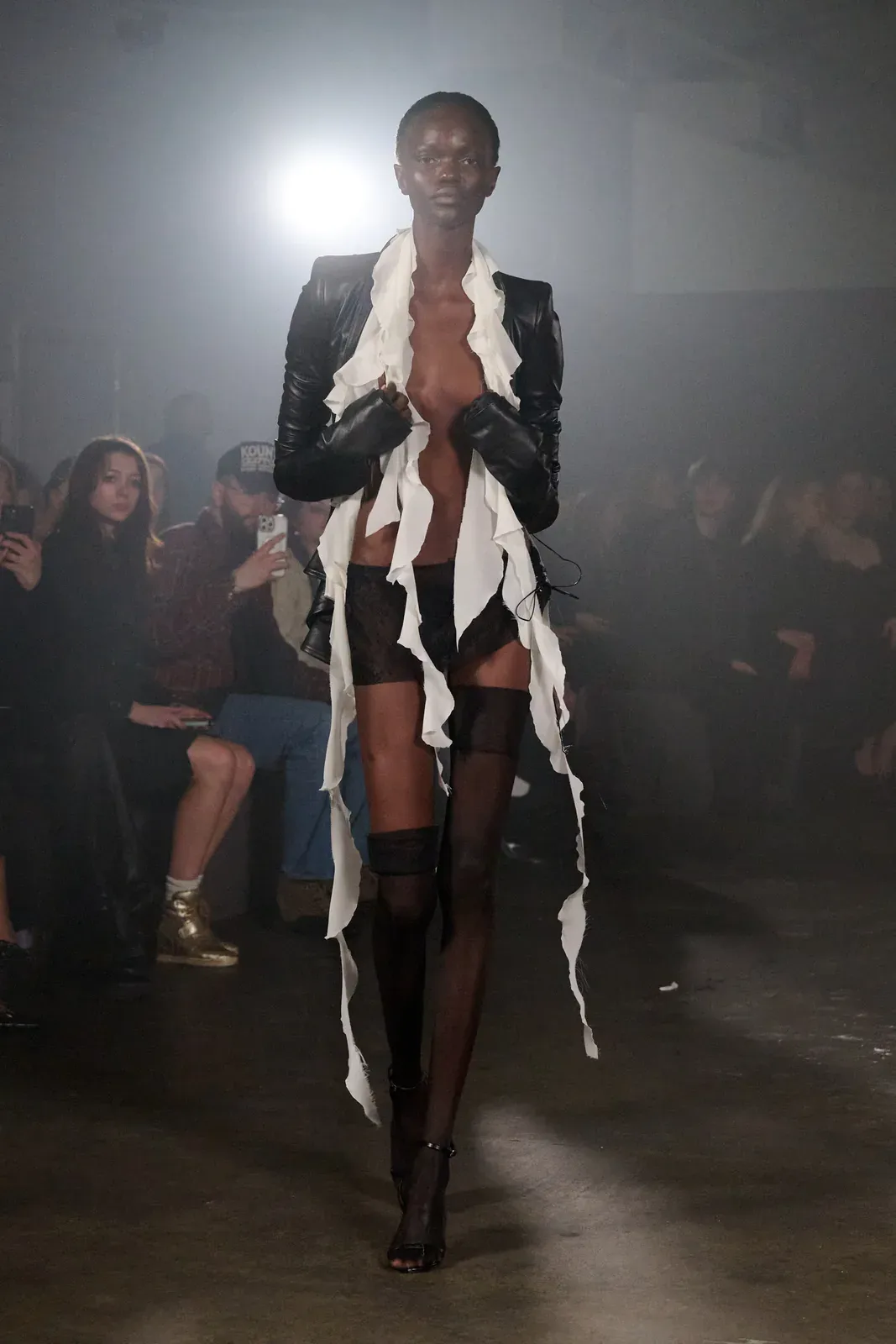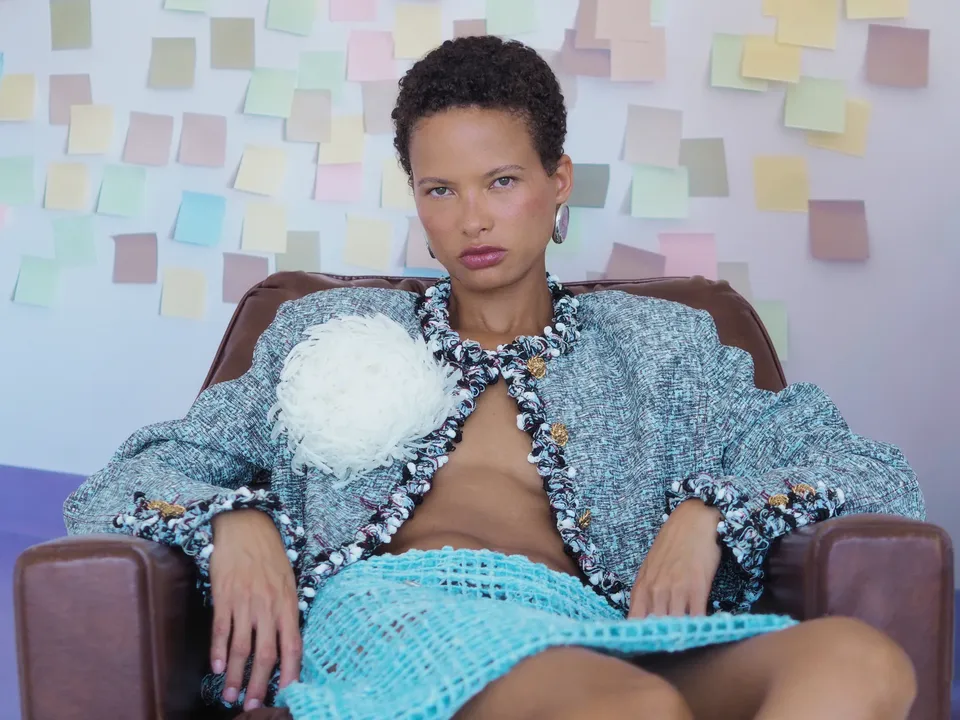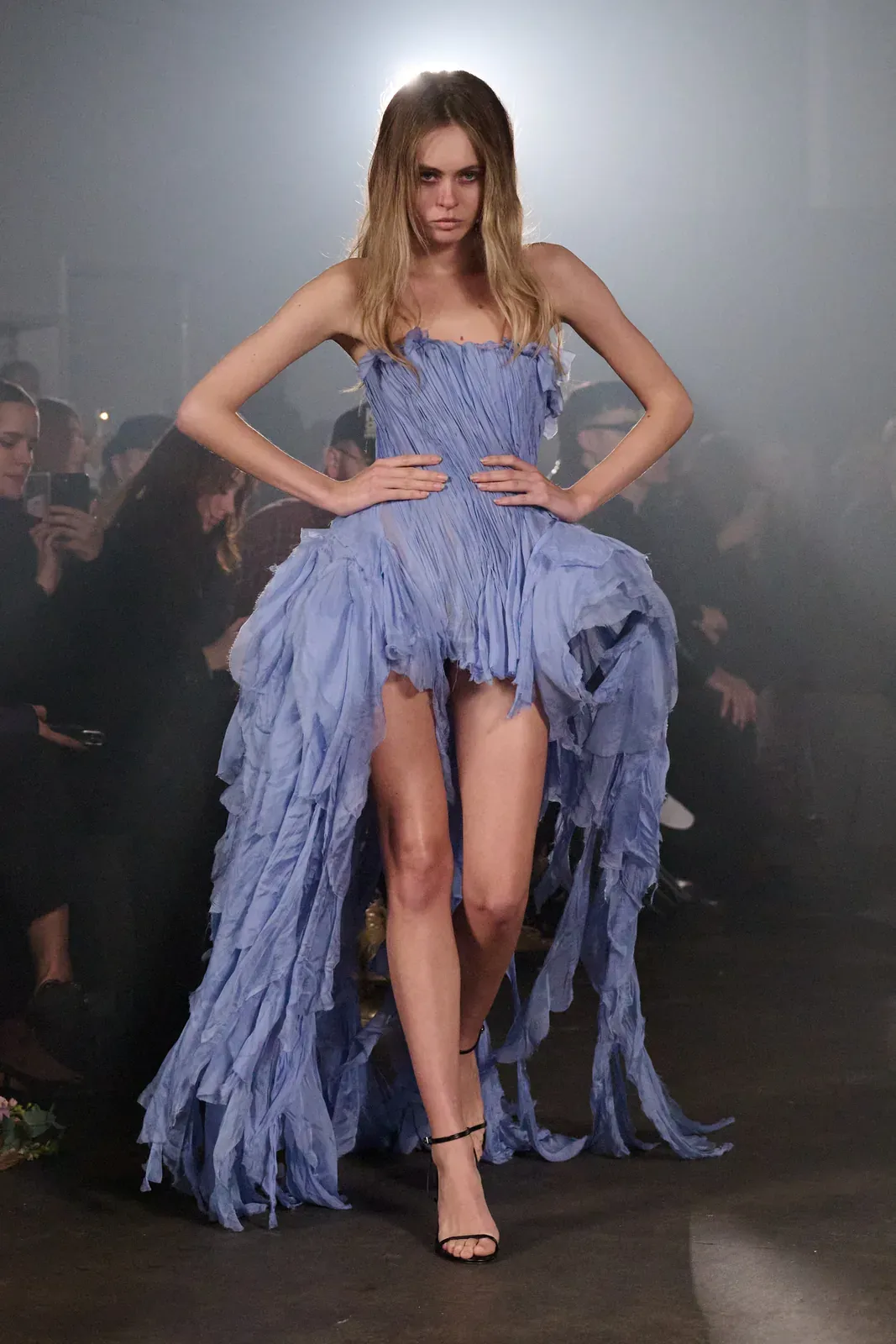
What remains when every aspect of your identity falls away? For Myat’s Autumn/Winter 2026 collection, Antechamber, Burmese designer Erica Myat leads us through a journey of concealment and self-revelation, taking away everything you are and building it back again.
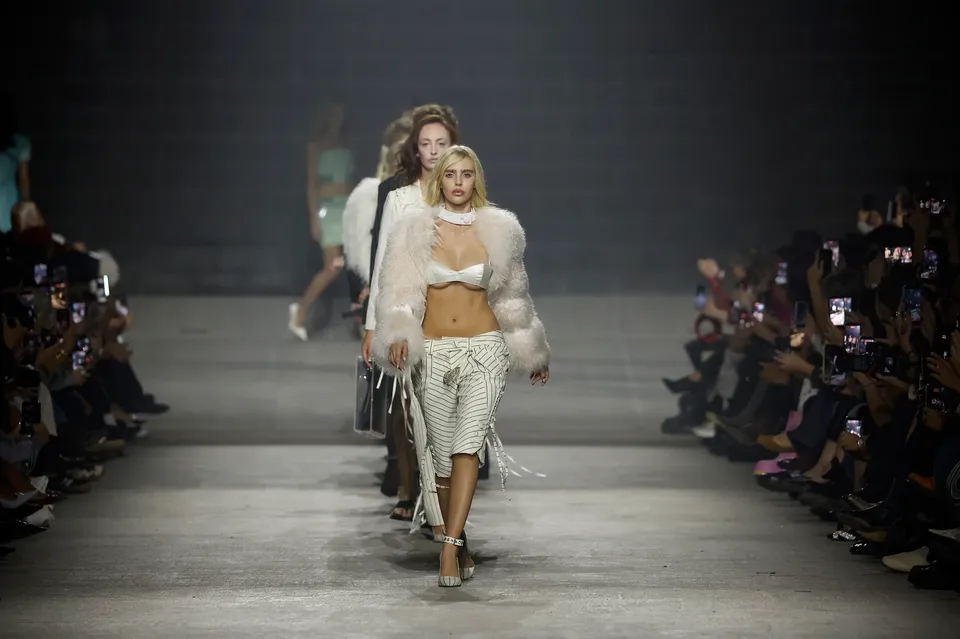
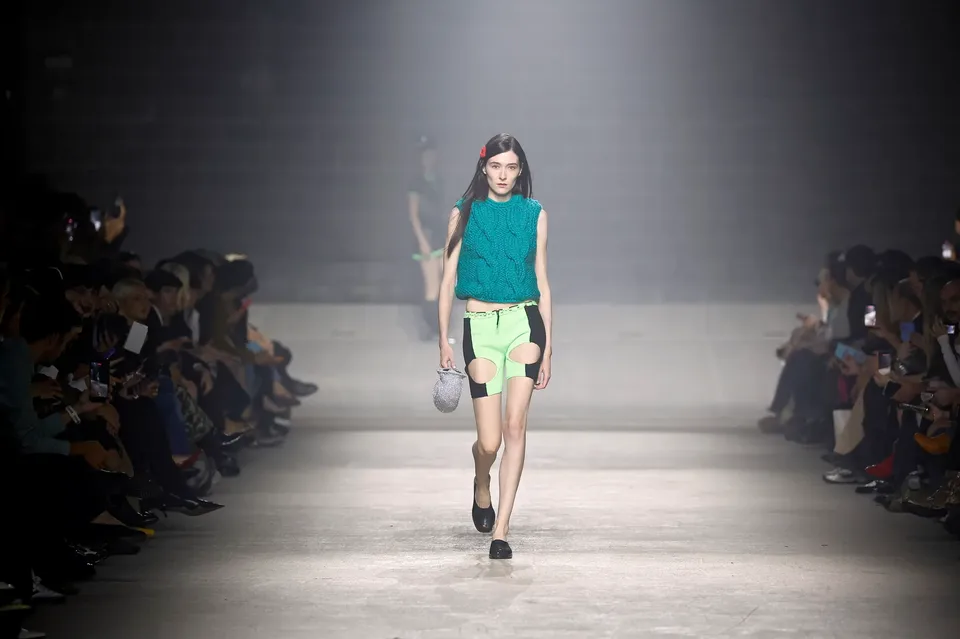
Under the stark lighting of an industrial warehouse, a figure is encased within a sugar-glass box while the collection unfolds; dark feathered textures and skin-like translucent fabrics invite the body to be part of the spectacle almost as much as the clothes. Drawing from places of discomfort and the navigation between different cultures, the Central Saint Martins graduate designs as a way to make sense of the fluidity of identity, focusing on the journey itself as opposed to the finished product. We spoke with Myat on her design processes, her time at CSM and the narrative arc in her work.
You’ve titled the collection Antechamber, alluding to a liminal space, a threshold in between. What is your personal antechamber, and why does that feel relevant to you now?
The plane, especially on a fourteen-hour flight between Yangon and London, a journey I take often. You’re physically leaving one life and heading back into another, but for a few hours you’re not really either version of yourself. There are no decisions to make and nobody expects anything from you. That’s probably my favourite state to be in.
How much of your identity bleeds into your work? Do you largely pull inspiration from personal experience or outside sources?
Everything begins with a feeling or reaction I need to process. I used to chase abstract concepts, but the work never felt authentic. The strongest ideas always came from something I had actually lived through. Before Myat, I made music all the time. It was a way of processing my thoughts. Fashion is the same. I create to make sense of my experiences.
The collection feels darker and more aggressive than your previous work. What evoked that for you?
I never thought of it as a dark collection. I began with a girl. She was trying to reconcile different expectations: the person you must be to survive and the person you hope to become. The collection came from observing her. The clothes are simply what I imagined she would wear as she moved through that process.
As a Central Saint Martins alumna, is there anything you learnt at the school that you feel still shows in your practice today? Or anything you feel like you’ve outgrown?
One piece of advice I still remind myself of came from a CSM tutor, never use your first idea as your final idea. It taught me to keep pushing beyond the obvious solution. Since leaving, I’ve adapted that idea by placing more importance on making. For a while, I spent months sketching and developing ideas on paper. In the end, very few of those drawings became garments. Fashion exists in the real world, so now I try to get to the toile or the sewing machine much sooner. The most informative decisions usually happen once the garment is on the body.
What were you listening to when designing? Is there a particular album or artist that put you in a certain headspace?
We’re very democratic in the studio. Everyone takes turns on the speakers. Some days it’s deep techno, other days it’s EsDeeKid. But honestly, once I’m working, I stop hearing the music.
The show walked the line between fashion and performance art, featuring a figure breaking free from a chamber of sugar glass as the centrepiece. Do you find a strong narrative arc helps you when designing?
I always start with a character. Once I know who she is, the design decisions become much clearer. The figure breaking through the sugar glass chamber was the final chapter. It felt important that she left the room she had built around herself.
Each look on the runway feels quite linear, like you’re telling the story of a metamorphosis. What does that represent for you?
I can see why it reads as a metamorphosis. The collection moves from heavier, darker looks towards lighter, more translucent ones. When I was designing, I wasn’t thinking about transformation, but about how to uncover who she already was.
It also feels deeply sensual, nudity feels like a motif of empowerment, as opposed to vulnerability. Where does the role of sexuality and physicality fit into the inspiration?
I actually didn’t realise how much skin the collection revealed until the fittings a few days before the show. We had all the looks lined up and I remember thinking, oh, they’re all naked. A lot of the collection was informed by Mughal dress and the Indic belief that the body reflected the inner qualities and state of a person. Clothing wasn’t used to conceal it, but to frame and reveal it. That’s why traditional depictions of Indian kings often show them bare-chested or dressed in sheer, untailored garments. I was interested in the idea that clothing could reveal something about the wearer, rather than hide them.
While being about restriction, it’s about transformation, too. Do you see identity as something to uncover, or something to continually construct?
I find identity quite confusing. You’re a different person with every single person, and you dress differently depending on the occasion. Sometimes it feels as though every version of yourself is a performance. But perhaps all of those versions are true at the same time. That’s something I’ve been trying to explore through clothing. Rather than constructing an identity, I want the garments to frame and reveal what is already there.
As a Burmese designer, is there anything in your cultural identity reflected in the collection?
Yes. Several of the jackets, particularly looks sixteen and nineteen, were informed by traditional Burmese dress. There’s a cropped jacket that I find fascinating because it does the opposite of what a jacket is supposed to do. Rather than providing warmth or coverage, the entire front of the body remains exposed. I was also interested in a particular historical Burmese men’s garment: an asymmetrically draped top that intentionally leaves the left nipple exposed. The black draped top in look three came from that reference. When you translate something designed for a male body onto a female body, the garment is recontextualised. What was once unremarkable can suddenly become provocative.
If Antechamber was a conversation between your past and current self, what would each version say to each other?
One problem at a time!