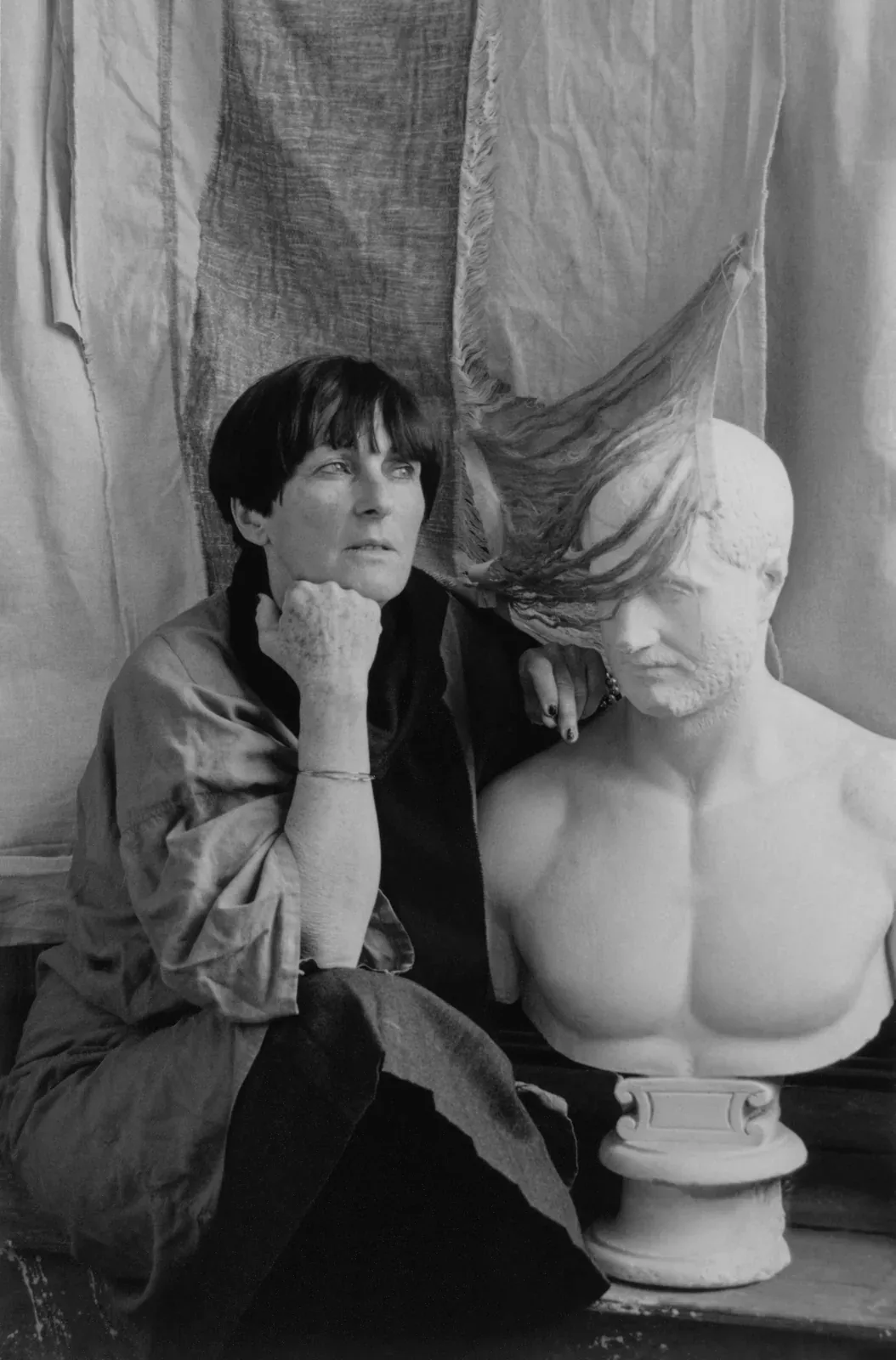
If it does not exist, create it. If there’s no space for you, make one. And if the rules were not made for you, unravel them. This is, in many ways, the story of Mariuccia Secol. Post-war Italy was lacking: prominent women artists, women masters. And so, she did what would become the defining gesture of her seven-decade artistic practice: she forged her own path.
At Muzeum Susch in Switzerland, until November 1st, Unraveling brings together a lifetime of work defined by “what she did, what happened, what she wanted to change, what she wanted to achieve, what she no longer wanted to accept, what she wanted to modify”.
To unravel is to undo something that appears fixed. To pull apart the threads and see what lies underneath. What looks like a whole is, in fact, made of many individual strands, and those strands can be rearranged. Secol’s practice grew around themes that placed women into situations of unfreedom, many of which still resonate today. Curated by Monika Branicka and Eva Brioschi, the exhibition follows seven decades of work, tracing different barriers across different media and moments in her life. From oil to dismantled clothes, from Mrs. Tognola to Secol, from a forced life to a freer one. Unraveling is more than anything, a guided journey through that transformation.
Inspired by everything around her, by artists and painters, by nuns, by professors, and carrying a malaise that she could not decipher, Secol moved through time and space with an untamed force that shaped her path, and perhaps most importantly, opened one for the artists who came after her. Social injustices were part of the Italy in which she made her debut, both as a woman and as an artist. But rather than choose between the different roles life had placed before her, she embraced them all: art, marriage, motherhood, activism, collective work. The sweet art of doing it all.
Women publishing under pseudonyms, having their work attributed to their husbands, or being discouraged or punished for pursuing an artistic life can feel distant now that there’s greater freedom. But there was a time when what was considered natural was completely different. So, when the opportunity arises to learn first-hand from one of the pioneering feminist artists who helped change that order, it is simply impossible to pass it up.
In this conversation with METAL, Secol lets us into her inner world, whose threads are woven into the works that make up this exhibition. Here, separating the artist from the art would be a disservice. To understand Mariuccia Secol, you do not necessarily need to know her. But knowing her past puts everything into perspective. Her life, her artistic journey, her work, speak to this generation in much the same way it did to the one before: still revolutionary, and still unraveling.
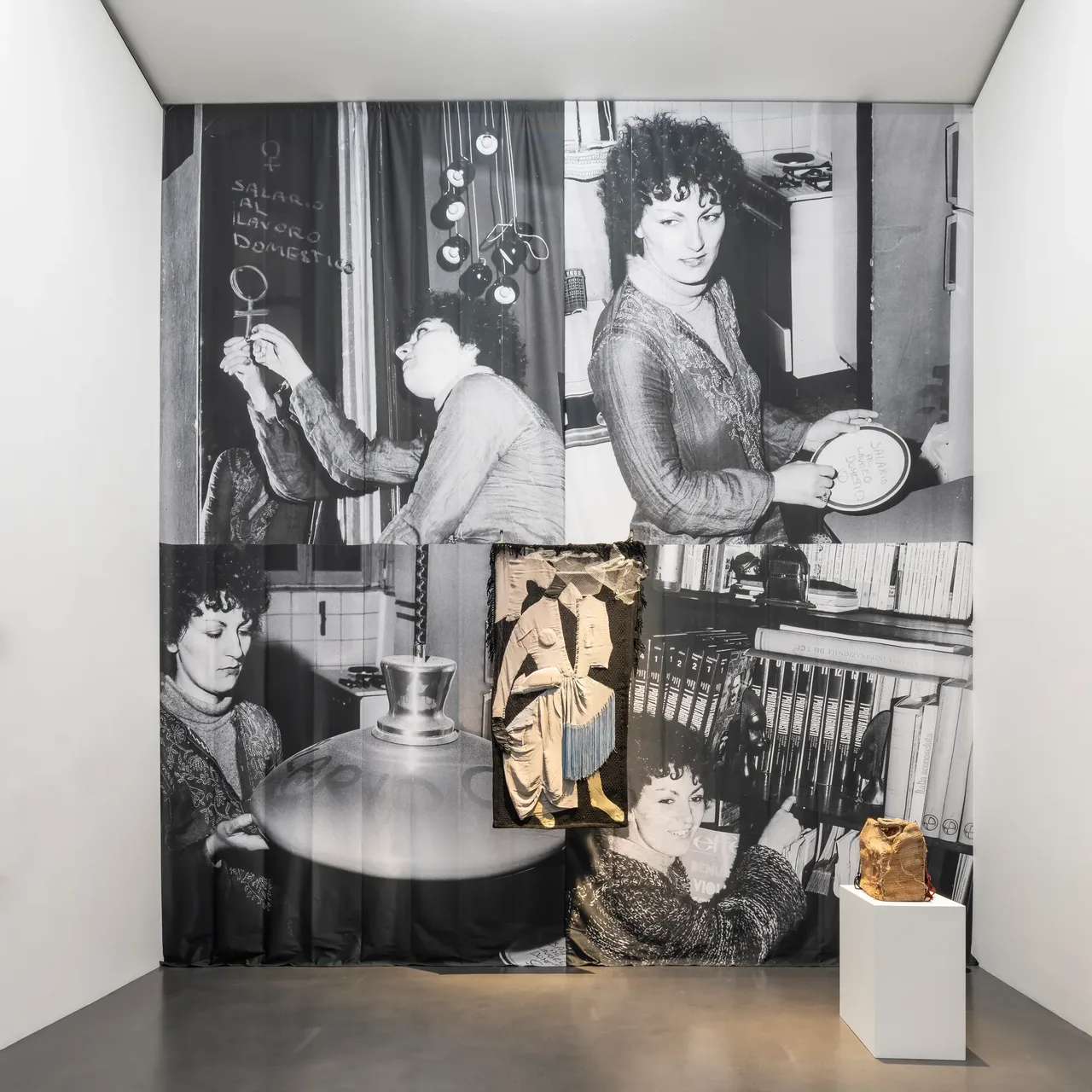
Photography installation by Milli Gandini, Mom Has Gone Out: A Salary for Housework (La mamma è uscita. Salario al lavoro domestico) 1975, vintage photography, pictured is Mirella Tognola, (c) and courtesy of Manuela Gandini. Artwork in the centre (patchwork of clothes) by Mariuccia Secol, The Doll's House. Wedding dress (Casa di bambola. Abito di sposa), 1970, © Muzeum Susch / Art Stations Foundation; photograph: Federico Sette.
Some people will discover your work for the first time through this retrospective. If you had to introduce yourself, what would you tell them? Who is Mariuccia Secol?
Mine is the work of a lifetime. I am a student fascinated by the poems of her professor, whom I have always looked at with interest and who has always been present even in the most unknown things. I have always kept his way of doing things in mind. He was a true master. He was also the only master who left his mark. The true master is the one who impresses upon you your way of expressing yourself.
You began your career at a time when the art world was still overwhelmingly shaped by men. What was it like finding your place as a young woman artist in post-war Italy?
I expressed myself in a different way from the expression of female artists in general. It was not a gentle way, because the themes concerned problems of the moment: themes of war, of a desire for change with respect to the way of living, very subjected and not free. Even in making art: for me, the fact of not being accepted was not so important. The important thing was being able to express oneself on the themes that forced women into a situation of unfreedom.
It was a need for existence. There were no female masters, they were all men; I was lucky because my master was Galliano Mazzon, who was also a poet, and I was also amazed by the way in which he appreciated my autonomy of thought, which translated into free work. This was his teaching in general. At school the lessons were held with a sense of freedom. He appreciated forms that were not traditional. For example, in a school competition it happened that I thought that he would not even look at my work, instead I received the prize ex aequo with a pupil who had a traditional mark: it was about the war and this girl had made a perfect aeroplane. I had drawn symbols of war that did not resemble anything known or at least had to be interpreted. It was not a complete sign but symbolic: for example, the cannon and the aeroplane, the ship were represented symbolically but not with their real form, so they had to be interpreted; essential lines that distinguished them, they were overlapping lines, especially in the dimension contained within a sheet, they were lines that held elements of war, geometric forms, almost a writing.
Mazzon did not impose anything, one chose among several themes. He began the lesson by talking about some things and did not give any other indications, he left freedom of expression to the class of girls and boys of middle school, around fourteen years old. He gave the time that each person needed. He too worked on his own, he did not walk around among the pupils. Sometimes he read one of his poems which was a sound, the possibility of an indication.
During the school year the drawing course was a few hours a week; we worked at the desks, we had a pencil case with crayons and coloured pencils, the sheets were from the school.
At the end of the year there was a final essay imposed by the fascist regime, the “Juveniles”.
Outside school, I had a dialogue with him about poetry: when he was on holiday he sent me poems and I sent him my poems.
The most particular memory is that of the prize for my work, equating it in value with a traditional one, something that had also surprised me.
When I began to paint in Daverio, it came naturally to me to be in tune with his free way of doing things. The first works were portraits of children, they were oil works. The first works were signed with my husband’s surname: Tognola. It was a natural thing because the law provided for it. When I went to the Psychiatric Hospital for teaching I began to use “Secol” to sign. The first time I expected objections and instead it was normal in the workplace to have your surname.
It was a need for existence. There were no female masters, they were all men; I was lucky because my master was Galliano Mazzon, who was also a poet, and I was also amazed by the way in which he appreciated my autonomy of thought, which translated into free work. This was his teaching in general. At school the lessons were held with a sense of freedom. He appreciated forms that were not traditional. For example, in a school competition it happened that I thought that he would not even look at my work, instead I received the prize ex aequo with a pupil who had a traditional mark: it was about the war and this girl had made a perfect aeroplane. I had drawn symbols of war that did not resemble anything known or at least had to be interpreted. It was not a complete sign but symbolic: for example, the cannon and the aeroplane, the ship were represented symbolically but not with their real form, so they had to be interpreted; essential lines that distinguished them, they were overlapping lines, especially in the dimension contained within a sheet, they were lines that held elements of war, geometric forms, almost a writing.
Mazzon did not impose anything, one chose among several themes. He began the lesson by talking about some things and did not give any other indications, he left freedom of expression to the class of girls and boys of middle school, around fourteen years old. He gave the time that each person needed. He too worked on his own, he did not walk around among the pupils. Sometimes he read one of his poems which was a sound, the possibility of an indication.
During the school year the drawing course was a few hours a week; we worked at the desks, we had a pencil case with crayons and coloured pencils, the sheets were from the school.
At the end of the year there was a final essay imposed by the fascist regime, the “Juveniles”.
Outside school, I had a dialogue with him about poetry: when he was on holiday he sent me poems and I sent him my poems.
The most particular memory is that of the prize for my work, equating it in value with a traditional one, something that had also surprised me.
When I began to paint in Daverio, it came naturally to me to be in tune with his free way of doing things. The first works were portraits of children, they were oil works. The first works were signed with my husband’s surname: Tognola. It was a natural thing because the law provided for it. When I went to the Psychiatric Hospital for teaching I began to use “Secol” to sign. The first time I expected objections and instead it was normal in the workplace to have your surname.
Do you ever wonder how different your beginnings might have been had you been a man?
No. Because the situation and the political moment coincided. We did not put ourselves in this subordinate attitude because we already had our proposals and answers that found space in the society of that time.
Did you ever feel pressure to make your work less political? Did anyone ever try to censor you because of your revolutionary ideas? How did you respond?
No, I never had pressure in this sense.
The Psychiatric Hospital was outside this concept of political struggle. In the workshop I used the same method that I had experimented with myself with Galliano Mazzon: autonomy, freedom of interpretation which then gave good results in the sense that often, in very short periods of time, the patients were also discharged. They came to work in the atelier and slept outside the hospital, in care homes. The doctors did not interfere in the work that was being done in the hospital. Before starting the workshop, a meeting of doctors was held with my presence, during which they asked me how I would conduct the work and they agreed. There was a climate of renewal of psychiatric theories among the doctors. It was the doctors who asked me to run the workshop. There was a climate of renewal among psychiatric doctors in Italy that referred back to the theories of Franco Basaglia.
Galleries in general were not interested in my work, also because it was a collective work of the feminist Gruppo Immagine of Varese, they were not interested in the work of a feminist group. Ours was work by independents. However, some places for exhibiting and some galleries were interested in our work. For example, the group exhibition Le Barriere was held in 1978 in a gallery in Milan, the Galleria di Porta Ticinese which exhibited various feminist groups. In 1976 an exhibition was held in Rome in the premises of the cultural association La Maddalena. In Varese, the spaces of the Il Broletto Association; in Daverio, the municipal library and the gallery of Villa Morotti. In Galliate Lombardo, the architect Manfredini invited Gruppo Immagine to participate in a group exhibition. We organised Donna Arte Società in Milan at the Centro internazionale di Brera in January 1978, a national congress of women working in the visual arts coordinated by Fernanda Fedi. Then there was the Venice Biennale. After the Biennale we received many proposals from Italian cultural institutes in Europe. There was a movement of intellectuals in Italian society who were in favour of feminism and feminist art. We were excluded a priori from certain circuits, but no one put explicit pressure on us.
The Psychiatric Hospital was outside this concept of political struggle. In the workshop I used the same method that I had experimented with myself with Galliano Mazzon: autonomy, freedom of interpretation which then gave good results in the sense that often, in very short periods of time, the patients were also discharged. They came to work in the atelier and slept outside the hospital, in care homes. The doctors did not interfere in the work that was being done in the hospital. Before starting the workshop, a meeting of doctors was held with my presence, during which they asked me how I would conduct the work and they agreed. There was a climate of renewal of psychiatric theories among the doctors. It was the doctors who asked me to run the workshop. There was a climate of renewal among psychiatric doctors in Italy that referred back to the theories of Franco Basaglia.
Galleries in general were not interested in my work, also because it was a collective work of the feminist Gruppo Immagine of Varese, they were not interested in the work of a feminist group. Ours was work by independents. However, some places for exhibiting and some galleries were interested in our work. For example, the group exhibition Le Barriere was held in 1978 in a gallery in Milan, the Galleria di Porta Ticinese which exhibited various feminist groups. In 1976 an exhibition was held in Rome in the premises of the cultural association La Maddalena. In Varese, the spaces of the Il Broletto Association; in Daverio, the municipal library and the gallery of Villa Morotti. In Galliate Lombardo, the architect Manfredini invited Gruppo Immagine to participate in a group exhibition. We organised Donna Arte Società in Milan at the Centro internazionale di Brera in January 1978, a national congress of women working in the visual arts coordinated by Fernanda Fedi. Then there was the Venice Biennale. After the Biennale we received many proposals from Italian cultural institutes in Europe. There was a movement of intellectuals in Italian society who were in favour of feminism and feminist art. We were excluded a priori from certain circuits, but no one put explicit pressure on us.
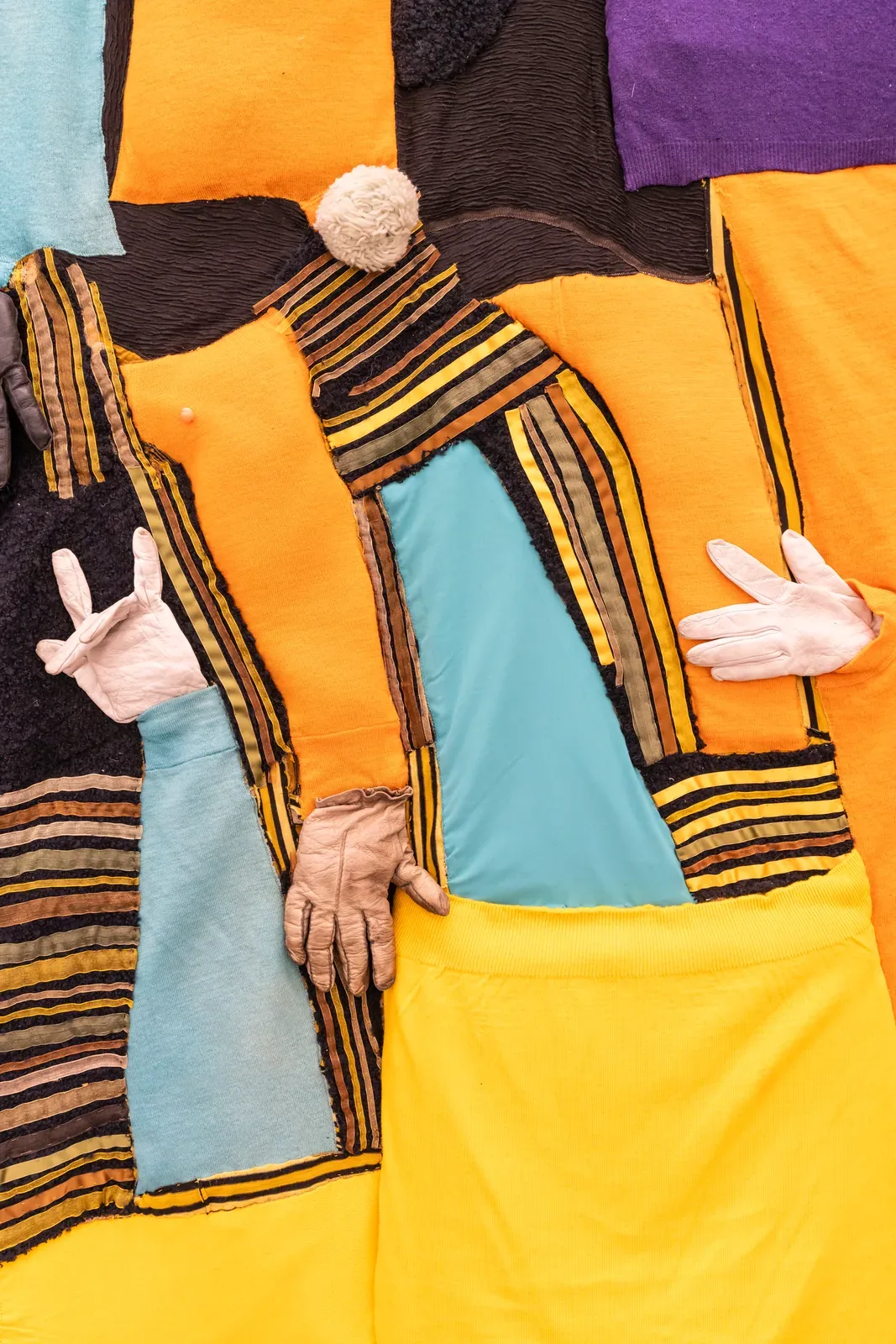
Mariuccia Secol, Unraveling © Muzeum Susch / Art Stations Foundation; photograph: Federico Sette.
Your story reminded me of Hilma af Klint, who also found strength in creating alongside other women. I’m curious whether there were artists who inspired your own journey. How did those influences evolve over the years?
I don’t believe I was influenced by other artists in any particular way. Apart from my initial training with Galliano Mazzon. Francesco Fedeli also passed on to me the use of encaustic painting and other techniques. For engraving on copper and zinc I took courses from a printer in Venice. I attended contemporary art exhibitions but there was no direct influence from other artists. Thank you for introducing me to Hilma af Klint, her abstract work is very interesting also considering the period in which it was made. It seems like a current product, almost contemporary. I cannot imagine the reason why she kept her abstract art secret, she will have had her reasons that we do not know.
Did creating the Gruppo Femminista Immagine come from a desire to feel stronger together? What did working collectively make possible that working alone couldn’t?
The idea of creating Gruppo Immagine came on the occasion of the rape trial of a girl from Veneto. At the trial, for the first time in Italy, the rapist boy was convicted. The presence of women not only from Veneto but from all over Italy made it possible for the judge to decide that the defendant’s attitude was not “youthful exuberance”, a formula with which acquittal had until then taken place. There we understood that being in a group gave us more strength rather than individual struggle. We presented ourselves as a group but each of us signed her own work, her own artwork, each one maintained a certain freedom. This made it possible to do what individually would have been much more difficult.
Your work challenges the traditional roles of wife and mother, yet you experienced both. How did those lived experiences shape your feminism?
I acted according to my experience, not responding to the theories that were used to define these roles, generic theories, without taking into account one’s own self, one’s own need, imposed by society. I acted by putting the result of experiences into practice. I had a malaise that I could not decipher. Through the politics of consciousness-raising, together with other women from the student movement, I began attending a feminist consciousness-raising group in Varese. This work lasted more than a year. After consciousness-raising you have a perception of what you do, what happens, what you want to change, what you want to achieve, what you no longer want to accept, what you want to modify. As far as artistic work is concerned, the evolution was in the choice of themes. Intimate and general themes, such as war, migration, general behaviours in accepting imposed rules. For example, the series “Doll's House” follows this experience of consciousness-raising begun in 1970, which shaped me on a personal level and not as a group decision. All this was obviously in preparation without having a precise awareness of it. These things do not happen suddenly, but they take time.
“Art teaches us never to consider reality as something definitive.”
Did the responsibilities traditionally expected from women ever compete with your artistic life? How did you protect your creative freedom?
The proposal to run a painting workshop at the Psychiatric Hospital of Varese was initially made by Professor Edoardo Balduzzi, director of the Hospital, to my husband, a doctor and painter. He, however, did not have time and proposed to Balduzzi that he ask me. From there this important experience was born, lasting more than twenty years. First of all, this involved adopting my surname Secol, because I was known as Mrs Tognola. This gave me the possibility of leaving the house for work and greater freedom.
Every fifteen days trips were organised for the patients who left the Hospital with a small bus, but to take more people I also used my car. All this facilitated the daily meetings with Milli Gandini. At the end of the workshop we would meet in her designer studio in Varese. There was also contact with the relatives of the patients who came to me to ask for news. During traditional festivities I had contact with journalists and administrative authorities of Varese who were invited to the initiatives organised by the residents.
There were also contacts with men and women who worked at Euratom in Ispra and who were interested in the workshop; contacts with photographers, in particular Carlo Meazza who over the years documented all the activities of the workshop and the festivities with slides. The mayor of Varese came to the hospital to inaugurate the exhibition of nativity scenes made by the patients, which were generally set up in a space donated by a benefactor, a space that also housed the bar for the patients.
This freedom also influenced my artistic work. I did not take into account the demands of the market in general, what was being produced or expected, but I focused on feminist themes thanks also to Gruppo Immagine, to the greater strength that being part of a group gave you. The children were already grown up and were fighting in the student movement and in extra-parliamentary political groups, their activity created a support for me because from a young age they saw their mother painting.
Every fifteen days trips were organised for the patients who left the Hospital with a small bus, but to take more people I also used my car. All this facilitated the daily meetings with Milli Gandini. At the end of the workshop we would meet in her designer studio in Varese. There was also contact with the relatives of the patients who came to me to ask for news. During traditional festivities I had contact with journalists and administrative authorities of Varese who were invited to the initiatives organised by the residents.
There were also contacts with men and women who worked at Euratom in Ispra and who were interested in the workshop; contacts with photographers, in particular Carlo Meazza who over the years documented all the activities of the workshop and the festivities with slides. The mayor of Varese came to the hospital to inaugurate the exhibition of nativity scenes made by the patients, which were generally set up in a space donated by a benefactor, a space that also housed the bar for the patients.
This freedom also influenced my artistic work. I did not take into account the demands of the market in general, what was being produced or expected, but I focused on feminist themes thanks also to Gruppo Immagine, to the greater strength that being part of a group gave you. The children were already grown up and were fighting in the student movement and in extra-parliamentary political groups, their activity created a support for me because from a young age they saw their mother painting.
Your own wedding dress became part of The Doll’s House. What did taking things apart allow you to express that creating from scratch could not?
Because I was not starting from zero, I was starting from when I was born. It had to be an expression as symbolic as possible, a symbol of annulment and change, destroying in order to rebuild. It corresponded to the feeling I had of myself, already torn to pieces. The idea was to destroy, eliminate for a total change.
Through the openings in the fabric, “light appears, knowledge appears.” Why was it important that this light emerged from black?
Basically to give the shape. Then for the meaning of suffering endured by women. Suffering in relationships with men and with society as a whole. Black was more congenial as a colour. However, I used the same technique with other colours as well.
You’ve worked with different media. Did each material allow you to express something different, or do you feel one of them speaks your language best?
The expression depends on the material you use. Oil, encaustic and fabrics are the materials in the different periods. Encaustic is very immediate unlike oil and therefore easily modifiable in some areas, more noble. This was a teaching of the painter Francesco Fedeli. Fedeli taught at the Scuola d'arte del Castello in Milan, where Pasquale Bossi had also taught, who was a painter and my husband's cousin; Fedeli then became a friend and we spent a lot of time together. Japanese ink, Sumi-e, was taught to me by the painter
Akira Tatsumura: I was interested in the nuances that you can give and also because in my case it was connected to the meditation that is practised before painting.
The fabric was the expression of lived experience because it contained the concept of transformation, the passage from a forced life to a freer life: in the use of personal clothes, for example, which were broken apart and reused. I partly learned sewing as a girl from the nuns in Castellanza. During the summer, young girls were sent by the nuns to learn embroidery, which was supposed to serve to prepare their own trousseau for future marriages; it was unbearable for me to remain embroidering the tea towels. I made a pact with the nuns who did not like mending their own stockings: I would mend their cotton stockings that had worn out and they would embroider my tea towels, which was unbearable for me to do.
The mending with the sewing machine that is found in many of my works follows somewhat from this initial input. The working technique with fabrics can perhaps be summarised in three elements: pulling out the weft to bring it to the fore, to create the silhouette; mending to repair the wounds; at the end there are the knots made with Jersey ribbons: they are the knots that come to the comb, that is, unresolved problems that return.
Then there are the sculptures, for example the aphonic musical instruments that express the concept of the woman who cannot speak, who cannot make herself heard.
Akira Tatsumura: I was interested in the nuances that you can give and also because in my case it was connected to the meditation that is practised before painting.
The fabric was the expression of lived experience because it contained the concept of transformation, the passage from a forced life to a freer life: in the use of personal clothes, for example, which were broken apart and reused. I partly learned sewing as a girl from the nuns in Castellanza. During the summer, young girls were sent by the nuns to learn embroidery, which was supposed to serve to prepare their own trousseau for future marriages; it was unbearable for me to remain embroidering the tea towels. I made a pact with the nuns who did not like mending their own stockings: I would mend their cotton stockings that had worn out and they would embroider my tea towels, which was unbearable for me to do.
The mending with the sewing machine that is found in many of my works follows somewhat from this initial input. The working technique with fabrics can perhaps be summarised in three elements: pulling out the weft to bring it to the fore, to create the silhouette; mending to repair the wounds; at the end there are the knots made with Jersey ribbons: they are the knots that come to the comb, that is, unresolved problems that return.
Then there are the sculptures, for example the aphonic musical instruments that express the concept of the woman who cannot speak, who cannot make herself heard.
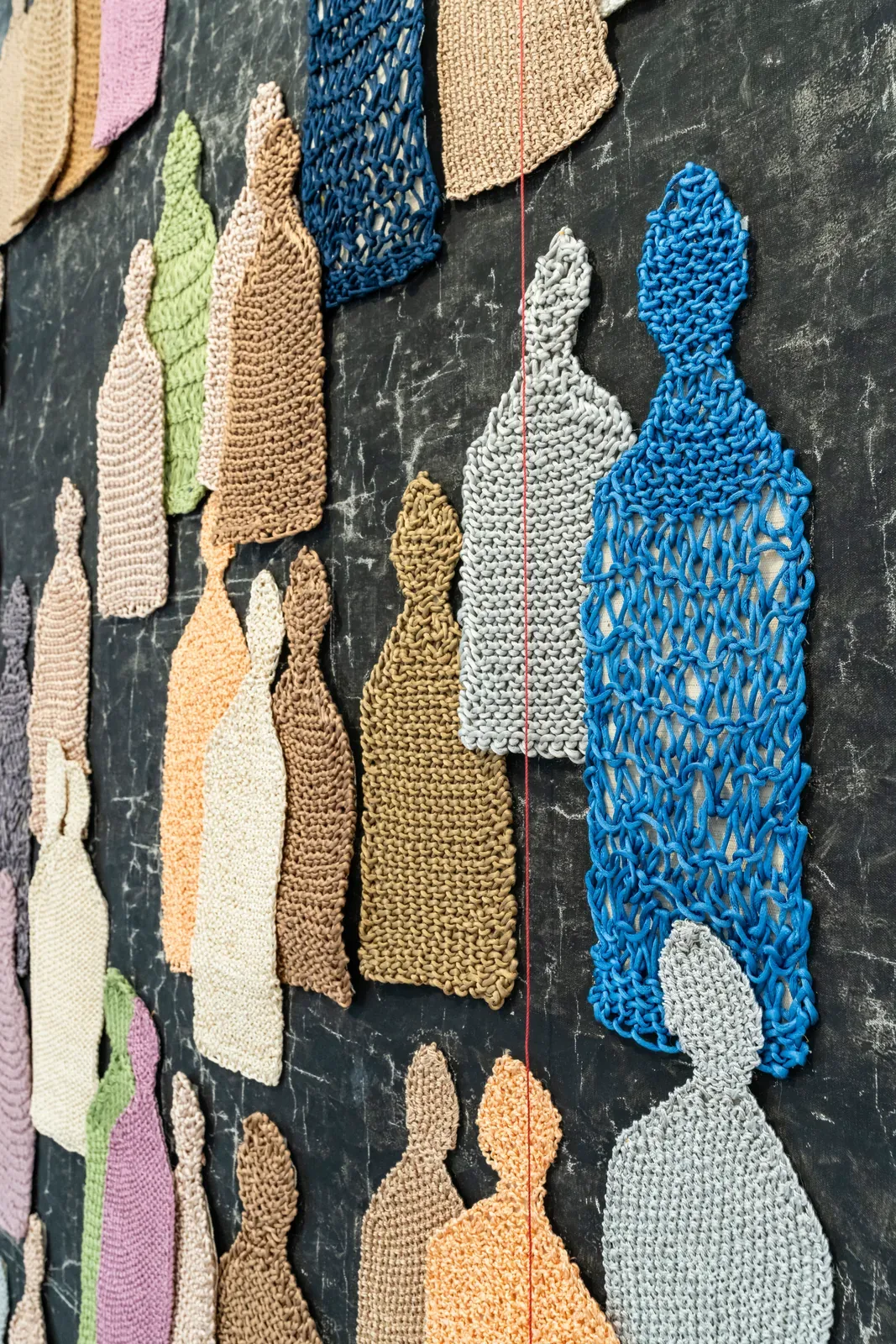
Mariuccia Secol, Unraveling © Muzeum Susch / Art Stations Foundation; photograph: Federico Sette.
How does it feel to see works from so many different moments of your life brought together in one exhibition? Did you rediscover anything about yourself?
I must premise that due to health problems I was not able to see the exhibition, but I reviewed all the works that are exhibited there when we decided what to put on display, then I saw very beautiful photographs and films produced about the exhibition.
It is a difficult feeling to explain, because when I see together works made at such different moments of my life it is as if I were meeting so many people that I myself have been over the years. Each work preserves something of me, but also something I had forgotten. Some still surprise me, others immediately take me back to a period, a thought, an emotion. Rather than rediscovering myself, perhaps I rediscovered the thread that unites all my work. Even when the works seem very different from each other, I recognise the same necessity: that of searching, of experimenting, of never stopping in front of an answer that has already been given.
It is a difficult feeling to explain, because when I see together works made at such different moments of my life it is as if I were meeting so many people that I myself have been over the years. Each work preserves something of me, but also something I had forgotten. Some still surprise me, others immediately take me back to a period, a thought, an emotion. Rather than rediscovering myself, perhaps I rediscovered the thread that unites all my work. Even when the works seem very different from each other, I recognise the same necessity: that of searching, of experimenting, of never stopping in front of an answer that has already been given.
Was there a work that surprised you when you saw it again after so many years? Did seeing it from today’s perspective change the way you understood it?
The work exhibited in one room, composed of approximately forty tempera paintings on paper, each 70cm by 50cm, from the series Ogive made in 1990/91. It seemed a little mysterious to me, in fact I do not remember why I painted so many of them, so I do not remember why. Perhaps because the greatness of art was being revealed to me, since there are so many of them, it means that for a single subject art has a very great possibility of expression.
The exhibition is titled Unraveling. If you had to describe your own artistic journey, would it also be unraveling, or would you choose another word?
Unraveling after seventy years seems perfect to me. Because unraveling is something truly profound, hidden, and having put it as the title of the exhibition seems right to me.
Throughout your career you’ve asked a fundamental question: How can we live today? And how can art help us imagine another way? So, what is your answer today?
Imagining another way is not for me to say, it depends on the research that is being done. Art is the result of one’s own experience and therefore the indication will come from each person who practises it. The important thing is to practise it. In some of my latest works I have denounced violence against people in addition to that against women. For me art has always been a form of freedom and a space in which we can be ourselves and at the same time encounter something of ourselves. Art teaches us never to consider reality as something definitive.
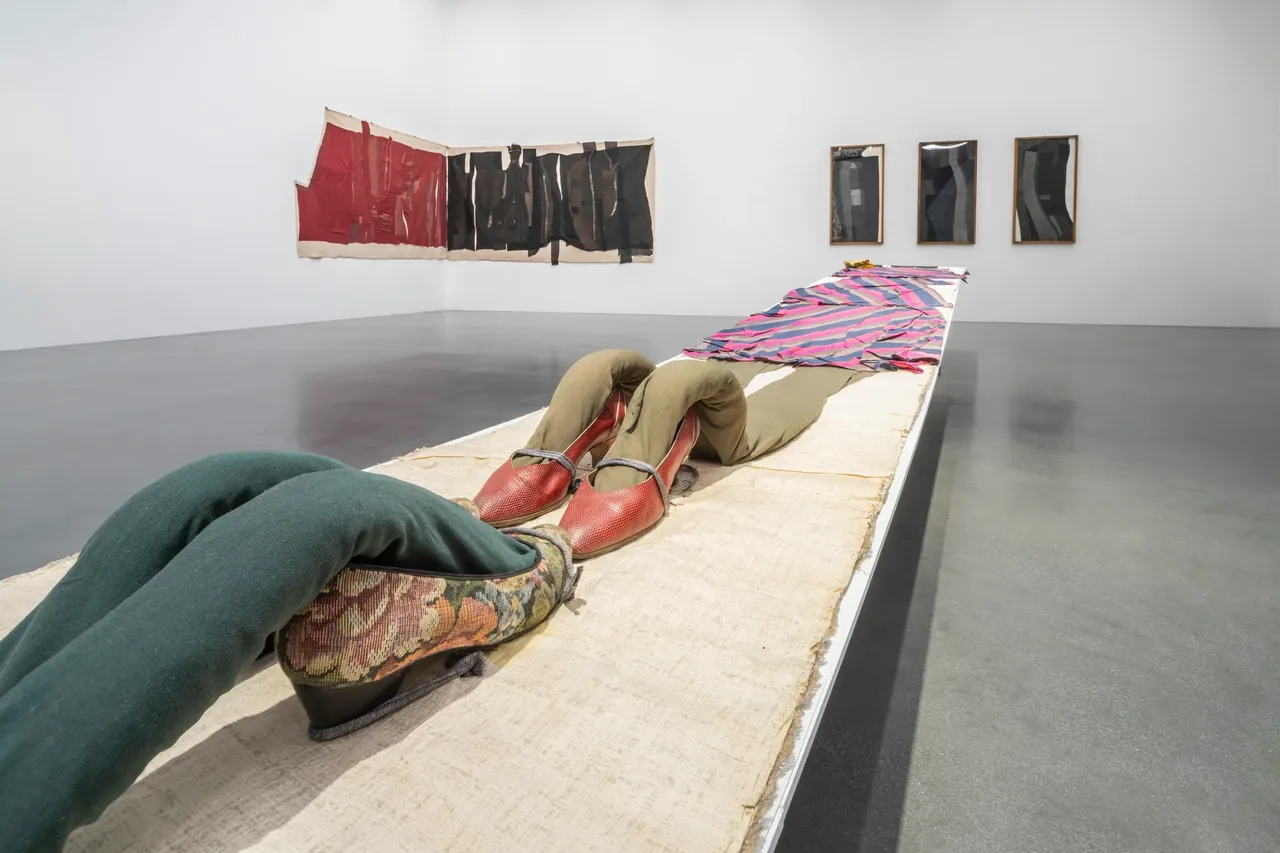
Mariuccia Secol, Unraveling © Muzeum Susch / Art Stations Foundation; photograph: Federico Sette.
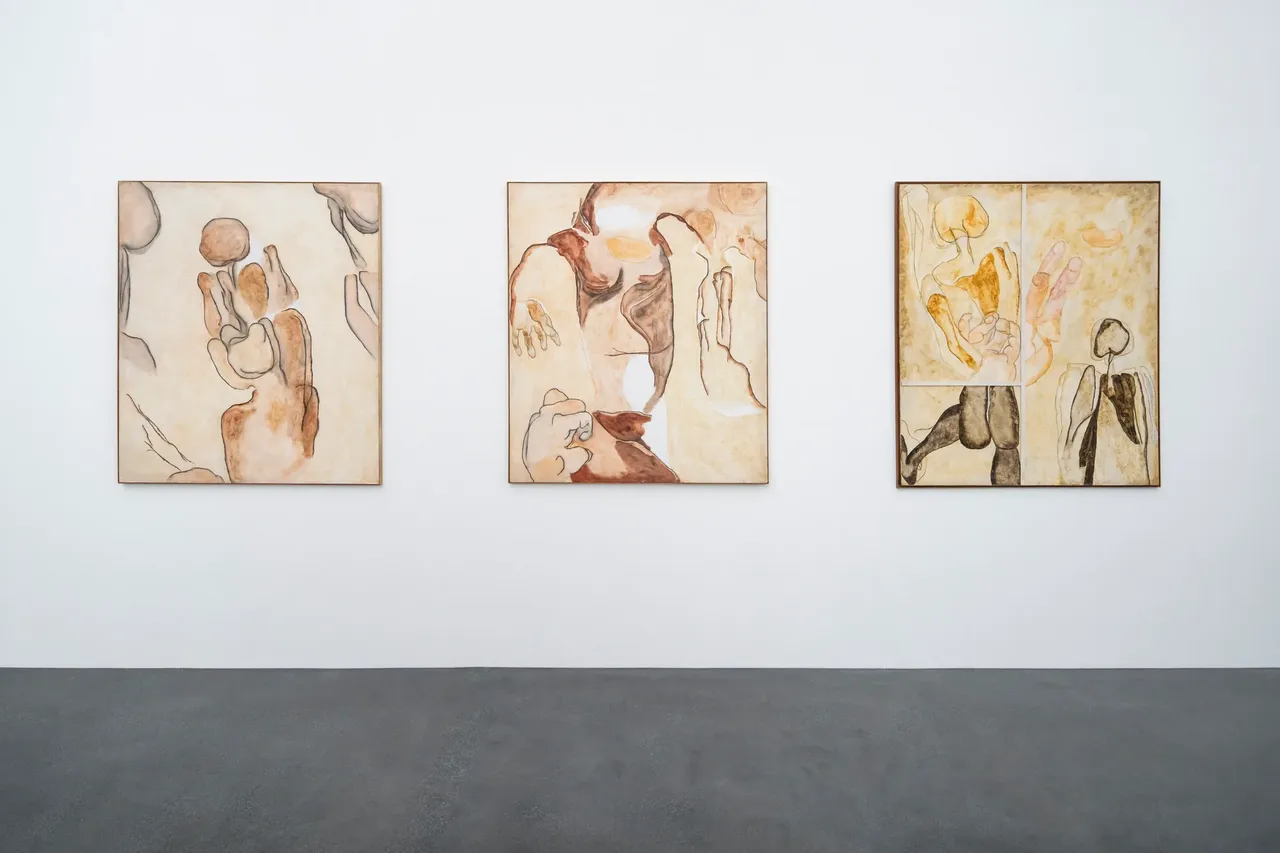
Mariuccia Secol, Unraveling © Muzeum Susch / Art Stations Foundation; photograph: Federico Sette.
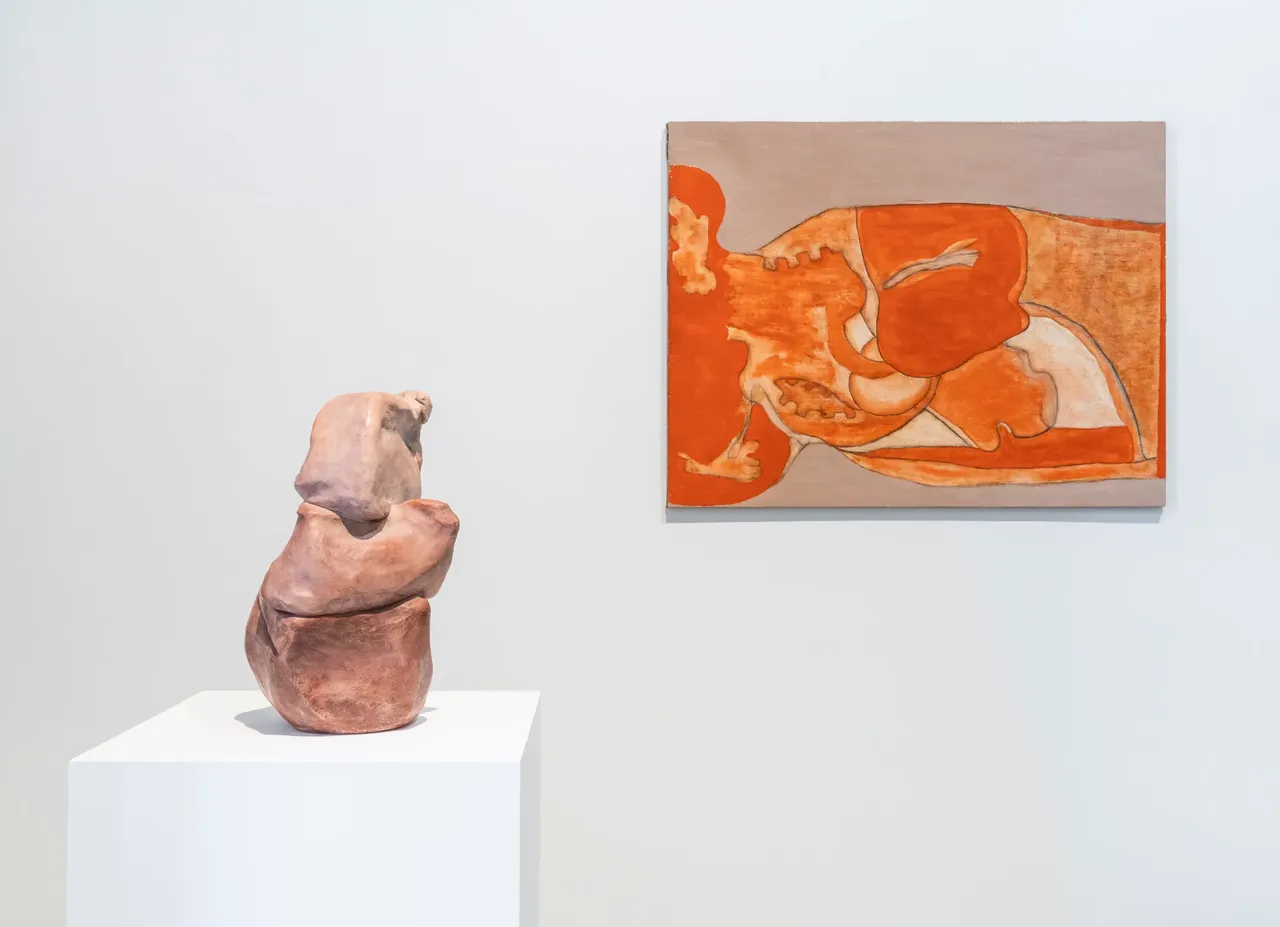
Mariuccia Secol, Unraveling © Muzeum Susch / Art Stations Foundation; photograph: Federico Sette.
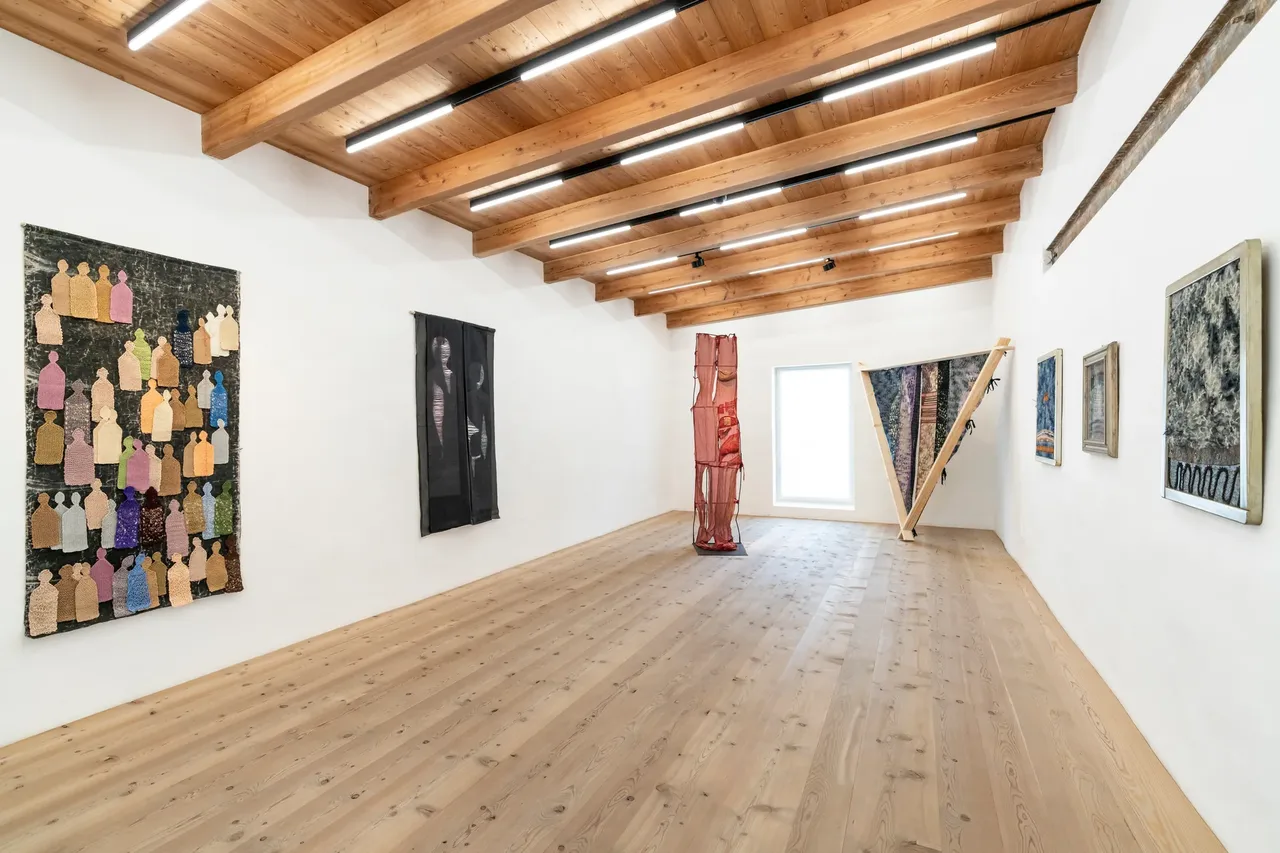
Mariuccia Secol, Unraveling © Muzeum Susch / Art Stations Foundation; photograph: Federico Sette.
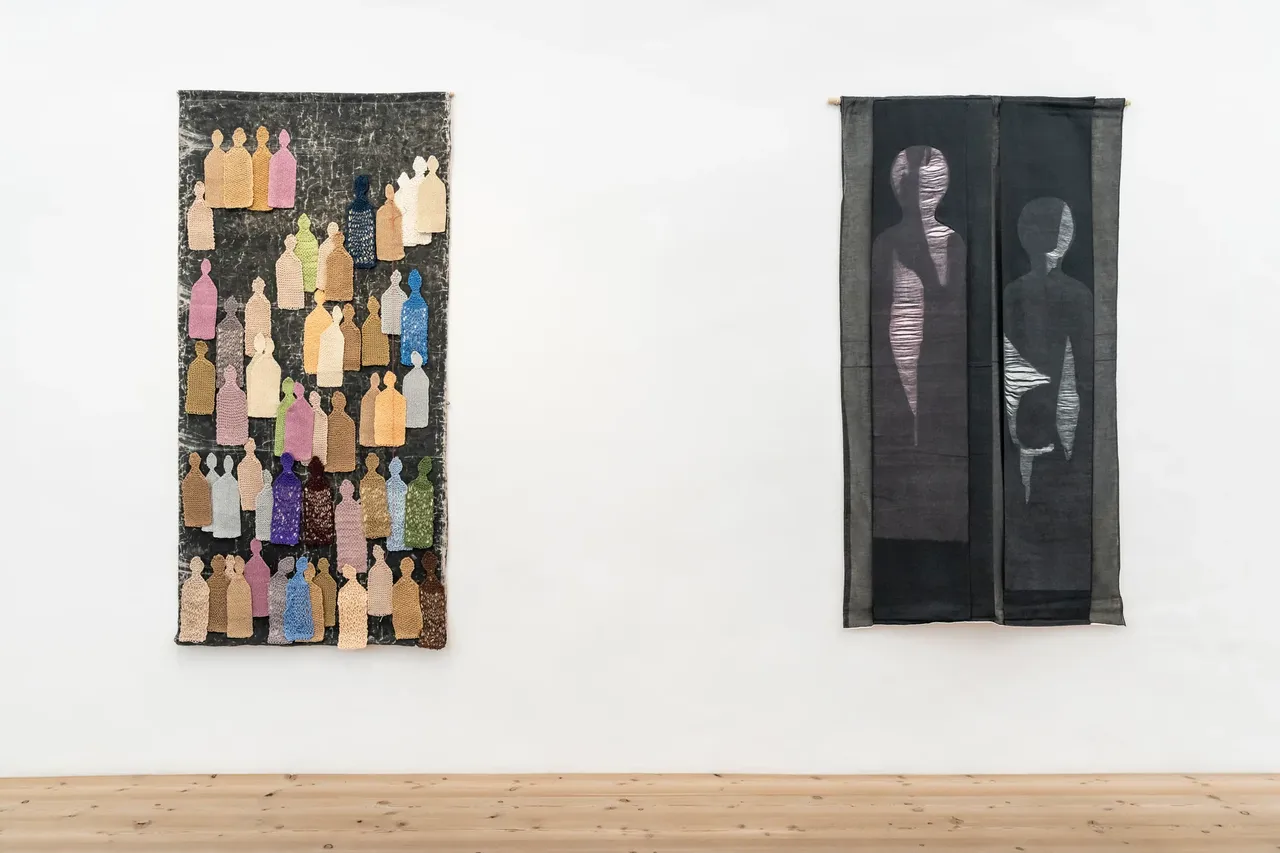
Mariuccia Secol, Unraveling © Muzeum Susch / Art Stations Foundation; photograph: Federico Sette.
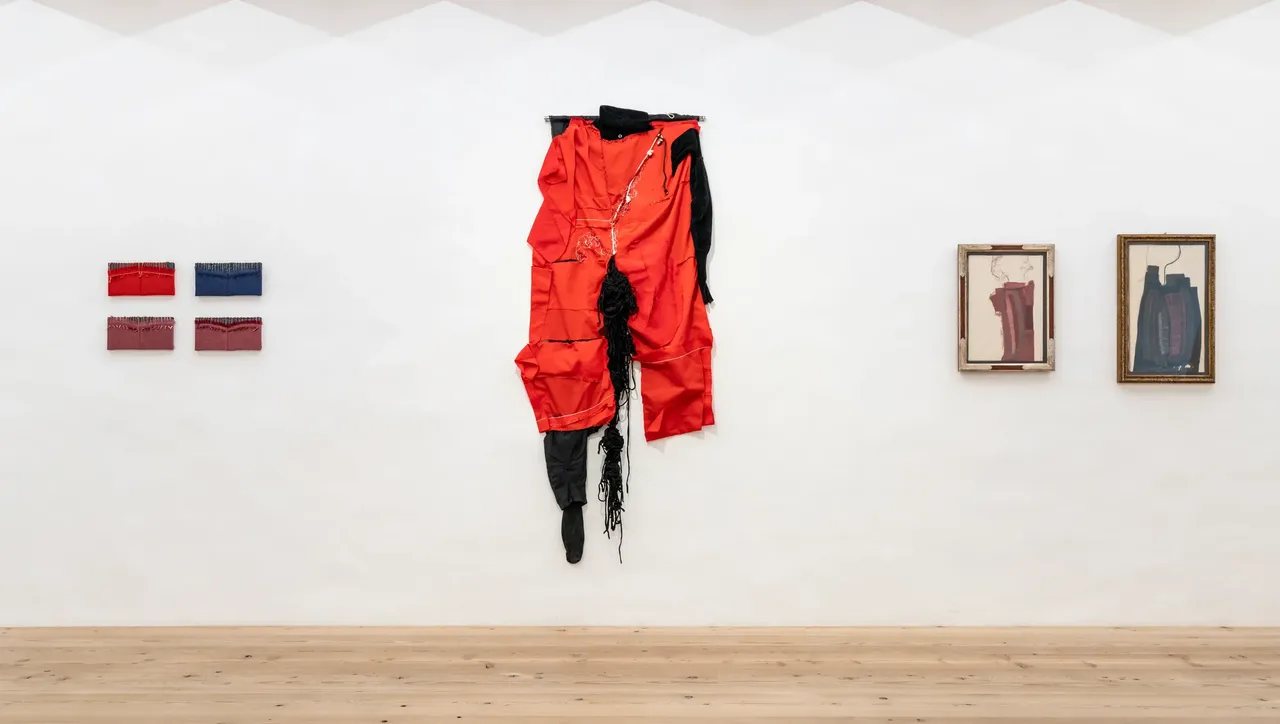
Mariuccia Secol, Unraveling © Muzeum Susch / Art Stations Foundation; photograph: Federico Sette.
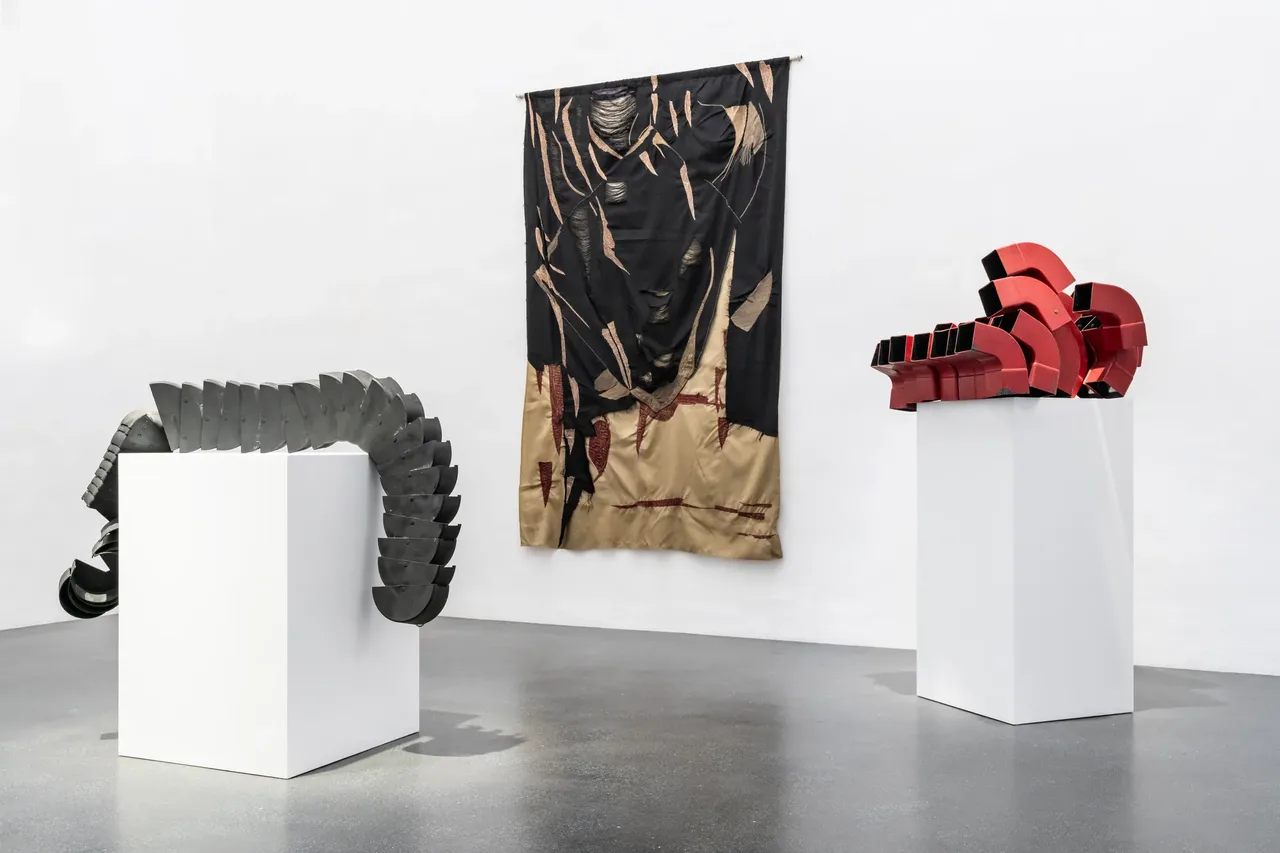
Mariuccia Secol, Unraveling © Muzeum Susch / Art Stations Foundation; photograph: Federico Sette.
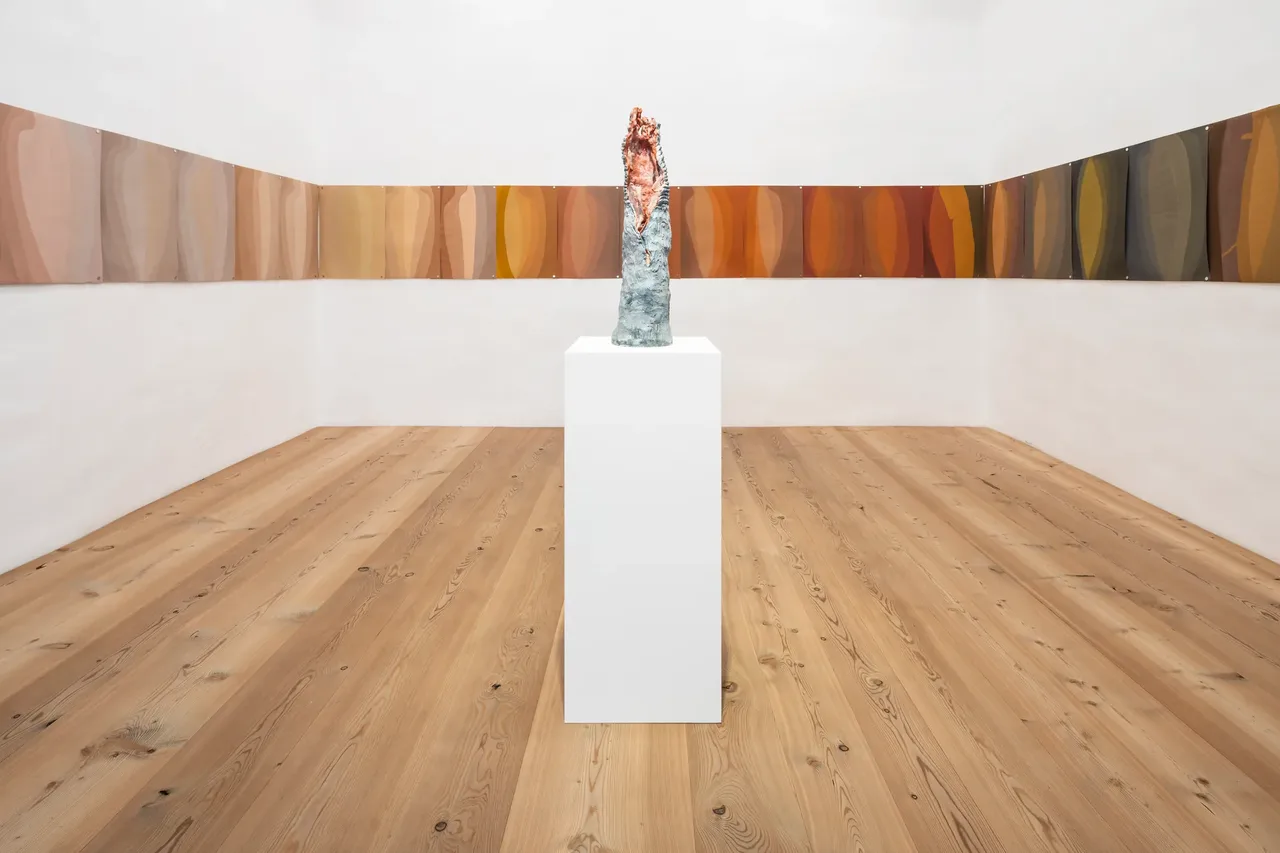
Mariuccia Secol, Unraveling © Muzeum Susch / Art Stations Foundation; photograph: Federico Sette.