“Creating things is really the true nature of humans,” Mariko Mori told Louisiana Channel. “If you stop creating things, then you’re not really using the most ability of your being. It’s a fundamental act.” As the daughter of an art historian, Mori’s first encounter with contemporary art came through her mother’s postcards, particularly Jackson Pollock’s Number 13. Her fascination with the Japanese manga Astro Boy and her father’s passing led her to explore questions about life and death through ancient and futuristic cosmologies, as well as technology — themes that would later become central to her work. At a time of rapid technological change and growing uncertainty about the planet’s future, Mariko Mori: All That Shines invites visitors to slow down and reflect. The exhibition brings together forty works spanning more than three decades of artistic practice and is on view until March 28, 2027, at the Mori Art Museum in Tokyo.
Co-curated by Alexandra Munroe and Mami Kataoka, the show runs in chronological order. The Mori Art Museum organised it in collaboration with the Solomon R. Guggenheim Foundation. This structure seems essential to understanding the artist’s work and influences. Mariko Mori is a Japanese contemporary artist whose practice moves between photography, video, sculpture and large-scale installations. For her, artworks that honour nature may also help protect it, as she explained in the Louisiana Channel interview Between the Ancient Gods and the Future (2023). This idea has accompanied her practice throughout the three decades explored in the retrospective.
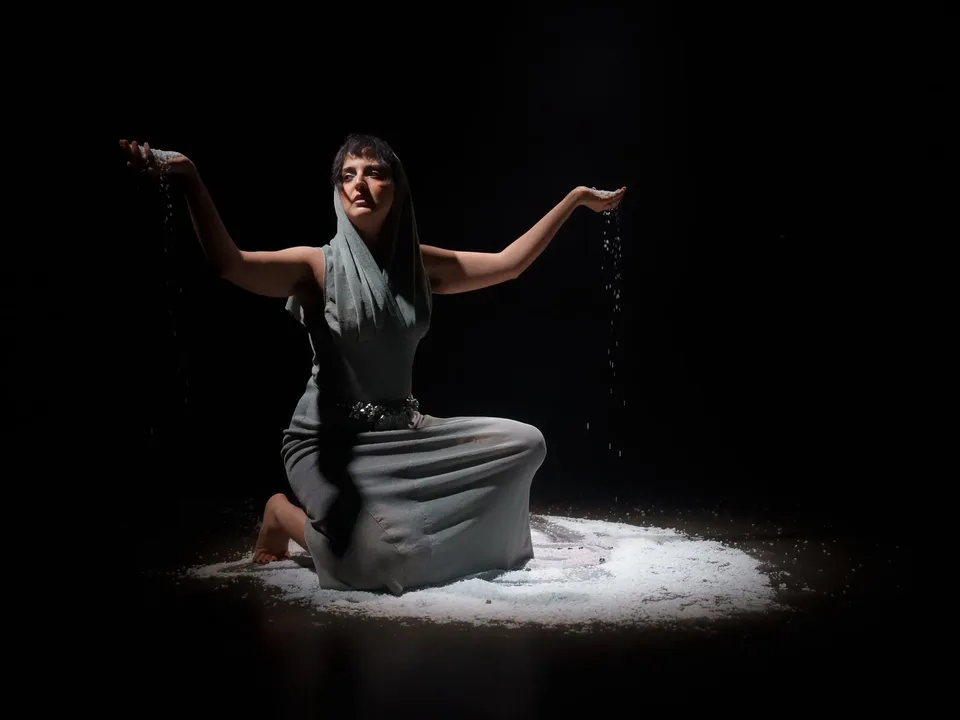
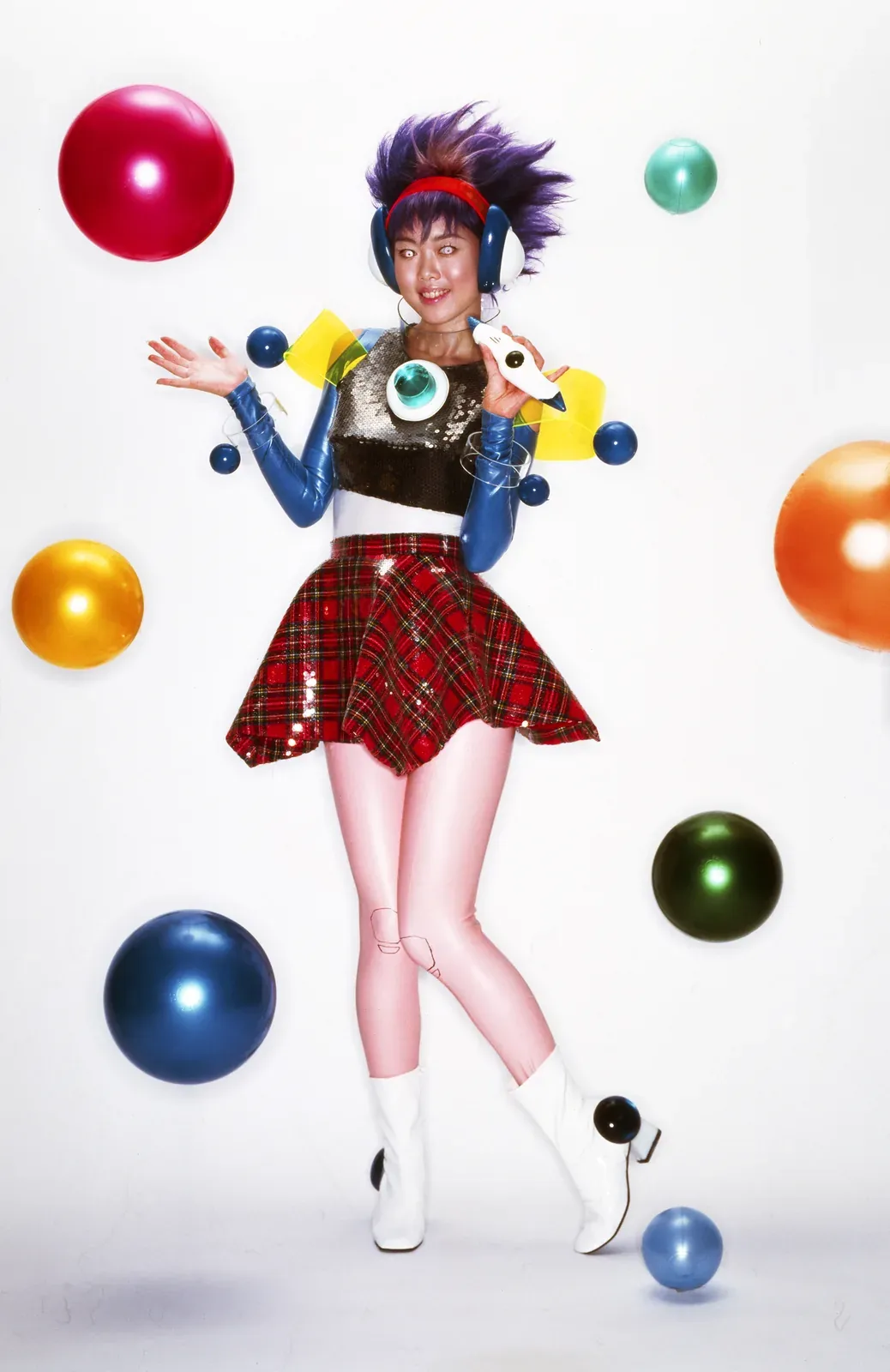
Her first architectural project was her own studio and home on Miyako Island, Okinawa, a structure resembling the island’s white coral formations. But before that, in the mid-1990s, Mori began exploring the boundaries between human and cyborg existence. Inspired by her love of anime, futuristic imagery and Buddhist cosmology, she developed a visual language that brings together the physical, the immaterial and popular culture. Living abroad and working in cities such as New York helped her find her own identity in relation to her Japanese heritage. Birth of a Star, the exhibition’s first section, captures her interest in spirituality, which becomes increasingly visible in the Esoteric Cosmos series (1996–1998).
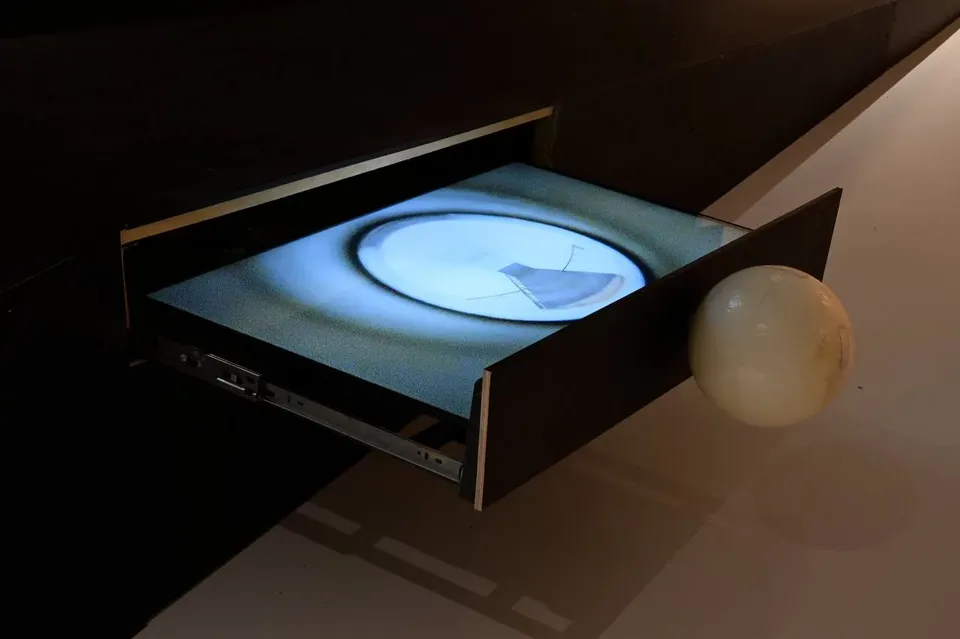
Using her own body as a medium became a recurrent practice during this time. In the video installation Link (1995–2006), she creates an immersive, sanctuary-like environment by appearing inside a coffin-sized “body capsule” that travels to sites from different periods of human history. Seeing the Dead Sea or the Flaming Cliffs became an “eye-opening experience” that deepened her interest in ancient cosmologies and the relationship between humanity and nature, life and death, and Buddhist concepts of transmigration, Mori said in the same interview.
Following these explorations, her work shifted towards more philosophical concerns, particularly the relationship between individual and collective consciousness. The Buddhist idea of “oneness”, or the interconnectedness of all life, became more important in Mori’s practice, especially as a response to escalating global violence. This idea is embodied in her computer-generated video Connected World, shown within the installation Wave UFO (1999–2002). Developed in collaboration with international scientists and laboratories, the installation uses brainwave feedback to turn visitors’ brainwaves into projected imagery.
Since 2004, Mori has also created projects inspired by prehistoric Celtic and Jōmon cosmologies. After visiting prehistoric sites around the world, she became interested in how ancestral communities honoured nature and understood their relationship with it. As she explains in relation to this retrospective, “Although life and death appear to be separated on a material level, they may not be fundamentally divided at a deeper level. That sensation lives quietly within my works as an inner light, nameless yet breathing.” This idea is further developed in Primal Memory. The name of Tom Na H-iu (2006), meanwhile, refers to an ancestral place where spirits were believed to travel before returning to life. The totemic sculpture is illuminated by real-time data from Super-Kamiokande, Japan’s neutrino observatory at the Institute for Cosmic Ray Research (ICRR) at the University of Tokyo. The flashes of light triggered by neutrino detections evoke the idea of rebirth.
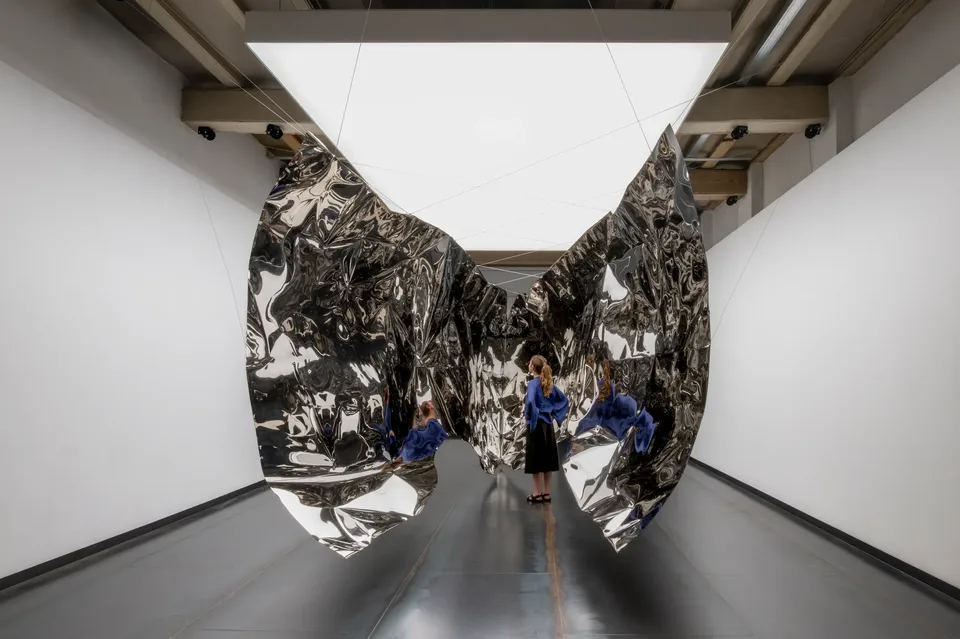
One with Nature is the fourth section of the exhibition. In 2010, Mori founded the Faou Foundation, a non-profit organization dedicated to developing and installing permanent artworks that promote the reconnection between humanity and nature. While searching for a location for her studio, she visited sacred places and prayed to the gods for guidance. This experience inspired the idea of creating the foundation and making Primal Rhythm: Sun Pillar (2011), a sculpture just over four metres tall, permanently installed at Seven Light Bay on Miyako Island, Japan. The foundation aims to raise awareness of the Earth’s natural treasures by working with local communities to create installations on each of the six inhabited continents. Ring: One with Nature (2016), a six-metre installation aligned with the movements of the sun and located in Rio de Janeiro state, Brazil, as well as Peace Crystal (2016–2024), which incorporates the Himawari solar lighting system, continue Mori’s exploration of light as a connecting force between the movement of the cosmos and the terrestrial world.
The retrospective’s title, All That Shines, symbolises the light at the heart of Mori’s practice. Through the intersection of art, technology and spiritual experience, light becomes a metaphor and a thread running throughout her work. As the artist explains, “Through my practice, I began to consider that if something like a soul exists, it may be light — part of a larger existence.”
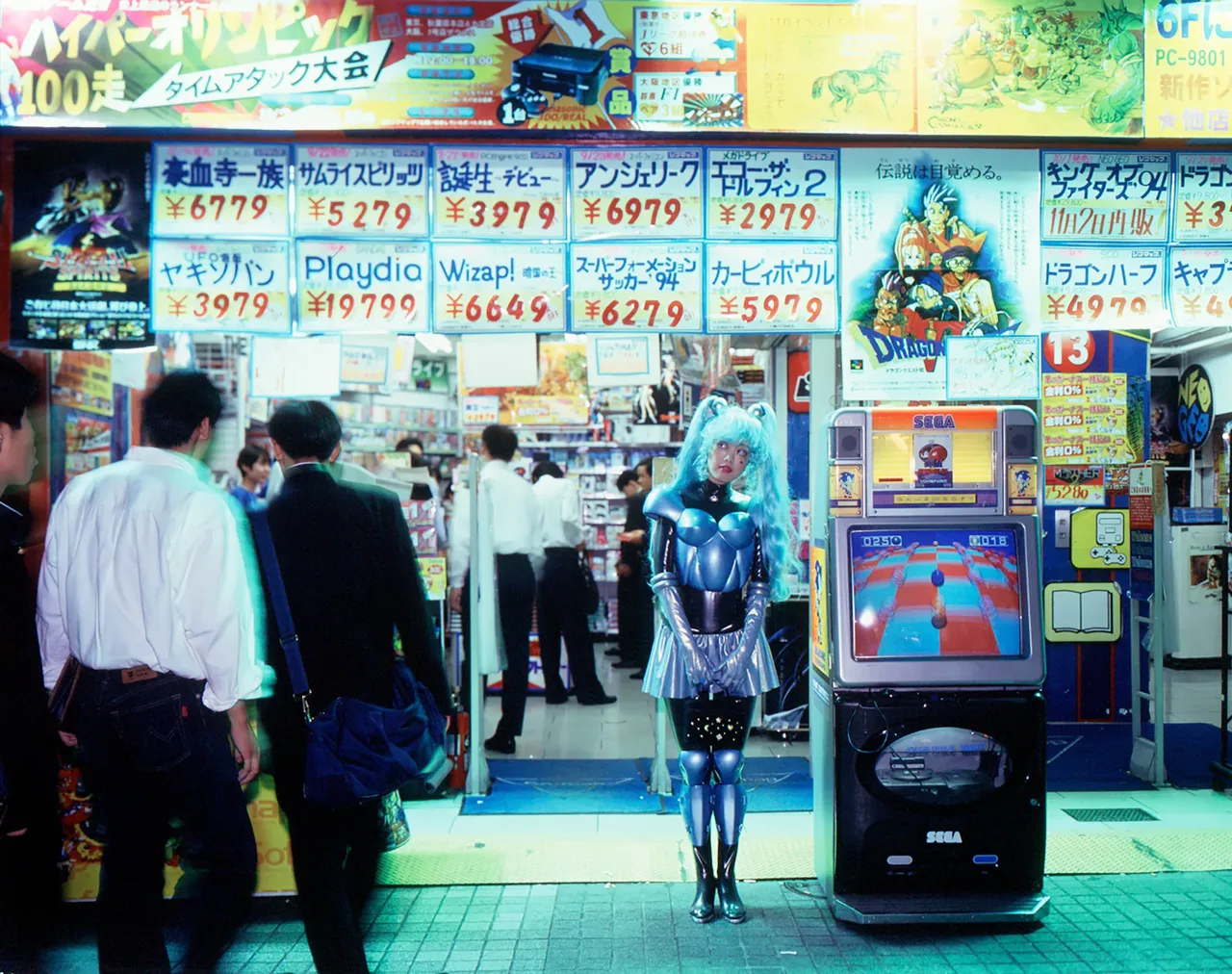
Play with Me, 1994 © Mariko Mori
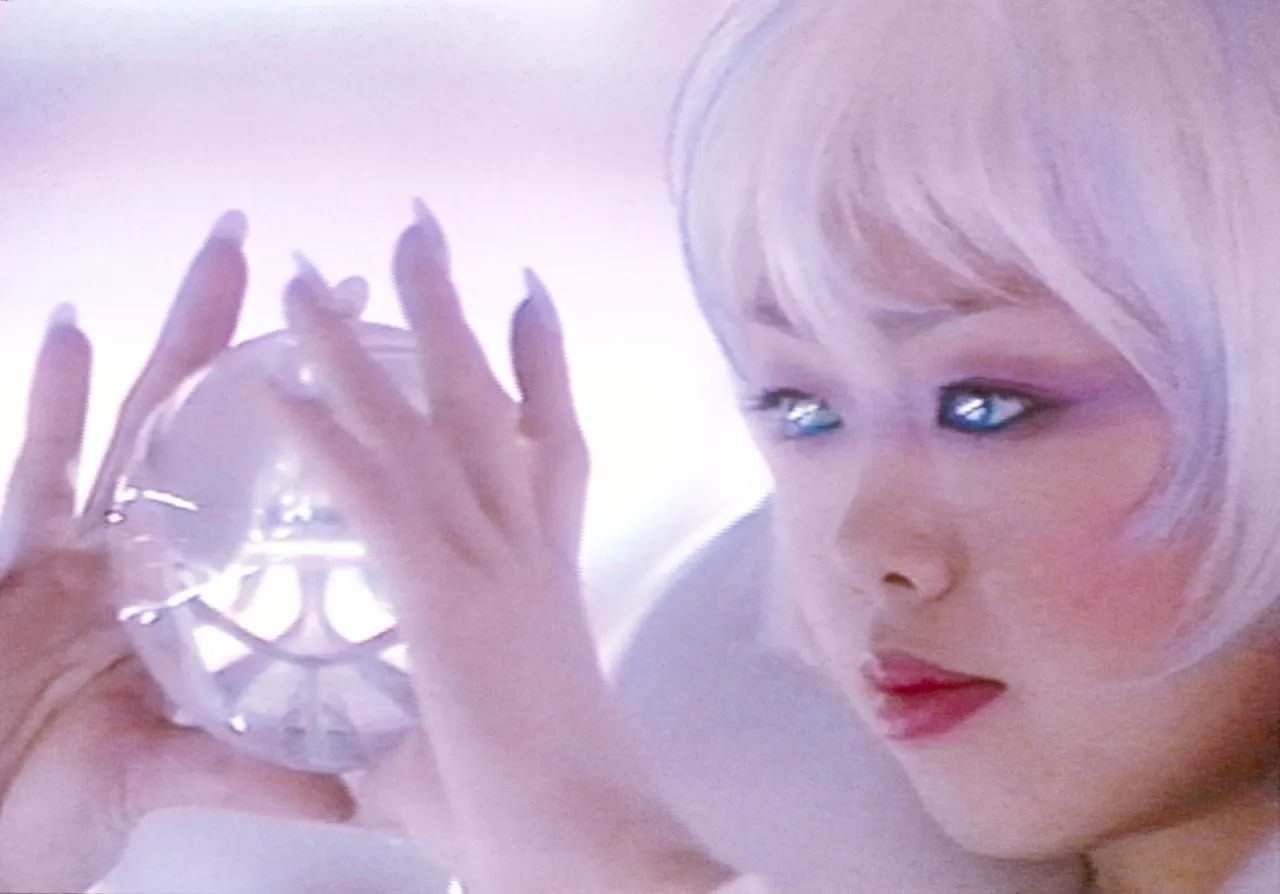
Miko No Inori(The Shaman-Girl’s Prayer, 1996 © Mariko Mori
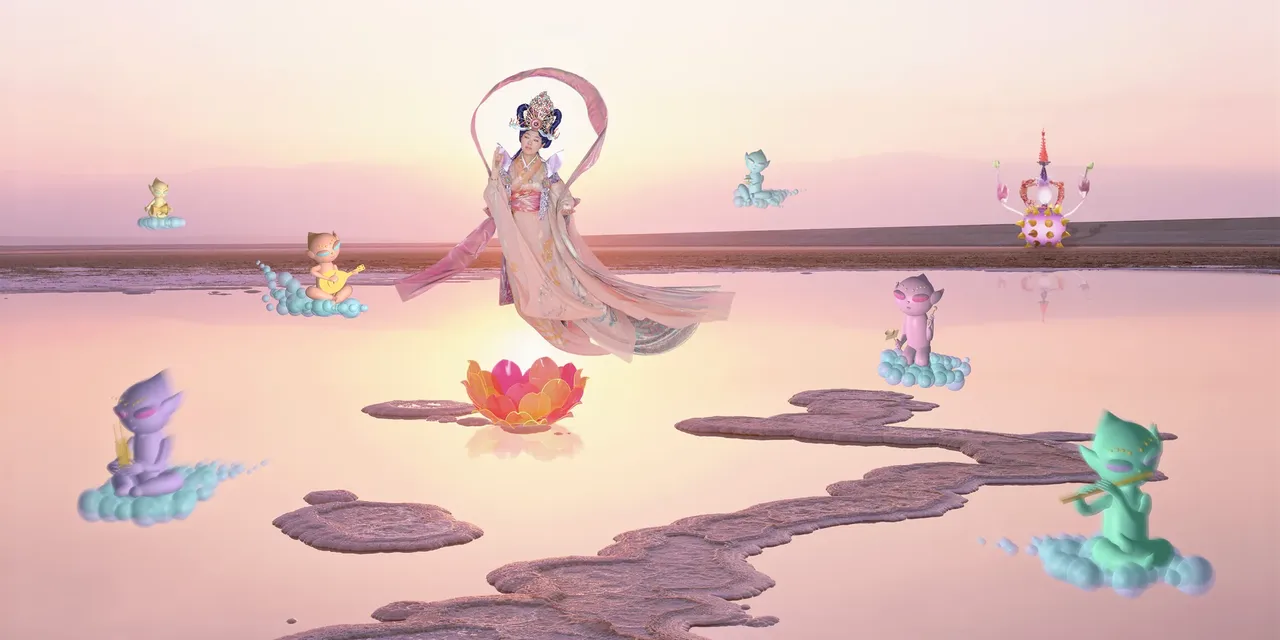
Pure Land (from the series “Esoteric Cosmos”), 1996-1998 © Mariko Mori
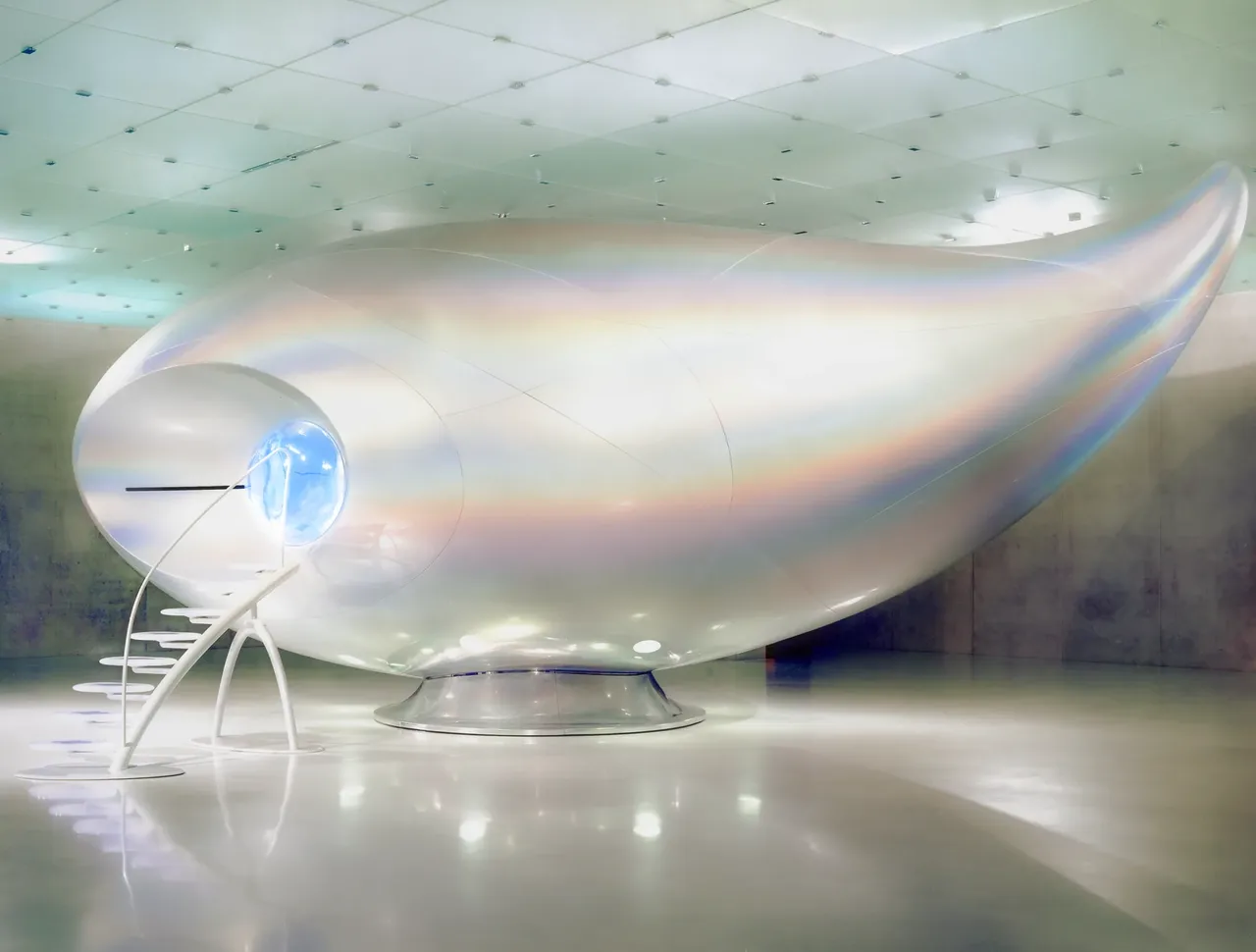
Wave UFO, 1999-2002 © Mariko Mori
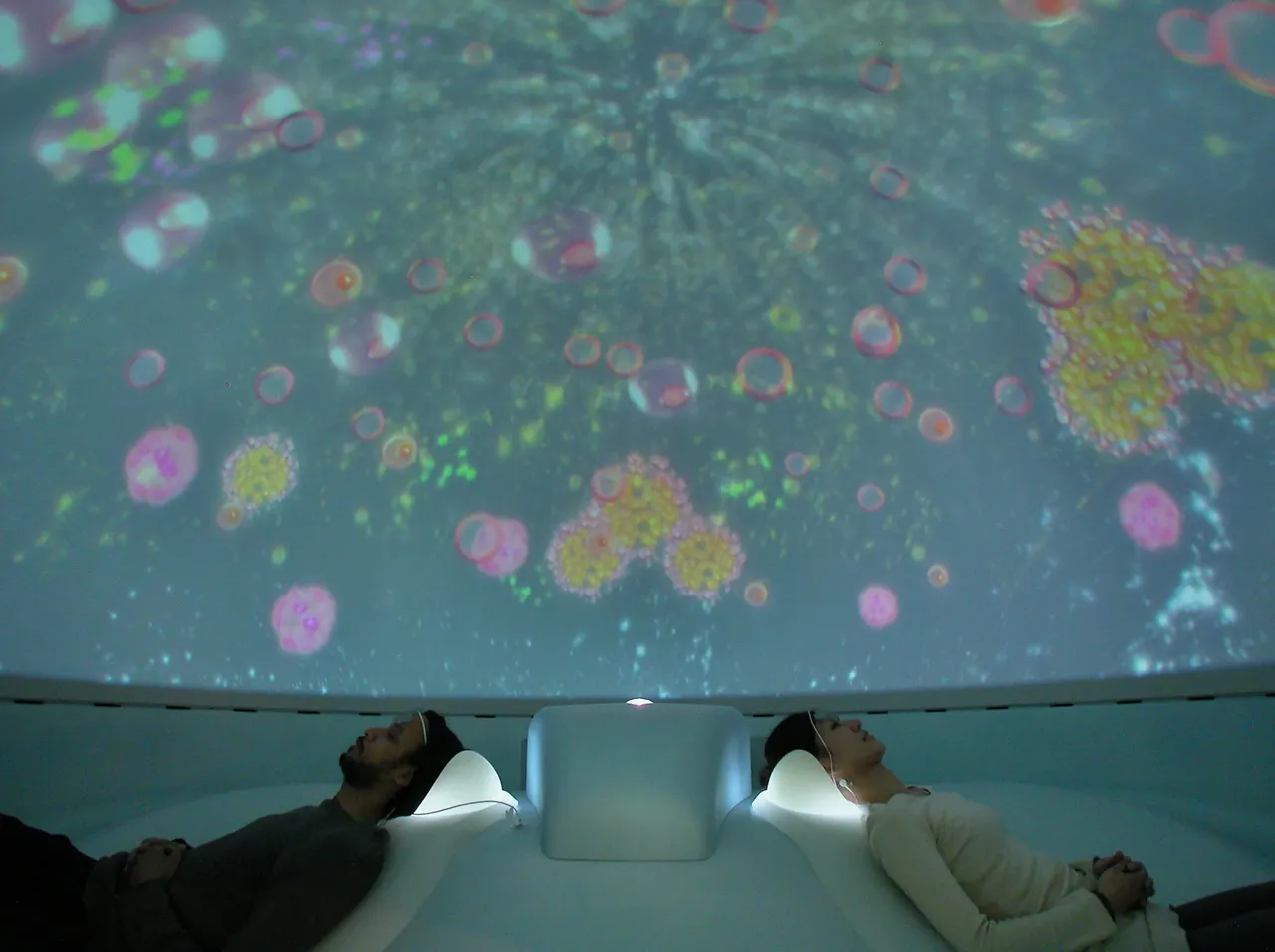
Wave UFO (interior), 1999-2002 © Mariko Mori
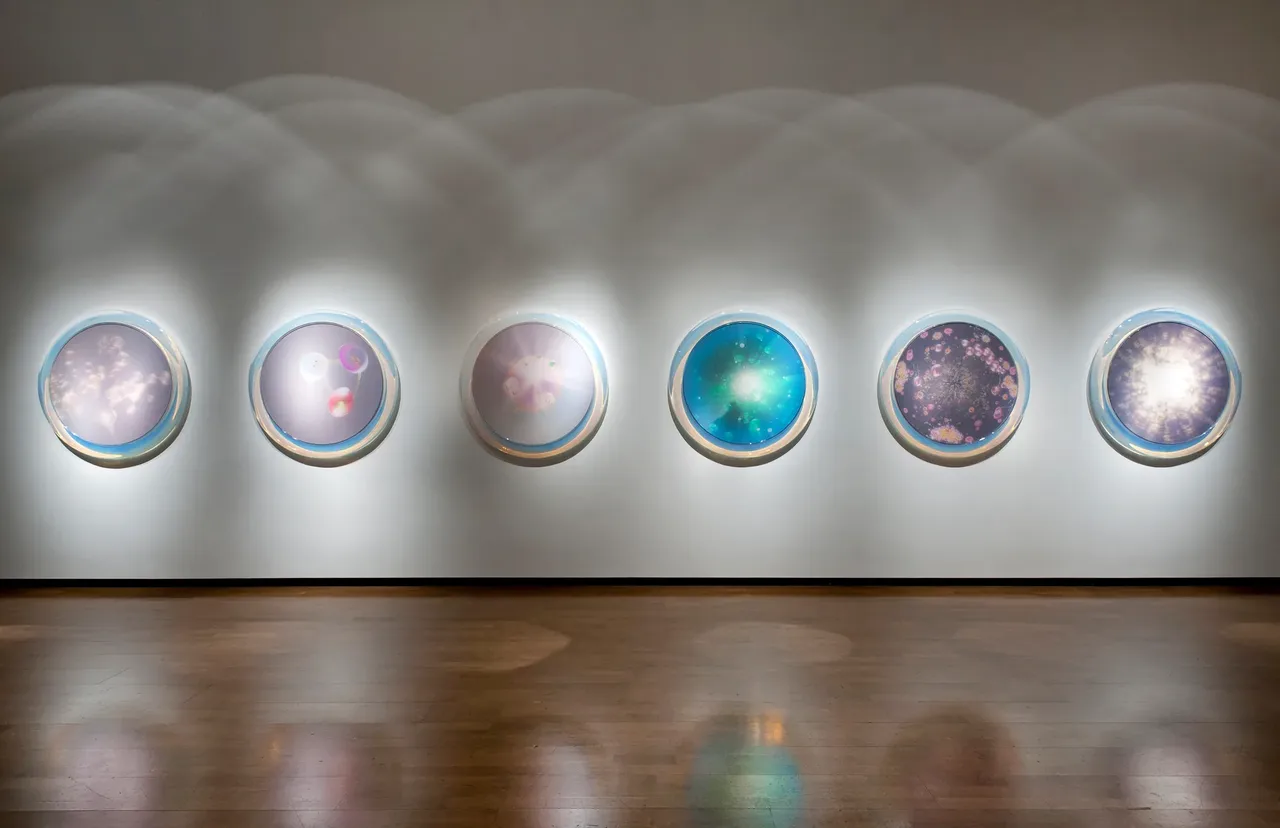
Connected World, 2002 © Mariko Mori
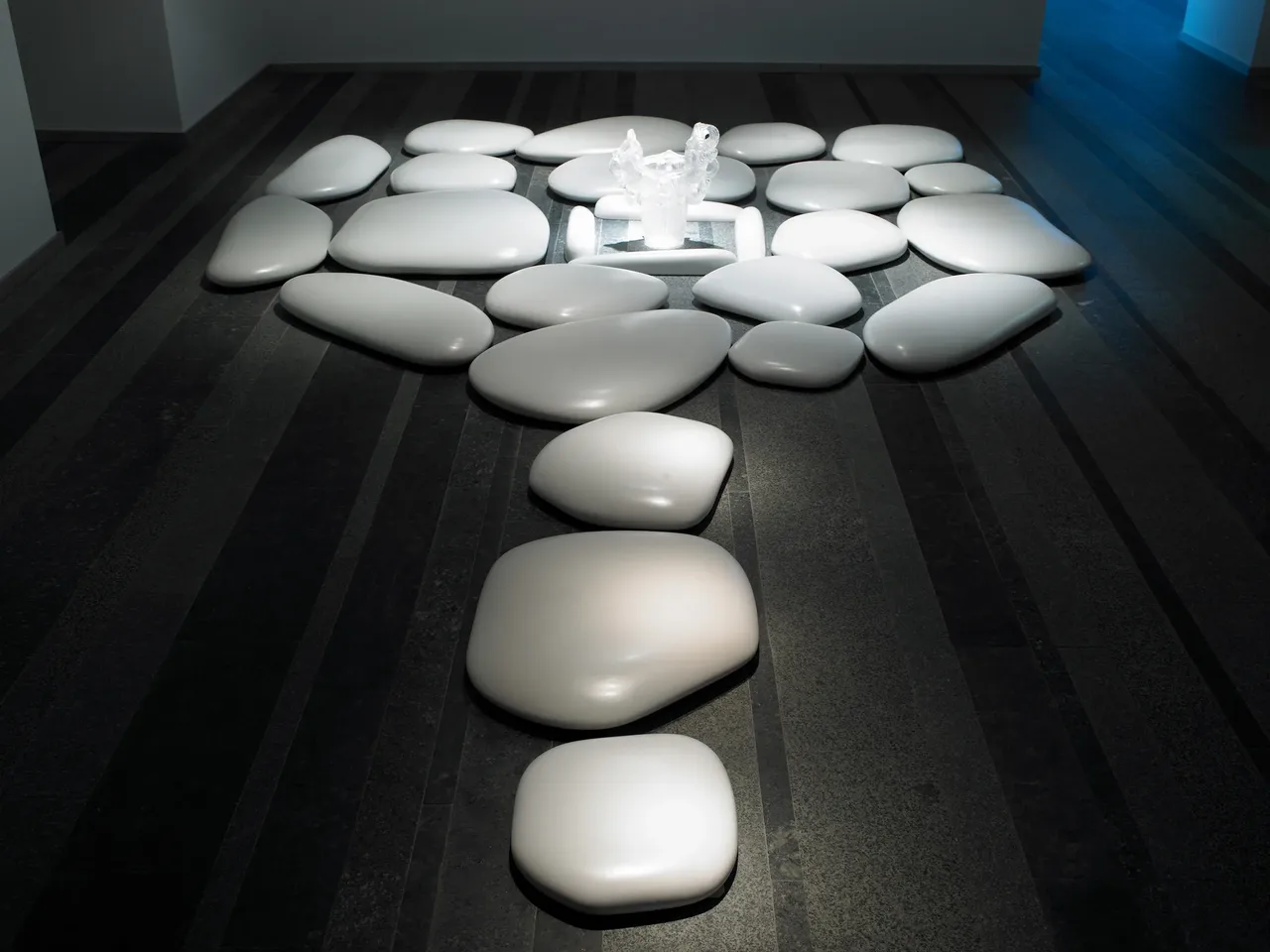
Flat Stone, 2006 © Mariko Mori
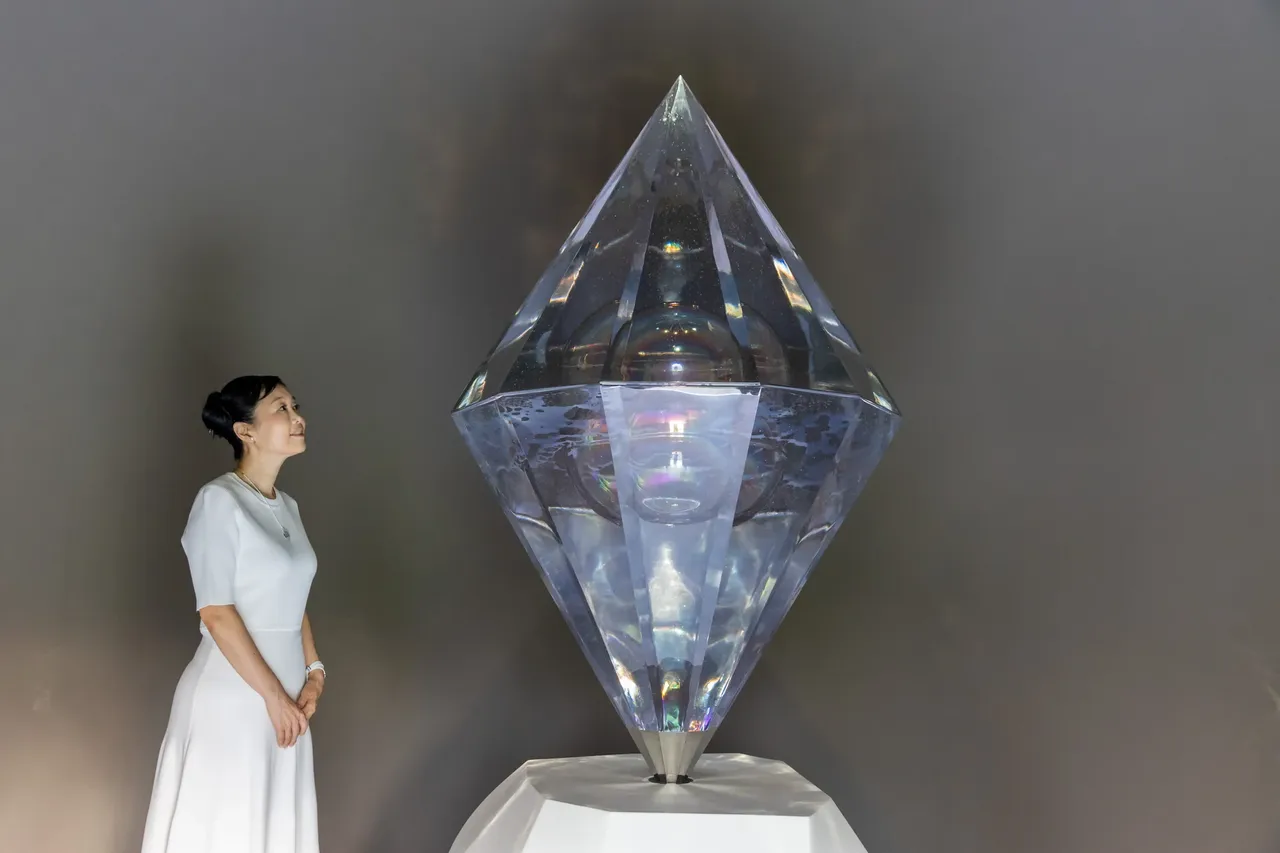
Peace Crystal, 2016-2024 © Mariko Mori