“Imminence is meant to be discovered, not predicted.” It's quite a statement, especially coming from a band that has spent years building a sound that's difficult to mistake for anyone else's. The Swedish metalcore outfit released their sixth studio album, Axis Mundi, earlier this month via Sumerian Records, pushing their signature combination of crushing heaviness and Eddie Berg's unmistakable violin into new territory. And judging by what they told us a few days ago, they're nowhere near finished experimenting.
Following the international success of The Black and sold-out shows around the world, Imminence have embraced an even more ambitious vision. But behind the theatrical aesthetics and overwhelming intensity lies something deeply human. “Hope doesn't come after despair—it's something you fight for right in the middle of it,” they explain when discussing the album's central theme of duality. It's an idea that runs through the record, where moments of extraordinary vulnerability coexist with some of their darkest music yet.
That emotional honesty becomes particularly striking when the conversation turns to Didn’t Think About You (Lately), a song shaped by personal experiences of grief. “I relate to it and recognise myself in the lyrics on a very personal level, having lost my father to cancer a few years ago.” And there's no slowing down: today they unveiled the Pavel Trebukhin-directed music video for Crestfallen, ahead of around twenty North American shows this November and December, followed by an extensive European tour in January and February 2027.
You shared a message saying that the response to Axis Mundi has been beyond anything you could have hoped for. What have these first few days been like for you, and has anything about the fans’ reactions particularly surprised you?
The release of Axis Mundi has been beyond anything we've ever experienced before. Normally on release day, we might meet up with the band and celebrate together here in Sweden—pretty far away from our audience. But this time, we chose to do something completely different: we went out to see our fan base in Germany, England, and the United States on a signing tour.
We attended the premiere of our short film, Axis Mundi, in London the day before the album dropped, and then flew over to New York the next morning for a big signing event and a bunch of interviews. Being able to share that moment directly with the fans as it was happening made the whole release feel so much more special.
Up until now, the album hasn't really been presented to anyone outside our innermost circle. Being able to meet the people who made all of this possible as the music is being presented to them has felt incredible. We’ve been amazed by the overwhelmingly positive feedback, and especially surprised by how many new listeners we’ve reached in such a short amount of time. We’ve seen a huge increase in our following and listening numbers—something we’ve genuinely never experienced to this extent before.
Axis Mundi takes us on a mythological journey through a world suspended between life and death. Where did this concept come from, and how did it evolve into the foundation for an entire album?
I think it was a combination of different elements coming together. Lyrically, we didn't initially set out to write an epic saga about an immortal knight in search of their own death. Instead, we started noticing recurring symbolism and metaphors in our lyrics. They were reflecting topics Imminence has always explored, but in a completely new light.
The concept of this protagonist trapped in their own armor was a direct metaphor for how you can become trapped within the shield you've built to protect yourself from the outside world—unable to truly access the person inside. That idea sparked the visual development and built the foundation for the story of Axis Mundi. We wanted to put this protagonist in a situation where they are given the chance to change their own destiny and choose another path beyond their struggles.
That narrative is a direct reflection of where we were in our lives and our career while writing this album. We've been in this band for a very long time, growing from kids into adults. Coming off The Black was a pivotal moment for us. In many ways, that was our breakthrough record on a worldwide scale—taking us from a European band to a world-touring act. Seeing everything take off globally put things in a different light. We were presented with an opportunity where there was no turning back: Do you want to take this chance now, knowing it will change your life forever? Our protagonist choosing who they want to be between life and death represents that exact turning point for us.
Looking back at The Black, released in 2024, what do you think has changed the most about Imminence?
Going through everything we have since the release of The Black has given us a completely new level of confidence and a deeper understanding of what Imminence is and what it can become. We see our potential and what we’re capable of creating in a totally different way now compared to back then. Touring as heavily as we have, traveling the world, and watching our music thrive across the globe has given us a clear sense of how important this is and what our audience truly connects with. Beyond that, we’ve expanded what our music and artistic expression can look like beyond the standard record-and-release format. We’ve explored new avenues, like releasing graphic novels and creating a short film for Axis Mundi.
Ultimately, we have a much deeper clarity about what our music is really about, the emotional weight every song needs to carry, and how the entire experience should be perceived by the listener. That understanding is stronger now than ever before, and it puts us in the most solid position we’ve ever been in as a band.
Ultimately, we have a much deeper clarity about what our music is really about, the emotional weight every song needs to carry, and how the entire experience should be perceived by the listener. That understanding is stronger now than ever before, and it puts us in the most solid position we’ve ever been in as a band.
You’ve often described duality as something central to your identity. In fact, Harald once said, “Our musical expression is a conversation between darkness and light, violence and beauty, despair and hope.” How does Axis Mundi take that idea further?
Axis Mundi is probably the ultimate representation of the duality within Imminence's music. It really pushes the boundaries of how far you can take a feeling in any direction—it contains some of the darkest, most desperate music we’ve ever written, but also some of the most intimate and vulnerable pieces.
Beyond just taking you on a journey through both extremes, it forces you to sit right in the middle as they hit you at the exact same time. With Axis Mundi, we’ve found a middle ground where these two worlds collide. We’ve used all of our musical elements to emphasize both sides and bring them together simultaneously, watching those forces clash inside the very same second.
That was a completely new direction for us and something we hadn't fully explored before. It reflects the reality of human existence: life doesn't just give you one isolated emotion at a time. Hope doesn't just come after despair—it's something you fight for right in the middle of it. Axis Mundi explores that exact point.
The album was self-produced alongside Henrik Udd and Drew Fulk. What did they bring to the process, and was there anything you wanted to approach differently this time?
Working with Henrik is always fantastic—we’ve recorded and mixed our recent albums with him. Henrik has an amazing grasp of our sound while always knowing how to approach the specific identity of each new record. There's a distinct sonic essence he captures that has been consistent across everything we've done together, but he constantly adapts to highlight new instrumentation and textures. On this record, he really found an exciting direction that reflected the songs in the absolute best way possible. Bringing in Drew Fulk provided a crucial outside perspective. Drew was incredible at structuring the record as a whole—helping us select the right songs, organize the track listing for the best listener experience, and pick the strongest singles to represent this new body of work. He pushed us to take the existing character of each song even further.
In fact, Drew is the reason one of our singles exists. We were actually planning to scrap Crestfallen, but when we played the demo for Drew, he loved it immediately and begged us to finish it. We went back to work on it, and it ended up becoming a single and a core piece of the album.
In fact, Drew is the reason one of our singles exists. We were actually planning to scrap Crestfallen, but when we played the demo for Drew, he loved it immediately and begged us to finish it. We went back to work on it, and it ended up becoming a single and a core piece of the album.
Your music moves between aggression and vulnerability, sometimes within the same song. Do you see music as a way of processing your own emotions, or as a space where listeners can confront theirs?
I would say both. As a creator and songwriter, it's hard to pin down exactly where music comes from inside you. It’s rarely a conscious decision to write about a specific event or something you're going through in that exact moment. More often than not, you end up surprising yourself with what comes out during the process. It's difficult to explain where those feelings originate, but creating music is undeniably an outlet—a way of expressing what’s going on deep inside you.
However, as soon as a song is recorded and released, it no longer belongs just to us—it belongs to the world. Listeners are free to find whatever they need within it. Music has a unique ability to help people identify and articulate emotions they might be struggling to put into words. It offers a sense of validation and understanding that’s hard to find anywhere else. In that sense, it can be deeply therapeutic; it gives concrete form and embodiment to hidden feelings, allowing listeners to face whatever is happening within themselves through what they hear.
However, as soon as a song is recorded and released, it no longer belongs just to us—it belongs to the world. Listeners are free to find whatever they need within it. Music has a unique ability to help people identify and articulate emotions they might be struggling to put into words. It offers a sense of validation and understanding that’s hard to find anywhere else. In that sense, it can be deeply therapeutic; it gives concrete form and embodiment to hidden feelings, allowing listeners to face whatever is happening within themselves through what they hear.
Is there a particular track on Axis Mundi that feels especially personal to you?
Didn’t Think About You (Lately) is a song I believe anyone who has experienced loss can deeply connect to and understand. I relate to it and recognize myself in the lyrics on a very personal level, having lost my father to cancer a few years ago.
The song describes not only the initial weight of losing someone close to you whom you loved, but also the broader process and tragedy of grief. It captures what it means to cope, accept, and move forward in life—and how moving on carries its own quiet sadness. It touches on that bittersweet reality of shaping a new path and continuing to build your life, even as your direct connection to the memory of the person you lost gradually changes over time.
The song describes not only the initial weight of losing someone close to you whom you loved, but also the broader process and tragedy of grief. It captures what it means to cope, accept, and move forward in life—and how moving on carries its own quiet sadness. It touches on that bittersweet reality of shaping a new path and continuing to build your life, even as your direct connection to the memory of the person you lost gradually changes over time.
“Music has a unique ability to help people identify and articulate emotions they might be struggling to put into words.”
The violin has become one of the most recognizable elements of your sound. I’m curious about how your songs actually come together. Can you tell us more about it?
There is really no single formula for how our songs come together. Usually, I’ll start with an instrumental idea or a song skeleton—sometimes heavily arranged, sometimes more basic—and present it when Eddie and I meet up to write. We review the idea together and explore what melodies come to mind. Sometimes a part doesn't naturally lend itself to a vocal melody, and we don't want to force one. That's where the violin becomes such a crucial leading element—it can front a section with just as much impact and emotional weight as a vocal line. Other times, the process starts in reverse: Eddie might bring in an idea built primarily around vocals and lyrics with minimal arrangement, and then we'll collaborate on how I can add instrumental depth to it.
When it comes to the violin, it ultimately gives Eddie a way to continue expressing himself and conveying deep emotion even when he isn't actively singing. That interplay adds a very distinct color and layer to our sound as a whole.
When it comes to the violin, it ultimately gives Eddie a way to continue expressing himself and conveying deep emotion even when he isn't actively singing. That interplay adds a very distinct color and layer to our sound as a whole.
You’ve also just unveiled the visual experience for Shed Your Skin, directed by Pavel Trebukhin. What was the creative vision behind it, and how does it connect to the wider universe of Axis Mundi?
Shed Your Skin is a very special track for us—it was actually one of the very first songs written for this record, long before we even realized we were actively writing a new album. From the beginning, we loved it and knew it had enormous potential.
Narratively, the song serves as a crucial centerpiece within the short film we created for Axis Mundi. Because of its weight and significance to the overall concept, we wanted to highlight its release day by making it a focus track accompanied by its own visualizer, giving listeners an immediate, immersive visual anchor into the wider album universe.
Narratively, the song serves as a crucial centerpiece within the short film we created for Axis Mundi. Because of its weight and significance to the overall concept, we wanted to highlight its release day by making it a focus track accompanied by its own visualizer, giving listeners an immediate, immersive visual anchor into the wider album universe.
Beyond the music itself, Imminence has developed a very distinctive visual identity. Where do you usually find inspiration for it?
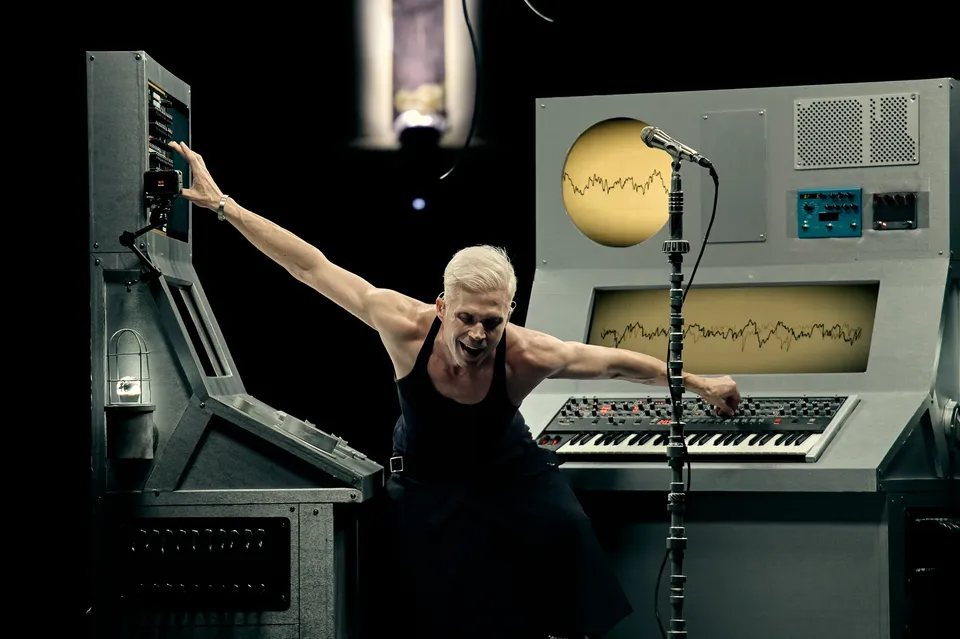
It really stems from our deep love of cinematography. We want to build a visual identity—especially in our music videos and film universe—that feels truly timeless. Rather than directly reflecting the modern era we live in, we aim to create an alternative universe that you can step into and completely lose yourself in. We identify with an aesthetic that feels authentic and theatrical. That approach carries directly into our live shows: we rely heavily on theatrical set design, custom decor, and stage props rather than just relying on modern elements like standard LED screens. That vision is also why we recently revamped our visual representation as a band, including our outfits and wardrobe. We wanted a more unified, cohesive look so that we feel directly connected to the world and aesthetic we've built around Axis Mundi.
You’ve spent the past few years touring across Europe, the Americas, Australia, and Japan. Has reaching audiences from such different places changed the way you see yourselves as a band?
It definitely has, in every single way. It’s helped us realize what we’ve actually built over all these years. We’ve always had a very strong and loyal fan base, but for a long time, we didn't have the opportunity, resources, or timing to go out and physically meet them where they live.
Being able to visit listeners all across the globe has been incredible. It really highlighted the reach of our music and how deeply it impacts people everywhere. Connecting with audiences worldwide showed us that we hold a level of potential and responsibility that we hadn't fully recognized before having that opportunity—and that realization has fundamentally shifted how we view ourselves and our path forward as a band.
Being able to visit listeners all across the globe has been incredible. It really highlighted the reach of our music and how deeply it impacts people everywhere. Connecting with audiences worldwide showed us that we hold a level of potential and responsibility that we hadn't fully recognized before having that opportunity—and that realization has fundamentally shifted how we view ourselves and our path forward as a band.
Heavy music seems to be reaching an increasingly diverse audience, with artists pushing beyond traditional genre boundaries. Do you feel the metalcore scene is becoming more open to experimentation?
I believe it definitely is. That openness and appetite for something new really stems from the influence of a younger audience that welcomes a sound that isn't boxed in or predictable. There's a genuine desire to discover what else you can do and how you can find new forms of expression beyond the standard expectations of metalcore. It’s an amazing time for us as a band because Imminence is meant to be discovered, not predicted. We’ve always pushed into new territory with every record, and we will always continue to do so. With each album we make, we’re exploring a new representation of who we are personally and creatively. It’s fantastic to see the overall trend and direction of the genre shifting toward a much more open and experimental landscape.
On November 13, you’ll be kicking off your North American headline tour. What can fans expect from these shows?
We are definitely bringing the most complete and ambitious production we've ever assembled. As people might have experienced on our tour for The Black, we explored a new theatrical direction where we brought the audience on a journey through a unique stage setup—and this time will be no exception. We are currently building and developing the physical world of Axis Mundi to bring elements of that visually to life on stage for the upcoming North American tour.