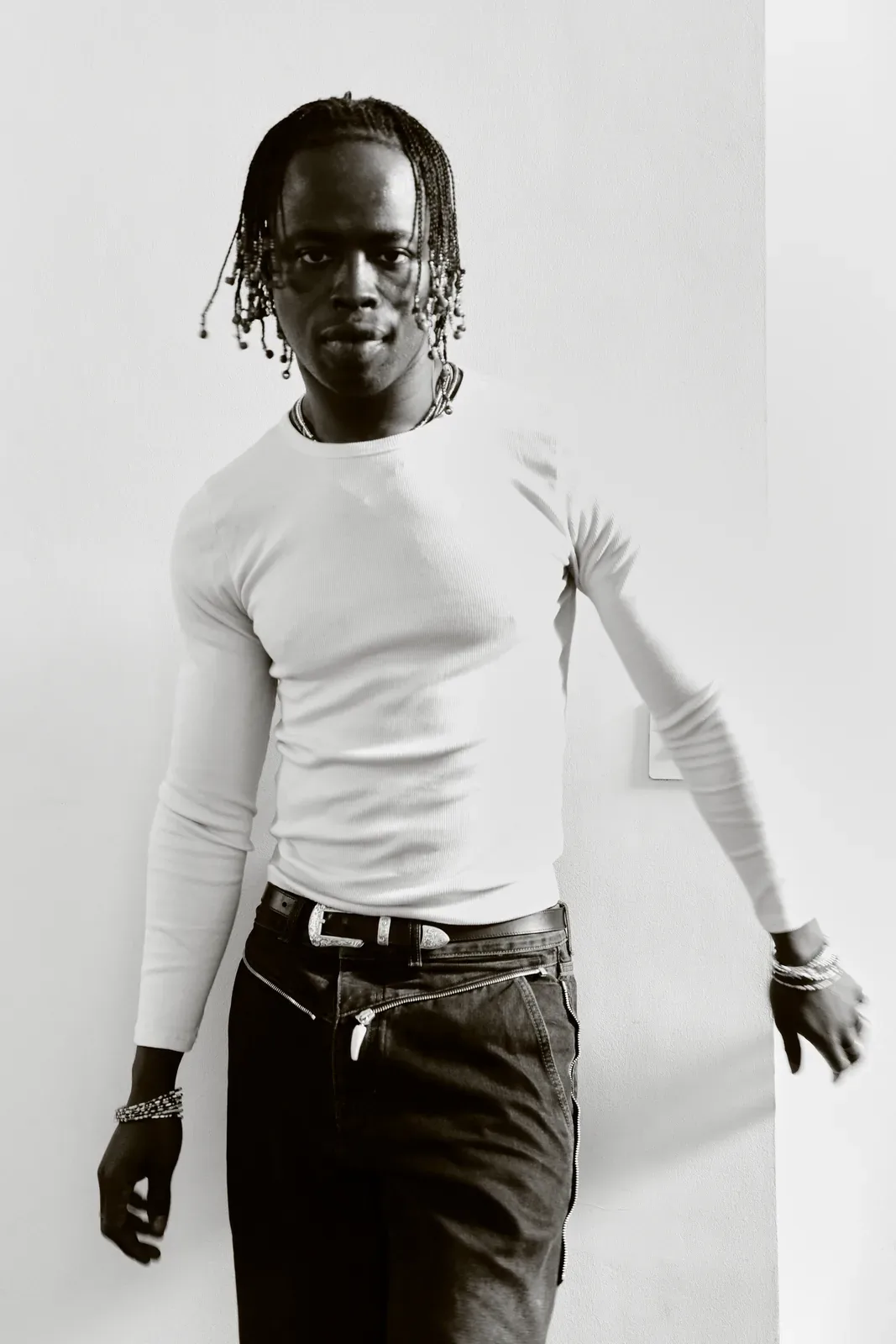
Creating is materialising the intangible universe that lives inside us. Being gifted with the ability to excel or find a path of expression through a certain artistic medium becomes an intimate route to freedom. However, strangely enough, this personal liberation doesn’t come across as something easily accessible. The tools to carve our own way reside inside all of us, but our kind seems to find it easier to admire when someone knows how to make use of them than to learn for ourselves. We spend more time watching than doing, thinking than executing, longing for a different reality rather than walking towards it. Off-White’s IB Kamara has spent his life doing, executing and moving forwards.
This interview is taken from Issue 54 and adapted for our digital platform. Order your print copy here.
IB searches for the answers to his own questions, feeds and appeases his curiosity through fashion, music and art. This exercise of free will, to realise there’s no need to follow a third party when the voice inside our head and the desire in our heart are more than capable of guiding our every move, makes it possible to construct a creative world as extensive, nuanced and ultimately liberated as the one he lives in.
Through our preferred means of expression, we are able to build something we are missing, a part of the universe we haven’t found ready‑made but that is our own, and that often ends up becoming a safe haven to return to. The comfort and meaning we find in crafting melodies may be different from the ones we find in designing garments, in taking photographs, or in writing our thoughts; however, they are all ways of creating our own version of the story. Having ventured and succeeded in all the aforementioned as creative director, editor in chief, musician, stylist, photographer and more, IB Kamara’s sanctuary of freedom and comfort is large, but this does not seem to signal a moment of rest or contemplation. On the contrary, every new endeavour seems to fuel a desire to explore a dozen more, to follow the impulse we were never supposed to lose, but that now feels at risk.
It has never been easier to access so much information and, therefore, all kinds of inspiration. The evolution‑driven instinct to look around and find out has taken us to the point where we are at in society, where the translation of ideas and thoughts into action and materiality has resulted in the creation of almost everything known to us. But contrary to what could be expected, the generally progressive desire for discovery is being dimmed by the convenience of having someone else discover for us. Yet, there’s an uncertainty in claims for discovery, a danger in relying on what others tell us to do or claim to be, or believe, and this implies a risk to the innate need to find the truth by ourselves. Creative endeavours have always been a righteous way of exploring with honesty the information we are given and the possible ways to interpret it, and their power only seems to be stronger and more necessary when opposed to the algorithmic abyss we are submerged in.
“It’s a cultural digest”, says IB about his work at Off‑White, a brand that has learnt to find its own unique and successful way of interpreting and defining the society and the culture of recent times and that at the same time keeps on carrying the heart and the ideals of a man who deeply understood the power of taking action, of always moving forward, Virgil Abloh. Now this digestion of the past, the present, the future, and everything in between is in the hands of someone who not only similarly carries this forward-looking approach but also has found within himself, and at a very young age, the messages he wants to send, the right channels to convey them, and an authentic sense of leadership and confidence that invites and inspires our own search for purpose.
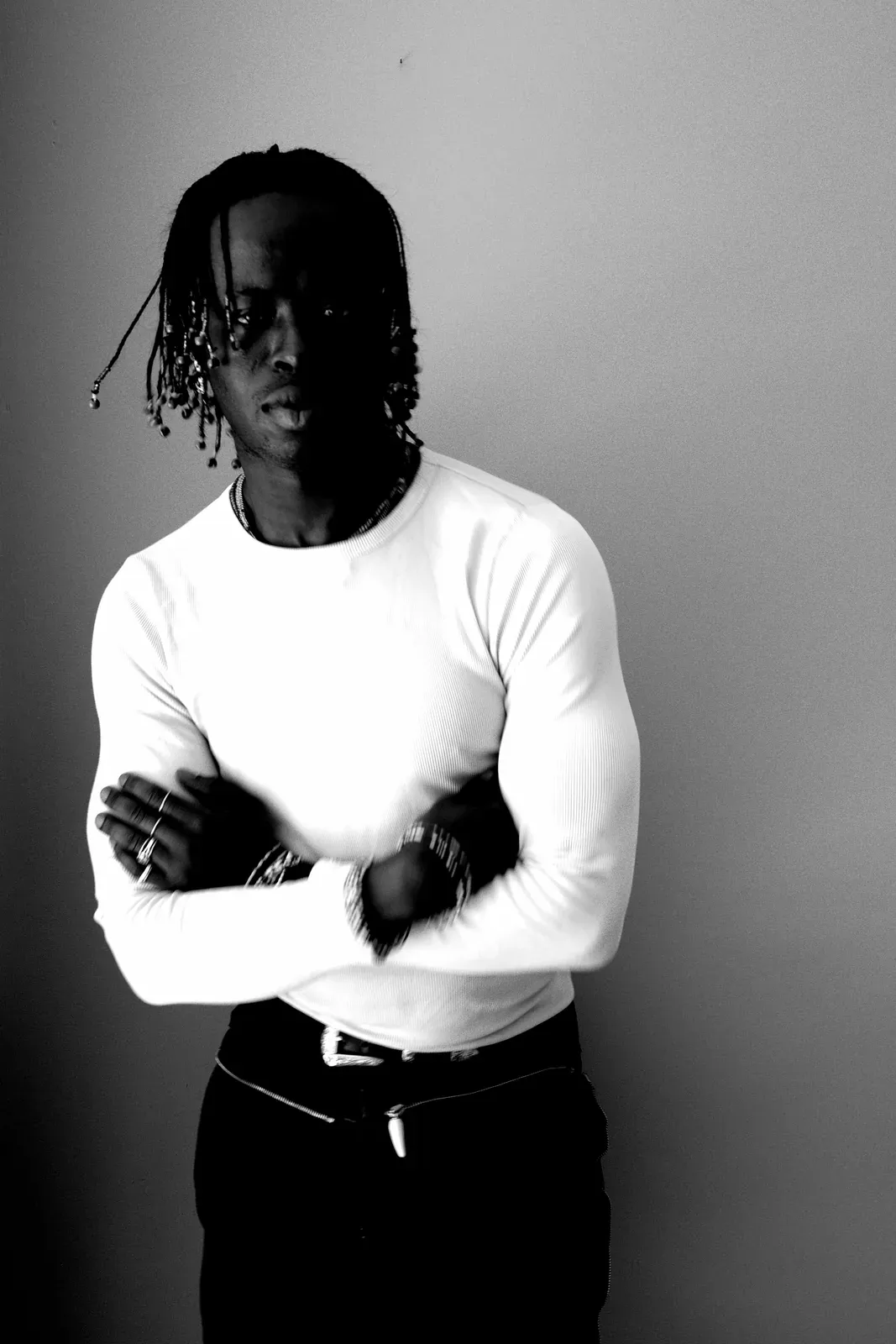
Hi IB! Thank you so much for your time. How are you now that the new collection has just been presented?
Thank you for having me! I feel good. Shows are very tricky and very intense, but after they are over, I can go back, recap and rest.
How is this 2026 treating you?
It has been a year of growth. I’m excited about so many different things and avenues I’m pursuing in my life, and I’m really shaping myself as an artist. It’s been a good year so far, so many beautiful moments.
That’s nice! Going back a bit in time, growing up, who were your heroes? Who were those role models that inspired you or somehow marked the path for you?
The people that inspired me were mostly musicians. I also used to watch CNN, so I used to be interested in the news anchors, the people on television and the media. I wasn’t so exposed to fashion at that time, so my earliest memories are of Grace Jones, Michael Jackson, Prince, Stevie Wonder; people that really persevered and gave everything to their art. Then later on I came to London, and I was obsessed with Margiela, with McQueen, with Tom Ford and all these designers.
Do you feel the idea of looking up to someone carries a different meaning where you grew up, in Sierra Leone or Gambia, than it might in the places where you have developed your career?
For sure, it’s a different perception of what leadership is because when I was younger, I was not exposed to so much pop culture and design culture at the time. It definitely changed as I moved to the UK. When I started design school, I started getting to know so many different things. You learn a lot more, and then it shapes your newer heroes. Newer ones like the John Gallianos, the Schiaparellis, the Virgils.
There’s a very popular saying in Spanish that says something like, “No man is a prophet in his own land.” I’m sure you’re the hero and role model of many new young creatives. Despite not living in the place you were born, do you feel or are you aware if your influence has inspired or impacted the youth of Sierra Leone in some way, as it has in Europe or America, for example?
Yes, I hope so. I hope my story is inspiring for many people because, where I come from, there’s not much going on in terms of artistic expression; people are much more worried about what they’re going to eat or survive on or live for. And I think, I hope, kids can dream too, that they can be as creative as they want, and that people can fund their ideas and make them on a world stage. So yeah, I really hope so. And I really hope I’m living my honest life and creating from an honest place. It may be an inspiration for a lot of people around the world.
I don’t know if this happens to you, but as life goes on and I become older, I find myself going back to what I loved as a teenager: the kind of music I listened to, the kind of style I gravitated towards. Even though you are still quite young, have you found yourself going back to your roots or to the things that young IB used to enjoy, maybe rediscovering them with a more childlike sense of wonder?
Yes. I guess I like the innocence of what I do. I love the learning process; I love learning, and I always want to keep that very close to my heart. I do not want to lose wanting to know, wanting to get better. I don’t want to lose that nervousness about going into projects or just questioning myself as well; I think it’s all part of the honest way of expression.
Being young and starting early in any industry, but especially in a creative one where everything is more subjective and prone to misunderstanding, comes with many doubts and fears. I’m curious if there was any recurring doubt or fear you used to carry with you that today you feel more certain or at peace about.
Sure! One thing I’ve realised is I can only be myself, and I can only create honestly with the things that I’m interested in, and in the age of so much pressure to be something, I refuse to be something I’m not. I had to learn that: being a creative director of a brand and showing collections on a large scale and being crucified for your taste or your perspective. I’m finally in a place of peace with things I love and creating honestly without feeling like I need to be somebody else.
“I’d rather create from an honest place than from a popular place or create with a lack of grace because it has to go viral.”
How did you find that peace?
Letting go of the noise of outside or what other people view you as and just being honest with yourself. Realising what you like and what interests you and sticking by that. It’s important to stick to your perspective, so over the years I’ve just learnt to trust my process.
Right, because just as you mentioned, the roles you have taken on so far — editor-in-chief, creative director, film director — require immense confidence. Were you always this secure in your ideas and thoughts?
It’s something you find naturally as you begin to believe in your own art. That confidence takes you to all the platforms, and then you just replicate the same thing over and over again. It’s a process; I wouldn’t say I was always the most confident, but over the years I’ve learnt to not second-guess myself too much and believe in what I’m trying to do. I’m doing the things that excite me.
Today we live in a society where people follow individuals almost the way previous generations followed religion. Fans, designers, musicians, celebrities — they have become figures people project belief onto. Do you ever feel the weight of that when occupying such a visible position in culture?
For sure there’s a lot of pressure, but you have to believe in your own conviction that you’re working with everything that you have within you to do the job. It’s easy to criticise from outside. I always say that the reality of actually being a creative is that this is a business; it’s a job. It’s not a hobby. As much as we love it, it’s also a business, and I’m part of a company. You have to have sensibility and push through the pressure.
What makes a great leader?
Believing in your team, believing in their vision, pushing them to be their best and working together. It’s teamwork. I don’t think one person can create everything. Trusting your team to deliver as well and being someone that can listen — that’s what makes you a good leader. Listening to your team, being able to take their information and understand when things are not going well.
Your work comprises such an extensive range of disciplines. It often feels like when you begin a new venture you are already imagining the next one. What fuels this untiring impulse you seem to have?
I just really don’t enjoy being bored, but I also love what I do. I love every medium that I choose to express myself through. There’s always a story behind that medium, and I enjoy expressing myself in it as much as I can. But also, the other thing is the responsibility to contribute to culture, especially being from where I’m from. We don’t have the opportunity to just be creative, and I think I am in a space where it allows me to completely express myself freely, and I’m not afraid to take those mediums and have fun with them and discover something else about my universe at the same time. Even though I’m doing so many things, I always think my universe is 360º, where everything is connected.
Is there any particular way that you know when you want to translate a certain inspiration or thought into a specific medium? How do you organise your universe and your forms of expression? Is it more impulsive, or do you have a more planned structure of what you want to do?
It’s always a planned structure, but I can be watching something for research that can lead into a collection, or I can be having a conversation or reading something that can lead into a script or into a song. When I’m at Off-White, I’m making clothes for a living. I’m a designer; I’m a creative director. Then when I’m in my house, I make music, I photograph, and I write stuff. But all universes share the same taste.
Across all these different fields, you are used to creating under your own name; whatever you do represents you directly. But arriving at Off- White meant stepping under a roof of a house that someone else had already built. Internally, how was that for you — presenting your work with another name next to yours? Did it make you think or create with a different mindset than what you had been used to before?
For sure. Off-White has a strong identity in terms of its codes, so I have to work with a lot of the incredible codes that are already left within the brand. It’s a beautiful challenge to find my own path within all those codes, the stories that I want to tell and things that I like. I would say, Off-White is definitely my perspective, bearing in mind the house and what made the brand exciting in the first place. I make streetwear at Off-White. It’s a brand rooted in streetwear, and it has to feel like streetwear, accessible clothes for everybody. So, I put that hat on, and I end up thinking only about it, and when I’m outside Off-White, I do my own projects. I guess then it’s just IB, and at Off-White it’s IB and Off-White.
Does it take away a bit of the pressure to have your name next to another name?
It’s the same level of responsibility to be honest. It always has to be excellent and strong, so it’s the same.
In your first collection for Off-White, “Lunar Delivery”, you introduced the idea of imagining what something received from the moon might look like. Does your creativity lean more into what is real and tangible or what exists beyond the immediately visible — the more ethereal and uncertain side of life?
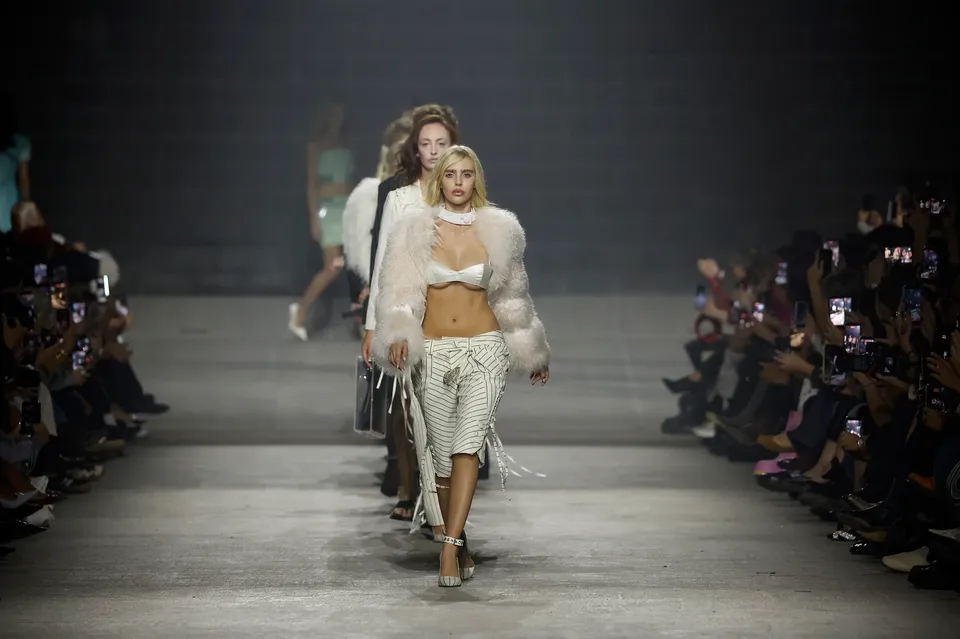
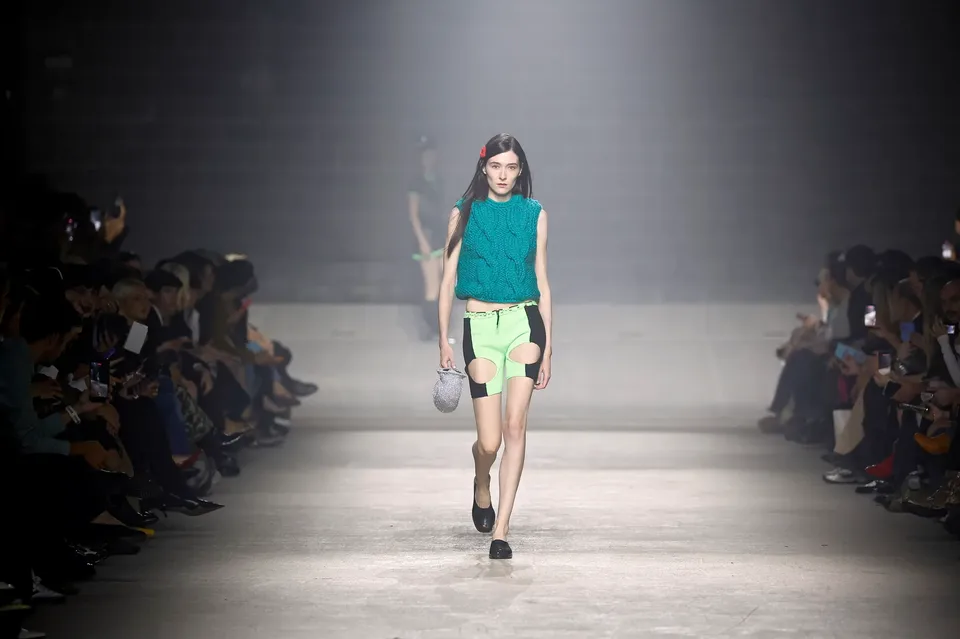
I like the sense of travel. “Lunar Delivery” was that concept of going to the moon and that idea and feeling of going somewhere. With the Miles Davis collection, our most recent one, it was all about the late 70s, being out and about, and looking cool; I guess I’m always mixing cultures. American culture has this little sci-fi energy and innovation, and then Off-White is streetwear, and then I’m African, so the colours maybe represent that, for example. There’s a mix of many different things coming in. At Off-White I sort of cut and paste things and put them together. It’s a cultural digest for sure.
“I always think my universe is 360º, where everything is connected.”
About Off-White’s Fall/Winter 2026 collection that you just mentioned, the key statement was: “Disruption can’t happen in a vacuum. It requires dialogue and a catalyst — someone who breaks the rules and interrogates the status quo.” Who is that someone to you?
Miles, Virgil… We all are that someone in a sense. We are all getting so much information and picking and choosing what’s right for us, and we’re all disrupting something collectively, even unconsciously. We’re looking at the world and seeing what’s going on, and we don’t agree with a lot of these things, so I think we are collectively heading towards a path that feels uniform and disruptive to what we’ve known before in terms of how humanity comes first. We are all so intertwined in the internet age, and we’re all doing different things. That’s the best way I can describe it for now.
Fashion has played different roles throughout history. Its impact and relevance have always been present, but what it means and the power it holds changes as the context of the world does as well. What do you think is the role of fashion today?
Fashion has the ability to definitely influence culture. You see that with the castings, with the diversity of the castings at fashion shows that can influence TV, and people seeing themselves in those shows can influence music and trickle down to beauty, so there’s definitely a connection. Fashion embracing everyone is an example of the world we live in. We are all technically so intertwined in each other’s culture and each other’s lives and should be represented in every form of visual communication.
And on that same line, what is the role of Off- White today? It feels like its creation came from such a genuine and rooted place since the beginning that it is very hard to shake its core.
It is still, at its core, a community brand. It is still supposed to be accessible and fun and a place of innovation and a place of honesty as well. The direction that the brand is on: if you walk in and see the clothes, they’re still very honest and very playful, and they’re very quirky, and they’re very Off-White. Just my version of it.
Do you see it having this steady energy towards the future? Being this unshakeable?
For sure, and it’s because it has such strong codes and such a strong community around it. It definitely is a culture brand, so I think it’s going to be here forever. It’s all about making sure its codes are being pushed, challenged and innovated by different perspectives because the brand cannot remain the same. It has to evolve.
Now that you mentioned community, do you feel community holds more power than what world leaders can convene nowadays?
I think so. Being a collective is much stronger now. Collectively around the world we decide what is cool, not just one person. That’s where we are.
Returning to the Fall/Winter 2026 collection and its inspiration, Miles and Betty Davis, Betty once spoke about the harshness of the industry — especially for a Black woman working in music at the time — saying, “I learnt that stars starve in silence.” Does that resonate with you in any way when thinking about your own creative path?
Yeah, I want to suffer in silence, I think. I’m confident in my universe, and I’d rather create something unique than be a trend or not be original. I’d rather be original for myself and push my creativity and experience new stuff than replicate to fit in. It’s not me, and I can never not have me in my work.
Do you think this uniqueness and this creativity are being put at risk, especially in creative industries like fashion, where the quality seems now to mostly be measured in numbers, likes and revenues?
It’s definitely been questioned. There’s a lot of pressure to just be hot all the time, and it’s not sustainable. I’m creative, and I’d rather create from an honest place than from a popular place or create with a lack of grace because it has to go viral. I don’t think that’s what creativity is, and I don’t think that’s the end goal. Because again, nothing is that sustainable. Quietness also should have a perspective and a say.
In a position like yours, where you have to take into account many inputs — the consumer, your team, your community, the people you work for, and ultimately your own vision—who do you listen to the most? Who casts the brightest light that ends up guiding the decisions you make?
It’s me for sure. I have to say, yes, this is what we’re doing, and obviously listen to my team a lot and listen to the experts in the room. I work very closely with people, so the decisions are usually very obvious. I always feel the conviction that I’m doing the right thing because my team and I are so aligned in what we’re producing, in what we’re making. So yeah, it’s the confidence and trust in the team as well. Even if you’re not there, sometimes things have to get done, but you know they’ll still be good because you’re all so aligned.
What is something you remain deeply devoted to? Who do you believe in?
I will always believe if you make an effort and you give your everything to something, it will be masterful. Having the ability to apply your taste in many different expressions is not a weakness; it gives you a wider taste of culture. By respecting it, working with the past and learning, the outcome will always be beautiful.
What keeps your faith in this world alive?
Kindness. Kind people. Humans being kind to each other keeps me going, and I hope we can all practise that in such a crazy time we live in.