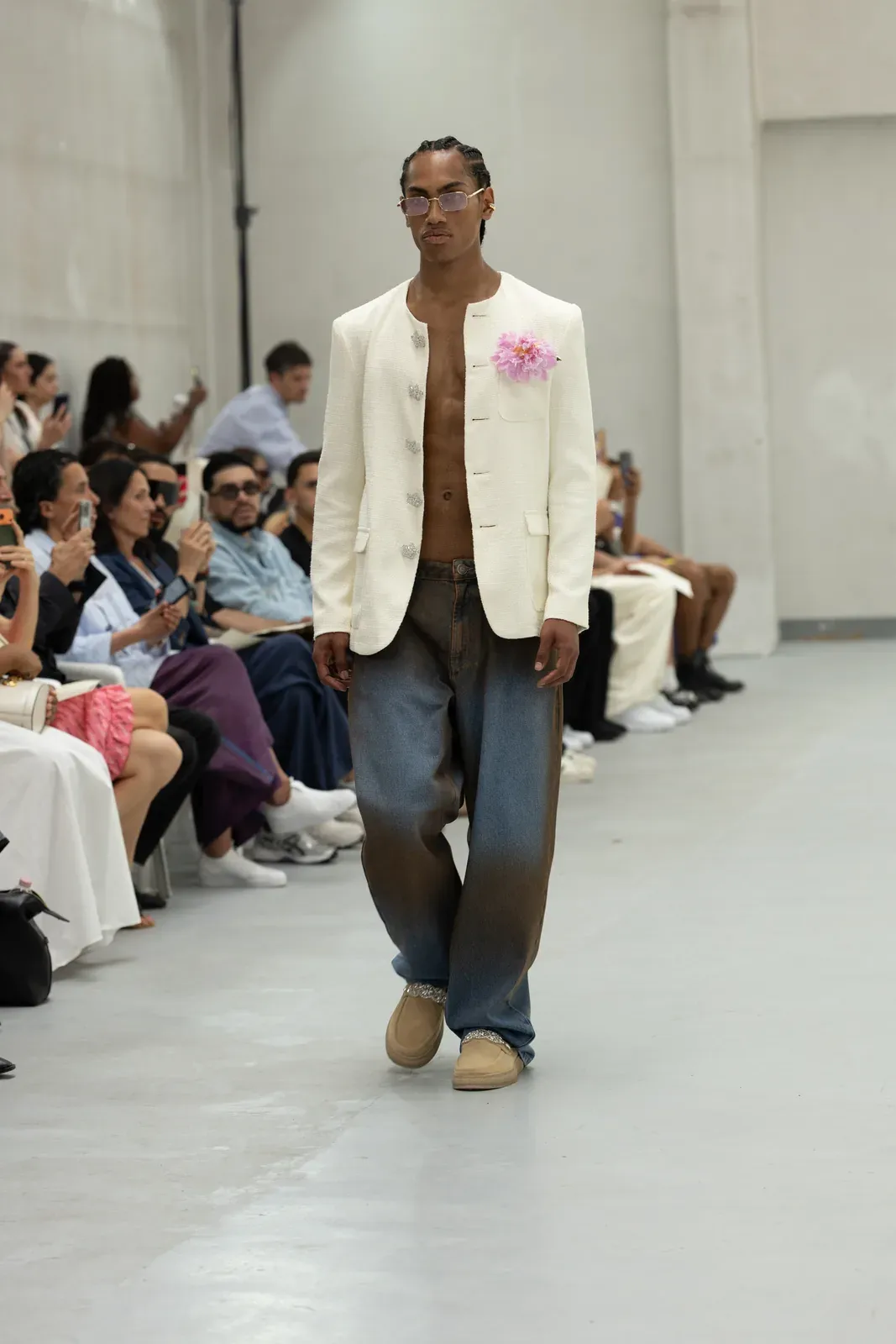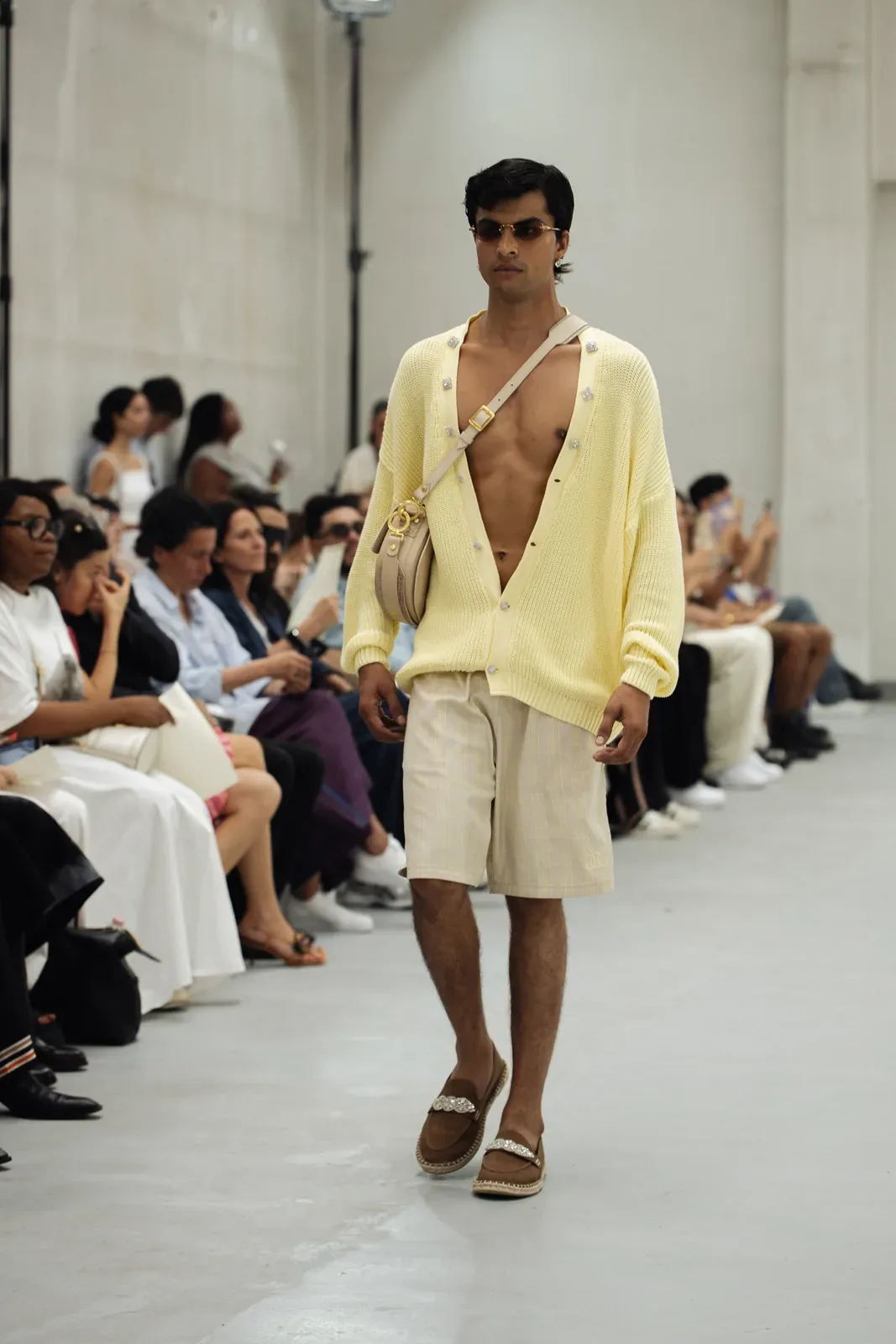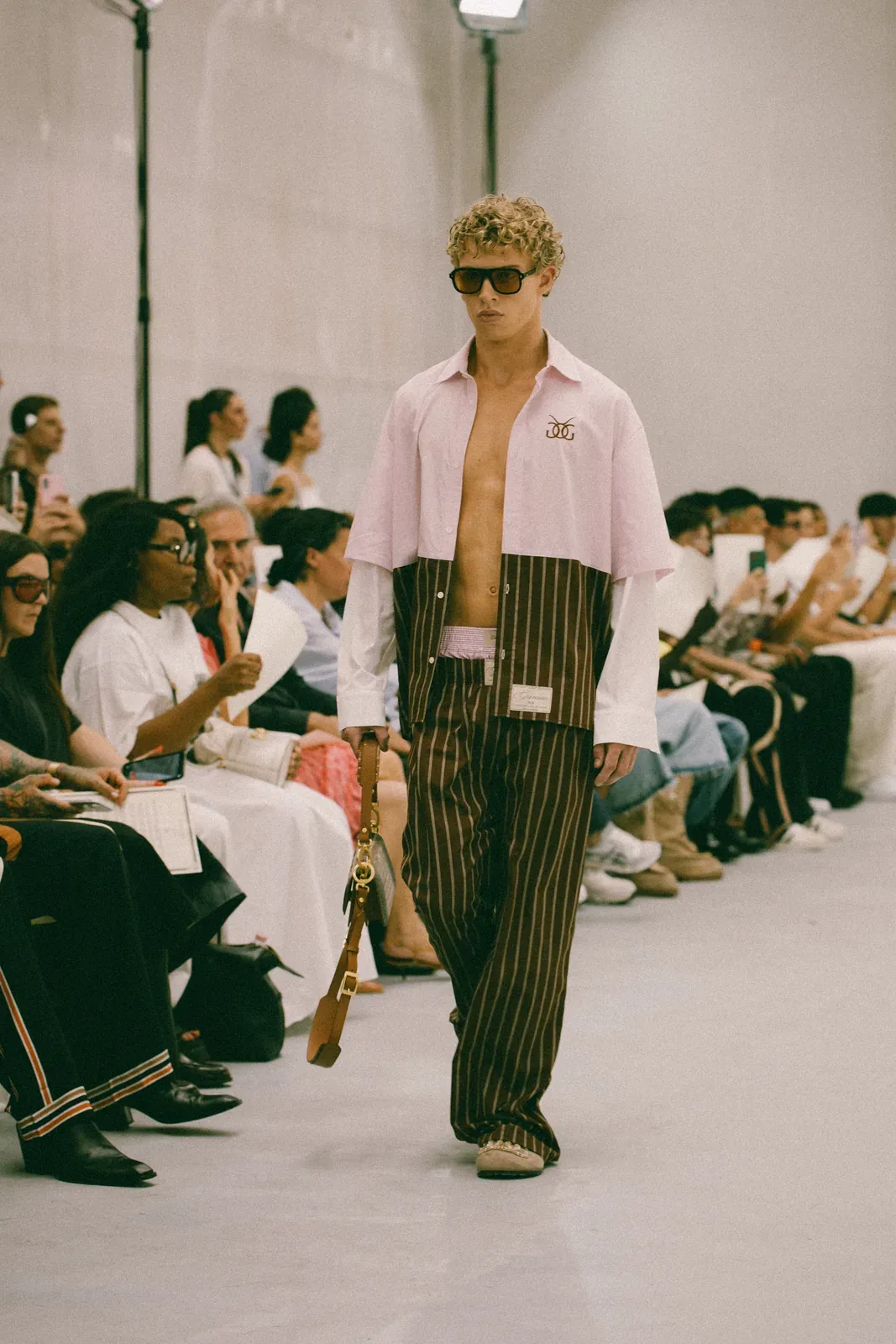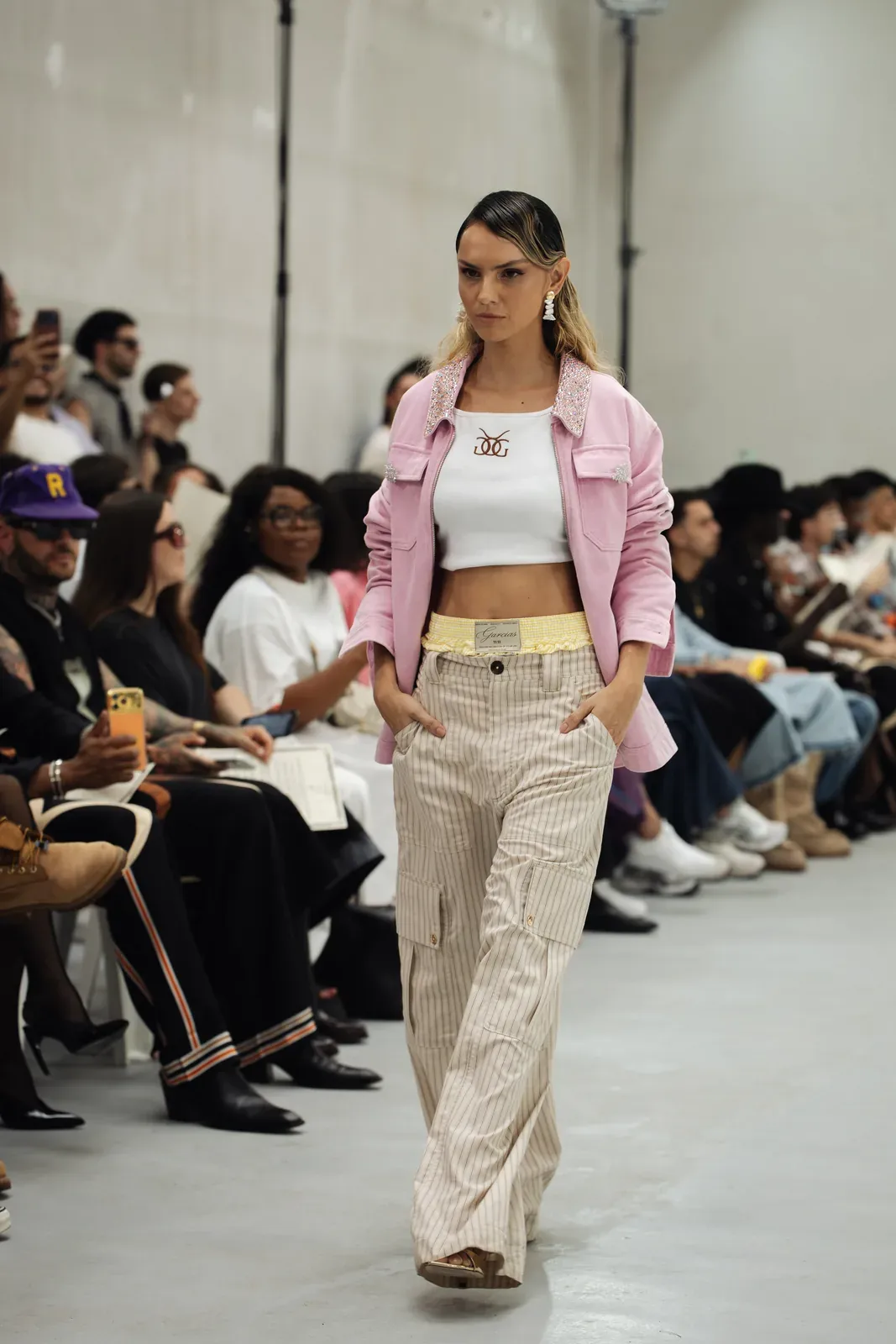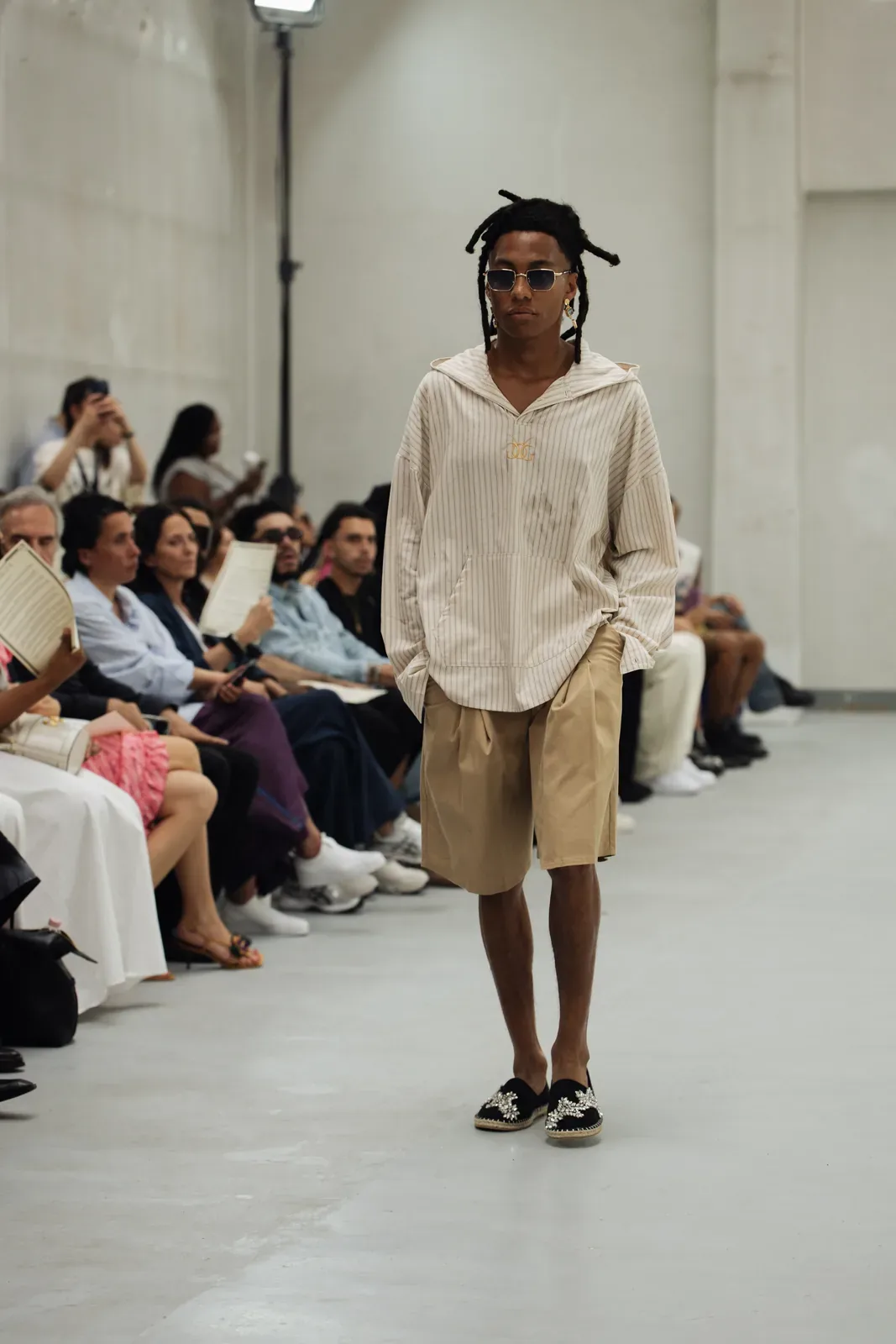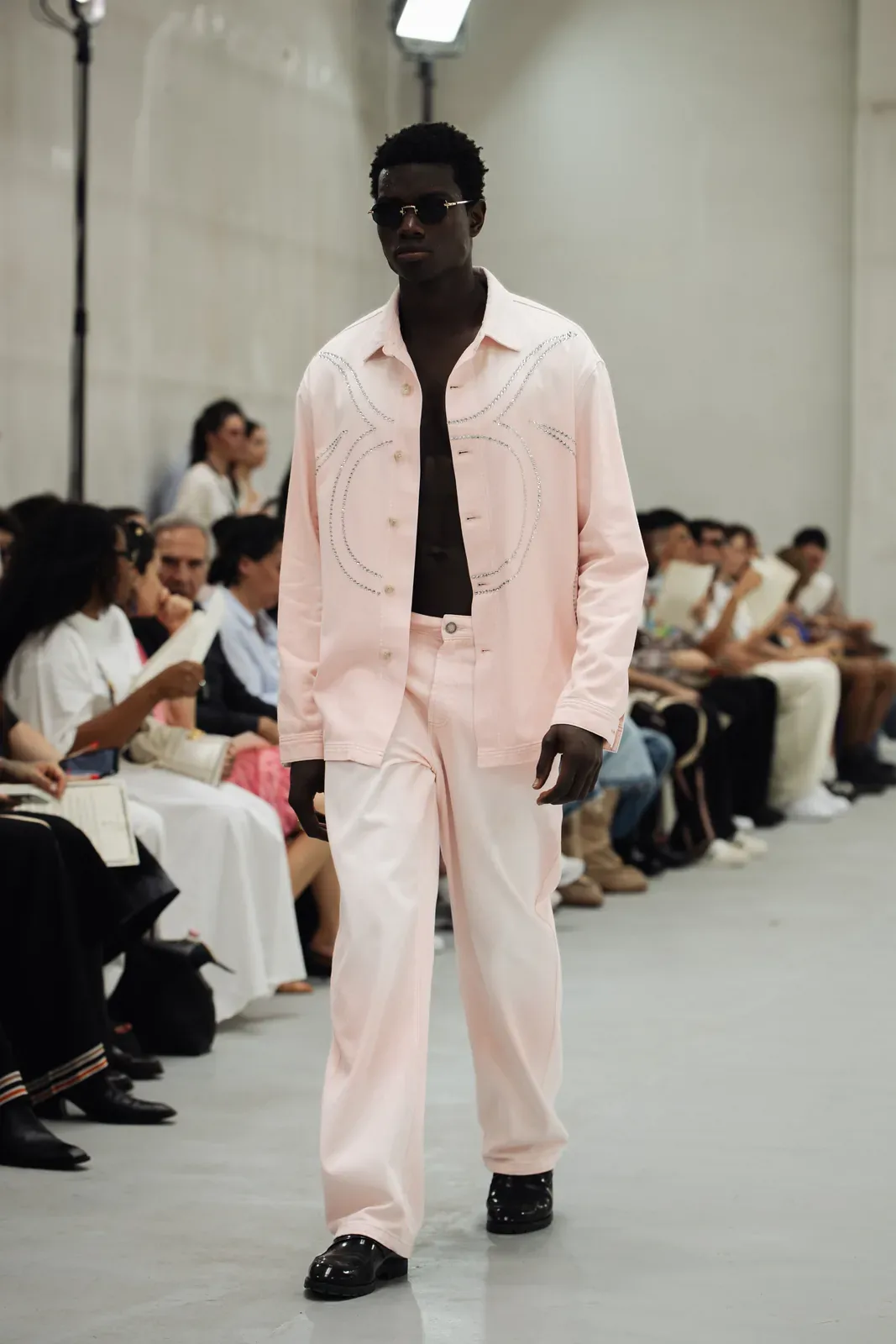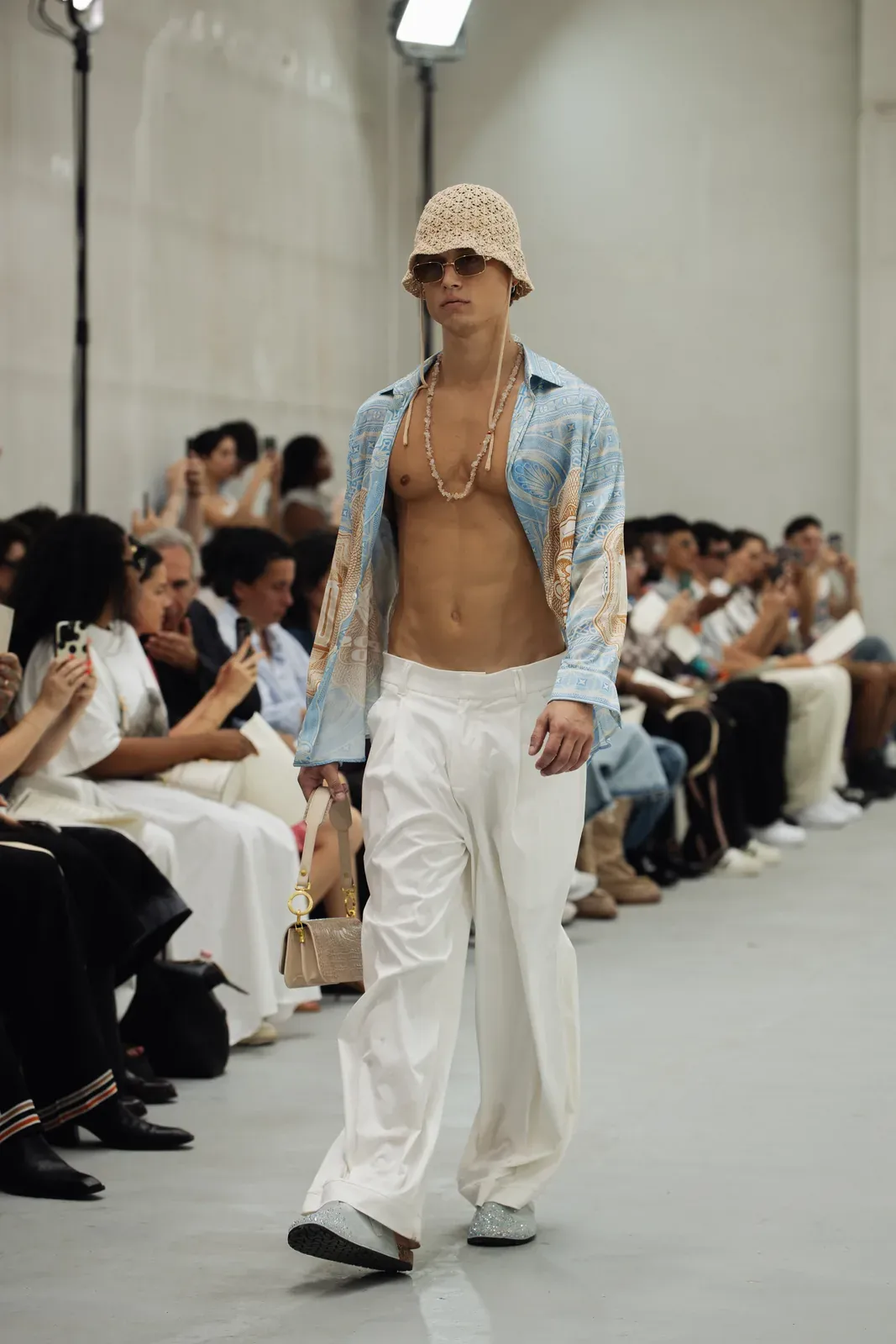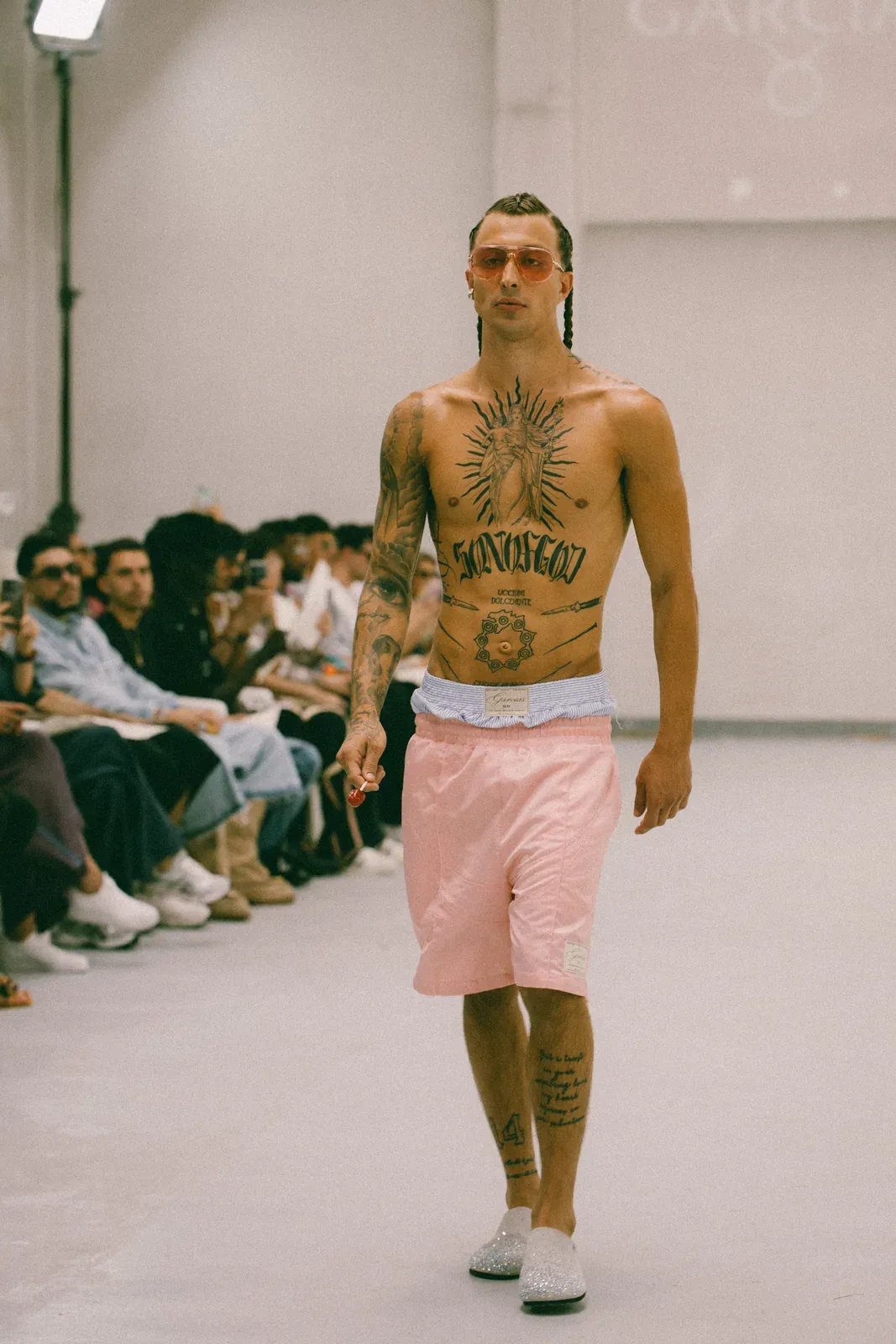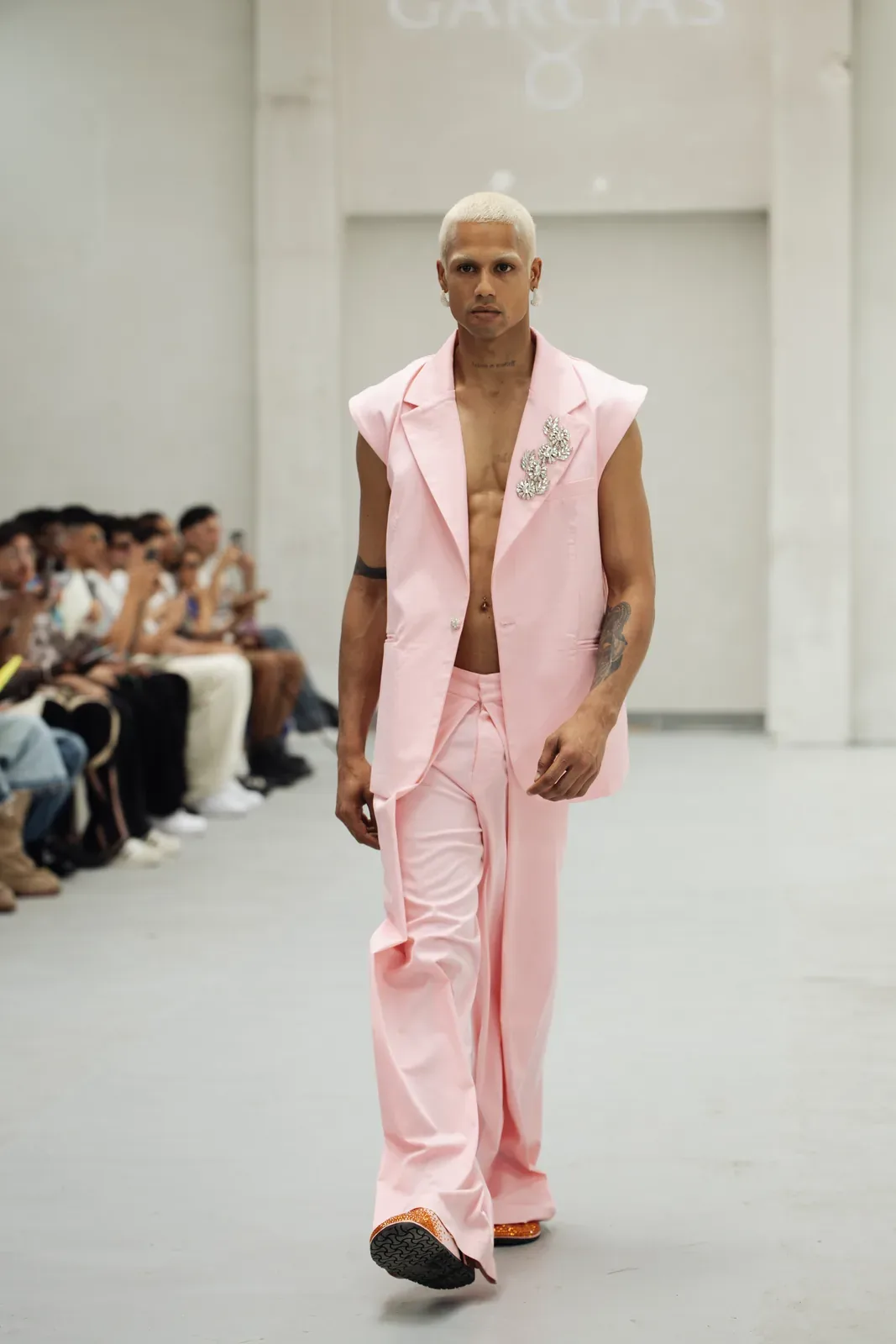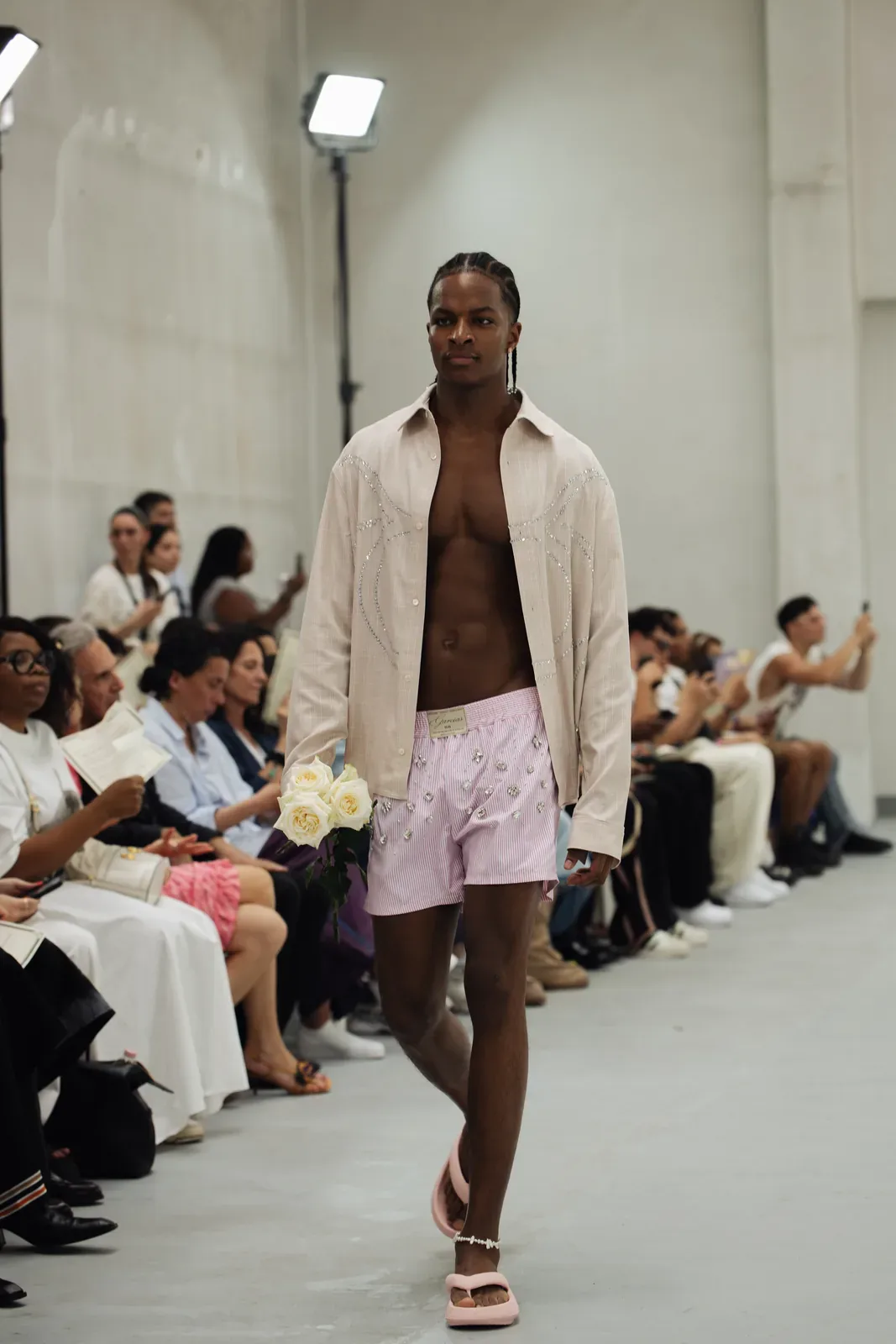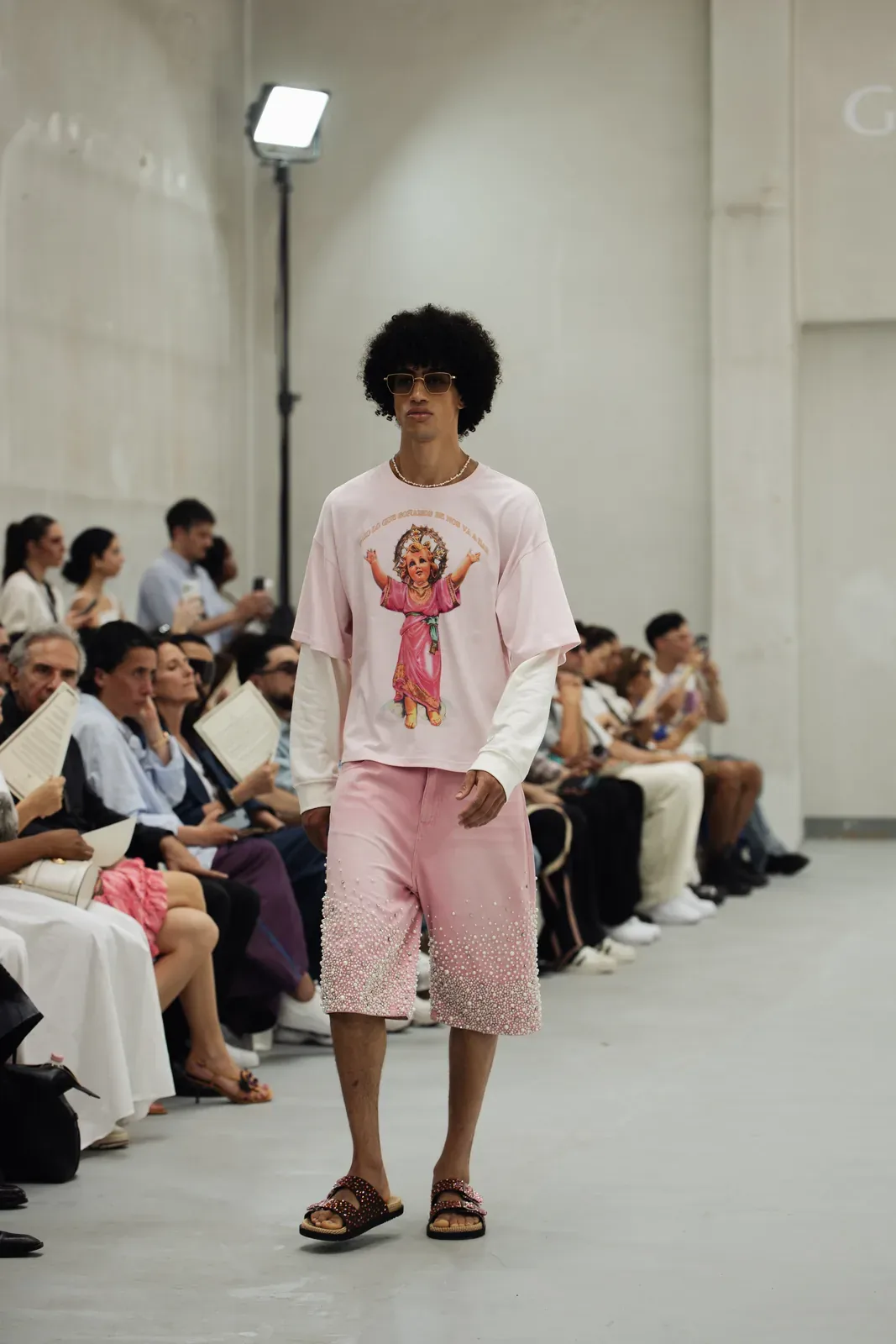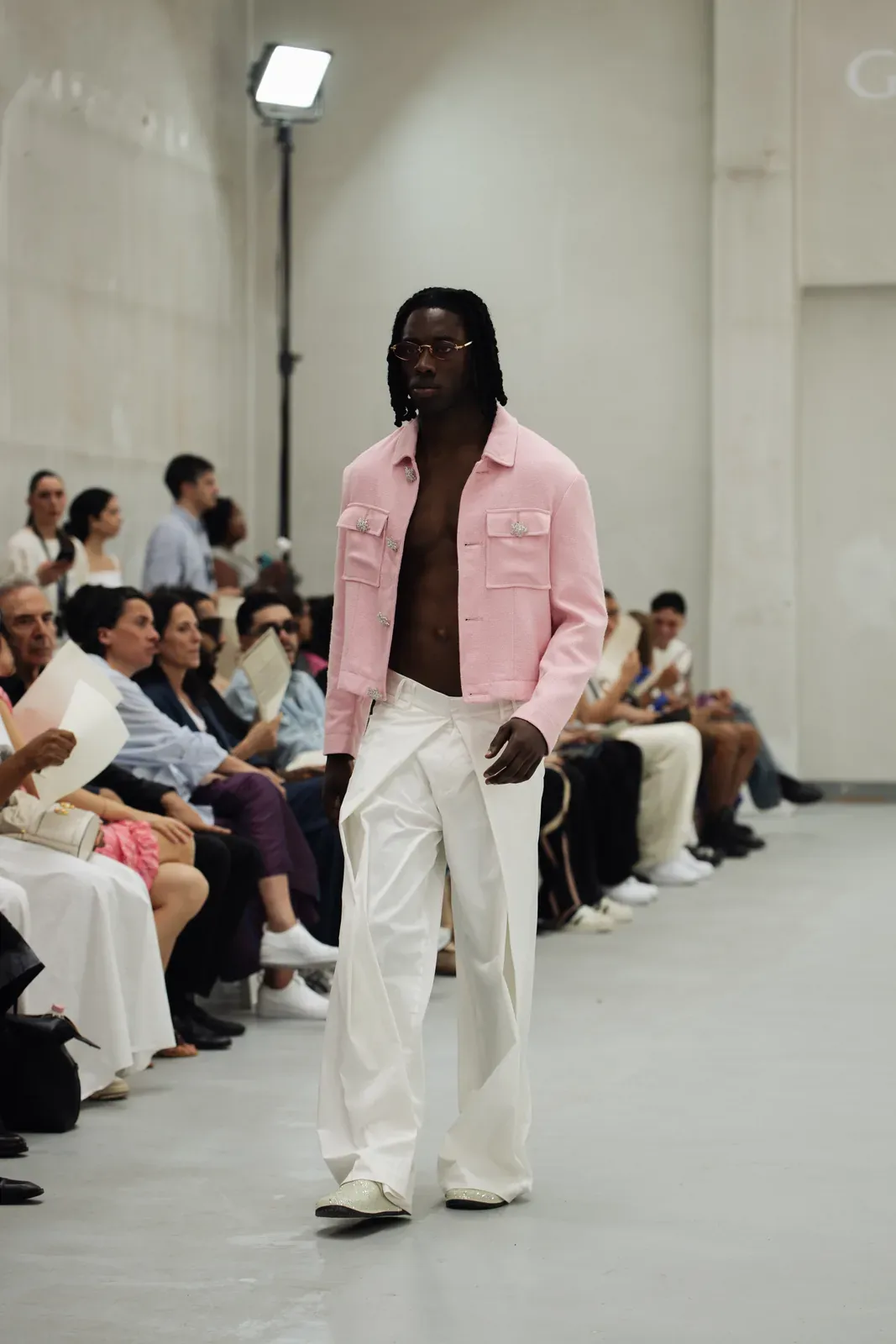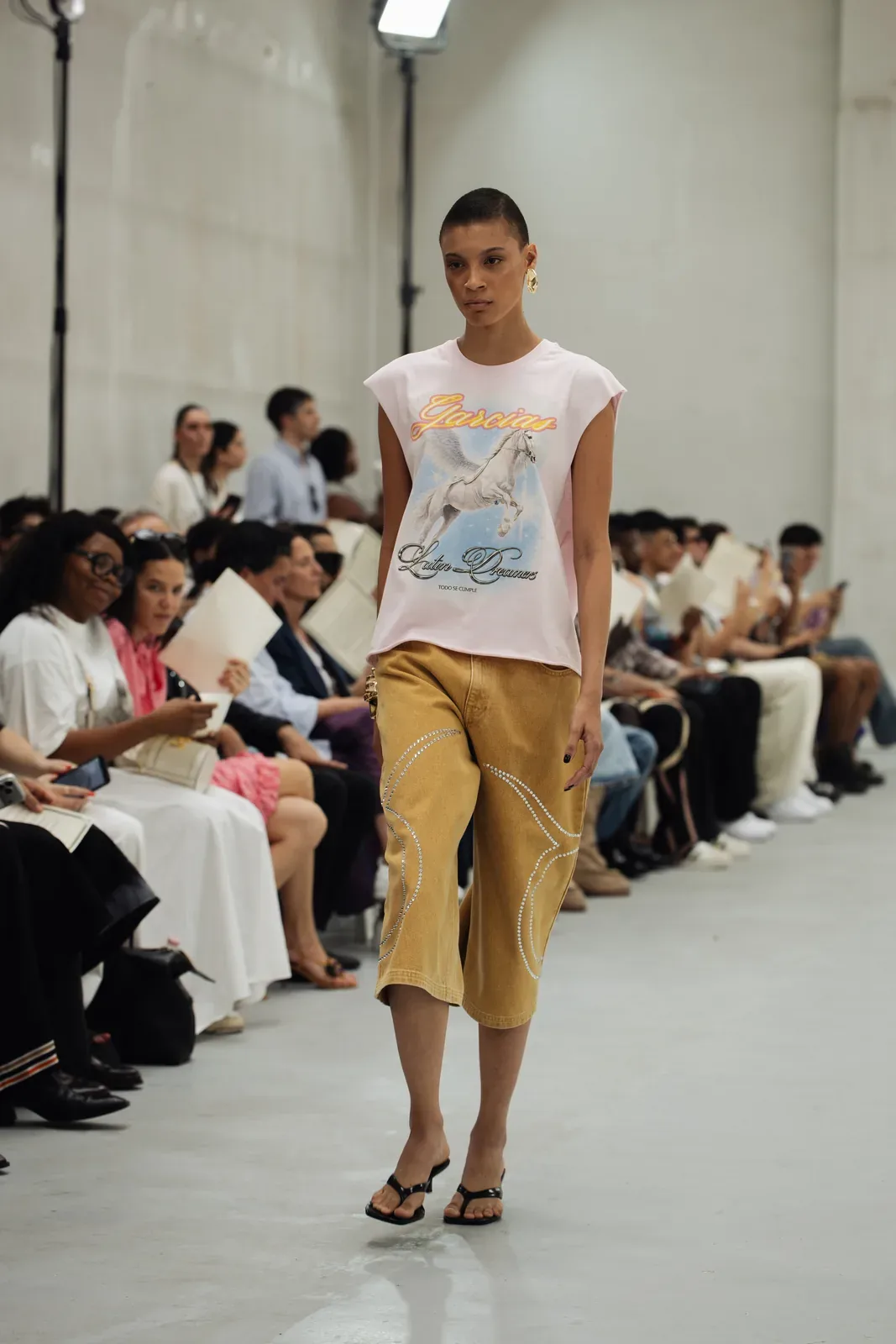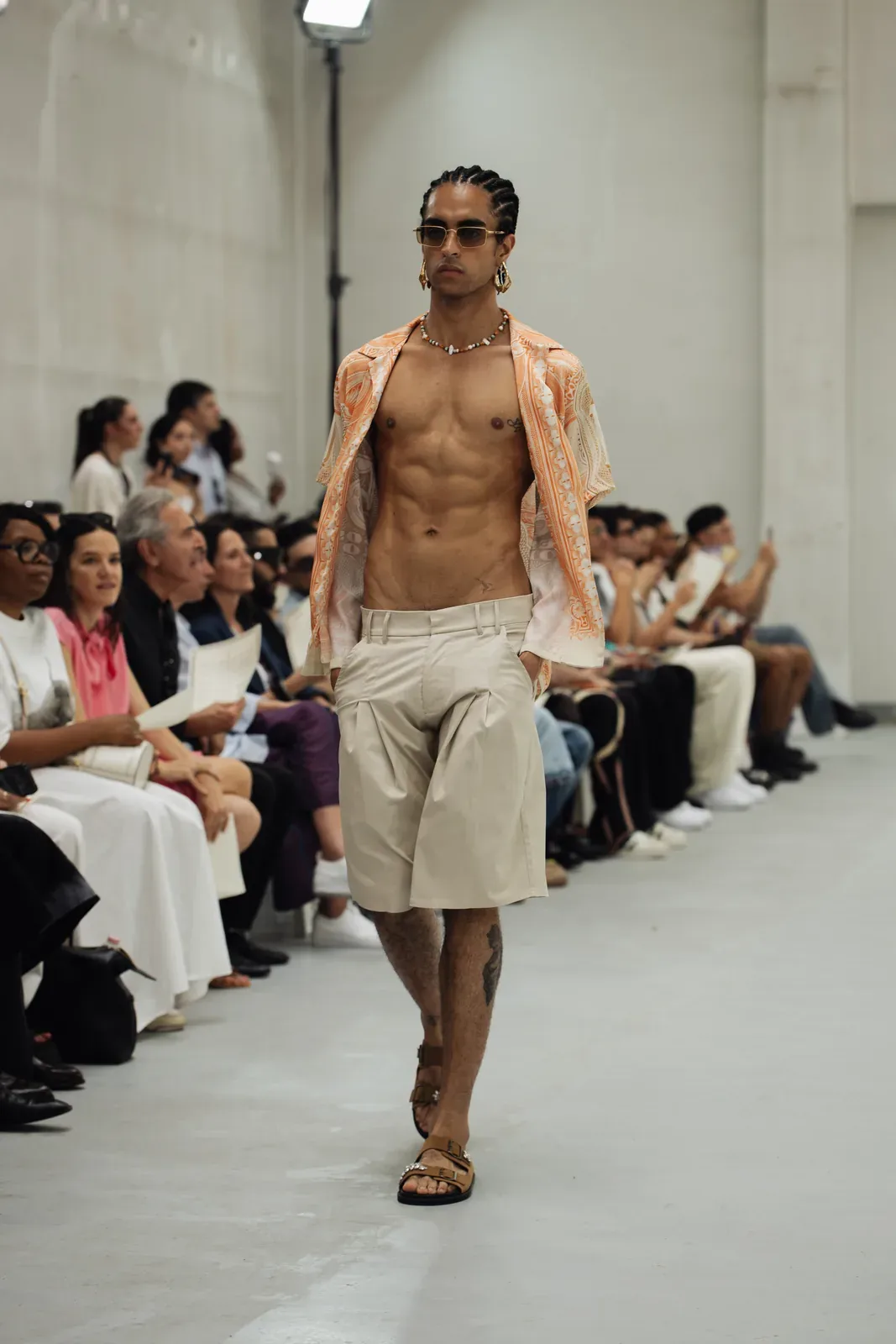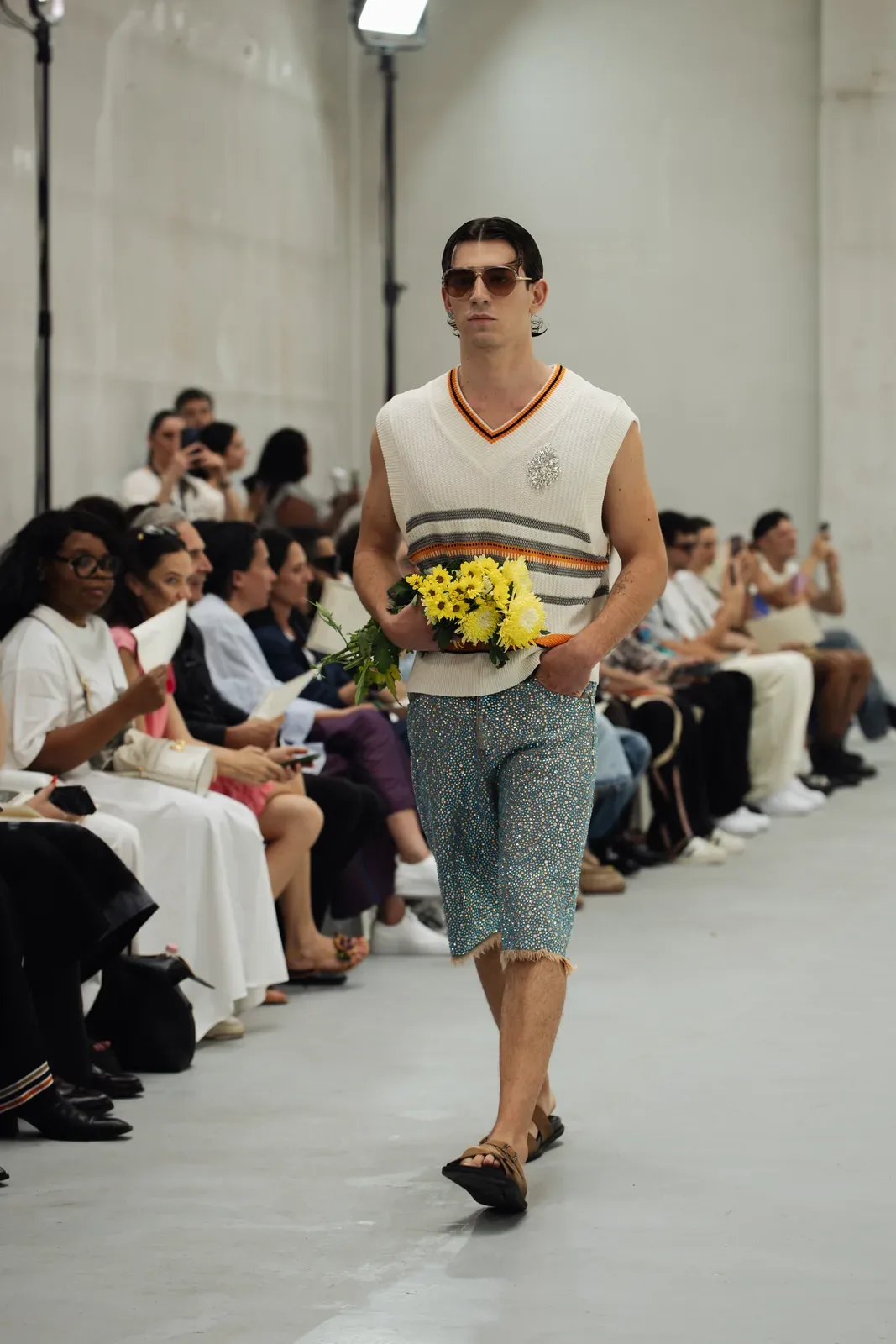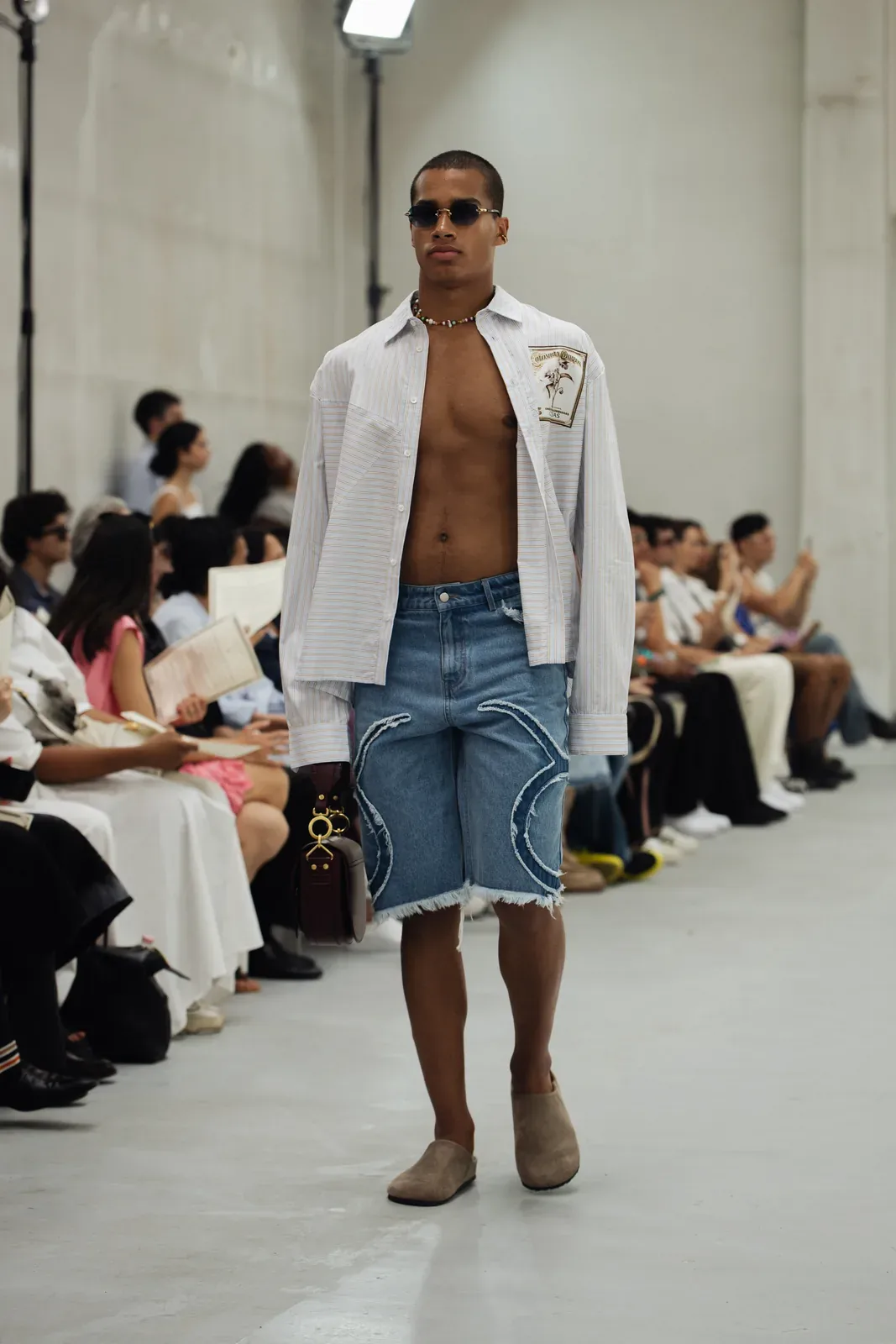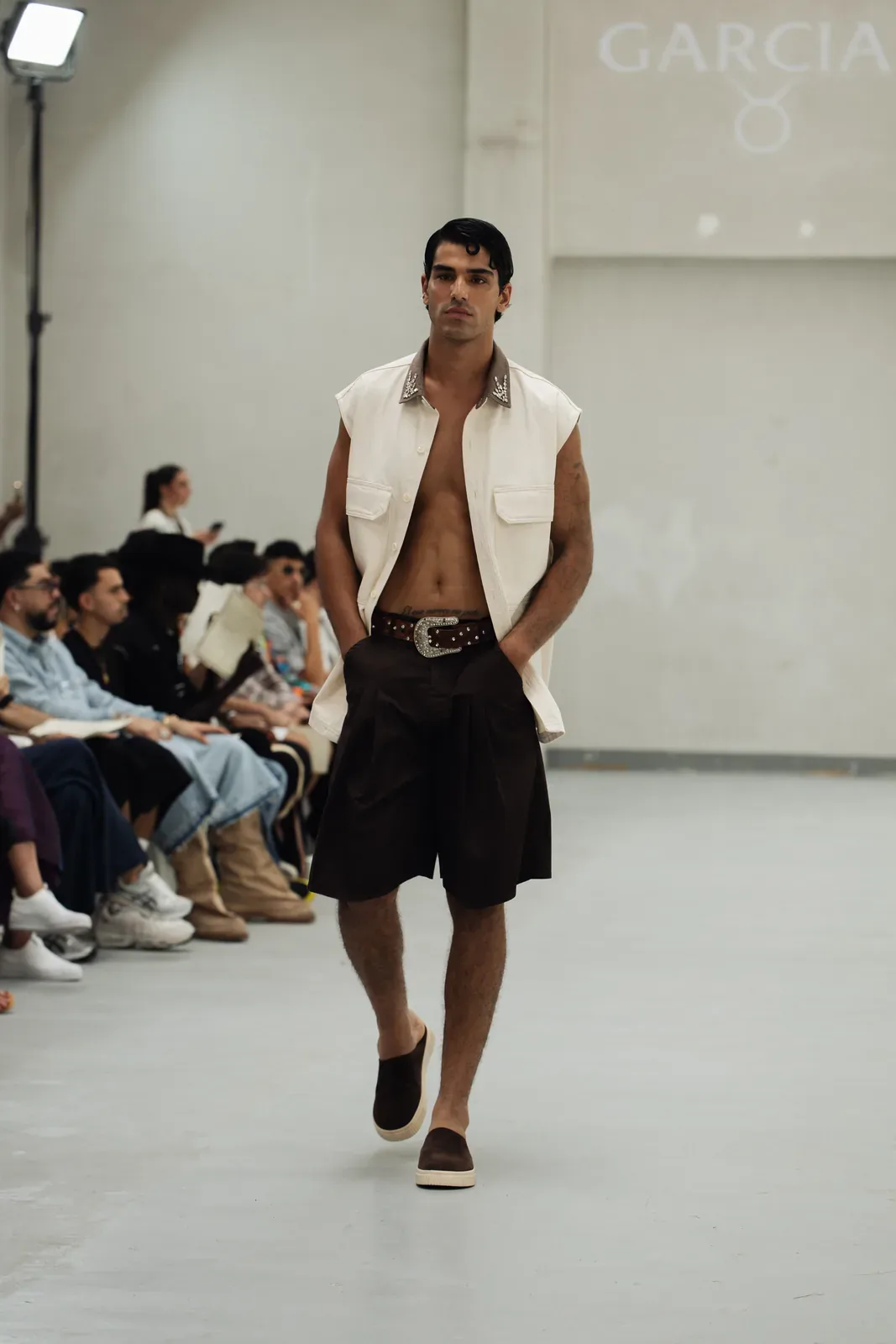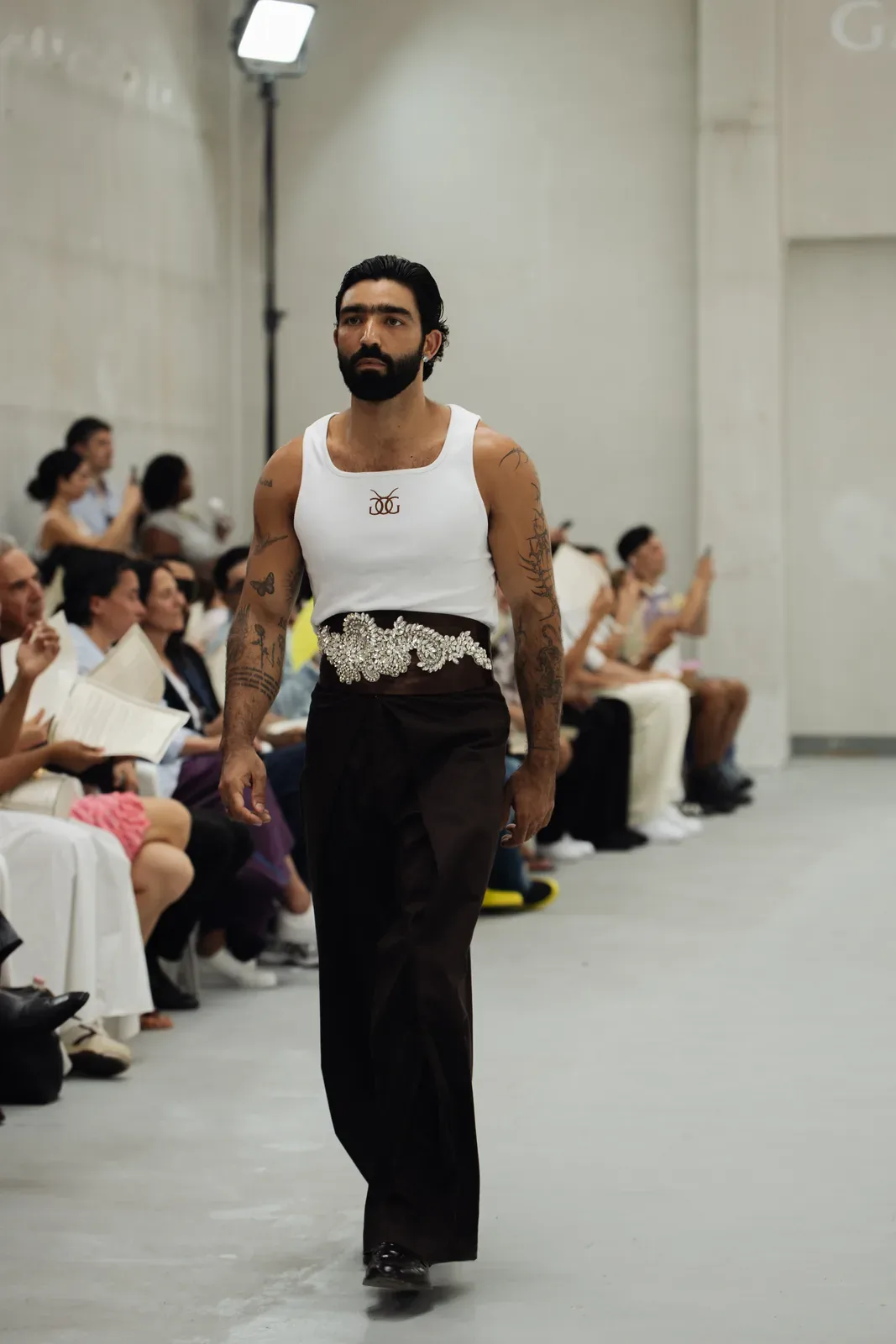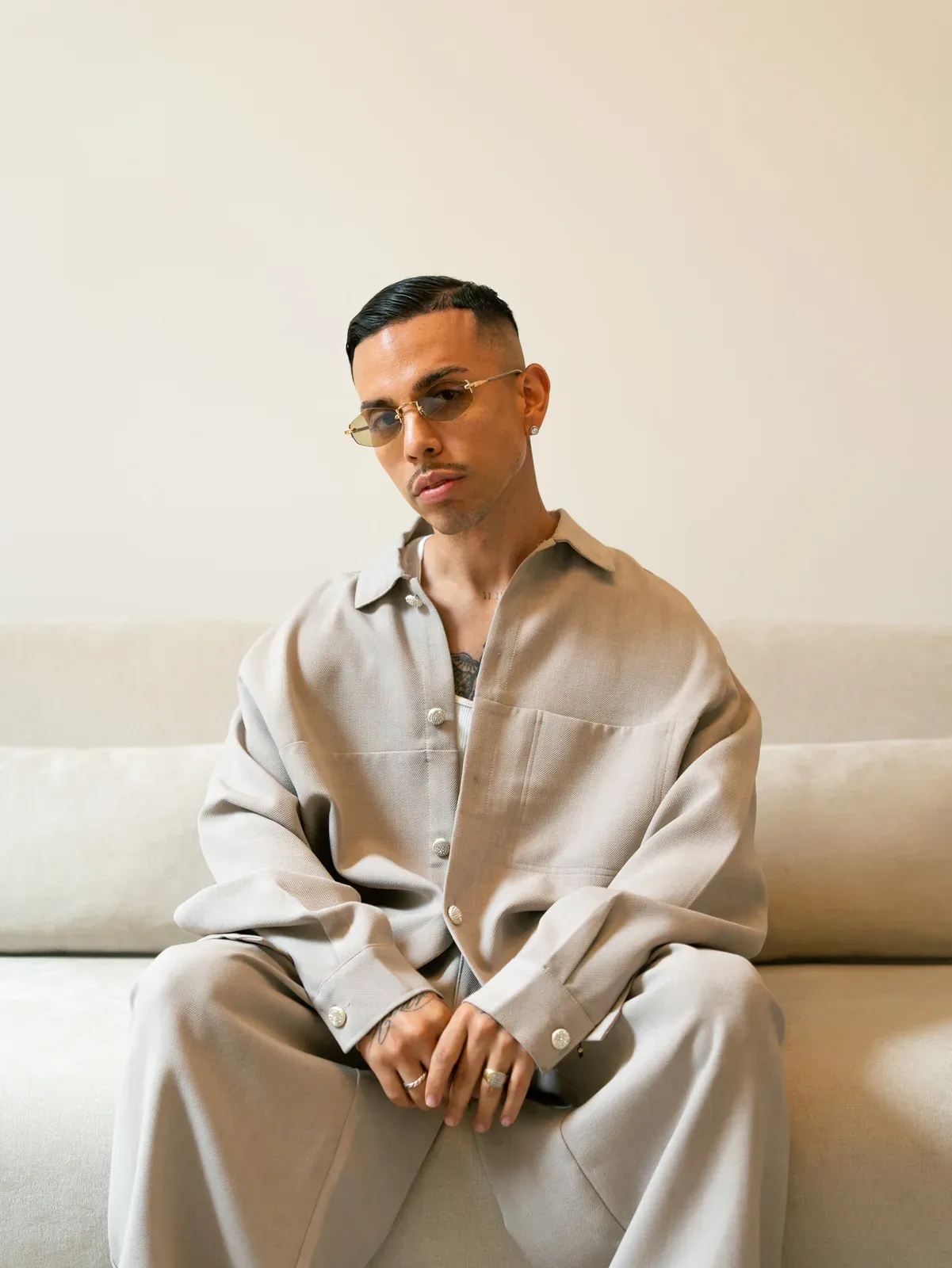
Nicolas Martin Garcia, creative director and founder of GARCIAS, is a Colombian-born, Italian-raised fashion designer whose life and vision embody the possibilities of a globalised world, where both cultures can coexist and merge within the same identity. Today, that perspective has led him to become the first Colombian designer to present a collection at the Camera Nazionale della Moda Italiana with Si lo crees lo creas – Latin Dreamers.
The world and dynamics of fashion as we know them today are relatively new when compared with other artistic and cultural industries. Seasonal collections, fashion weeks, leading universities, colleges and the canonical structures that shape the industry have only been established over the past few decades. Take, for instance, Central Saint Martins, which introduced fashion drawing into its academic curriculum only a little more than a century ago.
Over the past fifty years, we have seen the centre of the conversation revolve around Europe’s leadership, with the establishment of Parisian and Milanese institutions that formalised many of the industry’s codes. The United States later entered the conversation through Ralph Lauren’s vision of Americana couture. Now, over the past decade, parallel fashion hubs have been emerging across Africa, Asia and South America, bringing new voices into the dialogue and forging their own paths, adding local perspectives on beauty, style, functionality and ideals with equal relevance and cultural significance. The Colombian designer and his brand GARCIAS are a perfect example.
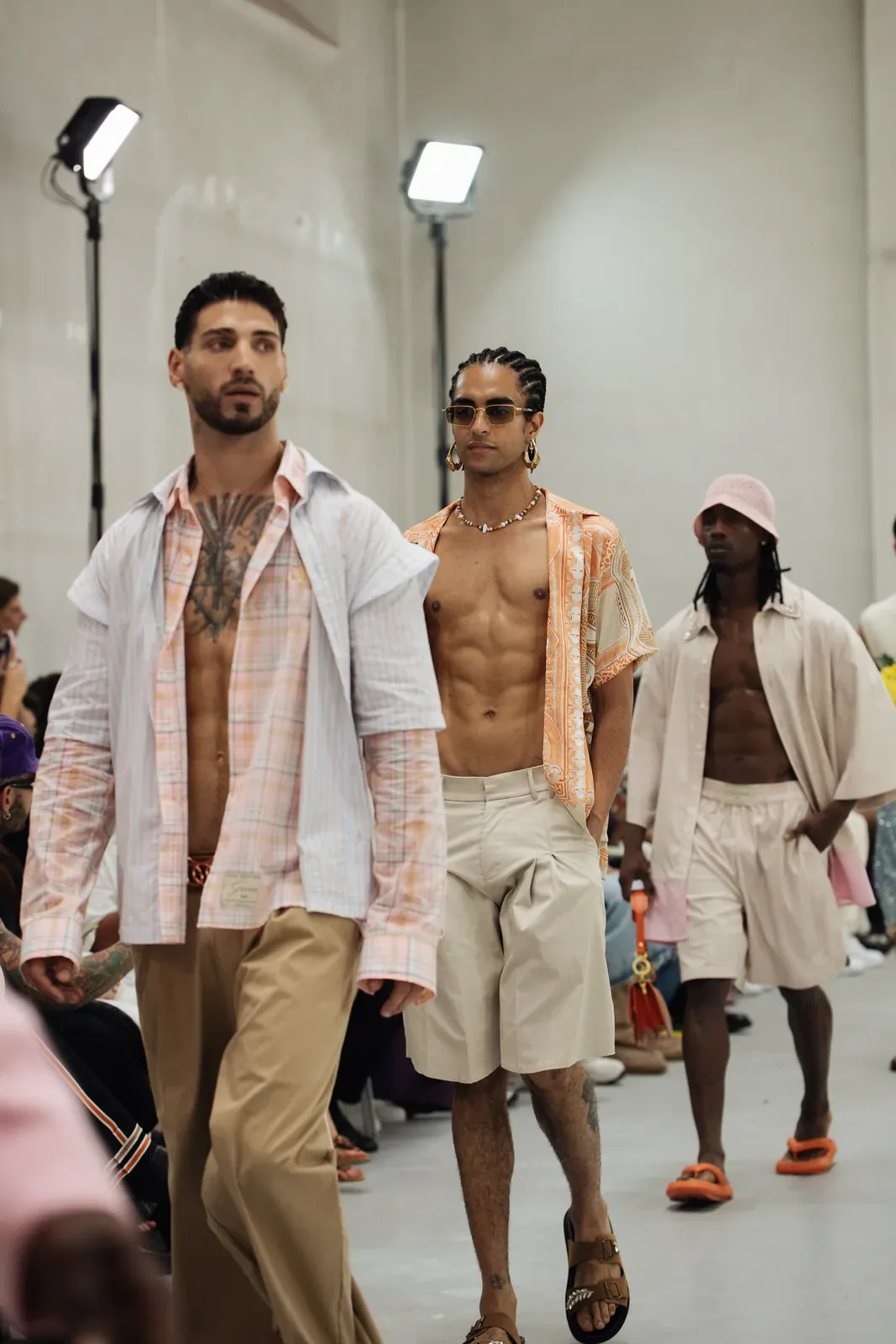
Hi Nicolas! Having the opportunity to interview you is personally an honour, not only as an admirer of your work and career but also as a fellow Colombian working in the European fashion industry. Thank you very much for your time. I’d like to begin with a question that’s purely about emotion. After months of work, how did it feel to finally see the collection come to life on the Milan runway?
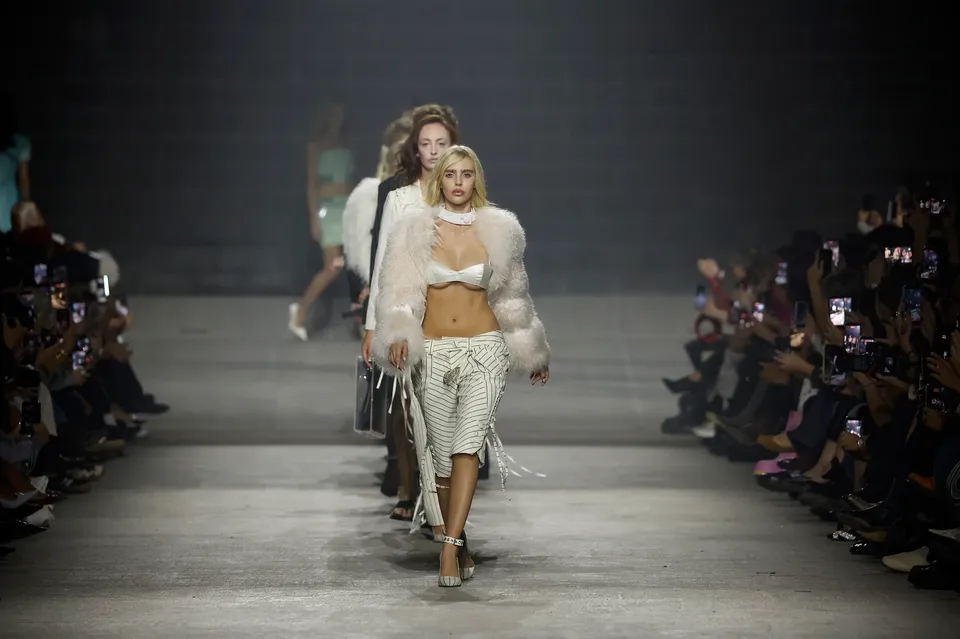
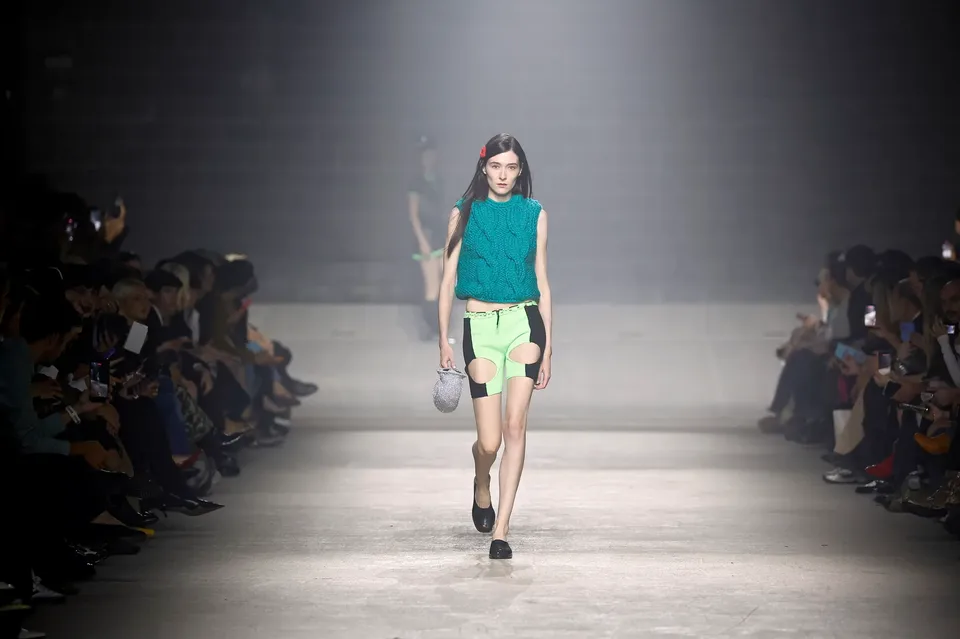
It was an incredibly emotional moment. As a designer, you spend months living with a collection in your head before it becomes reality. You imagine every detail, but nothing compares to seeing it finally come to life on the runway. For me, it meant even more because this wasn’t just another collection. It was the realisation of a dream I had carried with me for years. Seeing GARCIAS on the official Milan Fashion Week calendar, surrounded by my team, my family and so many people who believed in this project, reminded me why I started.
You’ve chosen to use your own name to represent your brand. Aside from that being a common choice among designers, what significance does the Garcia surname hold for you personally? Can you trace its roots back through your Colombian ancestry? Have your parents ever shared any stories or traits they associate with the Garcia family?
To be honest, the decision wasn’t mainly about using my family name. From the very beginning, I wanted the brand to have a name that immediately felt Latin. I was looking for something that, the moment you heard it, evoked Latin culture, its warmth, energy, colour and emotion. GARCIAS does exactly that. It’s a surname that is instantly recognisable across Latin America and Spain, and it naturally communicates the world the brand belongs to.
Of course, it also happens to be my surname, which makes it personal, but the creative intention came first. I wanted to build a brand with a strong identity, one that people could recognise before even seeing the clothes.
Of course, it also happens to be my surname, which makes it personal, but the creative intention came first. I wanted to build a brand with a strong identity, one that people could recognise before even seeing the clothes.
You are the first Colombian fashion designer to present a collection on the official calendar of the Camera Nazionale della Moda Italiana. Naturally, this is an extraordinary personal achievement, but it is also likely to inspire a new generation of young Colombian designers. What do you think this milestone means for Colombia’s creative presence on the global fashion and arts stage and for those who may now see this path as possible?
Being the first Colombian designer to present on the official Milan Fashion Week calendar is something I’m incredibly proud of, but it’s also a great responsibility. When you’re the first, you’re not only representing yourself, you’re representing your country, your culture and, in many ways, an entire generation of creatives who dream of being seen on a global stage. I feel a strong responsibility to portray Colombia in an authentic way, beyond the stereotypes, and to show the richness, beauty and creativity that define our culture.
I hope this achievement sends a message to young Colombian designers that where you come from should never limit where you can go. Colombia is full of extraordinary talent, stories and craftsmanship that deserve international recognition.
I hope this achievement sends a message to young Colombian designers that where you come from should never limit where you can go. Colombia is full of extraordinary talent, stories and craftsmanship that deserve international recognition.
Community is a recurring theme in your work. How do you personally understand the idea of community, whether it’s within a large city like Rome or Bogotá or in smaller places such as Bergamo or Armenia? You’ve experienced some of these places yourself while learning about others through your family’s stories. How have these different experiences shaped your understanding of belonging and people in general?
Community has always been one of the pillars of GARCIAS. I was born in Colombia but moved to Italy when I was five, so I’ve always lived between two cultures. That gave me the opportunity to understand that a sense of belonging isn’t defined by a place; it’s defined by people.
Whether it’s a big city or a small town, what really matters is the connections you build. GARCIAS itself is proof of that. Everything we’ve achieved has been possible thanks to a community of people who believed in the project: our team, collaborators, models, artists, clients and friends. That’s the kind of community I want to continue building: one that brings together people from different backgrounds through creativity, culture and a shared vision.
Whether it’s a big city or a small town, what really matters is the connections you build. GARCIAS itself is proof of that. Everything we’ve achieved has been possible thanks to a community of people who believed in the project: our team, collaborators, models, artists, clients and friends. That’s the kind of community I want to continue building: one that brings together people from different backgrounds through creativity, culture and a shared vision.
In the past, you’ve mentioned admiring the work of Ruven Afanador. More broadly, how have you been exposed to Colombian artistic and cultural references throughout your life? What role have they played in both your creative practice and your personal identity?
For me, Colombia has always been a very powerful visual and emotional reference. I grew up surrounded by these very vivid images of my culture: gold jewellery, salsa shirts, music, colours, celebrations and a way of living that is full of passion and emotion. I’ve always been attracted to things that feel intense and expressive. I love bullfighting aesthetics, the richness of gold, the symbolism of jewellery and everything that creates a strong emotional reaction. I think that’s where my idea of Latin maximalism comes from. It’s not just an aesthetic; it’s the way I see life.
As a person, I’m deeply connected to those values: passion, intensity, sensuality, joy and celebrating life. Those influences have shaped who I am, and because of that, they naturally become part of everything I create.
As a person, I’m deeply connected to those values: passion, intensity, sensuality, joy and celebrating life. Those influences have shaped who I am, and because of that, they naturally become part of everything I create.
Looking at your story, there seems to be a clear progression: an adolescence that appears somewhat directionless, followed by discovering fashion, consciously distancing yourself from distractions and, as you’ve mentioned before, even from certain relationships, in favour of a work-first mindset, and later developing a deep commitment to cultural enrichment. Looking back today, how do you make sense of that journey, and what do you think each stage taught you?
I always say that we’re exactly where we’re supposed to be, at the right moment in our lives. When I look back, I don’t think I would change anything because every experience, whether good or bad, has helped shape the person I am today.
I’ve always been curious and willing to experience life. I’ve made mistakes, taken risks and learned something from every person I’ve met. All of those experiences have given me lessons that I apply not only to my work but also to the way I lead my business and build GARCIAS.
Every stage of my journey has also taught me that achieving a meaningful goal requires a deep understanding of yourself. You have to know who you are, be aware of your strengths and weaknesses, and be conscious of the direction you want your life to take.
I’ve always been curious and willing to experience life. I’ve made mistakes, taken risks and learned something from every person I’ve met. All of those experiences have given me lessons that I apply not only to my work but also to the way I lead my business and build GARCIAS.
Every stage of my journey has also taught me that achieving a meaningful goal requires a deep understanding of yourself. You have to know who you are, be aware of your strengths and weaknesses, and be conscious of the direction you want your life to take.
There is an ongoing, and still far from settled, debate about the relationship between Latin American fashion and its European counterpart. For decades, many Latin American designers looked to Europe as the established canon. More recently, however, the conversation has shifted towards the idea of a distinctly Latin American design language, one that follows its own rhythm and aesthetic and is, in many ways, unconcerned with European trends. In the past, you’ve suggested that this growing “confidence” can sometimes become counterproductive, leaving emerging Latin American designers disconnected from the broader international fashion conversation. Has your perspective on this evolved, and how do you view that relationship today?
I think my perspective has become more nuanced. I don’t believe Latin American fashion needs to ask for permission from Europe anymore, but I also don’t think we should isolate ourselves from the global conversation.
For many years, Europe represented the canon: the schools, the maisons, the rules, the idea of what “good taste” was supposed to be. As Latin American designers, it is important to challenge that. We come from cultures that have their own rhythm, their own codes, their own way of understanding beauty, excess, emotion, sensuality and craftsmanship.
At the same time, confidence should not become a closed door. Sometimes there is a risk of confusing identity with resistance. To me, having a strong Latin American voice doesn’t mean ignoring everything else. It means knowing exactly who you are, understanding the international system, and then deciding how to enter that conversation without losing yourself.
I don’t want GARCIAS to be Latin only because of the references. I want it to be Latin in attitude, in energy, in emotion, but also precise, contemporary and relevant on a global level. The goal is not to copy Europe, and it’s not to reject Europe either. The goal is to create a language strong enough to stand next to it.
For many years, Europe represented the canon: the schools, the maisons, the rules, the idea of what “good taste” was supposed to be. As Latin American designers, it is important to challenge that. We come from cultures that have their own rhythm, their own codes, their own way of understanding beauty, excess, emotion, sensuality and craftsmanship.
At the same time, confidence should not become a closed door. Sometimes there is a risk of confusing identity with resistance. To me, having a strong Latin American voice doesn’t mean ignoring everything else. It means knowing exactly who you are, understanding the international system, and then deciding how to enter that conversation without losing yourself.
I don’t want GARCIAS to be Latin only because of the references. I want it to be Latin in attitude, in energy, in emotion, but also precise, contemporary and relevant on a global level. The goal is not to copy Europe, and it’s not to reject Europe either. The goal is to create a language strong enough to stand next to it.
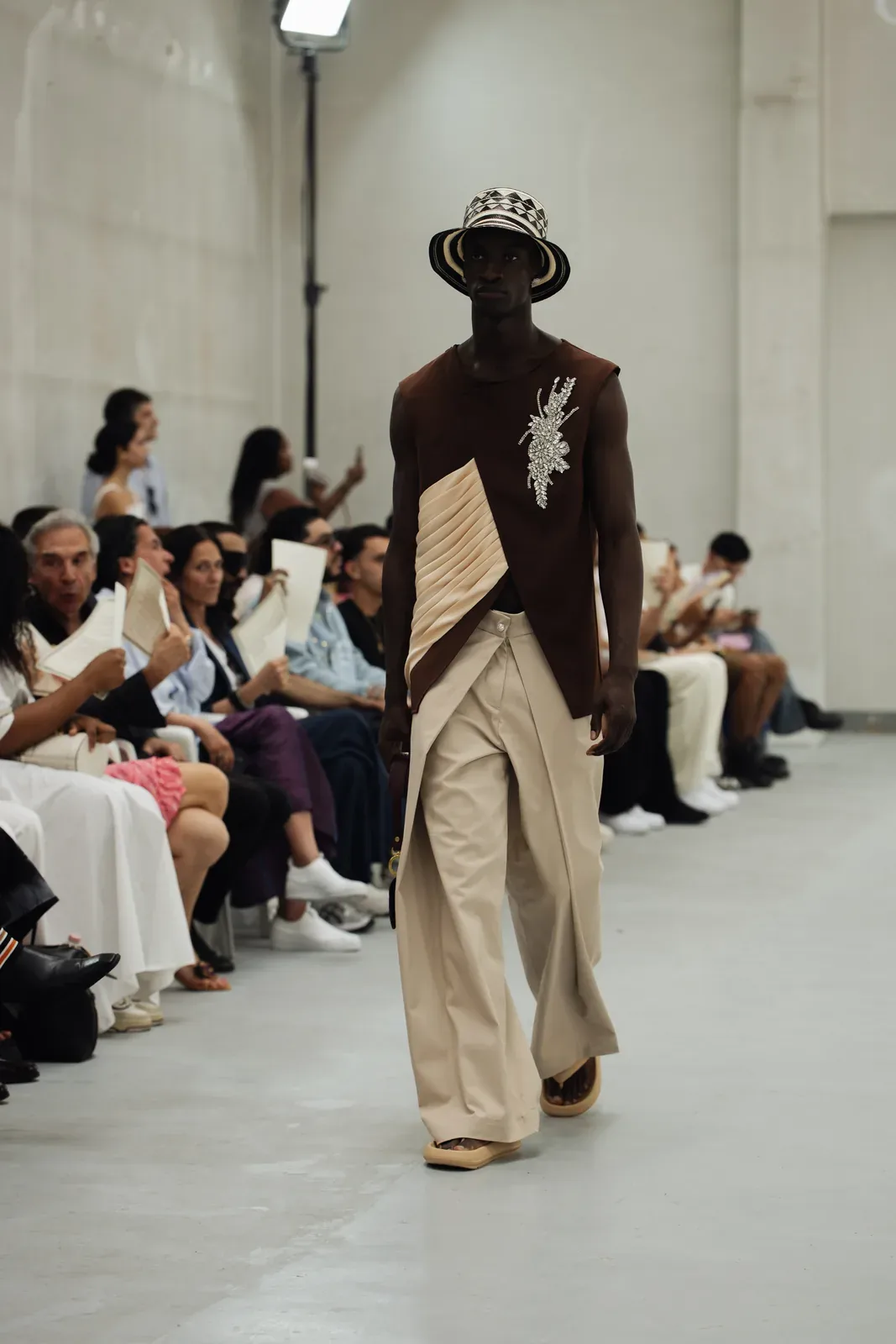
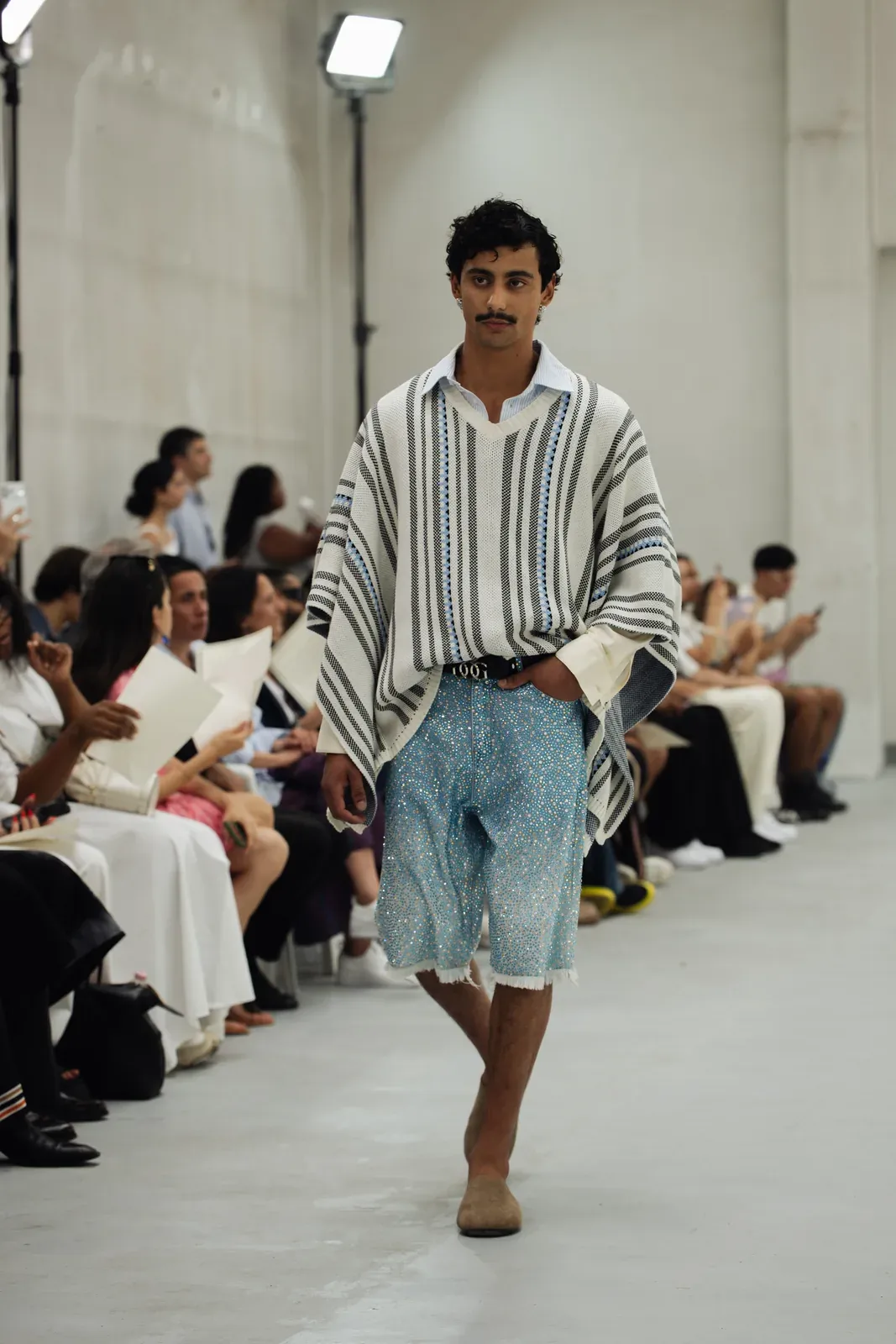
Your Milan debut brought together iconic elements of traditional Colombian dress, such as ponchos and sombreros vueltiaos, alongside much more contemporary urban references, from graphic T-shirts featuring El Niño Dios to the colourful boxer shorts with the branded waistband that you might easily spot on young fashion enthusiasts in Medellín or Bogotá. What drew you to bringing these two parallel expressions of Colombian dress together on a Milan runway, and what conversation were you hoping they would create?
I’ve never been interested in presenting a folkloric version of Colombia. Culture isn’t something frozen in time. It’s alive, and every generation reinterprets it in its own way. That’s exactly what I wanted to do with this collection. I wasn’t interested in reproducing traditional Colombian elements as they are. I wanted to give them my own perspective and bring them into everyday life. A sombrero vueltiao, a poncho or a religious icon doesn’t have to belong only to tradition or special occasions. They can become part of a contemporary wardrobe and speak to a new generation.
At the same time, I wanted to place those elements next to symbols of today’s Colombia, like the boxer shorts, graphic T-shirts and the way young people dress in cities like Medellín or Bogotá. To me, they all belong to the same story. I wasn’t trying to create a contrast between tradition and modernity. I wanted to show that they can exist together. That’s how I see
Colombia: constantly evolving, but never losing its identity.
At the same time, I wanted to place those elements next to symbols of today’s Colombia, like the boxer shorts, graphic T-shirts and the way young people dress in cities like Medellín or Bogotá. To me, they all belong to the same story. I wasn’t trying to create a contrast between tradition and modernity. I wanted to show that they can exist together. That’s how I see
Colombia: constantly evolving, but never losing its identity.
During your Milan debut, we saw figures such as Daiky Gamboa and Boza take part in the presentation. Over the years, many Colombian and Latin American artists have also worn GARCIAS at concerts, award ceremonies and public appearances, and you’ve collaborated with UNDERGOLD as well. How important has this creative network been, not only to the growth of your brand, but also to you personally?
For me, the most valuable part has never been dressing artists. It’s the relationships that have grown over the years. Many of the people I’ve worked with are no longer just clients or collaborators. They’ve become friends. We’ve shared ideas, creative challenges, travels, late nights before shoots and moments that have nothing to do with fashion. That’s how trust is built.
A great example is Stephanie Escobar. We met through work, styling projects for Maluma, but over time we built a real friendship based on mutual respect and a shared creative vision. Having her lead the styling of my first Milan Fashion Week show felt incredibly meaningful because it wasn’t just about hiring a talented stylist. It was about sharing one of the most important moments of my career with someone who had been part of the journey for years.
The same is true with many artists and creatives who have worn GARCIAS. Relationships like the ones with Daiky Gamboa, Boza and others have always happened organically. We come from similar cultural backgrounds, we understand each other’s language beyond words, and there’s a shared desire to show a different image of Latin creativity to the world.
I think that’s one of the biggest strengths of the Latin community. We genuinely support one another. We celebrate each other’s achievements because we know how difficult the journey can be. GARCIAS has grown thanks to that network of trust, generosity and friendship, and I hope to keep giving back to that community as much as it has given to me.
A great example is Stephanie Escobar. We met through work, styling projects for Maluma, but over time we built a real friendship based on mutual respect and a shared creative vision. Having her lead the styling of my first Milan Fashion Week show felt incredibly meaningful because it wasn’t just about hiring a talented stylist. It was about sharing one of the most important moments of my career with someone who had been part of the journey for years.
The same is true with many artists and creatives who have worn GARCIAS. Relationships like the ones with Daiky Gamboa, Boza and others have always happened organically. We come from similar cultural backgrounds, we understand each other’s language beyond words, and there’s a shared desire to show a different image of Latin creativity to the world.
I think that’s one of the biggest strengths of the Latin community. We genuinely support one another. We celebrate each other’s achievements because we know how difficult the journey can be. GARCIAS has grown thanks to that network of trust, generosity and friendship, and I hope to keep giving back to that community as much as it has given to me.
GARCIAS SS27, Si lo crees lo creas – Latin Dreamers, weaves together religious symbolism, stories of migration, urban culture, Indigenous narratives, regional identities, climate, architecture and everyday life into a single collection. How did you approach the process of deciding what deserved a place within that narrative and, equally importantly, what needed to be left out? What criteria guided your curation of these cultural references?
For me, the process was never about adding references just because they were beautiful or recognisable. It was about asking myself which elements felt emotionally true. When you work with culture, especially your own culture, you have to be very careful. You cannot treat it like decoration. Every symbol has a weight, a story, a memory and sometimes even a contradiction. So the first filter was always honesty. Does this element really belong to my world? Did I grow up with it, hear about it, feel it, question it or carry it in some way?
The second filter was emotion. I wanted to include only the references that created a reaction in me. The ones that gave me that feeling in the stomach. Religion, migration, music, the street, the architecture, the way people dress, the climate, the colours, the idea of hope. They all became part of the collection because they are part of how I understand Latin identity.
But curation is also knowing when to stop. Colombia and Latin America are too complex to be explained in one collection, and I was never trying to make a documentary. I wanted to create my own version of that universe. Some elements stayed out because they felt too literal, too folkloric, or because I didn’t feel I could treat them with enough depth.
In the end, the collection became a balance between memory and desire. What I inherited, what I imagined, what I lived and what I want to project into the future. Si lo crees lo creas is exactly that: the idea that identity is not only something you come from but something you keep creating.
The second filter was emotion. I wanted to include only the references that created a reaction in me. The ones that gave me that feeling in the stomach. Religion, migration, music, the street, the architecture, the way people dress, the climate, the colours, the idea of hope. They all became part of the collection because they are part of how I understand Latin identity.
But curation is also knowing when to stop. Colombia and Latin America are too complex to be explained in one collection, and I was never trying to make a documentary. I wanted to create my own version of that universe. Some elements stayed out because they felt too literal, too folkloric, or because I didn’t feel I could treat them with enough depth.
In the end, the collection became a balance between memory and desire. What I inherited, what I imagined, what I lived and what I want to project into the future. Si lo crees lo creas is exactly that: the idea that identity is not only something you come from but something you keep creating.
If you could keep just one of the looks we saw on the runway, the one that best encapsulates the collection, which would it be, and why?
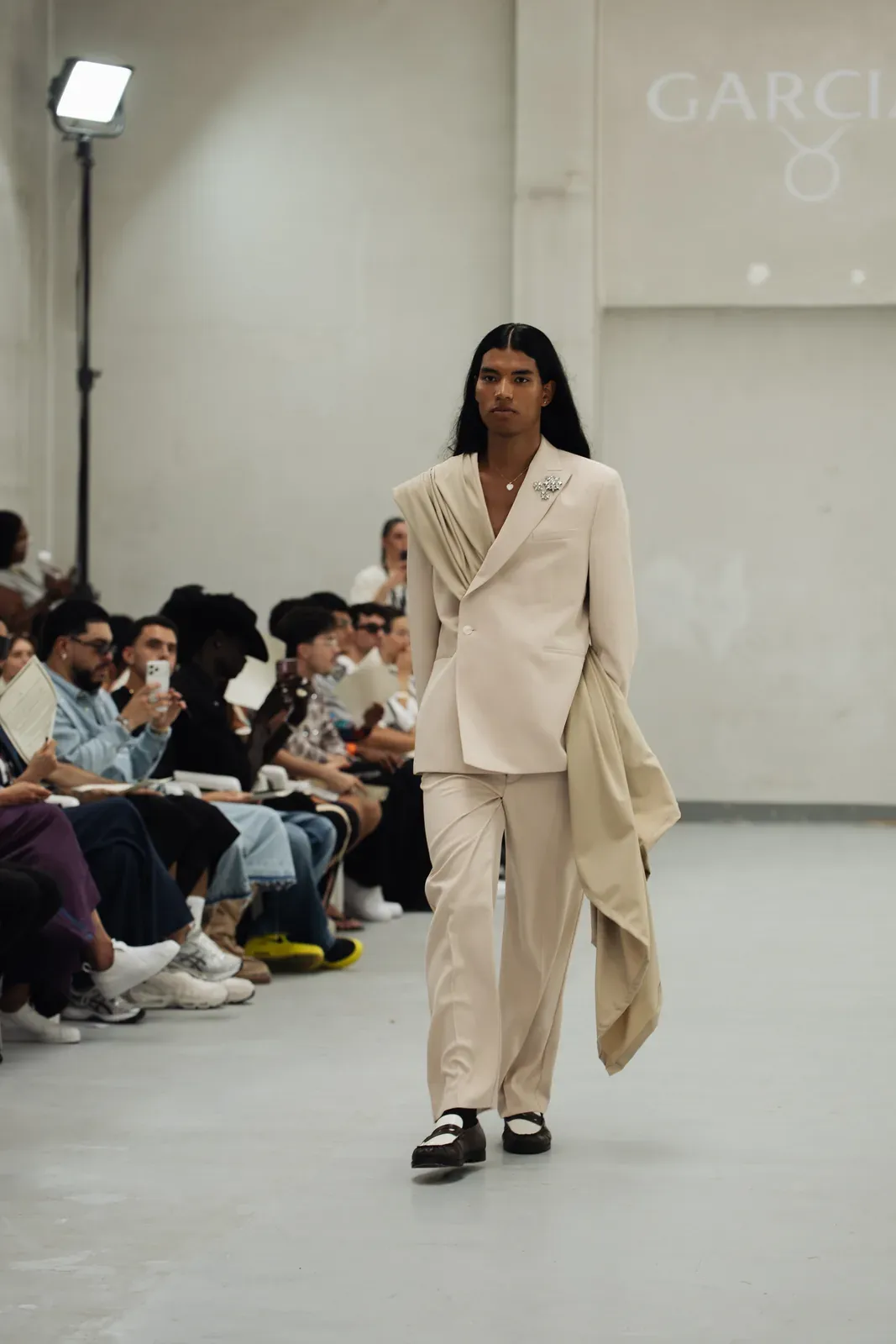
If I had to choose just one look, it would be the one with the sombrero vueltiao bucket hat, the sculptural chocolate and ivory draped vest, and the tailored trousers. To me, it captures everything GARCIAS stands for. It feels elegant but, at the same time, raw and real. It carries a strong cultural identity without feeling like a costume, and it has a dreamlike quality that reflects the spirit of the collection.
I love how those different elements coexist so naturally. There’s tradition and modernity, structure and softness, reality and imagination. It’s a look that doesn’t try to explain Colombia literally. Instead, it expresses how I see it and how I dream it. If someone asked me to describe the essence of Si lo crees lo creas – Latin Dreamers with a single look, that would be the one.
I love how those different elements coexist so naturally. There’s tradition and modernity, structure and softness, reality and imagination. It’s a look that doesn’t try to explain Colombia literally. Instead, it expresses how I see it and how I dream it. If someone asked me to describe the essence of Si lo crees lo creas – Latin Dreamers with a single look, that would be the one.
You’ve experienced two very different sides of the fashion industry: working under Domenico Dolce at Dolce & Gabbana and now leading your own eponymous label with your Milan Fashion Week debut. How do those experiences compare in terms of pace, pressure and creative responsibility? What has been the biggest adjustment in moving from helping realise someone else’s vision to presenting your own on one of fashion’s most important stages?
Working for someone like Domenico Dolce was an incredible school. It taught me discipline, precision and the level of commitment that excellence requires. When you’re part of a great fashion house, you’re contributing to a vision that already exists. Your responsibility is to help bring that vision to life in the best possible way.
Building GARCIAS is completely different because every decision starts with me. Every creative choice, every business decision, every risk, every success and every mistake carries my name. There isn’t a structure protecting you. You have to build that structure yourself.
I think the biggest adjustment has been understanding that creativity alone isn’t enough. As the founder of an independent brand, you have to become many different people at the same time. One moment you’re designing a collection, the next you’re thinking about production, cash flow, sales, casting, investors or how to pay for the next show. It’s a constant balance between dreaming and making those dreams possible.
Looking back, I’m grateful for both experiences. One taught me how excellence is built inside an established fashion house. The other is teaching me how to build a legacy from nothing. And those are two completely different lessons.
Building GARCIAS is completely different because every decision starts with me. Every creative choice, every business decision, every risk, every success and every mistake carries my name. There isn’t a structure protecting you. You have to build that structure yourself.
I think the biggest adjustment has been understanding that creativity alone isn’t enough. As the founder of an independent brand, you have to become many different people at the same time. One moment you’re designing a collection, the next you’re thinking about production, cash flow, sales, casting, investors or how to pay for the next show. It’s a constant balance between dreaming and making those dreams possible.
Looking back, I’m grateful for both experiences. One taught me how excellence is built inside an established fashion house. The other is teaching me how to build a legacy from nothing. And those are two completely different lessons.
You’ve spoken about feeling deeply inspired and connected to your Colombian heritage, despite not having spent much of your life there. Is there a particular region, tradition or aspect of Colombian culture you’d like to explore in greater depth? Is there anything about the Colombian identity or way of life that still feels like a mystery to you?
I feel a very strong connection with Medellín. There is something about its energy, the people, the music and the way the city has transformed itself that speaks to me deeply. Medellín represents a Colombia that is creative, resilient, urban and constantly evolving.
But at the same time, I know there are many Colombias I still need to discover. I would love to explore more deeply the places people don’t always speak about in fashion or culture: La Guajira, the Eje Cafetero, the mountains, the rural areas, the Caribbean coast and all those regions where identity is expressed in a completely different way.
What fascinates me is that Colombia cannot be reduced to one image. Every region has its own rhythm, climate, colours, traditions and way of understanding beauty. That complexity still feels like a mystery to me, and I think it’s a beautiful one.
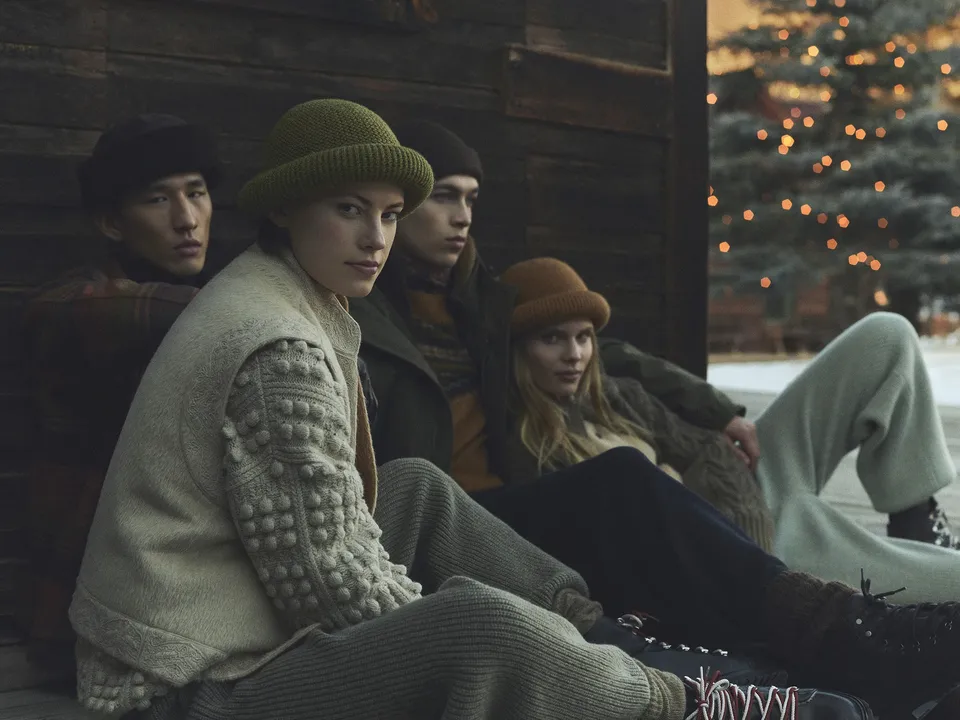
I don’t want to approach Colombia only through memory or nostalgia. I want to keep discovering it with curiosity and respect. There is still so much to learn, and I think that journey will continue shaping both who I am and what GARCIAS can become. You will also be surprised at the next show in Milan, where you will see my wintry version of what it means to be Latino.
But at the same time, I know there are many Colombias I still need to discover. I would love to explore more deeply the places people don’t always speak about in fashion or culture: La Guajira, the Eje Cafetero, the mountains, the rural areas, the Caribbean coast and all those regions where identity is expressed in a completely different way.
What fascinates me is that Colombia cannot be reduced to one image. Every region has its own rhythm, climate, colours, traditions and way of understanding beauty. That complexity still feels like a mystery to me, and I think it’s a beautiful one.
I don’t want to approach Colombia only through memory or nostalgia. I want to keep discovering it with curiosity and respect. There is still so much to learn, and I think that journey will continue shaping both who I am and what GARCIAS can become. You will also be surprised at the next show in Milan, where you will see my wintry version of what it means to be Latino.