We talk to the acclaimed photographer Damian Heinisch about his newest series and book 45, which is concerned with personal and collective history through the narrative of travelling. Connecting with his own family history and the role that migration played in their lives, the project is also in touch with the remnants of tragedy and war within Europe, and the ways that the passing of time can allow for a reflection of collective history, and of personal – and how these two ideas are completely intertwined. 45 is now on view as an exhibition at the Webber Gallery until the end of the month.
This new exhibition, titled 45, is a journey into ideas about time, family, history and travel – could you tell us a bit about the intention and concepts behind it?
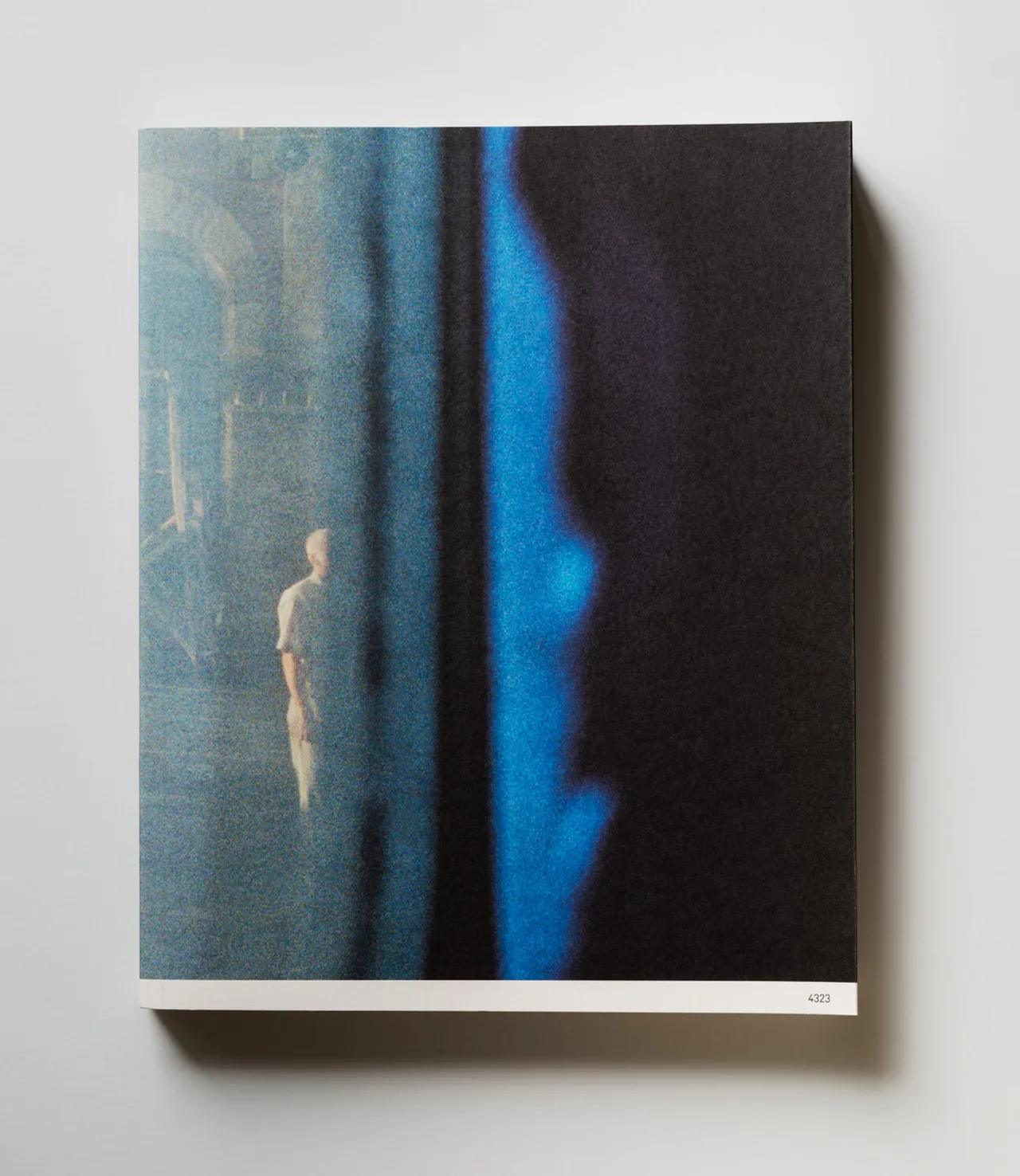
I am very grateful to have still been able to open the 45 exhibition at Webber Gallery during such a difficult period. This opportunity was given to me with reference to the launch of the 45 book, which was published by Mack after being awarded the First Book Award last year in Summer.
That was a unique opportunity to collect different facets of my project and contrast those on the gallery walls. The project is linked to the narrative of migration. Working on a long-term project focused on my family's history in the context of World War II, it became inevitable that I would visit my grandfather's unknown grave in Ukraine. Back in 1945, he disappeared like a ghost along with countless men from Upper Silesia. In 1978, following a long existential struggle and forced political unemployment, my father left Silesia with his family to start a new life in West Germany. I understood that my family's lives had been considerably influenced by forced immigration and that, as a method of transportation, trains had played a significant role in the process of resettlement. I began to respect the 'forced' journeys of my family members while at the same time documenting my own.
In 2013, I set out myself on a journey through Europe heading for East Ukraine to visit my grandfather’s unknown grave. The adventure cumulated in an archive of about four thousand images taken on a 35mm film. A selection of the original material became part of the 45 installation, which was originally conceptualized for the Eõ exhibition at the Noplace Gallery in Oslo. Five synchronised carousel projectors depict the chronology of the journey supported by the mechanical sound of the slide changers associated with the moving of a train. One of those depicts fragments of documents which belongs to all three generations. Those papers played a profound role in the time of those totalitarian regimes and decided over life in prison or freedom. The slide projector installation is a vital part of the show at the Webber Gallery.
That was a unique opportunity to collect different facets of my project and contrast those on the gallery walls. The project is linked to the narrative of migration. Working on a long-term project focused on my family's history in the context of World War II, it became inevitable that I would visit my grandfather's unknown grave in Ukraine. Back in 1945, he disappeared like a ghost along with countless men from Upper Silesia. In 1978, following a long existential struggle and forced political unemployment, my father left Silesia with his family to start a new life in West Germany. I understood that my family's lives had been considerably influenced by forced immigration and that, as a method of transportation, trains had played a significant role in the process of resettlement. I began to respect the 'forced' journeys of my family members while at the same time documenting my own.
In 2013, I set out myself on a journey through Europe heading for East Ukraine to visit my grandfather’s unknown grave. The adventure cumulated in an archive of about four thousand images taken on a 35mm film. A selection of the original material became part of the 45 installation, which was originally conceptualized for the Eõ exhibition at the Noplace Gallery in Oslo. Five synchronised carousel projectors depict the chronology of the journey supported by the mechanical sound of the slide changers associated with the moving of a train. One of those depicts fragments of documents which belongs to all three generations. Those papers played a profound role in the time of those totalitarian regimes and decided over life in prison or freedom. The slide projector installation is a vital part of the show at the Webber Gallery.
How did you design or conceptualise the exhibition at the Webber Gallery?
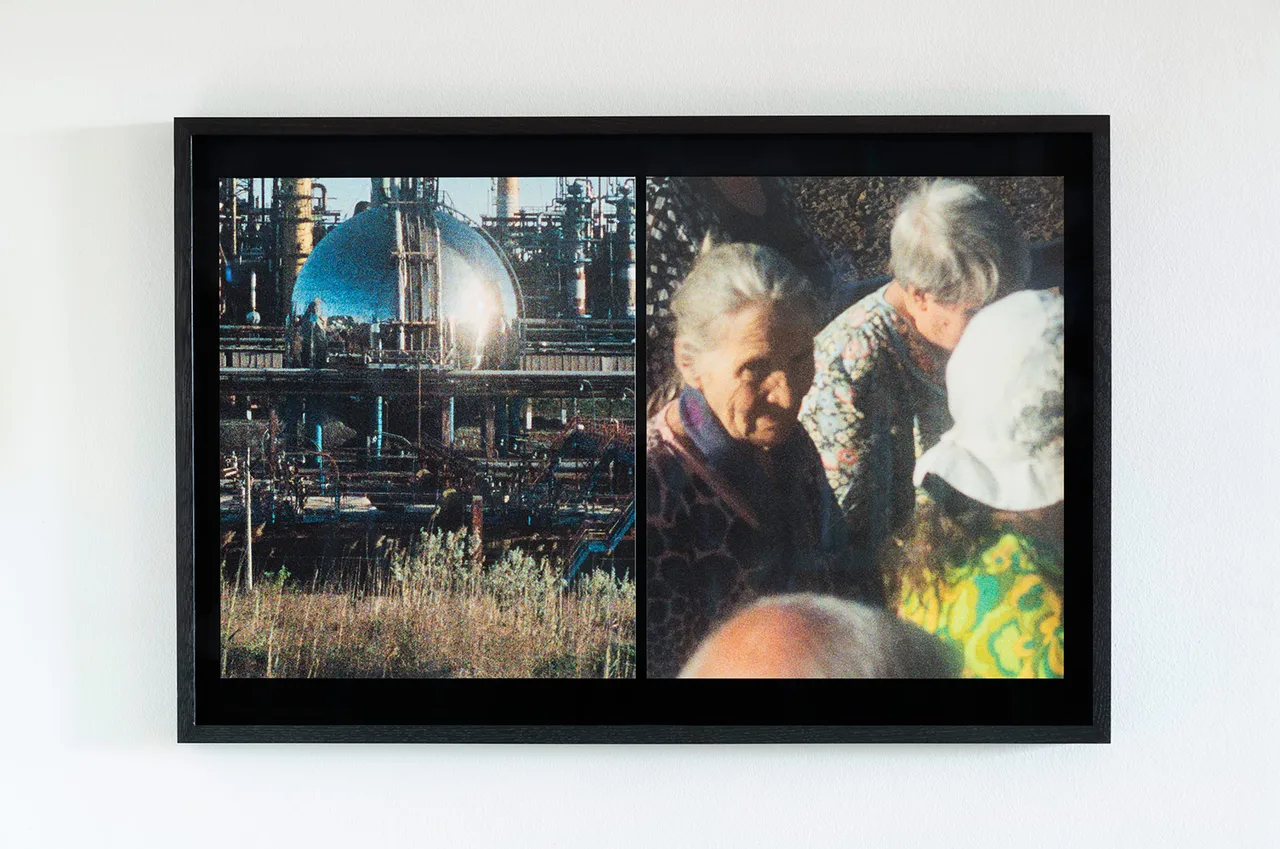
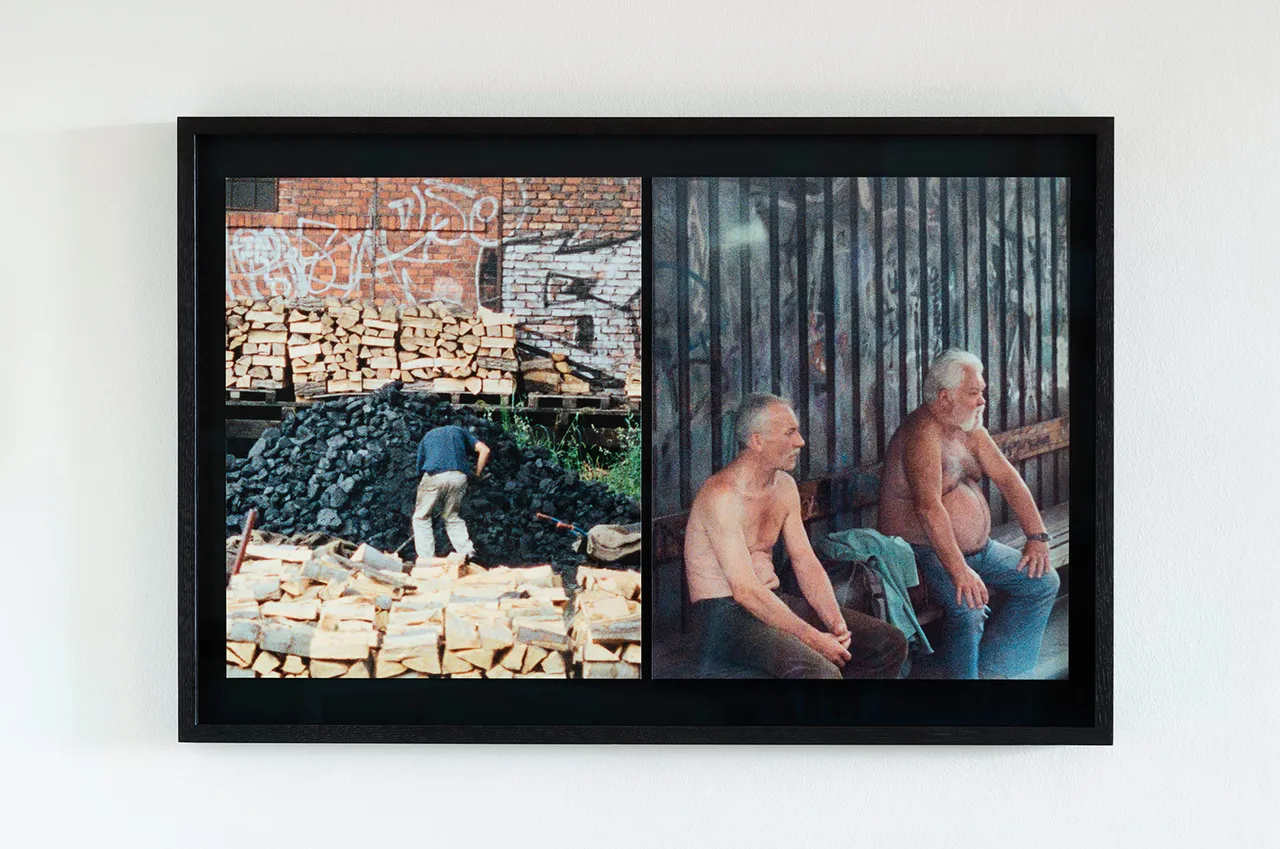
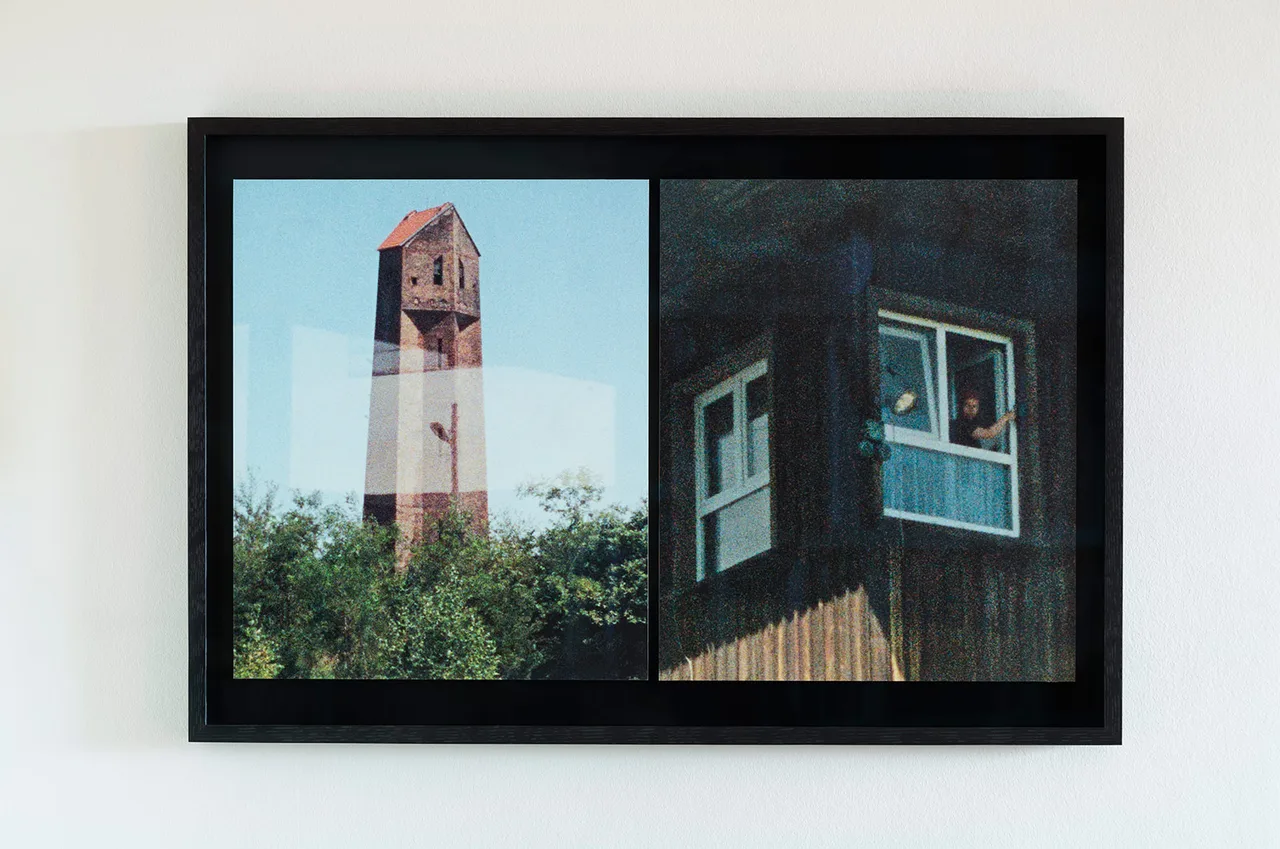
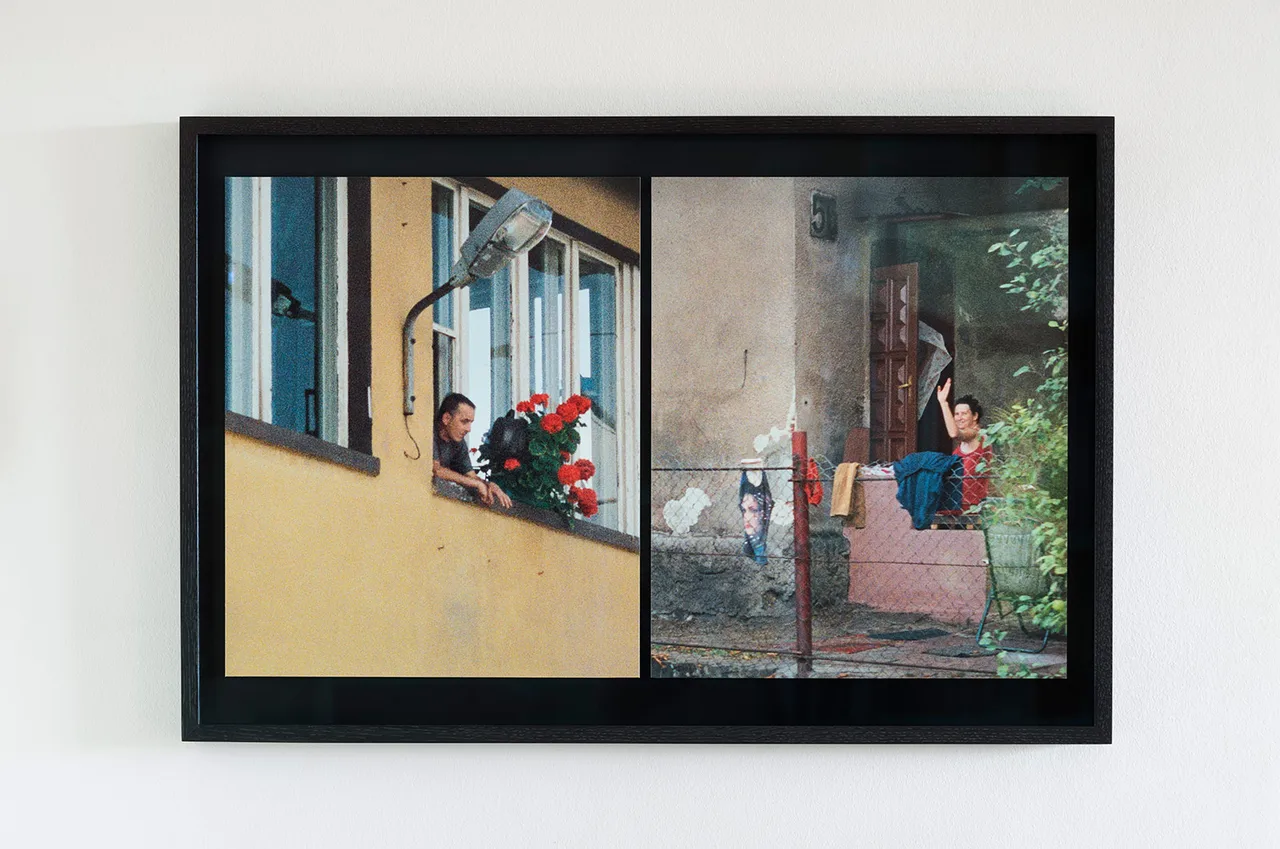
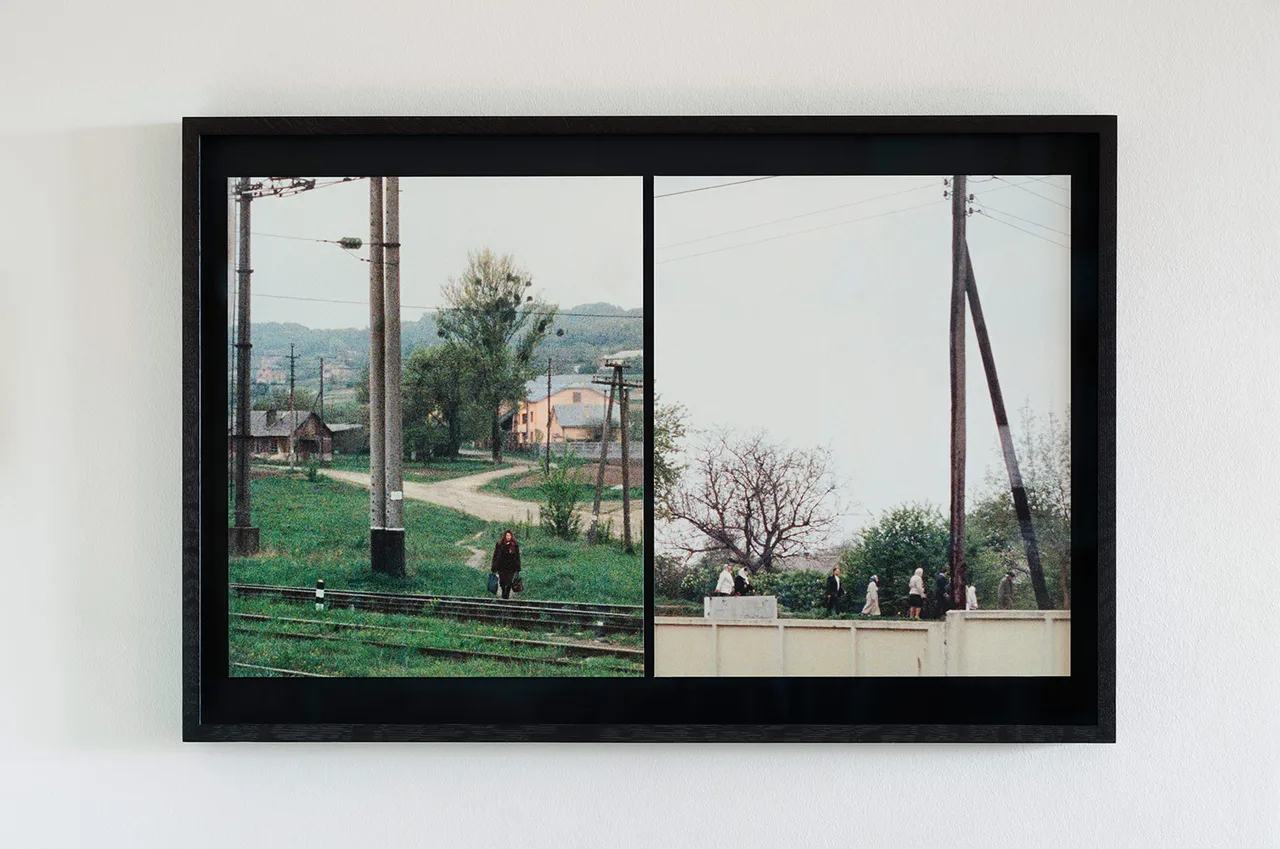
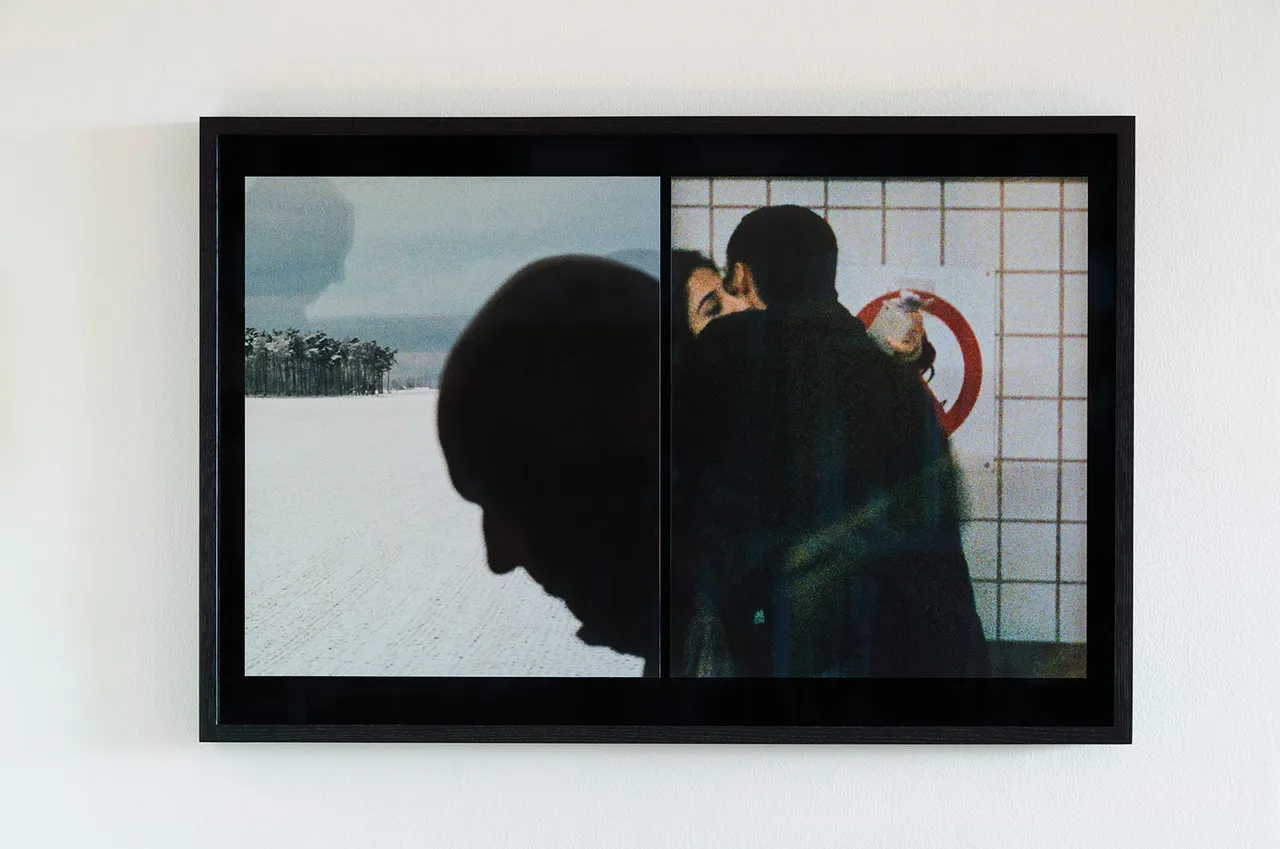
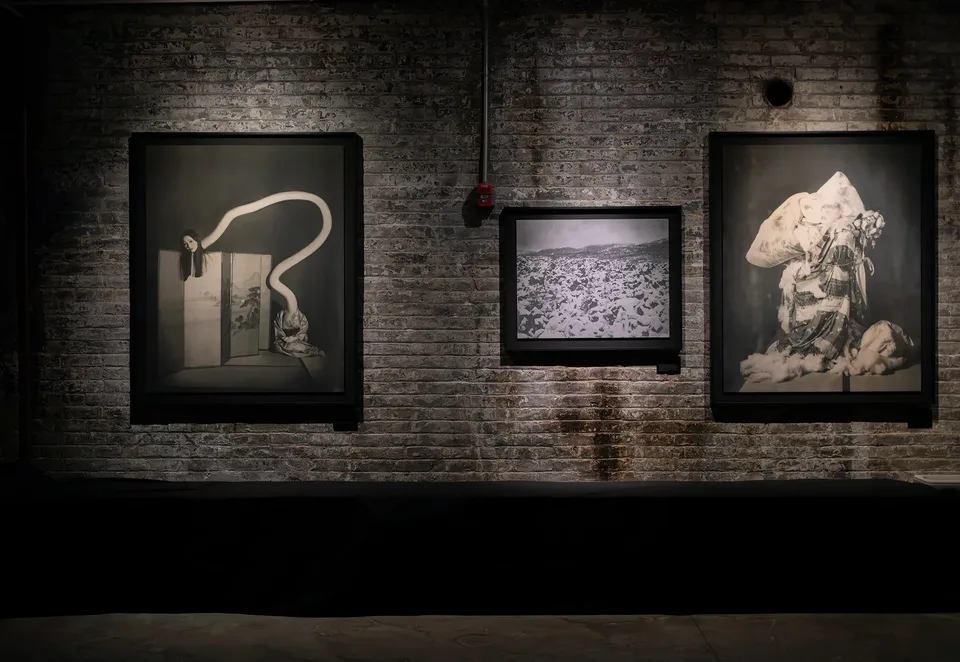
A supplemental constellation of images was particularly tailored just for this event. It includes twelve fragmented photographs which depict six distinctively chosen spreads out of the 45 book. Those are mounted and floating as pairs in six frames and are arranged in an extended assemblage to support the feeling of travel and continuity. The constellation’s imagery unveils hidden implications touching on themes of melancholy, longing, sorrow but also humour and sarcasm.
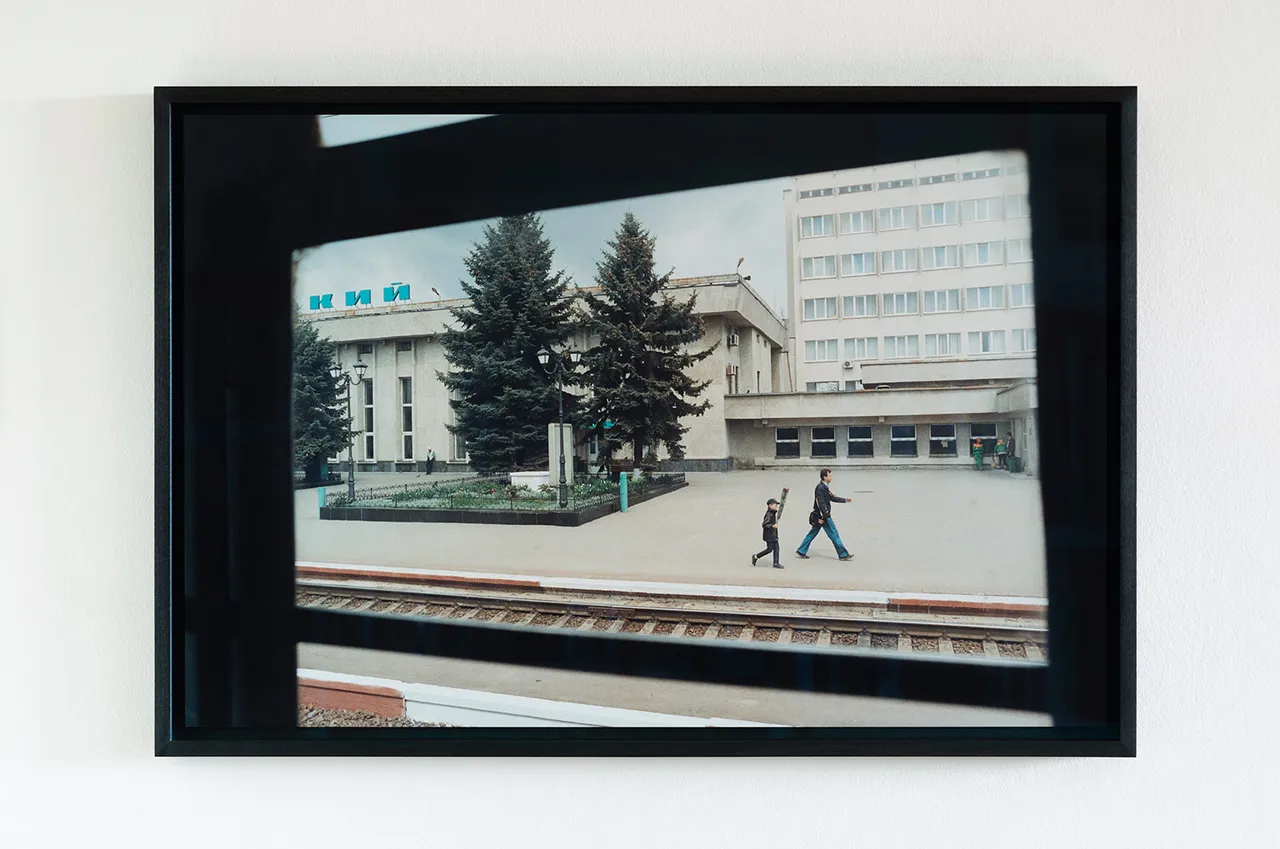
Furthermore, the visitor will find a small framed c-print depicting a key scene framed by the train window. A photograph of a boy and his father heading along a train platform to welcome their arriving mother. A notion, which is connected to the memory of my deepest longings but as well to the universal theme of family culture.
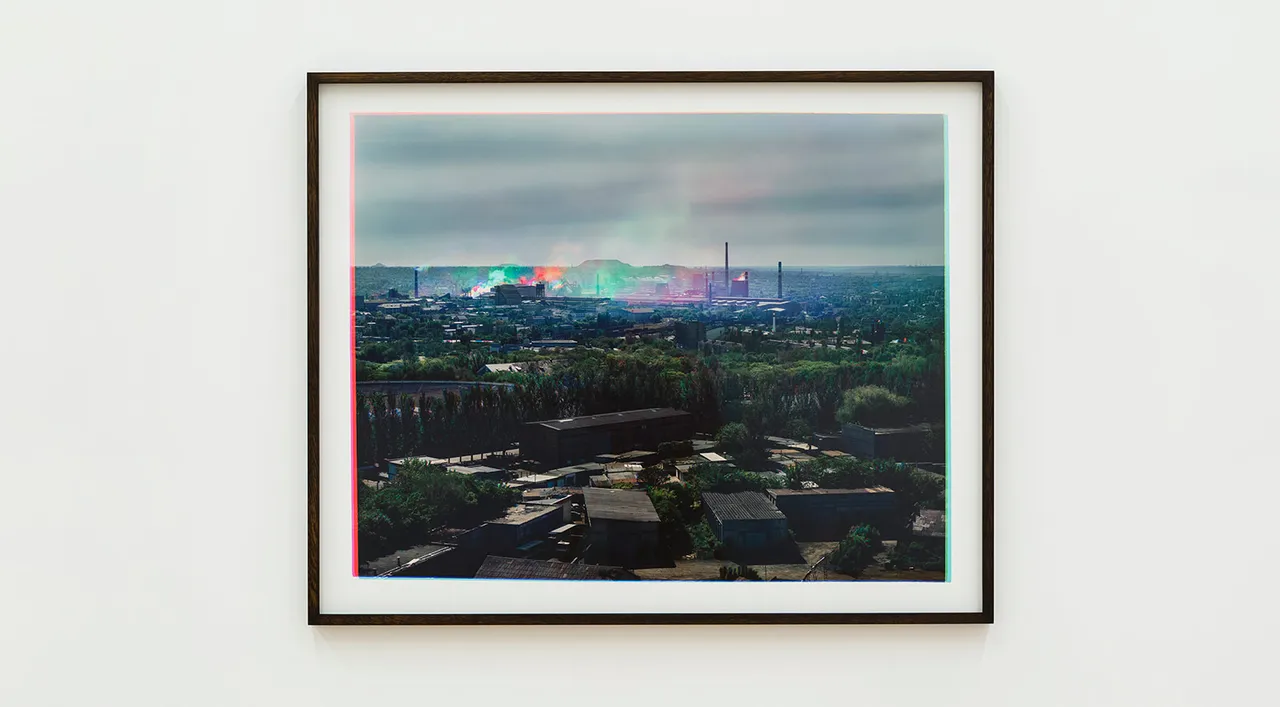
Finally, right at the entrance, the visitor will face a large image from Ukraine, which was photographed in May 2013, eight months before the beginning of the ongoing conflict. It is taken with a large-format camera in the Tricolor technique, the same principle Sergey Prokudin-Gorsky used to document the Russian Empire at the beginning of the 20th-century. The framed print depicts a steaming metal plant placed in the suburbs of Donetsk. For me, it was a metaphor for a visual connection between my grandfather and me. While it was indistinguishable from the first images I saw as a child from our flat window in the high raised building, it also was most probably the last image he saw in his short life, dying two months before reaching the age of 45 in a metal plant during his deportation in East Ukraine. This framed work also hints toward the main project, which will be released in 2021.
The project’s imagery confronts the viewer with impressions of present-day Europe and the narrative may provide an opportunity to understand a forgotten part of our common history.
Furthermore, the visitor will find a small framed c-print depicting a key scene framed by the train window. A photograph of a boy and his father heading along a train platform to welcome their arriving mother. A notion, which is connected to the memory of my deepest longings but as well to the universal theme of family culture.
Finally, right at the entrance, the visitor will face a large image from Ukraine, which was photographed in May 2013, eight months before the beginning of the ongoing conflict. It is taken with a large-format camera in the Tricolor technique, the same principle Sergey Prokudin-Gorsky used to document the Russian Empire at the beginning of the 20th-century. The framed print depicts a steaming metal plant placed in the suburbs of Donetsk. For me, it was a metaphor for a visual connection between my grandfather and me. While it was indistinguishable from the first images I saw as a child from our flat window in the high raised building, it also was most probably the last image he saw in his short life, dying two months before reaching the age of 45 in a metal plant during his deportation in East Ukraine. This framed work also hints toward the main project, which will be released in 2021.
The project’s imagery confronts the viewer with impressions of present-day Europe and the narrative may provide an opportunity to understand a forgotten part of our common history.
How does this project compare to work you have done previously, and do you consider it an evolution?
Looking briefly over a 35-year-period as a photographer, I see a consistency of returning to the theme on landscape and space in numerous methods. In general, I believe our development as a visual person goes along with our own life's evolution. Undergoing a profound transformation will always be reflected in our decisions and therefore manifests itself consequently in our work.
In the beginning, I took a rather traditional approach to my practice, a romantic view on nature in tradition of the great known black and white landscape photographers like Ansel Adams and Edward Weston. The fascination might have evolved through the experience of my childhood. Being born into a heavily industrialised area back in Poland of the late '60s, I developed a deep longing for untouched nature. This craving was relieved by the help of the first serious excursions into the world of photography focusing on visits to the landscapes of the northern hemisphere. This period of discovery and joy was interrupted by the early death of my mother confronting a journey into a very personal landscape driven by sorrow and despair. But also the medium helped me to reconcile with my emotions.
What followed was an intense confrontation with different aspects of the medium during my time as a student at the Folkwang School in Essen. Understanding the concept of personal delimitation, a transformation to an intensely personal perception of the landscape theme took place. Projecting my fantasies onto the world of a synthetically created nature, I started my frequent excursions to the world of the Alps. Equipped with a 16mm camera my escape resulted in a semi-documentary short film called Pylod. An encounter with the machine as a seductive organism, taking the viewer into a mechanical world of poetic, repetitive and romantic imagery. The whole adventure was rewarded with numerous screenings on several international film festivals.
Recently, my work has evolved into a narrative confronting themes of identity and immigration. More and more, I find myself exploring this subject through the lens of historical consciousness and emphasising the human soul.
In the beginning, I took a rather traditional approach to my practice, a romantic view on nature in tradition of the great known black and white landscape photographers like Ansel Adams and Edward Weston. The fascination might have evolved through the experience of my childhood. Being born into a heavily industrialised area back in Poland of the late '60s, I developed a deep longing for untouched nature. This craving was relieved by the help of the first serious excursions into the world of photography focusing on visits to the landscapes of the northern hemisphere. This period of discovery and joy was interrupted by the early death of my mother confronting a journey into a very personal landscape driven by sorrow and despair. But also the medium helped me to reconcile with my emotions.
What followed was an intense confrontation with different aspects of the medium during my time as a student at the Folkwang School in Essen. Understanding the concept of personal delimitation, a transformation to an intensely personal perception of the landscape theme took place. Projecting my fantasies onto the world of a synthetically created nature, I started my frequent excursions to the world of the Alps. Equipped with a 16mm camera my escape resulted in a semi-documentary short film called Pylod. An encounter with the machine as a seductive organism, taking the viewer into a mechanical world of poetic, repetitive and romantic imagery. The whole adventure was rewarded with numerous screenings on several international film festivals.
Recently, my work has evolved into a narrative confronting themes of identity and immigration. More and more, I find myself exploring this subject through the lens of historical consciousness and emphasising the human soul.
45 is this really powerful example of what photography can do so brilliantly, which is capture these singular moments in time. Was that what instantly attracted you to the medium?
Even though the narrative relates to the universal theme of migration, 45 was a very personal journey connected deeply to the world of emotions. I was dealing with an imagination, which was put into me by the World War II generation surrounding my childhood. Photography can be very serious as it is a projection of our inner longings and fears. Images are stuck within us and want to be resolved by becoming part of a concrete, two-dimensional space, and that is photography for me. My reality became the train window.
Photography as a narrating medium seems to be able to create endless possibilities with simultaneous limitations. A photograph though will always remain a fragment taken out of a larger context and asks for responsibility from the photographing person.
Photography as a narrating medium seems to be able to create endless possibilities with simultaneous limitations. A photograph though will always remain a fragment taken out of a larger context and asks for responsibility from the photographing person.
On your website, you say that "The train window becomes the stage" – the setting for all of this is in a window, where we see this sense of change and fragmentations of image. Could you explain a bit about the use of fragmentation in your work?
It felt like the stage in a theatre, but with a constant change of the scenes. The original material was photographed with a hint of the train window in each image creating a pictorial frame. The photographs reveal signs of tiny human nature in a larger context associated with modern 'natur romantik'. I decided to fragment my work in order to get closer to the human aspects and aimed to leave the viewer with an instant and existential feeling. I was longing for a higher level of abstraction associated with surveillance, veiled in a layer of noise. The images seem to lose any attachment to time and space.
The imagery of our time has become, in general, very abstract. A fragmented image asks the viewer for orientation, craves involvement and leaves us with higher freedom of our own projections. At the same time, it may leave the viewer in ignorance and disappointment.
The imagery of our time has become, in general, very abstract. A fragmented image asks the viewer for orientation, craves involvement and leaves us with higher freedom of our own projections. At the same time, it may leave the viewer in ignorance and disappointment.
When we’re talking about the idea of going from one place to another on the train, this is quite a good metaphor for time passing and that sense of history that these photos channel, what did you discover in making this journey, and in reflecting on your grandfather and your father’s journeys?
I felt a great responsibility to my family, not only to my father and grandfather but to myself and above all the future generations. What photography as a medium did for my awareness is maybe the most precious achievement! This latest chapter brought me back to my roots, to a closer understanding of my belongings and my family´s history and in general to a deeper understanding of European history.
Europe's wounds seem to have slowly healed since World War II. Enemy neighbours became friends and the opening of borders has created new opportunities. And yet, a feeling of enormous shame resulting from the events and unbearable experiences of that fateful time has scarred the population and their families. Significant elements of the story have been suppressed and forgotten, but the sense of shame has survived and been passed on to the next generation. This too influences our daily lives, decisions and actions. Tragically, my trip to Ukraine was followed by a bloody civil war.
Europe's wounds seem to have slowly healed since World War II. Enemy neighbours became friends and the opening of borders has created new opportunities. And yet, a feeling of enormous shame resulting from the events and unbearable experiences of that fateful time has scarred the population and their families. Significant elements of the story have been suppressed and forgotten, but the sense of shame has survived and been passed on to the next generation. This too influences our daily lives, decisions and actions. Tragically, my trip to Ukraine was followed by a bloody civil war.
There is, of course, this strong sense of history in the work, but also a story to tell for our modern times too, so many people in our world are having to make dangerous journeys to get to safety. How do you think these photos tie this sense of past and present tragedy together?
The extended project is thematically linked to the idea of the collective memory. It sheds light on events, experiences and memories that have affected unnumbered families in Europe, and still do today. The photographs reveal traces of the ghost that have been buried in the unimaginable brutality of world history and still appear in today's reality. It is our duty to look beyond our own time and understand the lines of history so that we do not repeat past mistakes. Europe has several refugee camps, and thousands of people are waiting for a new life.
I hope the project's narrative can help to raise awareness of universal questions, but I would never dare to connect 45's narrative to the situation and reality refugees face today. This is a dimension which needs to be approached with the highest respect and handled on another level.
I hope the project's narrative can help to raise awareness of universal questions, but I would never dare to connect 45's narrative to the situation and reality refugees face today. This is a dimension which needs to be approached with the highest respect and handled on another level.
The collection of photos has also been printed into book form, so we can flick through and see the world moving page by page, and see the elements of change at play. How did it feel for you to see your pictures come to life in this format?
Making 45 marked a totally new era for me and each step in the process felt very intense. The idea of the image fragmentation came into the discussion during the work on the dummy. Since the original material ended being a part of the installation, it allowed me to resolve the book in a different approach.
There was the intention to create a piece as I had a book in mind and it was unveiled itself as a riddle to the viewer. The narrative is set, but the viewer's interpretation will always be based on the individual’s life and cultural experiences.
Having been a part of all the different stages in this long process and being able to hold my first book in my hands feels like a miracle and it makes me very proud seeing 45 being awarded this acknowledgement. It has grown beyond my expectations and I am very grateful the narrative is now accessible for a much wider audience.
There was the intention to create a piece as I had a book in mind and it was unveiled itself as a riddle to the viewer. The narrative is set, but the viewer's interpretation will always be based on the individual’s life and cultural experiences.
Having been a part of all the different stages in this long process and being able to hold my first book in my hands feels like a miracle and it makes me very proud seeing 45 being awarded this acknowledgement. It has grown beyond my expectations and I am very grateful the narrative is now accessible for a much wider audience.
From the long journey, you must have captured so many people, towns and landscapes. How did you narrow down the images that you chose to be featured?
As the trigger for this cathartic journey, Ukraine felt like the natural place to start the book, even though the actual physical journey went the opposite way. It was done in four stages during the four seasons and a period of 7 months. The final sequence in the book follows the natural chronology of the journey.
The selection of the motives for the spreads though was a challenging and time-consuming procedure. I carefully investigated the possibilities of fragmentation in each image matching it to a pairing. The selection was intuitively done on the basis of memory associations.
The selection of the motives for the spreads though was a challenging and time-consuming procedure. I carefully investigated the possibilities of fragmentation in each image matching it to a pairing. The selection was intuitively done on the basis of memory associations.
It seems like this whole project was about making a journey and not quite knowing what kind of images you were going to capture, as if delving into the unknown, has spontaneity always been an important aspect for you as a photographer?
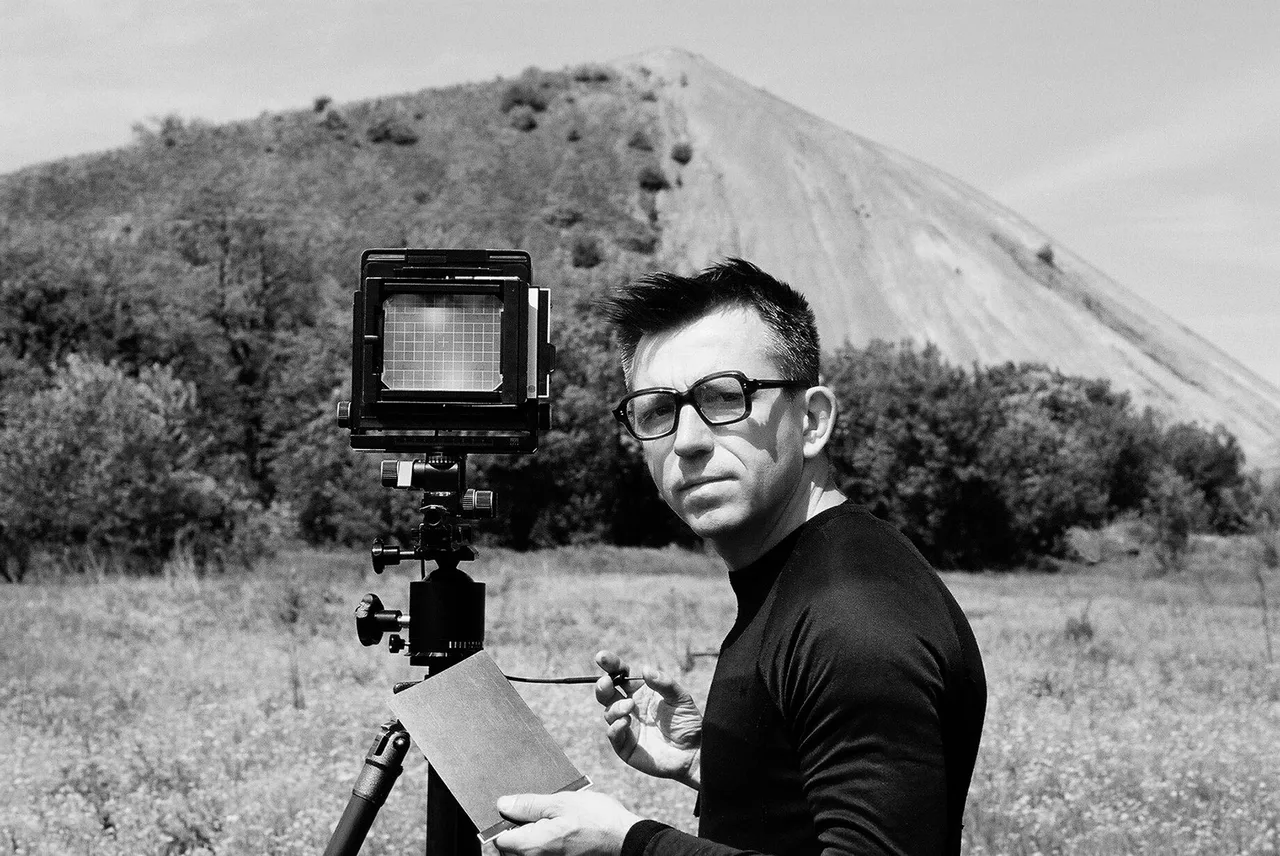
When I meet our new students, I try to take the burden from their shoulders by explaining the existence of different approaches to photography. There are synthetic and analytic ways to approach the process of the medium. I have been on both sites. In my atelier, I work in a rather synthetic manner. Everything needed to be planned and constructed in order to be photographed. It happens often with a tripod bounded large format camera. On other occasions, again, I like to take a 35mm film-based cameras and proceed more fluent and spontaneous and in a more analytic way. Rather unpredictable and being open for what may occur.
I don't want to be forced to create something out of a need or because it's modern. I let the themes come to me –they are born and grow within me. Just then it feels genuine. Often, there are long pauses in-between projects. My current long-term project took 10 years to be completed and there were four different photographic techniques involved in the entire process.
I don't want to be forced to create something out of a need or because it's modern. I let the themes come to me –they are born and grow within me. Just then it feels genuine. Often, there are long pauses in-between projects. My current long-term project took 10 years to be completed and there were four different photographic techniques involved in the entire process.
Narrative plays a massive role in this project, making connections between past and present, and always keeping in mind the stories and journeys that those before us made. I love that you are channelling all of this with such respect, and value for the lessons of history and family. Do you feel you will continue to channel narratives from the past into your next projects?
As I mentioned before, the 45 book and project can be seen as a prologue to a series of books, which should be released soon. The last 10 years sent me out onto an adventure through Europe, following my family’s history and events related to World War II and its heritage.
The extended project has a conceptual structure. Four European nations, four generations, the four seasons and the four elements form the basis of the narrative. They also symbolise the cycles of life. Although the conceptual structure shapes the project, it is never the driving force. The different events are linked by the historical timeline, beginning with the deportation and death of my grandfather in Ukraine in 1945. The result will cumulate into four books collected in a slipcase.
The extended project has a conceptual structure. Four European nations, four generations, the four seasons and the four elements form the basis of the narrative. They also symbolise the cycles of life. Although the conceptual structure shapes the project, it is never the driving force. The different events are linked by the historical timeline, beginning with the deportation and death of my grandfather in Ukraine in 1945. The result will cumulate into four books collected in a slipcase.