From Weimar cabarets to Berghain, Berlin can also be told through its clubs. Yet the nocturnal machinery of the German capital can’t be reduced to a mere product of recreational consumption. Decade after decade, its nightclubs have forged an infrastructure of political resistance and liberation of identity, where the law of desire has imposed its own disobedience.
While other European capitals brought nightlife to heel through restrictive licences and stringent regulations, Berlin instead made use of whatever lay to hand: historical wounds, urban voids, industrial ruins and ideological folds. With that material, turning dance into an (un)civic liturgy wasn’t difficult. From the desperate abandon of the interwar years to the cathartic frenzy that followed the fall of the Wall, the city’s nightlife has set the rhythm of its great transformations. The latest chapter in this journey is being written in Kreuzberg, where Parisian club Silencio joins Berlin nightlife at the end of October.
1919–1933: cabaret, jazz and Weimar’s liberating utopia
Between 1919 and 1933, amid the ferment of the Weimar Republic and the festive explosion of the mid-1920s, Berlin crowned itself Europe’s party capital. The scourge of hyperinflation and the traumatic experience of the Great War, which had left half of society in mourning, were receding into the past. Against that backdrop, the urge to have fun surged at the same pace as the rigid morality of the Wilhelmine era was blown apart.
In the final years of the Prussian Empire, the city had already begun to fashion its nocturnal legend. The satirical cabaret Schall und Rauch opened on Unter den Linden in 1901, followed almost two decades later, in 1919, by the Weiße Maus on Jägerstraße. These were the first nurseries of transgression. An intellectual elite passed through them, learning to evade censorship to the rhythm of syncopations imported from the United States that had begun to take hold in Europe from 1910 onwards.
Near Potsdamer Platz stood Haus Vaterland, which took over the old Café Vaterland in 1928 and filled its rooms with dancers and jazz orchestras. Interwar opulence was served. On Blumenstraße in Mitte, the Residenz-Casino — the Resi, founded in 1908 — made an unusual form of courtship fashionable in the 1920s: messages and gifts travelled from one end of the room to the other by means of the telephone and pneumatic tube installed at every table. Also in Mitte, on Auguststraße, Clärchens Ballhaus, which had opened in 1913 as Bühlers Ballhaus, continued to welcome people from every walk of life into its rooms and the Spiegelsaal; the change of regime barely ruffled its hair.
The epicentre of this sexual revolution lay on Lutherstraße, today Martin-Luther-Straße, in Schöneberg. The iconic Eldorado opened there in 1926 and became an international mecca for cross-dressing and queer culture: aristocrats, curious onlookers of every stripe and artists such as Christopher Isherwood and Marlene Dietrich all sat at its tables. A second branch opened in 1928 at the corner of Motzstraße and Kalckreuthstraße and would ultimately become the more famous of the two. Hirschfeld, meanwhile, had founded his Institut für Sexualwissenschaft in 1919 on In den Zelten in Tiergarten; its archive, library and photography collection were used to study human sexuality and sexual and gender diversity.
That atmosphere of radical freedom left its mark on Cabaret (1972) and, in 2017, on Babylon Berlin, which returned the dizzying nights of Weimar Berlin to the screen. By 1933, however, everything had collapsed. The network of queer venues, institutions and social spaces was dismantled by the Nazis, and many of its protagonists ended up in exile, underground, in prison or in concentration camps.
1970–1980: punk, distortion and the isolation of West Berlin
Following the rise of National Socialism, the devastation of the Second World War and the division of the city among the victorious powers, the nocturnal map of a rubble-strewn Berlin barely survived between the strict ideological control of the Soviet sector and the gradual reconstruction of the West. The building of the Wall in 1961 isolated the city’s western sector, turning it into a subsidised island.
West Berlin had no Sperrstunde, the mandatory closing time, and there was no military service there either — reason enough for the city to attract dissidents, pacifists and creatives. On Genthiner Straße, the nightclub Sound, associated with the generation portrayed in Christiane F., established itself during the 1970s as a temple of progressive rock and experimental music; David Bowie and Mick Jagger are said to have passed through. At the other end of the night, Dschungel opened on Nürnberger Straße in October 1978. Its door was as famous as it was selective; inside, a transgressive, exclusive elegance was brewing, bringing together Iggy Pop, Nick Cave, Grace Jones, Depeche Mode and the Berlin bohemia of the time. All that underground ferment is captured in B-Movie: Lust & Sound in West-Berlin (1979–1989), a 2015 documentary assembled from archive footage and the testimony of musician Mark Reeder.
In Kreuzberg, SO36 on Oranienstraße turned up the amplifiers of punk and Neue Deutsche Welle in 1978. It was the voice of the squatter counterculture in response to property speculation. As the decade drew to a close, UFO opened in February 1988 in the basement of a building on Köpenicker Straße, reached by a narrow staircase. This clandestine corner, driven by Achim Kohlberger, Dimitri Hegemann and Carola Stoiber, broadcast the first frequencies of Berlin acid house and brought together a generation of DJs who would go on to lead the city’s techno scene after the fall of the Wall. The parties were often itinerant and semi-clandestine; their locations also circulated through coded clues dropped by Monika Dietl on her radio programme The Big Beat.
That underground revolution soon spilled onto the streets with the Love Parade. On 1 July 1989, barely four months before the fall of the Wall, around 150 ravers made their way along the Ku’damm behind several vehicles fitted with loudspeakers under the slogan ‘Friede, Freude, Eierkuchen’. With music as its banner, the march — conceived as a demonstration for peace and understanding — grew rapidly. In 1996 it bid farewell to the Ku’damm and paraded down Straße des 17. Juni, beside the Tiergarten. Three years later, in 1999, it drew one and a half million people.
The Love Parade was largely responsible for turning techno culture into a mass phenomenon; a split within the scene itself was inevitable.
Criticism of its progressive commercialisation, combined with the growing presence of sponsors, companies and visitors from outside the circuit, led to the emergence of the Fuckparade in 1997. The Love Parade returned to Berlin for the last time in 2006 after a two-year suspension caused by financial problems. The collapse was blamed on cleaning, security and production costs, which the organisers had to assume after the event lost its status as a demonstration. Since 2022, Rave the Planet, led by Dr Motte, has sought to return the utopian, anti-commercial and combative spirit of its origins to Berlin’s asphalt.
1990: conquering the void and the temples of industrial techno
An unprecedented urban and legal breach opened up with the fall of the Wall on 9 November 1989. The eastern strip of Mitte was left strewn with abandoned factories, Nazi bunkers and bank vaults without owners or police surveillance. In 1991, inside the strongroom of the former Wertheim department store on Leipziger Straße, Dimitri Hegemann opened Tresor. The club forged a direct sonic bridge with Detroit and established the liturgy of dark techno. It remained in operation until property pressure forced it to close in April 2005. That unique phenomenon of urban appropriation and collective identity would be immortalised years later in Der Klang der Familie (Felix Denk and Sven von Thülen, 2012), an international publishing success and the definitive oral history of how techno became the true soundtrack of German reunification.
A year after Tresor opened, Der Bunker occupied the concrete air-raid shelter on Reinhardtstraße — the same building that has housed the legendary Boros Collection of contemporary art since 2008 — to host hardcore, extreme gabber and the wild Snax fetish nights, an exclusively male, gay event that laid the foundations for the contemporary kinky movement.
The dance infrastructure grew quickly. In 1993, the former E-Werk electrical substation on Wilhelmstraße elevated electronic music to such a level of professional production that few were surprised when it became the first great industrial colossus devoted to the global club scene. In 1994, Simon Thaur and Kirsten Krüger founded KitKatClub, its name an explicit tribute to the iconic fictional venue in the musical Cabaret. There, the sexual transgression and libertarian spirit of the 1920s were revived and fused with trance rhythms and a strict fetish aesthetic.
In 1998, a former railway warehouse gave life to Ostgut. The space where the gay community perfected forty-eight-hour parties, camera-free revelry, darkrooms and industrial sound nevertheless succumbed to property pressure: the warehouse was forced to close in early 2003 so that, a few years later, the vast O2 World arena — today Uber Arena — could be built on its foundations. That aesthetic of late-night freedom seduced Wolfgang Tillmans. In his intimate perspective, the protagonists were the sweaty bodies of the dance floor and Berlin at daybreak.
2000–2010: the cathedral of techno, the Spree communes and queer dance floors
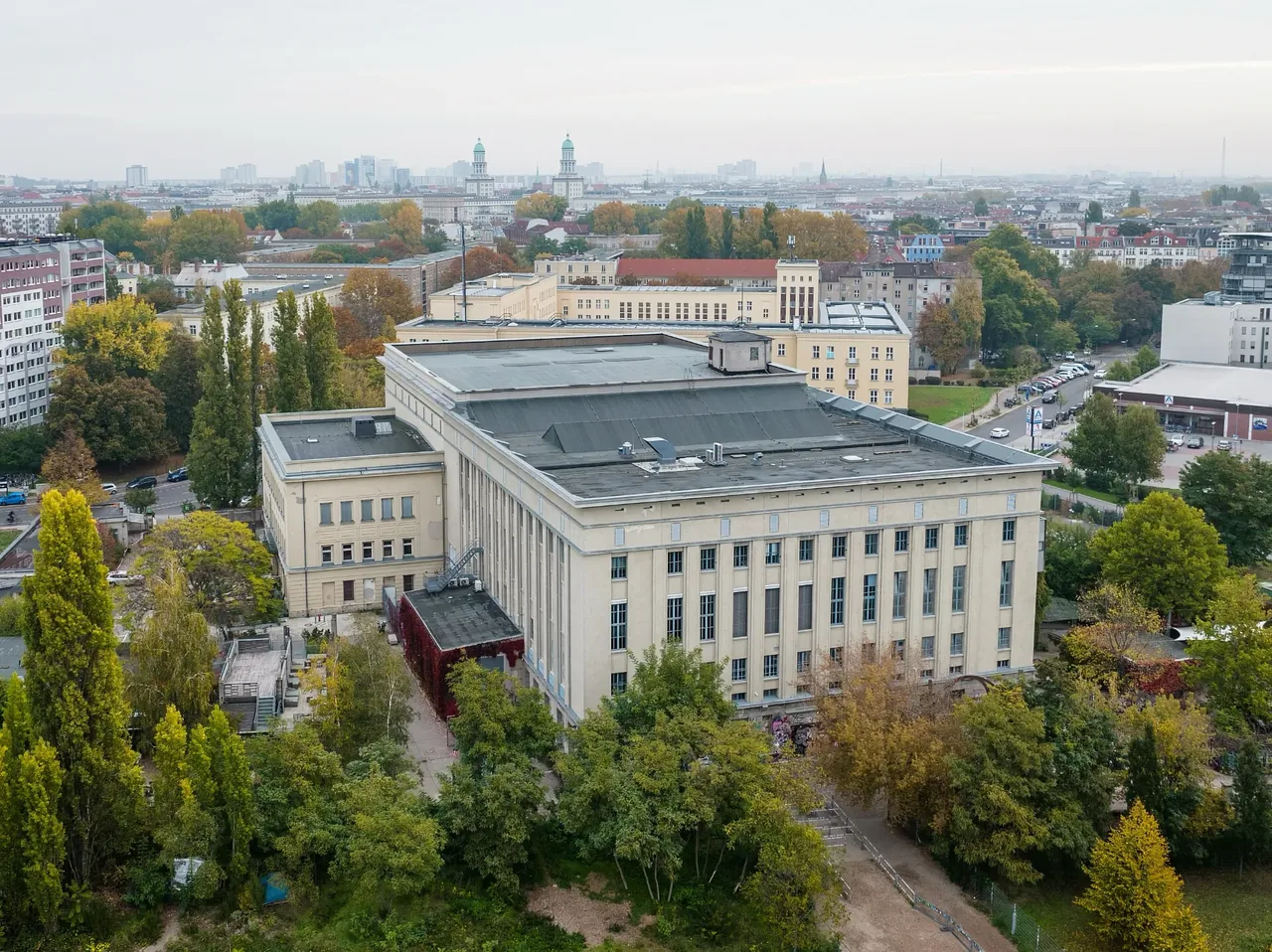
The golden age of Berlin nightlife coincided with the demolition of Ostgut. In 2004, its promoters opened Berghain. The final syllables of the districts Kreuzberg and Friedrichshain form the name of the enigmatic abandoned power station that houses it. Through its programming and monumental acoustics, the venue soon set the global standard for club culture, including Sven Marquardt’s iron door policy and the house counterpoint offered upstairs at Panorama Bar. Hidden in its depths, moreover, is the infamous Lab.oratory, an epicentre of extreme fetishism and gay cruising that celebrates bodily freedom. This nocturnal mythology reached global cinema in 2008 with the film Berlin Calling. Starring Paul Kalkbrenner, it portrays the light and shade of the electronic scene, a fixation with the frenzy of the early hours that would also provide the setting, years later, for the acclaimed single-take film Victoria (2015).
The culture of open-air parties and clandestine gatherings powered by portable petrol generators and speakers carried by bicycle also took hold in Berlin. In summer, illegal raves appeared and vanished in the blink of an eye. Through these sonic laboratories, the city evaded the established rules. The clearings of Hasenheide, the disused grounds of the former Tempelhof airport, the woods around Müggelsee and abandoned plots beside the river or canals coexisted with the enclosed network of venues. These outdoor celebrations preserved the anarchic, free roots of Berlin nightlife. Word of mouth, MySpace, the occasional website and the first SMS chains spread the news. Permanent complexes such as Bar 25 and Sisyphos grew directly out of that world.
At the same time, the banks of the Spree were adopting an unprecedented bohemian philosophy. Bar 25 opened in 2004: a settlement of timber and huts founded by Christoph Klenk, Juval Diezig, Danny Faber and Steffi Lotta at Holzmarktstraße 25. Its hippie-chic crowd stretched the party over several days, amid confetti, costumes, night-time bonfires, spontaneous swims in the river and endless sessions of minimal house or techno. The simultaneous rise of affordable club tourism and minimal techno caught the attention of Der Spiegel critic Tobias Rapp, who mapped Berlin nightlife’s leap from local phenomenon to global magnet in his influential book Lost and Sound: Berlin, Techno und der Easyjetset (2009).
The decade’s nocturnal geography expanded across the city, connecting vastly different scenes. The exposed-brick arches beneath the elevated railway tracks — the S-Bahn-Bögen — between Hackescher Markt and Alexanderplatz became a vital artery of sonic persistence. In the railway undercrofts, the vibrations of passing trains reverberated above the booths of small lounges, jazz bars and clubs such as M-Bia. The raw intimacy of electronic sound adhered to these vaulted spaces, with their sweating ceilings and narrow corridors in the heart of Mitte. Bang Bang Club (2007–2010) and V.C.F. Club (approximately 2007–2013) also operated there, until a licensing purge along this stretch of Mitte put an end to them. Elsewhere, beneath the S-Bahn arches at Jannowitzbrücke, Golden Gate took root in 2002 in one of the city’s smallest, dirtiest and most uninhibited venues, drawing out its tech-house sessions well into Monday; it is still standing.
At Falckensteinstraße 49, Watergate had flourished since opening in 2002, thanks in part to its glass frontage projecting over the Spree, its floating terrace, its LED-lit ceiling and a refined selection of tech-house. Weekend Club, meanwhile, took over the twelfth floor of a building on Alexanderplatz between 2004 and 2012, treating an international audience to minimalist house and sweeping views of the entire city from that height.
Between 2003 and 2007, Rio also stirred up Mitte nightlife on Chausseestraße to the sound of electroclash and indie dance. Very close by, at Rosenthaler Straße 9, stood Delicious Doughnuts, a classic dive that operated from 1993 to 2012 and delighted crowds with its genuine mixture of acid jazz and deep house from midnight until well into the morning. Towards the end of the decade came the://about blank collective, which established a fiercely anti-fascist and feminist political identity on Markgrafendamm. Its coveted wooded garden has been a bastion of vinyl techno and house ever since.
That wild current could also be felt at Maria am Ostbahnhof. Dedicated to avant-garde electronica and IDM, it was born in 1998, although it did not settle on Stralauer Platz until 2003. Or at WMF, the eternal nomad focused on forward-looking sounds geared towards drum and bass, which moved through eight locations between 1991 and its final closure in 2010. More placidly, YAAM — Young African Art Market — offers a relaxed counterpoint of reggae, dub and community-based urban culture. Despite the relentless blows of gentrification and the forced closure of its main hall, it has survived as a cultural space beside the Spree since 1994.
Since 2000, Club der Visionaere has been the undisputed epicentre of microhouse, minimal and endless late-afternoon sessions on its wooden platforms beneath the weeping willow beside the Treptow canal. A stone’s throw away stands the Arena Berlin complex, a vast former bus depot converted in 1995. It has not only hosted major festivals but also operated as a club in its own right, with Arena Club — one of the few to open on the night of 24 December, active from 2007 to 2019 — and Badeschiff, its floating pool on the river. Hoppetosse completes the set. Since the early 2000s, this boat that looks as though it has sailed out of the Mississippi has programmed minimal marathons at this point on the Spree under the same musical banner as Visionaere. Tresor, for its part, completed its resurrection in 2007 when it moved into the colossal industrial infrastructure of Kraftwerk on Köpenicker Straße.
The queer and alternative scene was also finding refuges of its own. In Neukölln, one was Ficken3000 on Urbanstraße — opened in 1998 as Ficken 2000 — a playful miniature gay temple with darkrooms and electropop selections. Meanwhile, Schwuz — founded in 1977 in the basement of Café Melitta Sundström on Mehringdamm in Kreuzberg, before moving in 2013 to a former factory on Rollbergstraße in Neukölln, where it closed permanently in 2025 — served as the historic mecca of LGBTQ+ activism. Nightlife in this basement unfolded across three distinct spaces, ranging from pop and chart music to indie and electronic sounds.
Continuously active since 1999, Shantall’s House of Shame shakes up Thursday nights with wild drag and performance shows. Its itinerant journey has taken it through Basso on Köpenicker Straße, Bassy Club, Badeschiff and Freischwimmer. Its permanent residency was established at RAW-Gelände in Friedrichshain, specifically at Suicide Club, later renamed Lokschuppen to allay moral concerns around mental health. And what of the irreverent Berlin Hilton? Its brazen Wednesday-night queer party set NBI Club at Kulturbrauerei alight from the early 2000s until its transformation into Shade Inc. in 2010.
From 2008 onwards, monthly itinerant queer parties revolutionised the city’s nightlife. Among the pioneers were GMF’s historic Sunday sessions. Launched in 1995, the acclaimed gay tea dance swept through Café Moskau on Karl-Marx-Allee before moving its pop and electronic glow to Weekend Club on Alexanderplatz. Sadly, it closed its doors for good in August 2026 after more than two decades of endurance. Homopatik was also part of that musical renewal. Launched at://about blank in 2009, the bare-chested bacchanal of analogue house was initially associated with Mr Ties until their split in 2016. From that rupture came Buttons, another party created by Danilo Rosato that extended this queer exploration of Berlin nightlife. Cocktail d’Amore emerged in 2009. Discodromo and DJ Boris created it as a monthly event that survives today in the form of occasional parties. At this gathering, where desire spread uncensored, a psychedelic labyrinth of Italo disco and orgiastic house rose inside disused substations and the rooms of the former Griessmuehle.
Propaganda belongs to that same insurgent pulse. Since 2011 it has shaken up the city’s queer map by combining pop mischief, electronic mayhem and large-scale drag shows in venues as singular as Kino International, as well as in itinerant formats. Events that proliferated around the same time — Same Bitches (2011), Arm & Sexy (active from 2008 to 2013 in old Neukölln Kneipen), Pet Shop Bears (created in 2007 and held until 2014 at Berghain’s Kantine) and Britain’s Horse Meat Disco (imported to the German capital in 2009) — preserved classic disco and techno for the local community against the tourist tide. Meanwhile, since 2006, Bohème Sauvage has summoned lovers of Weimar aesthetics to emblematic city salons such as Oximoron and the Volksbühne’s Grüner Salon.
Projects such as Pornceptual and Puticlub joined this ecosystem of dissent later, in 2014. The former is an influential artistic platform and sex-positive party focused on bodily diversity, uncensored erotic art and uncompromising techno. The latter is an itinerant, interracial party launched that same year to celebrate kinky libertinism, bodily freedom and queer Latin and migrant culture. Perreo, high-speed techno and sex-worker activism have coexisted there without prejudice in venues including Schwuz, Griessmühle and boats on the Spree. In 2015, DJs CEM and MCMLXXXV launched Herrensauna in the basement of Bertrams in Neukölln. The queer party later found a regular home at Tresor, from where it projected its fast-paced techno onto the international scene.
2010–2020: property pressure and the reinvention of outdoor space
The 2010s pitted Berlin nightlife against property speculation and the advance of corporations along the banks of the Spree. When Bar 25 disappeared in 2010, KaterHolzig opened in a former soap factory on the opposite bank and operated until 2013. Kater Blau was born in 2014 inside the Holzmarkt25 cooperative complex. In Rummelsburg, the sprawling Sisyphos site — originally opened in 2009 and operating under a permanent licence from 2014 — founded a small party city, complete with its own beach, food trucks and huts devoted to techno and organic house.
In 2013, Griessmühle took over an old pasta factory beside the canal on Kanalstraße in Neukölln. It wanted to become a benchmark for techno, electro and marathon parties — and it succeeded. Its bitter closure came in 2020 under pressure from property development. In 2013, Ohm joined the Kraftwerk complex in its former battery room, dedicated to bass music, dubstep and analytical sonic experimentation. Active since 2007 and firmly established during this decade in Alt-Stralau, Salon Zur wilden Renate spread its dance floors through the rooms of an abandoned residential building, where the crowd moves between house and disco.
Beside the canal near Arena, the riverbank took on a dynamism of its own through the garden terraces of Chalet (2012–2019) and neighbouring Ipse, which opened in 2014 and met a tragic end in the fire of 2020. At Moritzplatz, Prince Charles turned the empty swimming pool of a former sewing-machine factory into a meeting point for hip-hop and richly textured house in 2011. Nearby, Ritter Butzke established itself in 2009 within a former lamp factory as a hotbed for major tech-house events.
The nocturnal blueprint also spills relentlessly across the city’s other districts. To the north, Panke energised bass-heavy sounds and collective culture in Wedding from 2011 onwards. At RAW-Gelände, urban art fused with post-punk at Urban Spree from 2012. This ferment had long been tempered by established institutions nearby: from the microscopic Paloma Bar, watching over Kottbusser Tor since 2008, to queer frontline classics such as Möbel Olfe, opened in 2002, and Roses, swathed in plush since 1994 — true totems of Berlin nightlife.
2020 onwards: cultural status and expansion to the outskirts
Although the impact of the 2020 pandemic brought activity to a standstill, it also propelled an intense legislative effort by the Clubcommission. As a result, in 2021 the Bundestag passed a resolution urging the Government to recognise electronic music clubs with a proven cultural function as cultural institutions (Anlagen für kulturelle Zwecke) rather than entertainment venues (Vergnügungsstätten) under planning law, placing them on the same legal footing as other cultural spaces and strengthening their protection from property speculation. Even so, this institutional shield could not save Watergate, which closed permanently at the end of 2024 after twenty-two years of uninterrupted programming. The causes cited were financial suffocation brought about by inflation, the soaring rent at Oberbaumbrücke and a cyclical shift in the consumption habits of younger generations.
That partial victory for the Clubcommission was followed by the 2022 energy crisis triggered by the war in Ukraine: the exorbitant rise in electricity and heating prices multiplied the running costs of industrial buildings that are difficult to heat and cool, forcing up ticket and drinks prices.
The dance floors remain full, but the numbers don’t add up. Shifting consumption habits have changed the business of Berlin nightlife. According to an August 2026 Clubcommission study, ticket sales rose from twenty-one per cent of revenue in 2017 to fifty-nine per cent in 2025. Thirty-nine per cent of venues ended the 2025 financial year in the red. Eighty-five per cent acknowledge that financial pressure is already shaping their programming. Drinks consumption is falling, especially alcohol — from sixty to twenty per cent over the same period — people spend less time in clubs, and rising rents and utility costs compound it all.
That political declaration of 2021 had no practical effect. The binding reform of the building code approved by the Federal Government in May 2026 does protect clubs as spaces of cultural value and makes their demolition more difficult. Yet the scene’s survival depends as much on this new planning protection as on finances stretched ever closer to breaking point.
The institutional old guard has shown almost Numantine resistance to these blows. Originally built as a theatre in 1905, turned into a temple for New Wave concerts in the 1980s and revived in 2019 after reclaiming its historic name, the storied Metropol shines once more as a vast recovered lair on Nollendorfplatz. Berghain remains the impregnable cathedral of global techno. Tresor safeguards the living memory of industrial sound from the Kraftwerk building. KitKatClub continues to open its doors as a fetish sanctuary of inclusion. And veteran SO36 preserves the free, multifaceted spirit of original punk in Kreuzberg. It’s also home to Gayhane, the monthly intercultural party conceived in the late 1990s that fuses Turkish, Arabic and Mediterranean pop with electronic rhythms, and a major bastion for the city’s queer migrant community.
In the summer of 2022, the need to immortalise the memory of the dance floor crystallised in Tresor 31: Techno, Berlin und die große Freiheit. The monumental exhibition and immersive installation spread across Kraftwerk’s rooms presented the club’s three-decade history as part of the city’s artistic and historical heritage. In response to the relentless gentrification of recent years, the nocturnal geography has shifted towards industrial estates on the urban perimeter. Alongside affordable square footage, this outward exodus seeks greater acoustic and spatial freedom. In 2020, the team behind the former Griessmühle opened RSO.BERLIN — Revier Südost — in an immense brewery in Schöneweide, a classic Berlin urbex spot in the early 2000s, installing a Kirsch Audio sound system optimised for extreme frequencies.
In any case, the transformation was already under way before the pandemic. Some of the spaces that best embodied this change entered the new decade with a conception of nightlife increasingly open to mixing disciplines and formats. Near Ostkreuz, OST reclaimed a 1903 industrial building for deep dancing in 2017; since 2018, Anomalie Art Club has colonised the outer reaches of Prenzlauer Berg with its fusion of visual art and large-scale clubbing. The radical hybridity of Trauma Bar und Kino also belongs to this model. Opened near the central station in 2018, it breaks down the boundaries between gallery, subversive fashion runway and dance floor, serving as a queer laboratory for performance and fluid electronica.
Generational change has also influenced the very nature of dancing. The shift coincides with tensions generated by the mass touristification of Berlin nightlife. Cathedrals such as Berghain have become global attractions, where tourist overcrowding often collides with the queer culture that has historically defined these spaces. Distancing itself from the dark, monochrome techno that dominated the previous decade, a new wave of collectives has injected a frenetic hyperactivity that pushes speeds beyond 145 bpm and hybridises genres without inhibition.
Today, this democratisation of the dance floor takes shape in projects with sharply defined identities: the hedonistic, queer-rooted catharsis of Mala Junta — a benchmark for fast-paced techno and 1990s aesthetics — and Mess, both flagship collectives and parties on the underground scene; the collision of radical performativity, bodily freedom and industrial techno championed by the polysexual, countercultural party Gegen; the meeting of shifting club music and diasporic dynamism at Synergy, Balkan Lounge — platforms and party series that energise the peripheral, ever-mutating club scene — and the events staged by the PorDetrás collective; or the emotional nostalgia for trance and unapologetic eurodance propelled by Club Heartbroken, a record label and roaming party collective involving producers such as MALUGI and Marlon Hoffstadt. Together, they represent an inclusive response that embraces hardgroove, amapiano, bass culture and breakneck rhythms.
There can be no doubt that this festive, political spirit finds its fullest annual expression at Whole Festival, now established as the great summer camp and queer home of European club culture, unfurling its stages among the giant industrial excavators of Ferropolis, the ‘city of iron’ on Berlin’s outskirts. Folsom Europe also joins this route of subversion and excess. Held on the streets of Schöneberg every September since 2004 as the continent’s largest event dedicated to leather culture and gay fetishism, it reasserts the force with which the German capital projects its transgression of identity as a global draw.
Some modest ventures rub shoulders with the major events of Berlin’s current nightlife scene. At the foot of Treptow Bridge, the open-air tradition has lived on at Else since 2013. Other small-capacity hi-fi spaces, such as Arkaoda, founded in Neukölln in 2018, and Fitzroy, opened near Holzmarkt that same year, surrender themselves to intimate sonic exploration. Phantom, by contrast — launched on Torstraße in 2023 and reactivated after closing in late 2025 — focuses on bass music and micro-scale production.
Finally, the arrival in Kreuzberg of the Parisian club Silencio, originally conceived by David Lynch, crystallises every contradiction of contemporary Berlin. It does so as a temporary pop-up residency inside the shell of the emblematic Watergate. In the German capital, the design has been entrusted to Marc Leschelier and Studio Karhard, the same architects who shaped Berghain’s industrial aesthetic.
The 9 September 2026 preview, linked to Maurizio Cattelan’s exhibition Night at the Neue Nationalgalerie, was attended by a retinue of celebrities and figures from Berlin’s cultural scene whose faces appeared across all the leading international magazines. The official opening will take place on 30 October. It will, however, remain open only until May 2027. Created according to the codes of Parisian luxury, a select, chic members’ club now occupies the void left by financial suffocation and extortionate rents. Berlin’s visceral trash culture thus yields ground to imported cosmopolitan elitism and the institutional sheen of contemporary art.
And yet Berlin is still screaming itself hoarse: ‘The night hasn’t died with gentrification! Carpe noctem!’ Decentralised across the city, faster in tempo and hybrid in identity, Berlin remains impervious to the passage of time, immersed in that insatiable, unbroken dance so gracefully performed by freedom and pleasure.