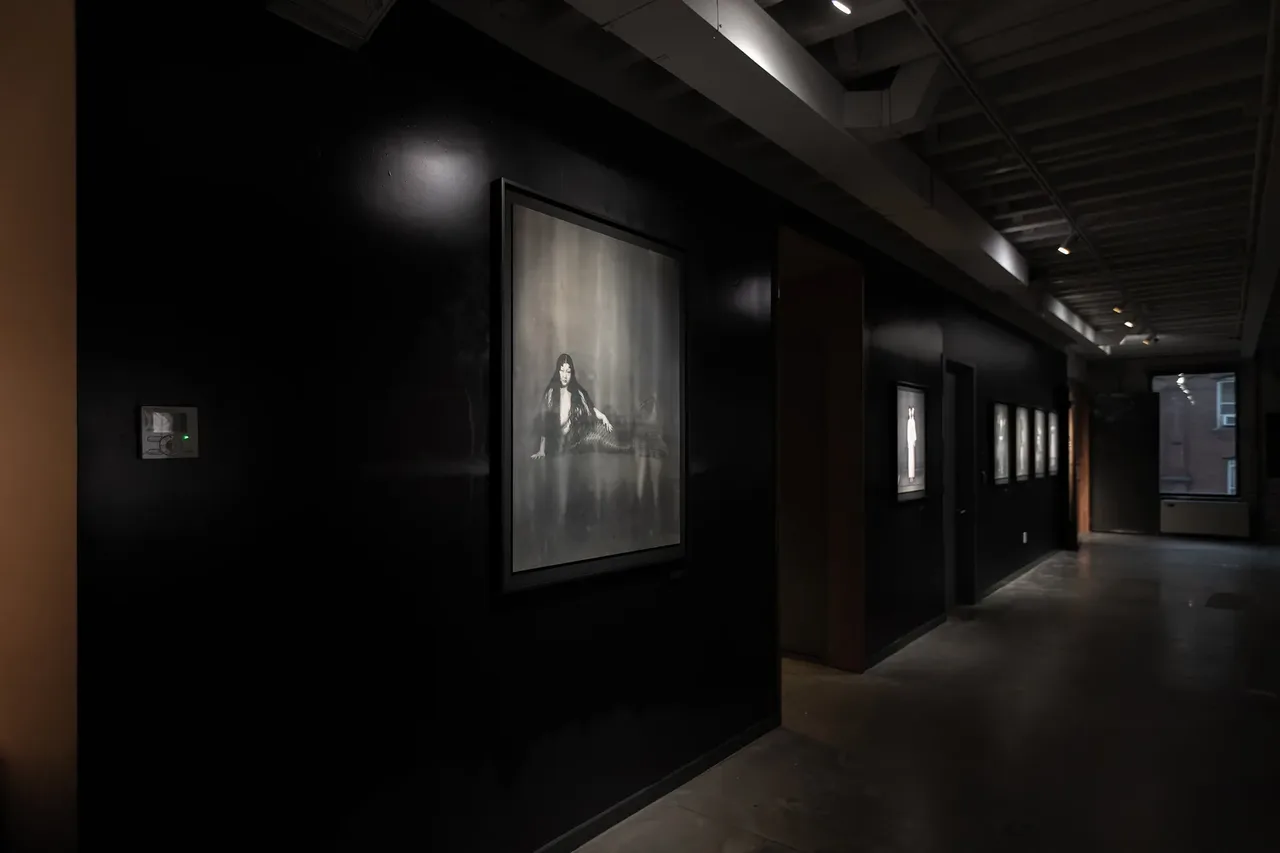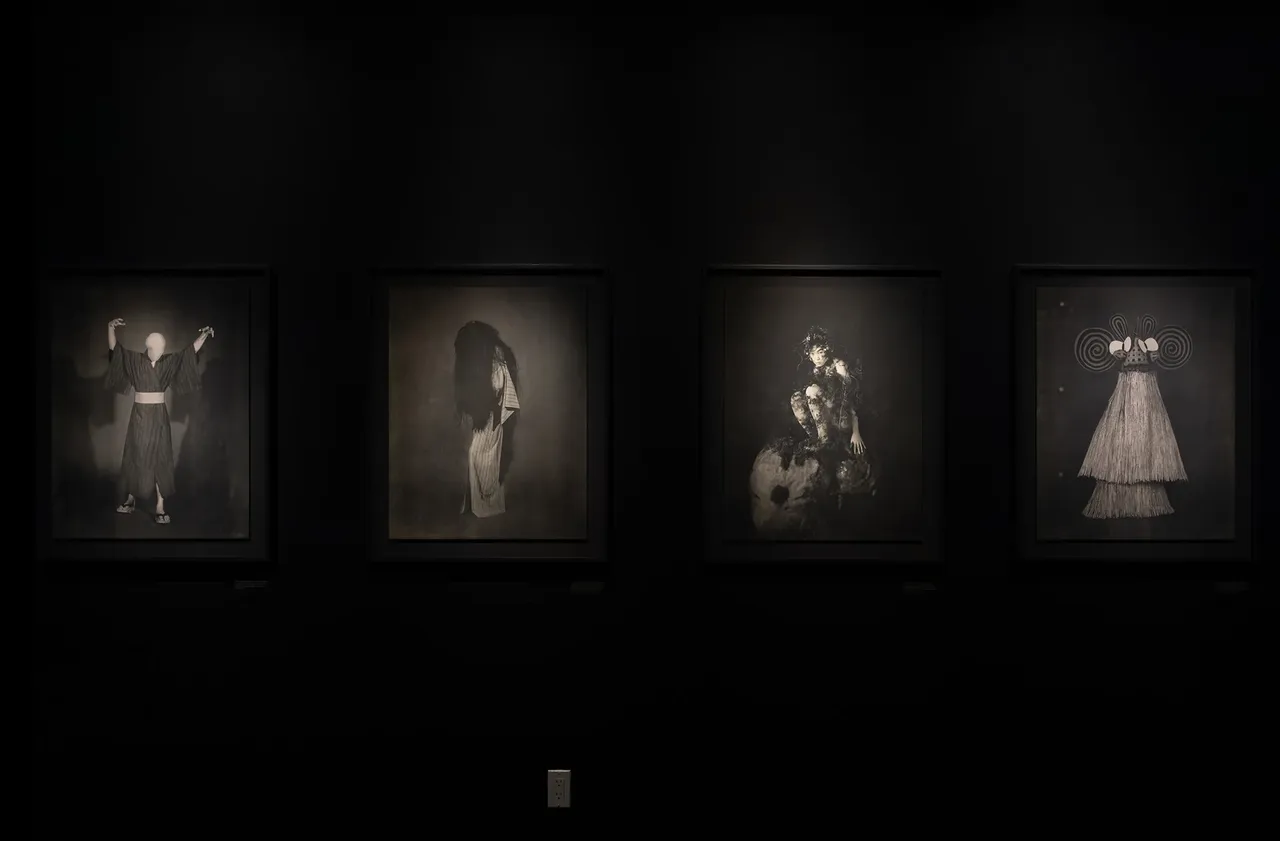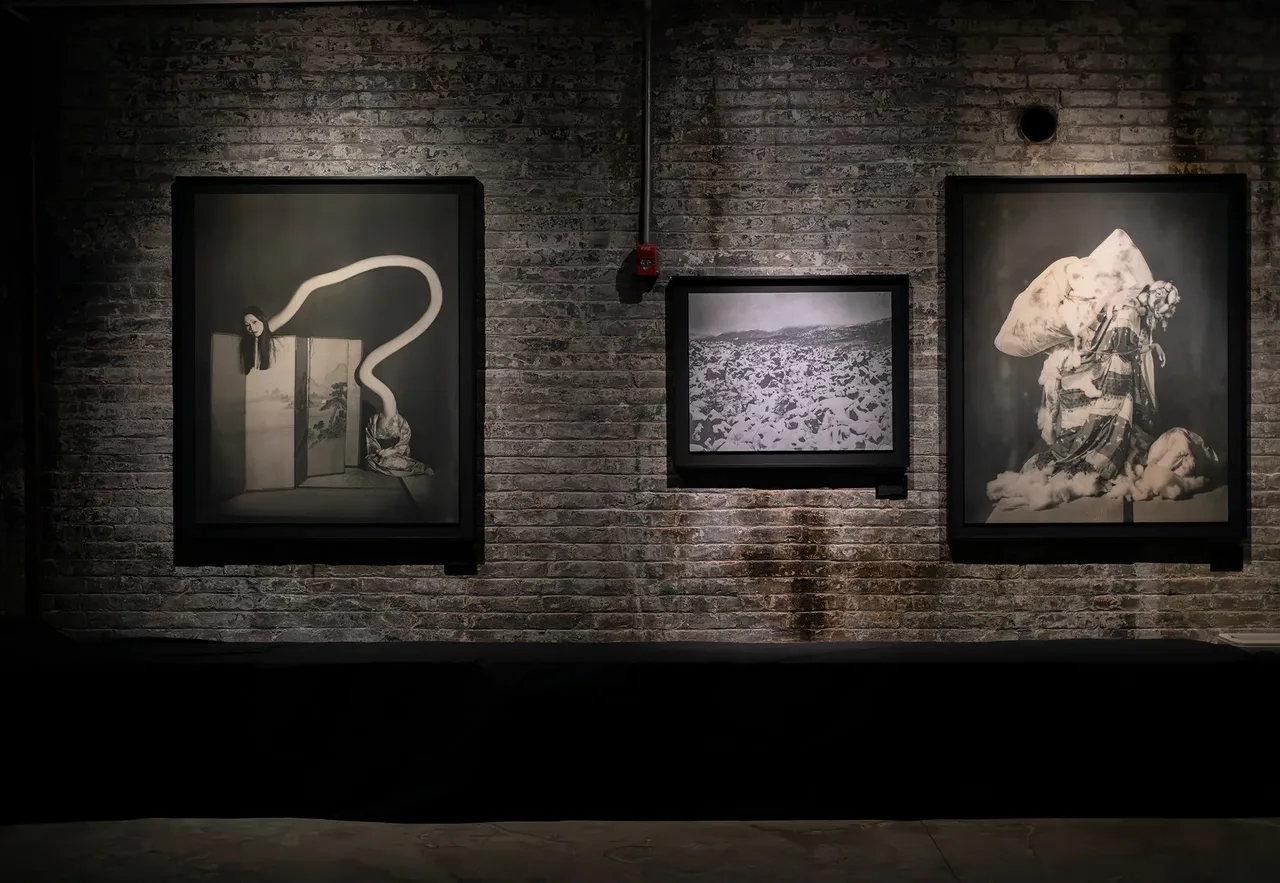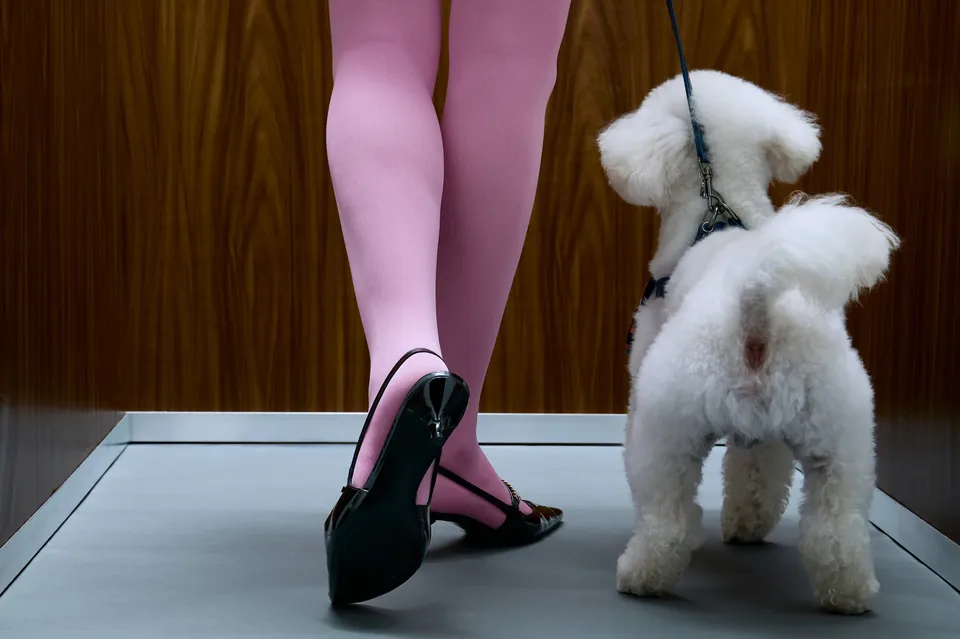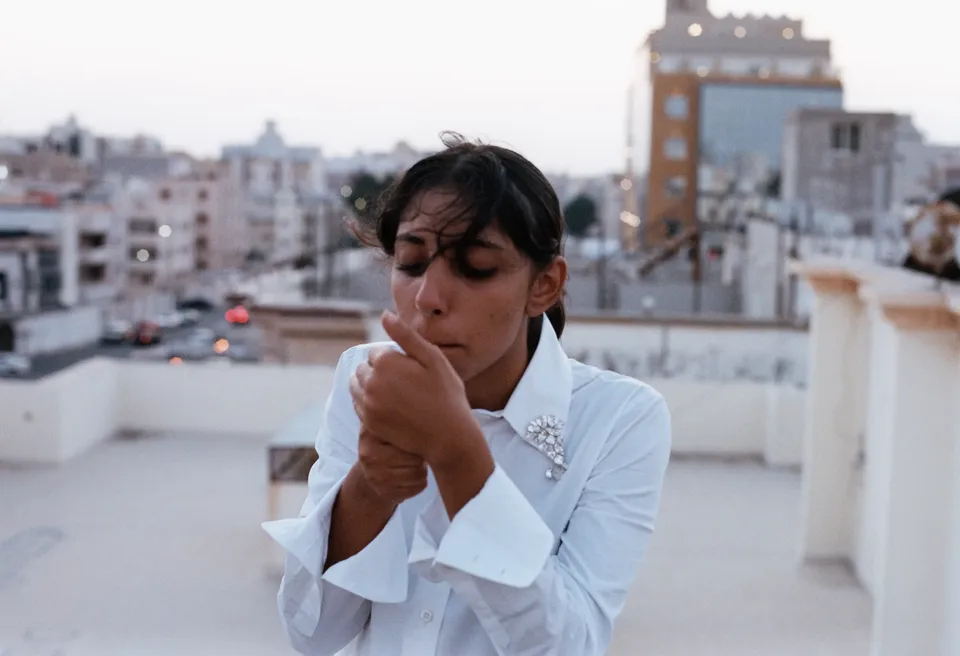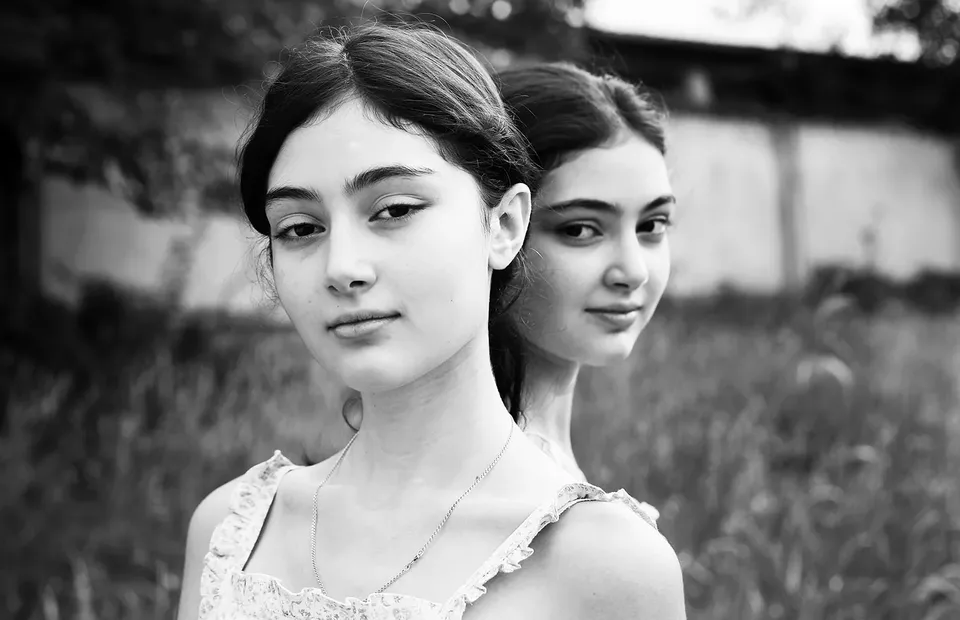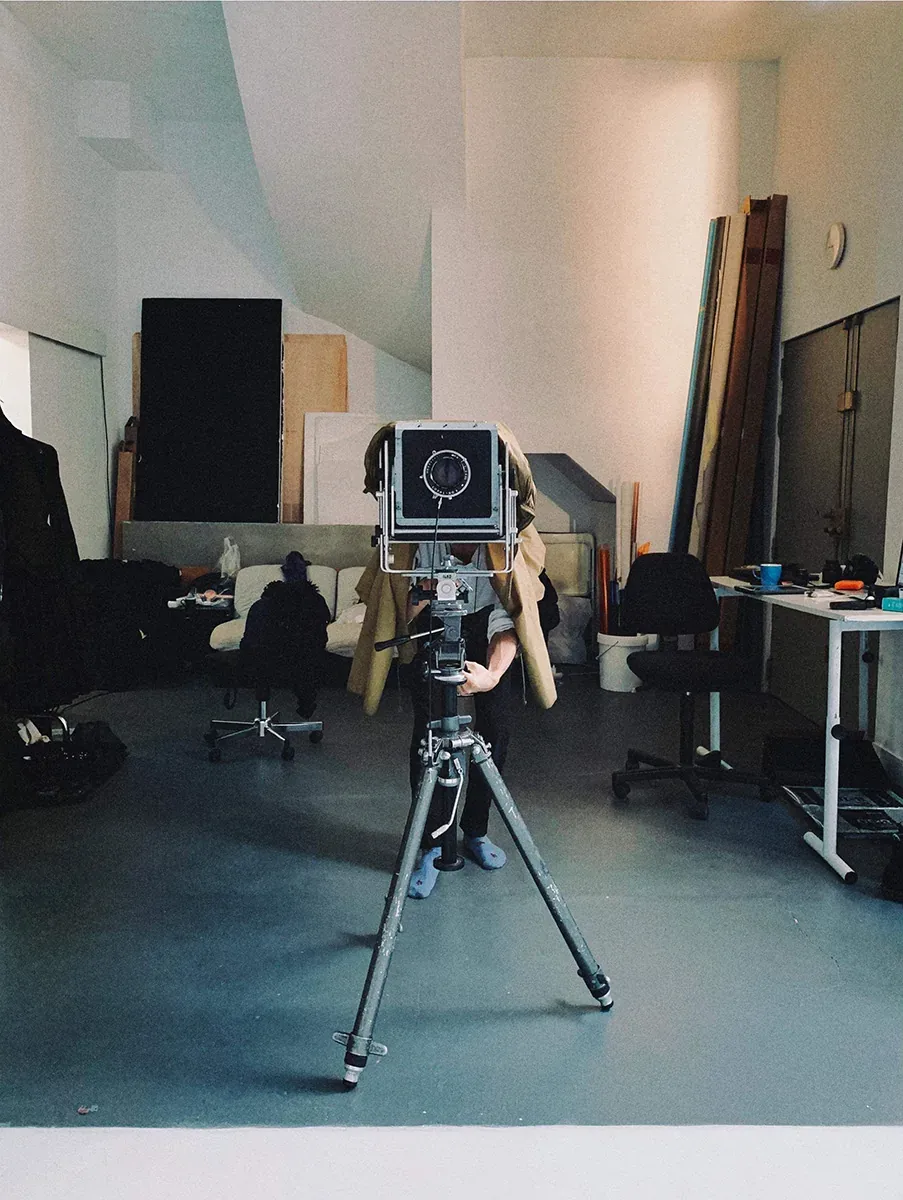
What does a ghost look like on film? In Yuji Watanabe’s photographs, it might be a woman staring out from pink water, a figure buried beneath a mass of fabric, or someone dressed in white, lying in the grass. His images have an otherworldly quality, though their subjects feel strangely present.
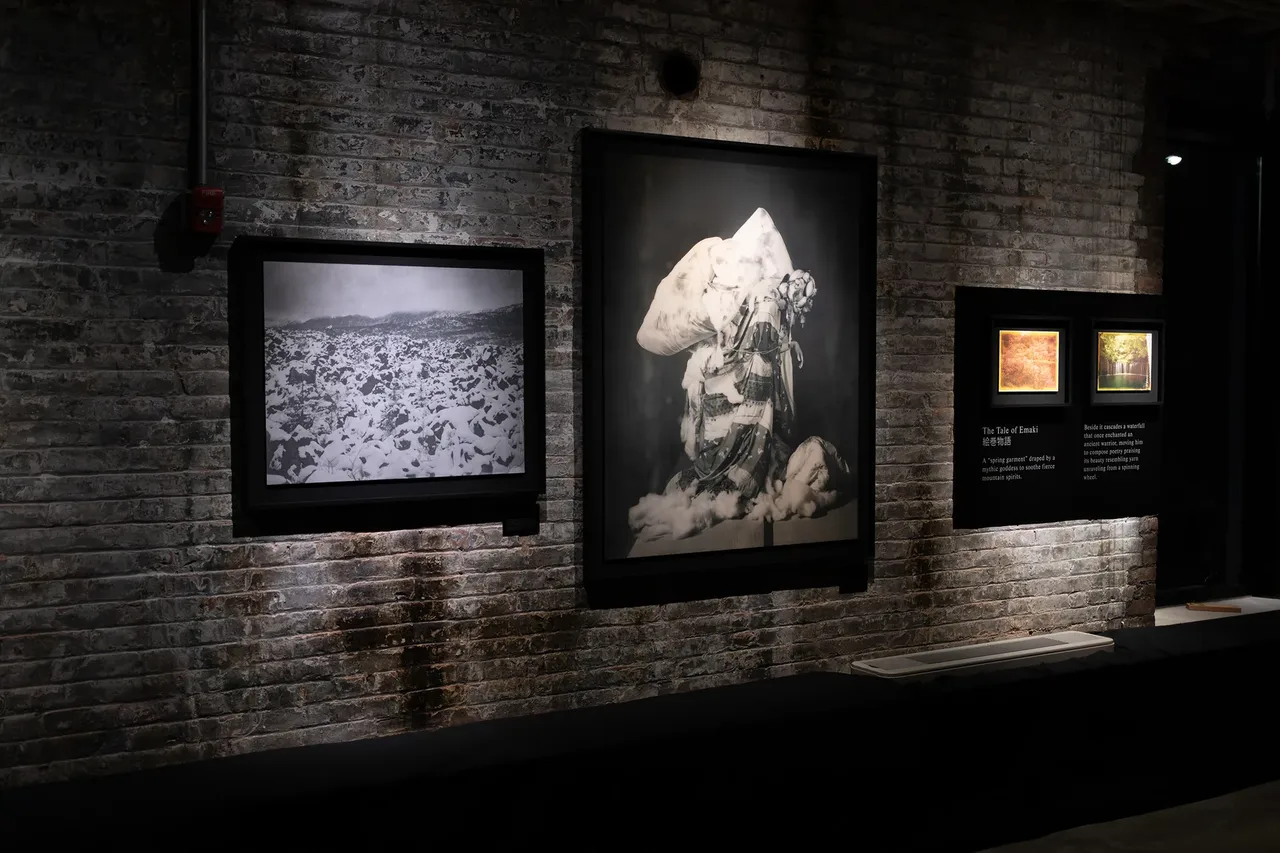
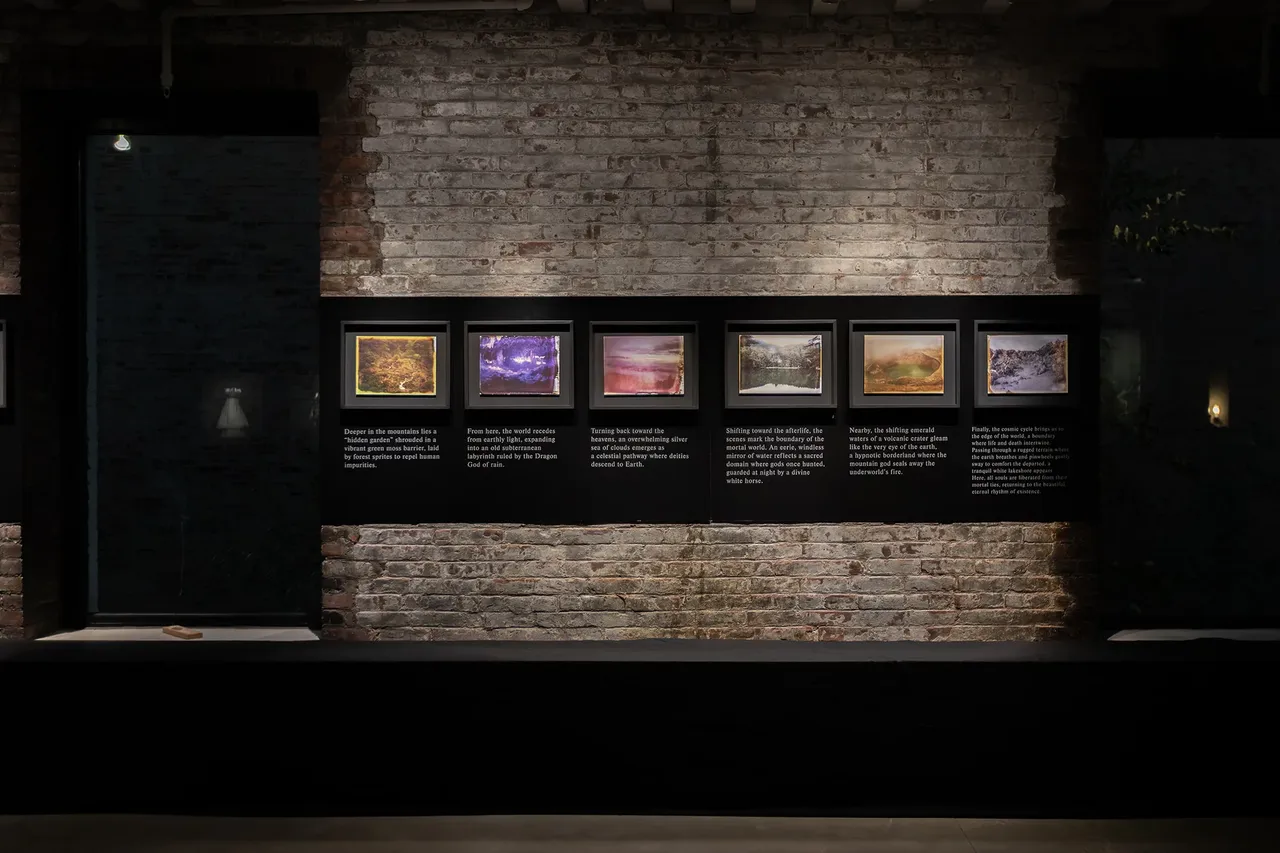
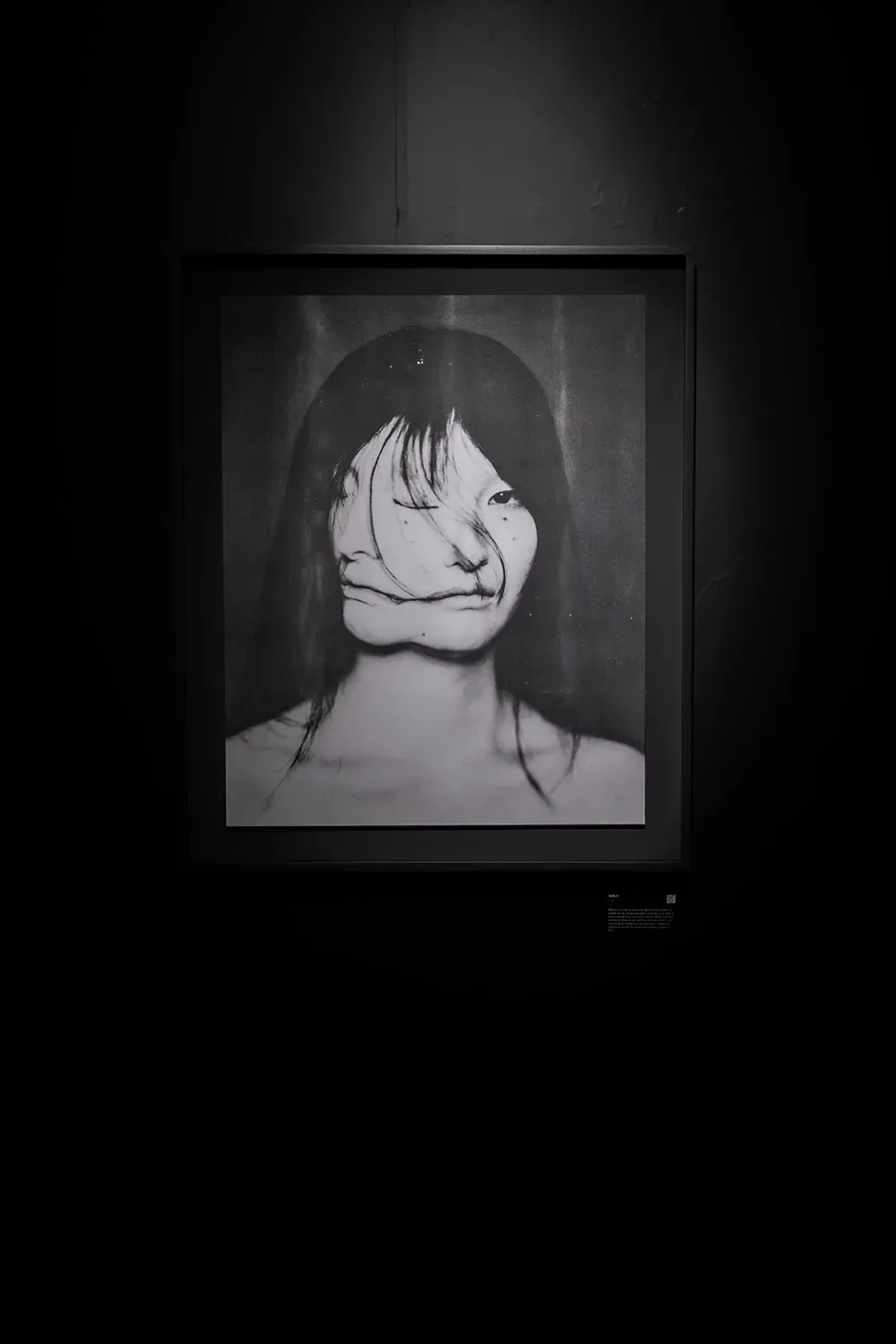
Watanabe, a Japanese photographer based between Paris and Tokyo, has worked with METAL across several fashion editorials. But his personal work takes his interest in fantasy and transformation in a different direction, drawing on Japanese folklore, elaborate styling and analogue photography. His new exhibition, Yōkai and Landscapes, open at New York City’s Picto gallery from 15 October to 15 December, brings together his series of yōkai—supernatural beings from Japanese folklore—with photographs of mountains, forests, caves and bodies of water across Japan. The creatures appear on 8x10 Polaroid, while the landscapes were shot on One Instant peel-apart film.
The landscapes are often empty but rarely feel unoccupied. Across the exhibition, Watanabe leaves room for the viewer to wonder what might be lurking beneath the surface. We speak to him about analogue photography, the characters he brings to life, and the places where folklore meets the everyday.
METAL has featured your work across very different settings, from La Vallée de Chevreuse to Lost in Porte de Clignancourt and Abstract. Looking back at those images now, do you see a connection between your fashion work and the fantasy worlds you have been building in your personal practice?
When I shoot, I’m always consciously aware of fantasy and the non-reality. Fashion is inherently driven by trends, meaning the wardrobe shifts with each season and the specific concrete themes evolve along with them. However, at the very core, the underlying element of fantasy remains constant. I believe this foundational fantasy is where my fashion work and my personal practice deeply overlap.
In your fashion editorials, clothing can completely transform the person wearing it. In the Yōkai series, transformation becomes something more literal: people become spirits, creatures or something difficult to identify. When does styling stop being about appearance and start becoming a form of transformation?
To me, the crucial process lies in establishing a central theme and then meticulously determining the ideal subject, wardrobe, hair and makeup to serve it. In fashion, however, the narrative is inevitably structured around the garments, which often makes it difficult to fully manifest the theme at one hundred percent. Within a single concept, styling is merely one component; it is only when every single element is created in absolute alignment with the core theme that a more profound, intrinsic essence begins to reveal itself.
What interests you about making something supernatural feel completely physical? Your Yōkai series isn’t simply an illustration of imaginary creatures; they look as though they have stepped into the photograph.
The pursuit of reality within fantasy is extremely important. If there is no reality during the creation process, even I can’t feel the fantasy in the work. This is the simple reason why I insist on creating my work through analogue processes.
The new landscapes seem to reverse that idea. The Yōkai are visibly present, while the landscapes contain almost nothing supernatural, yet they can feel even more haunted. Did you want the viewer to begin imagining what might be hiding outside the frame?
While the Yōkai series materialises fantasy within reality, the landscapes shift reality into the realm of fantasy. Exhibiting both simultaneously generates a new resonance, inviting the viewer to explore various interpretations and perspectives.
I’m particularly drawn to Hidden Lake, where the figure emerging from the water feels somewhere between a woman, a siren and an apparition. How much of that character existed in your mind before you made the photograph?
Julia Shortreed’s music has a worldview in which the boundaries of reality are blurred, and I wanted to express that through photography. On the day of the shoot, however, it was actually pouring rain, and this was the only frame I could capture inside the lake. I then asked Ingibjörg Birgisdóttir to work on the artwork. While I had imagined the final outcome to some extent, what she created went far beyond my expectations.
In Biotop, the figure seems to merge with the landscape: the grass, the white clothing and the form she is holding make her seem almost fairy-like. What happens to a character when you make it difficult to separate them from their environment?
In Japanese photography, people often use the phrase “cropping” or “cutting out” a moment. I have never really felt comfortable with that expression. Instead, I shoot with the sensation of “trapping” a scene inside the photograph, or confining the space that exists there. Depending on the theme, it feels like “swallowing” the environment entirely. This perspective might be why the subject, while remaining the main figure, feels like an inseparable part of their environment.
Yōkai are often understood as creatures that inhabit the spaces between categories—human and animal, beautiful and grotesque, natural and supernatural. Is that ambiguity what attracts you to them?
I believe there’s definitely a part of me that is drawn to that ambiguity and uncertainty.
“When I photograph people, I always want to capture them in my own way, which means I’m redefining them as well.”
The landscapes were photographed across Japan and arranged in the manner of an emaki, turning the exhibition into something that unfolds almost like a visual story. Did you think about this sense of sequence while photographing the landscapes, or did the narrative emerge when you began putting the exhibition together?
I hadn’t thought about the specific exhibition method while shooting, but I always knew I wanted to present the landscapes in a way that resonated with the Yōkai. The idea of the emaki was born later, when I was exploring how to actually structure the exhibition space.
The exhibition moves between figures from Japanese folklore and landscapes photographed across Japan, but its first U.S. presentation is in New York. Does showing the work outside Japan change the way you think about what makes an image culturally specific, and what can remain universal?
In terms of wanting to create something universal, where the work is exhibited doesn’t affect my way of thinking. However, I’m personally very interested to see how people from different environments and cultures will experience and feel a body of work based on themes rooted in Japan.
You use 8x10 Polaroid for the Yōkai and One Instant peel-apart film for the landscapes. Why did you want these two parts of the world to have different photographic surfaces?
To be honest, the production of 8x10 Polaroid has currently stopped. Given the flow of the times, I feel it’s essential to constantly challenge myself with new formats. Among them, I felt that One Instant film was the format where I could most deeply pour my intentions and thoughts into the print, which is why I chose it to photograph the landscape series.
There’s an interesting contradiction in photographing folklore with contemporary photographic technology: you are using an instant camera to make something that feels ancient. Does that tension between old and new interest you?
Actually, I don’t use what’s commonly thought of as an instant camera; I use a Polaroid camera, which is a photographic technique with a long history. Fundamentally, I have a deep interest in these older, analogue processes. However, since I’m an artist living in the contemporary world, I prefer to let the modern era naturally manifest itself within the final outputs.
You have spent much of your career photographing people who are already performing versions of themselves—models, celebrities, characters created through fashion. With the Yōkai, the identity is almost completely invented. Has working with imaginary characters changed the way you look at the people you photograph?
Yōkai have always existed, so rather than creating something entirely new, it feels more like I am redefining them. When I photograph people, I always want to capture them in my own way, which means I’m redefining them as well. In that sense, there is no major change in the way I approach the act of photographing itself.
If the landscapes in this exhibition are places where something supernatural could exist, rather than simply backgrounds for the Yōkai, is there a particular landscape in Japan that you personally find difficult to experience as just a landscape?
Every place I photographed is special to me, but there is a location called Mount Osore, which is often described as a boundary connecting this world and the afterlife. When I was there, I took each and every photograph with a deep sense of gratitude.