We’re often told about the rawness of London’s fashion scene, a reputation it has rightly earned for its history of breeding some of the industry's most unconventional and authentic talent. Yet, over recent years, that famous voice of rebellion, headed by names like Vivienne Westwood, Lee Alexander McQueen and John Galliano, has gone quiet, kept alive only by a select few designers from within fashion’s underground — that is, until now.
I’m not really a fan of the phrase "we’re so back", but if there was any context to use it in, it’s in relation to this ongoing fashion month. Could it be the CFDA president resigning after physically restraining a PETA member at Cos’ New York show? Sean McGirr bringing McQueen back to its home city for the first time since 2001? Or maybe, it’s the resilience we see in up-and-coming designers as they continue to fight against the industry's institutional barriers?
Whatever this shift may be, it's igniting a well-missed excitement amongst critics and punters alike. Here are some of the shows we've seen and the thoughts we had.
Aaron Esh
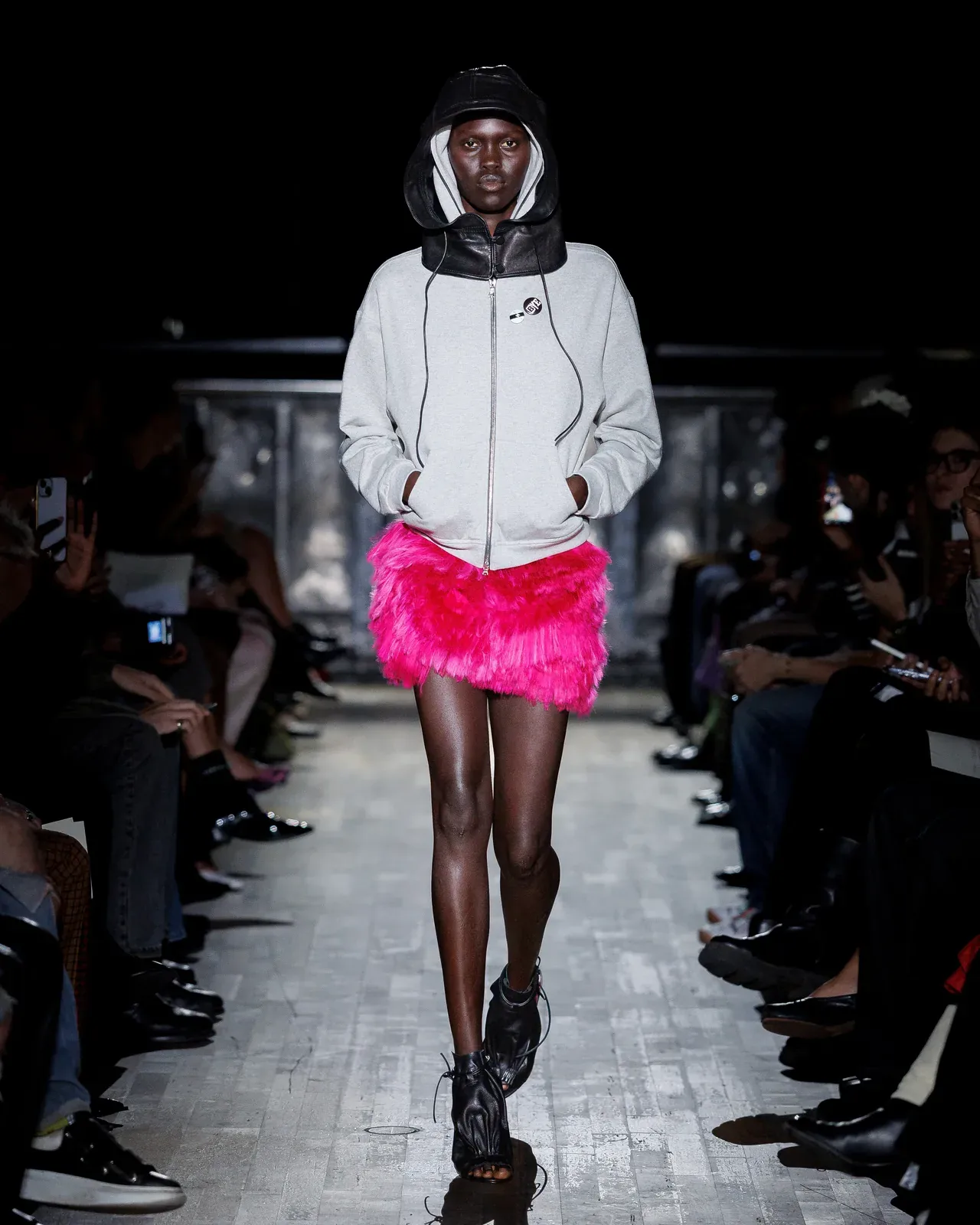
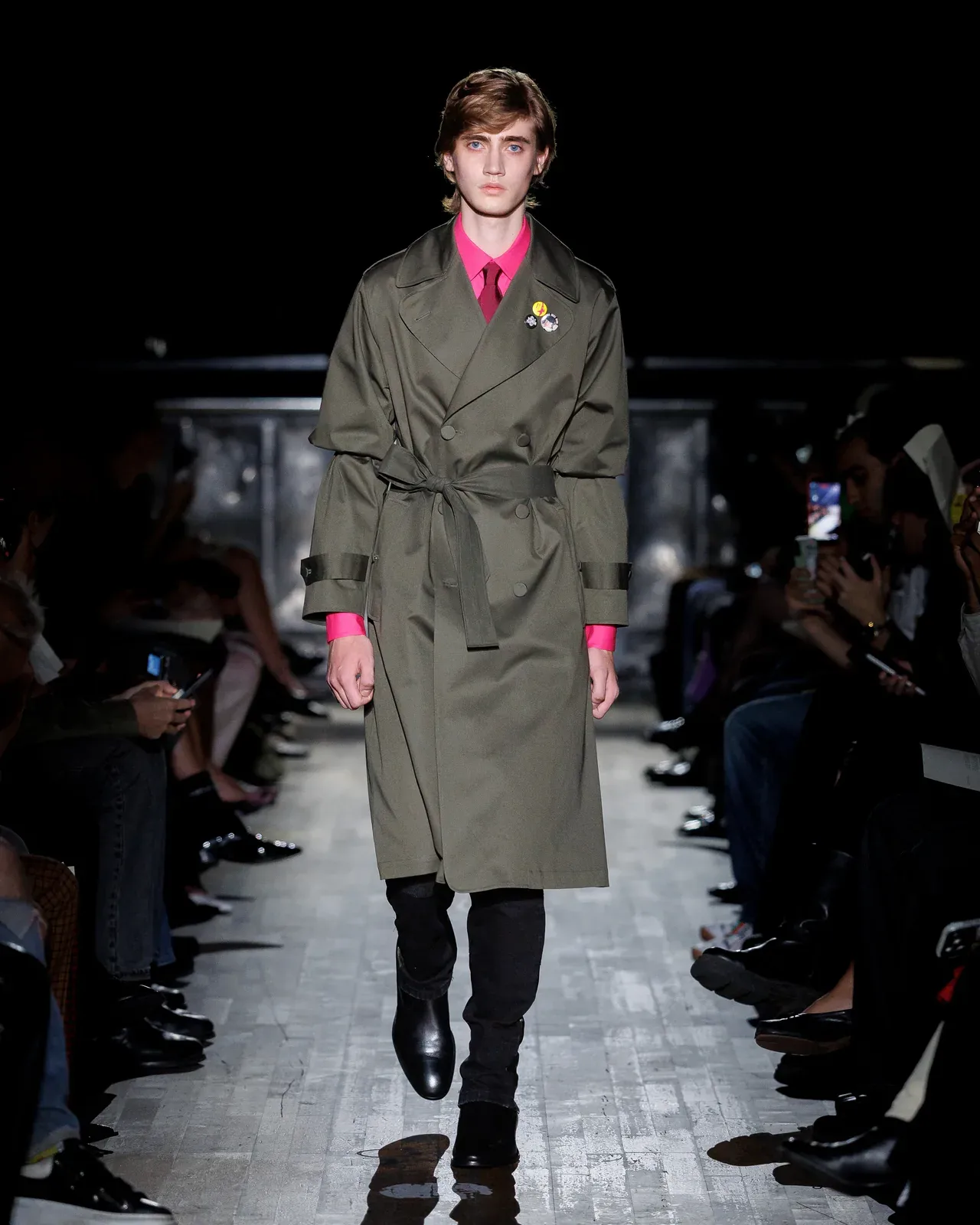
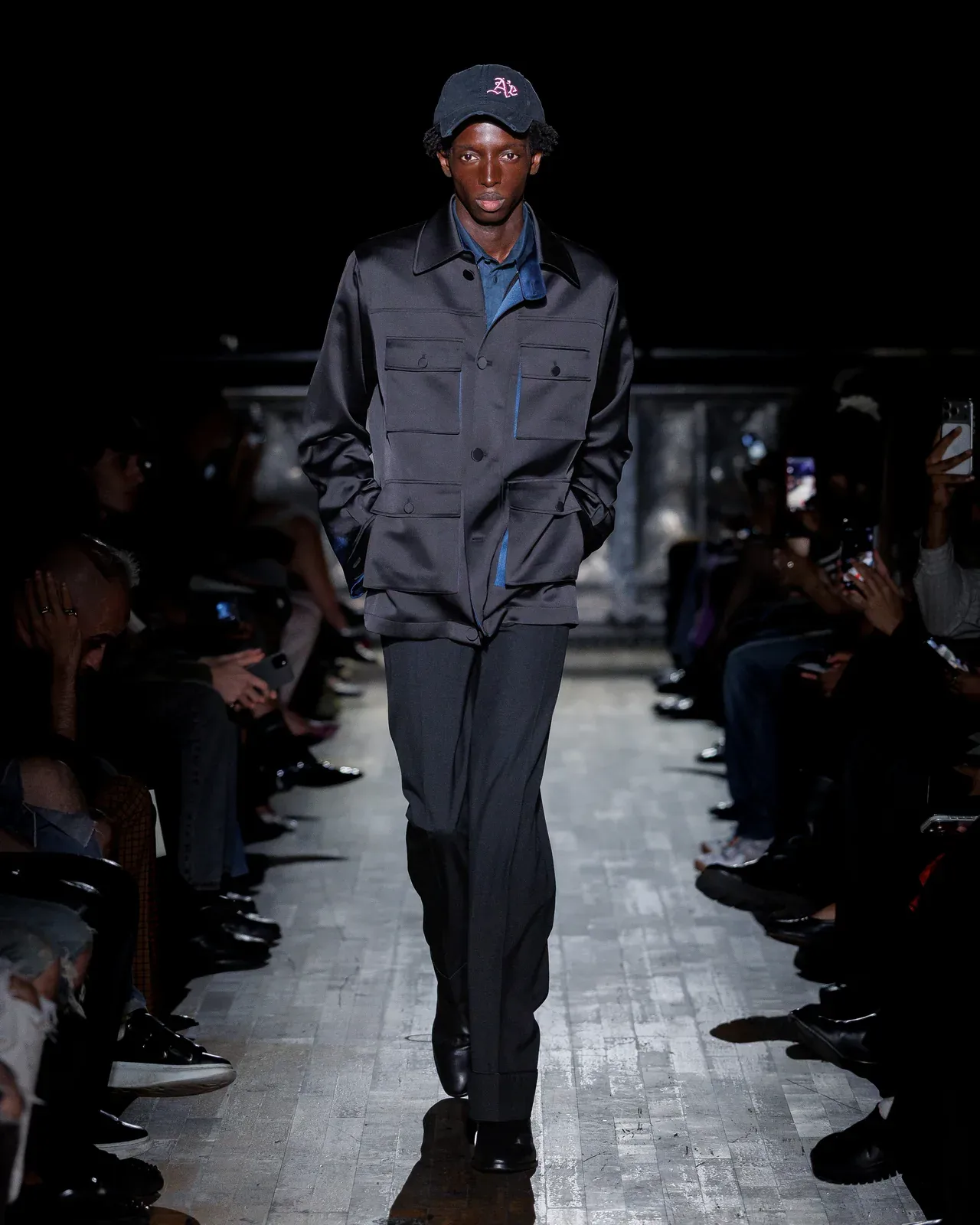
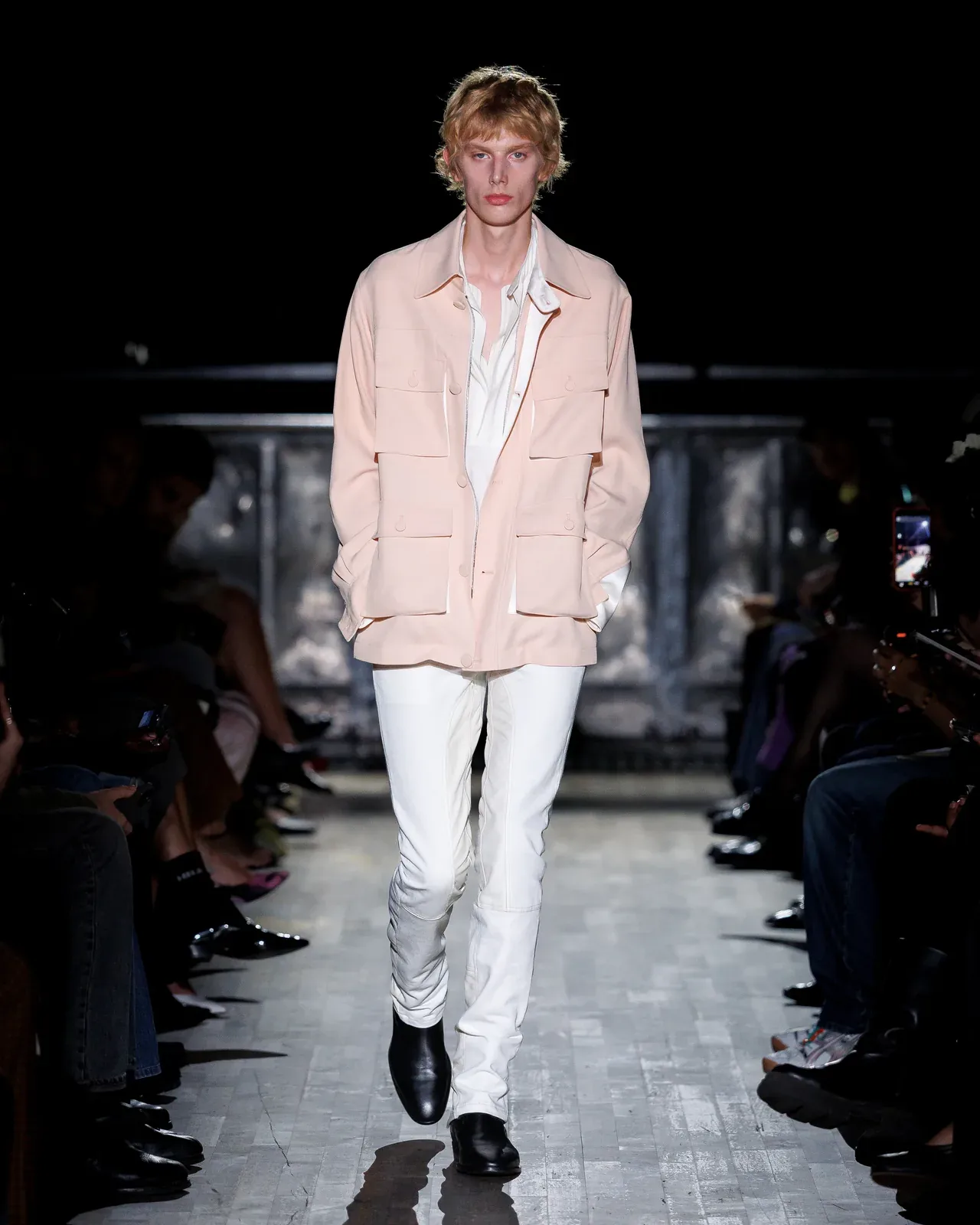
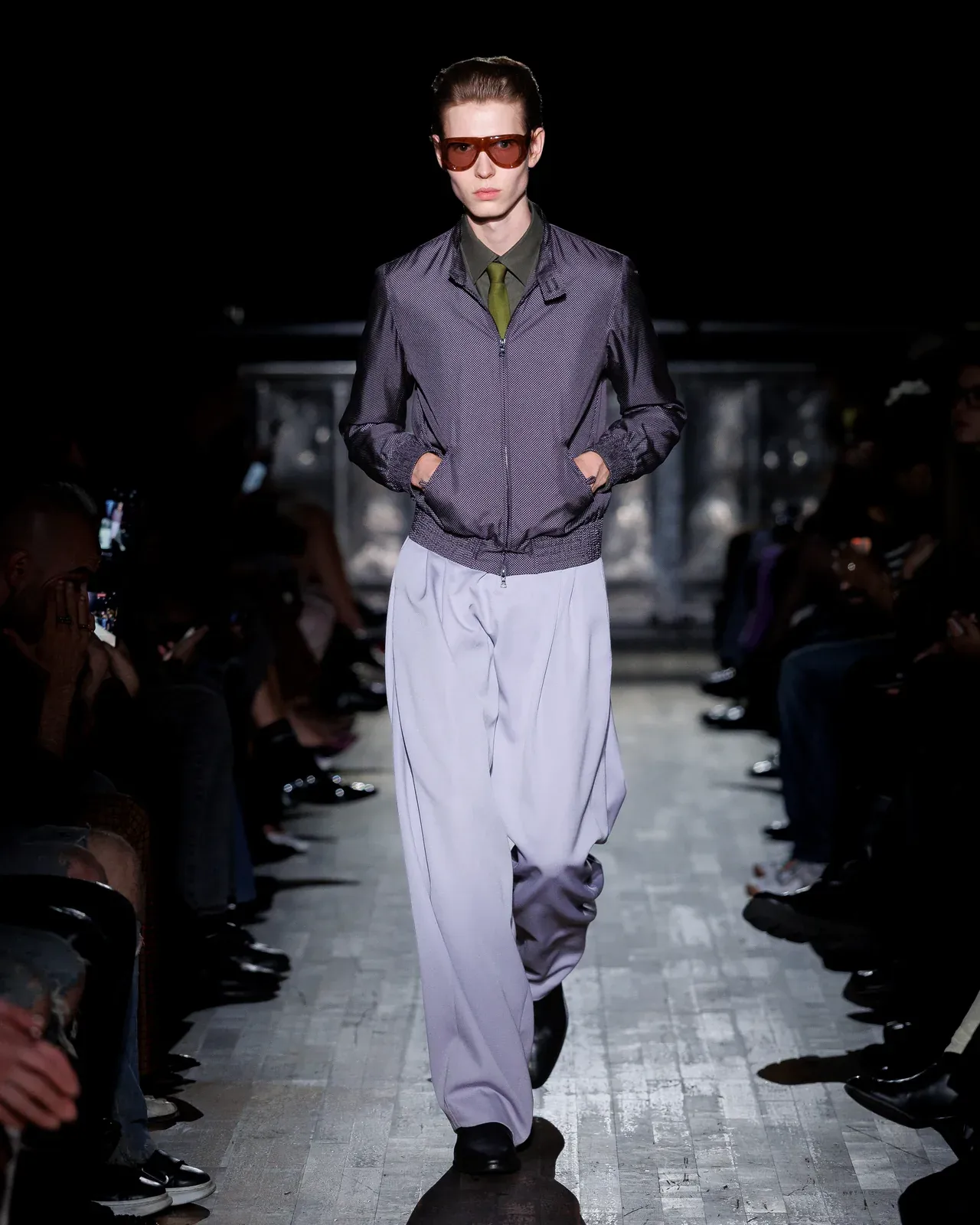
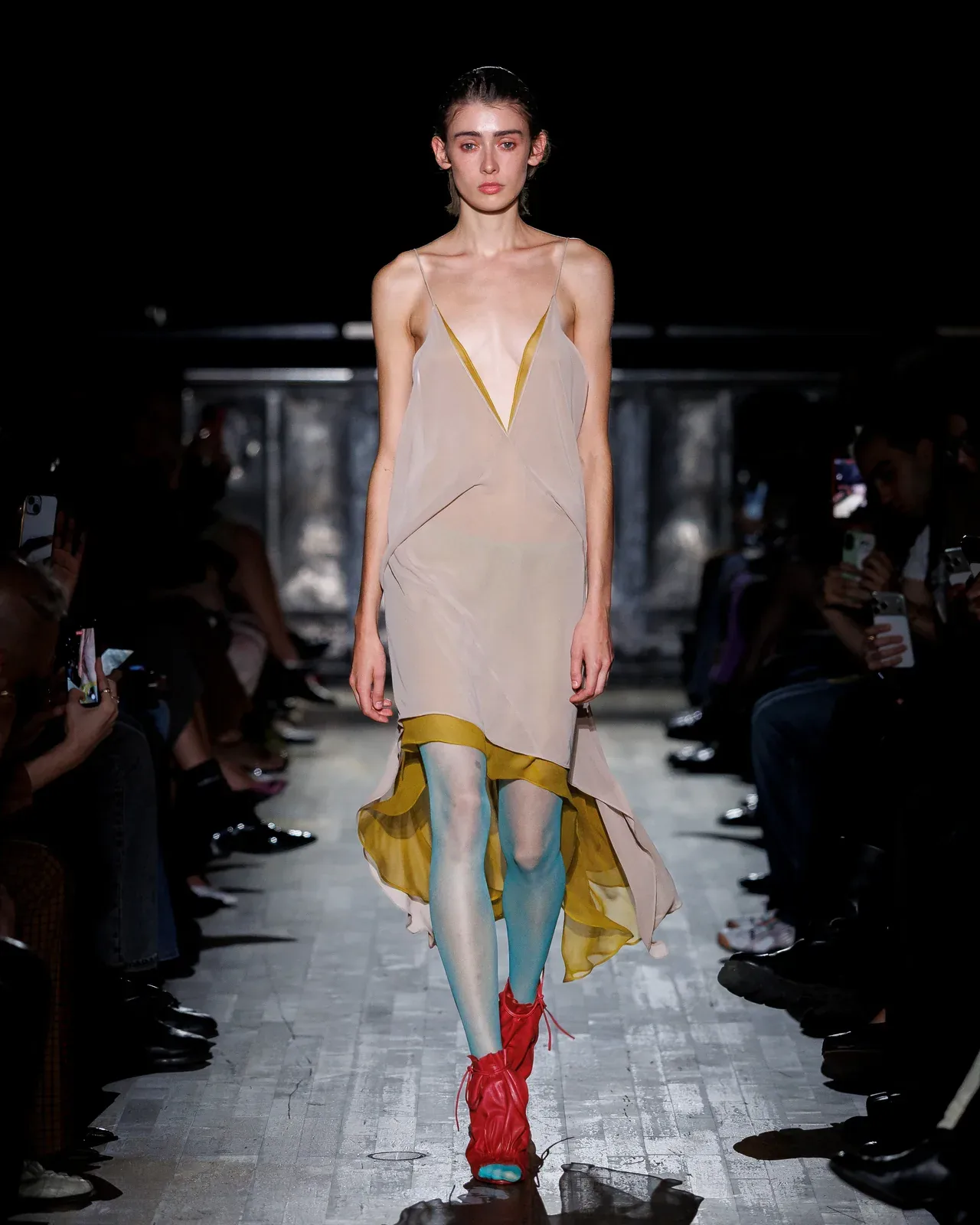
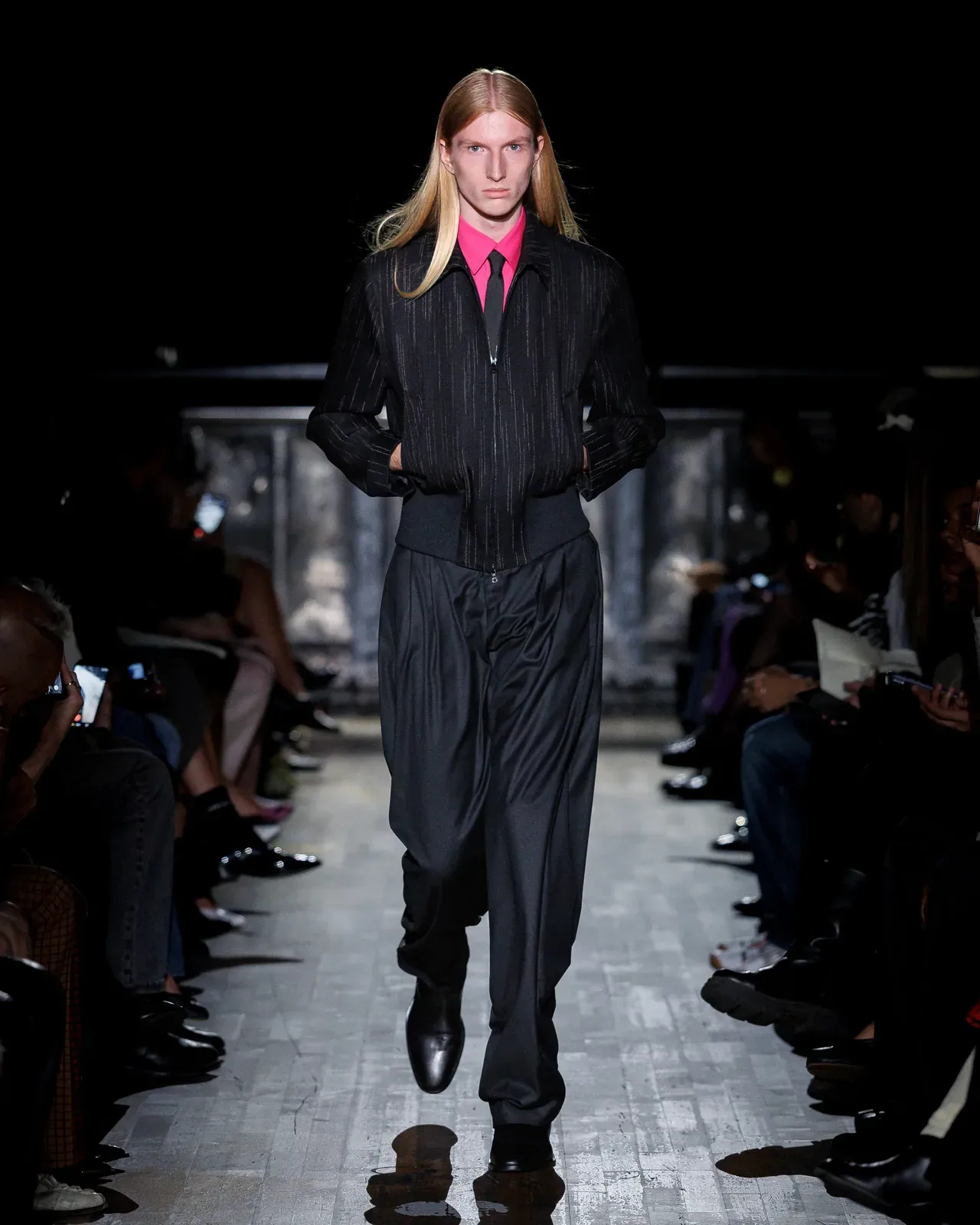
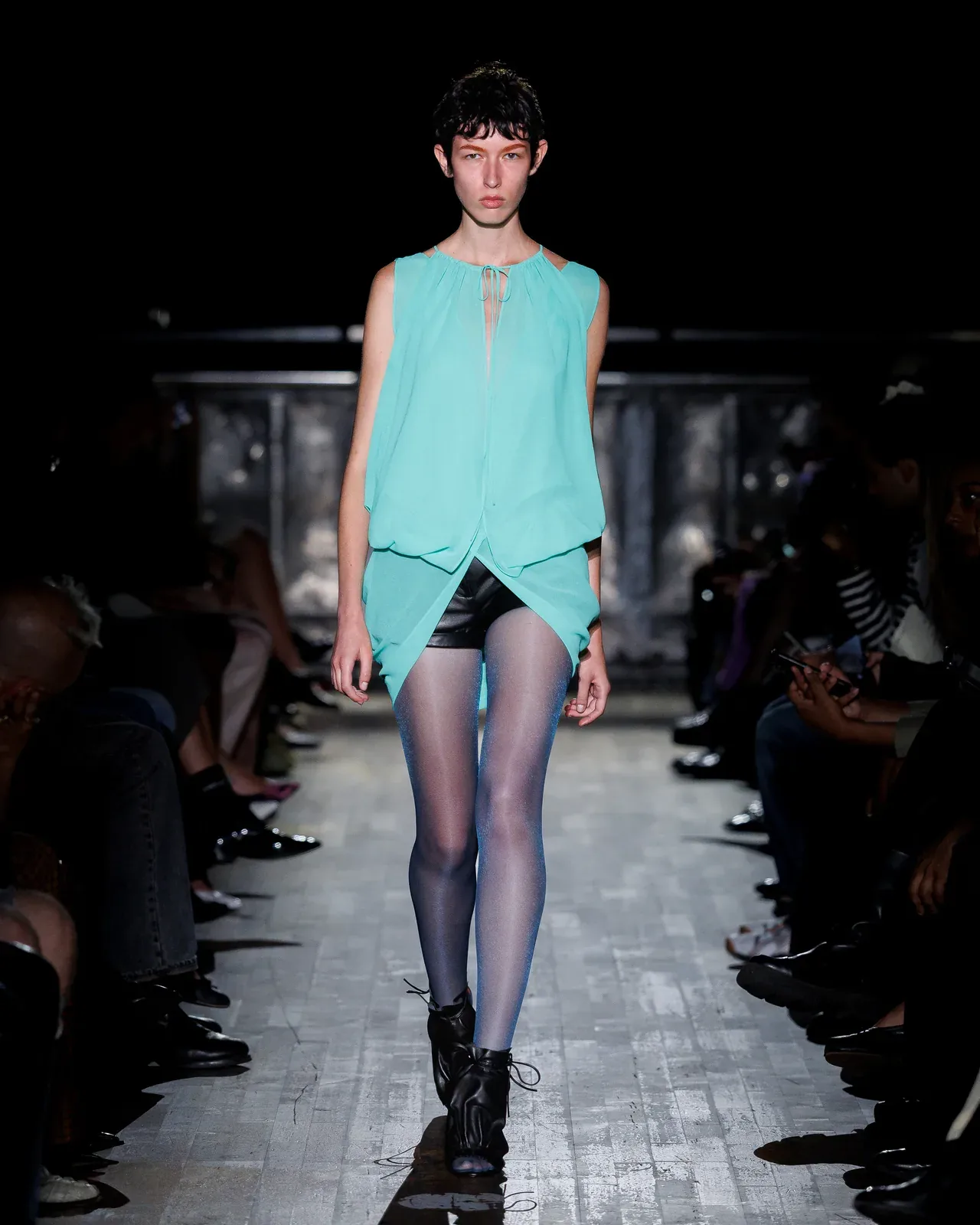
As I hurriedly entered Camden’s Electric Ballroom — after a 40-minute-long, rain-sodden Lime ride, during which I ripped the leather pencil skirt I was wearing — the buzzy anticipation surrounding Aaron Esh’s S/S 2027 collection was intuitive. (And enough to make me forget about the irreparable damage I’d just done to my beloved item of clothing). It was the type of excitement usually reserved for the greatest among us. Of which Esh, who in only a few years has rapidly risen to critical acclaim as an LVMH prize semi-finalist and now the chief creative officer at All Saints, is.
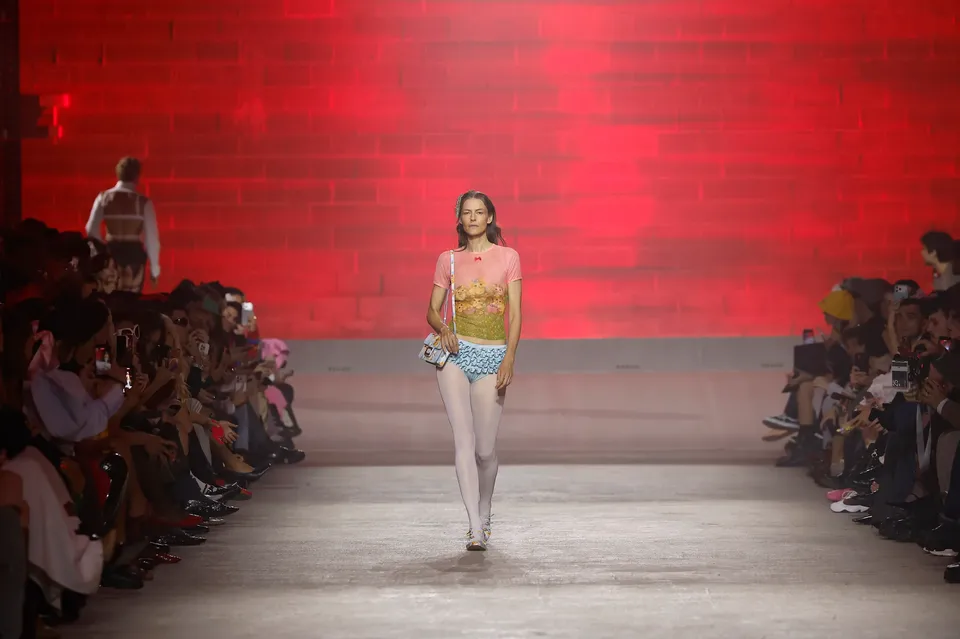
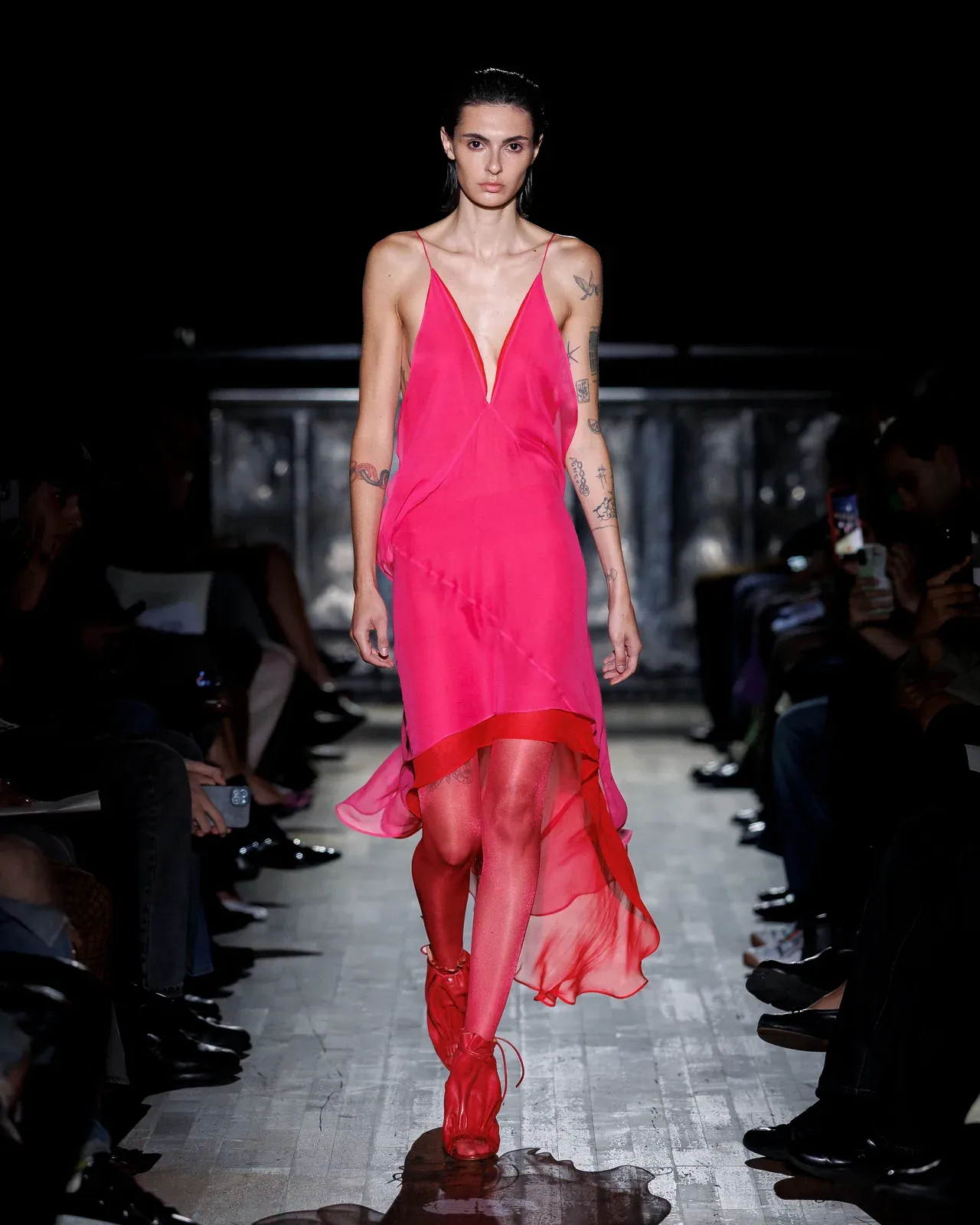
Despite building a reputation for using an almost exclusively monochromatic palette, Rules of Attraction was a lesson in vibrancy. As the first few models took to the runway, I felt like Dorothy as she opened the door to the theatrically-coloured Munchkin Land after leaving the drabness of the real world behind. Dramatic v-neck slip dresses, leather skinny jeans and a temptingly soft-looking organza coat took on a combination of pink, teal and crimson that practically glowed in contrast to the dark hall the show was held in.
Petra Fagerstrom
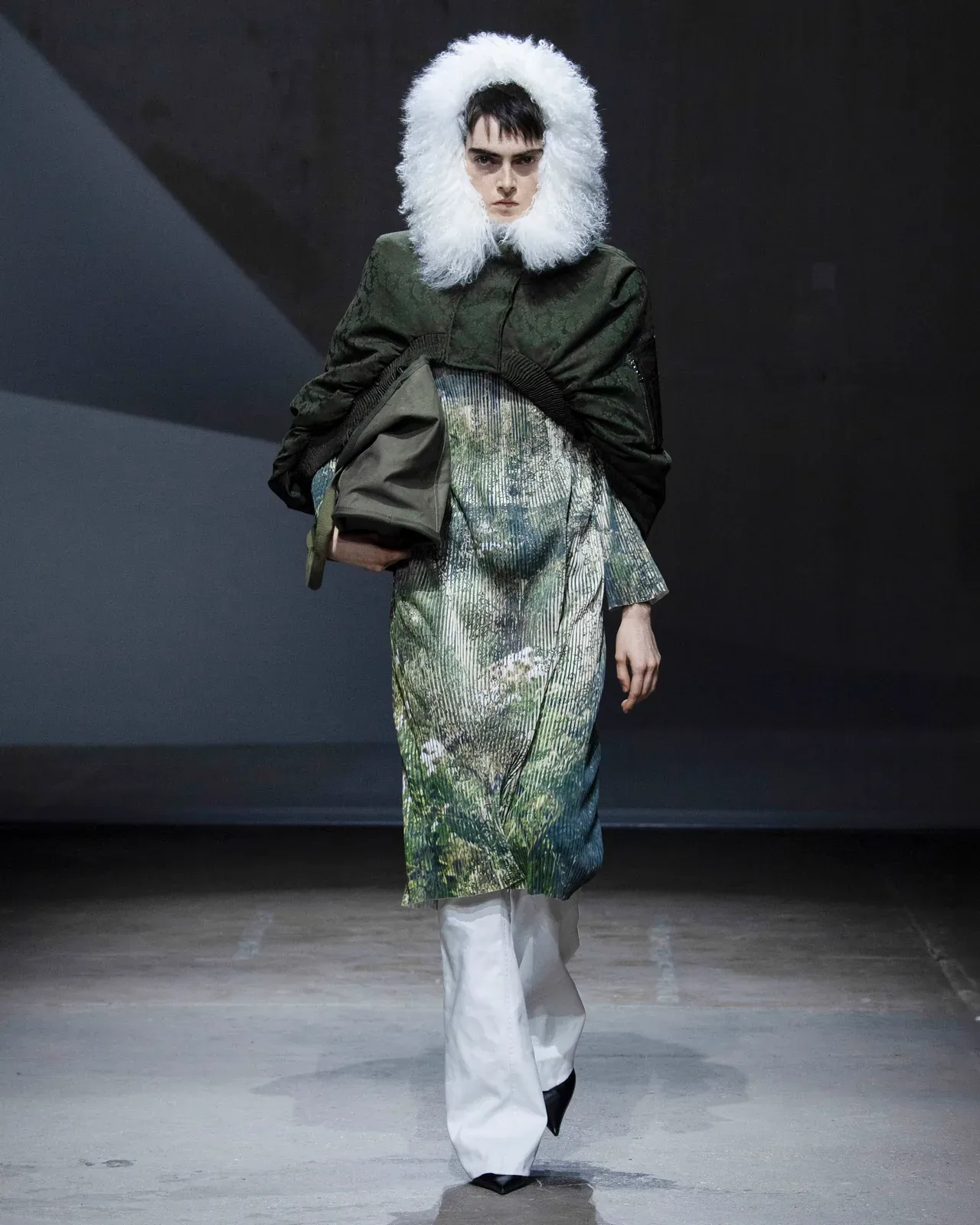
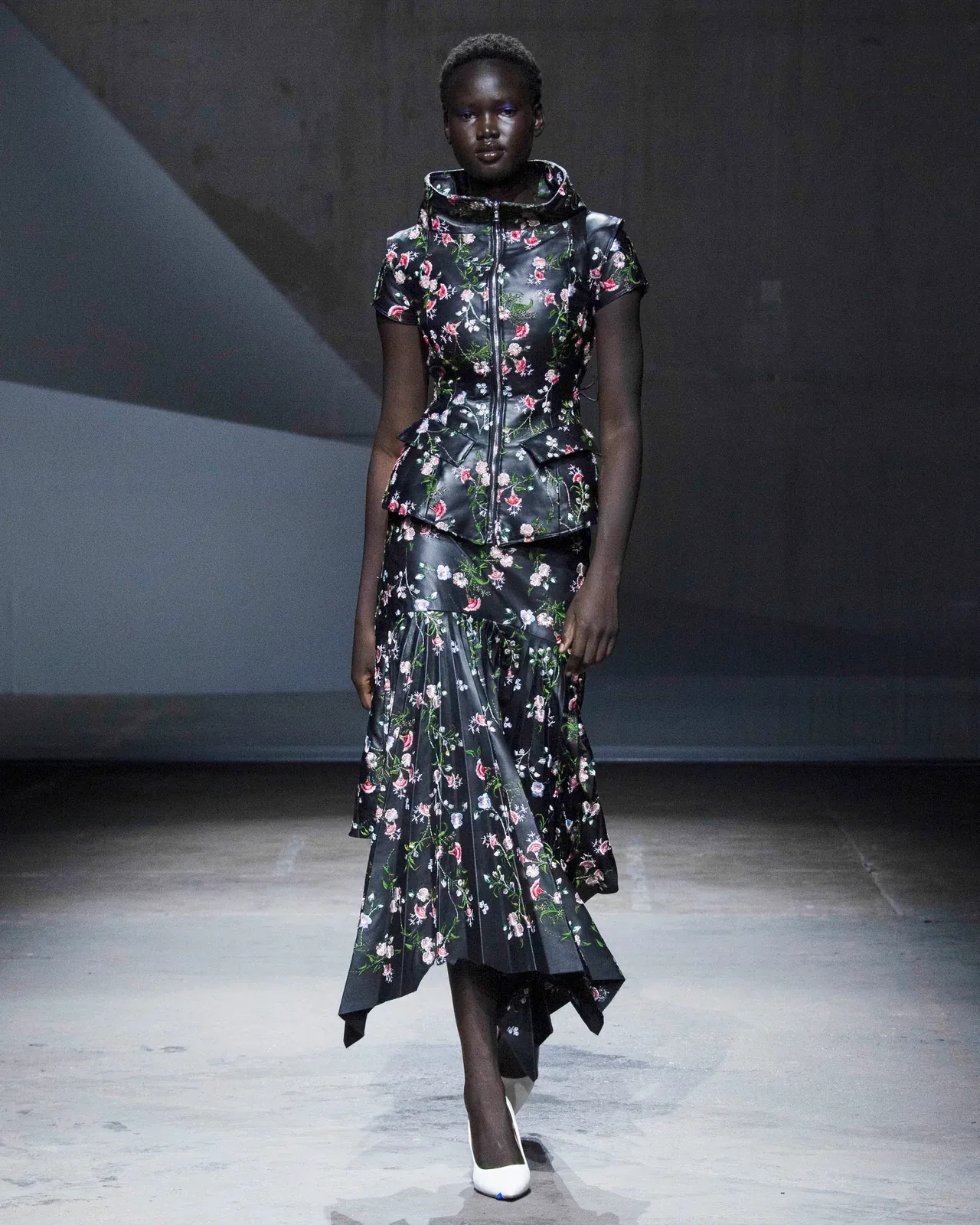
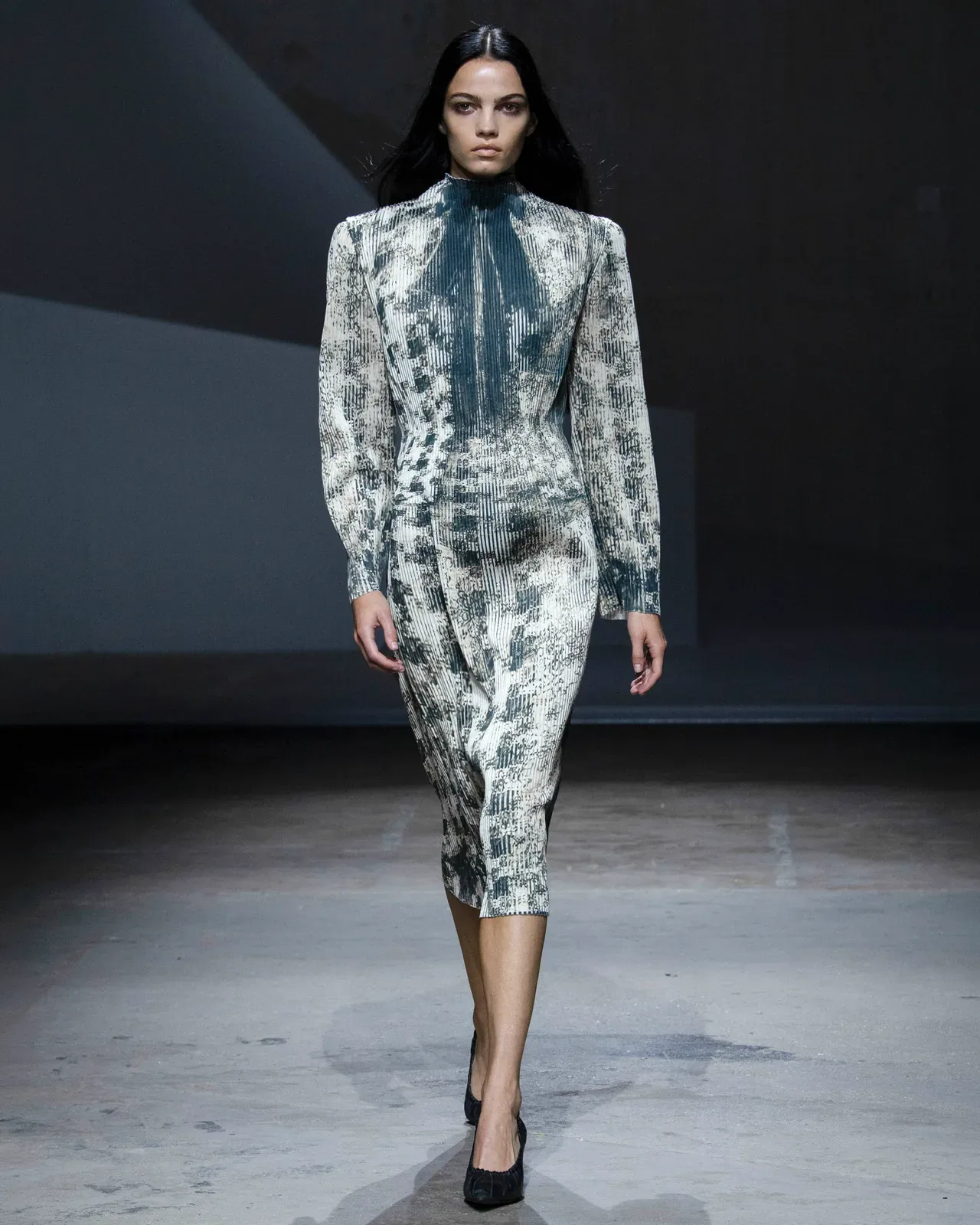
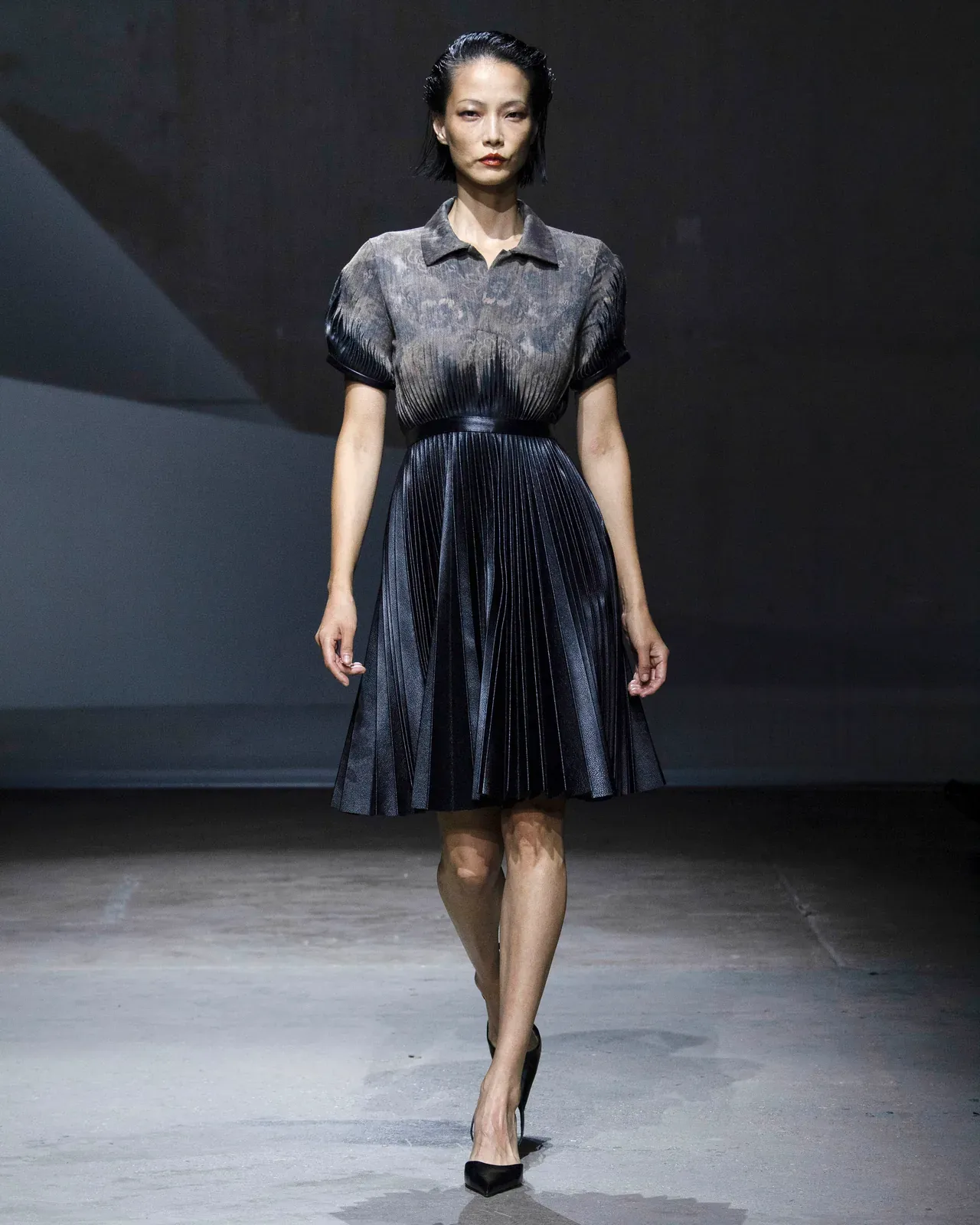
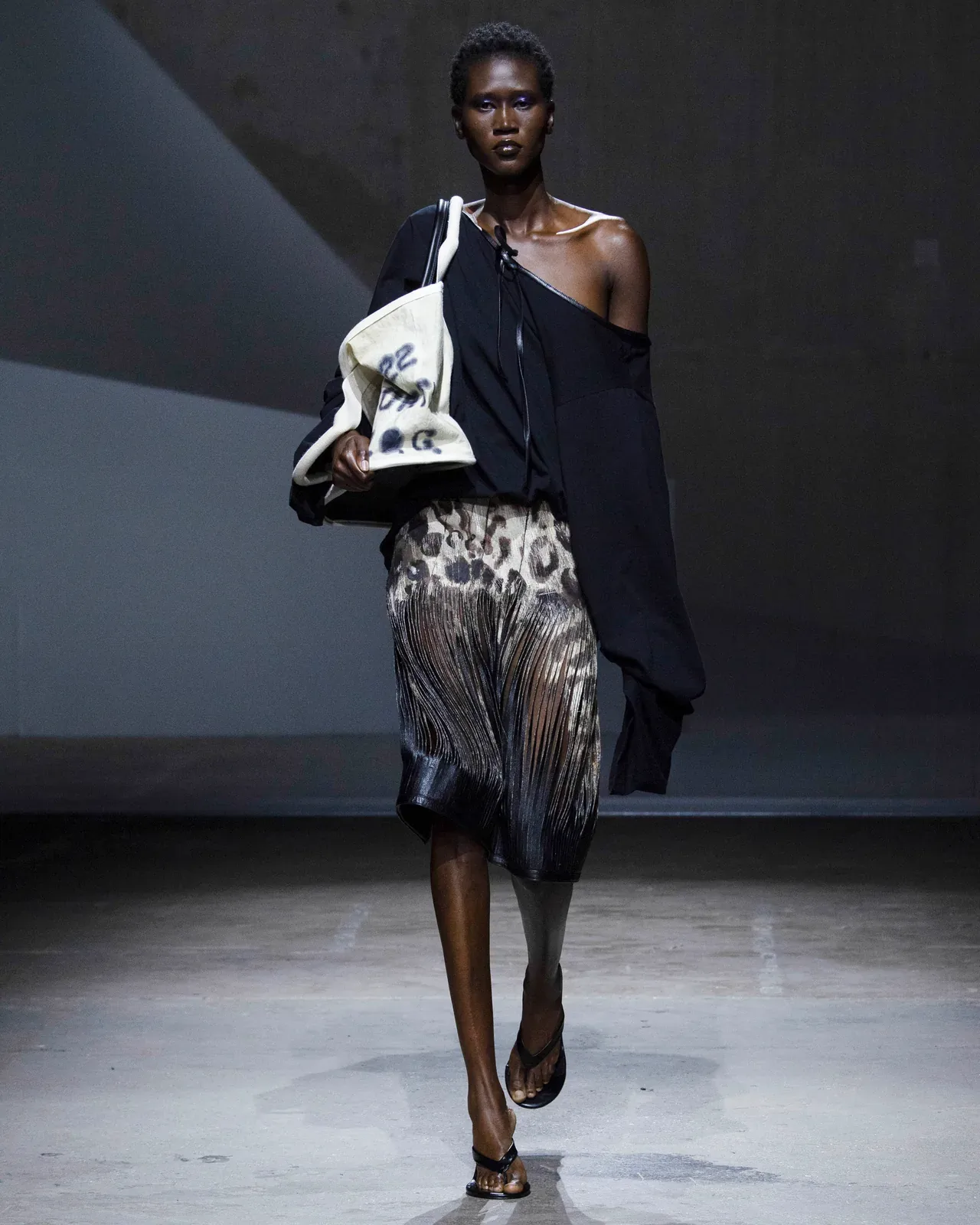
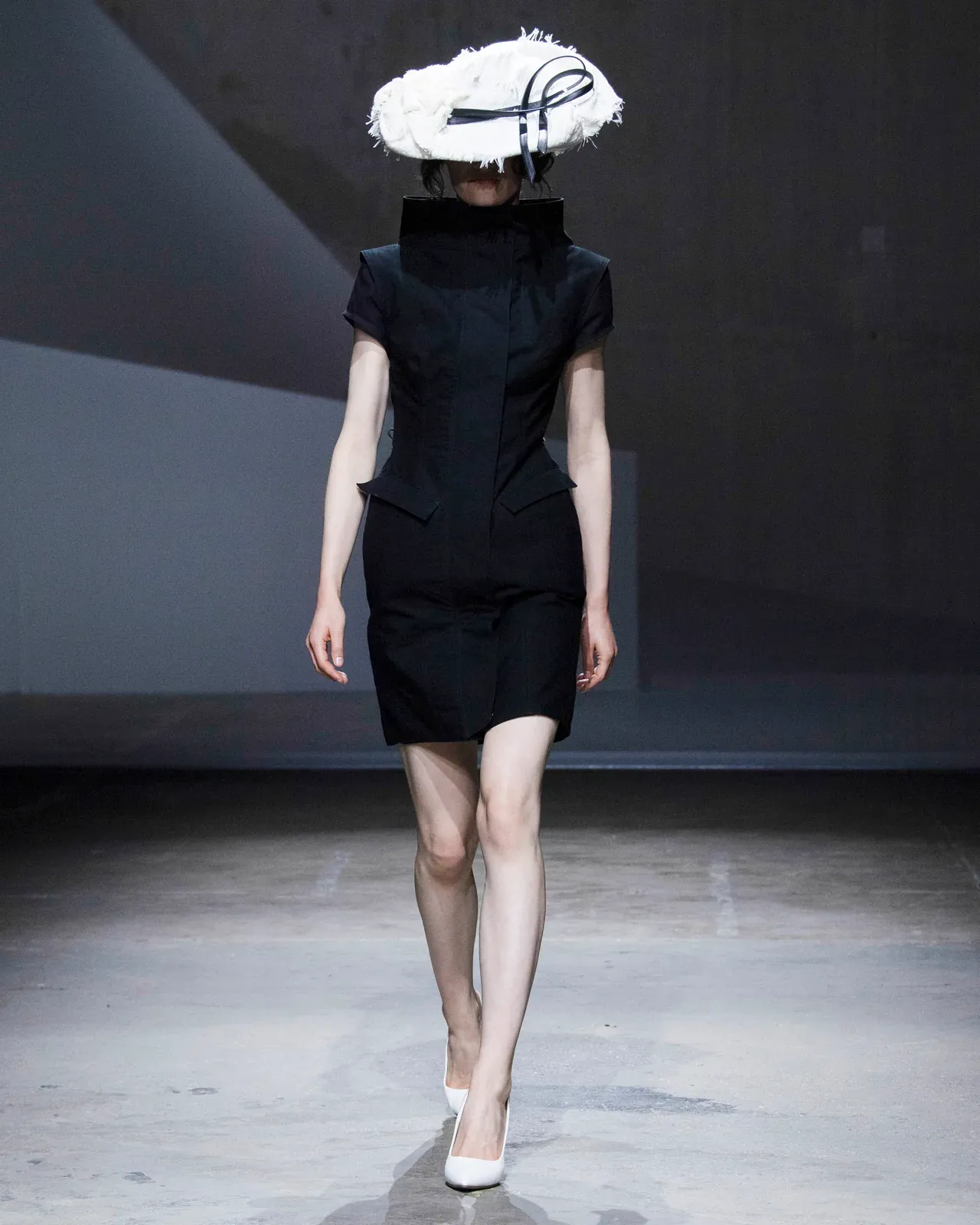
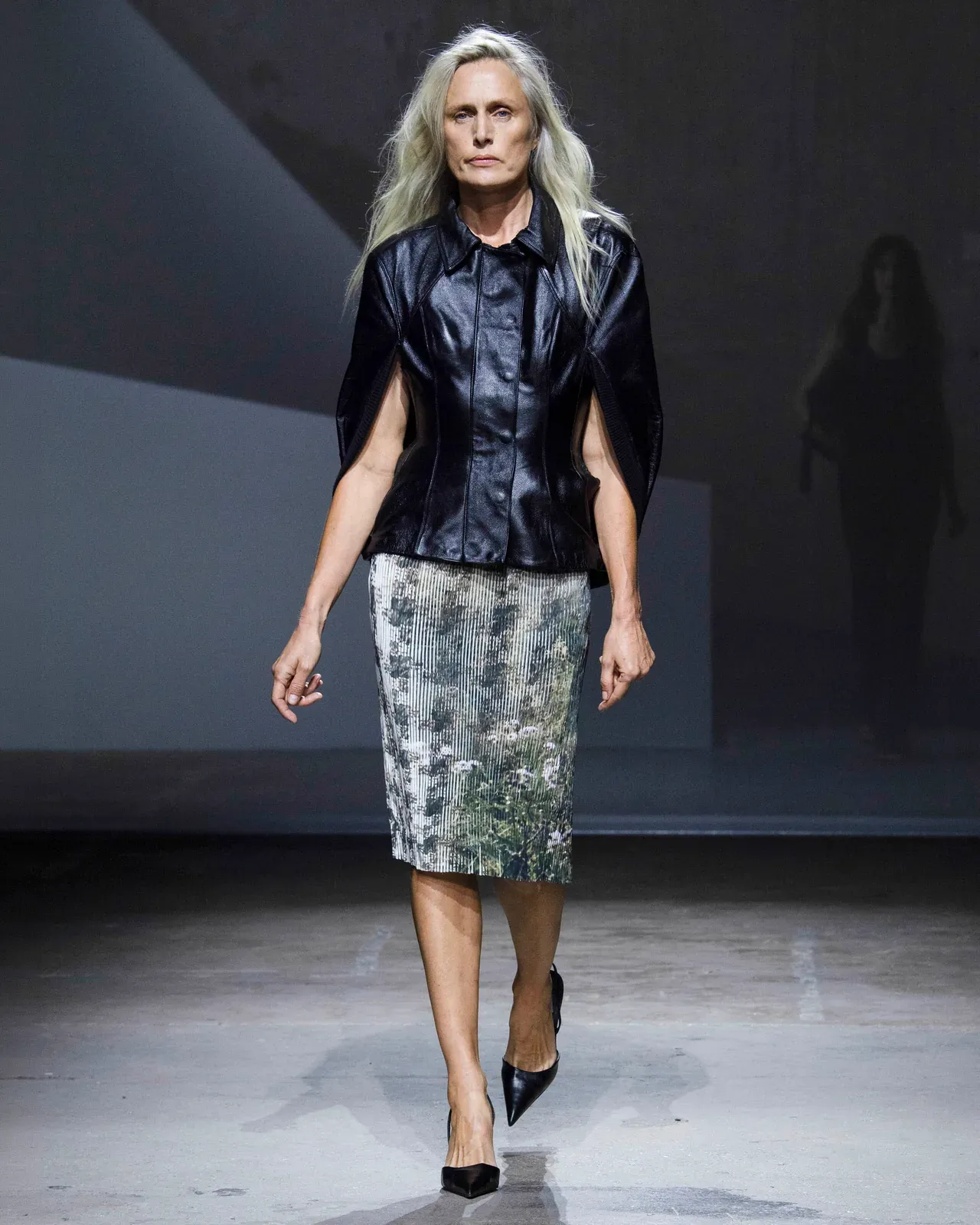
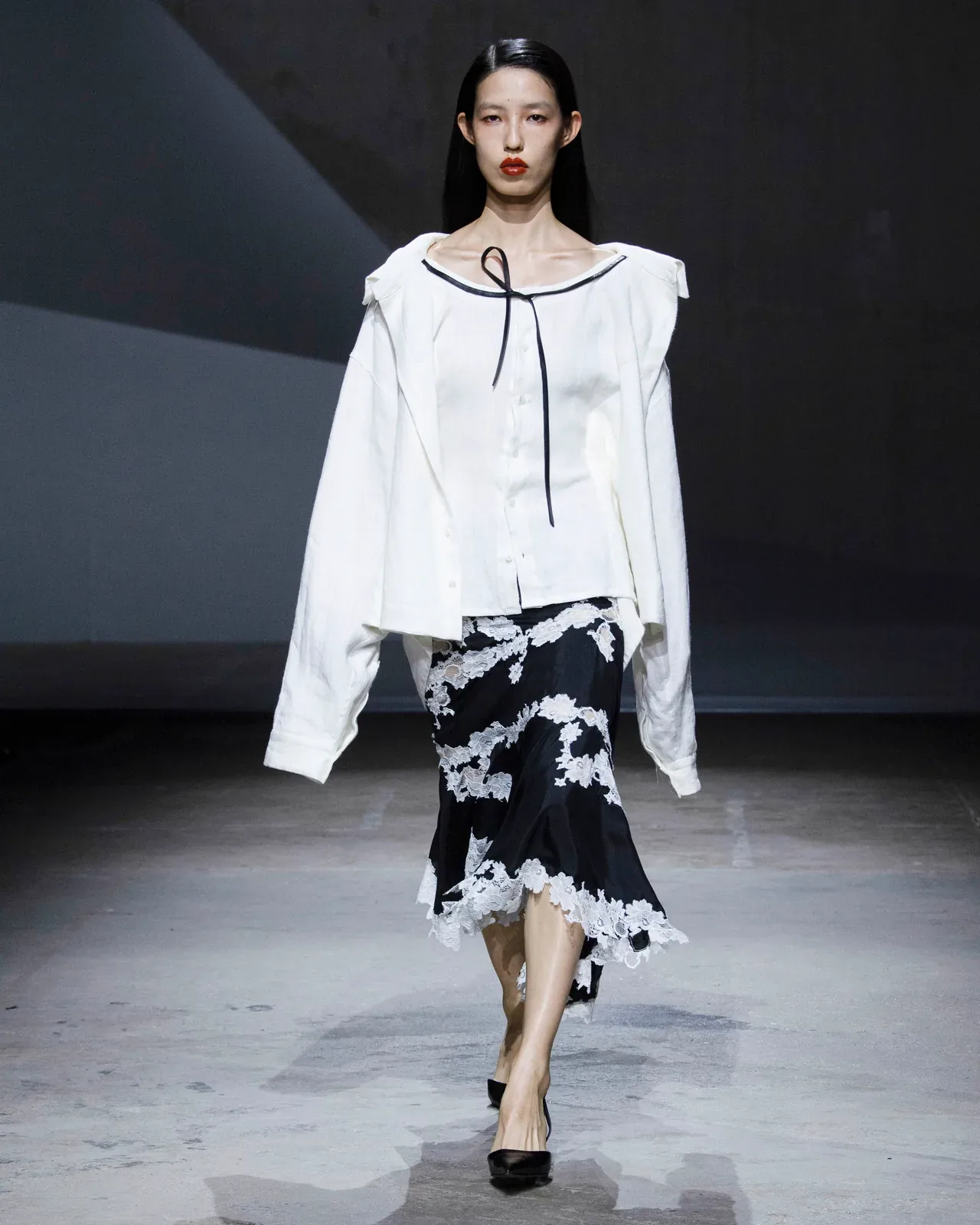
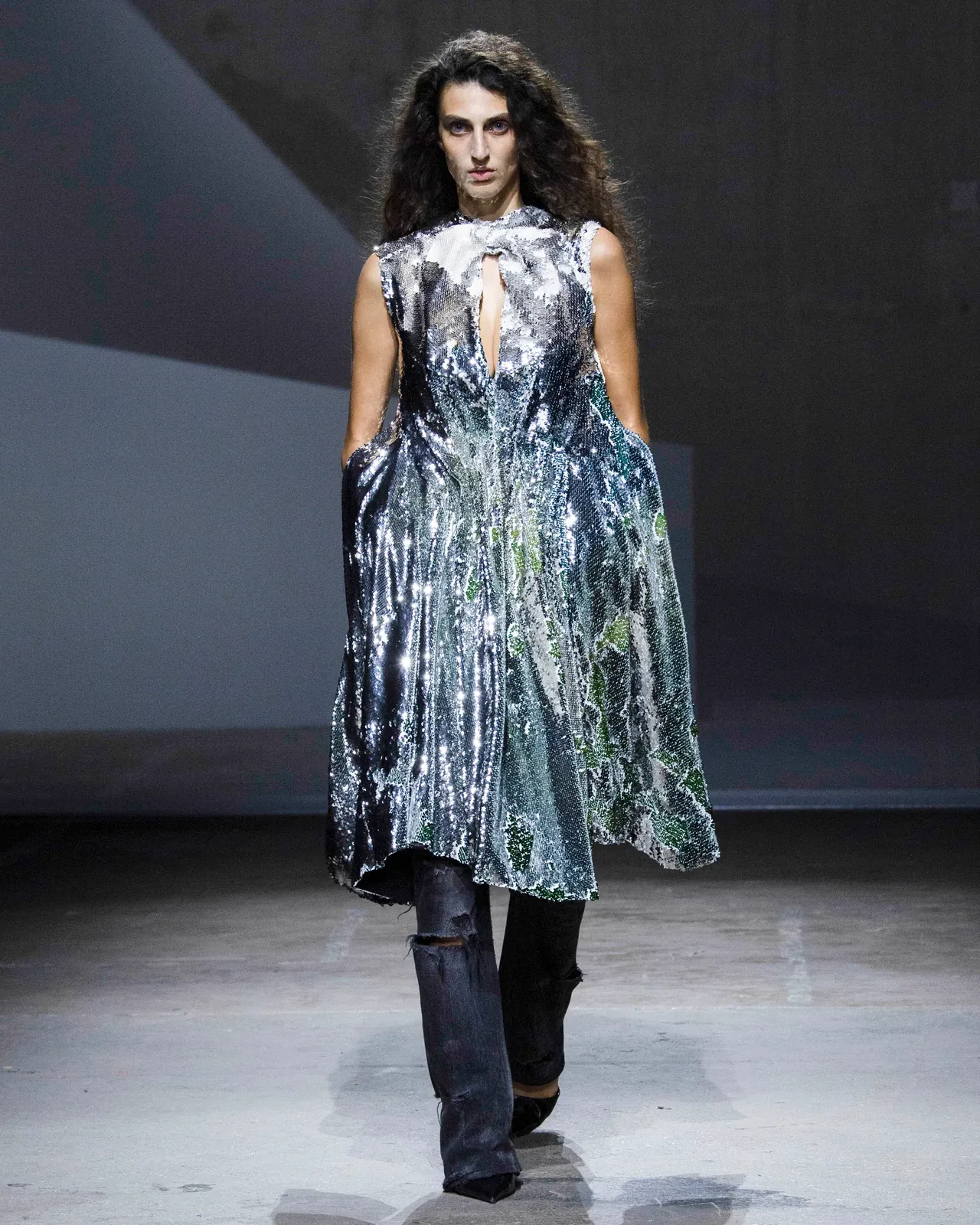
If there’s one thing you’ll get from Petra Fagerstrom, it’s discipline. Following her London debut presentation last season, the Swedish designer showcased her first runway — a critique of trad-wifery and AI unreliability, executed through handcrafted genius — in the city at 180 Strand’s NEWGEN show space.
Similar to her last collection, Fagerstrom tackled misled narratives of femininity through the lenticular pleating and textural layering synonymous with her work. Constricting necklines and moderate hem lengths, indicative of the rigidity of 1940s and 50s silhouettes, were a resolute irony to Swedish Summer — the collection's name — bringing an expectedly autobiographical element to her designs, which, according to her show notes, were a take on the “woman she would like to become”.
R&M Leathers (in collaboration with PornHub)
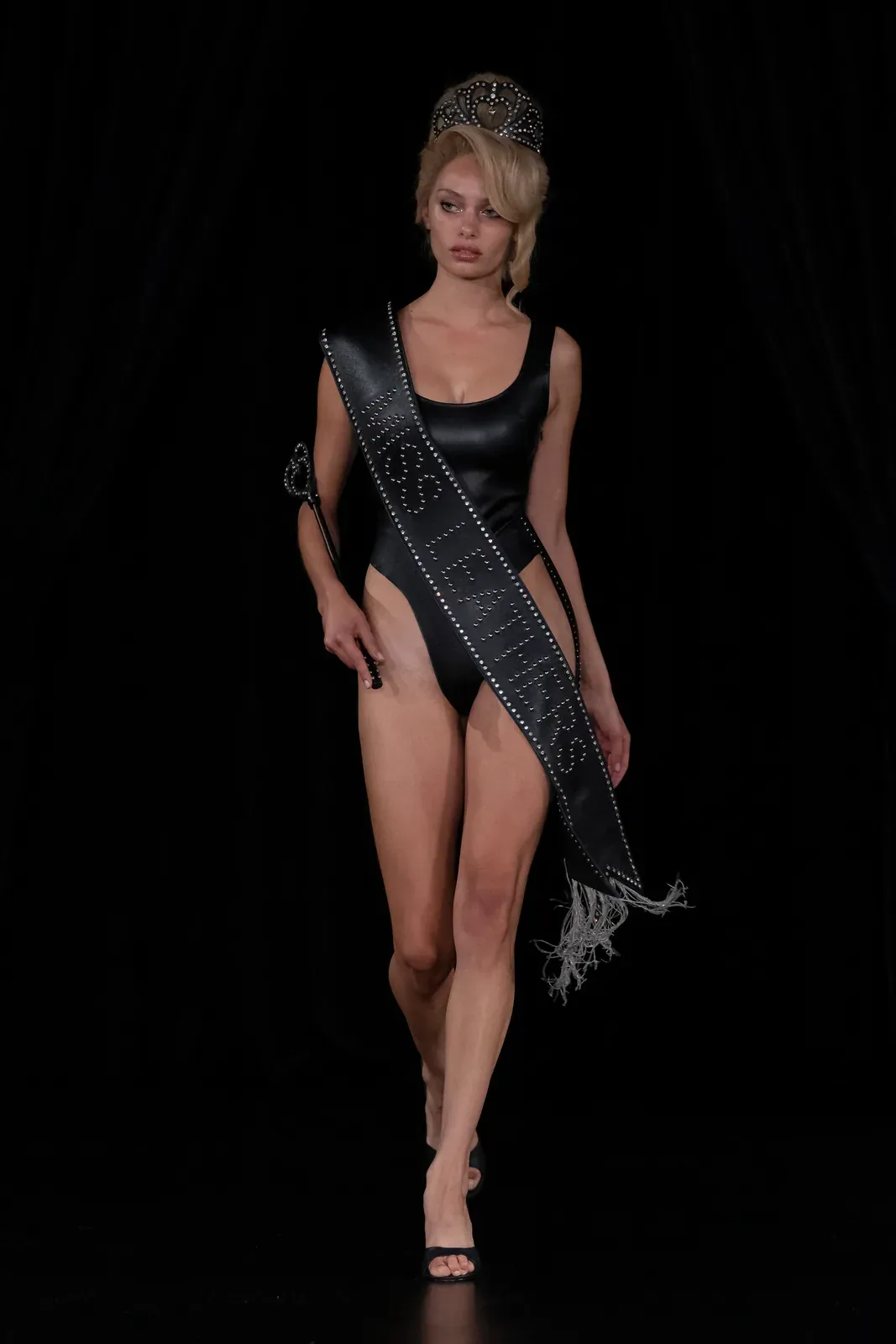
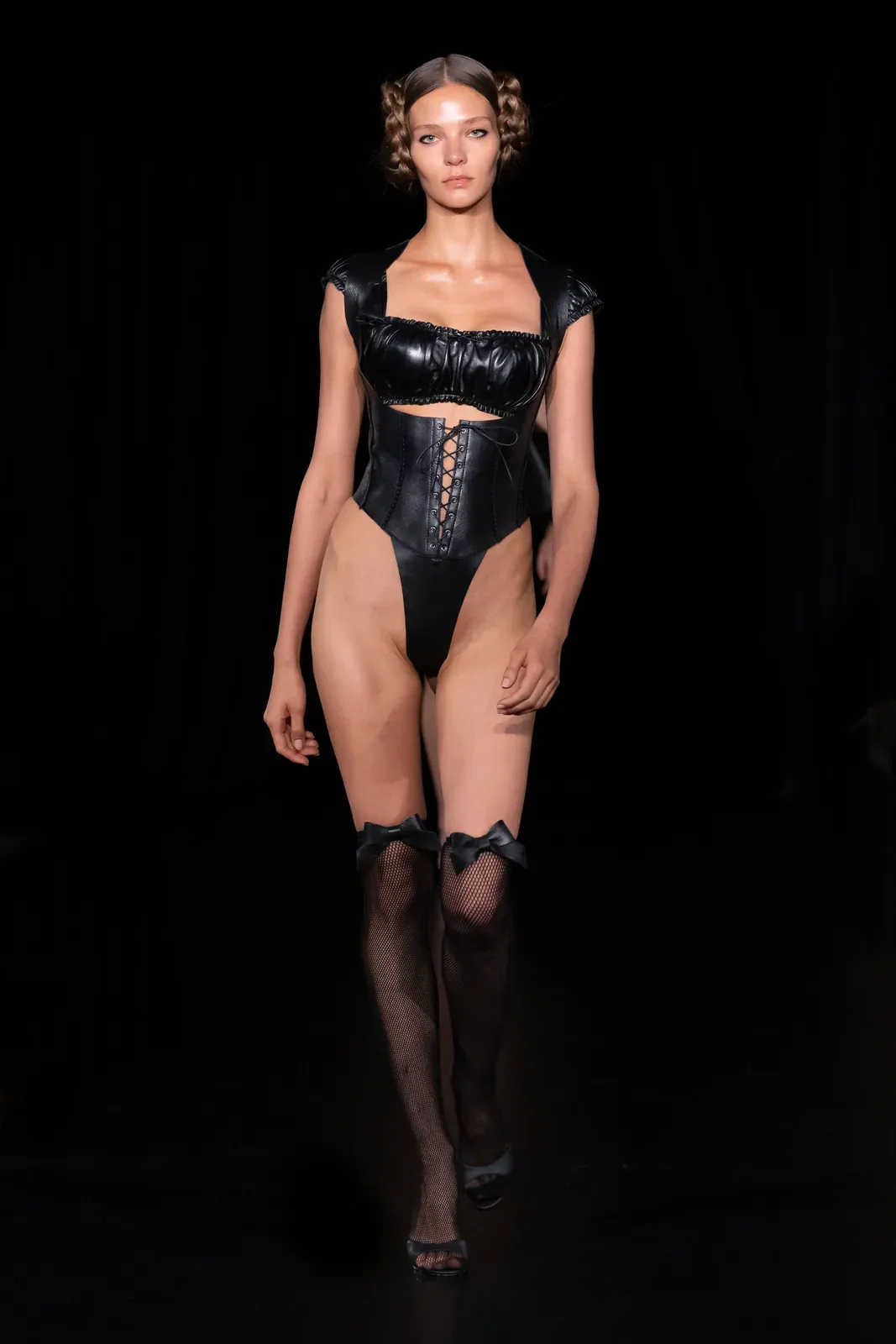
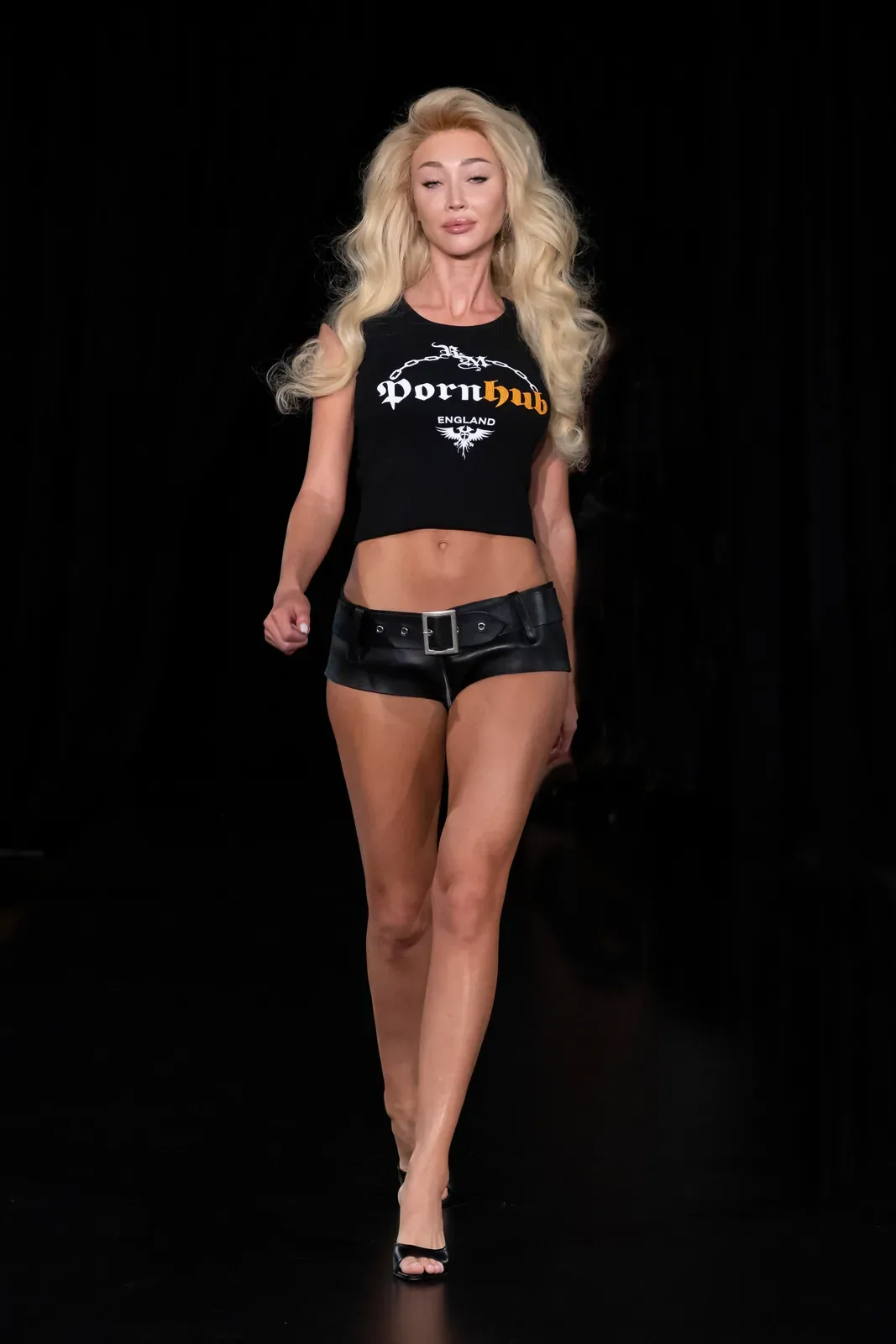
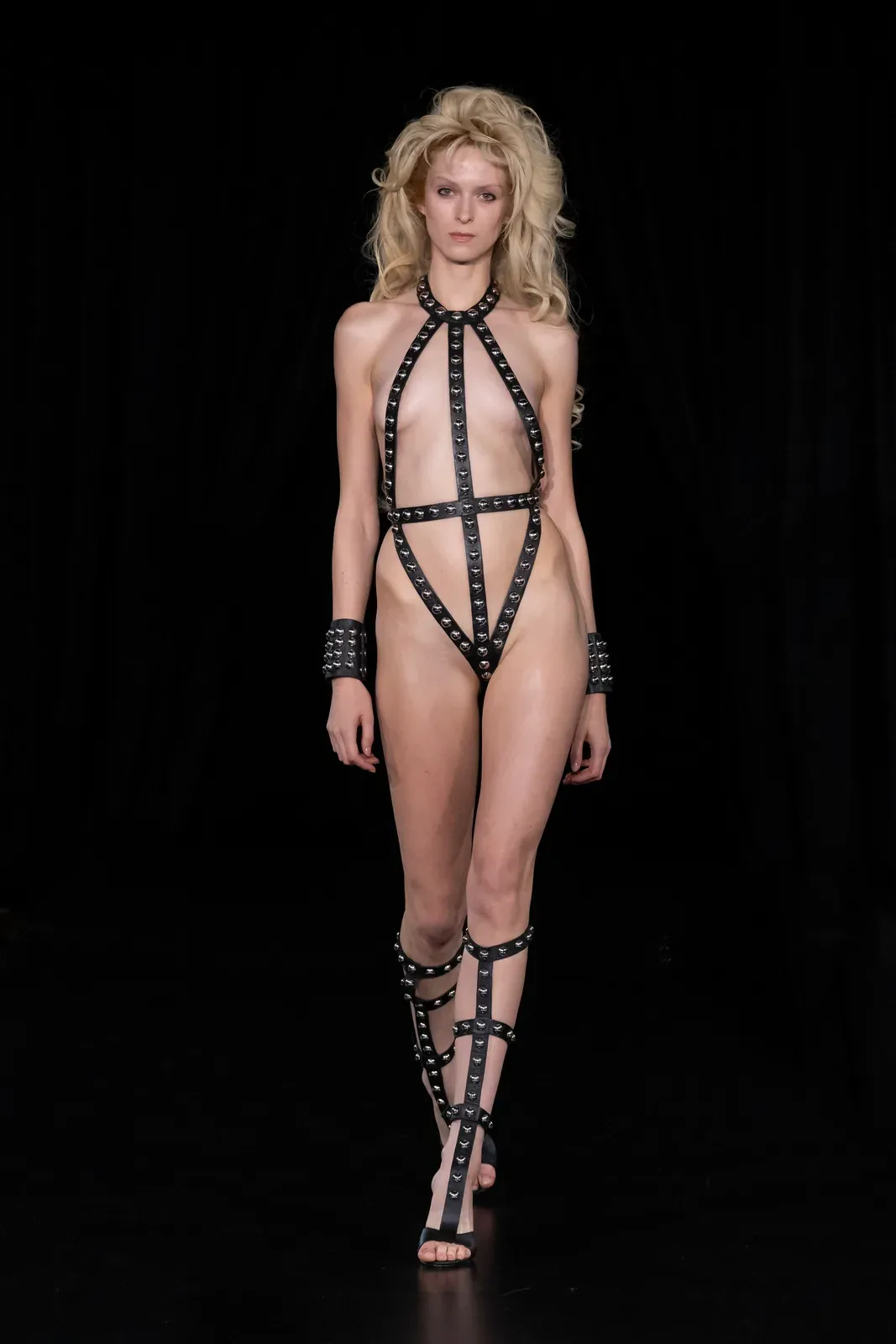
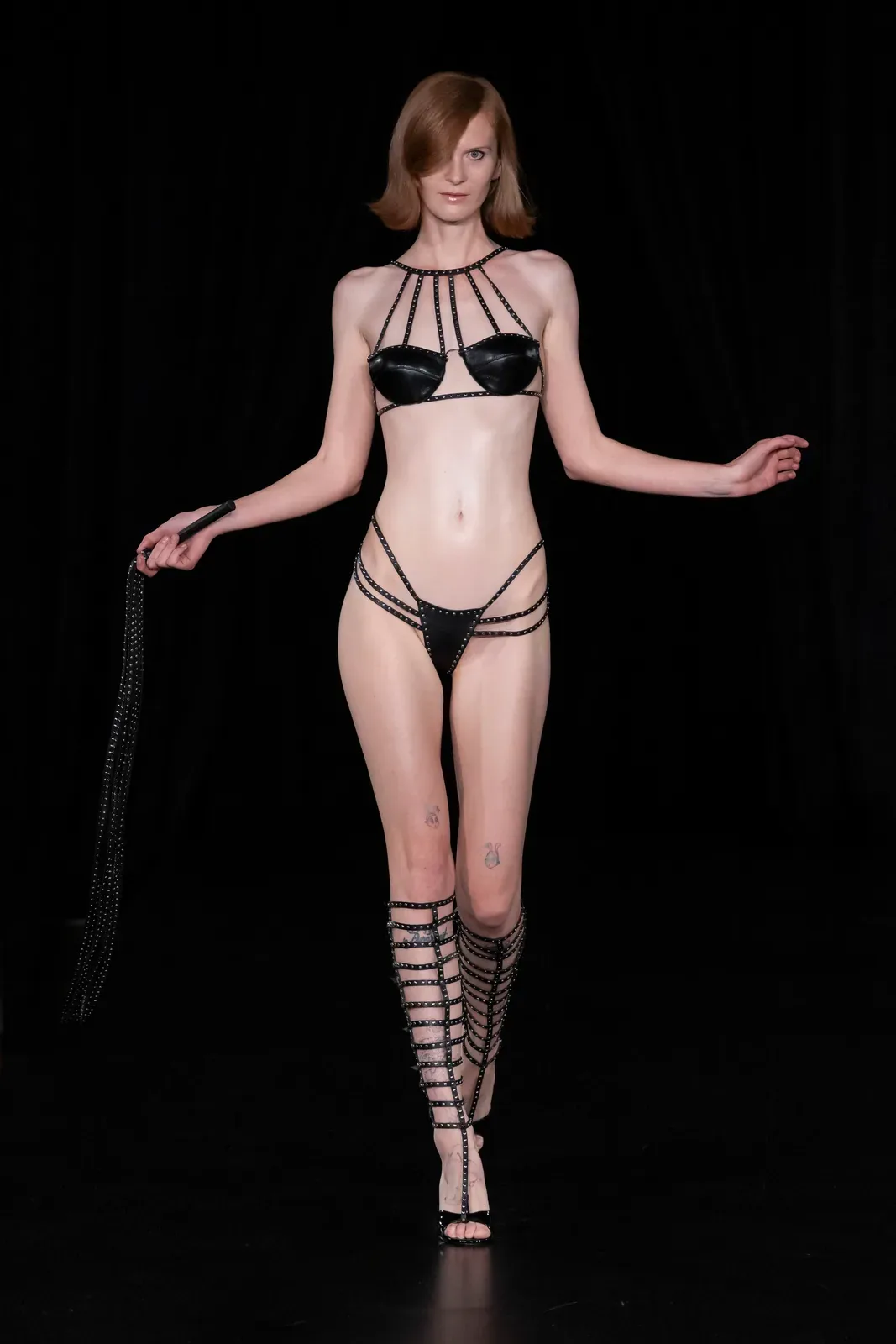
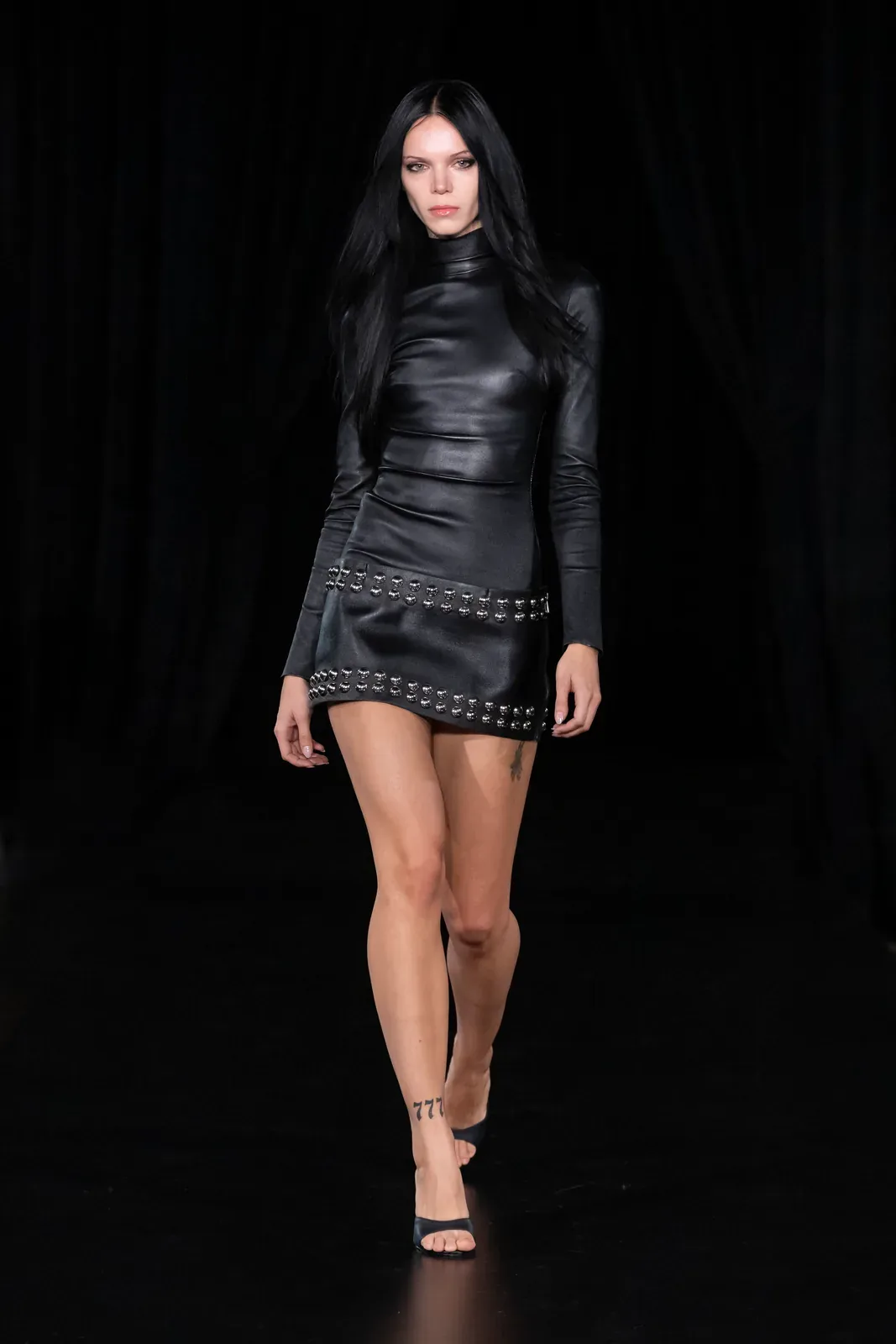
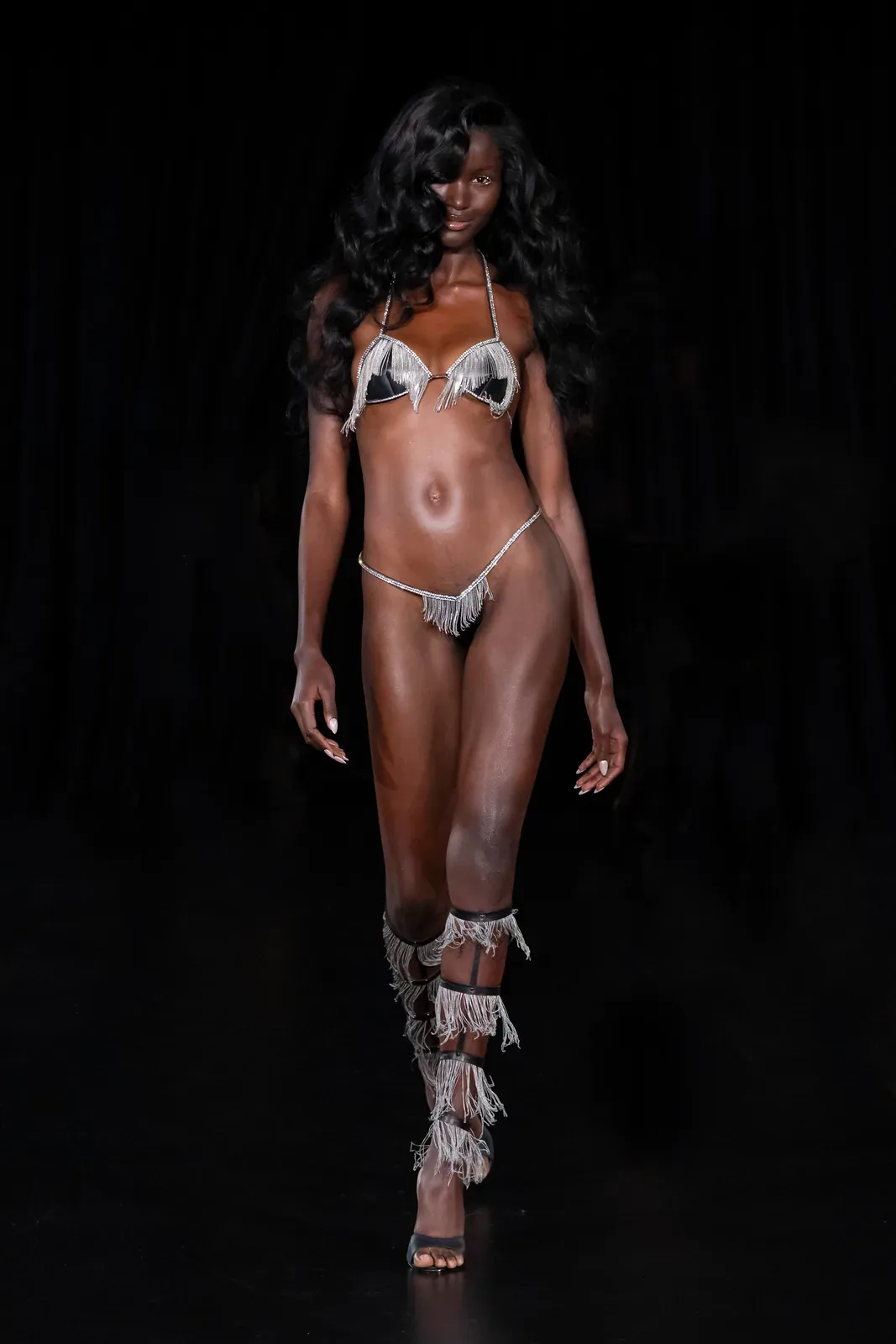
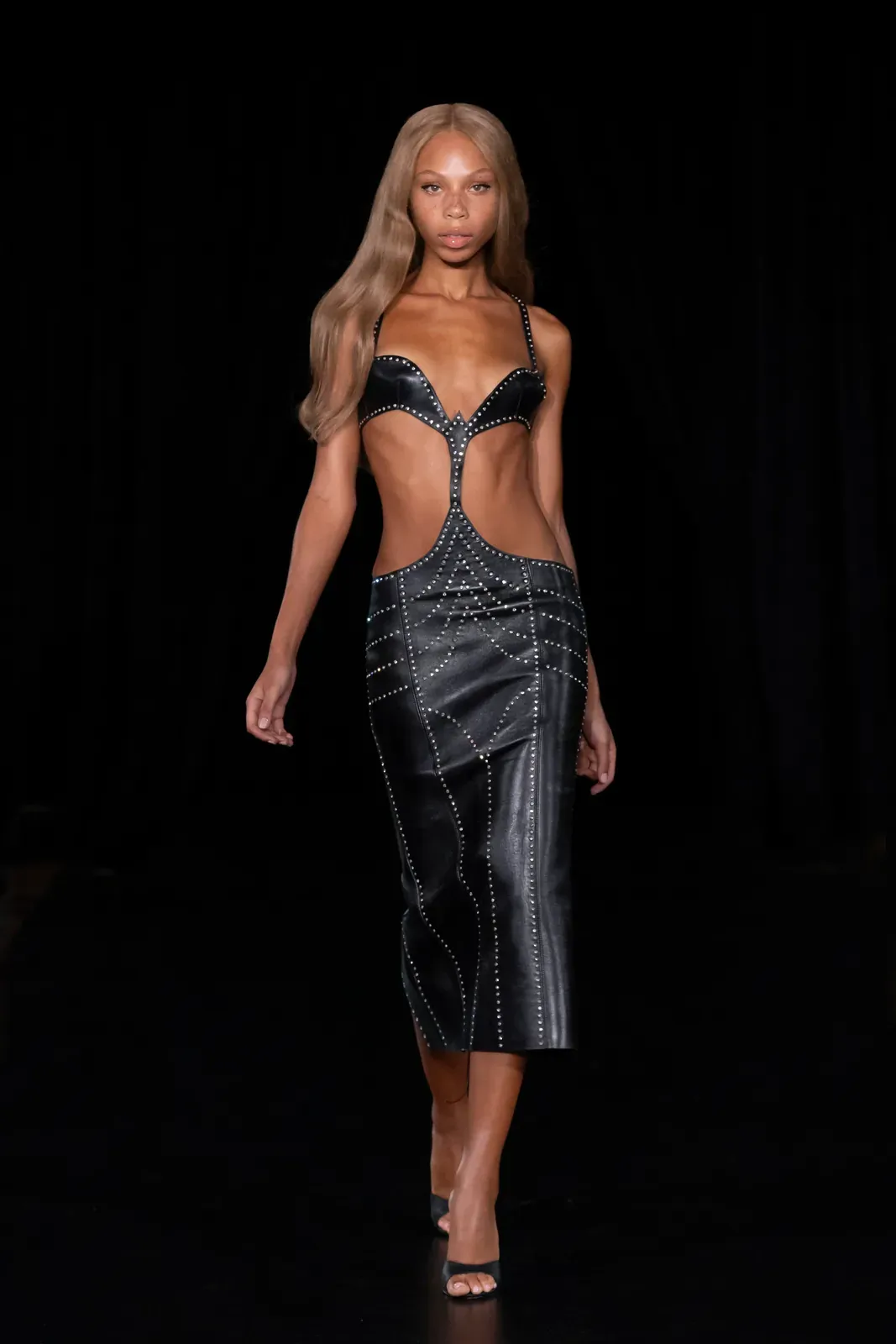
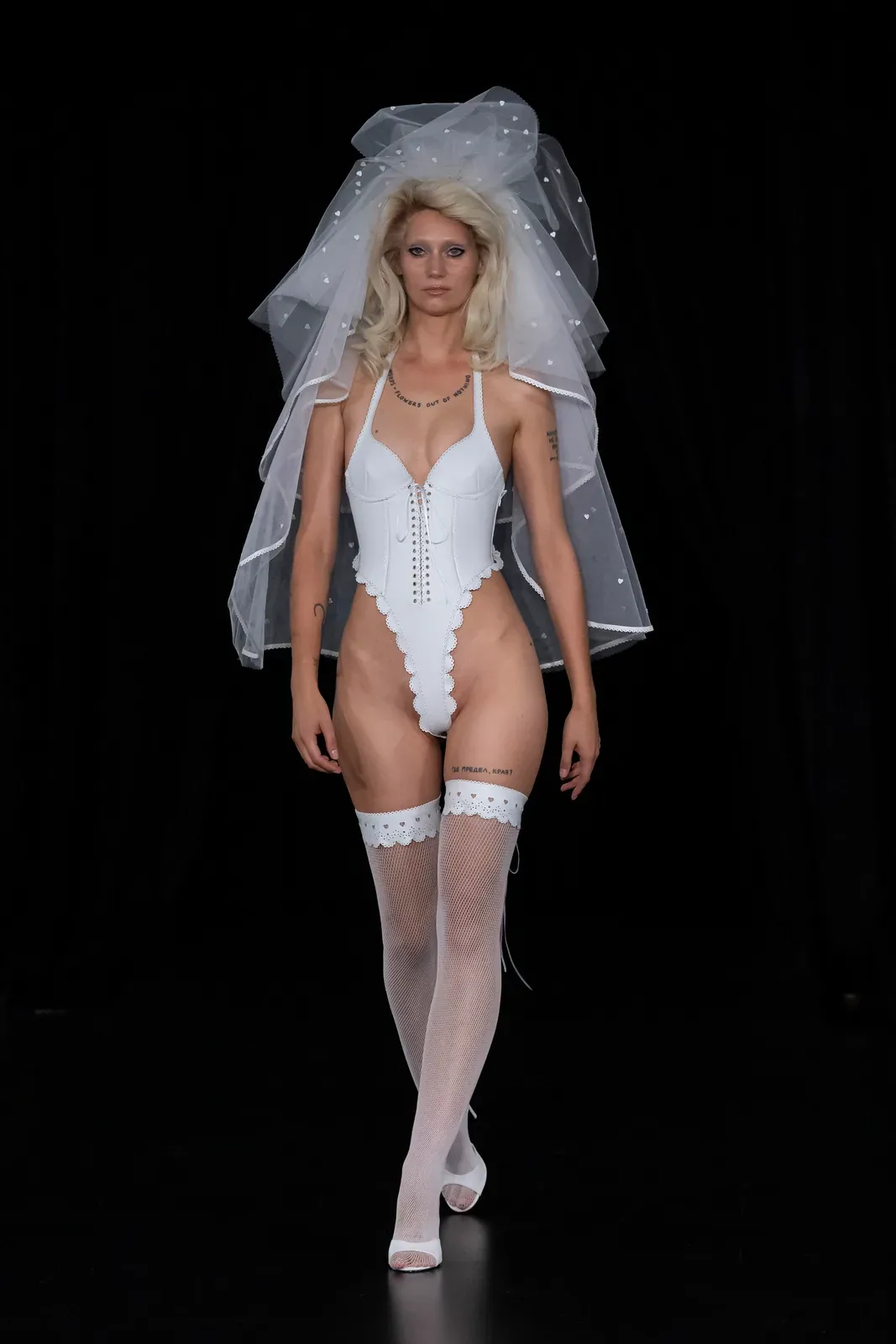
While the flustering extravagance of London’s more established shows conjures up a special kind of excitement, the week's best usually lies outside of its calendar. There’s a grittiness that comes with them that feels indicative of the city itself, something I think as I stumble across the pebble-covered ground outside a church in Lower Clapton, watching attendees filter into its chapel wearing their finest leathers and latex. As people find their seats and the buzz of the crowd slowly dies down, the first of Ruby Miriani’s girls walks out from behind a black curtain, dressed in a black leotard and silver-studded sash reading ‘MISS LEATHER’. The pageant is starting.
Despite finding its beginning as a fetish wear brand, R&M now holds its own for both concept and technicality. The collection was at no loss of finely crafted intimates but also put forward a surprising selection of sleeker, more wearable silhouettes. In their first show ever, Miriani was a success in her contradiction of eroticism and textile mastery.
Susan Fang
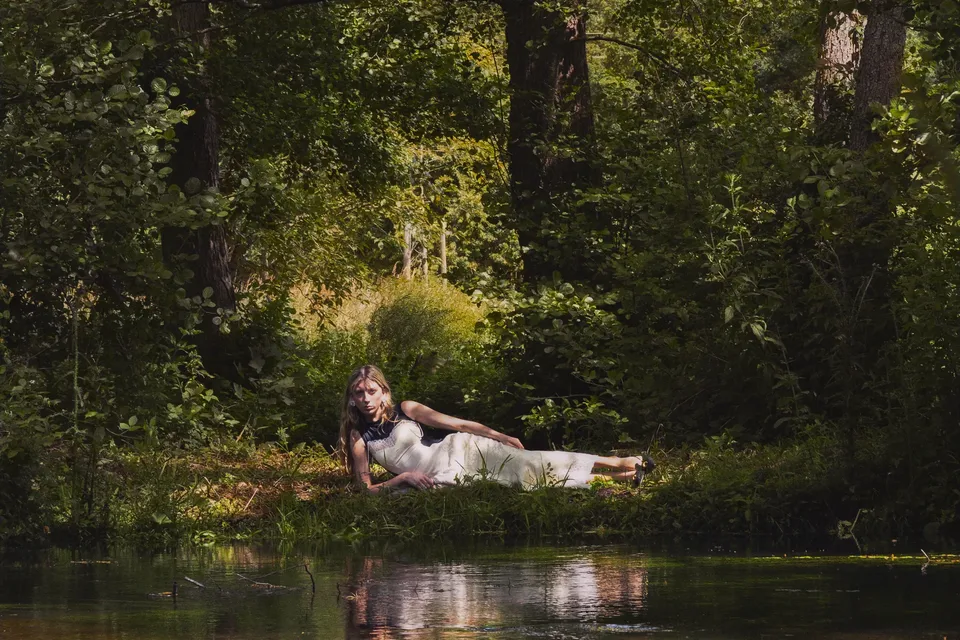
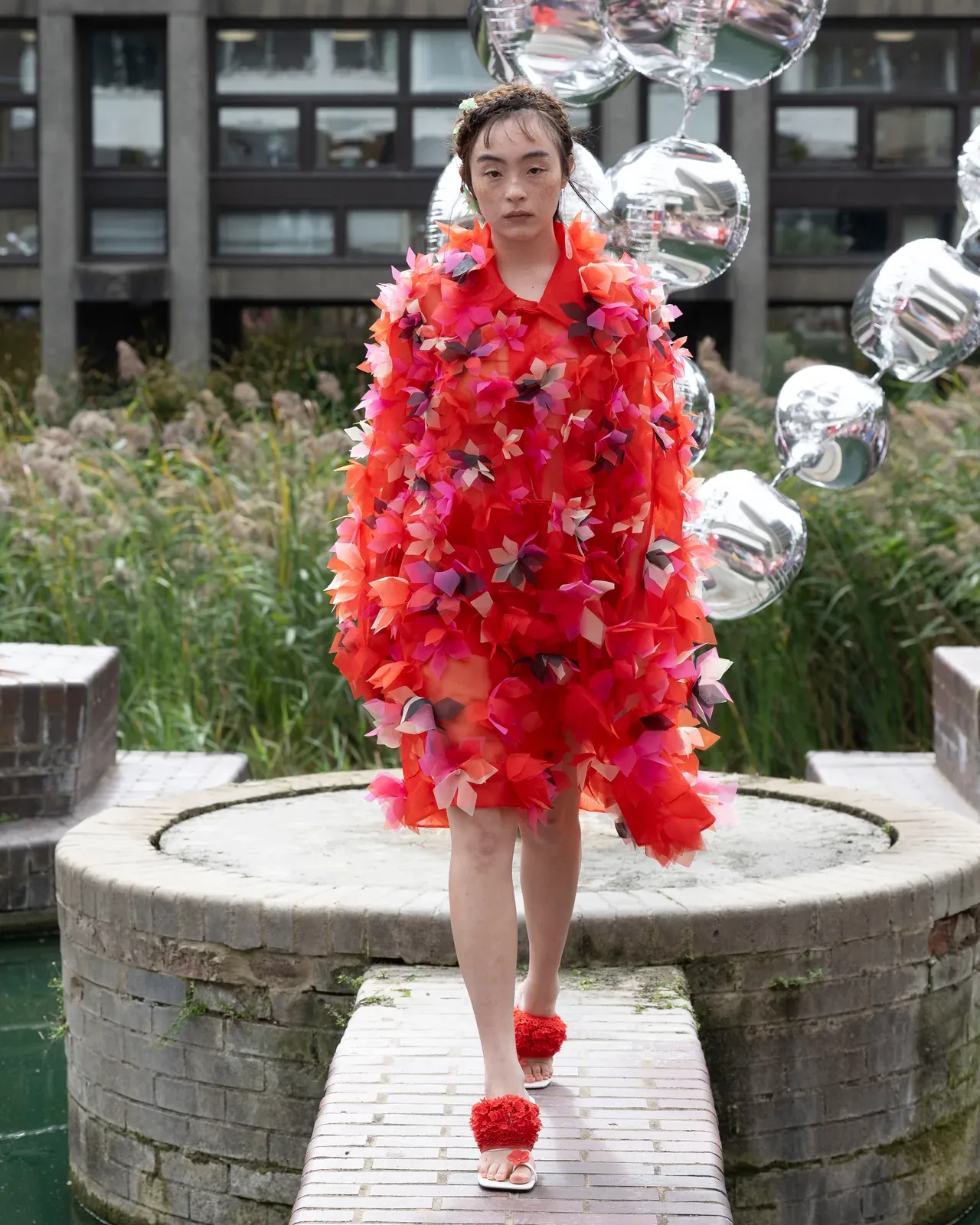
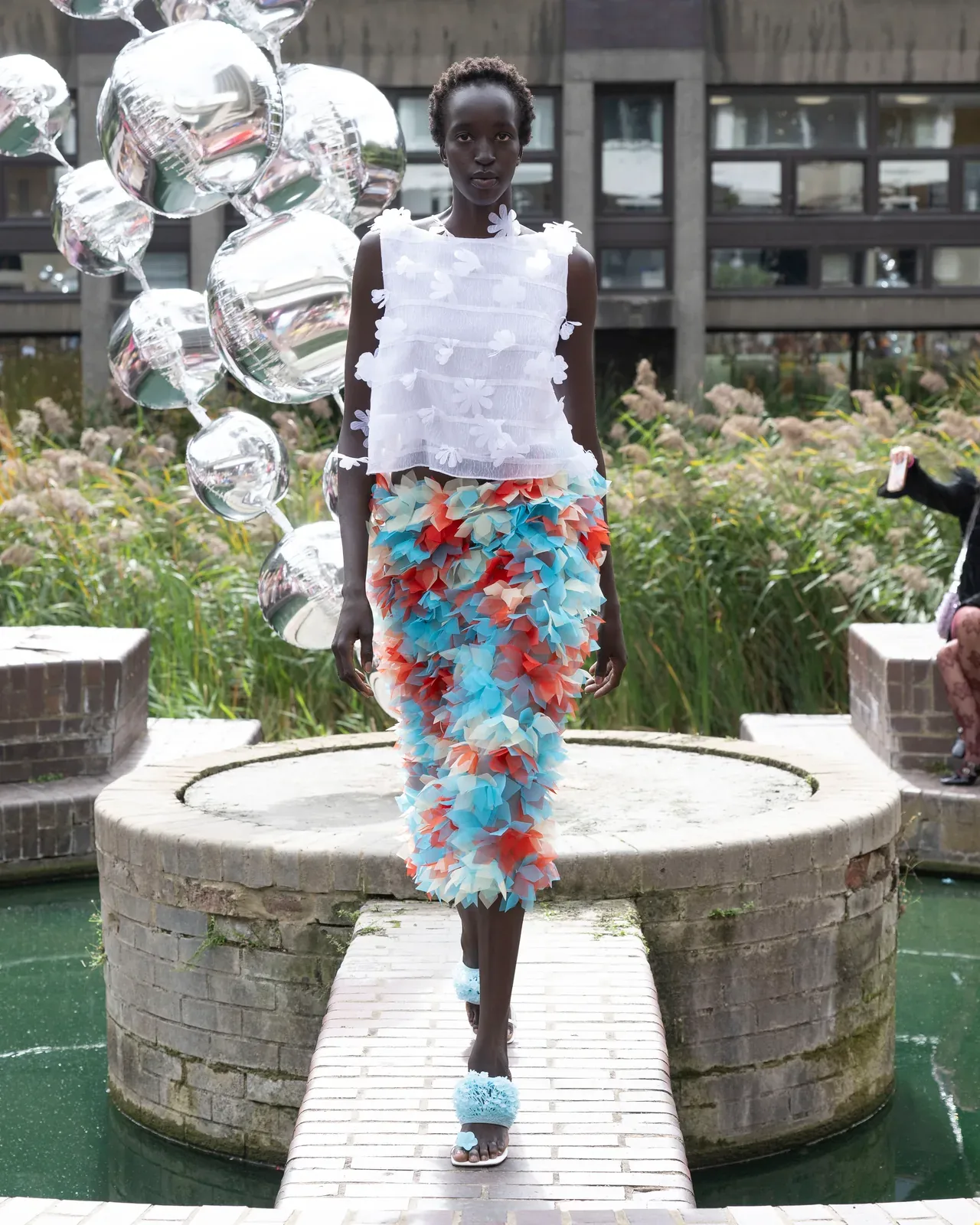
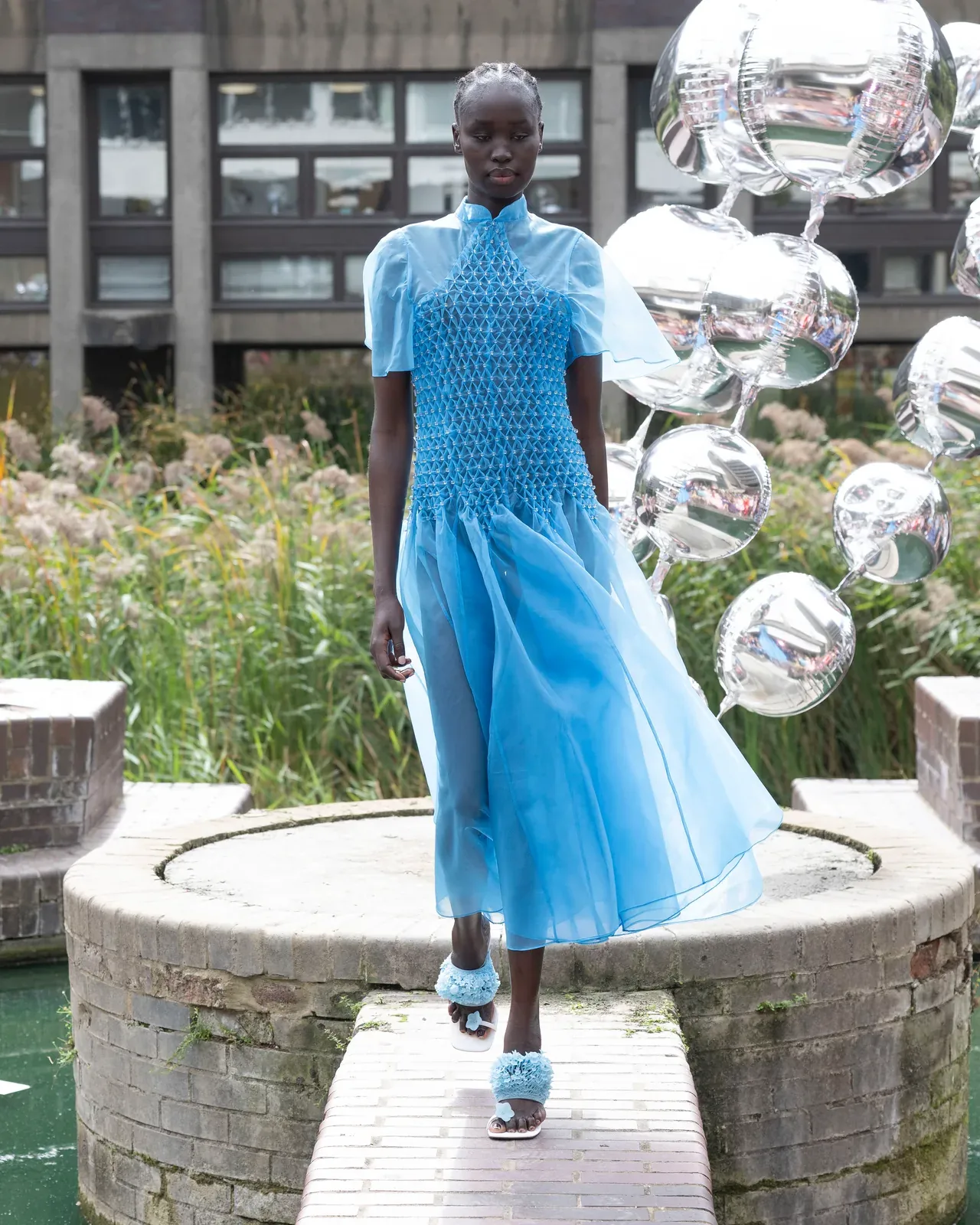
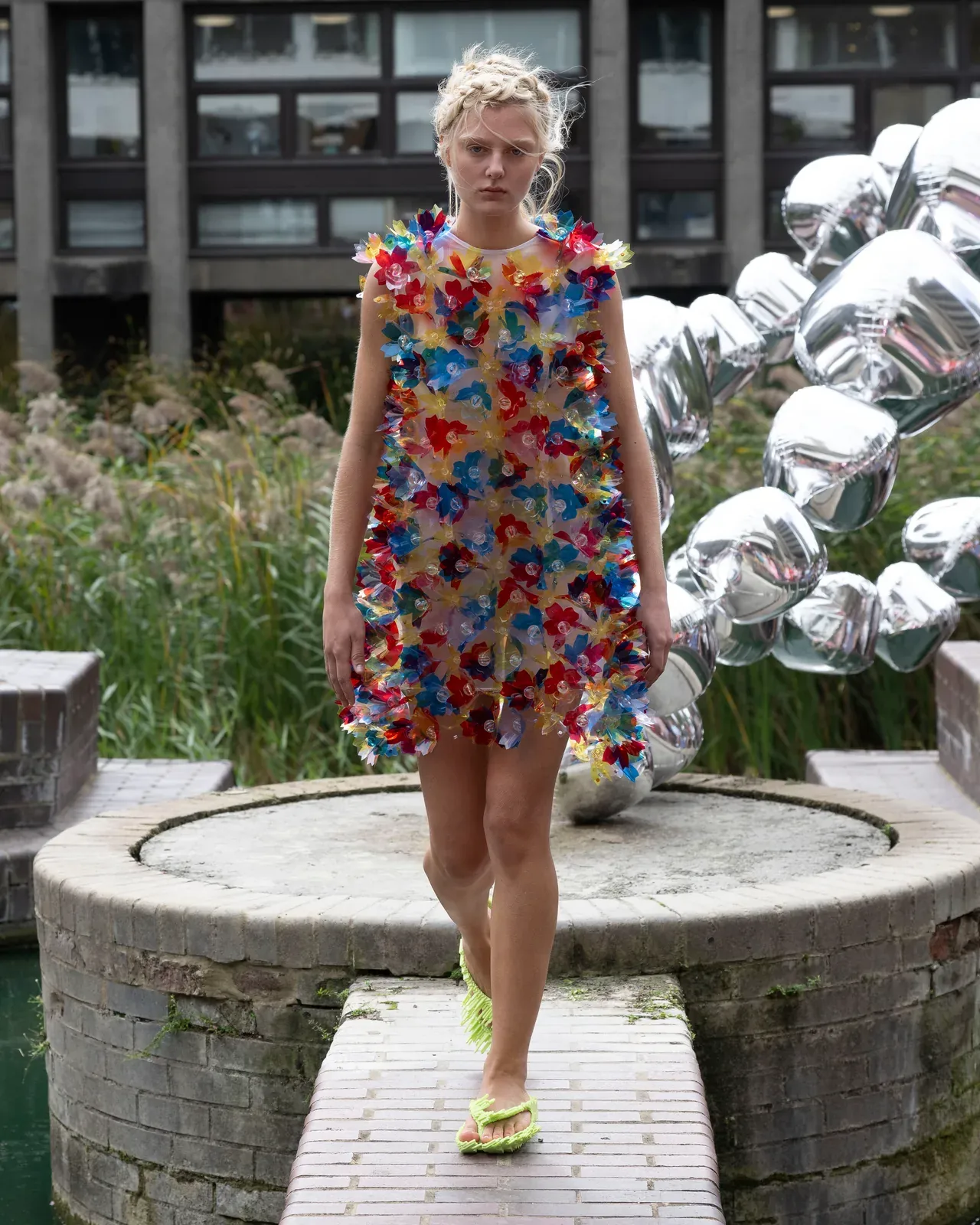
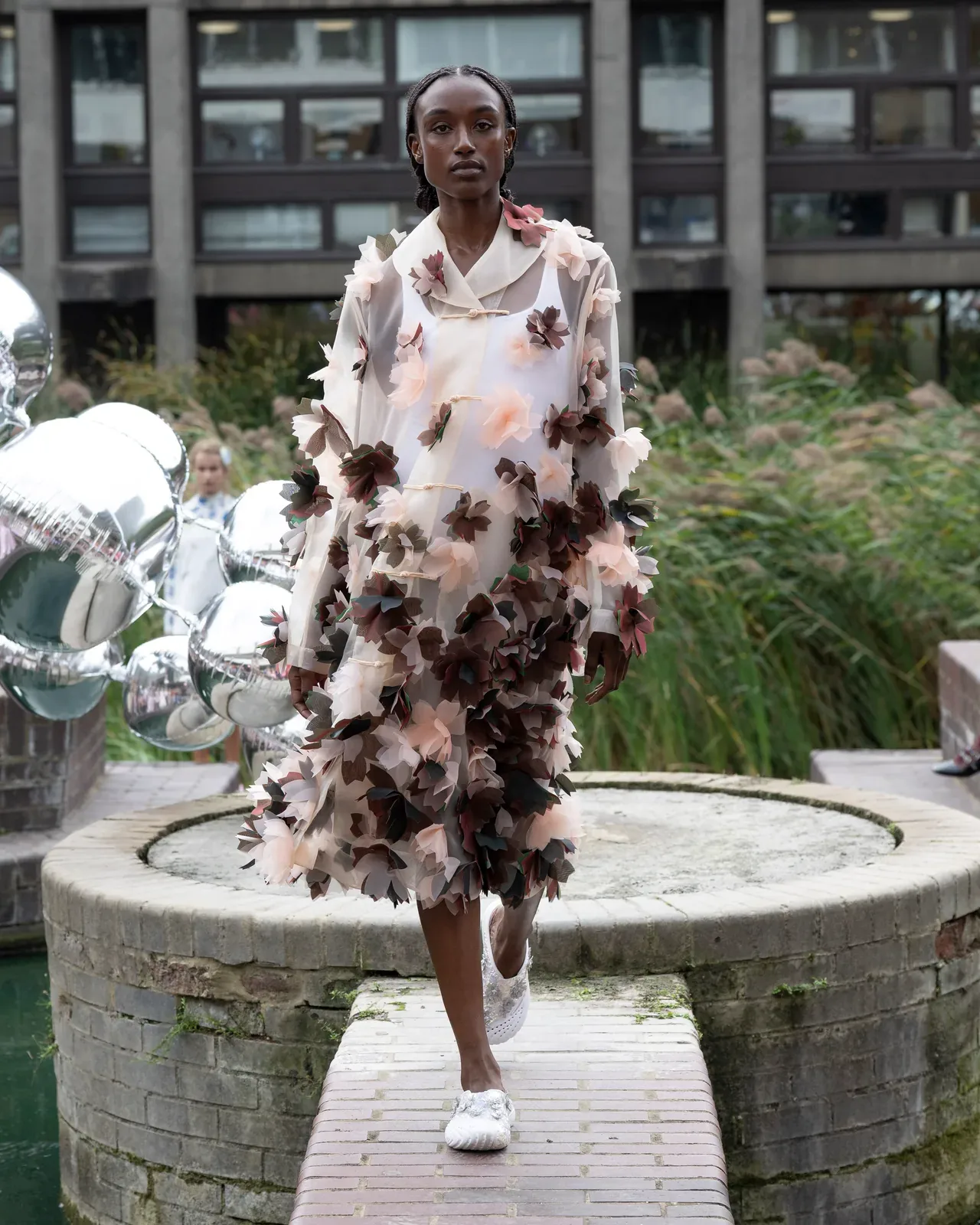
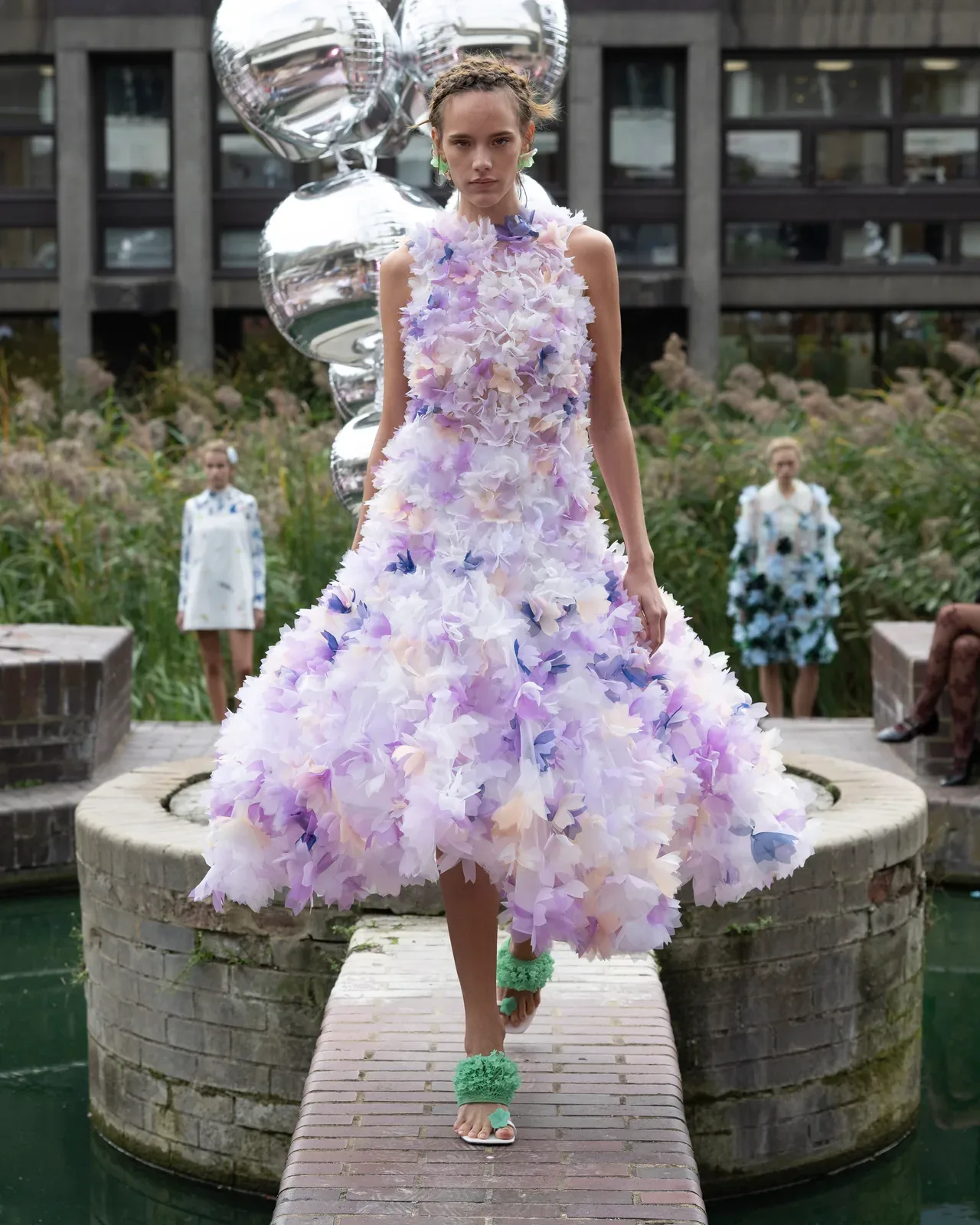
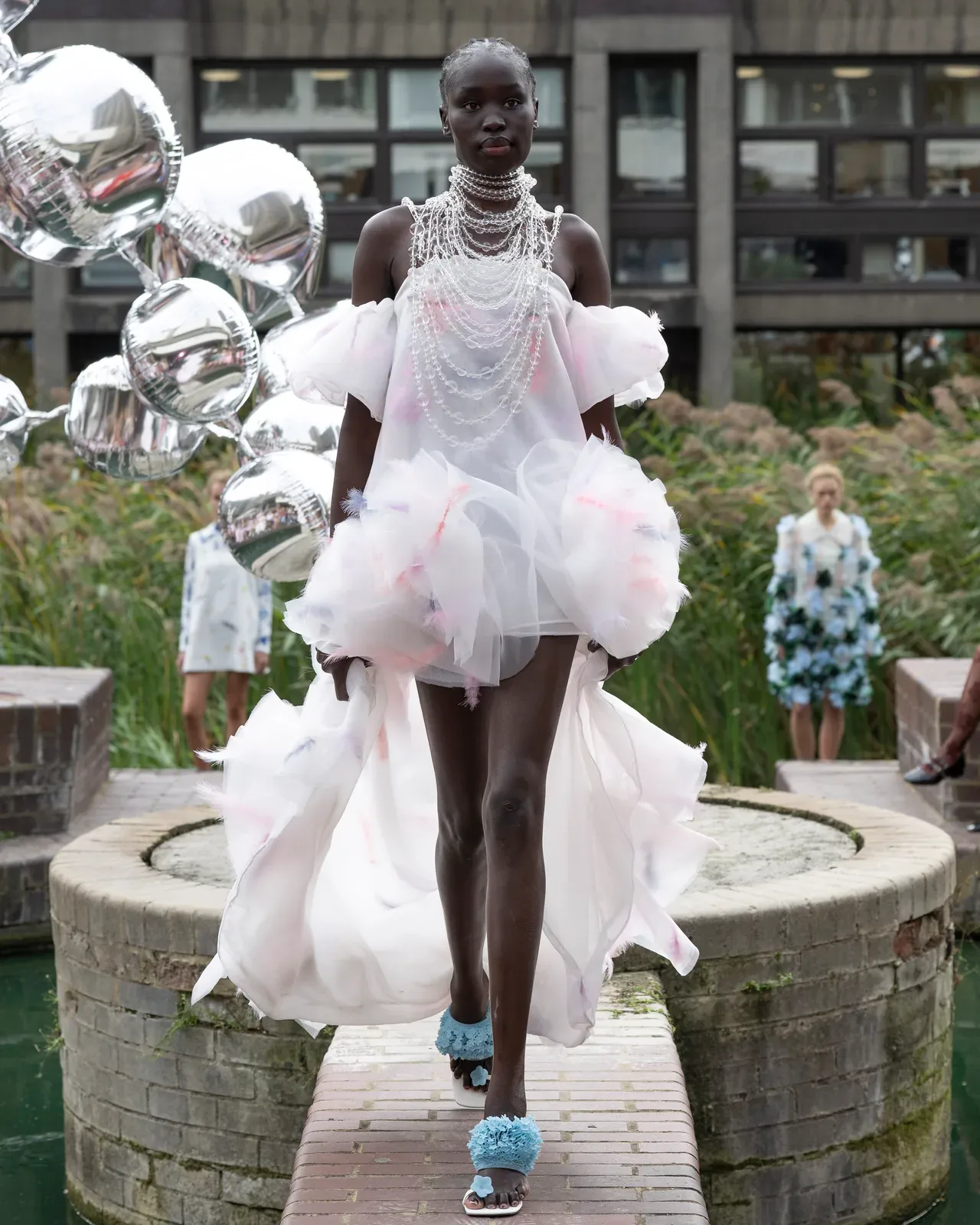
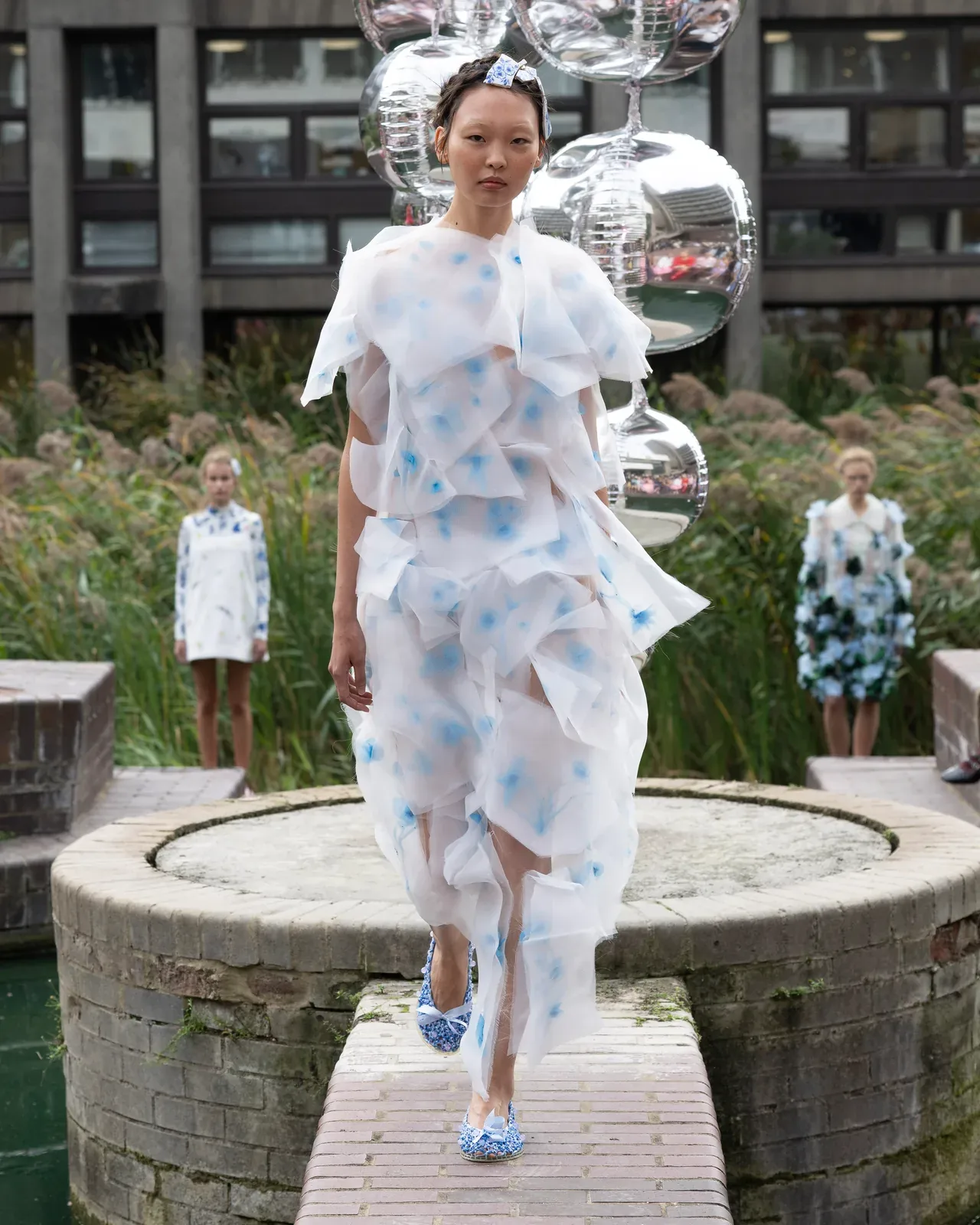
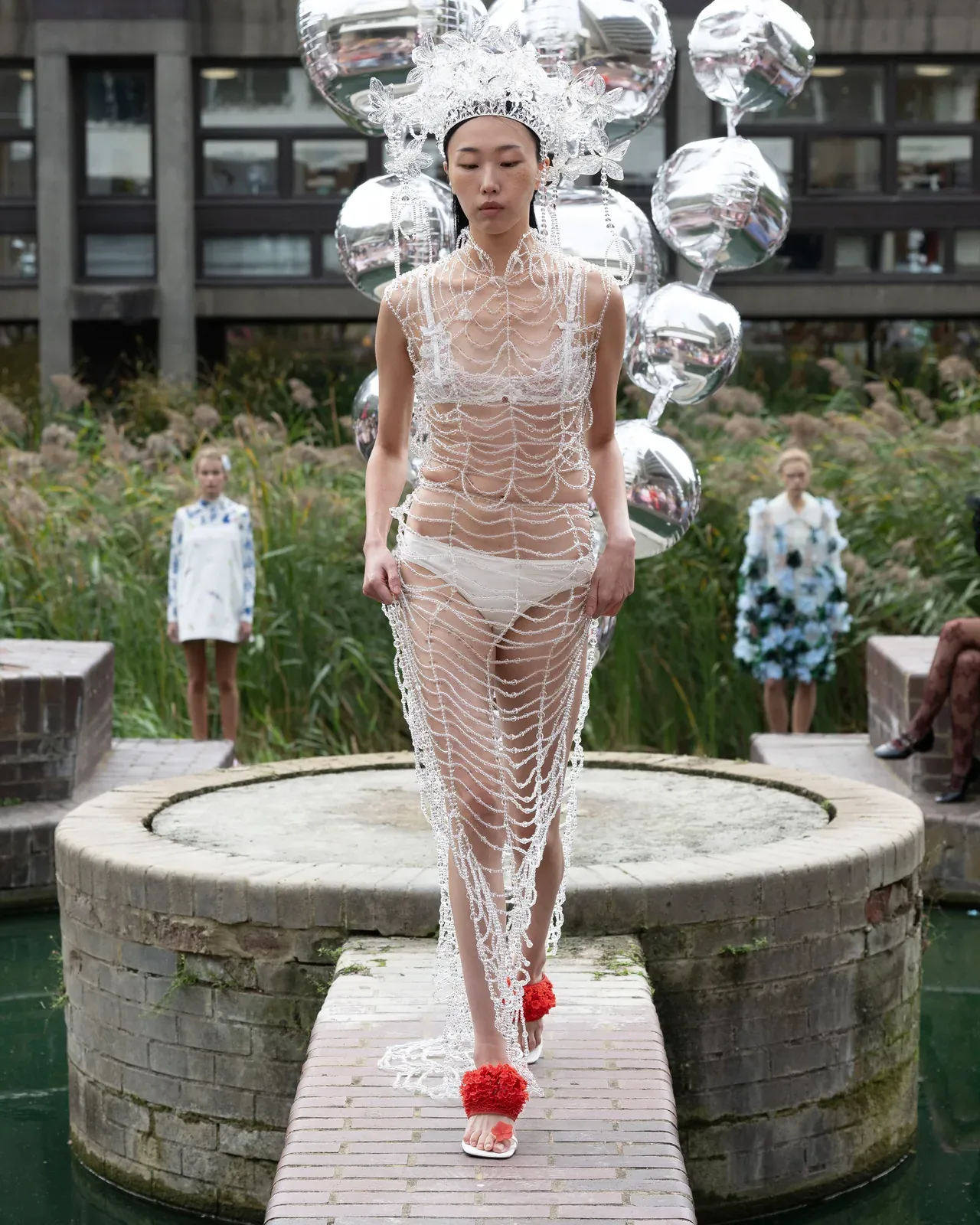
There’s a certain fatigue you get towards dark-lit East London halls and industrial techno after attending the first few days of London Fashion Week. A fatigue to which Susan Fang’s S/S 2027 collection was an unknowing antidote. Held in the Barbican’s Lakeside Terrace, Fang balanced delicate handcrafted aspects with 3D-printed ones. There is a storybook element to Fang’s work, as her designs move, so do their key elements: flowers and leaves rustling in the wind, embellishments glistening under the sun. A temporary aliveness that feels other than this world.
Natasha Zinko
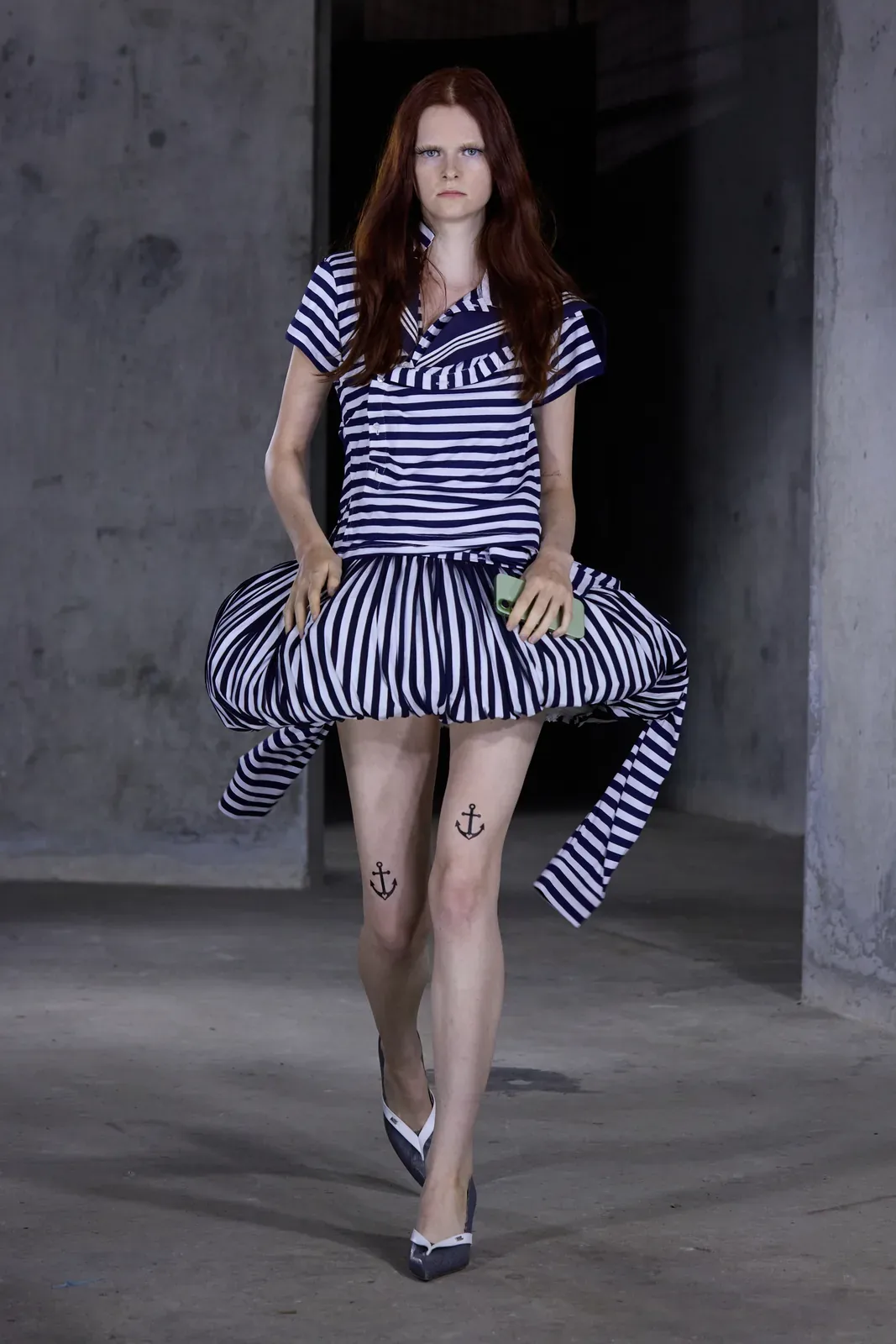
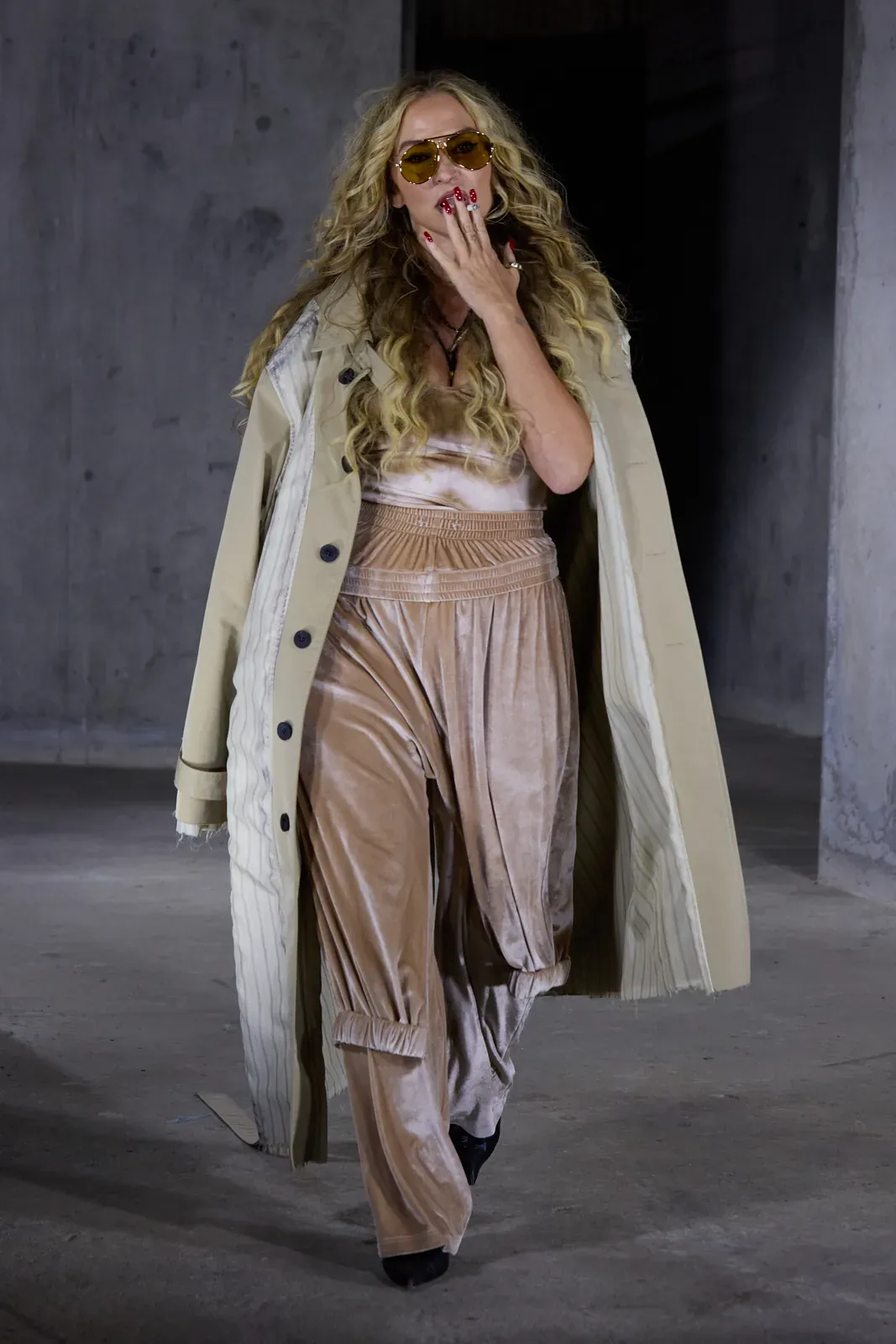
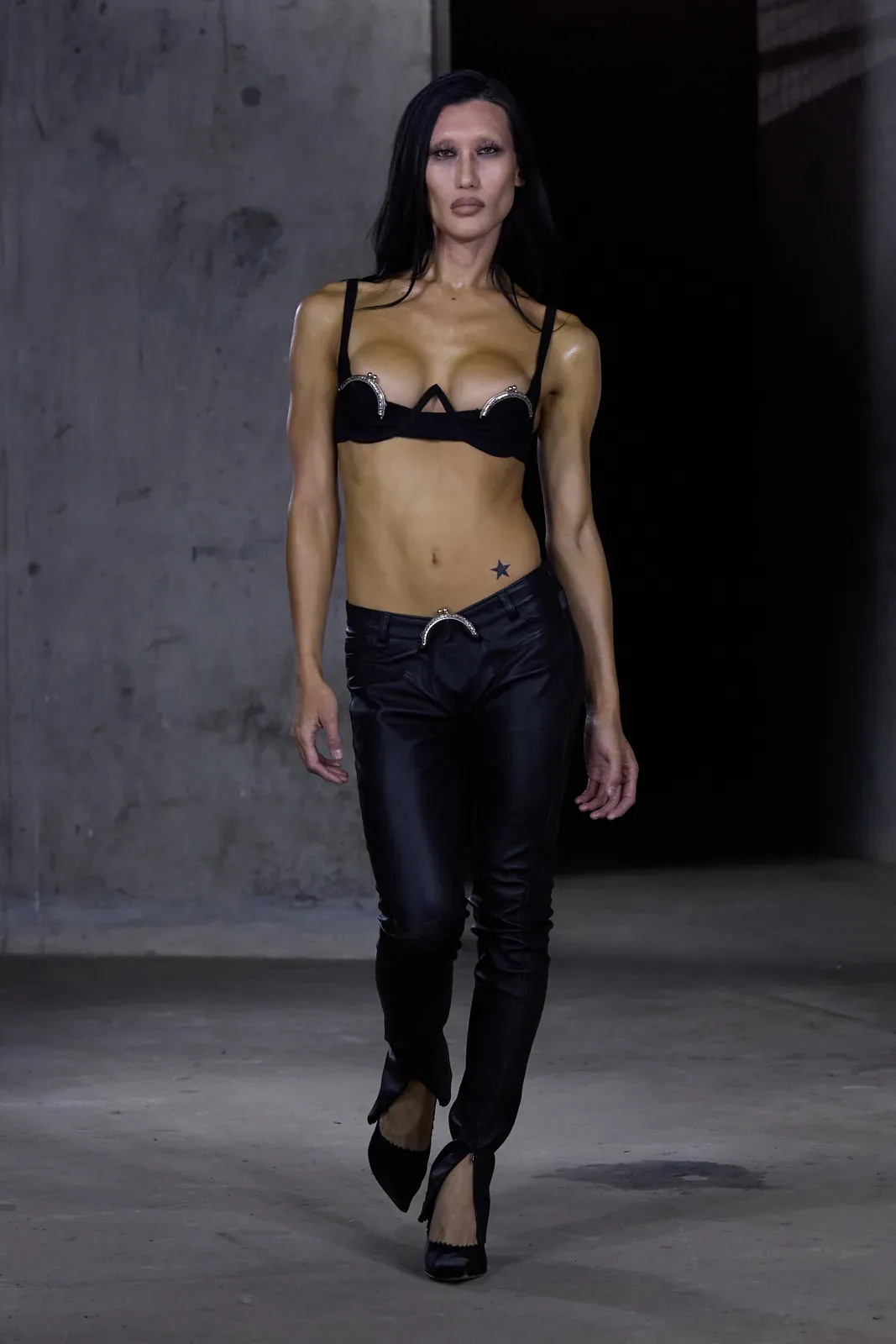
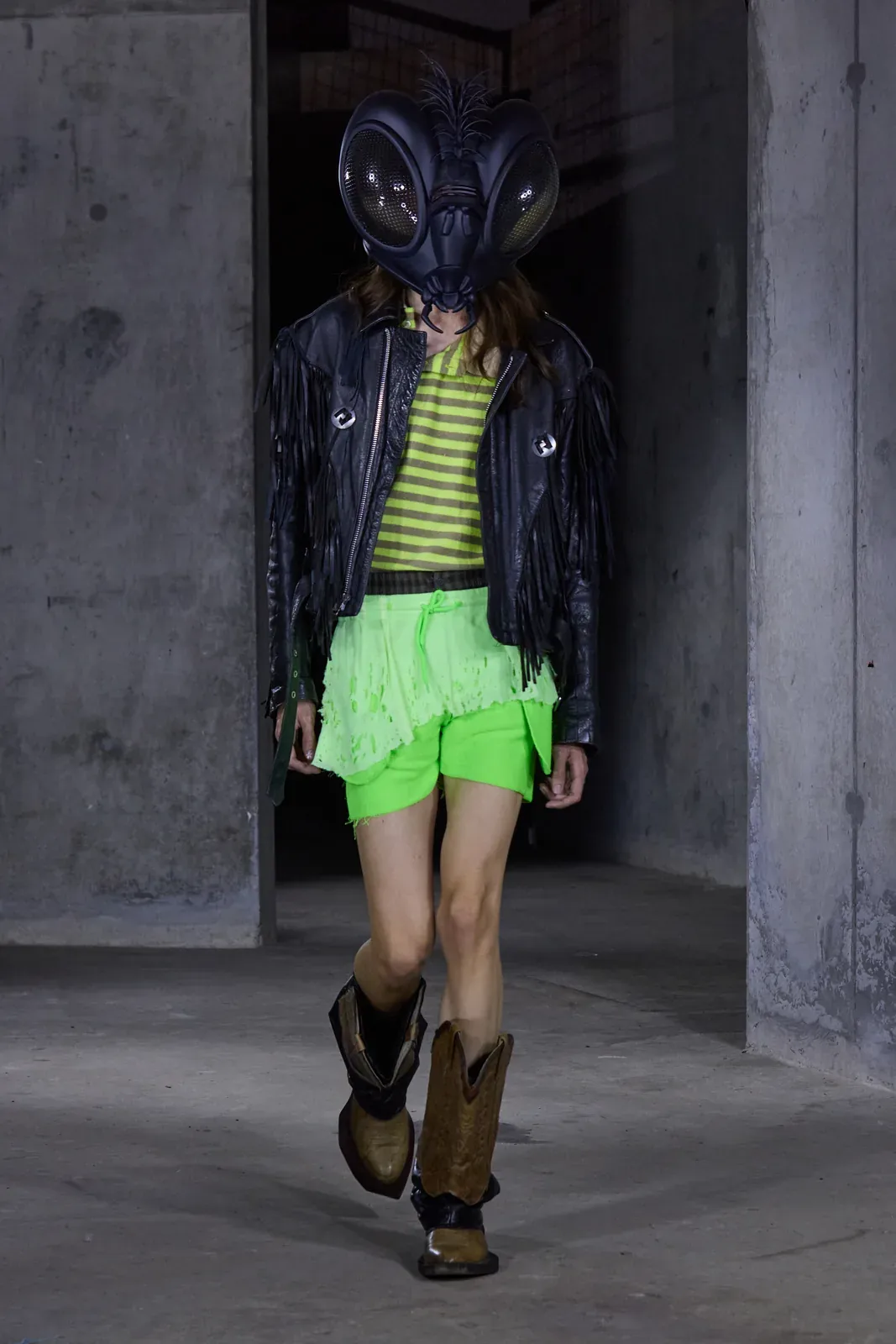
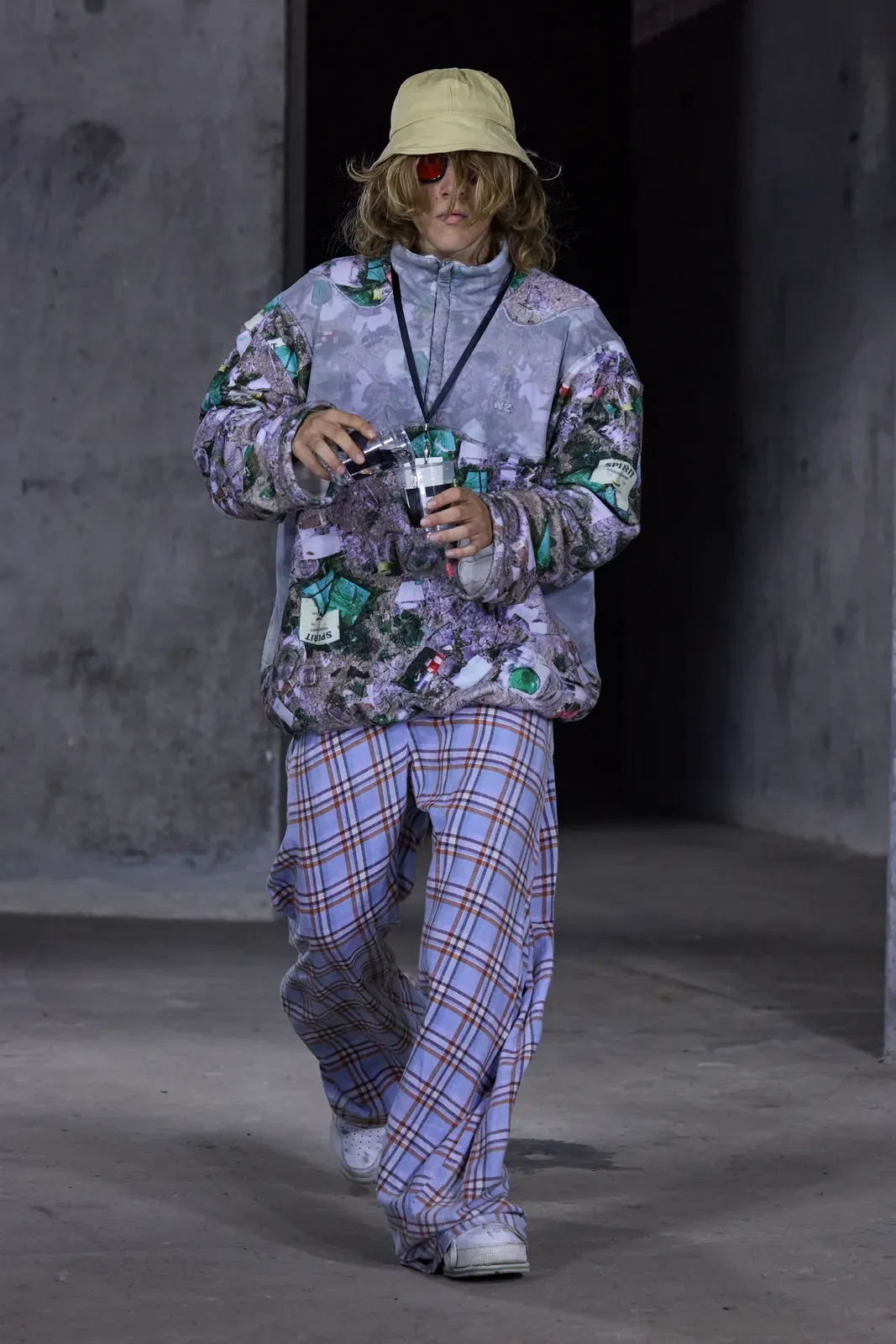
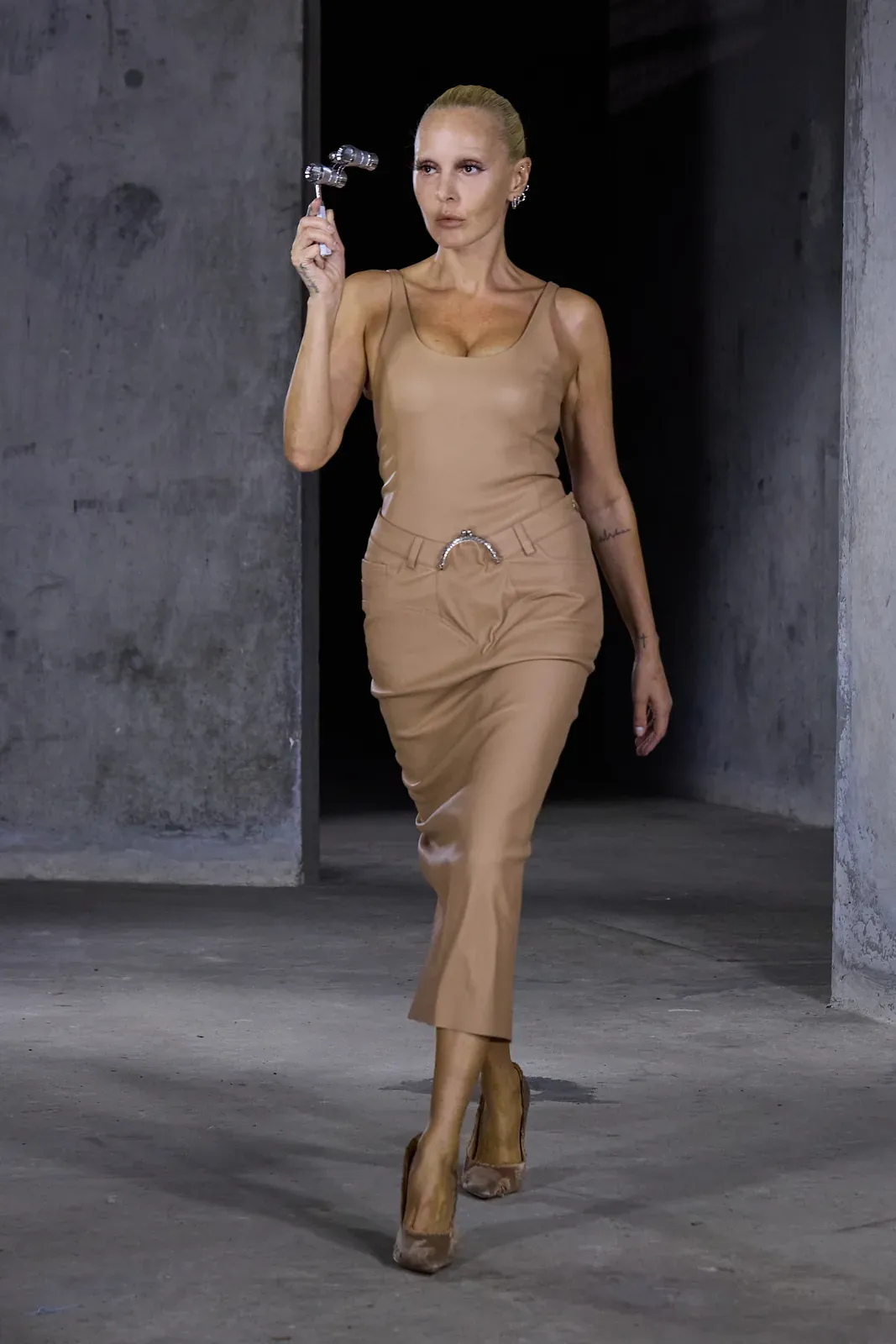
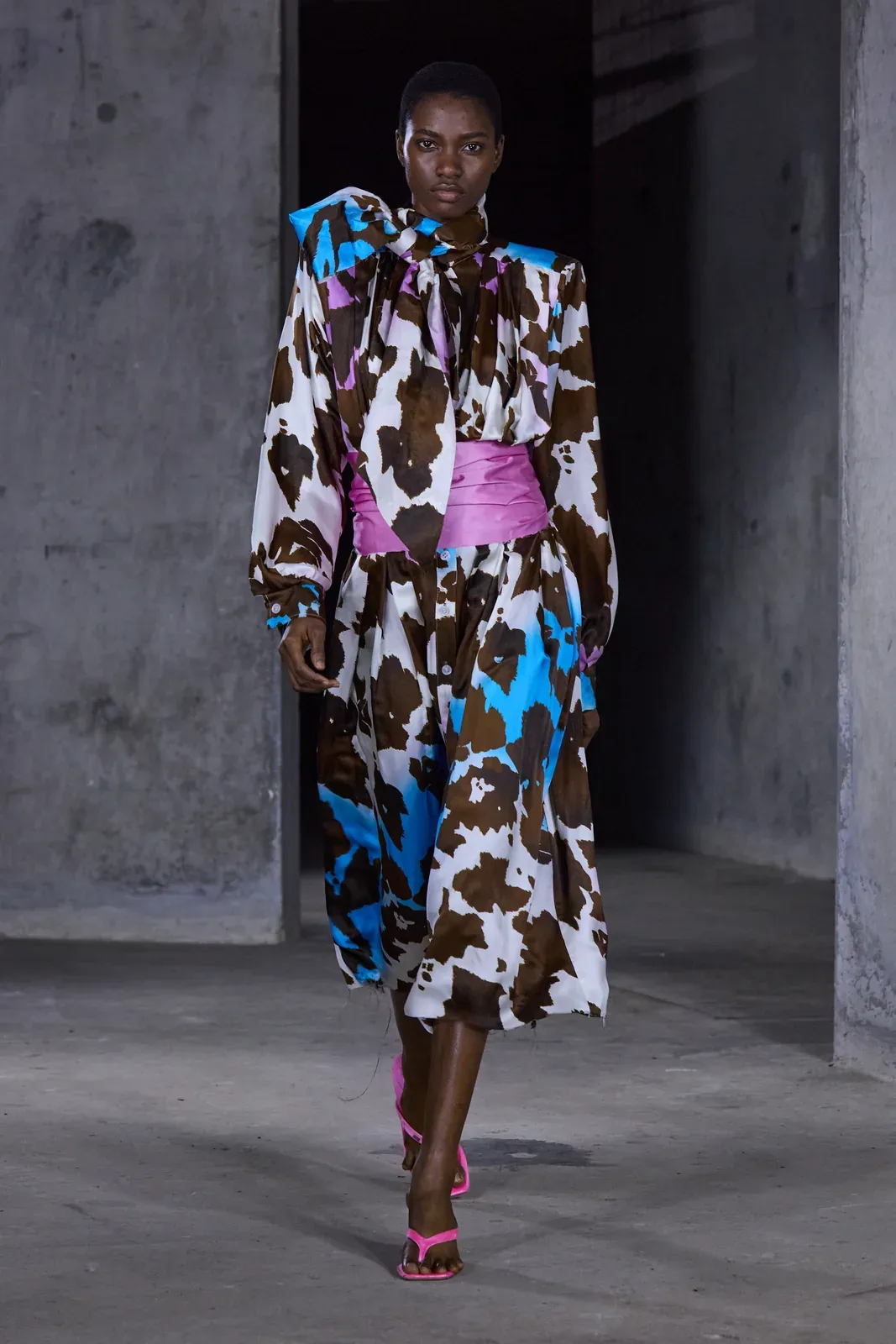
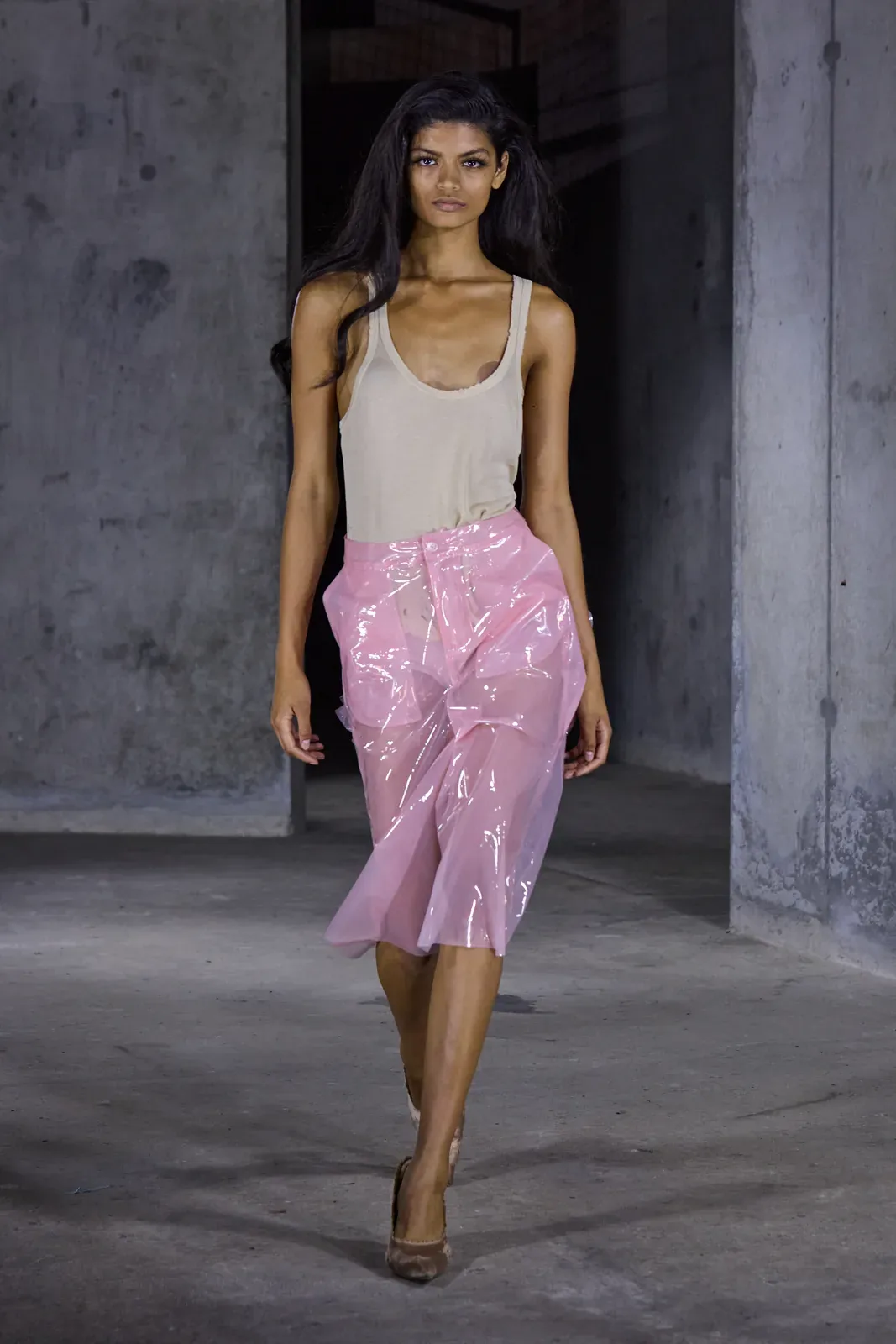
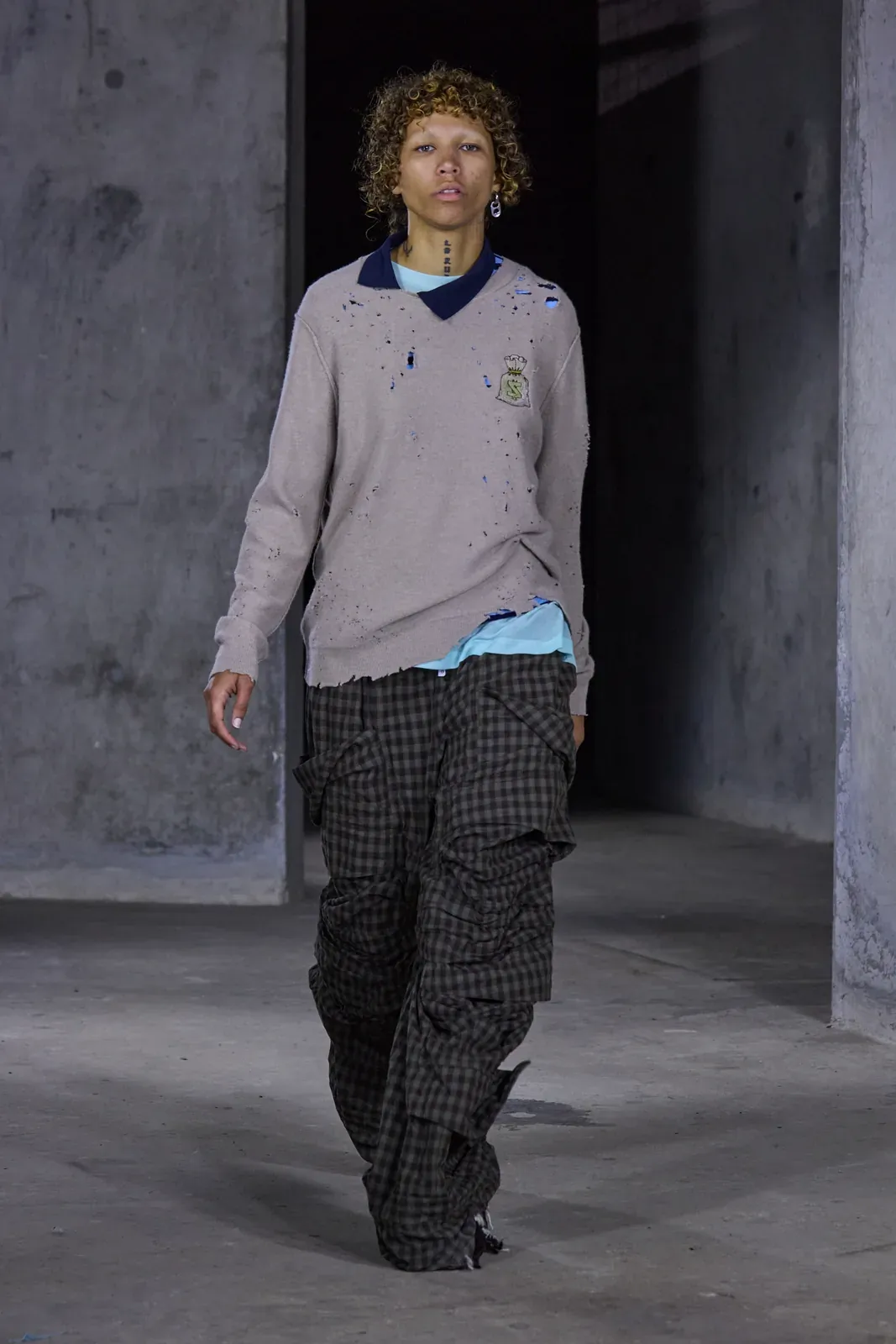
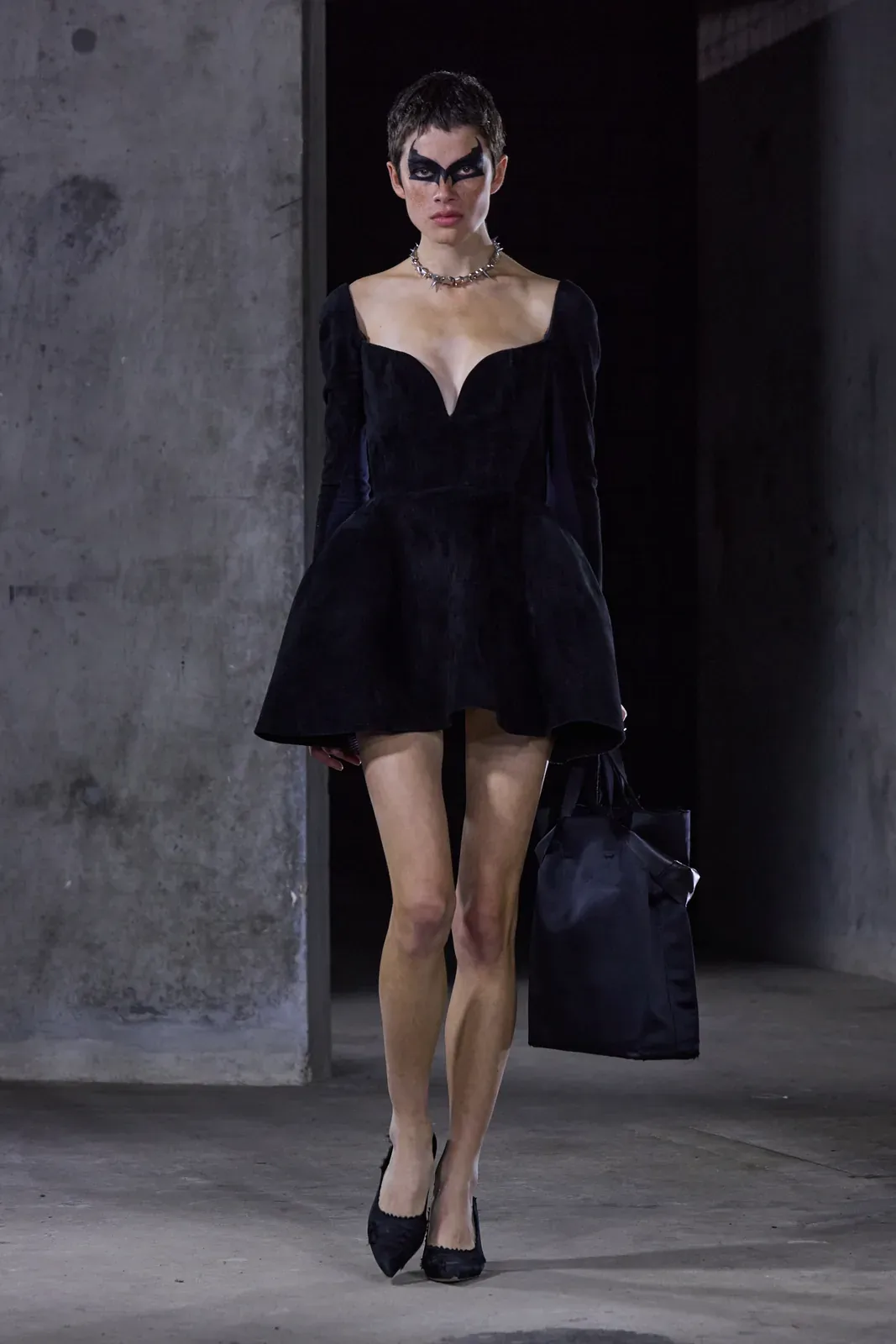
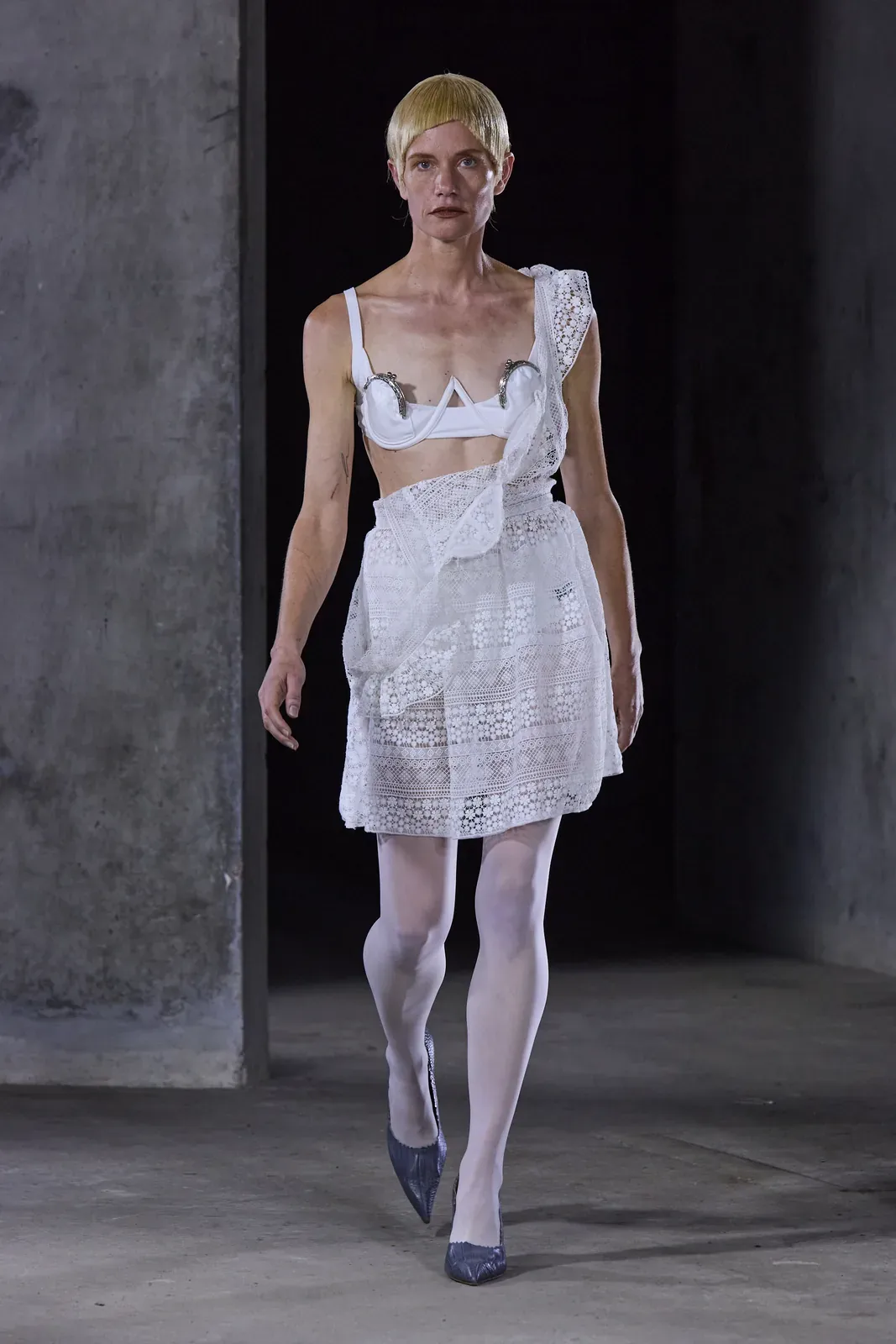
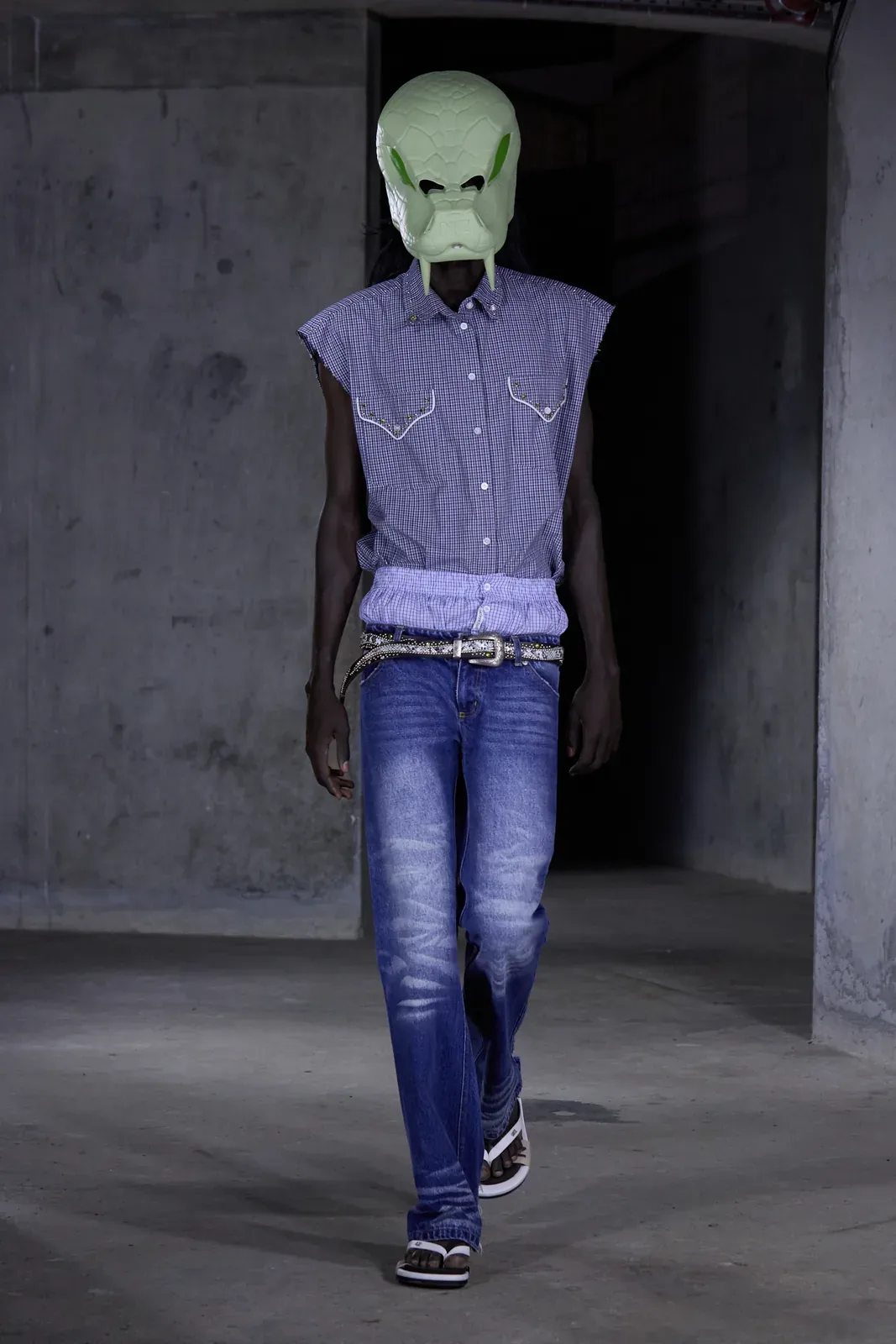
Between the heads-down queuing as you’re waiting to get into shows and the snobby "So, who do you know here?" type questions when you’re waiting for them to start, Fashion Week can be a nauseously serious affair. Then enters Natasha Zinko and her entourage of muses, a collection of pop-culture icons and Hollywood stars, dressed as an assortment of ratchet-like nurses, dominatrices and bugs.
Held at Collins Music Hall, a brutalist venue in the centre of Islington, Zinko welcomed hundreds of (ironically very eager) onlookers into her take on surveillance culture. Pay Per View — which was in collaboration with OnlyFans — questions the consequences of our obsession with other people's lives. Amongst those wearing the clothes were Katie Price, Kelly Osbourne and Drea de Matteo of The Sopranos, who performed for invitees by dancing, smoking and sensually waving out of the building's square-shaped openings. Interchanging spotlights acted as sticky microscopes thrust upon the models, revealing not only Zinko’s designs — which ranged from PVC gloves to her familiar horizontal-stripe dresses — but also our vapid obsession with observation.
Geordie Campbell
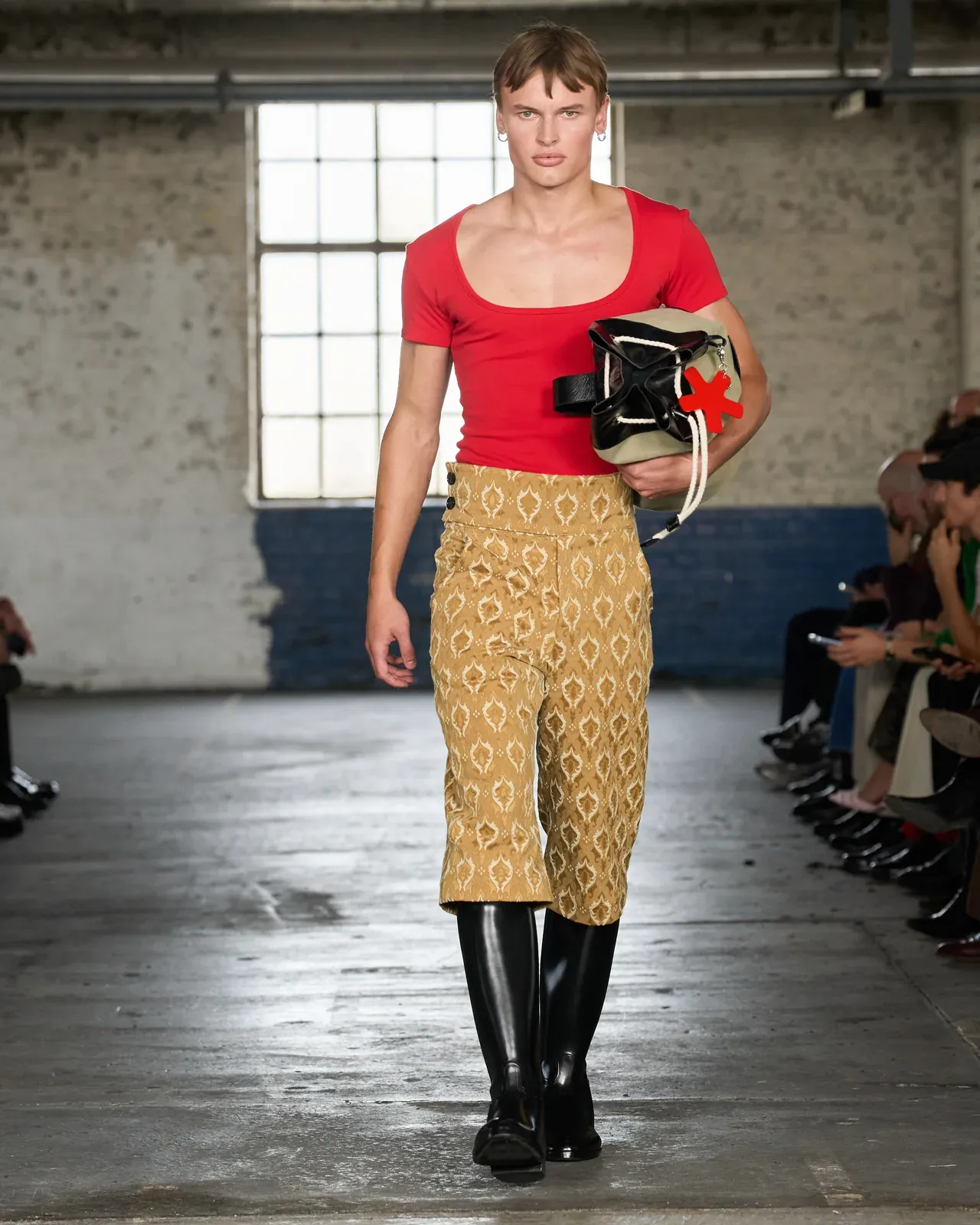
The words “I choose to cruise” are not just an idiom used by George Michael in the lyrics of the 1982 song Wham Rap (Enjoy What You Do), but also the sentiment at the very heart of Geordie Campbell’s London Fashion Week debut. Inspired by the covert symbols of cruising culture, 15 steps — a name fittingly taken from the infamous 1962 police sting operation where officers walked down the fifteen steps leading to a Central Park toilet to arrest seventy-nine men for committing what they said were “indecent acts” — was a playful take on the visual language of queer history.
Although an exploration of hidden meanings, Campbell’s intention couldn’t be more clear: models darted down the runway in sailor hats, short shorts and tight shirts with low-cut necklines, evocative of Michael himself. Bags plastered with ‘Get ‘em while you’re HOT!’ (in the McDonald's colour palette, no less) and vests reading ‘I want your sex’ also came into play as a nod to the designer's signature slogan-tees. If that didn’t spell it out clearly enough for you, the runway was also followed by a short presentation where the audience were instructed to glance voyeuristically at the models through duct-tape glory holes.
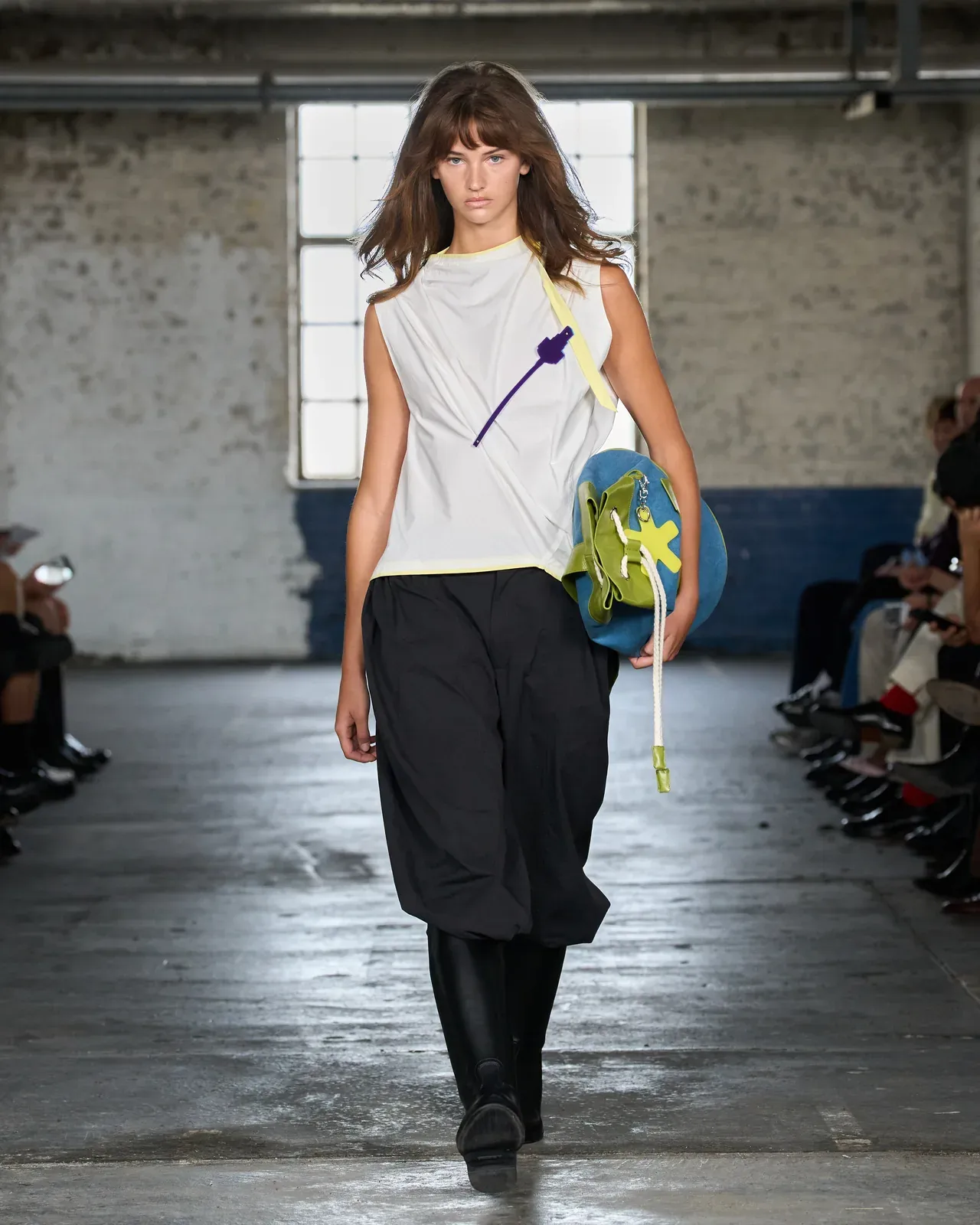
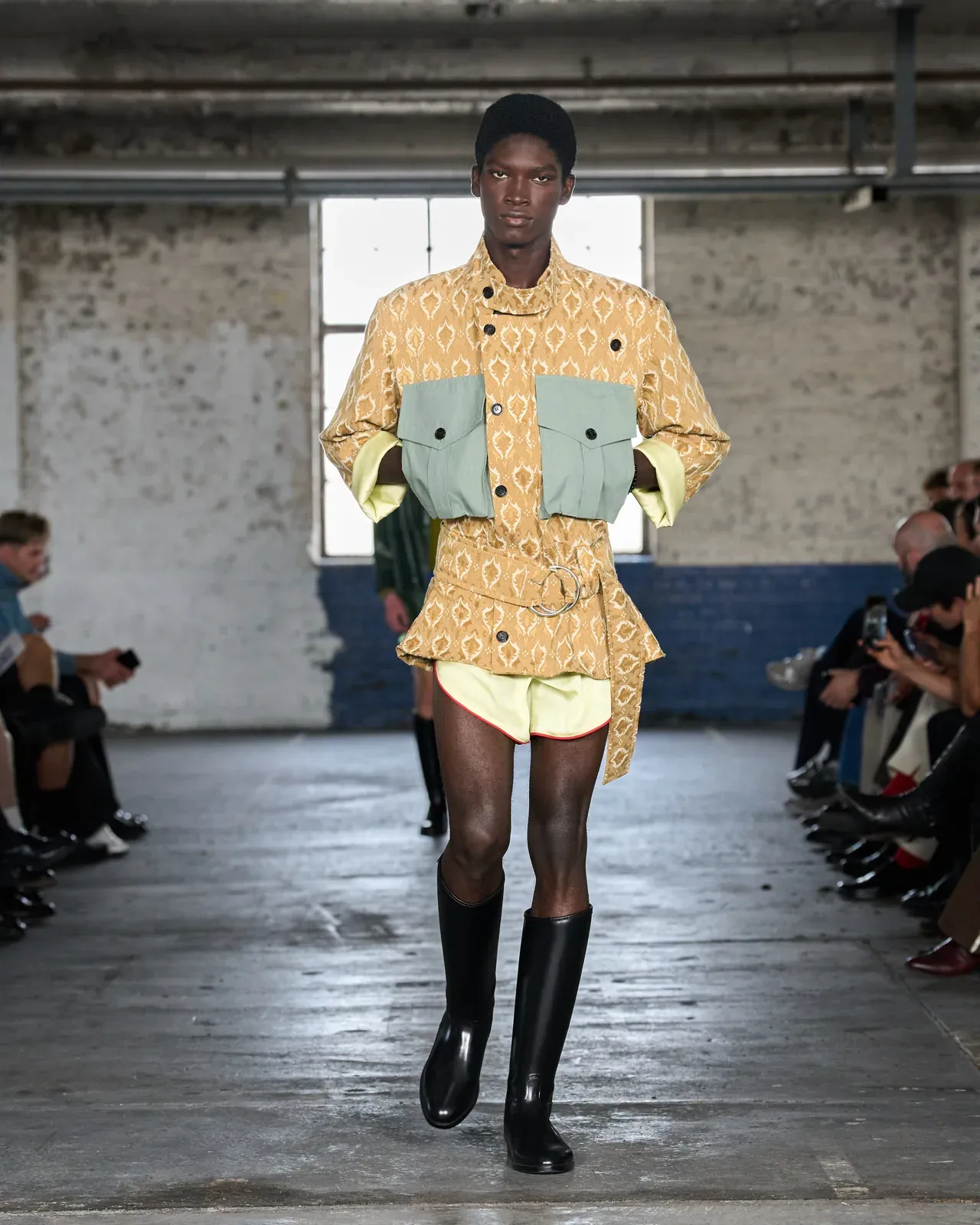
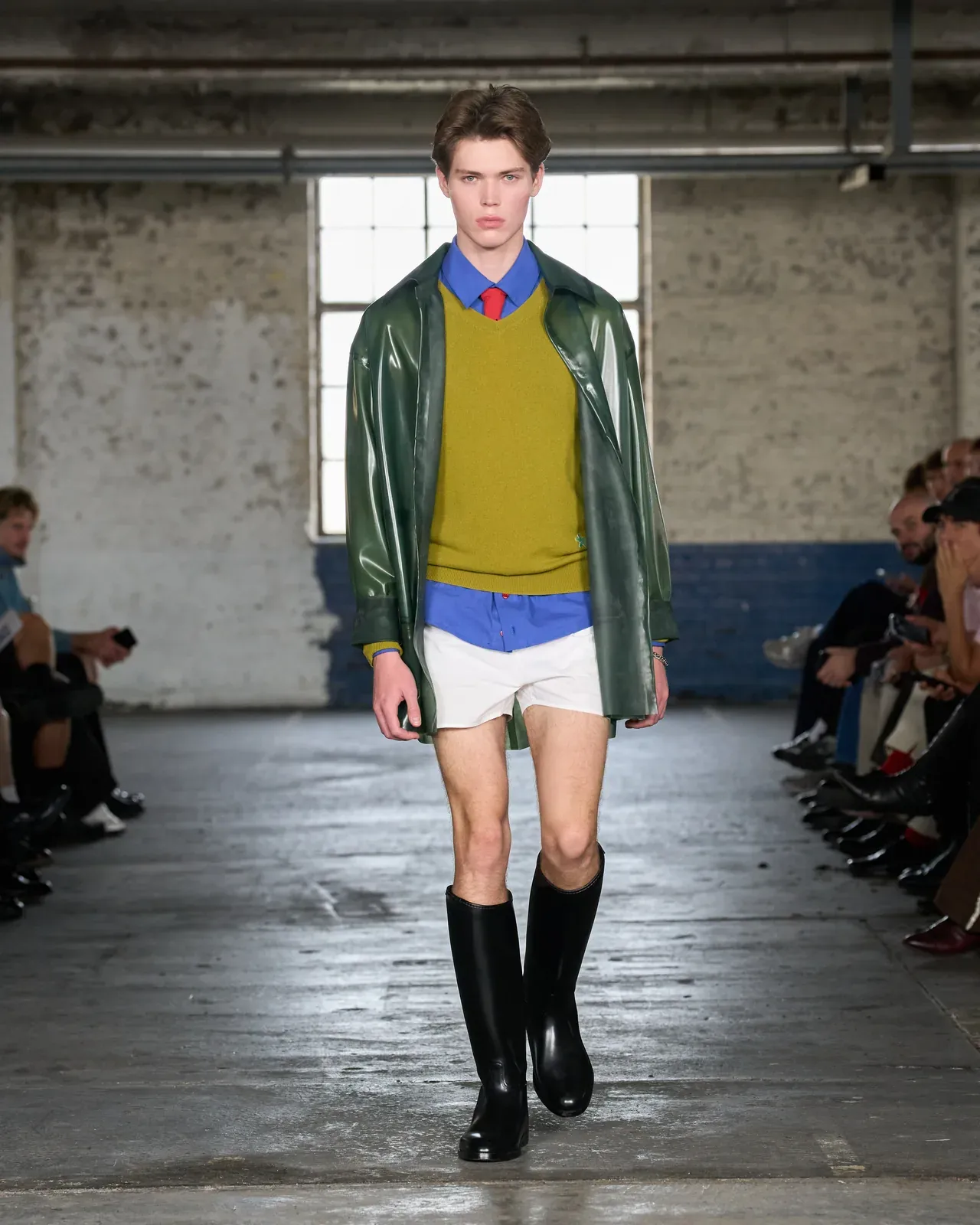
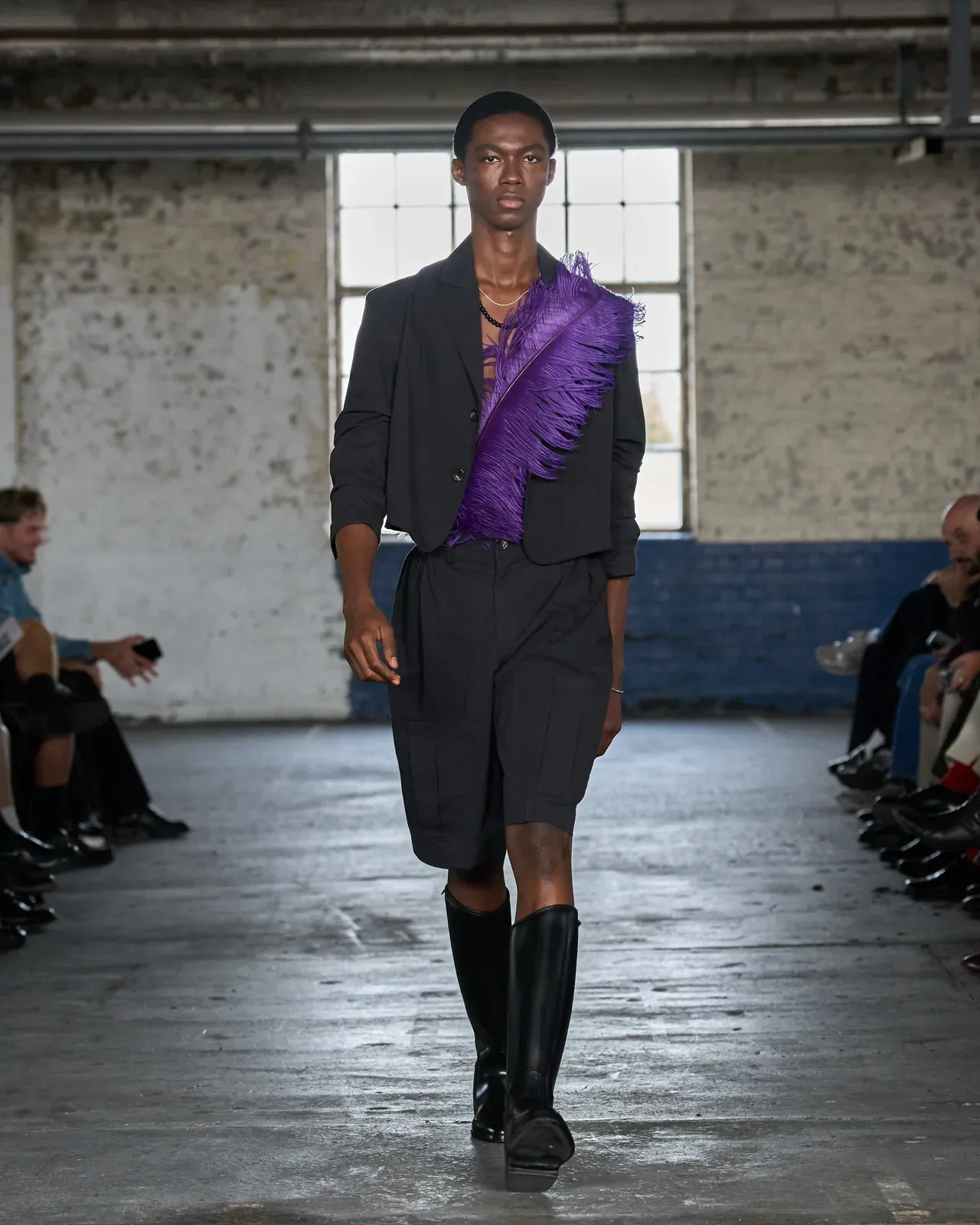
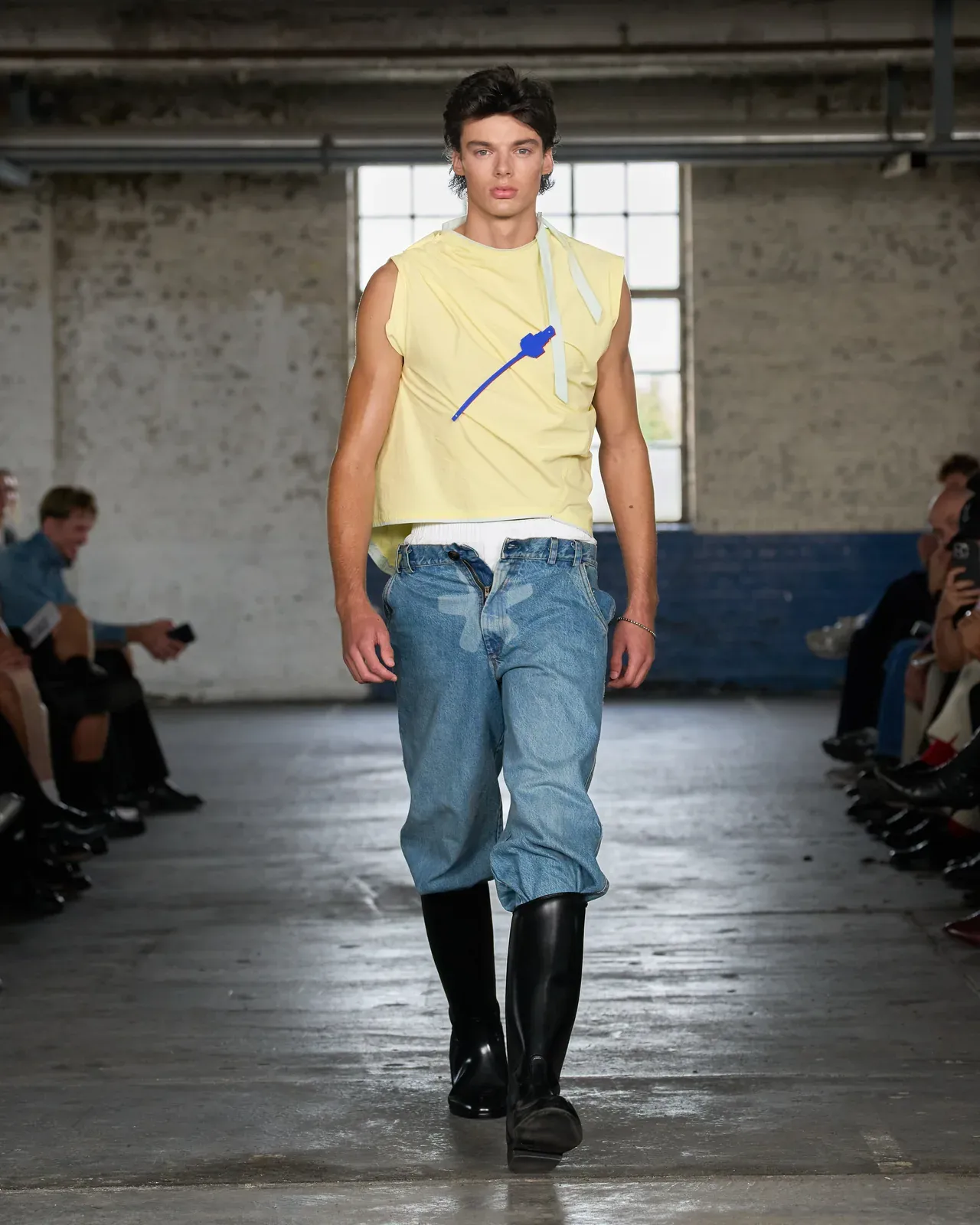
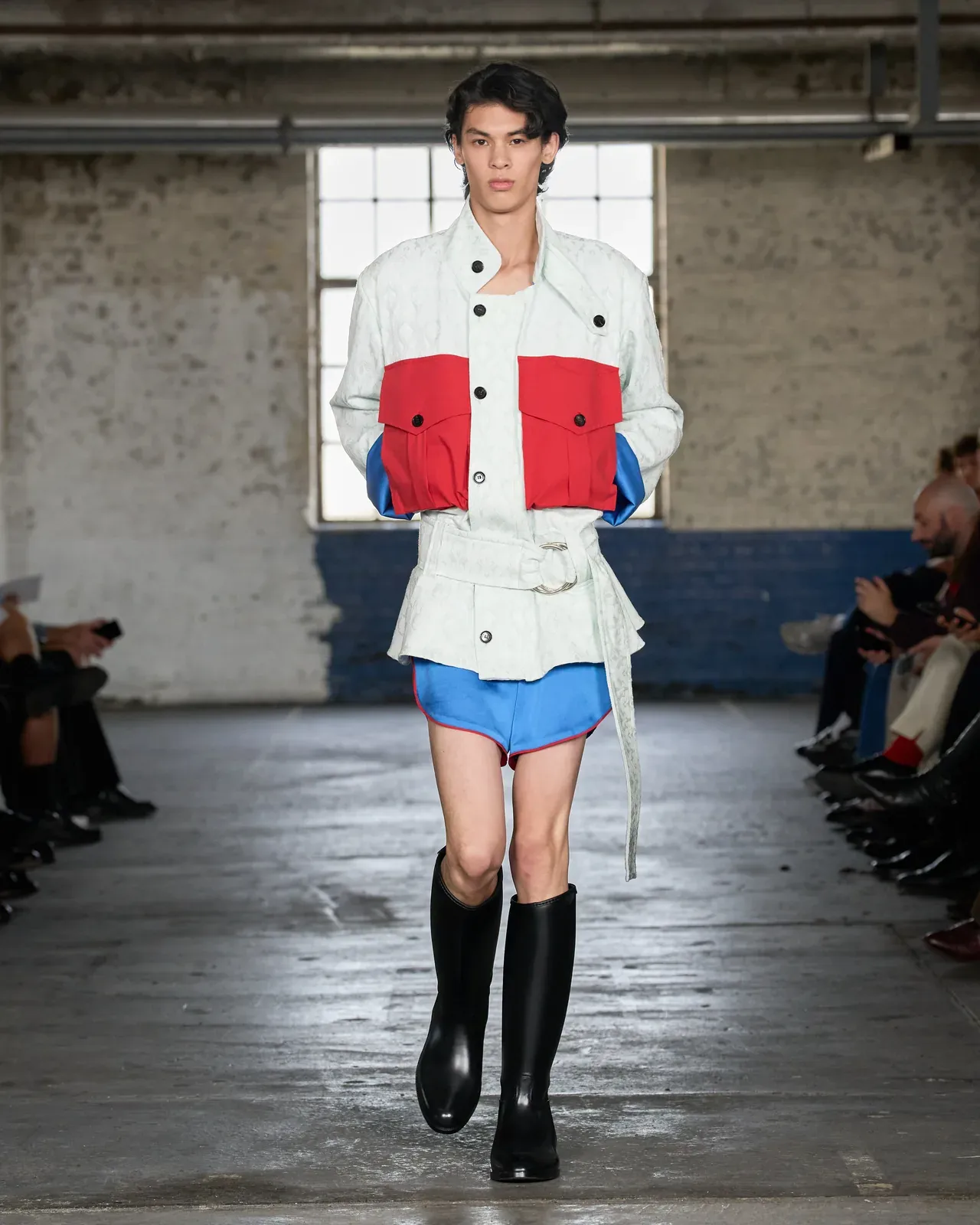
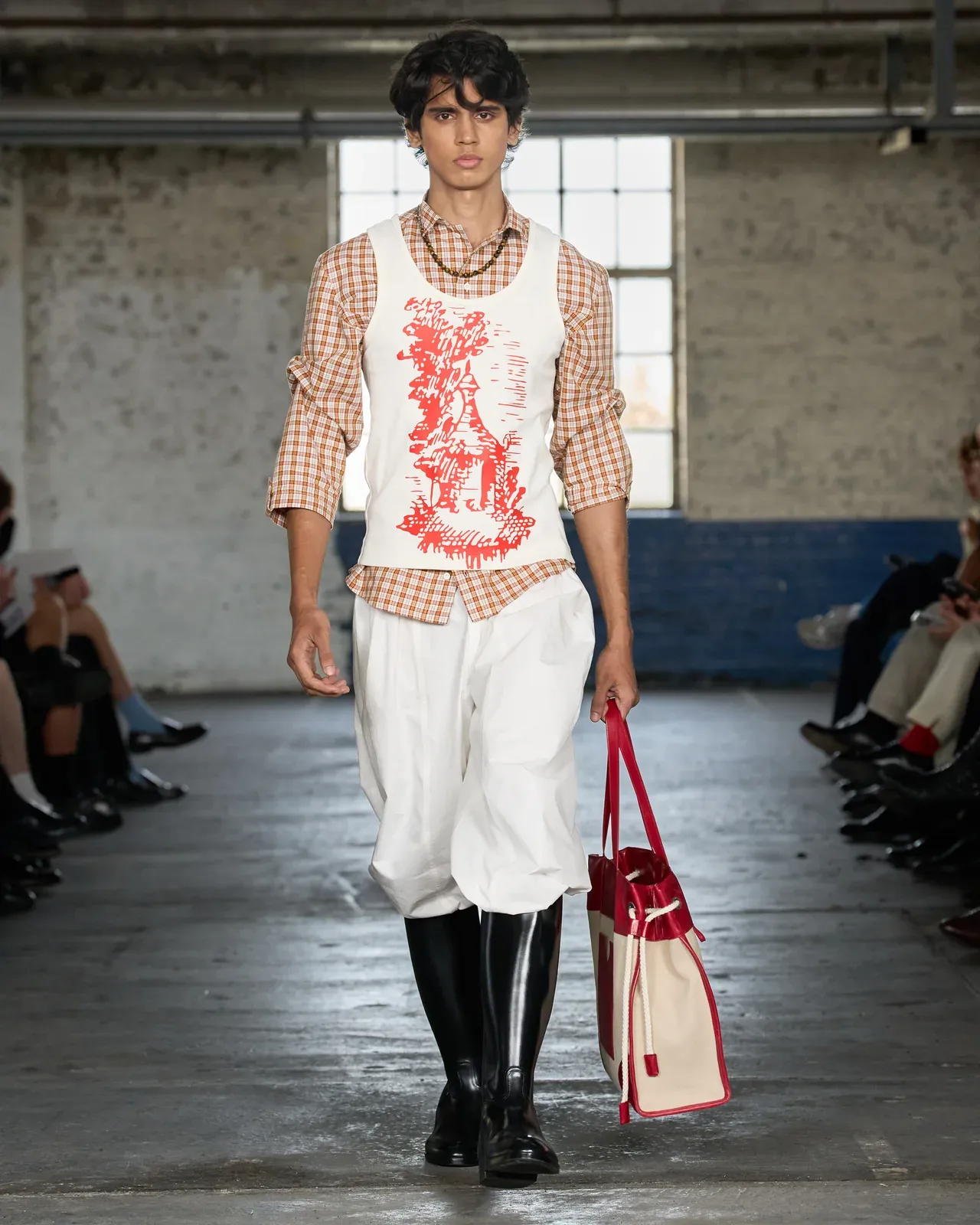
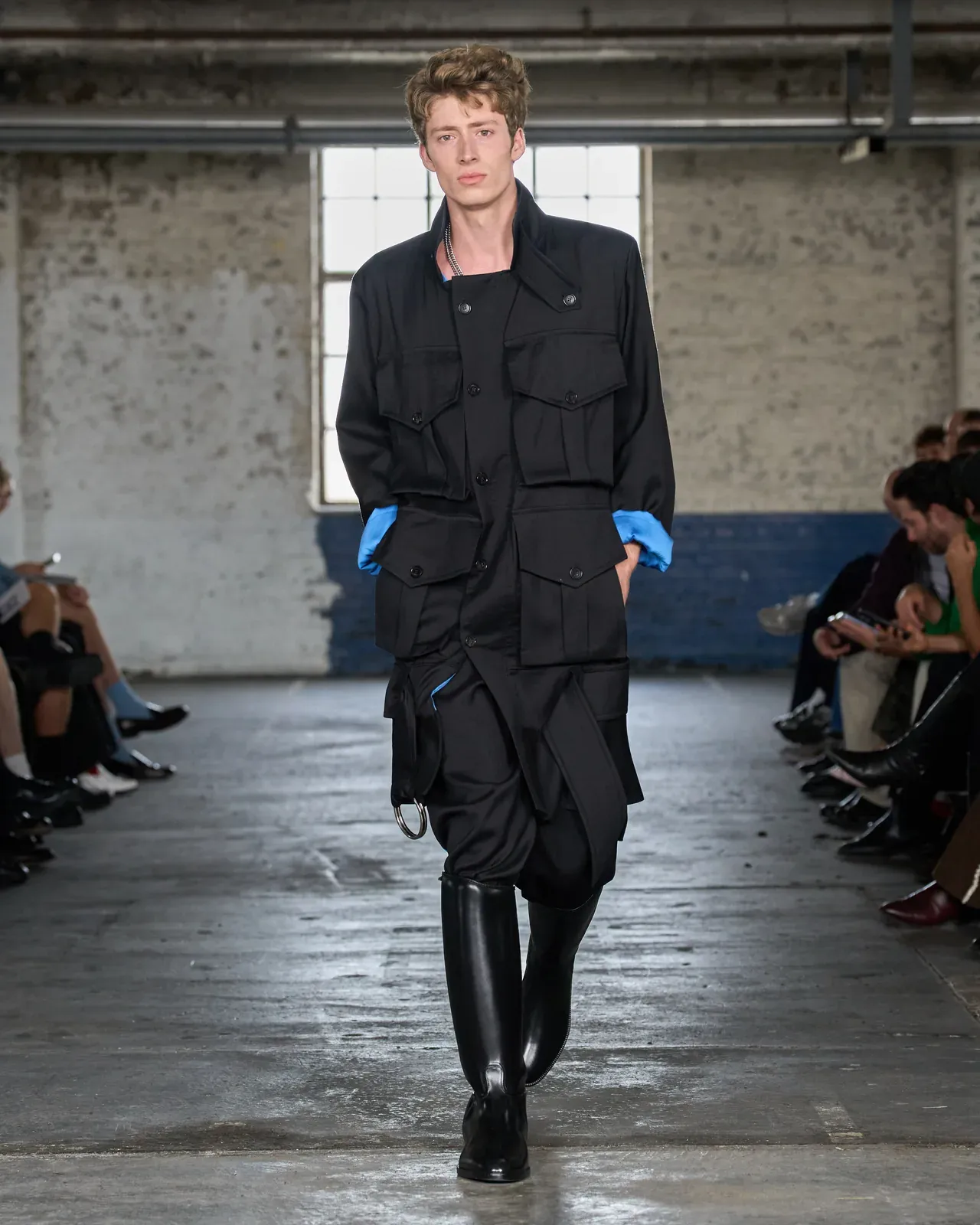
McQueen
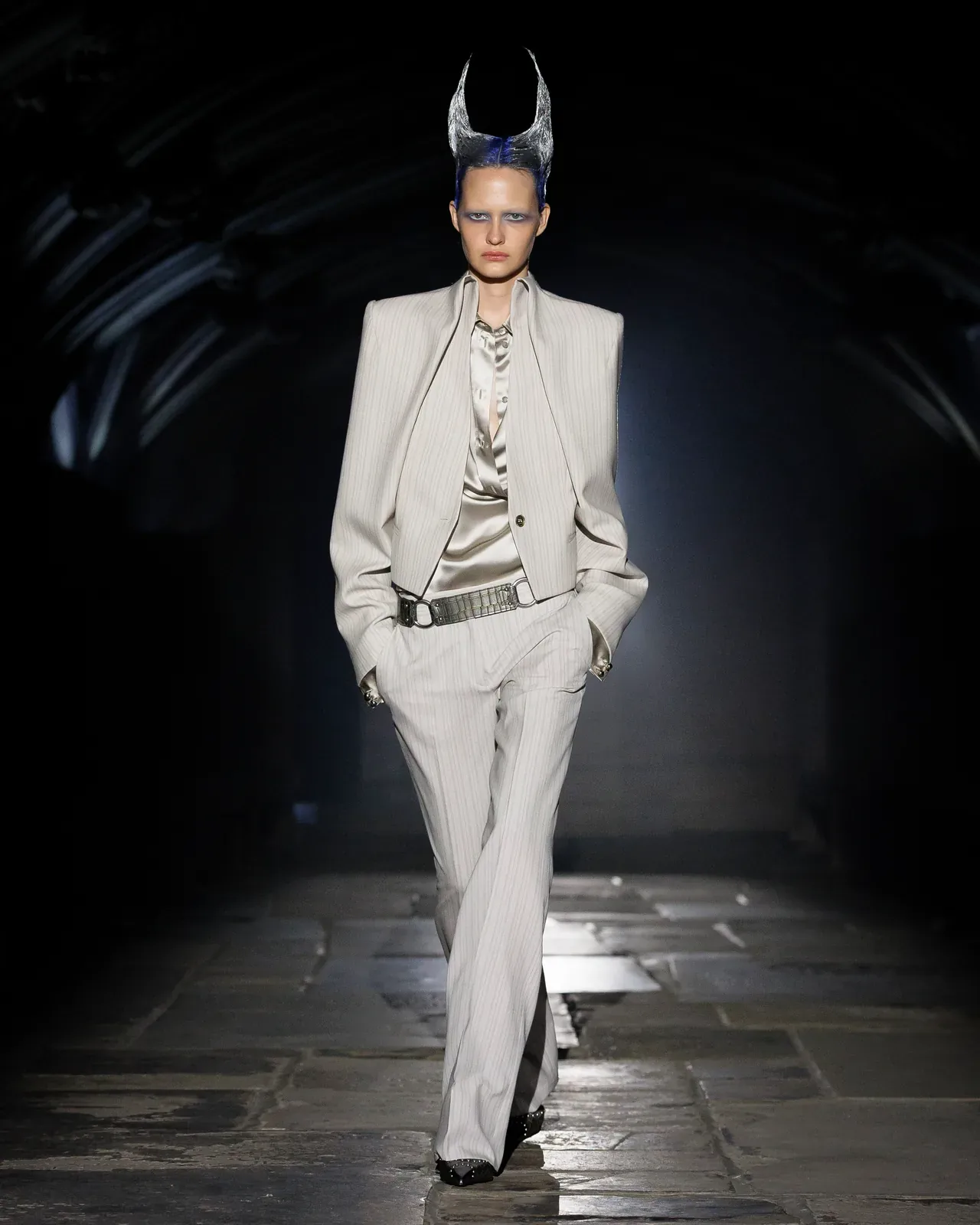
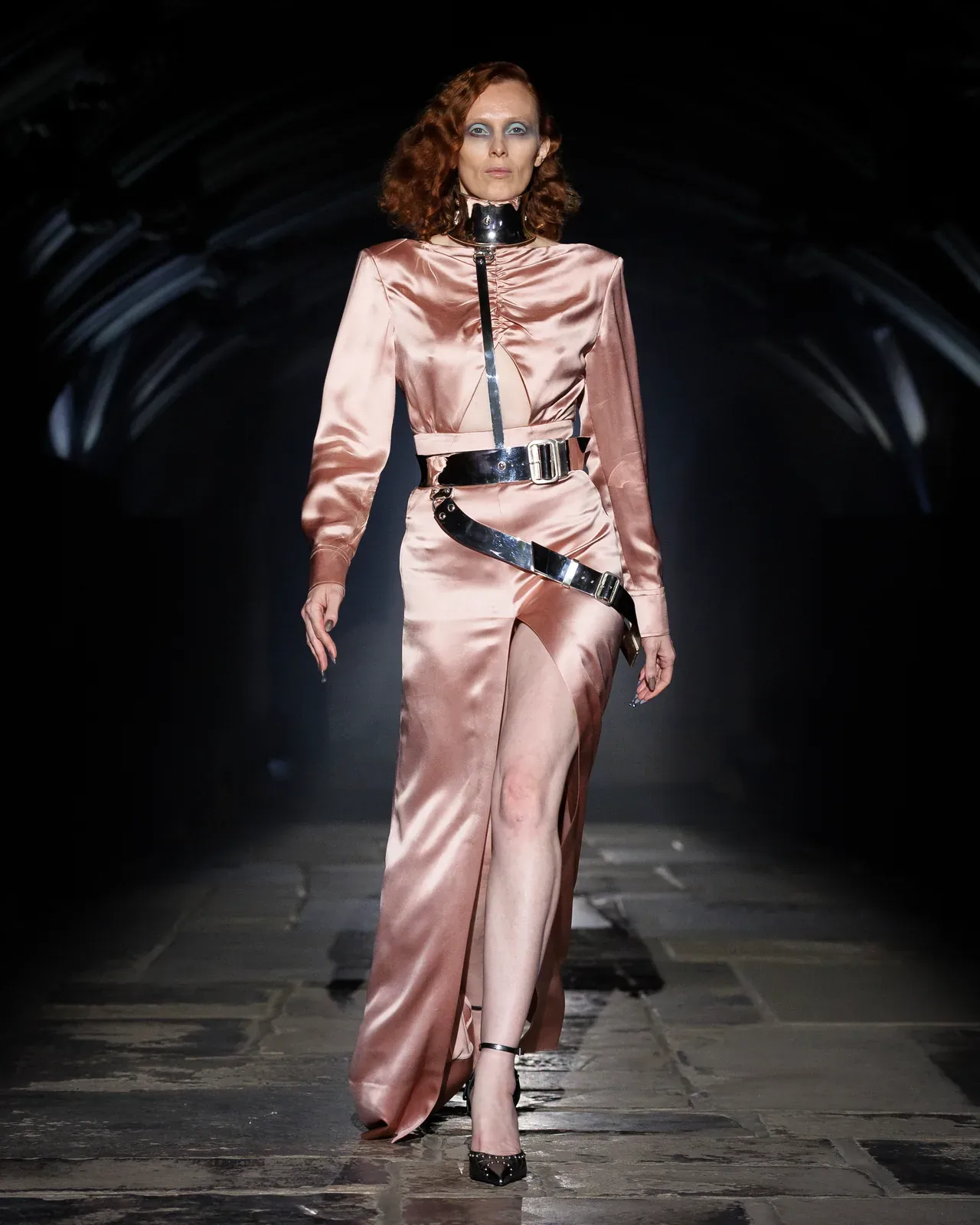
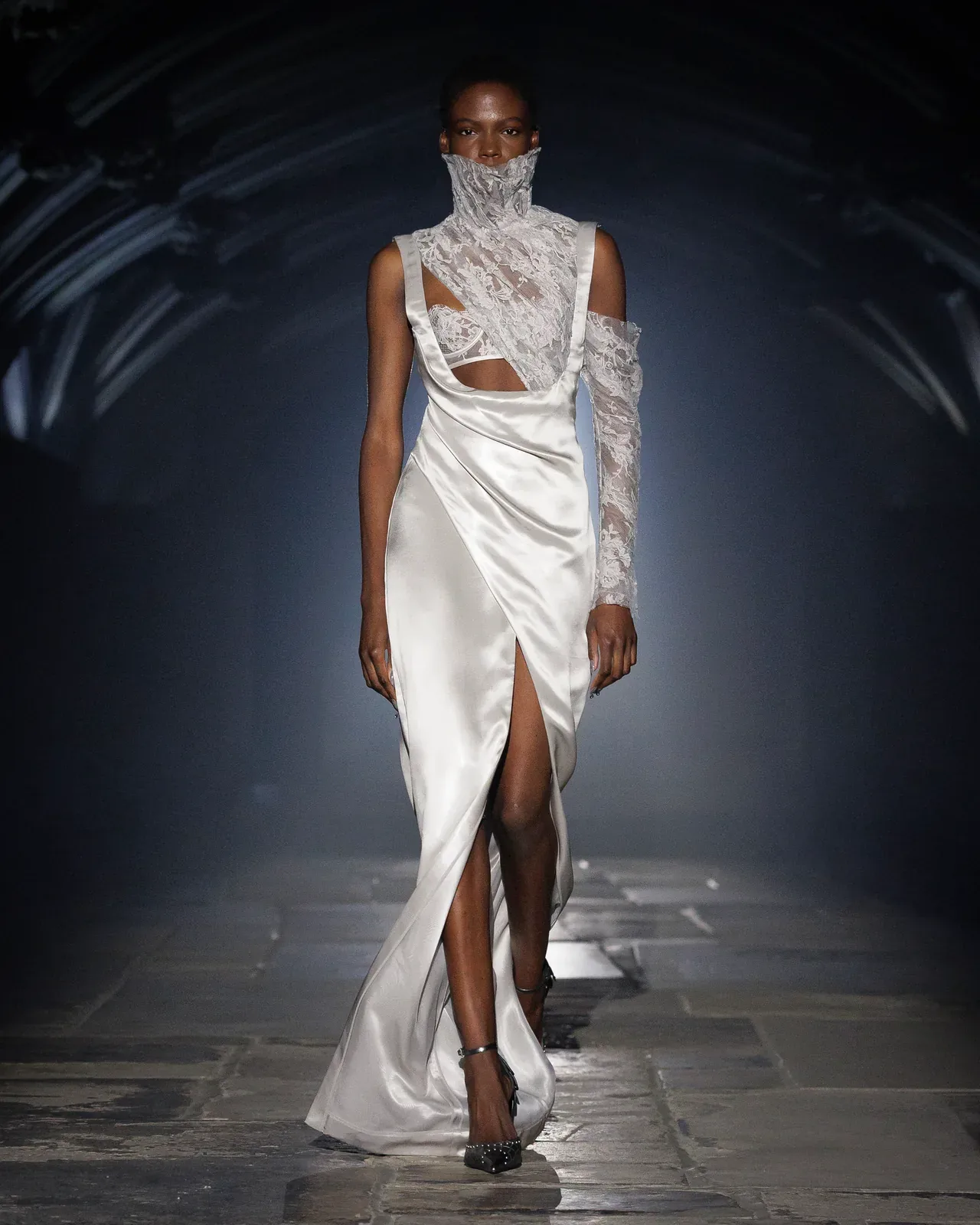
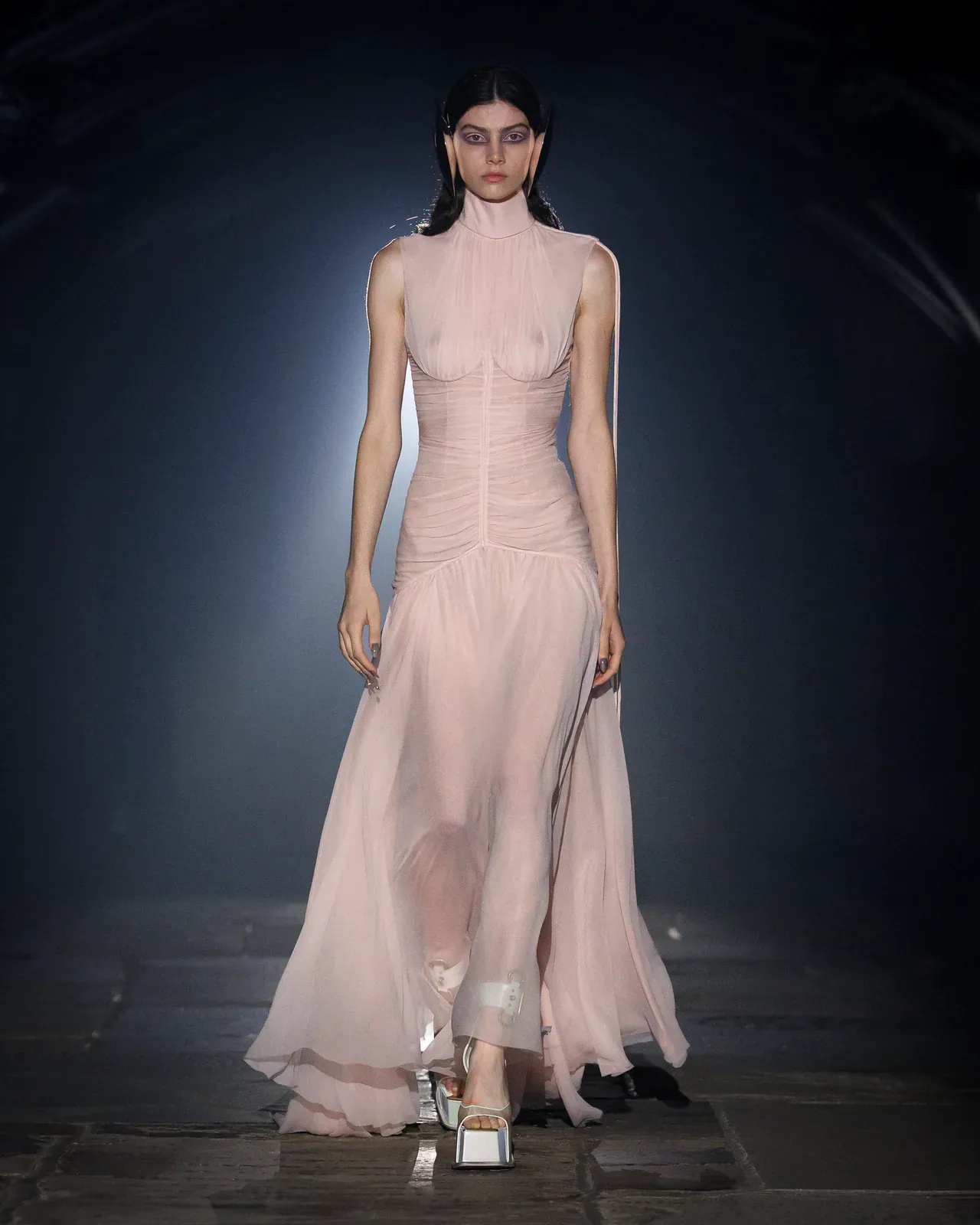
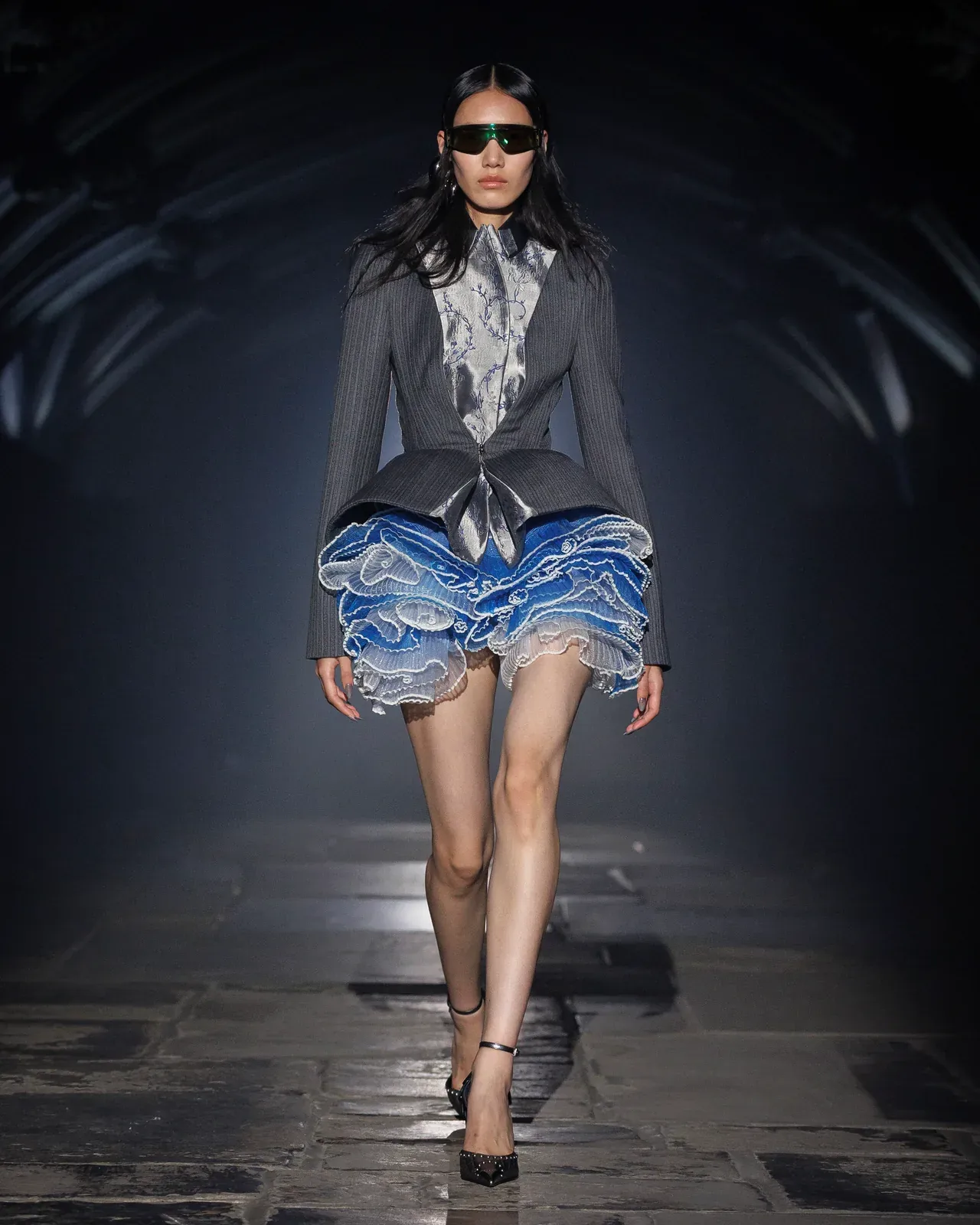
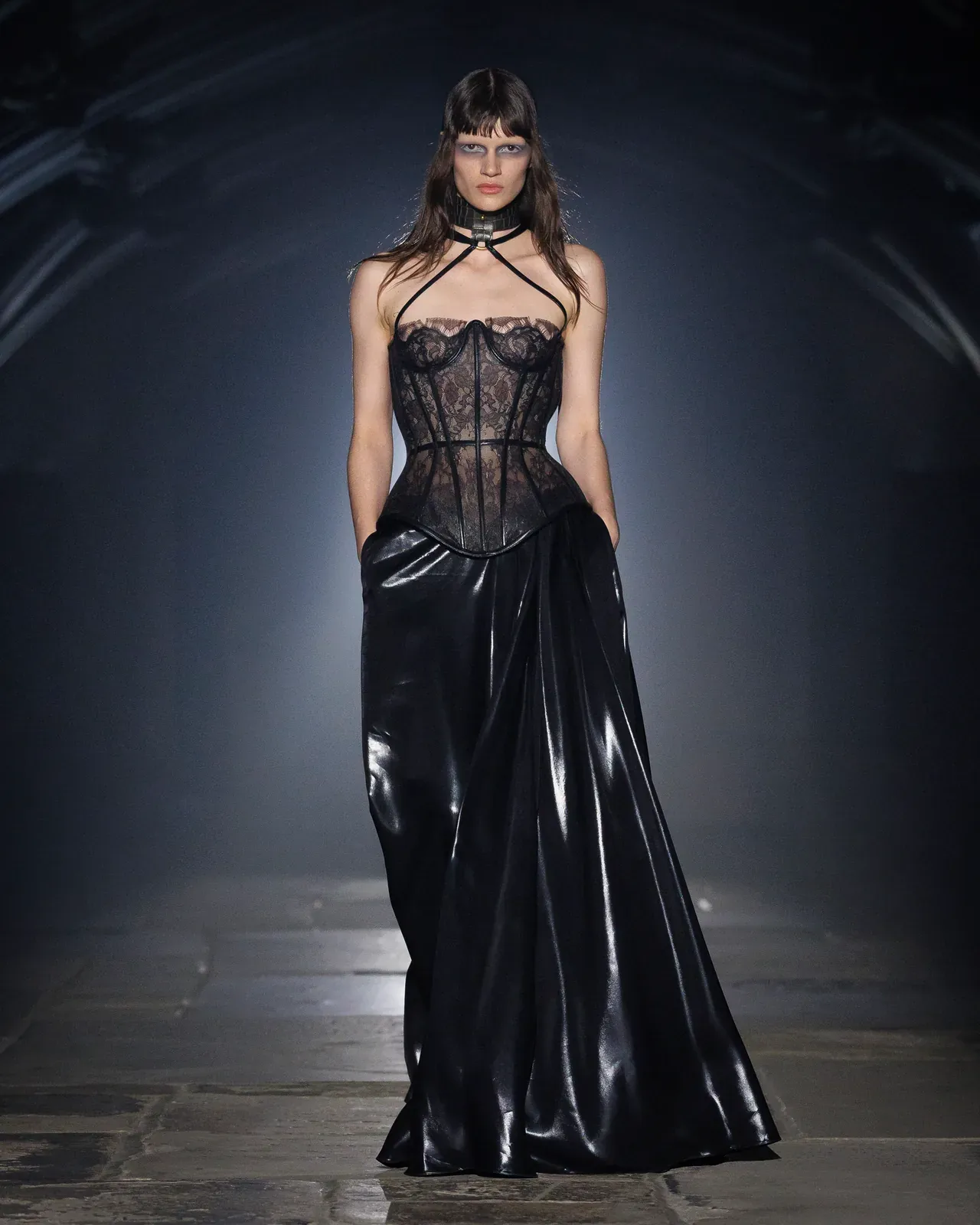
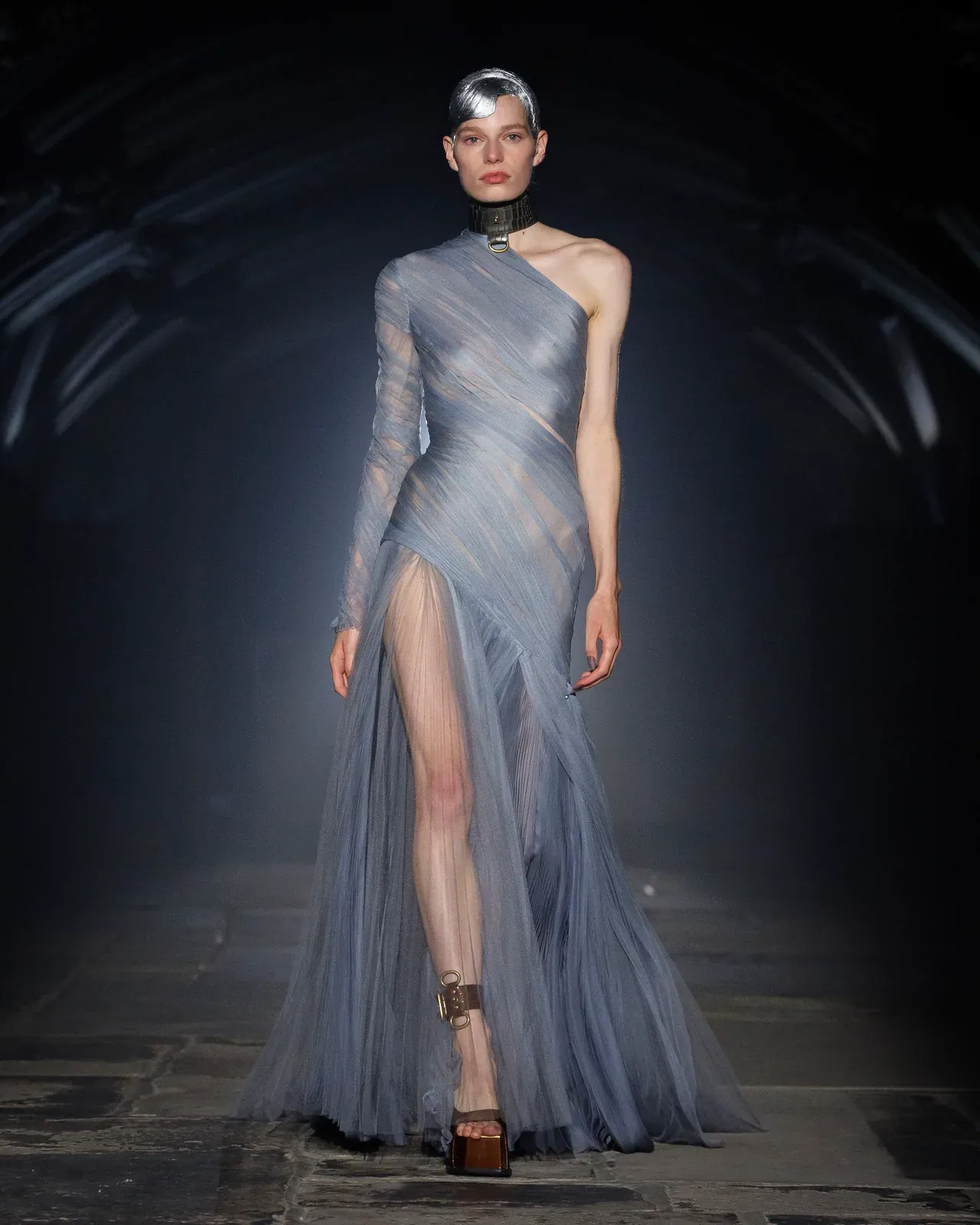
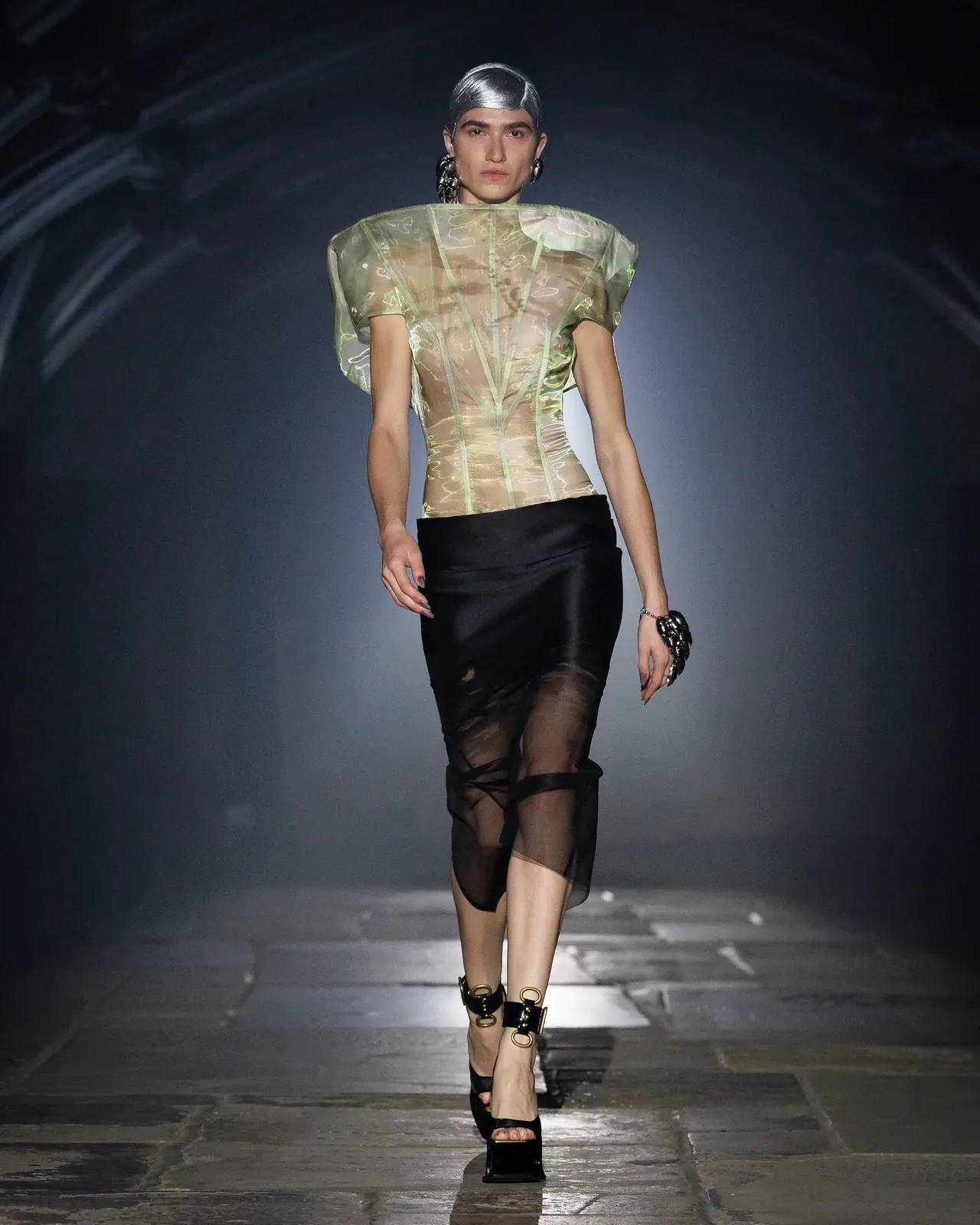
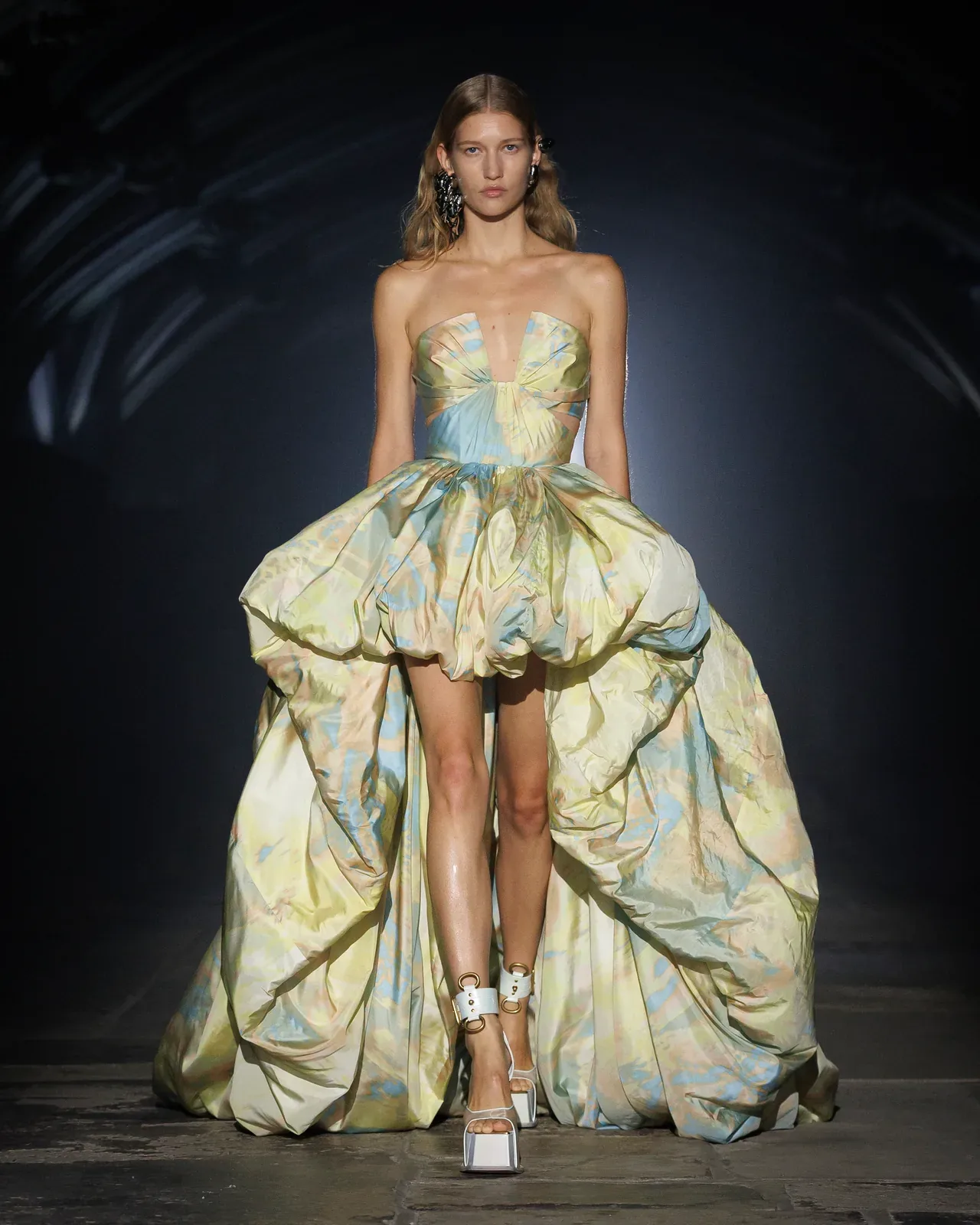
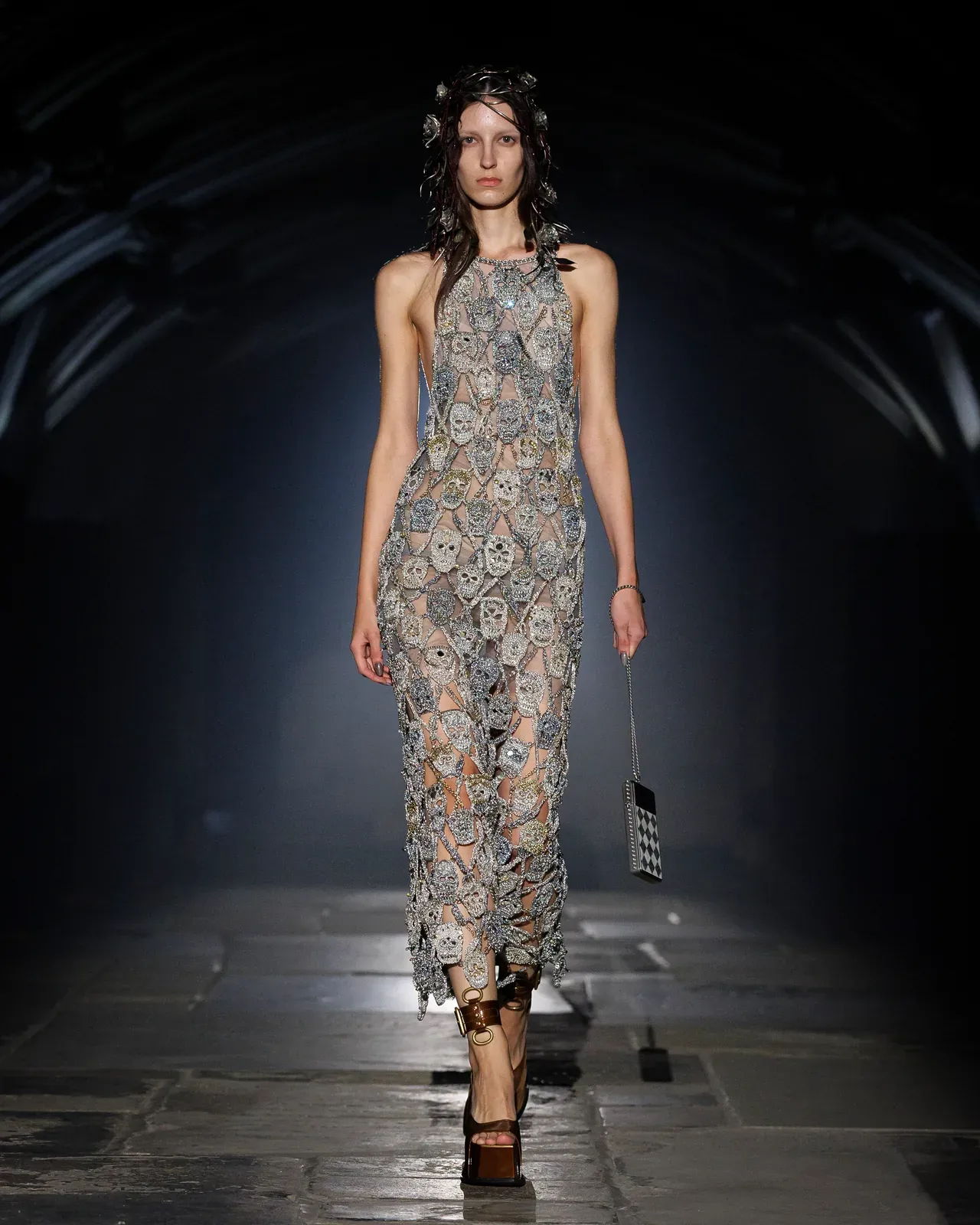
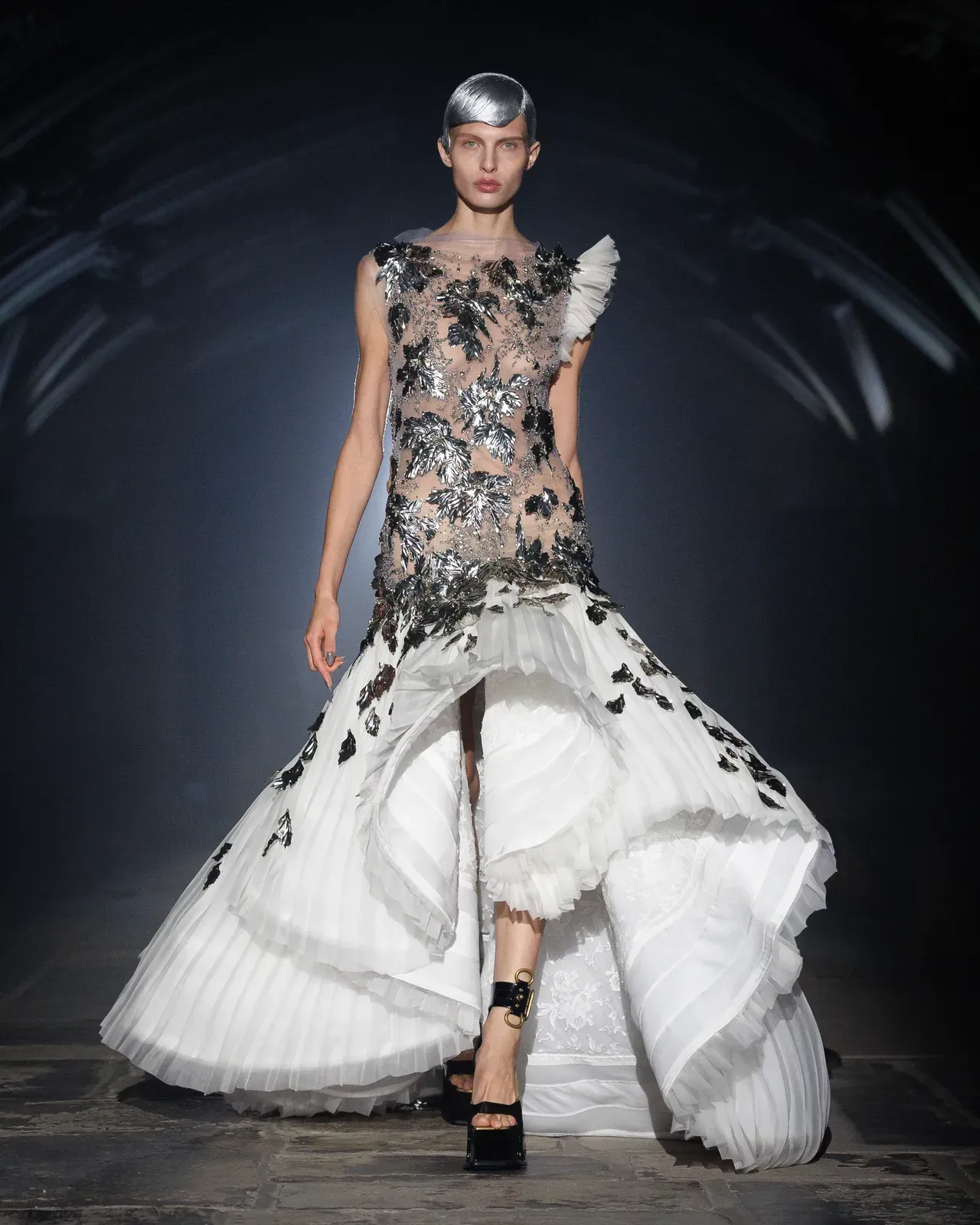
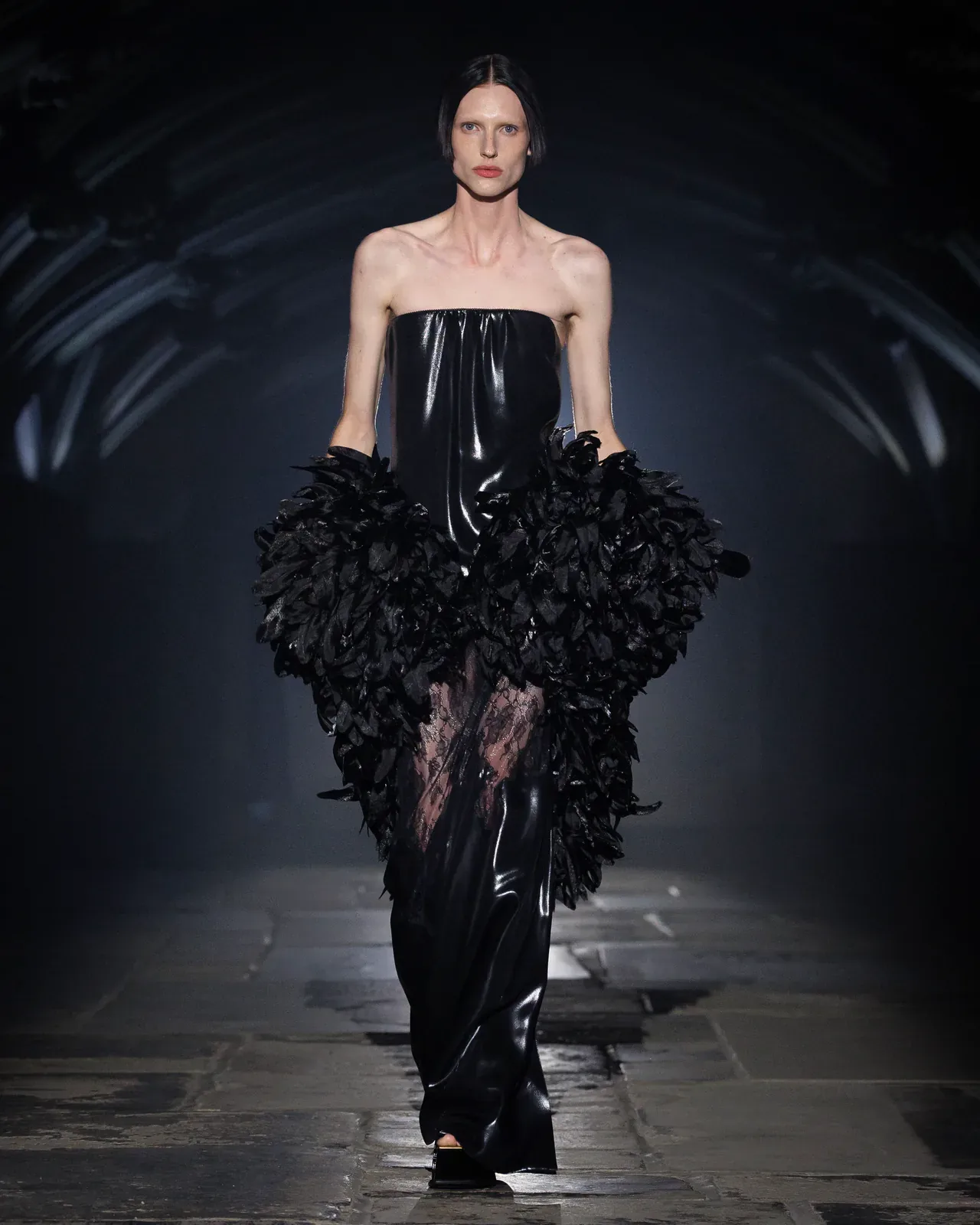
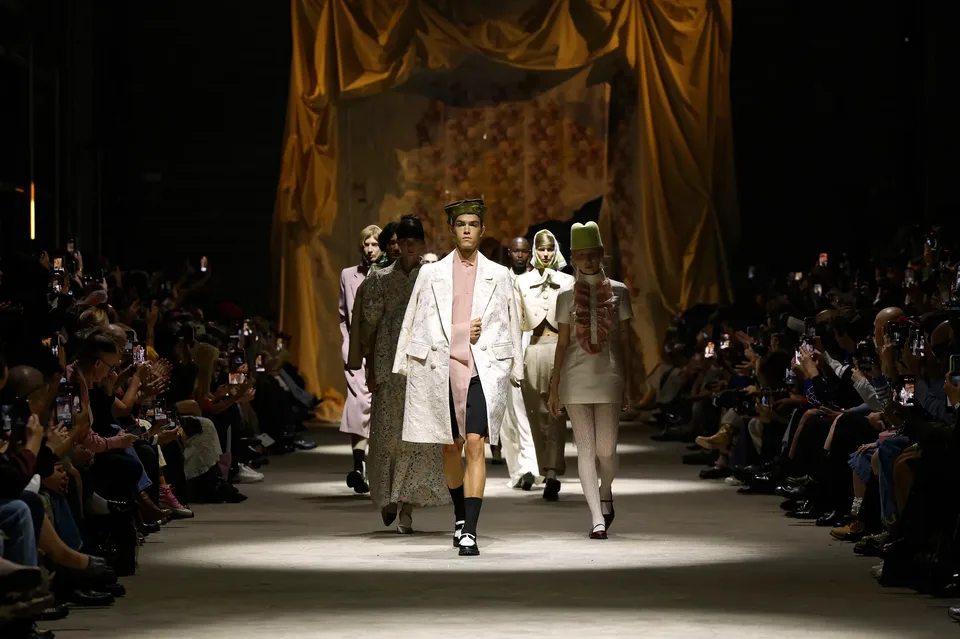
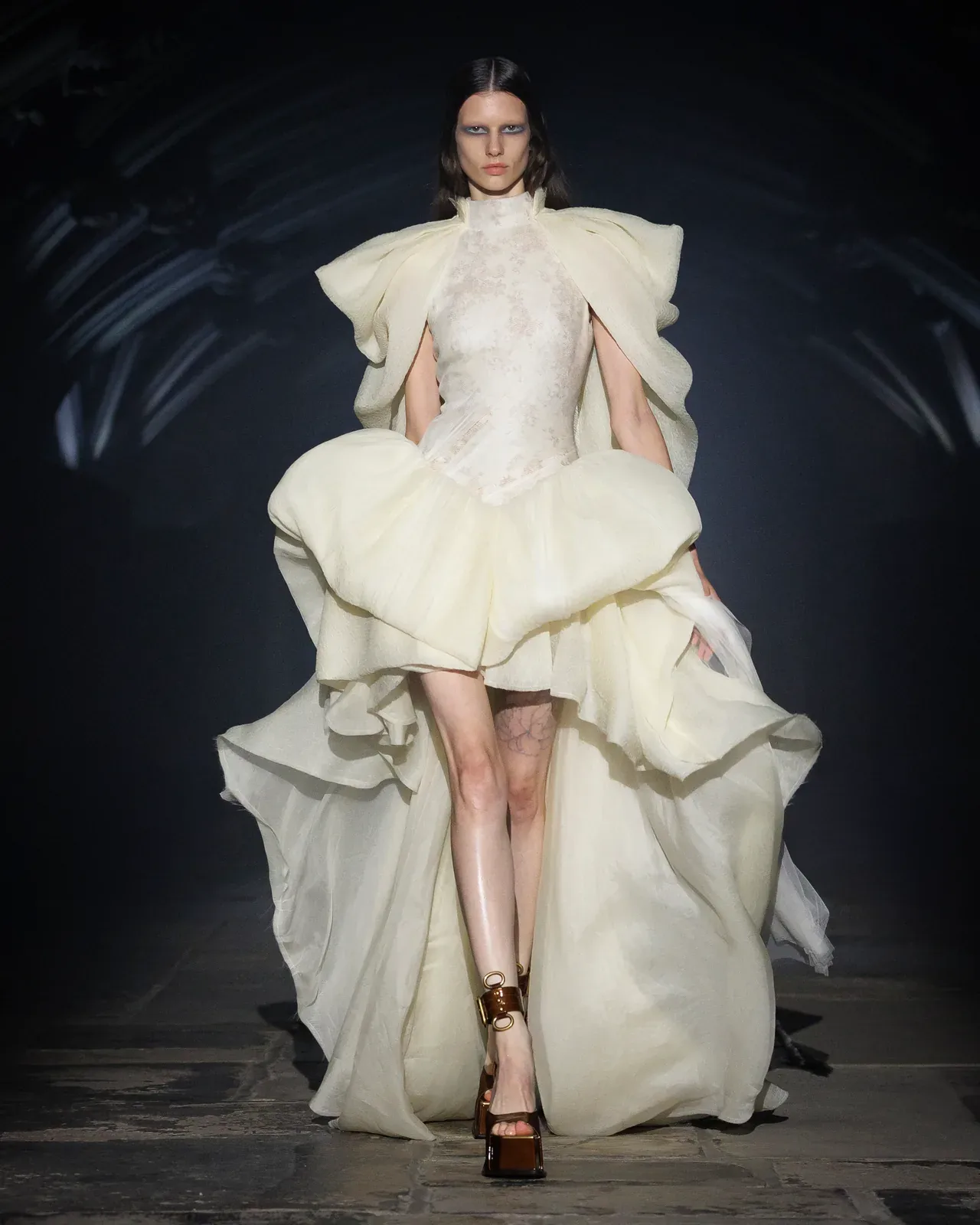
What does British culture look like? To Sean McGirr, the answer is a contradiction, a mixture of pomp and ceremony with unrefined revelry. Set within the haunting vaults of Lincoln’s Inn Chapel — a place that felt ironically reminiscent of Paris’ catacombs — it was hard to miss the hallmarks of McGirr’s McQueen. Meticulous tailoring and silver skull hardware, made in collaboration with astute jeweller and friend-of-the-house Sean Leane, worked in tandem with a newer beat of free-flowing satin and (semi)wearable heels. Horned models wearing cocooned-shoulder blazers took to the runway in what felt like some angels' and devils' type role-play, the inspiration of which came from Piero della Francesca's Baptism of Christ, a painting which McGirr saw in London’s National Gallery soon after he moved to the city when he was sixteen. In his house's first return to London for a quarter of a century, the Irish designer was triumphant as he set out on a Salinger-like exploration of identity: identity of self, of country and, of course, the identity of McQueen.