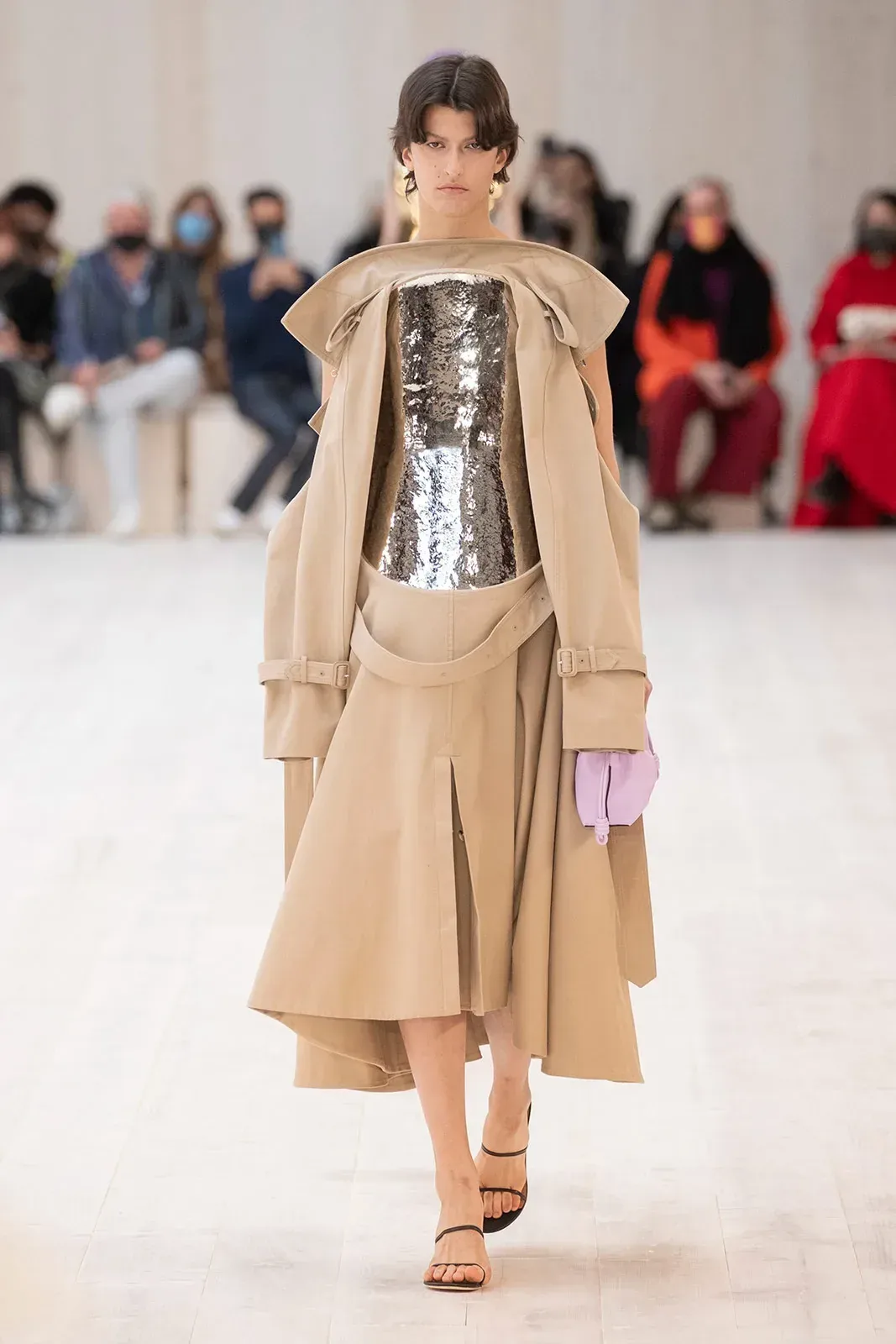
Can a pair of jeans and a white t-shirt be just as powerful, provocative and striking as a haute couture creation? The MET’s Costume Institute’s 2027 exhibition invites us to reconsider the boundaries of fashion, turning its attention to the beauty of everyday clothing and the transformative power of design. After years of spectacular gowns, theatrical silhouettes and extravagant interpretations of fashion, the Metropolitan Museum of Art is taking a different approach. Titled extraORDINARY: Fashion and the Poetics of the Everyday, the exhibition explores how designers can transform familiar garments and ordinary materials into something remarkable.
Perhaps the most compelling question behind the exhibition is a simple one: why do we need a special occasion to dress extraordinarily? Why can’t an everyday outfit be just as expressive, sophisticated or imposing? A pair of jeans and a white t-shirt can make as powerful a statement as an elaborate couture look. Sometimes, the difference lies not in the garment itself, but in how we perceive it, how we wear it and what we choose to do with it.
There’s a particular kind of magic in everyday dressing. It lives in proportions, cuts, textures, fabrics and silhouettes. It’s in the way a familiar piece can feel completely different when styled with a fresh eye. Fashion doesn’t always need spectacle to create impact. Sometimes, all it takes is a change in attitude and a willingness to see the ordinary differently.
Organised by Andrew Bolton, curator in charge of the Costume Institute, the exhibition will approach this idea in two main sections. The first, Familiar Forms, examines archetypal wardrobe staples such as jeans, white shirts, t-shirts, biker jackets, trench coats and puffer coats. Rather than reinventing these garments entirely, designers elevate them through unexpected proportions, innovative construction, unusual materials and new ways of styling. Among the examples featured are Virgil Abloh’s Off-White t-shirts, Gianfranco Ferré’s white shirts, trench coats by Jonathan Anderson for Loewe and by various designers for Burberry, and Pierpaolo Piccioli’s sculptural puffer gowns for Moncler. Each demonstrates how familiar pieces can acquire an entirely different identity through design.
The second section, Common Matter, shifts the focus from garments to materials. Paper, plastic, metal and found objects become the starting point for wearable creations, challenging traditional ideas of value, craftsmanship and beauty. Martin Margiela will feature prominently, alongside designers who have explored reuse and reconstruction as creative processes. Among the unexpected pieces are a sculptural ensemble made from broken china and a dress constructed from spoons by Ellen Hodakova Larsson. As Bolton suggests, the cost of a material says very little about the skill required to transform it. A paper dress can demand as much craftsmanship and dedication as a silk gown. What matters is the creative process and the new meaning given to something that might otherwise be overlooked or discarded.
The exhibition will also explore the emotional dimension of clothing. As Vogue’s Nicole Phelps points out, we all have favourite pieces that we keep wearing for years, even when they become worn, develop holes or begin to fray around the collar and hem. These pieces often become even more meaningful because of their imperfections. They carry memories, experiences and fragments of our lives. A well-loved t-shirt or a pair of jeans marked by time becomes more than just an item of clothing: it becomes a personal archive, a reflection of who we are and the moments we have lived. In this sense, the beauty of everyday fashion lies not only in its design but also in the emotional connections we build with the things we wear.
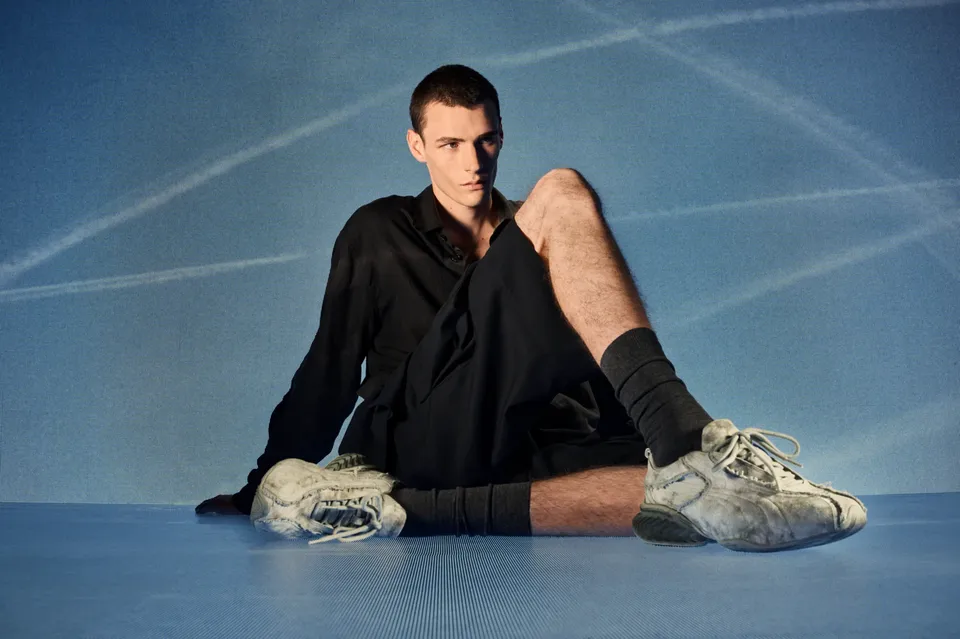
This human perspective will be introduced through Jun Takahashi’s Autumn/Winter 2024–25 collection for Undercover, inspired in part by Wim Wenders’s film Perfect Days and its celebration of the beauty found in everyday rituals. Through collage, layering and the reinterpretation of familiar garments, Takahashi transforms ordinary clothing into something deeply expressive. The exhibition will conclude with the work of Anrealage founder Kunihiko Morinaga, whose unexpected geometries and unconventional proportions challenge our understanding of familiar silhouettes.
The announcement also marks a change in the museum’s original plans for 2027. The MET had originally planned a spring retrospective dedicated to John Galliano. The museum and the designer announced its cancellation after public backlash over Galliano’s past antisemitic and racist remarks. extraORDINARY offers a very different perspective: instead of focusing on fashion’s most spectacular expressions, it looks towards the everyday as a source of creativity and inspiration. The exhibition will open to the public on 9 May 2027, following the Met Gala on 3 May, and will remain on view until 9 January 2028.
Ultimately, what makes extraORDINARY so interesting is that it doesn’t ask us to imagine a different world. It asks us to look at the one we already inhabit with fresh eyes. It reminds us that we don’t need a red carpet, a party or a special occasion to experiment with fashion or express who we are. A pair of jeans can be a statement. A white t-shirt can have extraordinary presence. A trench coat can be just as striking as the most elaborate evening gown. Perhaps true sophistication lies precisely in recognising that the extraordinary doesn’t always come from what we wear but from the way we choose to see it.