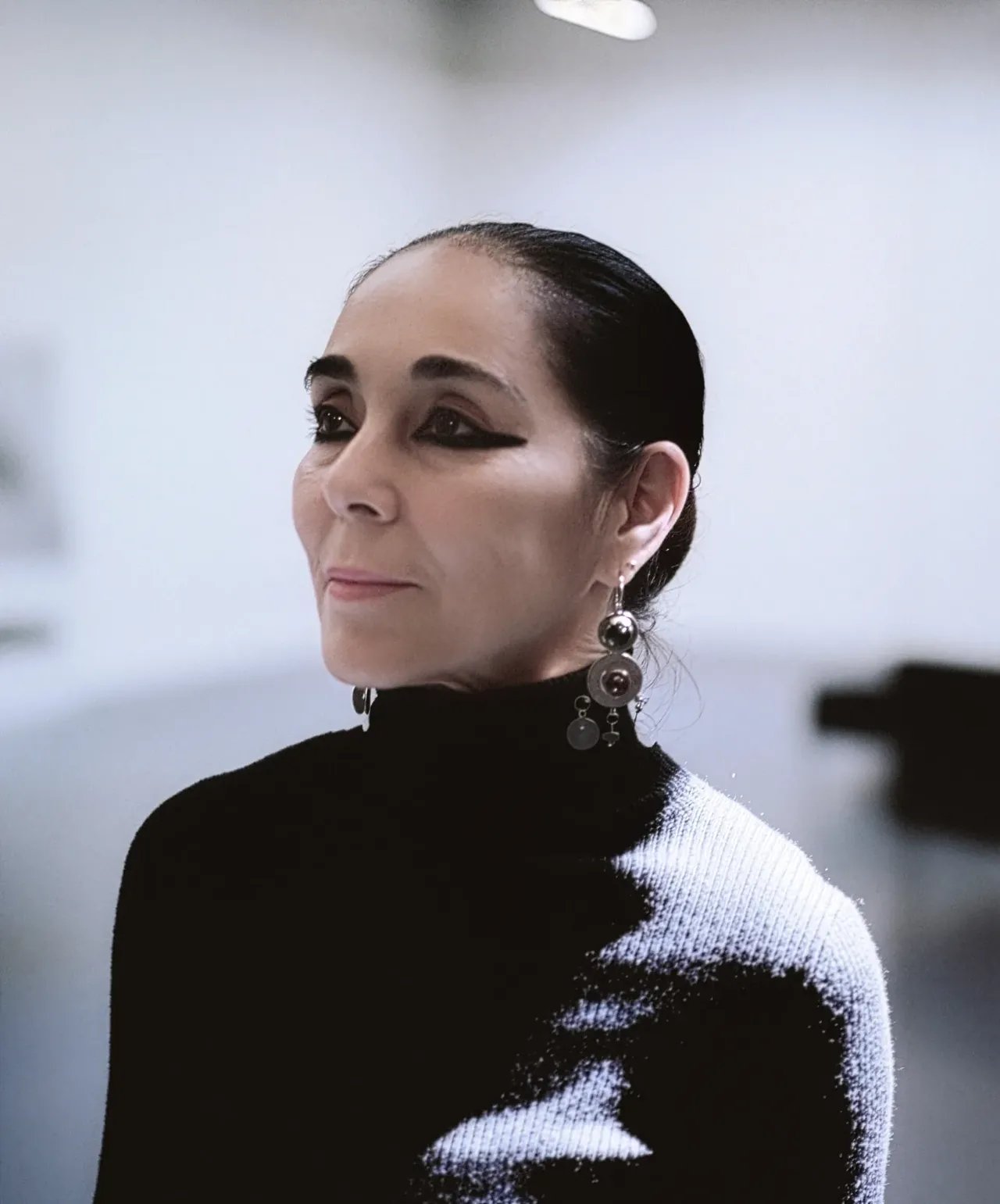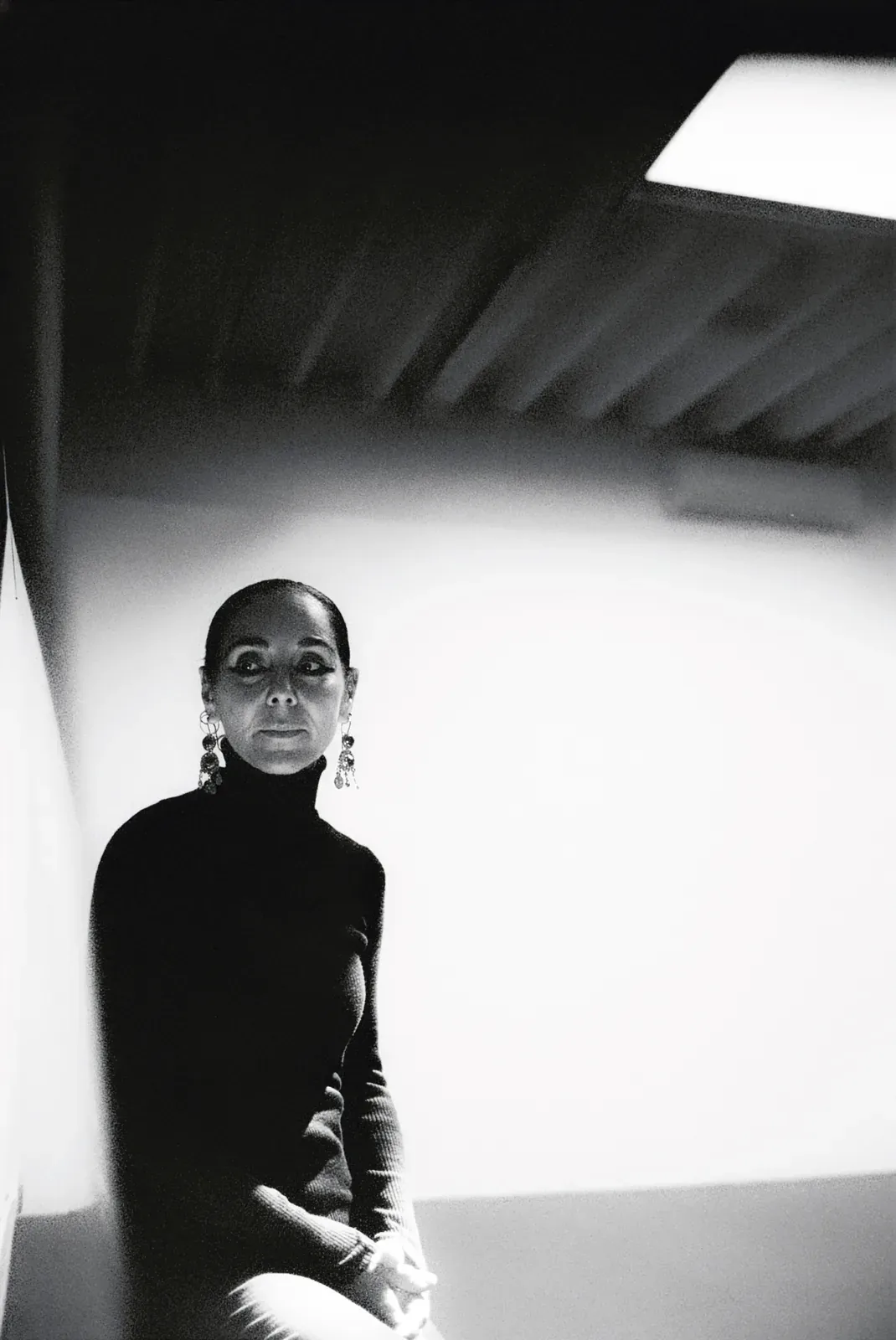
Few artists have explored the fragile intersection between personal memory and geopolitical history with the depth and clarity of Shirin Neshat. Working across photography, film, and lately opera, the Iranian-born artist has built a body of work that confronts questions of femininity, religion, identity, and exile while examining the subtle ways power inscribes itself onto bodies and beliefs. For decades, Neshat has navigated the space between cultures, rooted in the traditions of Iran yet shaped by a life lived largely in the United States; her perspective remains both intimate and critically in tune.
This interview is taken from Issue 54 and adapted for our digital platform. Order your print copy here.
Her celebrated photographic series “Women of Allah” brought her international recognition with its haunting images of veiled women layered with fragments of Persian calligraphy, probing the tension between devotion, militancy, and female agency. Since then, her practice has expanded into moving image — from the award-winning “Women Without Men”, which received the Silver Lion at the Venice Film Festival, to projects such as “Land of Dreams”, exploring the shifting identities of immigrants in America. Along the way, Neshat has become one of the most influential voices in contemporary art.
Yet beyond institutional recognition, what defines Neshat’s work is its insistence that art must remain engaged with its time. In an era of polarisation, cultural homogenisation, and algorithmic noise, her practice suggests that resistance can also be aesthetic. Simplicity may be a form of maturity, and poetry a space where complexity survives.
As she prepares to present her new film trilogy “Do U Dare!” in Venice, we meet Neshat for an intimate and wide-ranging conversation. Moving between exile and belonging, opera and cinema, faith and political power, the artist reflects on the female body as a contested territory, the persistence of fanaticism, and the unsettling feeling that, in our fractured world, the leaders we seek may no longer exist. In such a landscape, she reminds us, the most radical gesture might simply be to refuse to follow.
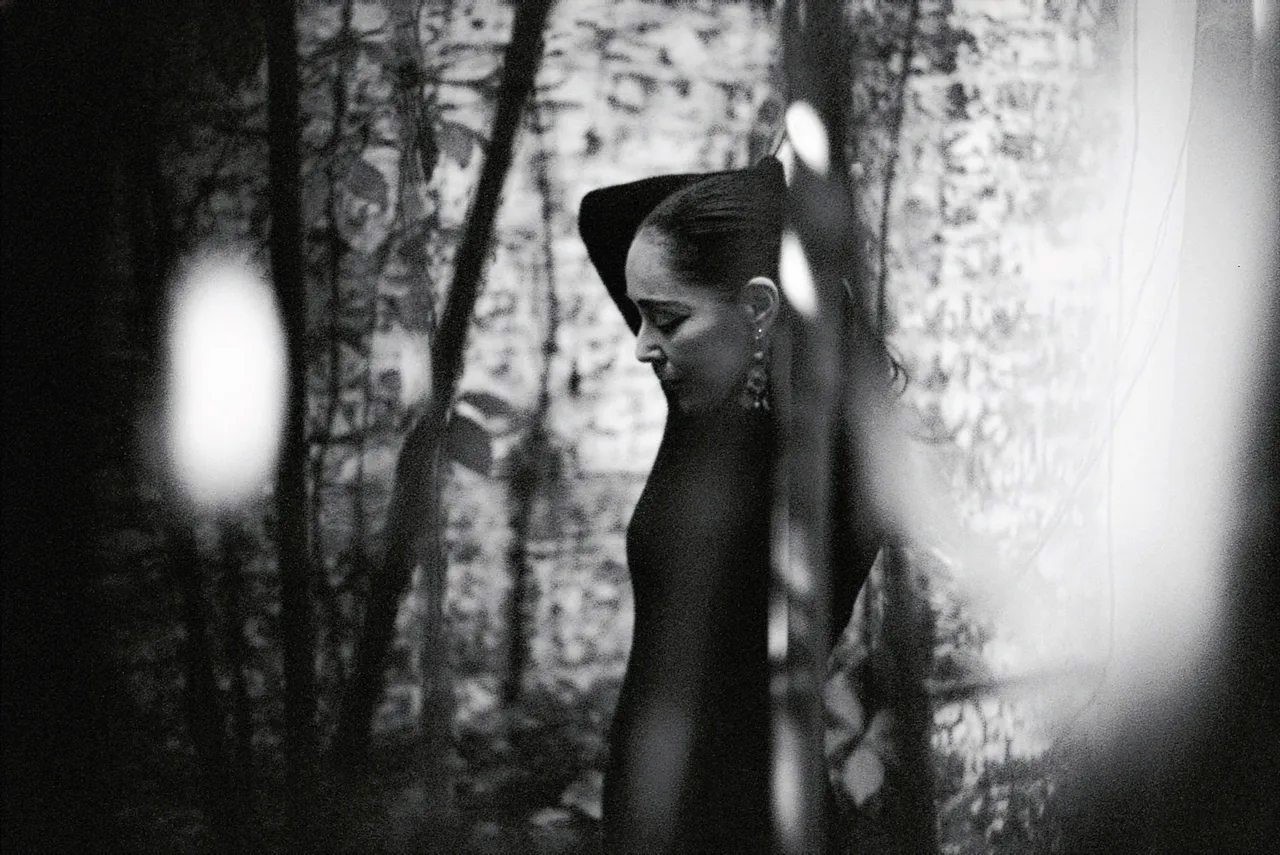
Let’s start with memory. You have lived most of your life in exile in the United States, and often spoken about the rupture of the 1979 Islamic Revolution as a formative experience. How does memory operate in your work? Is it a wound, a responsibility, or a form of spiritual continuity?
I have a very strong relationship to Iran. My family still lives there, and I speak with them every day. My husband is Iranian, and I work closely with Iranian collaborators. Although I live in exile, I never feel completely disconnected from the country. That’s important because some people in the diaspora eventually become detached. When it comes to memory, I think we tend to hold on to certain moments that become especially meaningful. I grew up in a small town where my father had a farm, and much of our time was spent in orchards. I remember the spring blossoms and our trips to the Caspian Sea. But there are other more difficult memories, like the time I spent at a boarding school in Tehran. What stays with me most are physical environments: gardens, orchards, the scent of flowers, food, and the presence of my father, who is no longer alive. There are both beautiful and painful memories. One of the hardest experiences for me was being sent away from my small town to Tehran to attend boarding school. It was a very anxious period. Of course, I know that Iran today is not the same country I left long ago. Part of me has come to terms with the possibility that I may never return. I’m not particularly optimistic this government will change in my lifetime or that people will truly be free. But what matters most is that I still feel deeply connected through my family — especially these days.
We scheduled this conversation some time ago, and now we find ourselves speaking in the middle of a major geopolitical escalation involving Iran. I can only imagine how difficult this moment must be for you…
It’s devastating, especially being outside the country. In some ways it’s even harder because you feel completely powerless. Yesterday we were with some Iranian friends. Some of them hadn’t heard any news from their families, others had. People were asking favours, trying to contact someone’s relatives, asking friends to call someone else. It becomes a very basic question: are they alive? Why haven’t we heard from them? And the war keeps escalating, which is very frightening. It creates a sense of complete paralysis. But people there often try to comfort us. Even when they call for just a minute. Sometimes my sister calls, she’ll say, “Everything is fine, everything is good.” Of course, everything is not good. But they try to reassure us. My mother is old and can barely move, and both of my sisters are there with their families — their children, their husbands, the whole shebang. That means a large part of my family is still there.
You have mentioned that your parents also sent you to the United States to study. You were a teenager. Did you want to leave to study abroad, or was it something they decided for you?
At the time, there was a trend among families who could afford it to send their children abroad for higher education. Honestly, there were two reasons. One, there weren’t enough universities in the country for all the Iranian youth to get accepted. But also, my father — a very progressive man who truly believed his daughters and son should be educated — was aware of what was happening in the country: underground activism, the growing influence of religion, and the people’s uprising against the Shah. My generation was the one that eventually overthrew the government. Consciously or subconsciously, my father wanted to send his children abroad partly for safety and partly because he always aspired for his children to have a Western education. Unfortunately, it didn’t turn out as planned, because my two sisters and brother returned, and I was the only one who stayed. Then the revolution happened, and there was a long gap before I could go back.
Which means you spent only seventeen years in Iran and then returned in the 90s. I imagine it was shocking coming back to find the Islamic Republic in place, everything changed, perhaps you were caught between belonging and estrangement. That was when you began creating these incredibly powerful images. It marked a major shift in your work, didn’t it?
Yes, I returned in 1993. At that time, I wasn’t really an artist. I was working with my ex-husband on a small but very important not-for-profit arts organisation in New York, focused on art, architecture, and social responsibility. The programme was fantastic, and I always say that’s where my education truly happened, where I developed both mentally and artistically. The ten years I spent there taught me everything I hadn’t learned at school. Surrounded by fantastic minds and artists and architects, I felt very fortunate. My journey in California had not been productive, but in New York, I found my path. After ten or eleven years of not making art, returning to Iran made everything fall into place, and I began creating the work I continue today.
In that sense, your work seems to emerge from that in-between state, a kind of permanent metaphysical exile. It feels deeply personal, yet it resists autobiography. How do you maintain that balance between emotional truth and symbolic distance?
I’ve never been interested in autobiographical work. My work is very personal, and the framing of the subjects I choose is important to me and echoes aspects of my life. The characters in my films or photographs often mirror me, and the narratives I create using video art and films are reflections of my experiences. But everything is framed conceptually and symbolically, allowing me to address broader issues without being directly autobiographical. The notion of woman as an outcast, which I identify with; woman as a loner; woman as a rebel. In some ways I am a woman who wants to be an activist; a woman who is simultaneously vulnerable and strong. All these dualities in my characters relate to my own psychological and political states. Some characters even begin to resemble me — short, dressed simply in black. Of course, every artist’s work reflects themselves to some extent. In my case, it’s very personal, rooted in the issues I confront, which I translate into stories through different characters. Yet, the narratives always evolve from what I experience.
Building on that, your images have become emblems for those resisting authoritarian structures. I would like to hear your opinion on the nature of totalitarianism, particularly where God functions as political authority and religion and state are inseparable. How do you see these theocracies?
It’s interesting, because I have always focused on Iran as a country of totalitarianism, authoritarianism, fanaticism — a complete fascist government, a dictatorship. But recently, my work has been turning its lens toward America, and how it is becoming very similar to Iran — an authoritarian government, a fascist superpower. The idea of democracy feels completely compromised; its treatment of immigrants reveals deeply racist structures. The whole idea we had of America as the ‘land of dreams’ has completely changed. Now, when I look at it, it’s full of hypocrisy, corruption, and injustice. I feel caught between two countries that are supposedly opposed and are, in fact, fighting each other, but actually, they are not that different. When I first came to the US, it was another story; I felt safe, welcomed, I even worshipped this country. Now, I am working on a new project called “Do U Dare!” that will premiere concurrently with the 2026 edition of the Venice Biennale at the Palazzo Marin. It’s all about us, it centres on an Iranian woman, inspired by the tragic story of Nasim Aghdam and it’s a film trilogy. Additionally, I made a movie and a photographic series about immigrants called “Land of Dreams” (2019), which marked the moment when my work began turning toward America. Since then, I’ve continued exploring this theme, but this particular series, “Do U Dare!”, is specifically critical of America from the perspective of an Iranian woman immigrant, not myself, but a protagonist. As both an American citizen and an immigrant, I feel the same amount of rage and outrage toward this country as I do toward Iran, perhaps even more. How dare they target the leader of another country on their own soil? How dare they attack a nation without logic? There’s such an imperialistic, cowboy attitude. This new work for Venice is focused, again in a highly symbolic and stylised way, on pointing at America.
Many people ask why attention is often focused on the catastrophe in Gaza but not as much on other conflicts like Sudan or Congo. Domestic and foreign US policy intersect, and it seems there is a broader pattern in which powerful actors shape global geopolitics. Do you see a connection between these simultaneous conflicts and the global power structures behind them? And how does this understanding inform your practice?
Exactly. You’re right. Sudan is another ongoing tragedy that very few of us are taught about. But the key is to create artworks that aren’t limited to a single situation but speak to people who lack the agency to protest and stand up for values. In this country, people are slowly losing that ability. Right now, Americans should stop this war, and no one is really doing anything. The government is letting it happen; they just passed it. I was just talking with friends about Sudan, not to mention the injustice in Yemen, and the actions of the Emirates and Saudi Arabia — many people have died, it’s overwhelming. My head is just spinning thinking about all of it. At the same time, as we discuss politics, we are inevitably talking about art, and the relationship between the two is really complicated. How do you navigate this space, ensuring it doesn’t become propaganda or an obvious taking of sides? In my personal daily life, I try to be very conscious of what’s happening everywhere and to stand with those who are victims. But in my artistic practice, I aim to be far more symbolic, allowing people to engage with the work and draw their own conclusions.
Precisely. Evocative and political, but never propagandistic. Your approach is poetic and symbolic rather than any direct accusation. Do you think poetry is the last form of resistance, and perhaps even the most enduring one?
It’s interesting, because at the Berlinale there was a lot of debate about art and politics — whether they should be separated or incorporated. I don’t even see how, with such chaos in the world, artists, filmmakers, writers, or anyone could distance themselves from reality. Obviously, it affects your mindset, your thinking, and your emotions. How could anyone say that art and politics have to be separated? I was really shocked by that idea, especially because I love Wim Wenders. But I want to return to your question. Poetry and symbolism, for me, are crucial. They allow me to express ideas and emotions in ways that feel deeper and more enduring than direct accusation or propaganda.
Yes, let’s continue with this idea of symbolic territory. The female body often becomes the battleground where spiritual and political conflicts unfold. Including in Western countries, patriarchy makes decisions and imposes rules for us. When regimes, or corporations, attempt to create new gods or new forms of belief, does the control of women’s bodies remain the primary symbolic territory?
Yes, in my work from the beginning, the female body has been central for many things: as a place of protest, a place of submission, a site for sexual exploitation, a space where men fight their ideological battles, a surface where they enforce their rhetoric on the body of women, and a place of shame and sin. In my latest work, however, the female body instead becomes a point of power. While it can be an object of desire or violence, I now treat it as a source of agency. Being Iranian, and witnessing the Woman, Life, Freedom movement, we have been subjugated to extreme oppression in terms of what we are allowed, or not allowed, to do. The government of Iran defined its religious behaviour through women embodying its ideology. They wanted to signal, “We are a religious Islamic society,” and the only way to do this was by forcing women to wear the veil. From the outside, people say, “Ah, that’s an Islamic State.” Women had no choice but to wear the veil, thus to the world, they would appear as a religious society, whether they liked it or not. This forced control, where the veil is just one aspect, has consequently made women incredibly powerful, fierce, combative, and defiant. That is what I find compelling: despite the repression and oppression in Iran, there is a remarkable sense of rebellion, strength and resistance. Perhaps Iranian women are even more advanced than Western women, because being pushed to the limits makes us acutely aware of our bodies as contested spaces, and we use them to the fullest. Hair, body, gesture — they all become tools of agency. Simply moving the veil to reveal hair is a form of protest. It’s incredible. I find this idea of the female body as a tool of power, rather than merely submission or victimisation, profoundly inspiring. Most Iranian people, especially women, understand this, and it is a theme I use extensively in my work.
Severe oppression makes Iranian women very sure of who they are and what they’re against. Meanwhile, in Western culture, we women think we’re ‘very free’ and can do whatever we want, whilst still facing obstacles — from femicides to imposed canons of beauty. We submit to this patriarchy without even realising, especially with the resurgence of conservatism. Recently, Islamic feminism has gained visibility, while at the same time Islamophobia has intensified in Western societies. Moreover, many people say, “Islam and feminism is an oxymoron.” From your perspective, shaped by both Iranian history and life in the United States, do you believe there is space for a feminist reading of Islam that is not co-opted by the state?
Unfortunately, misconceptions are widespread, but I don’t want to stay too long on this subject. There are two different groups of people living there: those who are very religious and pro-regime, and those who are not. When you talk about the women of Iran, you cannot just talk about one group. After the death of Khamenei, there were widespread reactions across the region, with many mourning and protesting in solidarity in some communities abroad. There were thousands, if not millions. These are not a minority; they represent a vast number of people. But within Iran itself, the situation is more complex, groups of women have taken to the streets over the years for different reasons, including resistance to compulsory dress codes and broader demands for freedom. It is difficult to reduce a conversation about Iranian women to a single experience. My feeling is that there should be the possibility for women to do what they wish. Some people may want to remain within the parameters of religion, and there should be space for that; others may not. I am interested in a secular society, which is a source of frustration for me. But at this moment, that barrier has been crossed. I hear that most women in Iran who don’t want to wear the veil simply don’t wear it anymore.
Yes, I heard something similar recently on TV where a Spanish professor in Tehran said that 90% of his students were women and that most of them no longer wore the veil. Returning to your practice and the veil, “Women of Allah”, one of your earliest bodies of work, feels strikingly relevant today. What kind of power do those photographs still hold? Can an image meaningfully compete with populist leaders and algorithms in shaping belief?
It’s fascinating because “Women of Allah” was my very first body of work, yet it’s probably the one people know me most for — except perhaps “Turbulent”, the video I brought to ARCO in Madrid back in 1998. That two-channel video of a man and a woman singing went on to become iconic and marked my entry into video. What is remarkable is that although “Women of Allah” was made long ago, it still feels incredibly relevant today. And the reason is the persistence of fanaticism. Just yesterday there was a scene at the White House where pastors and priests came to see Trump; they opened the Bible, held each other, and prayed for the war. You should see it, it was very choreographed, the way they placed their hands on one another and closed their eyes. That same kind of fanaticism appears in many places: in Israel through certain forms of Zionism, or in the Islamic Republic of Iran when people say, “We must kill the Jews and become martyrs.” “Women of Allah” speaks to the threat of fanaticism, those moments when ideology prevents people’s ability to think clearly. The images I created show women who have been brainwashed. I’m not saying these represent average Iranian women; these are women who are voluntarily armed and prepared to kill, and that’s not okay. But such people exist. Of course, the work became controversial because some thought I was validating that idea. I wasn’t. I was simply showing a reality, how ideology can indoctrinate people into believing that dying will send them straight to heaven. Even now, some people celebrate the death of Khamenei because he was killed rather than dying naturally. Many Westerners don’t understand why he becomes a hero to some, but within that ideology the notion of martyrdom is powerful; the belief that those who are martyred go directly to heaven.
The tension between belief, ideology, and power has been present in your work from the beginning. Looking back at your trajectory — from “Women of Allah” (1993–1997) to your recent retrospective “Body of Evidence” at PAC in Milan, and the work you will present in Venice — how do you perceive your own evolution? Has your relationship to faith and power transformed over time?
I’m glad you brought that up. In that exhibition, which was truly marvellous, you could clearly see the evolution of my work, not only from photography to video, but also the evolution of my perspective. When I was making “Women of Allah”, it was mainly an attempt to understand. I didn’t have a specific point of view yet. I was trying to comprehend things from a sociological angle because I wasn’t living in Iran. Slowly I began making work that was more openly critical, like “Turbulent” and other pieces that criticised the Iranian government and the discrimination against both men and women. Later came “The Fury” (2022), a two-channel video and photo series responding to the resurgence of fascism, which expands the critique of theocratic control over women to a global context and deals with the sexual exploitation of women in prison. Over time, you can sense the artist becoming increasingly angry. The exhibition included “Land of Dreams” as well, a photographic and video project I mentioned before. But the new body of work is quite different. Once again it centres on an Iranian woman carrying the baggage of exile and migration, yet it simultaneously expresses a much stronger position and a fierce critique of this society.
We can see, in this evolution, you have increasingly questioned how ideological power operates across cultures. Nonetheless, Western societies often present themselves as universal models of democracy and freedom, while overlooking the depth and complexity of other civilisations. Do you feel that criticism from the West sometimes slips into a broader cultural or religious prejudice?
Exactly. What’s really interesting — without going too deeply into it — is that many Western countries underestimate Iran, a nation of ninety million people with a vast and sophisticated society full of incredibly intelligent people. When it comes to the regime itself, they may have eliminated Khamenei, who was already old, but they did not eliminate the ideology; the ideology continues. Unfortunately, for many people he has now become a hero. He is regarded as a Supreme Leader not only in Iran, but also in places like Iraq, Lebanon, and parts of Pakistan among Shiite communities. I’m not even sure Trump understands how complex this situation is. You cannot treat it like Venezuela, where you might imagine that removing the president would solve everything. Here you are dealing with a deeply rooted ideology.
Thinking about cultural influence, I’m reminded of Spain. Fifty years ago, we were undeveloped and lived under a dictatorship. Then, with the arrival of democracy, everything shifted — we quickly absorbed the dominant Anglo-Saxon culture. We have our own traditions, but, like many, we moved toward a global uniformity. It’s understandable that some people resist this homogenisation, which can erase identity and leave a void where roots once were. Is it ever possible to flatten cultural diversity, or is its richness something that inevitably resists erasure?
Well, this connects directly to the conversation about Iran today. While people may despise the government, they nonetheless don’t want their culture destroyed or compromised. Iran has such a rich heritage, its architecture, its monuments, its traditions, and we don’t want our monuments to be ruined. Tehran should not be reduced to another Gaza. There is a real tension here, on the one hand, wanting political change without erasing the culture, and on the other hand, not wanting their country, their cities to be destroyed.
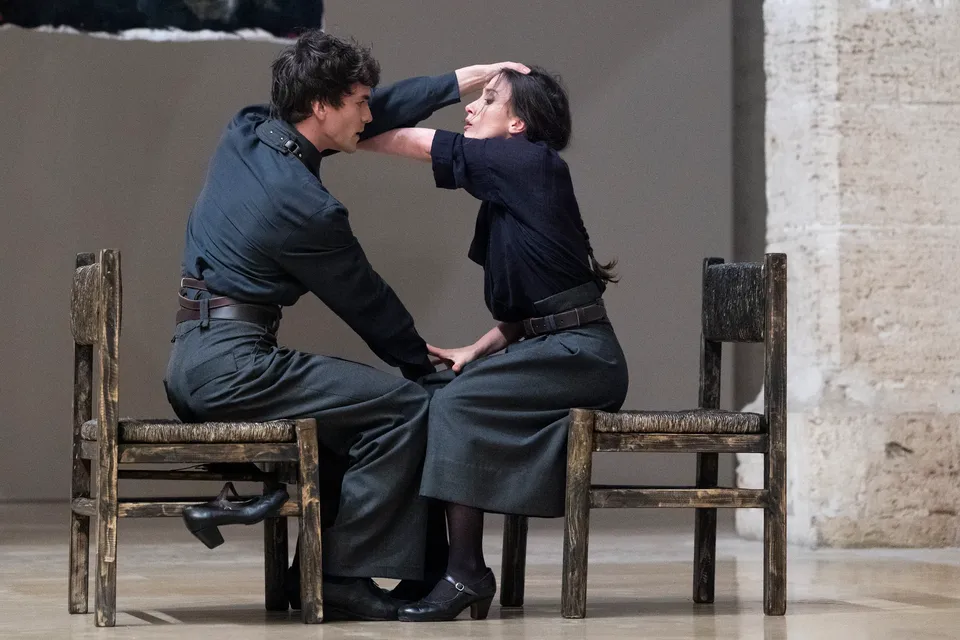
After discussing the fragility of cultural heritage and the tension between political change and preserving identity, it’s great to see how your artistic practice explores these themes in a different medium. Your recent opera project, “Orfeo ed Euridice”, reimagines the myth with a personal and symbolic lens. How does opera — a centuries-old ritualistic art form — allow you to address themes of love, grief, authority, and human vulnerability for audiences today, especially a generation that claims to be cynical about transcendence?
I started my opera experience with “Aida”, first staged at the Salzburg Music Festival in 2017 and then in 2022. It was later acquired by the Paris Opera House in Bastille, where I revised it and it opened in September 2025. “Aida” now will arrive in Barcelona in September 2026 at El Liceu, the main opera house. I fell in love with opera as a medium, mainly because, like my films, it’s about choreography and music. I loved working with a classic Western opera and making my own interpretation. “Aida” was perfect because it dealt with the fanaticism of the church, war, an authoritarian king, and a love triangle. It was beautiful, and I loved it. It took three stagings to finally get it right; the Paris production is the one coming to Barcelona, and I am very pleased with the result. I was then asked to create a second opera, “Orfeo ed Euridice”, which I truly enjoyed. It’s a black-and-white opera that moves between film and stage. For the first time, I could fully use my own visual language and mediums of film and photography. Every moment becomes a tableau in black and white. I worked with extraordinary dramaturgs, creating a fascinating event that I presented at Teatro Regio di Parma, Italy, this past January. Parma is a small town with a beautiful opera house, and I hope the production will travel further. “Orfeo” and “Aida” remain two of my most spectacular artistic experiences. I want to continue because, while I’ve worked in cinema, opera allows me to engage with live performance and it is vulnerable, volatile, and possesses the magical unpredictability of sharing the moment with an audience. When the orchestra, singers, staging, and music all come together, it’s incredibly powerful. I don’t do this for money; in fact, the time required is far from adequately compensated. But money is not part of the equation here. The same goes for filmmaking. I’ve made only three films — “Women Without Men” (2009), “Looking for Oum Kulthum” (2017), and the piece “Land of Dreams”, which was later turned into a feature-length film in 2021 — none of them profitable, yet there’s something exciting about the form, a chance to experiment in a new medium.
As Wagner famously said, opera is a Gesamtkunstwerk, the total artwork, because it unites poetry (literature), dramaturgy, music, dance, pantomime, architecture, scenography, costume design...
He’s right, I didn’t know that. It certainly has literature, music, choreography, and dance and this combination is extraordinary. We are in a very interesting moment, because classical opera has long catered to older elites, but that is changing. Some opera houses and festivals are taking risks with experimental and radical works like mine. This can be tricky, as not all critics embrace experimentation, but these institutions and festivals want to engage both the opera house and the audience. We’ve had fantastic responses for both “Aida” and “Orfeo” every night. I was profoundly fulfilled, both artistically and psychologically; it felt like a true achievement.
To wrap up, in a world lacking clear moral authorities, artists sometimes become symbolic leaders, willingly or not. You have become a figure of reference for many of us. After everything you have witnessed — revolution, exile, religious authority, abuse of power — how do you see the possibility of change?
I just share my personal opinion because that question is very private, but I feel that change must come from within Iran, not from the outside. The alternative has to come from the people themselves, most of whom are in prison, people who want a republic, not a religious government. I do think things are happening. As of a few days ago, we have heard some news that is very promising. We’ll see. I am strongly against foreign intervention or the idea that the monarchy — the sun — will come back. I don’t think that’s the right approach. Personally, that’s my opinion, which I am entitled to. The people inside Iran know what they want. They should be the ones who decide. None of us outside should make that decision — not the diaspora, not foreign governments. And I think most of my friends feel the same way.
As we near the end of our conversation, moving from a particular situation to the broader question of leadership and power in the global world, do you believe it is still necessary to follow anyone? Who, or what, could that be? Perhaps a certain philosophy?
Unfortunately, when I think of those in positions of power, it seems that wanting power often requires committing great evils. That’s why numerous heads of state — from Putin to North Korea, to Netanyahu, Trump, Khamenei, and God knows who else — act in such cruel ways. It almost seems inherent to the role: to lead, one must be capable of evil. I don’t know many good people leading today. Philosophically speaking, few come to mind. At this moment, I can’t name a single person who offers reassurance about the future, not among Iranians, nor among philosophers elsewhere. We all follow countless non-conventional media channels, but no one stands out as giving the right guidance. There are figures we agree with, but it’s not like they have a solution or a hopeful message to rally around and say, everything will be okay. Unfortunately, we are in a very dark place.
I agree. In these dark and polarised times, I find radical divisions deeply troubling. In the age of infinite scroll, where attention is a commodity — at least in Western societies — young people often follow emptiness: fandoms or hollow trends that go nowhere. It seems they simply consume whatever appears on their screens, Instagram, social media, platforms that have become the new leaders. Perhaps today the most radical act is to resist the impulse to follow altogether?
I think the young people are the ones who should carry the load. They are the future. I was recently visiting an art school as a guest professor — there is no need to name the university — and I noticed that many American students didn’t even know their country was at war. They had only the slightest awareness because they are entirely immersed in making art. Even then, I don’t know, sometimes I feel that while Iranian youths are highly mobilised and incredibly intelligent, in Europe and America there is a sense of passivity. Palestine, however, did awaken a lot of people; the pro-Palestinian movements, at least, sparked awareness.
Thank you for sharing your time and thoughts in such a vulnerable moment. I hope our conversation has offered a space for reflection, rather than pain — a moment to speak freely about what matters.
It has been good. We couldn’t have avoided these conversations, they had to be said. And it feels right to share this exchange. I hope our paths cross one day, perhaps in Barcelona. Thank you for sharing with care and humanity. I am truly grateful.