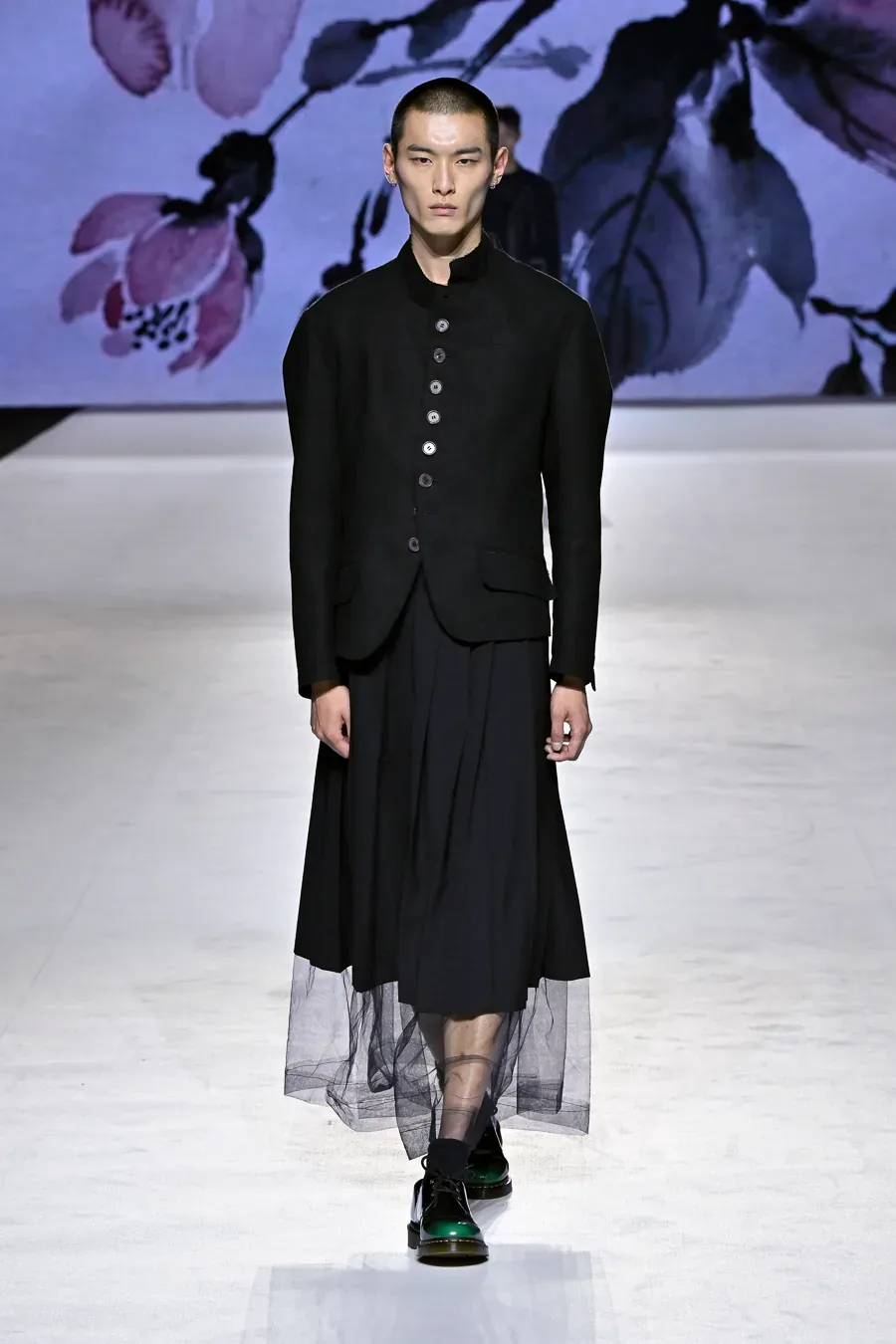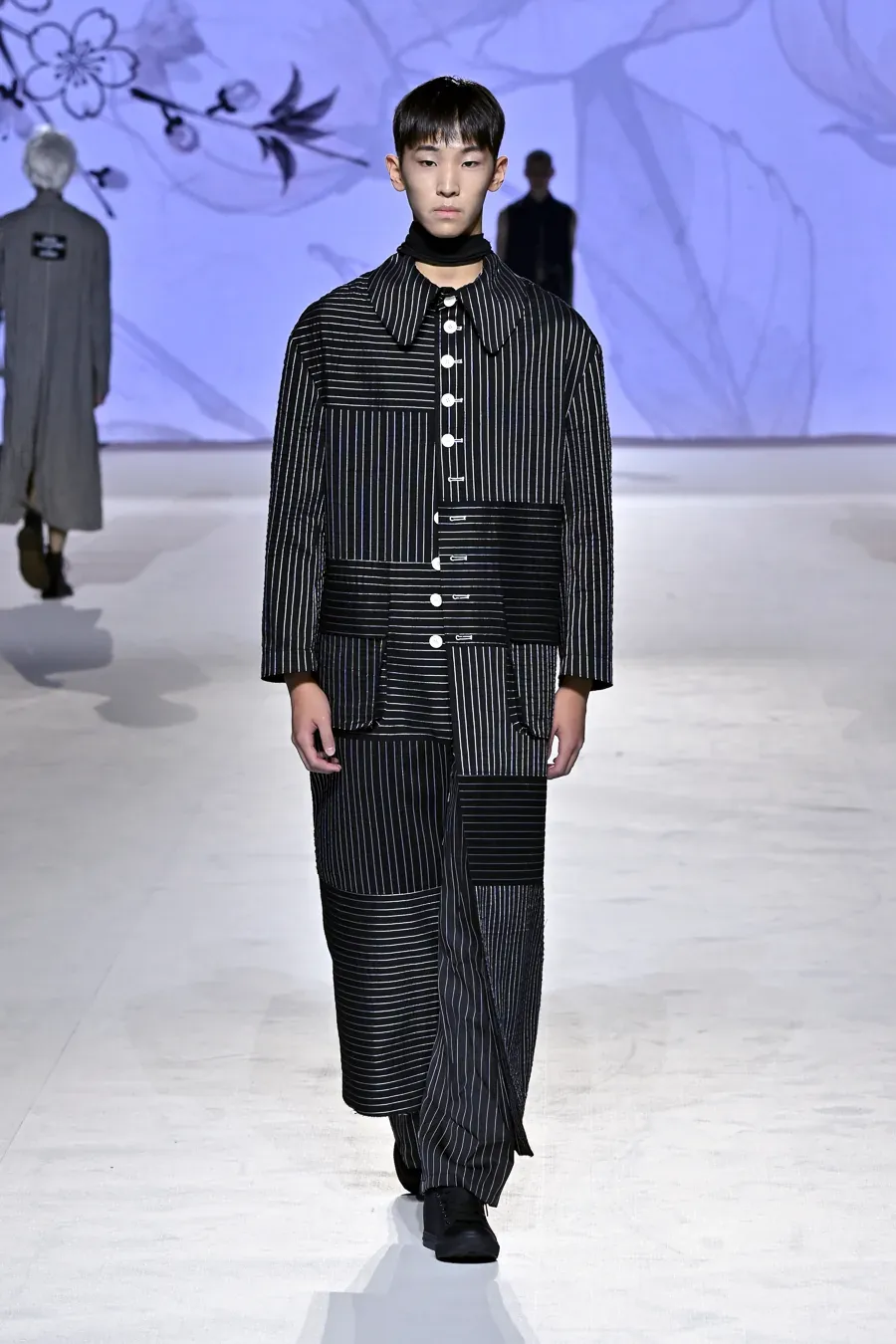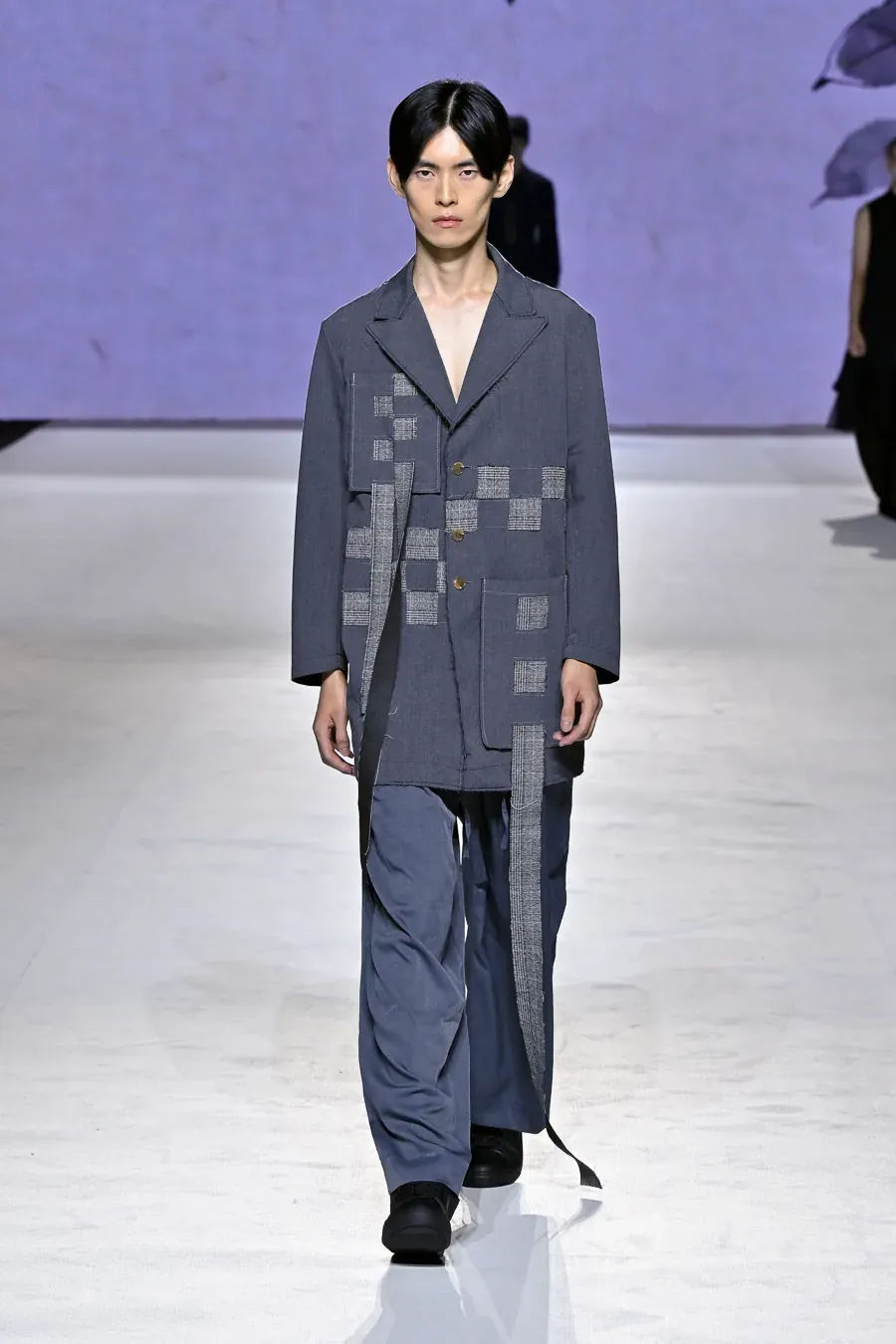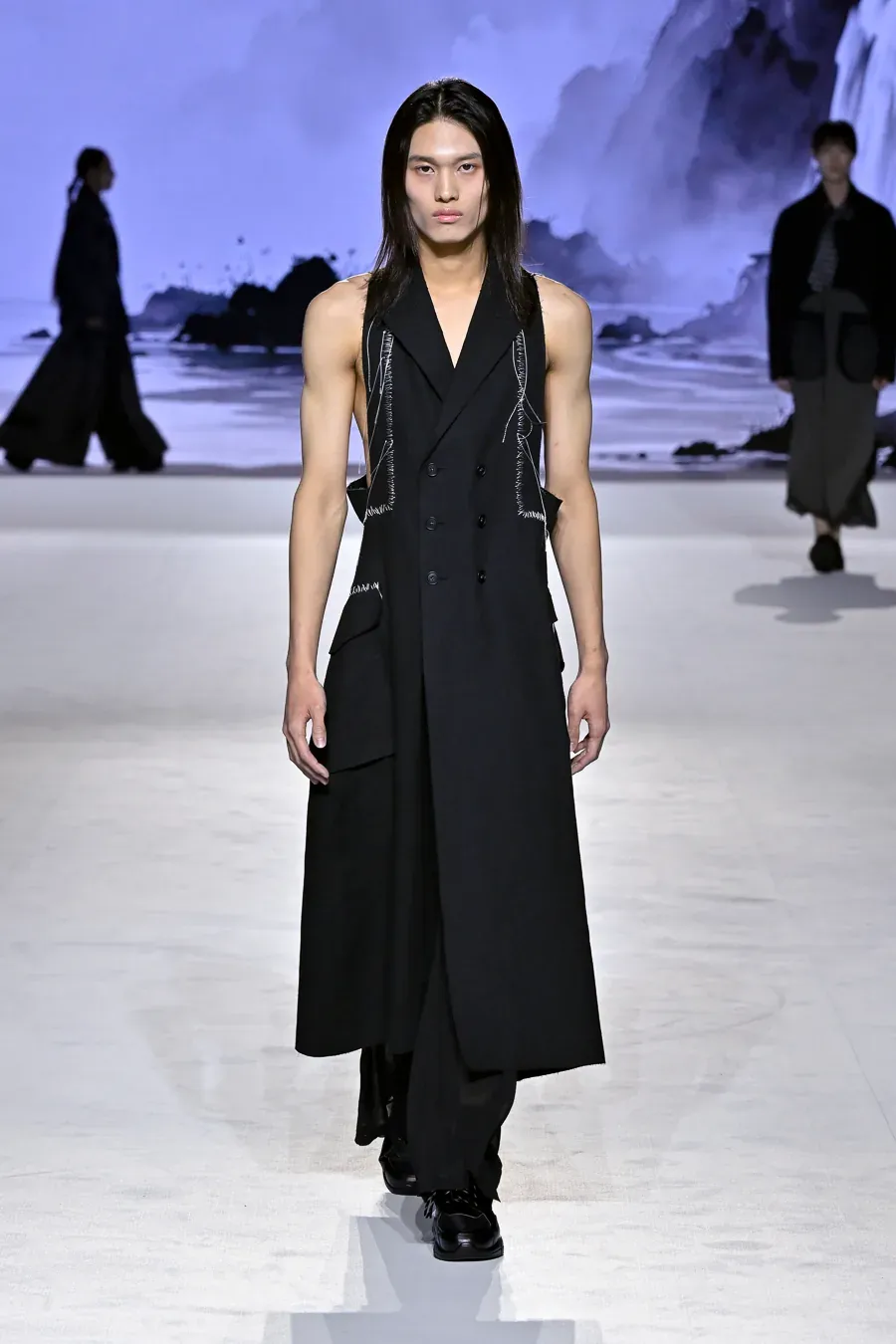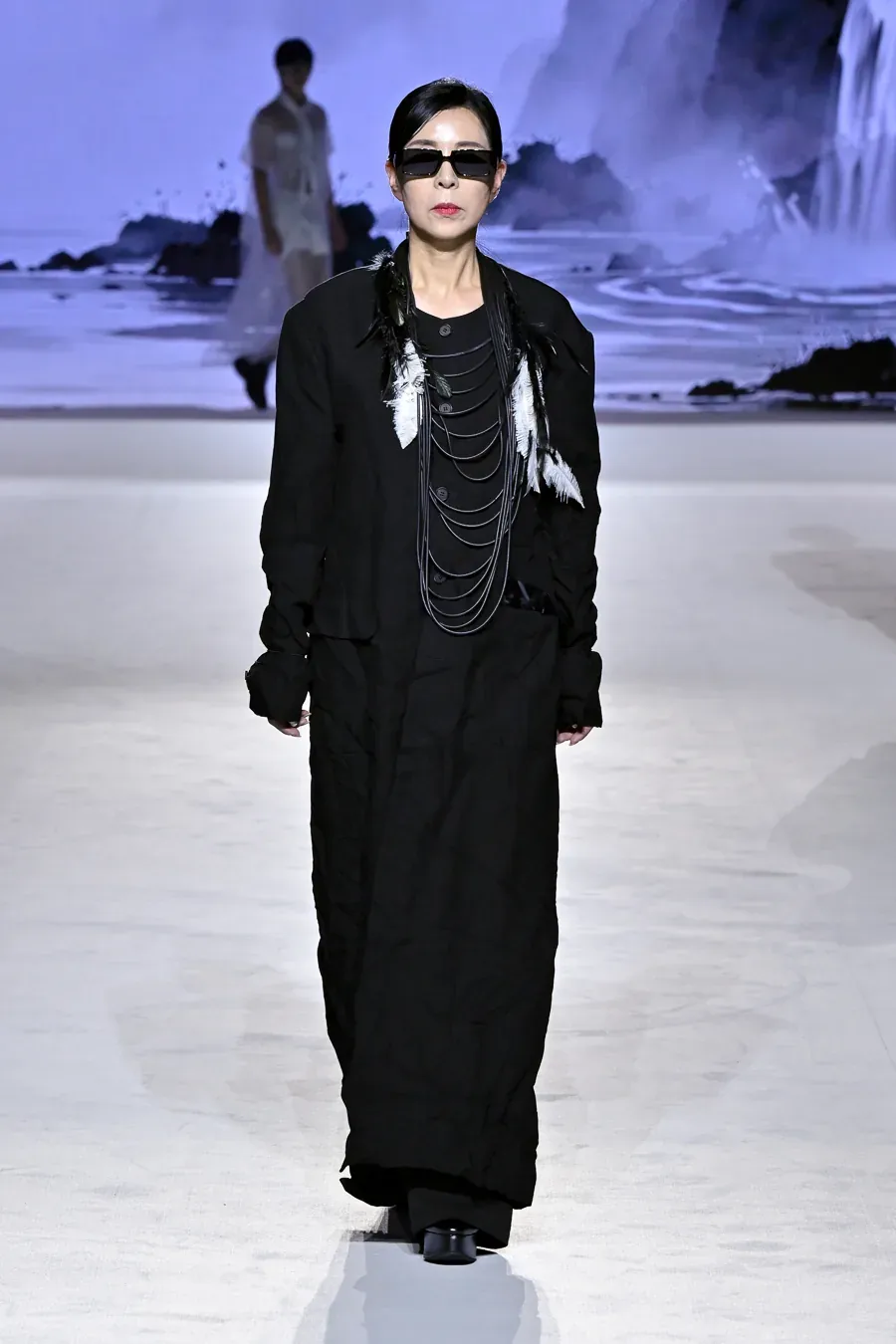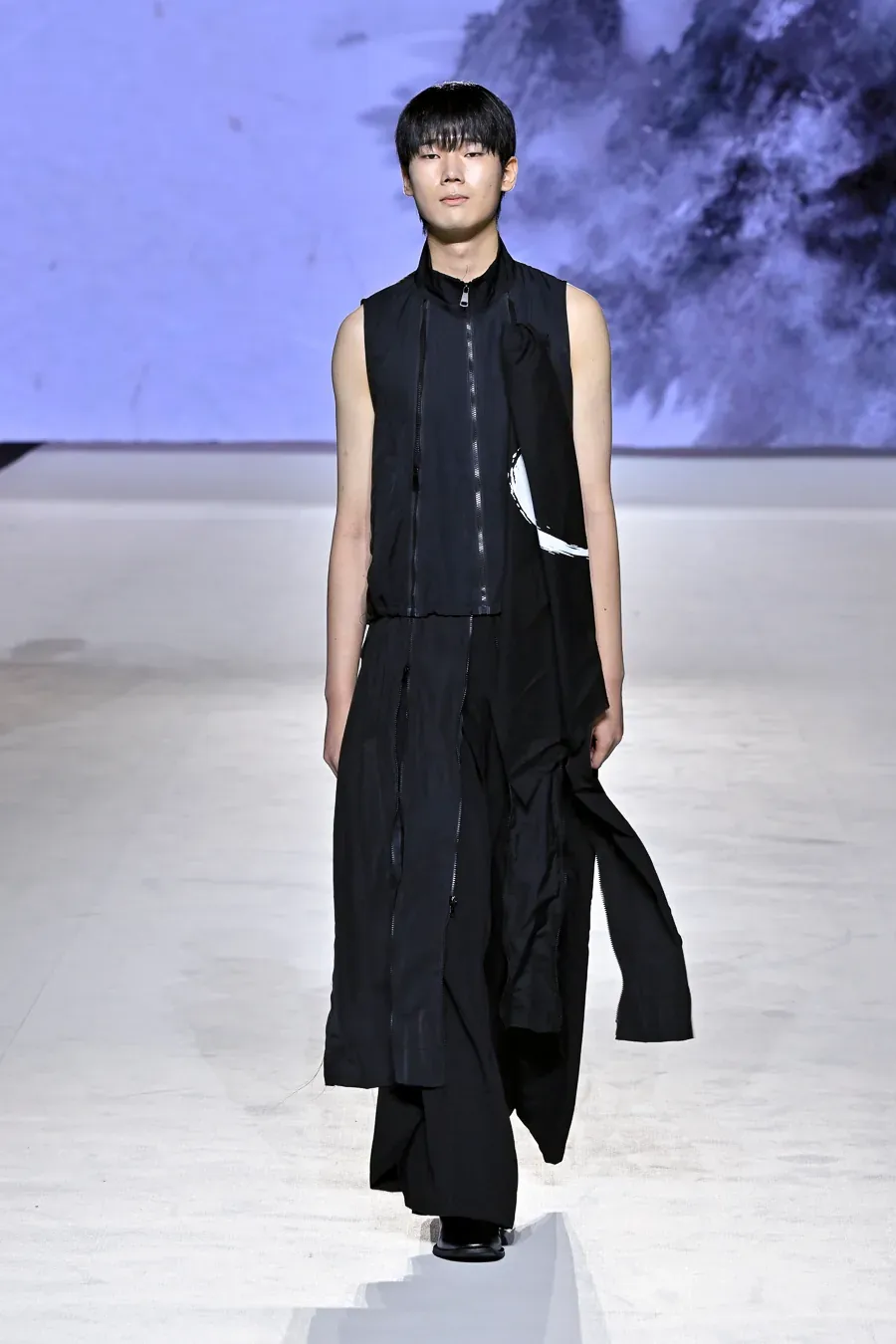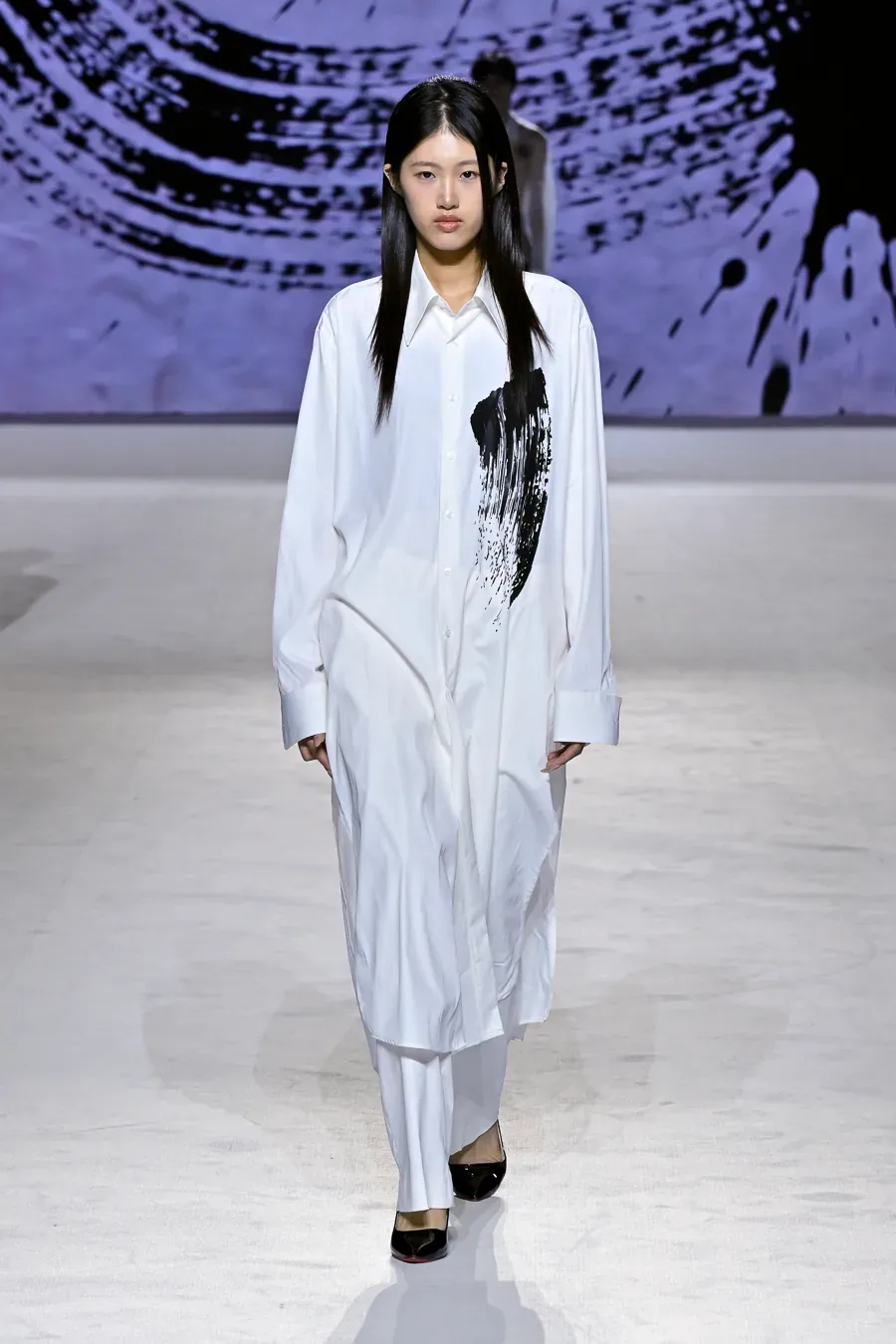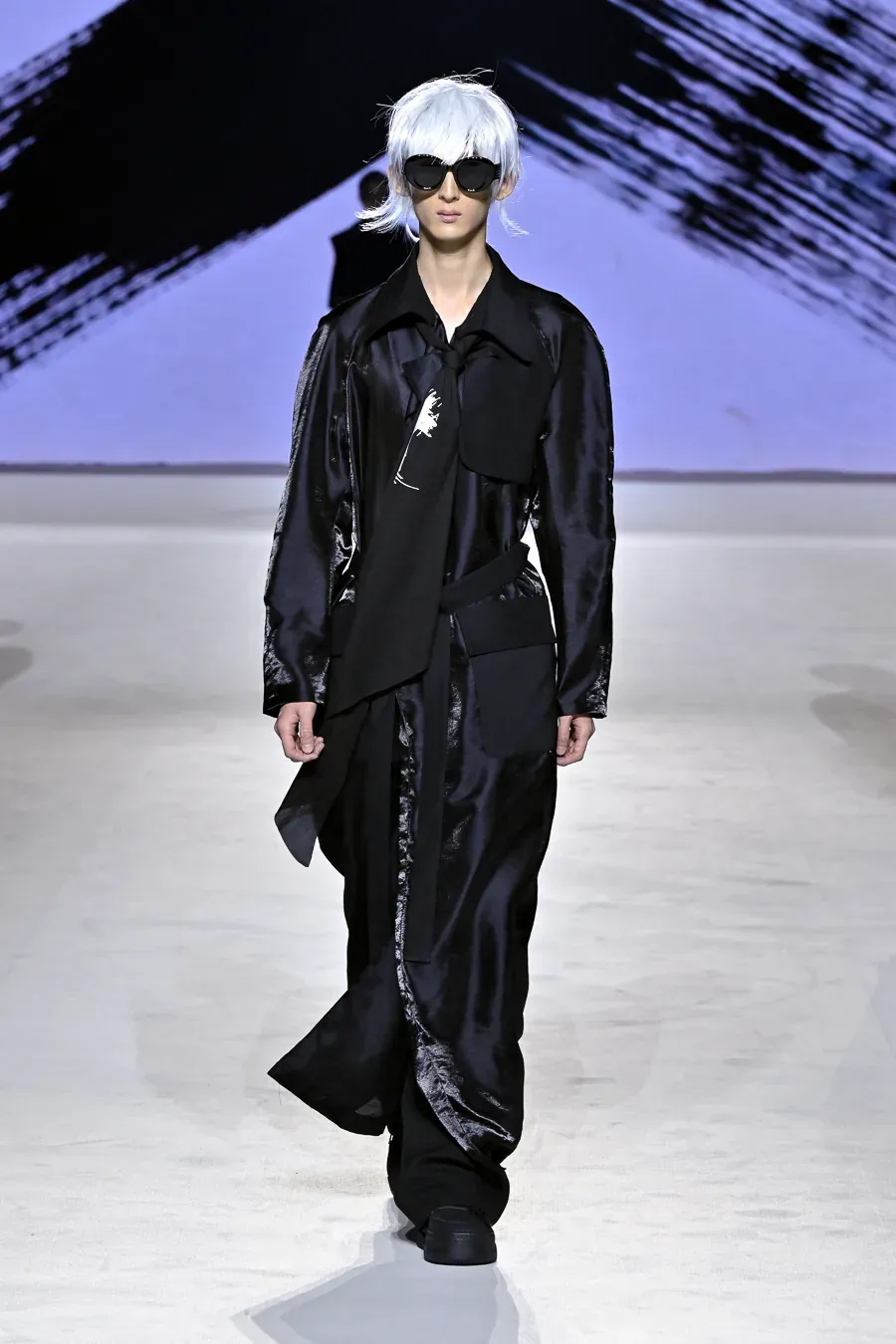
One week, two landmarks and enough contrasting ideas to make any neat definition of K-fashion feel immediately inadequate. From 1 to 6 September, Seoul Fashion Week staged its S/S 2027 edition across Dongdaemun Design Plaza and Lotte World Tower, expanding beyond its established industry hub into a more public-facing festival of shows, presentations and culture. The most interesting clothes concerned something intimate: what time leaves behind, how identity is reflected back to us, and what tradition looks like once it begins to move.
Across the programme, tailoring became less a uniform than a material to test. Suits absorbed outdoor hardware, Eastern silhouettes met Western construction, and familiar jackets were loosened, layered or pulled apart. Elsewhere, designers used flowers, brushstrokes, mirrors and even a runway robot to turn memory and fantasy into something physical. The recurring tension was between control and release: heritage against technology, muted surfaces interrupted by prints that refused discretion.
As always, we have selected our favourite collections. Re Rhee found beauty in accumulated wear; Daily Mirror asked how far a suit can travel from convention. Big Park extended decades of tailoring without embalming them, while Greedilous sent The Little Prince into a gleefully synthetic new orbit. Kwak Hyun Joo looked through the magic mirror of AI, and Sling Stone closed the DDP programme by following the restless line of a Korean brush. Together they made a convincing case for Seoul as a city where the future rarely arrives without bringing the past along.
Re Rhee
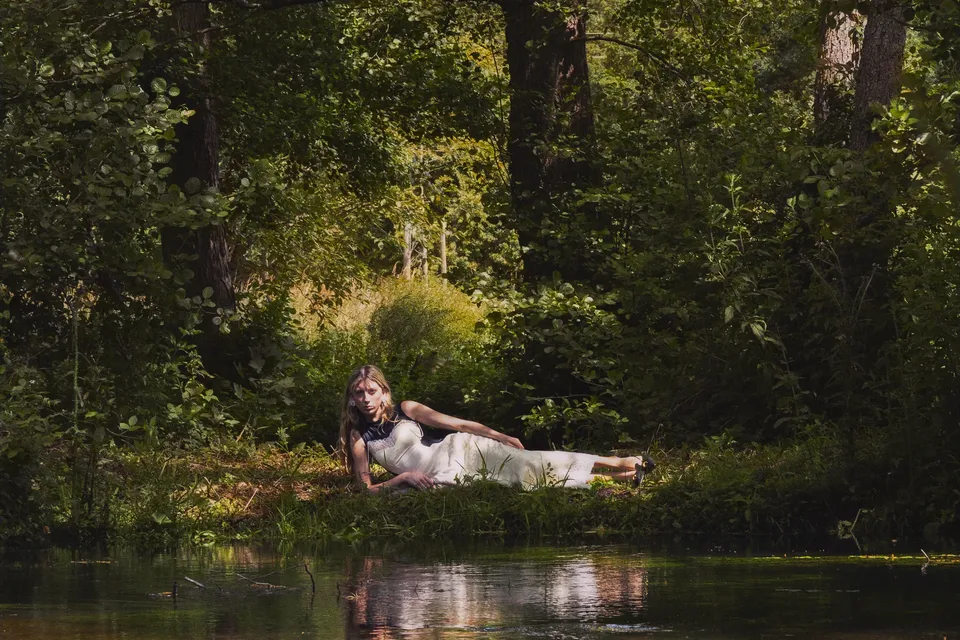
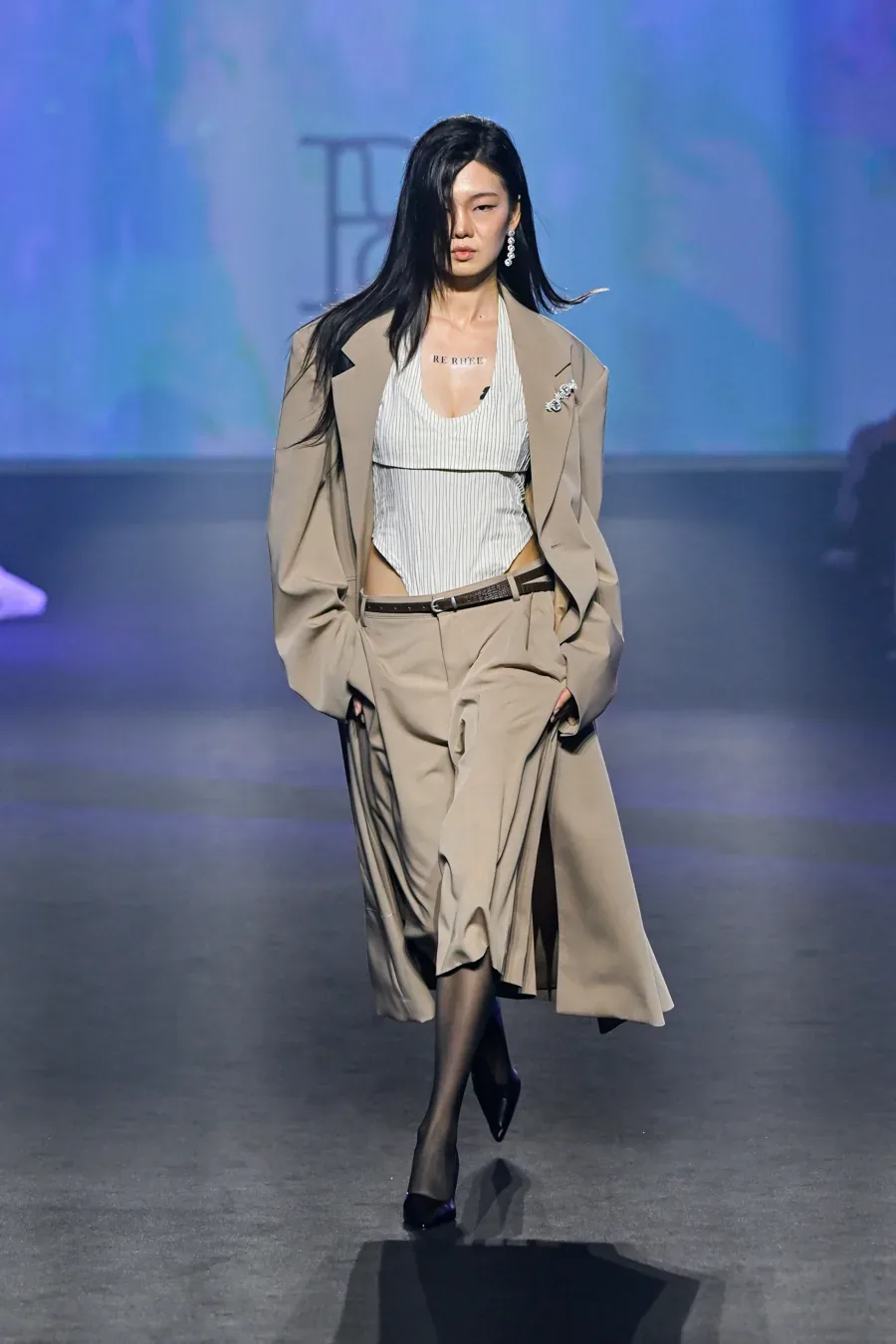
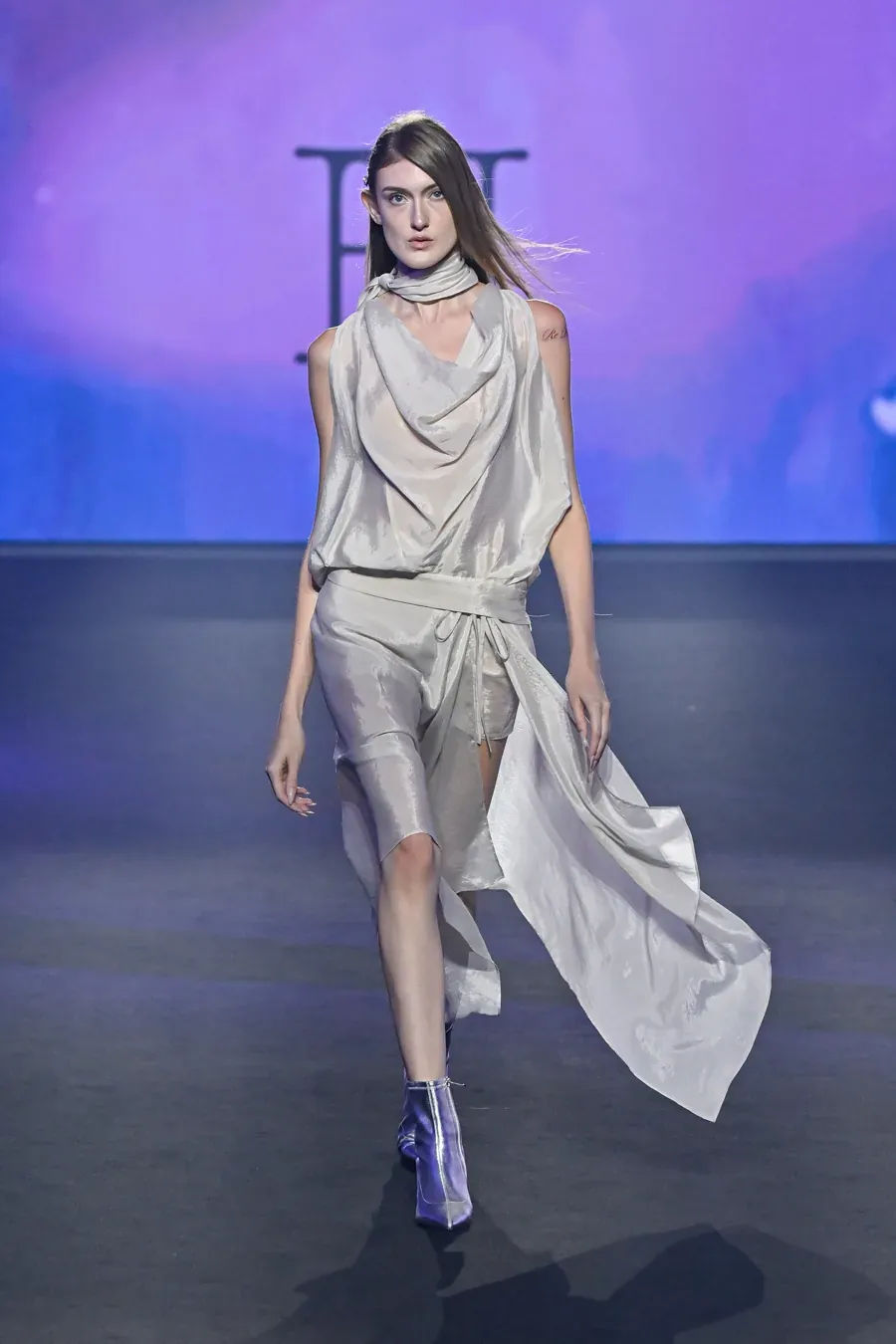
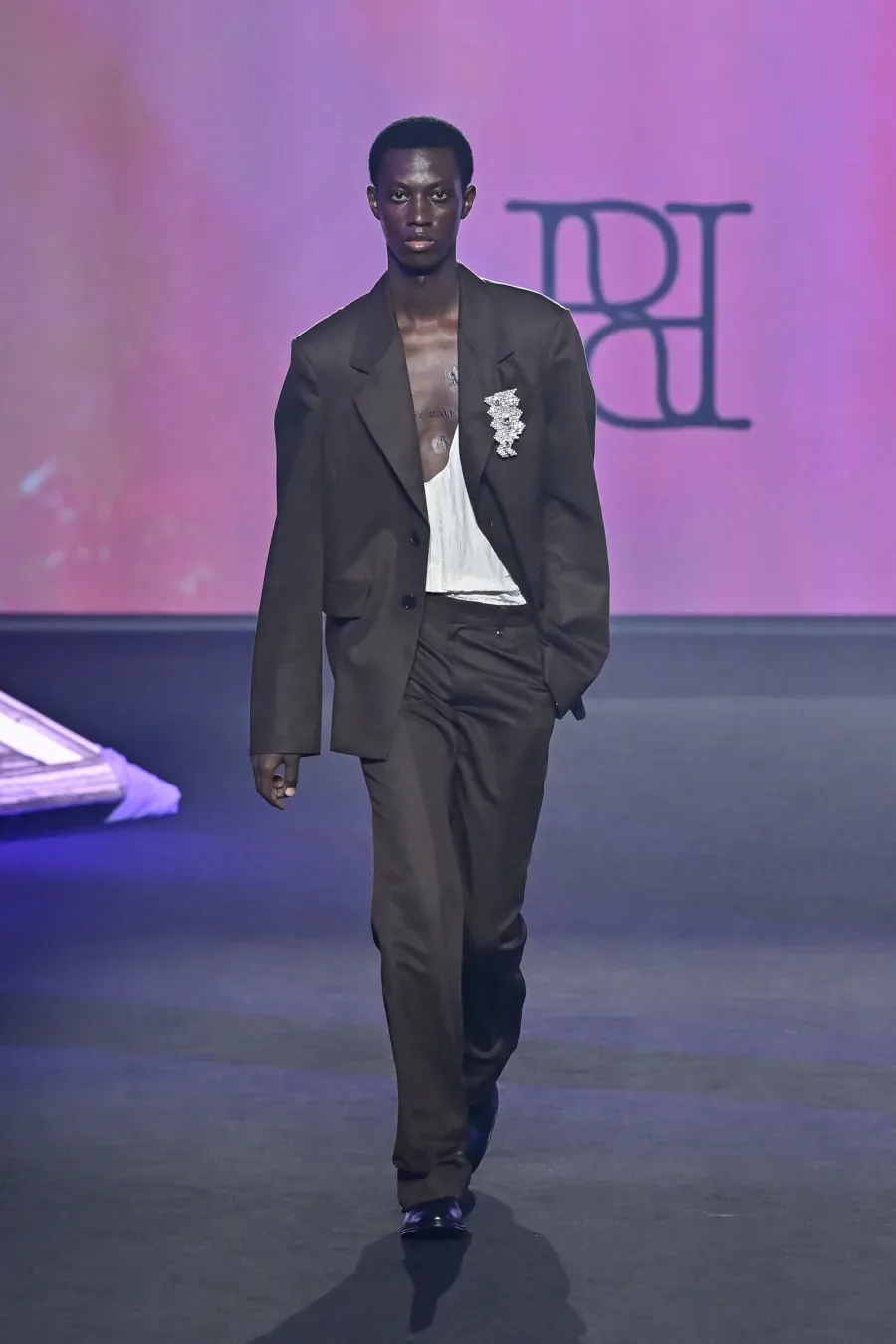
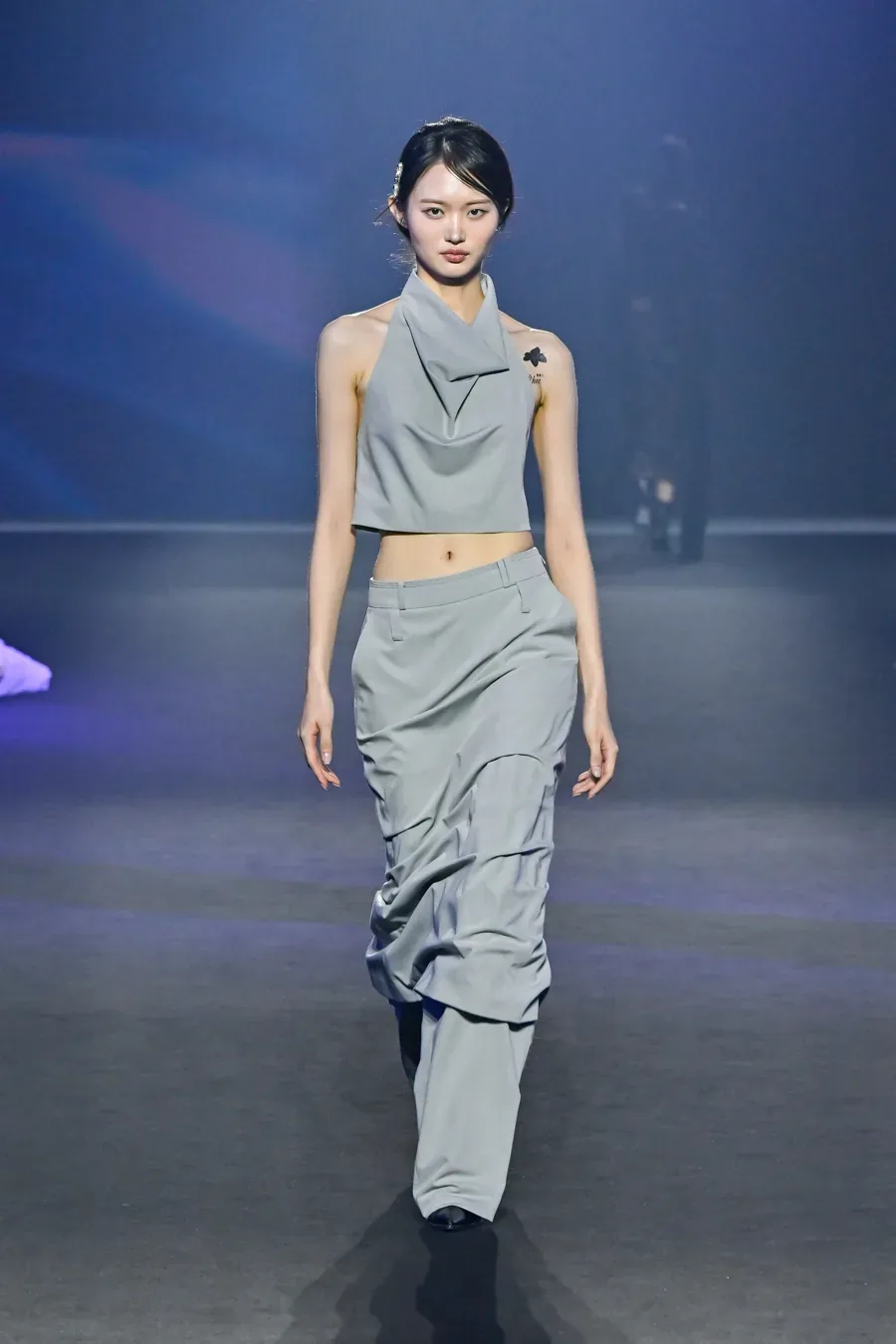
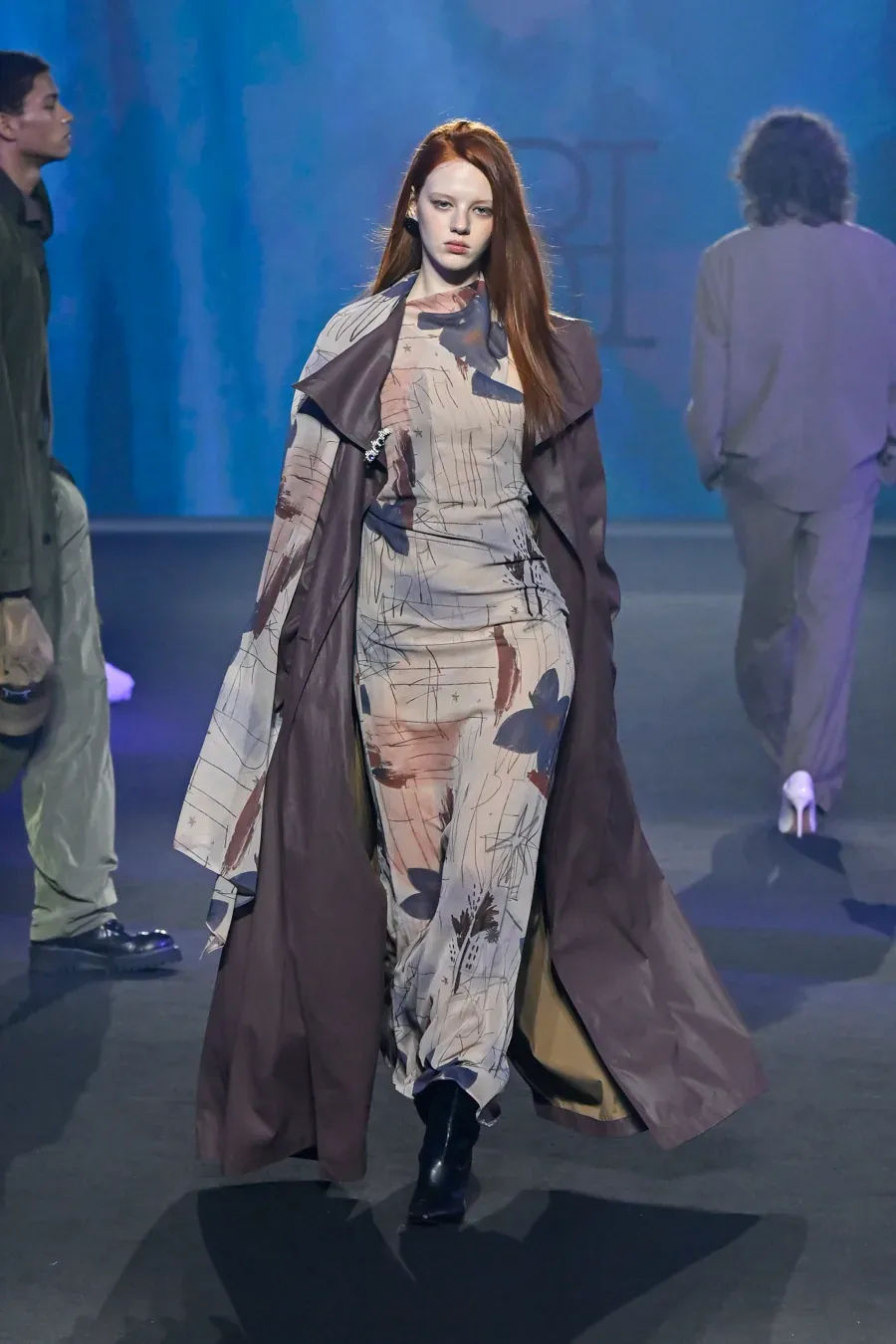
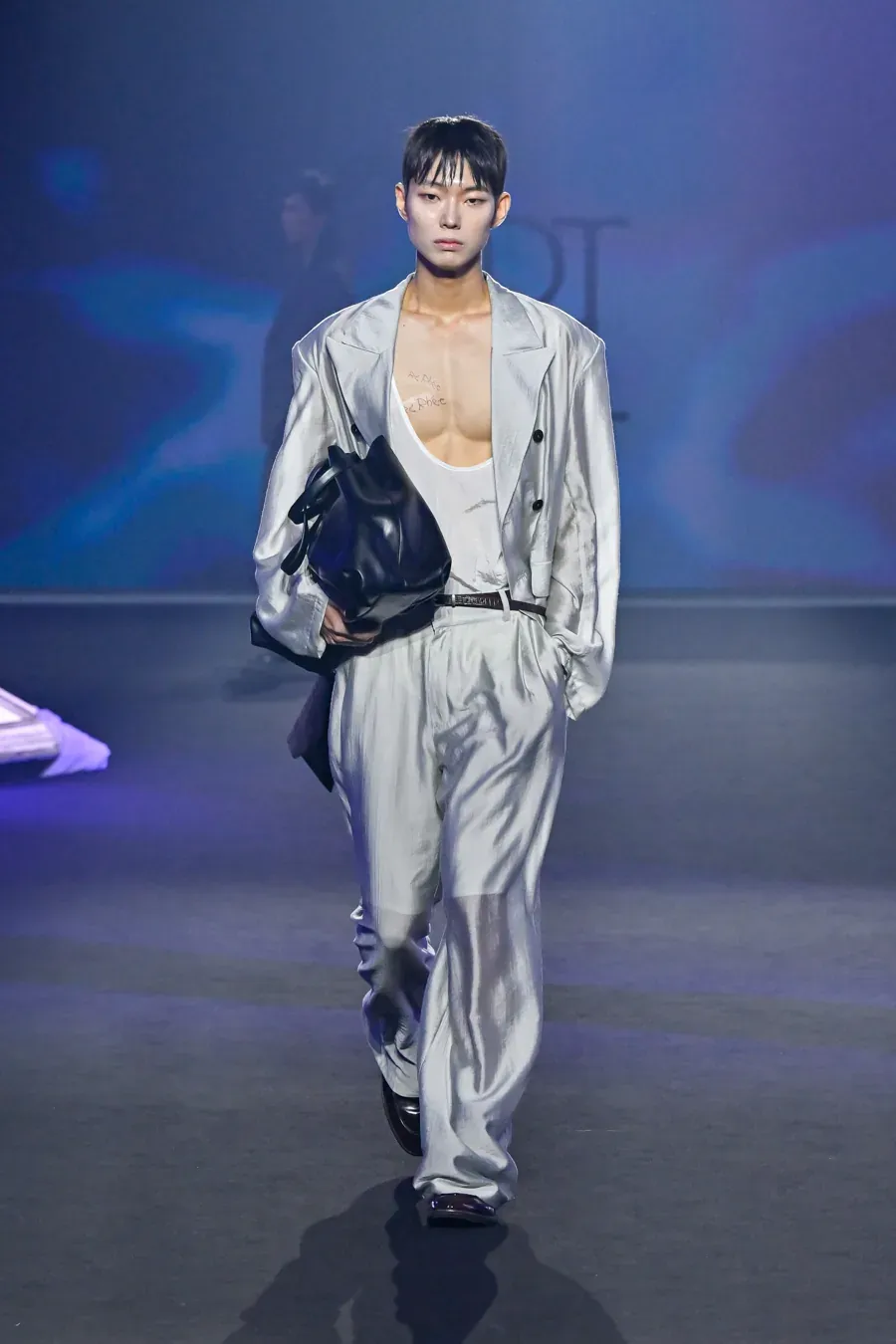
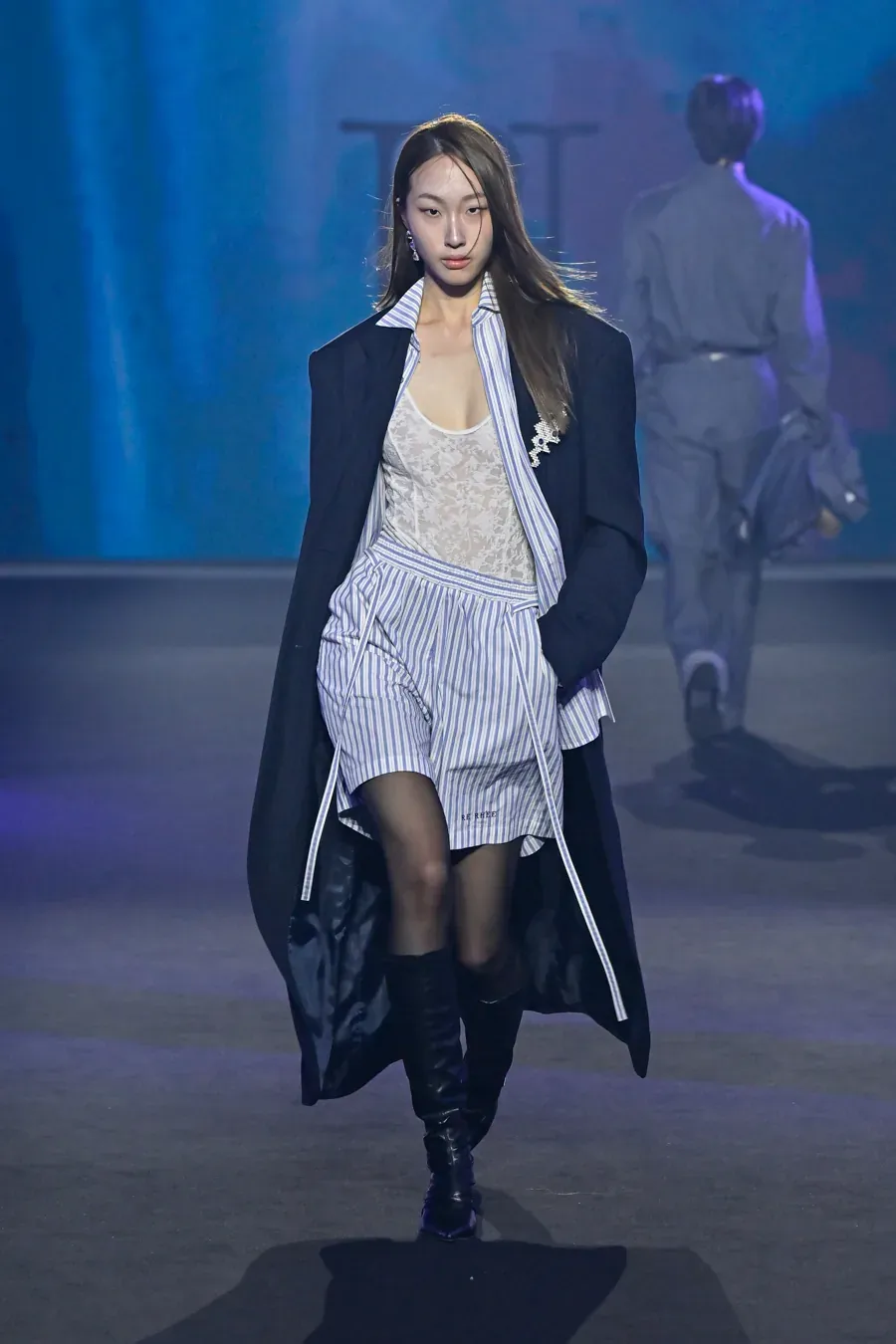
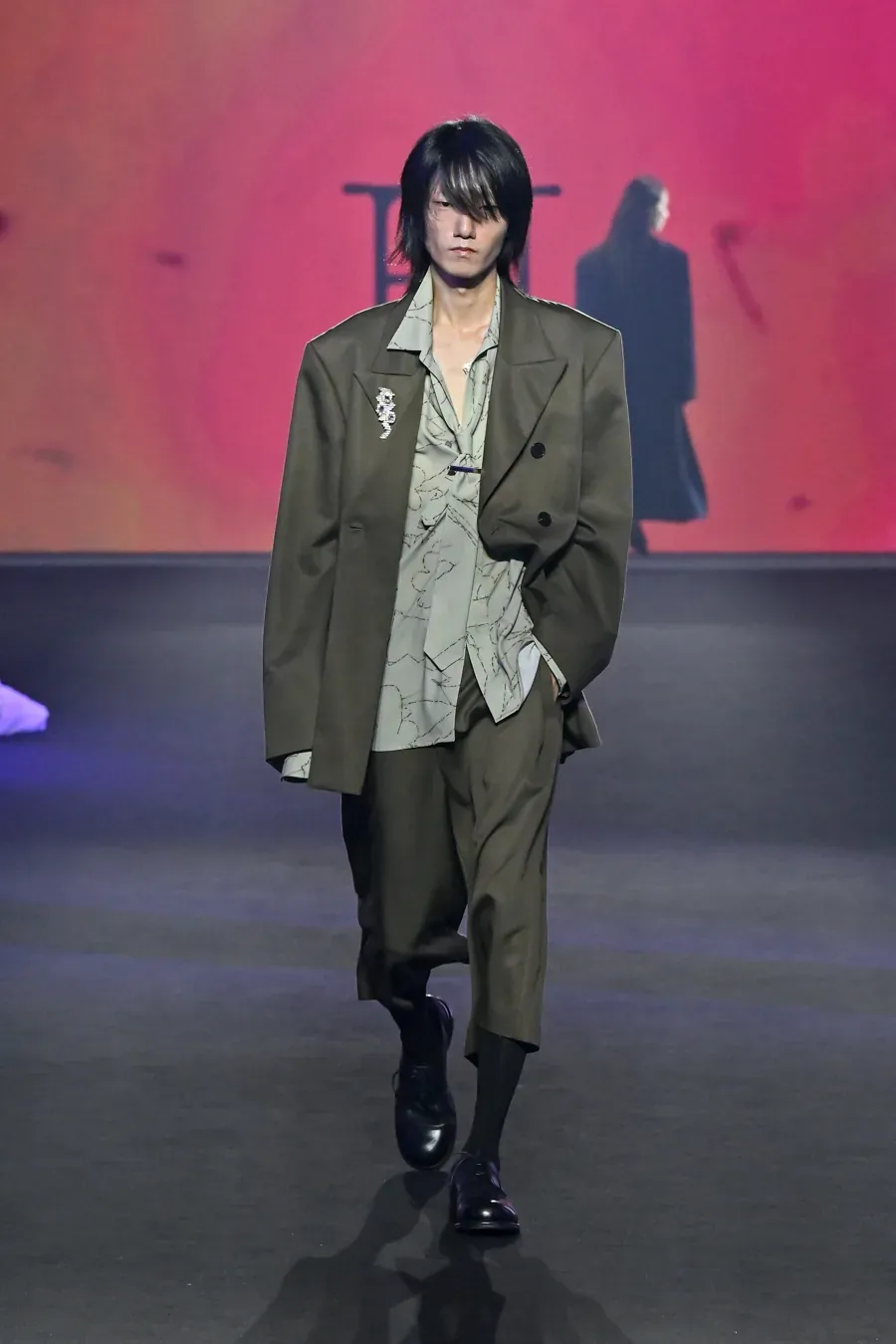
What remains after the newness wears off? For Re Rhee, the answer is biography. Designers Lee Jun-bok and Joo Hyun-jung opened the DDP programme with The Essence of What Remains, also framed as a Life Archive: a collection interested in faded architecture, layered stickers and the small marks through which time makes an object singular.
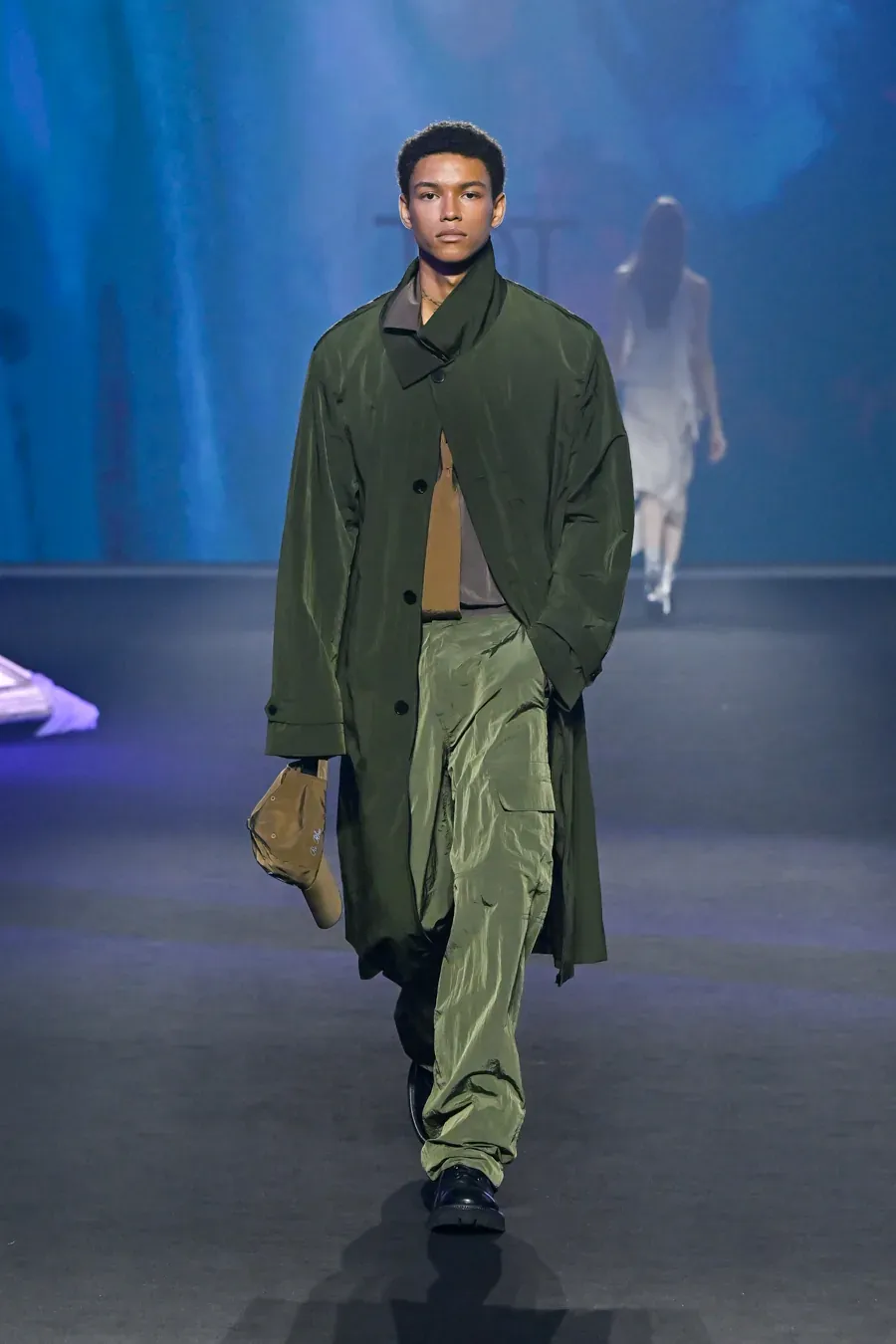
That idea appeared first in construction. The straight, overlapping form of the kwaeja, a traditional Korean sleeveless robe, met the assertive lines of 1970s Western tailoring. Oversized trench coats and jackets sat over long draped dresses; shirts were left undone, sleeves pushed up and everyday knits inserted beneath firmer structures. The styling suggested clothes already in use rather than sealed at the pristine beginning of their lives. Even when a look was composed, it carried the relaxed disorder of someone who has been wearing it all day.
Earth tones — sand, khaki, charcoal and deep brown — reinforced the sense of surfaces softened by exposure. Sheer fabrics and metallic silver interrupted that restraint, while stripes, leather and western boots pulled the archive towards subculture. Kim Dong-woo’s solo performance introduced the show, making memory bodily before the first look appeared.
Daily Mirror
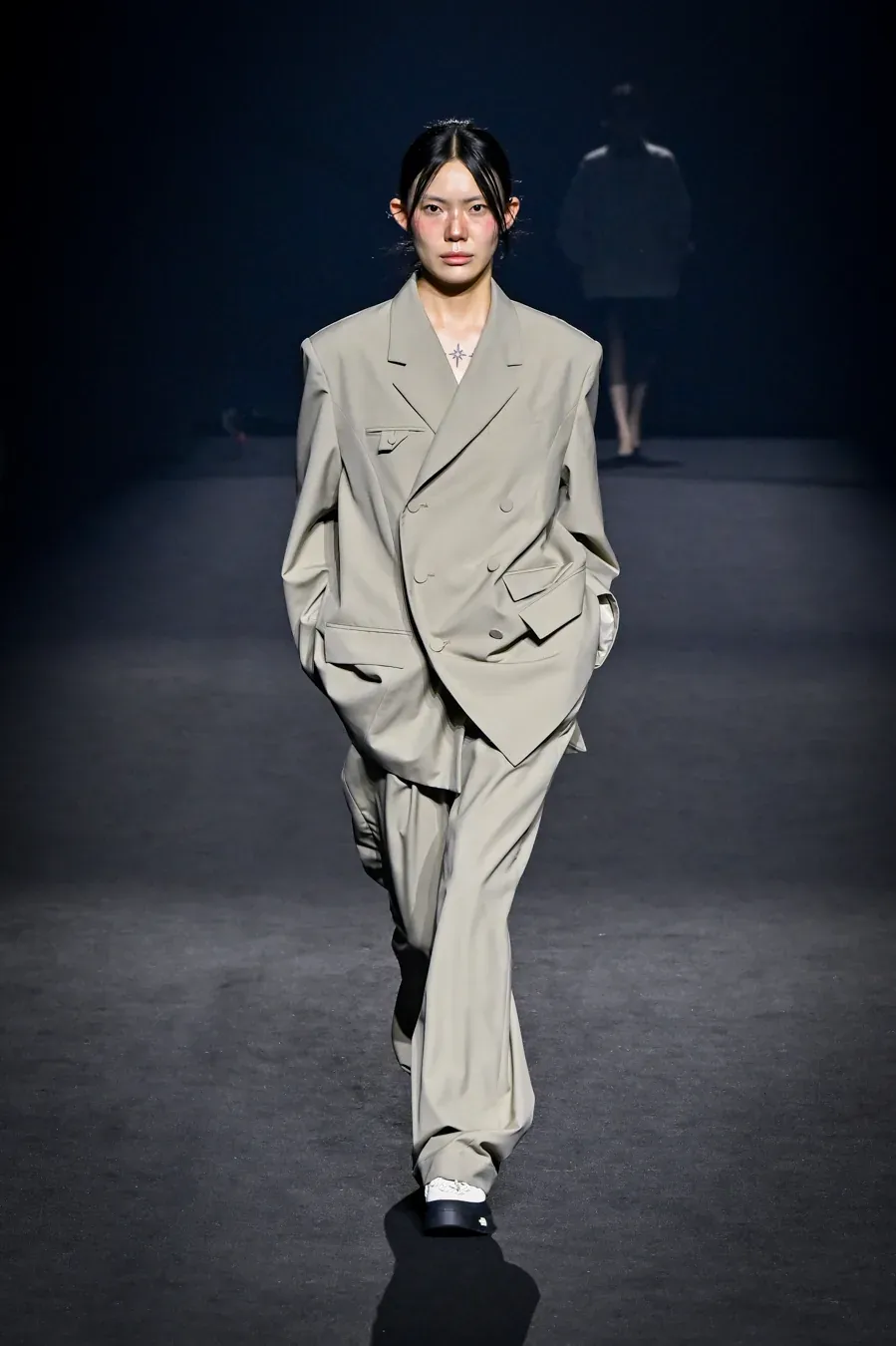
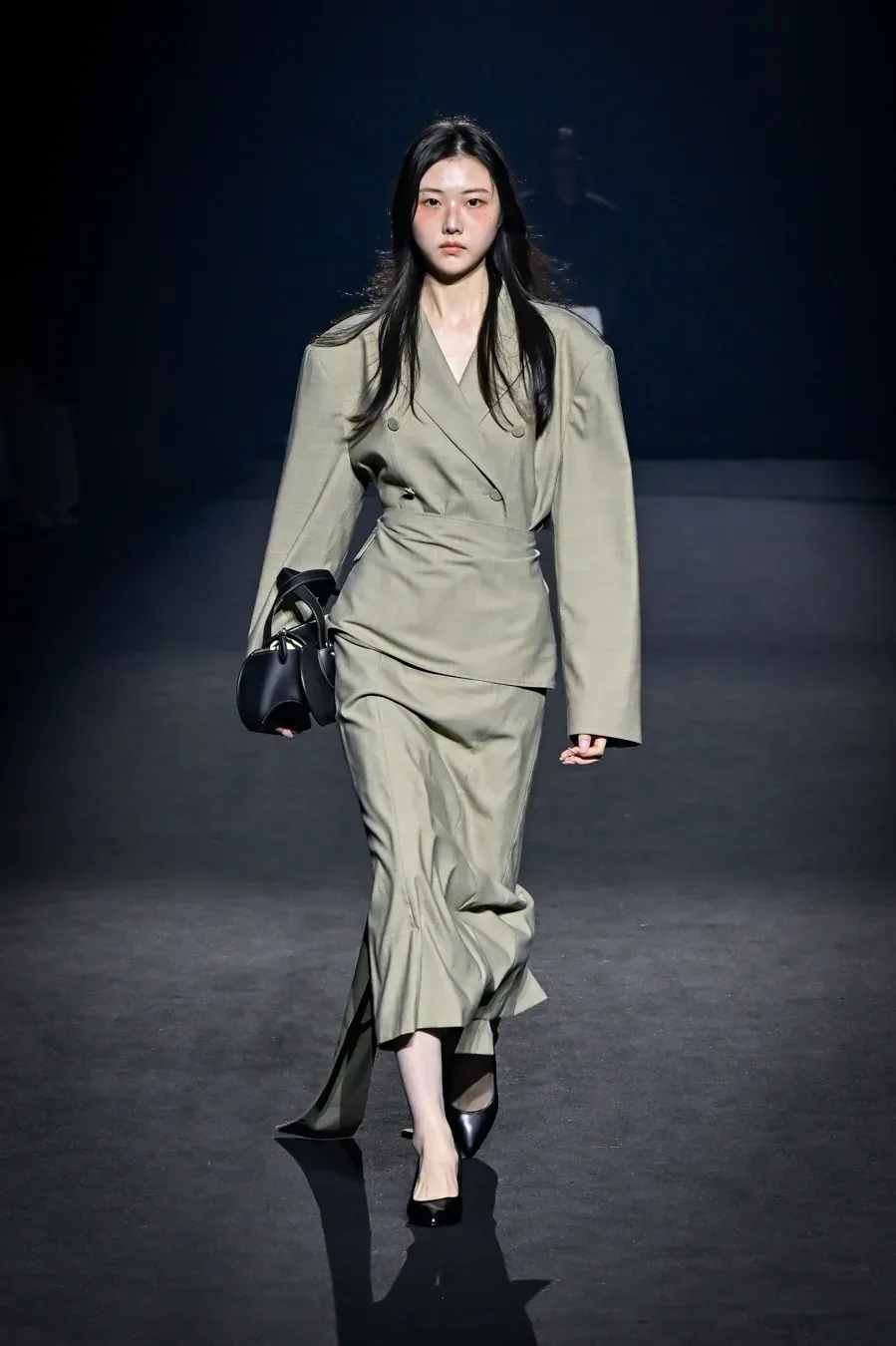
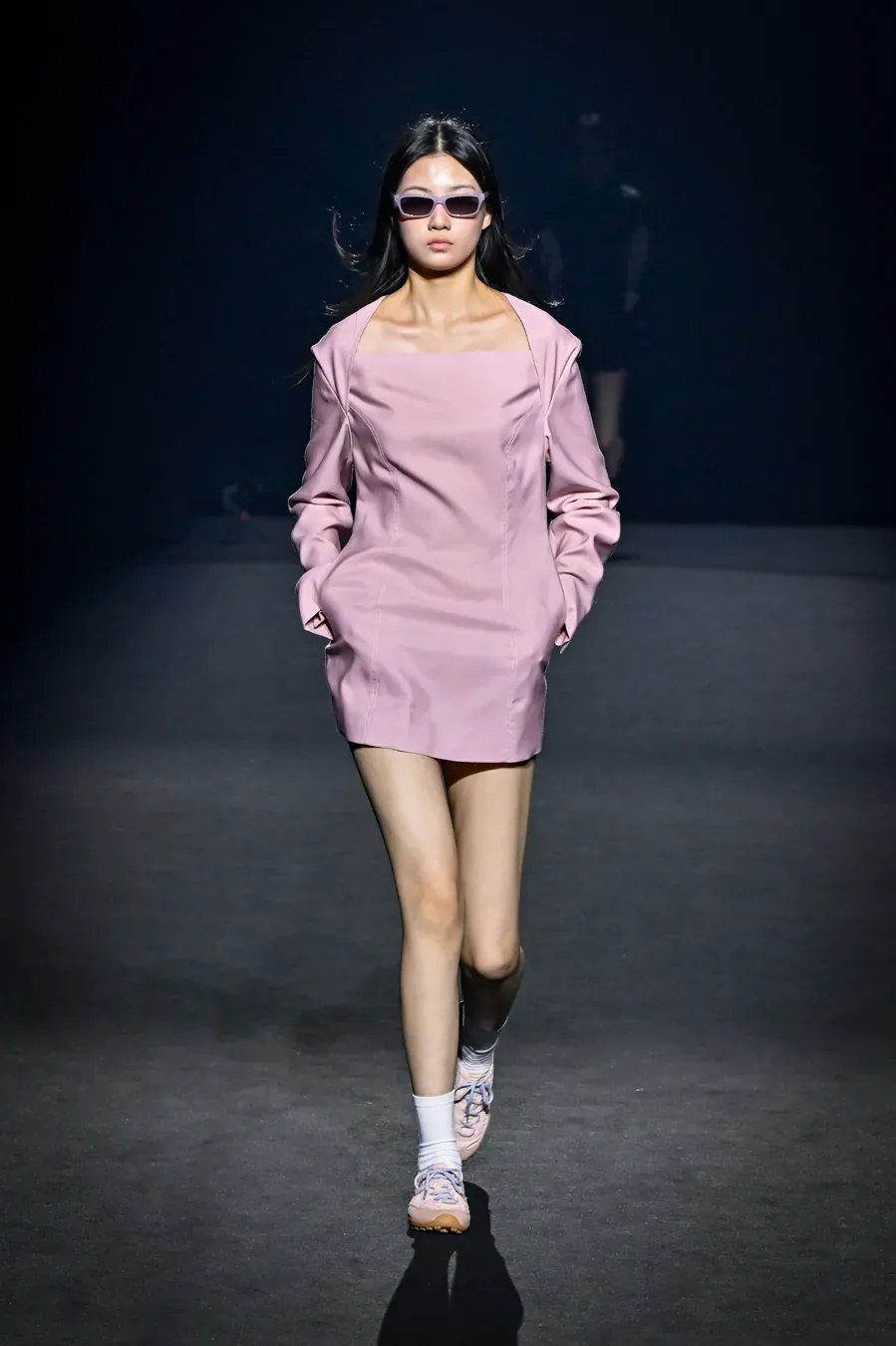
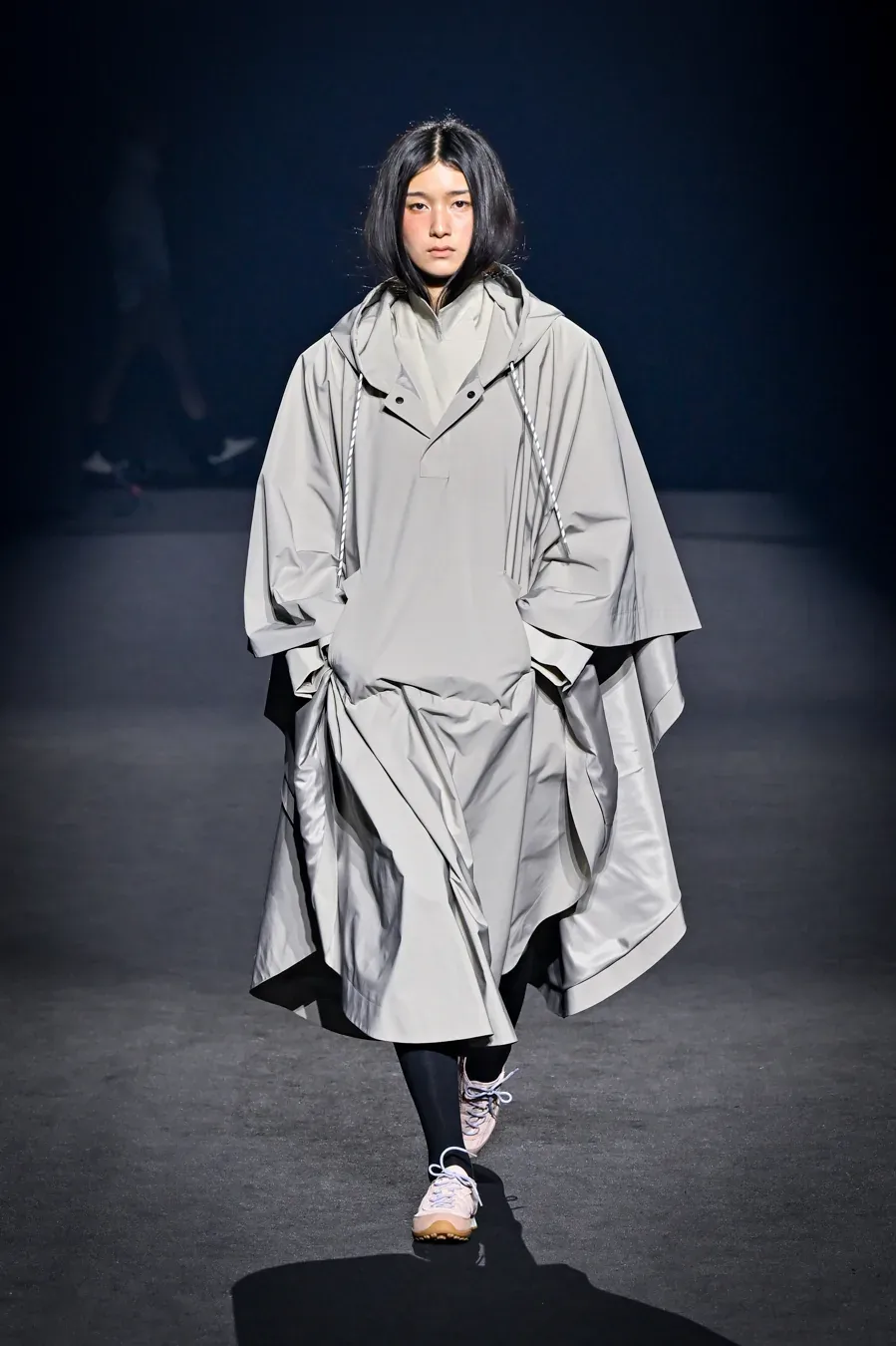
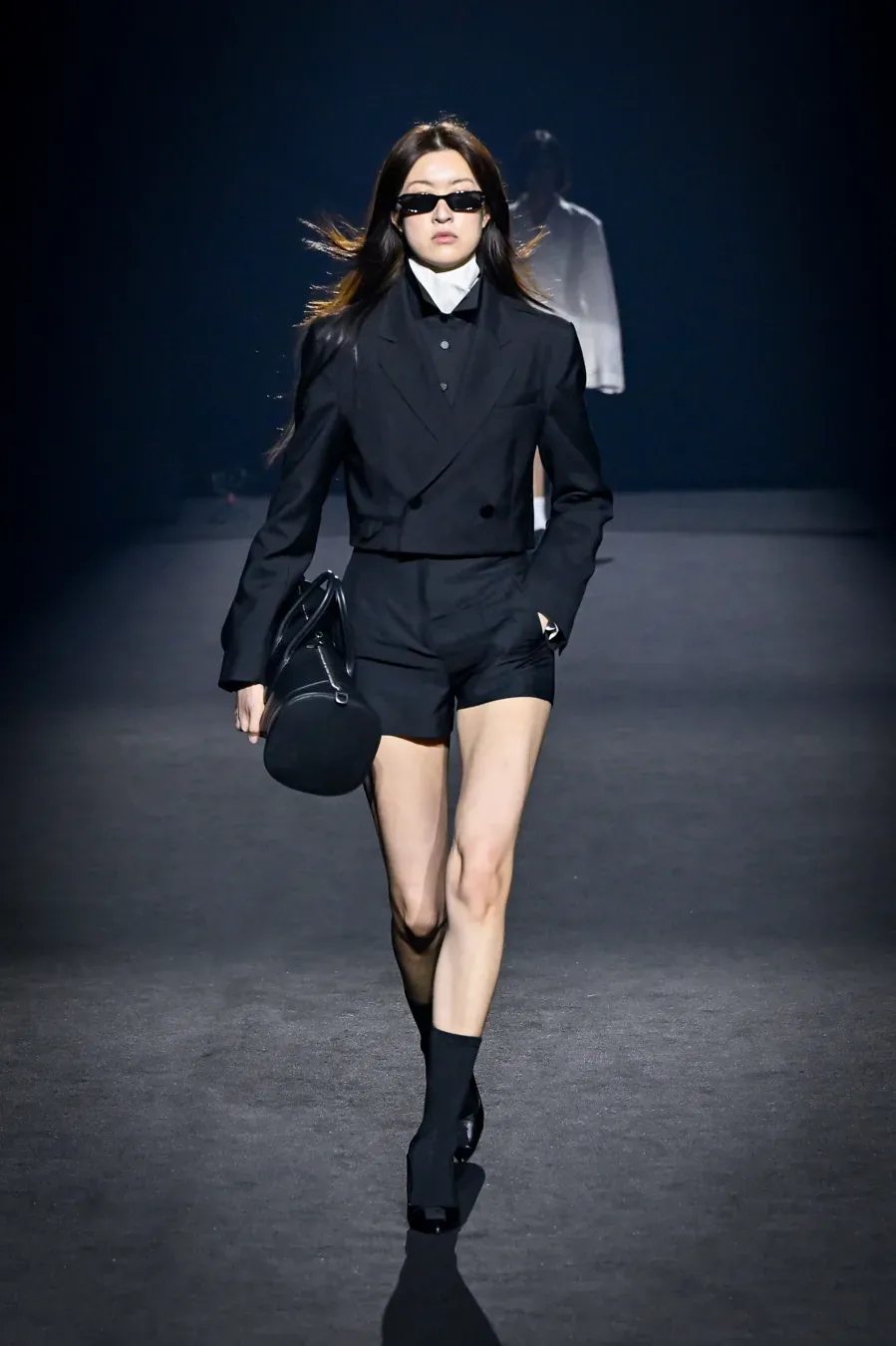
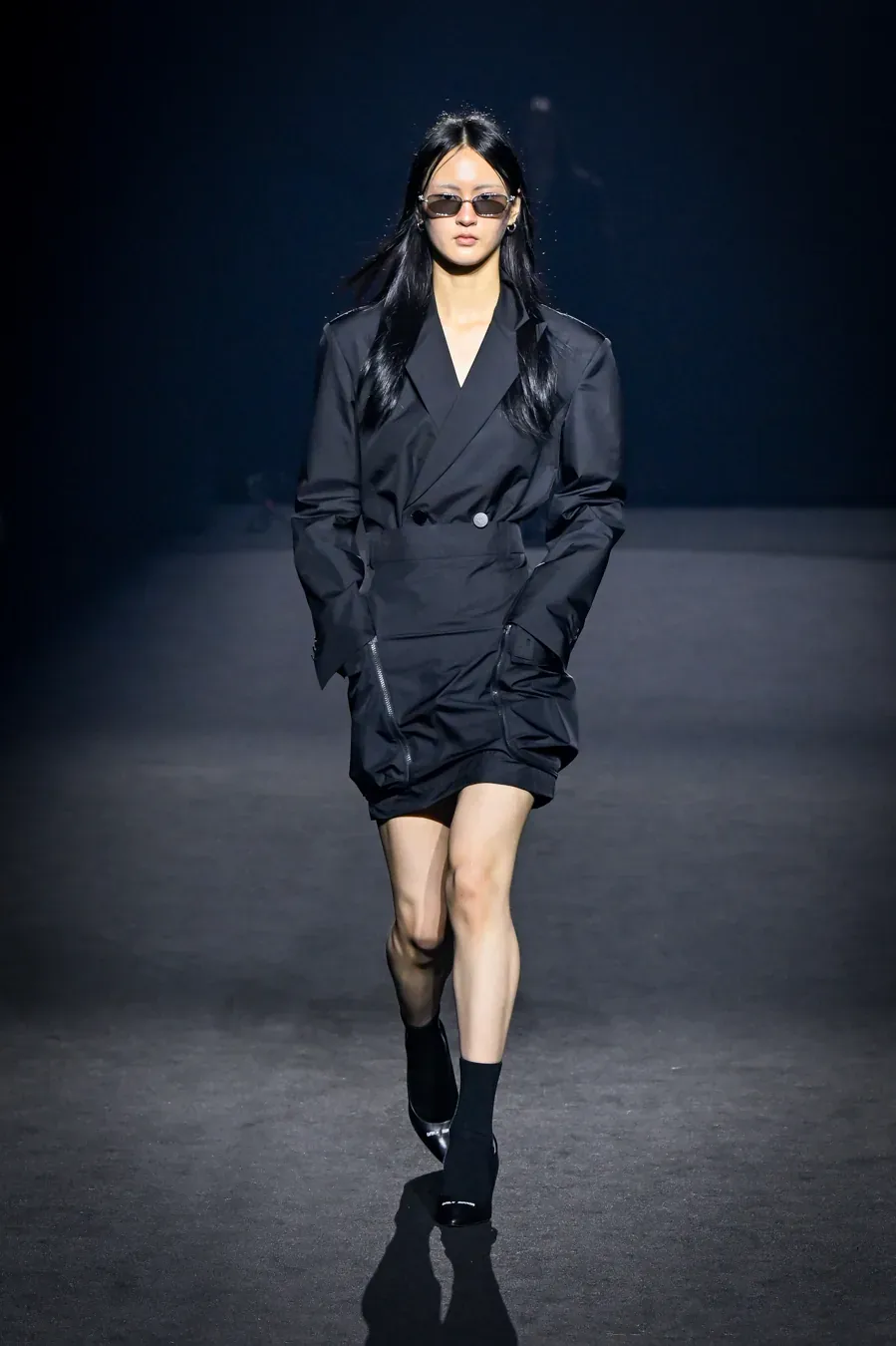
The suit has survived office politics, red carpets, school uniforms and many declarations of its death. Daily Mirror’s response wasn’t another funeral but a practical question: what else can it do? Kim Joo-han titled the collection SUIT:ABLE, joining “suit” and “able” to propose tailoring as a system capable of adapting rather than a fixed symbol of formality.
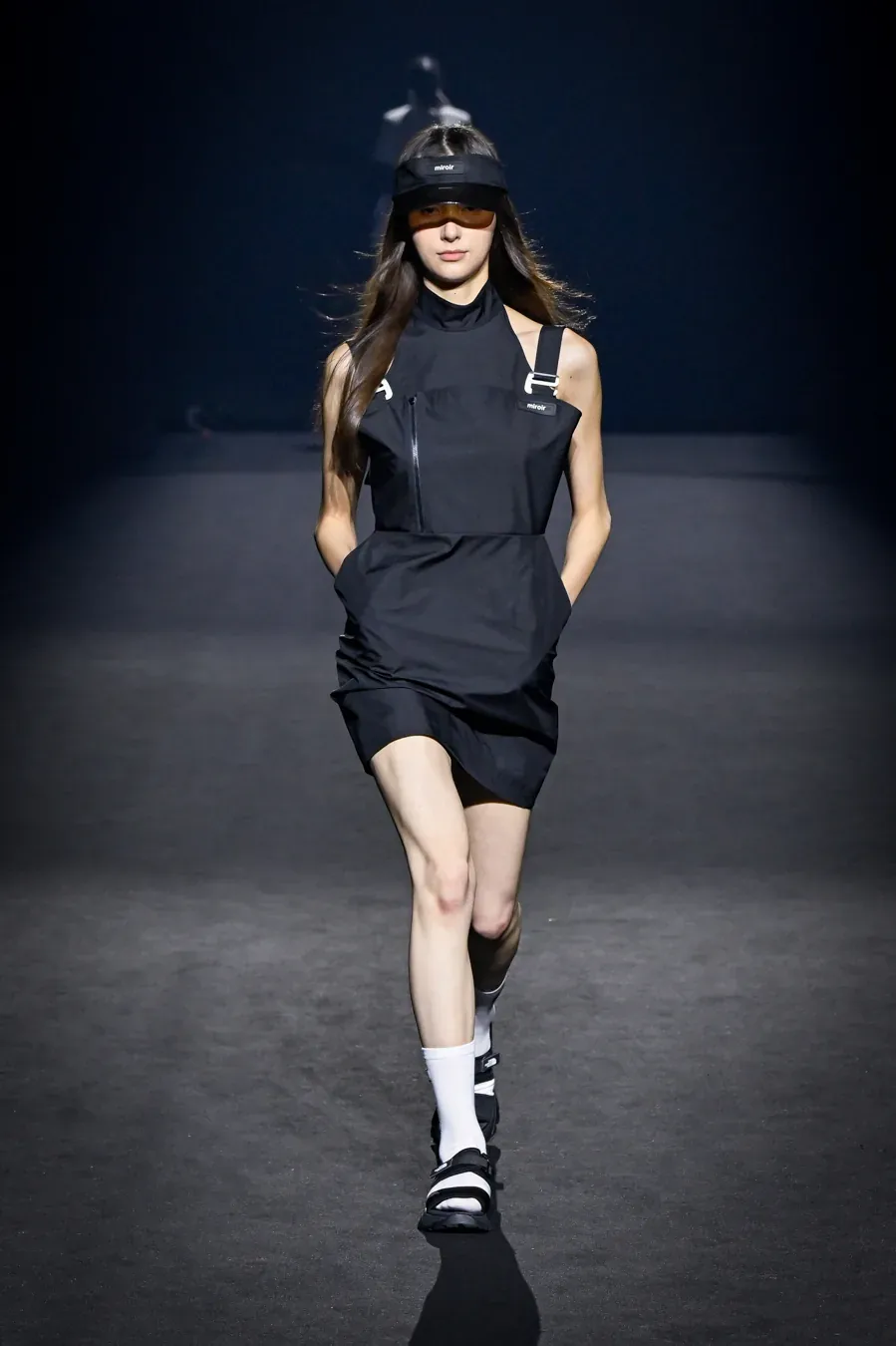
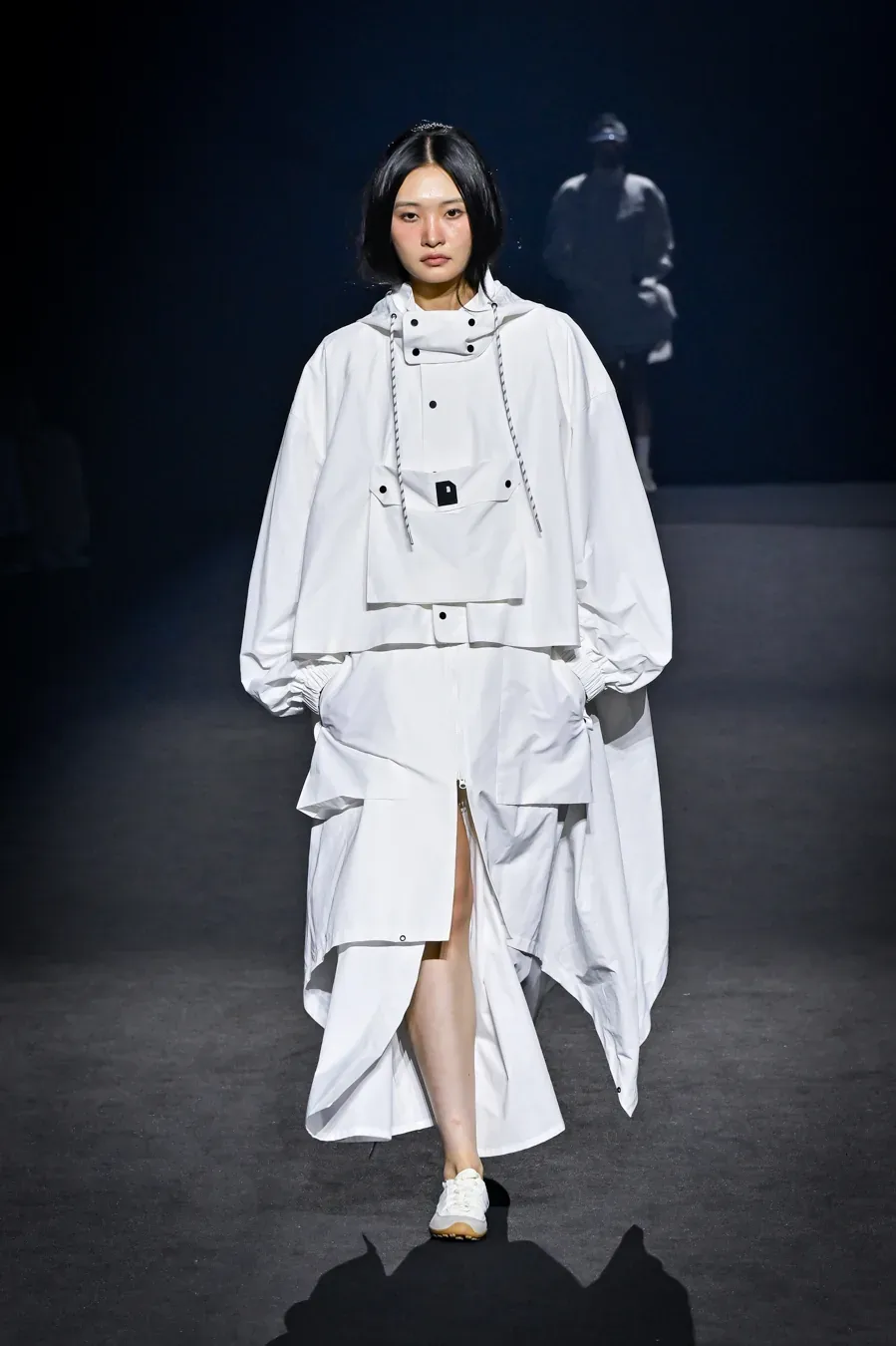
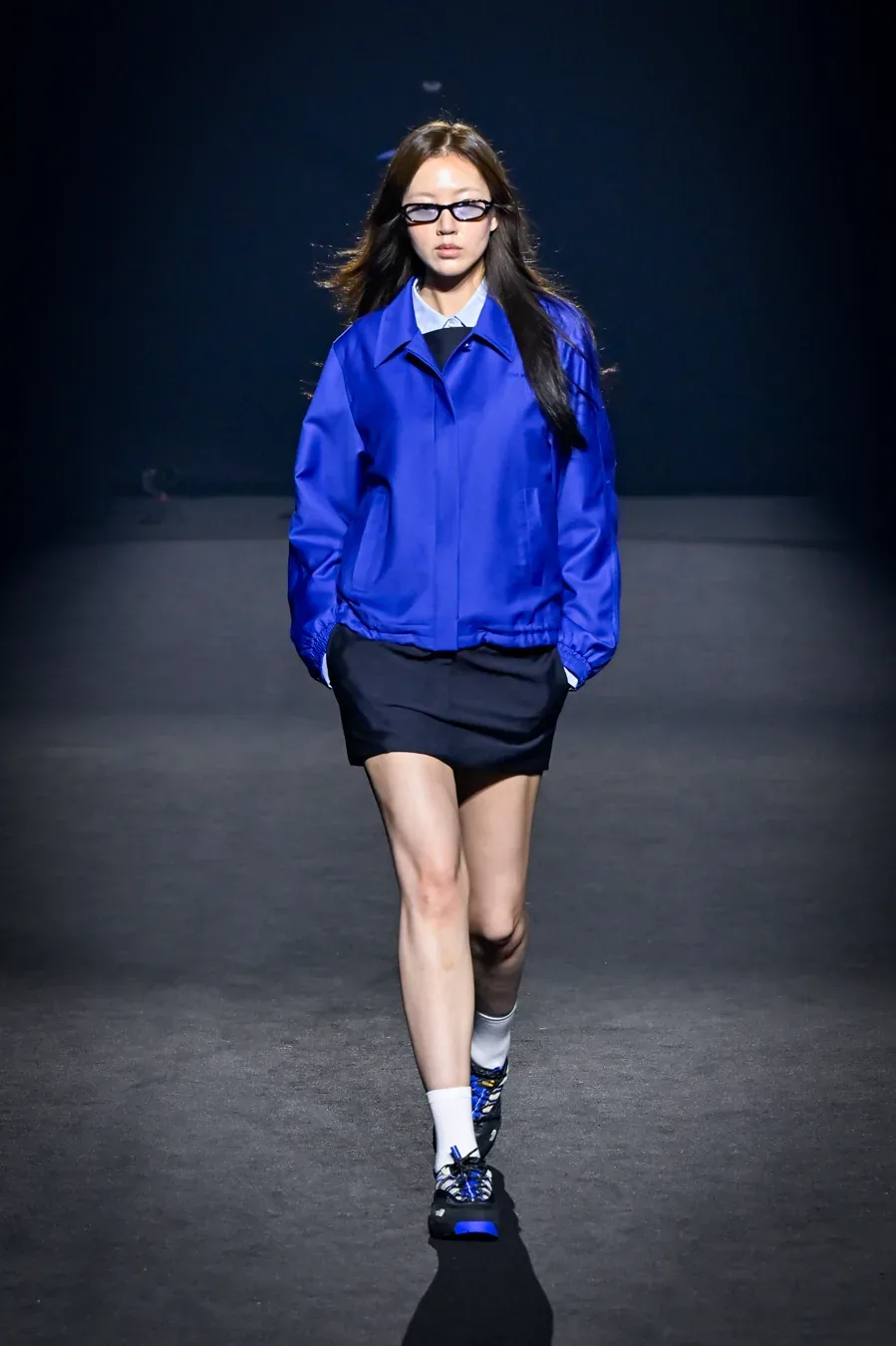
The brand kept the grammar legible — strong shoulders, lapels, clean trousers and sharply controlled seams — then disturbed it with outdoor equipment. Cargo pockets appeared on formal pieces; drawstrings adjusted volume; technical panels, layered systems and functional fabrics gave jackets the logic of shells and anoraks. A cropped windbreaker over a miniskirt made the argument especially clear. These weren’t suits disguised as sportswear, but clothes in which both categories had stopped guarding their borders.
That negotiation also sharpened Daily Mirror’s modern, genderless language. Straight lines and sculpted cuts gave the body authority without forcing it into the old performance of corporate masculinity. High heels and sporty slip-ons coexisted, while the collaboration with bag label 0914 and Kim’s KIMMMM eyewear extended the modular approach into accessories.
Big Park
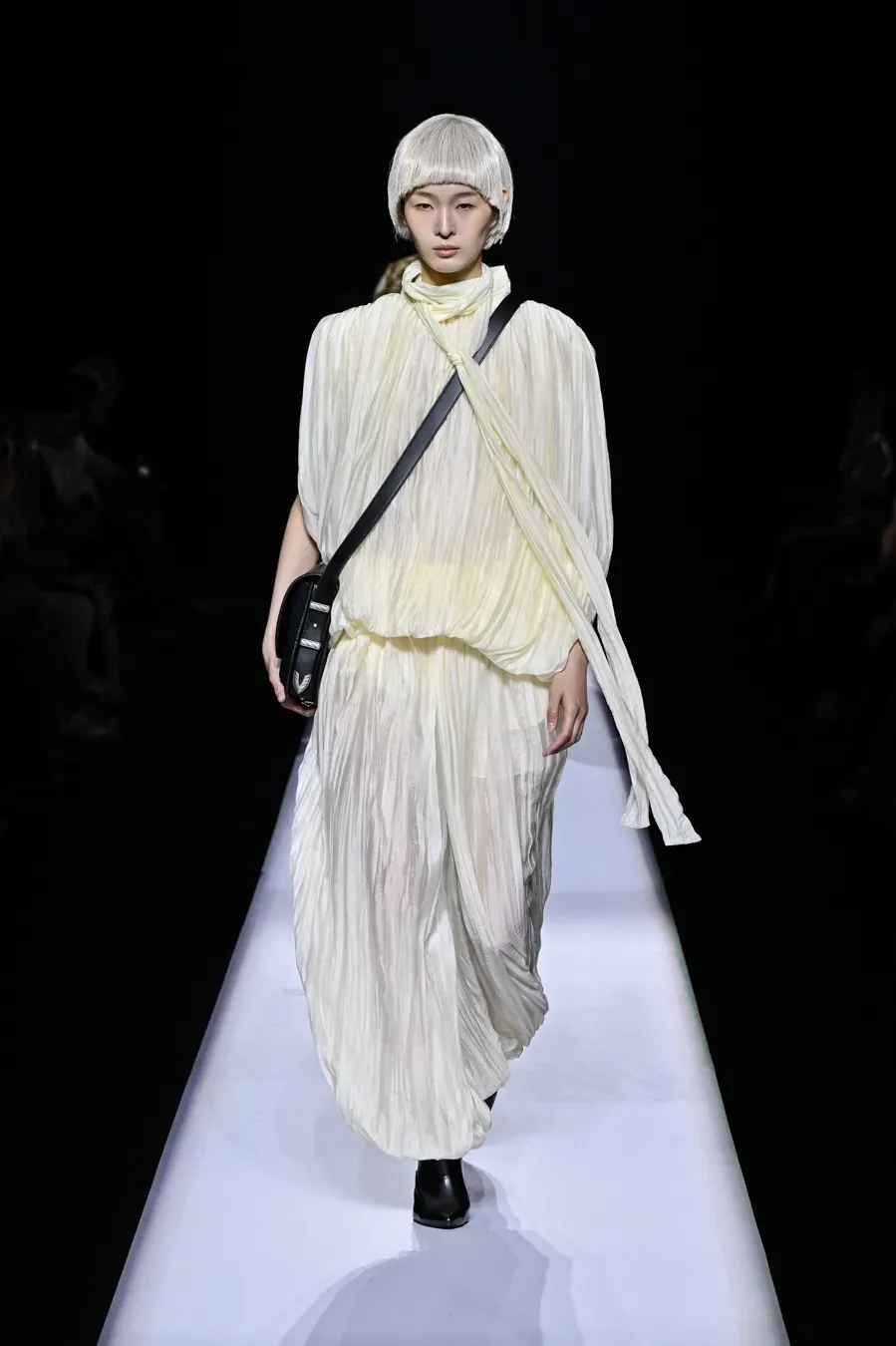
After nearly forty-five years of tailoring, novelty can become a suspicious demand. Park Youn-soo answered it with Expanded Continuum, a collection built on the idea that change need not erase what came before. On a raised white runway, models passed close enough for their shoulders to almost touch, turning succession into a brief physical encounter between one silhouette and the next.
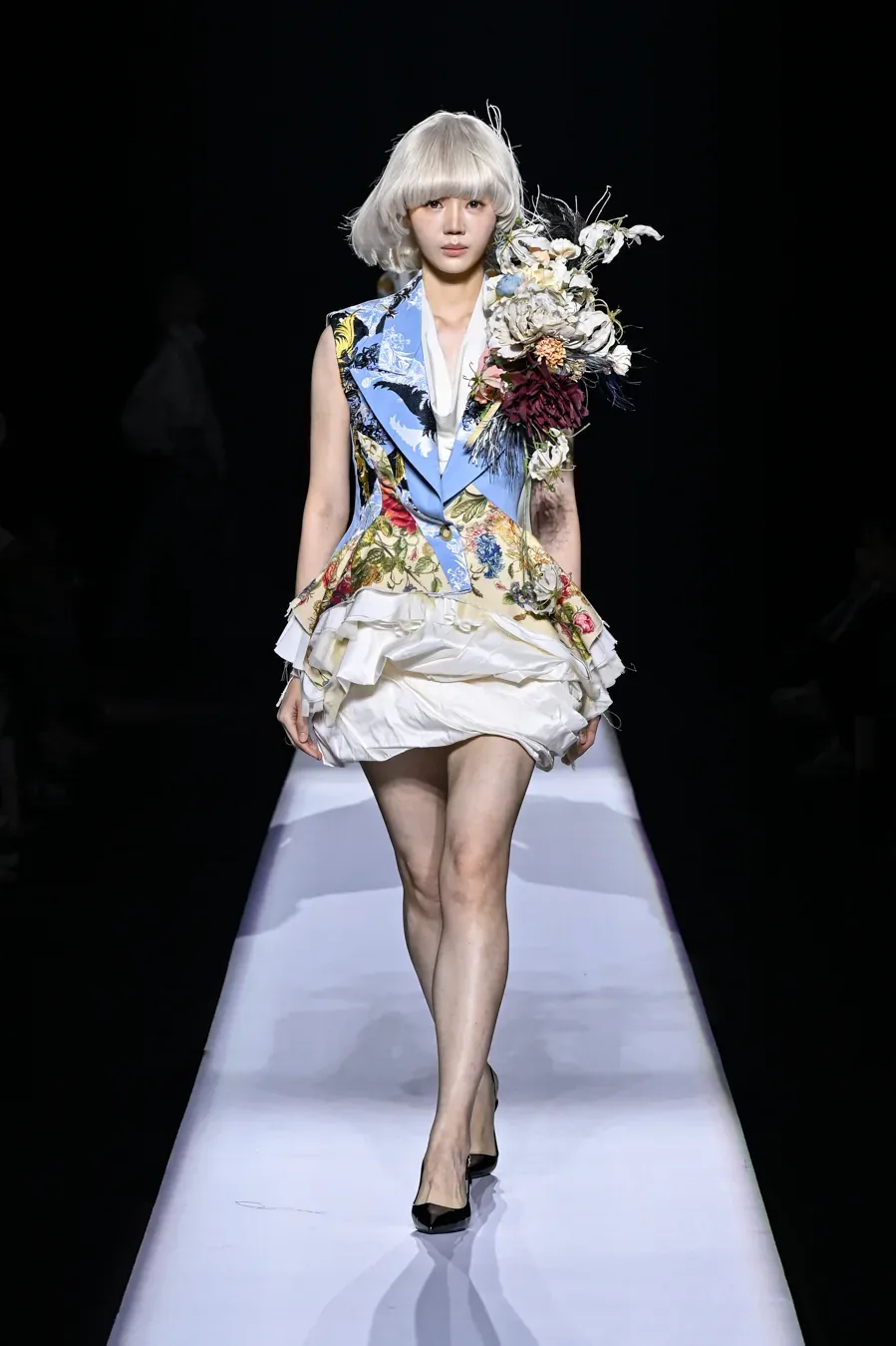
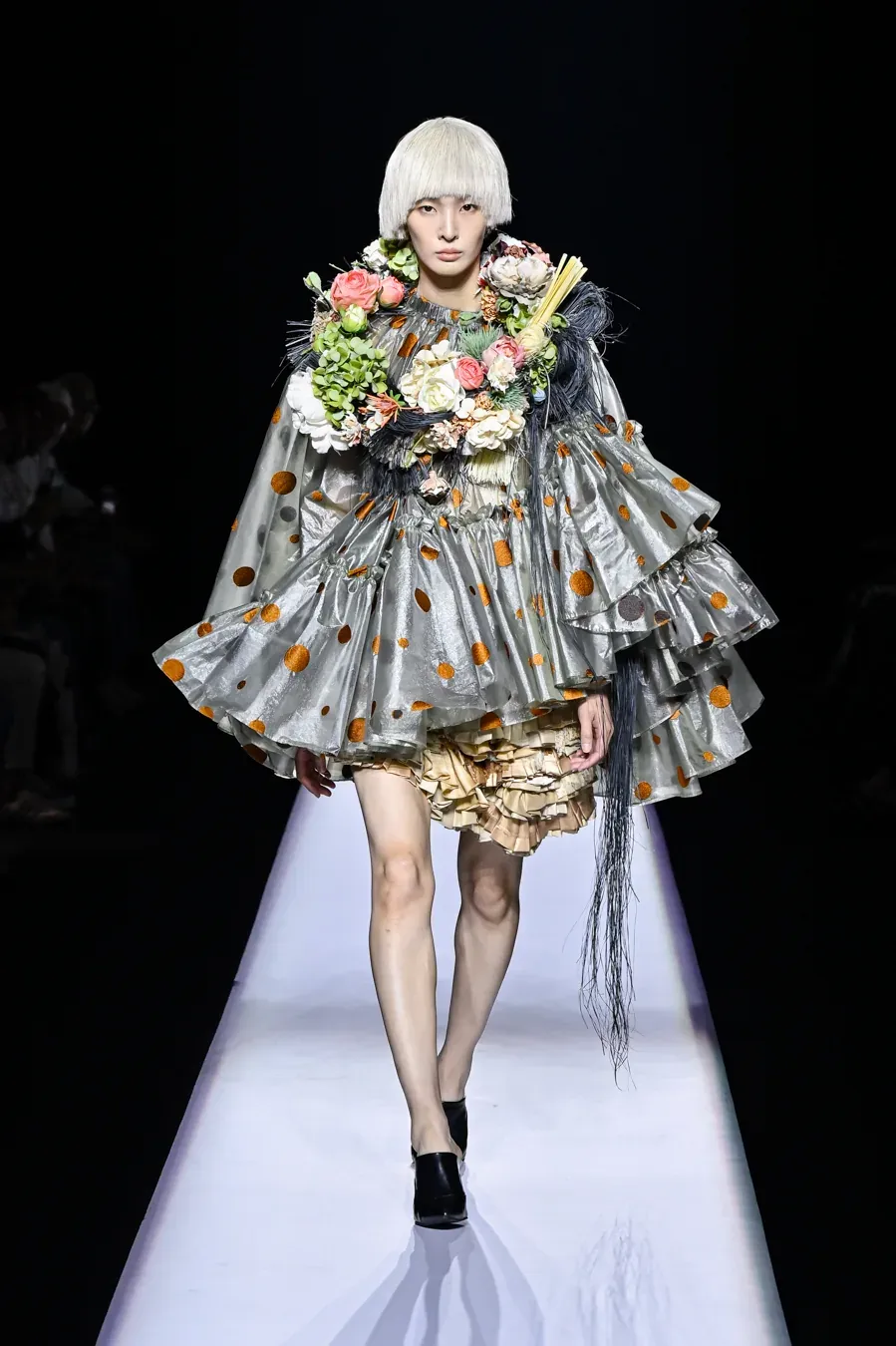
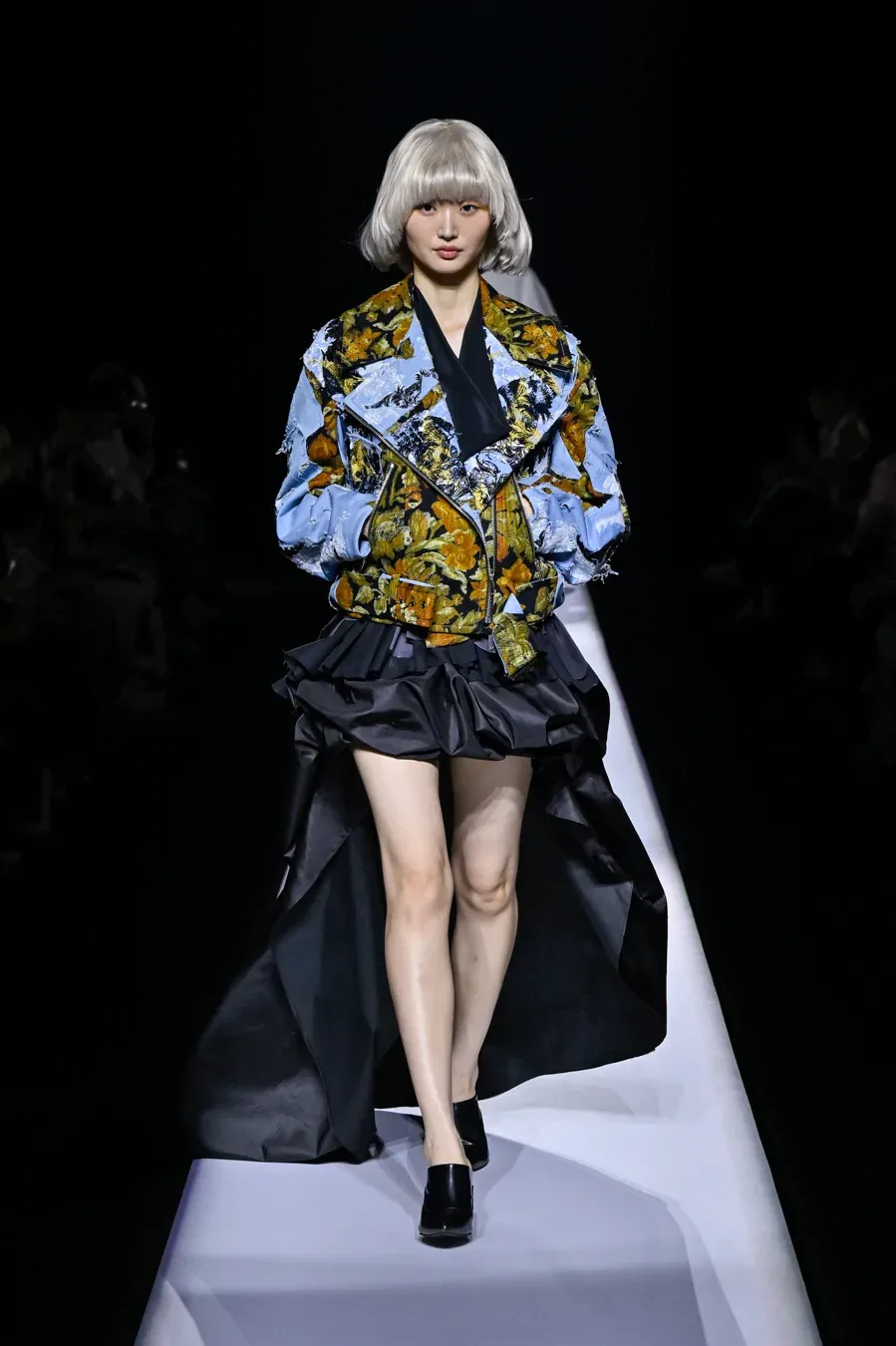
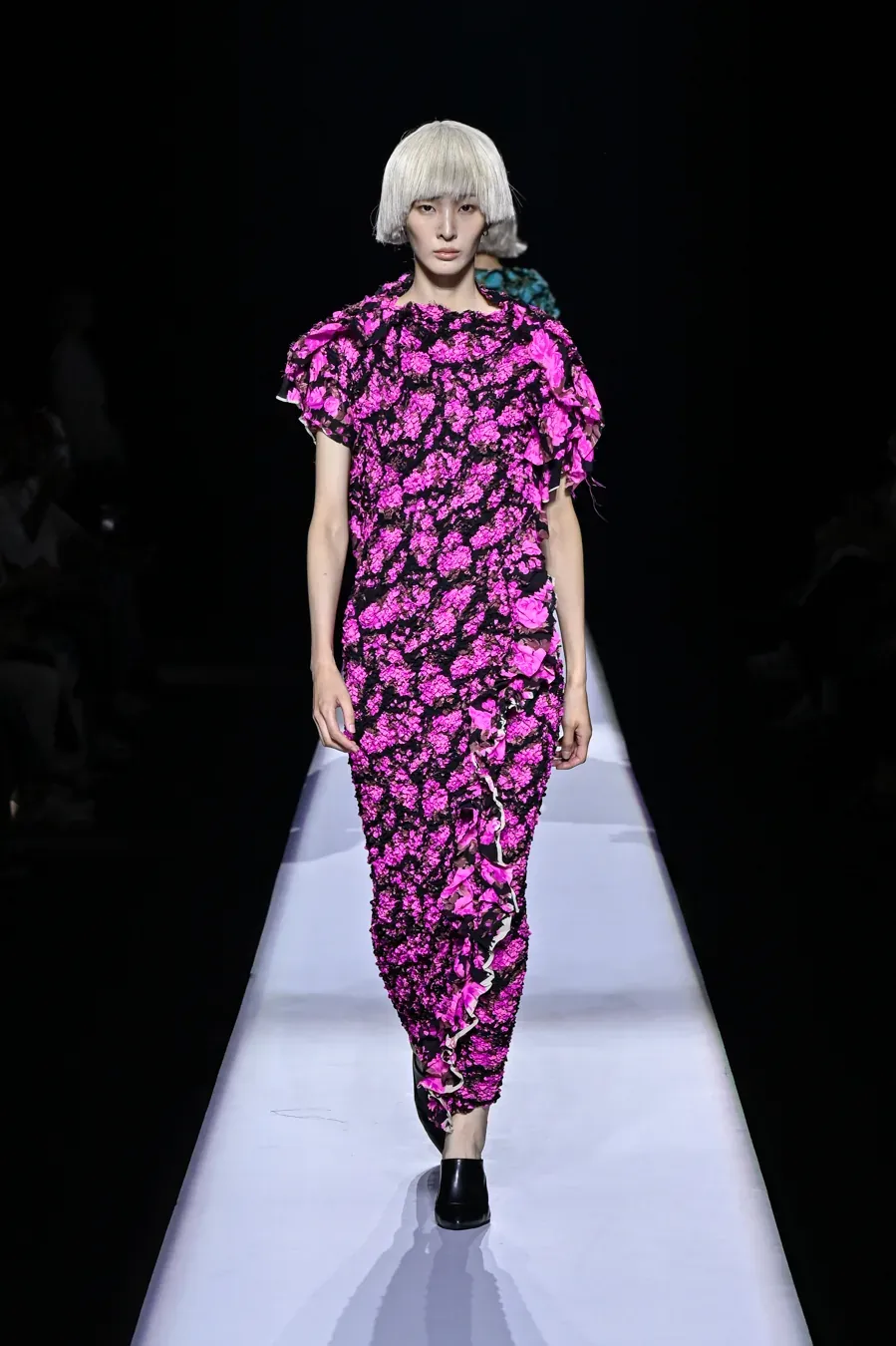
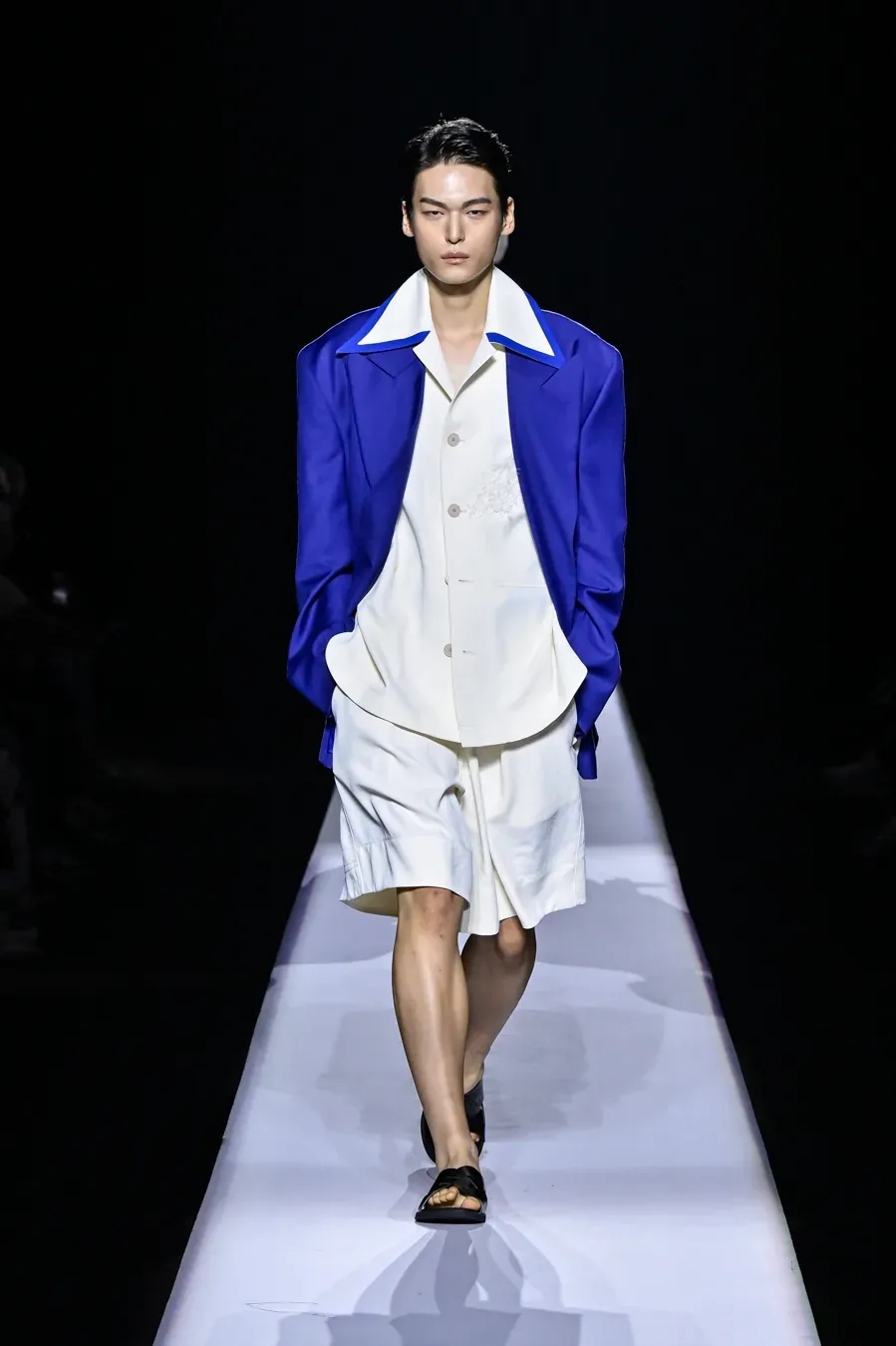
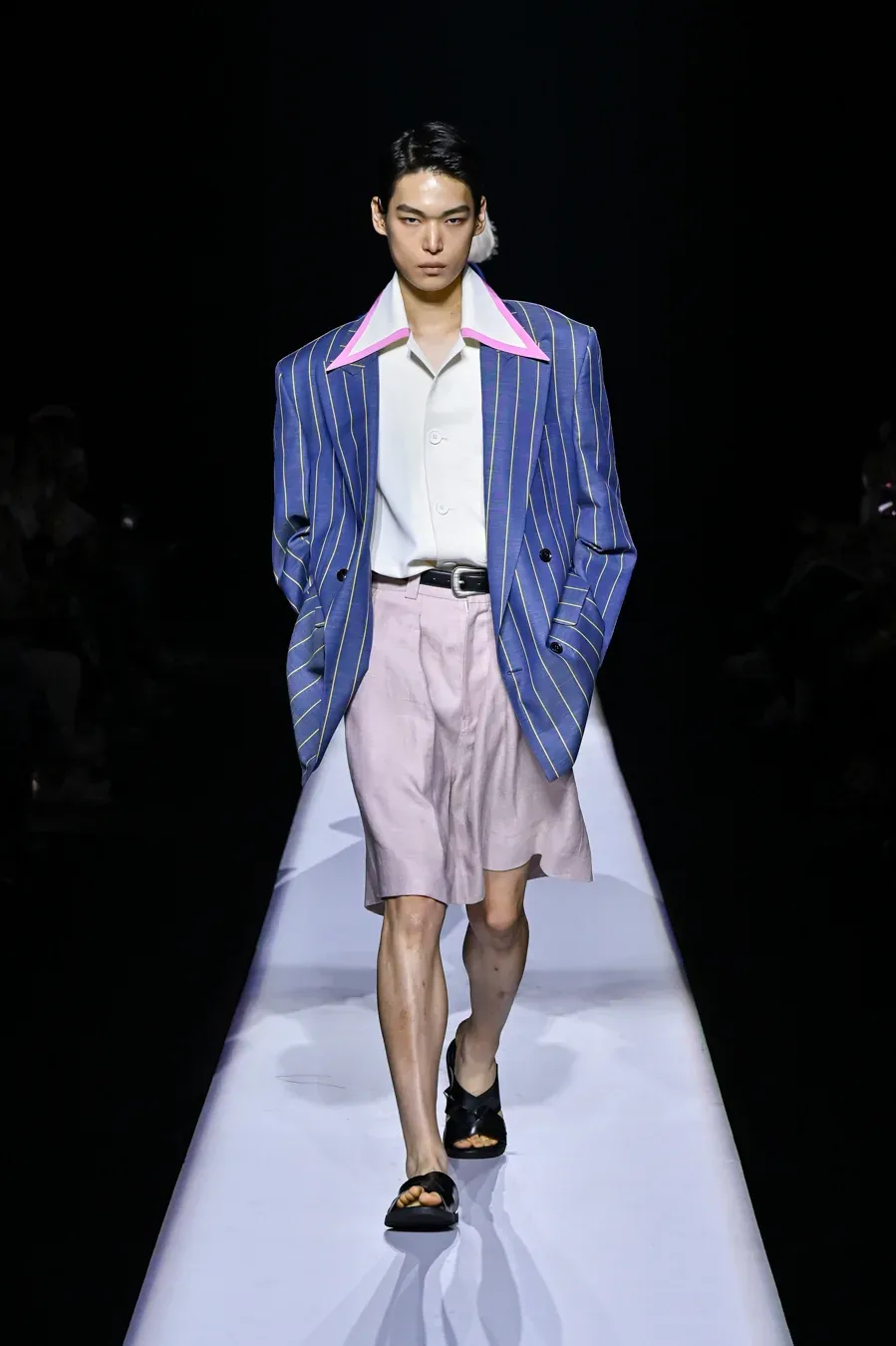
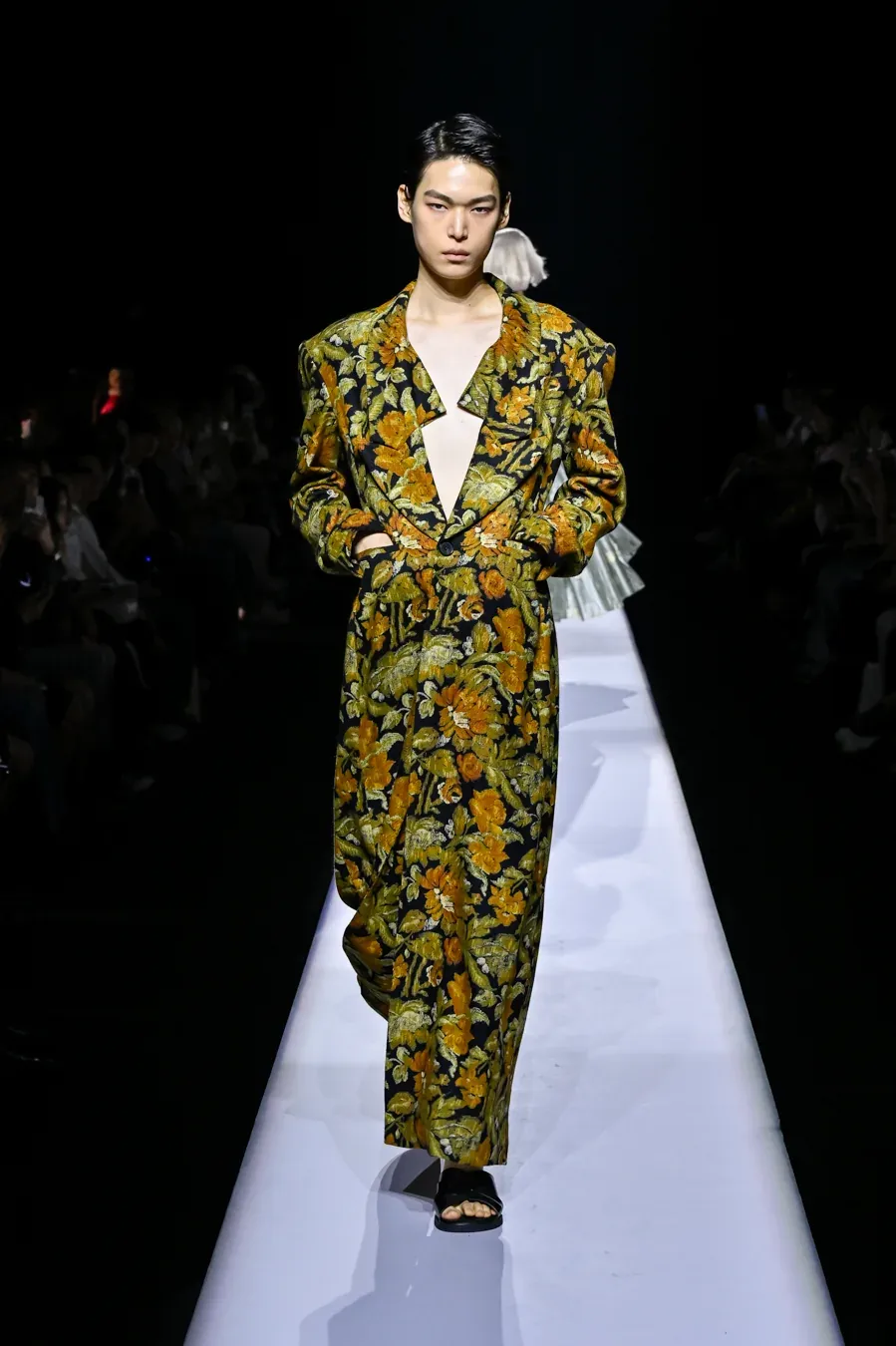
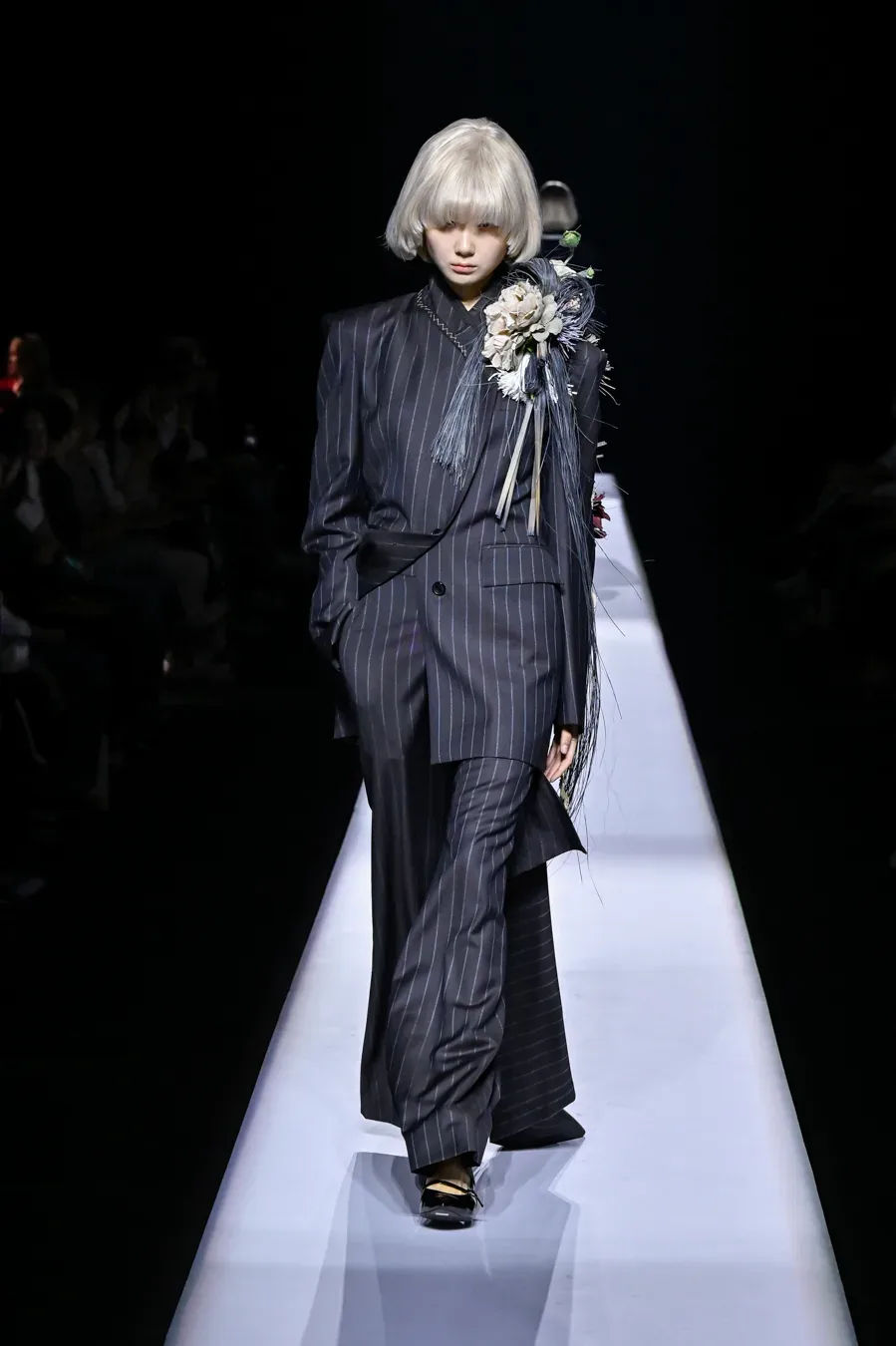
The opening look set up the collection’s central friction: a voluminous silver-toned dress scattered with orange dots, framed by flowers around the shoulders. From there, precise tailoring and a strange romantic garden grew into one another. Defined shoulders, striped suits, cropped jackets and crisp white shirts provided the discipline. Ballooning trousers, oversized collars, generous pleats and botanical prints complicated it, making familiar proportions feel newly unstable.
The colour story performed a similar expansion. Ivory, grey, charcoal and white gave way to turquoise, magenta, cobalt and mustard, while silver polka dots and three-dimensional florals caught the light. Denim-effect patchwork, exposed fraying and unfinished hems suggested garments taken apart and assembled again. Park’s experience was visible precisely in how much disorder the clothes could hold without losing their line.
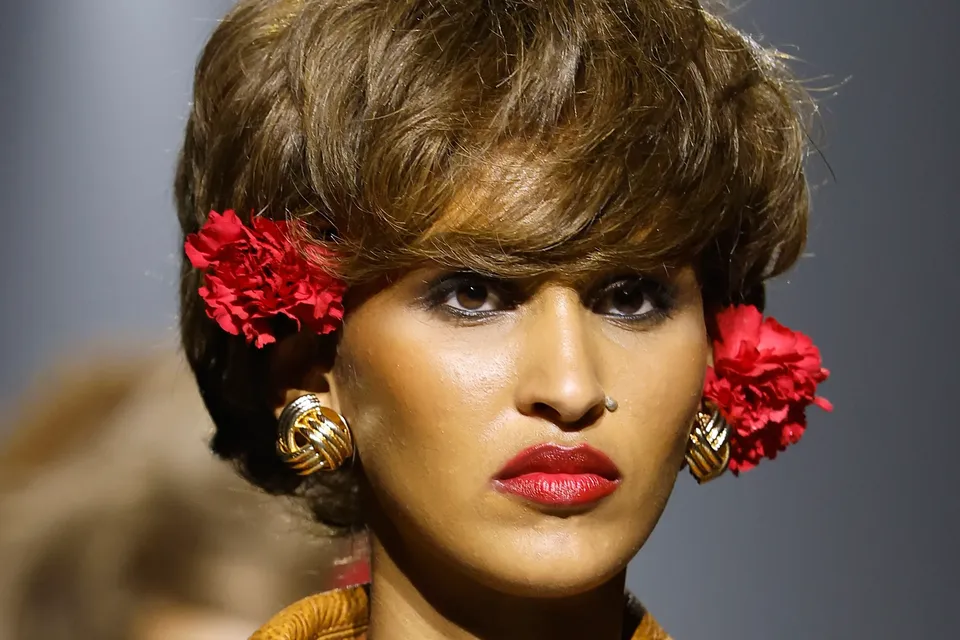
Most memorable were the dried flowers, preserved foliage and tasselled arrangements placed around shoulders and waists. They made romance feel temporal rather than merely pretty: these were blooms kept after their supposed moment had passed. Big Park did not use its history as proof that the old ways were better. The continuum expands because the past is still being edited.
Greedilous
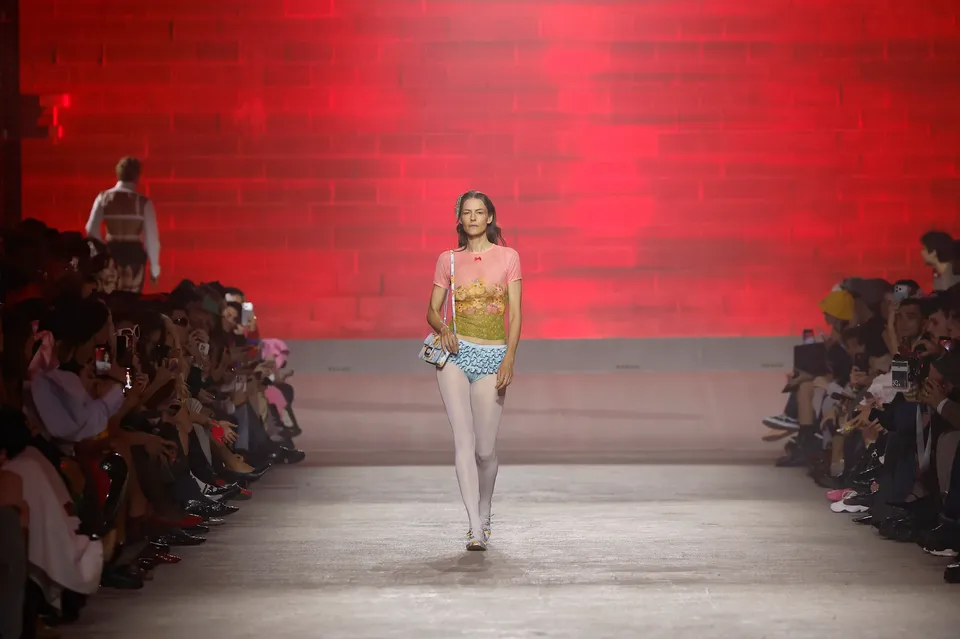
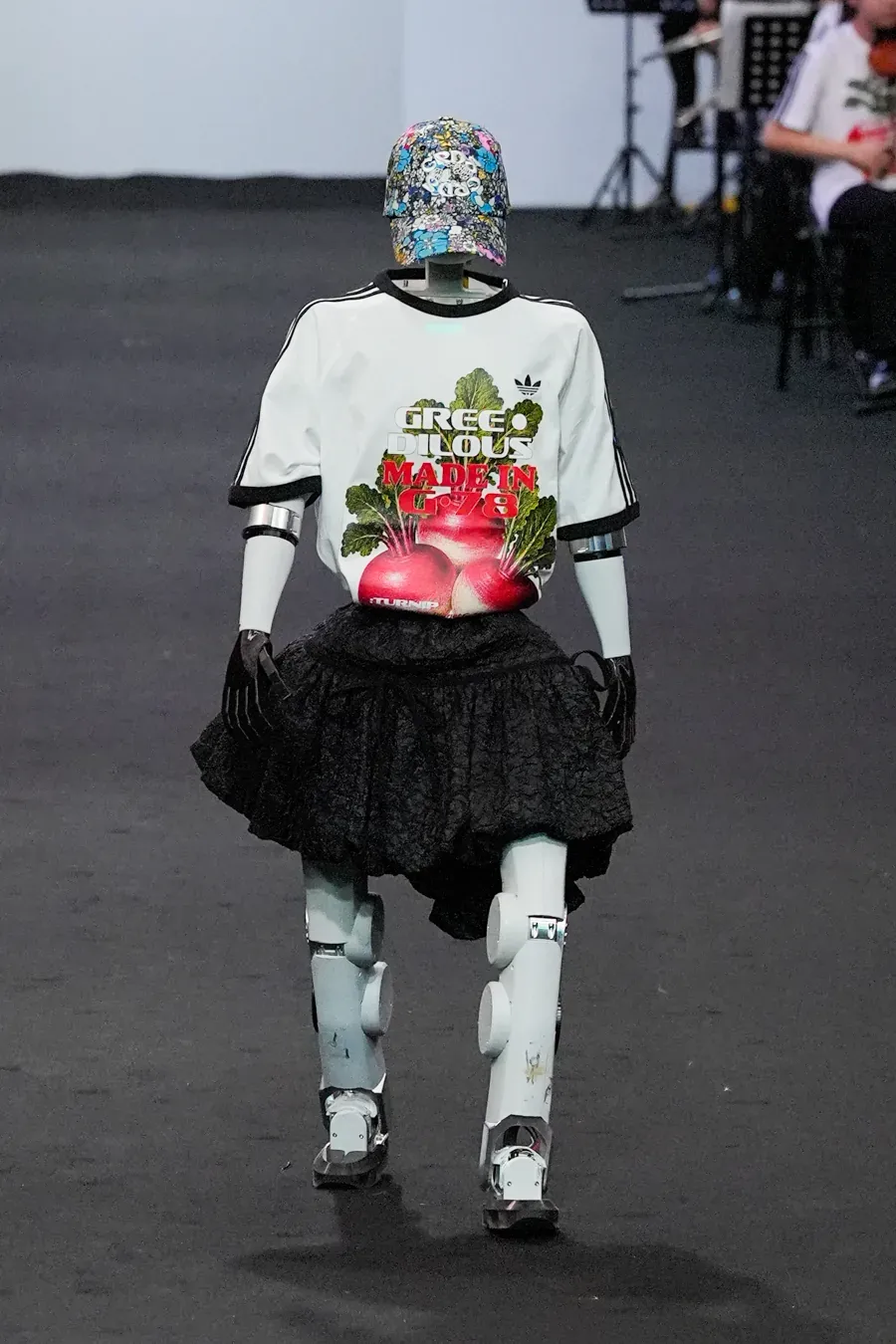
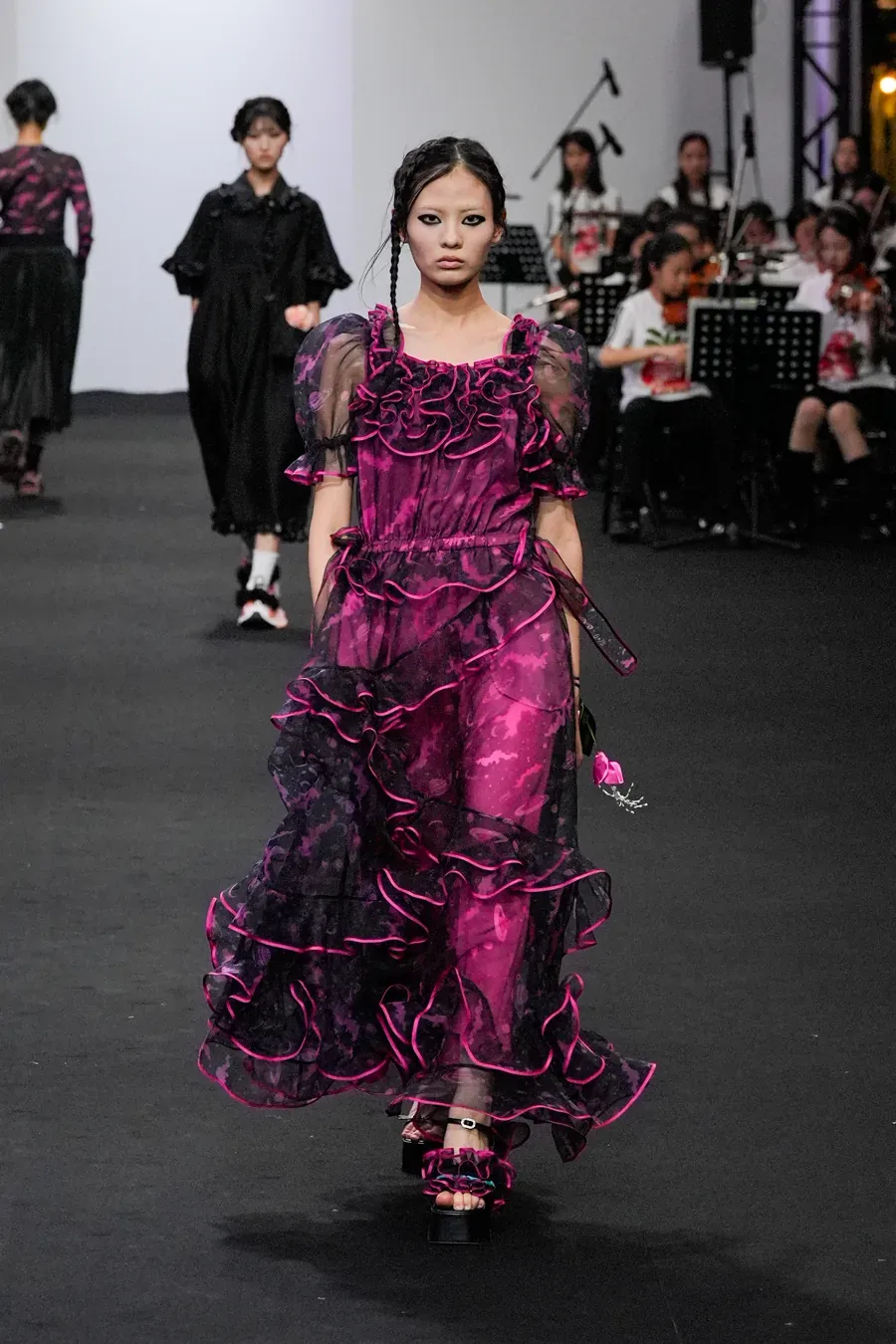
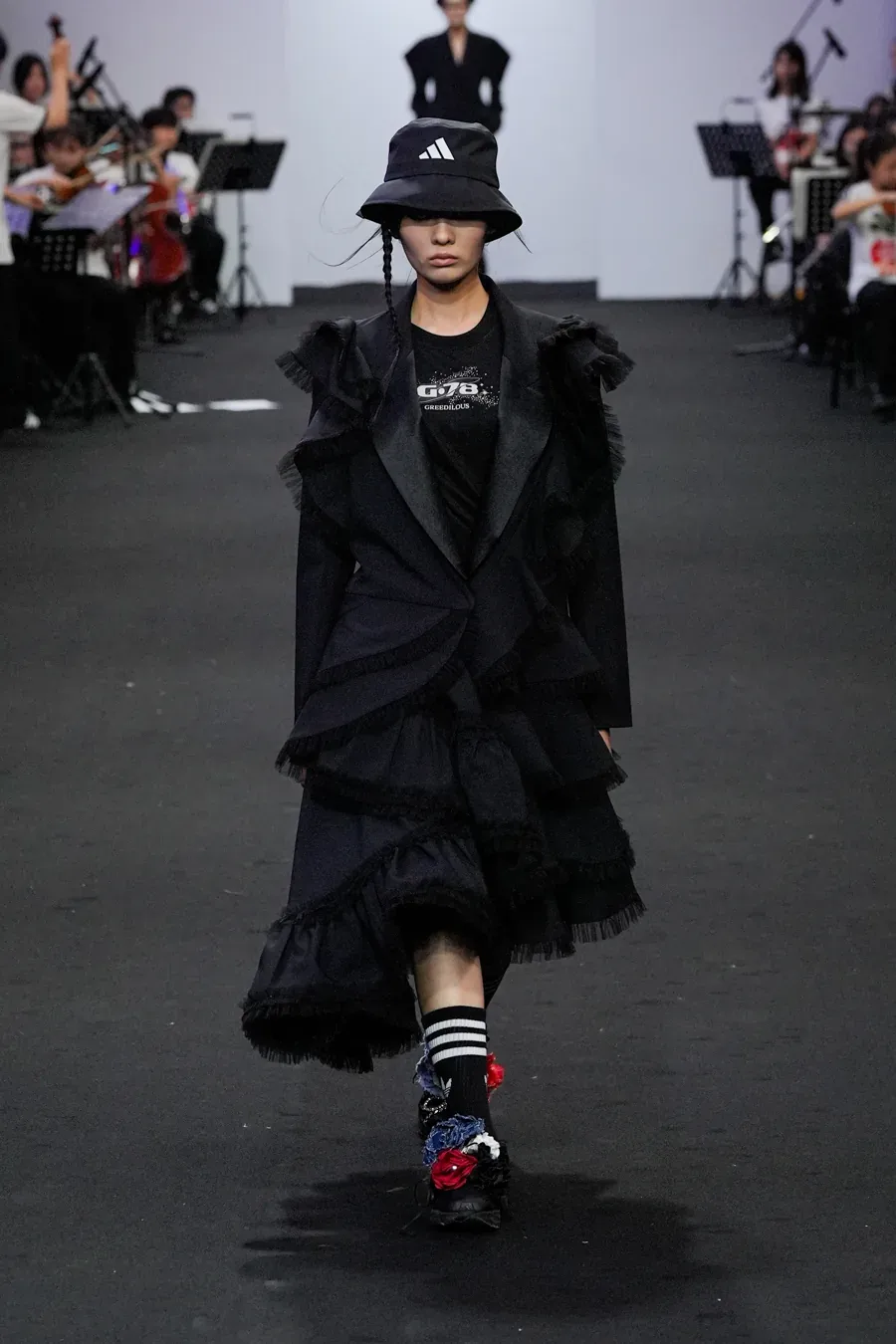
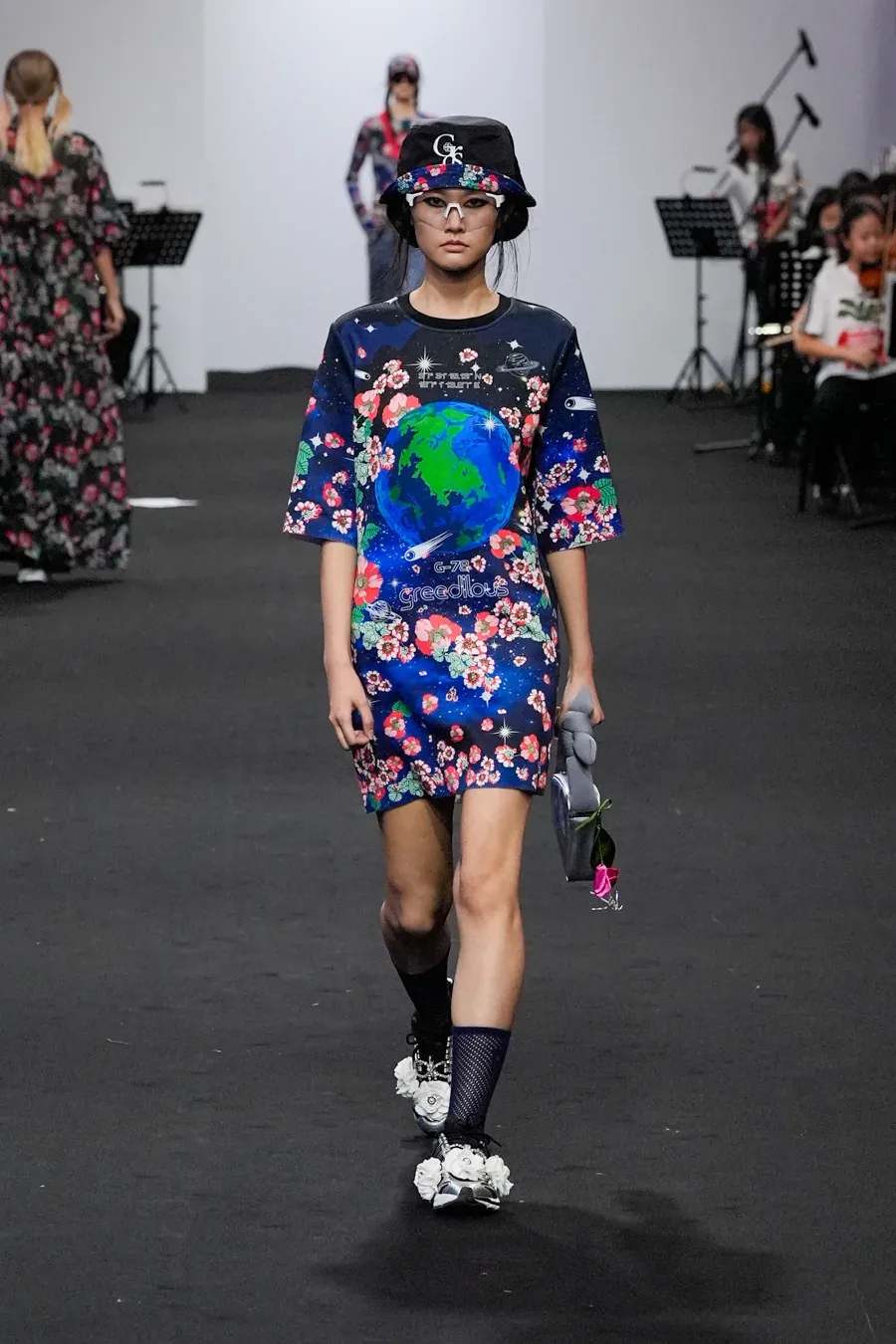
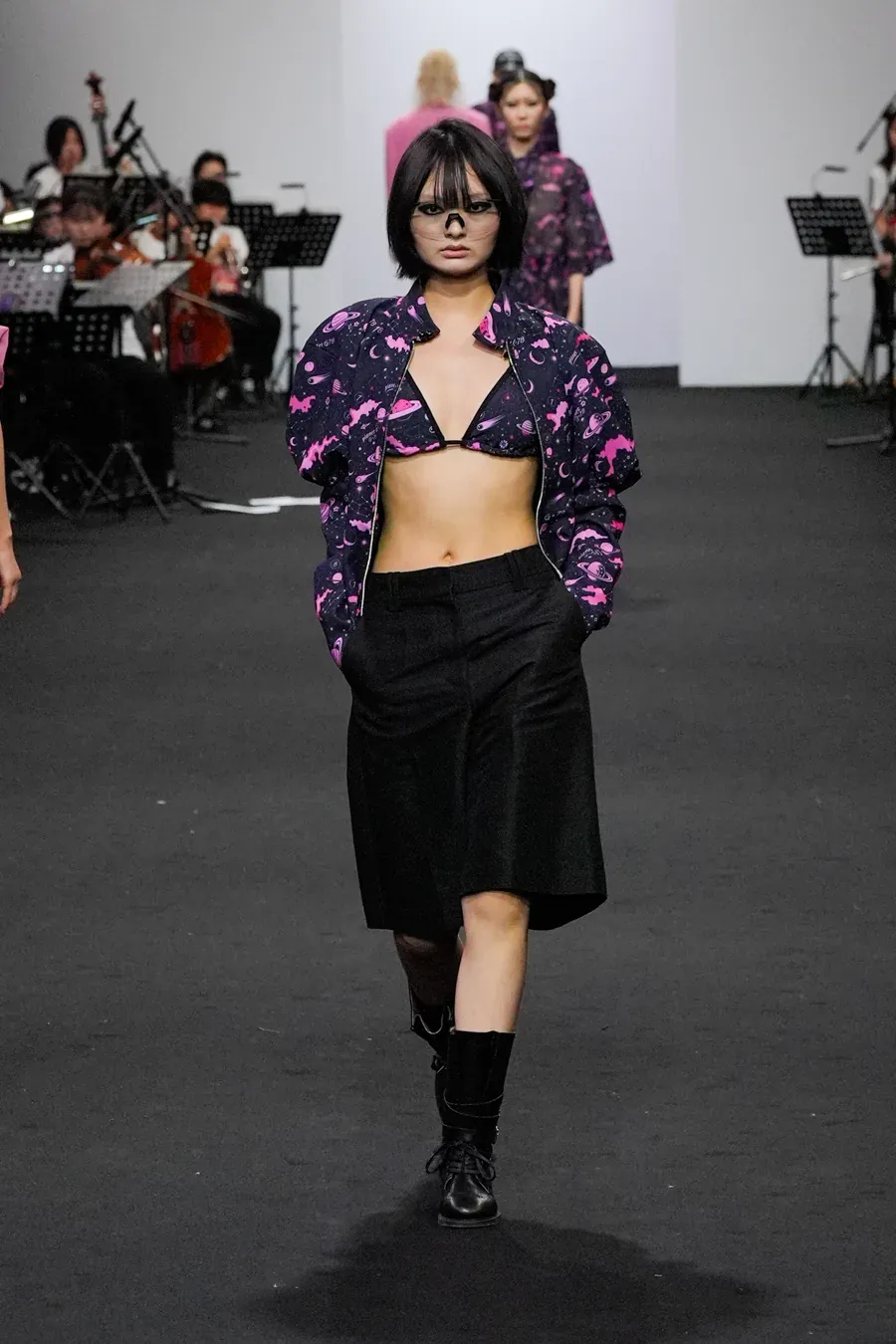
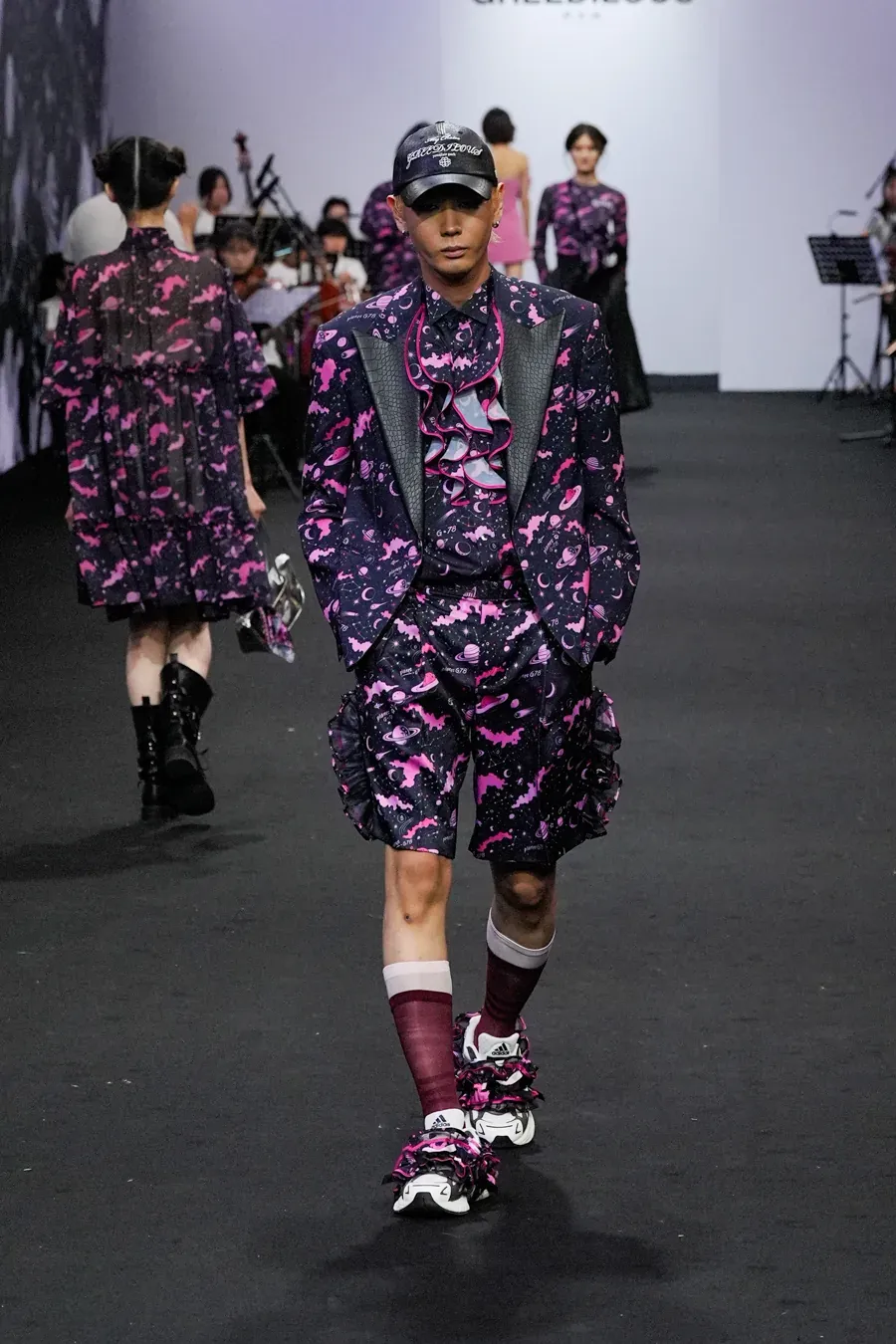
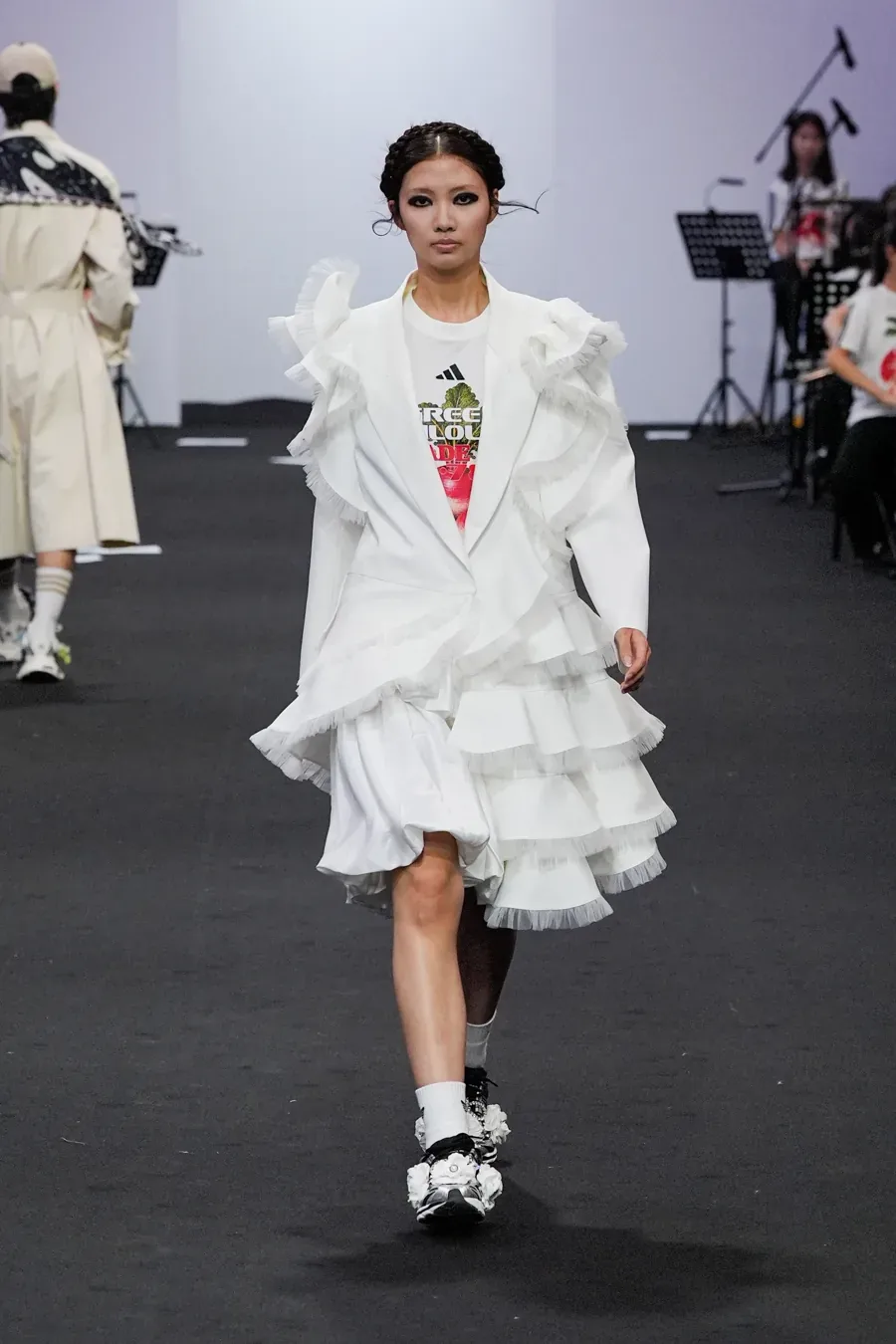
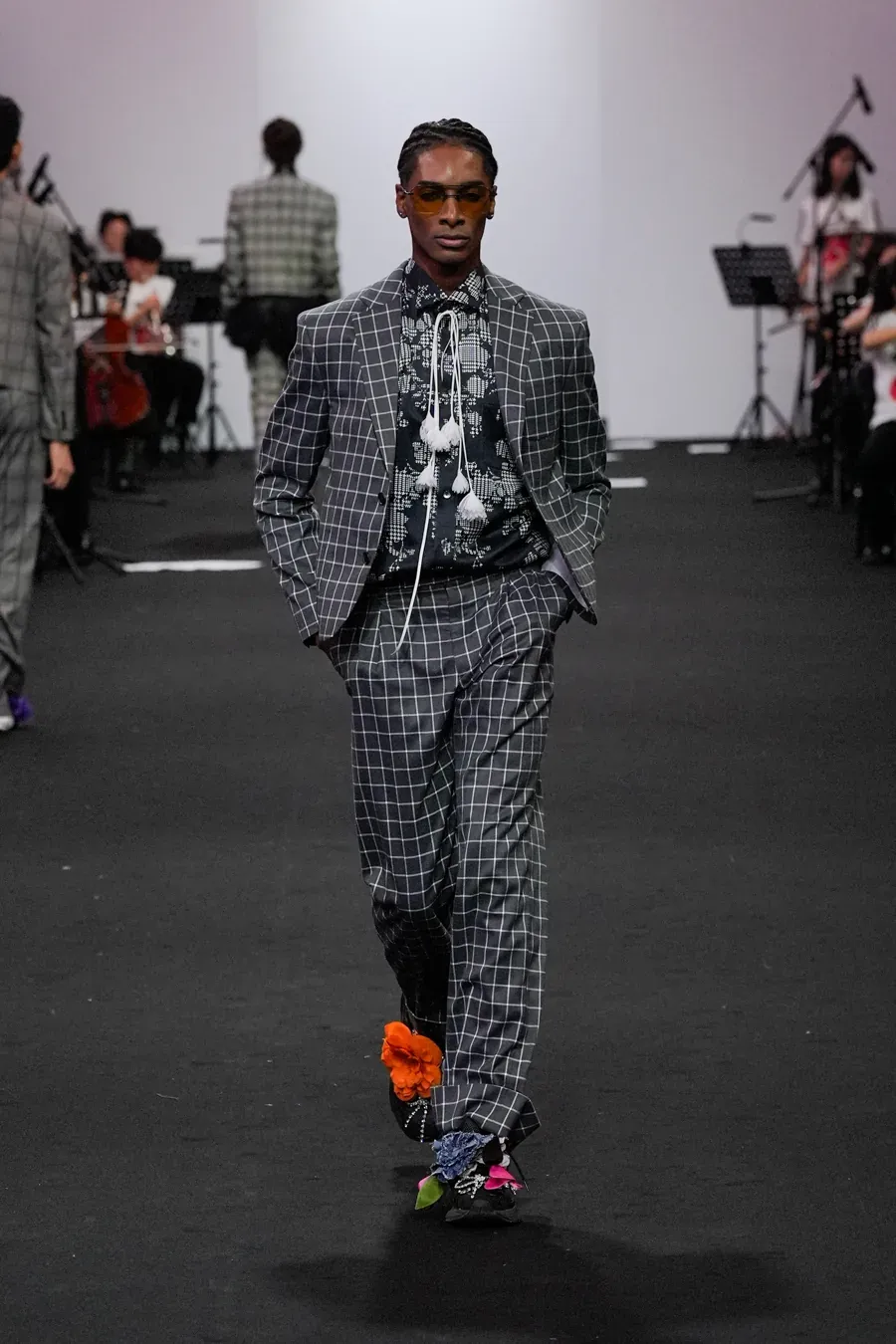
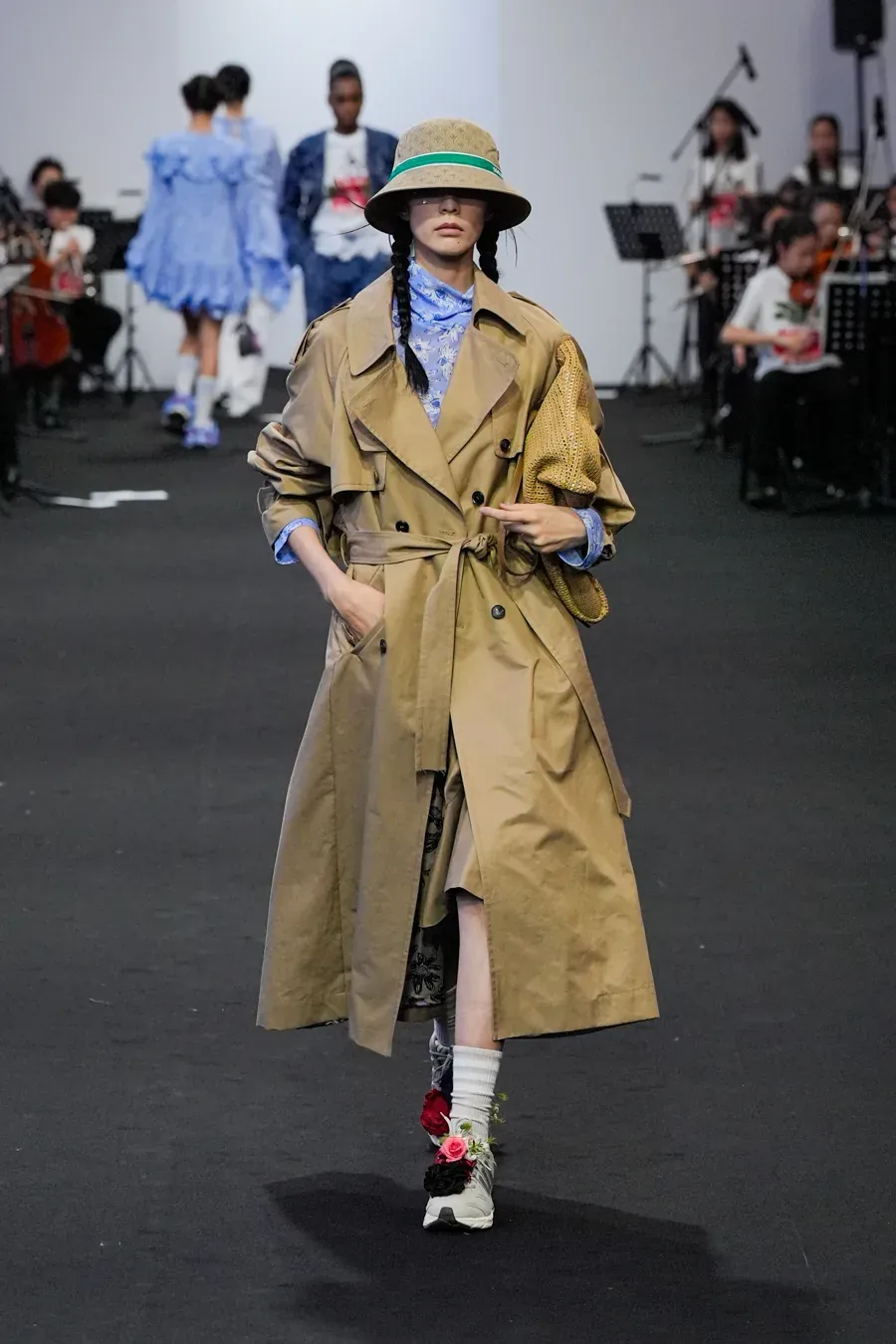
If The Little Prince landed at Lotte World Tower in 2026, would he arrive on an asteroid or in a pair of Stan Smiths? Greedilous chose both. Park Youn-hee’s The Little Prince: Asteroid G-78 transformed Saint-Exupéry’s rose, stars and interplanetary journey into a maximalist space garden, complete with live music from the Lotte Kids Orchestra and a humanoid robot walking among the models.
The brand’s digital prints spread cosmic flora across tailored suits, trench coats, knitwear and ruffled dresses in bright orange, red and blue. Graphic T-shirts marked “Made in G-78” were paired with pale-blue tulle skirts, caps and adidas trainers, collapsing children’s illustration, streetwear and theatrical costume into one cheerful system. The robot wore the collaboration too — at one point a white tee with a large red radish, black gloves and a tutu — waving as if fashion’s future had finally arrived and turned out to be rather camp.
The spectacle could easily have swallowed the clothes. Instead, tailoring gave the fantasy enough gravity: structured jackets and long coats provided a stable outline for florals, ruffles and saturated colour to orbit. The Greedilous, adidas, Robotis and orchestra collaboration suited the week’s public format.
Kwak Hyun Joo Collection
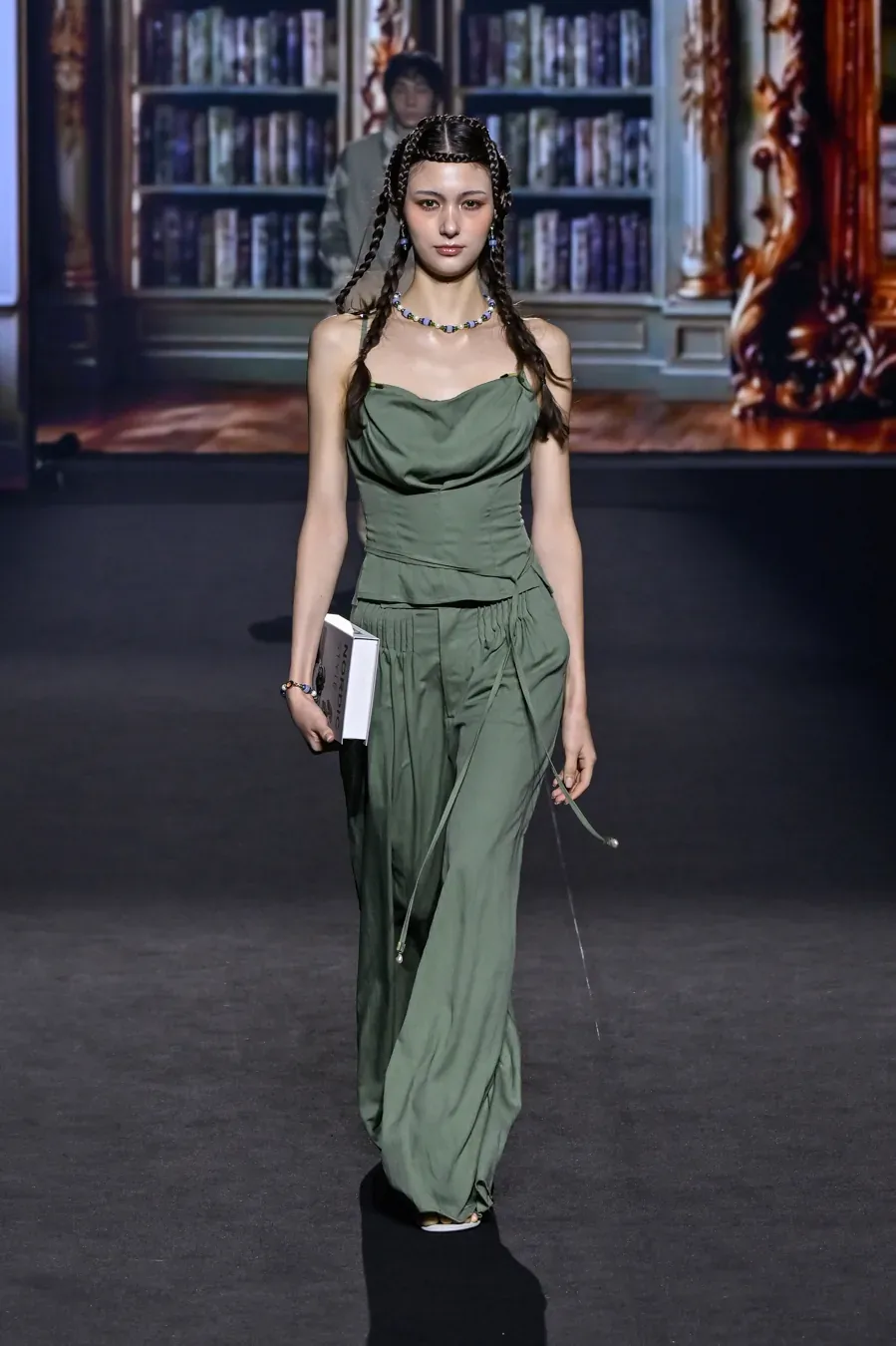
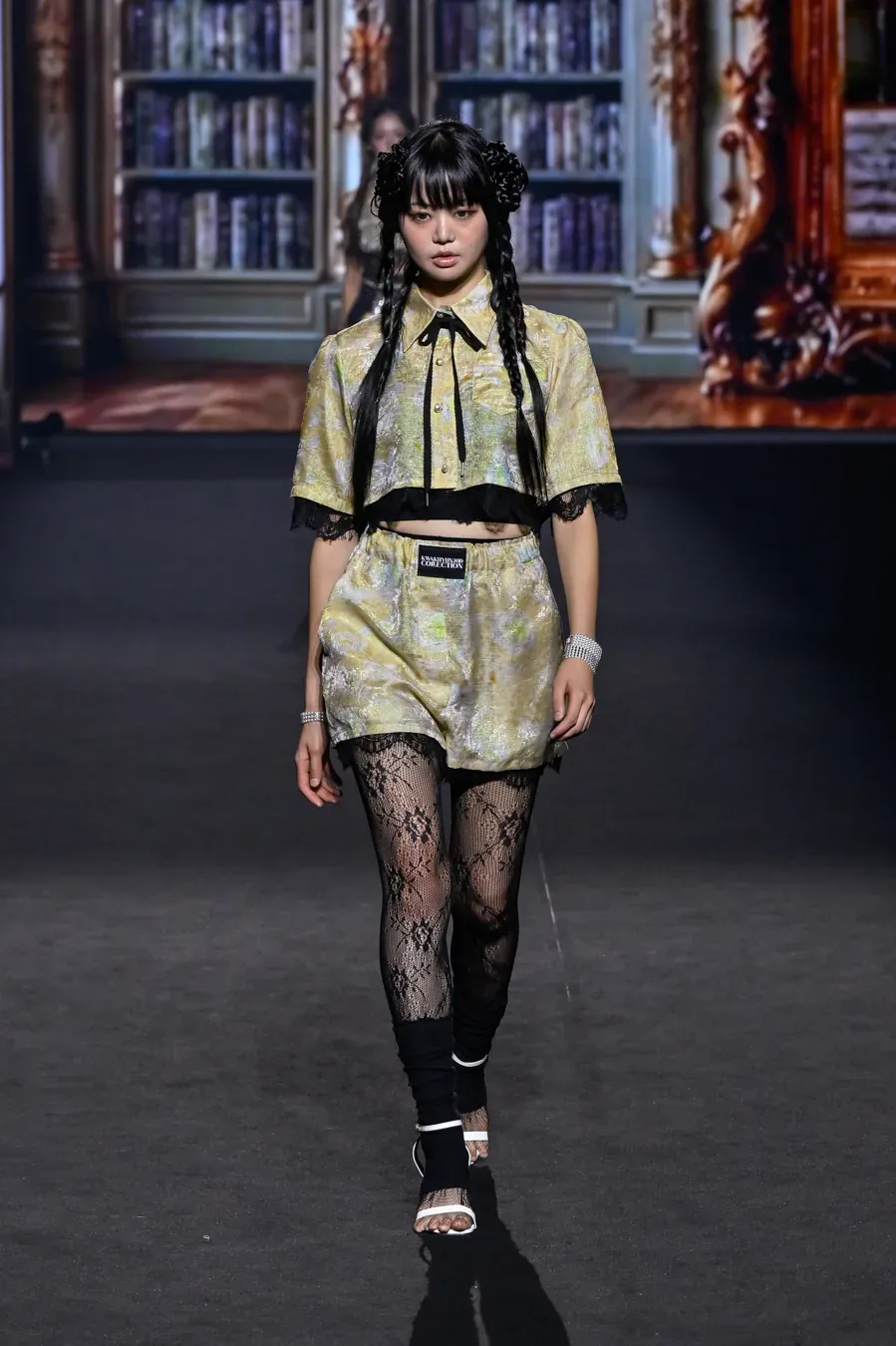
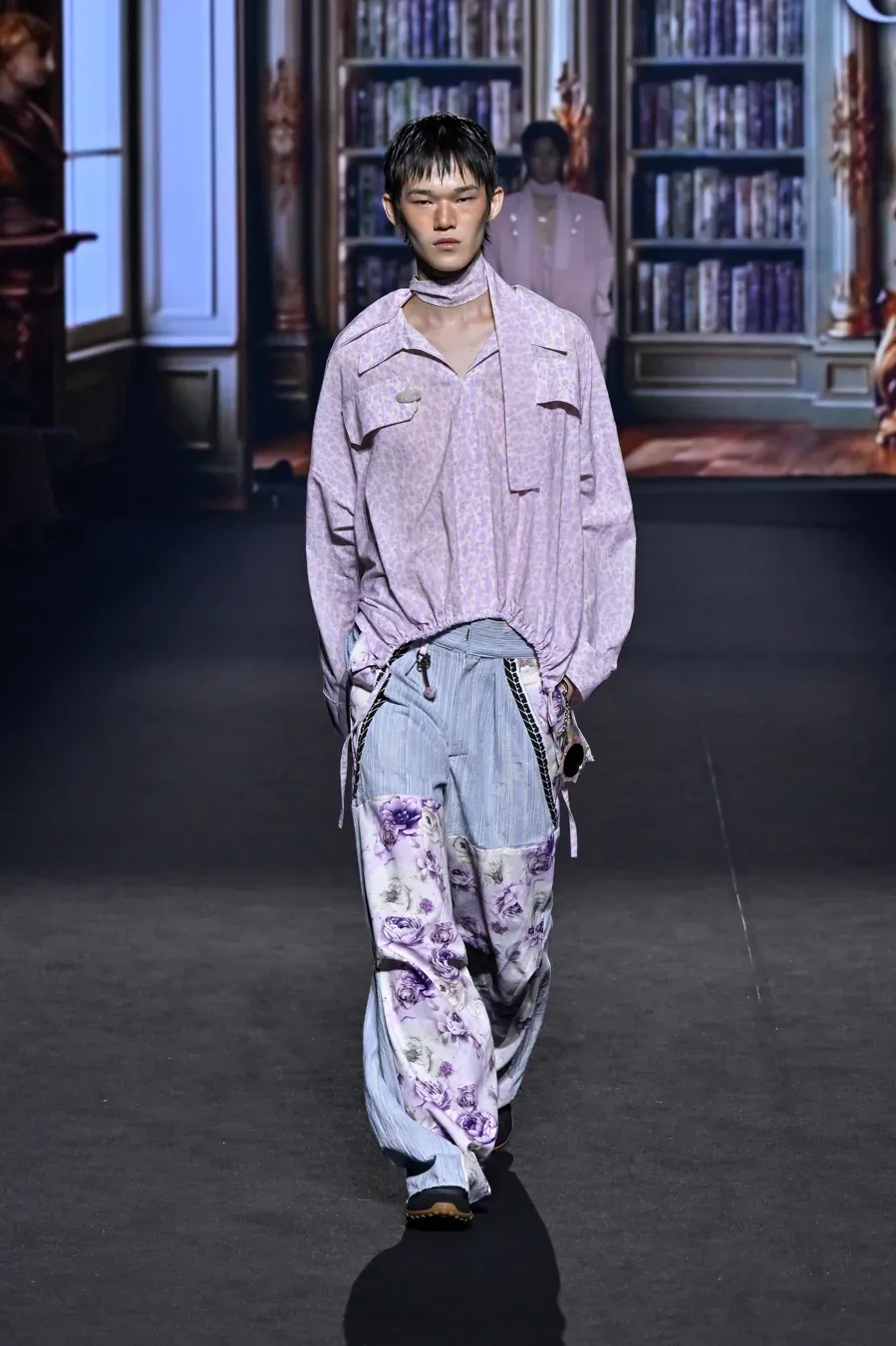
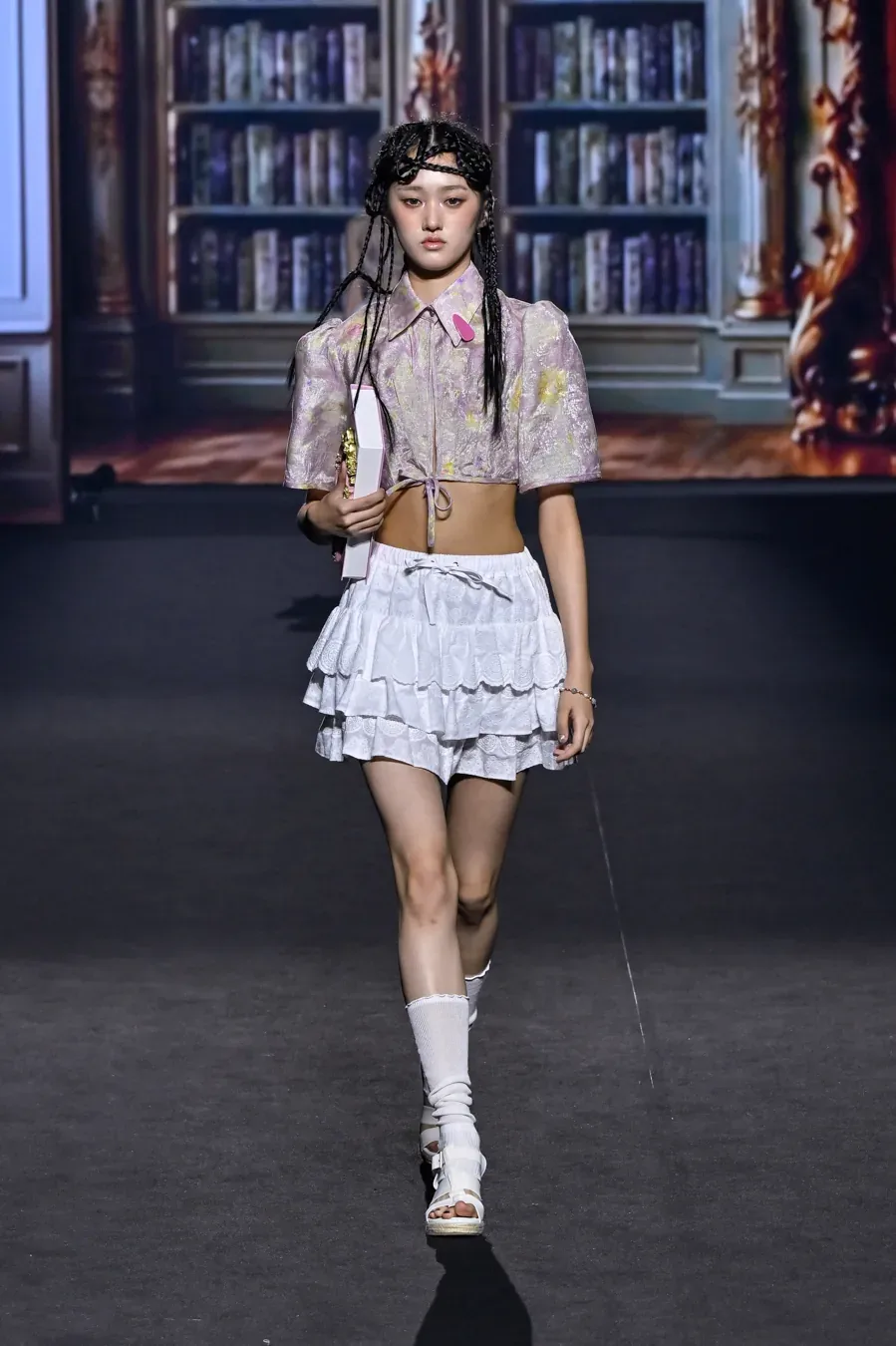
The Evil Queen’s mirror promised a definitive answer. Today we ask an AI system and receive several, delivered with unnerving confidence. Kwak Hyun Joo connected those two technologies of authority in Mirroring, imagining a conversation between the self we recognise in reality and a virtual figure reflected back from a future era.
It’s a concept that could have remained trapped in show notes, but the collection made reflection a visual method. Classical and East Asian references overlapped with futuristic surfaces; romantic silhouettes met streetwear; ornate prints behaved like information returning altered from the other side of the glass. Kwak layered them until the runway acquired the logic of a dream.
Fluid dresses and softer, elongated shapes carried the romance, while jackets, casual separates and sharper styling prevented the collection from floating into fairy tale. The designer’s signature prints supplied density and colour without obscuring the clothes beneath them. That balance matters: maximalism works best when the eye can still understand where a sleeve ends, how fabric falls and what gives a look its rhythm.
A finale performance by singer Jung Seung-won extended the mirror beyond clothing. Yet the strongest reflection was Kwak’s own. Mirroring asked how an established designer can look at a recognisable archive without reproducing it. The answer was neither human nor artificial, nostalgic nor futuristic. Like any useful mirror, the collection returned something familiar — only reversed enough to make us look again.
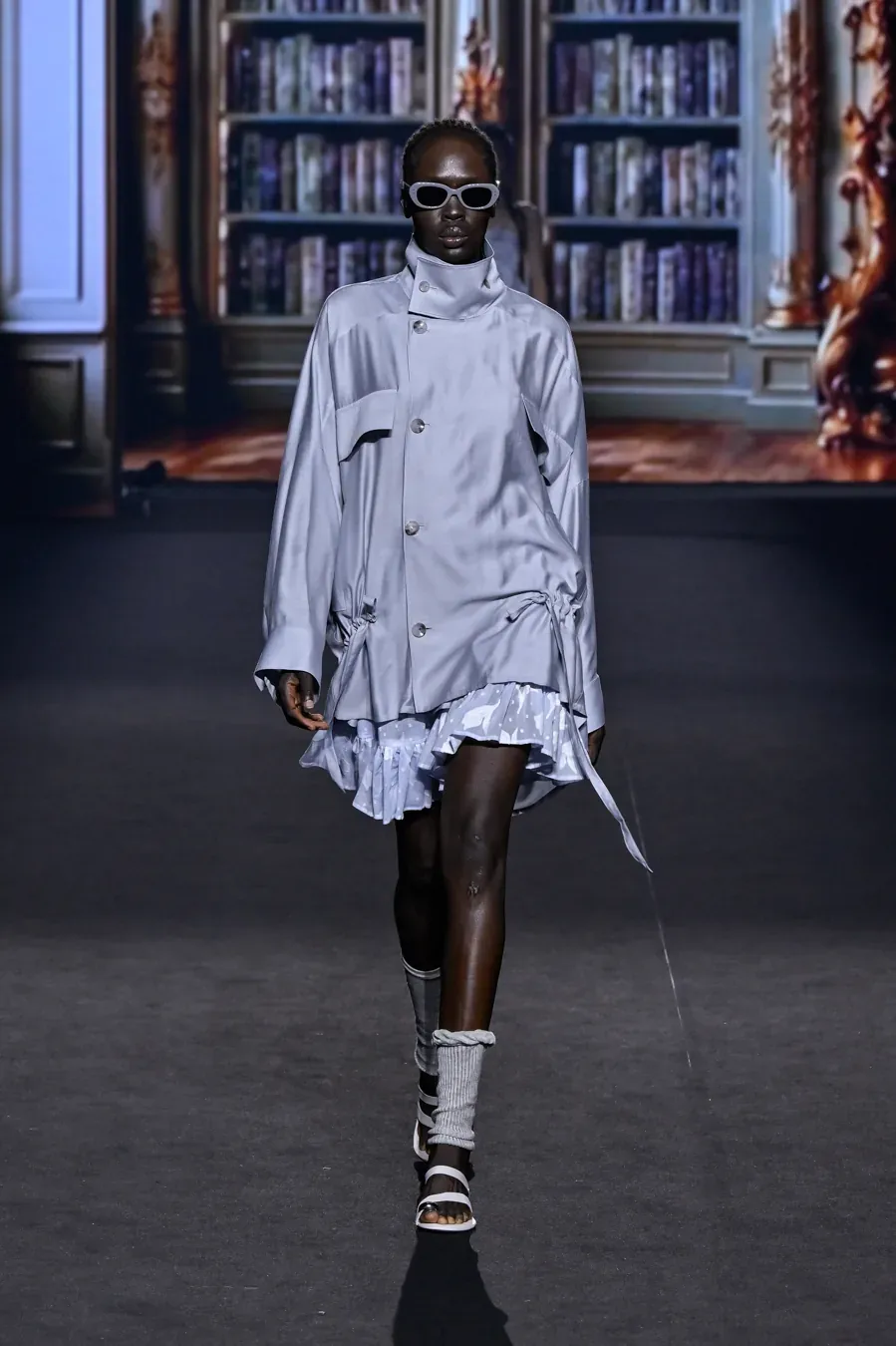
Sling Stone
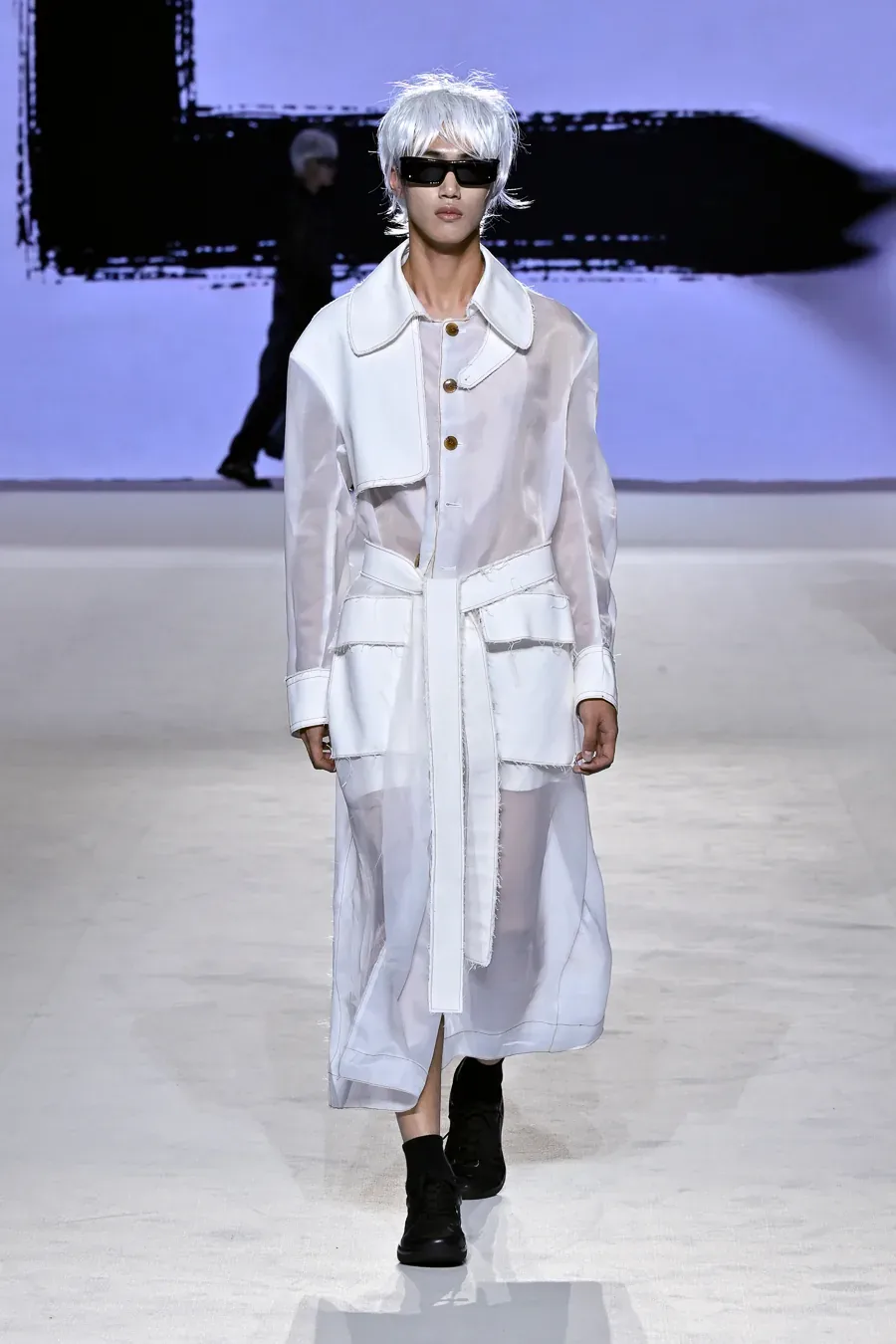
A brushstroke is both an image and the record of a gesture. For Moving Line, Park Jong-cheol brought that double meaning into Sling Stone’s menswear, translating the freedom and rhythm of Korean brushwork through print, silhouette and the changing outline of clothes in motion. Park has spent more than two decades combining vintage menswear, exact tailoring and Korean references. Here, the cultural element was restrained. Instead, sweeping graphic marks crossed garments, layers extended and interrupted the body’s vertical line, and fabric shifted as models walked. The reference lived in pace and proportion as much as on the surface.
That approach gave familiar menswear room to breathe. Jackets and coats retained the confidence of traditional construction, but elongated shapes, asymmetry and looser layers prevented them from becoming rigid. Monochrome passages emphasised the calligraphic quality of the prints; contrasts of light and dark made each mark feel immediate, as though ink had not yet dried. Fashion regularly reaches for national identity through a recognisable motif, then mistakes visibility for depth. Sling Stone’s decision to work with the line itself was more persuasive. A line can describe a heritage, but it can also leave it, change direction and respond to the person wearing it.