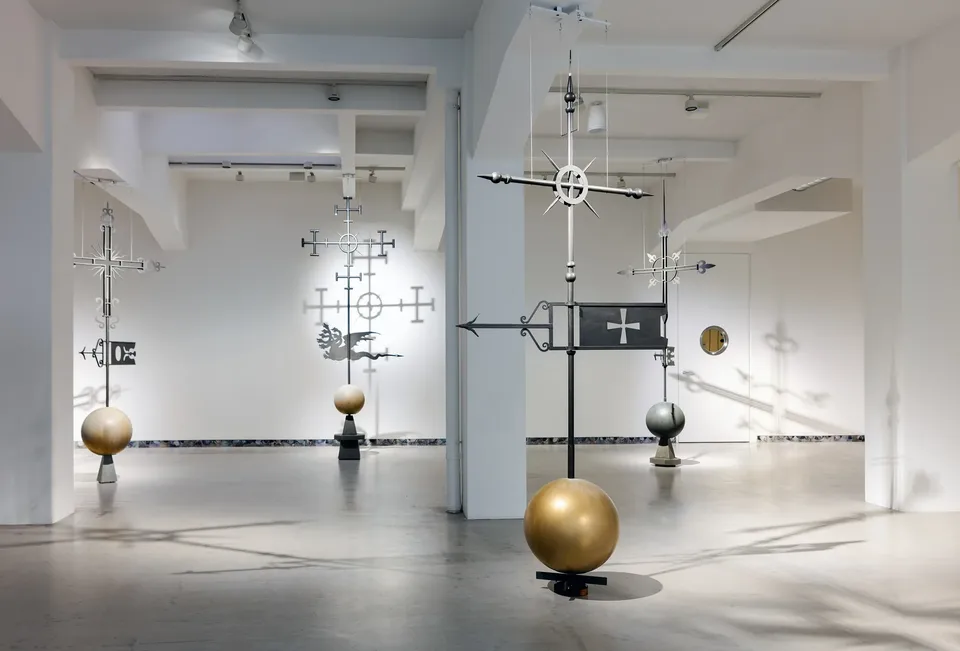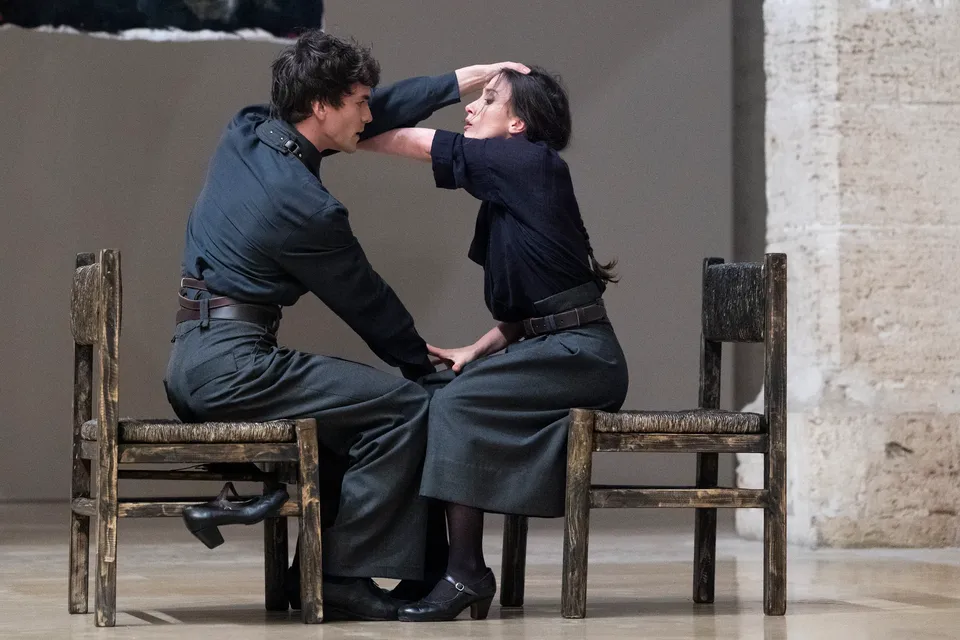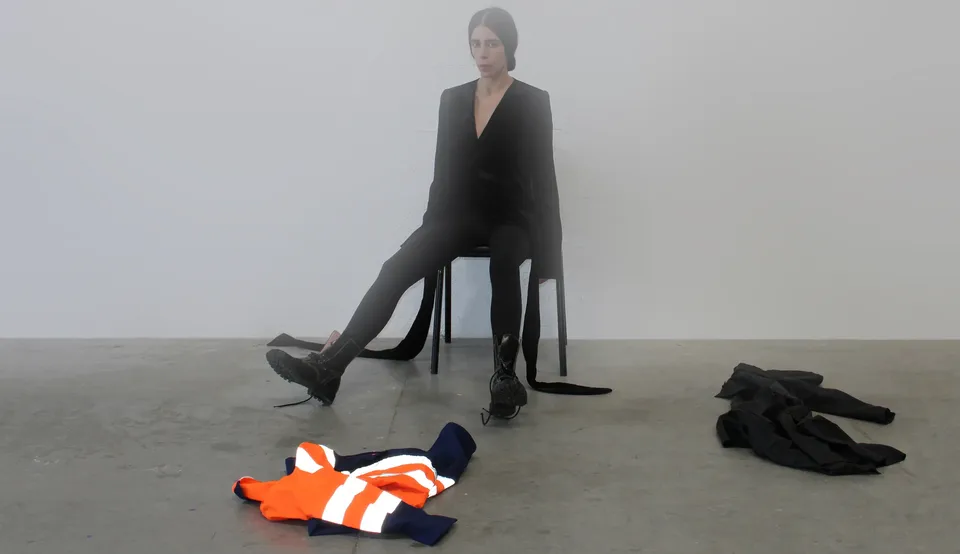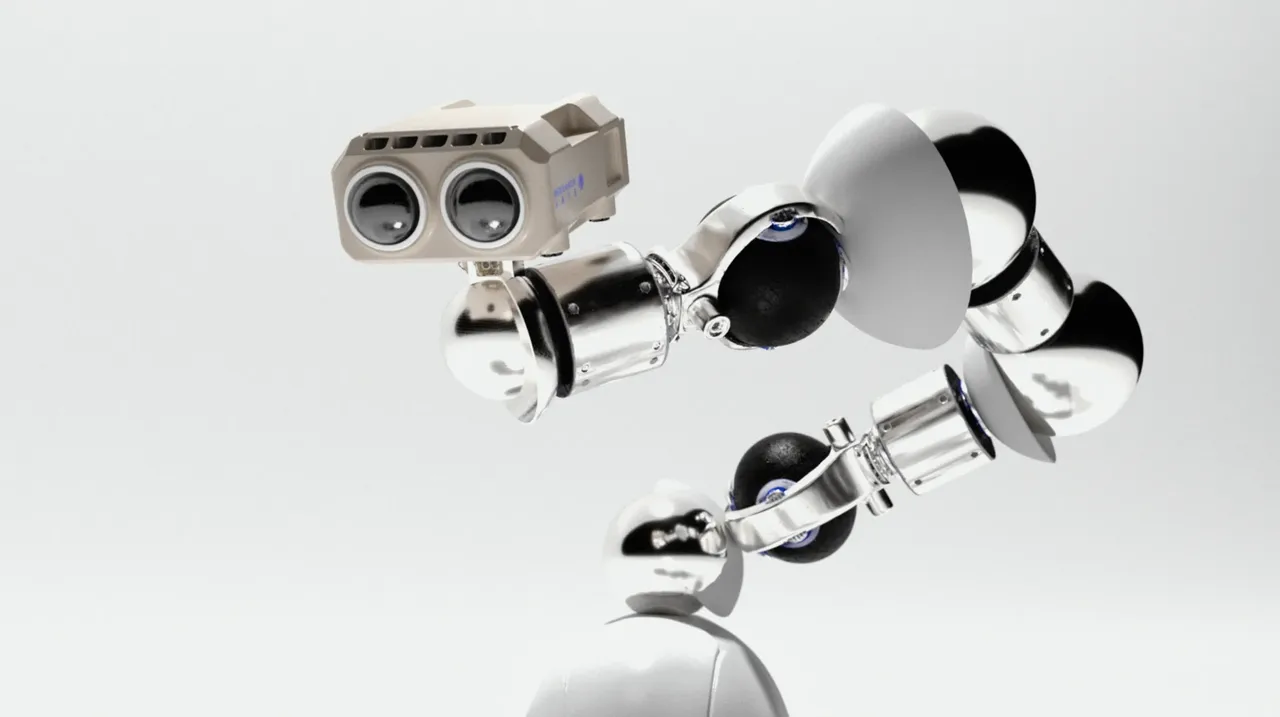
AI-generated imagery has made the distance between an idea and an image increasingly short. But for Research Arts, the more interesting question is what happens when that distance isn’t simply eliminated but redesigned. Automatic, the London-based multidisciplinary studio’s latest film, approaches artificial intelligence not as an image-making shortcut, but as part of a system built to generate unexpected possibilities.
Led by director and creative technologist Thomas Harrington Rawle, Research Arts developed a hybrid workflow combining bespoke AI-assisted tools with traditional CGI, compositing and colour grading. Rather than prompting a model to produce a finished image, the studio uses AI to experiment with processes, build custom software, and explore forms that might not emerge through conventional methods alone. The resulting film becomes an exercise in balancing automation with intervention: allowing a system to produce surprises while retaining the ability to decide what those surprises become.
For Rawle, this tension is part of what makes art interesting in the first place. “So much of it is orchestrating accidents,” he says. AI, in this context, becomes a way of constructing the conditions for those accidents to occur. Research Arts uses large language models to help build bespoke software and procedural systems, creating tools that can generate unexpected outcomes while leaving the artist to determine the rules, parameters and possibilities. Rather than imagining a creature and manually deciding how each of its legs should move, an artist could establish a series of conditions governing its body, limbs and movement, allowing the system to generate different ways of walking. “This becomes then an exploration of the conditions you have set,” he explains, describing it as a kind of evolutionary system that can be continually tweaked and curated.
It’s a fundamentally different proposition from typing “a cat doing a thing” into a generative image model. For Research Arts, the distinction lies in authorship. The machine isn’t being asked to provide the finished answer; it’s being used to expand the range of questions the artist can ask. “You still need to decide for yourself and think for yourself what those tools will do and how they will interact,” Rawle says.
That doesn’t mean abandoning traditional image-making techniques. Automatic moves between AI experimentation and the precision of CGI, compositing and colour grading, with each process contributing something different. Rawle is particularly sceptical of text-to-image generation as a creative methodology, arguing that relying on the accumulated dataset of an AI model risks making it harder to develop an individual visual language. For him, the more compelling possibilities lie in using AI as an extension of procedural generation, a lineage he connects to figures such as Brian Eno and Will Wright.
The film therefore asks a question that extends beyond its own machinery: what does artistic control actually mean when the artist is no longer responsible for every individual outcome? Control does not require eliminating unpredictability but knowing how to construct a system in which unpredictability becomes useful. The artist establishes the conditions; the machine introduces variation; the final work emerges somewhere between the two.
But Rawle is equally uninterested in the idea that AI has somehow created a new crisis for artistic quality. “People were making boring art long before AI,” he says. The problem, in his view, isn’t that artificial intelligence makes bad art possible, but that it can make the production of thoughtless work almost industrial. “AI enables people to repeat the malaise of thoughtless and spiritless art on an industrial scale.” It’s a deliberately uncomfortable proposition. If AI can accelerate the production of uninspired images, then perhaps the real problem is not whether machines are becoming creative, but what happens when human creativity itself becomes automated. The technology can amplify what is already there: curiosity and experimentation, but also repetition, imitation and a lack of intent. For Research Arts, the distinction therefore remains fundamentally human, not in the sense that humans must control every output, but that they must still have something to say about the system they are building.
There are, however, limits to this optimism. The implications extend beyond aesthetics, too, from the environmental cost of data centres to the broader ways AI can accelerate existing forms of capitalism. Yet Rawle points towards locally run models as one possible alternative, noting that the same hardware used for traditional 3D rendering can also run certain AI systems.
Automatic is less interested in whether machines can make art than in how artists might build new relationships with them. Its machines, creatures and abstract forms emerge from a process that is simultaneously technical and intuitive, governed by rules but open to disruption. In a moment when AI is increasingly associated with instant results, Research Arts proposes something slower and more deliberate: not asking the machine to make the work but designing a machine that can surprise you.