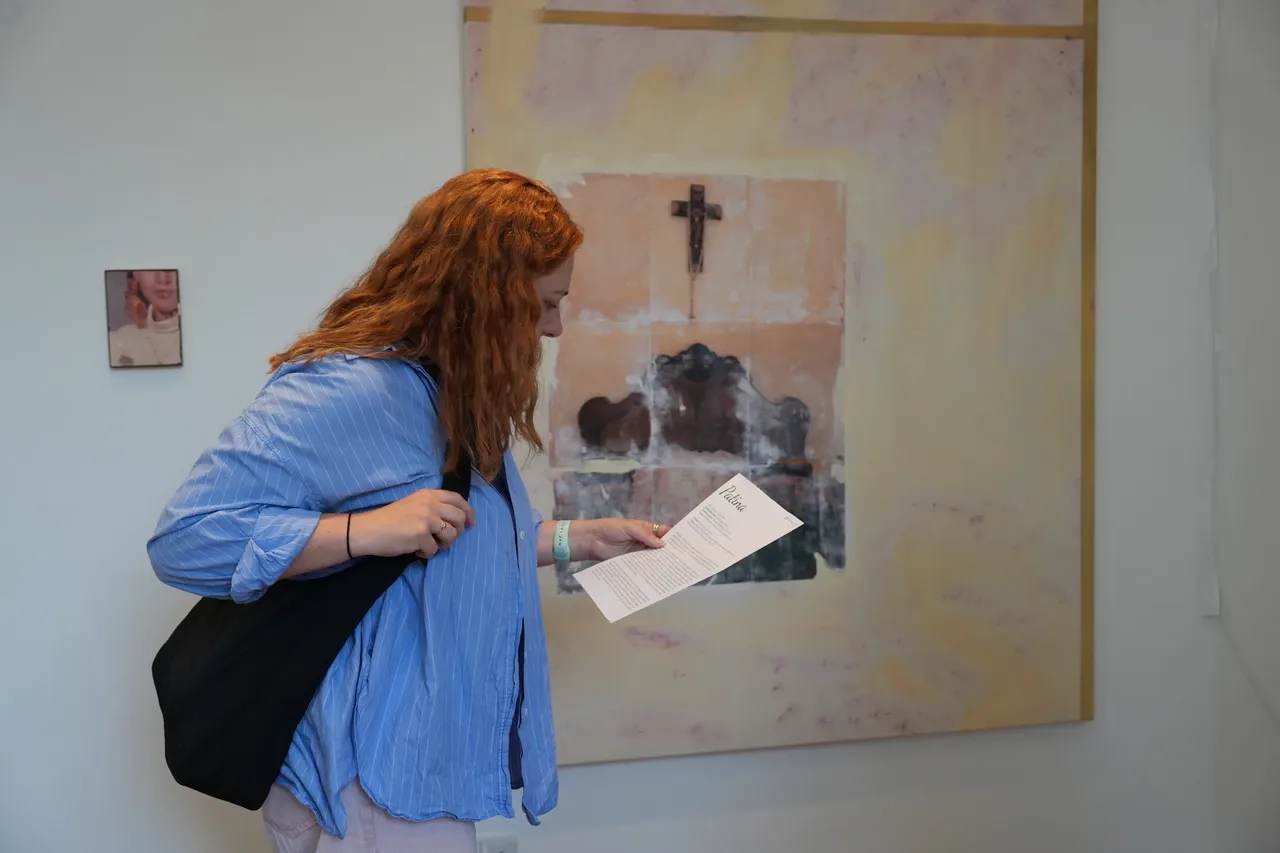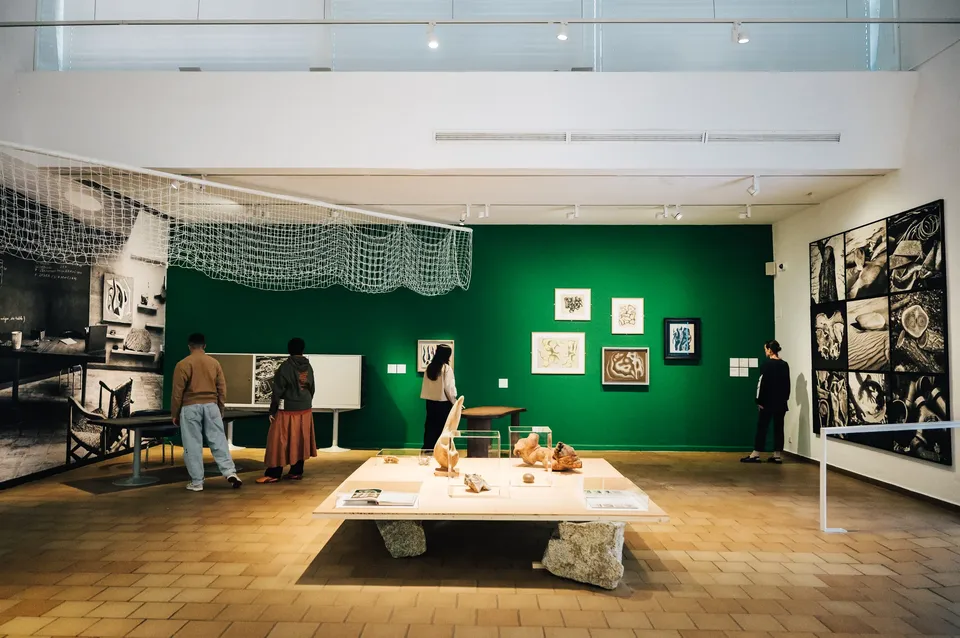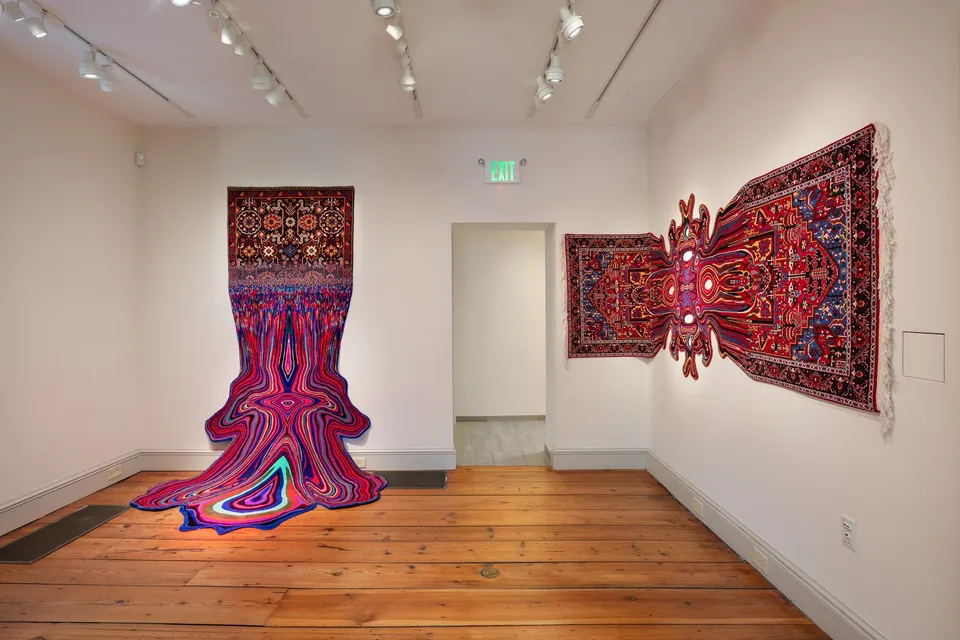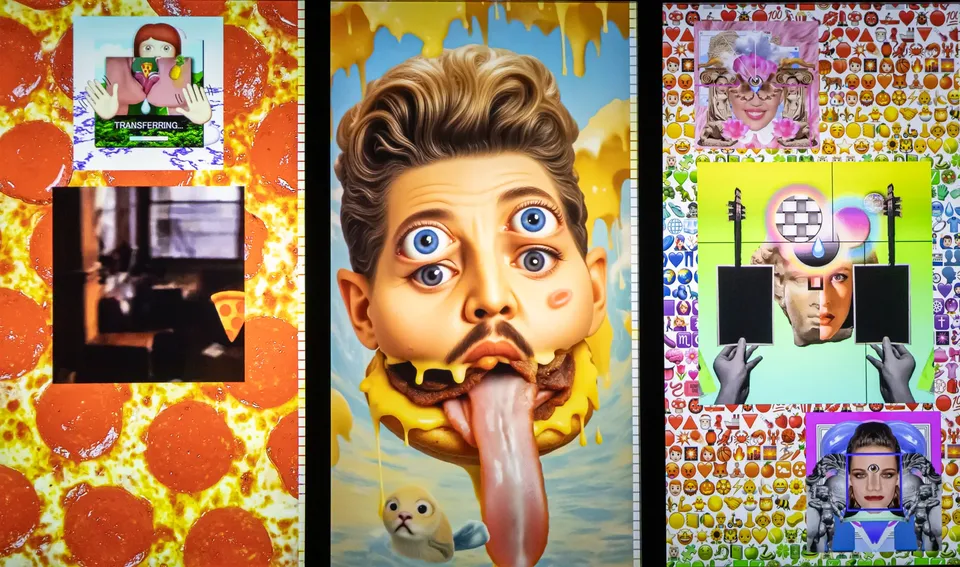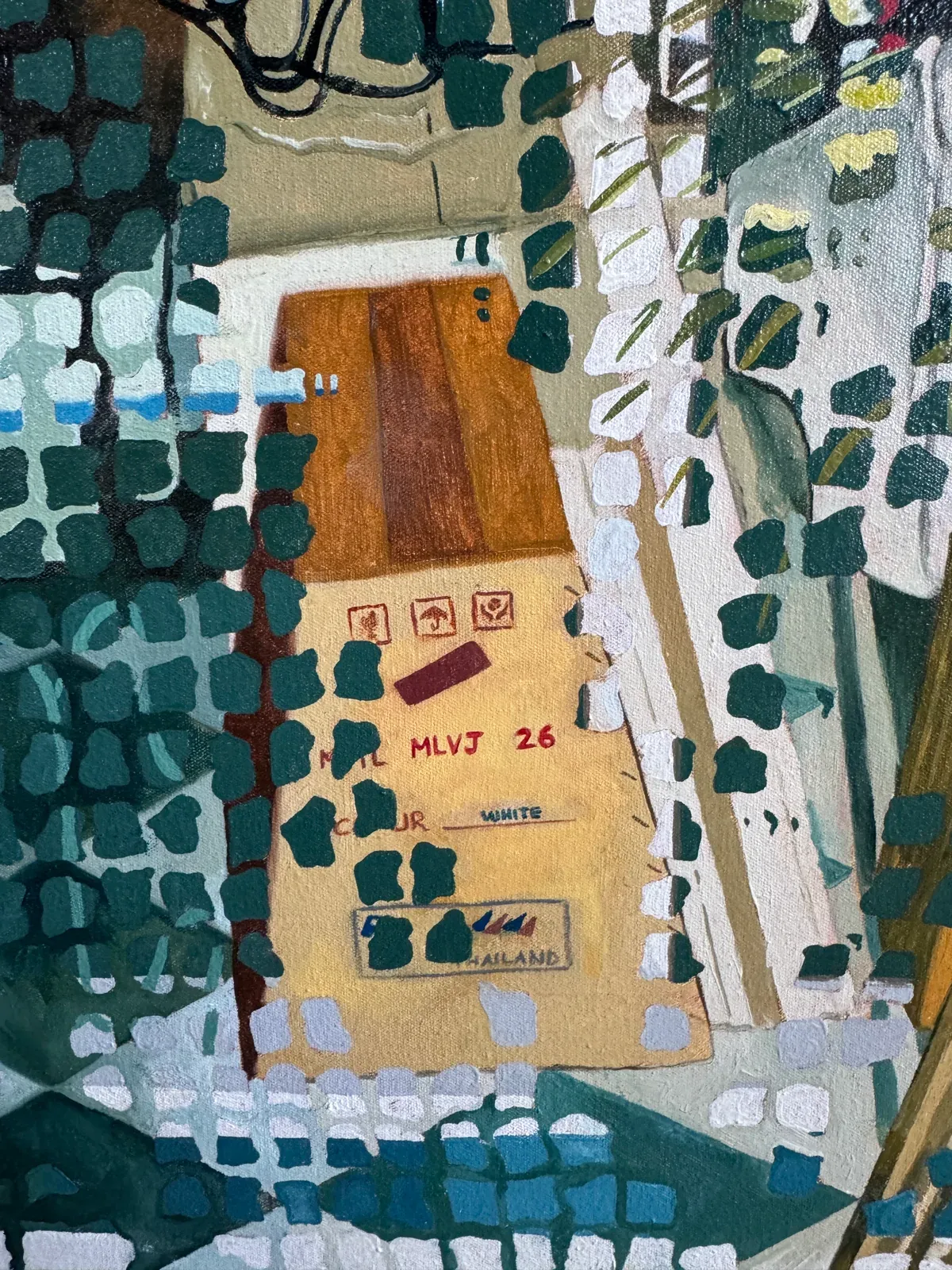
Labour, work and the human condition are the lofty concepts curatorial duo Xinxin Li and Liyuan Sun invoked when they cited Hannah Arendt’s The Human Condition as an inspiration for their exhibition Patina, which ran 10 to 23 August at Both Gallery in North London. Li and Sun’s concise selection of works from eight exhibiting artists acts like a tight-fisted punch at the meaning of life, or how to imbue life with meaning.
Frayed, imperfect artworks vitally touched by human hands entered a deep conversation at the exhibition, building from three years of collaboration between Li and Sun, who began organising moving-image screenings together and later Which Witch Collective exhibitions.
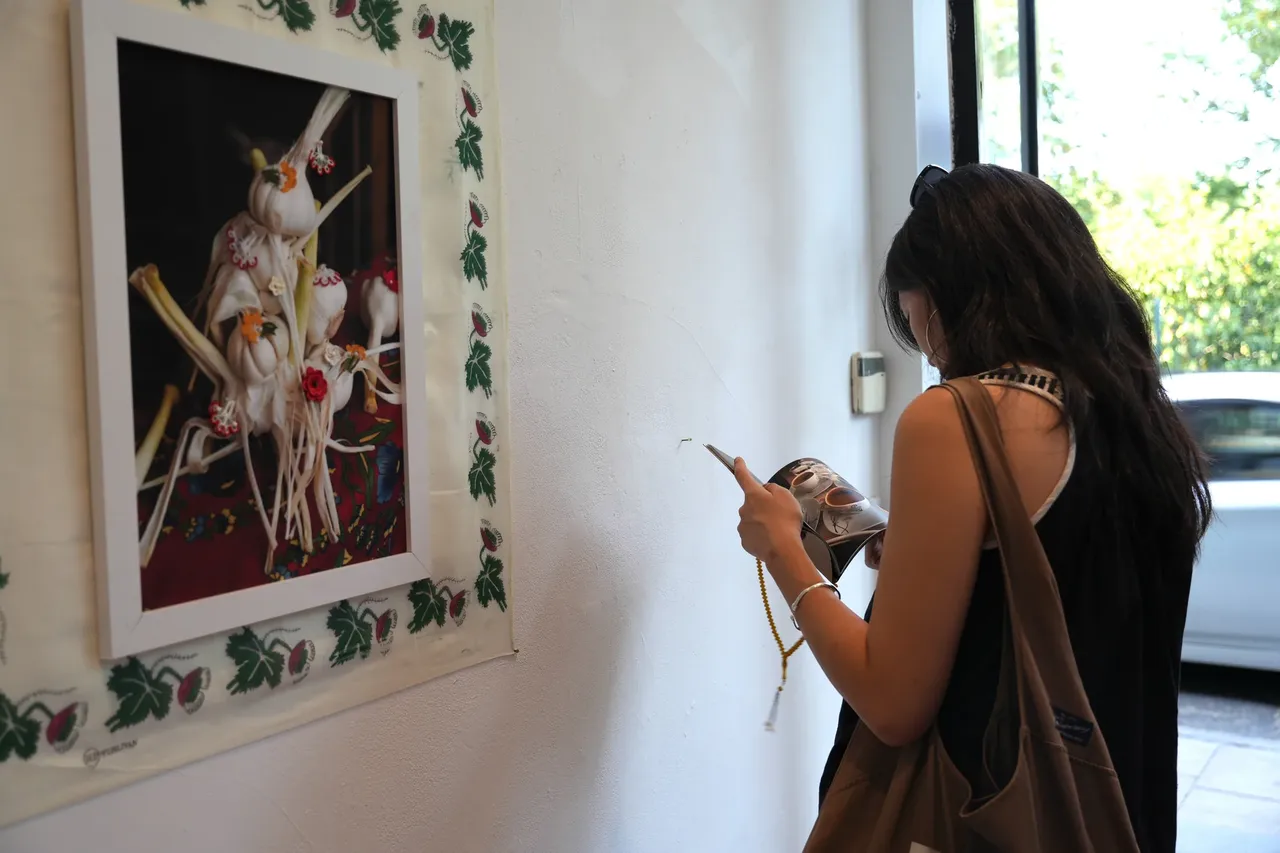
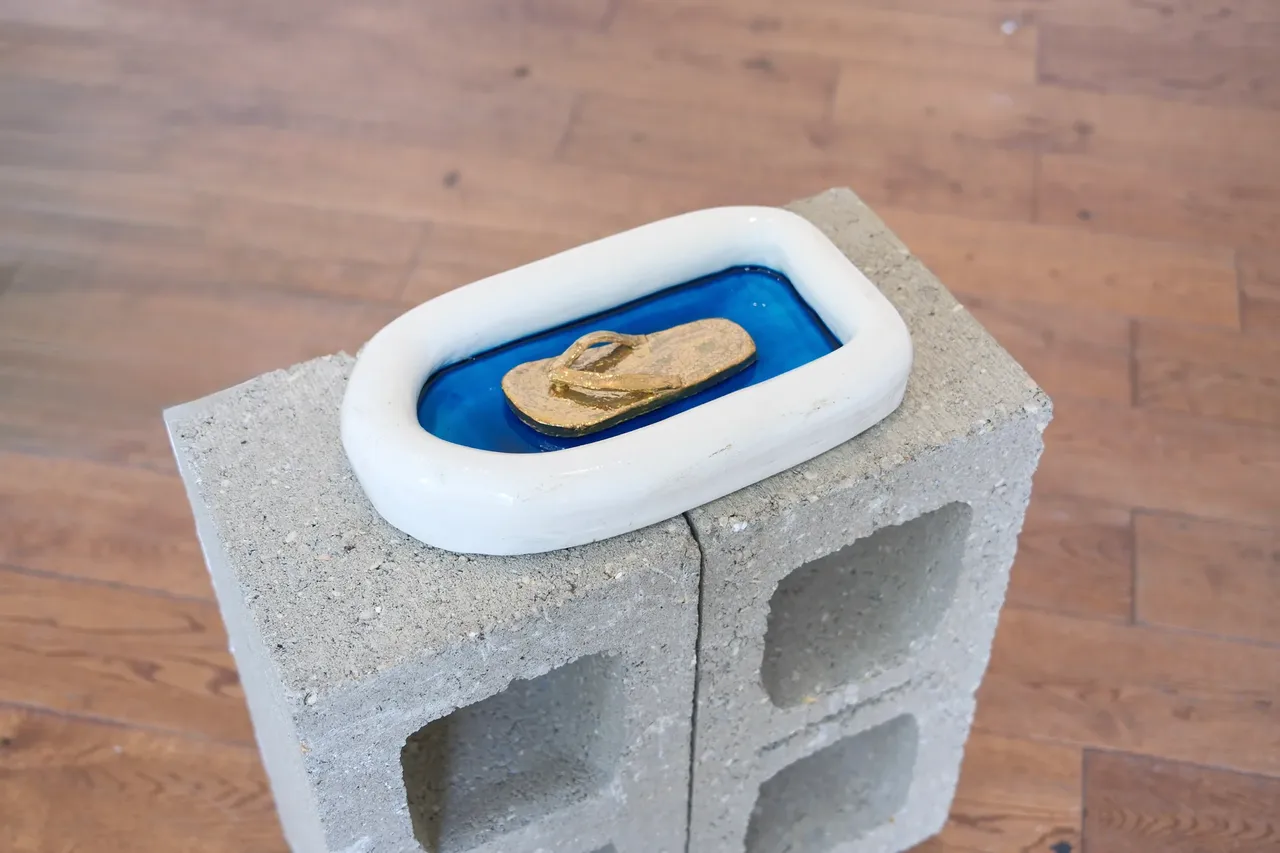
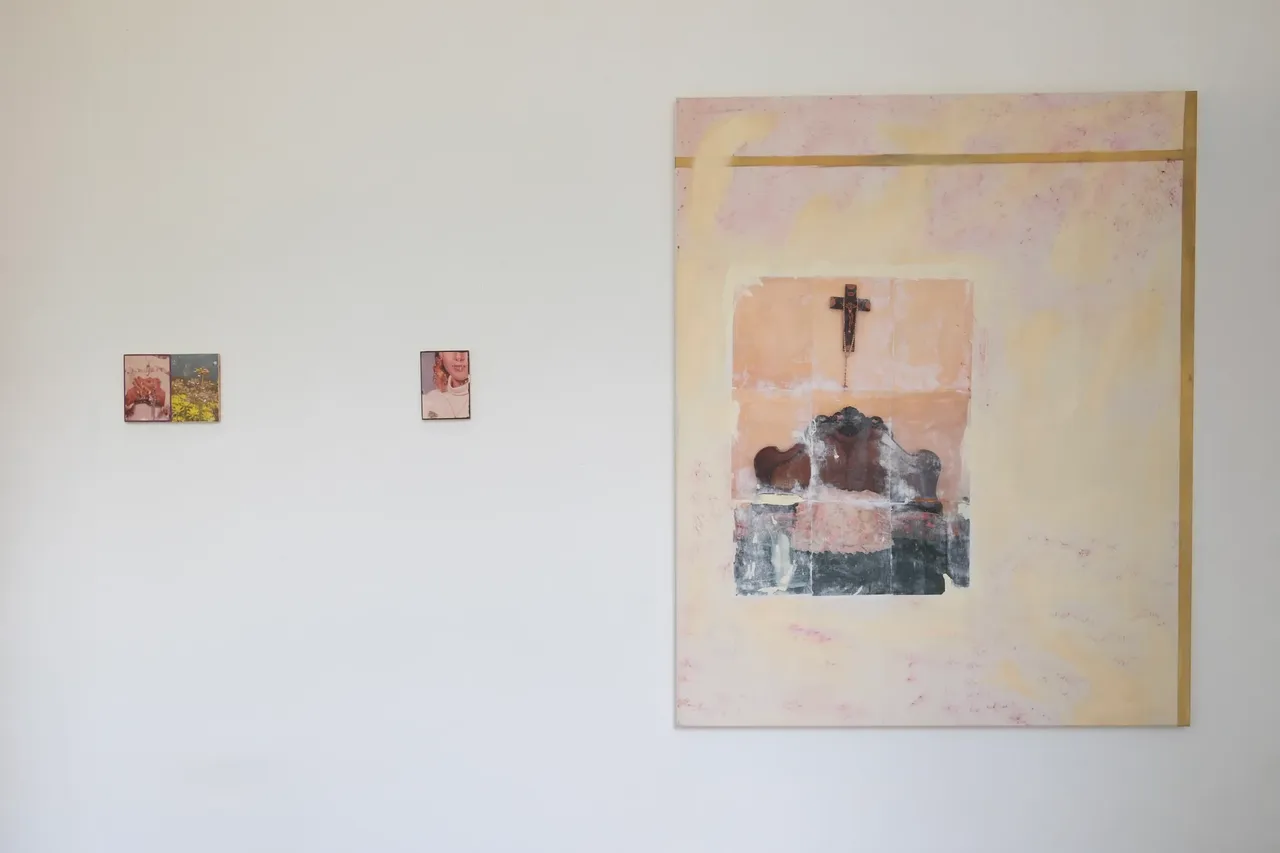
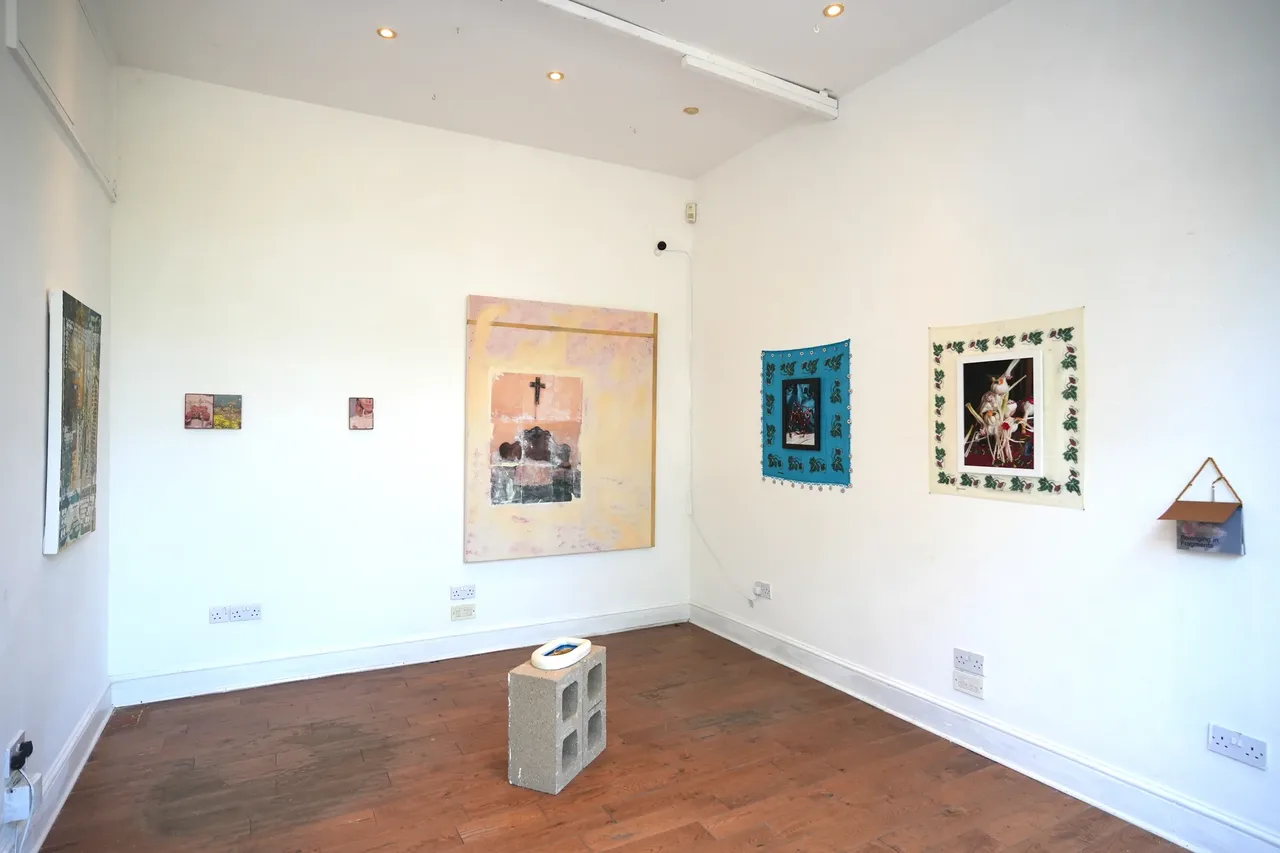
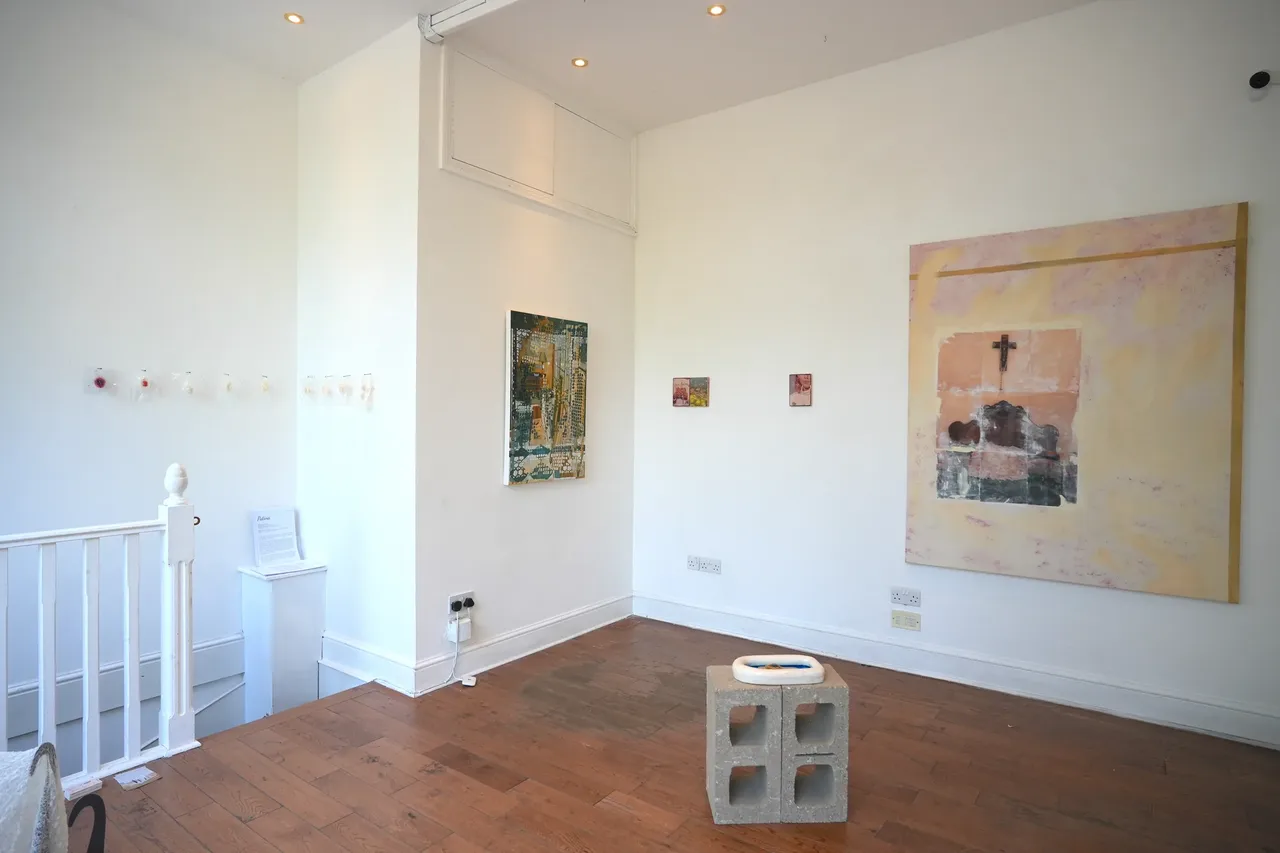
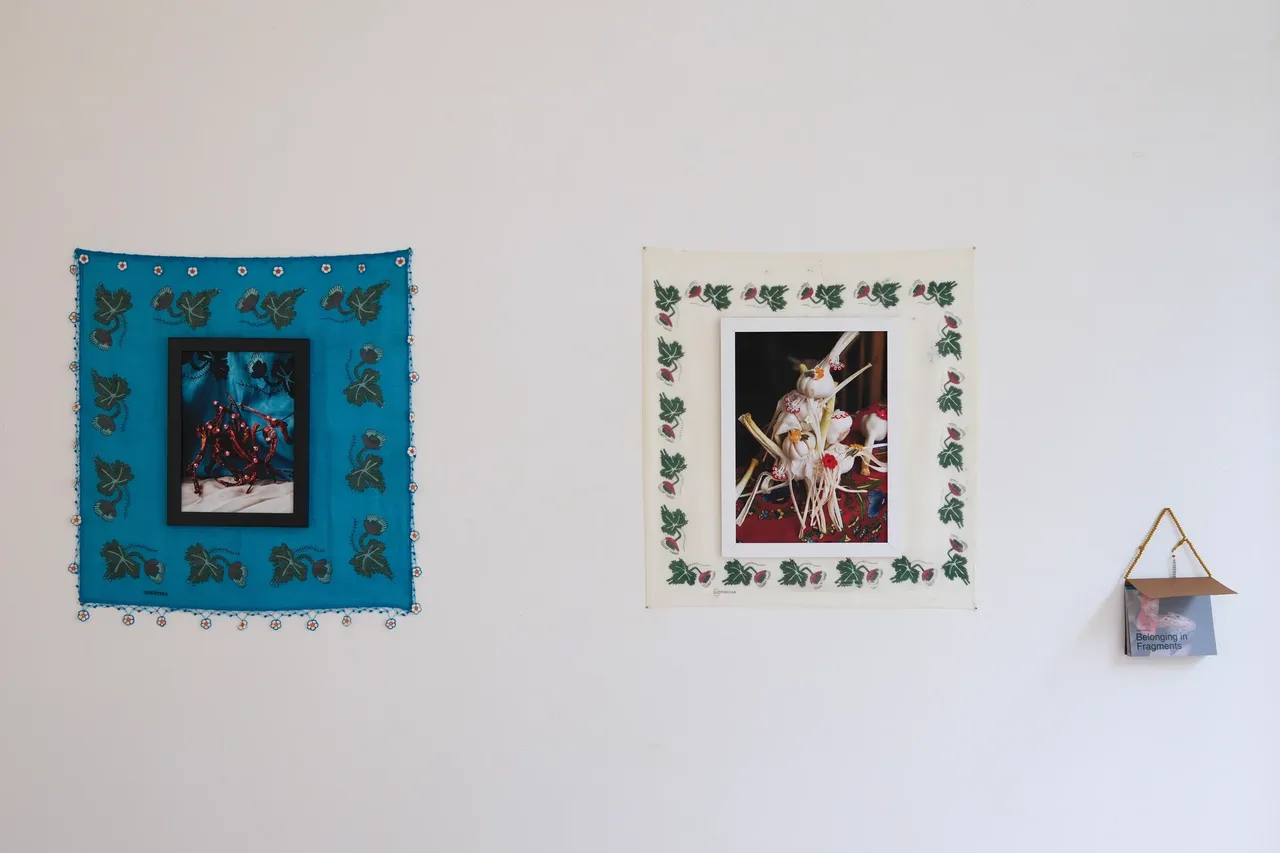
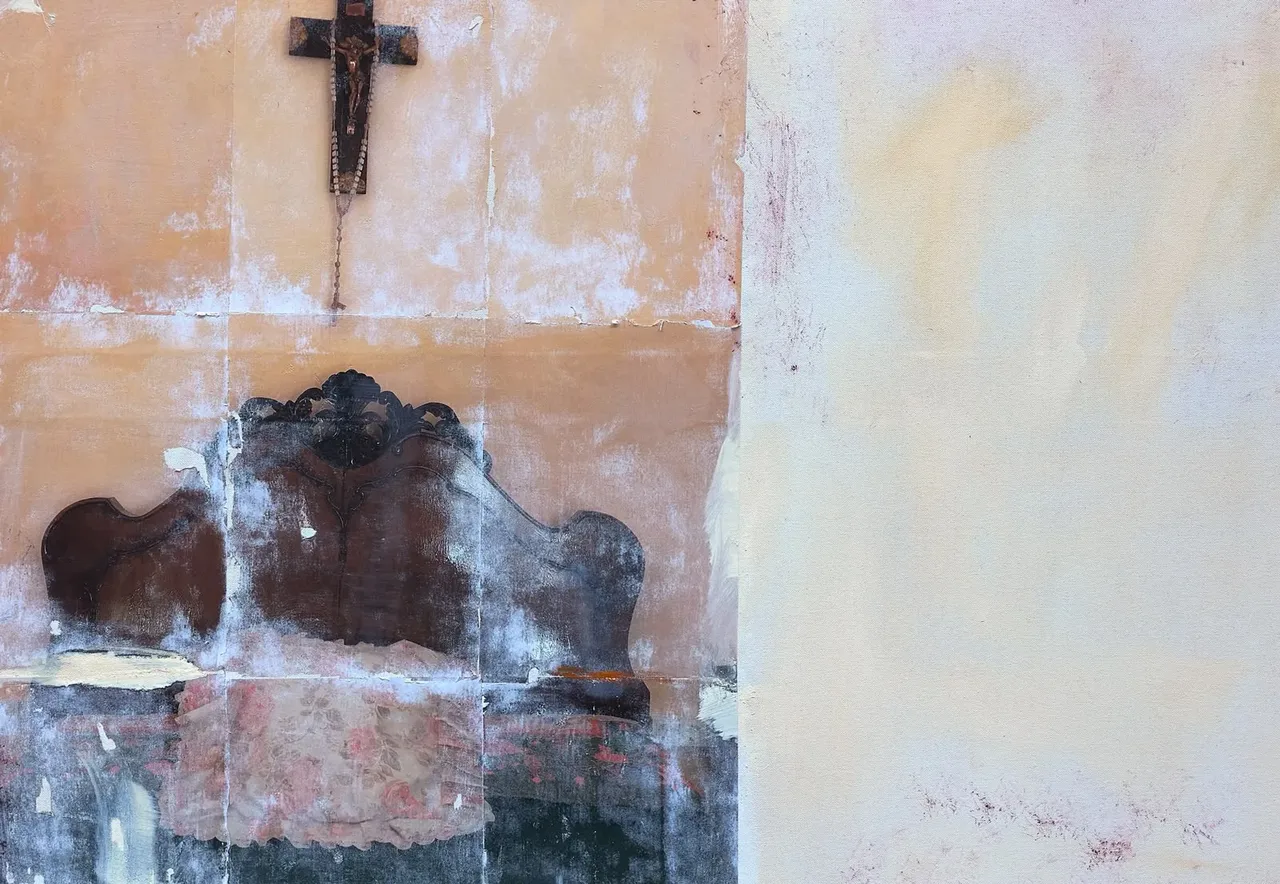
On the floor at Patina, a glittered gold flip-flop is seen marooned in an inflatable boat, as recorded in photographs from the show. On the wall, vibrant photographs of garlic and chillies are festooned with lace and printed fabric. Other works literally mimic peeling wallpaper, further ageing archival imagery. Between these art pieces, Li and Sun put the works of Karen Densham, Cigdem Boru and Marina Porta Perera, respectively, into conversation to problematise definitions of labour and work, particularly through the female experience. Movement, migration, cooking, needlework, record and story-making were made visible across these artworks, no longer private nor secondary but really valuable subjects of art.
As the curators explained it, “Hannah Arendt’s distinction, in The Human Condition, between labour and work: labour sustains life, cyclical and repetitive, leaving no trace; work fabricates enduring things, pressing human intention into matter so that it persists.” As with cleaning at home, labour is punctuated by invisibility — it’s only noticeable when the labour has not been done; its fulfilment is expected, normal, the default.
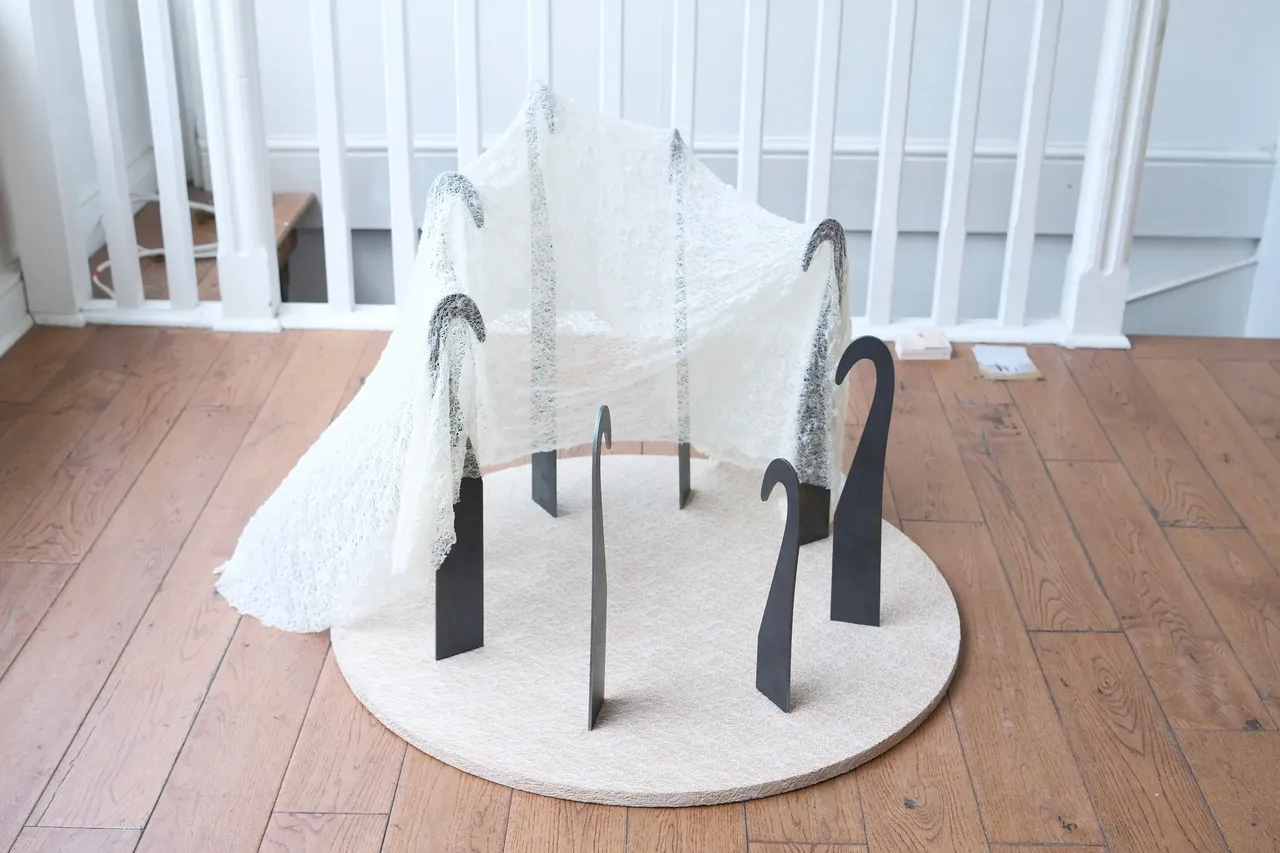
“The transformation of one (labour/work) into the other is the moment at which human activity acquires political visibility — the moment that allows what would otherwise vanish to remain.” The curators continued to define their thesis. Abstracted sculptures by Enhe Zhu of blown-up crochet hooks, used for mending, evoked that labour process; as did Boru’s bright ingredients, harvested to cook, and Densham’s tiny slipper that made visible frightening sea crossings with the lost shoe of a child. The residue of laborious processes, at varying levels of danger and skill, was memorialised here.
As Arendt wrote in the original text, “the word ‘labour’, understood as a noun, never designates the finished product”. Yet Sun and Li said that the logic of Patina invites domestic semiotics “out of the realm of the cyclical and forgettable, and into the realm of the durable and the archival.” Of course, the gallery space is the ideal place to imbue such meaning. Worn object-artworks were cast as meaningful and monumental as they repositioned elements of unseen labour.
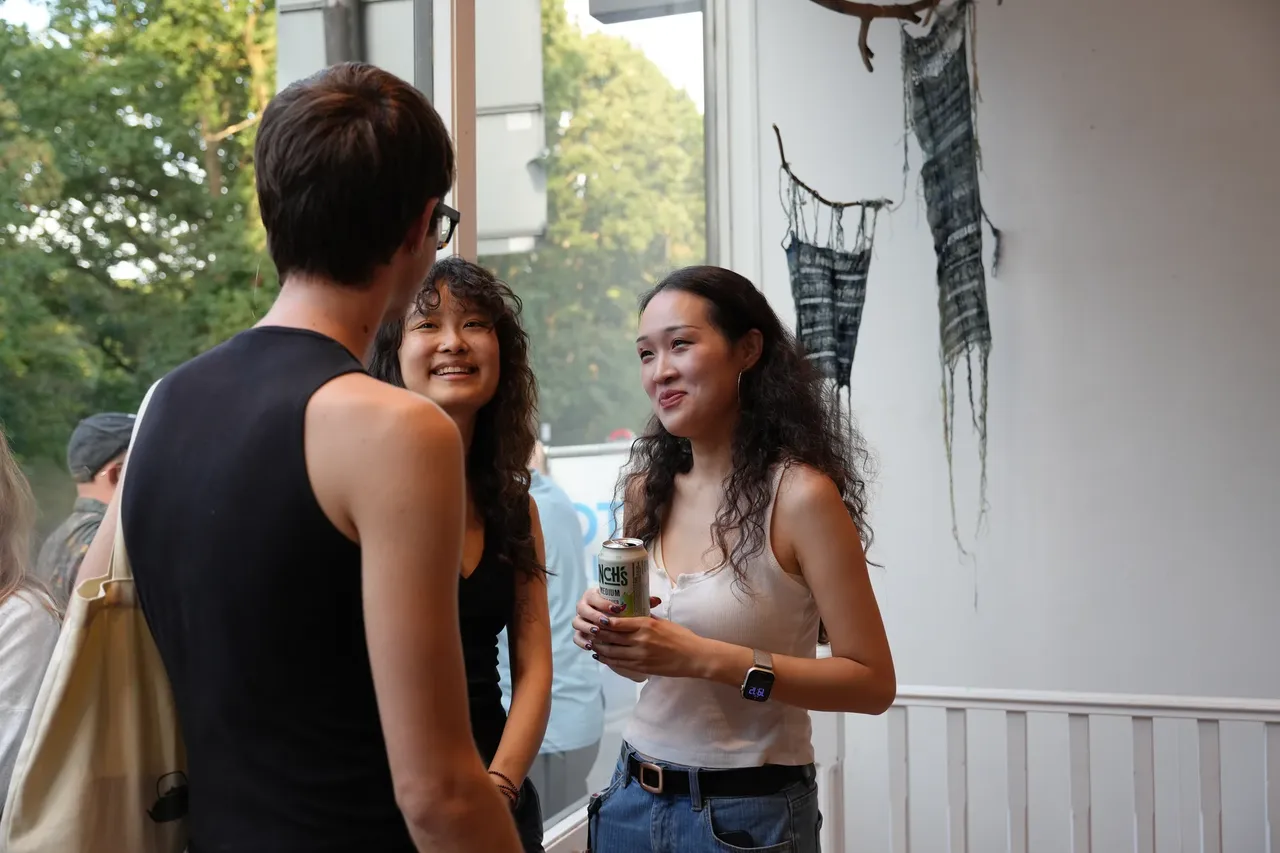
What is archival requires exchange with an audience, or at least the promise of one. Hence, interrelation appears to be important in understanding the curatorial process. Interrelation brings up action, the third element of Arendt’s vita activa argument that analyses work, labour and action to pinpoint the human condition. Exchange between people “without the intermediary of things or matter” is action, and political. One might imagine that the moment of speaking together at an exhibition opening could lead to this: a vital sharing of ideas.
The minds behind the show highlighted: “From the outset, we were wary of letting the concept settle into a surface-level narrative of ‘women’s personal memory’, so refining it meant continually asking how the theory could do more analytical work, rather than simply illustrating itself through the objects on display.”
Thinking liberates. Arendt appears to imply that it frees us from becoming “helpless slaves”. In 1958, she wrote that the development of artificial technologies would soon “liberate mankind from its oldest and most natural burden, the burden of labouring and the bondage to necessity”, which I read might worry, depress or alienate people stripped of a sense of purpose. So, human, handmade artworks resonate.
Later, Arendt also implies that humanity may head uncertainly towards “thoughtless creatures at the mercy of every gadget which is technically possible, no matter how murderous it is.” Luckily, meaningful labour and work continue — held in the body, passed between generations, encrusted with history. We saw this in the labour/work present in Patina’s selected art. There’s hope yet for retaining individual creative thought and an active, engaged life.
Patina uplifted what is considered labour to the level of art-work. No longer dismissed, the production of food, population, clothing and history took centre stage for an especially human look at life. Our condition imperfect, but all the more meaningful for it.
Patina was curated by Xinxin Li and Liyuan Sun
Artists: Cigdem Boru, Dorothy Cheung, Enhe Zhu, Karen Densham, Madeleine Jarvis, Marina Porta Perera, Shujing Huang, Weiyi Chen
Artists: Cigdem Boru, Dorothy Cheung, Enhe Zhu, Karen Densham, Madeleine Jarvis, Marina Porta Perera, Shujing Huang, Weiyi Chen