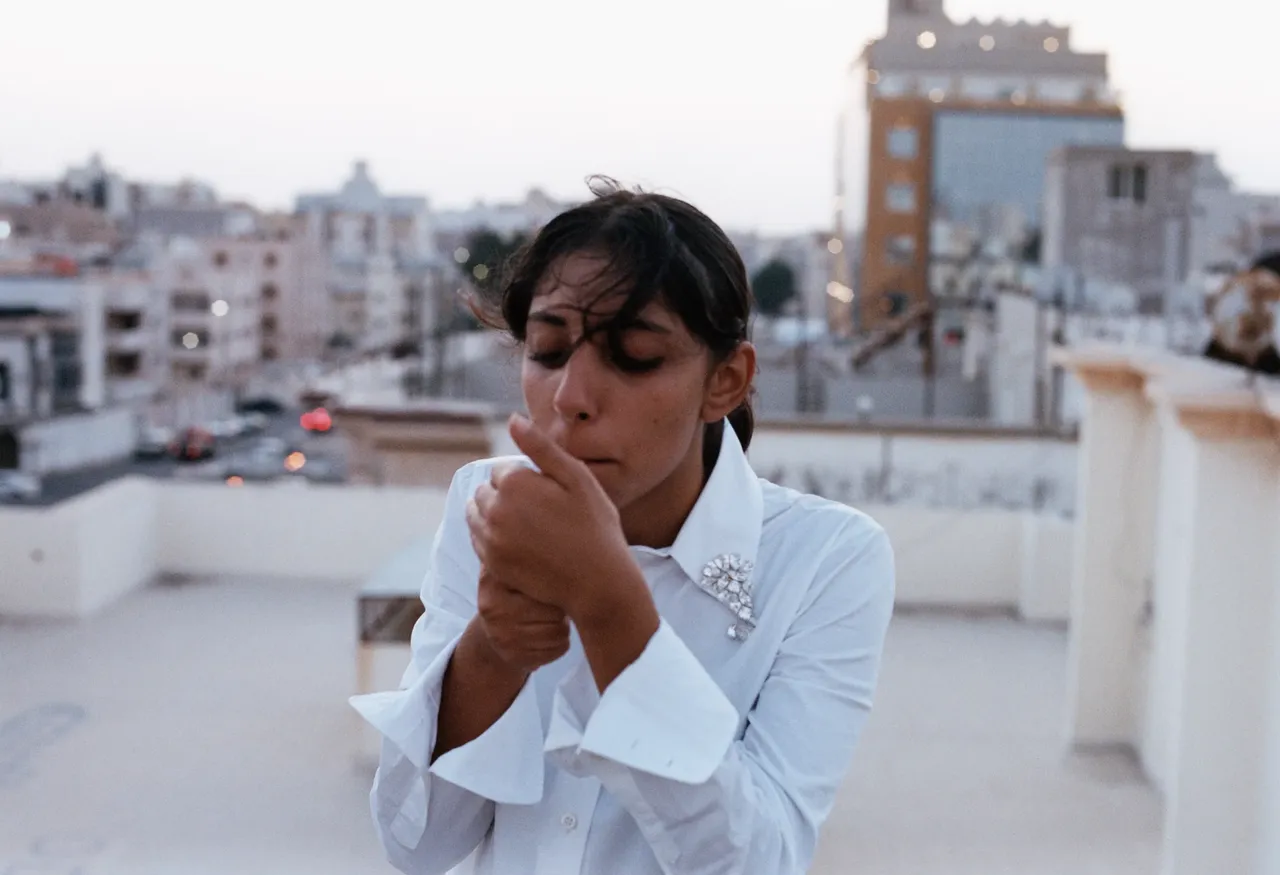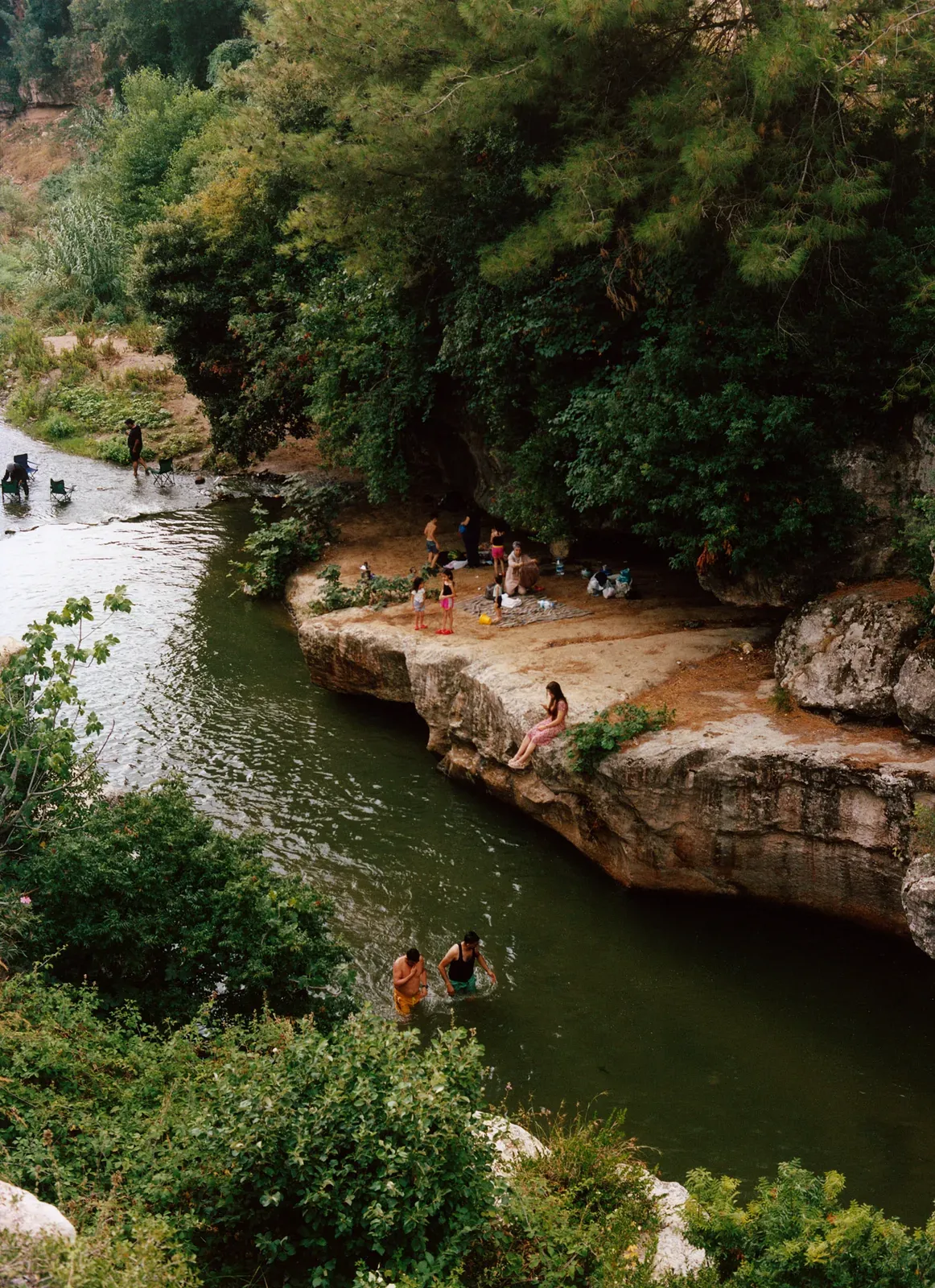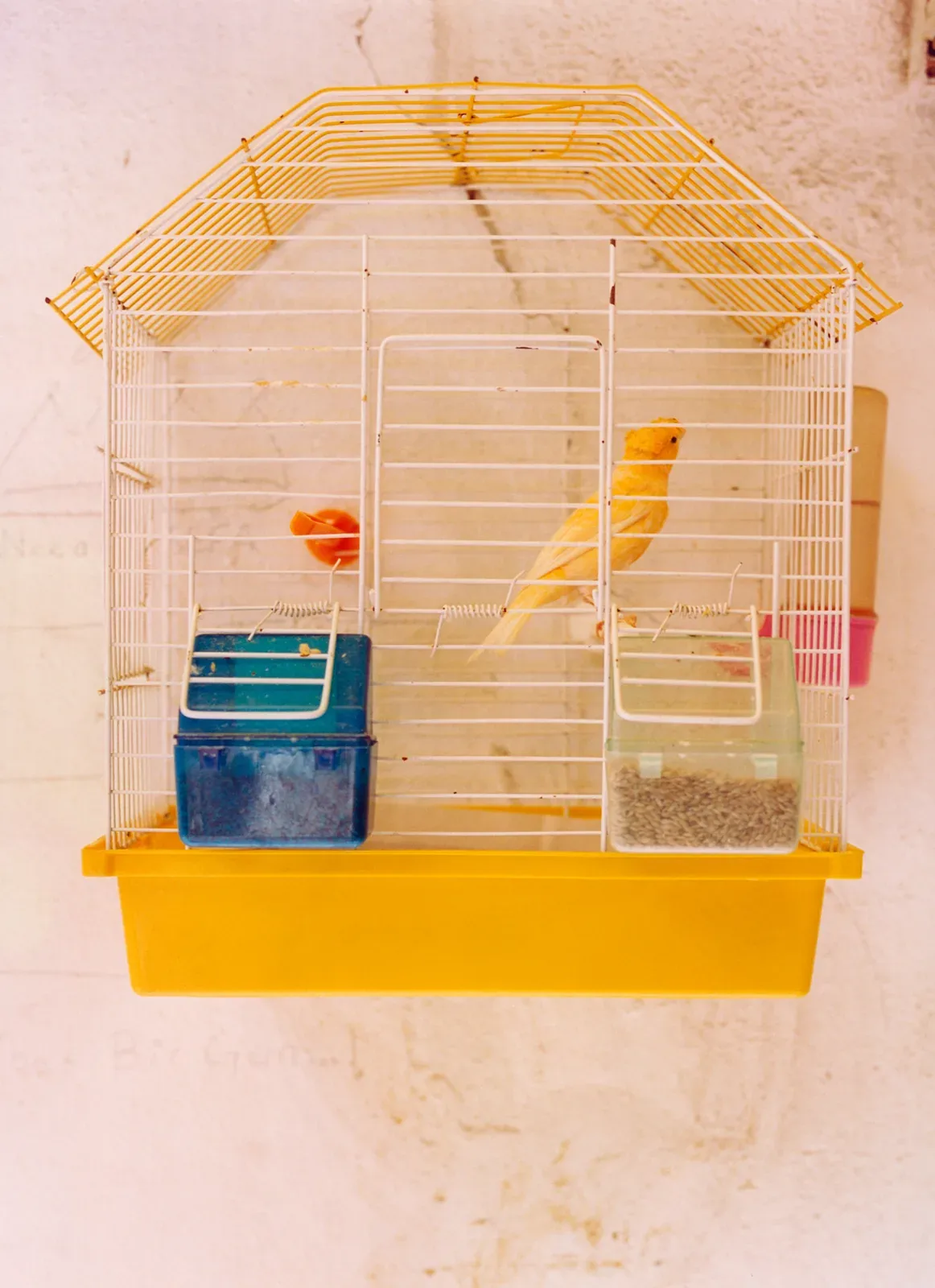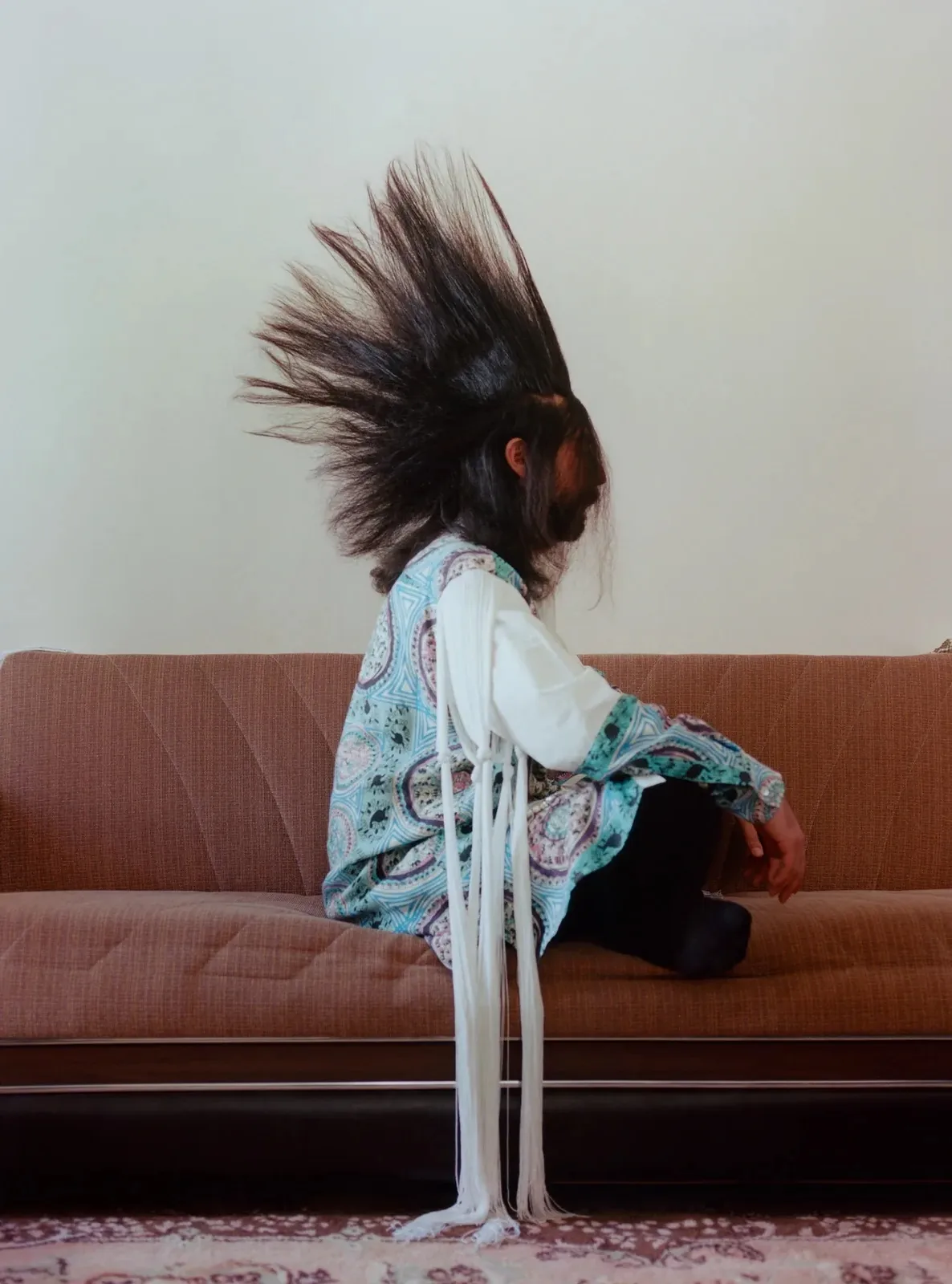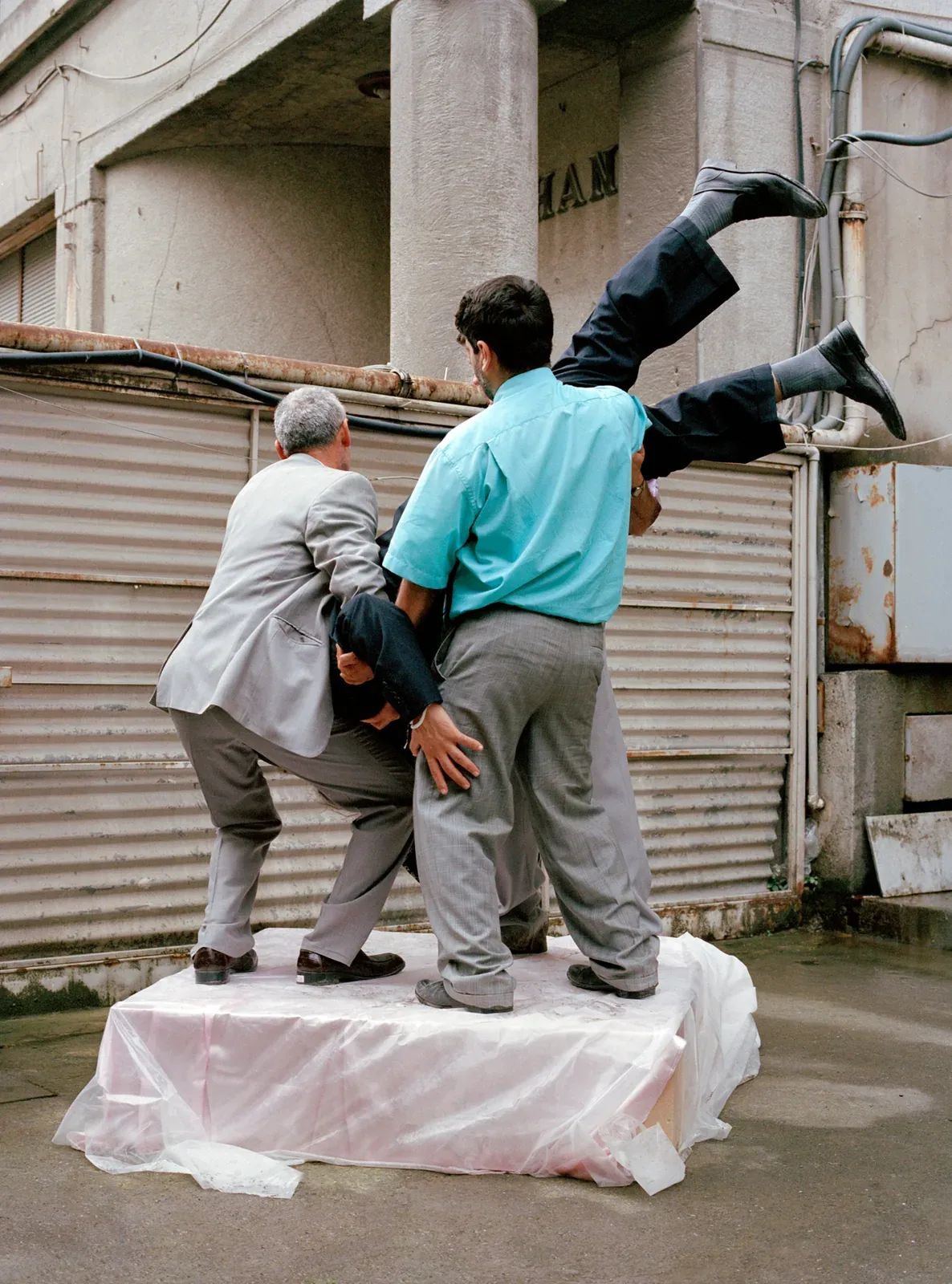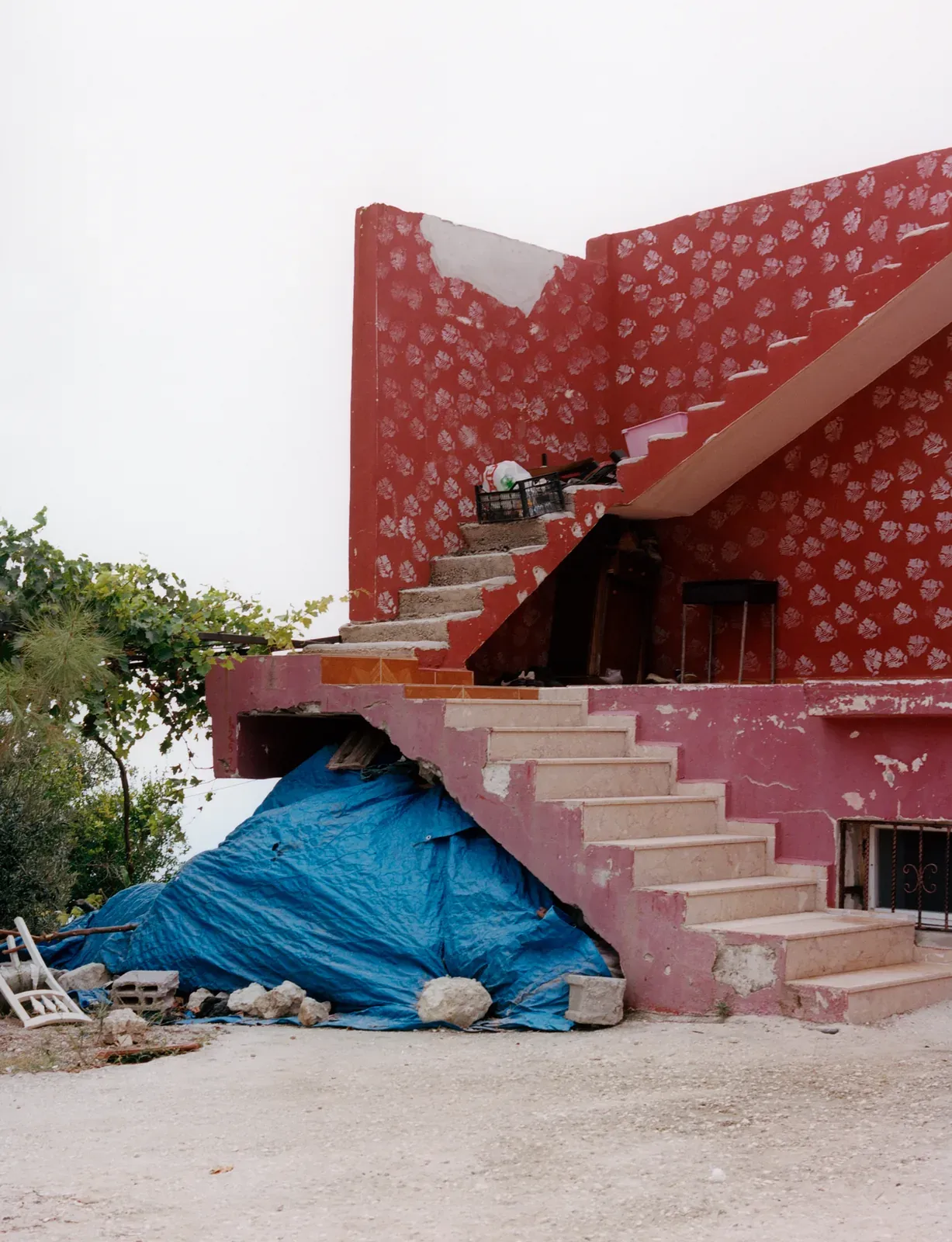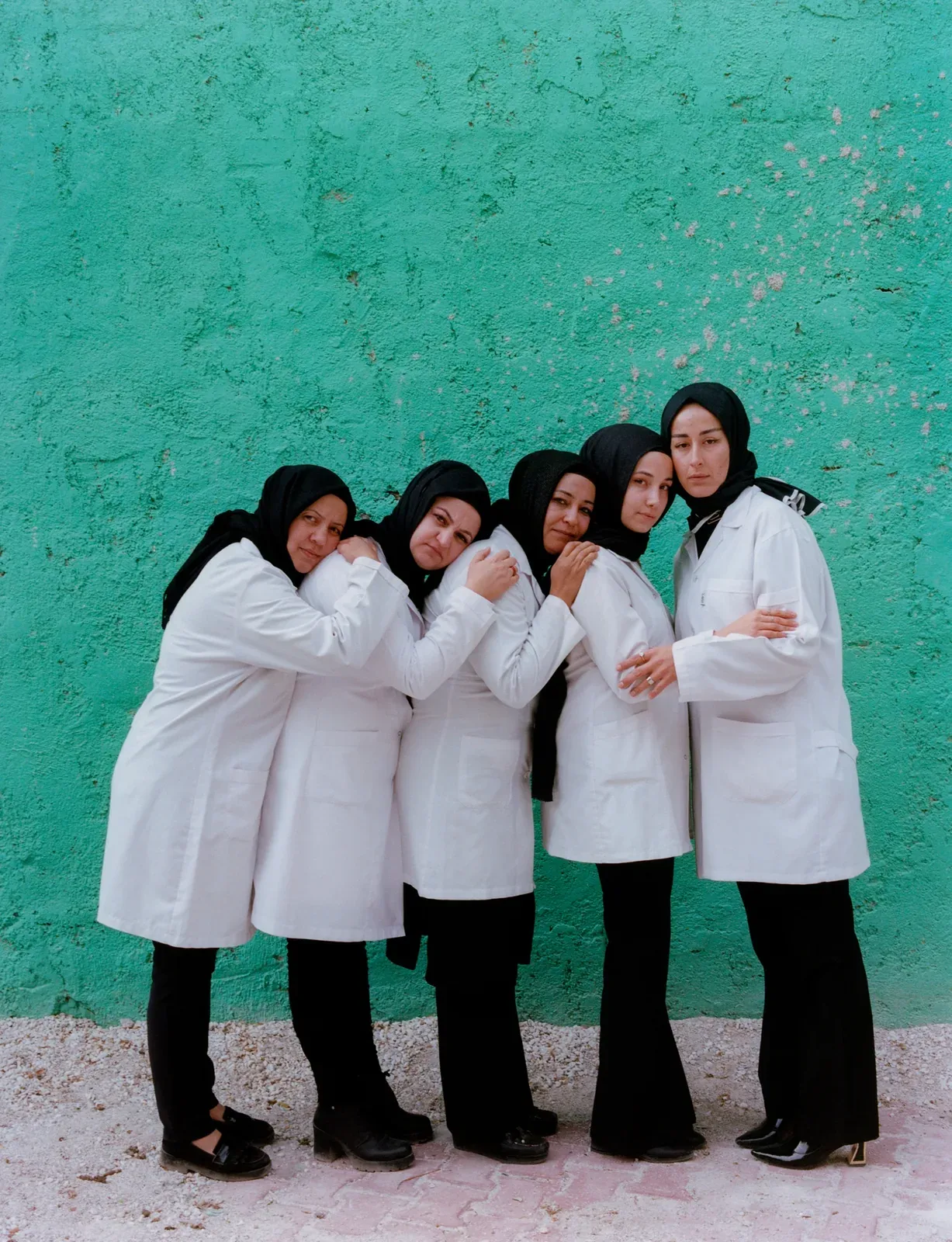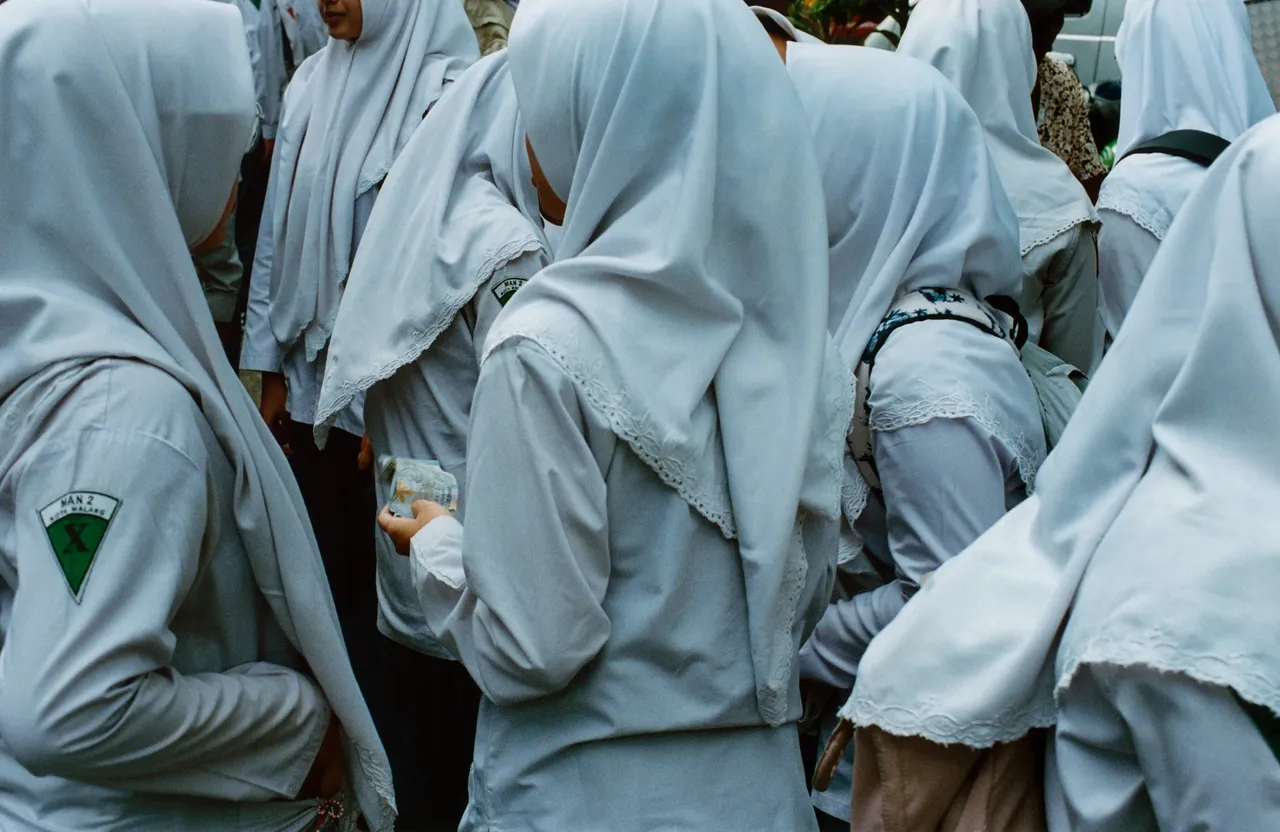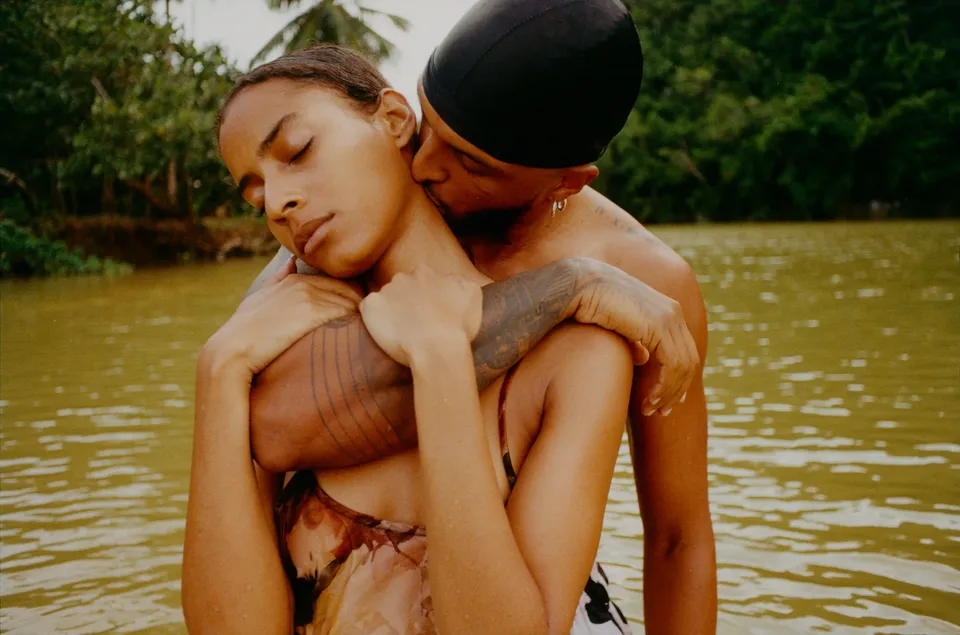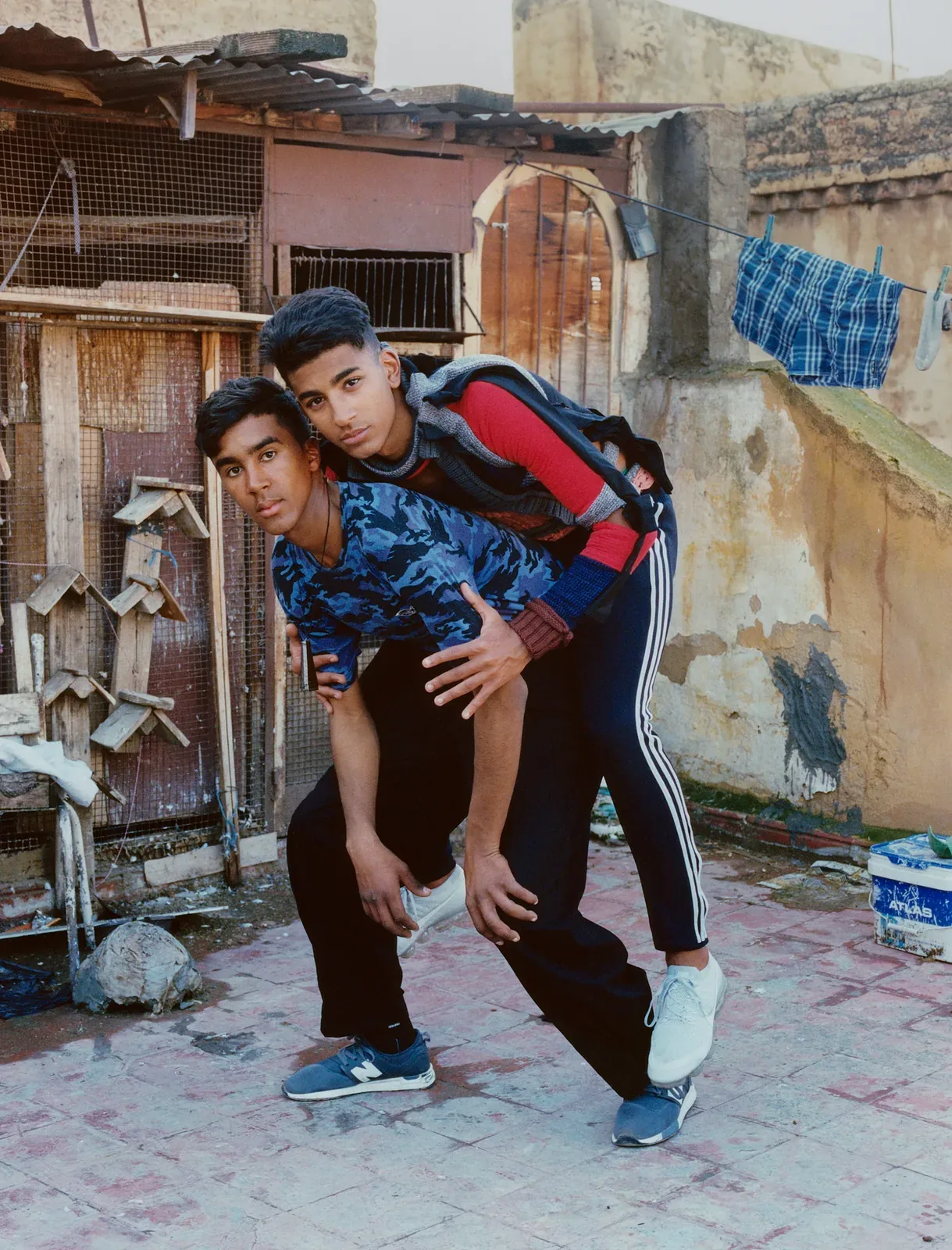
A woman in Saudi Arabia sits alone on a terrace, smoking a cigarette. She isn’t looking at the camera. There is no obvious explanation for what she’s thinking, where she has been, or where she’s going. She just sits there, completely at ease. It’s an unexpectedly intimate image, and a good place to begin looking at Mustafa (Guest Editions), Olgaç Bozalp’s new photography book. Across ten years and fourteen countries, Bozalp has photographed the ordinary and the unfamiliar across South West Asia and North Africa: women in colourful clothes, men dressed with flamboyance, schoolgirls, garages, mosques, bedrooms, old men reading newspapers. There are Greek ruins, political slogans painted across buildings, a mosque-shaped alarm clock, a man sitting alone in prayer. Some images feel meticulously composed; others seem to have arrived by chance. Together, they form a world that feels at once distant and strangely familiar.
For Bozalp, this way of looking has always been tied to questions of beauty. In a 2017 interview with METAL, he described beauty as being “more about personality rather than appearance”. Almost a decade later, Mustafa takes that idea somewhere more personal. Born in Türkiye and now based in London, Bozalp has spoken openly about a period when his photography was shaped by Western ideas of beauty and image-making: “I was pretending with my work. Nothing was genuine.” The more he travelled through the region, the more that perspective began to shift. His middle name, Mustafa, became part of that transformation. Given to him by his grandfather, the name had once felt old-fashioned, overly religious and uncomfortable. But while travelling, introducing himself as Mustafa created an unexpected sense of recognition. People knew the name and connected with it. An inheritance he had once wanted to distance himself from became a bridge.
Over time, the distinction between Olgaç and Mustafa began to blur. Bozalp has described it as feeling as though it was Mustafa taking the photographs. Maybe this is what gives the images their sense of ease. The region is often photographed through a familiar set of visual cues: religion, conflict, tradition, exoticism. Bozalp’s snapshots allow those things to exist without becoming the whole story. A hijab is a hijab. A mosque is a mosque. A cigarette is a cigarette. A young Iranian woman wearing her monobrow became, for Bozalp, as compelling as any fashion model. Beauty begins to lose its universal language. It becomes cultural, personal, contextual and ultimately human. Across the book, it appears in a brightly dressed stranger, the quiet interior of someone’s room, the symmetry of a building or the disorder of a street. These moments are allowed to exist without being turned into symbols.
This is what makes Mustafa feel so familiar, even when its landscapes are not. The photographs don’t ask us simply to reconsider what beauty looks like. They ask us to consider where we learned to look for it in the first place. Bozalp has travelled to more than sixty countries since 2014, but Mustafa narrows that enormous journey into something deeply personal. In Dazed, he asks himself whether the book is about the places he visited or about finding himself through the people he met. His answer is still uncertain. What he does know is that returning to these places felt like coming home every time. This new book is the record of that process: ten years of looking, travelling, meeting and photographing, until the distance between Olgaç and Mustafa began to disappear.
Mustafa will be presented at Bildband in Berlin on 8 October, from 6 to 9 pm, with a live conversation between Olgaç Bozalp and Kate Schultze.