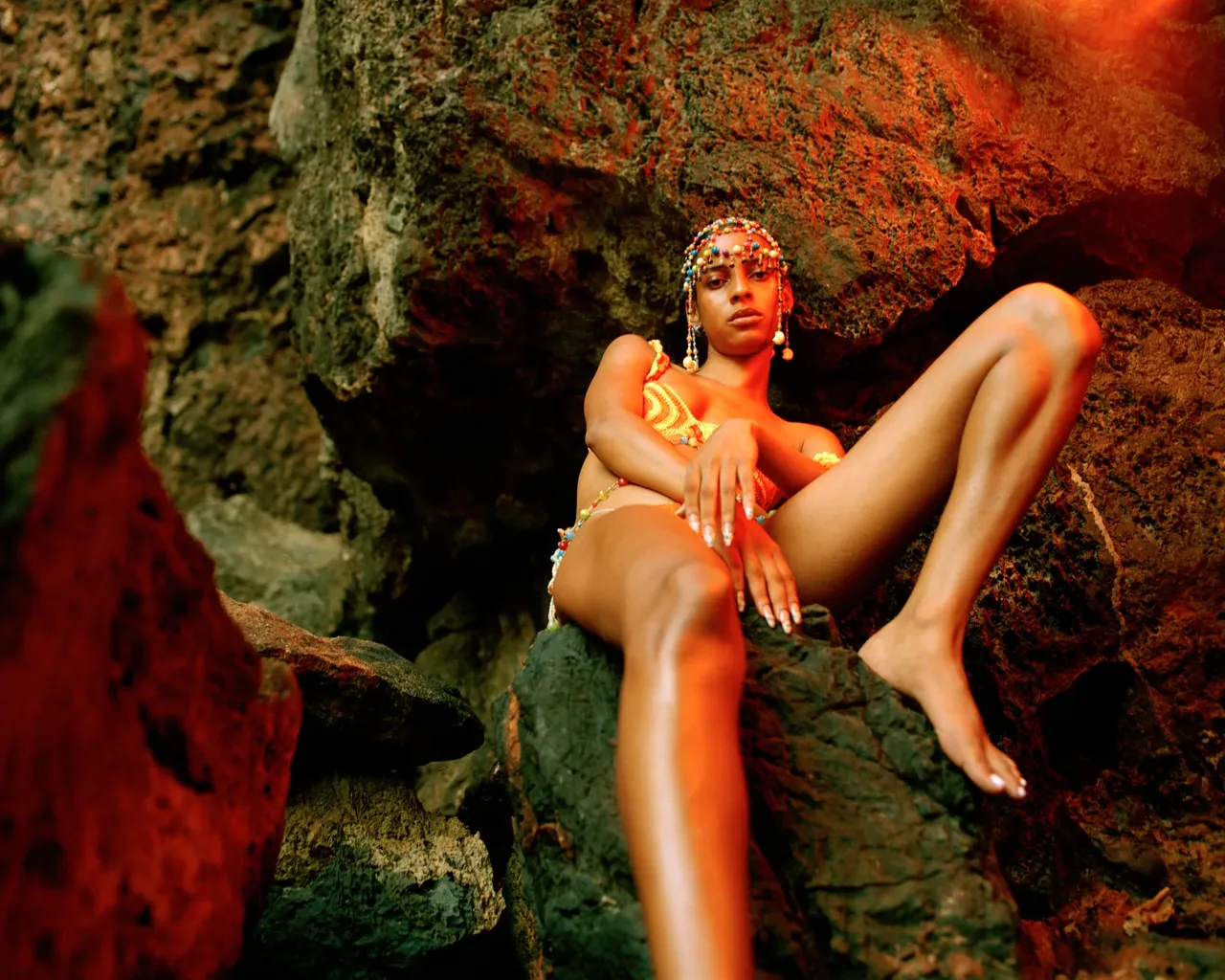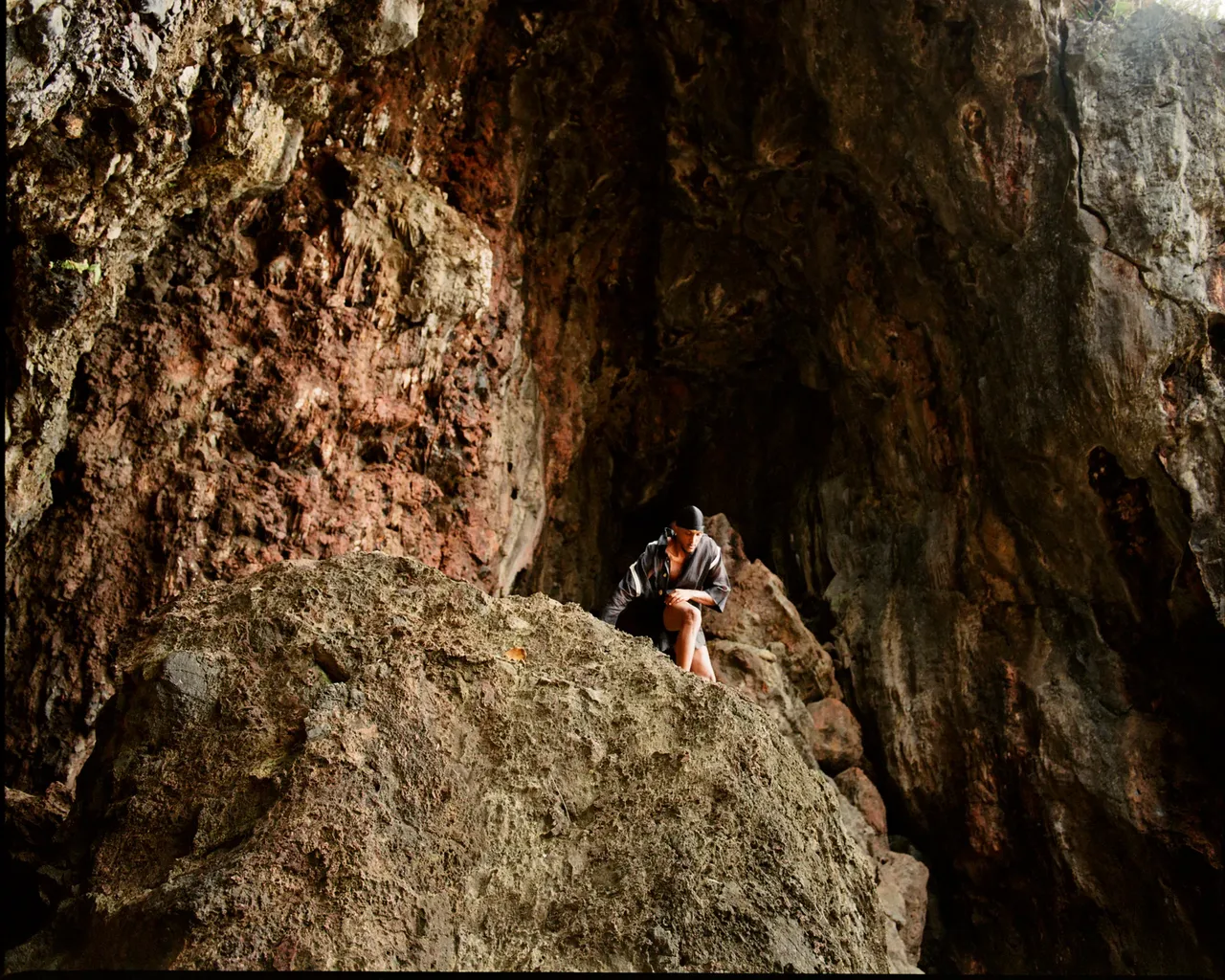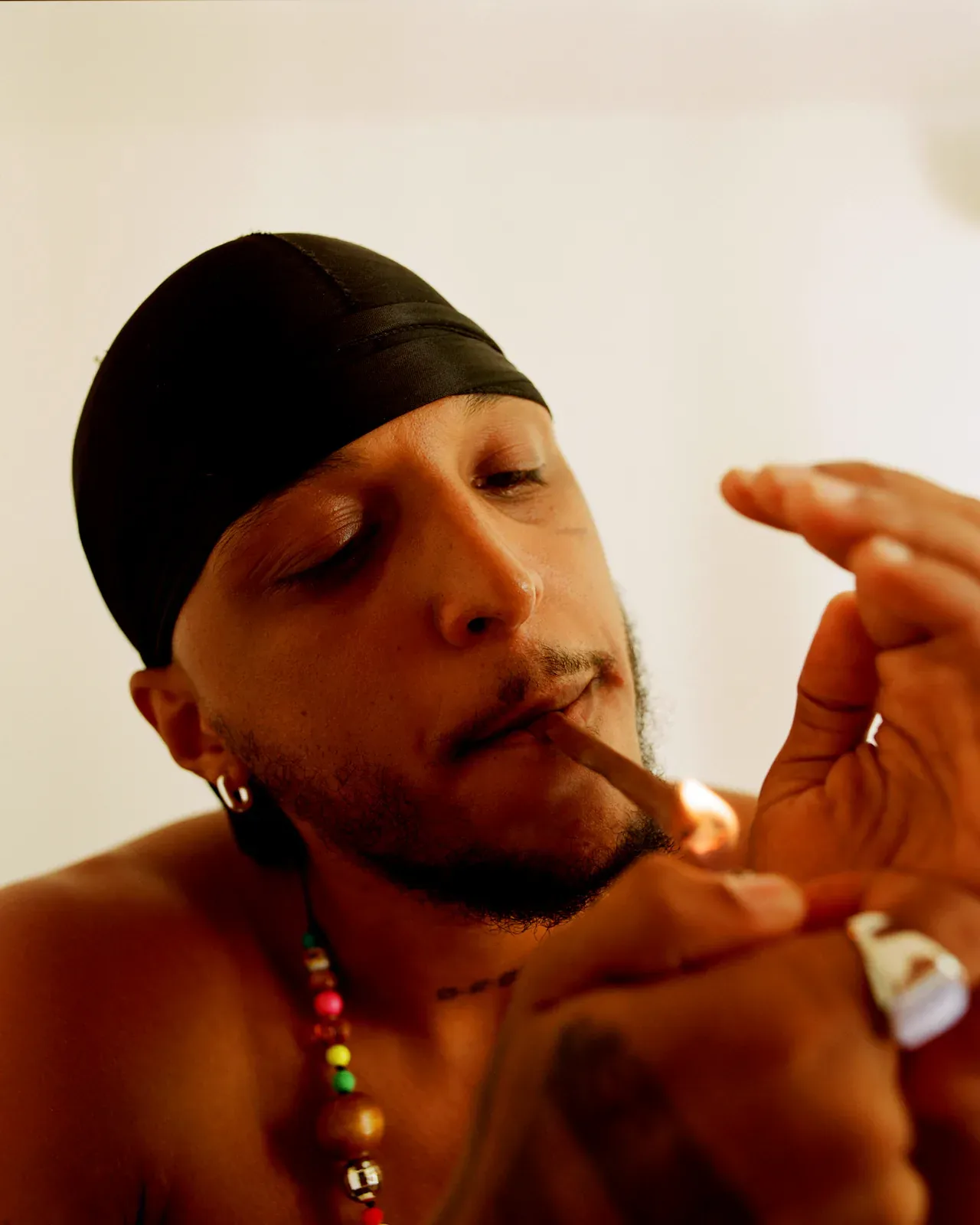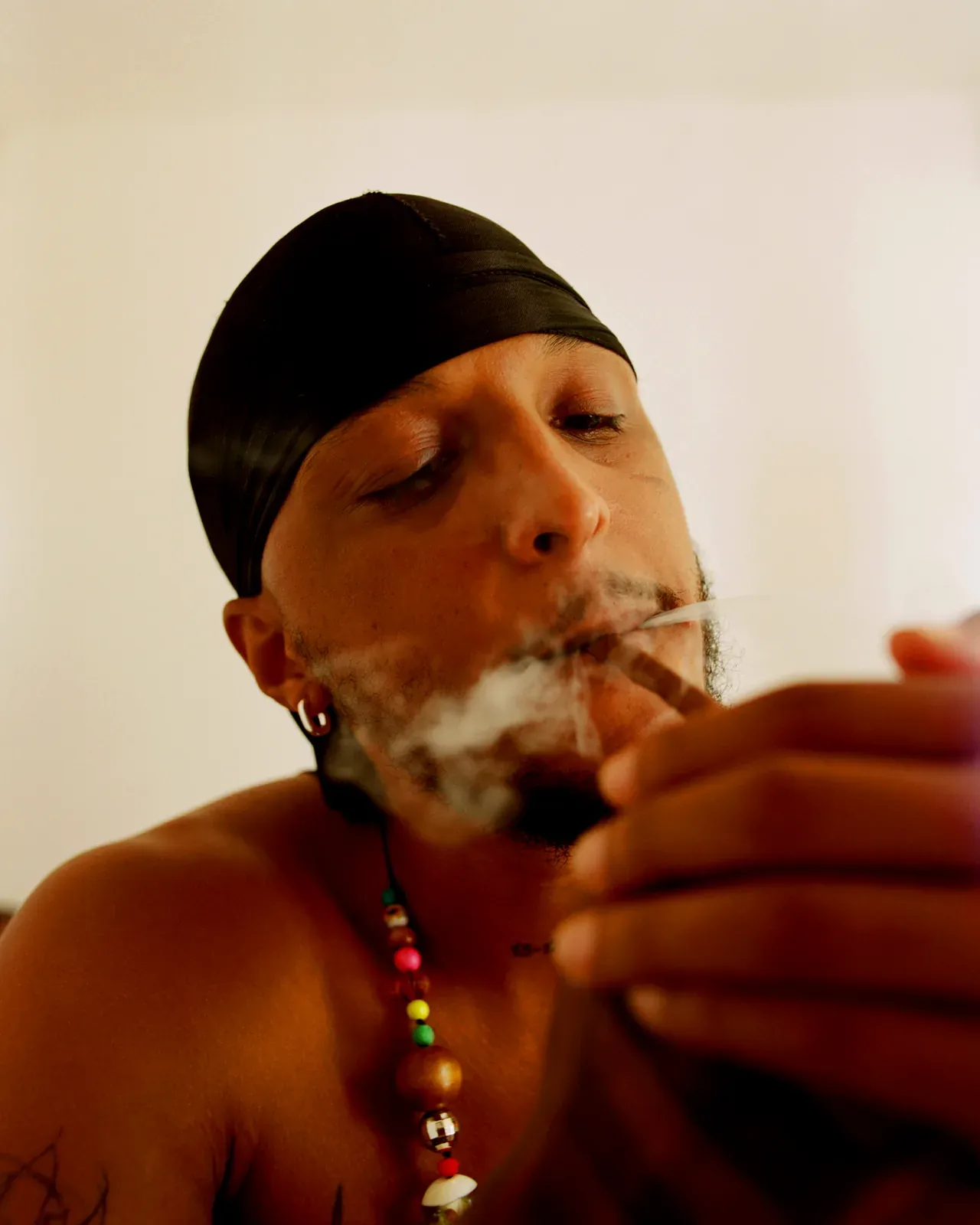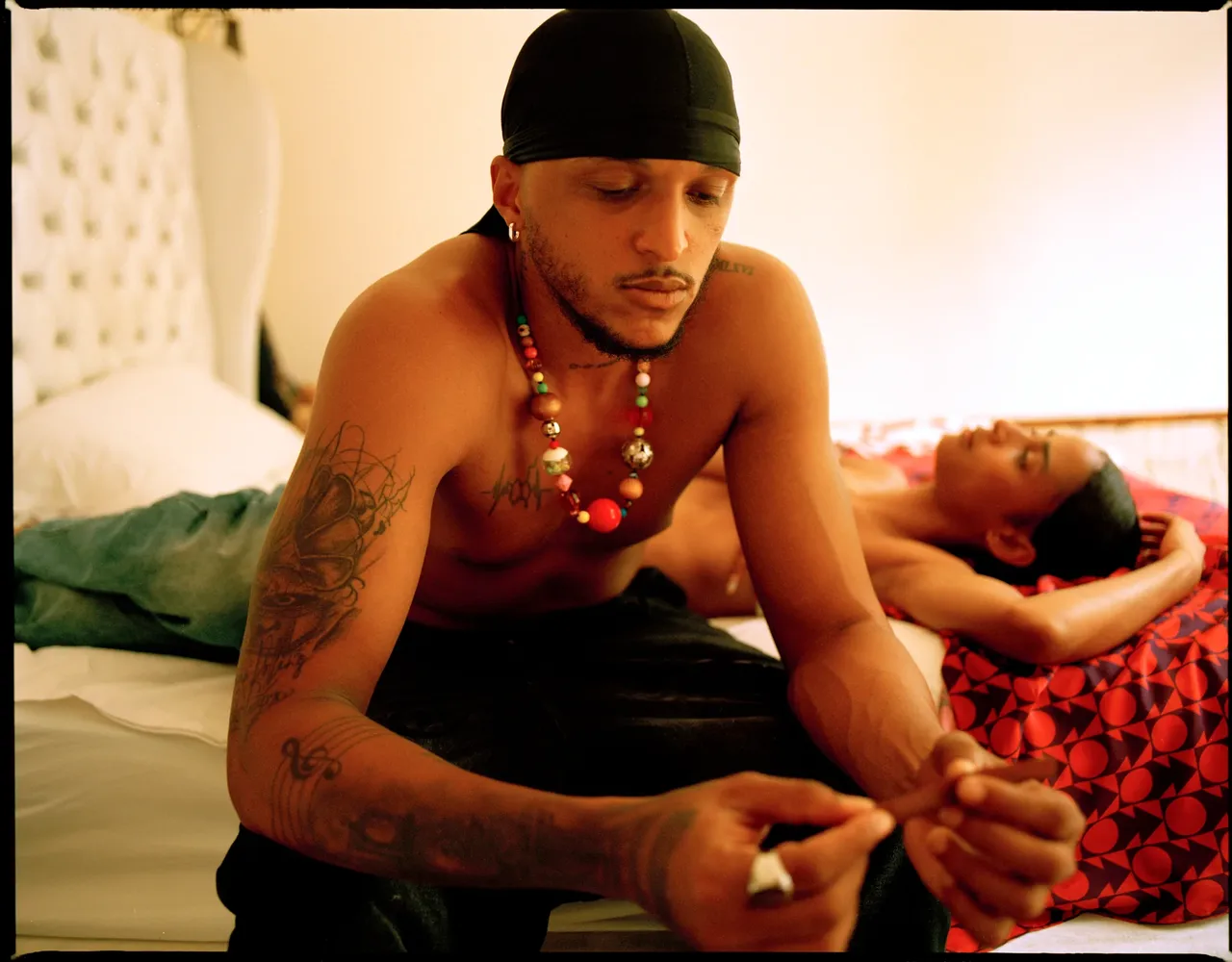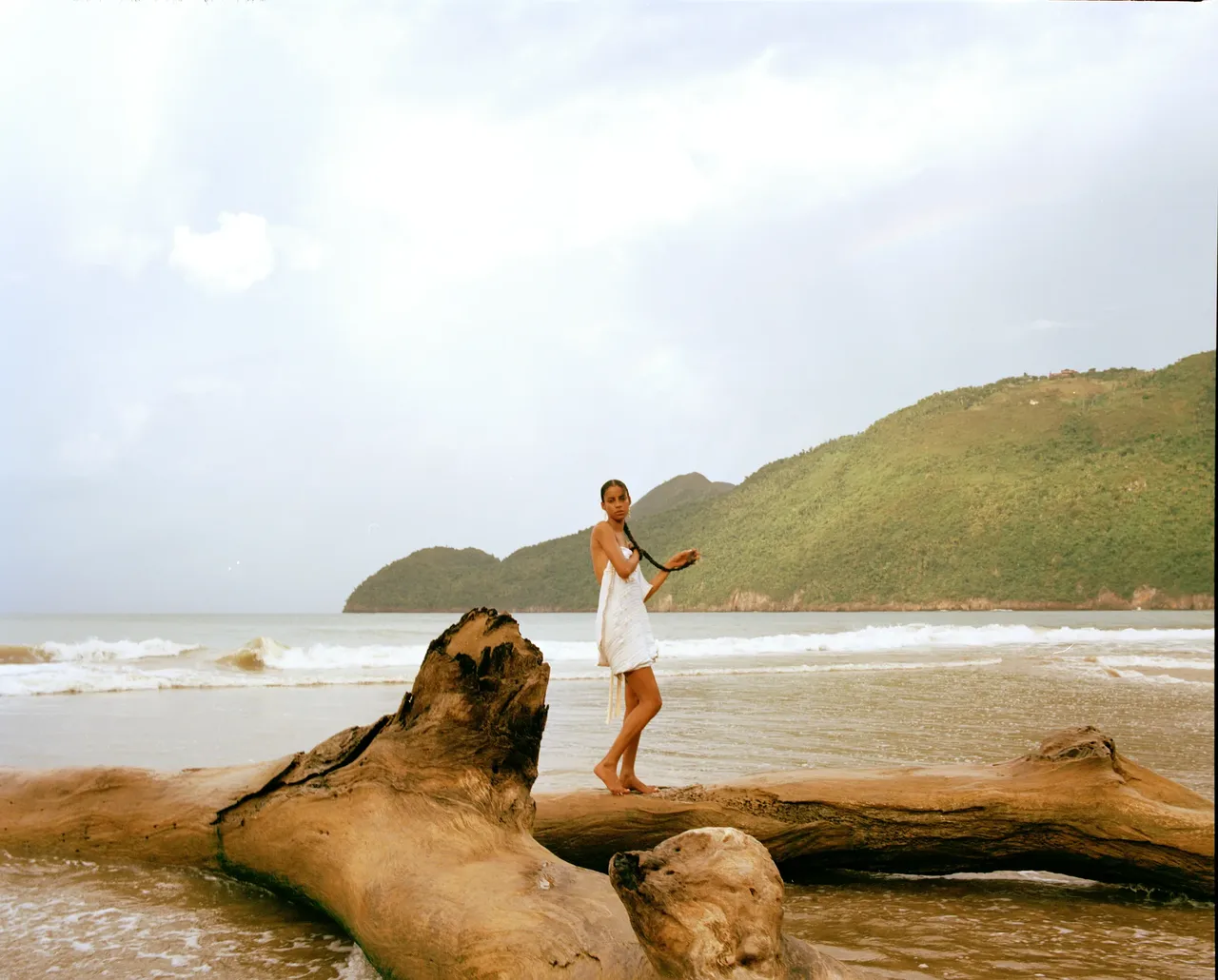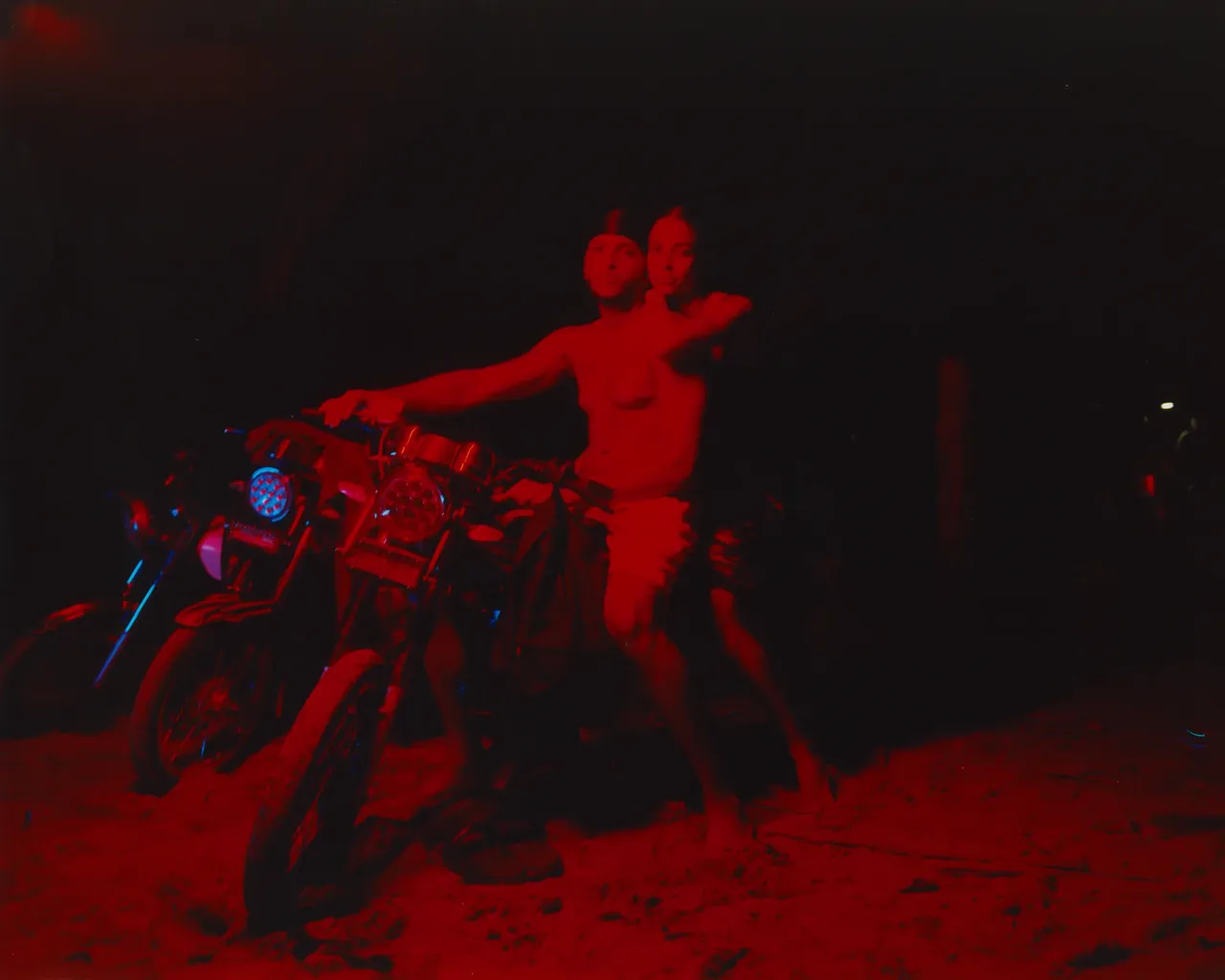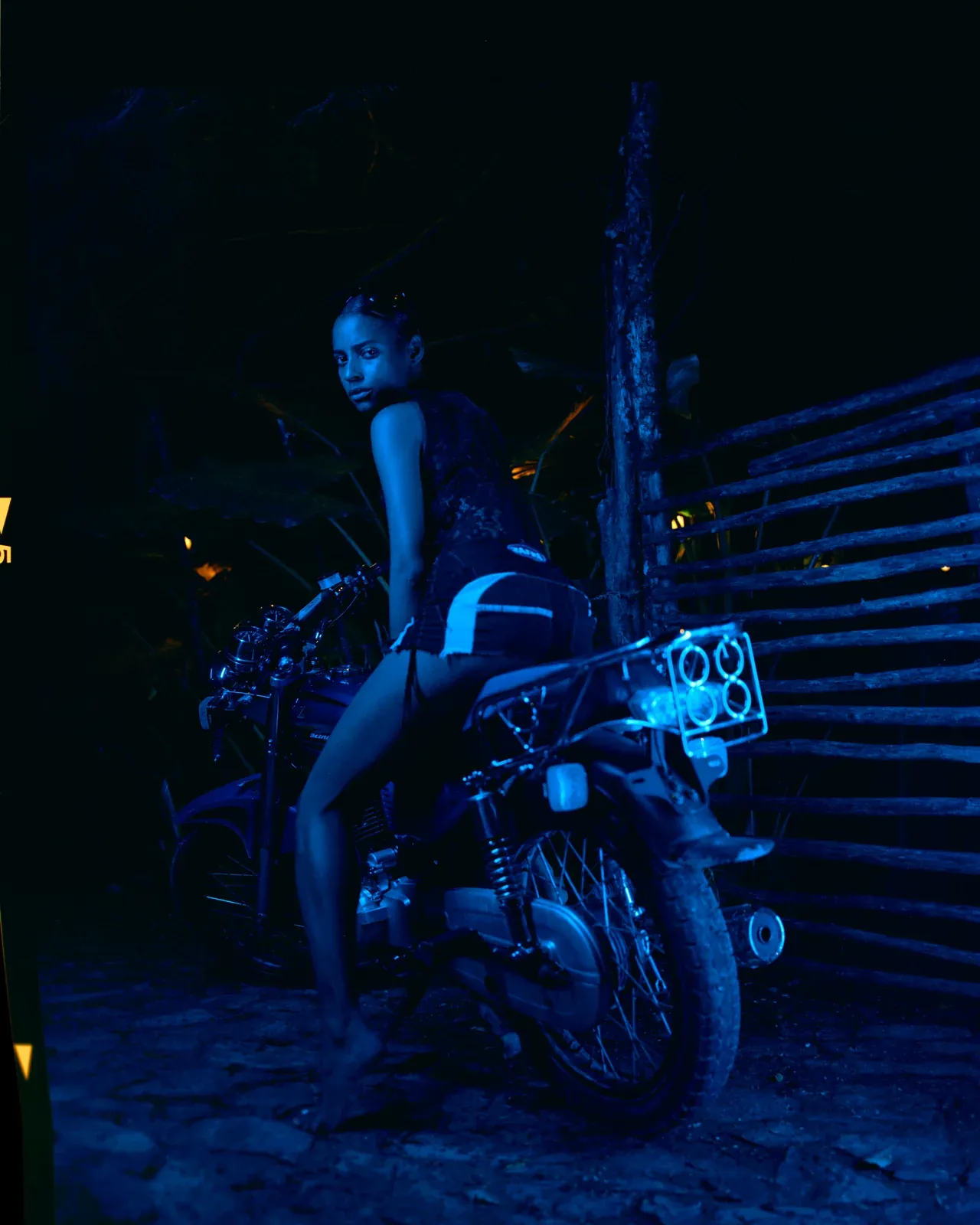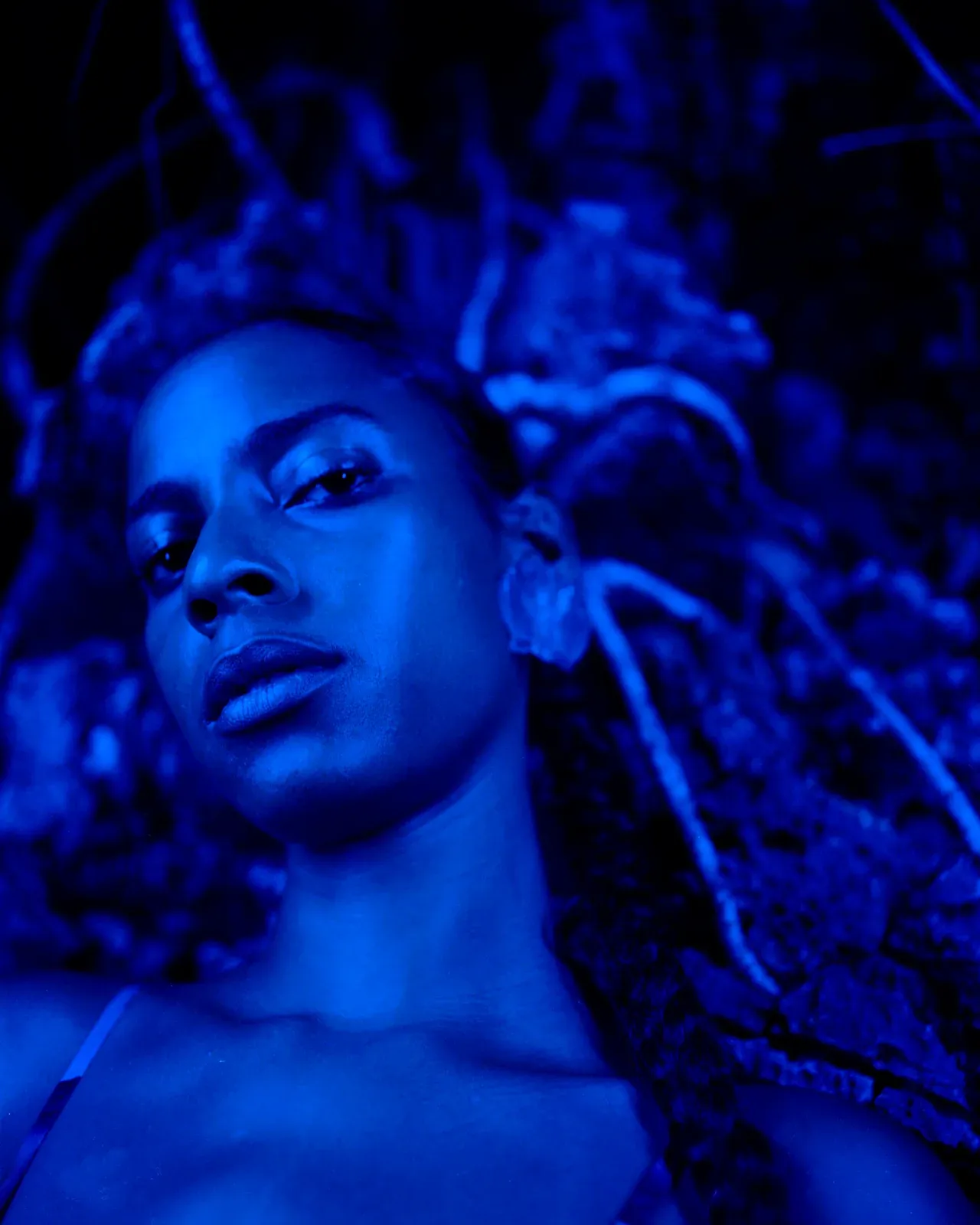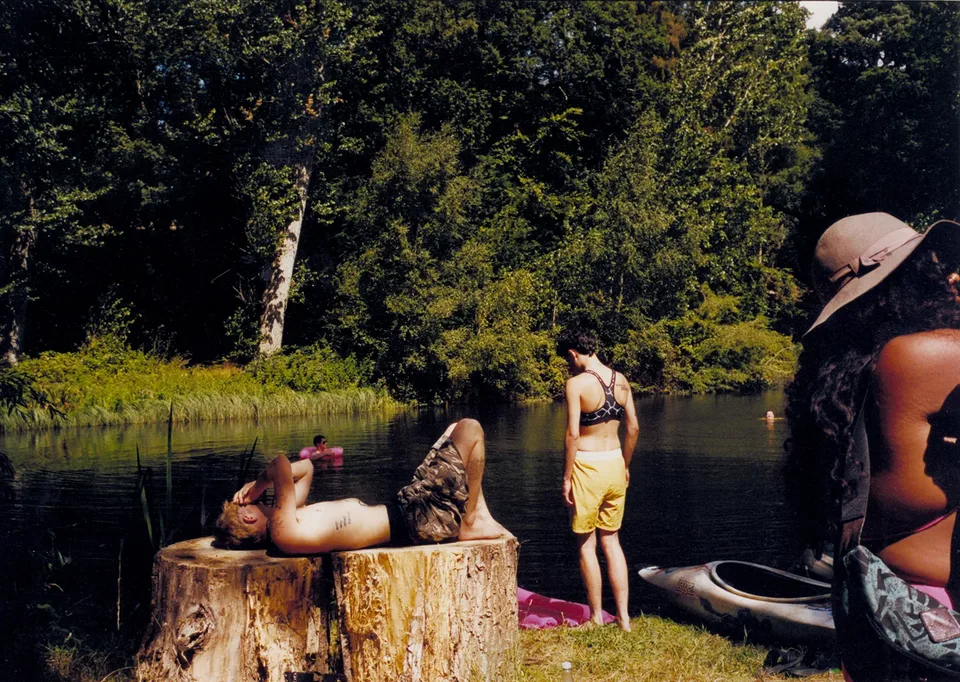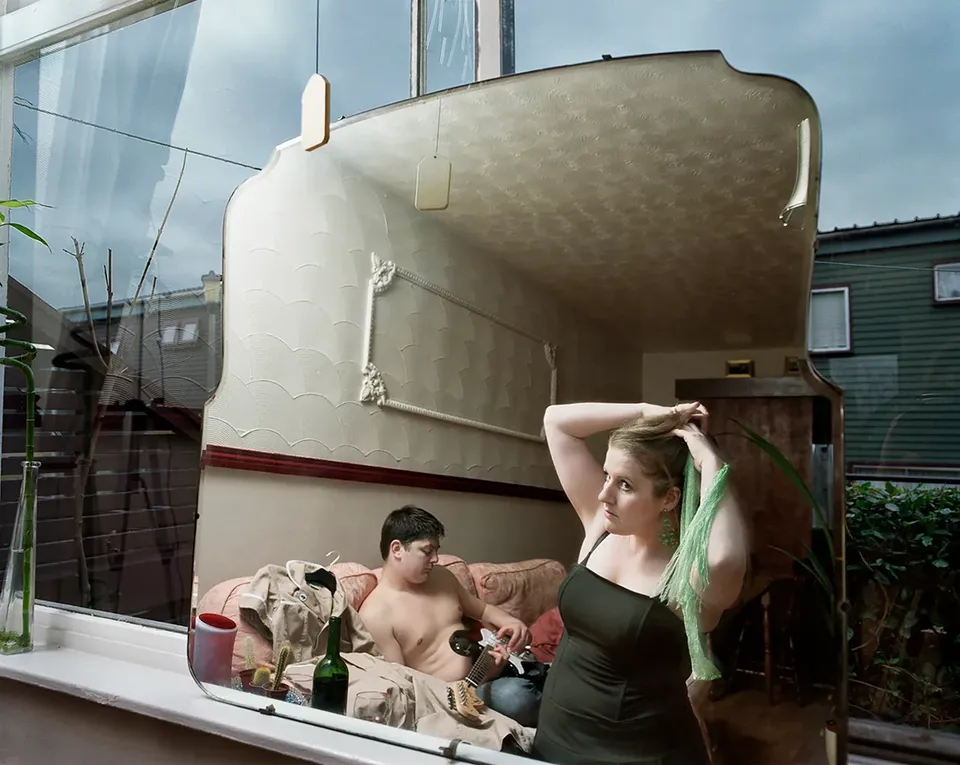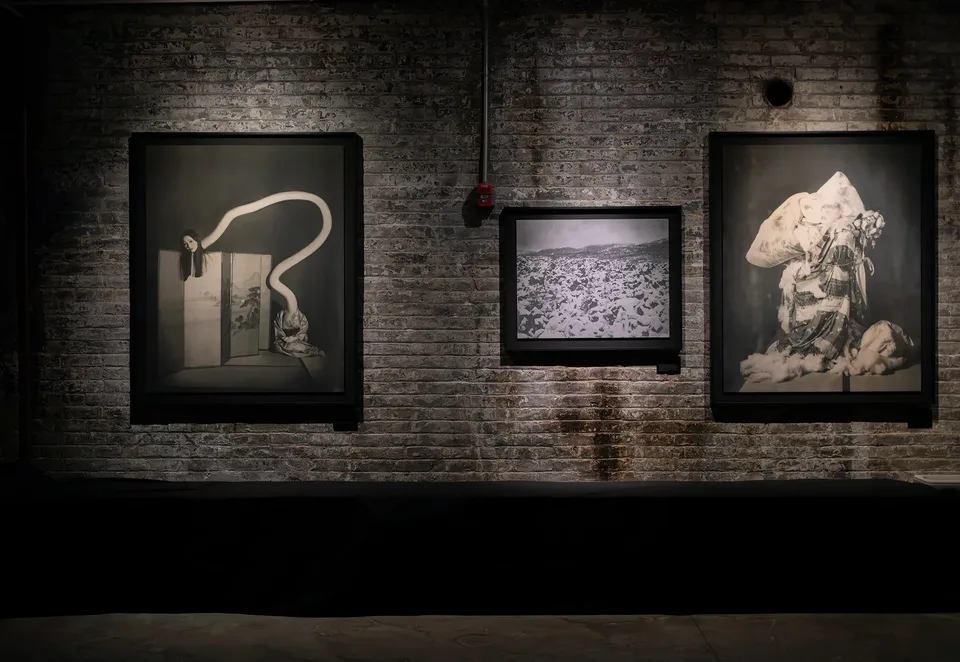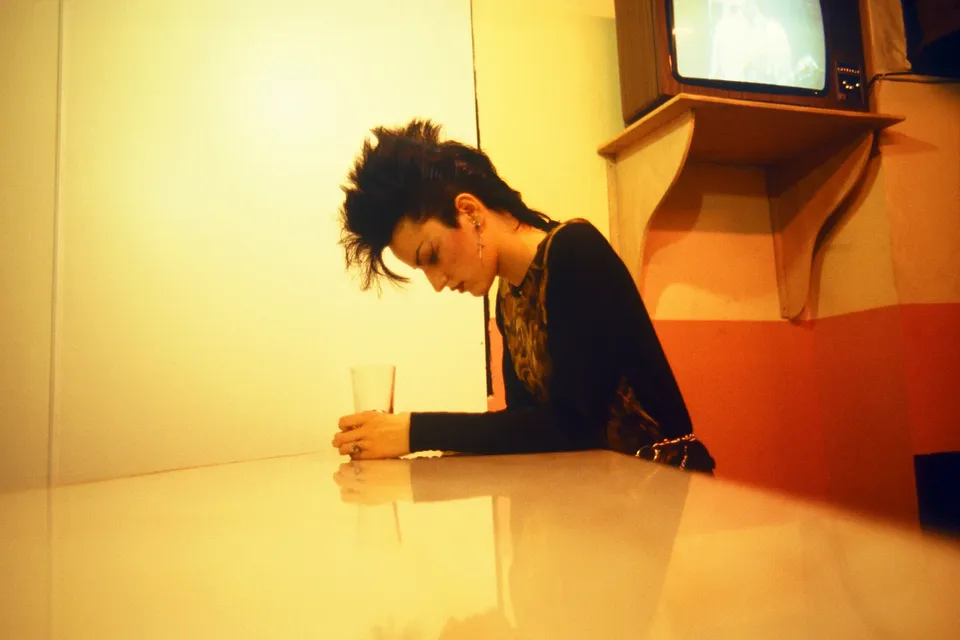
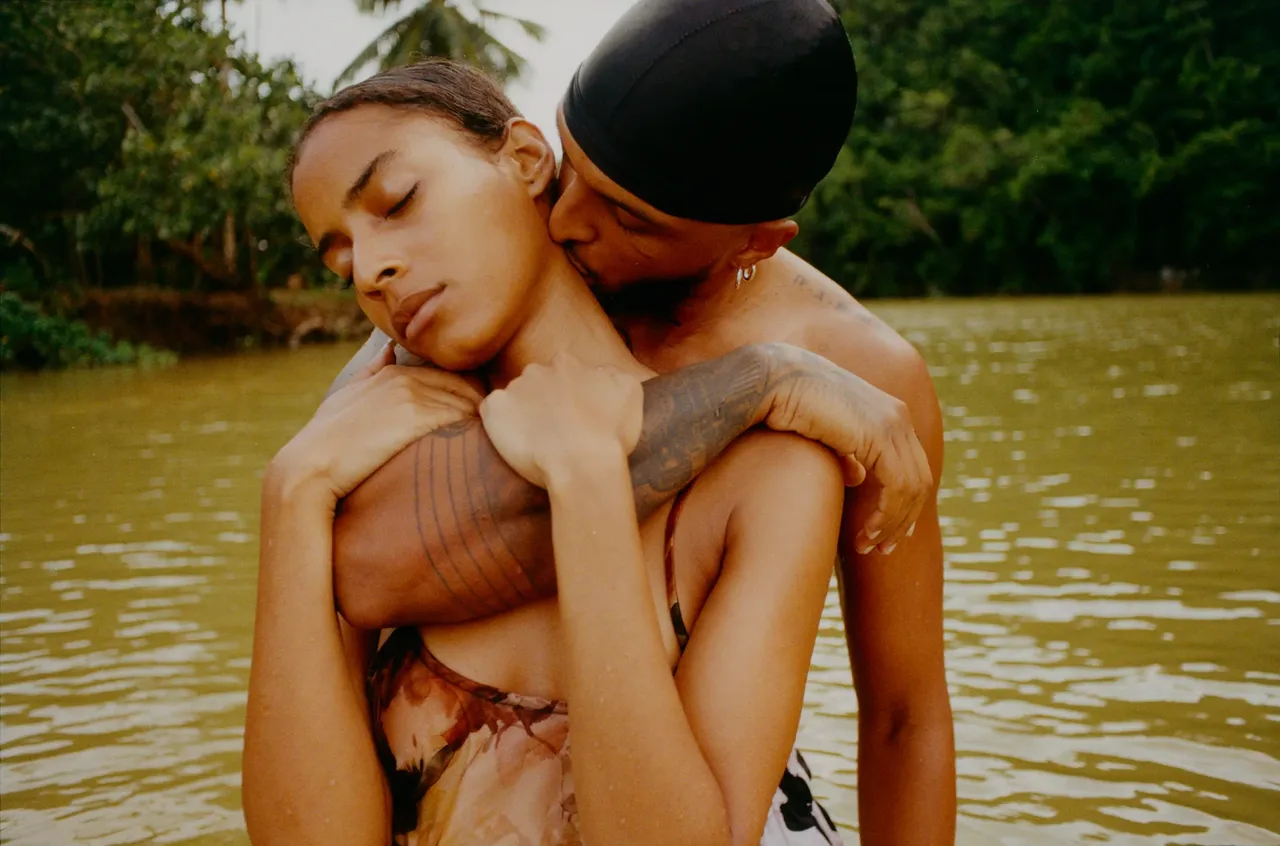
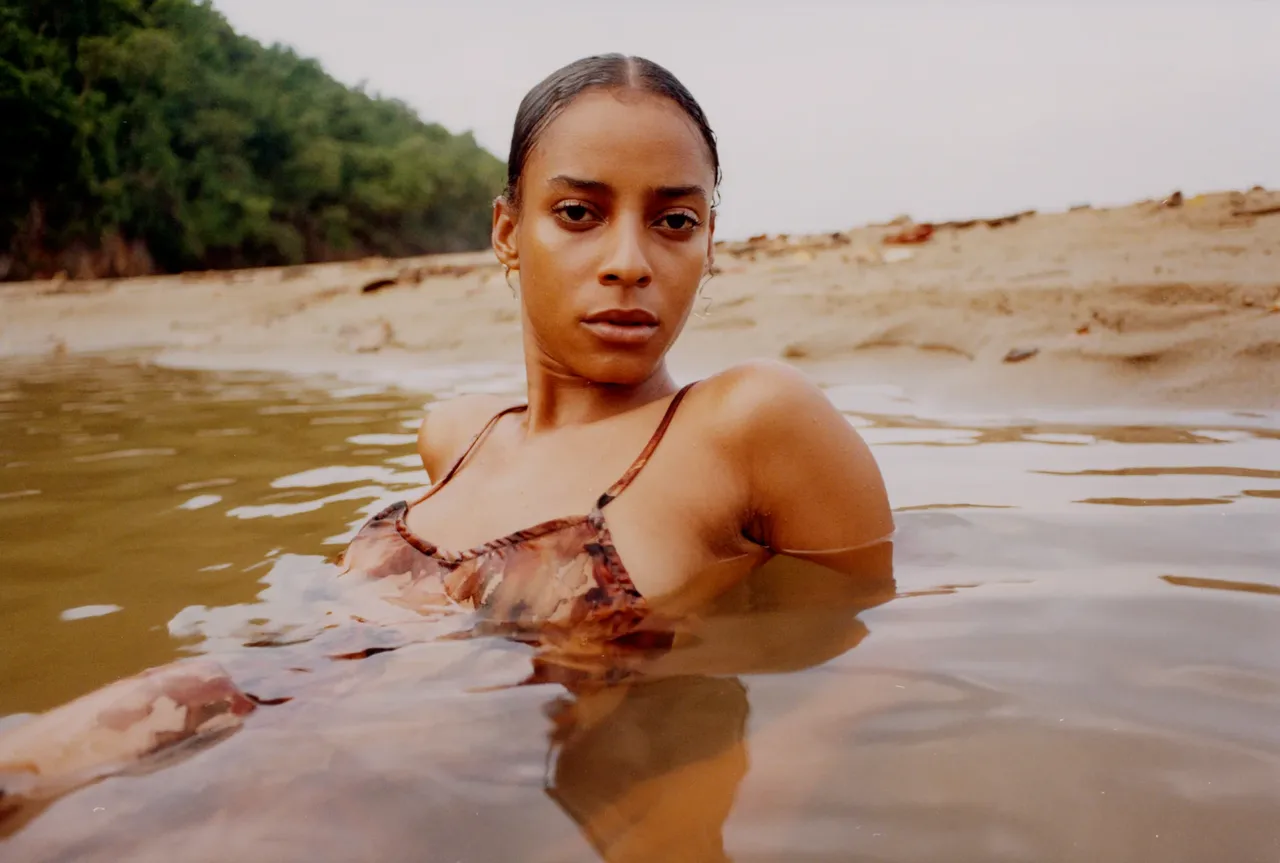
What happens when friendship becomes the starting point for a mythology of your own? In AGUA È, photographer Myles Loftin turns years of visits to the Dominican Republic and his relationship with creative director Amelia Rami into a story shaped by water, desire and the unstable balance of power. Shot at Playa El Valle with an entirely Dominican team and designers based in the country, the series avoids treating its landscape as a decorative backdrop. Instead, the beach, the clothes and objects found there become active parts of its visual language.
The project began with the pair’s shared Aquarius placement and the sign’s familiar image of the water-bearer, before moving towards the myth of Ganymede. But Loftin and Rami aren’t interested in simply illustrating an ancient story. Here, Amelia takes the traditionally male role and changes its ending: rather than being carried away by Zeus, she uses attraction to keep him on Earth. Dominican folklore adds another layer through agua de calzón, a supposed love potion capable of binding its subject to desire. Published as a zine with Pomegranate Press, AGUA È leaves deliberate gaps between its images, allowing viewers to decide what kind of love story they are witnessing. Ahead of the project’s presentation at Soho’s 66 Greene St. on September 15, we speak with Loftin about collaboration, belonging and why some photographs become more powerful when they refuse to explain everything.
AGUA È grew out of years of friendship and repeated visits rather than a conventional creative brief. At what point did you and Amelia realise that the life you had been sharing in Santo Domingo could become a project?
We always knew that we wanted to make images together at some point. I’m a big believer that the right time and place will come as it relates to collaboration. I had got some funding in 2024 to create personal work, and I took it as an opportunity for us to create something that represented my love for DR and my love for Amelia.
You’ve often photographed friends, loved ones and members of your own communities. How did working with Amelia differ from those previous experiences, particularly when she was both your collaborator and your way into a place that wasn’t your own?
This experience wasn’t much different from my past experiences of photographing friends and such. I usually like for my subjects to be collaborators in the work that we create together; there’s always a back and forth. In my work with the House of LaBeija, they helped me navigate through ballroom, which was a space I wasn’t intimately familiar with before that project.
Amelia’s move back to the Dominican Republic could’ve created distance between you, yet you describe it as the beginning of a new chapter. Has photography become a way of negotiating that distance, or even a language through which the friendship continues to evolve?
Yes, I definitely believe that. For me, making a portrait of someone is a deeply personal and intimate exchange. Many of the people I’ve photographed have become part of my life after working with them. For example, I met my friend Nari in Miami when I was working on my thesis project, and we’ve stayed in touch and been friends since then. Now she lives in New York and we see each other all the time, and all that started from a photograph.
“Making a portrait of someone is a deeply personal and intimate exchange. Many of the people I’ve photographed have become part of my life after working with them.”
The project began with your shared Aquarius placement. Beyond the initial spark, how did astrology shape the way you imagined its characters, atmosphere or visual narrative?
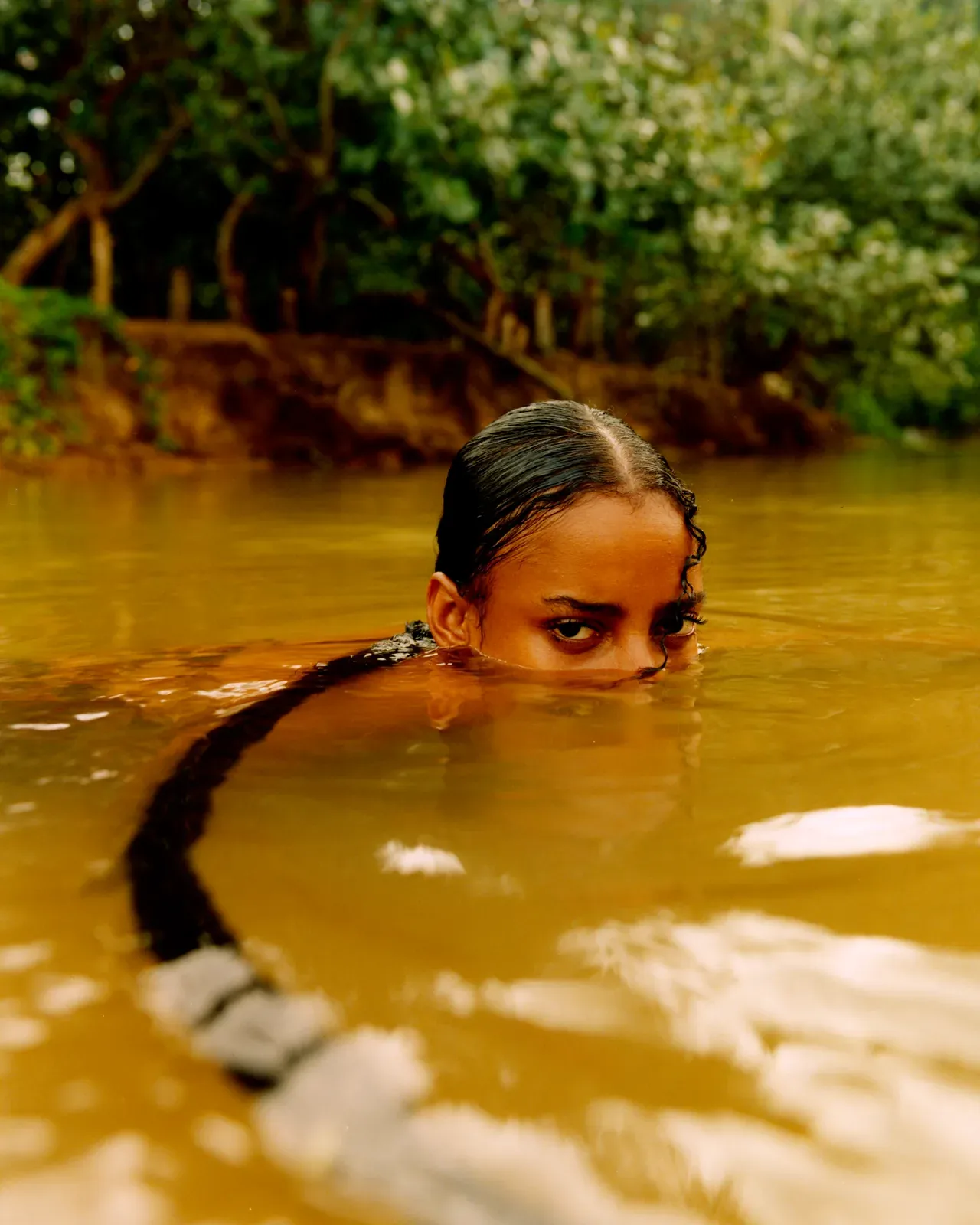
The astrological sign Aquarius is usually represented as the water-bearer or cup-bearer, so I was really interested in shooting in and around a body of water. I also wanted to use the colour blue in some of the images to create these beautiful monochromatic portraits.
The myth of Ganymede contains beauty and desire, but also unequal power, abduction and displacement. Which elements of the story drew you in, and what did you want to question or transform through a contemporary Caribbean retelling?
In the original myth, Ganymede’s stunning beauty catches Zeus’ eye, and he is kidnapped and taken to Mt. Olympus, where he becomes the official cup-bearer. I was interested in the idea of someone’s beauty being so alluring that you abandon judgement. For this story, I wanted to flip the story a bit, casting Amelia as Ganymede, and instead of being brought back to Mt. Olympus, she uses her beauty to lure and keep Zeus on planet Earth with her. Caribbean women lead with a certain confidence and strength about them that I admire, and I wanted to weave that into the story.
You also drew on old wives’ tales Amelia had shared with you. Could you tell us about one of those stories and how it found its way into a particular image?
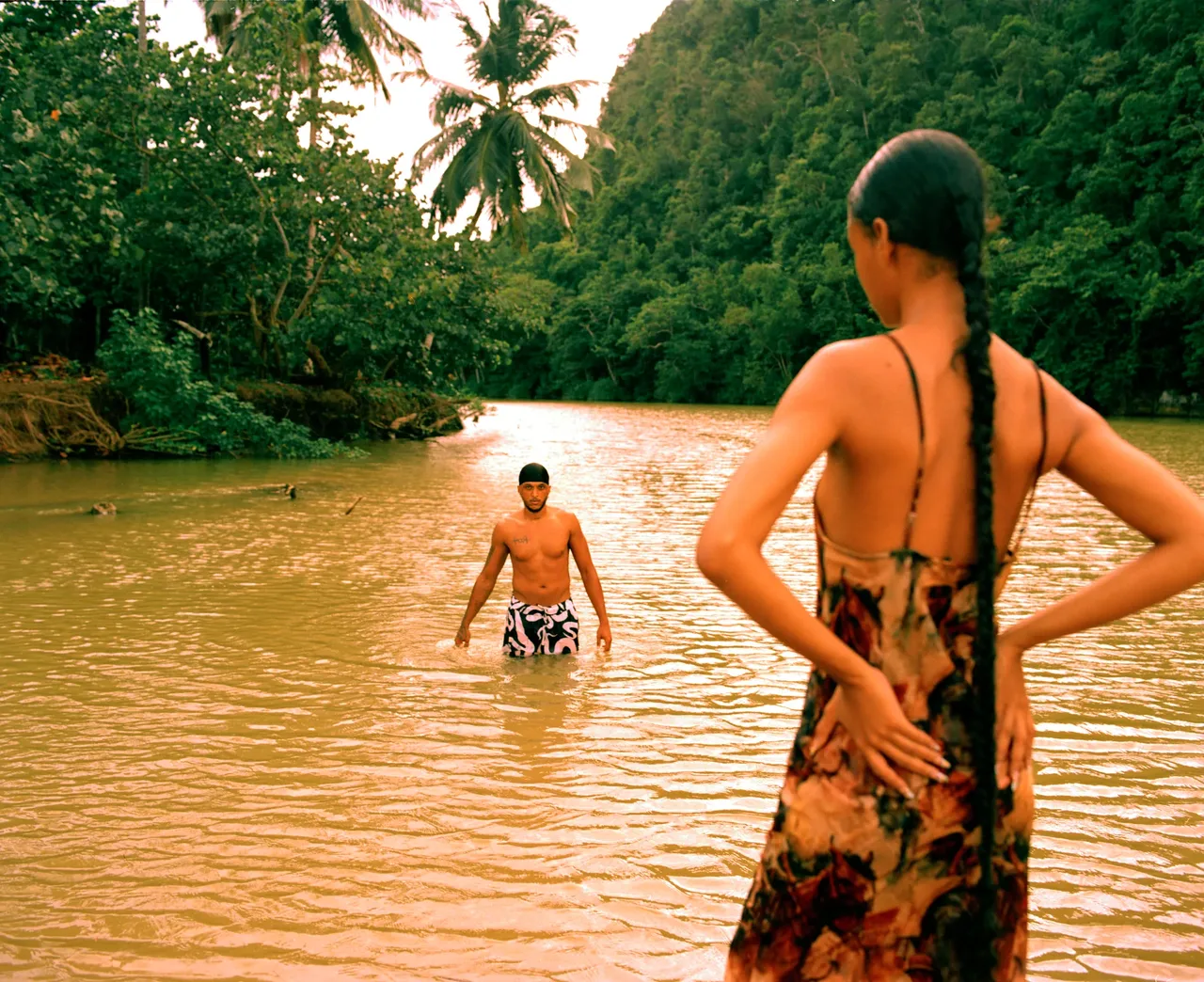
‘Agua é panty’ or ‘agua de calzón’ is a folk legend about a love potion made by boiling or soaking a woman’s underwear. It’s supposed to cast a binding spell to make someone fall hopelessly in love. There’s an image of Amelia and Choco where her back is to the camera in the foreground, while in the distance, he is caught in her gaze as he crosses the water towards her. I think this moment really captures the spellbound love I was trying to convey.
AGUA È unfolds as a love story, but the relationship between its two figures isn’t fully explained. What interested you about leaving space for desire, ambiguity and projection rather than giving the viewer a fixed narrative?
In my opinion, some of the most interesting photographs are those that leave a bit to the imagination. There should be some gaps in knowledge that the viewer has that allow them to engage more deeply with the work and form their own interpretation of it. The gaps leave space for them to find themselves in the work.
The series is rooted in Playa El Valle and features exclusively Dominican-based designers. How did the landscape and the work of those designers influence one another, rather than simply functioning as setting and wardrobe?
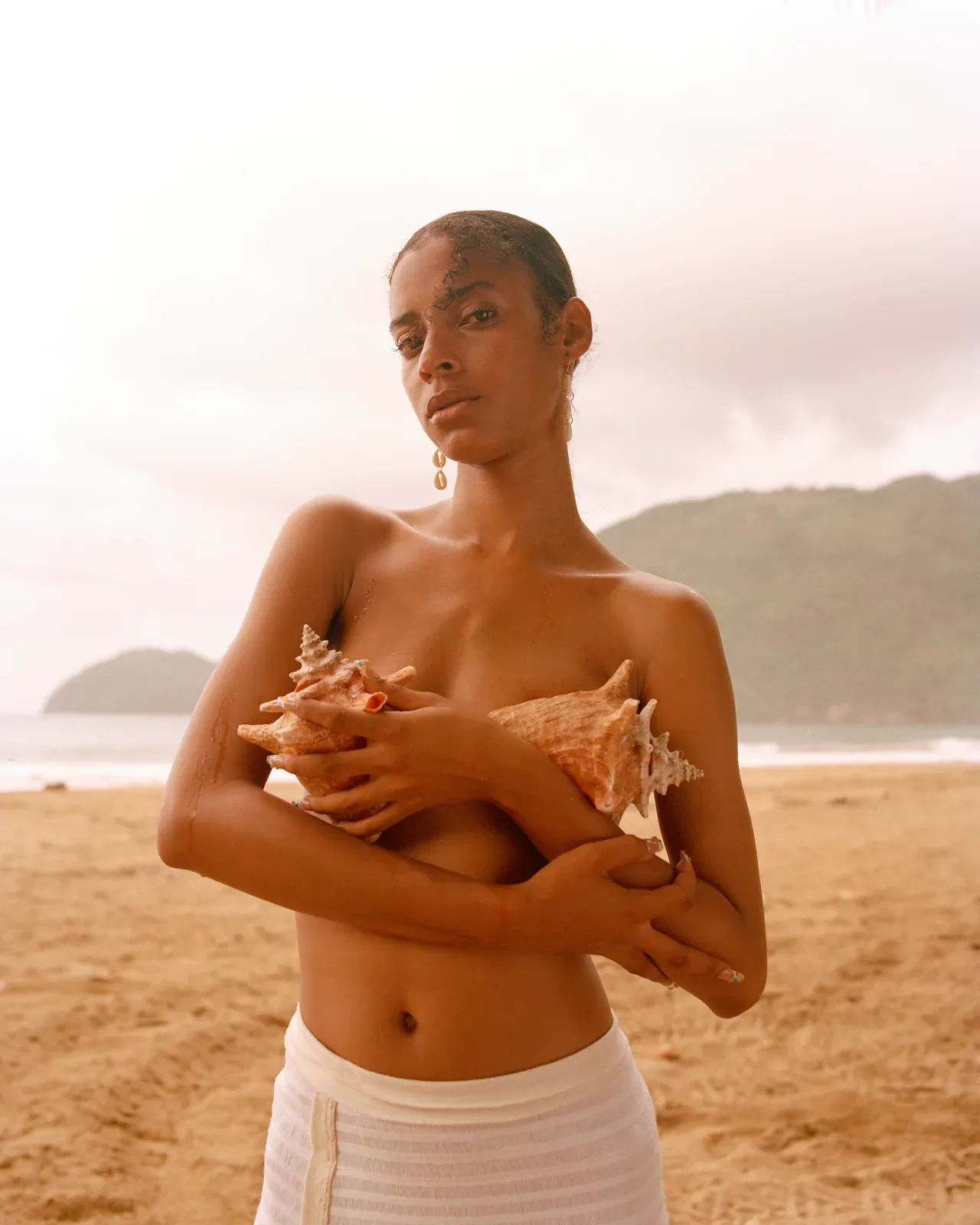
In many ways, the landscape informed the styling as we were doing fittings and selecting locations to shoot at. One of the best examples of this is the photograph of Amelia holding two conch shells to her chest and wearing this beautiful white skirt by Yenny Vasquez. We had collected the conch shells on the beach days before and didn’t know how we’d use them, but once she tried on the skirt, the conch bra idea came to life.
When photographing a culture or landscape that has welcomed you but is not your own, how do you distinguish between inspiration, collaboration and projection? What conversations with Amelia and the wider team guided that process?
There’s a fine line between the two. I think, as humans, we inevitably project ideas onto the things we experience, but I believe my role as a photographer is to mitigate that by employing a collaborative approach to most of my work. The experiences and conversations I’ve had on my various trips to the island allowed me to have a more well-rounded perspective. Additionally, the entire team for the project was Dominican, and they were pretty involved in the process of making these images.
“Caribbean women lead with a certain confidence and strength about them that I admire, and I wanted to weave that into the story.”
Why did a zine feel like the right home for these images? What can the sequencing, scale and physical experience of turning its pages communicate that an exhibition or an online edit can’t?
I didn’t want this body of work to live as an Instagram post, lost in the algorithm. I wanted the release of this to be as considered as the process of making it. Making a zine is something that I’ve always wanted to do because I love physical media, so when Jesse from Pomegranate Press reached out, I was super excited to make this happen. This project tells a story, and I think putting it in this form is the best way to communicate that.
To finish somewhere lighter: describe your perfect beach day at El Valle: who’s there, what are you eating and drinking, what’s playing, and is your camera anywhere in sight?
My perfect beach day involves a perfect mix of fun and relaxation: my boyfriend is there, Amelia and her friends, and my best friend Delilah. We’d probably have some SoundCloud mix playing in the background with some snacks and a bottle of tequila. I usually bring my point-and-shoot with me, so I’d definitely have that too.